Growing up, my world revolved around the kitchen. My parents met in one and ran their own Sichuan restaurant for over 20 years. My dad, a professional chef for more than three decades, practically lived in front of the wok. You’d think with all that amazing food around, I’d be eating complex banquet dishes every night!
But the truth is, the food we ate for ourselves was often the simplest. After a long service, when Dad was tired and we were all hungry, this was the dish he’d make. He’d grab a handful of chives, crack a few eggs, and in less than two minutes, a steaming, fragrant plate of Jiucai Chao Jidan would hit the table.
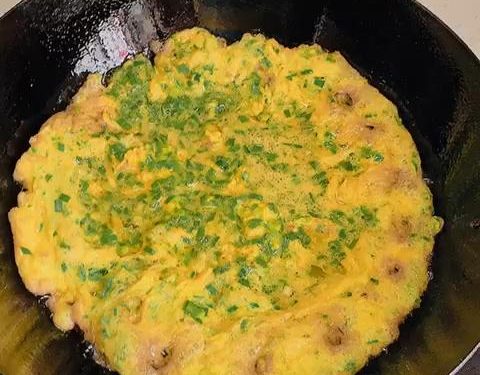
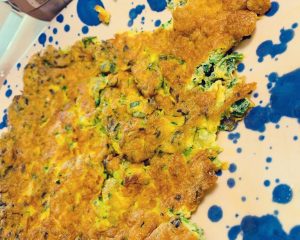
This dish is the definition of Chinese comfort food. It’s a kuai shou cai (快手菜), or “fast-hand dish.” It’s not a fluffy, folded omelet like you’d find in a French kitchen; it’s a quick, high-heat stir-fry where the eggs and chives meld together, getting wonderfully crispy on the outside while staying incredibly tender and moist within.
It’s one of the first dishes I mastered, and it taught me the most important lesson of Chinese cooking: high heat and timing are everything.
What Are Chinese Chives and Eggs (Jiucai Chao Jidan)?
Chinese Chives and Eggs (韭菜炒鸡蛋) is a classic homestyle stir-fry found all over China. It’s beloved for its simplicity, speed, and the incredible flavor packed into just four basic ingredients: Chinese chives, eggs, salt, and oil.
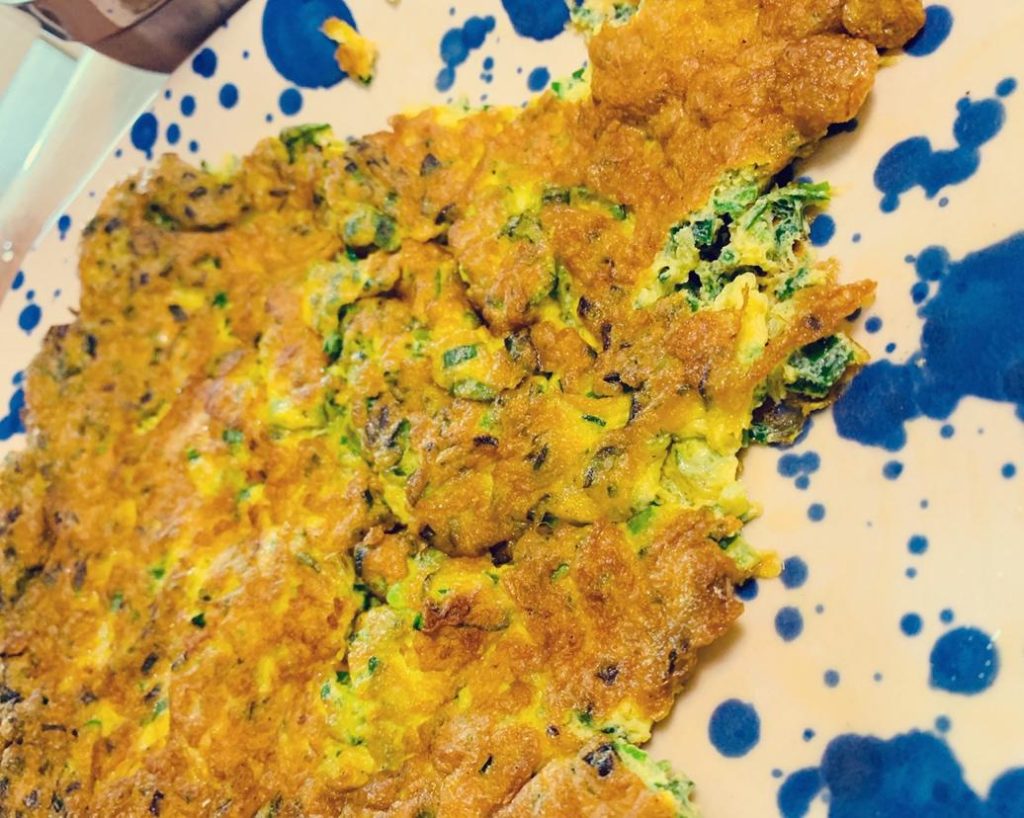
The goal isn’t just to cook the eggs, but to achieve a specific texture known as wai jiao li nen (外焦里嫩) — “crispy on the outside, tender on the inside.” This is done by pouring the egg and chive mixture into a wok of very hot, smoking oil, which instantly puffs up the eggs and creates a savory, golden-brown crust.
Why This Recipe Works
This recipe might look simple, but its success hinges on a few key techniques that create a result far greater than the sum of its parts.
- High-Heat Flash Fry: Cooking the eggs in smoking hot oil (around 400°F / 200°C) flash-fries the exterior, causing the Maillard reaction. This creates a deep savory flavor and crispy texture that you simply can’t get from medium-heat scrambling.
- The Perfect Flavor Pairing: The robust, garlicky-onion flavor of Chinese chives is the star. When cooked, their sharp flavor mellows slightly and infuses the eggs.
- Built-in T-FAL: The original recipe (and my dad’s method) uses chopsticks to stir the center of the omelet as it cooks. This brilliant move pulls the cooked egg aside and lets the raw egg hit the hot oil, ensuring everything cooks evenly in seconds.
- Unbeatable Speed: From prep to plate, this is genuinely a 10-minute meal. It’s faster, healthier, and more satisfying than ordering takeout.
A Closer Look at the Ingredients
You only need four ingredients, so their quality matters.
Chinese Chives (韭菜)
This is the most crucial ingredient, and no, you cannot substitute them with the round, hollow chives you find in most Western supermarkets.
- What They Are: Chinese chives (also called garlic chives) are flat, wide, and dark green. They have a much more potent and delicious flavor, tasting like a cross between garlic and onion. This is what gives the dish its signature aroma.
- Where to Find Them: You can find them at any Asian grocery store, usually sold in large bundles.
- What If I Really Can’t Find Them? If you’re in a pinch, the closest (though imperfect) substitute is a large bunch of green onions (scallions), using only the dark green parts, plus one or two cloves of finely minced garlic mixed in with the eggs. Another alternative is using garlic scapes if they are in season.
The Eggs
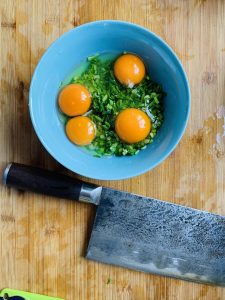
The original recipe calls for Chai Jidan (柴鸡蛋), which are local, free-range eggs. These eggs often have smaller whites and incredibly rich, dark orange yolks.
You don’t need to find these specific eggs, but using good quality, fresh farmer’s market or free-range eggs will make a noticeable difference in the color and flavor of your final dish.
Oil and Salt
- Oil: Use a neutral, high-smoke-point oil. Peanut oil is traditional and adds a wonderful aroma. Canola, vegetable, or grapeseed oil also works perfectly.
- Salt: Just regular table salt or kosher salt is all you need to make the flavors pop.
What You’ll Need (Equipment)
- A Wok (Recommended): A 12- to 14-inch carbon steel wok is ideal. The sloped sides are perfect for the fan shao (翻勺), a professional flipping technique, and for managing the high heat.
- A Large Skillet: A 12-inch non-stick or well-seasoned cast-iron skillet will also work just fine. The key is to get it very, very hot.
- Chopsticks or a Spatula: Long cooking chopsticks are the traditional tool for stirring the center of the eggs. A heat-resistant spatula works too.
How to Make Chinese Chives and Eggs
This entire cooking process takes about 2-3 minutes. Do not walk away from the stove.
Mise en Place (Get Ready!)
Because this dish cooks so fast, you must have all your ingredients prepped and next to the stove before you even turn on the heat.
- Prep the Chives: Wash the chives and, most importantly, dry them completely with a clean kitchen towel or paper towels. Any water will cause the hot oil to splatter dangerously and will make your eggs soggy instead of crispy.

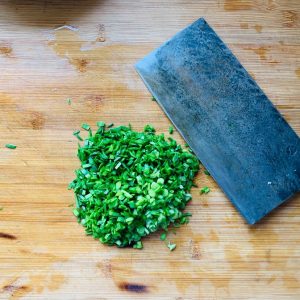
- Chop: Trim the tough white ends from the chives (discard them) and chop the green parts into fine pieces, about 1/4-inch (0.5 cm).
- Mix: Place the 120g of chopped chives into a medium bowl. Crack in your 3 large eggs. Add the 2.5g (½ tsp) of salt.
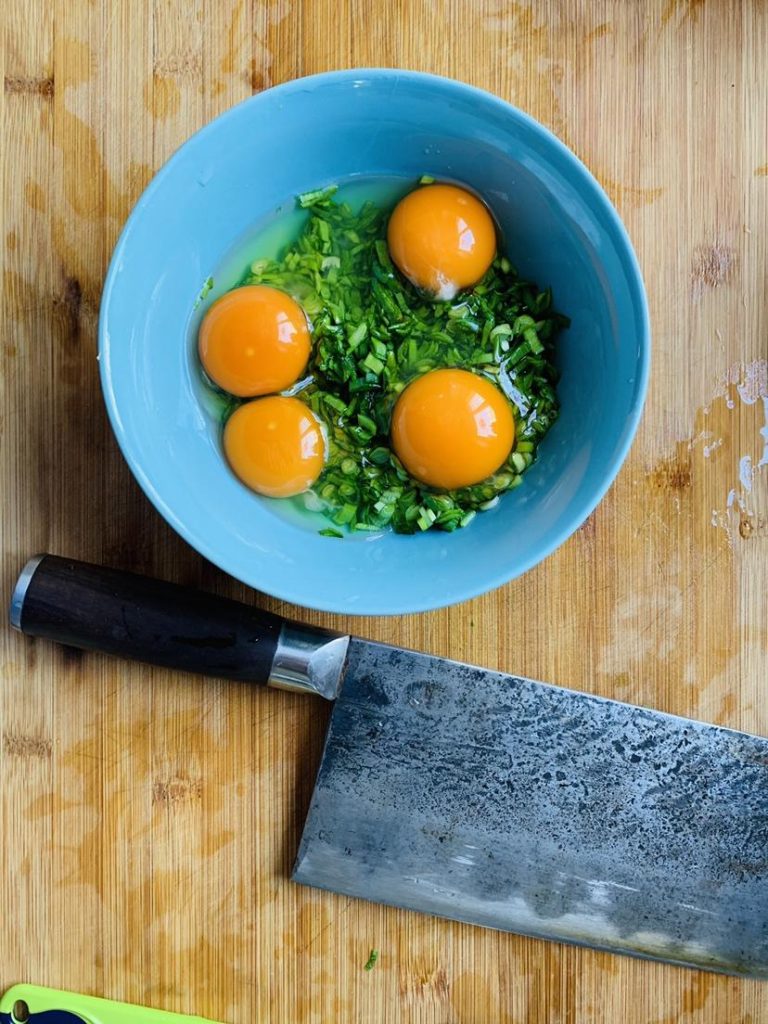
- Beat: Use chopsticks or a fork to beat the mixture just until the yolks and whites are broken up and combined with the chives. Do not over-beat or incorporate a lot of air.
The Cooking Process: High Heat & Fast
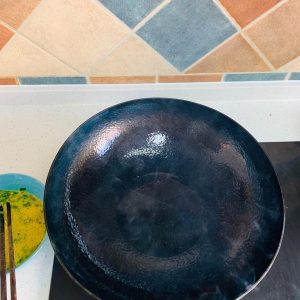
- Heat the Wok: Place your wok or skillet over high heat. Let it heat up for a minute.
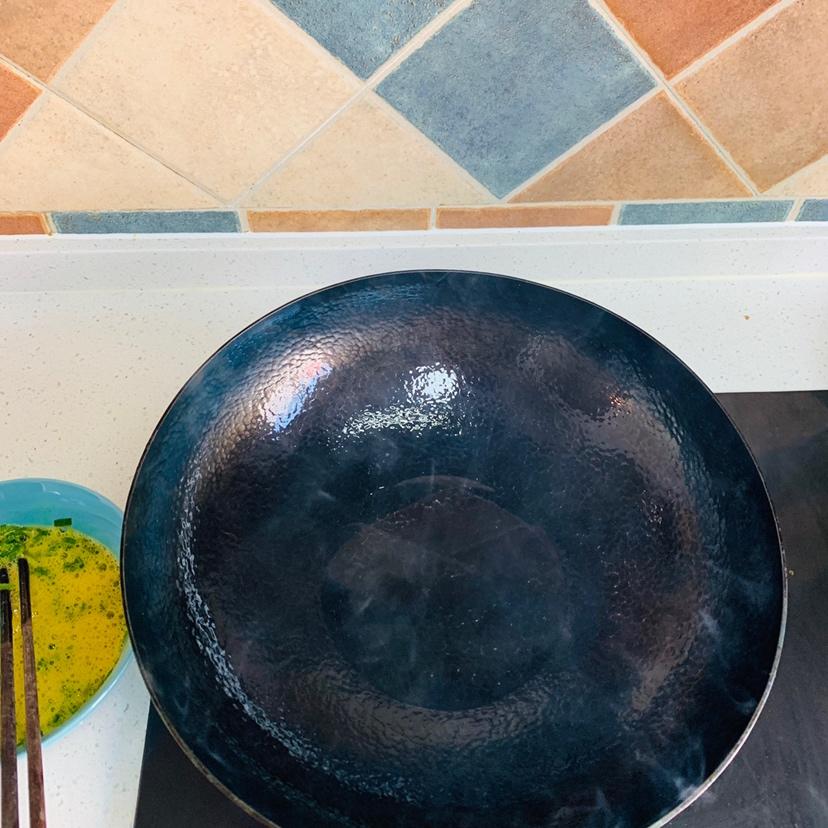
- Heat the Oil: Add the 1.5 tbsp (20g) of oil. Swirl to coat the bottom. Continue heating until the oil is shimmering and just beginning to smoke. This is the most important step. The oil must be hot.
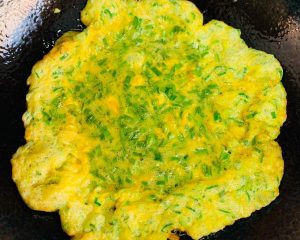
- Pour the Eggs: Give the egg-chive mixture one last quick stir and pour it all at once into the center of the hot wok. It should sizzle, bubble, and puff up immediately.
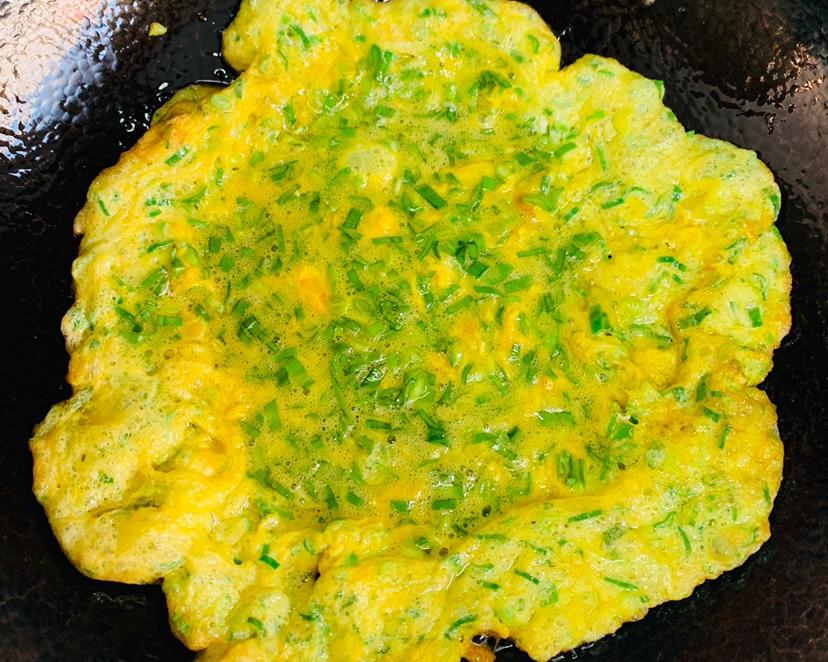
- Stir the Center: Let the mixture cook, undisturbed, for 10-15 seconds for the bottom to set into a golden-brown crust. Then, take your chopsticks or spatula and push the cooked edges toward the middle, allowing the raw egg from the top to flow to the hot surface of the wok. This is what my dad calls “letting the oil and egg mix.”
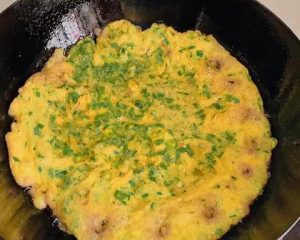
- The Flip: Once the bottom is deeply golden brown (this takes about 1-2 minutes), use your spatula to flip the entire omelet over.
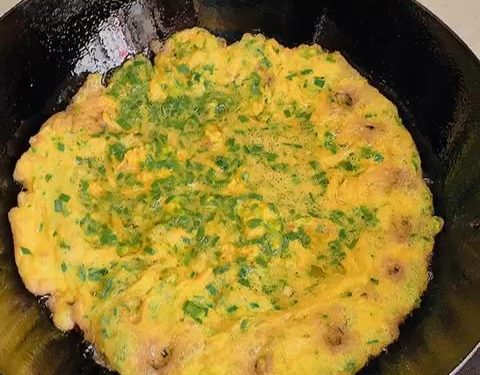
- Finish: Let the other side cook for just 20-30 seconds. You want the center to be just set, but still tender and moist.
- Serve: Immediately slide the omelet onto a serving plate. Cut into wedges and serve hot.
Tips for Success (Wai Jiao Li Nen!)
Note: Dry Your Chives! This is the number one tip. I’m saying it again because it’s that important. Wet chives = steamed, soggy eggs. Dry chives = crispy, fragrant eggs.
Note: Hot Wok, Hot Oil! Do not be afraid of the high heat. This is a flash-frying technique. If your oil isn’t hot enough, the eggs will absorb the oil and become greasy instead of puffing up and getting crispy.
Note: Don’t Overcook! The biggest mistake is turning this into a rubbery, overcooked omelet. The entire process should take 2-3 minutes. Get it out of the wok while it’s still tender.
How to Serve and Store
Serving: This dish is best eaten immediately while it’s hot and the edges are still crispy. It is the perfect companion to a simple bowl of steamed jasmine rice. For a more complete meal, I love serving it alongside a refreshing Easy Smashed Cucumber Salad.
Storage: Honestly, this dish doesn’t make great leftovers, as it loses its signature texture. If you must store it, place it in an airtight container in the refrigerator for up to 2 days. Reheat in a hot, lightly oiled pan—not the microwave.
Food Safety
For any egg dish, it’s important to ensure it’s cooked properly. The high-heat flash-fry method used here cooks the eggs very quickly. The USDA recommends cooking eggs until both the yolk and whites are firm, or to an internal temperature of 160°F (71°C), to ensure safety.
Frequently Asked Questions
1. My eggs came out soggy and watery. What did I do wrong?
There are two likely culprits: 1) You didn’t dry your chives thoroughly. Any moisture will turn to steam and ruin the crispy texture. 2) Your oil wasn’t hot enough. The eggs steamed instead of fried.
2. Can I add other ingredients like shrimp or mushrooms?
You can, but it fundamentally changes this classic, simple dish. The beauty of Jiucai Chao Jidan is its simplicity. If you want to add shrimp, it becomes a different (but also delicious) dish, more like a Shrimp, Cucumber, and Egg Stir-fry.
3. Can I use less oil to make it healthier?
This dish relies on the hot oil to flash-fry the eggs. If you use too little oil, the eggs will stick, and you won’t achieve the wai jiao li nen texture. 1.5 tablespoons is a good balance, but don’t go much lower.
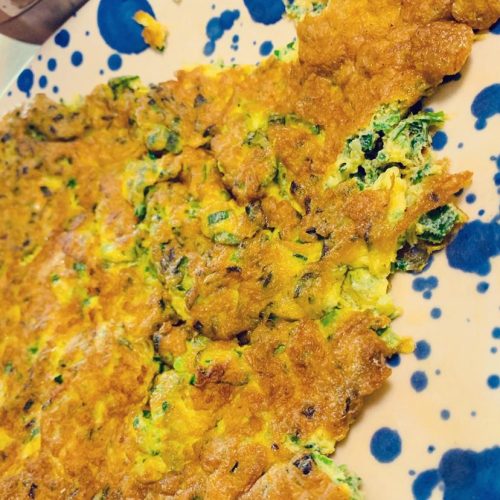
Easy Chinese Chives and Eggs (韭菜炒鸡蛋)

Equipment
- 1 12-inch Wok or Large Skillet A well-seasoned carbon steel wok is best, but a large non-stick or cast iron skillet also works.
- 1 Spatula or Cooking Chopsticks Used for stirring the center of the egg omelet.
- 1 Medium bowl For mixing the eggs and chives.
Ingredients
- 120 g Chinese Chives (Garlic Chives) (approx 4.25 oz) Must be washed and dried completely.
- 3 large Eggs or 4 small free-range eggs (Chai Jidan)
- 2.5 g Salt (approx ½ tsp)
- 20 g Neutral Oil (approx 1.5 tbsp) Peanut, Canola, or Vegetable Oil
Instructions
- Prep the Chives: Wash the Chinese chives and, most importantly, pat them completely dry with a paper towel. Any water will make the eggs soggy.
- Chop: Trim the tough white ends and finely chop the green parts into 1/4-inch (0.5 cm) pieces.

- Mix the Batter: In a medium bowl, add the chopped chives, crack in the 3 large eggs, and add the ½ tsp of salt. Beat with a fork or chopsticks just until the yolks and whites are combined. Do not over-beat.

- Heat the Wok/Skillet: Place your wok or skillet over HIGH heat. Add the 1.5 tbsp of oil and swirl to coat. Heat the oil until it is shimmering and just beginning to smoke (this should be around 400°F / 200°C).
- Fry the Eggs: Pour the egg-chive mixture into the center of the wok. It must sizzle and puff up immediately. Let it cook undisturbed for 15-20 seconds to set the bottom.
- Scramble the Center: Use your spatula or chopsticks to gently push the cooked edges toward the center, allowing the raw egg on top to flow onto the hot wok surface. Continue until the omelet is about 80% set (about 1-2 minutes).

- Flip: Once the bottom is golden brown and crispy, flip the entire omelet.
- Finish: Cook for another 20-30 seconds. The inside should be just set and tender, not rubbery.
- Serve: Immediately slide onto a plate. Serve hot, traditionally with steamed rice.












Leave a Reply