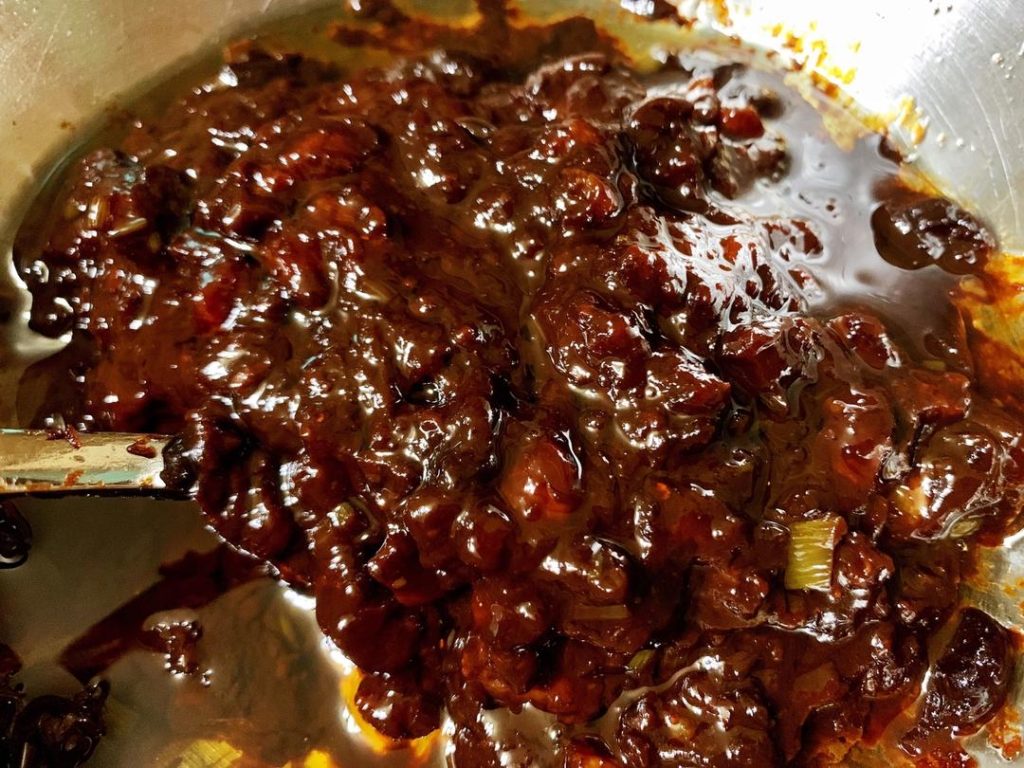
Old Beijing Fried Sauce (Zha Jiang) is the soul of Beijing cuisine. This authentic recipe uses hand-cut pork belly cubes and a rich blend of dry yellow soybean paste and sweet bean sauce, slow-fried to savory perfection.
- Prep Time: 20 mins
- Cook Time: 30 mins
- Total Time: 50 mins
- Servings: 4-6 servings
- Calories: 450 kcal (Estimate per serving of sauce)
- Author: Elaine
Why This Recipe is Special
Growing up in a restaurant family, I learned early on that while Sichuan cuisine is famous for its spice, Northern Chinese cuisine is famous for its 酱香 (jiàng xiāng)—the savory aroma of fermented sauces.
Zha Jiang Mian (Fried Sauce Noodles) is to Beijing what pasta bolognese is to Bologna. However, many recipes use ground pork, which I find lacks texture. This recipe stays true to the “Old Beijing” tradition by using hand-cut pork belly cubes (1.5cm / 0.5 inch).
My father, a chef with decades of experience, always told me: “A good Zha Jiang isn’t just mixed; it’s fried until the oil and sauce separate.” This specific recipe teaches you that exact technique—how to render the fat from the pork and use it to fry the fermented pastes until they are glossy, dark, and incredibly fragrant.
What is Zha Jiang Mian?
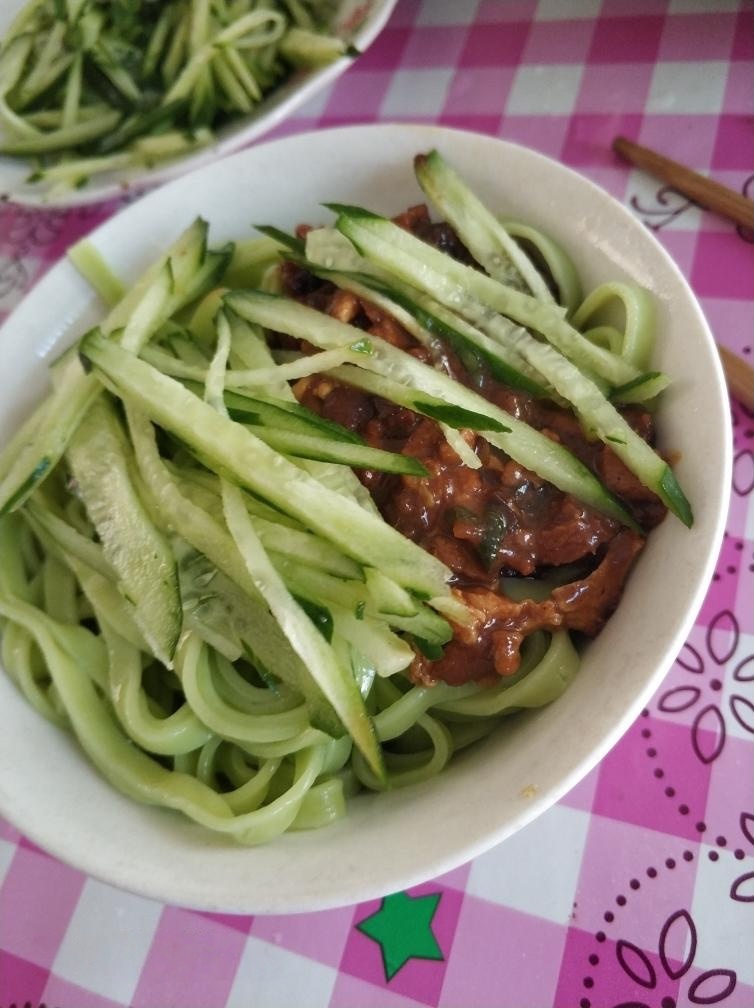
Literally translating to “Fried Sauce Noodles,” this dish consists of thick wheat noodles topped with a rich pork sauce and fresh vegetable garnishes (cucumber, radish, soybeans) to balance the saltiness.
The “Fried” (Zha) part is crucial. We aren’t just simmering a sauce; we are frying the water out of the fermented soybean paste in hot oil (and pork fat) to intensify the flavor and preserve it.
Key Ingredients & Substitutions
This recipe relies on traditional ingredients. Here is how to source or substitute them in the US or Europe:
- Pork Belly (300g / ~10.5 oz): This is non-negotiable for the authentic texture. Remove the skin and cut into 1.5cm (0.5 inch) cubes. The fat renders out to flavor the sauce.
- Substitution: If you absolutely cannot eat fatty meat, use pork shoulder (butt), but you will need to add more cooking oil.
- Dry Yellow Soybean Paste (Gan Huang Jiang) (200g / ~7 oz): This is a salty, fermented paste.
- Sourcing: Look for “Gan Huang Jiang” in Asian markets.
- Substitution: If you can’t find the dry variety, standard Yellow Soybean Paste works, but reduce the water added later. You can also mix Korean Doenjang with a little more sugar, though the flavor profile differs slightly.
- Sweet Bean Sauce (Tian Mian Jiang) (100g / ~3.5 oz): This provides the dark color and sweetness to balance the salt.
- Substitution: Hoisin sauce is a last-resort alternative, but it is sweeter and more spiced.
- Aromatics: Ginger, garlic, star anise, and plenty of scallions (green onions).
Equipment Notes
- Wok or Deep Skillet: A carbon steel wok is best for heat control, but a non-stick pan works for this sauce since it’s prone to burning.
- Sharp Knife: For cubing the pork belly.
Ingredients
- 10.5 oz (300g) Pork belly, skin removed, cut into 1.5cm (½ inch) cubes
- 7 oz (200g) Dry Yellow Soybean Paste (Gan Huang Jiang)
- 3.5 oz (100g) Sweet Bean Sauce (Tian Mian Jiang)
- 3 tbsp Light Soy Sauce (can substitute with Kikkoman)
- Water (Amount varies, enough to dilute paste)
- 1/2 stalk Leek or large Scallion (Green Onion), divided
- 3 slices Ginger
- 2 cloves Garlic, smashed
- 1 whole Star Anise
- Cooking Oil (Vegetable or Canola), generous amount
Recipe Notes Before We Begin
- The Pork: Don’t cut the meat too small! It shrinks significantly when the fat renders. We want visible, chewy chunks of meat in the final sauce.
- The Oil: You might feel like you are using too much oil. This is normal. The oil acts as a sealant (preservative) and frying medium. You can scoop excess oil out at the end to use for stir-frying veggies—it’s delicious.
- Patience: This sauce takes 20-30 minutes of low-heat cooking. Do not rush it, or the paste will taste raw or bitter.
How to Make Old Beijing Fried Sauce
Step 1: Infuse the Oil
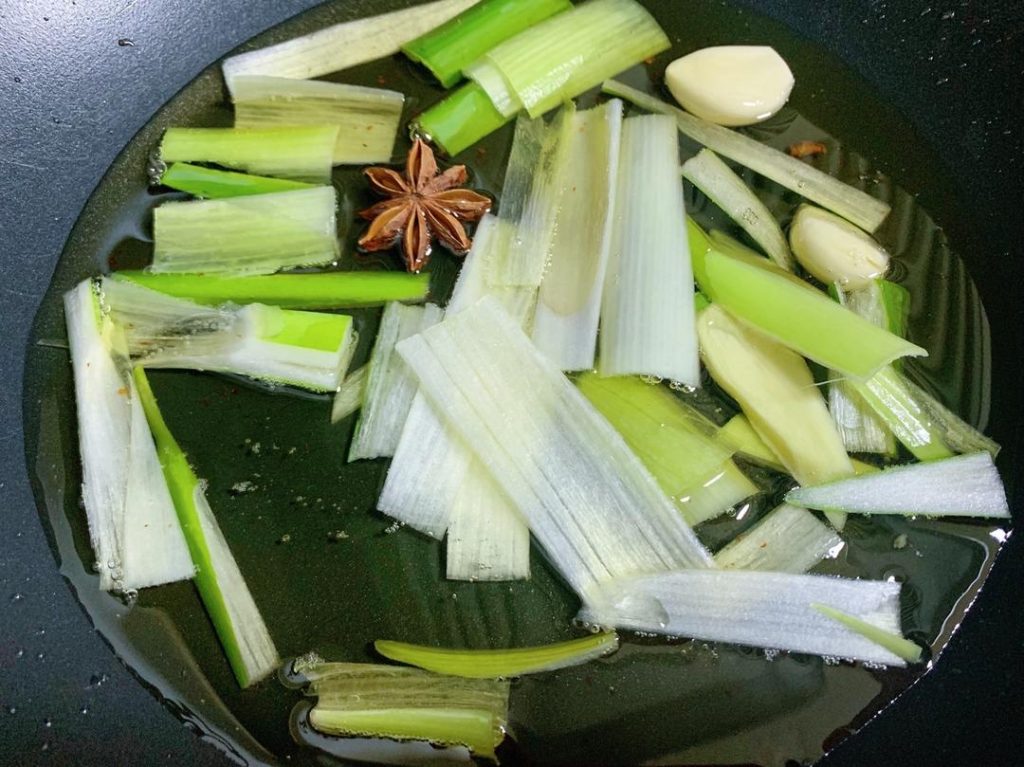
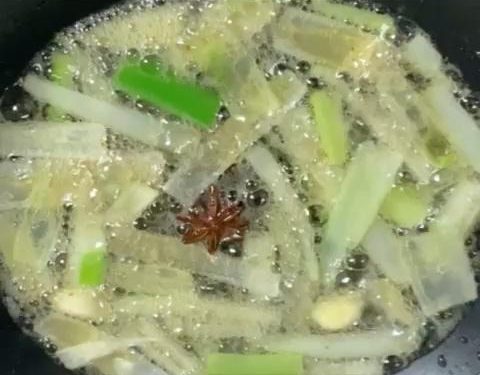
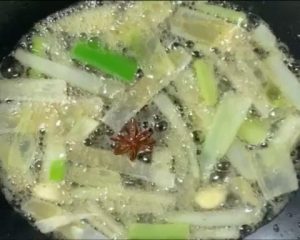
Heat a generous amount of oil in your wok over medium-low heat. Add half of the chopped scallions (green onions), the ginger slices, garlic, and the star anise.
- Why? We are making “Scallion Oil.” Fry them slowly until the aromatics turn golden brown and dry out. This infuses the base oil with flavor.
- Remove and discard the fried aromatics, leaving the fragrant oil in the wok.
Step 2: Render the Pork
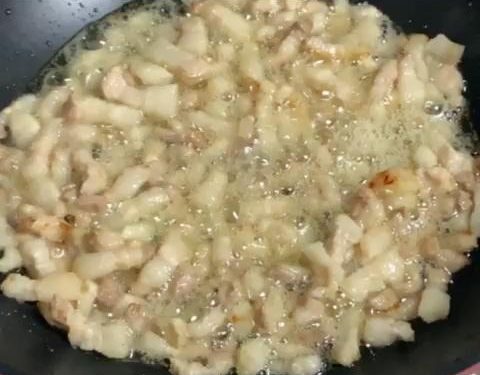
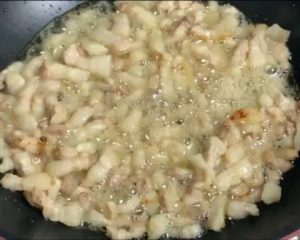
Add the pork belly cubes to the scallion oil. Fry over low heat.
Visual Cue: You want to slowly render the fat out of the meat. Fry until the pork shrinks slightly, turns golden, and the oil becomes transparent. This ensures the meat isn’t greasy.
Step 3: Dilute the Pastes
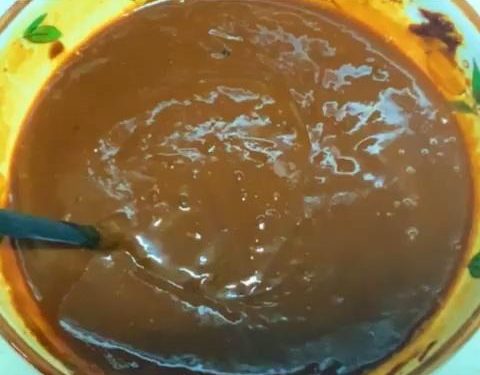
While the pork is frying, place the Dry Yellow Soybean Paste and Sweet Bean Sauce in a bowl. Add the Light Soy Sauce and enough cool water to thin it out.
Technique: Stir in one direction until it becomes a smooth, uniform liquid (like a thick batter). If it’s too thick, it will burn; if too thin, it takes too long to cook.
Step 4: Fry the Sauce (The Critical Step)
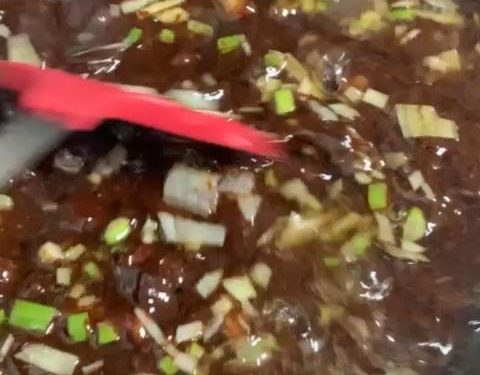
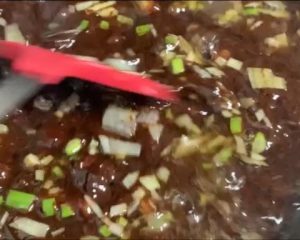
Pour the diluted paste mixture into the wok with the pork.
- Add the Scallions (Batch 1): Add half of the remaining finely chopped scallions now.
- The Process: Keep the heat low to medium-low. You must stir frequently to prevent the thick paste from sticking to the bottom of the wok.
Step 5: Simmer and Finish
Continue cooking for 20 to 30 minutes.
- Adjusting Texture: If the sauce gets too dry too fast, splash in a little hot water. If it’s too runny, increase the heat slightly to evaporate moisture.
- The “Secret” Move: When the sauce is almost done, add the remaining half of the chopped scallions. This adds a fresh onion bite that contrasts with the cooked scallions from earlier.
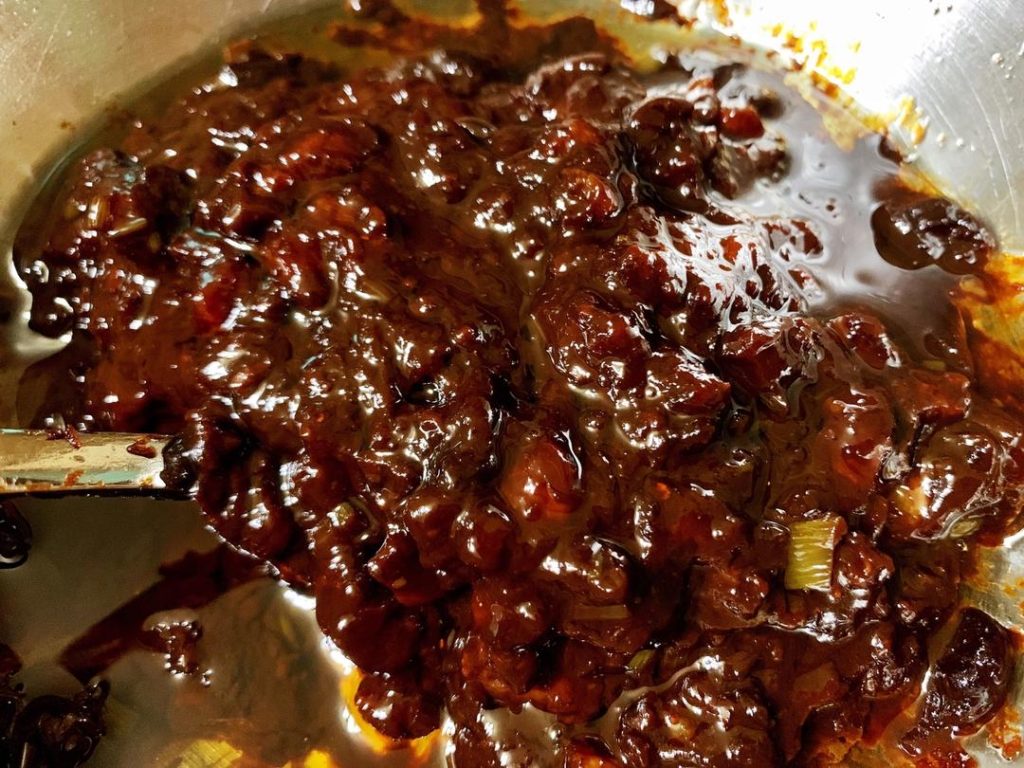
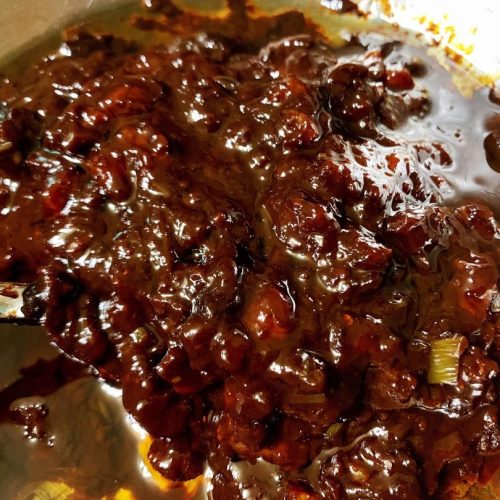
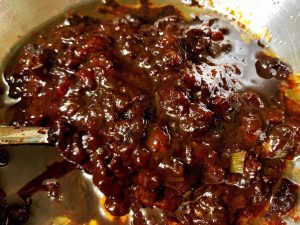
- Done Sign: The sauce is ready when it has darkened significantly, smells nutty and rich, and the oil separates and floats on top of the sauce.
Tips for Success
- Don’t Burn It: Soybean paste is high in sugar and starch. It burns easily. Keep the flame low and keep your spatula moving.
- Oil Management: If you find the layer of oil on top intimidating, you can ladle some out after cooking. Store this reddish, savory oil in a jar—it is amazing for making Fried Sauce Noodles or drizzling over blanched vegetables.
- Storage: Because of the high salt content and oil seal, this sauce keeps incredibly well. Store in an airtight container in the fridge for up to one month.
How to Use This Sauce & Other Variations
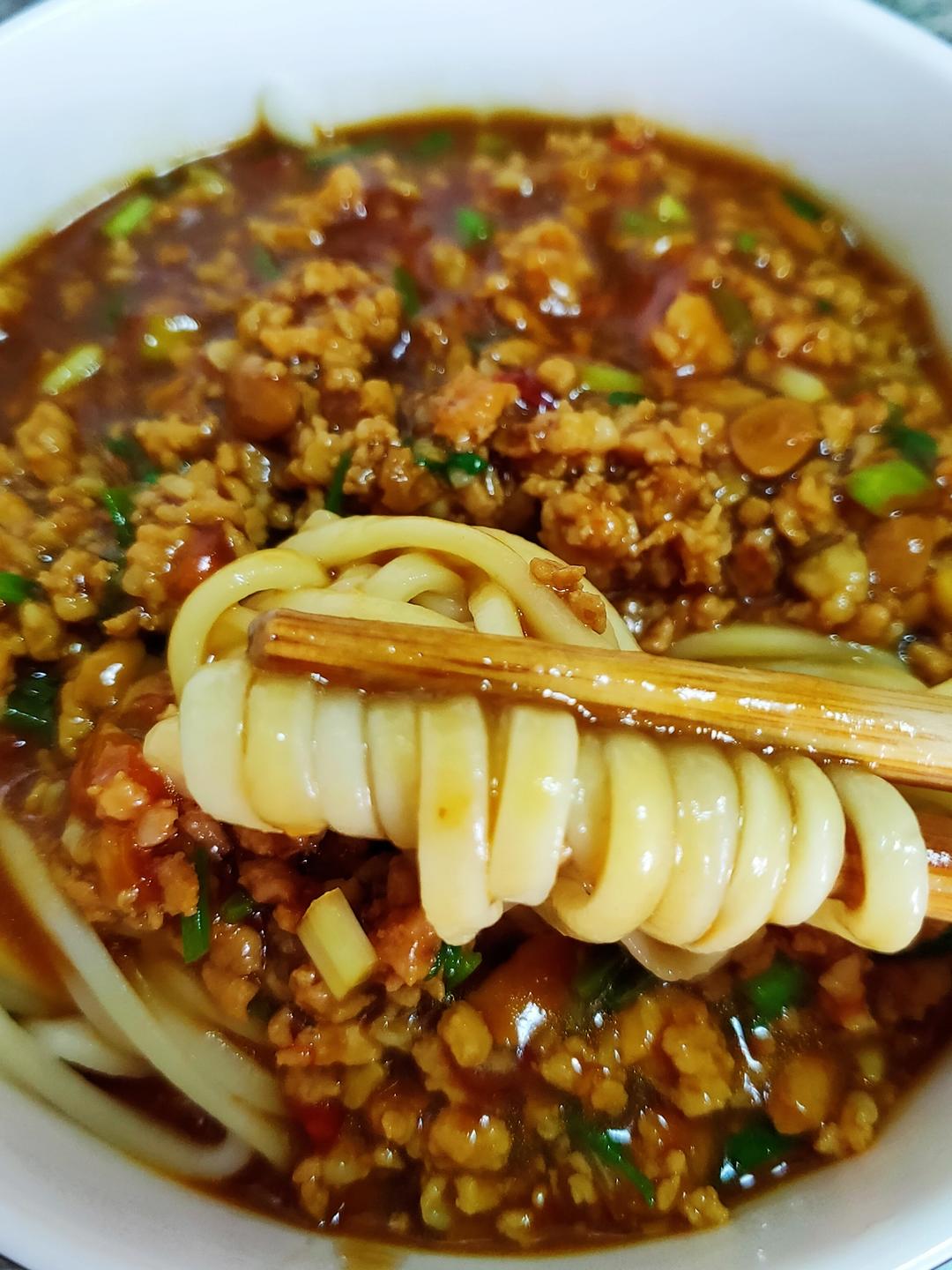
Mastering the sauce is the most critical step, but the true soul of Beijing cuisine lies in the final assembly. For the complete, traditional experience—including how to prepare the specific mian ma (vegetable toppings) and handle the hand-diced pork belly—I recommend following my full guide to Old Beijing Fried Sauce Noodles (Zha Jiang Mian). However, I know that modern home cooking often requires flexibility. If you are looking for a faster weeknight option that uses ground meat, my Easy Zha Jiang Mian captures the essence of the dish in half the time. Alternatively, if you crave an earthier flavor profile, my Mushroom Pork Fried Sauce Noodles incorporates shiitake mushrooms for a incredible depth of umami that many of my readers love.
1Old Beijing Fried Sauce Noodles (Zha Jiang Mian)An authentic recipe for Old Beijing Zha Jiang Mian, featuring hand-diced pork belly rendered in its own fat and simmered with a blend of soybean pastes. A savory, rich classic.Check out this recipe2Easy Zha Jiang Mian (Fried Sauce Noodles)A quick, homestyle version of the classic Chinese Zha Jiang Mian. This recipe features a savory pork meat sauce enriched with soybean paste, sweet bean paste, and a secret touch of tomato for balance. Perfect for a weeknight dinner.Check out this recipe3Mushroom Pork Fried Sauce Noodles (Zhajiangmian)A comforting homestyle noodle dish featuring diced pork, earthy shiitake mushrooms, and fluffy eggs in a savory soybean sauce. A family favorite that’s ready in 30 minutes.Check out this recipe
Serving Suggestions
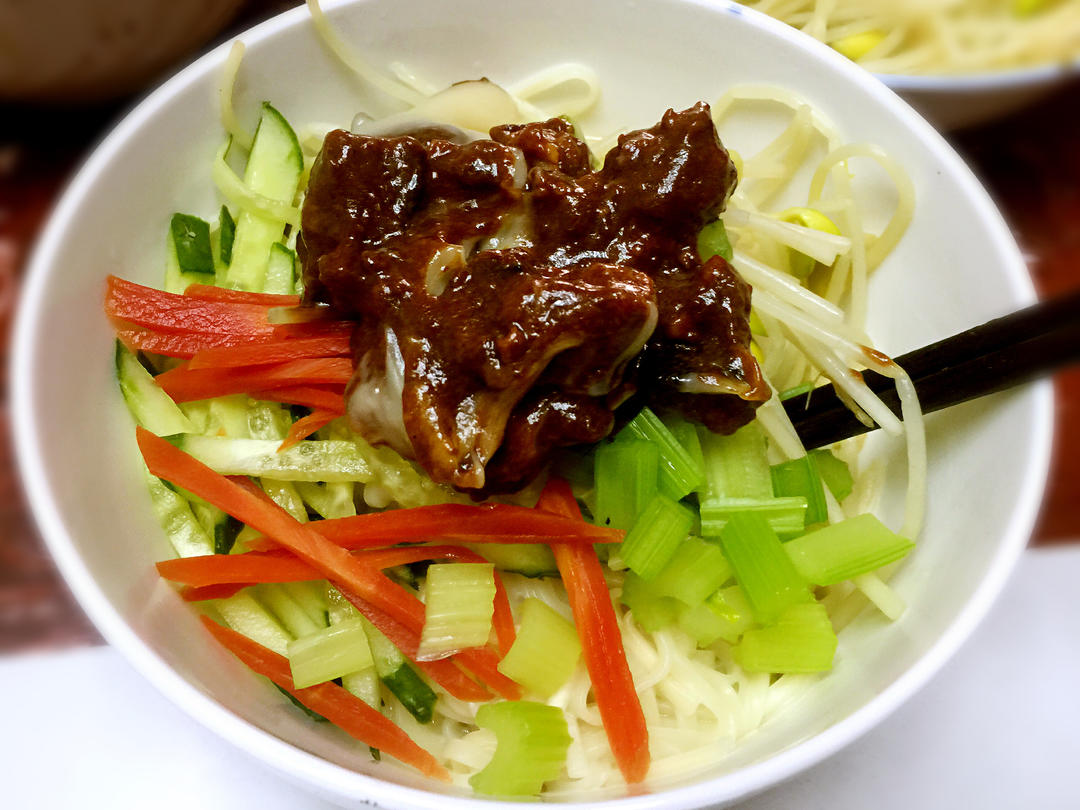
To serve as Zha Jiang Mian:
- Boil fresh wheat noodles (thick ones are best).
- Top with a generous ladle of the hot Fried Sauce.
- Add “菜码” (Garnishes): Julienne cucumber, watermelon radish, blanched bean sprouts, and edamame.
- Mix vigorously and enjoy!
FAQ & Troubleshooting
Q: My sauce tastes bitter. Why?
A: You likely cooked it for too long or the heat was too high, causing the soybean paste to scorch. Keep the heat low and don’t exceed 30 minutes.
Q: Can I use ground pork?
A: Yes, you can. It cooks faster, but you lose the traditional “Old Beijing” texture of biting into a savory cube of pork belly.
Q: Is this gluten-free?
A: Generally, no. Sweet bean sauce and yellow soybean paste usually contain wheat flour. You would need to source specific gluten-free miso and hoisin alternatives to approximate this.
Food Safety & Preparation
- Pork Safety: Ensure the pork belly cubes reach an internal temperature of at least 145°F (63°C) during the frying process. Since we simmer the sauce for 20+ minutes, this is easily achieved.
- Sodium: This dish is naturally high in sodium due to the fermented pastes. It is meant to be a concentrate mixed with plain noodles and vegetables. Do not eat the sauce by itself in large quantities.
Nutrition Information (Estimate)
- Calories: 450 kcal
- Carbohydrates: 18g
- Protein: 15g
- Fat: 35g
- Sodium: 1800mg
- Sugar: 9g
- Fiber: 2g (Disclaimer: Nutrition information is calculated using an ingredient database and should be considered an estimate. Garnishes and optional items are not included. Actual values vary based on the specific brand of soybean paste used.)
Authoritative References
For more on traditional Chinese fermentation and sauce making, the FAO (Food and Agriculture Organization) provides detailed reports on legume fermentation. Additionally, the Chinese Nutrition Society offers guidelines on sodium intake and traditional diet balance.
Beijing Fried Sauce (Zha Jiang) with Pork Belly

Equipment
- Wok or Deep Skillet Carbon steel preferred
- Sharp Knife
Ingredients
Scallion Oil Base
- 4 tbsp vegetable oil approximate, be generous
- 1 whole star anise
- 3 slices ginger
- 2 cloves garlic smashed
- 1/4 stalk scallion (green onion) cut into sections for infusing oil
Fried Sauce
- 10.5 oz pork belly 300g, skin removed, 1.5cm cubes
- 7 oz Dry Yellow Soybean Paste (Gan Huang Jiang) 200g
- 3.5 oz Sweet Bean Sauce (Tian Mian Jiang) 100g
- 3 tbsp light soy sauce
- 1/2 cup water approximate, for diluting paste
- 2 stalks scallions finely chopped, divided into two batches
Instructions
- Prep the ingredients: Remove the skin from the pork belly and cut it into 1.5cm (0.5 inch) cubes. Finely chop the scallions. Dilute the Dry Yellow Soybean Paste and Sweet Bean Sauce in a bowl with the light soy sauce and enough water to make a smooth, batter-like consistency.
- Make Scallion Oil: Heat the oil in a wok over medium-low heat. Add the ginger slices, smashed garlic, star anise, and scallion sections. Fry slowly until the aromatics turn golden brown and dry. Remove and discard the solids.

- Render the Pork: Add the pork belly cubes to the infused oil. Fry over low heat until the meat shrinks slightly, turns golden, and the oil becomes transparent.
- Fry the Sauce: Pour the diluted paste mixture into the wok. Add half of the chopped scallions. Stir constantly to prevent sticking.
- Simmer: Cook over low heat for 20 to 30 minutes. If the sauce becomes too dry, add a splash of hot water. If too runny, increase heat slightly. The oil should eventually separate from the sauce.
- Finish: Just before turning off the heat, add the remaining chopped scallions for a fresh aroma. Stir well and serve over noodles.

Notes
* **Oil:** Do not skimp on oil; it prevents the paste from burning and acts as a preservative. You can scoop excess oil out after cooking.
* **Safety:** Ensure pork is cooked to a minimum internal temperature of 145°F (63°C).












Leave a Reply