Dry pot pork ribs are the weeknight answer to “I want ribs, but I also want vegetables, and honestly I want soup too.” This 懒人一锅两吃 version — one pot, two dishes — braises the ribs first in a clay pot, then sears them with potatoes, onion, and dried chilies in a spicy dry pot sauce. The braising liquid stays behind and becomes a clear, sweet rib broth with a handful of greens tossed in at the end. One pot on the stove, two completely different dishes on the table.
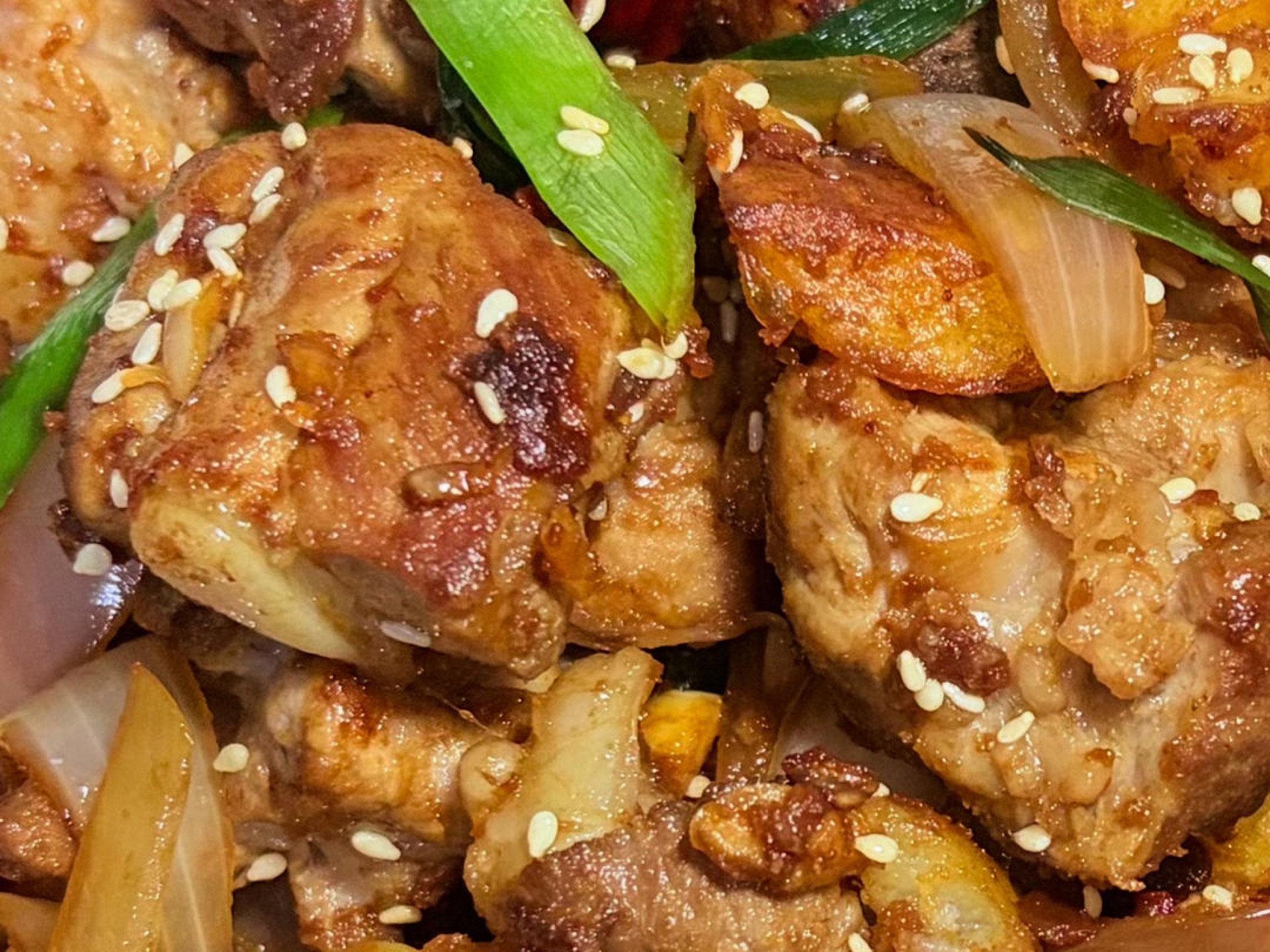
What Is Dry Pot Pork Ribs?
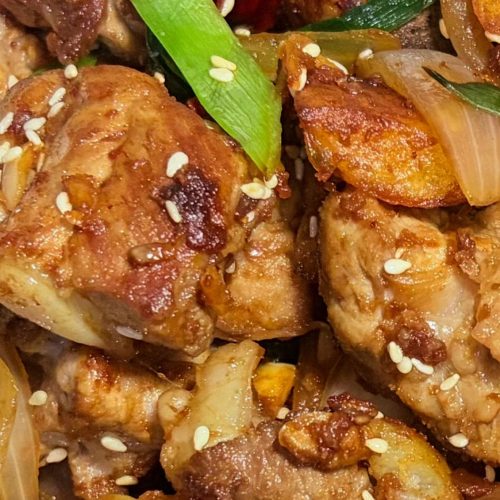
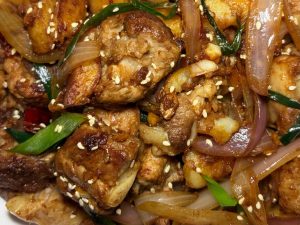
干锅 (gān guō) literally means “dry pot” — a cooking style where the ingredients are stir-fried in a heavy pot or wok until the liquid is almost gone, so the sauce clings to the food instead of pooling around it. Dry pot pork ribs (干锅排骨) takes ribs that have already been cooked tender, sears them for a crisp edge, then tosses them with potatoes, onion, garlic sprouts, and chilies in a savory, mildly spicy sauce. The result is closer to a sizzling stir-fry than a stew: crisp-edged potatoes, ribs with a little bite on the outside and tenderness within, and a sauce that coats every piece.
The one-pot twist here is that the same clay pot that braises the ribs also gives you the broth — you get the dry pot for dinner and a light rib soup on the side, with barely any extra work.
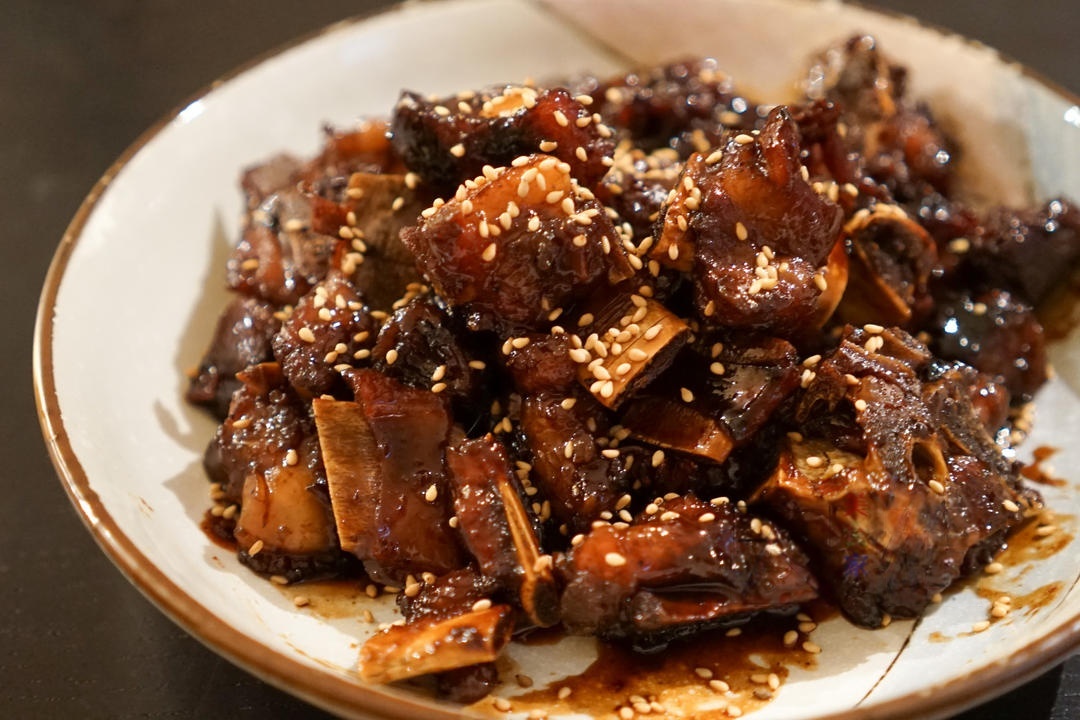
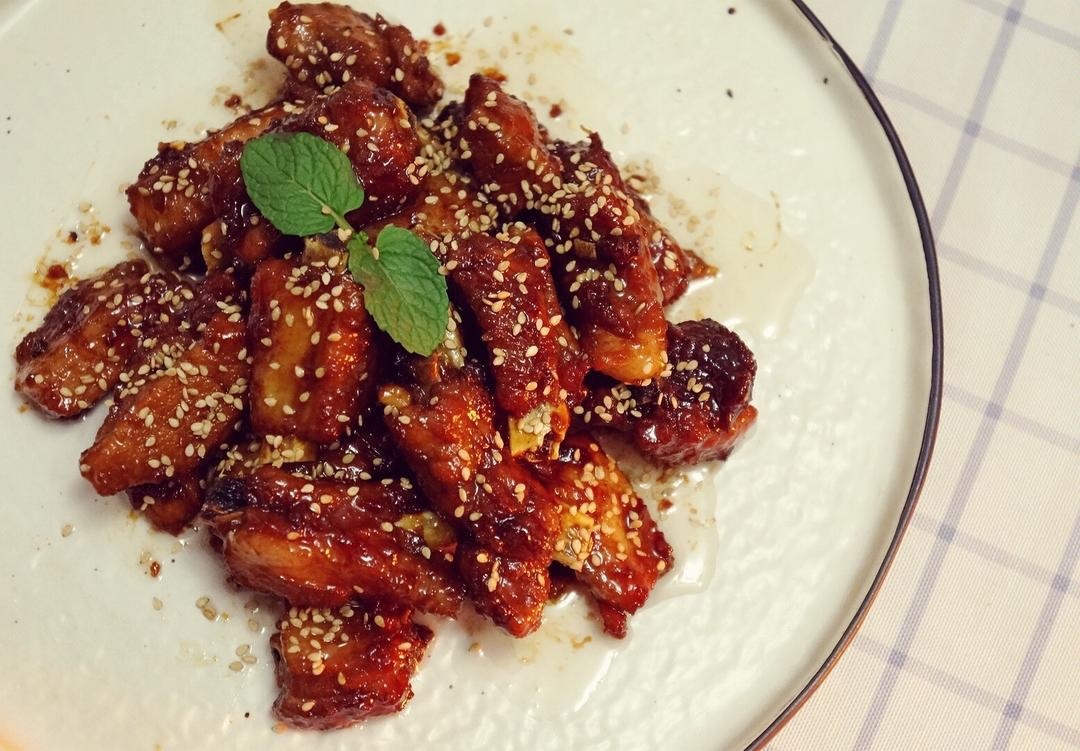
Rib dishes show up in many forms across Chinese home cooking, and if you love the sweet-savory end of the spectrum, our sweet and sour pork ribs is the classic to try next.
1Authentic Sweet and Sour Pork Ribs (Tang Cu Pai Gu)A foolproof, no-fry Sweet and Sour Pork Ribs recipe using the classic 1-2-3-4 golden ratio for the perfect balance of sweet and tangy flavors. Sticky, glossy, and incredibly tender!Check out this recipe
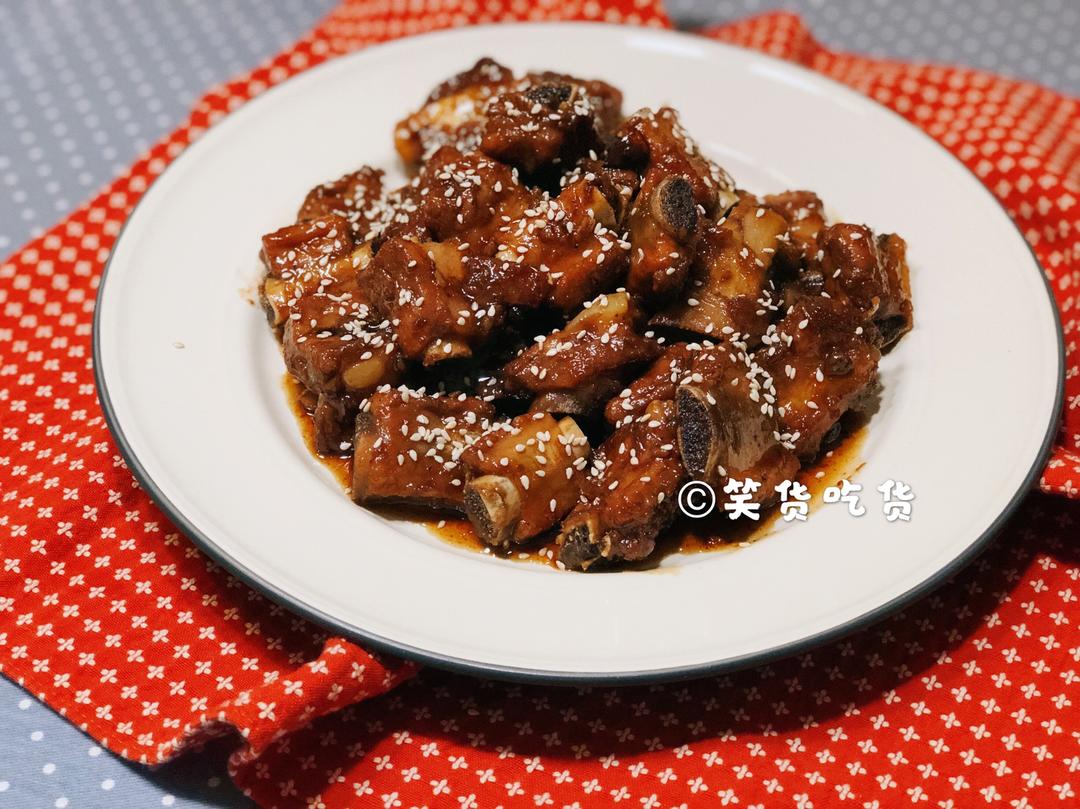
For a fun, modern spin on the same cut, coca cola sweet and sour pork ribs uses soda for a glossy, caramel-like glaze that kids love.
2Coca-Cola Sweet and Sour Pork Ribs (Tang Cu Pai Gu)A restaurant-quality recipe for Sweet and Sour Ribs using a clever shortcut: Coca-Cola! This method creates a brilliant red glaze and tender meat with a hint of fruitiness from preserved plums.Check out this recipe
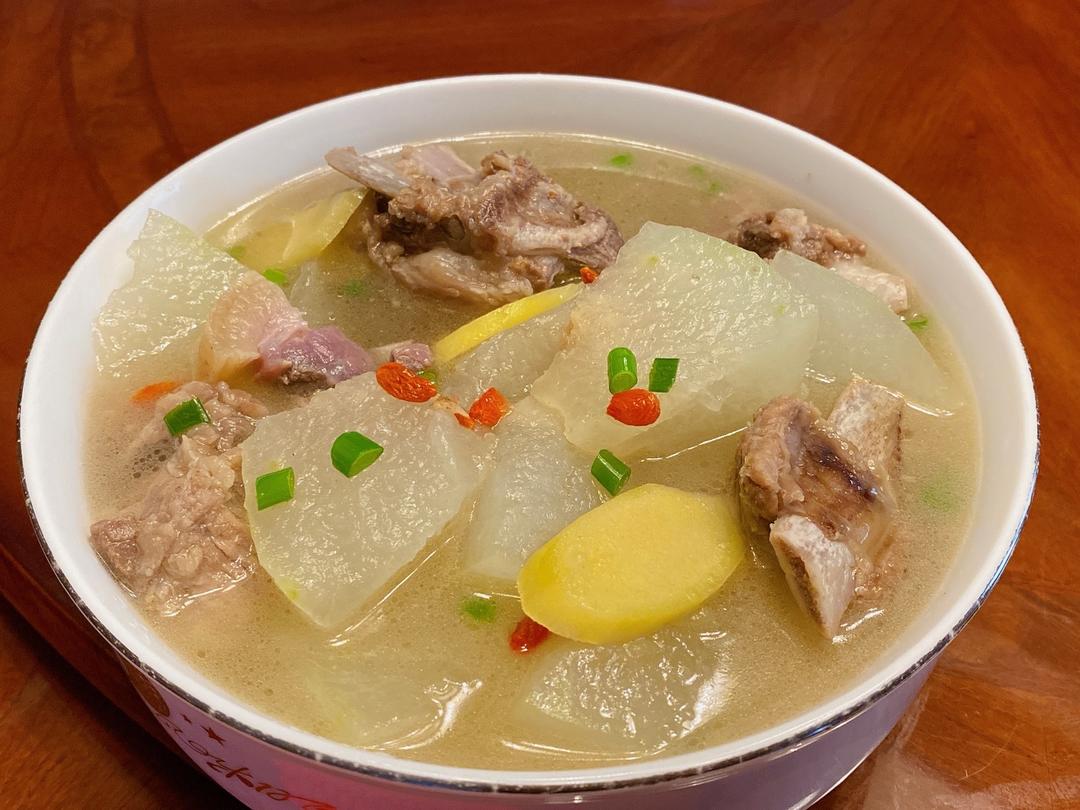
And when you want something lighter and brothy, winter melon pork rib soup is a gentle, cooling soup built on the same rib-braising technique.
3Authentic Winter Melon Pork Rib Soup (Dong Gua Pai Gu Tang)A comforting, hydrating summer soup featuring tender pork ribs, savory salted pork, and melt-in-your-mouth winter melon. Authentic, simple, and naturally healthy.Check out this recipe
Ingredient Notes
Pork ribs (排骨): Use meaty, bone-in ribs cut into 1½-inch pieces. Ask your butcher to cut them crosswise into short lengths so they cook evenly and are easy to pick up with chopsticks. Fresh ribs, not frozen, give the sweetest braising liquid.
Dry pot sauce (干锅酱): This is the shortcut that makes the dish weeknight-fast. It’s a fermented chili-bean paste blend sold in jars at Chinese groceries; Lee Kum Kee and similar brands make one. It’s salty and savory with mild heat, so taste before adding salt.
Potatoes: Waxy or all-purpose potatoes hold their shape best when pan-fried. Cut them into thick batons roughly the size of your thumb so the inside steams and the outside crisps.
Dried chilies: The small red dried chilies sold in bags are mild and aromatic rather than fiery — they perfume the oil. If you want real heat, add fresh bird’s eye chilies at the blooming step.
Garlic sprouts (蒜苗): Also sold as garlic scapes or green garlic. They add a fresh, sweet bite at the end. If you can’t find them, scallions work fine.
Amaranth greens (苋菜): A tender, quick-cooking green that turns the broth slightly pink and sweet. Spinach or water spinach are easy swaps.
Ingredients
Here’s everything you’ll need for the dry pot and the bonus broth. Full measurements are in the recipe card below.
- 1½ lb pork ribs, cut into 1½-inch pieces
- 6 slices ginger
- 1 tbsp Shaoxing cooking wine
- 3 cups boiling water
- 1 lb potatoes, peeled and cut into batons
- 1 stalk garlic sprouts, cut into lengths
- ½ onion, sliced
- 2 dried chilies, cut into segments
- 4 cloves garlic, minced
- 2 tbsp dry pot sauce (干锅酱)
- 1 tbsp light soy sauce
- 1 tsp toasted white sesame seeds (optional)
- 3 tbsp neutral oil
- 2 tsp salt, for the broth
- 1 bunch amaranth greens
Equipment Needed
You need very little for this one: a clay pot or Dutch oven for the braise (a clay pot holds heat gently and keeps the broth clear), a wok or large skillet for the dry pot, a cutting board and knife, and a slotted spoon for lifting the ribs in and out. A lid that fits the wok helps the potatoes cook through faster. That’s it — no special dry pot vessel required, though if you have a small cast-iron dry pot, you can serve in it for the full restaurant effect.
Why This Recipe Works
Braising first, then searing, is the whole trick. The braise cooks the ribs through and gives you a flavorful broth as a byproduct; the sear afterward gives the meat a crisp, browned surface that a straight braise can never achieve. Pan-frying the potatoes separately (with the lid on to steam them) means they’re fully cooked inside and golden outside before they ever meet the sauce. And the dry pot sauce is bloomed in oil with garlic and chilies first — heating the paste in fat is what releases its aroma, a step that’s easy to skip and always noticeable when you do. Finally, everything is tossed over high heat at the end so the sauce reduces onto the ingredients instead of turning into a puddle.
Blooming a fermented chili-bean paste in oil before adding liquid is a classic Chinese technique — the fat carries the paste’s volatile aroma compounds and dissolves its flavors so they spread evenly through the dish instead of tasting raw and one-note.
Prep & Mise en Place
This dish moves fast once the wok is hot, so do all your cutting before you start. Peel and baton the potatoes and keep them in a bowl of cold water so they don’t brown. Slice the onion, cut the garlic sprouts, segment the dried chilies, and mince the garlic — put the aromatics (garlic, chilies, dry pot sauce) together in one small bowl, since they go into the wok in a single sequence. Measure out the soy sauce and set the sesame seeds nearby. The ribs get blanched and rinsed first, so start those before you cut anything, and the 40-minute braise gives you plenty of time to finish the prep. Have the amaranth washed and ready for the broth at the very end.
Cooking Process
Step 1 — Blanch the Ribs
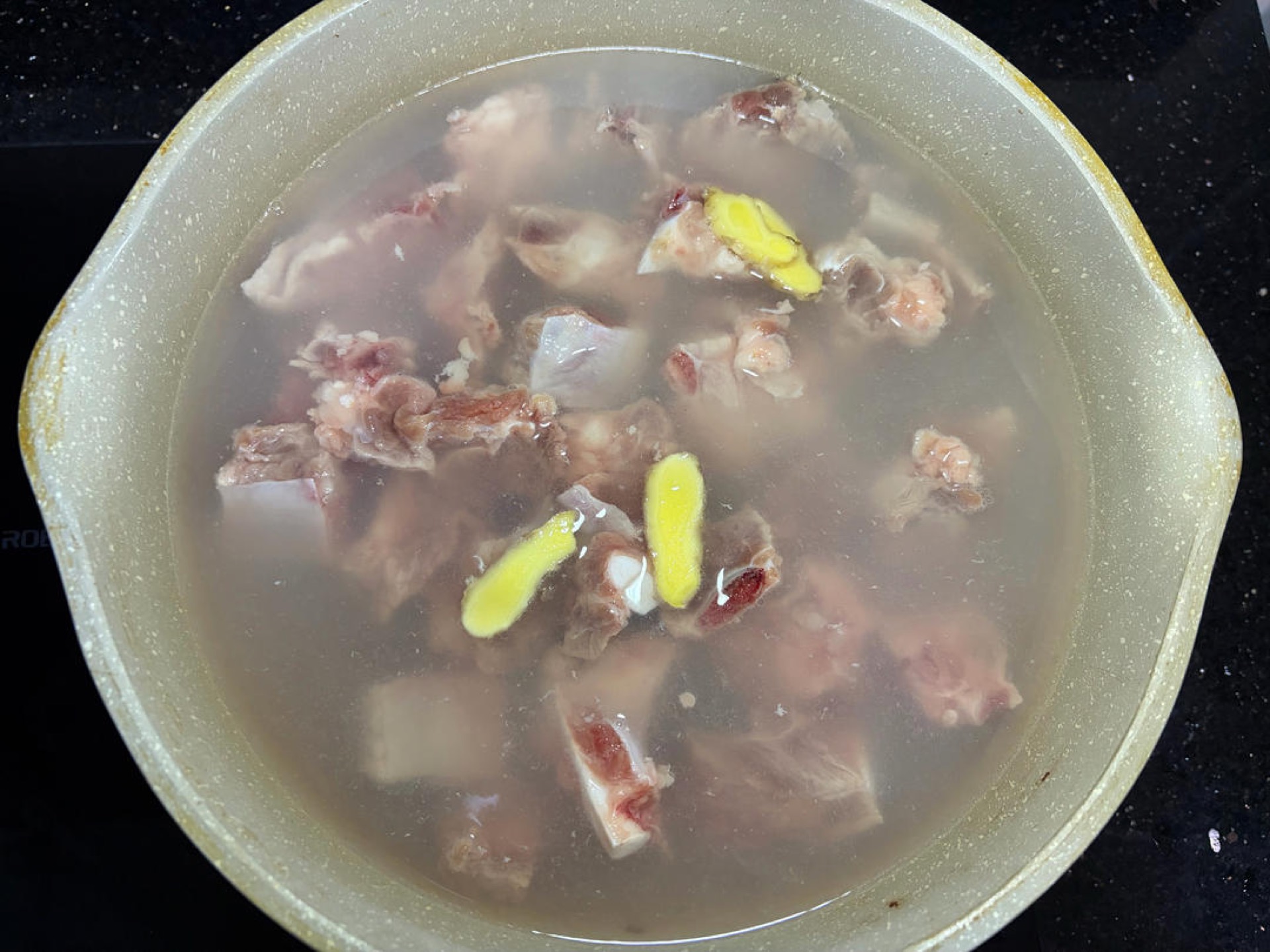
Put the fresh pork ribs in a pot of cold water with ginger slices and cooking wine, bring to a boil over high heat, skim off the foam, and boil 2 more minutes before scooping them out.
Step 2 — Rinse Clean
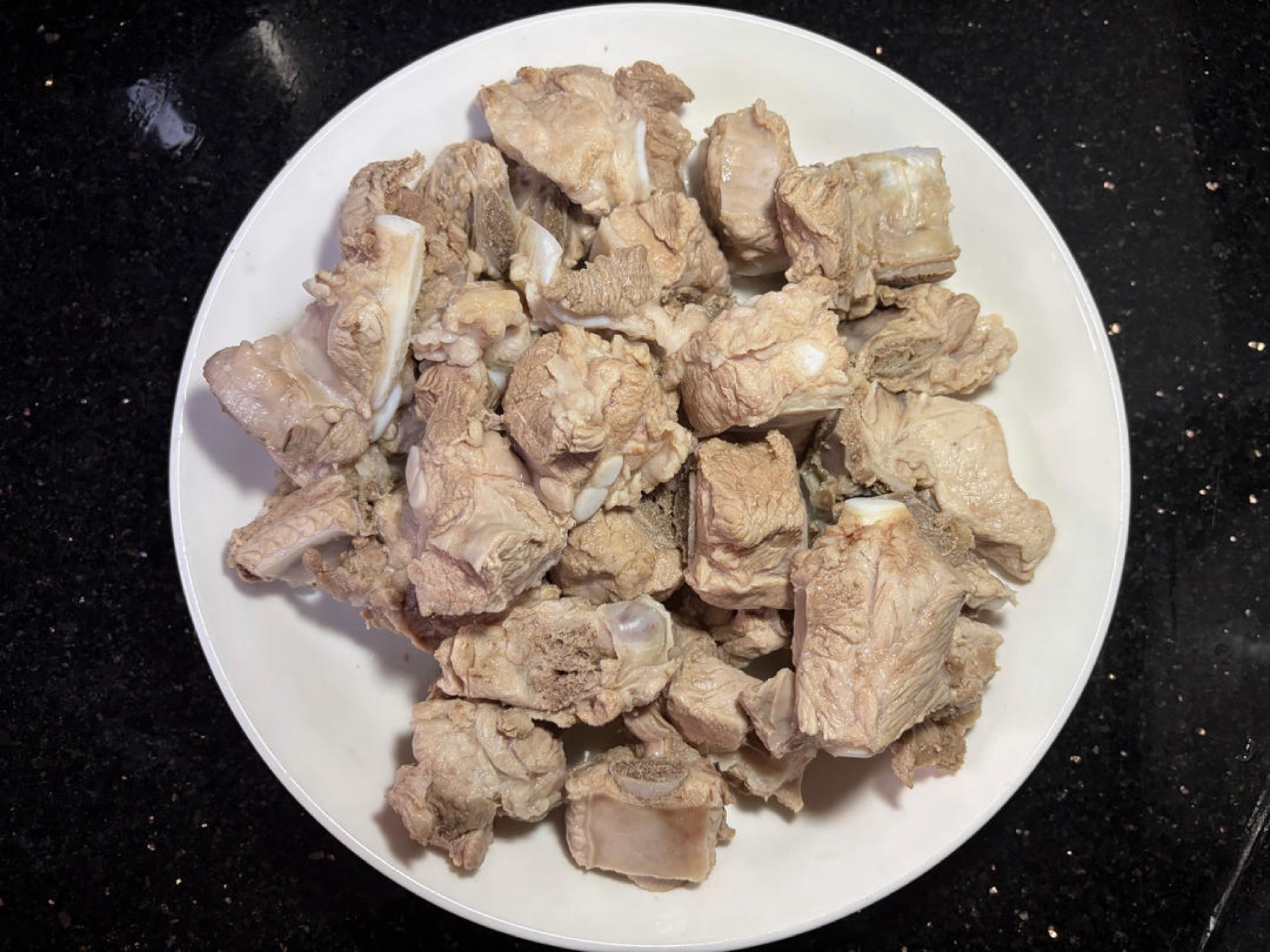
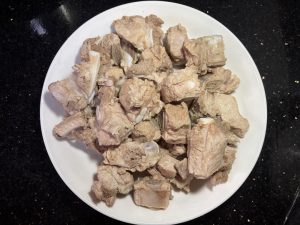
Wash the blanched ribs several times in warm water until every trace of surface foam is gone.
Step 3 — Braise in the Clay Pot
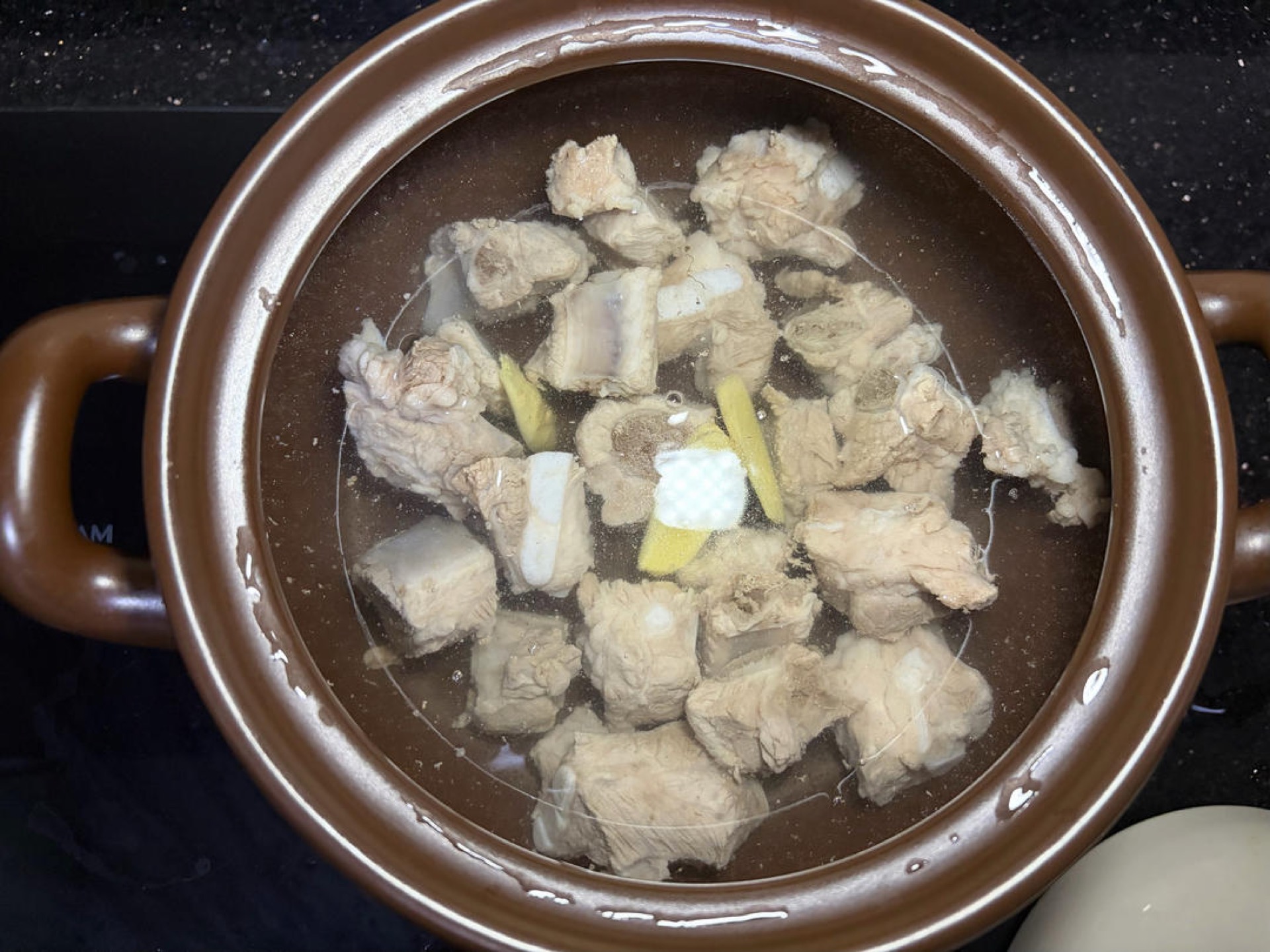
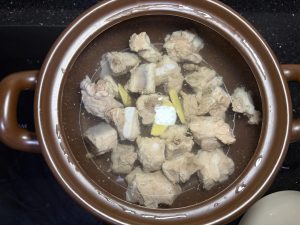
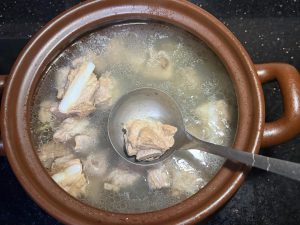
Add boiling water to a clay pot, add the ribs and ginger slices, cover, bring to a boil over high heat, then turn to low and simmer about 40 minutes — use the braising time to prep the vegetables.
Step 4 — Prep the Vegetables
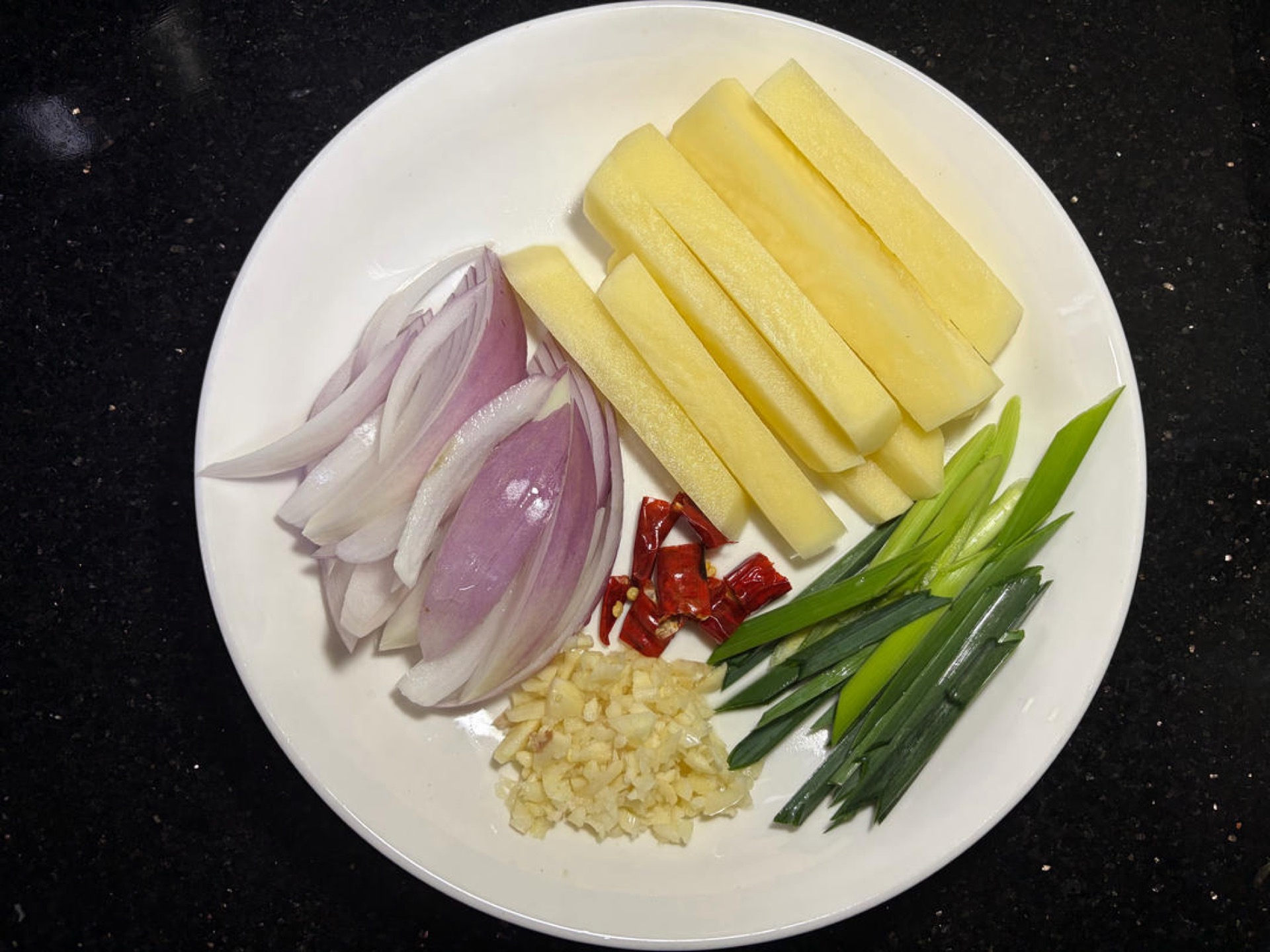
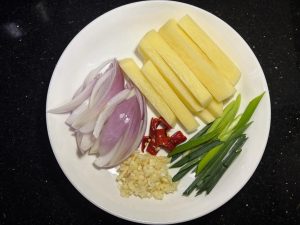
Peel and cut the potatoes into thick batons, cut the garlic sprouts into segments, slice the onion, cut the dried chilies into segments, and mince the garlic.
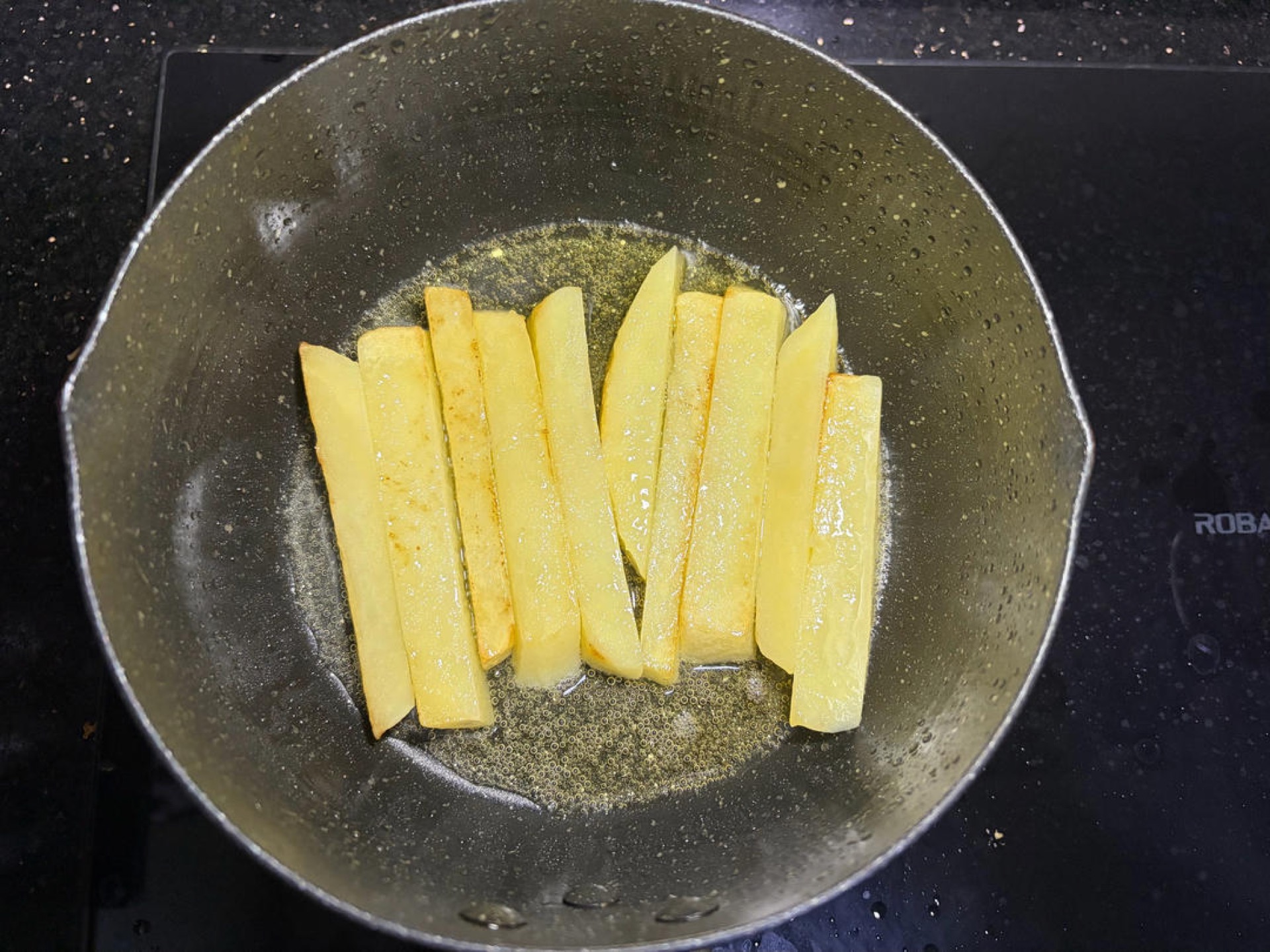
Step 5 — Pan-Fry the Potatoes
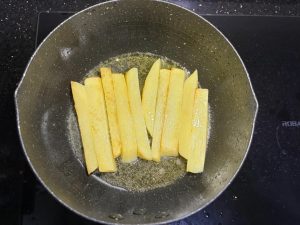
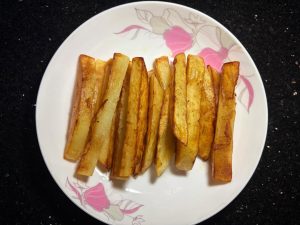
Heat oil in a wok, add the potatoes, and pan-fry them — you can cover the wok with a lid during frying so they cook through more easily.
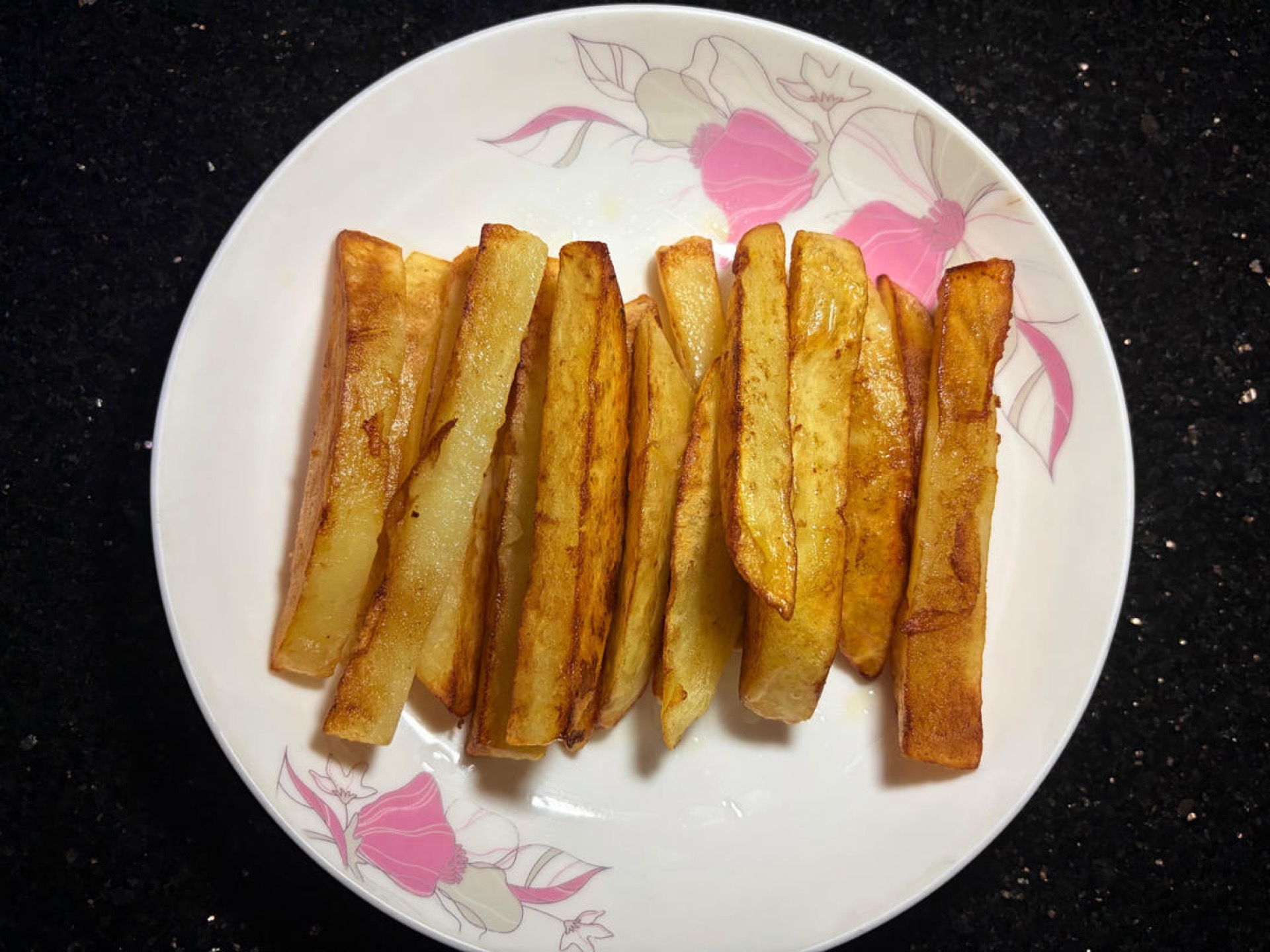
Step 6 — Set the Potatoes Aside
Fry until the surface is golden brown, then scoop them out and set aside.
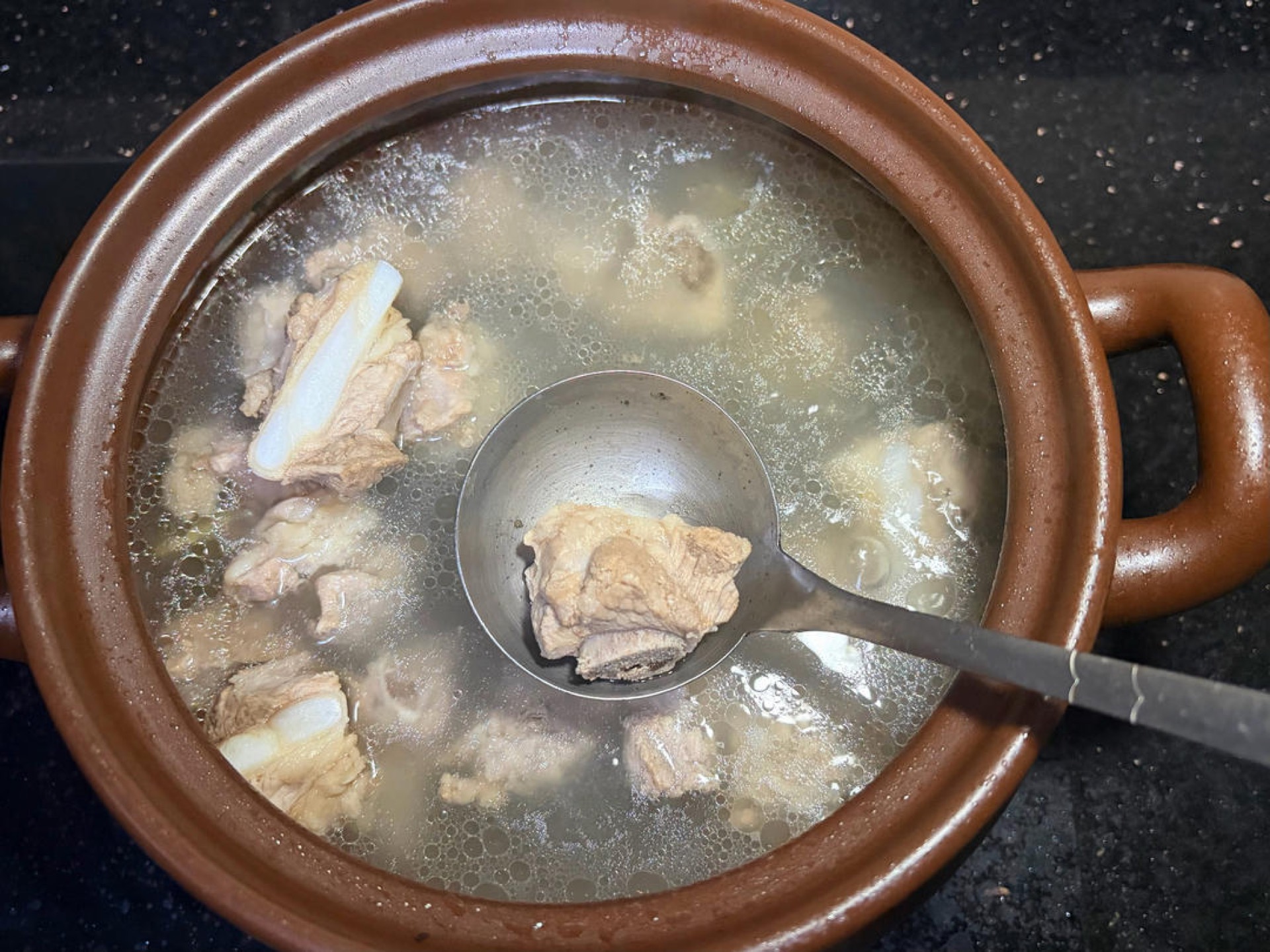
Step 7 — Check the Ribs
After 40 minutes the ribs are cooked through — they will still be seared, so they don’t need to be braised fall-apart tender, just chewy-tender.
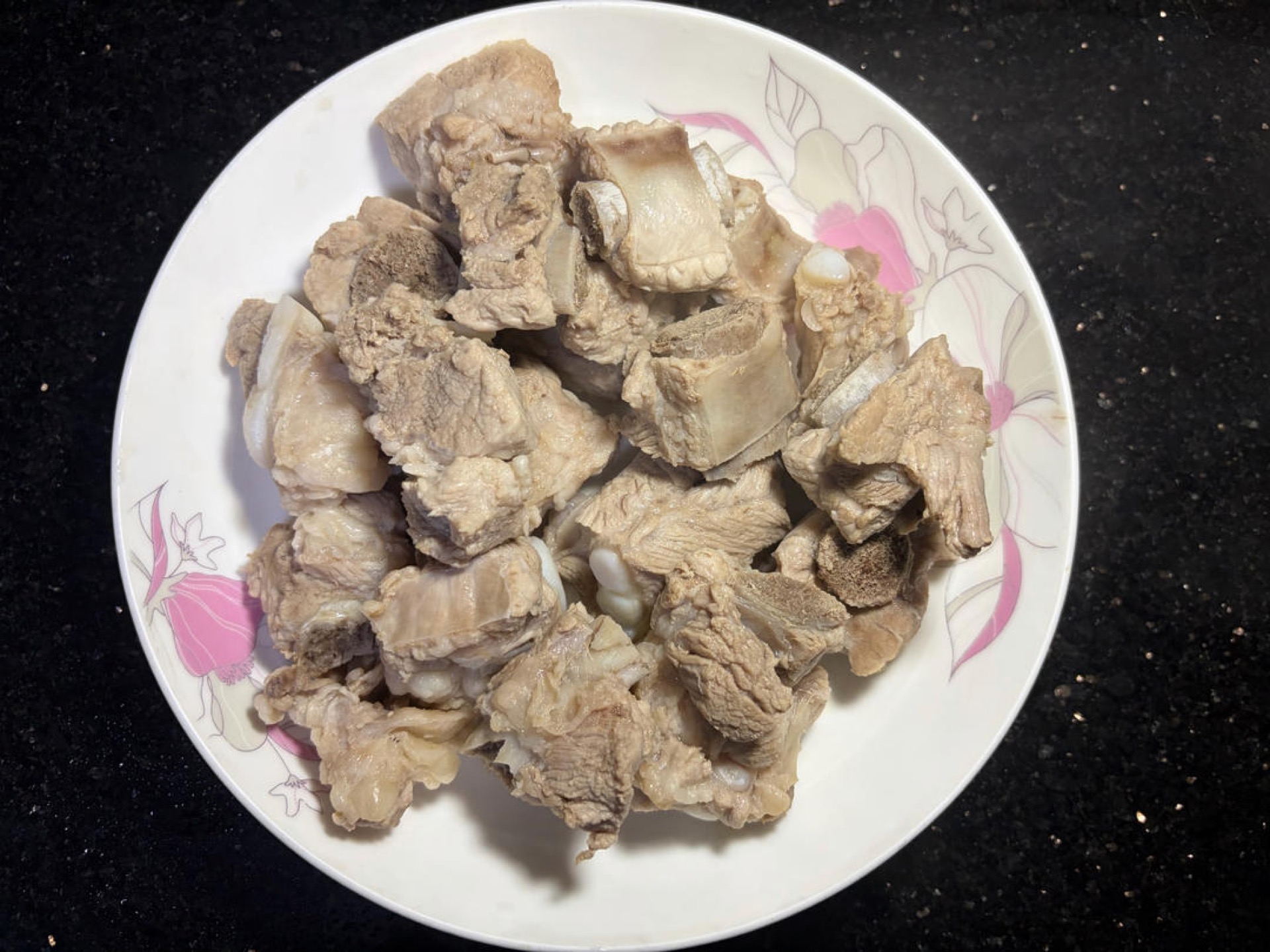
Step 8 — Remove the Ribs
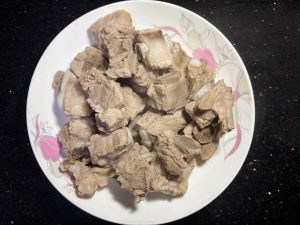
Scoop the braised ribs out of the pot.
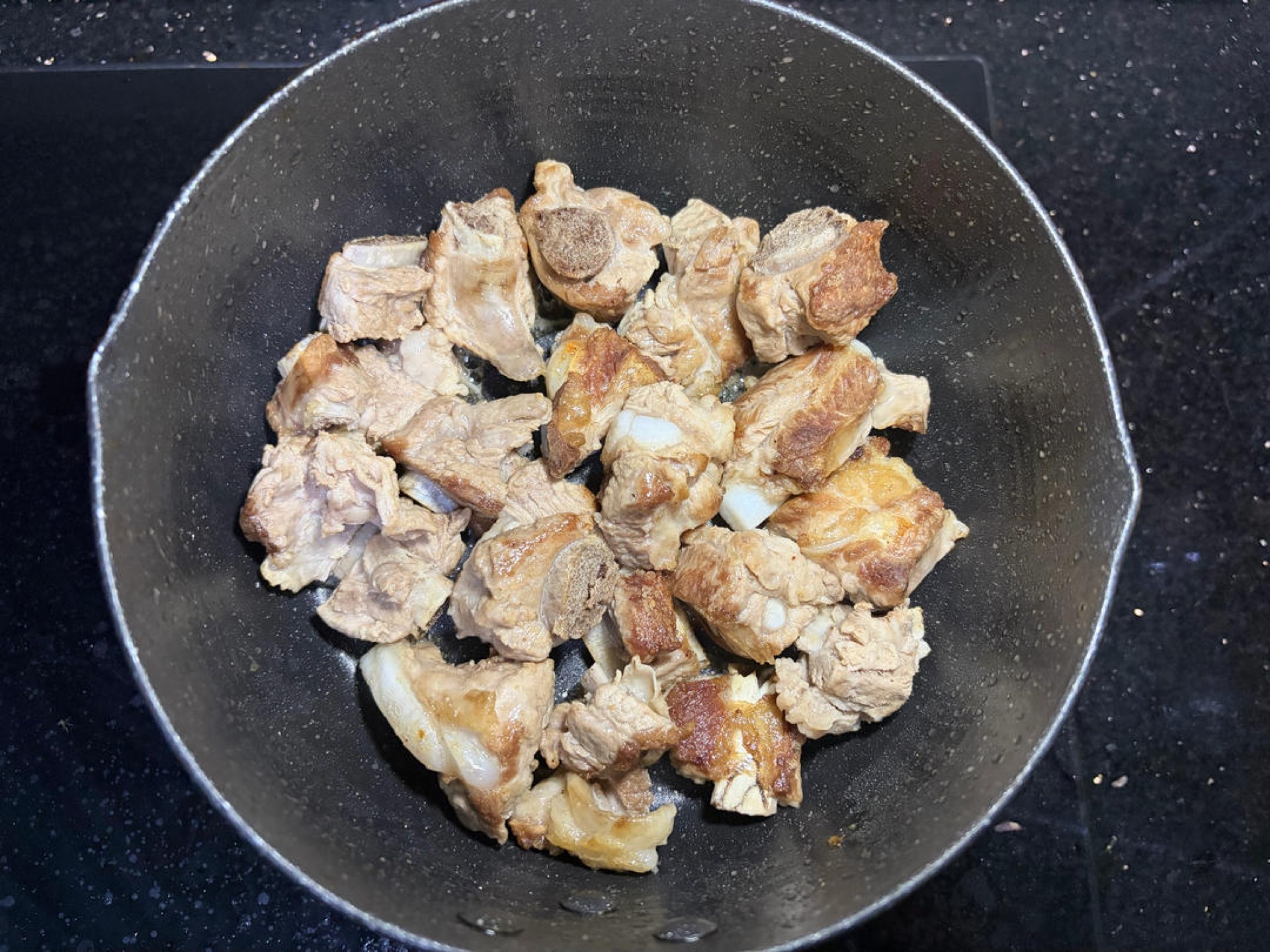
Step 9 — Sear the Ribs
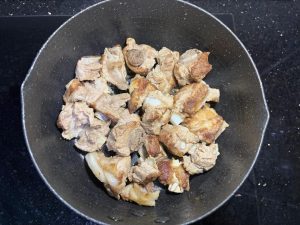
Heat a little oil in a wok, add the braised ribs, and stir-fry over medium-low heat until the surface is faintly golden, then scoop them out.
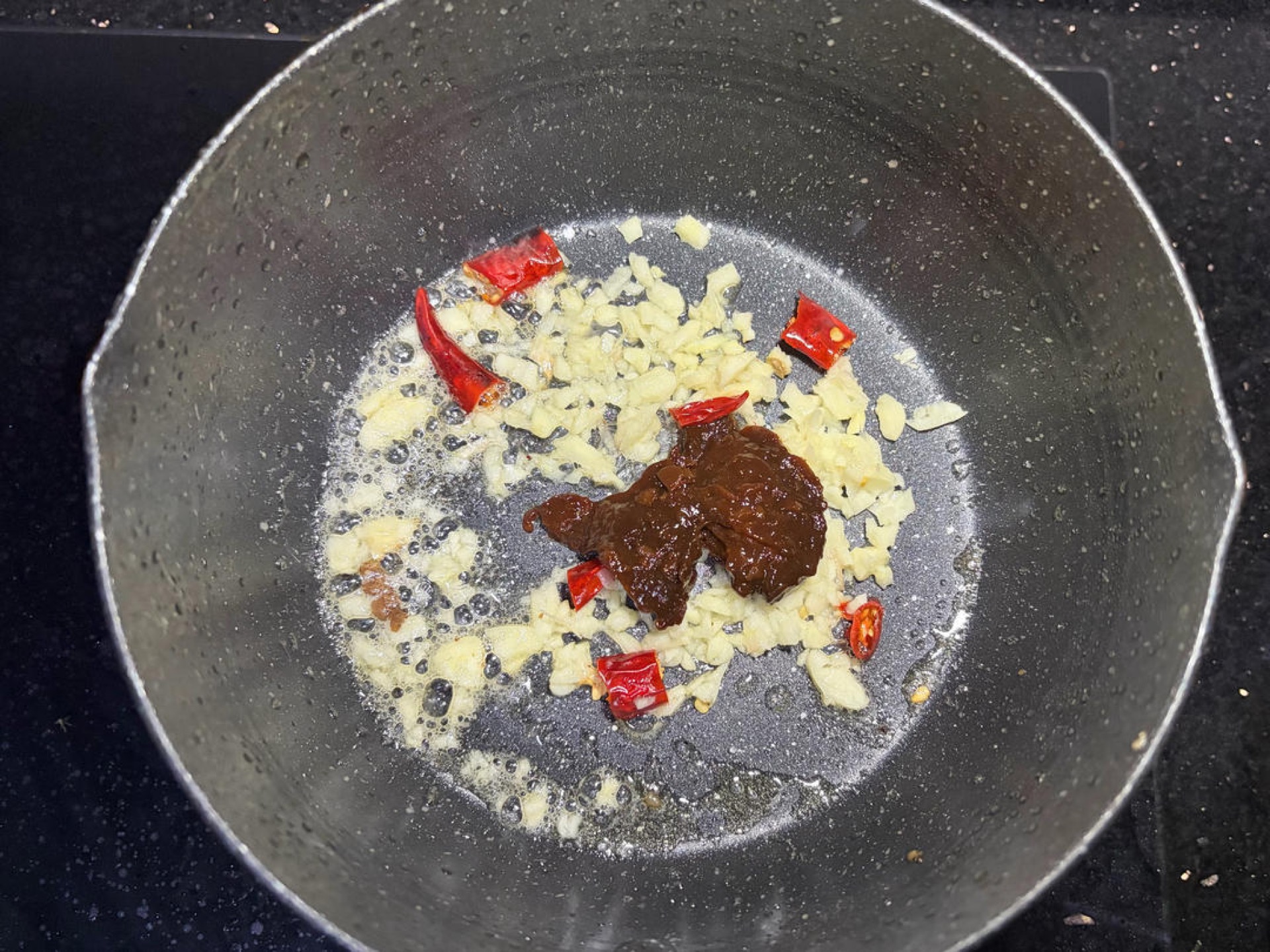
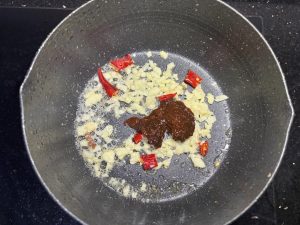
Step 10 — Bloom the Aromatics
Without washing the wok, add a little oil, add the minced garlic and dried chilies and fry until fragrant, then add two spoonfuls of dry pot sauce and stir over low heat until aromatic — if you want heat, add fresh bird’s eye chilies; these dried chilies are mild enough for kids.
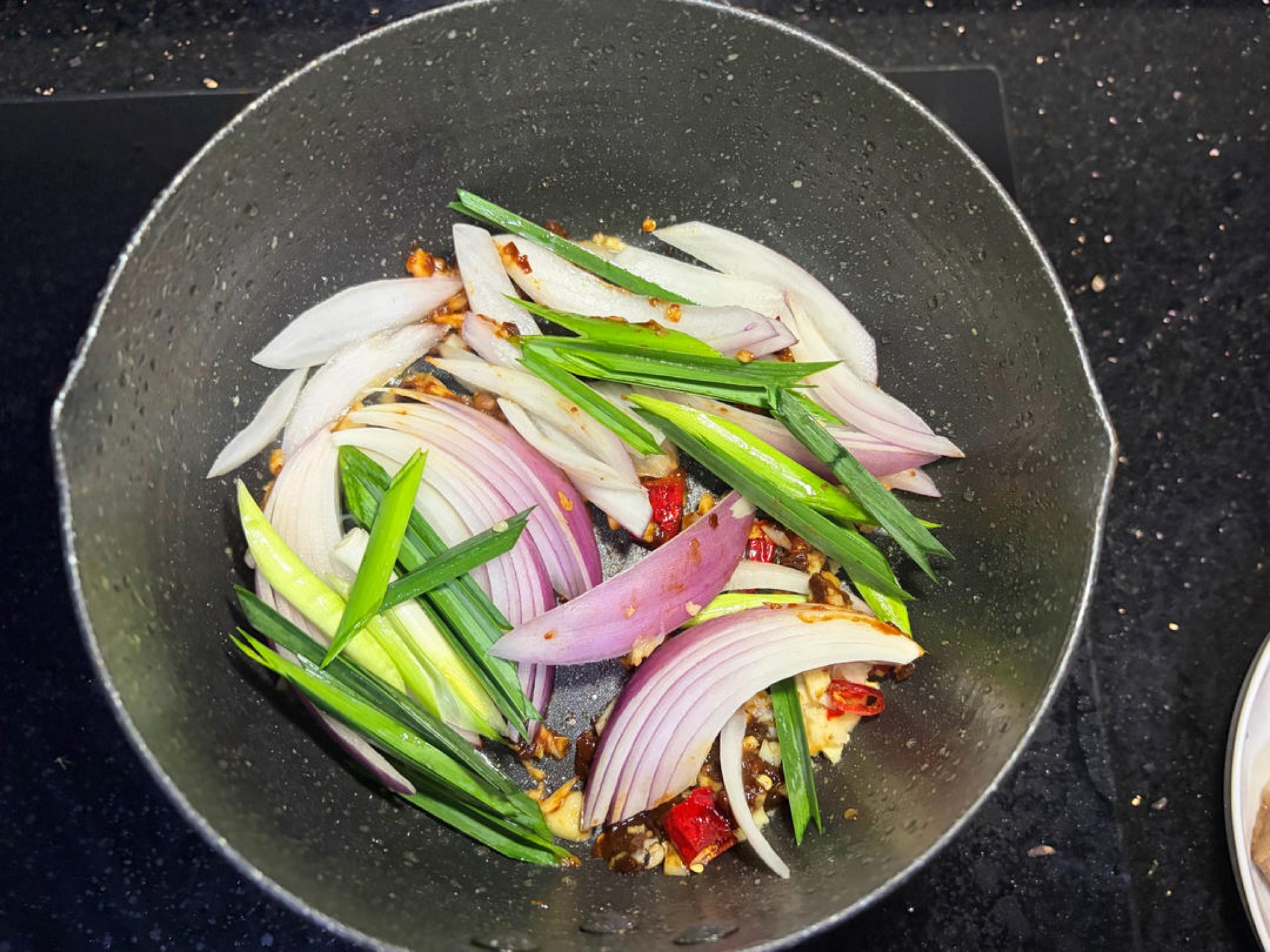
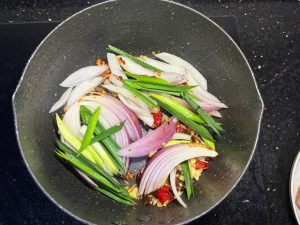
Step 11 — Add the Onion
Add the onion and garlic and stir-fry for a few seconds.
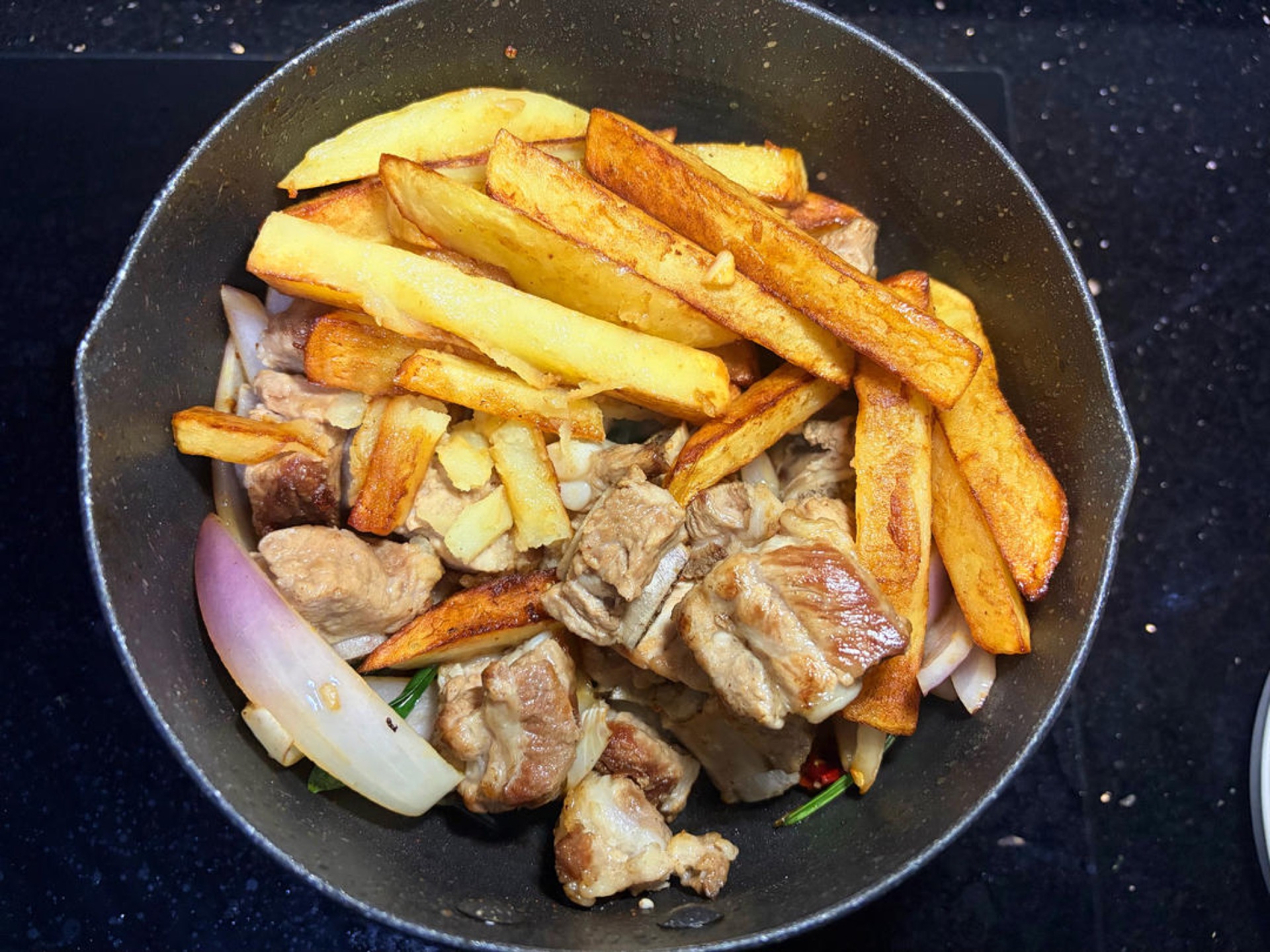
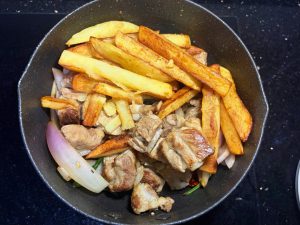
Step 12 — Toss Ribs and Potatoes
Add the ribs and potatoes, stir-fry over high heat until the onion is just cooked.
Step 13 — Season and Finish
Add a splash of light soy sauce, keep tossing over high heat to coat evenly, then turn off the heat right away.
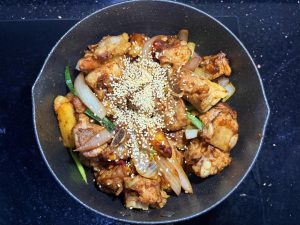
Step 14 — Add Sesame
Sprinkle on toasted white sesame seeds and toss — add them if you have them, skip them if you don’t.
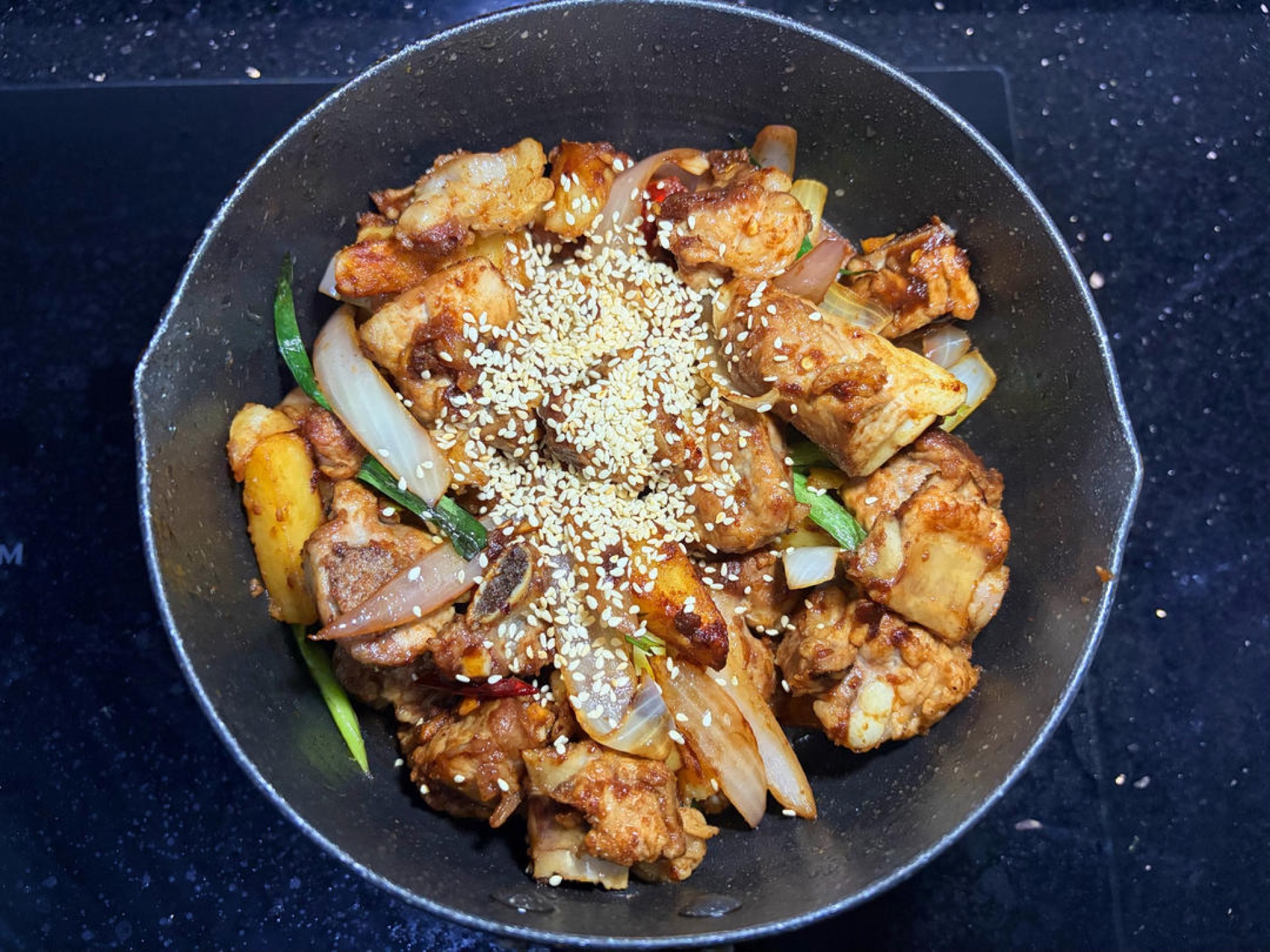
Step 15 — Serve the Dry Pot
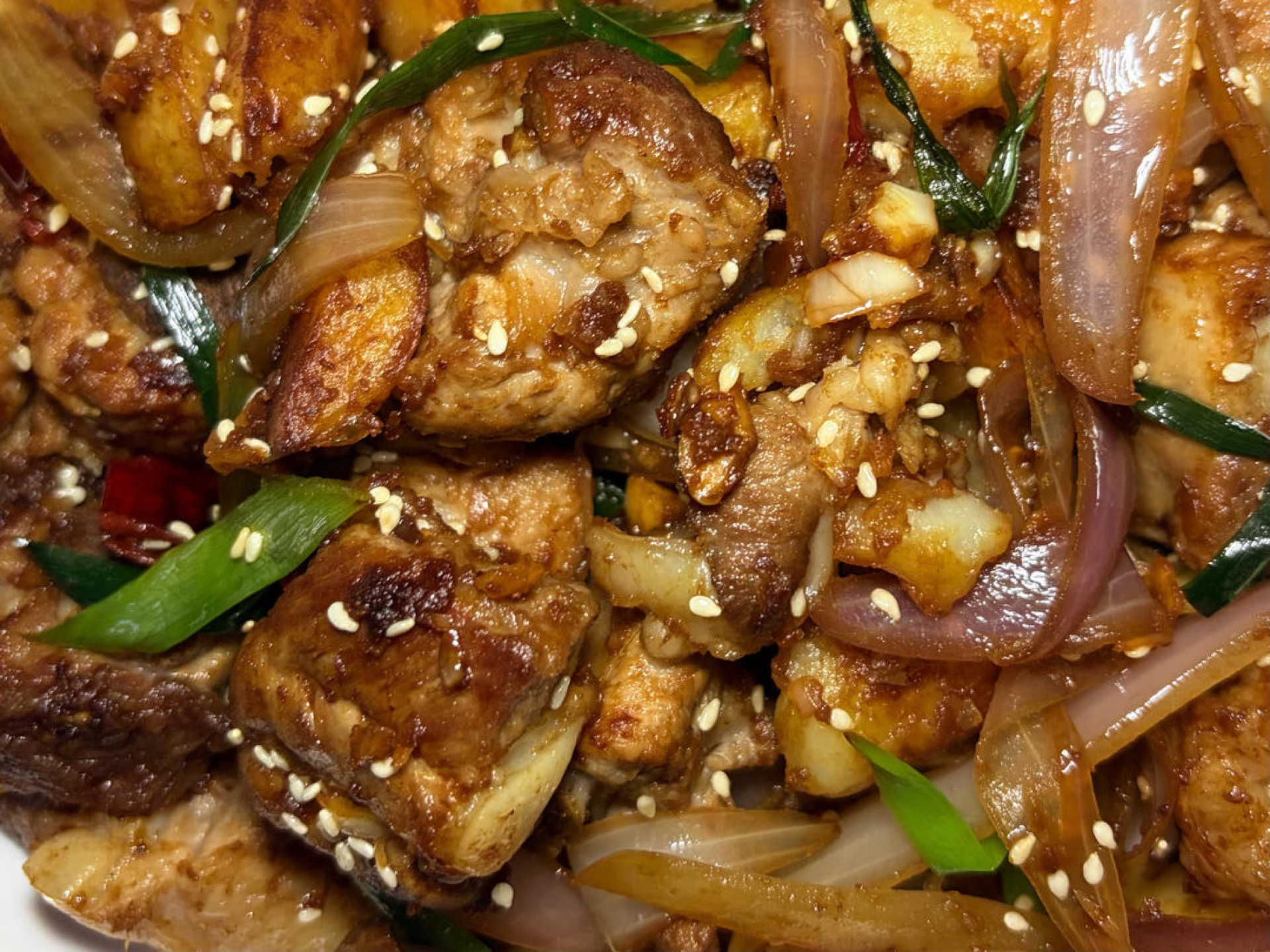
Every rib is coated in the mildly spicy, savory dry pot sauce, crisp outside and tender inside — no salt needed since the dry pot sauce and soy sauce are already seasoned.
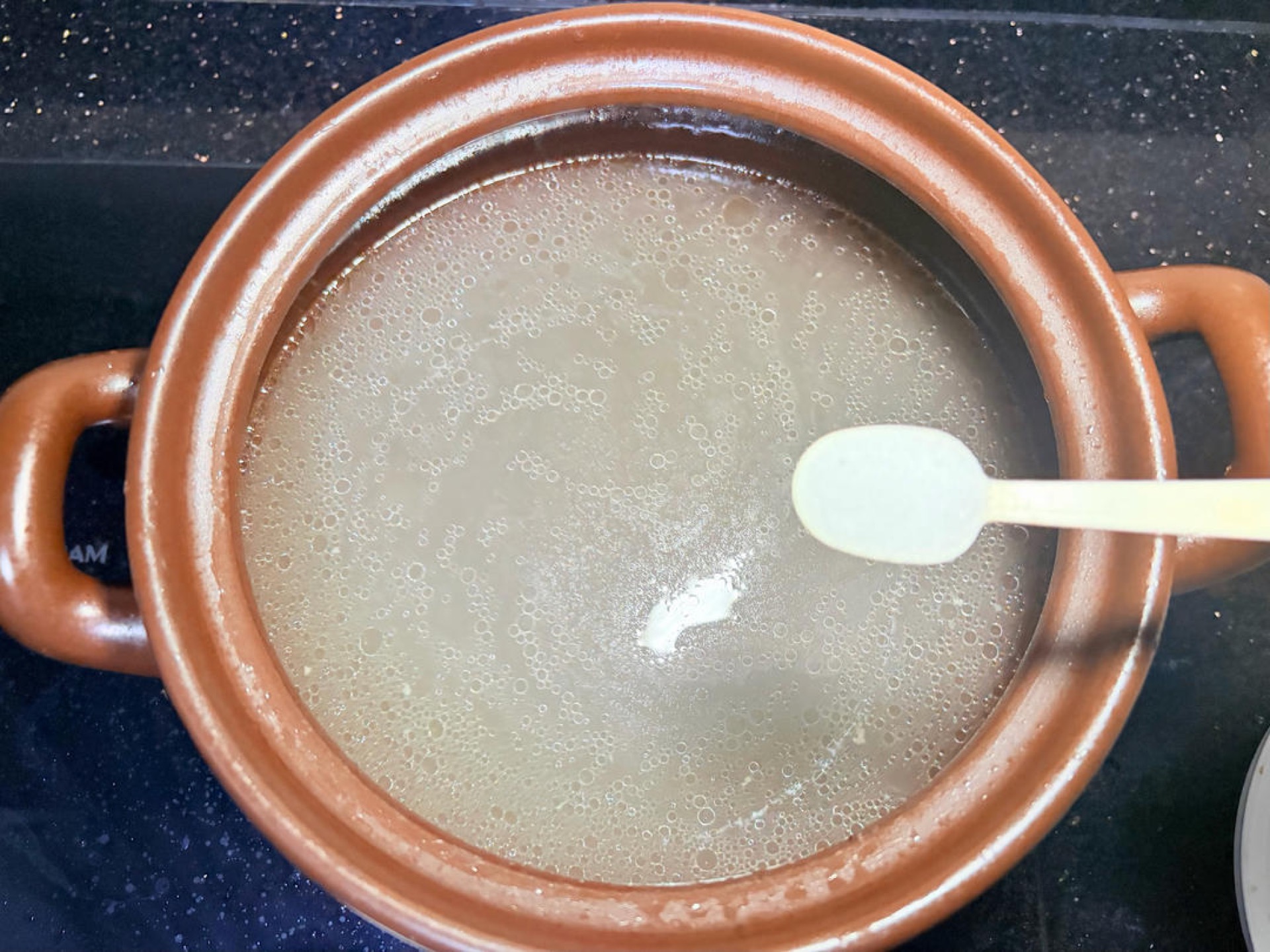
Step 16 — Make the Broth
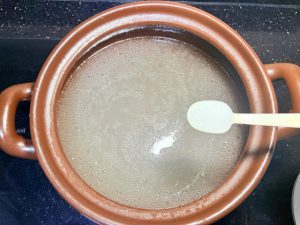
Don’t waste the braising liquid — bring it to a boil over high heat, add two spoonfuls of salt, and it’s ready to drink as is.
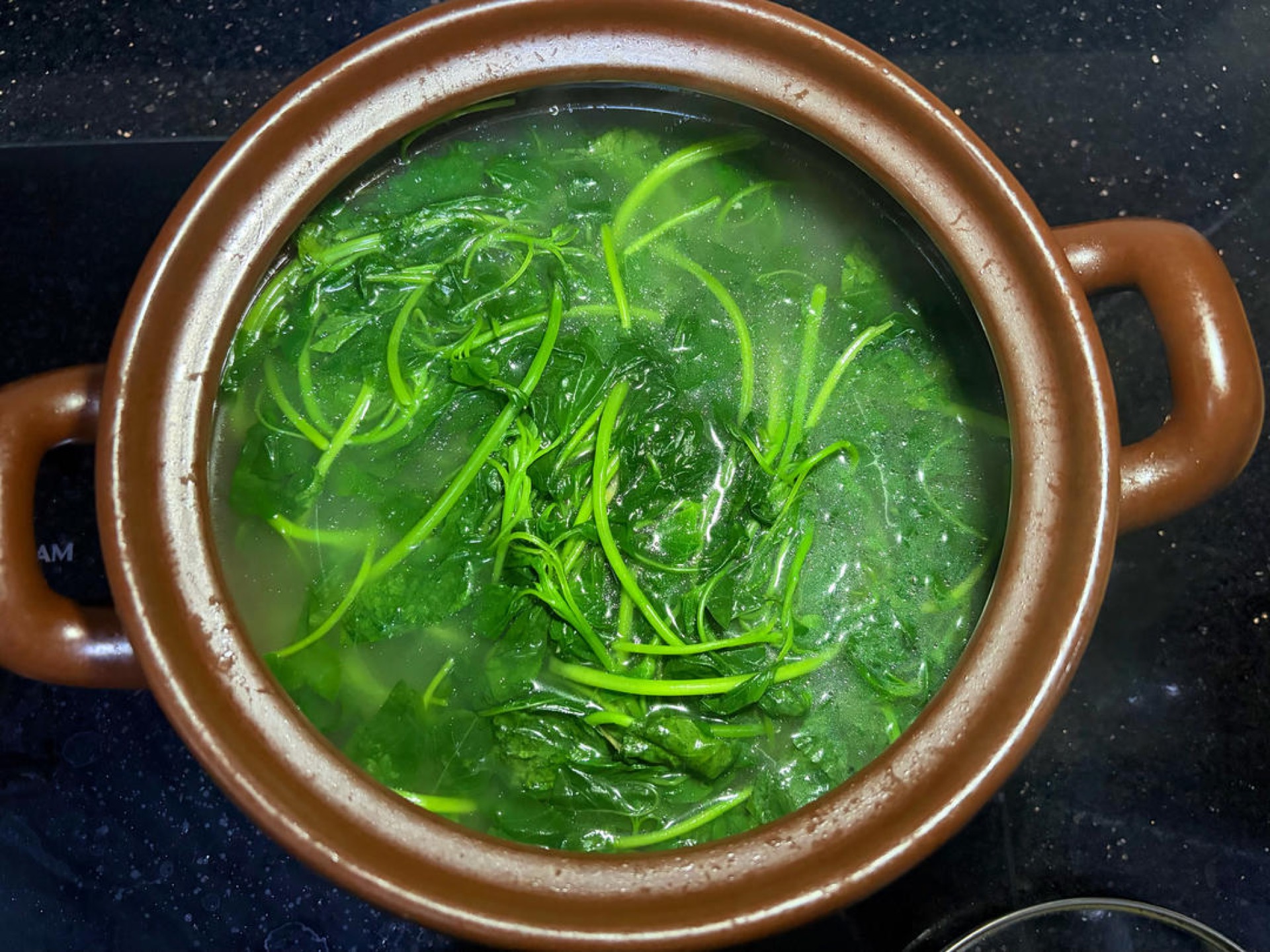
Step 17 — Poach the Greens
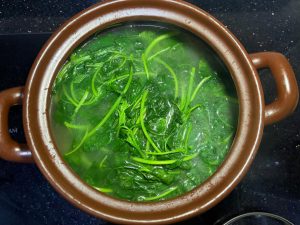
Add amaranth greens and simmer about 1 minute before serving — greens blanched in rib broth make both the vegetable and the soup sweet and fresh.
Common Mistakes When Making Dry Pot Pork Ribs
1. Over-braising the ribs. If you simmer them until they fall off the bone, the sear will shred them into mush. Cause: treating the braise as the finish line. Fix: pull them at chewy-tender, around 40 minutes — they finish cooking in the wok.
2. Skipping the rinse after blanching. Leftover scum makes the braising broth cloudy and slightly gamey. Cause: rushing from blanch to pot. Fix: rinse the ribs in warm water until the surface is completely clean.
3. Crowding the wok with potatoes. Too many potatoes at once drop the pan temperature and they steam instead of browning. Cause: trying to fry them all in one go. Fix: fry in batches, and use the lid to help them cook through between batches.
4. Burning the dry pot sauce. The paste scorches quickly in a hot wok and turns bitter. Cause: high heat under the aromatics. Fix: turn the heat to low the moment the garlic and chilies go in, and stir constantly while the paste blooms.
5. Adding salt out of habit. Both the dry pot sauce and the soy sauce are salty. Cause: seasoning before tasting. Fix: taste after the soy sauce goes in and only add salt if it truly needs it — the recipe skips it entirely.
6. Discarding the braising liquid. That broth is the second half of the meal. Cause: thinking of it as cooking water. Fix: season it with salt, boil it up, and poach greens in it for a quick soup.
Variations
Extra heat: Add 4–6 fresh bird’s eye chilies, sliced, at the blooming step for a proper Sichuan-level burn.
Different vegetables: Cauliflower florets, lotus root slices, or green beans can replace or join the potatoes — blanch the cauliflower or beans first so they finish at the same time.
No dry pot sauce: Substitute 1½ tbsp doubanjiang plus 1 tsp sugar and a pinch of five-spice; the flavor is deeper and a little more fermented.
Rice cooker shortcut: If you’d rather not watch a pot, our one pot rice cooker pork ribs and rice gets you tender ribs with zero stovetop time.
No clay pot: A Dutch oven or a heavy saucepan with a tight lid braises just as well; add a few extra minutes since it holds less gentle heat.
Frequently Asked Questions
Can I make this with baby back ribs? Yes — they’re meatier and cook faster. Trim the braise to about 30 minutes and check for tenderness before searing.
Do I have to blanch the ribs? It’s worth it. Blanching pulls out the myoglobin and impurities that cloud the broth, and since you’re drinking that broth later, the cleaner start matters.
How spicy is this, really? Mild. Dried chilies are mostly aromatic, and the dry pot sauce is savory rather than hot — this version is designed to be kid-friendly. Add fresh chilies if you want heat.
Can I skip the broth course? Absolutely — but it’s free flavor. If you don’t want soup, freeze the braising liquid and use it as a base for noodles or lotus root and pork rib soup later.
Why are my potatoes not crispy? They were crowded, or the pan wasn’t hot enough before they went in. Fry them in a single layer and don’t stir too often.
How to Serve
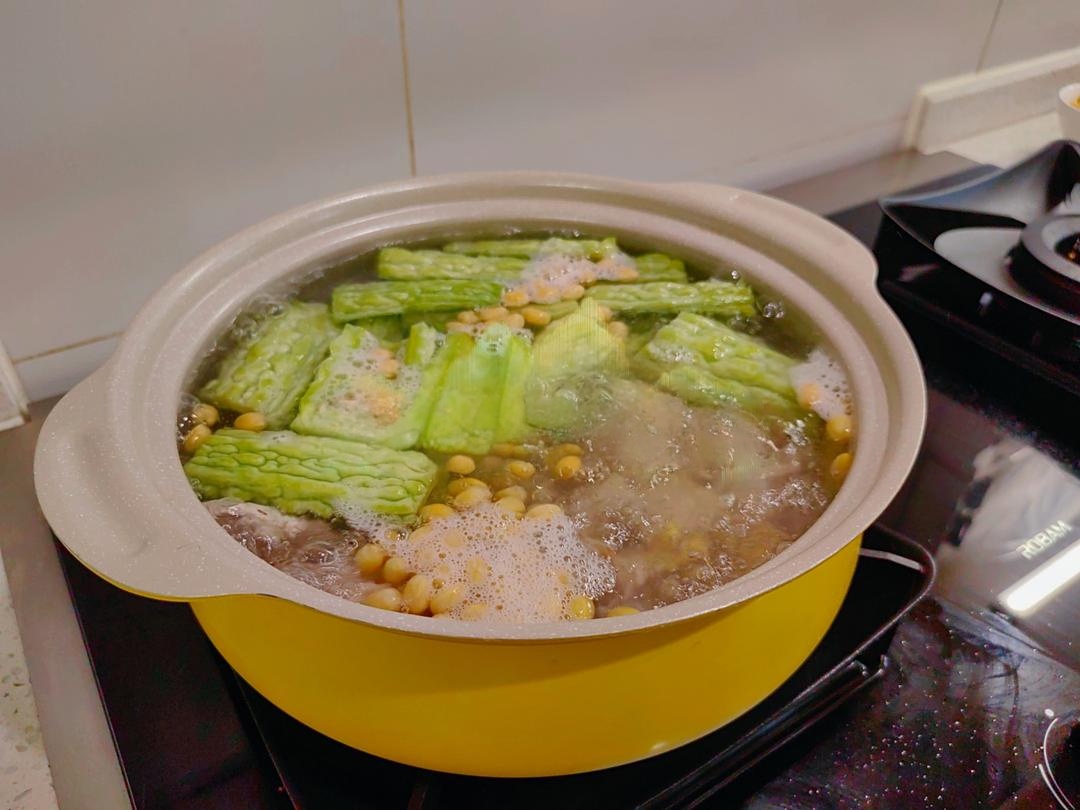
Serve the dry pot hot, straight from the wok or a cast-iron pot, with steamed rice and the rib broth on the side as a light soup course. If you want another rib dish on the table, our sweet and sour pork ribs uses the famous 1:2:3:4 ratio and pairs well with this dry, spicy pot. For a brothy contrast, a bowl of bitter melon pork rib soup balances the richness nicely.
Storage & Reheat
Store the dry pot and the broth separately in airtight containers in the refrigerator for up to 3 days. The dry pot reheats best in a wok or skillet over medium-high heat with a splash of water to loosen the sauce — avoid the microwave, which softens the potatoes. The broth can be reheated on the stovetop and served as is, or refreshed with new greens. Both freeze well for up to 2 months; freeze the dry pot without the potatoes if you can, and add fresh ones on reheat.
Allergen Notice
This recipe contains soy (dry pot sauce, light soy sauce) and may contain wheat, sesame, and shellfish depending on the brand of dry pot sauce. Check your jar’s label carefully. The dish is otherwise free of dairy, egg, peanut, and tree nuts. If you’re cooking for someone with a soy allergy, this dish is difficult to adapt — the sauce is the backbone of the flavor.
Nutrition Disclaimer
Nutrition information is calculated using an ingredient database and should be considered an estimate. In cases where multiple ingredient alternatives are given, the first listed is calculated for nutrition. Garnishes and optional ingredients are not included.
About the Author & Recipe Development
Lin is the cook and writer behind Woks of Love, where she shares the Chinese home cooking she grew up with — the weeknight stir-fries, the clay-pot braises, and the one-pot meals that feed a family without a sink full of dishes. This recipe came from a reader request for a “lazy” version of dry pot ribs: everything in one pot, nothing wasted, and a pot of soup at the end. She tested it with both a clay pot and a Dutch oven, and with store-bought dry pot sauce to keep it accessible to anyone near a Chinese grocery.
Authoritative References
For safe pork handling and internal temperatures, see the USDA safe minimum internal temperature chart. For food storage and leftovers guidance, the FDA refrigerator and food safety guidance is a useful reference. For more on the science of blooming spices and aromatics in oil, see this explainer on blooming spices in oil.
One-Pot Dry Pot Pork Ribs (干锅排骨): Tender Ribs, Crisp Potatoes,

Equipment
- Clay Pot or Dutch Oven
- Wok
- Cutting Board
- Slotted Spoon
Ingredients
For the Braise
- 1.5 lb pork ribs cut into 1 1/2-inch pieces
- 6 slices ginger divided
- 1 tbsp cooking wine Shaoxing
- 3 cups boiling water for the clay pot
For the Dry Pot
- 1 lb potatoes peeled, cut into thick batons
- 1 stalk garlic sprouts cut into 2-inch lengths
- 1/2 medium onion thinly sliced
- 2 dried chilies cut into segments
- 4 cloves garlic minced
- 2 tbsp dry pot sauce 干锅酱
- 1 tbsp light soy sauce
- 1 tsp toasted white sesame seeds optional
- 3 tbsp neutral oil divided
For the Rib Broth
- 2 tsp salt to taste
- 1 bunch amaranth greens or any quick-cooking green
Instructions
- Put the fresh pork ribs in a pot of cold water with ginger slices and cooking wine, bring to a boil over high heat, skim off the foam, and boil 2 more minutes before scooping them out.

- Wash the blanched ribs several times in warm water until every trace of surface foam is gone.
- Add boiling water to a clay pot, add the ribs and ginger slices, cover, bring to a boil over high heat, then turn to low and simmer about 40 minutes — use the braising time to prep the vegetables.
- Peel and cut the potatoes into thick batons, cut the garlic sprouts into segments, slice the onion, cut the dried chilies into segments, and mince the garlic.
- Heat oil in a wok, add the potatoes, and pan-fry them — you can cover the wok with a lid during frying so they cook through more easily.
- Fry until the surface is golden brown, then scoop them out and set aside.
- After 40 minutes the ribs are cooked through — they will still be seared, so they don’t need to be braised fall-apart tender, just chewy-tender.
- Scoop the braised ribs out of the pot.
- Heat a little oil in a wok, add the braised ribs, and stir-fry over medium-low heat until the surface is faintly golden, then scoop them out.
- Without washing the wok, add a little oil, add the minced garlic and dried chilies and fry until fragrant, then add two spoonfuls of dry pot sauce and stir over low heat until aromatic — if you want heat, add fresh bird’s eye chilies; these dried chilies are mild enough for kids.
- Add the onion and garlic and stir-fry for a few seconds.
- Add the ribs and potatoes, stir-fry over high heat until the onion is just cooked.
- Add a splash of light soy sauce, keep tossing over high heat to coat evenly, then turn off the heat right away.
- Sprinkle on toasted white sesame seeds and toss — add them if you have them, skip them if you don’t.
- Every rib is coated in the mildly spicy, savory dry pot sauce, crisp outside and tender inside — no salt needed since the dry pot sauce and soy sauce are already seasoned.
- Don’t waste the braising liquid — bring it to a boil over high heat, add two spoonfuls of salt, and it’s ready to drink as is.
- Add amaranth greens and simmer about 1 minute before serving — greens blanched in rib broth make both the vegetable and the soup sweet and fresh.




Leave a Reply