If there is one ingredient that defines the soul of my family’s kitchen in Sichuan—and arguably my entire culinary career—it is Chinese Chili Oil (Lajiao You, 辣椒油). I still remember the sharp, spicy scent filling the air as my father poured hot oil over mountains of crushed chilies in our restaurant kitchen. It wasn’t just a condiment; it was a ritual.

Many Western readers might be used to the jars of chili oil found in supermarkets, which often contain more preservatives than flavor. But once you make this at home, you will never go back. It is surprisingly simple, requiring just a few ingredients, yet the technique of temperature control makes all the difference.
This recipe is the most fundamental, versatile version—the “mother sauce” of cold appetizers. It pairs perfectly with my Vegetable Steamed Dumplings or adds a necessary kick to Sesame Noodles.
Why This Recipe Works
- Precise Temperature Control: We use the “chopstick test” to ensure the oil is hot enough to cook the chilies but not so hot that it burns them.
- The “Three-Pour” Technique: Instead of dumping all the oil at once, we pour it in stages. This ensures an even cook and layers the flavor profile—fragrance first, then color, then deep extraction.
- Neutral Base: Using a neutral oil allows the natural aroma of the toasted chilies and sesame seeds to shine without interference.
What Is Chinese Chili Oil?
Chinese Chili Oil isn’t just spicy oil. In Sichuan and many parts of China, it is a textural experience containing crispy chili flakes and seeds. We call it Lajiao You (辣椒油). It is used for dipping (like with Crispy Pork and Chive Potstickers), dressing cold salads, or topping noodle soups.
Unlike the complex infused oils that require simmering dozens of spices for hours, this specific recipe focuses on the pure, unadulterated flavor of the chili pepper itself. It is the “quick” version my mother would make when we ran out of the big batch.
Key Ingredients & Substitutions
- Dried Chili Segments: The source recipe calls for dried chili segments. You can use whole dried chilies (like Erjingtiao for fragrance or Facing Heaven peppers for heat) and snip them yourself.
- Substitutions: If you cannot find whole Chinese dried chilies, you can use high-quality crushed red pepper flakes, though the texture will be slightly different.
- Oil: The recipe calls for blended oil or sunflower oil.
- Why: You need a high smoke point and a neutral flavor. Canola oil, vegetable oil, or grapeseed oil are perfect substitutions. Do not use olive oil or toasted Sesame Oil as the base, as they burn too easily or have too strong a flavor.
- Sesame Seeds: White sesame seeds add a nutty crunch and visual appeal.
- Note: Raw seeds work best as they toast in the hot oil.
- Optional: Millet chilies (Xiao Mi La) if you want extreme heat.
Recipe Notes Before We Begin
- Safety First: We are working with very hot oil (approx 350°F-375°F / 175°C-190°C). Use a heat-proof bowl (ceramic, stainless steel, or Pyrex). Do not use glass or plastic, as they may shatter or melt.
- Dryness is Key: As noted in my family’s kitchen rules, water is the enemy of hot oil. Ensure your chilies, scissors, and bowl are completely dry. Even a drop of water can cause dangerous splattering.
- Ventilation: Turn on your kitchen fan. Pouring hot oil over chilies creates capsaicin-filled steam that can make you cough!
How to Make Chinese Chili Oil
Step 1: Prep the Chilies
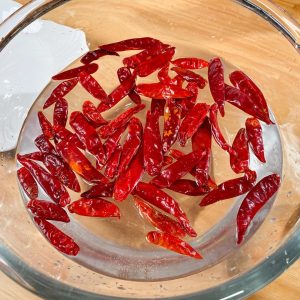
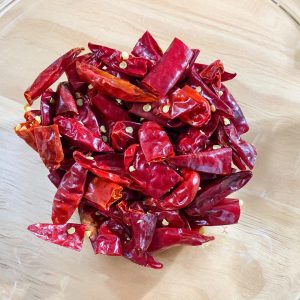
Take your dried chili segments. If they are dusty, wipe them with a dry cloth or rinse them quickly and dry them thoroughly with paper towels (step 2). Using kitchen shears, cut them into small segments. Squeeze or shake them to remove the majority of the loose seeds (step 3).
- Chef’s Insight: Removing the seeds reduces bitterness and ensures the oil isn’t unpleasantly spicy, focusing instead on the chili’s aroma.
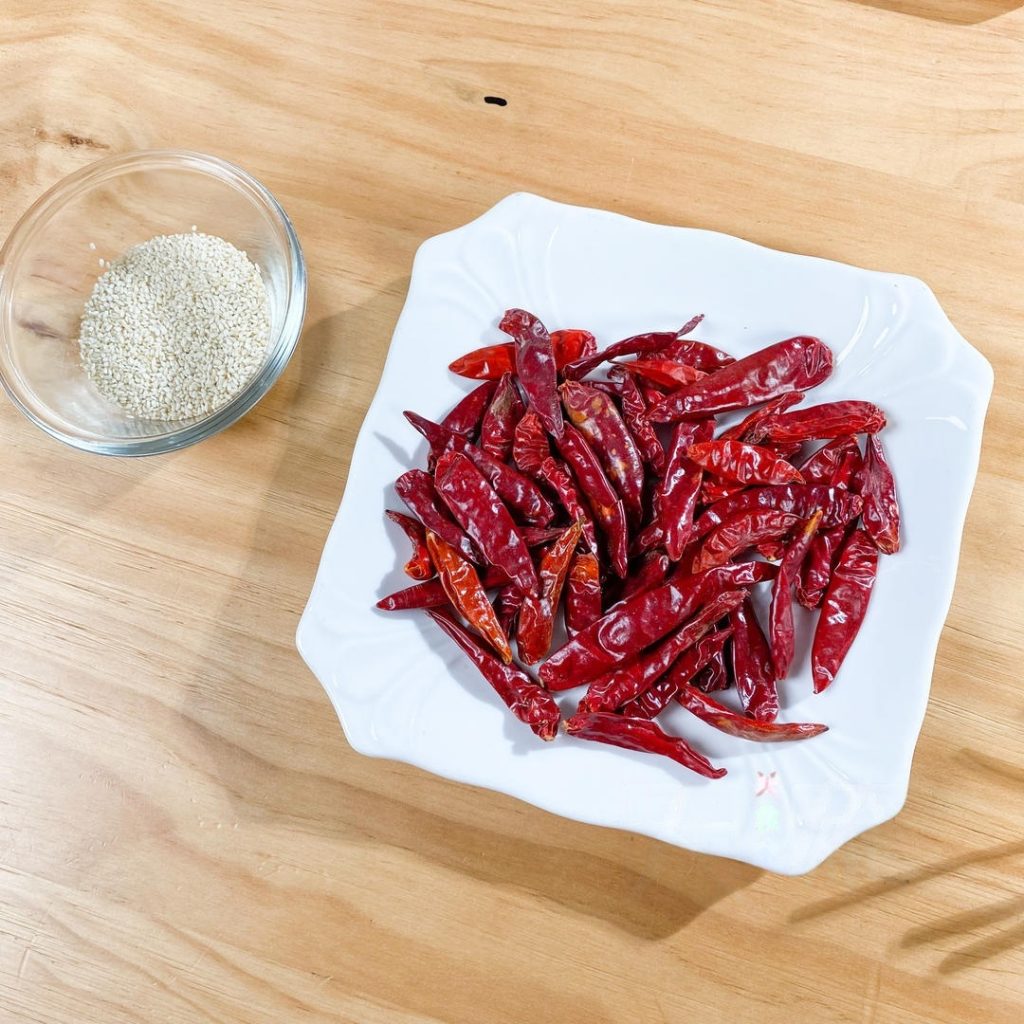
Step 2: Mise en Place
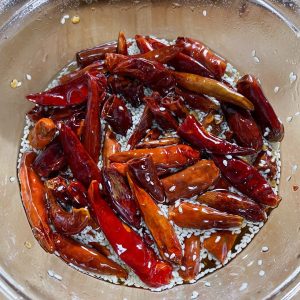
Place the prepared chili segments into your heat-resistant container (a large ceramic bowl is traditional). If you are using extra millet chilies for heat or sesame seeds for flavor, add them to the bowl now (step 6).
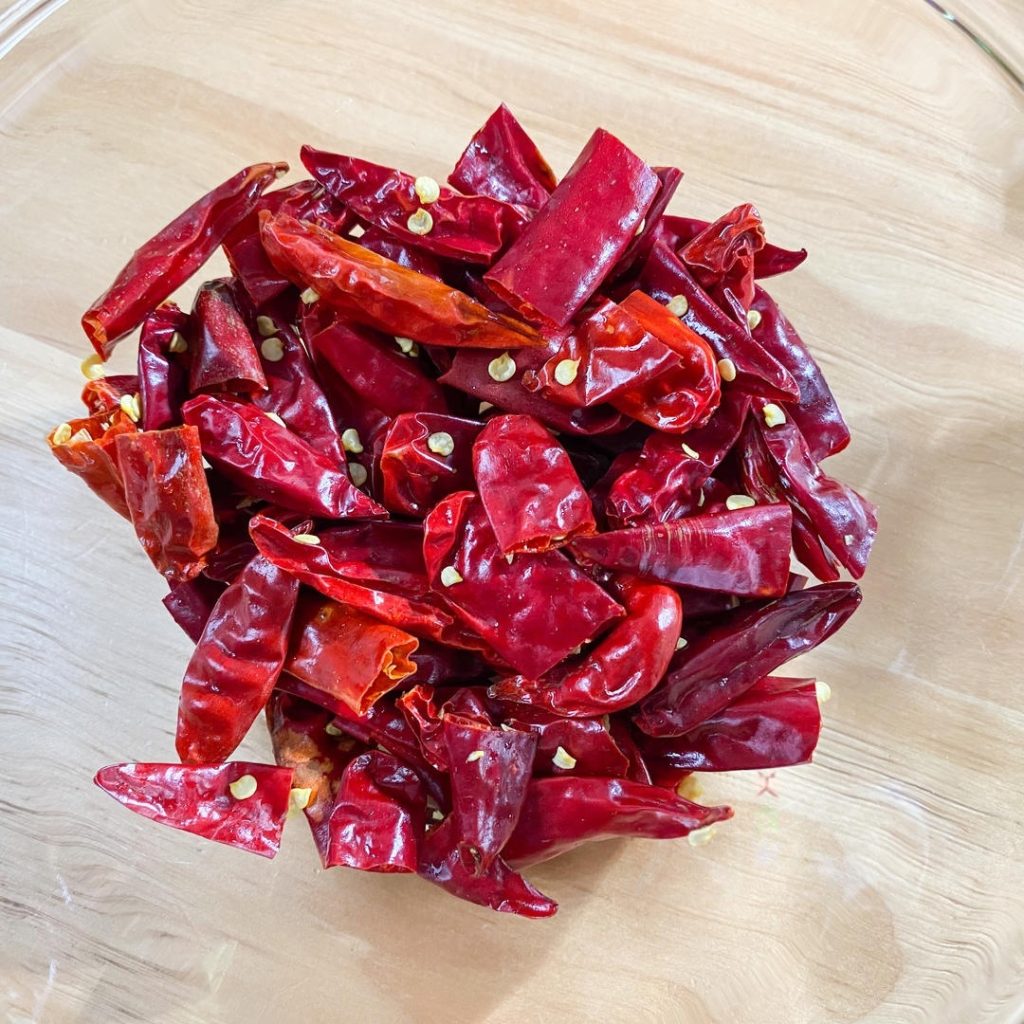
Step 3: Heat the Oil
Pour the oil into a wok or small saucepan. Heat over high heat.
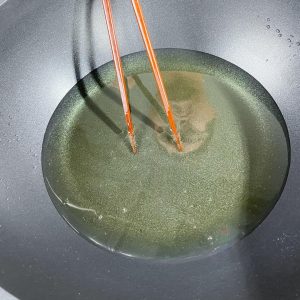
- The Visual Cue (Step 4): Insert a clean, dry bamboo/wooden chopstick into the center of the oil. When you see rapid bubbles forming around the chopstick immediately, the oil is ready. Turn off the heat immediately.
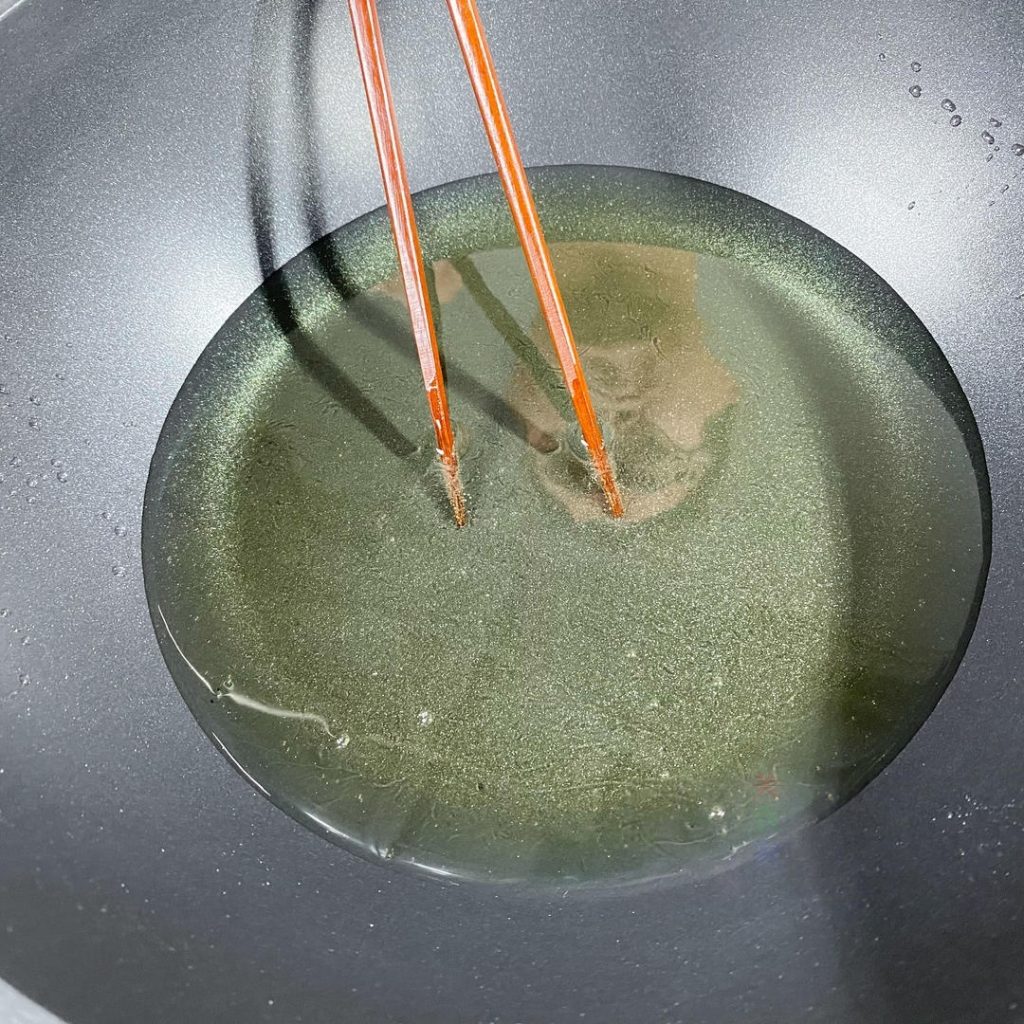
Step 4: The Three-Pour Method (Step 5)
This is the secret to preventing burnt chilies:
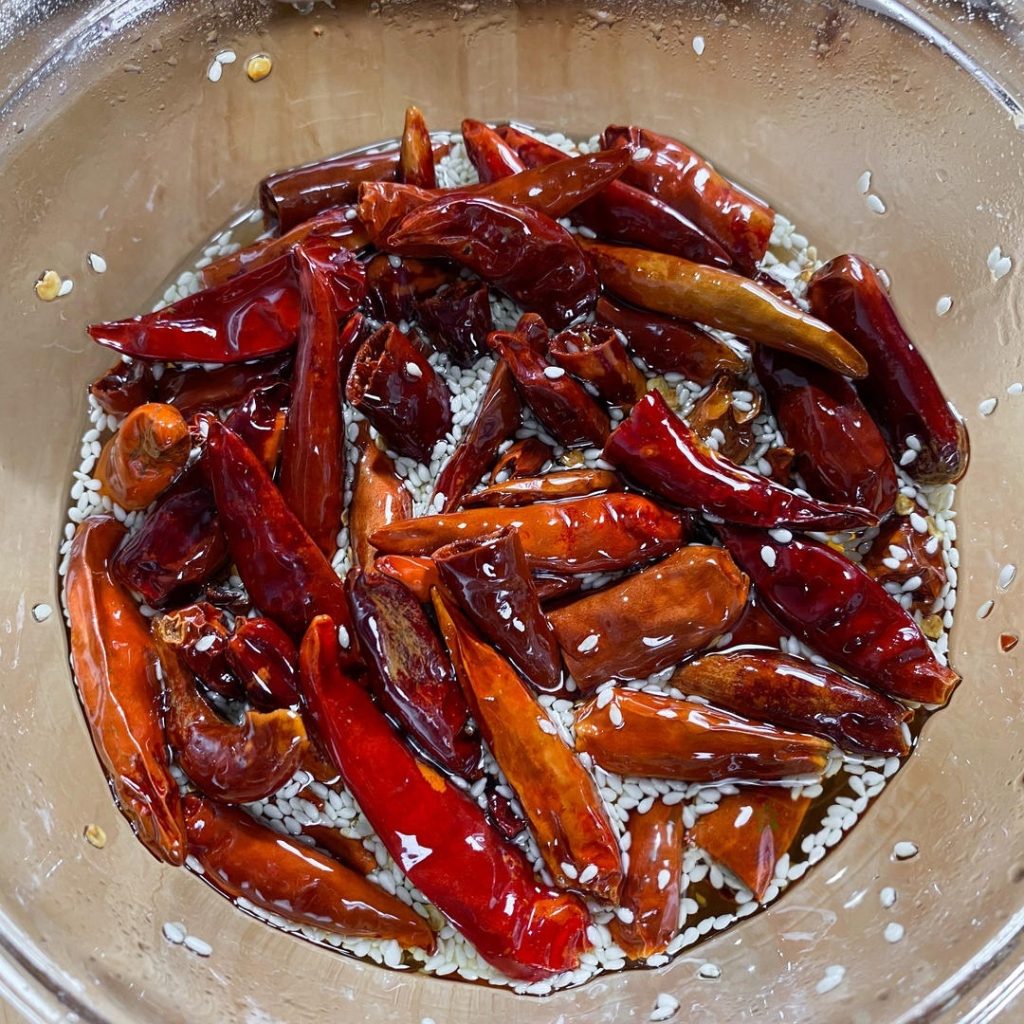
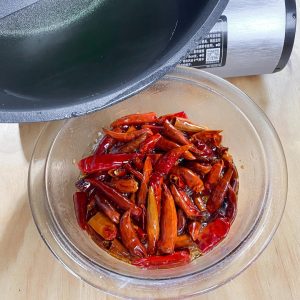
- First Pour: Pour about 1/3 of the hot oil over the chilies. Stir well. This “wakes up” the chilies and starts the cooking process without scorching them.
- Second Pour: Wait about 10-15 seconds, then pour the second 1/3 of the oil. Stir again. The temperature has dropped slightly, allowing the color to seep out into the oil.
- Third Pour: Pour the remaining oil. Stir well. This final extraction pulls the deep, savory notes from the chilies.
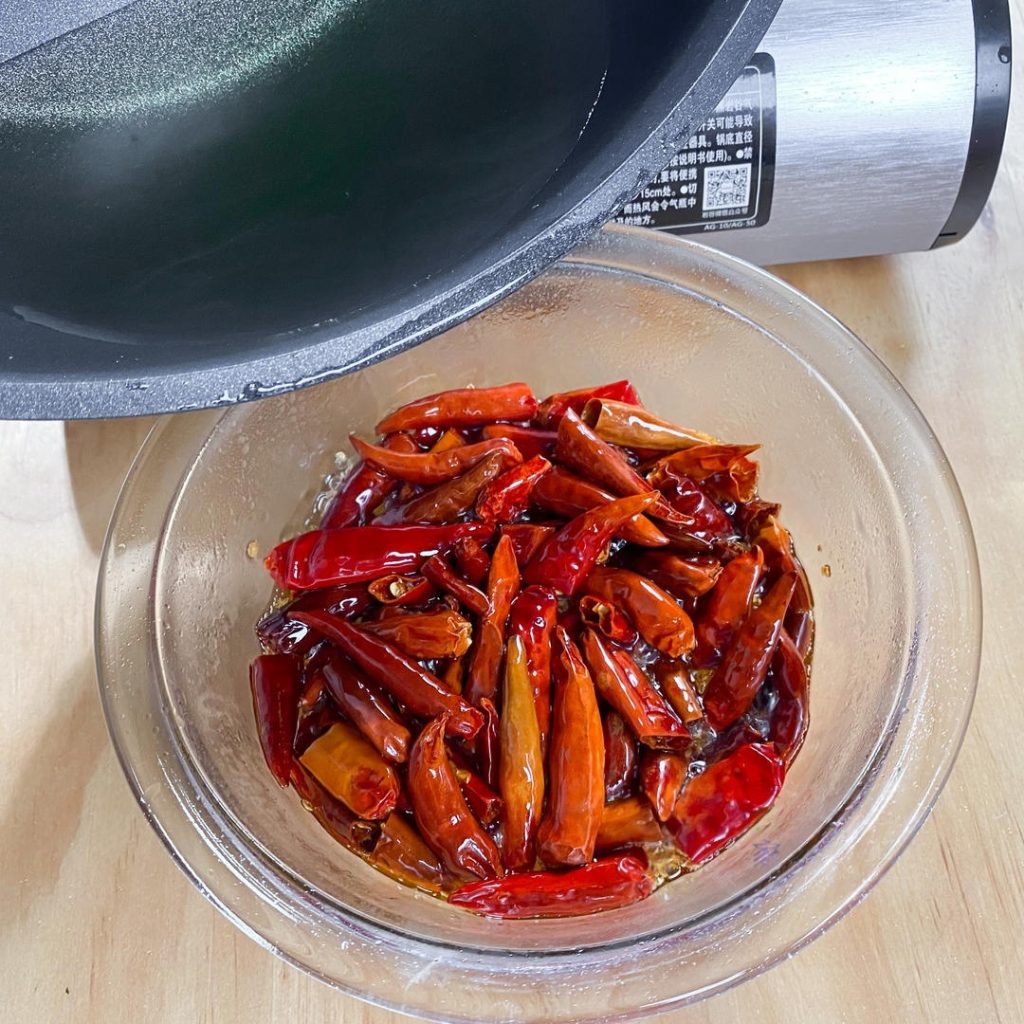
Step 5: Let it Rest
Stir until the chilies turn a rich reddish-brown (but not black!) and the aroma fills the kitchen. Let the oil cool completely at room temperature. The red color will deepen significantly overnight.
Serving Suggestions
Now that you have this liquid gold, how do you use it?
- Dipping Sauce: Mix with Soy Sauce and Chinese Black Vinegar for a perfect dumpling dip.
- Cold Appetizers: It is the main dressing for Smashed Cucumber Salad or Spicy Cold-Tossed Pork Tenderloin.
- Soups & Stews: Drizzle a spoonful over Wonton Soup or stir it into Mapo Tofu for extra heat.
Food Safety & Storage
- Storage: Store the chili oil in a sterilized, airtight glass jar.
- Shelf Life: It can be kept at room temperature for up to 1 month, or in the refrigerator for up to 6 months. Always use a clean, dry spoon to scoop it out to prevent spoilage.
- Botulism Note: While rare in high-heat processed oils, garlic or fresh ingredients (if you add them later) can introduce risk. Since this recipe uses only dried ingredients and high heat, it is generally shelf-stable, but refrigeration is always safer for long-term storage.
FAQ / Troubleshooting
Q: My chili flakes turned black and taste bitter. What happened? A: The oil was too hot. Next time, let the oil sit for 30 seconds after turning off the heat before the first pour. The “Three-Pour” method helps prevent this by lowering the temp gradually.
Q: Can I use olive oil? A: I don’t recommend it. Olive oil has a low smoke point and a distinct flavor that clashes with the chilies. Stick to neutral oils like canola, vegetable, or sunflower.
Q: Why isn’t my oil red immediately? A: Patience! The capsaicin and pigments take time to infuse into the oil. It will look much redder the next day.
Notes
- Safety Warning: Hot oil can cause severe burns. Keep children and pets away from the stove and the bowl during pouring. Ensure all tools are dry to prevent splattering.
- Chili Selection: For authentic flavor, look for Sichuan Erjingtiao (fragrant) or Facing Heaven peppers (medium heat). If unavailable, standard dried red chilies from the grocery store work well.
- Serving: This oil is the perfect companion for Vegetable Steamed Dumplings or drizzled over Silken Tofu with Century Egg.
Nutrition Info (Estimate)
- Serving Size: 1 tbsp
- Calories: 125 kcal
- Fat: 14g
- Carbohydrates: 1g
- Protein: 0g
- Sodium: 0mg
- (Disclaimer: Nutrition information is calculated using an ingredient database and should be considered an estimate. Garnishes and optional ingredients are not included.)
About the Author & Recipe Development
I grew up in Sichuan, where the smell of frying chilies is the perfume of the city. I spent over a decade cooking in professional kitchens, from helping my parents in our family restaurant to formal training at a culinary institute in Chengdu. This recipe is based on the practical, everyday method used by home cooks across China—it eliminates the complex spice packets of restaurant versions but retains the essential “scorched chili” aroma (You La Zi) that defines our cuisine. I have tested this specific oil ratio on both gas ranges and electric stoves to ensure the “chopstick bubble” method works universally.
Authoritative References
- Deep Frying and Oil Safety: For detailed guidelines on cooking with hot oil and understanding smoke points, refer to the USDA Food Safety and Inspection Service.
- Safety of Homemade Infused Oils: Learn about the safety differences between using dried vs. fresh ingredients in oil infusions from the University of Maine Cooperative Extension or Oregon State University Extension Service.
- The Science of Capsaicin: To understand the chemical properties of spicy peppers and their extraction, visit the National Center for Biotechnology Information (NCBI).
Homemade Chinese Chili Oil (Lajiao You)

Equipment
- Heat-proof Ceramic Bowl
- Small Saucepan or Wok
- Bamboo Chopsticks
Ingredients
Aromatics & Spices
- 1 cup Dried chili segments approx 50g, seeds partially removed
- 2 tbsp White sesame seeds raw
- 1 tsp Millet chilies optional, for extra heat
Oil Base
- 1.5 cups Neutral oil Sunflower, Blended, or Canola oil
Instructions
- Clean the dried chili segments and ensure they are completely dry to prevent oil splatter. Use scissors to cut them into small segments and shake to remove excess seeds.

- Place the chili segments, sesame seeds, and optional millet chilies into a heat-resistant container (ceramic or stainless steel). Do not use glass.
- Pour the oil into a wok or pot. Heat over high heat until you insert a bamboo chopstick and see rapid bubbles forming around it immediately (approx 375°F/190°C). Turn off the heat.
- Pour 1/3 of the hot oil into the chili mixture while stirring. This releases the aroma.
- Wait 15 seconds, then pour the second 1/3 of the oil while stirring. This brings out the color.
- Pour the remaining oil into the bowl and stir well. The chilies should be brownish-red and fragrant.
- Let cool completely before transferring to a clean jar. The color will deepen over time.
Notes
- Safety: Ensure all ingredients and tools are bone-dry. Water in hot oil causes dangerous splashing.
- Storage: Keep in an airtight jar at room temperature for up to 1 month or refrigerated for 6 months.
- Serving: Try this with Shanghai Wonton Soup or Sesame Noodles.
- Calories: 125kcal
- Fat: 14g
- Carbs: 1g
- Protein: 0g












Leave a Reply