If you have ever wondered why a simple plate of greens or a bowl of plain noodles tastes infinitely better at a Chinese restaurant than it does at home, the secret often isn’t the wok—it’s the oil. Specifically, Scallion Oil (Cong You).

Growing up in Sichuan, my father didn’t just use plain oil for his cold tossed dishes (liangban). He always had a jar of golden, aromatic oil sitting by the stove. It was infused with the deep, caramelized essence of scallions, leeks, and spices. Just a spoonful of this “liquid gold” can instantly elevate a dish from mundane to restaurant-quality.
Today, I am sharing a “zero-failure” universal scallion oil recipe. It is incredibly versatile. Whether you are drizzling it over my Smashed Cucumber Salad or using it as the base for Scallion Oil Chicken, this oil is the backbone of flavor in my kitchen.
About the Author & Recipe Development
I grew up helping in my family’s restaurant kitchen in Sichuan, where I learned that “fragrance” (xiang) is the soul of Chinese cooking. Later, during my professional training at the Sichuan Culinary Institute, I learned the science behind flavor extraction.
This specific recipe was developed through rigorous testing in my home kitchen to bridge the gap between restaurant techniques and home practicality. I have tested various ratios of aromatics to oil. I found that using a mix of four different aromatics—scallions, leeks, onions, and cilantro—provides a depth of flavor that using scallions alone simply cannot achieve. This method ensures a complex, layered aroma that mimics professional kitchens.
What is Scallion Oil (Cong You)?
Scallion Oil (葱油, cōng yóu) is a fundamental infused oil used in Chinese cuisine. It is made by slowly simmering aromatics (primarily green onions) in neutral oil until they are dehydrated and golden brown.
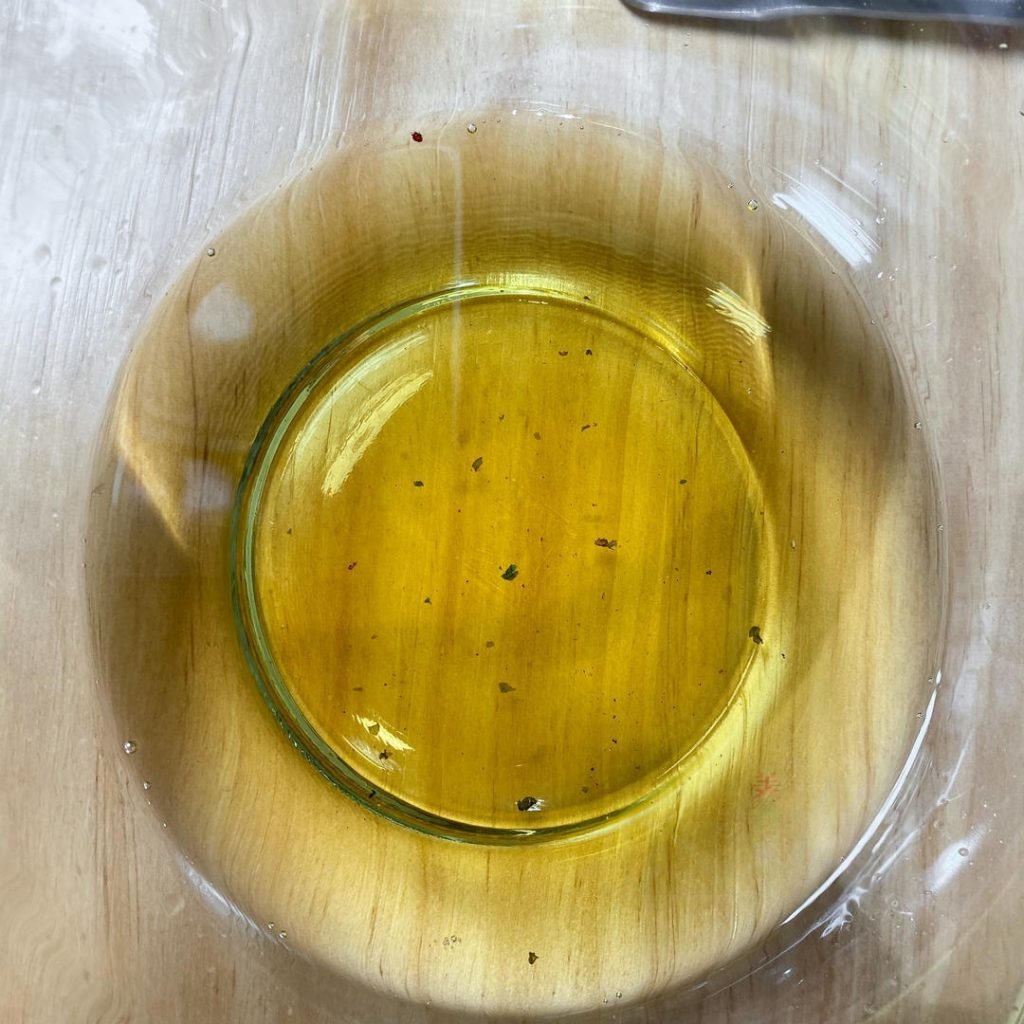
During this process, the water in the vegetables evaporates, and the flavor compounds are transferred into the fat. It is essentially a confit of aromatics. The resulting oil is nutty, savory, and deeply fragrant. It is the primary seasoning for the famous Shanghai Scallion Oil Noodles, but it is also the secret weapon for making Shredded Cold Salad pop with flavor.
Why This Recipe Works
- Layered Aromatics: Instead of just scallions, we use a combination of leeks (for sweetness), red onion (for depth), cilantro (for freshness), and spices. This creates a “universal” flavor profile suitable for almost any savory dish.
- Cold Start Technique: We start the aromatics in cold oil. This allows the flavors to infuse slowly as the oil heats up, preventing the exterior of the vegetables from burning before the flavor is extracted.
- Moisture Removal: By cooking until the ingredients are “light” and floating, we ensure all water is evaporated. This extends the shelf life of the oil and concentrates the flavor.
Ingredients & Substitutions
To make this liquid gold, you will need the following ingredients. Using a scale for the oil ensures consistency.
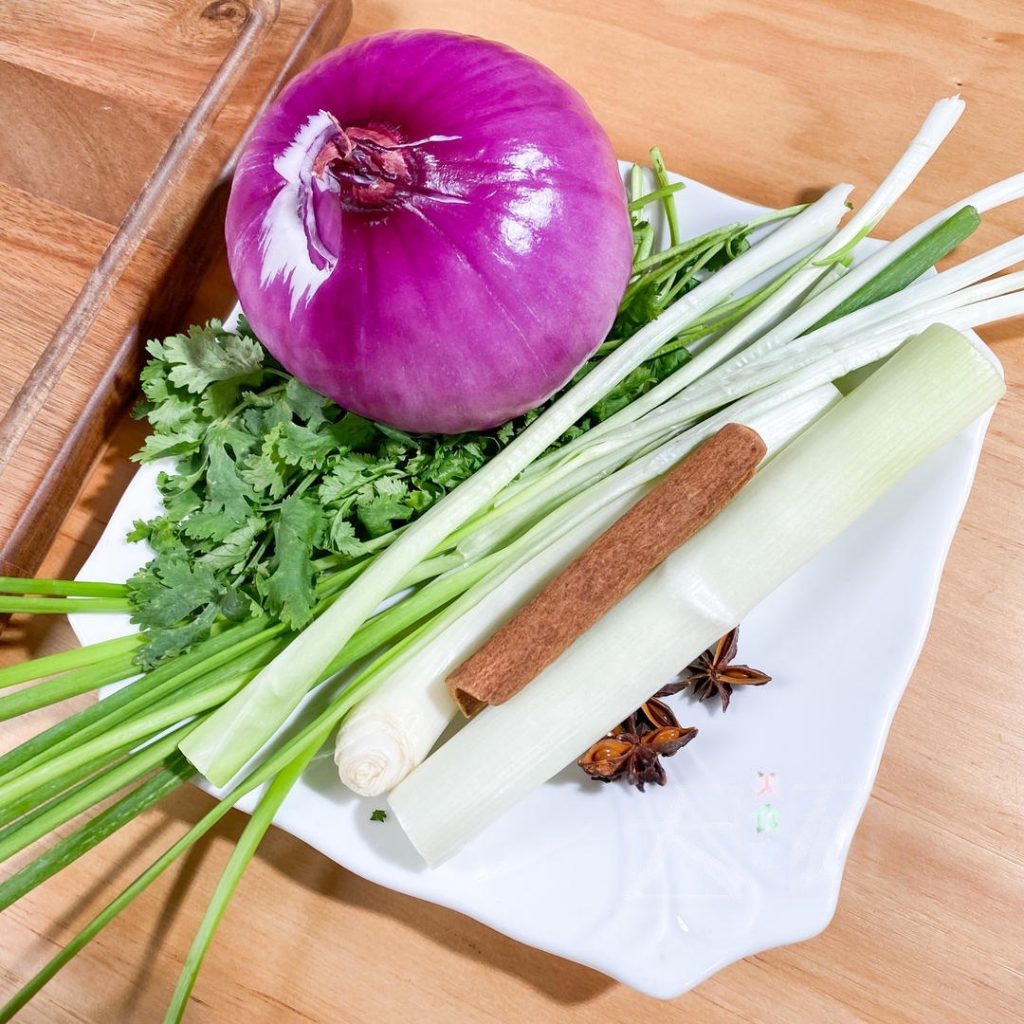
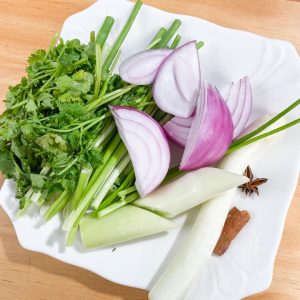
- 1 bunch Scallions (Green Onions): The main ingredient. Use both white and green parts.
- 1 stalk Asian Leek (Da Cong): If you cannot find Asian leeks (which are taller and look like giant scallions), you can substitute with a regular Western Leek (white and light green parts only).
- 1 small bunch Cilantro: Do not discard the stems or roots! They hold the most intense flavor. Wash them thoroughly.
- 1/3 large Red Onion: You can also use yellow onion or 2-3 shallots. Shallots will provide a slightly sweeter, more intense flavor.
- 2 Star Anise: Adds a subtle licorice note that highlights the savory quality of the onions.
- 1 small stick Cinnamon (Cassia Bark): Adds a warm background note.
- 2 cups (500ml) Neutral Oil: I recommend Sunflower oil, Grapeseed oil, or Canola oil. Do not use Olive oil or Sesame oil, as their smoking points are too low and their flavors are too overpowering for the base.
Recipe Notes Before You Start
Safety First: The most critical step in this recipe is drying your ingredients. Oil and water do not mix. If your vegetables are wet, the hot oil will splatter violently, creating a burn hazard and a messy stove.
Pot Selection: Use a heavy-bottomed pot, dutch oven, or a wok. A heavy bottom ensures even heat distribution so the aromatics don’t scorch.
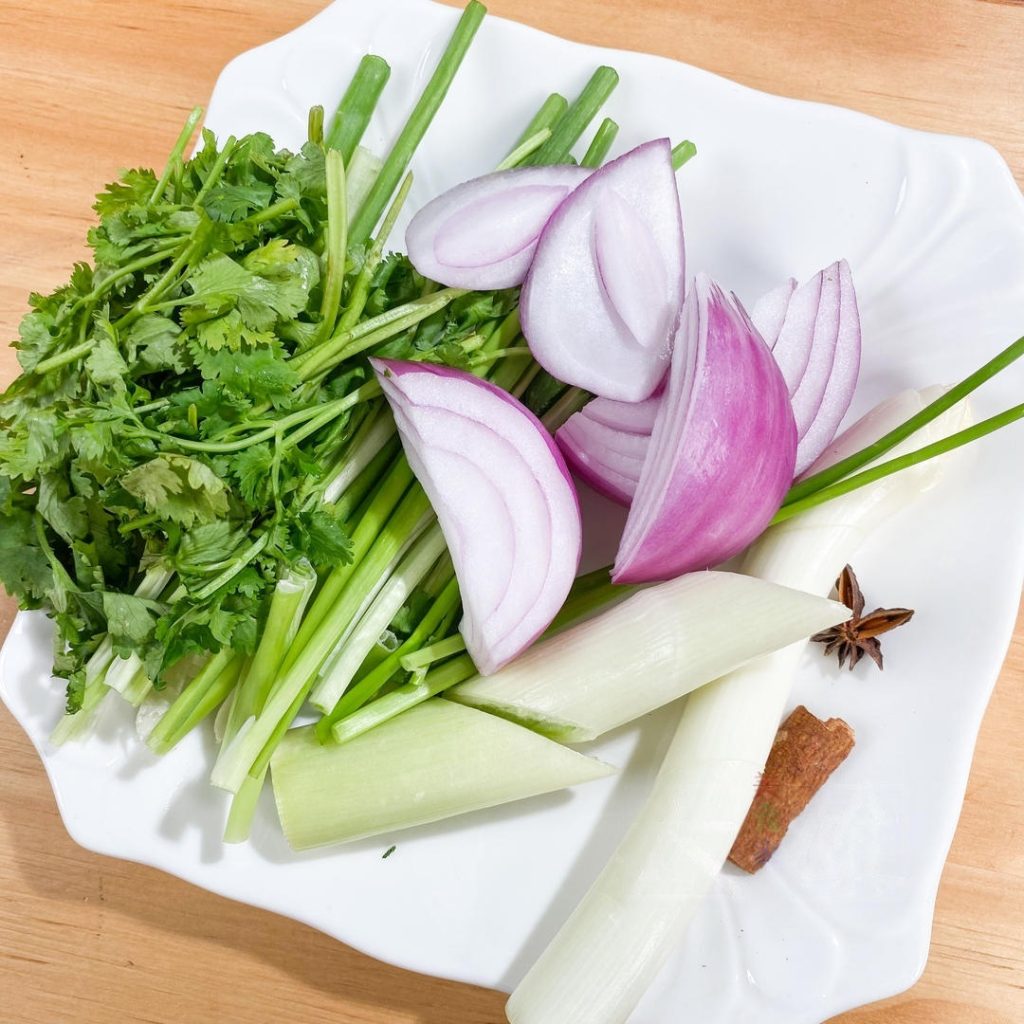
Preparation: Cut all your aromatics into segments about 2-3 inches (5-7cm) long. This ensures they cook evenly and fit nicely in the pot.
How to Make Universal Scallion Oil
Step 1: Prep and Dry
Thoroughly wash the scallions, leeks, and cilantro. Crucial: Pat them completely dry with paper towels or let them air dry on a rack for an hour. Any residual moisture will cause dangerous splashing. Cut the onion into wedges and the green ingredients into long segments.
Step 2: The Cold Start
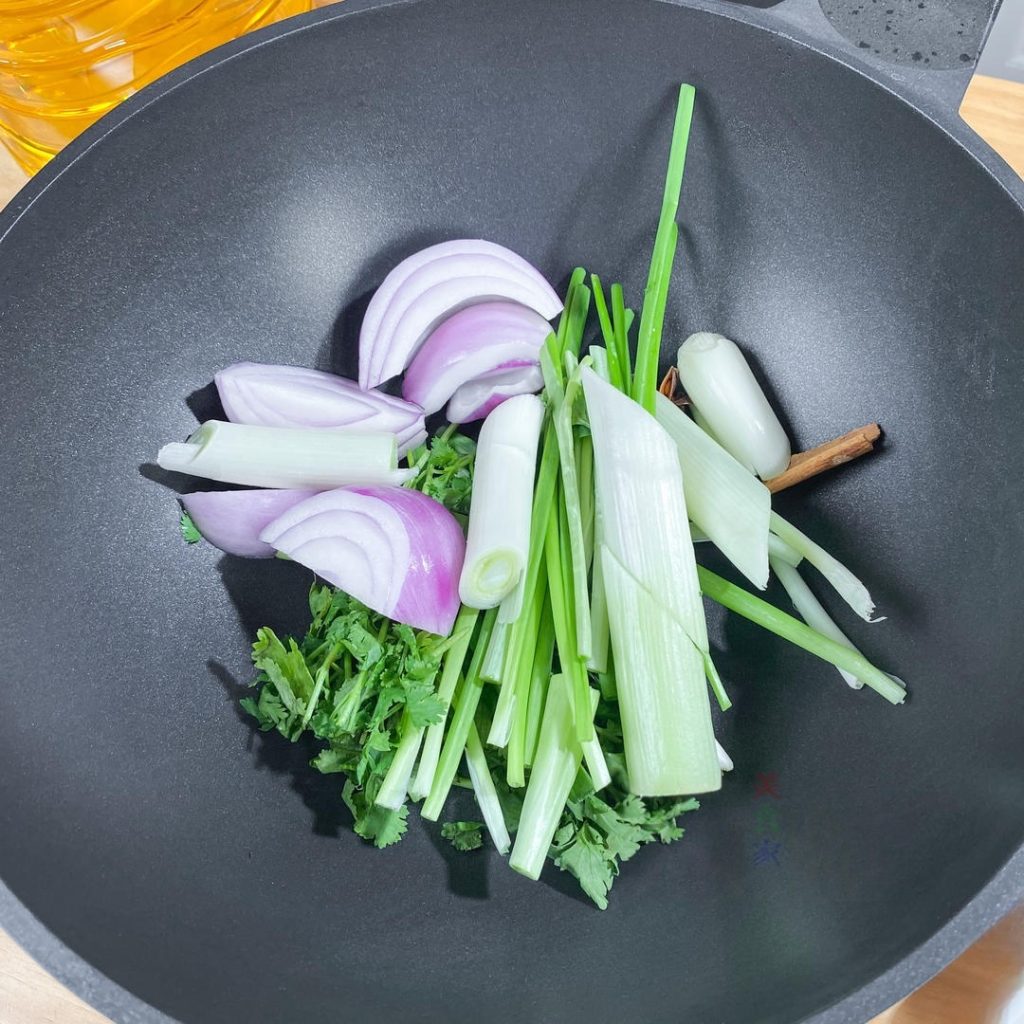
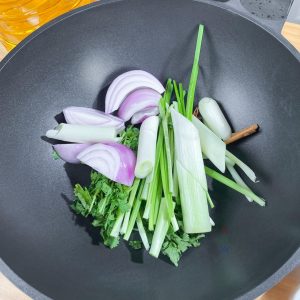
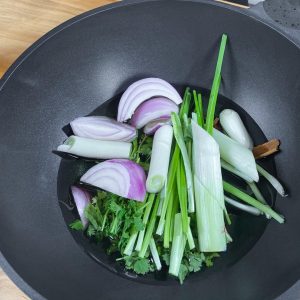
Place all the vegetables (leeks, scallions, cilantro, onion) and spices (star anise, cinnamon) into your pot. Pour the oil over the ingredients. The oil should just cover or be level with the ingredients.
Chef’s Tip: Starting cold allows the oil temperature to rise gradually, drawing out flavor from the inside of the thick leeks without burning the delicate cilantro leaves immediately.
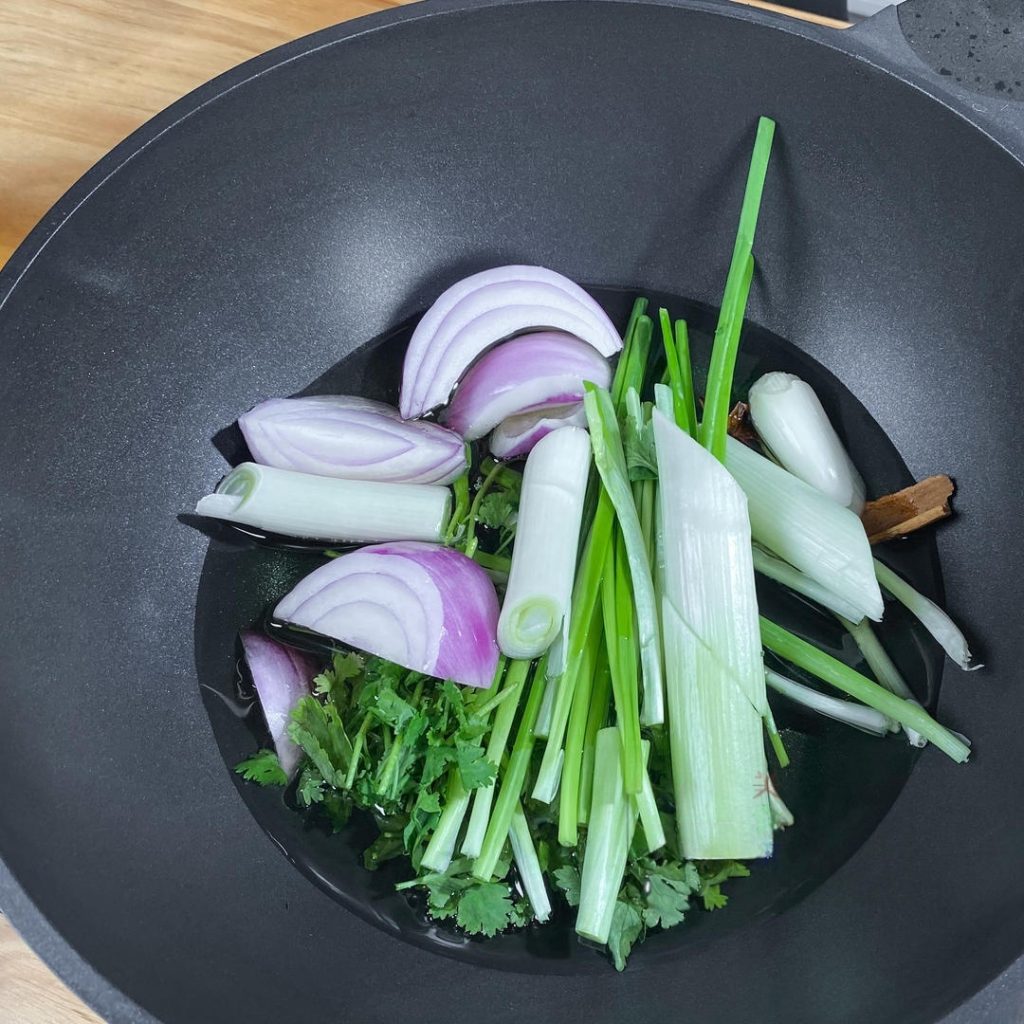
Step 3: Low and Slow
Turn the heat to low. We want to gently fry these, not deep-fry them instantly. As the oil heats up, you will see vigorous bubbling. This is the water evaporating from the vegetables.
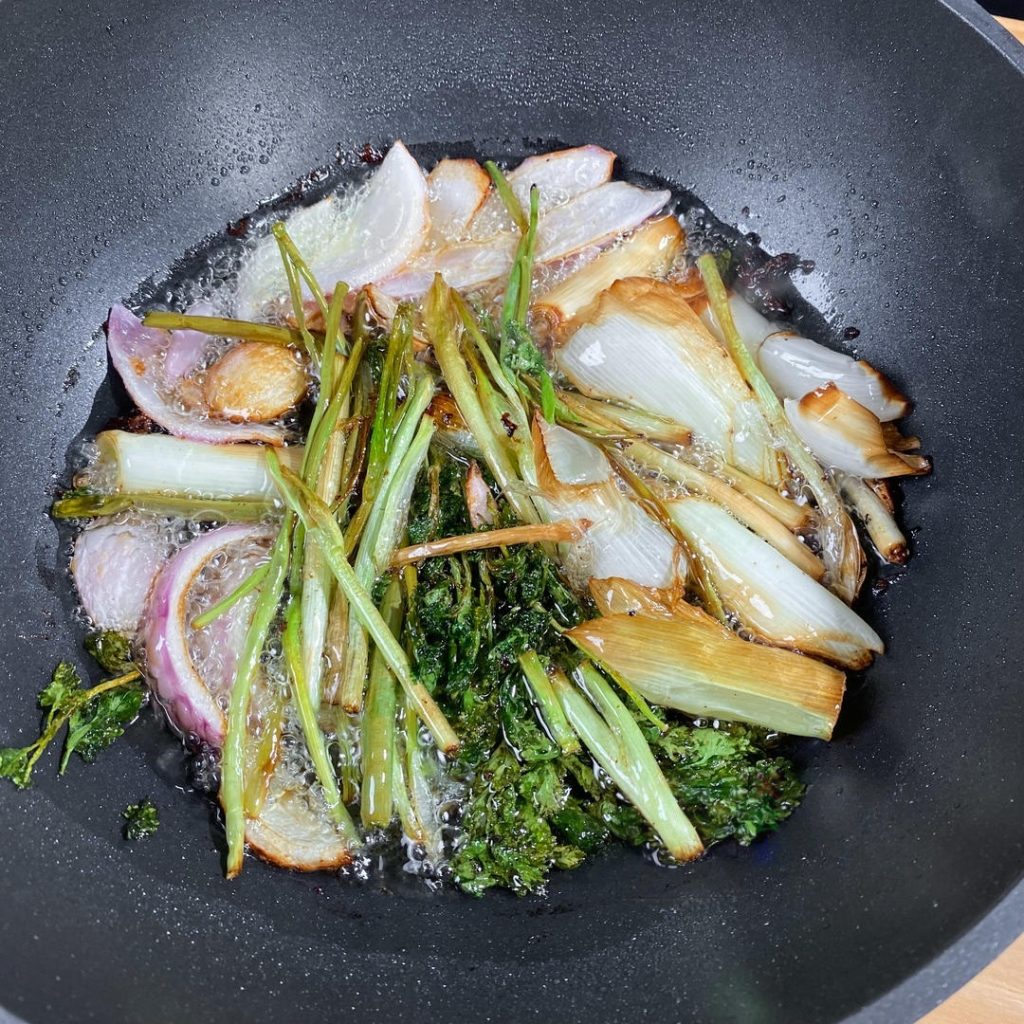
Step 4: The Color Shift
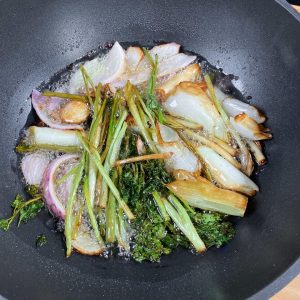
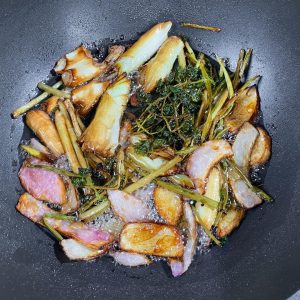
Continue to cook on low heat. Occasionally gently flip the ingredients with chopsticks to ensure even browning. This process can take 20 to 30 minutes depending on your stove.
You are looking for two visual cues:
- The bubbling will slow down significantly (meaning the water is gone).
- The scallions and cilantro will turn a dry, golden-brown color (not black!) and feel light and crispy when poked.
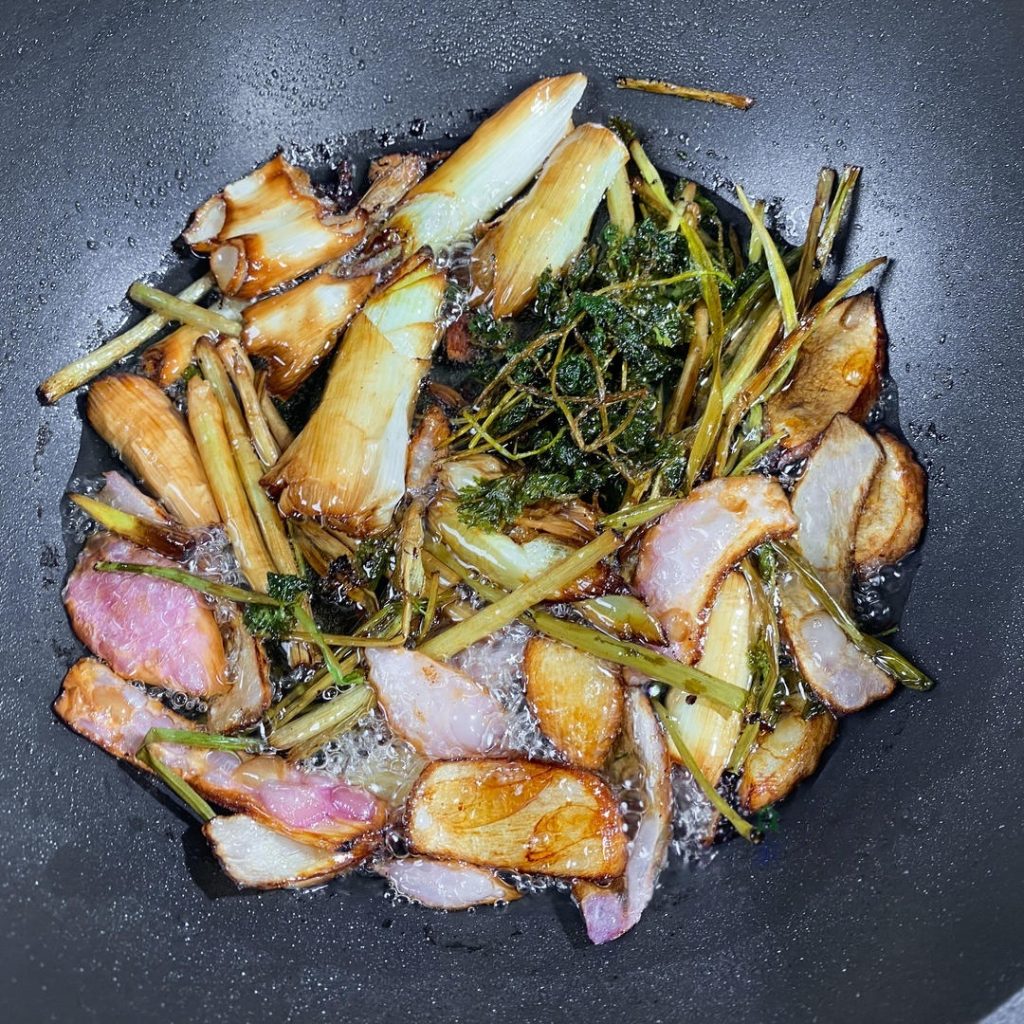
Step 5: Filter and Cool
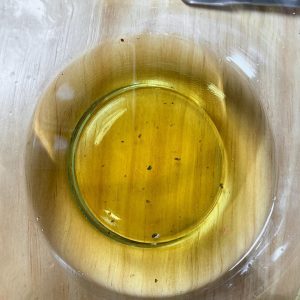
Once the aromatics are golden brown and dry, turn off the heat immediately. The residual heat will continue to cook them. Place a fine-mesh sieve over a heat-proof bowl (glass or ceramic) or a clean jar. Carefully pour the oil through the sieve to strain out the solids.
Note: Don’t throw away the fried scallions! They are delicious crumbled over noodle soups or rice.
How to Store
Let the oil cool completely before sealing the jar. Store it in an airtight container in the refrigerator. Because we removed the moisture, it can last for 1 to 2 months. Always use a clean, dry spoon to scoop it out.
Troubleshooting & FAQ
Why is my scallion oil bitter? You likely burned the aromatics. The window between “perfectly caramelized” and “burnt” is small. Once the bubbling slows down, watch the pot like a hawk. If they turn black, the oil will taste acrid.
Can I use olive oil? No. Extra virgin olive oil has a distinct flavor and a low smoke point. We want a neutral oil that acts as a blank canvas for the onion flavor. Refer to the USDA FoodData Central for smoke point references on various oils.
What can I use this oil for? This is truly “universal.”
- Noodles: Mix 2 tablespoons with Soy Sauce and sugar for a quick lunch.
- Cold Dishes: Use it as the fat component in vinaigrettes for salads.
- Stir-fry: Use it as the finishing oil for blanched vegetables to add sheen and aroma.
Food Safety and Preparation
- Hot Oil Warning: Oil retains heat much longer than water. Do not touch the oil or the pot with bare hands until completely cool.
- Moisture: As mentioned, ensure ingredients are dry to prevent grease fires or skin burns from splatter.
- Allergens: This recipe is naturally vegan and gluten-free.
Nutritional Information (Estimate)
Disclaimer: Nutrition information is calculated using an ingredient database and should be considered an estimate. Garnishes and optional ingredients are not included.
- Serving Size: 1 Tbsp
- Calories: 120 kcal
- Fat: 14g
- Carbohydrates: 0g
- Protein: 0g
- Sodium: 0mg
Authoritative References
To ensure the highest standards of culinary science and food safety in your kitchen, I rely on and recommend the following authoritative resources used in the development of this recipe:
Nutritional Data Verification: The nutritional estimates provided are calculated based on standard ingredient profiles. For precise nutritional values of specific oils and aromatics, visit USDA FoodData Central.
Cooking Oil Smoke Points & Science: Understanding the smoke point of neutral oils is crucial for this high-heat extraction process. For a detailed breakdown of cooking fats and their properties, refer to the Serious Eats Guide to Cooking Fats.
Food Safety & Storage: Proper storage of infused oils is vital to prevent bacterial growth. For official guidelines on food safety and storage durations, consult the USDA Food Safety and Inspection Service.
Universal Scallion Oil (Cong You 葱油)

Equipment
- Wok or Heavy-bottomed Pot
- Fine-Mesh Sieve
- Glass Jar for storage
Ingredients
- 1 bunch Scallions (green onions) washed and dried (use both white and green parts)
- 1 stalk Asian Leek (Da Cong) or regular leek (white part only)
- 1 bunch Cilantro small bunch, washed and dried (include roots/stems)
- 1/3 large Red Onion or 2-3 shallots
- 2 cups Neutral Oil Sunflower, Grapeseed, or Canola (500ml)
- 2 whole Star Anise
- 1 small stick Cinnamon or Cassia bark
Instructions
- Thoroughly wash the scallions, leek, cilantro, and onion. It is vital to pat them completely dry with paper towels or air dry them to prevent dangerous oil splattering. Cut the onion into wedges and the scallions, leeks, and cilantro into 2-3 inch segments.

- Place all the vegetable segments and spices (star anise and cinnamon) into a wok or heavy-bottomed pot.
- Pour the oil over the ingredients. The oil should barely cover or be level with the aromatics.
- Turn the heat to low. Allow the oil to heat up gradually with the vegetables. You will see bubbles form as the moisture evaporates.
- Continue to fry on low heat for 20-30 minutes, flipping the ingredients occasionally with chopsticks. The goal is to dehydrate them, not burn them.
- When the bubbling slows down significantly and the scallions turn a dry, golden-brown color (and feel light/crispy), turn off the heat immediately.
- Allow to cool slightly, then carefully filter the oil through a fine-mesh sieve into a clean, heat-proof jar or ceramic bowl. Discard the solids or use them as a crunchy topping for noodles.












Leave a Reply