Typhoon shelter fried prawns are the kind of dish that makes a whole table go quiet. The shells crackle, the garlic is shatteringly crisp, and underneath it all the prawn meat stays sweet and juicy — a Hong Kong cha chaan teng classic that looks like a restaurant plate but comes together in a home wok in about half an hour.
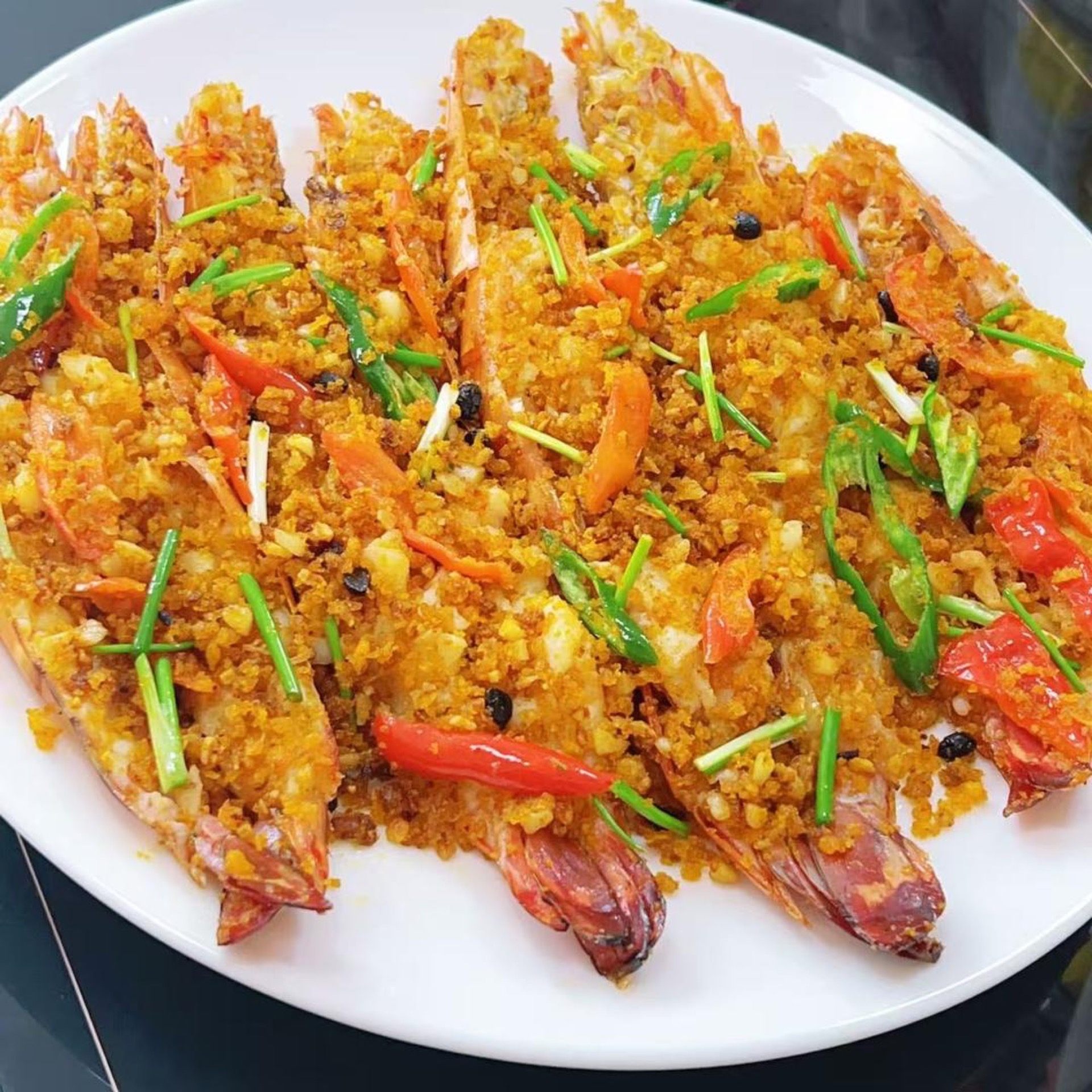
What makes this version worth cooking is the size of the prawns. We used wild-caught flower-spot prawns, four heads weighing in at 1.43 jin — big enough that a 12-inch plate barely holds them. Split down the middle, scored so they stay straight, seared hard, then tossed with fermented black beans, garlic and chilies, they eat like a celebration dish but take almost no technique.
What Is Typhoon Shelter Fried Prawns?
Typhoon shelter fried prawns (避风塘炒虾) is a Cantonese seafood dish built on a topping called typhoon shelter mix — a rubble of fried garlic, fermented black beans, chilies and sometimes dried scallop or breadcrumbs. The name comes from Hong Kong’s typhoon shelters, the protected coves where fishing families moored their boats. Cooking on board, they fried garlic and chilies hard to keep seafood flavorful and stable in the heat and damp, and the style stuck.
Traditional typhoon shelter crab is the most famous version, but prawns are faster, cheaper and arguably better — the shells crisp up, the meat stays sweet, and the garlic mix clings to every surface. You can buy a prepared typhoon shelter fried garlic mix at Asian groceries, which is exactly what we do here, and it turns a restaurant dish into a weeknight one.
If you love big-flavored seafood with a garlicky crunch, our garlic shrimp in cast iron pot is the same idea in a different format — no water, all concentrated flavor.
1Garlic Shrimp in Cast Iron Pot (No-Water Method)A savory, intensely flavorful shrimp dish cooked in its own juices over a bed of onions in a cast iron pot. No water added means maximum concentrated flavor.Check out this recipe
Garlic and cumin are a pairing we lean on constantly, and the air fryer chicken breast with garlic cumin shows how far that combination can go.
23 Easy Air Fryer Chicken Breast Recipes (Garlic, Cumin & Crispy)Say goodbye to dry chicken. Here are three chef-tested ways to cook juicy chicken breast in the air fryer: Garlic Sesame, Cumin BBQ, and Crispy Sichuan Style. Perfect for meal prep or a quick Chinese dinner.Check out this recipe
For a fast green on the side, the chinese stir fried lettuce with garlic uses the same low-and-slow garlic technique this dish depends on.
3Chinese Garlic Lettuce with Oyster Sauce (蒜蓉生菜)This 10-minute, restaurant-style Chinese garlic lettuce (Suan Rong Sheng Cai) is the perfect, simple vegetable side. This recipe teaches you the secret to blanching lettuce to keep it crisp and green, all smothered in a glossy, savory garlic-oyster sauce.Check out this recipe

Ingredient Notes
Flower-spot prawns (花鬼虾). Also sold as flower shrimp or tiger prawns depending on the market, these are large, sweet and sturdy enough to survive a hard sear. Head-on is non-negotiable here — the head carries fat and flavor that bastes the meat as it cooks. If you can only find shelled prawns, buy the largest tail-on you can and shorten the sear by a minute.
Typhoon shelter fried garlic mix. Sold in jars or pouches at Chinese groceries, this is fried garlic with fermented black beans, chili and sometimes dried scallop. It is already salted, so taste before you add more salt anywhere in the recipe. If you cannot find it, see the Variations section for a from-scratch version.
Fermented black beans (douchi). Small, salty, funky and essential — they give the topping its bass note. Rinse them briefly and chop them so they distribute evenly rather than landing in salty pockets. A little goes a long way.
Garlic. We use two small solo garlic bulbs, the single-clove variety with a milder, sweeter bite. Regular garlic works fine; six cloves will do. Whatever you use, mince it evenly so it browns at the same rate.
Cornstarch. A thin dusting on the scored prawn meat keeps the surface dry so it sears rather than steams, and it prevents sticking in the pan. Don’t overdo it — a heavy coat turns gummy.
Onion powder, ginger powder, white pepper. Two grams each, rubbed into the meat. This is a fast marinade, not a wet one, because any liquid on the prawns would stop them from browning. If you are swapping in fresh grated ginger, squeeze out the juice first.
Ingredients
Everything below makes four generous servings as part of a multi-dish Chinese meal, or two very happy people with rice and a vegetable. The prawns are the star, so buy the best ones you can find and let the pantry items do the rest.
- 4 whole large head-on prawns (about 1.4 lb / 650 g), split in half lengthwise
- 2 tsp onion powder
- 2 tsp ginger powder
- 2 tsp white pepper
- 2 tsp salt
- 2 tbsp cornstarch, for dusting
- 2 tbsp neutral oil, for searing
- 1/2 tbsp fermented black beans, chopped
- 2 bulbs solo garlic (or 6 cloves), minced
- 1 tbsp typhoon shelter fried garlic mix
- 1 small green chili, sliced
- 1 red chili, sliced
- 1 scallion, cut into 2-inch segments
If you are building a full Cantonese-style spread, a bowl of seaweed egg drop soup is a light, clean counterpoint to all that garlic.
Equipment Needed
A wok is ideal for the tossing stage, but a flat-bottom skillet does the searing better — so we use both. A cast iron or carbon steel pan gives you the hard, dry heat that crisps the shells without steaming them, and a wok gives you the volume to toss the prawns through the garlic mix without losing any of it over the rim.
- Wok or large skillet for tossing
- Cast iron or flat-bottom pan for searing
- Cutting board
- Kitchen shears
- Small paring knife
- Slotted spoon or spider
- Paper towels
One more thing worth having: a fine-mesh skimmer for lifting the garlic out of the oil if you decide to fry your own instead of using a prepared mix.
Why This Recipe Works
The technique here solves the two problems that ruin most home-cooked garlic prawns: curled, rubbery meat and burnt, bitter garlic.
Scoring the prawn meat in a crosshatch cuts the connective tissue that makes shellfish contract and curl at high heat. That single step keeps the prawns straight and open, which means more surface area for the garlic to cling to and more even cooking from edge to center.
Splitting the prawns in half lengthwise does the same job from another direction. A whole head-on prawn is thick enough that the outside overcooks before the center is done. Halved, it cooks in about two minutes per side and stays juicy.
And the garlic goes in over low heat, in a separate stage, after the prawns are already out of the pan. That is the whole trick behind typhoon shelter cooking: the topping is built separately so it can crisp without the prawns overcooking while it happens.
There is real food science behind the low-and-slow garlic step. Garlic’s pungent compounds form when alliin meets alliinase after crushing, and those compounds are heat-sensitive — past a certain point they break down into bitter sulfur notes. Gentle heat converts them into the sweet, nutty thiosulfinates that give fried garlic its appeal. The Serious Eats guide to garlic flavor science explains the chemistry clearly.
Prep & Mise en Place
This dish moves fast once the pan is hot, so do all the cutting before you turn on the burner. The prawn cleaning is the only fiddly part, and it takes about ten minutes.
Clean the prawns. Snip off the antennae, legs and the pointed rostrum with kitchen shears. Cut down the back through the shell to open it, then use a knife to split each prawn cleanly in half lengthwise. Remove the sandy stomach sac just above the head and pull the digestive vein if you see one. Rinse under cold water and drain well.
Score and season. Lay each half cut-side up and score the meat in a crosshatch, about 1/8 inch deep — enough to cut the surface fibers, not enough to go through. Rub with the onion powder, ginger powder, white pepper and salt, pat it in, then dust lightly with cornstarch.
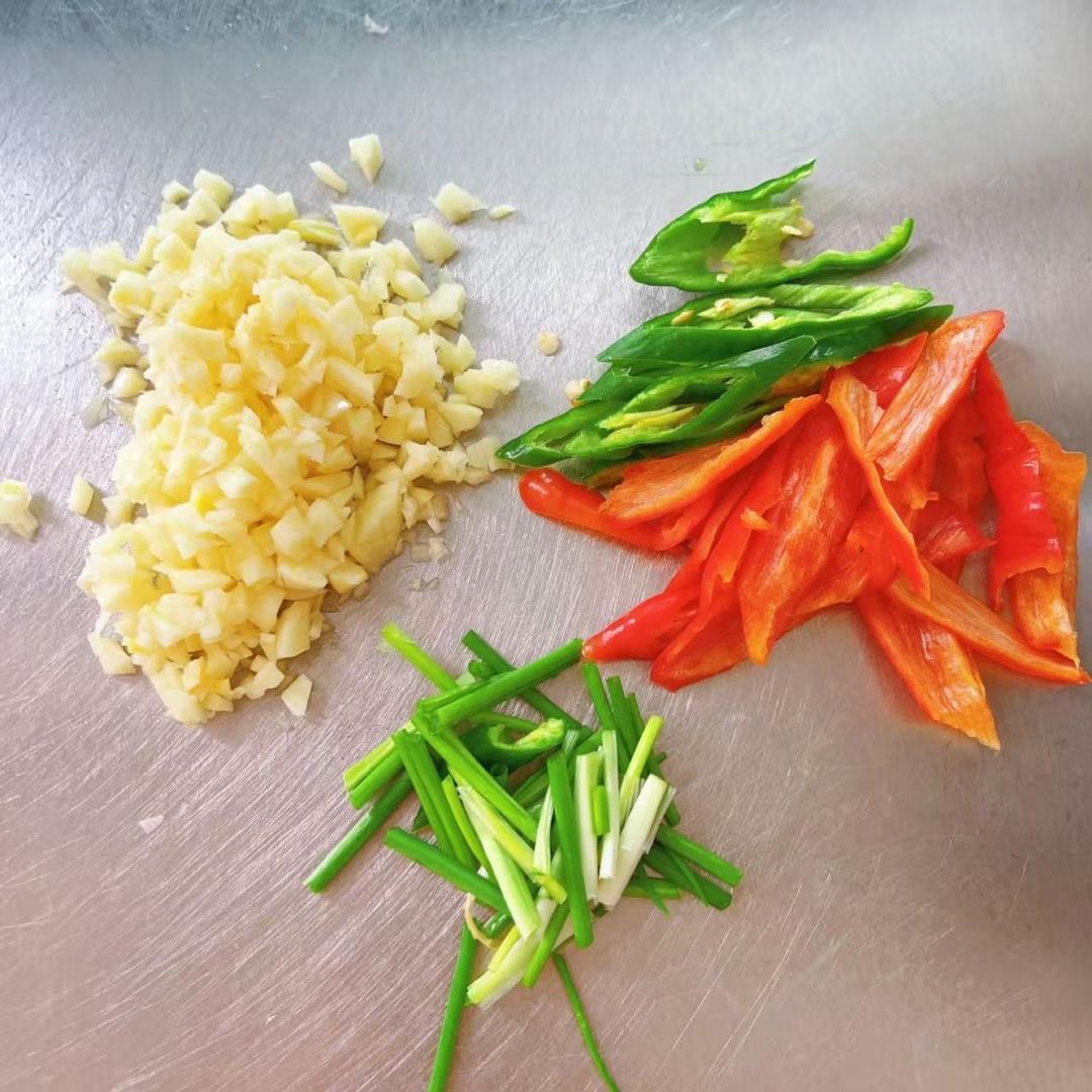
Set up the topping station. Mince the garlic, chop the fermented black beans, slice both chilies and cut the scallion into segments. Have the typhoon shelter mix measured and ready. Once the garlic hits the pan you have about ninety seconds before it is done, so nothing should still be in the fridge.
Dry the prawns thoroughly. Pat them with paper towels right before searing. Surface moisture is the enemy of crisp shells — wet prawns steam, dry prawns sear. If you have time, leave them uncovered in the fridge for 20 minutes after dusting.
Cooking Process
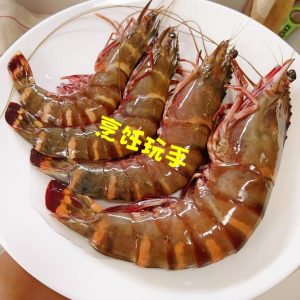
Step 1 — Sizing the Prawns
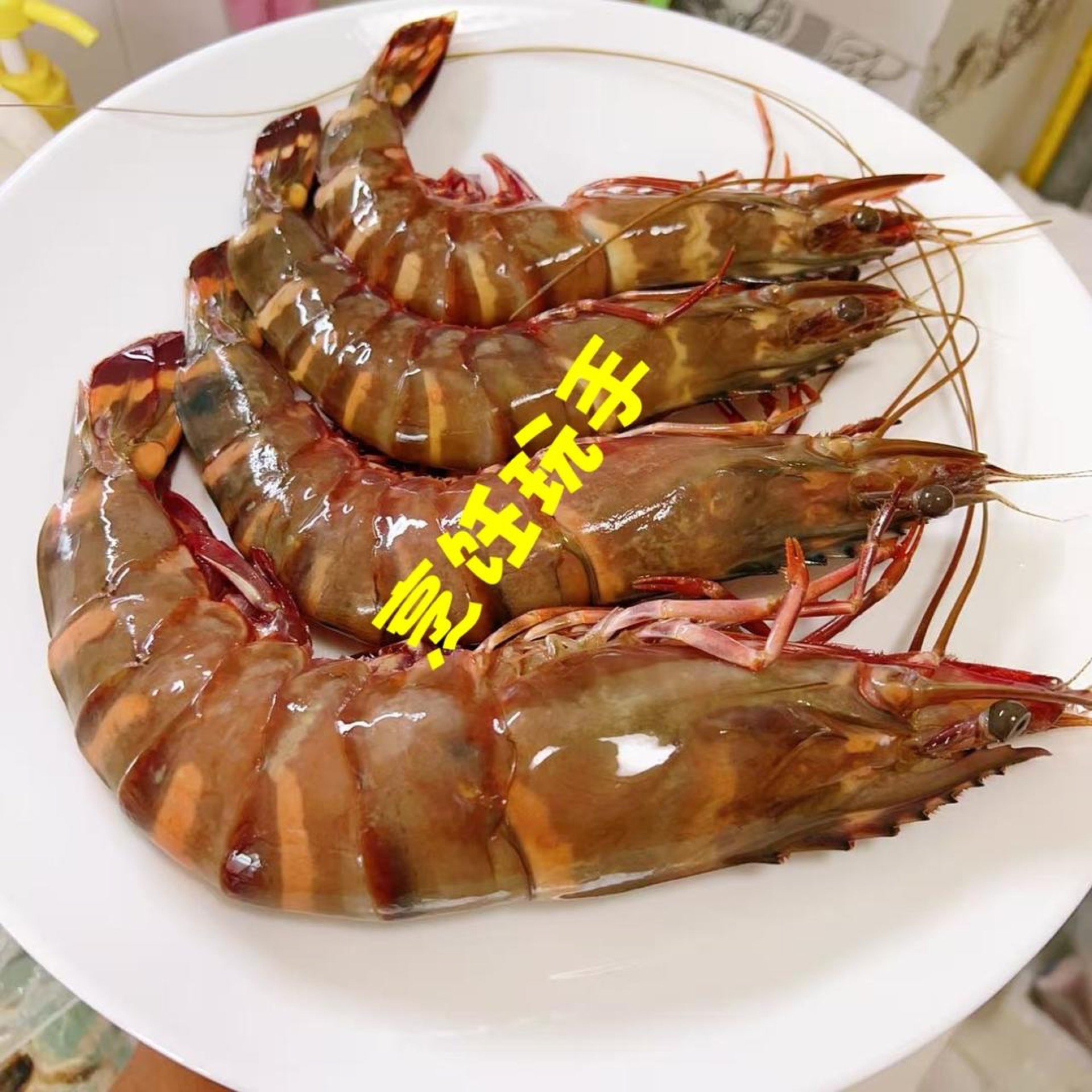
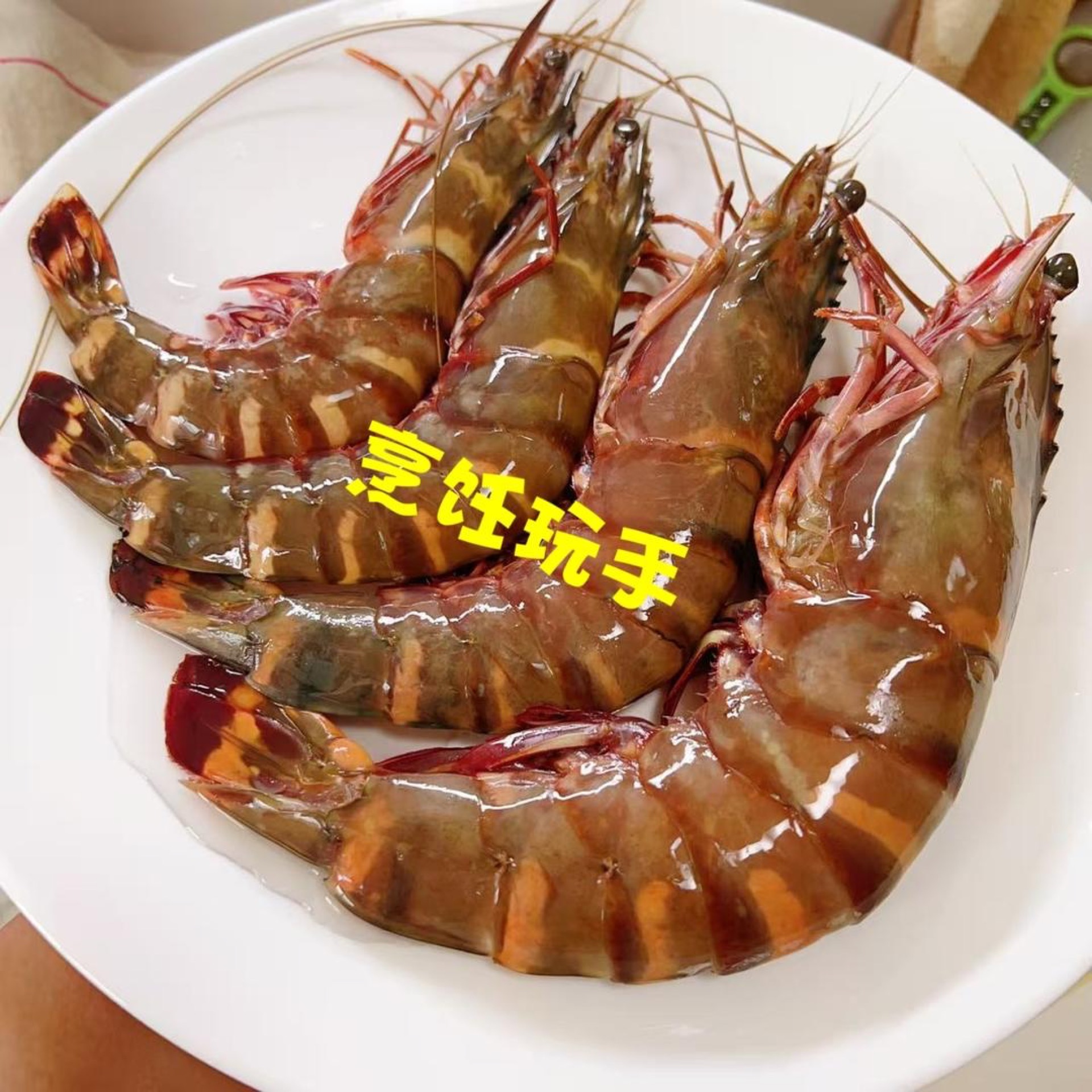
The extra-large flower-spot prawns weigh in at 1.43 jin for just 4 heads.
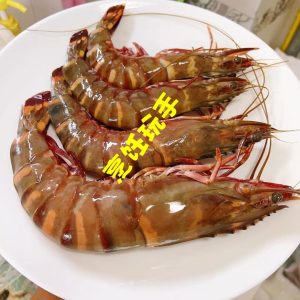
Step 2 — A Plate Big Enough
It takes a 12-inch plate just to hold them all.
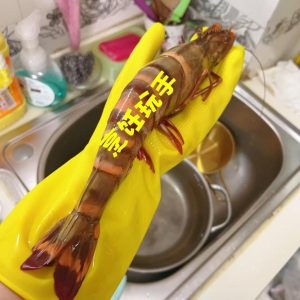
Step 3 — Prawns in Hand
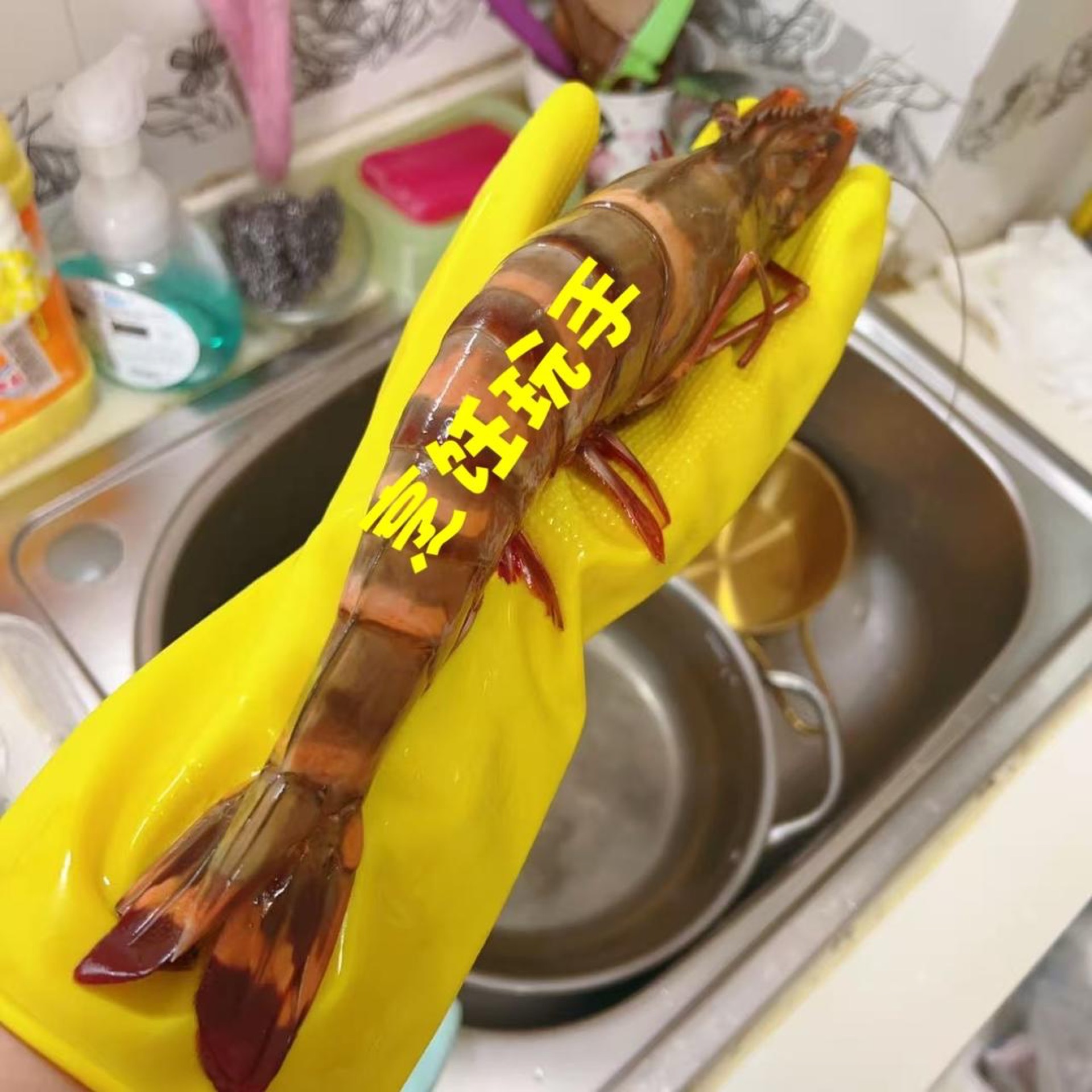
Hold one in your hand for a sense of the scale.
Step 4 — Cleaning and Splitting
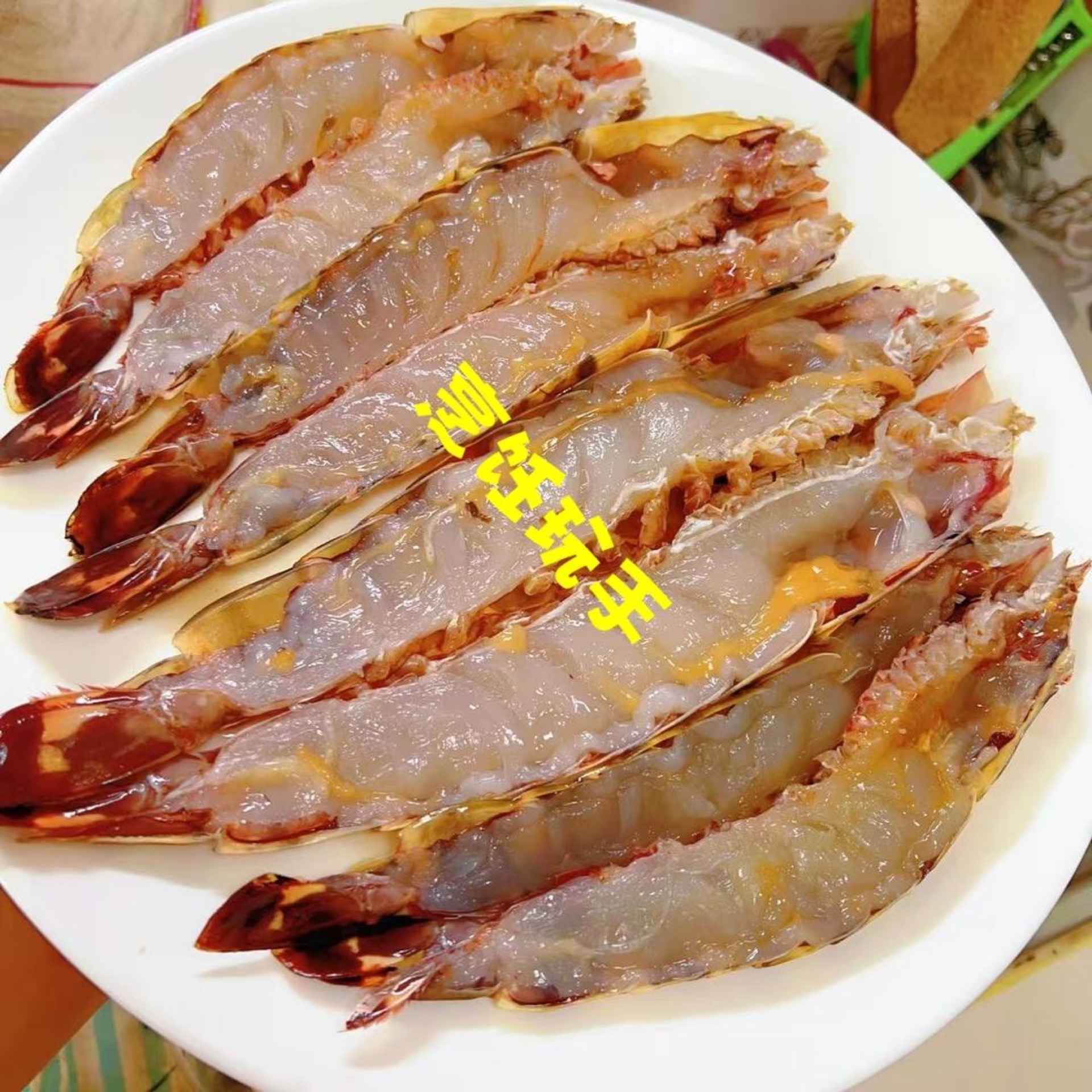
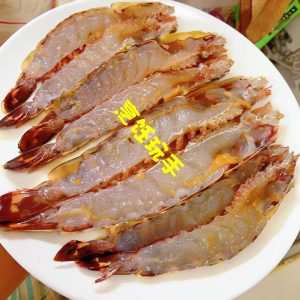
First, clean the prawns: snip off the antennae, legs and rostrum, cut open the hard shell down the middle with kitchen shears, then split each one in half with a knife, remove the sandy stomach sac above the head, pull out the digestive vein if present, rinse clean and drain. The meat looks slightly translucent, which tells you the prawns are very fresh.
Step 5 — Scoring, Seasoning and Dusting
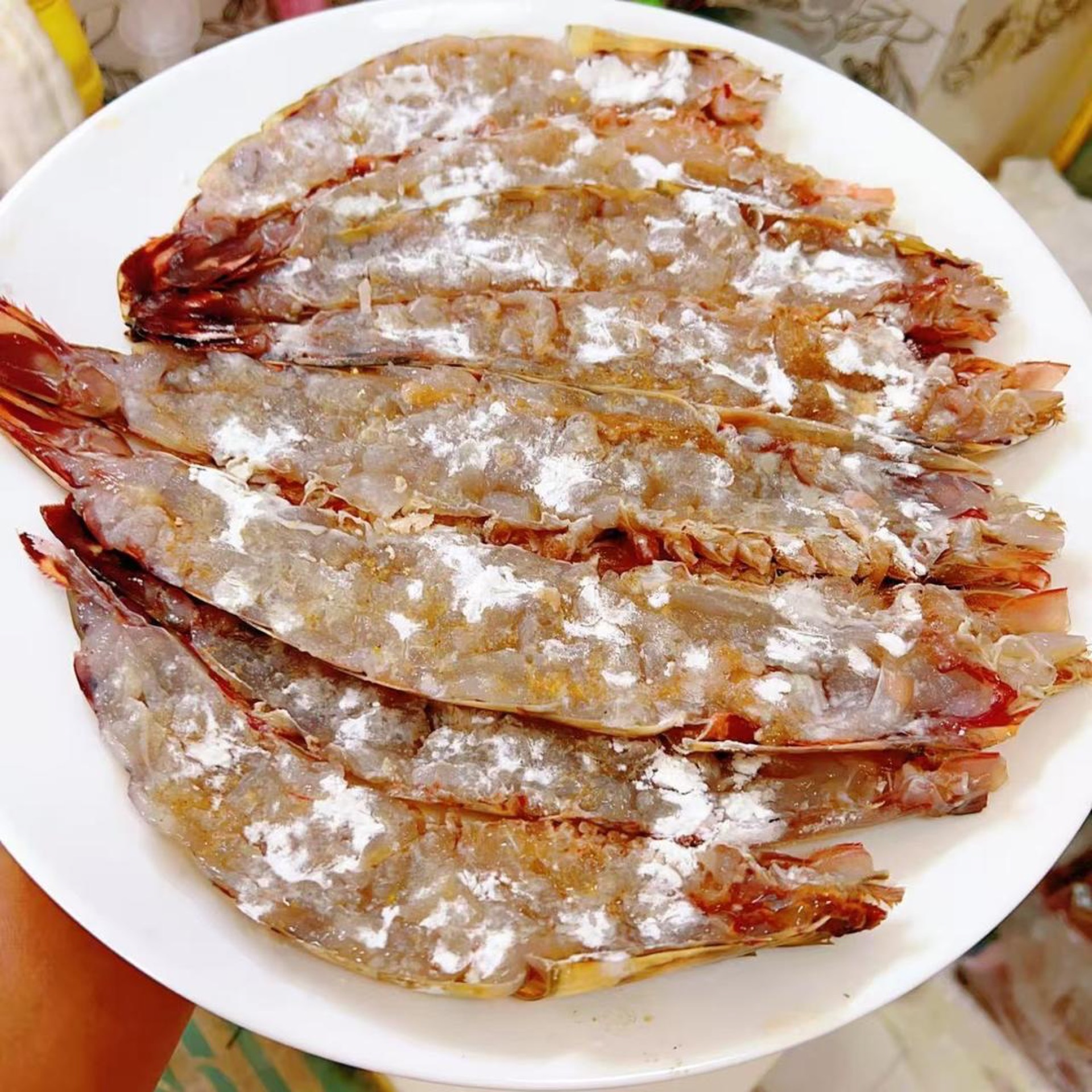
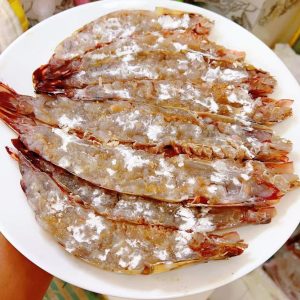
Use a small knife to score the meat in a crosshatch, cutting the connective tissue so the prawns stay straight instead of curling at high heat — this looks better plated and helps the seasoning penetrate. For the marinade, add onion powder, ginger powder, white pepper and salt, 2 grams each, rub and pat it evenly over the meat, then dust with a layer of cornstarch so they don’t stick to the pan while searing.
Step 6 — Searing the Prawns
Add a generous amount of cooking oil to a flat-bottom pan, lay the prawns in and sear both sides until lightly golden and just cooked through.
Step 7 — Prepping the Aromatics
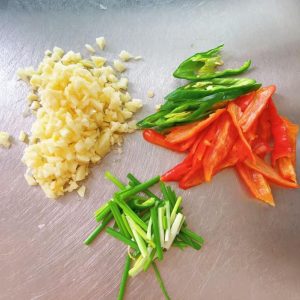
Prepare the minced garlic, green and red chilies, and scallion segments.
Step 8 — Starting the Topping
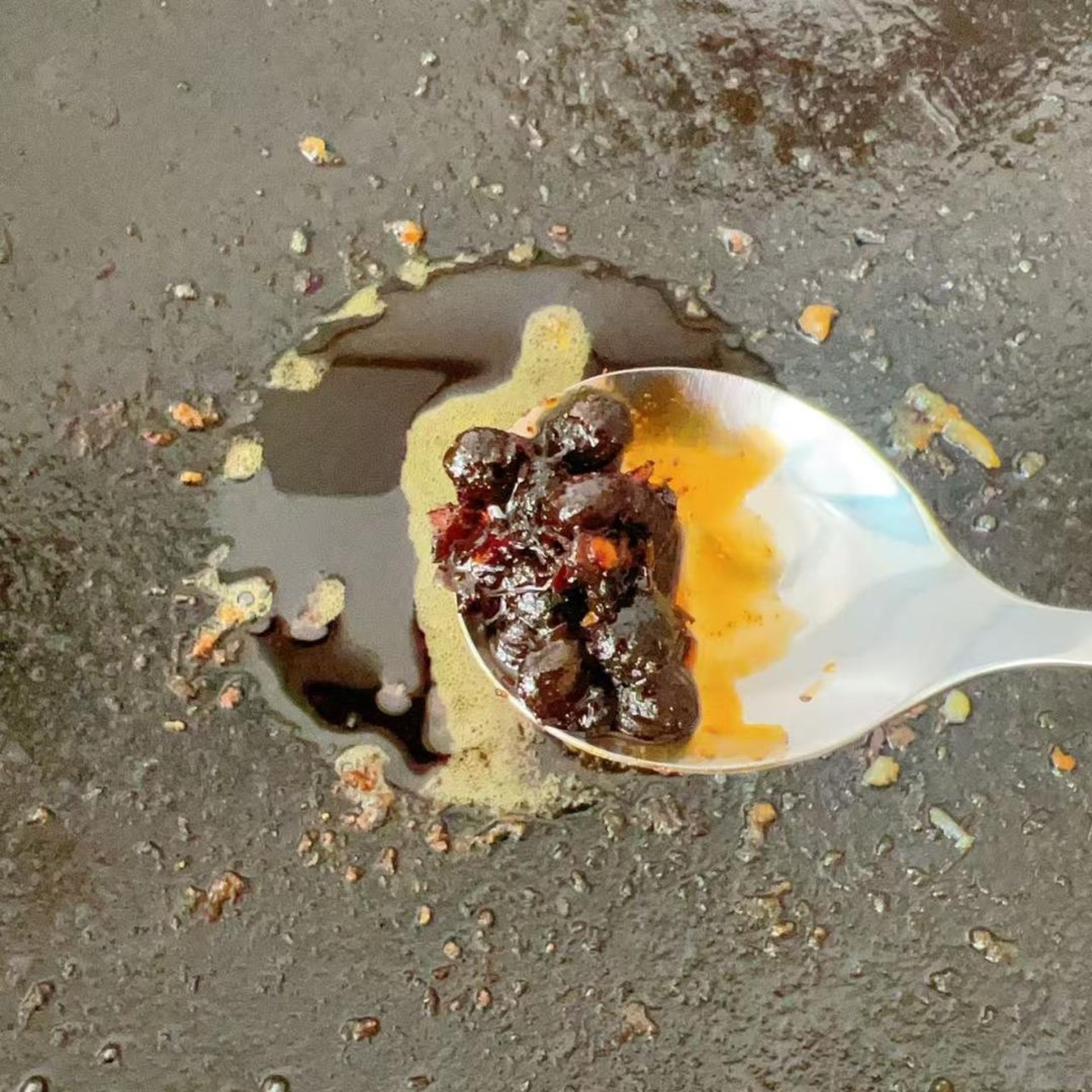
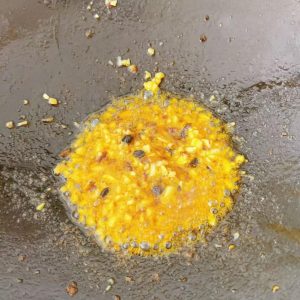
In a separate pan, add fermented black beans to the residual oil in the pan.
Step 9 — Blooming the Garlic
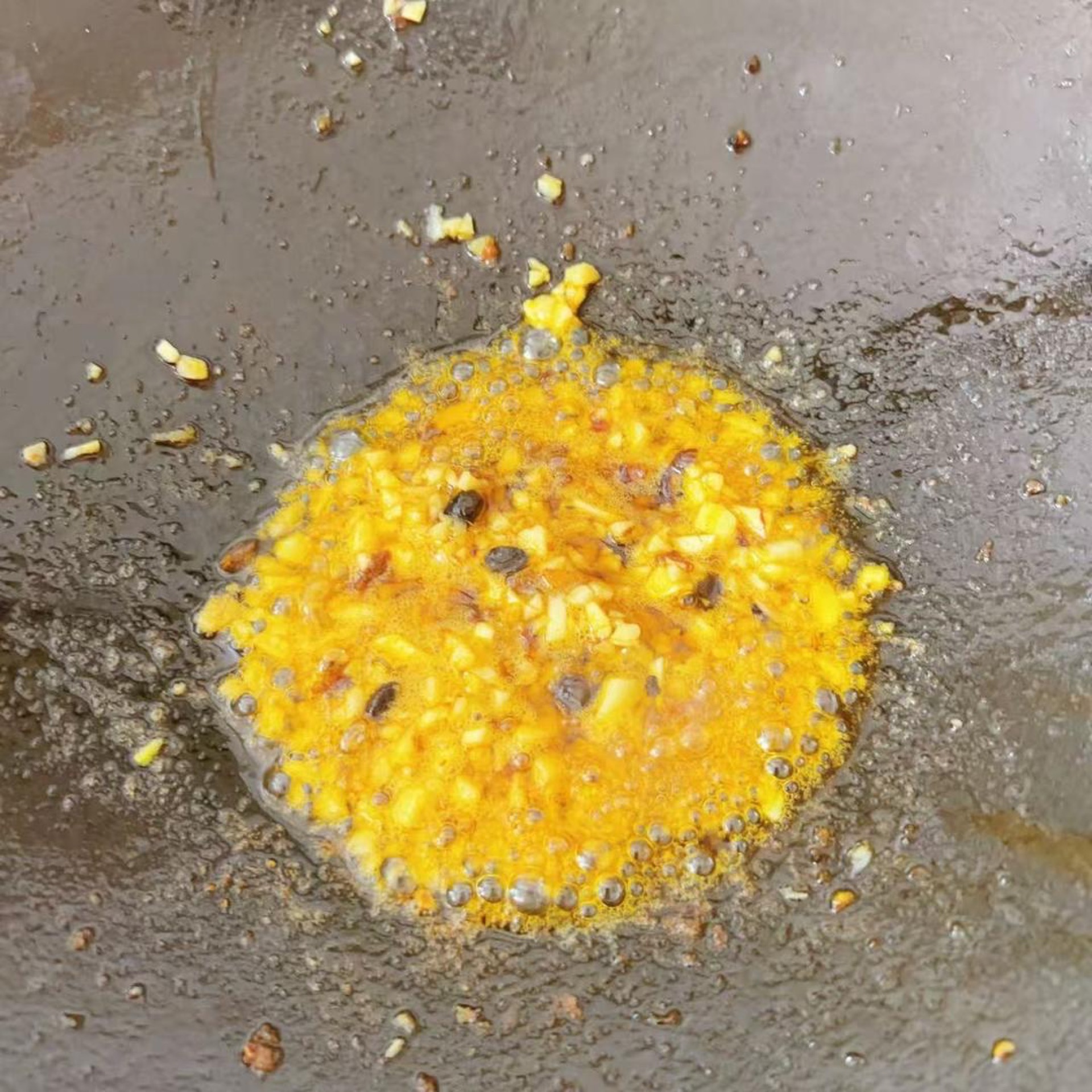
Add the minced garlic and fry over low heat until fragrant. Don’t cook it too long — overcooked garlic turns bitter and ruins the taste.
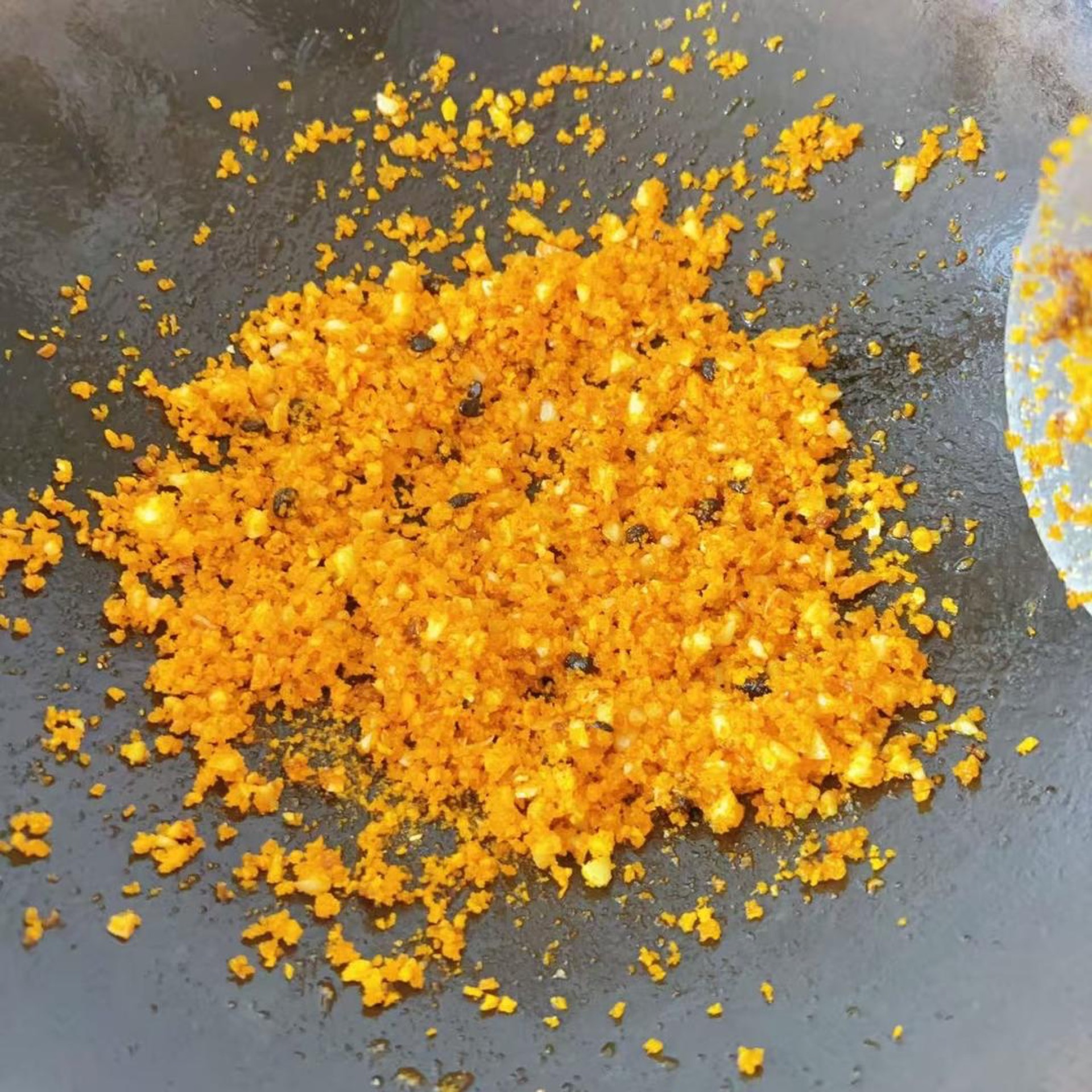
Step 10 — Adding the Typhoon Shelter Mix
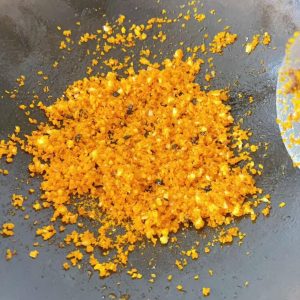
Add 1 ladle of typhoon shelter fried garlic mix to the pan and stir-fry over low heat until fragrant.
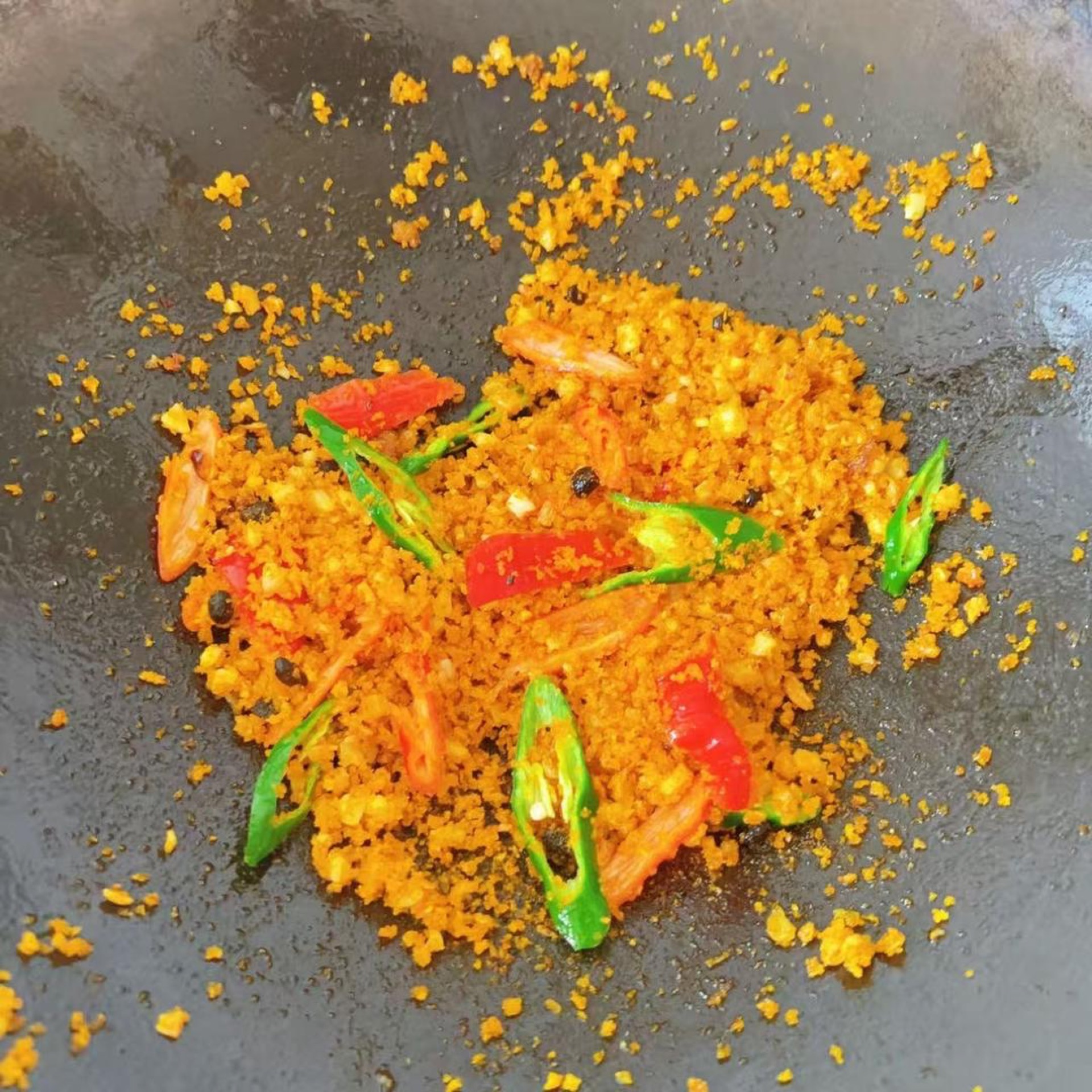
Step 11 — Adding the Chilies
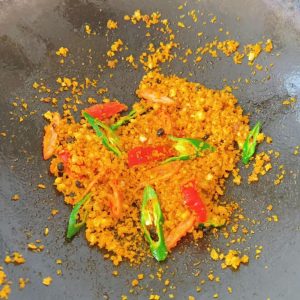
Add the green and red chilies to the pan.
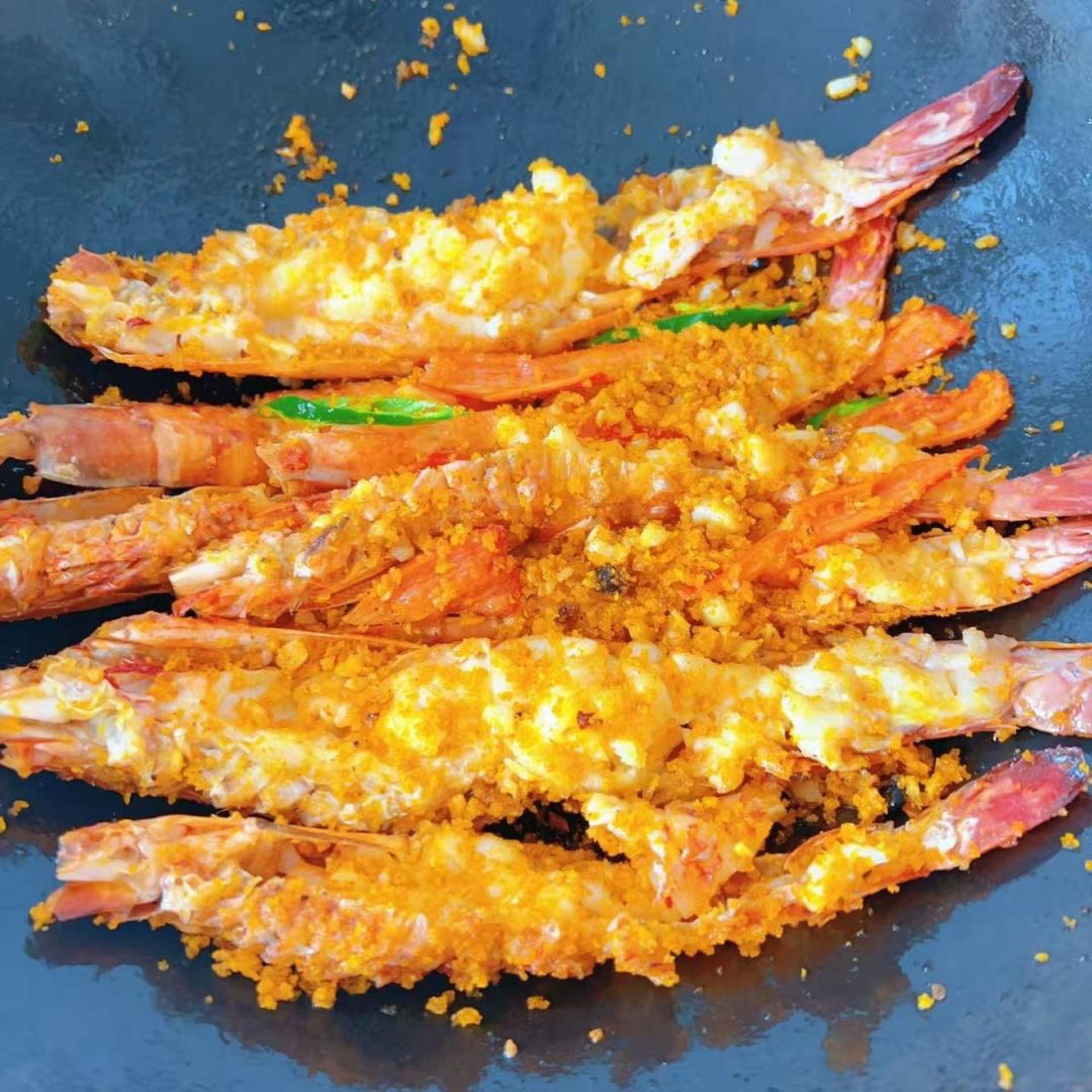
Step 12 — Tossing the Prawns
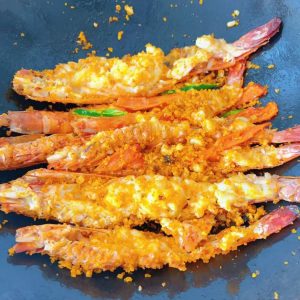
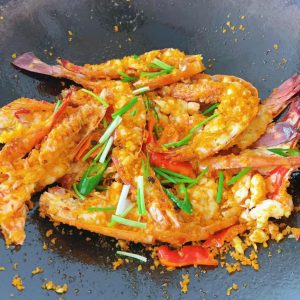
Add the prawns to the pan and toss everything together so the typhoon shelter mix coats the prawns evenly.
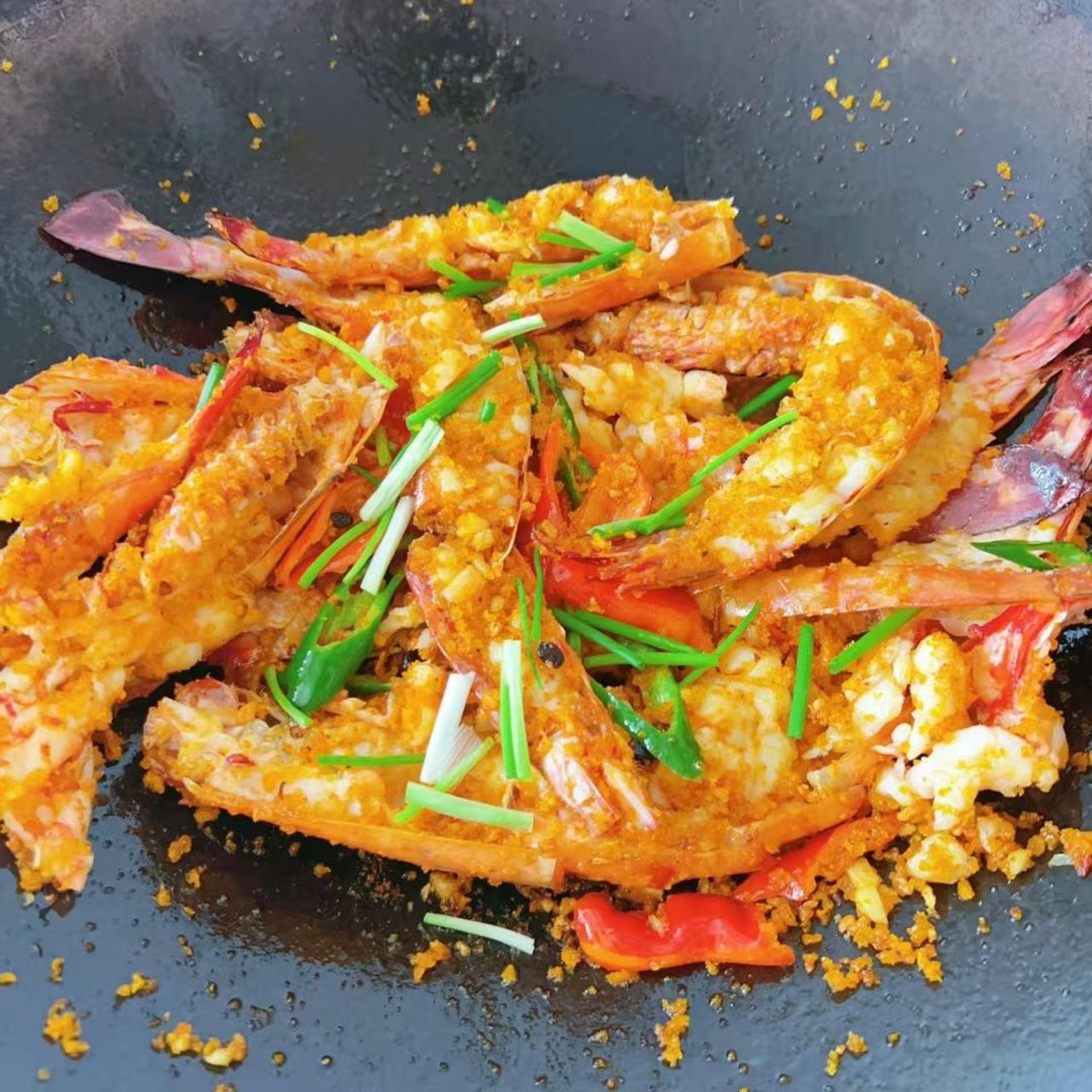
Step 13 — Finishing with Scallion
Scatter the scallion segments in just before taking the pan off the heat.
Step 14 — Plating
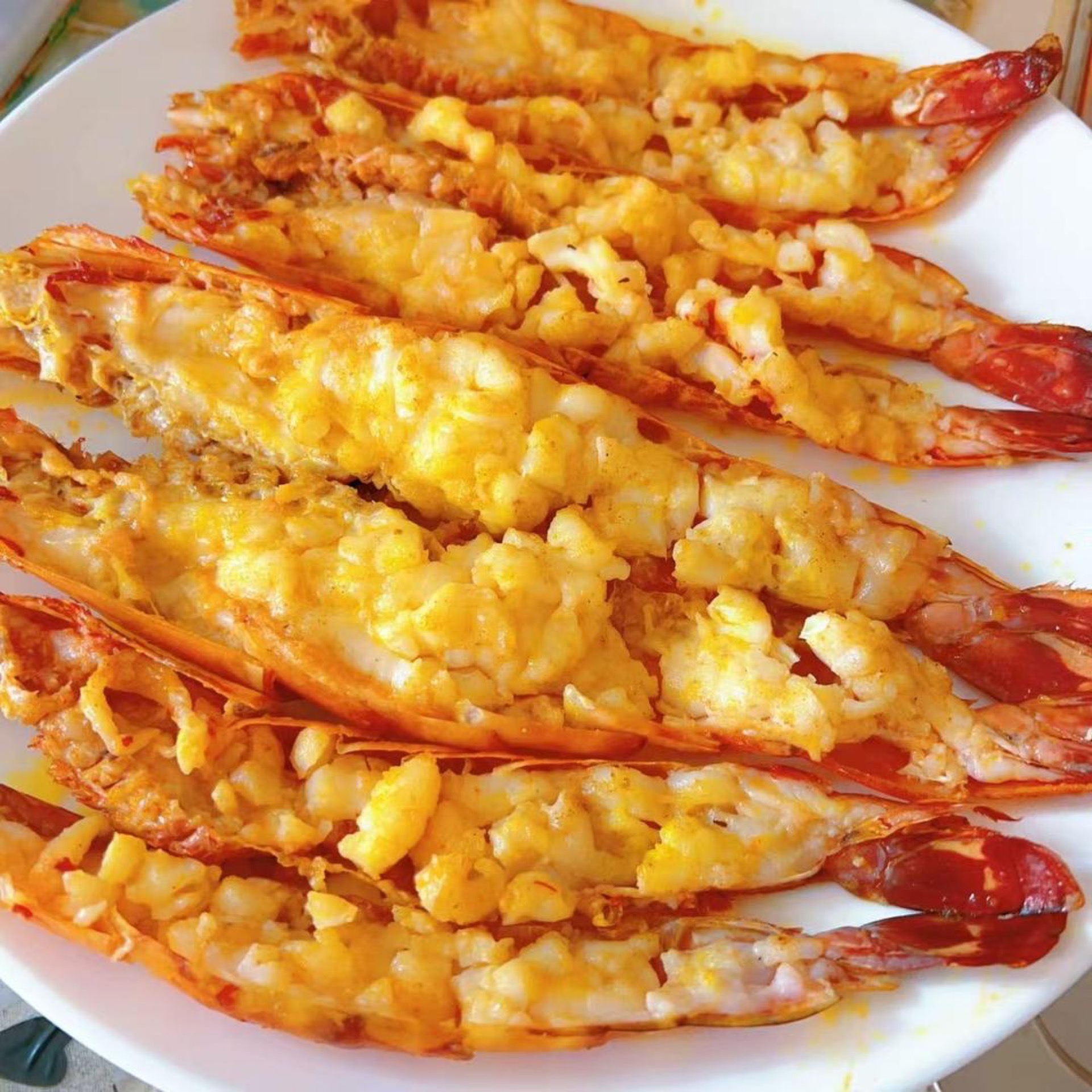
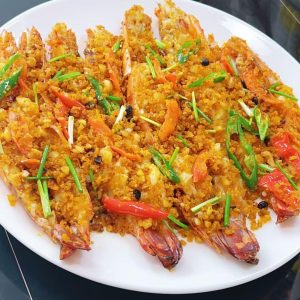
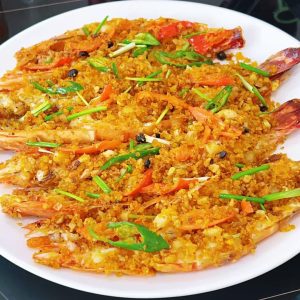
Plate the prawns for serving.
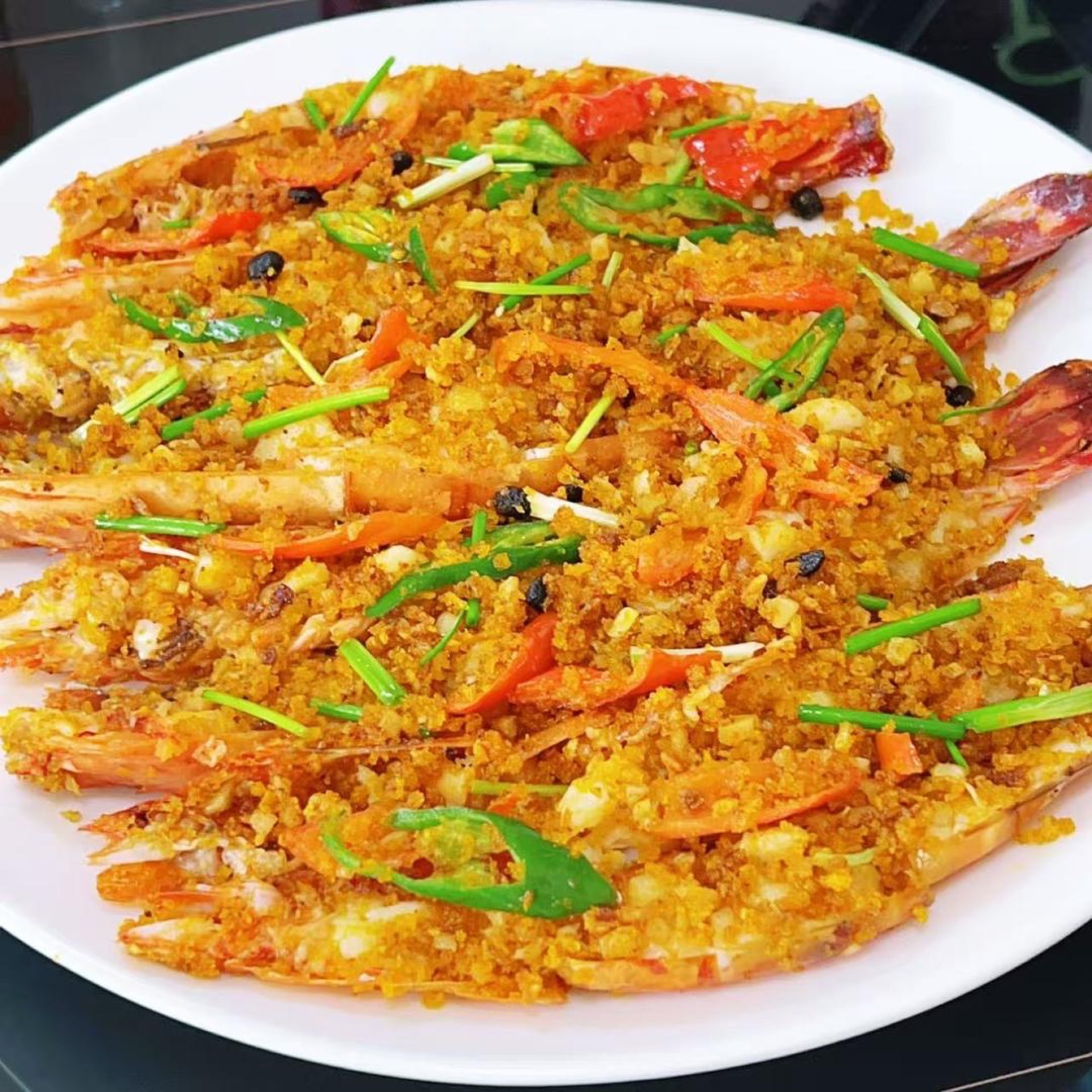
Step 15 — Serving
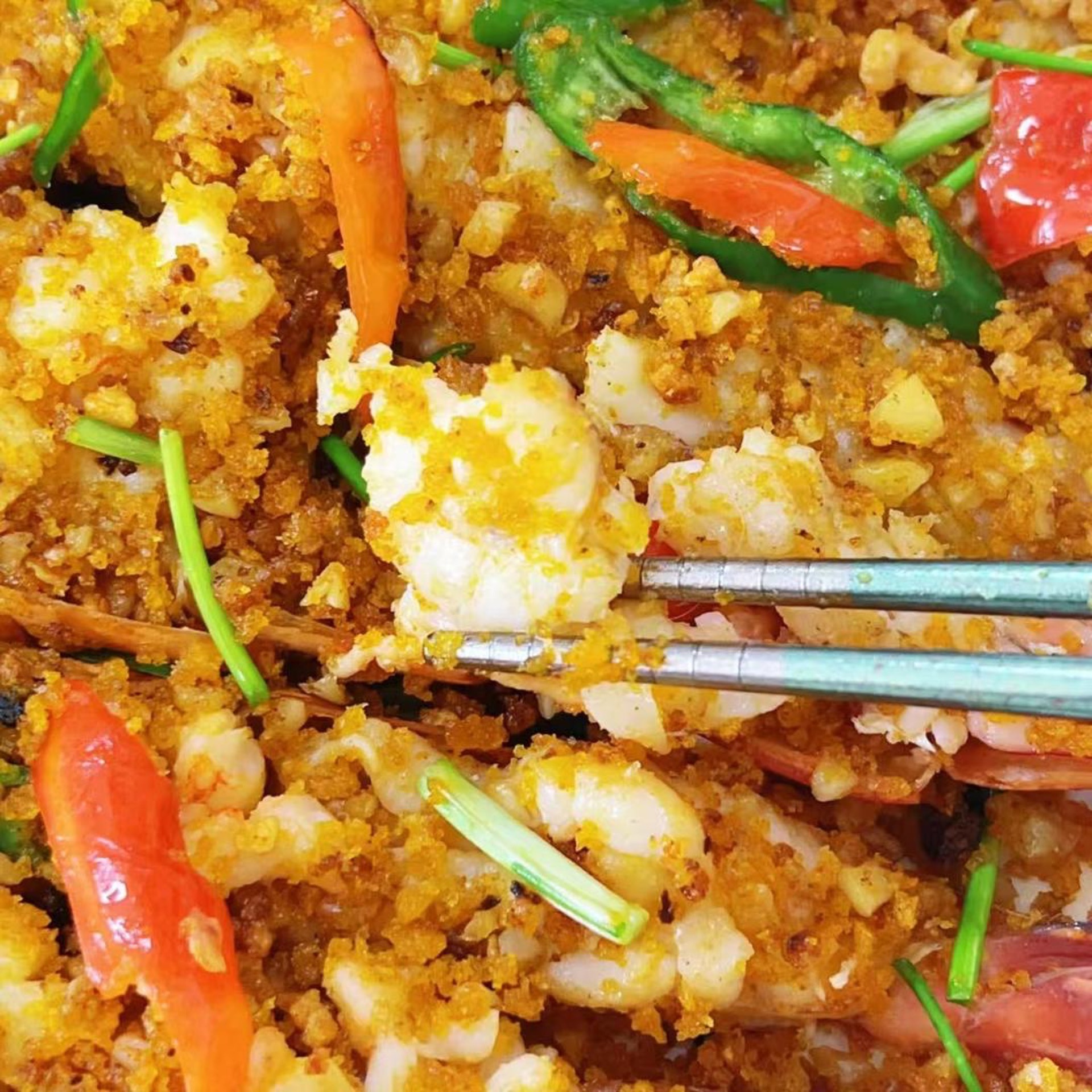
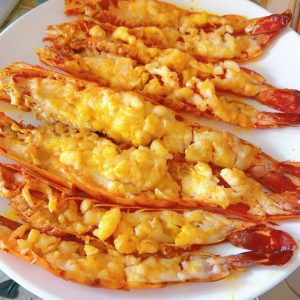
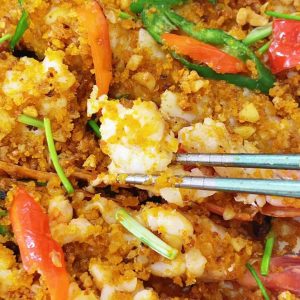
The prawn meat is springy and full of flavor, wrapped in a crunchy typhoon shelter coating — good enough to make you lick your fingers. It tastes just like a Hong Kong cha chaan teng.
Common Mistakes When Making Typhoon Shelter Fried Prawns
1. Overcooking the prawns. Prawns go from translucent to opaque in under two minutes per side when halved. If they are rubbery, they cooked too long — the cause is usually a pan that wasn’t hot enough, which stretches the cooking time. Fix it by getting the pan properly hot before the prawns go in and pulling them the second the meat turns opaque.
2. Burning the garlic. This is the single most common failure. Garlic goes bitter when it hits high heat or stays in the pan past pale gold. The cause is impatience — turning the flame up to speed things along. Keep it on low, stir constantly, and pull the pan off the heat the moment the garlic smells sweet and looks light golden.
3. Skipping the scoring. Without the crosshatch cuts, the prawns curl into tight C shapes and the marinade sits on the surface instead of soaking in. The cause is usually rushing the prep. Take the extra thirty seconds per prawn — it changes both the texture and the look of the finished plate.
4. Too much cornstarch. A heavy dusting turns into a pasty coating that traps moisture and blisters in the oil. The cause is dumping cornstarch straight from the container. Shake a light veil over the prawns through your fingers, or toss them in a bowl with a tablespoon at a time.
5. Adding the chilies too early. Green and red chilies need only a few seconds of heat to release their aroma; leave them in from the start and they go limp and dull. Add them right before the prawns come back to the pan so they stay bright and slightly crisp.
6. Crowding the pan. Four large prawns halved makes eight pieces, and eight pieces will not fit comfortably in a small skillet. Crowding drops the pan temperature and steams the shells. Sear in two batches if you have to, keeping the first batch warm on a plate.
7. Underseasoning the topping. The typhoon shelter mix is already salted, but the fermented black beans are salty in a different, funkier way — taste the topping before the prawns go back in and adjust. The cause is treating the mix as a complete seasoning. It is a base, not a finished sauce.
Variations
Make your own typhoon shelter mix. Mince 8 cloves of garlic and fry them in 1/3 cup of oil over low heat until pale gold, then add 1 tablespoon of chopped fermented black beans, 1 tablespoon of dried shrimp or dried scallop (soaked and minced), and a pinch of sugar. Drain and reserve the garlic oil for searing the prawns.
Typhoon shelter crab. The original. Use a whole blue or Dungeness crab, cleaned and cracked into pieces, dusted with cornstarch and deep-fried until shell-red, then tossed with the same topping. It is messier and more dramatic, and the garlic mix picks up the crab’s juices.
Shrimp instead of prawns. Large tail-on shrimp work if you cannot find head-on prawns. Skip the splitting step, score the backs lightly, and shorten the sear to about 90 seconds per side.
Add heat. A teaspoon of chili oil or a pinch of dried chili flakes stirred into the topping with the garlic pushes the dish toward Sichuan territory. If you want to go further in that direction, our sichuan spicy shrimp is a different but equally good path.
Less salt. If you are watching sodium, halve the salt in the marinade and rinse the fermented black beans twice. The typhoon shelter mix carries a lot of the seasoning on its own.
Frequently Asked Questions
Can I use frozen prawns for this dish? Yes, but thaw them overnight in the fridge and dry them very thoroughly. Frozen prawns hold more water, so they need a longer pat-down and a slightly hotter pan. Head-on frozen prawns are often the only option outside coastal markets, and they work well.
Do I have to split the prawns in half? It is the step that makes the dish. Halving shortens the cooking time dramatically and lets the garlic mix sit directly on the meat. If you leave them whole, add a minute or two per side and expect the garlic to cling mostly to the shells.
What if I can’t find typhoon shelter fried garlic mix? Make the from-scratch version in the Variations section above. The key components are fried garlic, fermented black beans and something savory — dried scallop, dried shrimp or a little oyster sauce.
Can I make this ahead of time? The topping can be made a day ahead and stored in the fridge; bring it to room temperature before using. The prawns themselves are best cooked and eaten immediately — they lose their crispness within twenty minutes.
How do I keep the garlic from going bitter? Low heat, constant stirring, and pulling it early. If your garlic does turn bitter, there is no fixing it — start over with fresh garlic. It is worth the extra two minutes.
How to Serve
Typhoon shelter fried prawns belong in the middle of a table with steamed white rice and at least one vegetable. The garlic topping is rich and salty, so plain rice is the natural partner — spoon the extra garlic mix over the rice and thank yourself later. A crisp lager or a dry Riesling both cut through the oil beautifully.
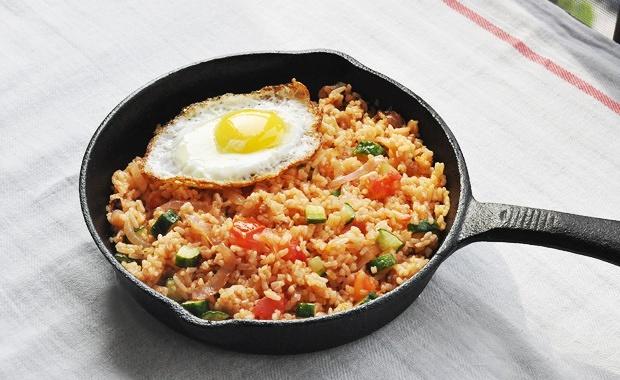
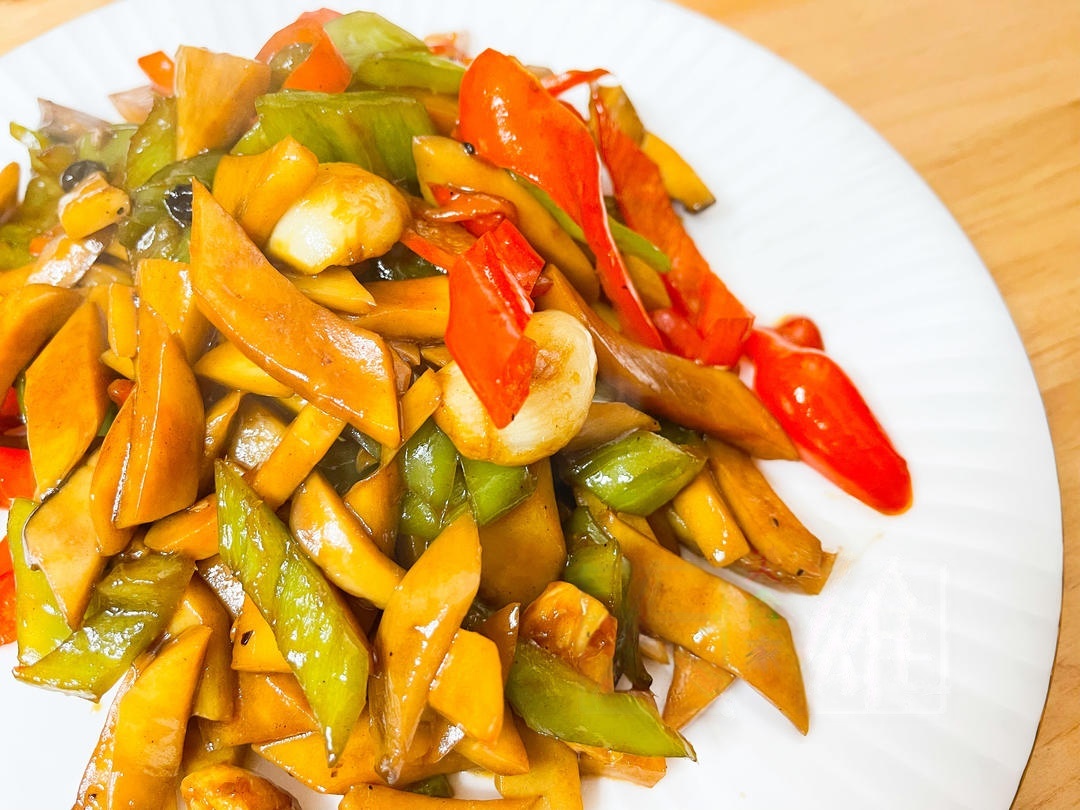
If you are serving a bigger Cantonese-style spread, a plate of crispy sweet and sour pork gives you a sweet, tangy counterweight to all the garlic, and a bowl of nasi goreng indonesian fried rice turns the whole thing into a one-bowl meal. For something lighter alongside, stir fry king oyster mushrooms with hot peppers echoes the chili-garlic theme without repeating it.

Storage & Reheat
This is a dish at its best straight from the pan, and honestly the garlic mix never tastes as good the next day. That said, leftovers keep fine if you handle them properly.
Cool the prawns and topping within two hours of cooking, then transfer to an airtight container and refrigerate for up to two days. The garlic will soften and lose its crunch — there is no way around that — but the flavor holds.
Reheat in a hot skillet or wok over medium-high heat for two to three minutes, tossing until the prawns are steaming hot. Do not use the microwave; it turns the shells rubbery and the garlic soggy. If the topping needs reviving, toast a fresh tablespoon of typhoon shelter mix in a dry pan for thirty seconds and scatter it over the top before serving.
Do not refreeze cooked prawns. If you bought more than you need, freeze the raw prawns before cleaning and thaw only what you plan to cook.
Allergen Notice
This recipe contains shellfish (prawns), soy and wheat or gluten from the soy sauce and many prepared typhoon shelter mixes, and potentially fish or crustacean traces in fermented black beans and jarred garlic mixes. Check the label on your typhoon shelter mix carefully — some brands include dried scallop or shrimp powder, and some include wheat-based thickeners. If you are cooking for someone with a shellfish allergy, this dish is not adaptable; the prawns are the whole point.
For gluten-free cooking, use a tamari-based typhoon shelter mix or make your own topping from scratch and confirm your fermented black beans are wheat-free.
Nutrition Disclaimer
Nutrition information is calculated using an ingredient database and should be considered an estimate. In cases where multiple ingredient alternatives are given, the first listed is calculated for nutrition. Garnishes and optional ingredients are not included.
About the Author & Recipe Development
Lin has been cooking Cantonese and Sichuan food at home for over two decades and writes Woks of Love to make restaurant techniques approachable in a normal home kitchen. This recipe came out of a trip to a Hong Kong wet market where the flower-spot prawns were too big to ignore — four heads, 1.43 jin, and a vendor who insisted they had to be split and scored before they ever touched a pan.
The testing notes here reflect what actually happened in the Woks of Love kitchen: three rounds of garlic, two burnt batches, and one very good version that finally got the timing right. The from-scratch typhoon shelter mix variation exists because not every city has a Chinese grocery with the jarred version in stock.
If you cook this, we would love to hear how it went — especially if you tried the crab version or built your own garlic mix. For technique questions, the substitute for dark soy sauce guide answers the most common pantry question we get, and the juicy dumpling filling post covers our approach to marinades and moisture control in general.
Authoritative References
For safe handling and cooking temperatures for shellfish, see the FDA Food Code and the USDA safe minimum internal temperature chart, which lists 145°F (63°C) for fish and shellfish. For background on the garlic chemistry discussed above, the Serious Eats garlic flavor science explainer is a clear, practical read.
Typhoon Shelter Fried Prawns (避风塘炒虾): Crispy Garlic Prawns, Juicy

Equipment
- Wok
- Cutting Board
- Slotted Spoon
- Kitchen Shears
- Small paring knife
- Cast iron skillet or flat-bottom pan
- Paper Towels
Ingredients
For the Prawns
- 4 whole large prawns head-on, about 1.4 lb / 650 g total, split in half lengthwise
- 2 tsp onion powder
- 2 tsp ginger powder
- 2 tsp white pepper
- 2 tsp salt
- 2 tbsp cornstarch for dusting
- 2 tbsp neutral oil for searing
For the Typhoon Shelter Topping
- 1/2 tbsp fermented black beans douchi, roughly chopped
- 2 bulbs solo garlic or 6 cloves regular garlic, minced
- 1 tbsp typhoon shelter fried garlic mix store-bought, lightly salted
- 1 small green chili sliced
- 1 whole red chili sliced
- 1 stalk scallion cut into 2-inch segments
Instructions
- The extra-large flower-spot prawns weigh in at 1.43 jin for just 4 heads.

- It takes a 12-inch plate just to hold them all.
- Hold one in your hand for a sense of the scale.
- First, clean the prawns: snip off the antennae, legs and rostrum, cut open the hard shell down the middle with kitchen shears, then split each one in half with a knife, remove the sandy stomach sac above the head, pull out the digestive vein if present, rinse clean and drain. The meat looks slightly translucent, which tells you the prawns are very fresh.
- Use a small knife to score the meat in a crosshatch, cutting the connective tissue so the prawns stay straight instead of curling at high heat — this looks better plated and helps the seasoning penetrate. For the marinade, add onion powder, ginger powder, white pepper and salt, 2 grams each, rub and pat it evenly over the meat, then dust with a layer of cornstarch so they don’t stick to the pan while searing.
- Add a generous amount of cooking oil to a flat-bottom pan, lay the prawns in and sear both sides until lightly golden and just cooked through.
- Prepare the minced garlic, green and red chilies, and scallion segments.
- In a separate pan, add fermented black beans to the residual oil in the pan.
- Add the minced garlic and fry over low heat until fragrant. Don’t cook it too long — overcooked garlic turns bitter and ruins the taste.
- Add 1 ladle of typhoon shelter fried garlic mix to the pan and stir-fry over low heat until fragrant.
- Add the green and red chilies to the pan.
- Add the prawns to the pan and toss everything together so the typhoon shelter mix coats the prawns evenly.
- Scatter the scallion segments in just before taking the pan off the heat.
- Plate the prawns for serving.
- The prawn meat is springy and full of flavor, wrapped in a crunchy typhoon shelter coating — good enough to make you lick your fingers. It tastes just like a Hong Kong cha chaan teng.













Leave a Reply