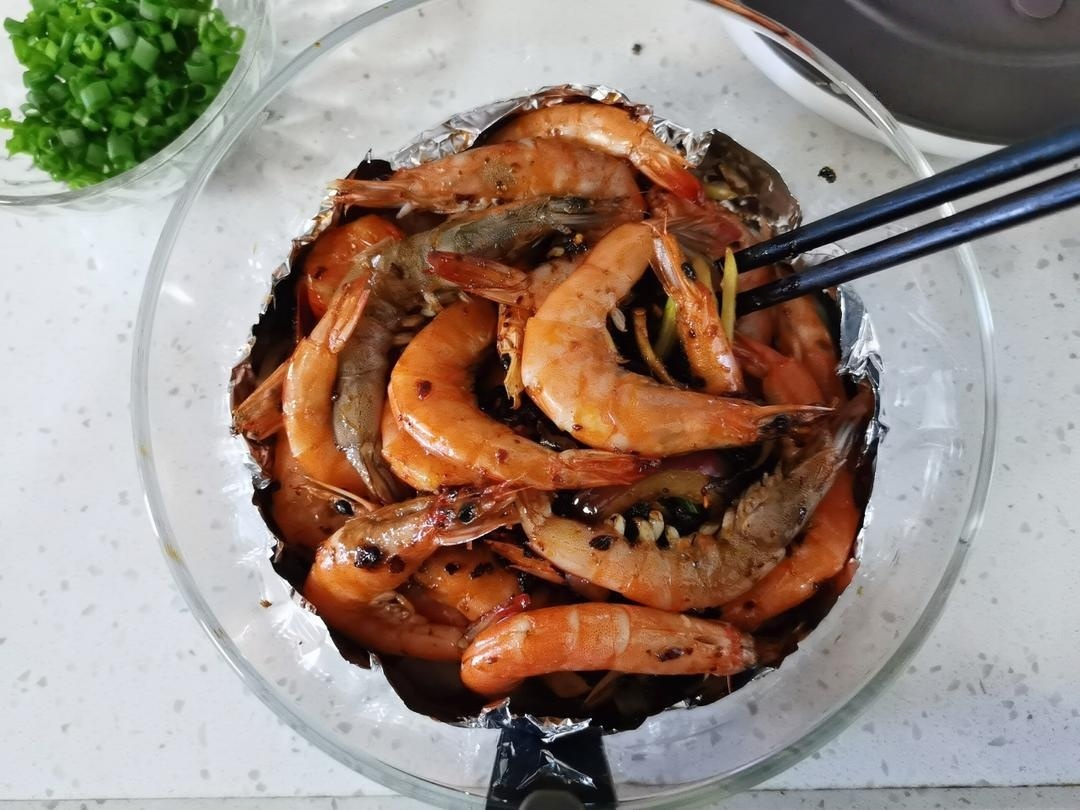
As a Sichuan girl, the smell of sizzling chilies, garlic, and Sichuan peppercorns isn’t just an aroma; it’s the scent of home. I grew up in my parents’ restaurant, where my father, a chef for over 30 years, ruled the kitchen. The air was always thick with these incredible, explosive fragrances. One of my favorite “quick” dishes he’d make is this Sichuan Spicy Shrimp, or Xiang La Xia (香辣虾).

For years, I tried to replicate the deep, rich flavor of his shrimp at home, but it was always missing… something. When I finally went to culinary school and started my own 10-year career as a chef, I asked him what his secret was. He laughed and said, “It’s not what you add, it’s what you don’t throw away.”
The secret, which I’m sharing with you today, is keeping the shrimp whole (head-on and shell-on) and pressing the heads as they fry. This one step renders the rich shrimp oil (虾油, xiā yóu) directly into the pan, creating a base of flavor you just can’t get any other way.
This is the difference between a good home-style dish and a truly restaurant-quality, flavor-packed experience. It’s incredibly fast, deeply satisfying, and brings that authentic Sichuan “fragrant-spicy” (xiang la) flavor to your table in under 20 minutes.
What is Sichuan Spicy Shrimp (香辣虾)?
This isn’t your average stir-fry swimming in sauce. Sichuan Spicy Shrimp (香辣虾, Xiang La Xia) is a classic “dry-fry” dish, meaning the shrimp are coated in a concentrated, fragrant layer of flavor rather than a heavy sauce.

It’s defined by the classic Sichuan málà (麻辣) or “numbing and spicy” flavor profile. This comes from a holy trinity of ingredients:
- Pixian Doubanjiang (郫县豆瓣酱): A salty, fermented broad bean chili paste.
- Sichuan Peppercorns (花椒): Provide a tingly, numbing sensation.
- Dried Red Chilies (干辣椒): Offer a smoky fragrance more than intense heat.
When combined, they create a dish that is savory, numbing, aromatic, and just spicy enough to keep you coming back for more. It’s a fiery, addictive dish that, like its cousins Authentic Mapo Tofu and Homestyle Kung Pao Chicken, is a perfect example of bold Sichuan flavor.
Looking for a Quicker, Mess-Free Alternative?
While the traditional stovetop method is unbeatable for that classic “wok hei,” you might sometimes want those same bold flavors without the deep-frying cleanup. If you’re short on time or looking for a lower-oil option, I highly recommend trying our Authentic Spicy Air Fryer Shrimp (Xiang La Da Xia). This modern version uses a clever “dry pot” technique with a spicy hot pot base, delivering perfectly crispy shells and succulent meat in just 15 minutes—making it a fantastic weeknight alternative to this classic recipe
1Authentic Spicy Air Fryer Shrimp (Xiang La Da Xia)A crispy, flavorful 15-minute shrimp dish using a spicy hot pot base and an air fryer for a healthy twist on Chinese dry pot.Check out this recipe
Why You’ll Love This Recipe
- Restaurant-Level Flavor at Home: The secret step of rendering shrimp oil from the heads as they cook creates a deeply savory, umami-rich base that you simply can’t get from a bottle.
- Ready in 20 Minutes: This is the ultimate weeknight wonder. Once your ingredients are prepped (a 5-minute job), the cooking process takes less than 15 minutes.
- Perfectly Juicy Shrimp (Every Time!): We use a two-stage cooking method. The whole shrimp are quickly fried and then removed while the sauce is built. They are added back at the very end, ensuring they are perfectly cooked, tender, and juicy—never rubbery.
- Authentic, Multi-Layered Spice: This dish teaches you how to layer spice. You get the savory depth from the Doubanjiang, the smoky aroma from the dried chilies, and the floral, tingly notes from the Sichuan peppercorns.
Key Ingredients
A classic Sichuan dish relies on a few key players. Here’s what you’ll need and why:
The “Soul” of the Dish (The Sichuan Trinity)
- Large Shrimp: Whole, head-on, shell-on shrimp are essential for this recipe. The Chinese recipe keeps the shrimp entirely intact (except for removing the sharp rostrum). All the deep, savory flavor comes from pressing the heads while the whole shrimp cooks to release the rich shrimp oil.
- Pixian Doubanjiang (郫县豆瓣酱): This is the soul of the dish. It’s a fermented broad bean and chili paste that provides a deep, savory, salty flavor. You can find it at most Asian supermarkets or online. Look for the “Pixian” (郫县) designation, which is famous for the best quality.
- Sichuan Peppercorns (花椒): These aren’t spicy-hot like black pepper; they provide a tingly, numbing sensation known as málà. This is essential for the authentic flavor.
- Whole Dried Red Chilies (干辣椒): These are mostly for fragrance (香, xiāng). We’re not using many, and we’re not chopping them, so they infuse the oil with a smoky aroma without making the dish overwhelmingly hot.
The Supporting Cast
- Aromatics: Minced garlic (and lots of it!) is the primary aromatic. We also use green and red bell peppers for a mild sweetness and a beautiful color contrast.
- Sauce: A simple mix of light soy sauce (for saltiness, brands like Kikkoman or Pearl River Bridge are fine) and a pinch of sugar. The sugar isn’t to make it sweet; it’s crucial for balancing the intense saltiness of the Doubanjiang.
- Garnish: Toasted white sesame seeds add a final nutty crunch.
A Deeper Dive: Where to Buy Key Ingredients
You can find Doubanjiang, Sichuan peppercorns, and dried chilies at any well-stocked Chinese or Asian supermarket. For guaranteed quality, I often point people to online specialty shops like The Mala Market, which sources directly from Sichuan.
What Equipment Do I Need?
A wok is the traditional tool. Its high, sloping sides are perfect for containing the oil and stir-frying quickly.
However, a large, heavy-bottomed skillet (like a 12-inch cast iron or stainless steel pan) works just as well for this recipe. The key is to get it very hot to sear the shrimp properly.
Mise en Place: Get Ready to Stir-Fry!
A stir-fry cooks in minutes. The most important step is having “everything in its place,” or mise en place, before you turn on the stove.
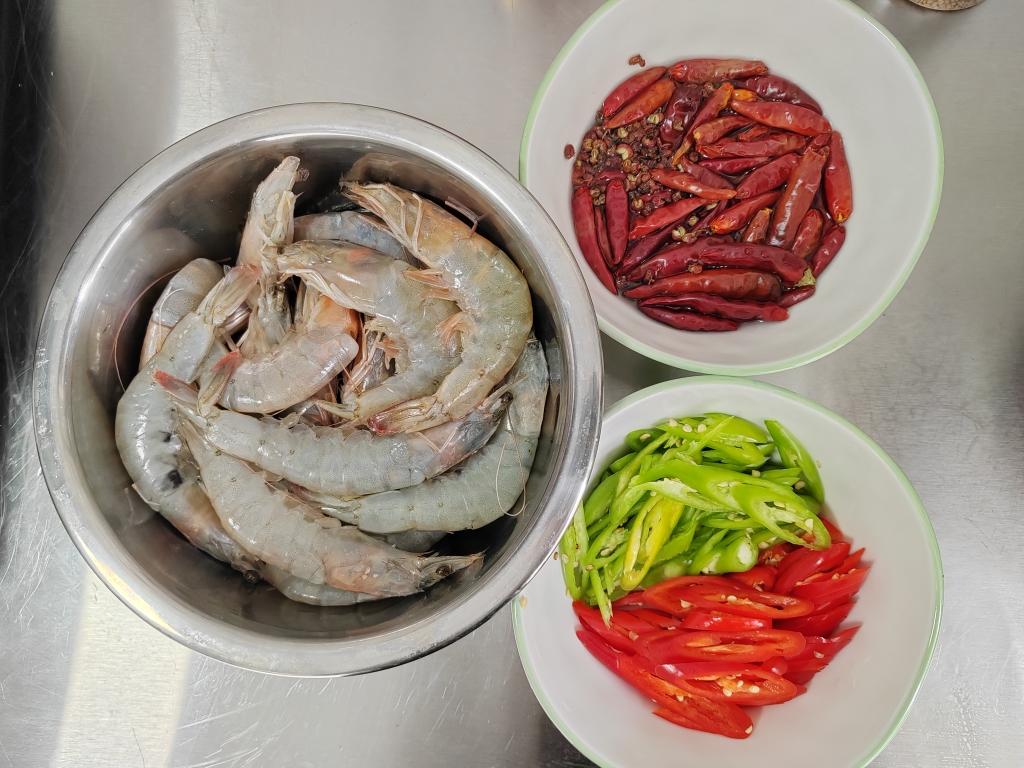
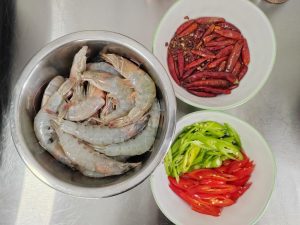
- Shrimp: Use whole, head-on, shell-on shrimp. Use kitchen shears to snip off the sharp rostrum (the “gun”) and long antennae from the head. Wash the shrimp thoroughly and, most importantly, pat them completely dry with paper towels. This is key to preventing oil splatters and getting a good sear.
- Aromatics: Mince the garlic. Chop the green and red bell peppers into 1-inch (2.5 cm) pieces.
- Sauce Bowl: In a small bowl, combine the light soy sauce and sugar.
- Spice Bowl: Have your Sichuan peppercorns and dried red chilies in a small bowl, ready to go.
How to Make Sichuan Spicy Shrimp
This process is fast and happens in one pan.
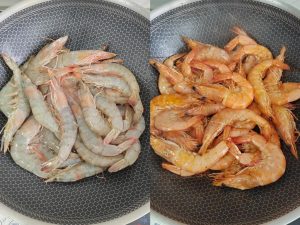
- Sear Shrimp & Render Oil: Heat your wok or large skillet over medium-high heat. Add 2-3 tablespoons of oil. Once shimmering, carefully add the whole, dry shrimp. Spread them in a single layer and let them cook undisturbed for 1-2 minutes.
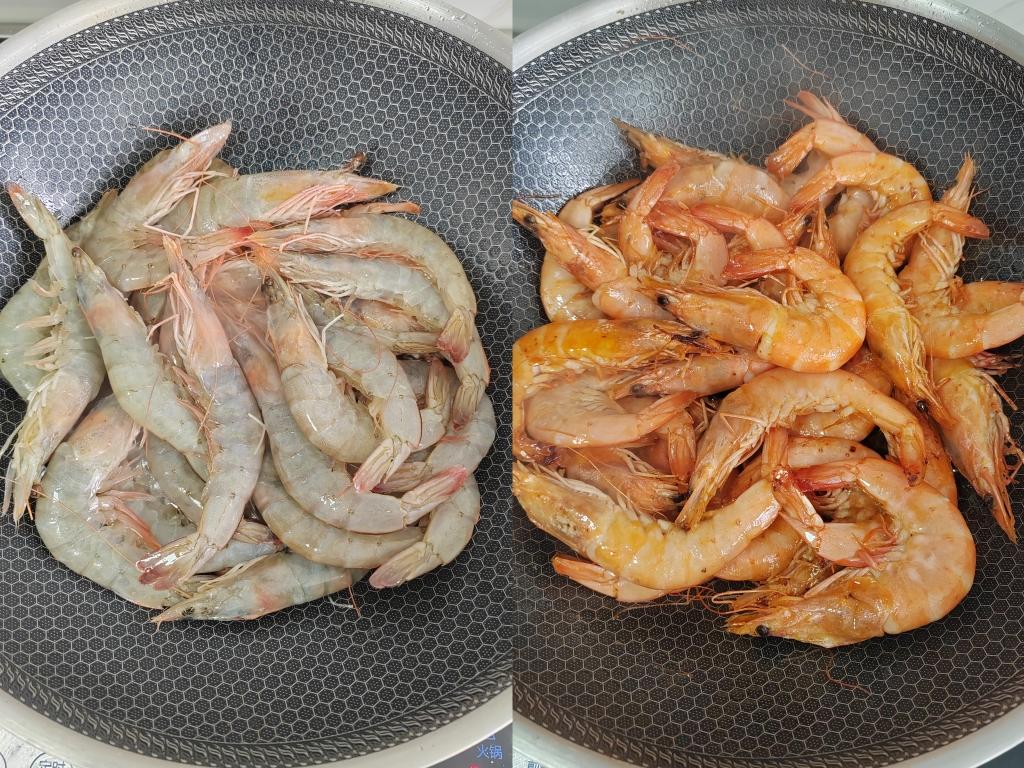
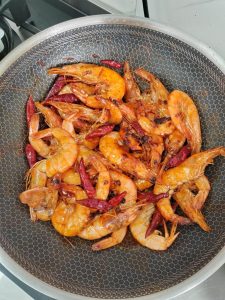
- Press the Heads: As the shrimp begin to turn pink, use your spatula to press down firmly on the heads of the shrimp. You’ll see a vibrant, orange-red oil (the shrimp oil or 虾油) release into the pan. This is the secret to the dish’s flavor! Continue to fry, pressing and tossing, for another 2-3 minutes until the shrimp shells are bright red and the shrimp are about 80% cooked.
- Remove the Shrimp: Immediately transfer the whole shrimp to a clean plate, leaving the fragrant red oil in the pan.
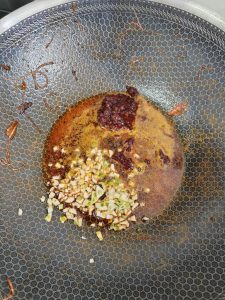
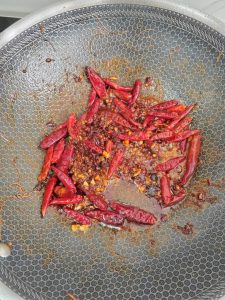
- Build the Sauce: Turn the heat down to medium-low. Add the minced garlic and 1 tablespoon of Pixian Doubanjiang to the oil. Stir-fry constantly for 1 minute to “bloom” the paste and release its red color without burning it.
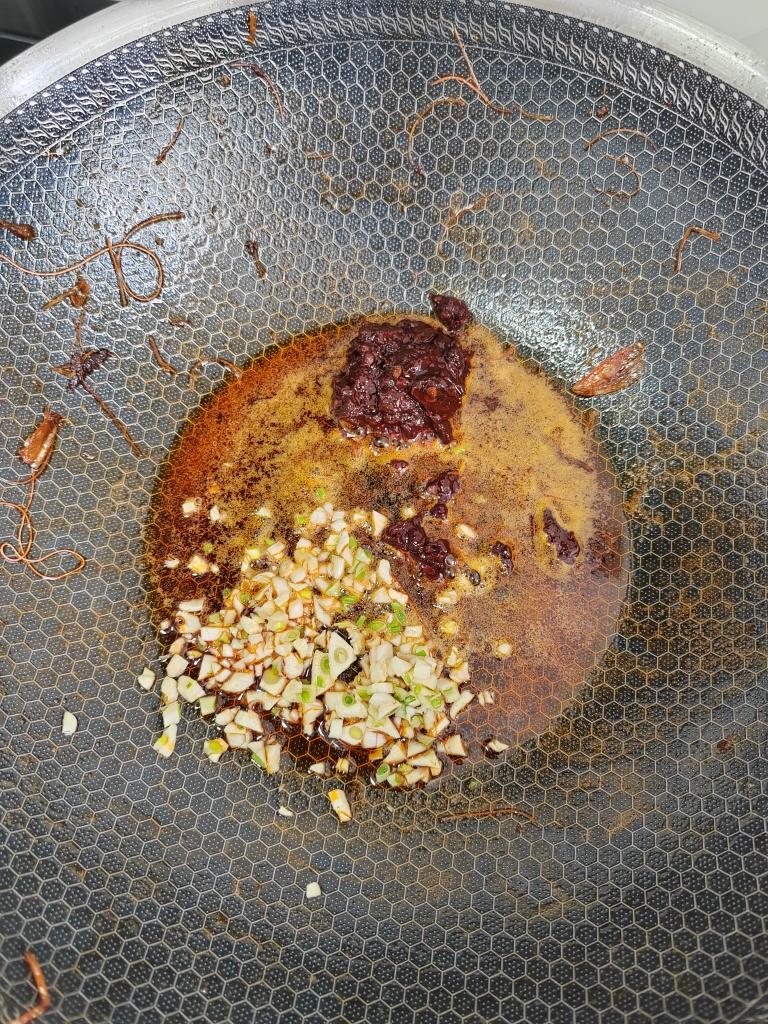
- Add Aromatics: Turn the heat back up to medium-high. Add the Sichuan peppercorns and dried red chilies. Stir-fry for 30-60 seconds until fragrant.
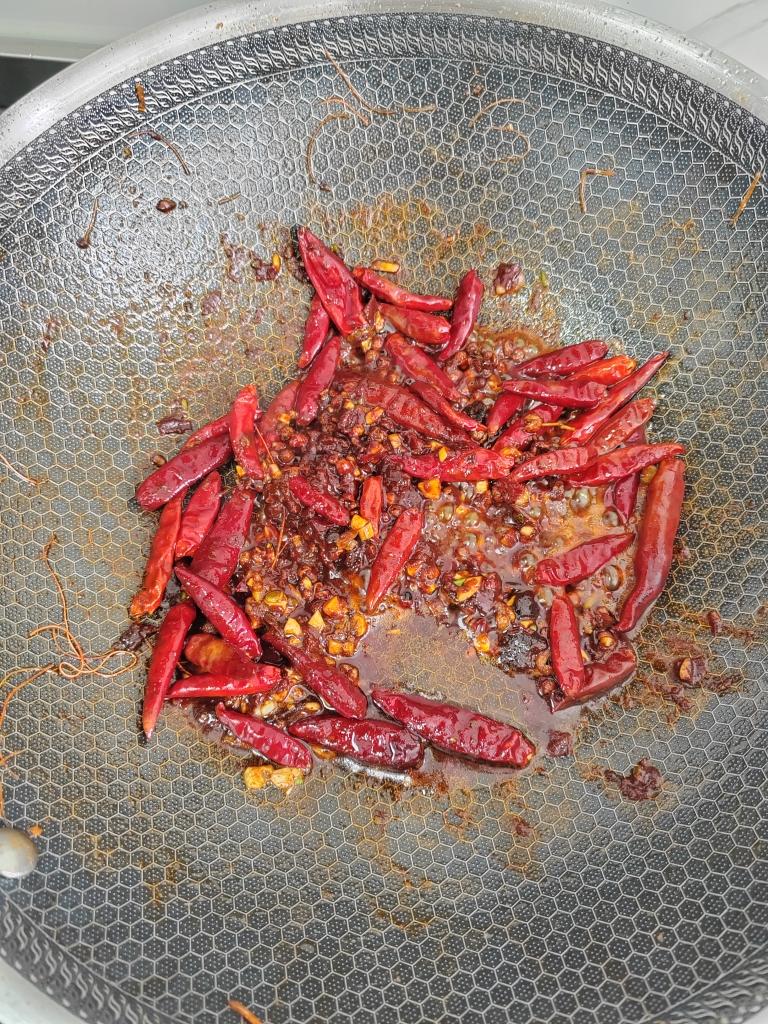
- Return the Shrimp: Add the partially cooked whole shrimp back to the pan, along with any juices from the plate. Add the light soy sauce and sugar mixture. Toss everything to coat the shrimp.
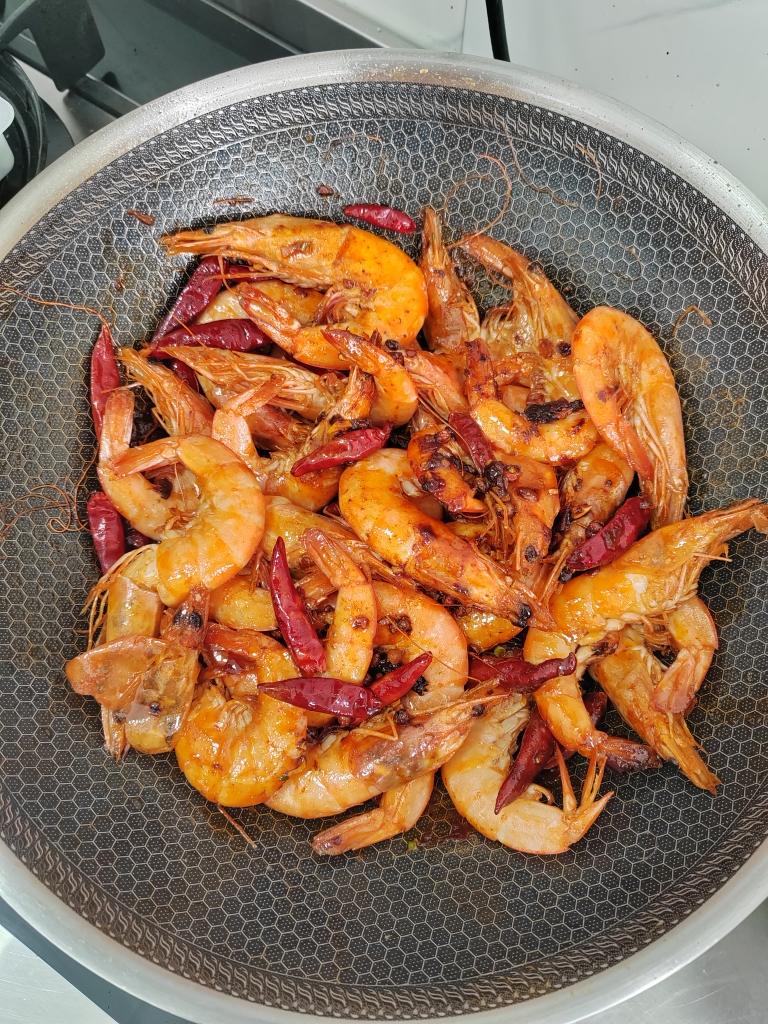
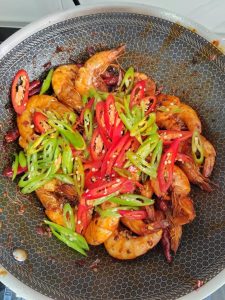
- Finish the Dish: Add the chopped bell peppers. Stir-fry for 1-2 minutes until the peppers are crisp-tender.
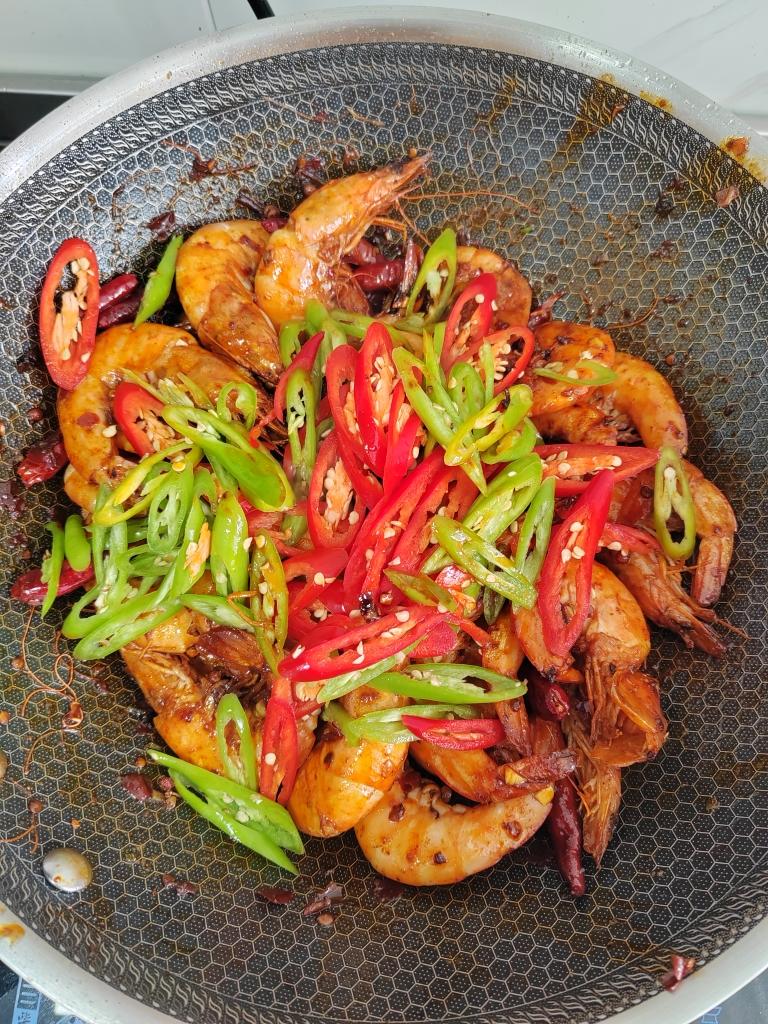
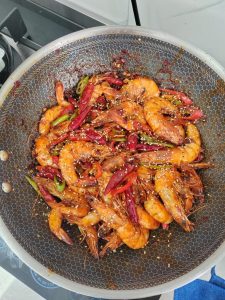
- Garnish: Turn off the heat. Sprinkle in the toasted white sesame seeds and give it one final toss. Serve immediately.
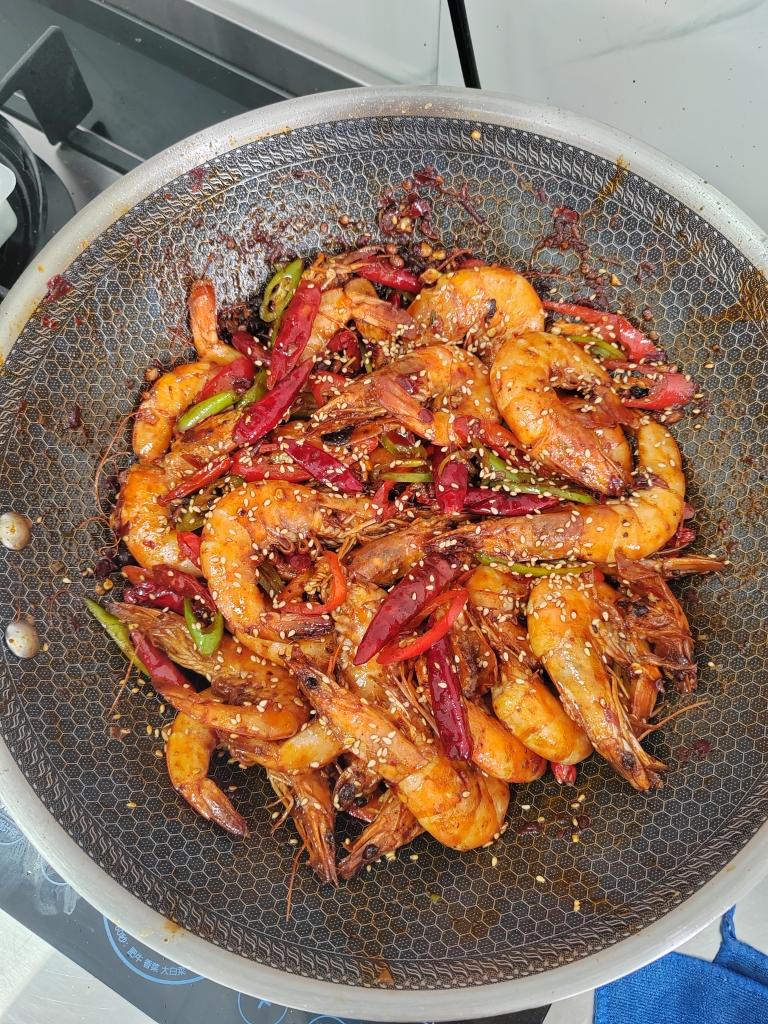
Food Safety and Preparation
- Allergens: This recipe contains Shellfish (shrimp), Soy (soy sauce), and Wheat (in most Doubanjiang).
- Cook to Temp: For maximum safety, shrimp should be cooked until they are pink and opaque. The USDA recommends cooking shrimp to an internal temperature of 145°F (63°C). Because we are cooking them in two stages, they will easily reach this temperature by the final step.
How to Serve (Serving Suggestions)
This dish has a bold, concentrated flavor that needs a plain base to shine.
- Main: Serve immediately with plenty of steamed white rice. The rice is the perfect canvas for the spicy, savory shrimp.
- Pairs With: To make it a full meal, pair it with a simple, cooling vegetable side dish. A Smashed Cucumber Salad is the perfect contrast.
How to Store and Reheat
Honestly, this dish is best eaten fresh. The shrimp texture is perfect right out of the wok.
- To Store: Place leftovers in an airtight container in the refrigerator for up to 2 days.
- To Reheat: Avoid the microwave, which will make the shrimp rubbery. Reheat gently in a skillet over medium-low heat for just a few minutes until warmed through.
FAQs (Troubleshooting & Tips)
Why are my shrimp tough and rubbery?
You overcooked them. It’s essential to use the two-stage cooking method: sear them quickly until 80% done, remove them, and then add them back for only the last 1-2 minutes of cooking.
Why is my dish so salty?
The salt level comes almost entirely from the Doubanjiang, and different brands have very different salt levels. If you are sensitive to salt, start with a little less Doubanjiang and add more soy sauce at the end if needed. The pinch of sugar is key to balancing the salt.
What if I only have headless or peeled shrimp?
The original Chinese recipe relies on keeping the shrimp whole to create the shrimp oil. If you only have headless or peeled shrimp, you will miss this crucial flavor-building step. You can still make the dish: simply use 3 tbsp of oil, sear your peeled shrimp (similar to Step 1), remove them (Step 3), and then proceed with building the sauce (Step 4). The flavor will be less deep but still delicious.
My dish isn’t numbing at all. What went wrong?
Your Sichuan peppercorns are likely old. They lose their numbing potency over time. For the best flavor, buy them whole and in small batches.
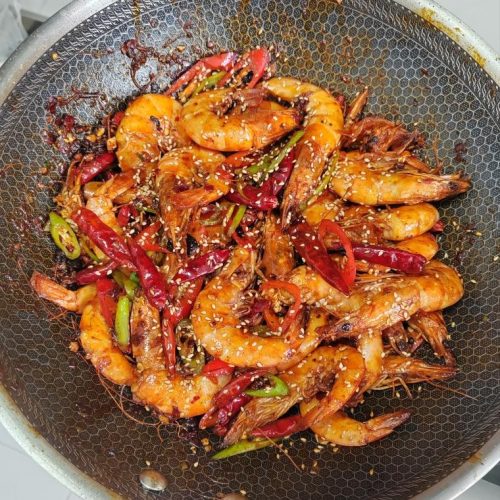
Sichuan Spicy Shrimp (香辣虾)

Equipment
- 1 Wok (or large 12-inch skillet)
- 1 Spatula
Ingredients
- 1 lb large shrimp (450g) whole, head-on, shell-on
- 3 tbsp vegetable oil (or any neutral oil)
- 1 tbsp Pixian Doubanjiang (Sichuan broad bean chili paste)
- 5 cloves garlic minced
- 1 tsp Sichuan peppercorns
- 5-7 whole dried red chilies
- 1 tbsp light soy sauce
- 1 tsp sugar
- 1/2 green bell pepper chopped (approx. 1/2 cup)
- 1/2 red bell pepper chopped (approx. 1/2 cup)
- 1 tsp toasted white sesame seeds
Instructions
- Prep Shrimp: Use kitchen shears to snip off the sharp rostrum (the “gun”) and long antennae from the whole, head-on shrimp. Wash thoroughly and pat completely dry with paper towels.

- Sear Shrimp & Render Oil: Heat 2-3 tbsp of oil in a wok or large skillet over medium-high heat. Add the whole, dry shrimp in a single layer. Fry for 1-2 minutes.
- Press Heads: As the shrimp turn pink, use your spatula to firmly press down on the heads to release the red shrimp oil. Continue frying and pressing for 2-3 minutes until shrimp are bright red and 80% cooked.
- Remove Shrimp: Transfer the whole shrimp to a clean plate, leaving the red oil in the pan.

- Build Sauce: Turn heat to medium-low. Add the minced garlic and Pixian Doubanjiang. Stir-fry for 1 minute until fragrant and the oil is red.
- Add Aromatics: Turn heat to medium-high. Add Sichuan peppercorns and dried red chilies. Stir-fry for 30-60 seconds.
- Combine: Add the shrimp back to the pan, along with any juices. Add the light soy sauce and sugar. Toss to combine.
- Finish: Add the chopped green and red bell peppers. Stir-fry for 1-2 minutes until crisp-tender.
- Serve: Turn off the heat. Sprinkle with toasted sesame seeds, toss, and serve immediately.




Leave a Reply