My son once ate two of these rock-baked cheese breads in one sitting, looked up, and asked, “Mom, can you make 100 of these next time?” That is the review that matters. Yan shao ru lao mian bao (岩烧乳酪面包) is the bakery-case classic with the burnished, cheese-toasted top – a soft milk bread bun crowned with a thick layer of cheese sauce that bakes into a glossy, caramel-like crust. The bakery version is practically a dessert; this home version skips the heavy cream entirely.
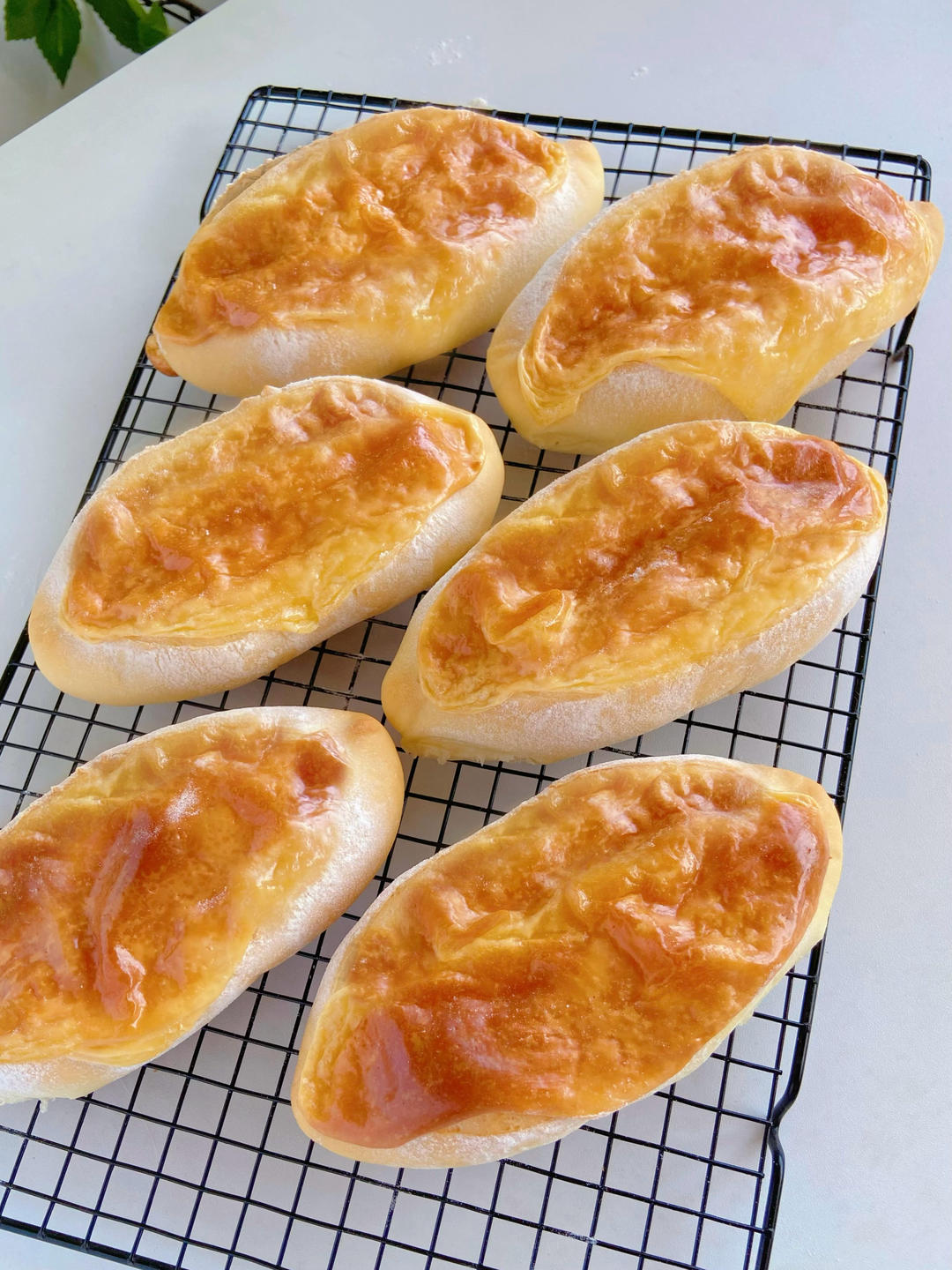
What makes this recipe genuinely beginner-proof is the one-fermentation dough: no sponge starter, no overnight poolish, no double proofing. You knead once, divide, shape, proof until doubled, score, pipe on the cheese sauce, and bake. The whole thing, from first mix to golden tray, fits comfortably into an afternoon, and the dough is forgiving enough that even a first-time bread baker gets a soft, fine-crumbed result.
The real star is the cheese sauce, and the secret is its consistency. The author’s rule of thumb is perfect: when you draw the spatula across the sauce, it should flow back about halfway before stopping. Too thin and it runs off the bread; too thick and it bakes into a rubbery lid. Get that flow right and the sauce bakes into the milky, savory-sweet skin that makes these buns disappear.
What Is Rock-Baked Cheese Bread (Yan Shao Ru Lao Mian Bao)?
Yan shao ru lao mian bao (岩烧乳酪面包) – literally “rock-baked cheese bread” – is a Chinese bakery favorite: an enriched milk bread roll finished with a slice-of-cheese-based sauce and baked until the topping blisters and browns like the surface of a rock. “Yan shao” describes that scorched, browned crust, which is the whole appeal: crisp and caramelized on top, pillowy soft underneath. Traditional versions often use heavy cream in the cheese sauce; this one gets its richness from cheese slices, milk, butter and sugar, so it is lighter, cheaper, and every bit as indulgent.
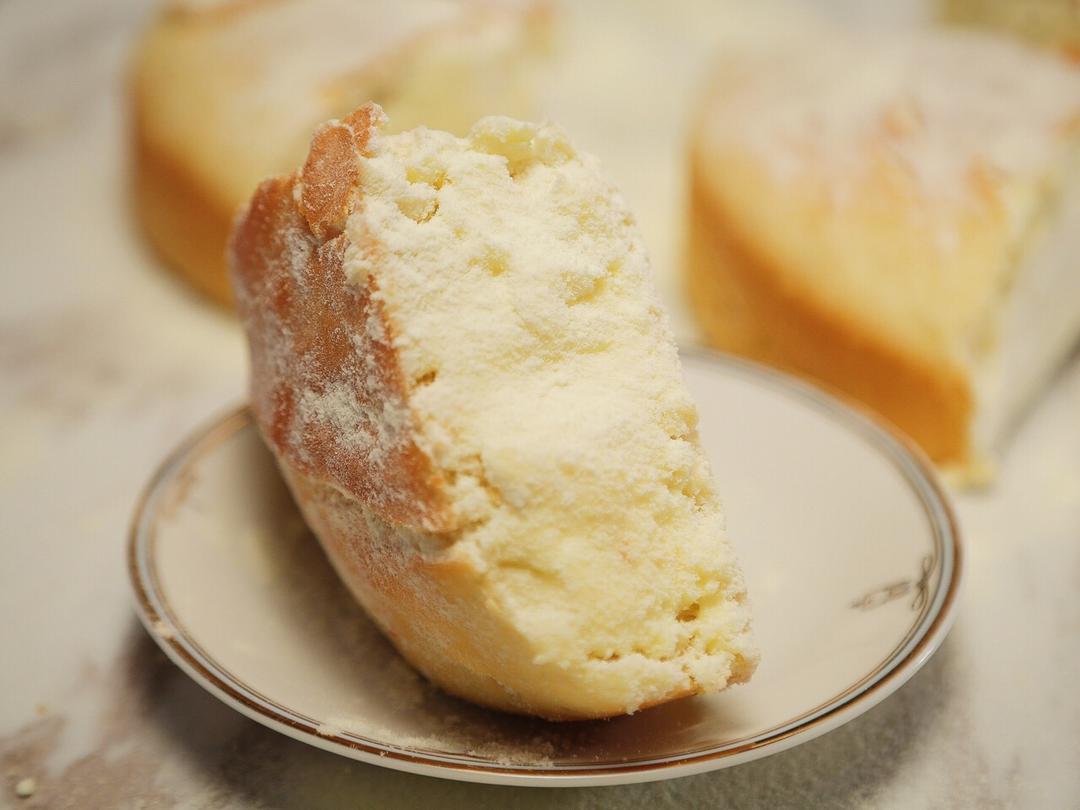
If you love soft milk bread with a creamy finish, you will also love my milk cream cheese bread – a rich, cream-cheese-swirled loaf with the same bakery-case appeal. This rock-baked version wears its cheese on the outside; that one hides it in the middle.
1Milk Cream Cheese Bread (Nai Lao Bao)A viral Chinese bakery hit: soft, fluffy milk bread wedges stuffed with sweet cream cheese and dusted with milk powder. Better than the bakery and additive-free!Check out this recipe
Why This Recipe Works
- No heavy cream: cheese slices, milk, butter, sugar and a pinch of salt make a glossy sauce that bakes into the signature crust.
- One fermentation: a single proof keeps the day short and the margin for error wide – ideal for first-time bread bakers.
- The windowpane test: kneading until the dough stretches into a translucent membrane guarantees a soft, fluffy crumb.
- Scoring before topping: the deep 1-1.5 cm slash lets the buns open beautifully and gives the cheese crust a dramatic ridge.
- Separate top and bottom heats: 170°C top / 180°C bottom bakes the cheese crust without drying out the crumb.
Equipment Needed
- A stand mixer with a dough hook (hand-kneading works too, about 15-20 minutes)
- A large baking tray
- A small saucepan for the cheese sauce
- A piping bag for the sauce
- A sharp knife or lame for scoring
- A fine-mesh strainer for dusting flour
Ingredients
For the Dough
- 500 g (4 cups) bread flour (high-gluten flour)
- 5 g (1 1/2 tsp) instant yeast for high-sugar dough
- 45 g (3 tbsp plus 1 tsp) caster sugar
- 150 g (2/3 cup) milk
- 130 g (1/2 cup plus 1 tbsp) water
- 20 g (2 1/2 tbsp) milk powder
- 4 g (3/4 tsp) salt
- 45 g (3 tbsp) butter, softened
- 1 large egg (about 50 g)
For the Cheese Sauce
- 6 slices processed cheese (American-style cheese slices)
- 40 g (3 tbsp) milk
- 40 g (3 tbsp) white sugar
- 20 g (1 1/2 tbsp) butter
- 1 g (1/4 tsp) salt
Ingredient Notes
Bread flour (gao jin mian fen) gives the buns their soft, chewy pull; all-purpose works but produces a slightly less tender crumb. High-sugar yeast (nai gao tang jiao mu) is important here because this dough carries 45 g of sugar – regular yeast is slower to rise in sweet doughs. Processed cheese slices melt into the smoothest sauce; aged cheddar can be swapped in but may turn grainy – add it off the heat and stir until fully smooth. The milk powder is worth including: it is what gives bakery bread its milky, rich flavor and soft texture.
Prep & Mise en Place
Make the cheese sauce first so it has time to cool before you pipe it. Weigh and soften the butter for the dough, and have the milk and water at room temperature (cold liquid slows the yeast dramatically). Line a large baking tray with parchment. If you are using a stand mixer, fit the dough hook and have the salt and butter measured and ready to add at the 4-5 minute mark.
Cooking Process
Step 1 – Make the Cheese Sauce
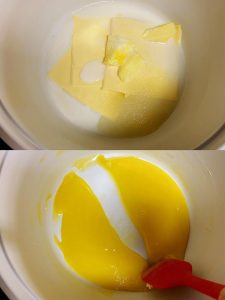
Put the cheese slices, milk, butter, white sugar and salt in a small saucepan over low heat and stir until everything melts into a smooth sauce. The thickness is right when you draw the spatula across the pan and the sauce flows back about halfway before stopping.
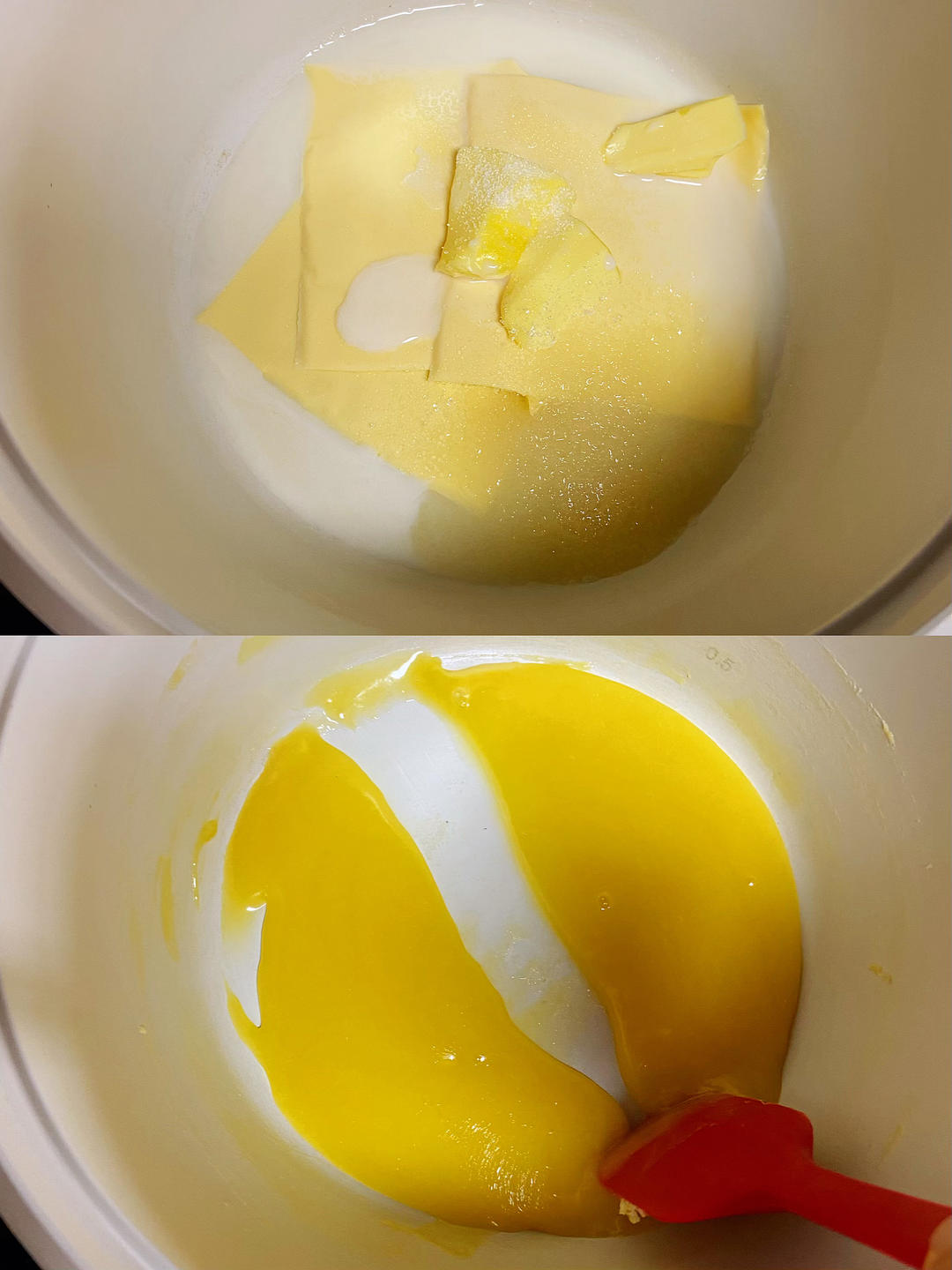
The flow test is the whole recipe in one gesture. Cheese sauce that is too thin runs off the buns and pools on the tray; sauce that is too thick bakes into a stiff, rubbery cap. The “flows halfway” point sits right at the window where the sauce is still pourable but concentrated enough to caramelize into that glossy, burnished skin – the difference between a bakery bun and a bread with a cheese puddle.
Step 2 – Cool the Sauce and Load a Piping Bag
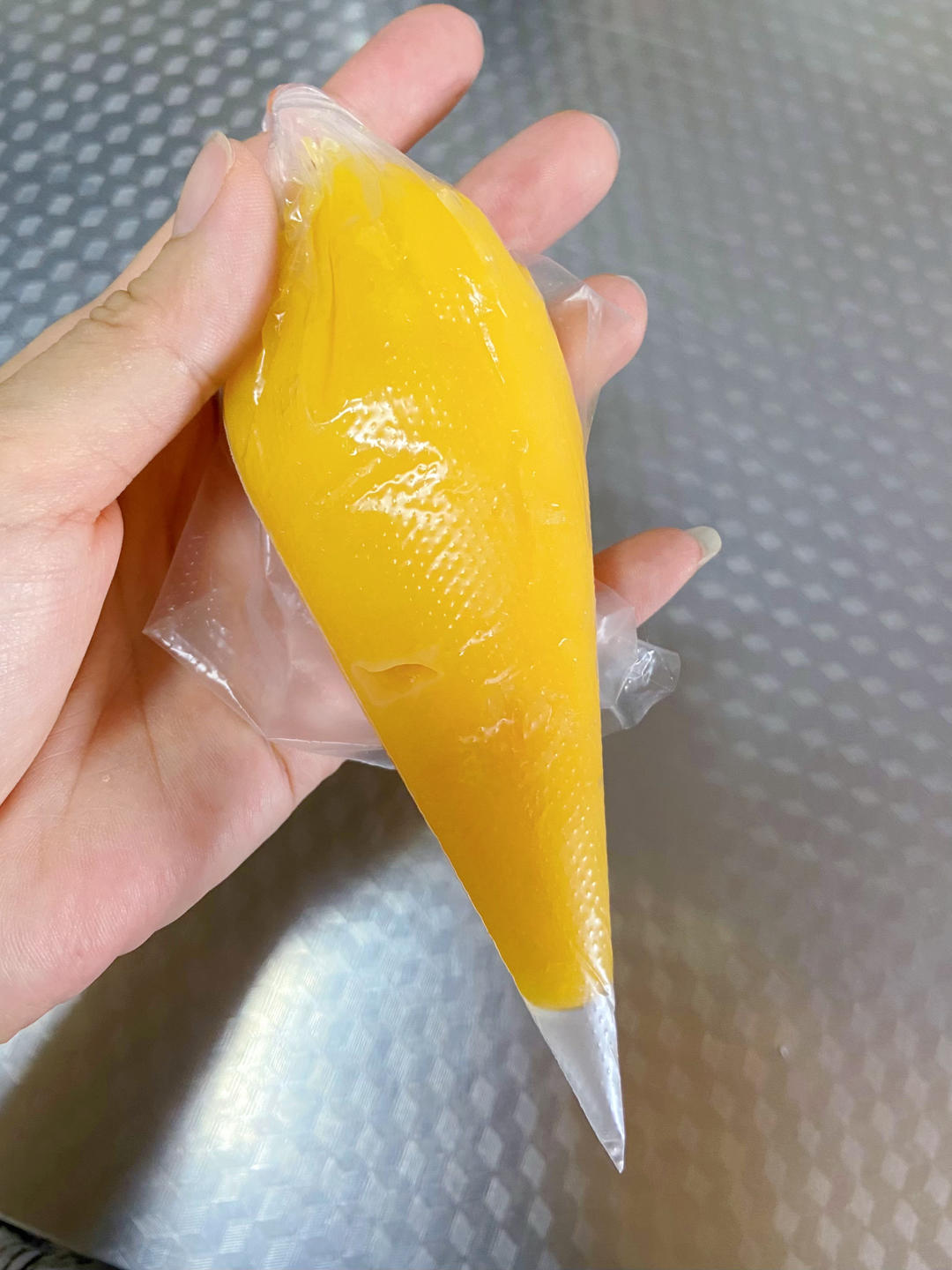
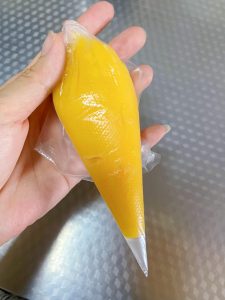
Let the sauce cool to warm room temperature – it thickens as it cools – then spoon it into a piping bag and set it aside.
Step 3 – Knead the Dough
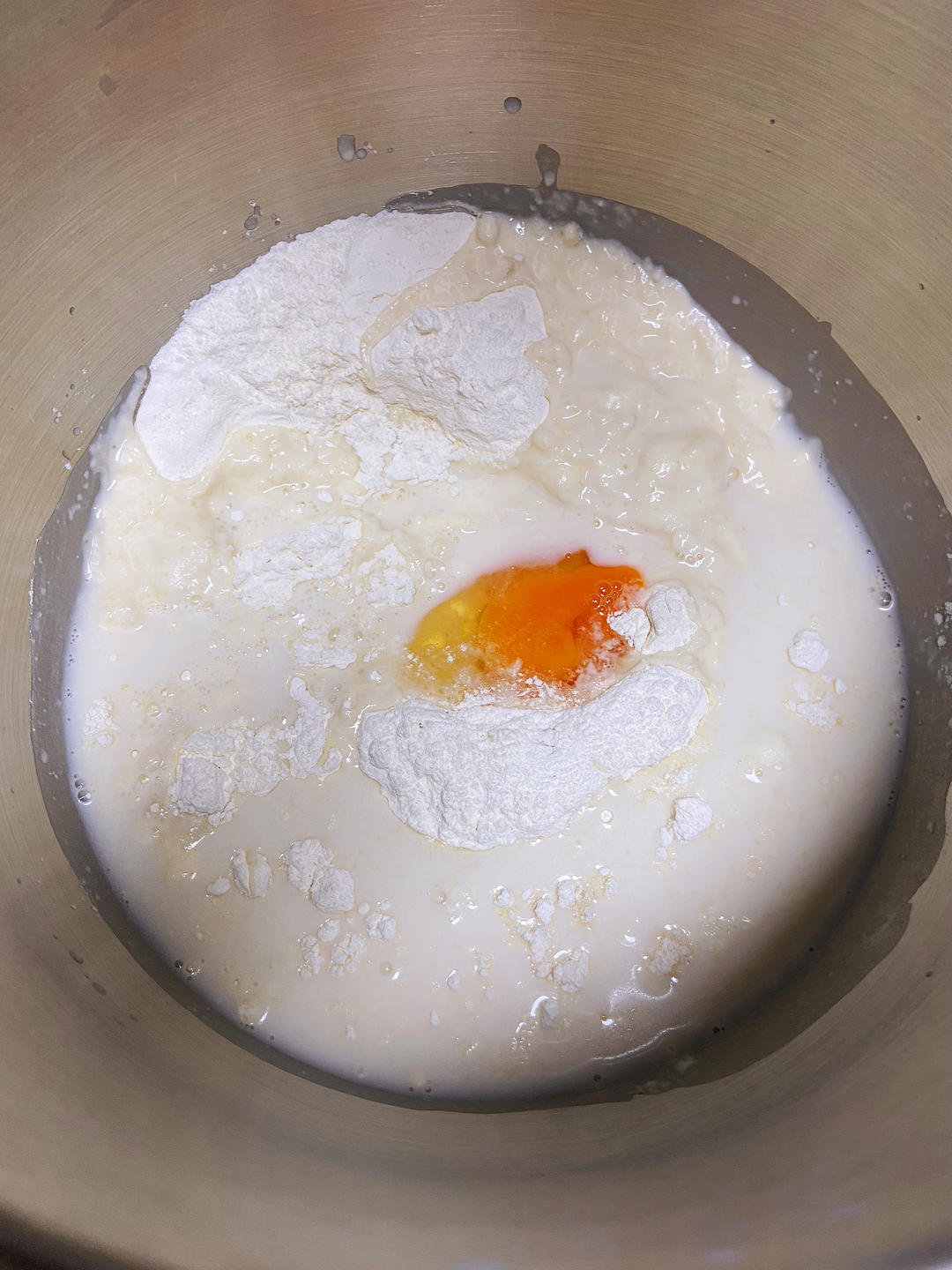
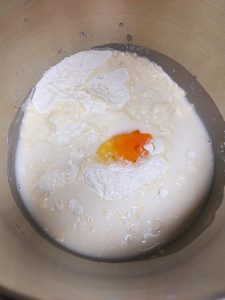
Put all the dough ingredients except the salt and butter into the mixer bowl. Mix on low until combined, then knead on medium for 10 minutes total, adding the salt and softened butter at the 4-5 minute mark.
Step 4 – Check for the Windowpane
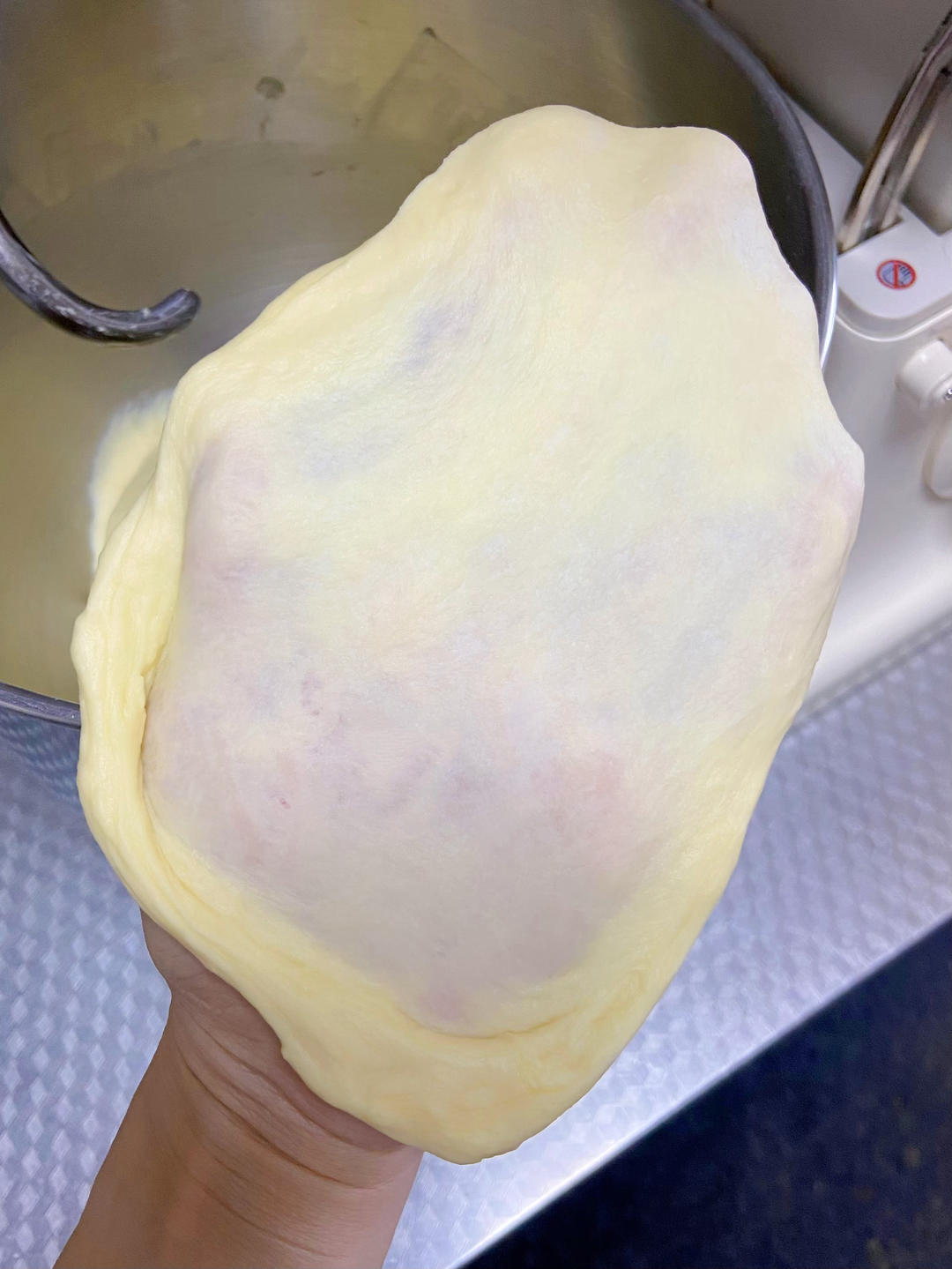
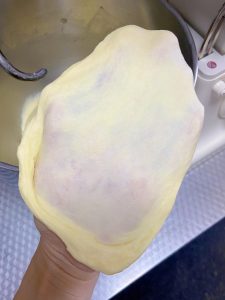
The dough is ready when a small piece stretches into a thin, translucent membrane without tearing – the windowpane test. If it tears easily, knead 2-3 minutes more.
Step 5 – Divide and Shape Into Spindles
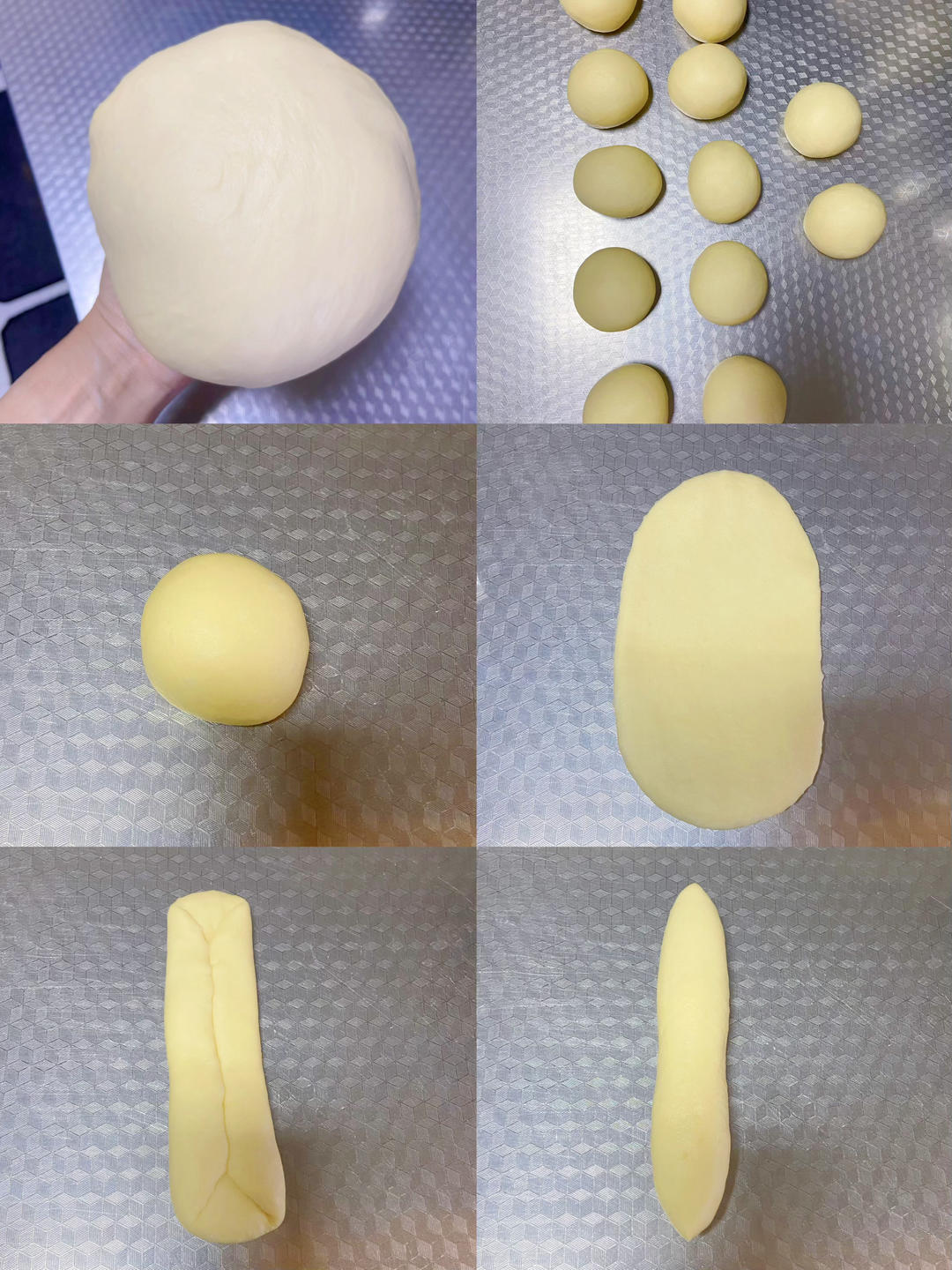
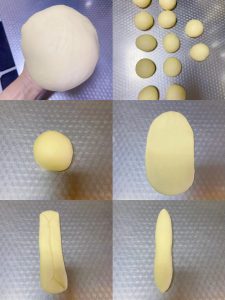
Divide the dough into 12 equal pieces, round each one, and let them rest 10 minutes. Working one at a time, roll each piece into a long oval, fold both ends into the center, fold again, pinch the seam tightly, and roll into a spindle (梭子) shape.
Step 6 – Proof Until Doubled
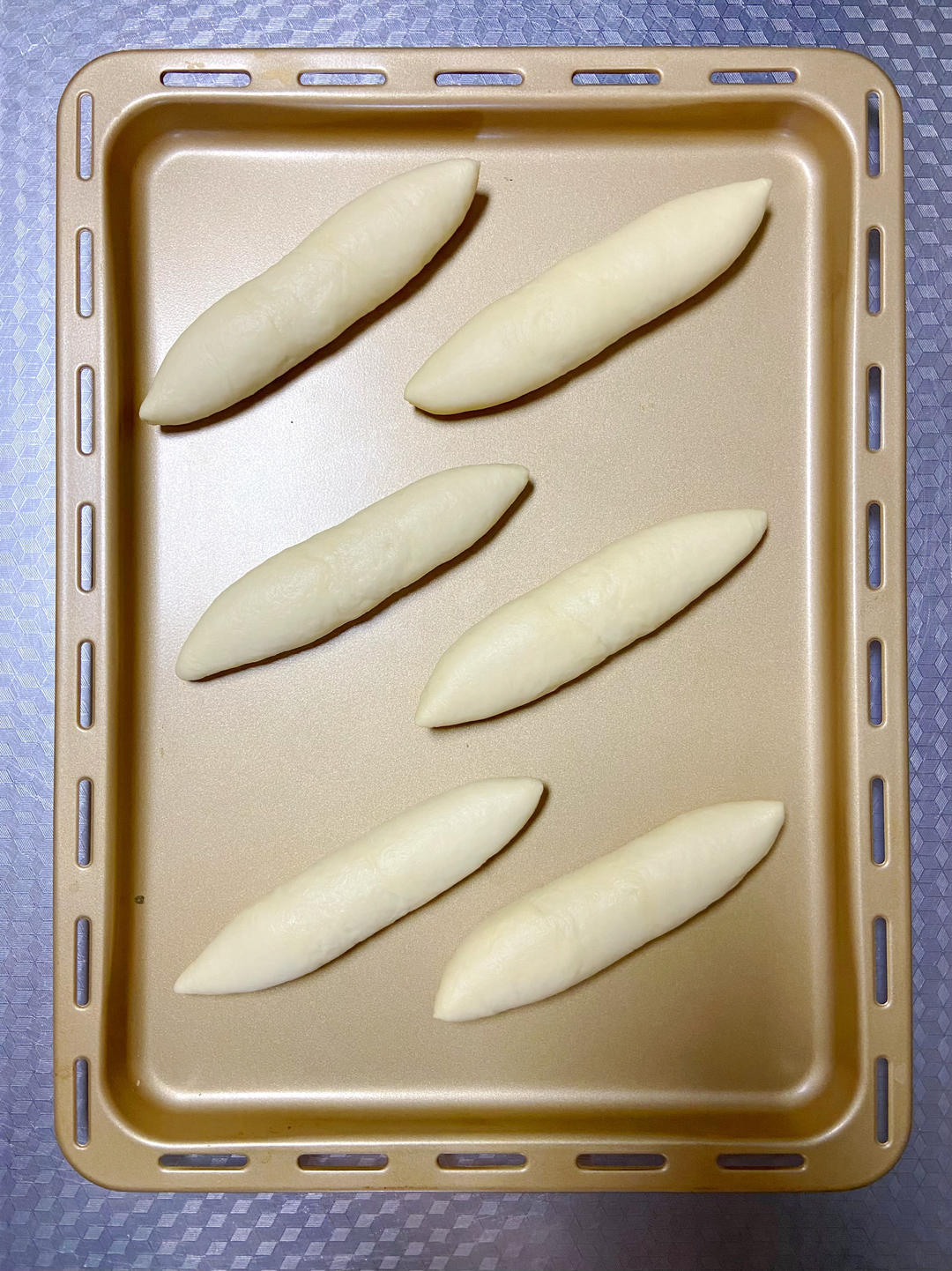
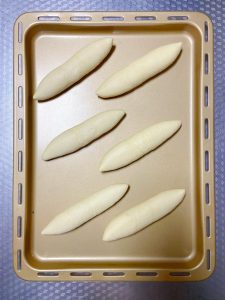
Arrange the buns on the lined tray with room between them and proof, covered, in a warm place until doubled in size – about 45-60 minutes depending on your kitchen.
Step 7 – Dust and Score
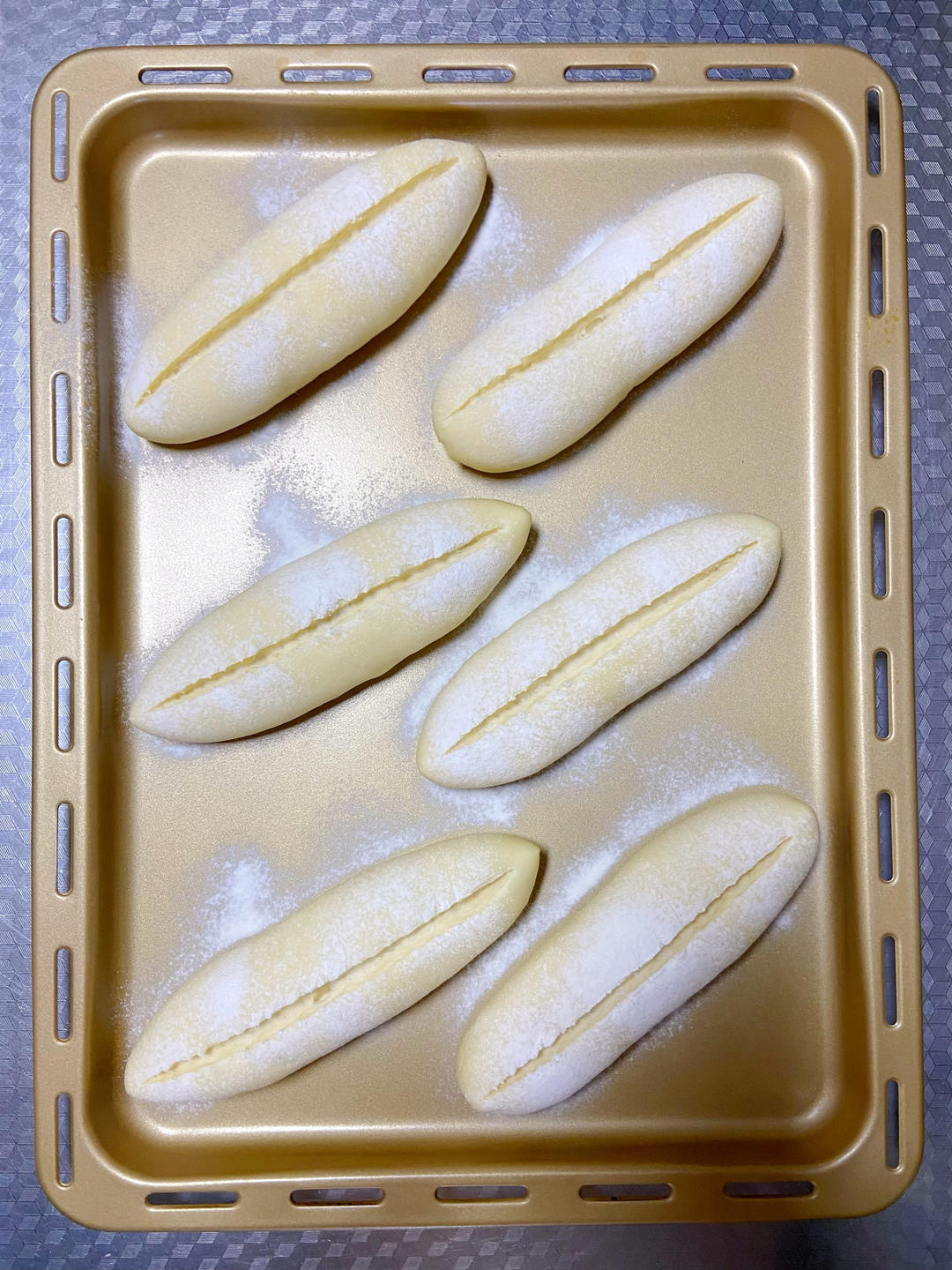
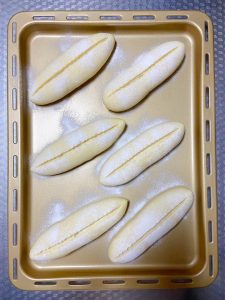
Dust the proofed buns lightly with flour and cut a single slash 1-1.5 cm (1/2 in) deep down the length of each one.
Step 8 – Pipe on the Cheese Sauce
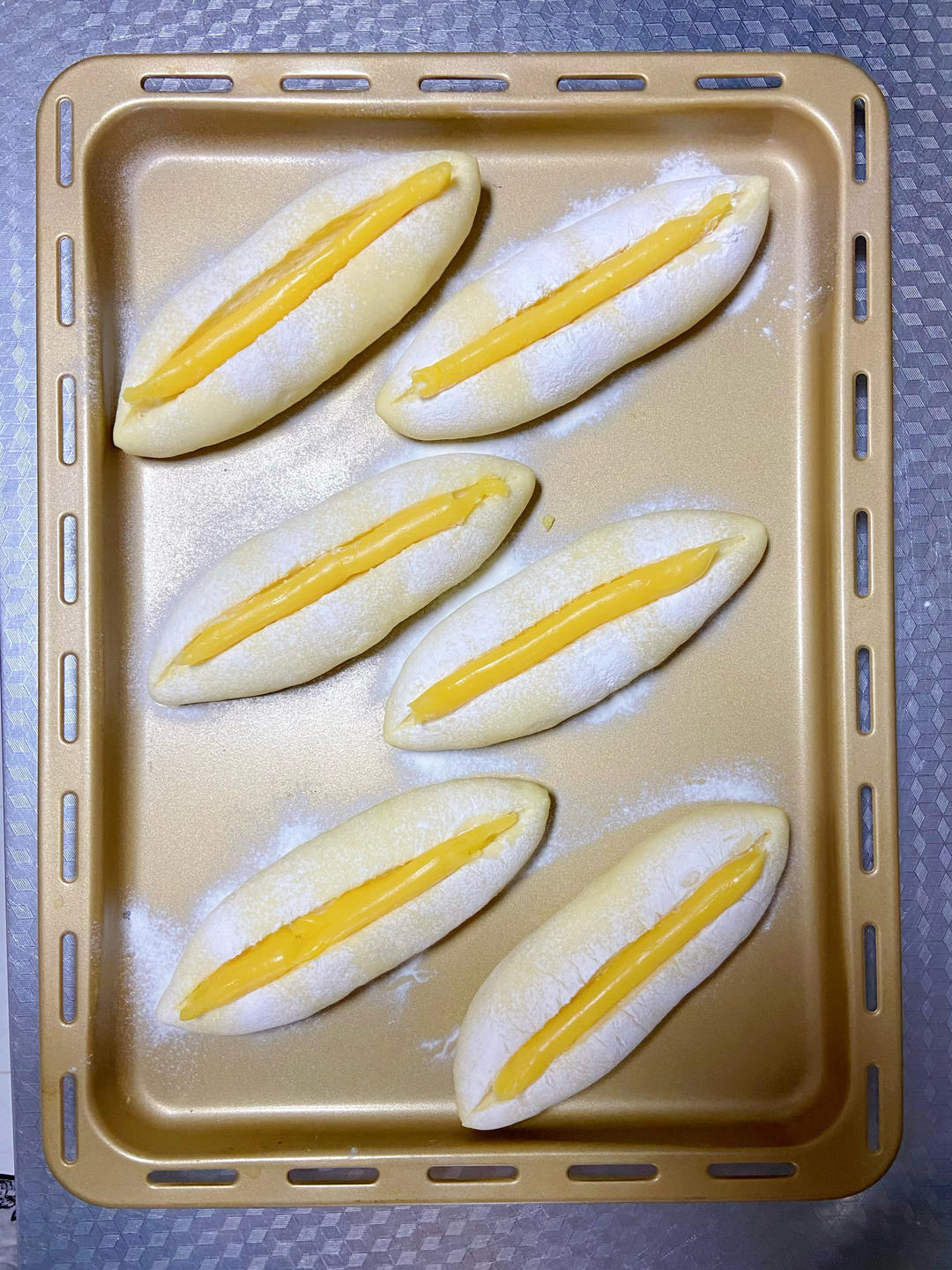
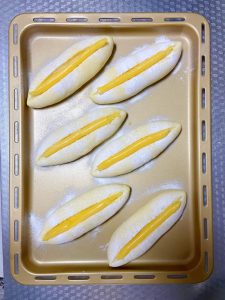
Pipe the cheese sauce generously into the slash and across the top of each bun – the amount in this recipe is tuned to finish exactly 12 buns, so divide it evenly.
Step 9 – Bake at 170°C Top / 180°C Bottom
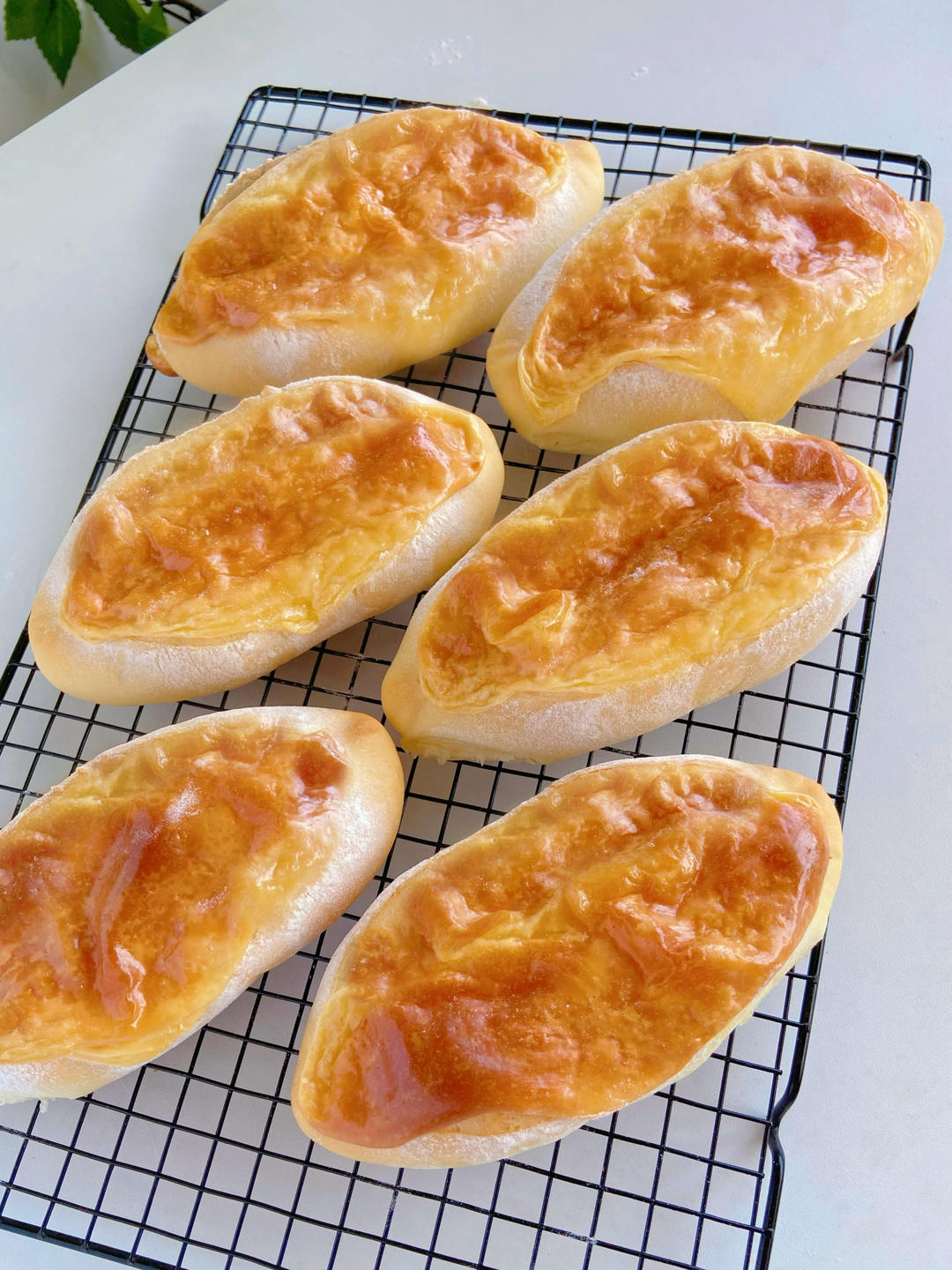
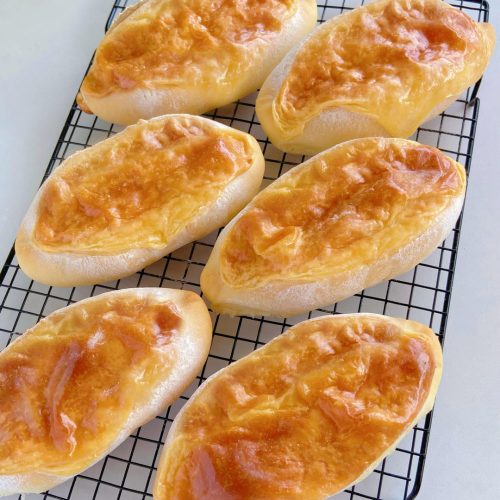
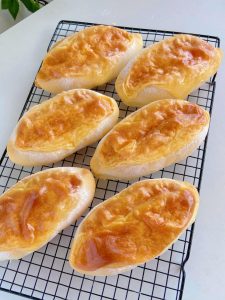
Preheat the oven to 170°C (338°F) top heat / 180°C (356°F) bottom heat and bake on the middle rack for 20 minutes, until the cheese crust is deeply golden.
Step 10 – Watch the Cheese Form a Milky Crust
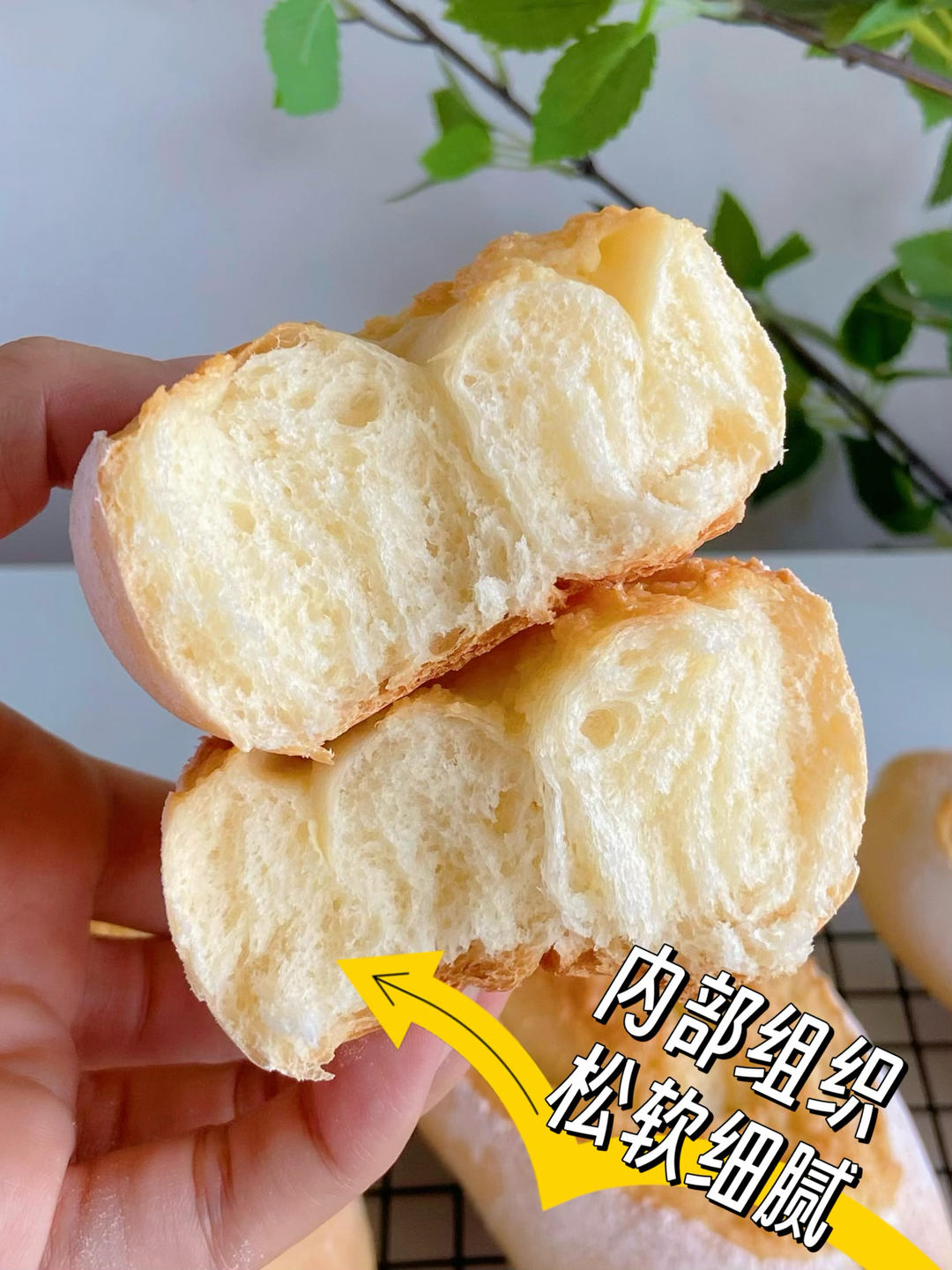
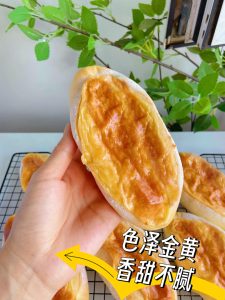
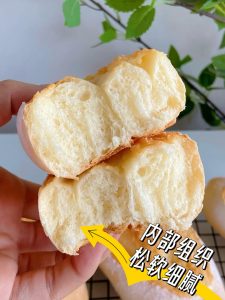
The sauce bakes into a glossy, milky skin with darker caramelized edges – rich, concentrated, and the reason these buns never last long.
Step 11 – Cool and Enjoy the Soft Crumb
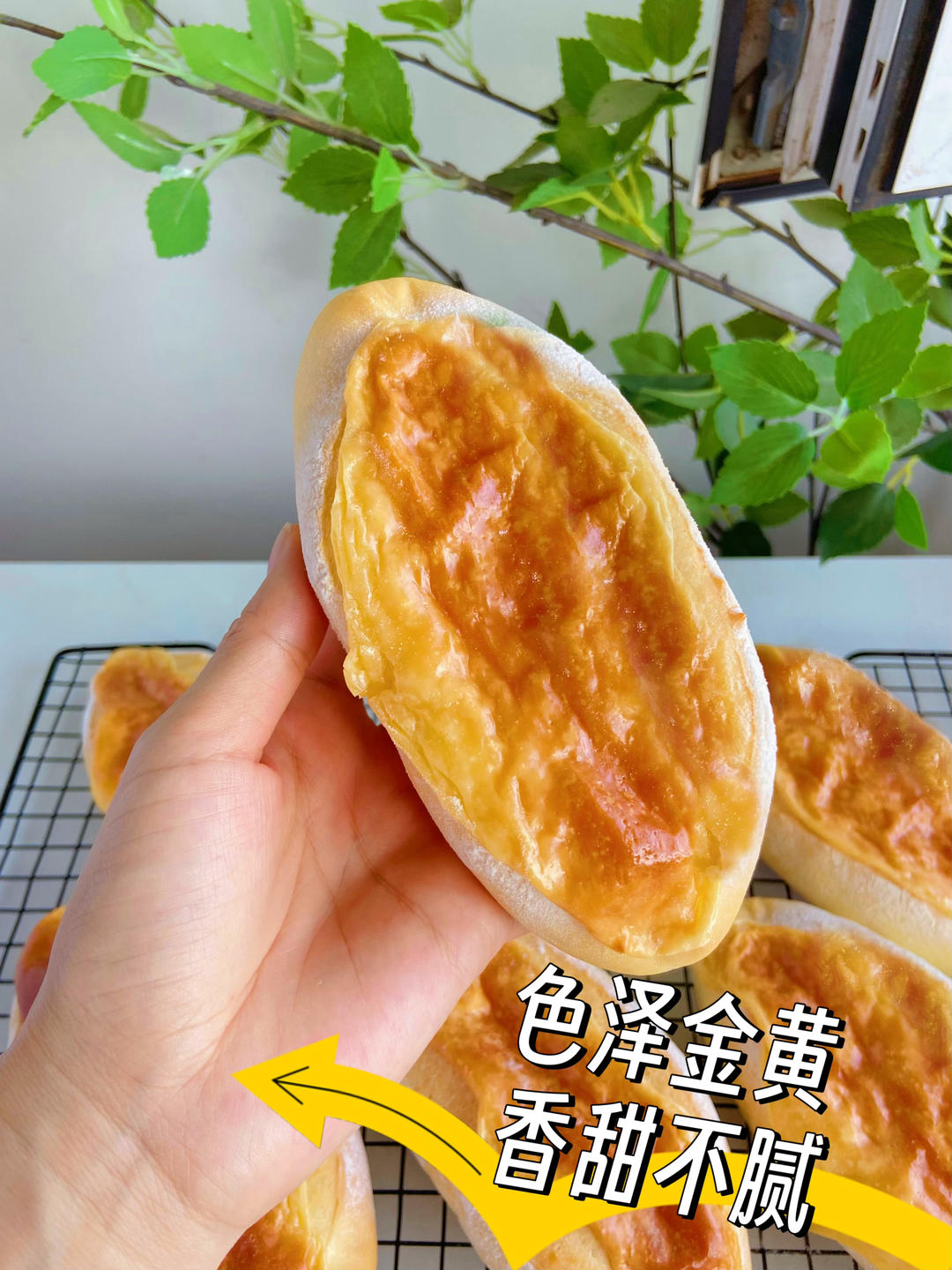
Cool the buns on a rack until just warm. The crumb is soft and fine, the crust crisp and cheesy – exactly the bakery bite.
Common Mistakes When Making Rock-Baked Cheese Bread
1. The cheese sauce runs off the buns. Cause: the sauce was too thin. Fix: cook it longer until it flows back only halfway when drawn across; remember it thickens as it cools.
2. The bread is dense and heavy. Cause: under-kneaded dough or cold liquid slowing the yeast. Fix: knead to the windowpane and use room-temperature milk and water.
3. The crust burns before the center bakes. Cause: top heat too high. Fix: hold the 170°C top / 180°C bottom split and bake on the middle rack.
4. The buns deflate when scored. Cause: over-proofing. Fix: proof only until doubled – a gentle poke should spring back slowly, not collapse.
5. The cheese sauce turns rubbery. Cause: it was cooked too long or over-thickened. Fix: stop at the halfway-flow stage and remove from heat promptly.
6. Uneven, lumpy sauce. Cause: adding aged cheddar at high heat. Fix: use processed slices, or stir in shredded aged cheese off the heat.
Variations
Make it savory: skip the sugar in the sauce and add a pinch of black pepper or a few drops of oyster sauce for a salty-sweet contrast. Fill the buns with red bean paste or ham before shaping, or top with homemade meat floss after baking for a pork-floss-cheese combo – the same trick that makes my pork floss buns so popular.
Frequently Asked Questions
Can I make this without a stand mixer? Yes – knead by hand for 15-20 minutes, adding the butter once the dough comes together. The windowpane test tells you when to stop.
Why use high-sugar yeast? Sweet doughs slow down regular yeast. High-sugar (耐高糖) instant yeast is bred to rise in doughs with more than about 10% sugar.
Can I skip the milk powder? You can, but the buns will be less milky and slightly less soft. It is a small amount with a big effect.
Can I make the dough ahead? Yes – after shaping, refrigerate the tray overnight, then proof at room temperature the next day until doubled before scoring and baking.
Why do my buns need a 1-1.5 cm deep score? The slash gives the buns room to open in the oven and creates the dramatic ridge where the cheese sauce pools and browns.
How to Serve
These are best warm, within a few hours of baking, when the crust still crackles. They are the bakery-case treat that turns a weekend breakfast into an event – serve them with cloud-soft milk bread rolls for a bread basket nobody can resist, or alongside stovetop cheesy baked rice for a cheese-lover’s dinner. My fluffy coconut bread strips and crispy butter-sugar toast round out the bakery shelf at home.
Storage & Reheat
Store the buns in an airtight container at room temperature for up to 2 days – the cheese crust softens, but a 3-minute blast in a 160°C (320°F) oven restores the crisp. Freeze baked buns for up to 2 months; thaw at room temperature and re-toast. The cheese sauce itself can be made 2 days ahead and refrigerated – warm it gently before piping. This bread contains no meat, so standard room-temperature storage for baked goods applies; refrigerate only if you plan to keep it beyond 2 days.
Allergen Notice
This recipe contains gluten (bread flour), dairy (milk, butter, cheese, milk powder) and egg. It is not suitable for dairy-free or vegan diets; a plant-based cheese and non-dairy milk would change the sauce’s melt and browning behavior significantly.
Nutrition Disclaimer
Nutrition information is calculated using an ingredient database and should be considered an estimate. In cases where multiple ingredient alternatives are given, the first listed is calculated for nutrition. Garnishes and optional ingredients are not included. Nutrition information is an estimate and provided for informational purposes only.
About the Author & Recipe Development
I’m Lin, a professional chef who grew up in my family’s Sichuan restaurant and spent a decade in professional kitchens before writing recipes for home cooks. This recipe came from a request: my son wanted “the bakery bread with the brown cheese on top” every single week. I tested the sauce until the flow test became muscle memory, tried the dough with and without milk powder, and settled on the one-fermentation version because it is the version a busy parent actually makes twice. The batch of twelve disappears in my house in about two days – my son’s official request for “100 next time” stands.
Authoritative References
For safe handling of eggs and dairy in bread baking, I follow the USDA egg safety guidance. The role of gluten development – why the windowpane test predicts a soft crumb – is explained in this overview of gluten and dough development from ScienceDirect.
Rock-Baked Cheese Bread (Yan Shao Ru Lao Mian Bao)

Equipment
- Stand Mixer with Dough Hook
- Large Baking Tray
- Small Saucepan
- Piping Bag
- Sharp Knife or Lame
Ingredients
For the Dough
- 4 cup bread flour (high-gluten flour) 500 g
- 1.5 tsp instant yeast for high-sugar dough 5 g
- 3 tbsp caster sugar 45 g, plus 1 tsp
- 0.67 cup milk 150 g
- 0.5 cup water 130 g, plus 1 tbsp
- 2.5 tbsp milk powder 20 g
- 0.75 tsp salt 4 g
- 3 tbsp butter 45 g, softened
- 1 large egg about 50 g
For the Cheese Sauce
- 6 slices processed cheese American-style cheese slices
- 3 tbsp milk 40 g
- 3 tbsp white sugar 40 g
- 1.5 tbsp butter 20 g
- 0.25 tsp salt 1 g
Instructions
- Heat the cheese slices, milk, butter, white sugar and salt over low heat until melted into a smooth sauce that flows back halfway when drawn across the pan.

- Cool the sauce until thick, then spoon it into a piping bag and set aside.
- Knead all dough ingredients except salt and butter for 10 minutes, adding the salt and softened butter at the 4-5 minute mark.
- Knead until a small piece stretches into a thin, translucent membrane without tearing – the windowpane test.
- Divide into 12 pieces, round, rest 10 minutes, then roll each long, fold the ends into the center, fold again, pinch the seam and shape into a spindle.
- Arrange on a lined tray and proof, covered, until doubled in size.
- Dust with flour and cut a single slash 1-1.5 cm deep down the length of each bun.
- Pipe the cheese sauce into the slash and across the top of each bun – the amount finishes exactly 12 buns.
- Bake at 170°C top / 180°C bottom heat on the middle rack for 20 minutes until the cheese crust is deeply golden.
- The sauce bakes into a glossy, milky crust with caramelized edges – rich and concentrated.
- Cool until just warm. The crumb is soft and fine, the crust crisp and cheesy.












Leave a Reply