Coconut Bread Strips (Ye Rong Mian Bao) hold a special place in my heart, and today, in my kitchen. Just this morning, I baked a fresh batch for my daughter’s breakfast. The smell of toasted coconut and sweet butter filled the house, and she ended up eating more than half the tray! Between bites, she made me promise to bake more so she could share them with her friends at school.

That is the magic of these buns. They capture the essence of a traditional Chinese bakery—soft, pillowy dough intertwined with a rich, aromatic coconut filling—but they are entirely achievable in a home kitchen. Whether you are looking for a comforting breakfast or a sweet afternoon snack, these twisted strips are pure comfort food.
About the Author & Recipe Development
Hello, I’m Lin. I grew up in the bustling kitchens of Sichuan, helping my parents in their restaurant, before formally training at a culinary institute in China. Over the last decade, I’ve cooked professionally and traveled extensively to understand the nuances of regional Chinese cuisine.
For this recipe, I tested the dough hydration levels three times to ensure the texture remains soft (what we call ruan) without being difficult to handle by hand. While professional bakeries often use dough improvers, I have adapted this recipe to rely on natural ingredients like milk powder and proper fermentation to achieve that signature fluffiness found in Pork Floss Buns. I also adjusted the baking temperature to 160°C (320°F) to ensure the coconut doesn’t burn before the bread cooks through.
What Are Coconut Bread Strips (Ye Rong Mian Bao)?
Ye Rong Mian Bao (椰蓉面包) translates literally to “Coconut Velvet Bread.” It is a staple in Chinese bakeries across Hong Kong, Taiwan, and Mainland China. Unlike Western coconut cakes which might be dense, this Asian-style bread uses an enriched dough—similar to brioche but lighter—wrapped around a filling of desiccated coconut, butter, and egg.
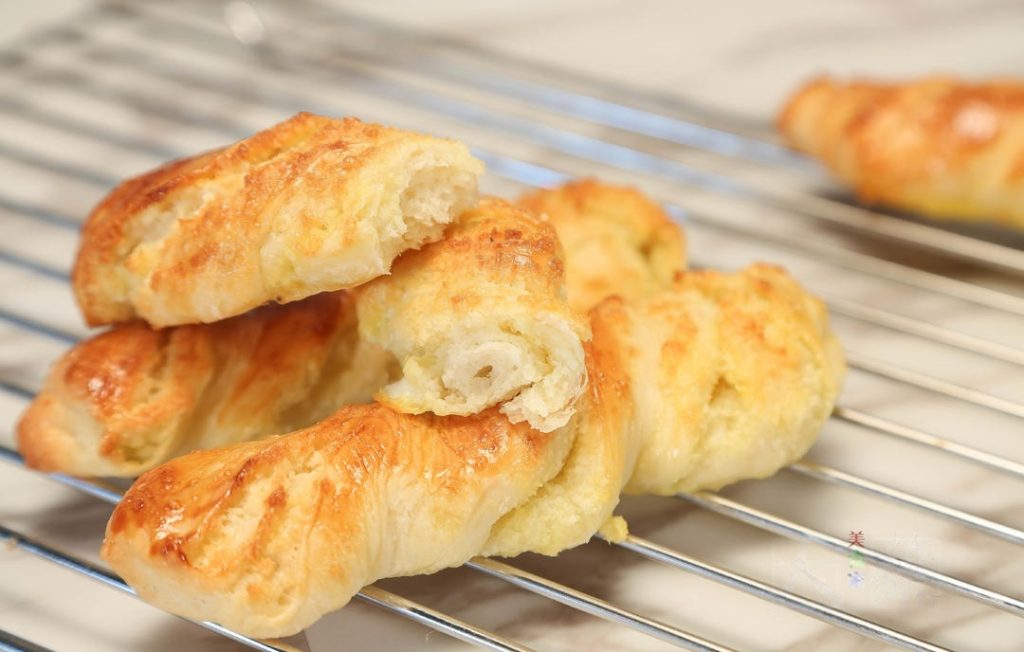
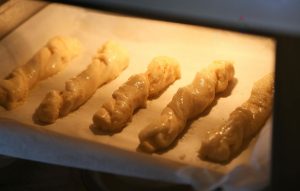
The “strip” shape is created by folding the dough over the filling and twisting it, exposing layers of golden coconut that toast beautifully in the oven. It shares the same DNA as other beloved bakery classics like Steamed BBQ Pork Buns or the sweet and spongy Chinese Date Cake.
Why This Recipe Works
- Enriched Dough Method: By adding the butter after the gluten has started to form (a technique often used in professional bread making), we ensure the bread shreds into soft, feathery layers.
- Milk Powder: The addition of milk powder adds a milky aroma and tenderness that liquid milk alone cannot achieve.
- The Twist Technique: Twisting the dough strips not only looks professional but increases the surface area of the filling, allowing the coconut to caramelize slightly while keeping the inside moist.
Key Ingredients & Substitutions
- High-Gluten Flour (Bread Flour): The original recipe calls for 200g of Gao Jin Mian Fen. In the US/Europe, look for Bread Flour. You can use All-Purpose flour, but the buns will be less chewy and won’t rise quite as high.
- Yeast: Instant yeast works best here. If using Active Dry, you must activate it in the warm water first.
- Milk Powder: This adds richness. If you can’t find it, you can omit it, but the flavor will be less “bakery-style.”
- Desiccated Coconut: Use unsweetened, fine shredded coconut. If you only have sweetened coconut flakes, reduce the sugar in the filling by half.
- Butter: You need two portions. Butter A is for the dough (unsalted), and Butter B is for the filling.
Ingredients
For the Dough:
- 1 ⅔ cups (200g) Bread Flour (High-Gluten Flour)
- 3.5 oz (100g) Water (room temperature or slightly warm in winter)
- 1 large Egg (about 50g)
- 1 tbsp (10g) Milk Powder
- 2 ½ tbsp (35g) Sugar
- ½ tsp (3g) Salt
- 1 tsp (3g) Instant Yeast
- 1 ½ tbsp (20g) Unsalted Butter (softened) – Butter A
For the Coconut Filling (Ye Rong):
- 1 ½ tbsp (20g) Butter (softened) – Butter B
- ½ cup (40g) Desiccated Coconut
- 2 tsp (10g) Milk
- 1 large Egg (beaten) – Note: You will use most of this in the filling, save a teaspoon for egg wash if desired.
- Optional: 1-2 tsp Sugar (if you prefer a sweeter filling, though the dough is sweet).
Recipe Notes Before You Start
- Scale: This recipe makes about 6-8 strips depending on how you cut them.
- Temperature: Ensure your butter is soft but not melted.
- Equipment: A stand mixer helps, but this dough is small enough to knead by hand.
Mise en Place
- Weigh Ingredients: Baking is chemistry. Using a scale (grams) is more accurate than cups.
- Soften Butter: Take both Butter A and Butter B out of the fridge 30 minutes prior.
- Prep the Filling: Make the filling while the dough is proofing so it has time to firm up slightly.
How to Make Coconut Bread Strips
Step 1: Mix the Dough
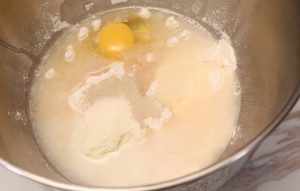
In a large mixing bowl (or stand mixer bowl), combine the water, egg, sugar, bread flour, milk powder, salt, and yeast.
- Lin’s Tip: Avoid putting the yeast directly in contact with the salt initially, as salt can inhibit yeast activity.

Step 2: Knead and Incorporate Butter
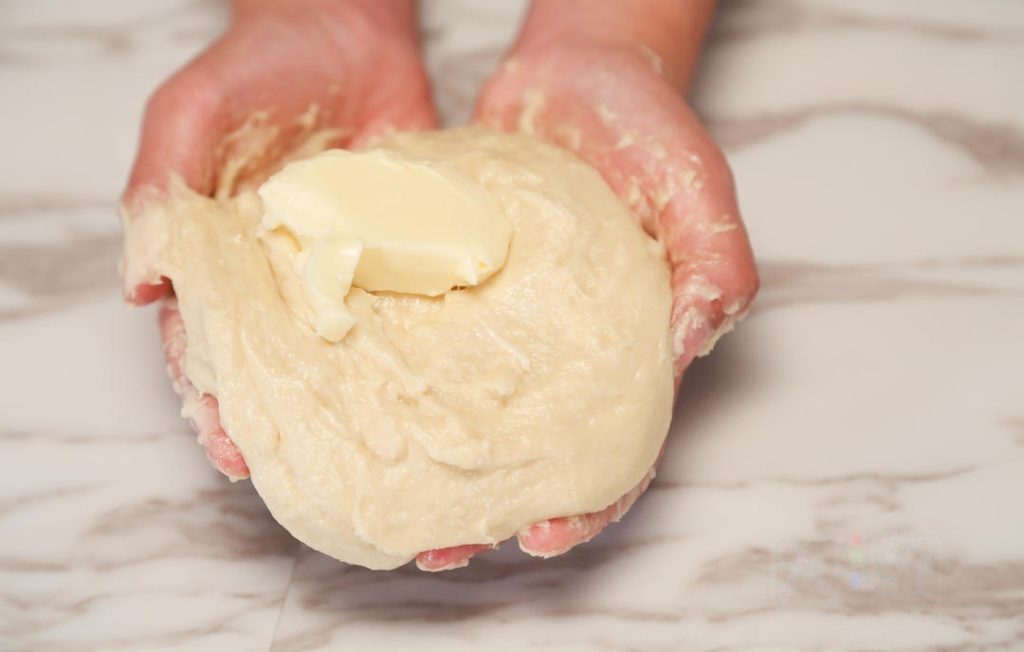
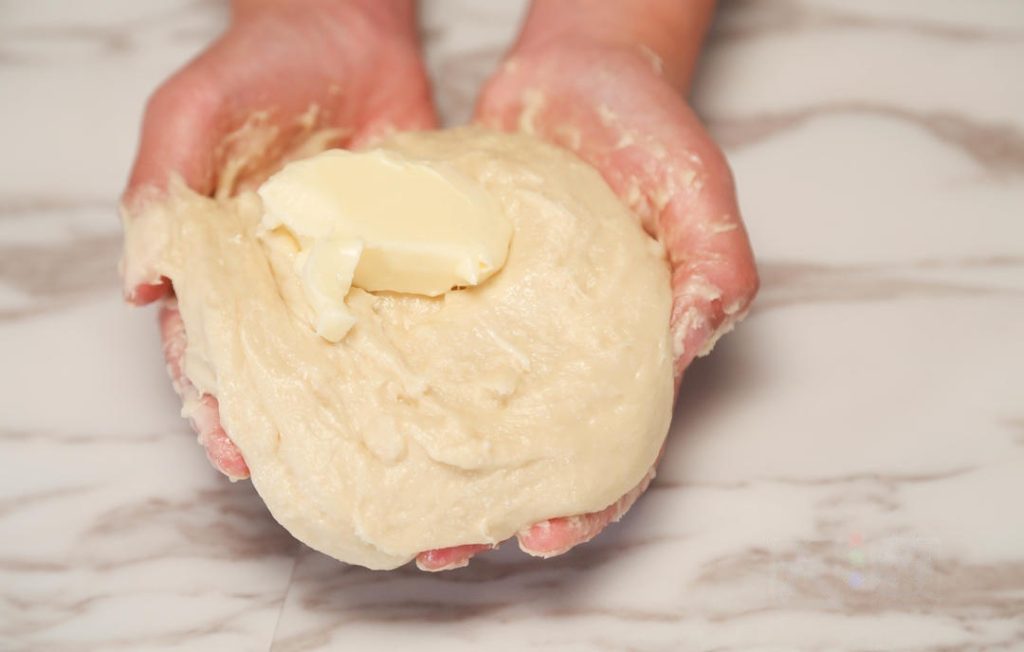
Knead the mixture until a rough dough forms. If using a mixer, use low speed for 3-4 minutes. Once the dough comes together, add the softened Butter A (20g). Continue kneading until the butter is fully absorbed and the surface of the dough becomes smooth and elastic.
- Why: Adding fat later allows the gluten network to form first, resulting in a higher rise and shreddable texture.
Step 3: First Fermentation (Proofing)
Shape the dough into a round ball. Cover the bowl with plastic wrap or a damp towel. Let it ferment at room temperature for about 40 minutes, or until it doubles in size.
- Visual Cue: If you poke the dough with a floury finger, the indentation should spring back slowly but remain visible.
Step 4: Make the Coconut Filling
While the dough is proofing, prepare the filling. In a small bowl:
- Mix the softened Butter B with the sugar (if adding extra) and stir until creamy.
- Add the milk and mix.
- Gradually add the beaten egg (reserve a tiny bit for brushing later if you like) and mix until uniform.
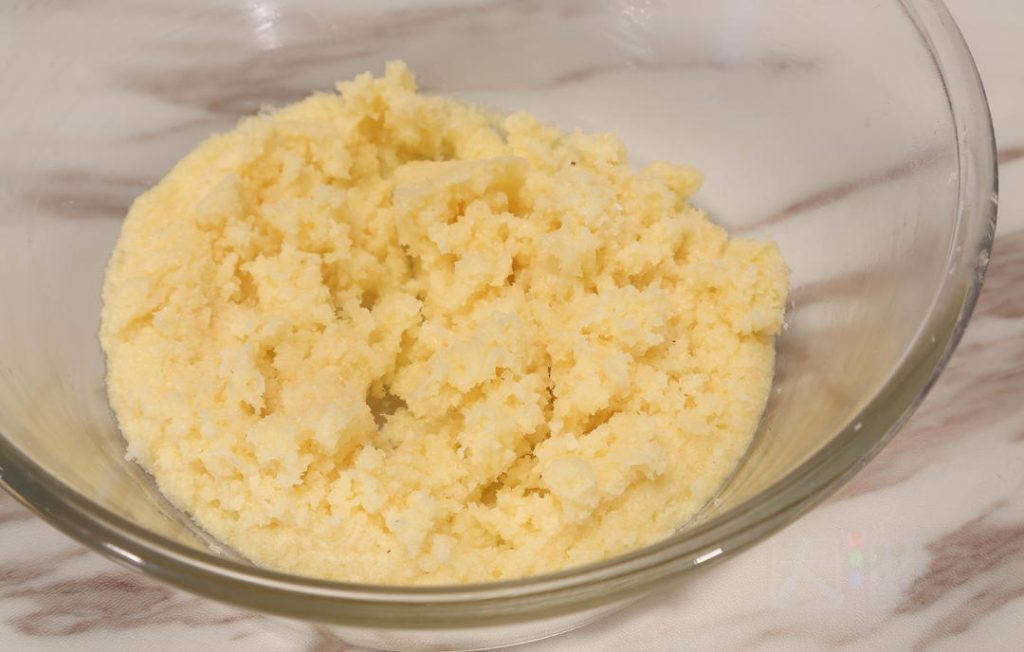
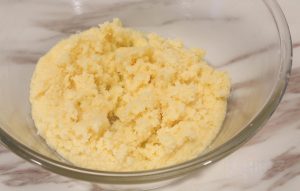
- Stir in the desiccated coconut. The mixture should be a thick, spreadable paste.
Step 5: Shape the Strips
Once the dough has proofed, punch it down gently to release air bubbles.
- Use a rolling pin to roll the dough out into a large rectangle (roughly 1/4 inch thick).
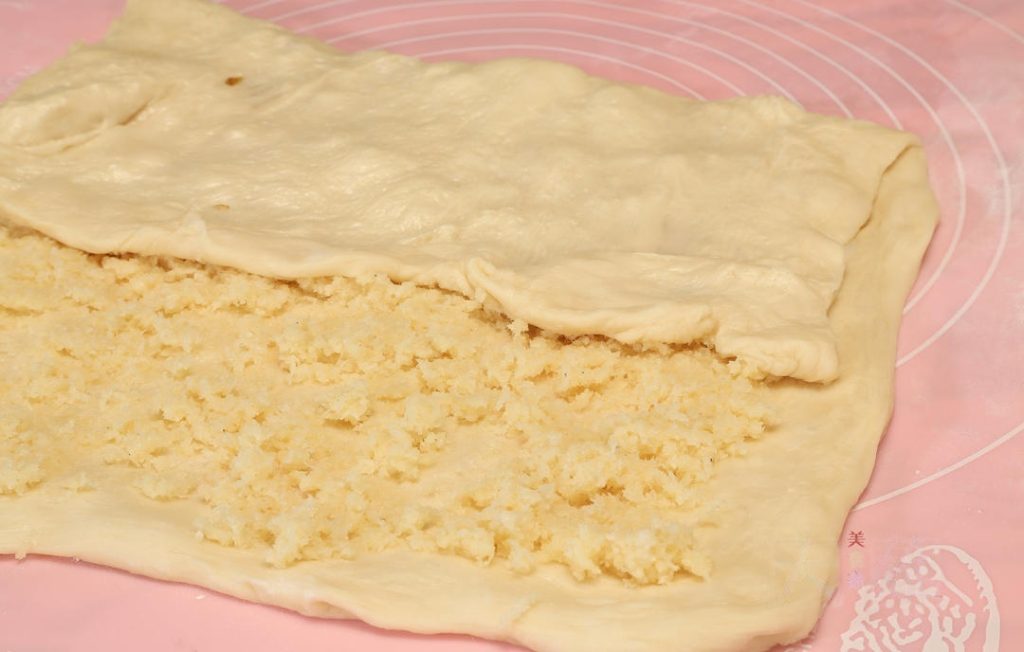
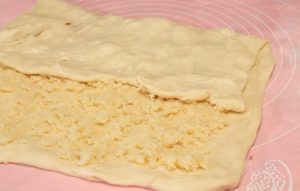
- Spread the coconut filling over two-thirds of the rectangle.
- Fold the blank one-third over the center, then fold the remaining coconut-covered third on top (like folding a business letter). You now have three layers of dough and two layers of filling.
- Turn the dough 90 degrees and gently roll it flat again to seal the layers.
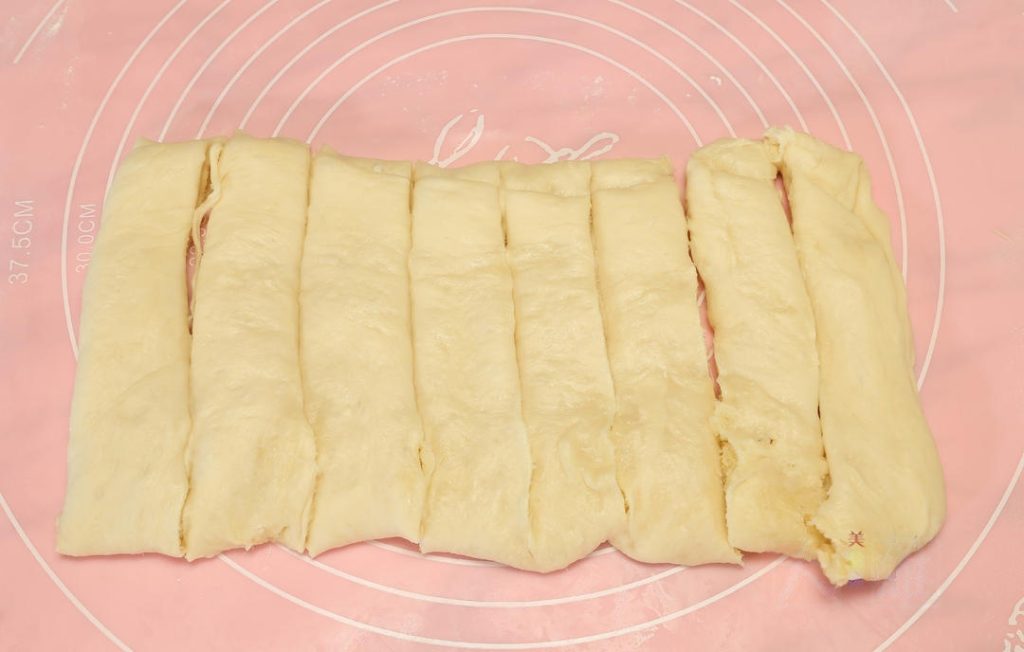
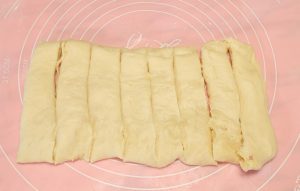
- Use a knife or pizza cutter to slice the dough vertically into long, narrow strips.
Step 6: Twist and Second Proof
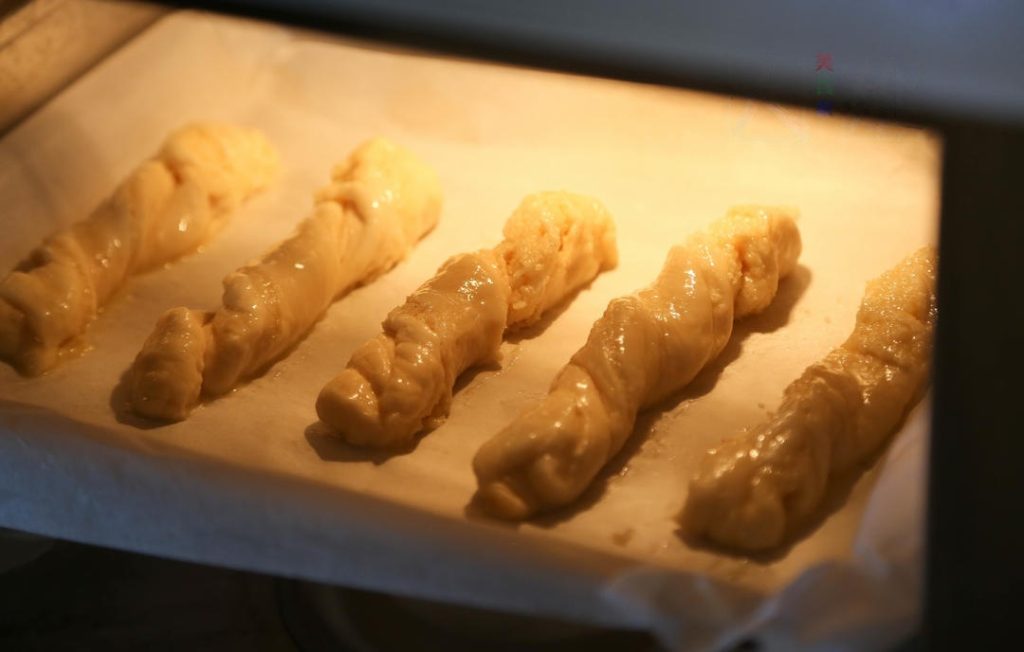
Take one strip, hold the top and bottom ends, and gently twist them in opposite directions 2 to 3 times. Place the twisted strip on a baking tray lined with parchment paper. Repeat with remaining strips. Let them undergo a second fermentation for about 30 minutes in a warm place.
- Lin’s Tip: The second proof is crucial! If you skip this, the bread will be dense.
Step 7: Bake
Preheat your oven to 320°F (160°C). Brush the surface of the strips with the remaining egg wash (or egg yolk) for a golden color. Bake for 15 minutes or until golden brown.
- Safety Note: Ensure the internal temperature of the bread reaches 190°F (88°C) to ensure the egg in the dough is fully cooked.
Common Mistakes When Making Coconut Buns
- Skipping the Second Proof: This is the most common error. If the dough doesn’t rest after shaping, the gluten remains tight, and the bread will be hard rather than fluffy.
- Melting the Butter: If you melt the butter instead of softening it, the filling will leak out during baking.
- Oven Too Hot: Because of the sugar and coconut, these burn easily. If you see them browning too fast, cover loosely with foil.
Serving Suggestions & Pairings
These strips are best enjoyed warm, fresh out of the oven.
- Breakfast: Serve with a glass of fresh soy milk or alongside Savory Chinese Breakfast Pancakes for a sweet and savory contrast.
- Tea Time: They pair wonderfully with tea, much like a Fluffy Matcha Chiffon Cake.
- Snack: If you enjoy the texture of shredded coconut, you might also like the flaky layers of Durian Puffs.
How to Store & Reheat
- Storage: Store in an airtight container at room temperature for up to 2 days. For longer storage, freeze them.
- Reheating: Microwave for 10-15 seconds to restore softness. Do not refrigerate bread, as it dries out the starch (retrogradation).
Authoritative References
- Yeast Types: For a deeper understanding of why we use instant yeast for this straight-dough method, refer to King Arthur Baking’s guide on yeast.
- Food Safety: Since this recipe uses eggs in the filling, ensure they are cooked through. The USDA Food Safety and Inspection Service recommends cooking egg-containing dishes to a safe internal temperature.
Nutrition Information (Estimate)
- Calories: ~280 kcal per strip
- Carbohydrates: 35g
- Protein: 6g
- Fat: 12g
- Sugar: 8g
- Allergens: Wheat (Gluten), Egg, Milk (Dairy), Coconut (Tree Nut).
Disclaimer: Nutrition information is calculated using an ingredient database and should be considered an estimate. Garnishes and optional ingredients are not included. Actual values vary based on specific brands used.
Final Thoughts
This recipe brings the nostalgic aroma of a Chinese bakery right into your home. Just like my daughter, I hope your family enjoys these sweet, coconutty treats. If you have extra ingredients, you can even try making Homemade Meat Floss to top your next batch of buns!
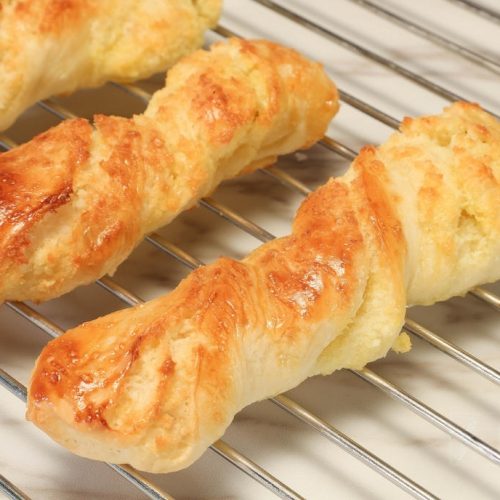
Coconut Bread Strips (Ye Rong Mian Bao)

Equipment
- Mixing Bowl
- Baking Sheet
- Rolling Pin
Ingredients
Dough
- 200 g Bread Flour (High Gluten Flour) approx 1 2/3 cups
- 100 g Water approx 3.5 oz
- 1 Egg large
- 10 g Milk Powder approx 1 tbsp
- 35 g Sugar approx 2.5 tbsp
- 20 g Unsalted Butter (A) softened, for dough
- 3 g Salt approx 1/2 tsp
- 3 g Instant Yeast approx 1 tsp
Coconut Filling
- 40 g Desiccated Coconut approx 1/2 cup
- 20 g Unsalted Butter (B) softened, for filling
- 10 g Milk approx 2 tsp
- 1 Egg beaten (use mostly for filling, reserve a little for egg wash)
Instructions
- Combine water, 1 egg, sugar, bread flour, milk powder, salt, and yeast in a mixing bowl. Knead until a rough dough forms.

- Add softened Butter A (20g) to the dough. Continue kneading until the butter is fully incorporated and the dough surface is smooth and elastic.
- Cover the bowl and let the dough ferment at room temperature for about 40 minutes, or until doubled in size.
- While fermenting, make the filling: Mix softened Butter B (20g) with sugar (optional) until creamy. Add milk and mix. Gradually add the beaten egg (reserve 1 tsp for later) and mix. Stir in desiccated coconut until uniform.
- Roll the proofed dough into a large rectangle. Spread the coconut filling over two-thirds of the dough. Fold the empty third over the middle, then fold the remaining coconut-covered third on top (letter fold).
- Slice the dough vertically into long, narrow strips. Hold each strip by the ends and twist 2-3 times.
- Place twisted strips on a baking tray. Let them undergo a second fermentation for about 30 minutes. Brush with reserved egg wash.
- Preheat oven to 160°C (320°F). Bake for 15 minutes or until golden brown.

Notes
1. Do not skip the second fermentation, or the bread will be dense.
2. Water can be substituted with milk for a richer dough.
3. Bread flour (high-gluten) is essential for the texture. Nutrition Info (Disclaimer):
Calories: 280kcal | Carbohydrates: 35g | Protein: 6g | Fat: 12g | Sugar: 8g
Nutrition information is calculated using an ingredient database and should be considered an estimate. Garnishes and optional ingredients are not included.












Leave a Reply