Some mornings you want congee simmering on the stove, and some mornings you want a bowl that comes together while the kettle boils. This chopped vegetable salad — 蔬菜碎色拉, literally “chopped vegetable salad” — is the second kind. Everything gets cut into small, even dice, tossed with a dressing of olive oil, black vinegar, salt, pepper, and honey, and eaten while it is still cold and snappy. It is the sort of thing Chinese home cooks make without a recipe, using whatever is crisp in the refrigerator that day.
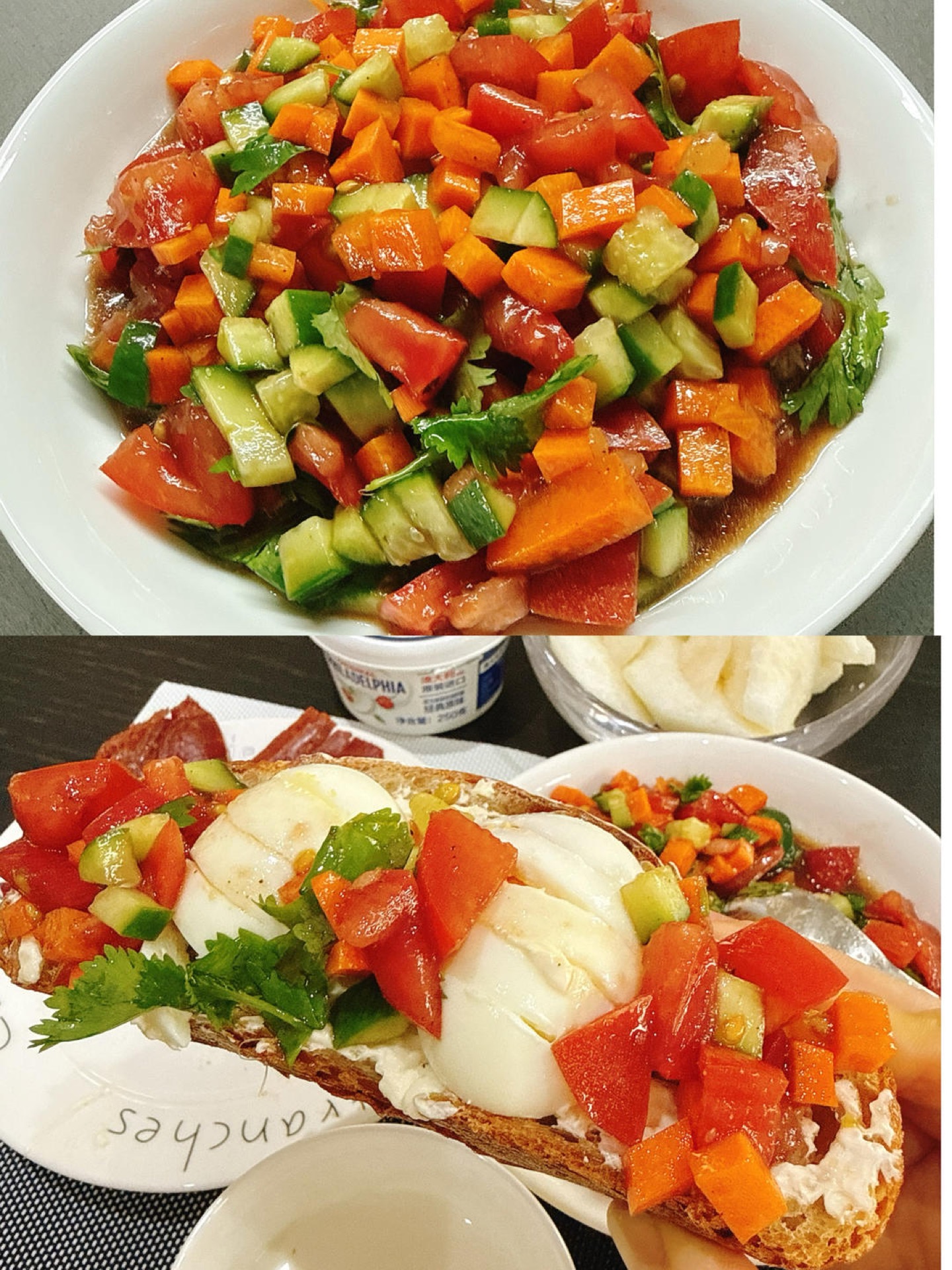
What makes it worth writing down is the balance. Black vinegar gives a soft, fruity tang rather than the sharp bite of white vinegar, honey rounds the edges, and a good glug of olive oil carries the flavor across every cube of vegetable. There is no cooking, no wok, no splatter — just a knife, a board, and about ten minutes.
It also happens to be one of the most flexible recipes on this site. The formula is 500 grams of diced produce to a dressing of roughly equal parts oil and acid, and once you internalize that ratio you can build it from the crisper drawer forever. I have made it with tomato and cucumber in summer and with pear and apple in winter, and it has never once been boring.
What Is 蔬菜碎色拉?
蔬菜碎色拉 is a cold-tossed salad — the kind of dish that belongs to the Chinese 凉拌 (liángbàn) family, where raw or briefly blanched ingredients are dressed and served cool or at room temperature. The name breaks down simply: 蔬菜 means vegetables, 碎 means chopped or broken into small pieces, and 色拉 is the transliteration of “salad.” So the whole phrase is exactly what it sounds like: a salad of finely chopped vegetables.
Unlike Western chopped salads, which often lean on lettuce as a base, this one has no leafy greens at all. The body comes from firm, watery vegetables and fruit — tomato, cucumber, carrot, bell pepper, apple, pear — cut into small cubes so they release just enough juice to mingle with the dressing. The herbs, if you use them, are treated as an ingredient rather than a garnish; cilantro here is chopped fine and tossed through, not laid on top.
The dressing is where the Chinese character really shows. Rather than a mayonnaise or a creamy ranch, it is a vinaigrette built on 黑醋 (black vinegar), the aged, slightly malty vinegar used all over northern and eastern China. Paired with olive oil, a touch of honey, and plenty of black pepper, it tastes bright and clean rather than heavy.
The reason a dressing like this works is simple chemistry: acid and salt both disrupt the surface of cut vegetables and draw out a little moisture, which then carries dissolved sugar, salt, and aroma compounds back onto every piece. That is why a salad dressed ten minutes ago tastes seasoned all the way through, while one dressed an hour ago tastes watery — the same process, just further along.
If you enjoy this style of cold dish, these related recipes on the site are worth trying next.
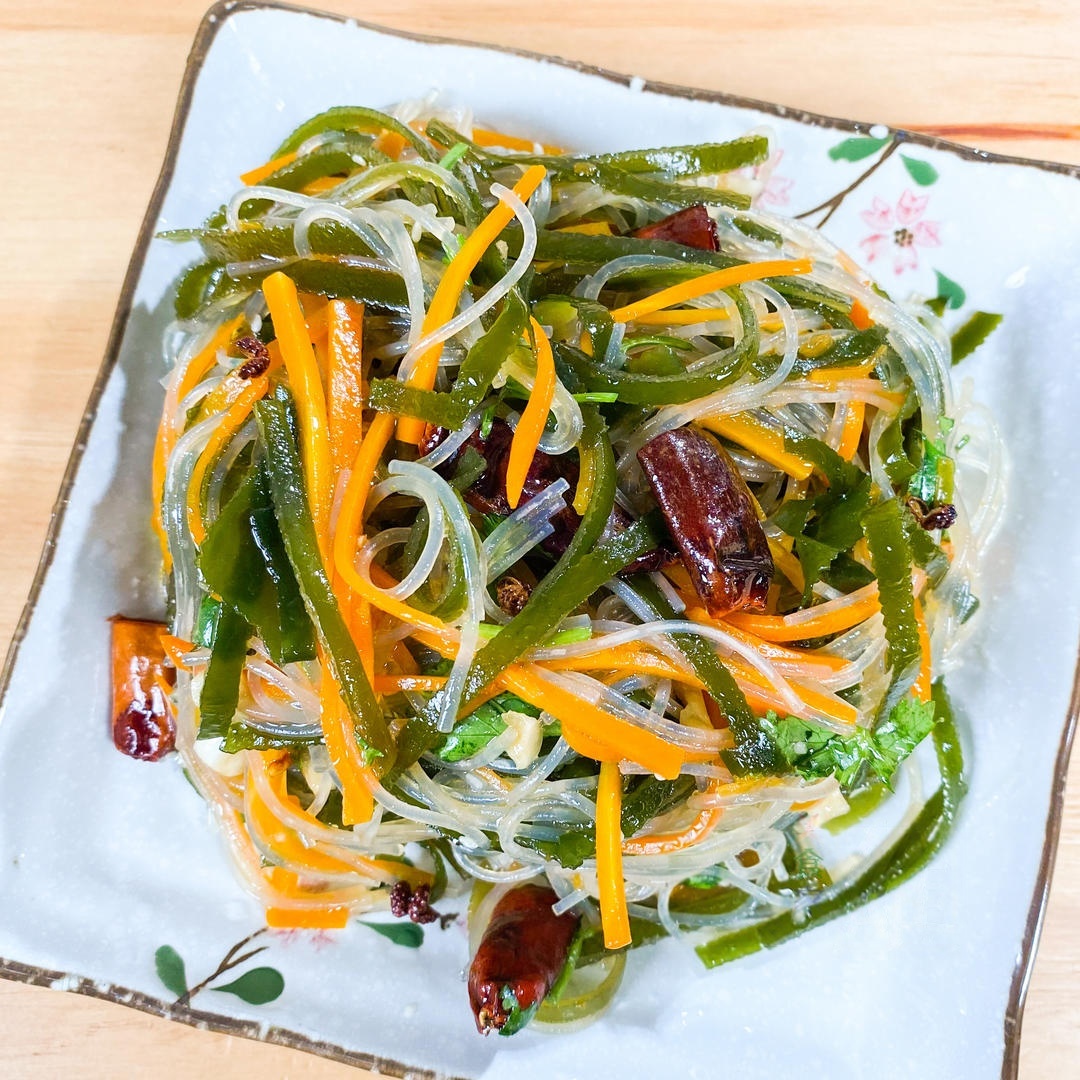
For a version built on shredded rather than diced ingredients, this shredded cold salad uses the same cold-toss logic with thin, delicate strands and a savory dressing.
1Shredded Cold Salad (Liangban Sansi)A vibrant, crunchy, and cooling Sichuan salad featuring kelp, carrots, and glass noodles in a spicy-aromatic dressing.Check out this recipe
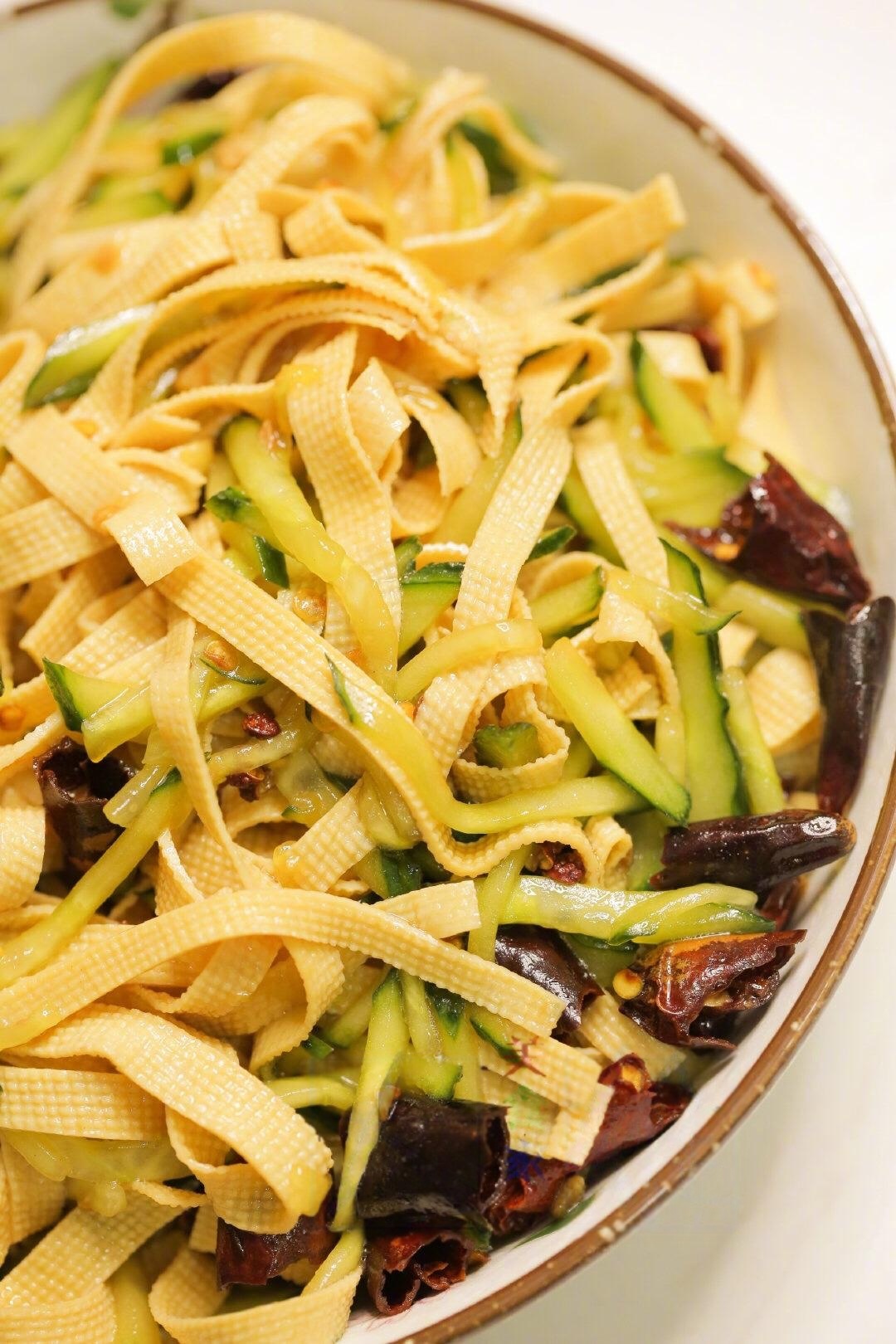
If you like a little heat in your cold dishes, the spicy cold tofu skin salad brings chili oil and chewy tofu skin into the same bright, tangy framework.
2Spicy Cold Tofu Skin Salad (Qiang Ban Dou Fu Si)A refreshing, savory, and slightly spicy Sichuan salad featuring shredded tofu skin and cucumber tossed in an aromatic hot oil dressing. Ready in 15 minutes.Check out this recipe
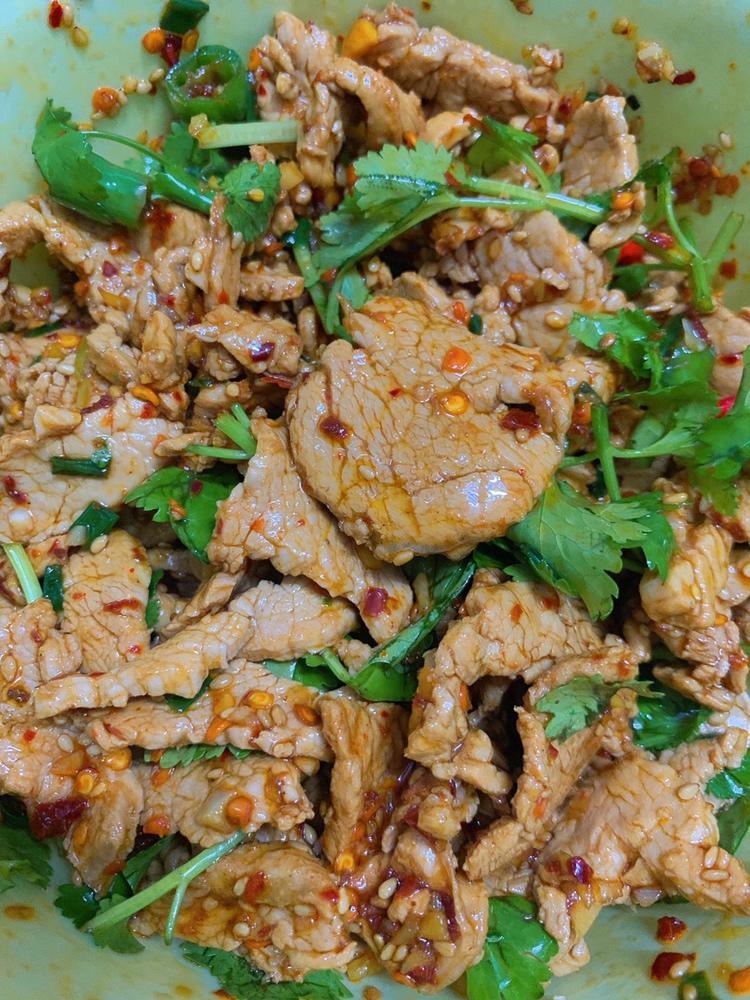
And for a cold dish with real substance, this cold tossed pork tenderloin pairs poached pork with a punchy vinegar-and-chili dressing.
3Spicy Cold-Tossed Pork Tenderloin (Liangban Liji Rou)This Spicy Cold-Tossed Pork Tenderloin (Liangban Liji Rou) is a quick, homestyle Sichuan dish. Tender, poached pork slices are tossed in a fiery, aromatic garlic-chili sauce that’s activated with sizzling hot oil. A perfect 30-minute meal.Check out this recipe
Ingredient Notes
The ingredient list is short, which means each item matters. Here is what to look for and how to substitute.
Mixed vegetables and fruit (500 g / about 4 cups diced). I used tomato, carrot, cucumber, and cilantro because that is what was in the fridge. The real rule is texture: you want a mix of something juicy (tomato, peach), something crunchy (carrot, bell pepper, cucumber), and something aromatic (cilantro, scallion, mint). Cooked corn kernels, apple, avocado, and pear all work beautifully. If you use avocado, add it last so it does not get mashed while tossing.
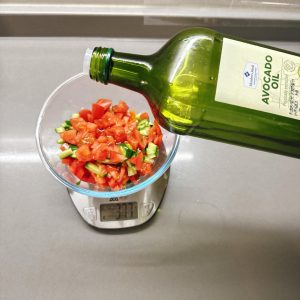
Olive oil (20 g / about 1½ tbsp). A mild or medium olive oil is ideal here; a peppery finishing oil will fight the black vinegar. Any neutral oil works in a pinch, but you lose some of the fruity backbone.
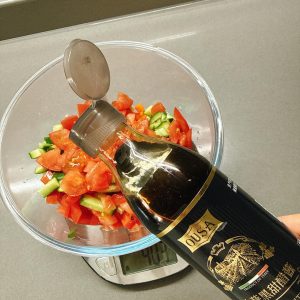
Black vinegar (20 g / about 1½ tbsp). Chinkiang-style black vinegar is the classic choice, with a malty, slightly sweet depth. Fresh lemon juice is the substitute I use most often, and it makes the salad taste brighter and more summery. Rice vinegar works too, though it is sharper and less complex.
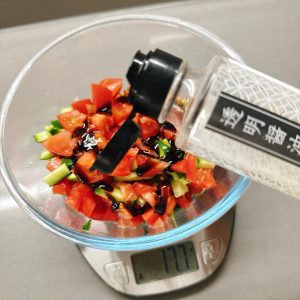
Salt (1 tsp). I used Japanese clear soy sauce, which adds saltiness plus a little umami. Plain kosher salt or light soy sauce both work. If you are using soy sauce, start with 2 teaspoons and taste, since it is less concentrated than salt.
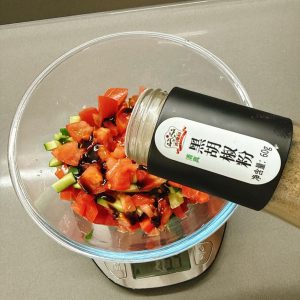
Black pepper (2 small pinches). Freshly ground makes a noticeable difference. The pepper is not there to make the salad spicy; it is there to add a warm, floral top note that lifts the vinegar.
Honey (1 tsp). Honey brings a rounded sweetness that plain sugar lacks. Sugar is a perfectly good substitute — use the same amount and stir a few extra seconds to make sure it dissolves.
Ingredients
Here is the full list with US and metric measures. This makes 4 side servings, or 2 generous breakfast portions.
- 500 g (about 4 cups) mixed diced vegetables and fruit — tomato, carrot, cucumber, and cilantro here
- 20 g (1½ tbsp) olive oil
- 20 g (1½ tbsp) black vinegar or fresh lemon juice
- 1 tsp salt, or light soy sauce to taste
- 2 small pinches freshly ground black pepper
- 1 tsp honey or sugar
That is it — six items, no cooking, no marinade, no waiting.
Equipment Needed
You need very little for this one, and none of it is specialized.
- A sharp chef’s knife. This is the one piece of equipment that genuinely changes the dish. A dull knife crushes cucumber and tomato instead of slicing cleanly, and crushed cells release water fast, which makes the salad soggy.
- A cutting board. A large one, so you can pile the diced vegetables off to the side as you go rather than crowding the board.
- A large mixing bowl. Big enough to toss 4 cups of diced vegetables without spilling over the rim.
- A small whisk or fork. For blending the dressing before it hits the vegetables. You can also just add everything to the bowl and toss, which is how most home cooks do it.
- A salad spinner (optional). Useful if you are washing a lot of herbs or cucumber and want them bone dry before dressing.
No wok, no stove, no thermometer. If you are new to Chinese cooking and want a gentle entry point, this is a good place to start — and if you want to build out your technique from there, these Chinese cooking techniques for absolute beginners cover the fundamentals that carry into every dish.
Why This Recipe Works
Three things make this salad taste better than the sum of its parts.
First, uniform dice. Every piece being roughly 1 cm (½ inch) means every spoonful has the same balance of crunch, juice, and dressing. It also means the salt seasons everything at the same rate, so nothing turns limp before the rest.
Second, the oil-to-acid ratio. Equal parts olive oil and black vinegar by weight sounds aggressive, but black vinegar is much less acidic than white vinegar or lemon juice, and the honey softens it further. The result is a dressing that tastes tangy and full rather than sharp. If you swap in lemon juice, you may want to pull the acid back to about 15 g.
Third, the timing. Tossing and serving within about 20 minutes is the whole trick. Long enough for the salt to season the vegetables through, short enough that the cucumber has not started weeping into the bowl. This is a dish that rewards paying attention to the clock, not the stove.
It also fits neatly into a Chinese-style spread. Cold dishes like this one are traditionally served alongside richer braises and stir-fries to reset the palate — a role that a heavier, creamier salad cannot fill.
Prep & Mise en Place
Because there is no cooking, all the work is in the prep, and doing it in the right order saves you time and dishes.
- Wash everything first. Rinse the tomato, cucumber, carrot, and cilantro under cool running water and dry them well. Excess water on the surface will dilute the dressing.
- Cut the firmest vegetables first. Carrot goes first — it is the densest and takes the most knife work. Cut it into 1 cm (½-inch) planks, then batons, then cubes.
- Then the cucumber. If your cucumber has large, watery seeds, scoop them out with a spoon before dicing. This is the single best defense against a soggy salad.
- Then the tomato. Cut it in half, scoop out the wet seed pockets if you like, and dice the firm walls. Cherry tomatoes can just be quartered.
- Chop the herbs last. Cilantro, scallion, or mint should be chopped fine and kept separate until the moment you toss, so the cut edges stay fragrant.
- Measure the dressing into one small bowl. Oil, vinegar, salt, pepper, and honey together, then whisk briefly. Doing this separately means you can taste and adjust before it touches the vegetables.
- Set out your serving bowl. Everything should be within arm’s reach, because once you start tossing, you want to finish and serve.
Total active prep is about 15 minutes for most people, and it drops to 10 once you have made it a few times.
Cooking Process
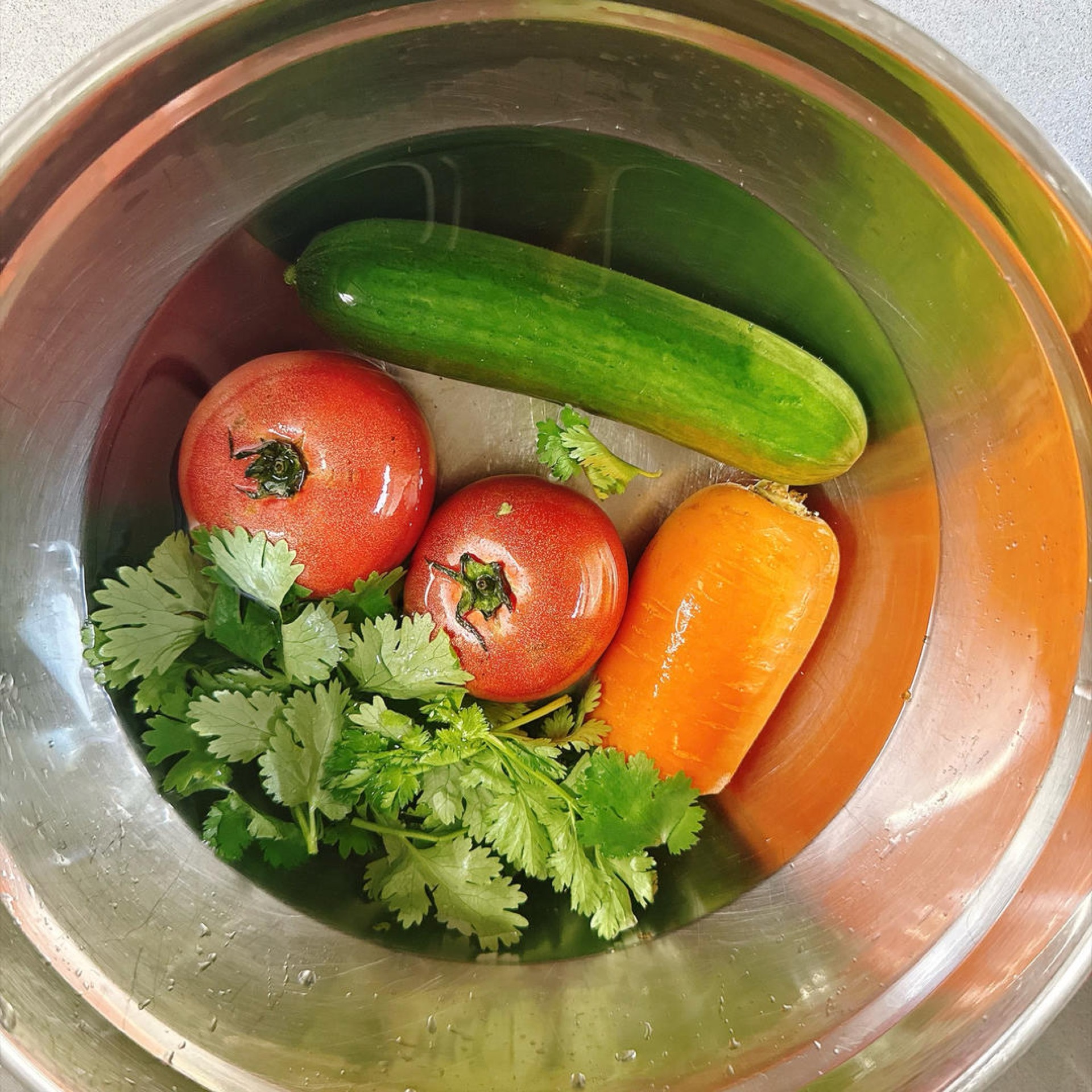
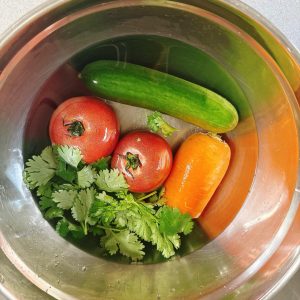
Step 1 — Pick Your Vegetables
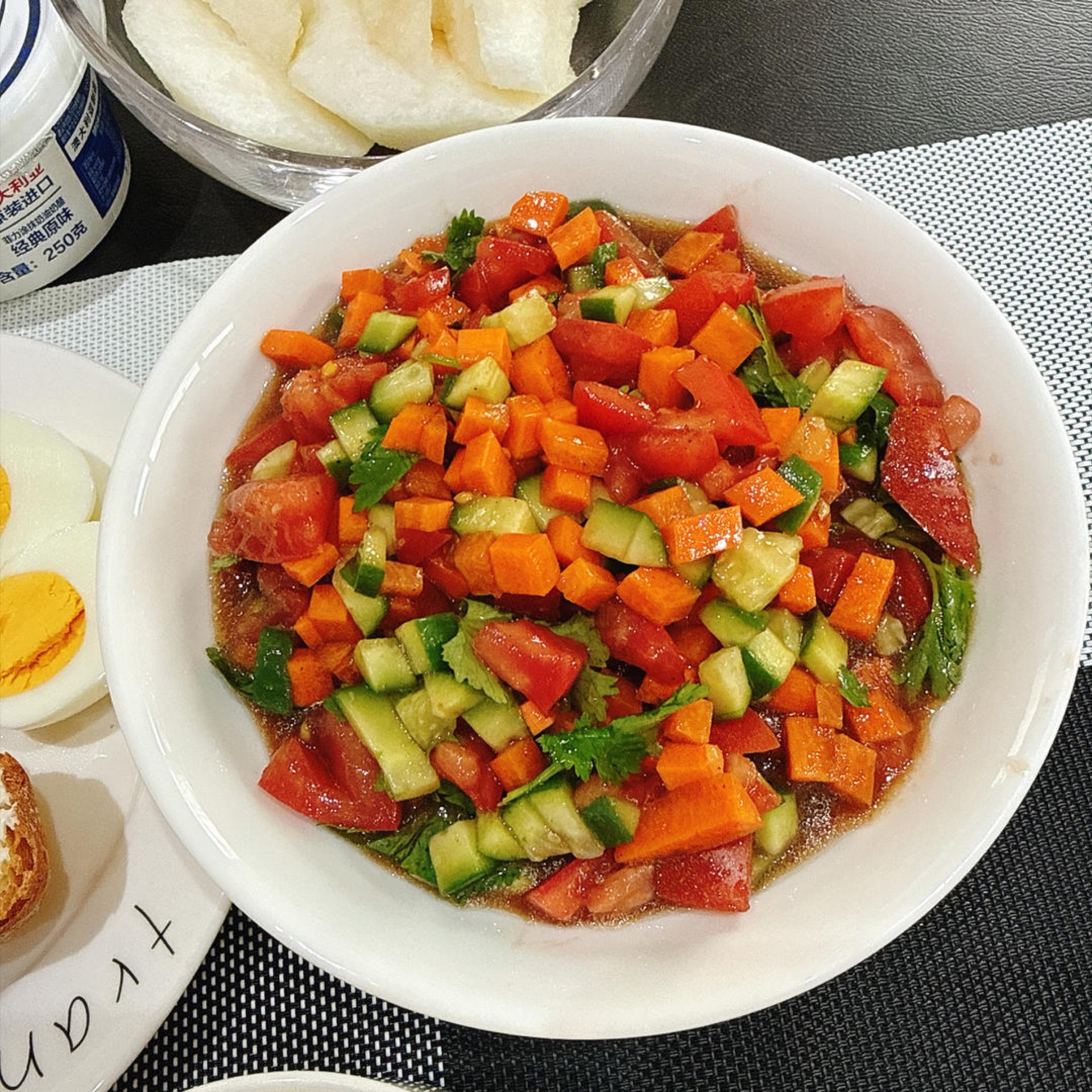
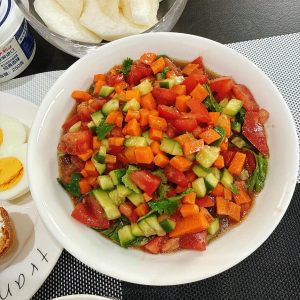
I used whatever I had in the fridge: tomato, carrot, cucumber, and cilantro, though plenty of other things work too, such as cooked corn kernels, apple, avocado, bell pepper, pear, or peach.
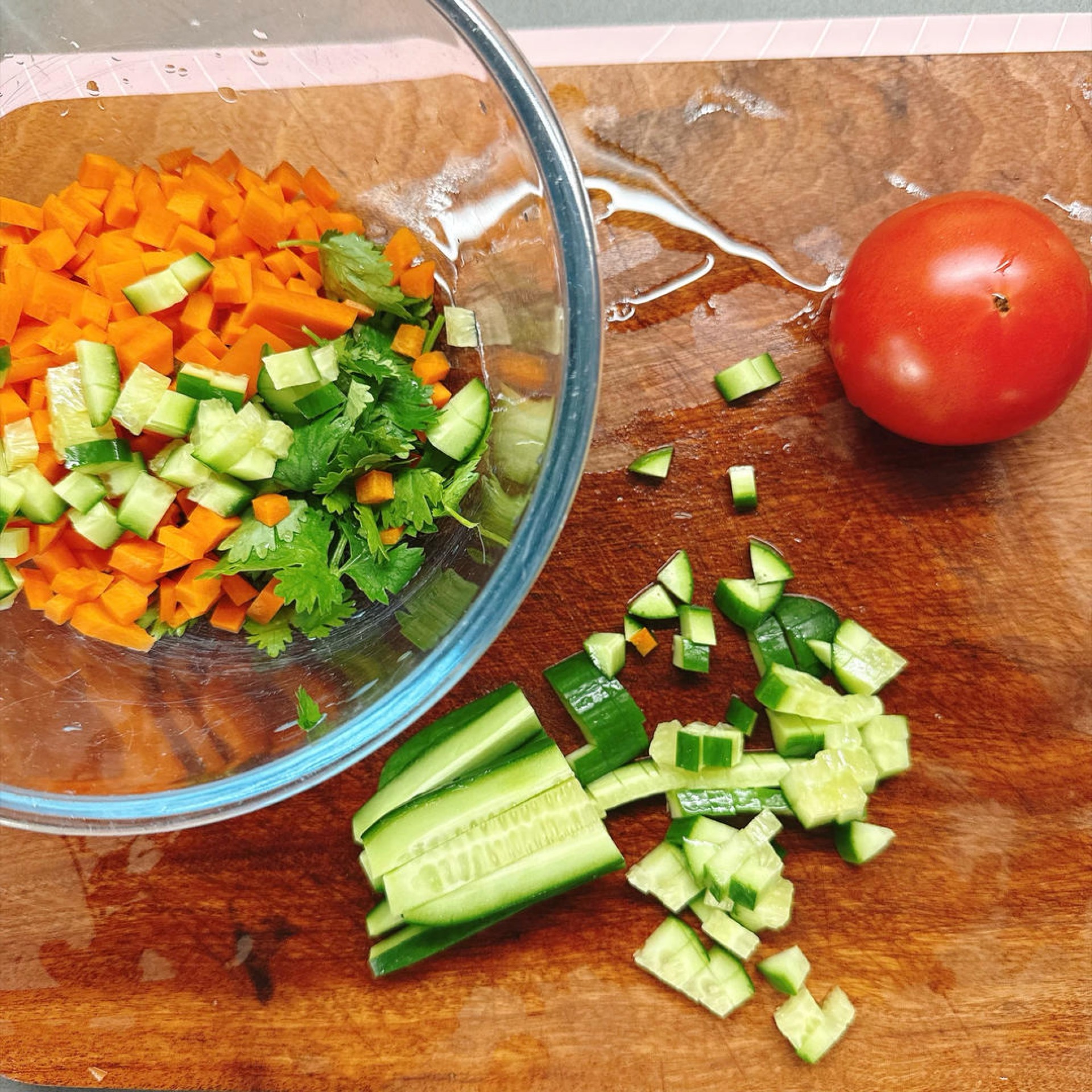
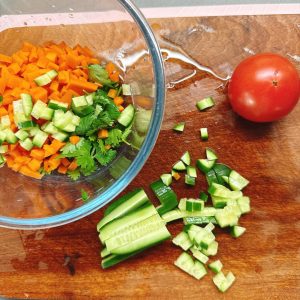
Step 2 — Dice Everything
Cut everything into small dice.
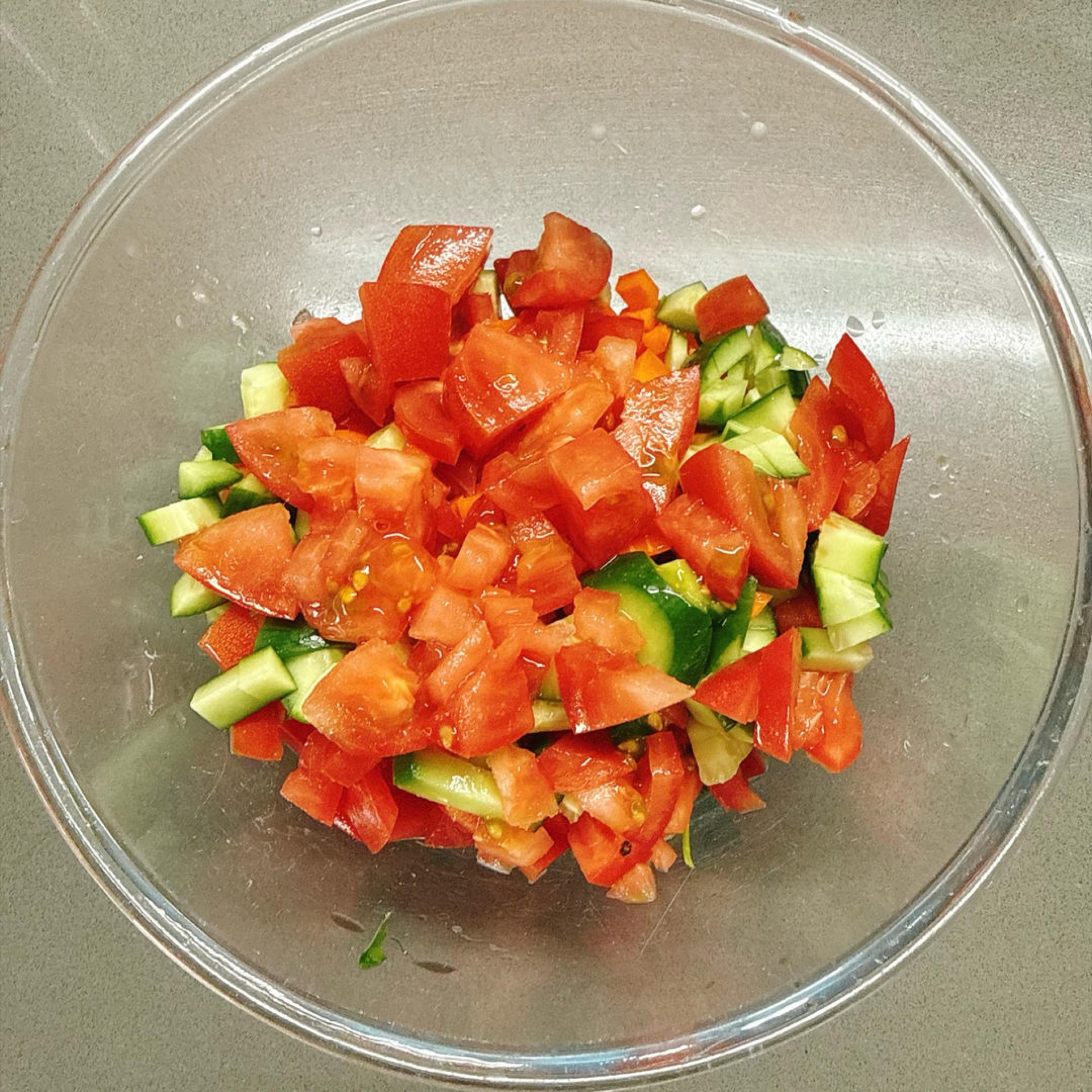
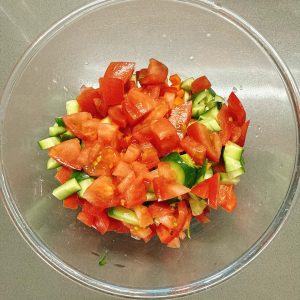
Step 3 — Into the Bowl
Add them to a large bowl.
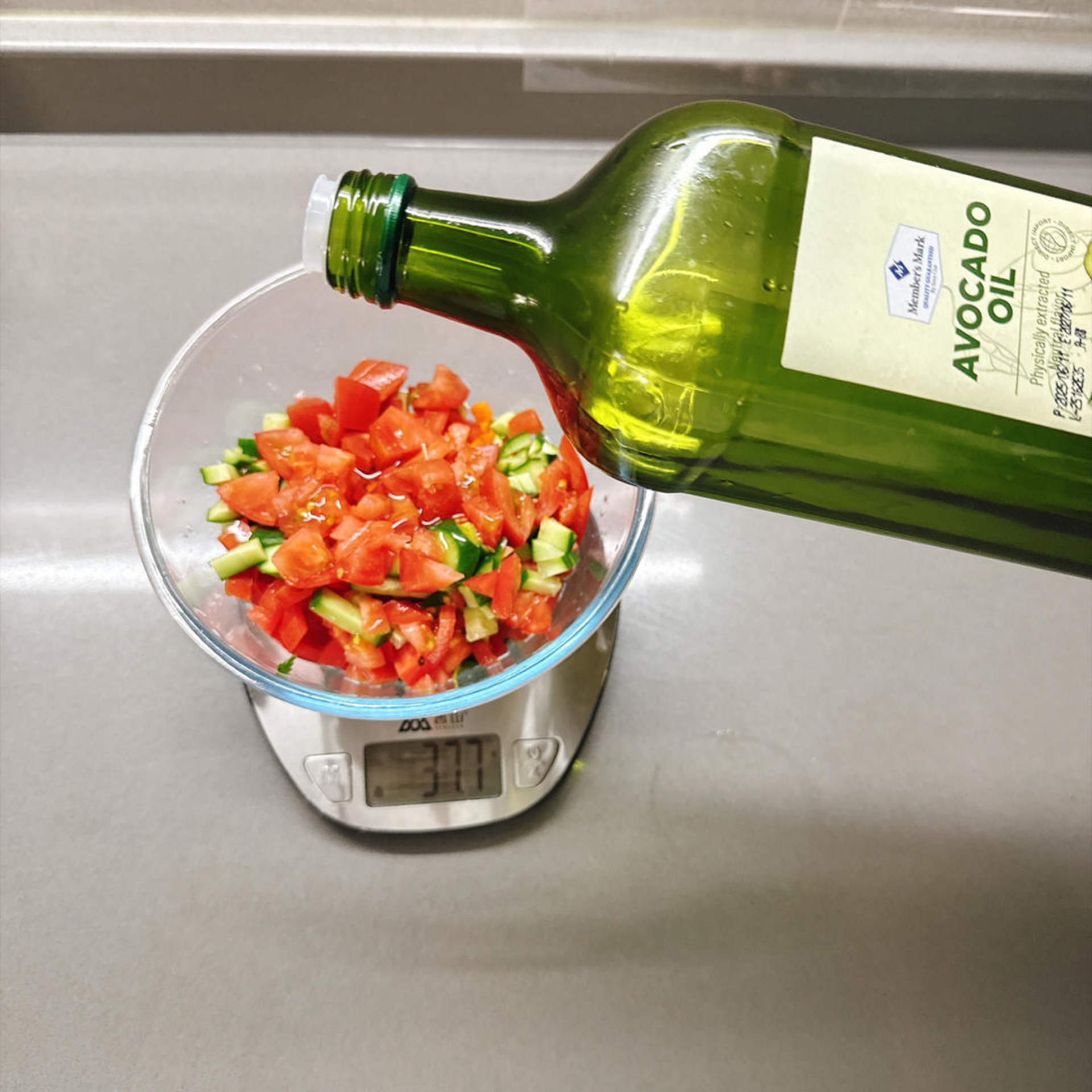
Step 4 — Add the Olive Oil
Add 20 grams of olive oil.
Step 5 — Add the Black Vinegar
Add 20 grams of black vinegar or lemon juice.
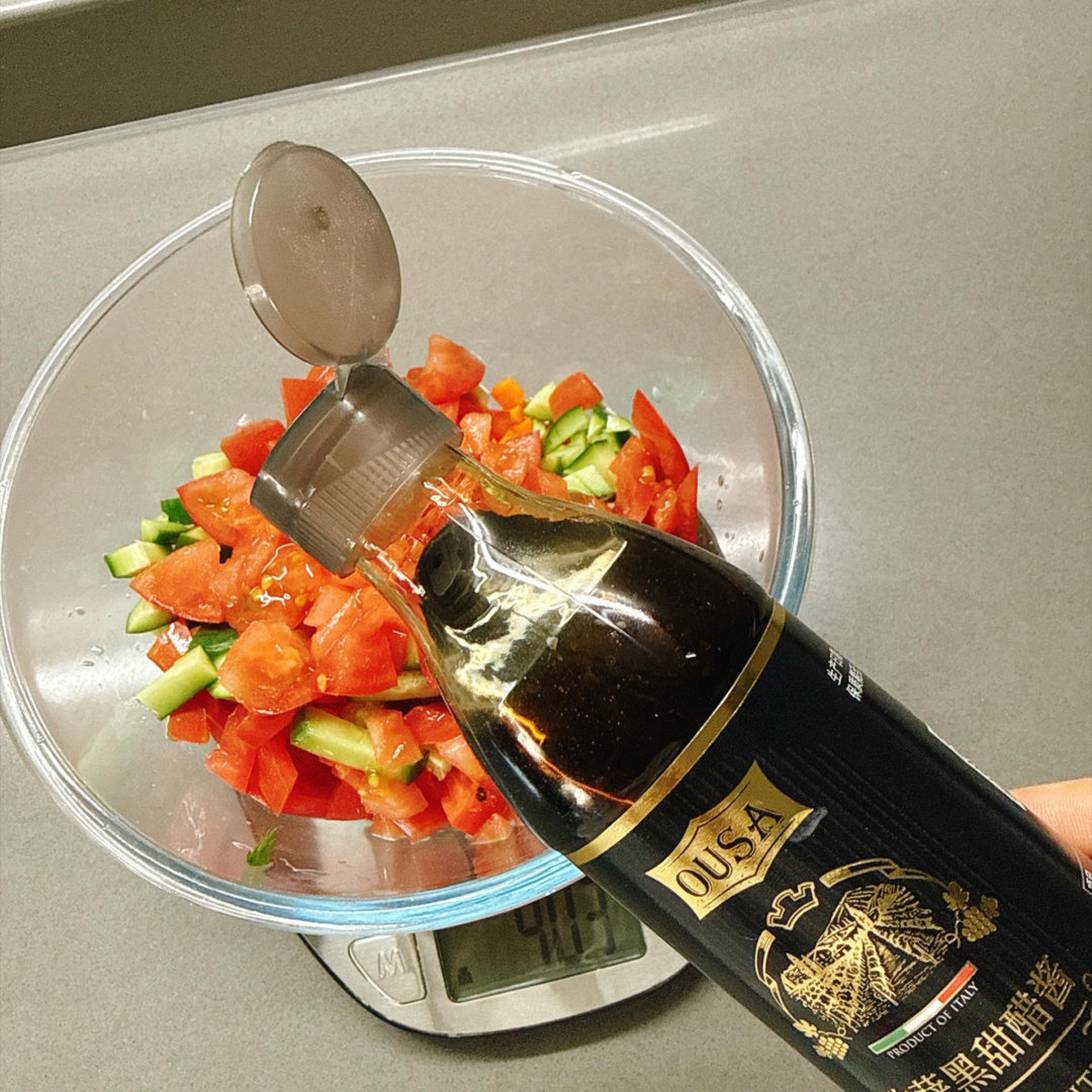
Step 6 — Season with Salt
Add 1 teaspoon of salt; I used Japanese clear soy sauce, but anything that adds saltiness works.
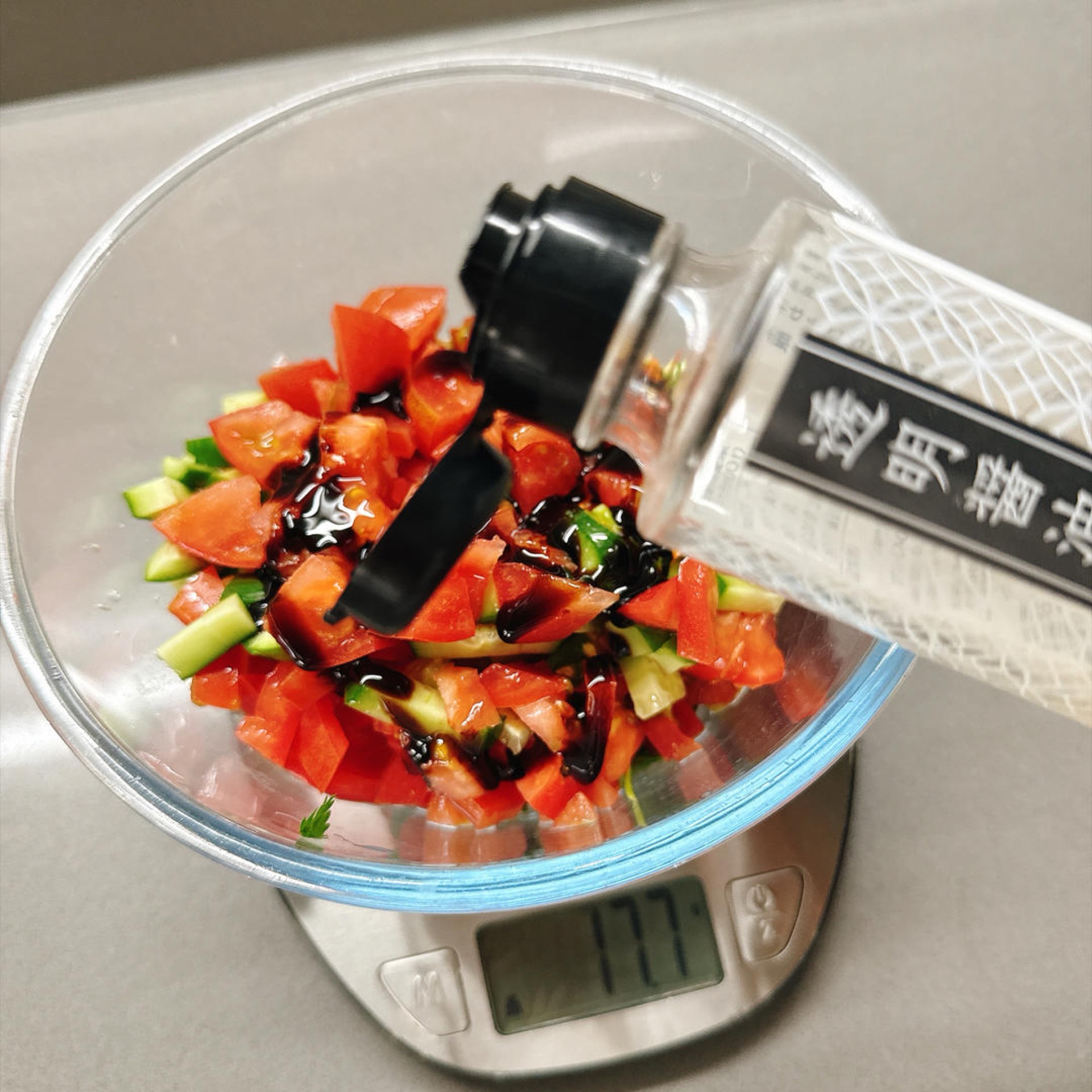
Step 7 — Add the Black Pepper
Add 2 small pinches of ground black pepper.
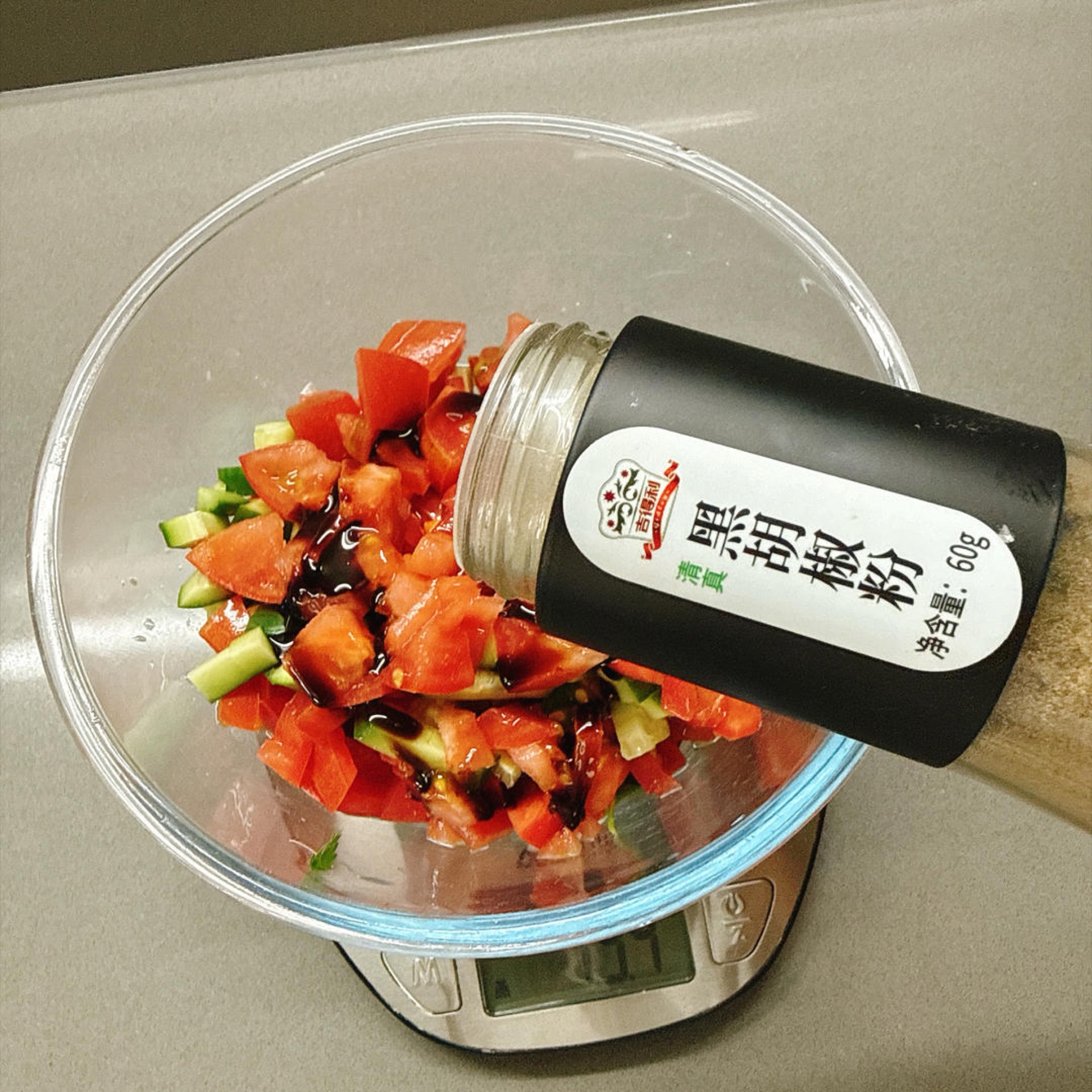
Step 8 — Sweeten with Honey
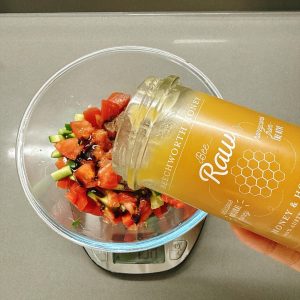
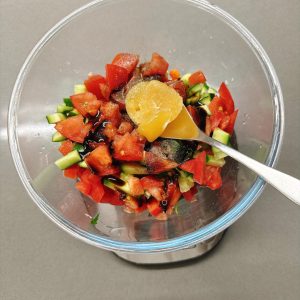
Add 1 spoonful of honey.
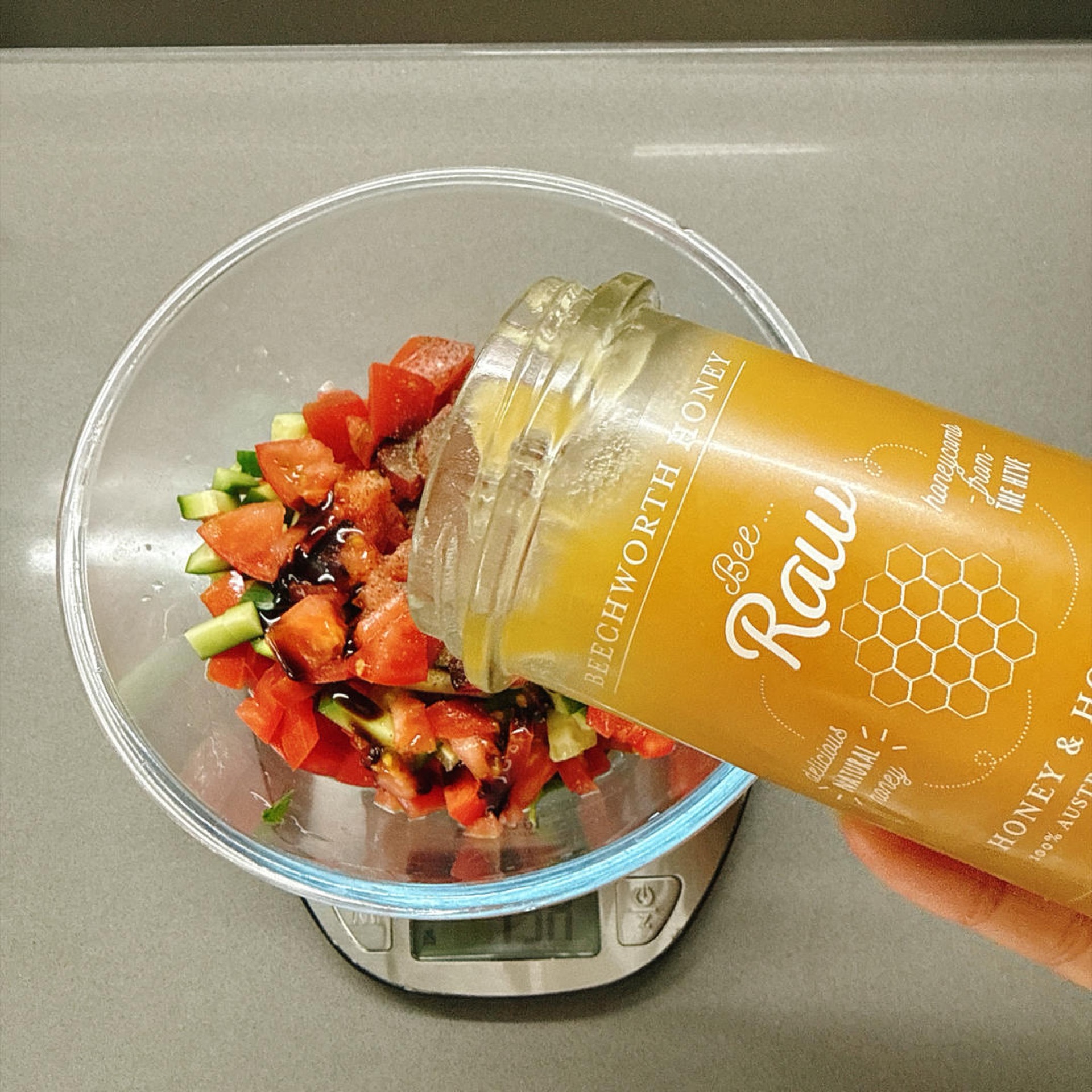
Step 9 — Sugar Works Too
If you do not have honey, you can use sugar instead.
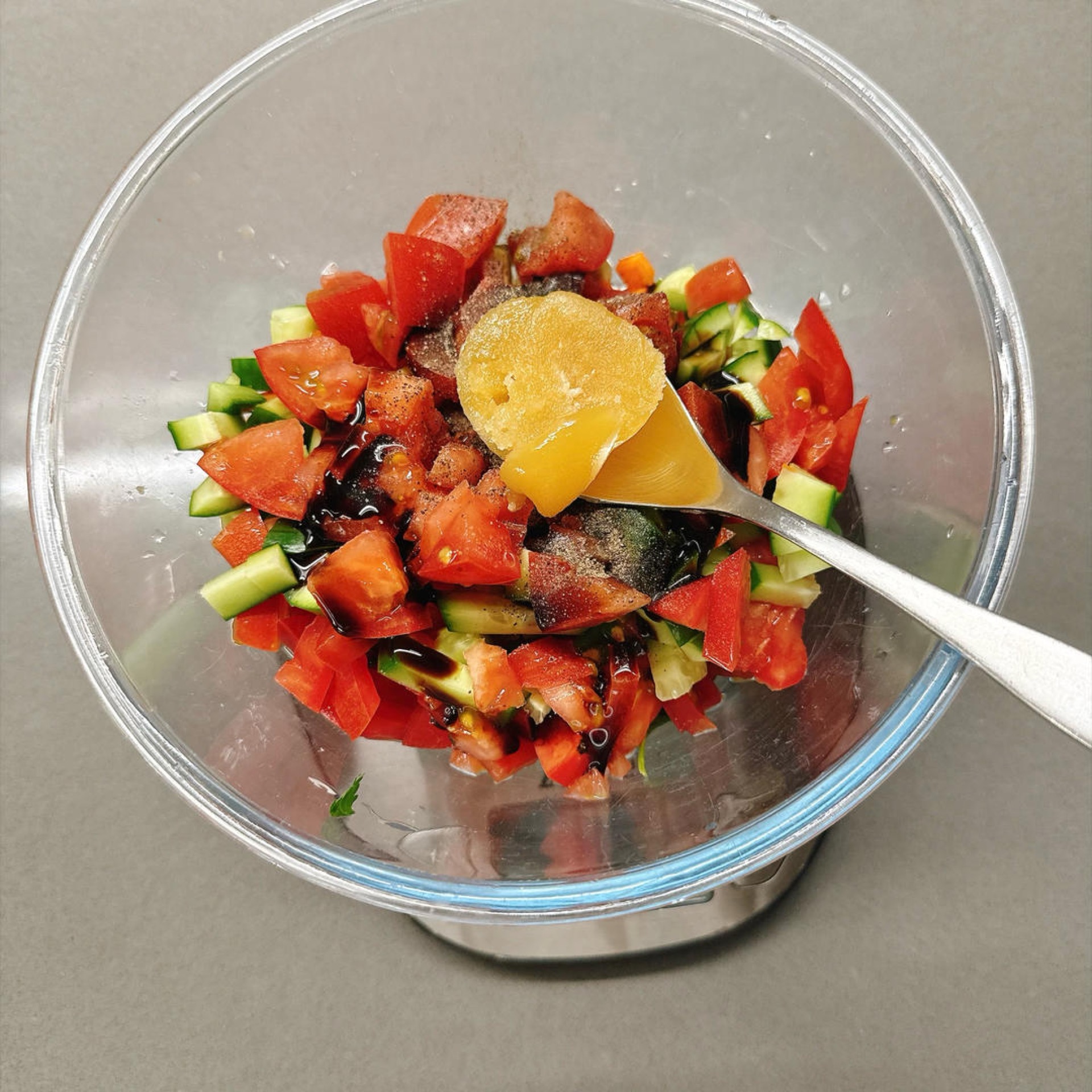
Step 10 — Toss Together
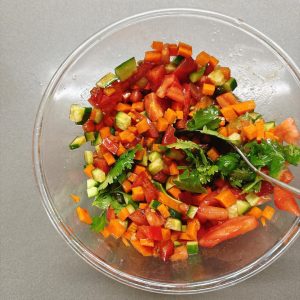
Mix everything together.
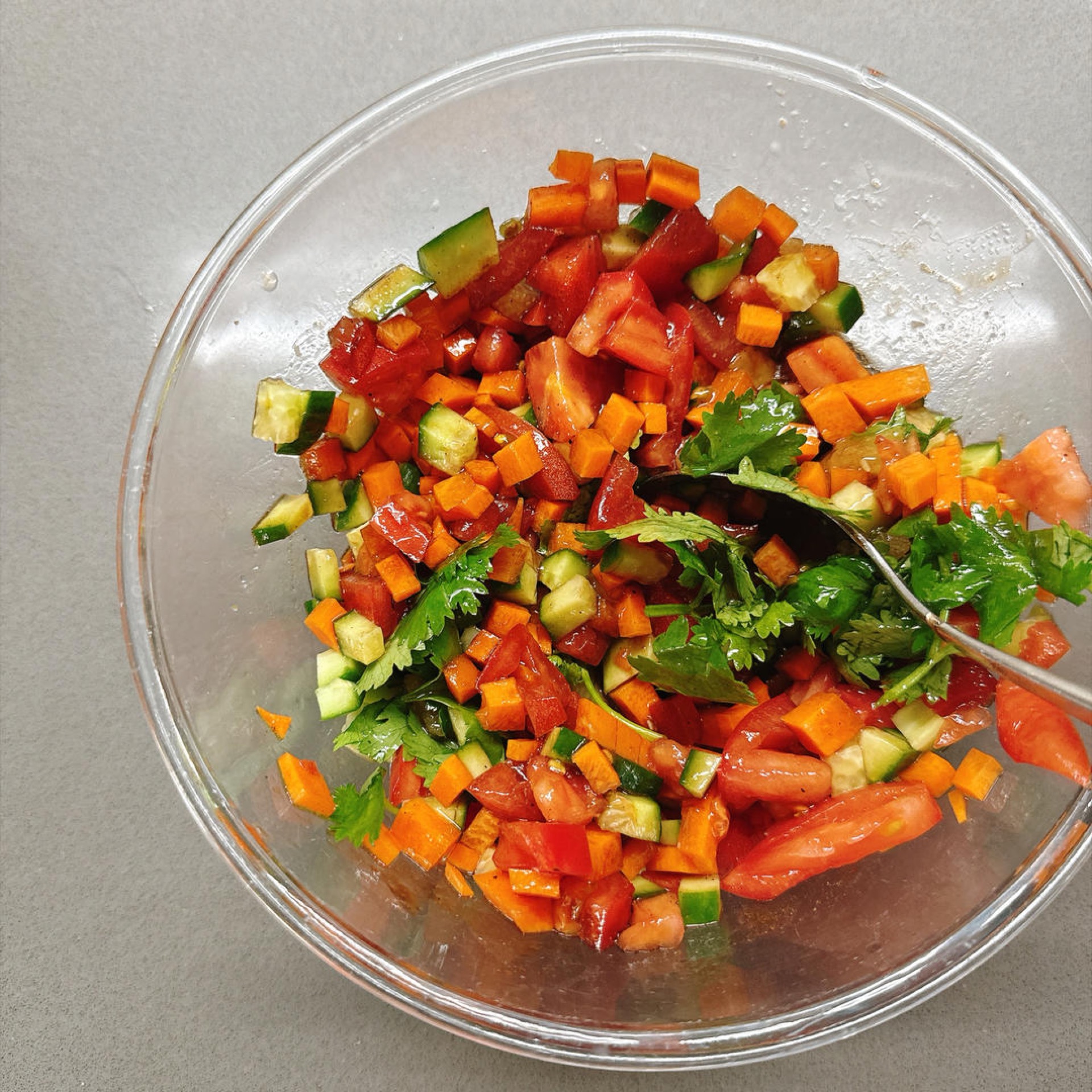
Step 11 — Toss Until Even
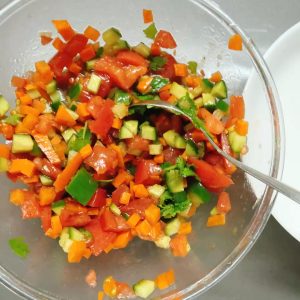
Stir until the dressing is evenly combined.
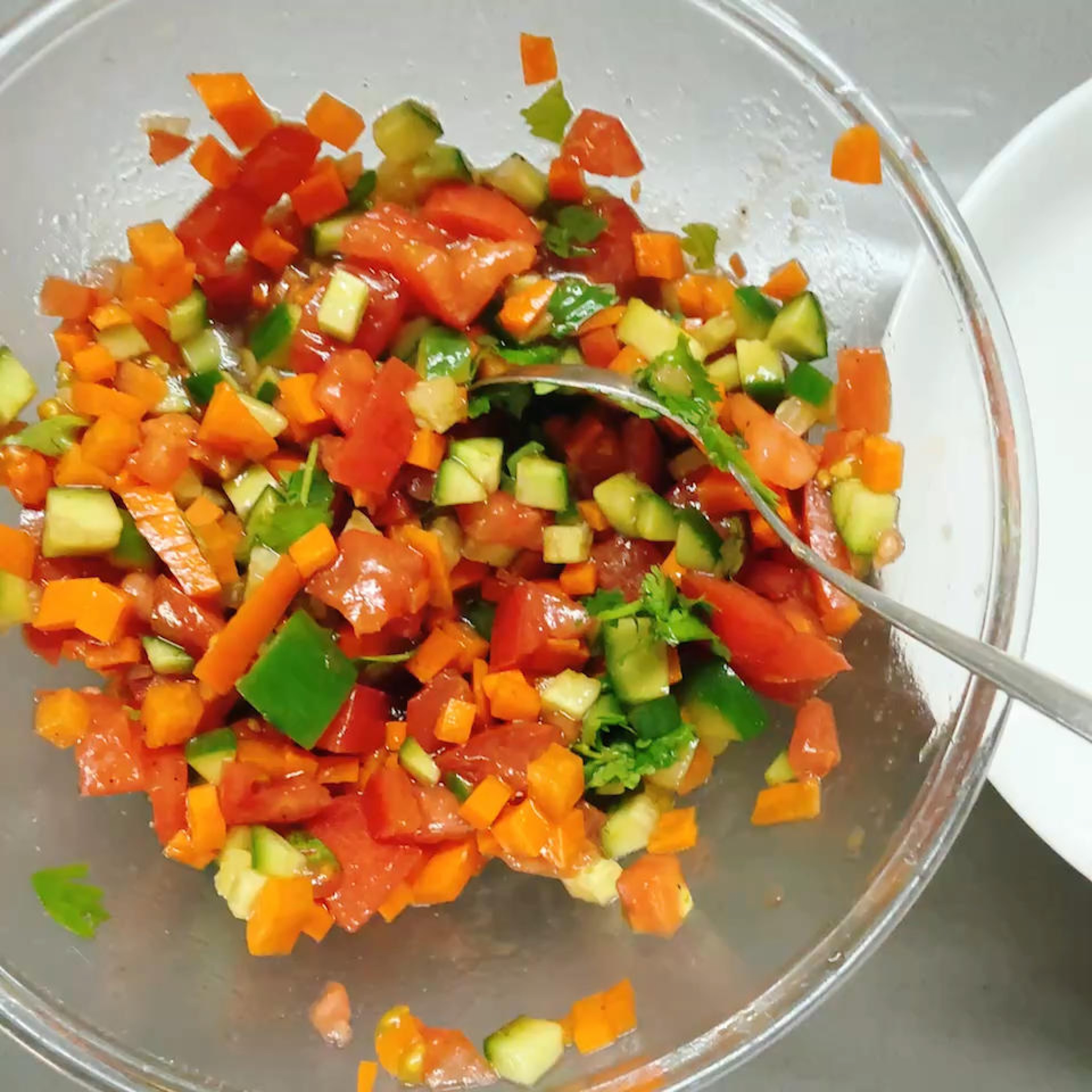
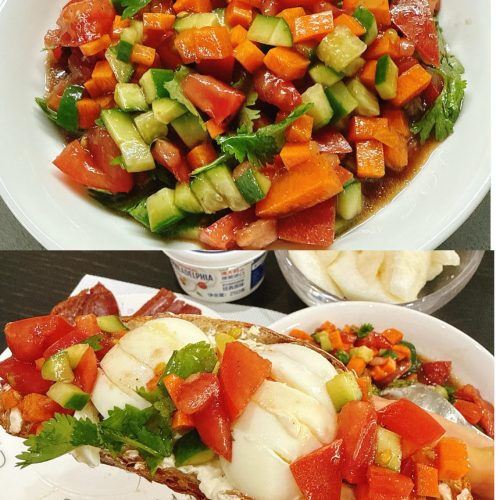
Step 12 — Plate It
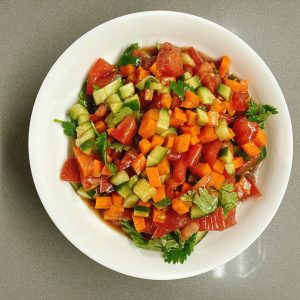
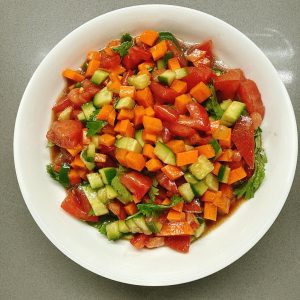
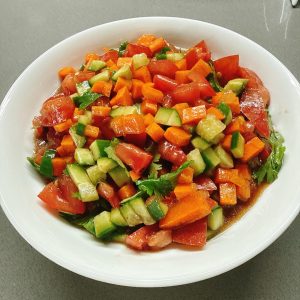
Arrange it on a plate.
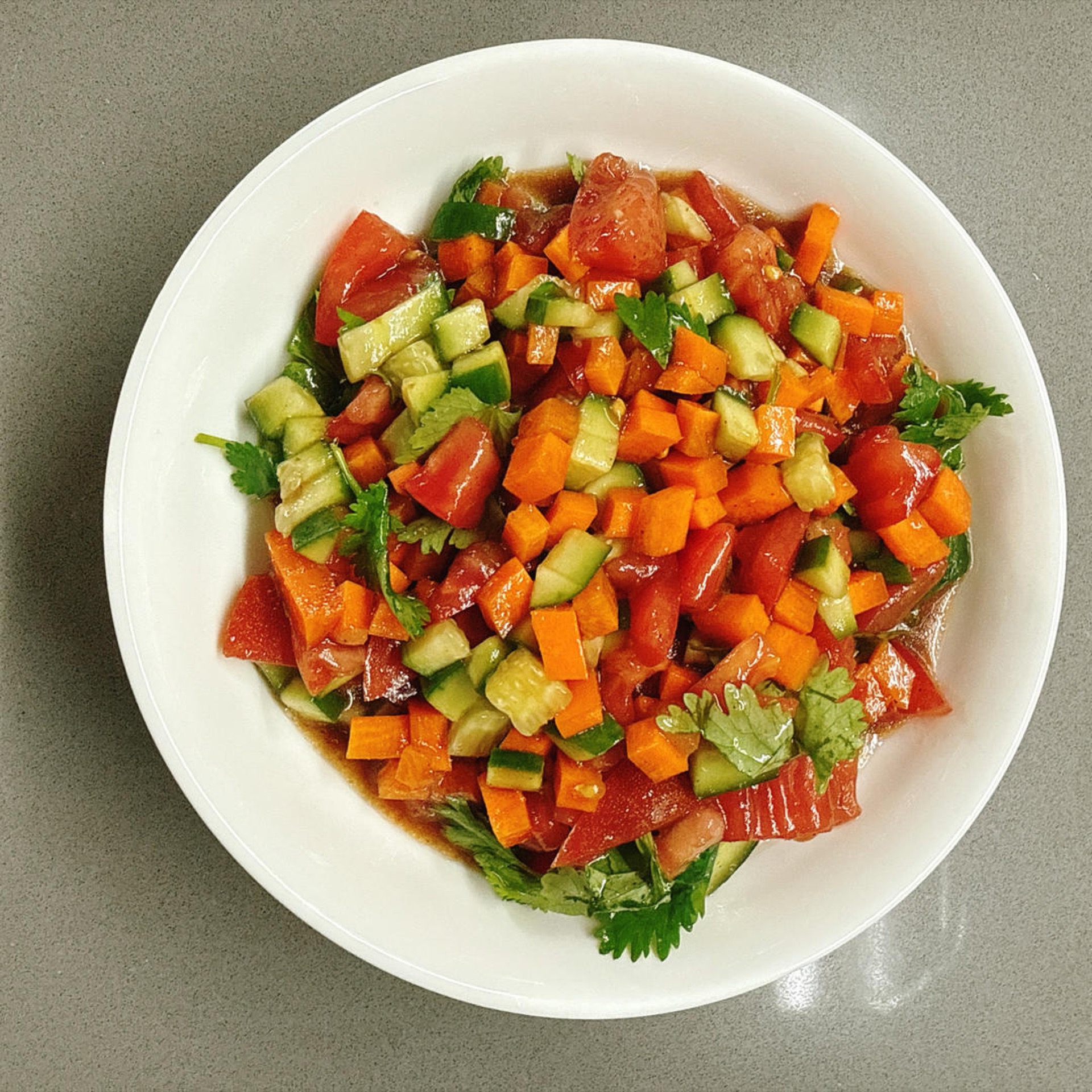
Step 13 — A Quiet Kind of Good
Not all good things are heavy and richly sauced; light and clean has its own strength.
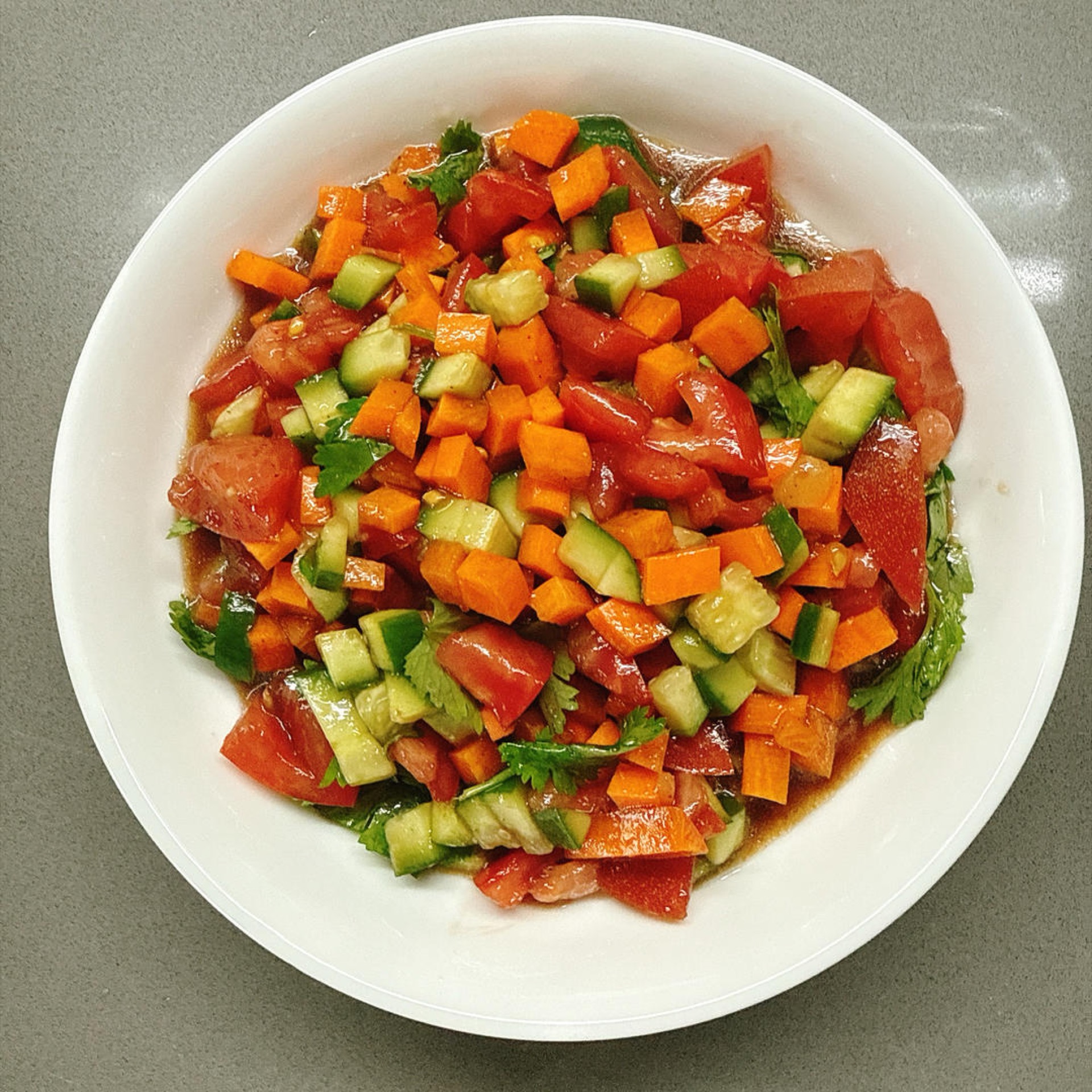
Step 14 — Green Energy
Today’s serving of green energy.
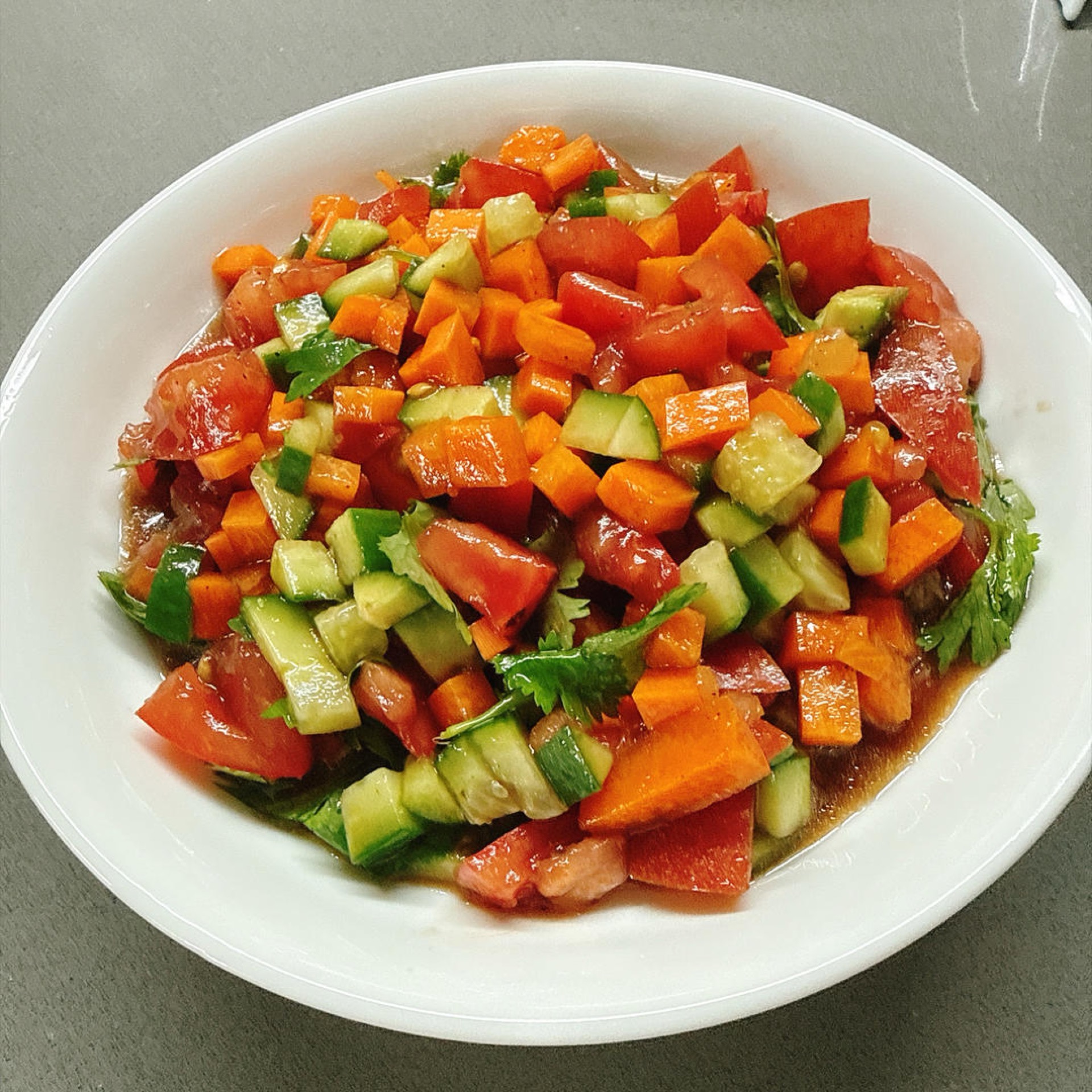
Step 15 — Breakfast Is Served
Starting my breakfast.
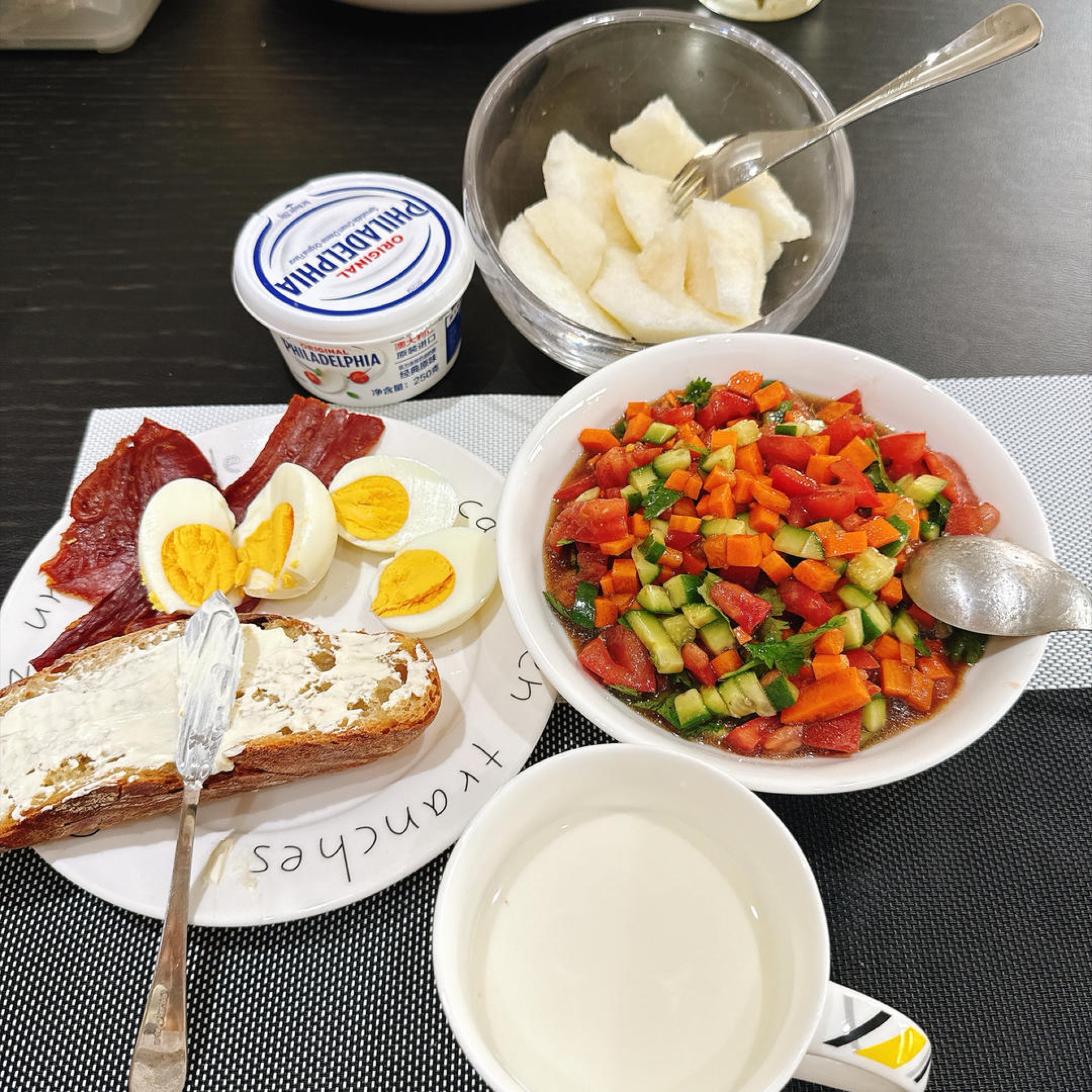
Step 16 — Build the Plate
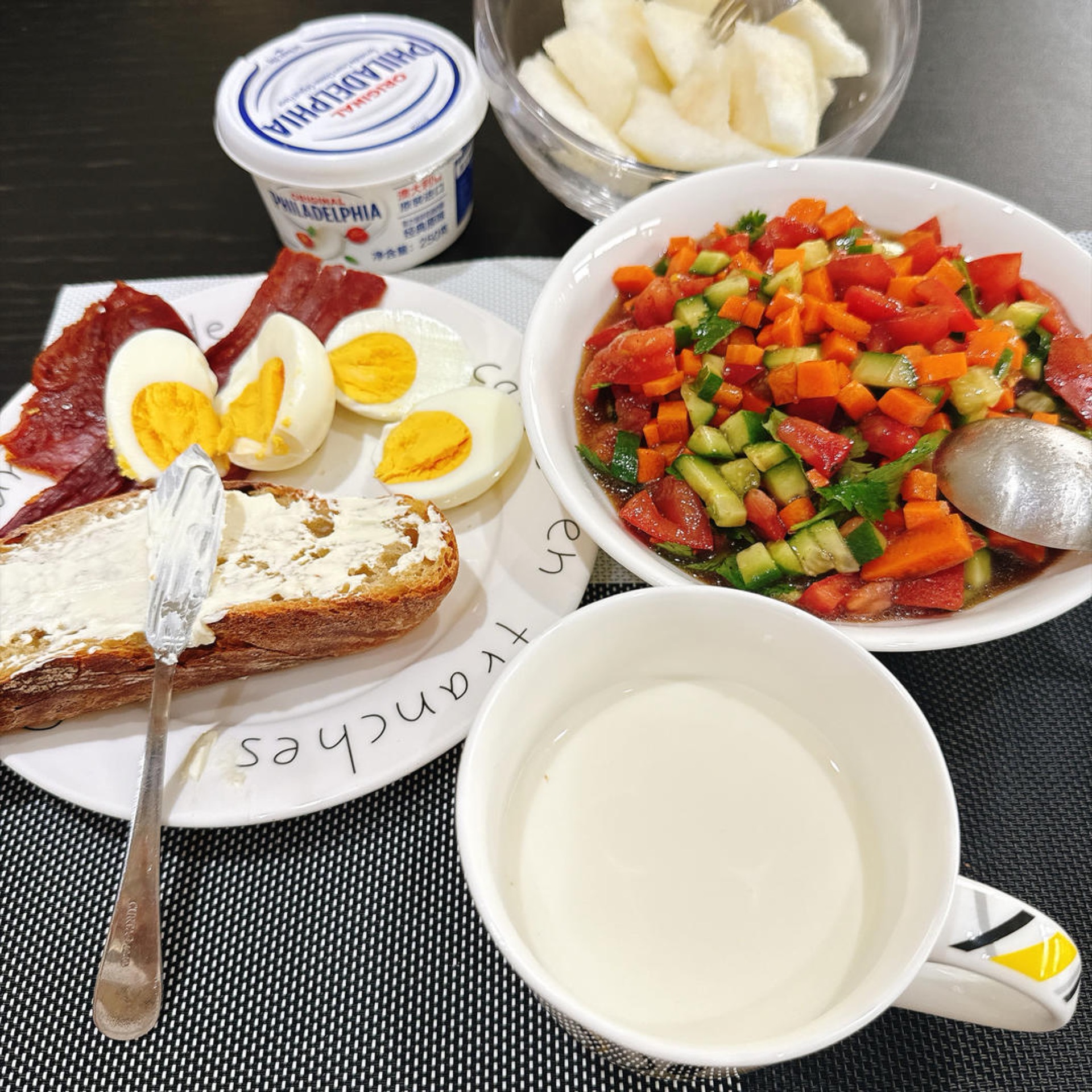
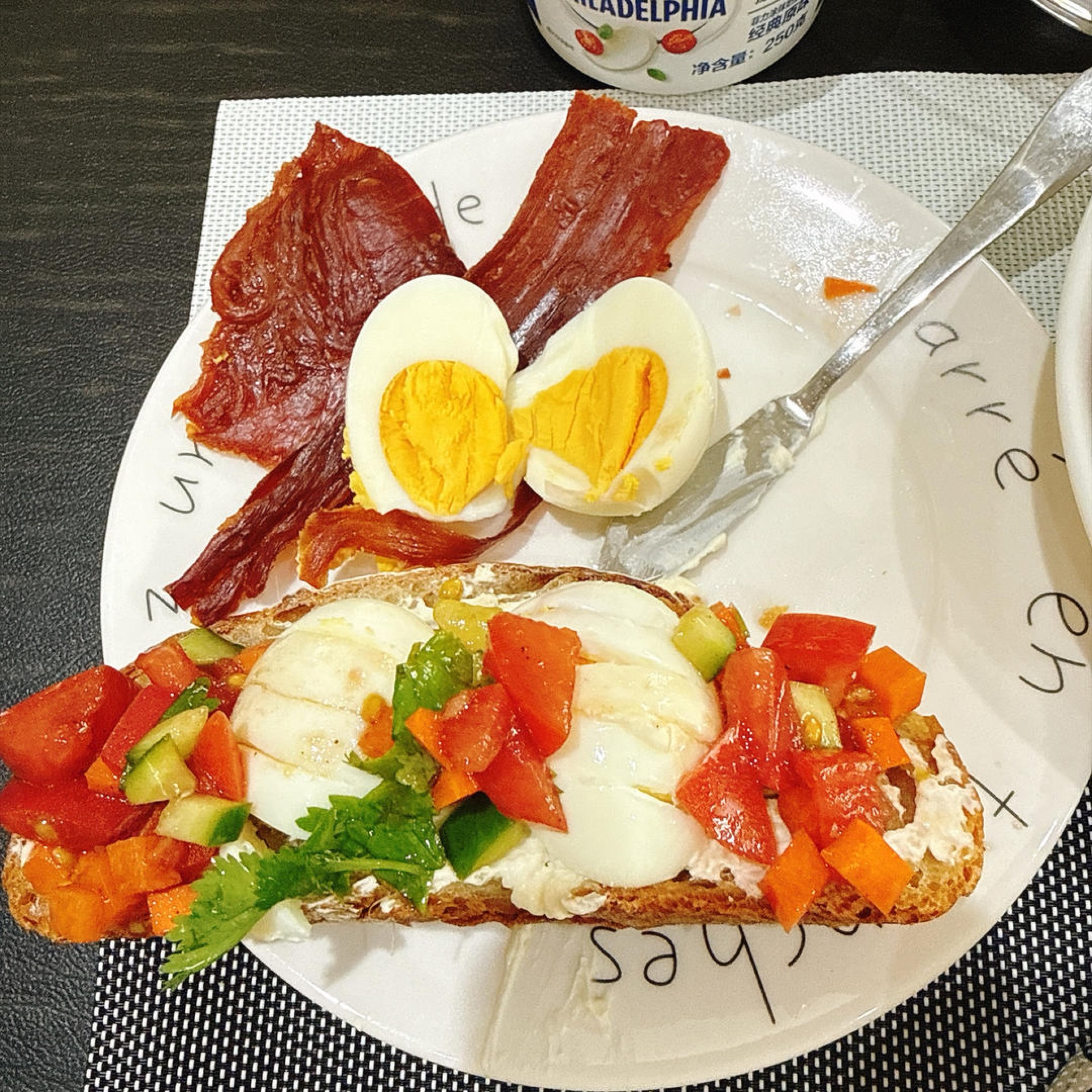
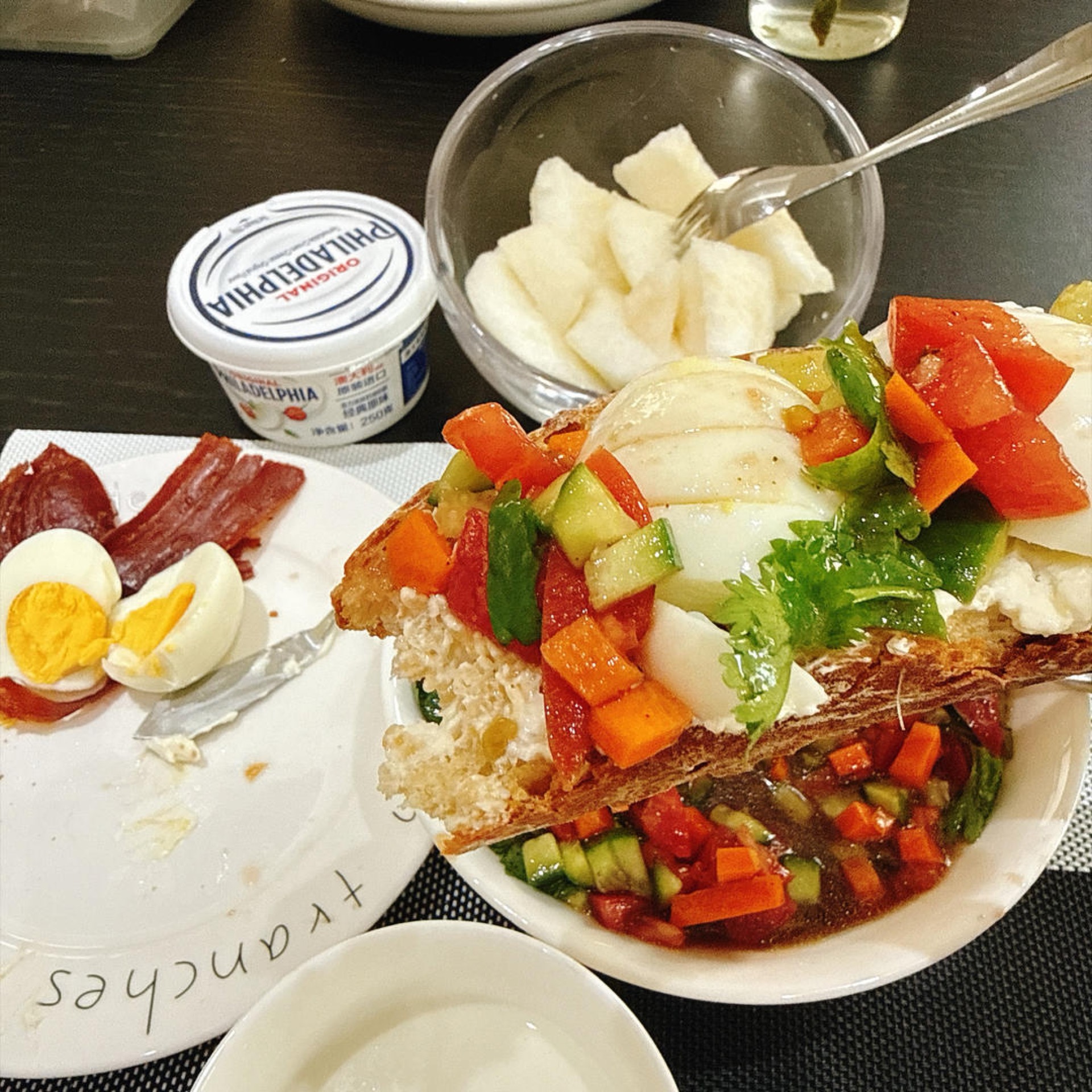
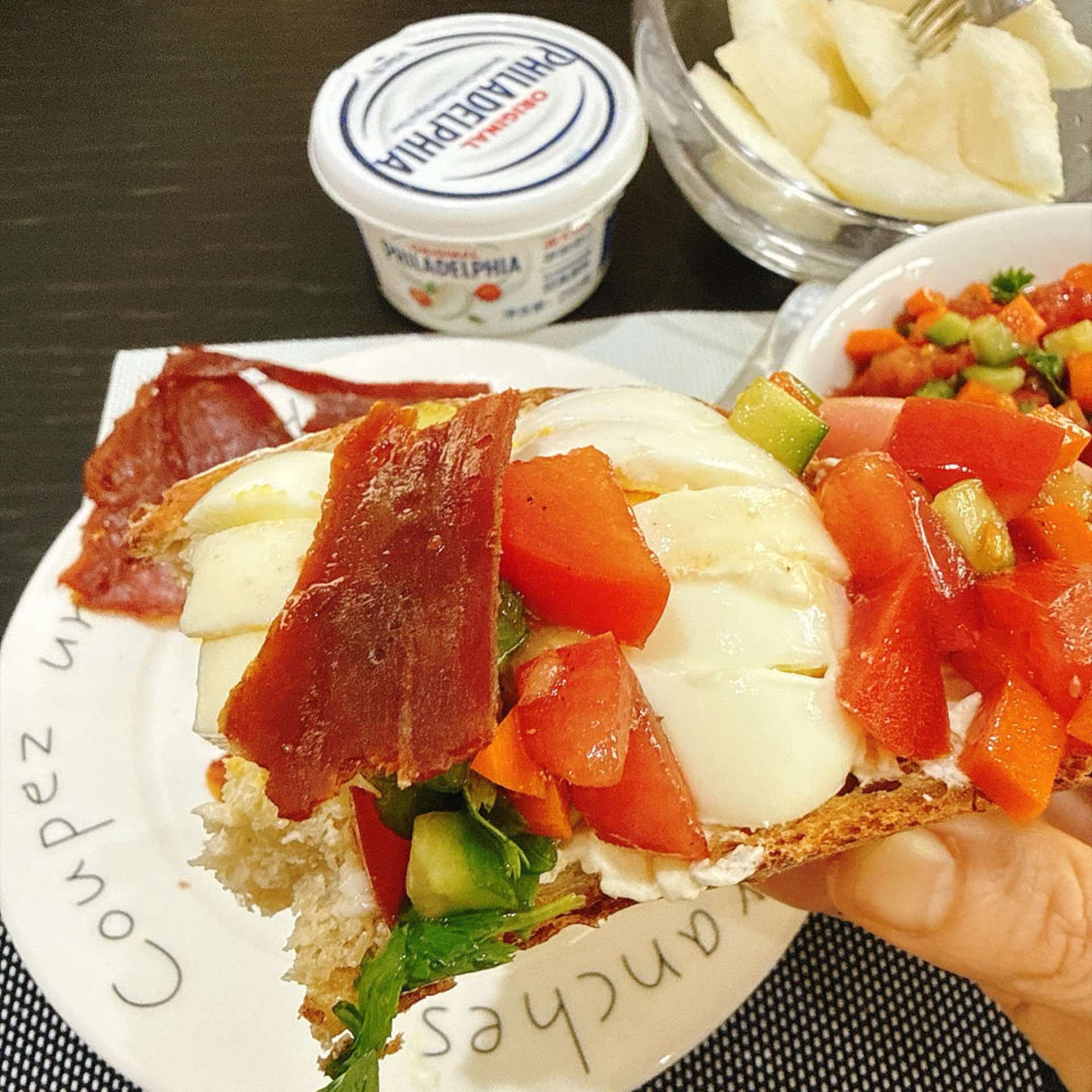
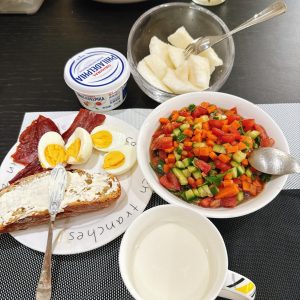
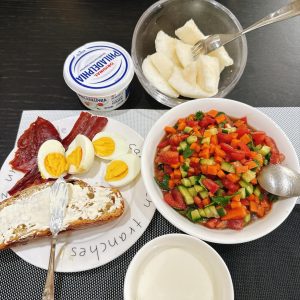
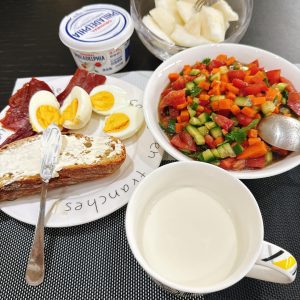
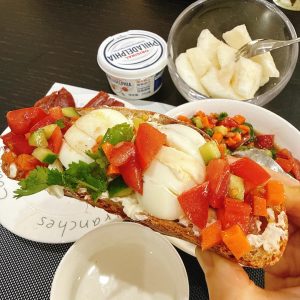
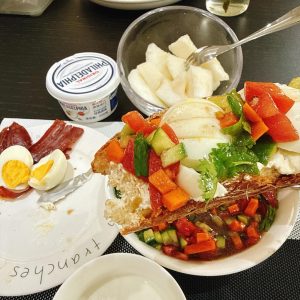
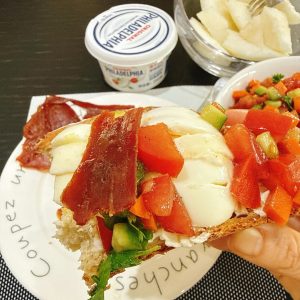
A glass of milk, two eggs, a smear of cream cheese, stacked with egg, a few bites of vegetable salad, and a sprinkle of small dried meat.
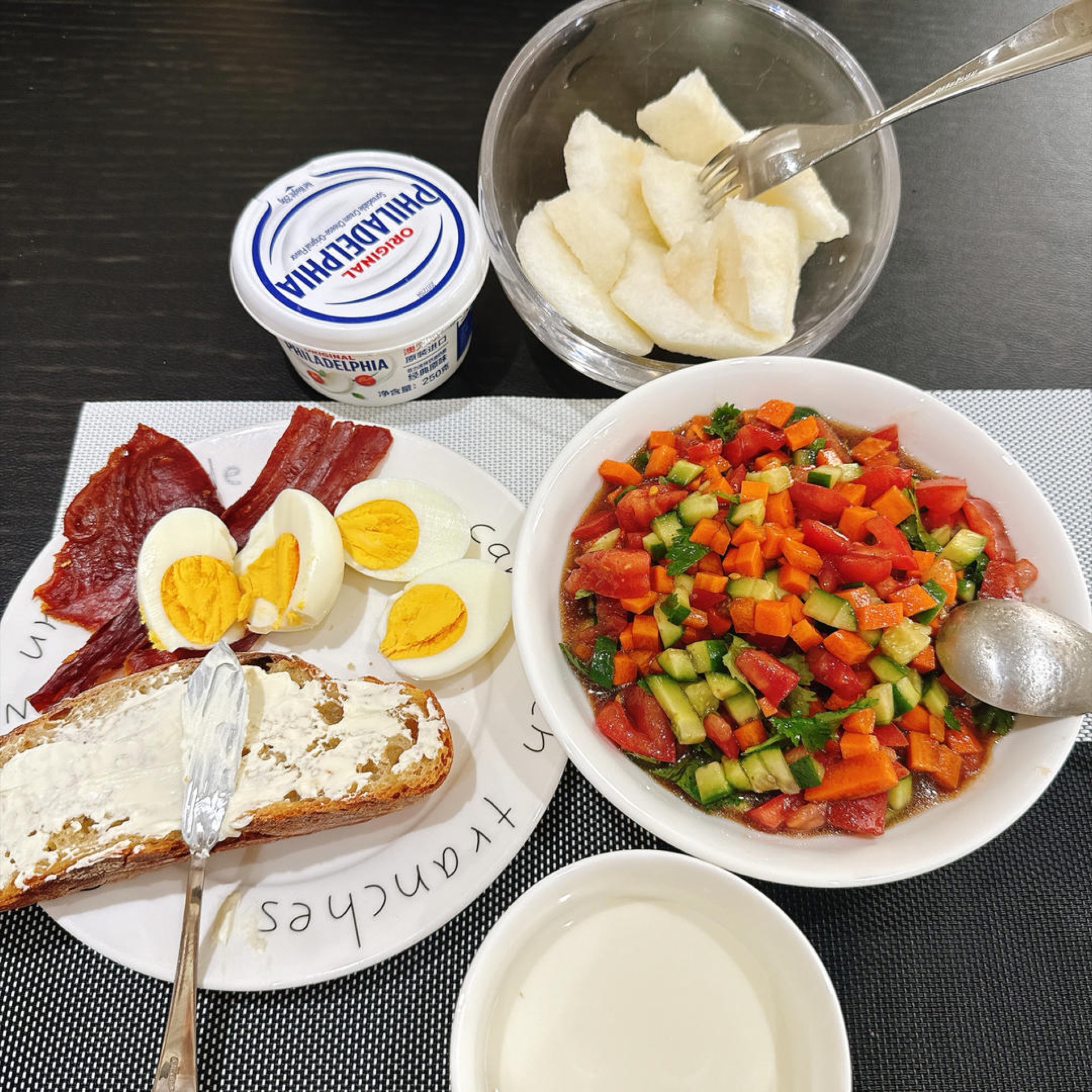
Step 17 — Light and Filling
Refreshing and light, one bowl does it all.
Step 18 — Crisp and Soft
Crunchy and soft, sweet and fragrant.
Step 19 — Bright and Appetizing
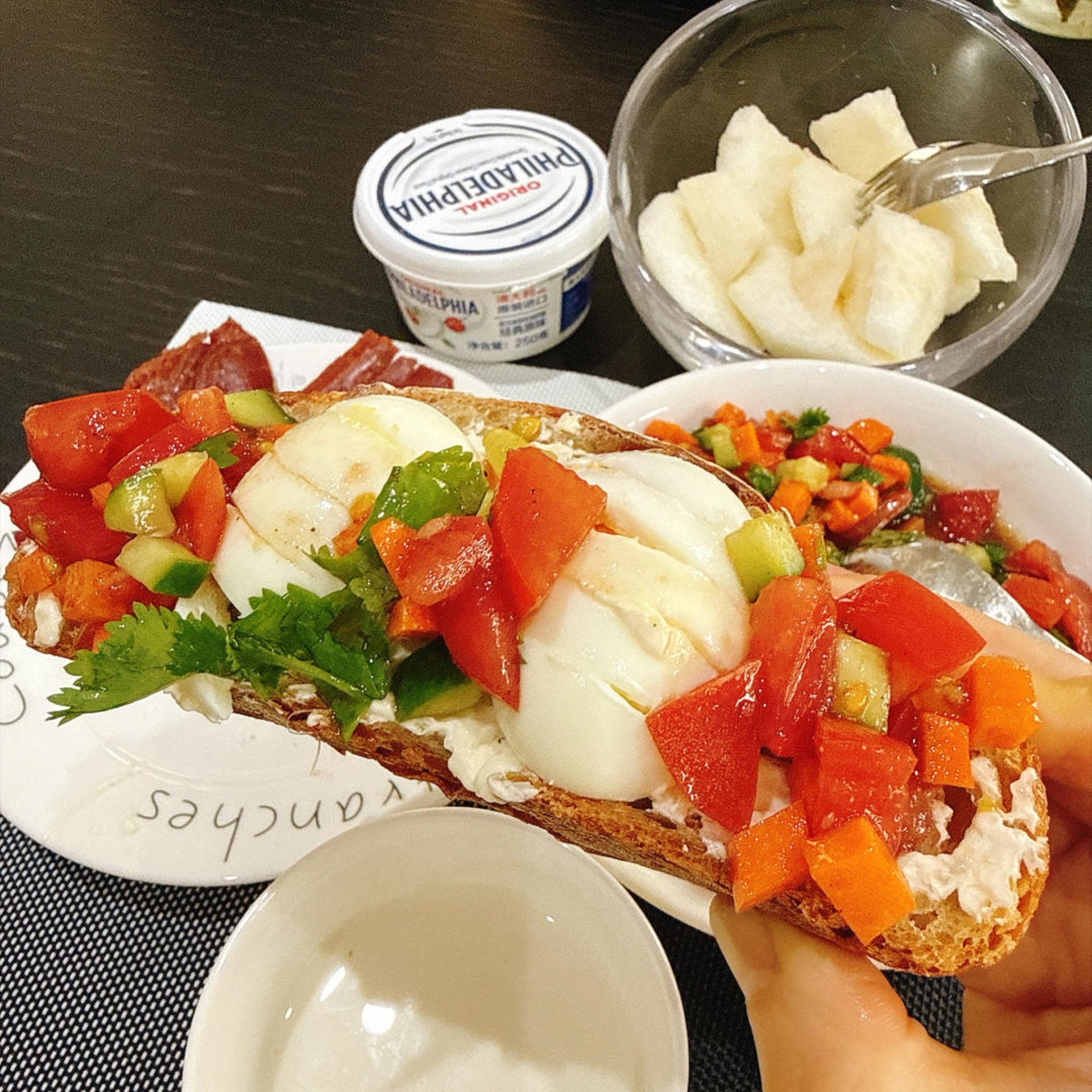
Tangy and appetite-waking, never greasy, never bland.
Step 20 — Fiber and Vitamins
Every bite is fiber and vitamins; you finish without feeling sleepy, your body feels light, and your stomach feels comfortable.
Step 21 — Four Textures
Crisp, soft, sweet, fragrant — four textures in one bite.
Step 22 — Ten Minutes
Ten minutes, and breakfast is yours.
Common Mistakes When Making Chopped Vegetable Salad
These are the problems I see most often, and every one of them has a simple fix.
- Dicing unevenly. If your carrot cubes are 2 cm and your tomato cubes are 5 mm, the small pieces get overwhelmed by dressing and the big ones taste raw and bland. The fix: cut everything to the same 1 cm (½-inch) target, and if a vegetable is much softer than the others, cut it slightly larger so it holds up.
- Not drying the vegetables. Water clinging to the cucumber and tomato dilutes the dressing and makes the bowl soupy within minutes. The fix: spin or pat everything dry before it goes in the bowl, and scoop the seeds out of watery cucumbers and tomatoes.
- Dressing too early. A dressed salad left sitting for an hour will be swimming in liquid, because salt draws water out of the vegetables. The fix: toss 10 to 20 minutes before serving, not before. If you need to prep ahead, keep the vegetables and dressing separate and combine at the last minute.
- Using too much acid. Black vinegar is mild, but lemon juice and rice vinegar are much sharper. Swapping one for the other at the same quantity can make the salad mouth-puckering. The fix: start with 15 g of lemon juice or rice vinegar, taste, and add more if you want it brighter.
- Skipping the sweetener. Without honey or sugar, the dressing tastes flat and harsh, even if the acid level is technically fine. The fix: keep the teaspoon of honey. It is not there to make the salad sweet; it is there to make the vinegar taste round.
- Cutting with a dull knife. A dull blade bruises cucumber and tomato, releasing water and turning the edges mushy. The fix: sharpen before you start, or at minimum use a serrated knife on the tomato so you are slicing rather than crushing.
- Adding avocado too early. Avocado is delicious here, but it browns and breaks down quickly once dressed. The fix: fold it in gently at the very end, right before serving.
Variations
The formula is flexible, so treat these as starting points rather than rules.
Summer stone-fruit version. Swap the tomato for diced peach or nectarine and add a handful of torn mint instead of cilantro. The sweetness plays beautifully against black vinegar.
Crunchy root version. Use carrot, daikon, jicama, and red bell pepper, all diced small. This one holds up better if you need to make it an hour ahead, since root vegetables release far less water.
Sesame version. Replace half the olive oil with toasted sesame oil and finish with toasted sesame seeds. The flavor shifts toward a classic northern Chinese cold dish, and it is excellent alongside hot and sour shredded potatoes.
Corn and avocado version. Cooked corn kernels, diced avocado, cherry tomato, and red onion, dressed the same way. This one is closer to a Western chopped salad but keeps the Chinese vinegar backbone.
Protein-boosted version. Add shredded poached chicken, cubed firm tofu, or a handful of cooked edamame to turn it from a side into a full lunch.
Less-sweet version. Drop the honey entirely and add an extra pinch of salt. This is closer to how the dish is eaten as a palate cleanser between courses.
Frequently Asked Questions
Can I make this chopped vegetable salad ahead of time? Yes, but keep the components separate. Dice the vegetables, store them in an airtight container in the refrigerator for up to 24 hours, and whisk the dressing in a jar. Toss 10 to 20 minutes before serving. A fully dressed salad will still be edible the next day, but the vegetables will have softened and the bowl will have collected liquid.
What can I use instead of black vinegar? Fresh lemon juice is the closest in brightness, followed by rice vinegar. Balsamic vinegar works in a pinch but is sweeter and darker, so reduce the honey slightly. If you want to keep the Chinese flavor profile, Chinkiang vinegar is worth seeking out at an Asian grocery — it is inexpensive and lasts for years.
Is this salad good for meal prep? It is excellent for it, with one caveat: pack the dressing separately. Layer the firmest vegetables at the bottom of the container and the softest, plus any herbs, on top. Avocado should be added the day you eat it.
How do I keep it from getting watery? Three habits: scoop the seeds out of cucumbers and tomatoes, dry everything thoroughly after washing, and dress at the last minute. Salting the cucumber and letting it drain for 15 minutes before dicing is another good trick if you have the time.
Can I add meat or cheese? Absolutely. Shredded poached chicken, diced ham, crumbled feta, or small dried meat all work. Just remember that anything salty will change the balance, so taste the dressing before you toss and consider holding back a pinch of salt.
How to Serve
This salad is at its best as part of a larger table. In a Chinese-style meal, serve it as one of several cold and hot dishes, where its job is to cut through richer flavors. It sits happily next to a braise, a stir-fry, and a bowl of steamed rice — and if you want a reliable rice method, this guide to how to cook rice in a cast iron pot is the one I use most.
For breakfast, it is the vegetable half of a plate that also includes eggs, toast, and a glass of milk — exactly how I ate it the morning I photographed it. For lunch, pile it next to a piece of leftover protein or fold it into a wrap.
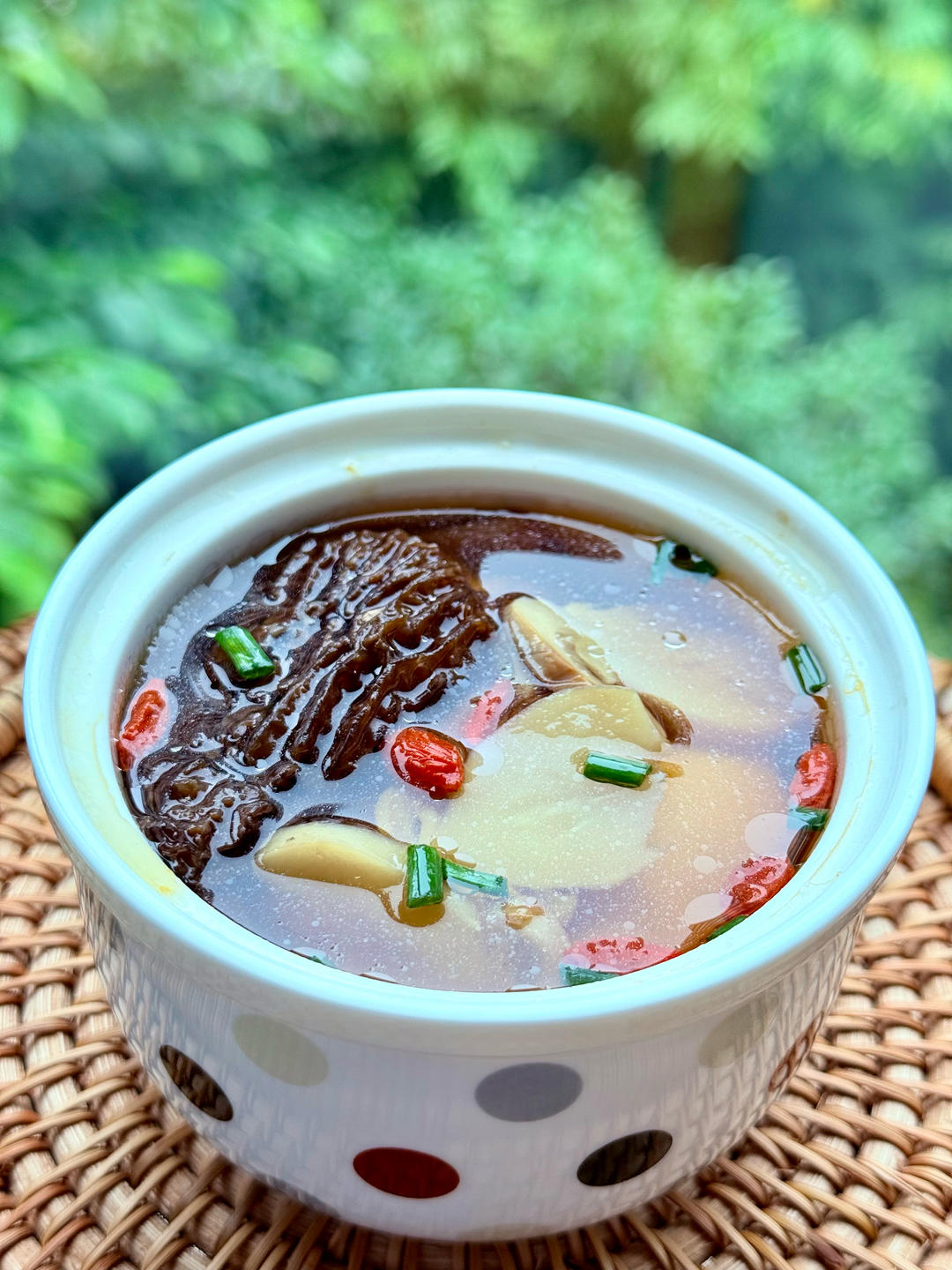
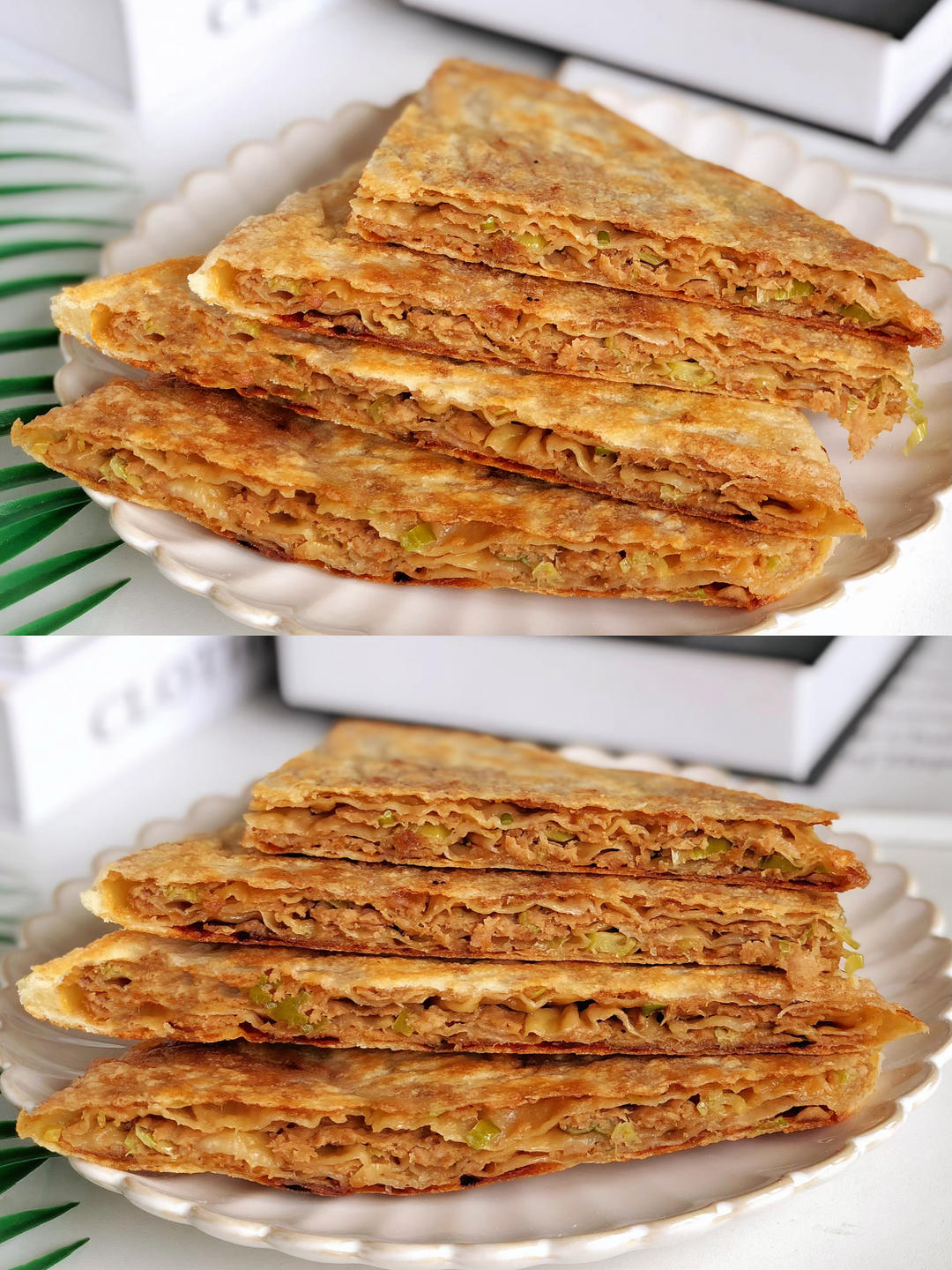
If you are building a cold-dish spread, it pairs naturally with a Nanchang clay pot soup with minced pork and egg for a warming counterpoint, and it is a fine companion to a thousand-layer meat pie when you want something crisp and flaky alongside.

Storage & Reheat
This is a cold dish, so there is no reheating — and honestly, it should not be reheated, since heat will collapse the texture entirely.
Undressed vegetables: Store in an airtight container in the refrigerator for up to 3 days. Keep the herbs separate if you can, since chopped cilantro loses its perfume quickly.
Dressing: Whisked dressing keeps in a sealed jar in the refrigerator for up to 5 days. It will separate — that is normal. Shake or whisk before using.
Dressed salad: Best eaten within a few hours. If you must keep it, refrigerate in a sealed container for up to 24 hours. Expect the vegetables to be softer and the bowl to contain liquid; drain that off before serving rather than stirring it back in.
Do not freeze this salad. Cucumber and tomato turn to mush when frozen and thawed, and the dressing will separate irreversibly.
Allergen Notice
This recipe as written contains none of the eight major allergens: no wheat, no dairy, no egg, no soy, no peanut, no tree nut, no fish, and no shellfish. It is naturally gluten-free and vegan, provided your vinegar and any added condiments are certified gluten-free.
Two things to watch. First, if you substitute light soy sauce for the salt, you introduce soy and usually wheat — use tamari or a certified gluten-free soy sauce if that matters to you. Second, some aged vinegars and bottled dressings contain sulfites, which can affect sensitive individuals. Always read the label on anything you add.
Nutrition Disclaimer
Nutrition information is calculated using an ingredient database and should be considered an estimate. In cases where multiple ingredient alternatives are given, the first listed is calculated for nutrition. Garnishes and optional ingredients are not included.
About the Author & Recipe Development
Hi, I’m Lin — I grew up cooking Chinese food at home and now I write about it here at Woks of Love, where the goal is simple: recipes that taste like the ones made in home kitchens, explained clearly enough that you can make them on a weeknight.
This particular recipe came out of a real breakfast. I had a tomato, a carrot, half a cucumber, and a bunch of cilantro in the fridge, and I wanted something fresh to sit next to eggs and toast. What I ended up with was so good that I made it four more times that week, adjusting the vinegar, cutting back the honey, and finally settling on the version you see here. It is one of those dishes that is barely a recipe at all — more a ratio and a habit — and that is exactly why I wanted to write it down.
If you make it, tell me what you put in yours. The best version of this salad is always the one built from what is already in your kitchen.
Authoritative References
For food safety guidance on raw produce and cold storage, see the FDA guidance on selecting and serving fresh fruits and vegetables safely. For refrigeration temperatures and storage times for prepared foods, the FoodSafety.gov cold food storage chart is the reference I check most often.
Chopped Vegetable Salad (蔬菜碎色拉): Fresh Crunchy Veggies in Tangy

Equipment
- Chef’s knife
- Cutting Board
- Large Mixing Bowl
- Small whisk or fork
- Salad spinner (optional)
Ingredients
For the Salad
- 500 g mixed vegetables and fruit tomato, carrot, cucumber, and cilantro used here; about 4 cups diced
For the Dressing
- 20 g olive oil about 1½ tbsp
- 20 g black vinegar or fresh lemon juice, about 1½ tbsp
- 1 tsp salt or light soy sauce
- 2 pinch black pepper freshly ground
- 1 tsp honey or sugar
Instructions
- I used whatever I had in the fridge: tomato, carrot, cucumber, and cilantro, though plenty of other things work too, such as cooked corn kernels, apple, avocado, bell pepper, pear, or peach.

- Cut everything into small dice.
- Add them to a large bowl.
- Add 20 grams of olive oil.
- Add 20 grams of black vinegar or lemon juice.
- Add 1 teaspoon of salt; I used Japanese clear soy sauce, but anything that adds saltiness works.
- Add 2 small pinches of ground black pepper.
- Add 1 spoonful of honey.
- If you do not have honey, you can use sugar instead.
- Mix everything together.
- Stir until the dressing is evenly combined.
- Arrange it on a plate.
- Not all good things are heavy and richly sauced; light and clean has its own strength.
- Today’s serving of green energy.
- Starting my breakfast.
- A glass of milk, two eggs, a smear of cream cheese, stacked with egg, a few bites of vegetable salad, and a sprinkle of small dried meat.
- Refreshing and light, one bowl does it all.
- Crunchy and soft, sweet and fragrant.
- Tangy and appetite-waking, never greasy, never bland.
- Every bite is fiber and vitamins; you finish without feeling sleepy, your body feels light, and your stomach feels comfortable.
- Crisp, soft, sweet, fragrant — four textures in one bite.
- Ten minutes, and breakfast is yours.













Leave a Reply