Growing up in Sichuan, the kitchen was the heart of our home. While electric rice cookers are ubiquitous in modern Asian households, my father—a chef with decades of experience—always taught me that a true cook must master the stovetop.

There is a unique magic to cooking rice in a heavy cast iron pot. It reminds me of the traditional clay pot rice (bao zai fan) we used to eat on the streets of Chengdu. The heat is intense and even, creating a texture that is distinct: soft and glutinous, yet with individual grains that hold their shape.
Plus, if you time it right, you get the golden prize at the bottom: Guoba (crispy scorched rice).
Why This Recipe Works
- Energy Efficient: Thanks to the incredible heat retention of cast iron, you only actively cook the rice on low heat for 3 minutes. The rest is done by residual heat.
- Superior Texture: The heavy lid creates a micro-pressure environment, forcing moisture into the grains for a plump, soft texture.
- Crispy Bottom Option: Unlike standard rice cookers, this method allows you to easily create a crispy, savory crust.
What is Cast Iron Rice?
Cast iron rice is simply the absorption method of cooking rice, but optimized for heavy-duty cookware like an enameled Dutch oven (e.g., Le Creuset or Staub).
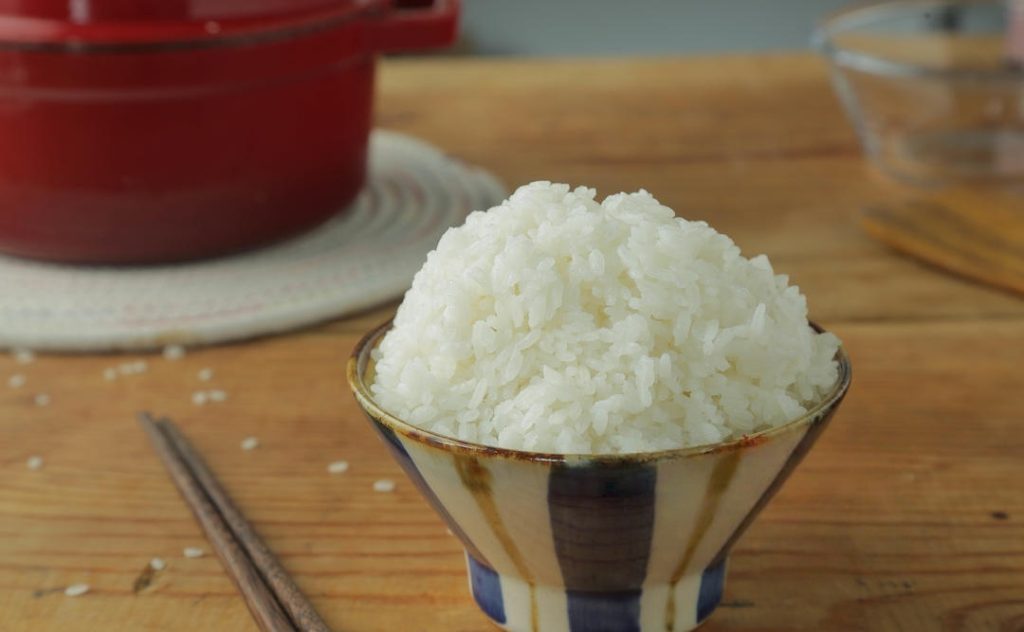
In a professional Chinese kitchen, we value “Wok Hei” (breath of the wok), but for rice, we value “Men” (焖). This technique involves simmering with a tight lid to let the steam do the work. Because cast iron holds heat so well, it mimics the stone and clay pots of ancient China better than a thin stainless steel saucepan ever could.
Test Kitchen Notes: Cast Iron vs. Stainless Steel vs. Rice Cooker
I have tested this specific method extensively. Here is why the vessel matters:
- Cast Iron (Recommended): The heavy lid seals in steam, and the thick walls hold heat for the 10-minute resting period. This is crucial for this specific “3-minute simmer” recipe.
- Stainless Steel Pot: These lose heat too quickly. If you use stainless steel, you must simmer for 15-20 minutes, not 3 minutes.
- Rice Cooker: Consistent and hands-off, but it takes 45+ minutes and rarely produces a good crispy bottom unless it has a specific setting.
Key Ingredients & Equipment
- Rice: The recipe calls for 250g of rice. Short-grain or medium-grain white rice works best for this “soft and sticky” texture. If you use Jasmine rice (long-grain), the texture will be slightly fluffier.
- Water: 250g of water. We use a precise 1:1 ratio by weight.
- Chef’s Tip: If you buy premium rice (expensive, high-quality grains), I strongly recommend using filtered or purified water (soft water). I have run blind taste tests in my kitchen, and purified water truly yields a sweeter, cleaner flavor than tap water.
- The Pot: A heavy cast iron pot (Dutch oven) with a tight-fitting lid.
- Note: My pot has small spikes or nodules on the underside of the lid. This design allows steam to condense and drip back down evenly onto the rice (like rain), rather than running down the sides. This makes it very water-efficient.
Recipe Notes Before You Start
- Ratio is Key: This recipe uses a 1:1 ratio of rice to water by weight. If you don’t have a scale, you can use a volume measurement (1 cup rice to 1 cup water), but weight is always more accurate.
- Don’t Peek: Once the lid goes on, do not lift it until the resting time is over. Losing that steam will ruin the rice.
- The “Guoba” Option: If you love crispy rice, you will need to extend the cooking time slightly (details in the instructions).
Mise en Place / Prep
Get your pot ready and your scale out. This process moves fast once the water boils.
- Weigh: Measure out your rice and water.
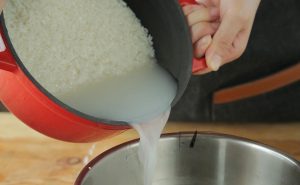
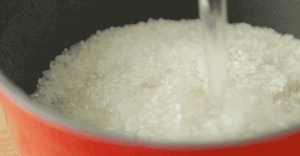
- Wash: Unless you are using “no-wash” (musenmai) rice, you must rinse your rice.
- Why? Rinsing removes excess surface starch. If you don’t rinse, the rice can become gummy and gluey rather than distinct and soft.
- Eco Tip: Don’t throw away the cloudy rice water! It is full of nutrients and is excellent for watering your house plants or washing dishes (it cuts through grease).
How to Cook Rice in Cast Iron
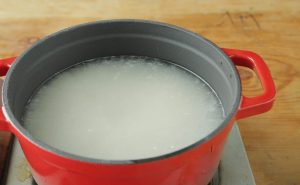
- Combine: Place the 250g of rice into your cast iron pot. Rinse it as described above, drain, and then add the 250g of fresh, purified water.
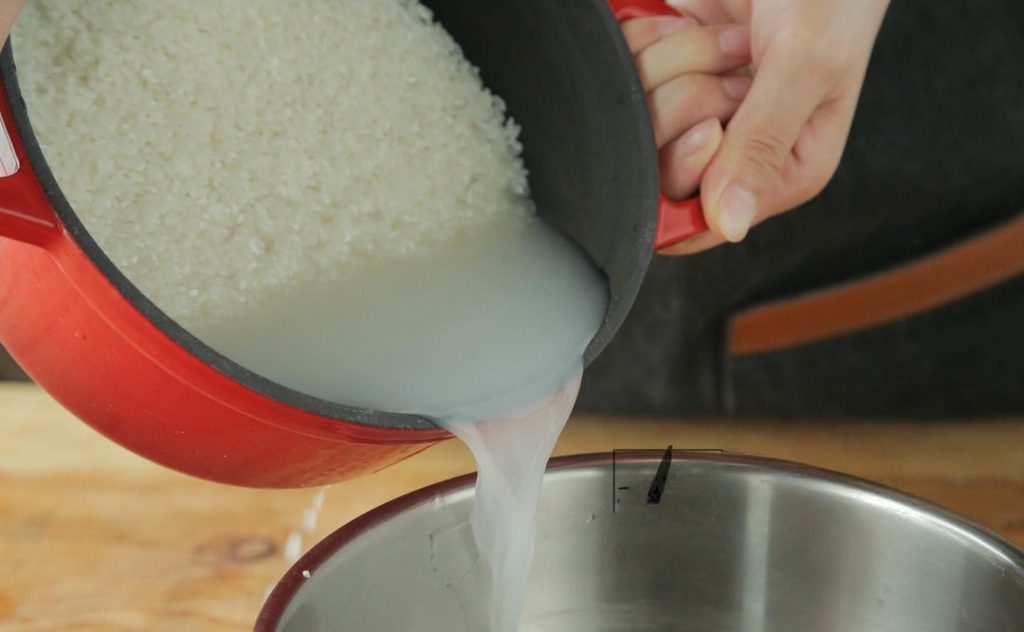
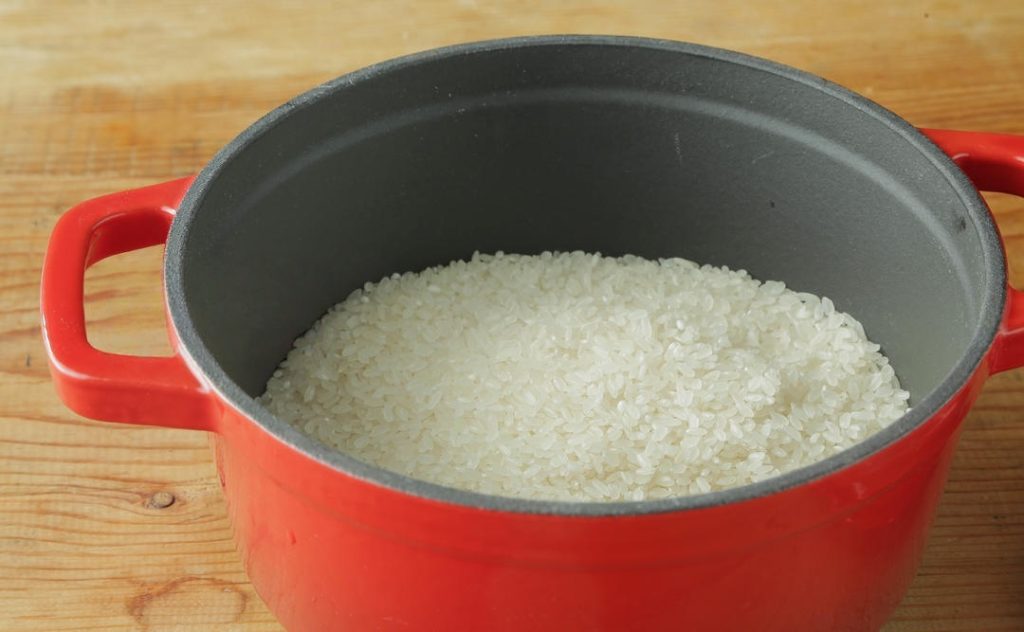
- Boil: Turn the stove to high heat. Leave the lid off for now.
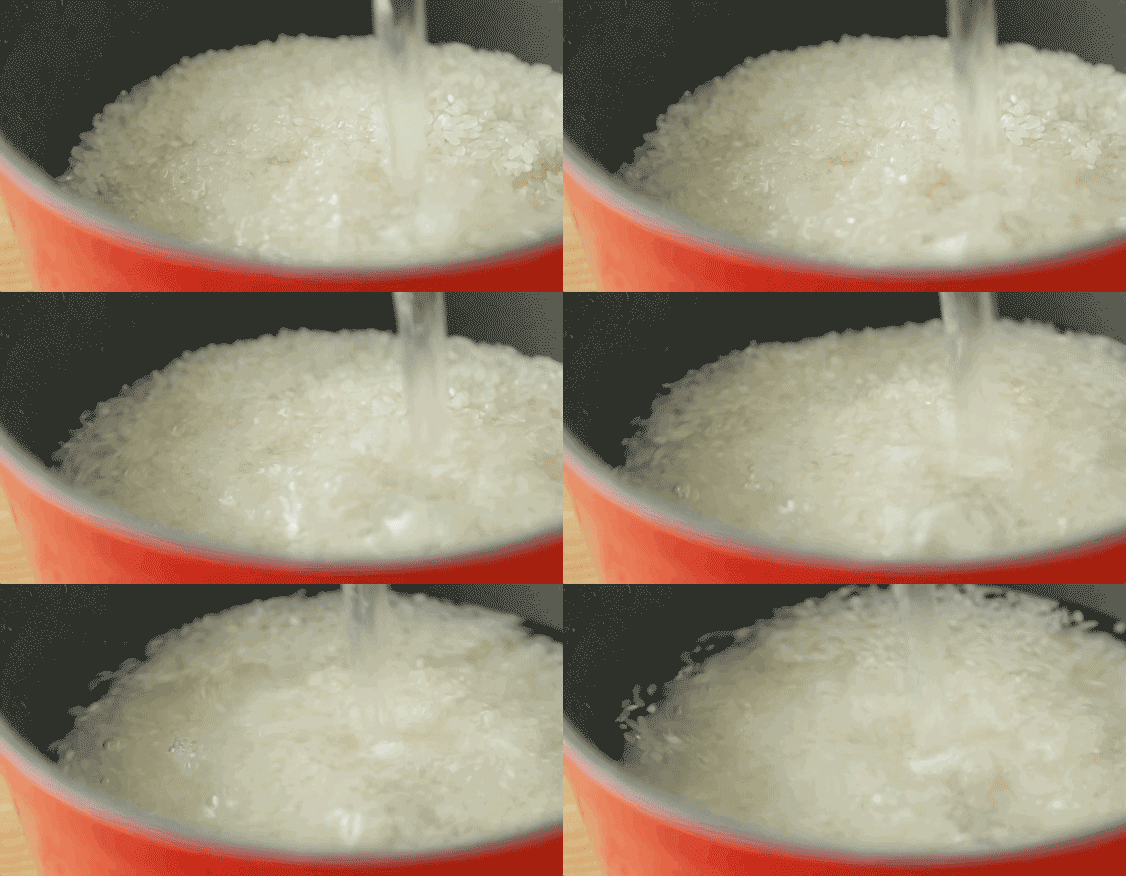
- Stir: As the water approaches a boil, use a spatula to gently stir the rice from the bottom.
- Why? Rice releases starch as it heats up. If you don’t stir it right before it boils, grains may stick to the bottom and burn before they cook.
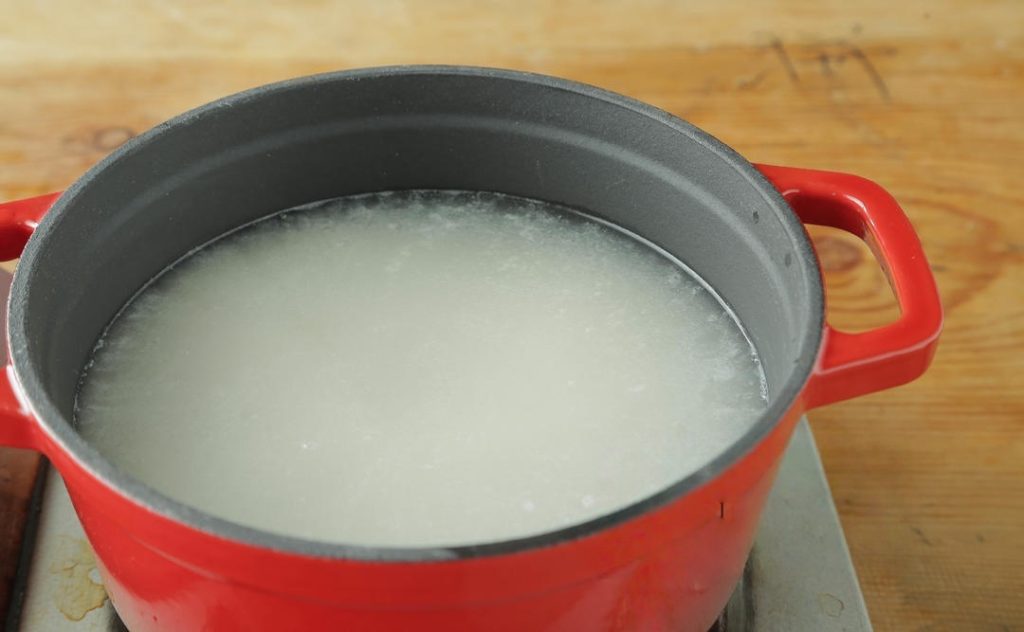
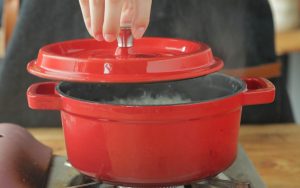
- Cover and Simmer: Once the water reaches a full rolling boil, immediately cover the pot with the heavy lid. Turn the heat down to the lowest possible setting.
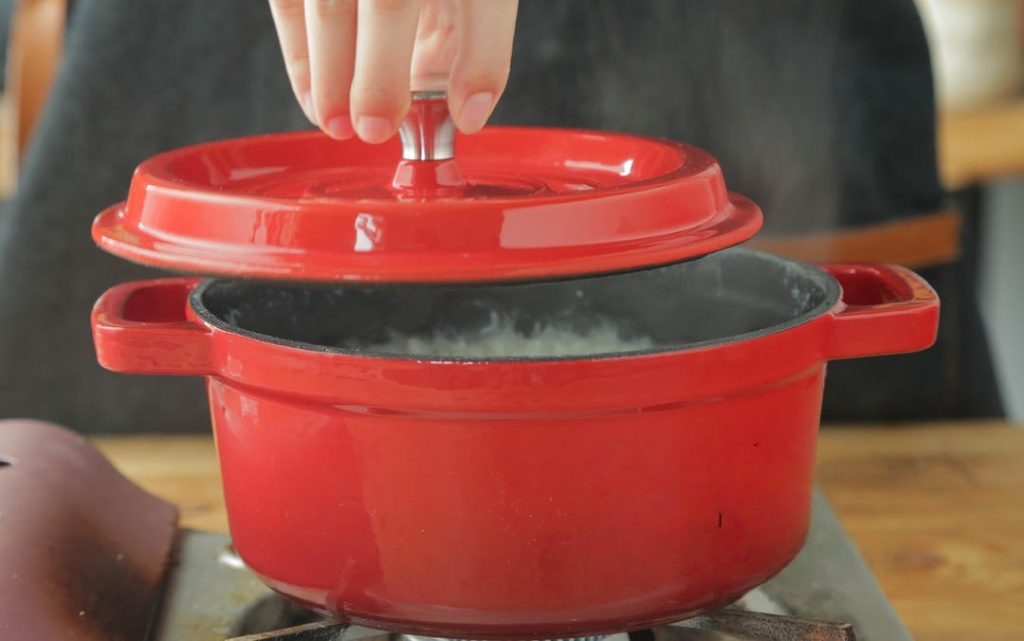
- The 3-Minute Count: Cook on low heat for exactly 3 minutes.
- For Crispy Rice (Guoba): If you want that delicious crunchy crust, extend this time by 2 minutes (5 minutes total on low).
- The Rest: After 3 minutes, turn the heat off. Do not open the lid. Let the pot sit undisturbed on the burner for 10 minutes.
- Why? The cast iron retains so much heat that the rice continues to steam-cook. This “Men” (焖) technique ensures the rice is fully cooked without burning energy.
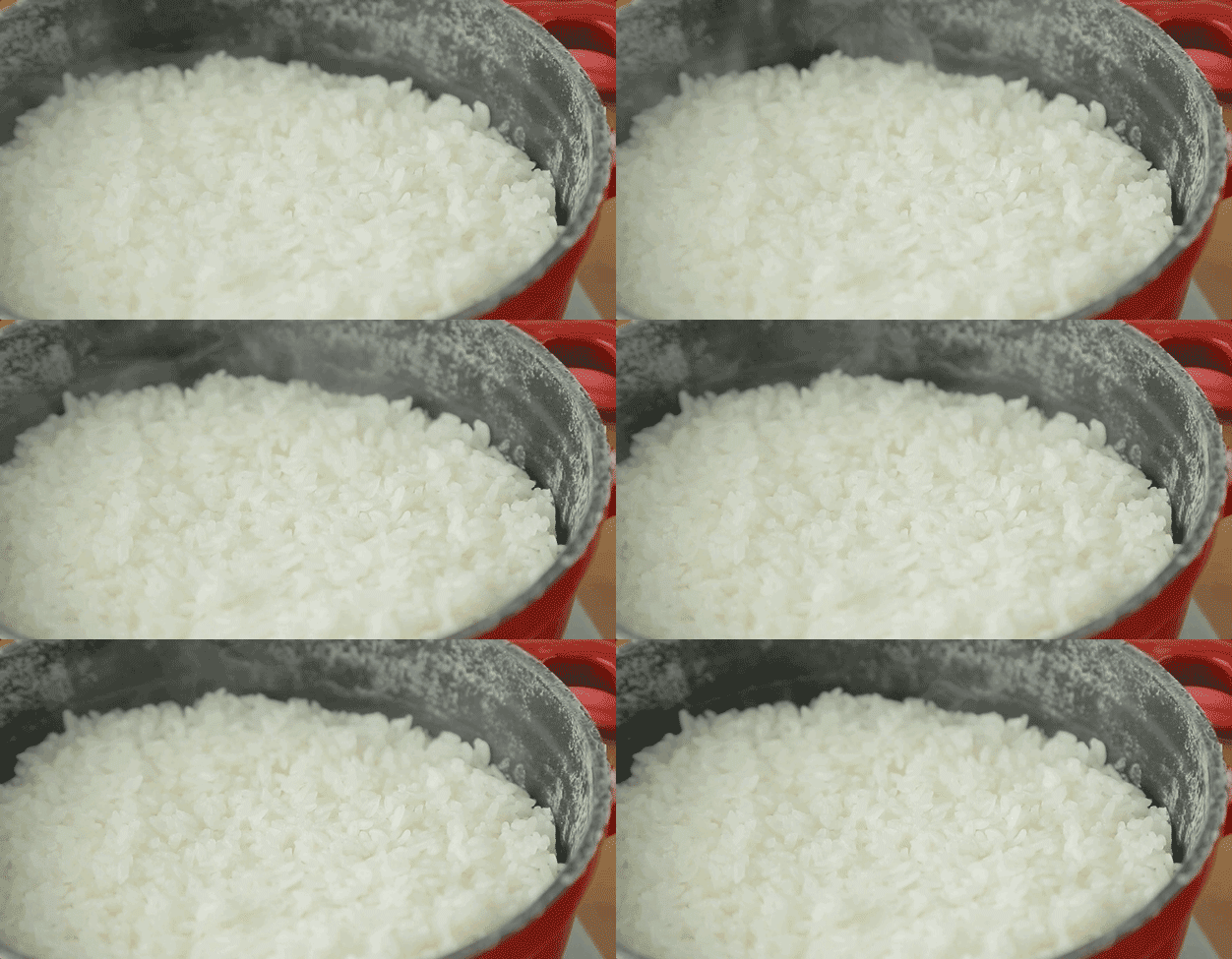
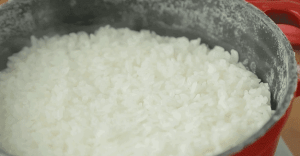
- Fluff and Serve: Open the lid. You should see steam holes (crab holes) on the surface. Fluff the rice with a paddle to release excess moisture.
Serving Suggestions
This rice is so fragrant and sweet, you could eat it on its own! However, it is the perfect canvas for rich, savory Chinese dishes.
I recommend serving this with:
- Authentic Mapo Tofu – The spicy sauce soaks into the rice perfectly.
- Chinese Tomato and Egg Stir-fry – A classic comfort food combination.
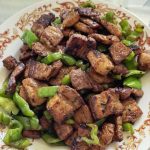
- Twice-Cooked Pork – The savory pork belly needs white rice to balance the saltiness.
Tips for Success: The Crispy Bottom (Guoba)
My favorite part of cooking rice in cast iron is the Guoba (鍋巴). When I was a child, my grandmother would sprinkle a little salt on the scorched rice from the bottom of the pot and give it to me as a snack. It was crunchy, fragrant, and better than any potato chip.
To get this:
- Follow the instructions but cook on low for 5 minutes instead of 3.
- After the resting period, scoop out the white fluffy rice.
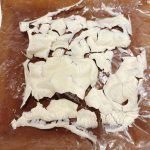
- You will be left with a golden crust on the bottom. You can peel it off and eat it, or pour soup over it for a sizzling rice soup!
FAQ / Troubleshooting
Q: My rice is burnt on the bottom, but I followed the time. A: Your “low” heat might still be too hot, or your cast iron pot might be thinner than mine. Next time, try moving the pot to a cool burner for the 10-minute resting period, or use a heat diffuser.
Q: The rice is hard in the center (undercooked). A: This usually happens if the lid wasn’t tight enough, letting steam escape. Ensure your lid fits perfectly. If your pot doesn’t seal well, you may need to increase the water ratio slightly to 1:1.1.
Q: Can I double this recipe? A: Yes. The 1:1 ratio remains the same. However, you may need to increase the “low heat” cooking time by 1-2 minutes to ensure the larger mass of water maintains the boil before you cut the heat.
Food Safety and Preparation
- Bacillus Cereus: Uncooked rice can contain spores of Bacillus cereus, a bacteria that can cause food poisoning. These spores can survive cooking.
- Cooling: If you have leftover rice, do not let it sit at room temperature for more than 1 hour. Cool it quickly and refrigerate it.
- Reheating: When reheating rice, ensure it is steaming hot all the way through. Do not reheat rice more than once.
Authoritative References
For more information on rice safety and handling, you can refer to the USDA Food Safety Guidelines. Additionally, standard rice cooking ratios and nutrition data align with general culinary standards found in professional resources like the Professional Chef by the CIA.
Nutrition Information (Estimate)
- Calories: ~325 kcal per serving (based on 125g raw rice)
- Carbohydrates: ~72g
- Protein: ~6g
- Fat: ~0.5g
- Fiber: ~1g (White rice)
- Sodium: 2mg
Disclaimer: Nutrition information is calculated using an ingredient database and should be considered an estimate. Garnishes and optional items are not included. Actual values vary based on the specific brand of rice used.
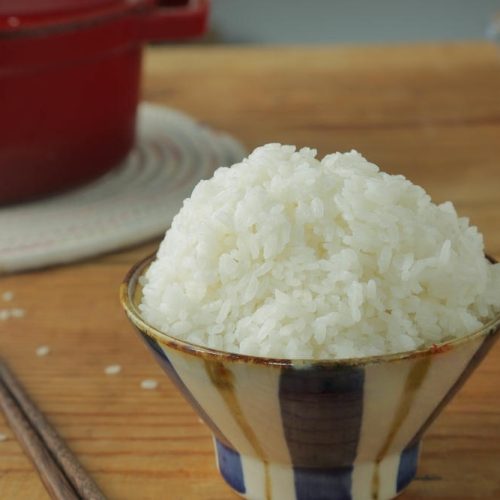
How to Cook Perfect Rice in a Cast Iron Pot

Equipment
- 1 Cast Iron Pot (Dutch Oven) Enameled is preferred, with a heavy lid.
- 1 Kitchen Scale For precise measurements.
Ingredients
- 250 g White Rice Short or medium grain preferred (approx 1.25 cups)
- 250 g Water Filtered/Purified water recommended (approx 1 cup + 1 tbsp)
Instructions
- Place the rice in the cast iron pot. Rinse with water until the water runs mostly clear (unless using no-wash rice). Drain well.

- Add the 250g of fresh, purified water to the pot.

- Turn the heat to high. As the water approaches a boil, stir gently with a spatula to prevent rice from sticking to the bottom.
- Once the water reaches a full boil, cover the pot with the lid immediately.

- Turn the heat down to the lowest setting. Cook for 3 minutes. (Note: For crispy ‘Guoba’ rice, cook for 5 minutes instead).
- Turn off the heat. Do NOT open the lid. Let the pot sit and steam for 10 minutes using residual heat.
- Open the lid, fluff the rice with a paddle, and serve hot.







Leave a Reply