Some dishes announce themselves with a roar of chili and a slick of red oil. This one is quieter. Braised pork belly with dried cauliflower — huacaiganshaorou in Chinese — is the kind of pot that simmers on a back burner while the house fills with the smell of star anise and caramelized sugar, and by the time it reaches the table the pork is soft enough to part under a spoon and the cauliflower has gone dark, chewy and completely drunk on the sauce. It is homestyle cooking at its most generous.
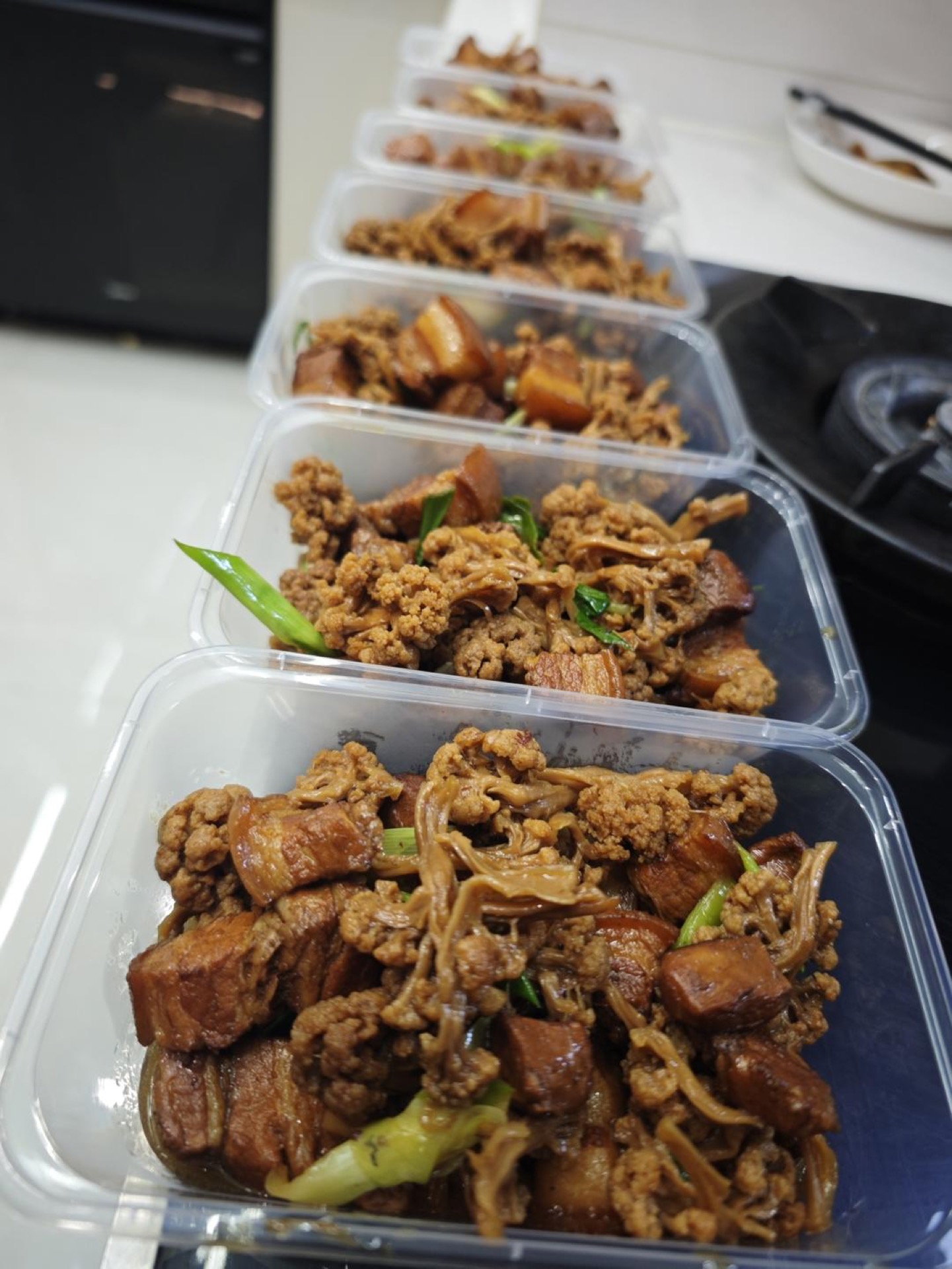
What makes it so good is the contrast. Fresh cauliflower would go mushy in a long braise, but dried cauliflower is a different animal entirely: it comes back to life as something dense and almost meaty, with a texture that sits somewhere between a mushroom and a sun-dried tomato. It soaks up the porky, soy-darkened braising liquid like a sponge, and in return it lightens what would otherwise be a very heavy pot of meat. If you have ever eaten the dried vegetables in a Chinese home kitchen and wondered why anyone would bother, this dish is the answer.
What Is Braised Pork Belly with Dried Cauliflower?
Braised pork belly with dried cauliflower is a homestyle Chinese braise in which chunks of skin-on pork belly are blanched, caramelized in rock sugar, then simmered with soy sauce and whole aromatics until tender. Partway through, rehydrated dried cauliflower joins the pot and cooks down until it is soft, chewy and fully seasoned. Garlic sprouts go in at the very end for a fresh, oniony bite, and the sauce is reduced until it clings to every piece.
It belongs to the same broad family as braised pork belly, the red-braised canon of Chinese home cooking, but it is a distinctly rural, practical version. Dried cauliflower is a pantry ingredient in much of southern and central China — vegetables dried in the sun when they are abundant, then rehydrated through the winter. The dish is built to feed a family from a modest amount of meat, and the vegetable ends up tasting almost as rich as the pork.
If you love the deep, glossy sauce of red-braised pork but want a vegetable in the pot doing real work, start here: hong shao rou is the classic that teaches you the caramel-and-soy foundation this dish is built on.
1Authentic Hong Shao Rou (Braised Pork Belly)A foolproof, no-blanch, one-pot recipe for melt-in-your-mouth Chinese braised pork belly. Rich, savory, and perfectly glazed.Check out this recipe
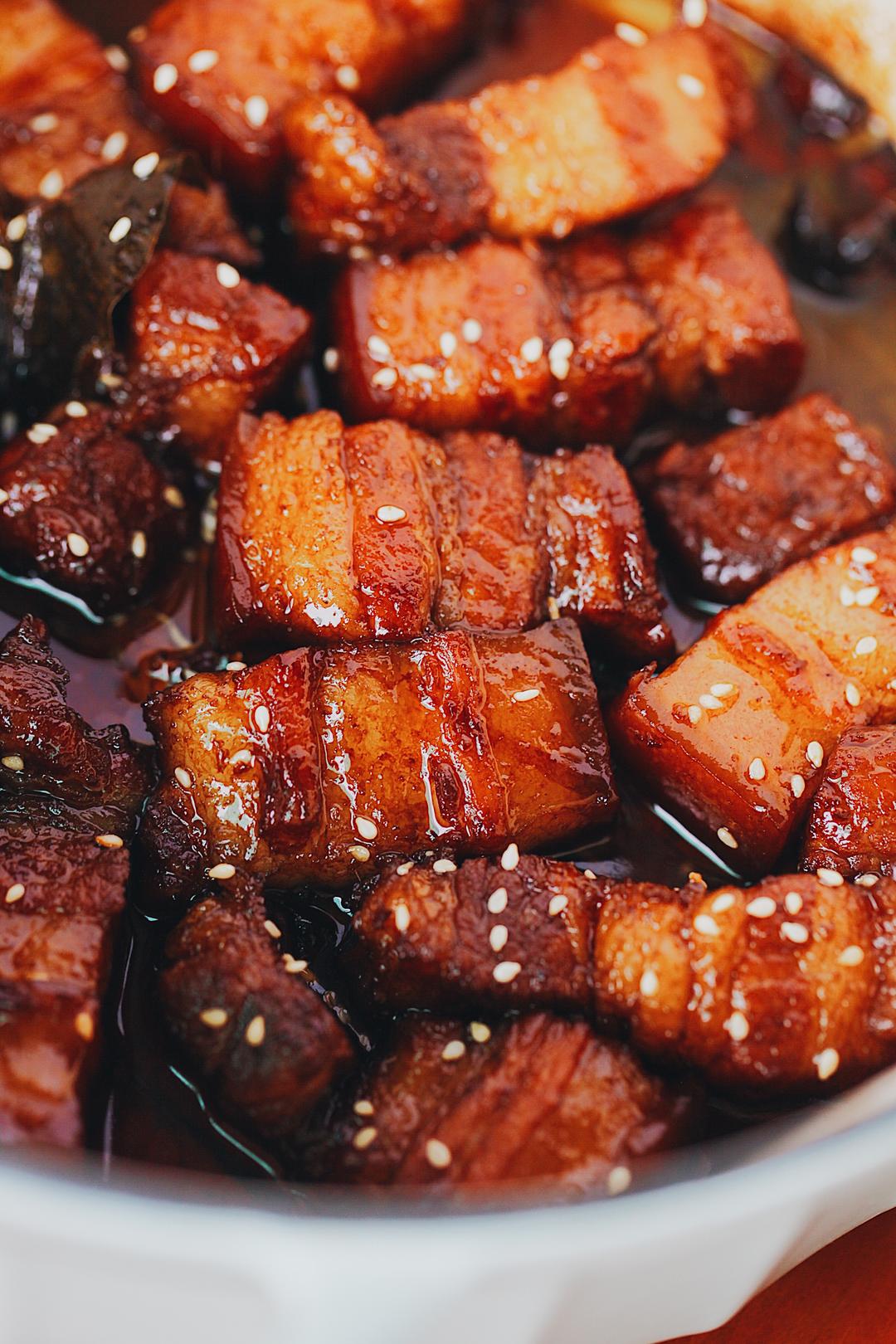
For another take on pork belly stretched with a vegetable, braised green beans with pork belly uses the same logic with long beans instead of dried cauliflower.
2Braised Green Beans with Pork Belly (Doujiao Men Rou)A classic Chinese home-style dish featuring tender green beans and savory pork belly braised in a rich soy sauce glaze. Perfect with steamed rice.Check out this recipe

And if you want to push the pot in a more luxurious direction, braised pork belly with abalone takes the same braise and adds sea flavor and occasion.
3Braised Pork Belly with Abalone (Bao Yu Hong Shao Rou)A luxurious Chinese surf and turf dish featuring tender pork belly and fresh abalone braised in a savory red fermented bean curd sauce. Perfect for special occasions.Check out this recipe

Why This Recipe Works
Three decisions do most of the heavy lifting here. The first is blanching the pork from cold water. Starting the meat in cold water and bringing it slowly to a boil draws out the blood and impurities that would otherwise cloud the sauce and leave a faintly gamey note. Two or three minutes is plenty — you are not cooking the pork, just cleaning it.
The second is the rock sugar. Melted slowly over low heat and tossed with the drained pork, it does two things at once: it gives the meat that deep mahogany lacquer, and it rounds out the saltiness of the soy with a gentle, mellow sweetness. Skip it and the dish still works, but it will look paler and taste flatter.
The third is timing the cauliflower. Dried cauliflower needs a long, gentle simmer to soften fully, but it also needs to go in late enough that it does not disintegrate. Adding it after the pork has already braised for 35 minutes means both components finish at the same moment, and the cauliflower has just enough time to absorb the sauce without turning to mush.
Equipment Needed
A wok is ideal because its sloping sides make it easy to toss the pork in the sugar without splashing, and the wide surface helps the sauce reduce quickly at the end. A heavy-bottomed Dutch oven or clay pot works just as well for the braising stage — in fact, if you have a clay pot, use it, because it holds heat beautifully and is traditional for this kind of dish.
You will also want a large pot for blanching, a cutting board and a sharp knife for portioning the pork belly, a slotted spoon for lifting the meat out of the blanching water, and a small fine-mesh skimmer for removing scum. A lid that fits your braising vessel is essential for the long simmer. Nothing here is specialized — this is a one-pot home dinner.
Ingredients
The full ingredient list with amounts is in the recipe card below. Here is what matters most: skin-on pork belly, dried cauliflower, rock sugar, light and dark soy sauce, Shaoxing wine, and a whole-spice bundle of star anise, cinnamon, dried chilies and Sichuan peppercorns. Garlic sprouts finish the dish.
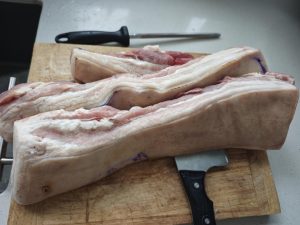
For the pork, look for a piece with clear layers of skin, fat and lean meat. The skin is not optional — it is what gives the sauce its body and the meat its unctuous texture. For the cauliflower, buy whole dried heads rather than crushed pieces if you can; they rehydrate more evenly and hold their shape better in the pot.
Ingredient Notes
Dried cauliflower (花菜干): This is the star and the one ingredient you cannot substitute casually. It is cauliflower that has been blanched and sun-dried, which concentrates its flavor and gives it a firm, almost leathery texture. Soak it in warm water for 6 to 8 hours, or overnight, until the stems bend without snapping. Squeeze it firmly in your hands to expel the soaking water before it goes into the pot — otherwise it will dilute the sauce.
Pork belly: Skin-on, bone-in or boneless both work; cut it into roughly 1-inch chunks so it cooks evenly and fits on a spoon. Do not trim the fat off. It renders into the sauce and is part of the point.
Light vs. dark soy sauce: Light soy brings the salt and the savory depth; dark soy brings color and a slightly molasses-like sweetness. Using only one will throw off the balance — if you must choose, use light soy and accept a paler dish rather than using all dark soy, which turns bitter.
Rock sugar: Use the yellow or amber lumps, not white granulated sugar. Rock sugar melts more slowly, which gives you a wider window before it burns, and it produces a clearer, glossier finish.
Whole spices: Star anise, cinnamon bark, dried chilies and Sichuan peppercorns are the backbone of the aroma. Toast them briefly in the rendered fat before adding liquid — that step is what makes the kitchen smell like a Chinese grandmother’s house.
Prep & Mise en Place
Start the dried cauliflower first, because it is the only step that cannot be rushed. Put it in a large bowl, cover it generously with warm water and leave it for at least 6 hours, ideally overnight. When it is ready, drain it, squeeze each piece firmly and set it aside.
While the cauliflower soaks, cut the pork belly into 1-inch chunks and pile them into your blanching pot. Slice the ginger, cut the scallions into segments, and measure out the whole spices into a small bowl so you can add them in one motion. Combine the light soy, dark soy and Shaoxing wine for the sauce in a cup. Slice the garlic sprouts on a sharp diagonal and keep them separate — they go in at the very end.
Have a kettle of water heating for the braise. Adding boiling water rather than cold to a hot pot of caramelized pork keeps the meat from seizing up and turning tough.
Cooking Process
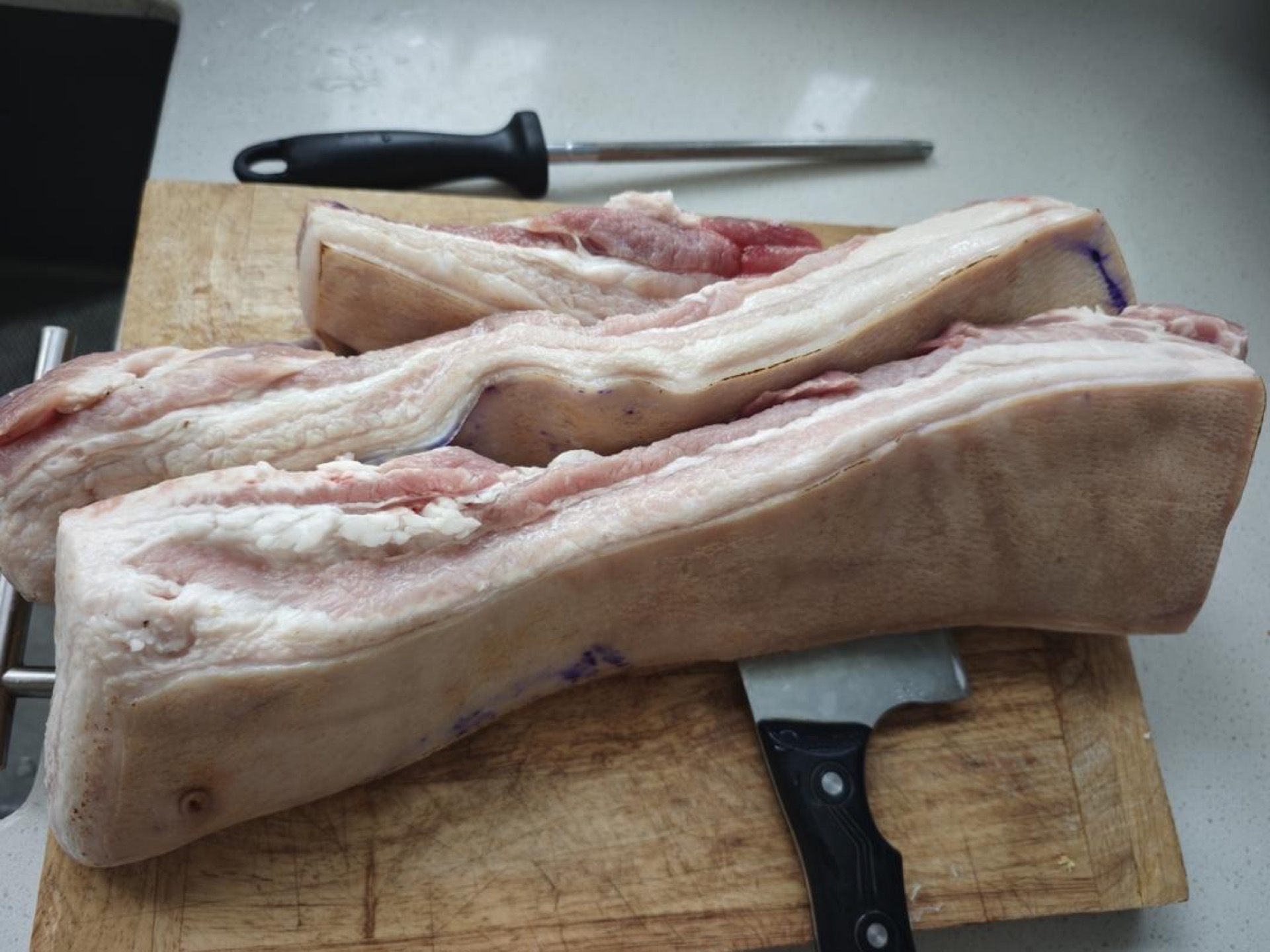
Step 1 — Split the Batch
Three kilograms is a lot, so I cook it in two pots, and the method and steps are the same — here I show one pot.
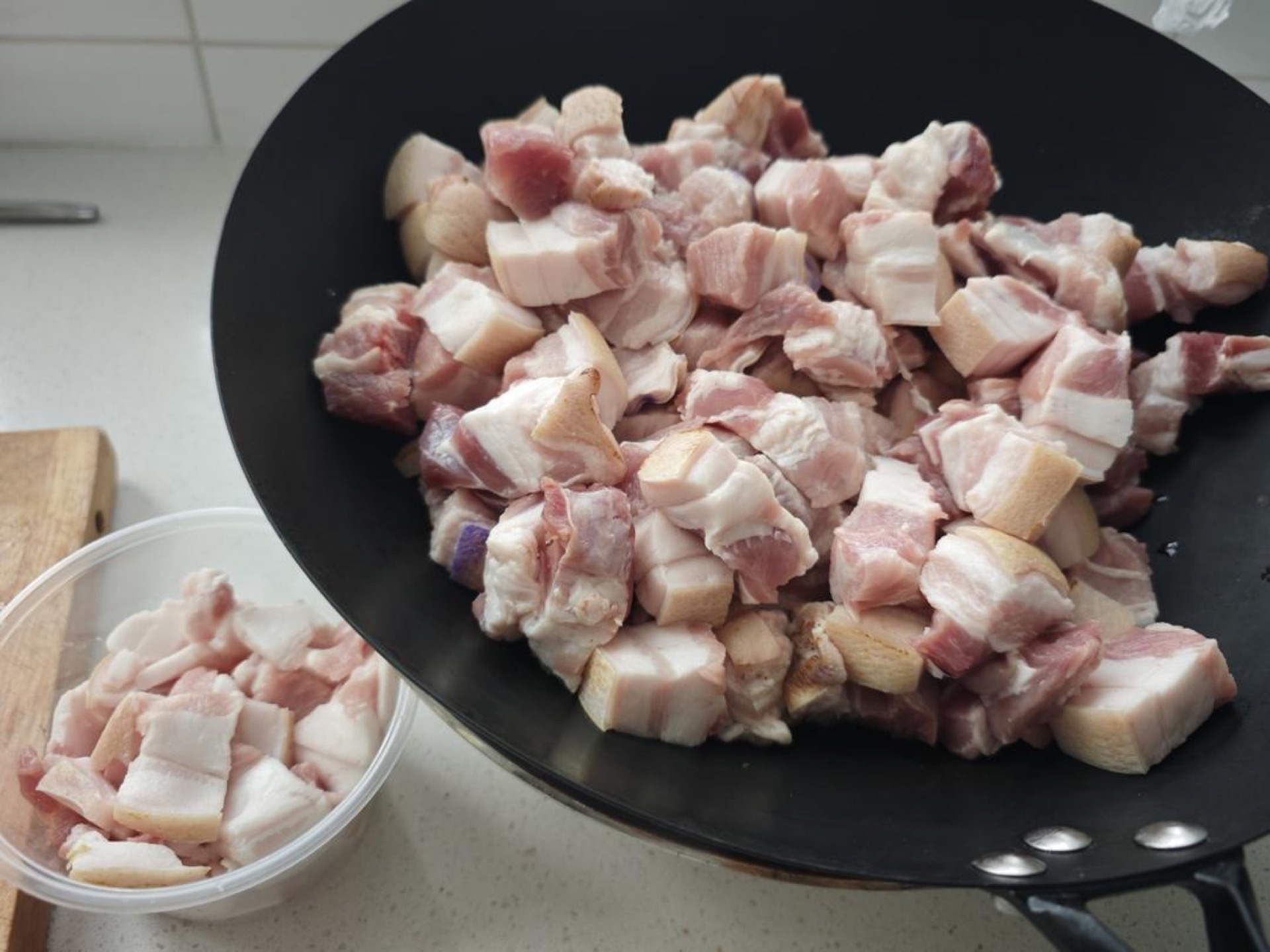
Step 2 — Cut and Start the Blanch
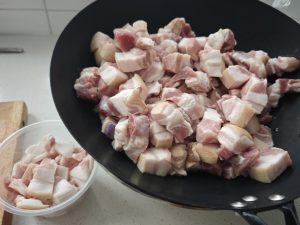
Cut the meat into chunks and put them straight into the blanching pot.
Step 3 — Blanch and Dry
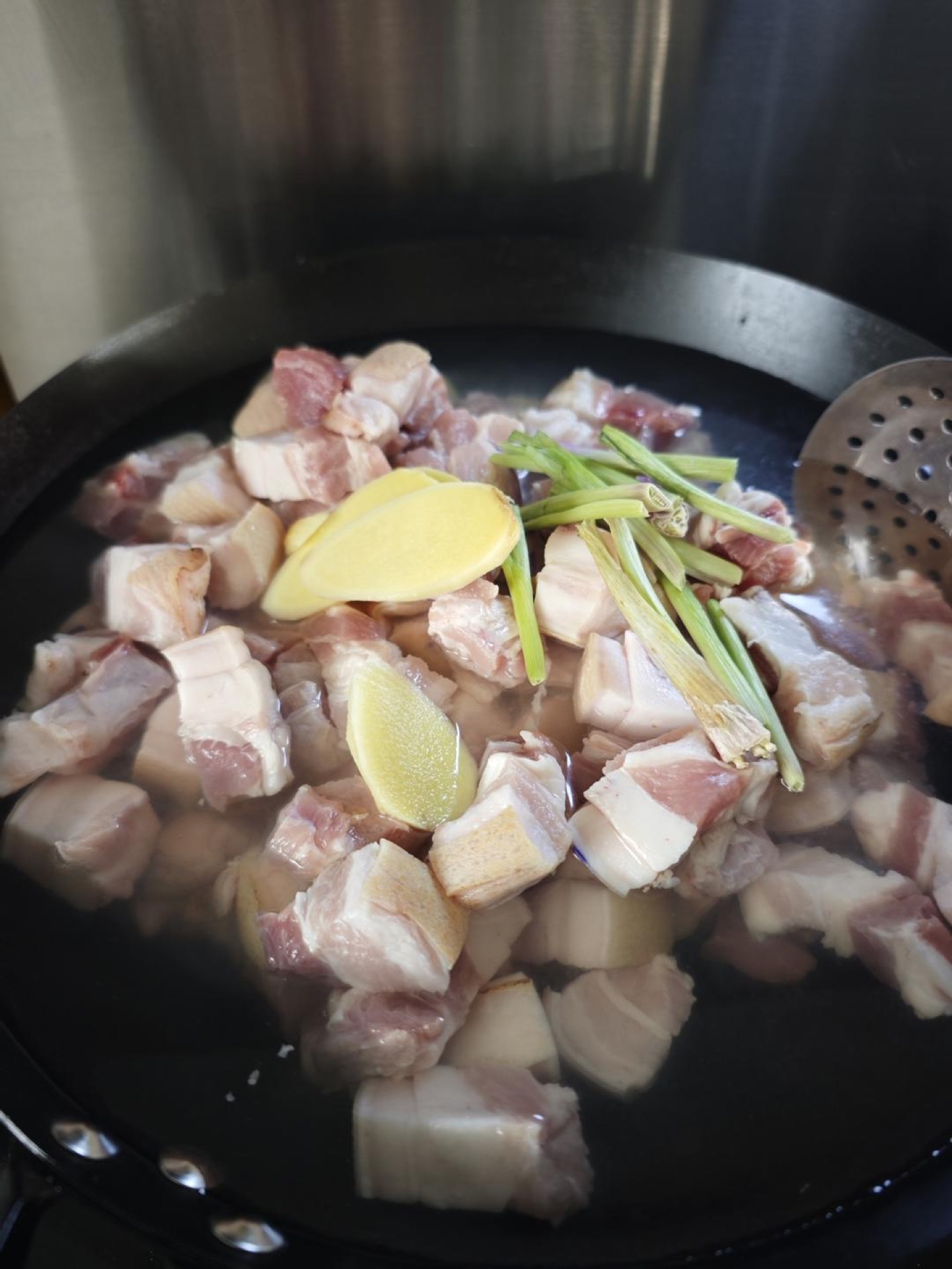
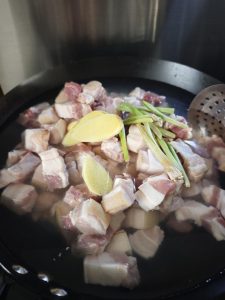
Add cold water, scallion, ginger and Shaoxing wine, bring to a rolling boil over high heat and cook for 2 to 3 minutes, then scoop the pork out, rinse away the scum under warm water and let it drain dry.
Step 4 — Caramelize the Sugar
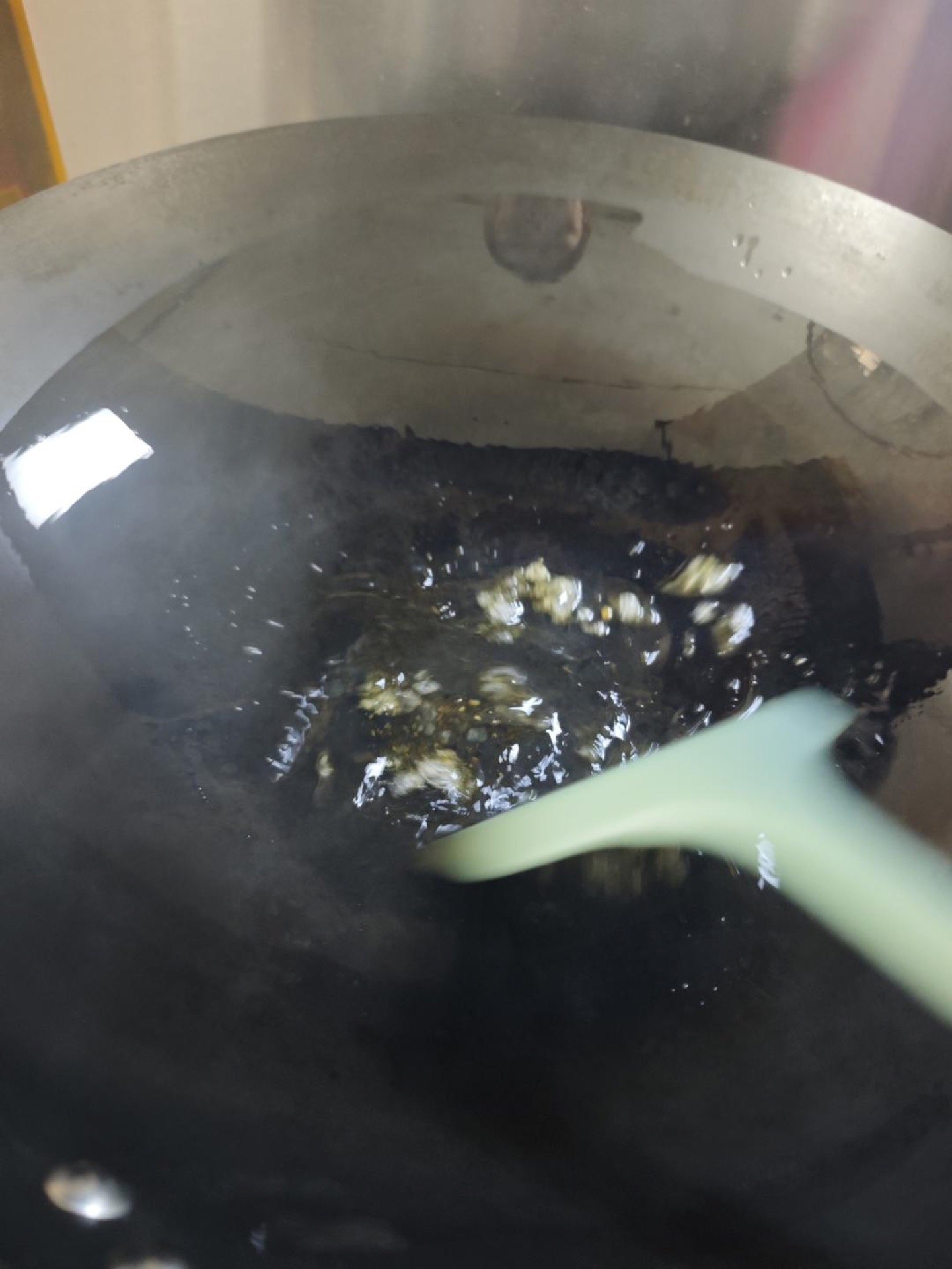
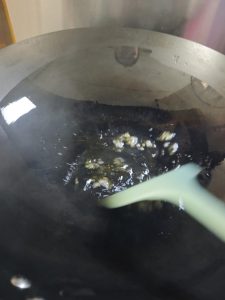
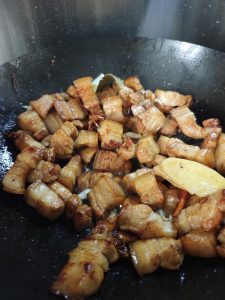
Heat the wok, add cool oil, and over low heat melt a small handful of rock sugar, then add the prepared pork and stir-fry quickly until every piece is evenly coated in color.
Step 5 — Fry the Aromatics
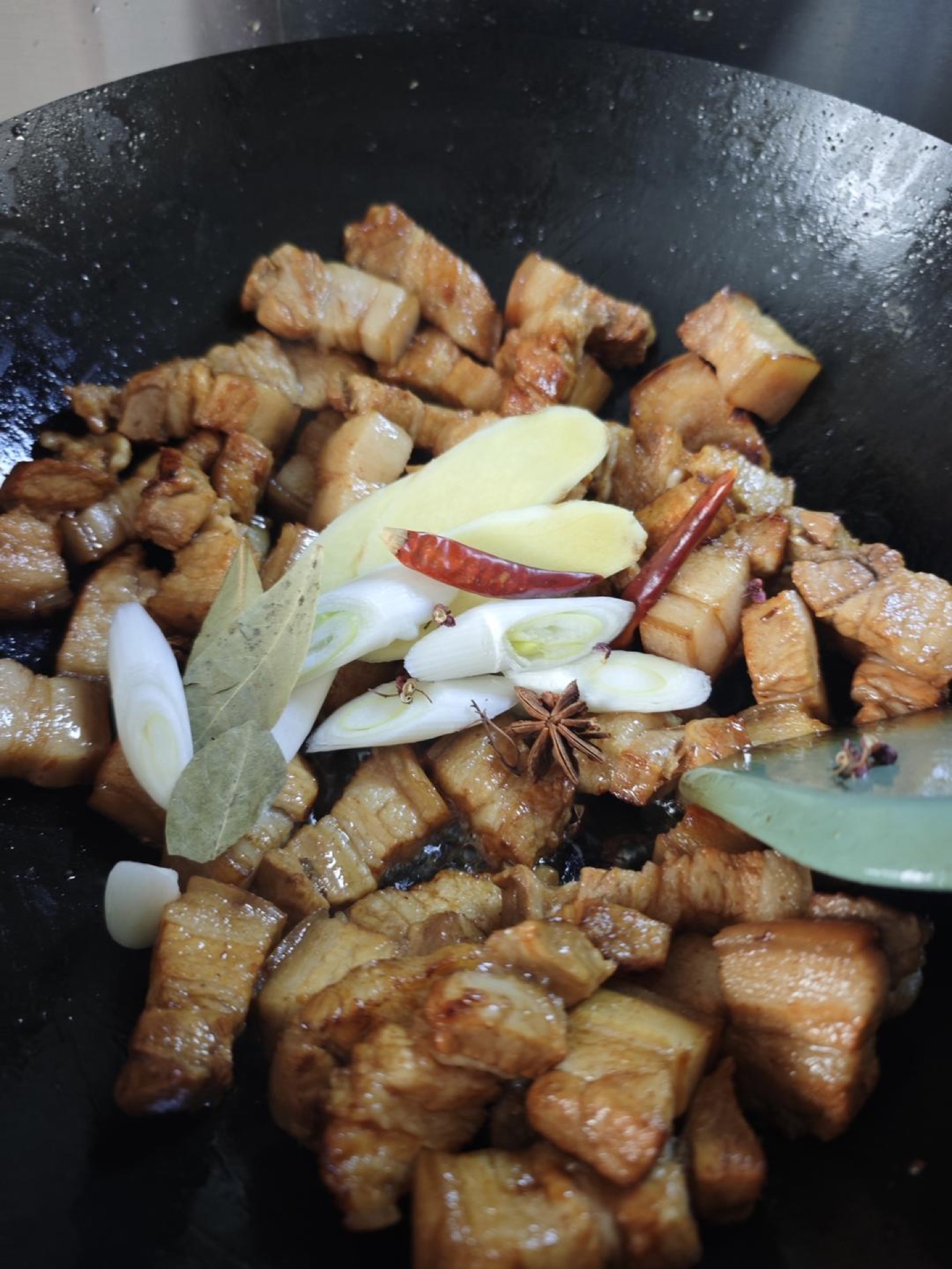
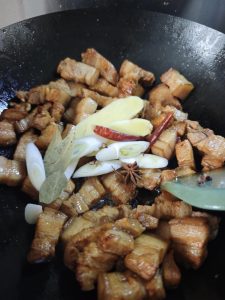
Add the scallion, ginger and the whole spices — star anise, bay leaf, cinnamon, chilies and Sichuan peppercorns — and stir-fry until their fragrance comes out.
Step 6 — Season with Wine and Soy
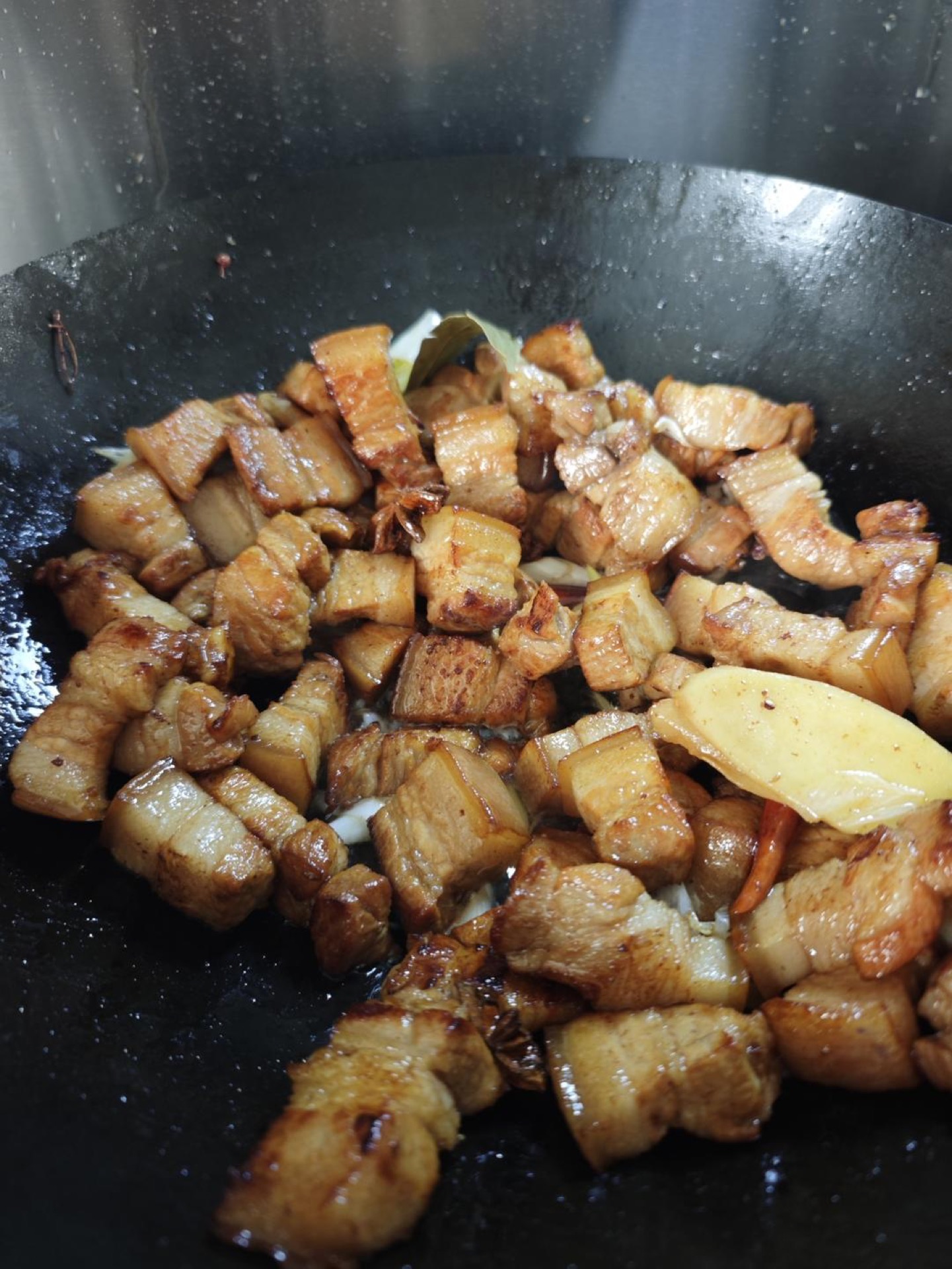
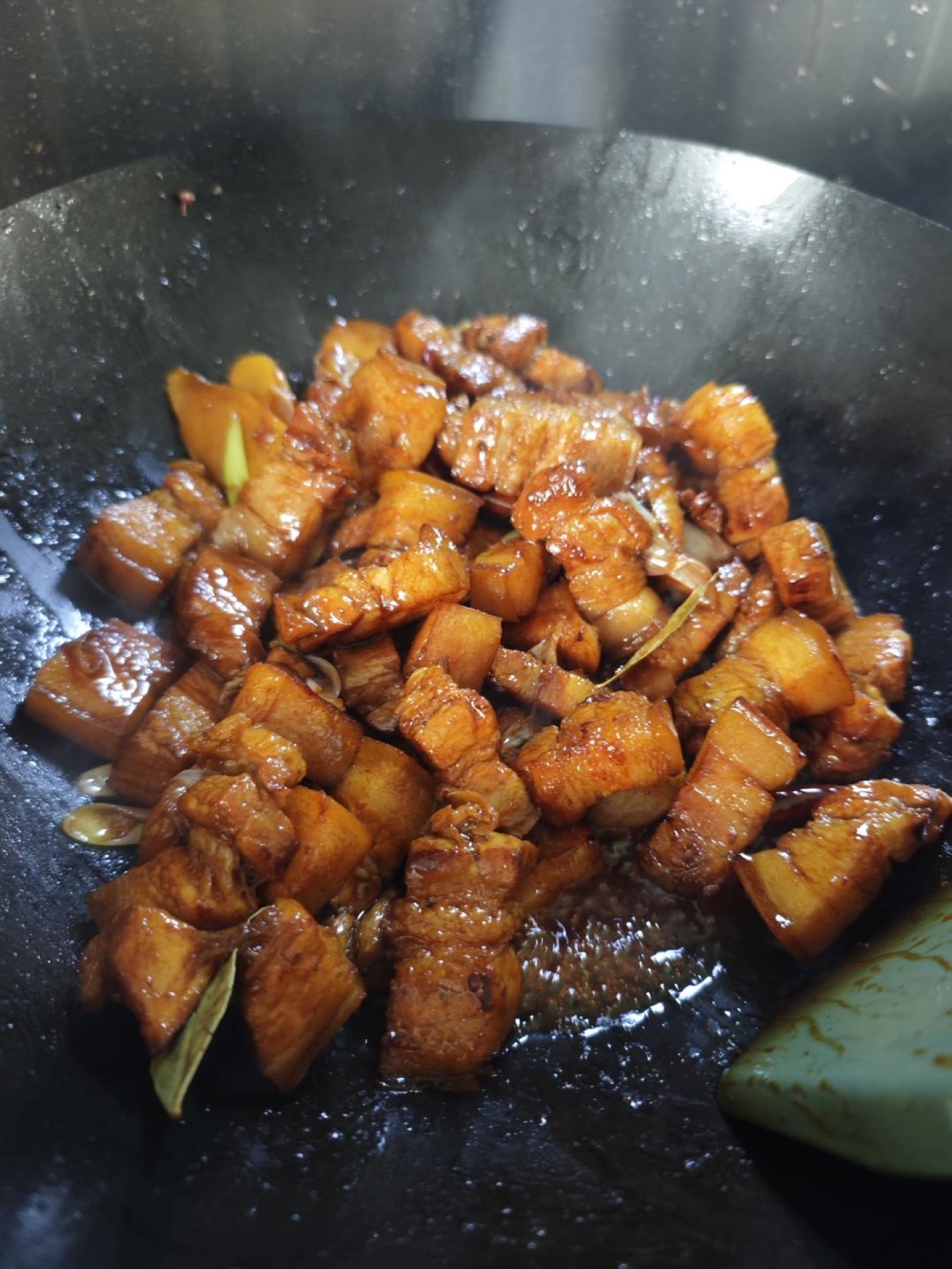
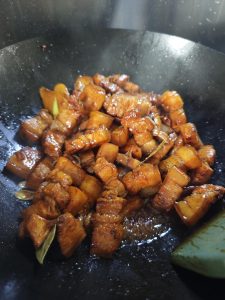
Once a good amount of fat has rendered out, drizzle a circle of Shaoxing wine, two circles of light soy sauce and one and a half circles of dark soy sauce around the edge of the wok.
Step 7 — Toss to Combine
Give everything a good stir so the seasonings coat the pork evenly.
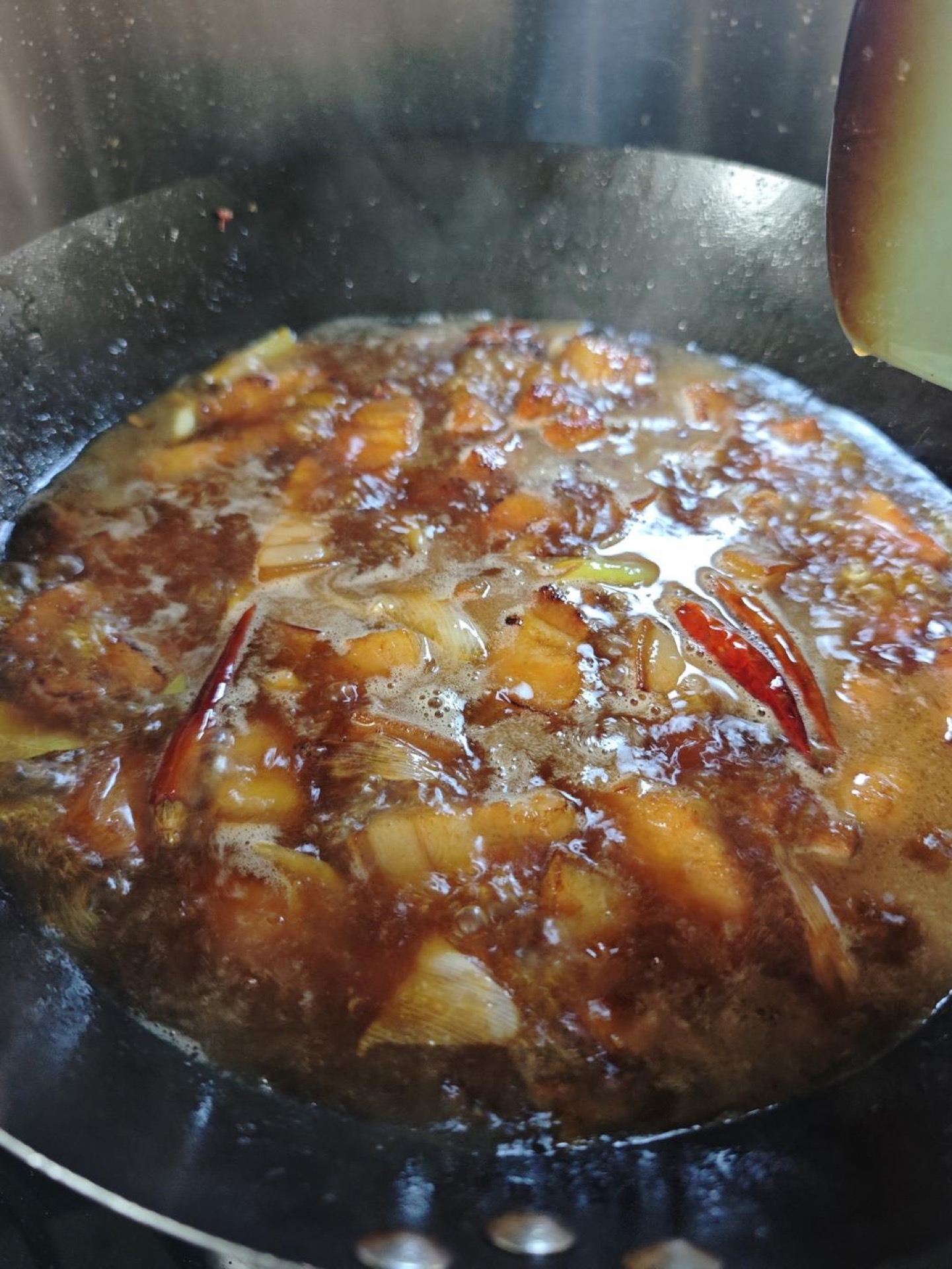
Step 8 — Braise the Pork
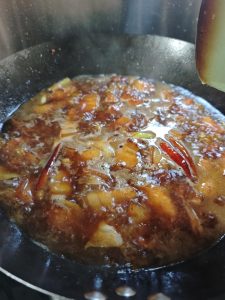
Pour in boiling water to cover the meat, bring back to a boil, then turn the heat to low and simmer for 35 minutes.
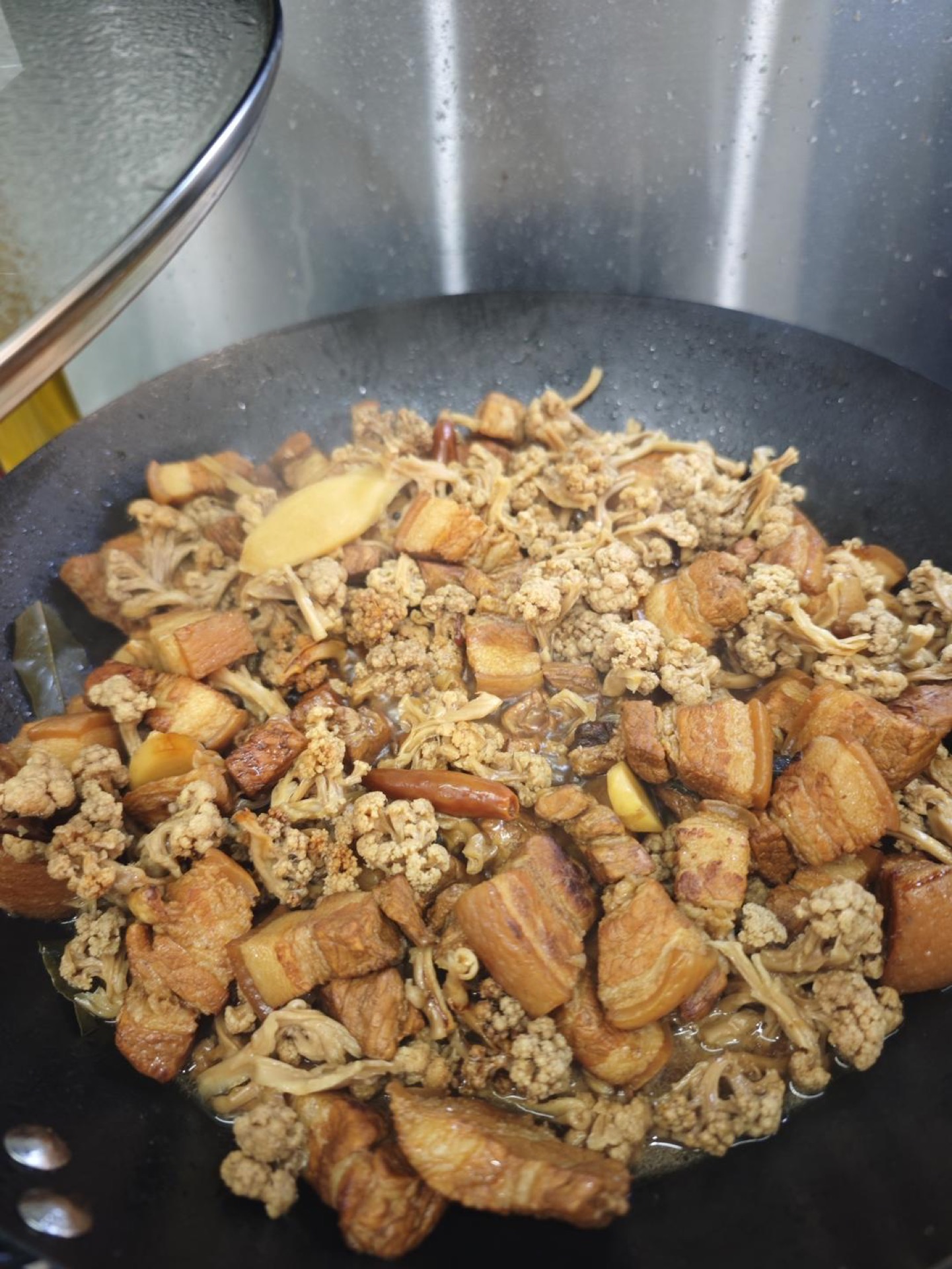
Step 9 — Add the Cauliflower
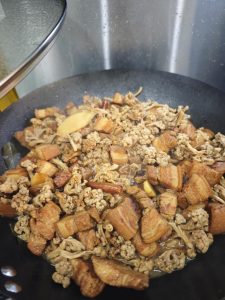
Add the soaked dried cauliflower, keep the heat low and braise another 25 minutes, then season with salt and chicken bouillon.
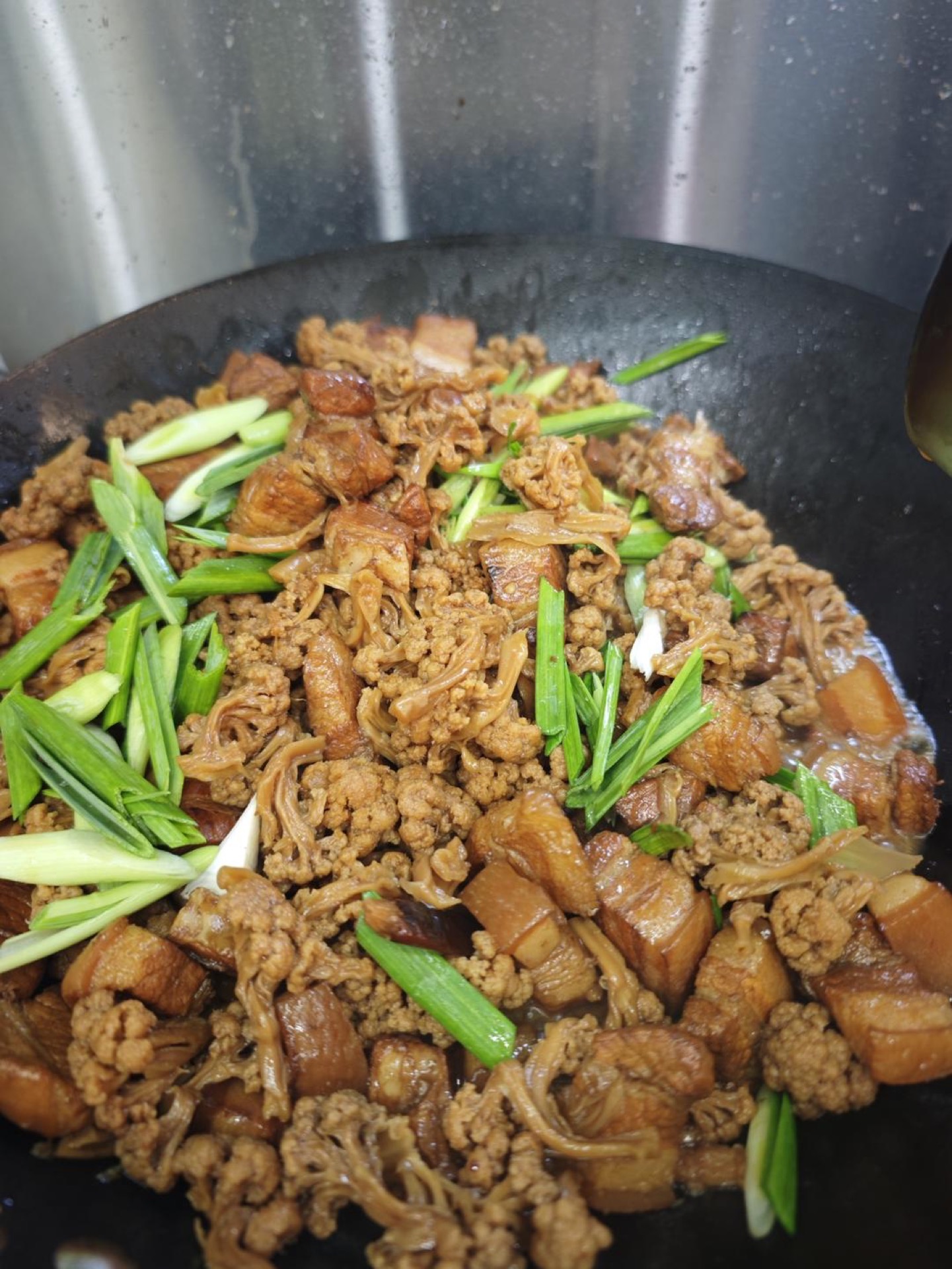
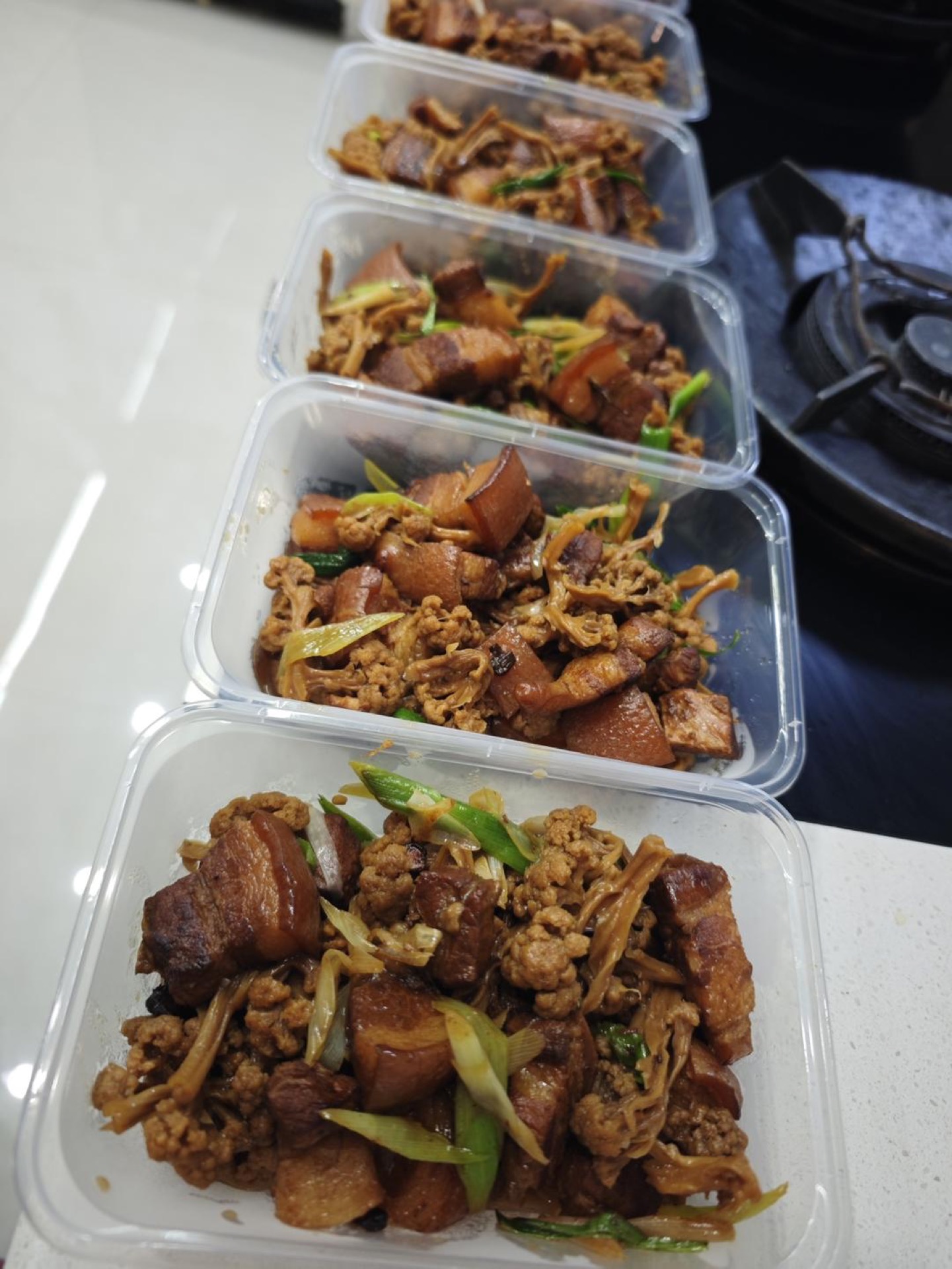
Step 10 — Reduce and Finish
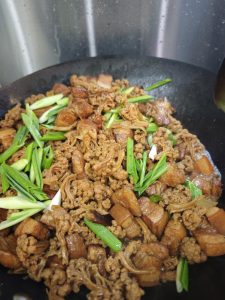
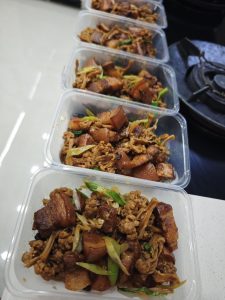
Turn the heat to high to reduce the sauce, scatter in the garlic sprouts, toss everything together evenly, turn off the heat and box it up.
Step 11 — Rest and Serve
Give it an hour or more before eating so the flavors settle.
Common Mistakes When Making Braised Pork Belly with Dried Cauliflower
1. Skipping the soak or under-soaking the cauliflower. Dried cauliflower that has not fully rehydrated stays tough and woody no matter how long you braise it. The cause is simply not enough time in the water. The fix: soak it overnight, and test a thick stem — it should bend, not snap. If it still snaps, keep soaking in fresh warm water.
2. Adding the cauliflower too early. If you tip it in at the start, it will collapse into a soft, shapeless mass and the sauce will turn cloudy. The cause is impatience. The fix: braise the pork for 35 minutes first, then add the cauliflower for the final 25.
3. Burning the sugar. Rock sugar goes from amber to acrid black in seconds, especially over high heat. The cause is too much heat and too little attention. The fix: melt it over low heat, keep the pork ready beside the wok, and add the meat the moment the sugar turns a deep amber and starts to foam.
4. Using cold water for the braise. Pouring cold water onto hot, caramelized pork shocks the meat and can make it tough. The cause is convenience. The fix: always use boiling water from a kettle, and add enough to fully cover the meat.
5. Not reducing the sauce at the end. A thin, watery braise never coats the rice the way it should. The cause is stopping at the braise. The fix: turn the heat to high and let the liquid bubble down until it is glossy and clings to the back of a spoon, tossing the pot occasionally so nothing catches.
6. Forgetting to taste for salt. Soy sauce, bouillon powder and reduced sauce all concentrate salt as the liquid cooks away. The cause is assuming the recipe’s salt level is fixed. The fix: taste before adding the final salt, and remember the sauce will get saltier as it reduces.
Variations
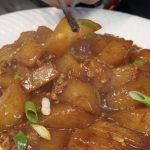
With potatoes: Swap half the cauliflower for chunks of potato added in the last 20 minutes. Follow the same logic as braised pork belly with potatoes, which is a great way to turn this into a starchier one-pot meal.
With mushrooms: Add a handful of rehydrated dried shiitakes along with the cauliflower for an earthier, more deeply savory pot — much like braised pork belly with oyster mushrooms.
With fermented bean curd: Add a mashed cube of red fermented bean curd to the braise for a funkier, rosier sauce, in the spirit of red braised pork belly.
Leaner cut: Pork shoulder works if you want less fat, but reduce the braising time by about 10 minutes and expect a slightly less glossy sauce.
Spicier: Double the dried chilies and add a spoonful of chili bean paste with the aromatics.
Frequently Asked Questions
Can I use fresh cauliflower instead of dried? You can, but the dish changes character. Fresh cauliflower releases water and softens quickly, so add it only in the last 8 to 10 minutes and expect a lighter, less chewy result. The concentrated flavor of the dried version is really the point.
How long does dried cauliflower need to soak? Plan on 6 to 8 hours in warm water, or overnight in cool water. Very thick pieces may need longer. Always squeeze it dry before it goes into the pot.
Do I have to blanch the pork? It is strongly recommended here. Because the sauce reduces to a glaze, any impurities left in the pot end up concentrated in the final dish. The blanch keeps the sauce clean-tasting. If you prefer the no-blanch route, see the no-blanch method for braised pork belly.
Why is my sauce not thickening? It needs more time over high heat, uncovered. If it still looks thin, the pot may be too crowded or the heat too low. Reduce in batches if necessary.
Can I make this ahead? Yes — it improves overnight as the flavors settle, which is exactly why the final step says to wait an hour or more before eating.
How to Serve
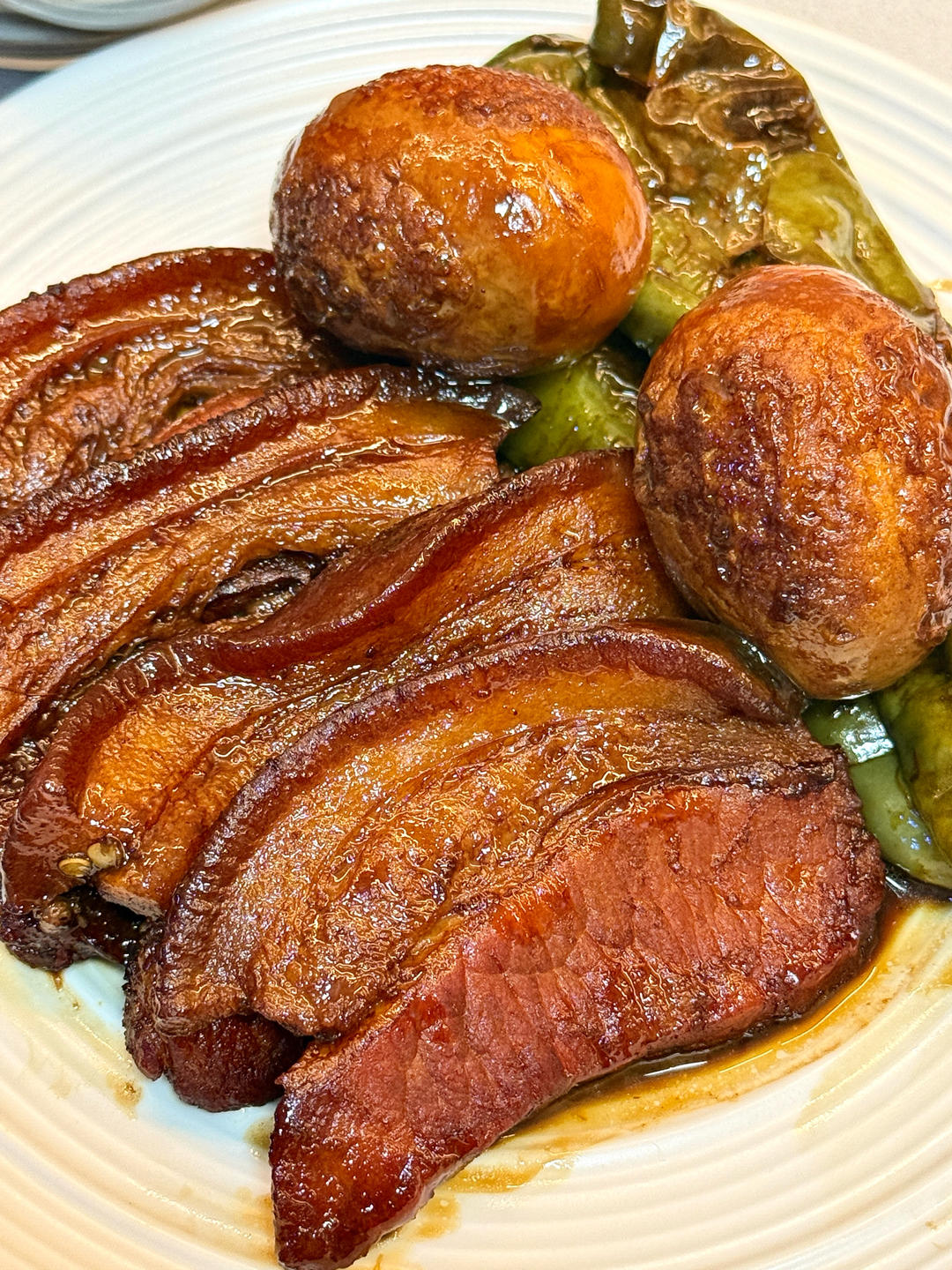
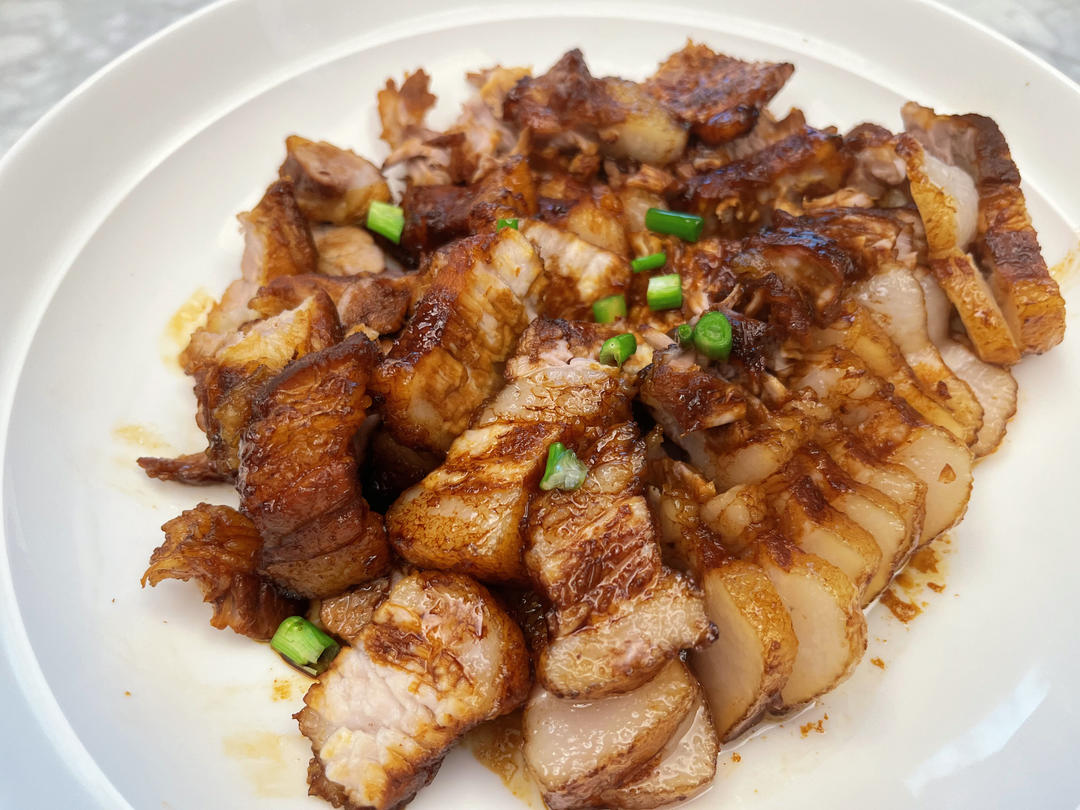
Serve this over plain steamed white rice, with the sauce spooned generously over the top — that is the whole point of the pot. A simple stir-fried green vegetable on the side keeps the meal balanced, and a small dish of pickles cuts the richness. If you want to build a larger table, pair it with a lighter braise such as homestyle braised pork belly or a bowl of Wenzhou braised pork belly for a pork-heavy spread.
Storage & Reheat
Cool leftovers within 2 hours and store them in an airtight container in the refrigerator for up to 3 to 4 days. The dish actually improves after a night in the fridge as the cauliflower absorbs more sauce. Reheat gently in a covered pot over low heat with a splash of water to loosen the sauce, or in the microwave, until steaming hot throughout — 165°F (74°C) is the target. Do not freeze the cauliflower portion; it turns watery and loses its chew, though the pork alone freezes well for up to 2 months.
Allergen Notice
This recipe contains soy, from both light and dark soy sauce. Many soy sauces are brewed with wheat, so if you are cooking for someone with celiac disease or a gluten sensitivity, use a certified gluten-free soy sauce or tamari and check every label. Chicken bouillon powder may contain gluten or dairy depending on the brand. The recipe is otherwise free of dairy, eggs, peanuts and tree nuts, but always verify the labels of the specific products you use.
Nutrition Disclaimer
Nutrition information is calculated using an ingredient database and should be considered an estimate. In cases where multiple ingredient alternatives are given, the first listed is calculated for nutrition. Garnishes and optional ingredients are not included.
About the Author & Recipe Development
Lin grew up watching the women in her family dry vegetables on bamboo trays in the sun and rehydrate them through the colder months, and this recipe comes straight from that home kitchen. It is a scaled-down version of a family pot that starts with three kilograms of pork belly and gets split between two woks — the method is identical whether you cook one pot or two. The recipe was tested with skin-on pork belly and whole dried cauliflower, and the timing reflects a gentle, low simmer on a home gas burner. If your stove runs hot, check the pot a little earlier.
Authoritative References
For safe handling and cooking temperatures for pork, see the USDA safe minimum internal temperature chart. For food storage and cooling guidance, the FDA refrigerator and food safety guidance is a useful reference. For background on the role of dried vegetables in Chinese home cooking, see Britannica’s overview of Chinese cuisine.
Braised Pork Belly with Dried Cauliflower (花菜干烧肉): Tender Pork, Deep Savory Sauce

Equipment
- Wok
- Cutting Board
- Slotted Spoon
Ingredients
For the Pork and Aromatics
- 3 lb pork belly skin on, cut into 1-inch chunks
- 2 tbsp Shaoxing wine for blanching
- 4 slices ginger for blanching
- 2 scallions cut into segments, for blanching
- 1 tbsp cooking oil for the wok
- 1 oz rock sugar about a small handful
- 3 scallions white parts, for stir-frying
- 4 slices ginger for stir-frying
- 4 star anise whole
- 2 dried chilies or to taste
- 2 cinnamon sticks about 2 inches each
- 1 tsp Sichuan peppercorns whole
- 1 bay leaf optional
For the Sauce
- 2 tbsp Shaoxing wine for the wok
- 3 tbsp light soy sauce plus more to taste
- 1.5 tbsp dark soy sauce for color
For the Braise and Finish
- 6 cups boiling water enough to cover the pork
- 2 cups dried cauliflower soaked until soft, about 15 small handfuls before soaking
- 1 tsp salt to taste
- 1/2 tsp chicken bouillon powder optional
- 4 garlic sprouts sliced, for finishing
Instructions
- Three kilograms is a lot, so I cook it in two pots, and the method and steps are the same — here I show one pot.

- Cut the meat into chunks and put them straight into the blanching pot.
- Add cold water, scallion, ginger and Shaoxing wine, bring to a rolling boil over high heat and cook for 2 to 3 minutes, then scoop the pork out, rinse away the scum under warm water and let it drain dry.

- Heat the wok, add cool oil, and over low heat melt a small handful of rock sugar, then add the prepared pork and stir-fry quickly until every piece is evenly coated in color.
- Add the scallion, ginger and the whole spices — star anise, bay leaf, cinnamon, chilies and Sichuan peppercorns — and stir-fry until their fragrance comes out.
- Once a good amount of fat has rendered out, drizzle a circle of Shaoxing wine, two circles of light soy sauce and one and a half circles of dark soy sauce around the edge of the wok.
- Give everything a good stir so the seasonings coat the pork evenly.
- Pour in boiling water to cover the meat, bring back to a boil, then turn the heat to low and simmer for 35 minutes.
- Add the soaked dried cauliflower, keep the heat low and braise another 25 minutes, then season with salt and chicken bouillon.
- Turn the heat to high to reduce the sauce, scatter in the garlic sprouts, toss everything together evenly, turn off the heat and box it up.
- Give it an hour or more before eating so the flavors settle.




Leave a Reply