Why This Recipe
Hi everyone, it’s Lin. Growing up in my family’s kitchen in Sichuan, I learned that the best meals aren’t always the spicy, numbing ones that take hours to prepare. Sometimes, it’s the humble, savory dishes that disappear from the table the fastest.
This Braised Pork Belly with Oyster Mushrooms (五花肉烧蘑菇) is exactly that kind of dish. It’s a staple in many Chinese households because it transforms simple ingredients into an “umami bomb.” My mother used to say that mushrooms are “vegetarian meat” because of their savory depth. When you combine that earthiness with the richness of rendered pork belly and a secret finishing touch of garlic and vinegar, you get a sauce that demands a second bowl of rice.

I have tested this recipe multiple times in my US kitchen to ensure the ratios work with local ingredients. It’s faster than a traditional Braised Pork Belly (Hong Shao Rou) but delivers equally satisfying comfort.
What Is Braised Pork Belly with Oyster Mushrooms?
This dish is a classic example of Jiachang Cai (homestyle cooking). Unlike elaborate banquet dishes, it relies on the natural synergy between ingredients. The technique used here is a quick braise (Shao). First, we render the fat from the pork, then we use that aromatic fat to fry the mushrooms.
The unique twist in this specific recipe—often used by veteran home cooks—is the two-stage garlic and vinegar application. We cook some garlic early for aroma, but add raw garlic and a splash of vinegar right at the end. This technique preserves the sharp kick of the garlic and brightens the whole dish, cutting through the richness of the pork.
Why This Recipe Works
- Rendered Fat: By searing the pork belly first, we render out the lard. Cooking the mushrooms in this fat allows them to absorb a meaty richness that vegetable oil just can’t provide.
- Mushroom Juices: We don’t add stock; we rely on the water released by the fresh oyster mushrooms to create the base of our gravy, concentrating the flavor.
- The “Cu” Finish: Adding a splash of vinegar at the very end (a technique similar to Cu Liu) adds a layer of complexity and acidity that balances the savory soy sauce.
About the Author & Recipe Development
I am a culinary instructor and former restaurant chef trained in Sichuan, China. Over the last decade cooking in professional kitchens and for my family in the US, I’ve dedicated myself to translating authentic Chinese flavors for the Western home cook. This recipe was developed based on a popular method by food critic “Da Xiong,” adjusted for precise measurements suitable for US grocery store packaging. I tested this using both a traditional carbon steel wok and a standard non-stick skillet to ensure it works regardless of your equipment.
Key Ingredients & Substitutions
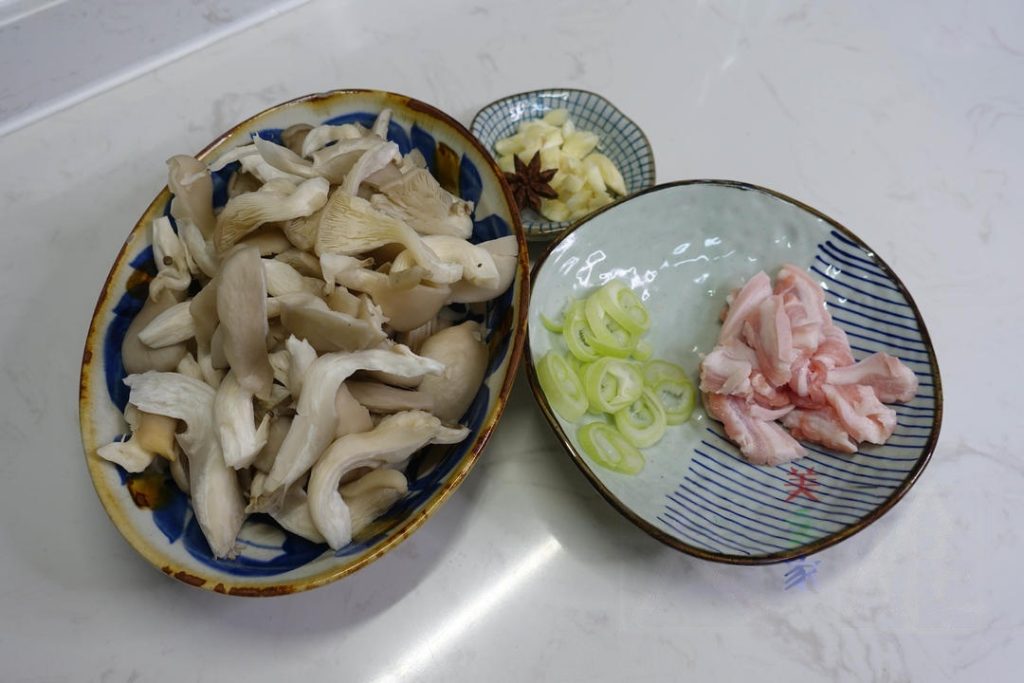
- Oyster Mushrooms (Ping Gu): These are broad, flat mushrooms with a velvety texture. They act like sponges for the sauce.
- Substitutions: If you can’t find them, King Oyster mushrooms (sliced thinly) or Shiitake mushrooms work well. See my Easy Dry-Fried King Oyster Mushrooms for more on handling mushrooms.
- Pork Belly: You need a cut with layers of fat and meat. The fat renders out to flavor the dish.
- Substitutions: If you prefer a leaner cut, you can use pork shoulder (butt), but you may need a little extra oil. Check out my guide on Pork Belly to choose the right piece.
- Light Soy Sauce: This provides the salty, savory base. I recommend brands like Pearl River Bridge or Lee Kum Kee.
- Note: See our guide on Light Soy Sauce for buying tips.
- Rice Vinegar: We use this for a subtle tang.
- Substitutions: Chinkiang Vinegar (black vinegar) is excellent here for a deeper, maltier flavor, though regular white rice vinegar works for a cleaner taste.
- Star Anise: Just one pod adds a subtle licorice note that pairs beautifully with pork.
Ingredients
The Main Stir-fry
- 1.1 lbs (500g) Fresh oyster mushrooms (Ping Gu)
- 6 oz (170g) Pork belly, skin-on or skin-off
- 1 tbsp Neutral cooking oil (vegetable, canola, or grapeseed)
- 1 Scallion (green onion), chopped
- 4 cloves Garlic, minced (divided use)
- 1 whole Star anise
The Braising Sauce
- 2 tbsp Light Soy Sauce (or “Fresh Taste” soy sauce)
- 1/2 tbsp Rice vinegar (or Chinkiang vinegar)
- 1/4 tsp Salt
- 1/2 cup Water (approx. 120ml)
The Finishing Touch
- 1 tbsp Rice vinegar (or Chinkiang vinegar)
Recipe Notes Before You Start
- Prep the Mushrooms: Oyster mushrooms contain a lot of water. I prefer to tear them by hand rather than cutting them with a knife; this creates ragged edges that hold onto the sauce better.
- Garlic Division: We are splitting the garlic. 1/3 goes in at the beginning to perfume the oil, and 2/3 goes in at the very end. Do not skip this step—it defines the flavor profile.
- The Pork: Slice the pork belly thinly (about 1/4 inch thick). If it’s too thick, it won’t render its fat properly and might feel greasy.
Mise en Place / Prep
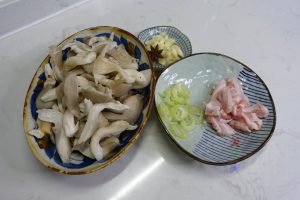
- Clean the Mushrooms: Gently rinse the oyster mushrooms and pat them strictly dry. Tear them into bite-sized strips.
- Slice the Pork: Cut the pork belly into thin slices.
- Aromatics: Chop the scallion into small rounds. Mince the garlic cloves. Important: Separate the minced garlic into two piles: one small pile (about 1/3) and one large pile (about 2/3).
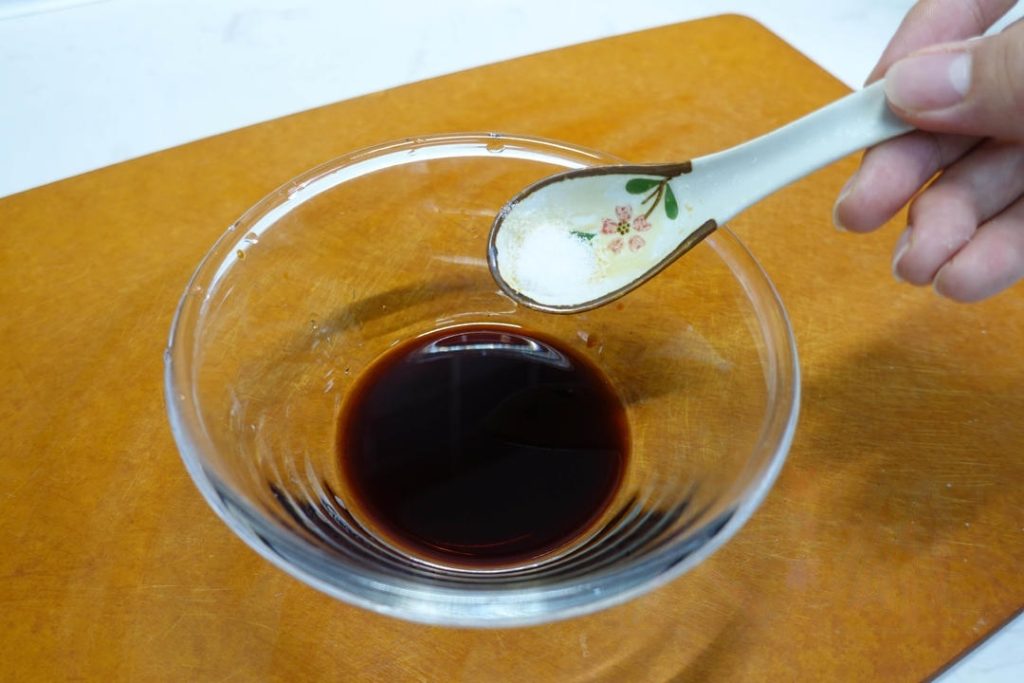
- Mix the Sauce: In a small bowl, combine 2 tablespoons light soy sauce, 1/2 tablespoon vinegar, 1/4 teaspoon salt, and 1/2 cup of water. Stir until salt is dissolved.
How to Make Braised Pork Belly with Oyster Mushrooms
- Sear the Pork: Place your wok or large skillet over medium heat. Add 1 tablespoon of oil. When the oil shimmers, add the sliced pork belly, the chopped scallions, the star anise, and the small pile (1/3) of minced garlic.
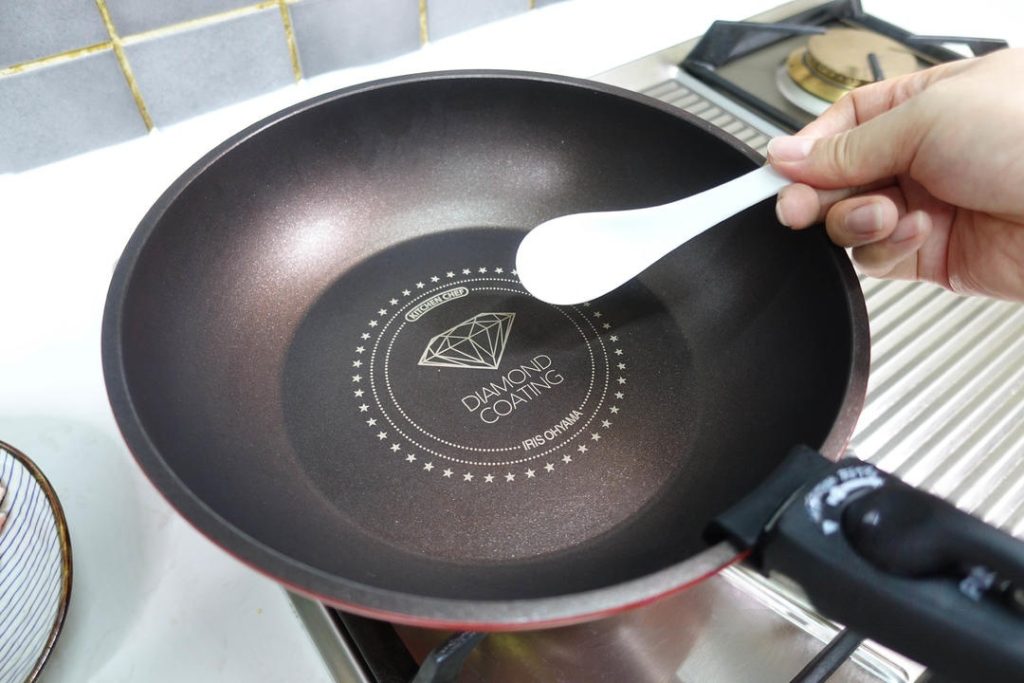
- Render the Fat: Stir-fry steadily. You want the pork belly to release its oil and turn white/opaque. Depending on your heat, the edges might just start to golden. This usually takes about 3-4 minutes.
- Chef’s Note: This step builds the flavor foundation. The pork fat mixes with the aromatics to create a fragrant base oil.
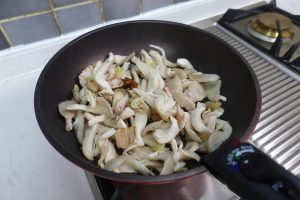
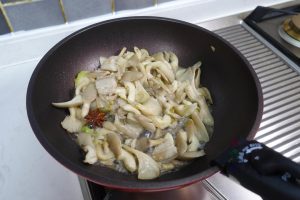
- Add Mushrooms: Dump in the torn oyster mushrooms. Turn the heat up to high. Stir-fry energetically.
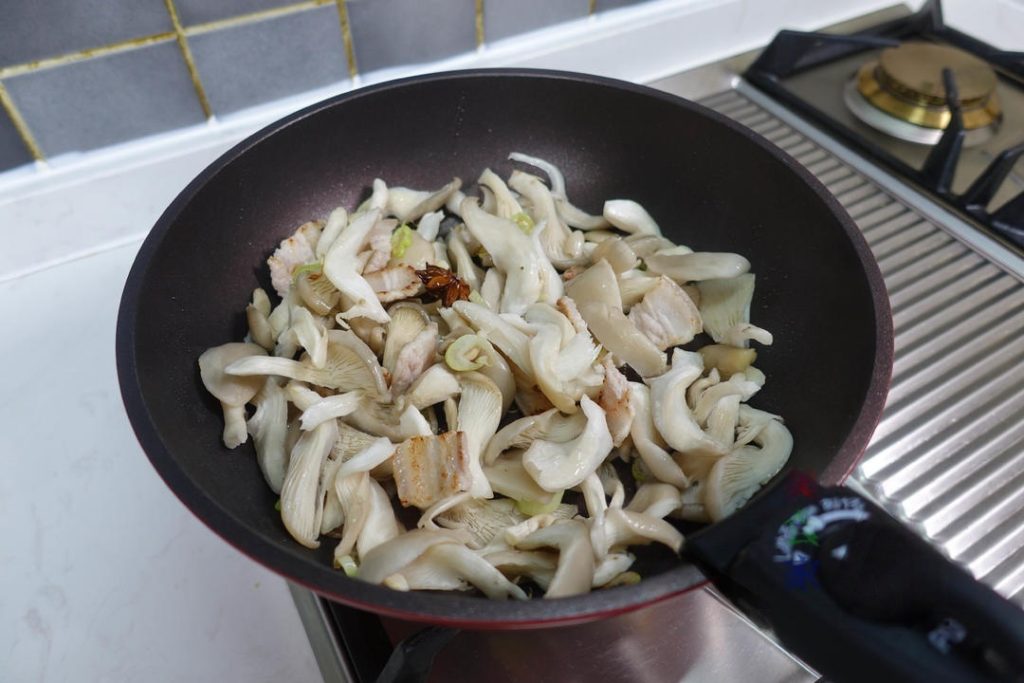
- Release the Juices: Continue stir-frying until the mushrooms wilt and release their natural liquid. You will see liquid pooling at the bottom of the pan. This is “mushroom soup” and it is delicious.
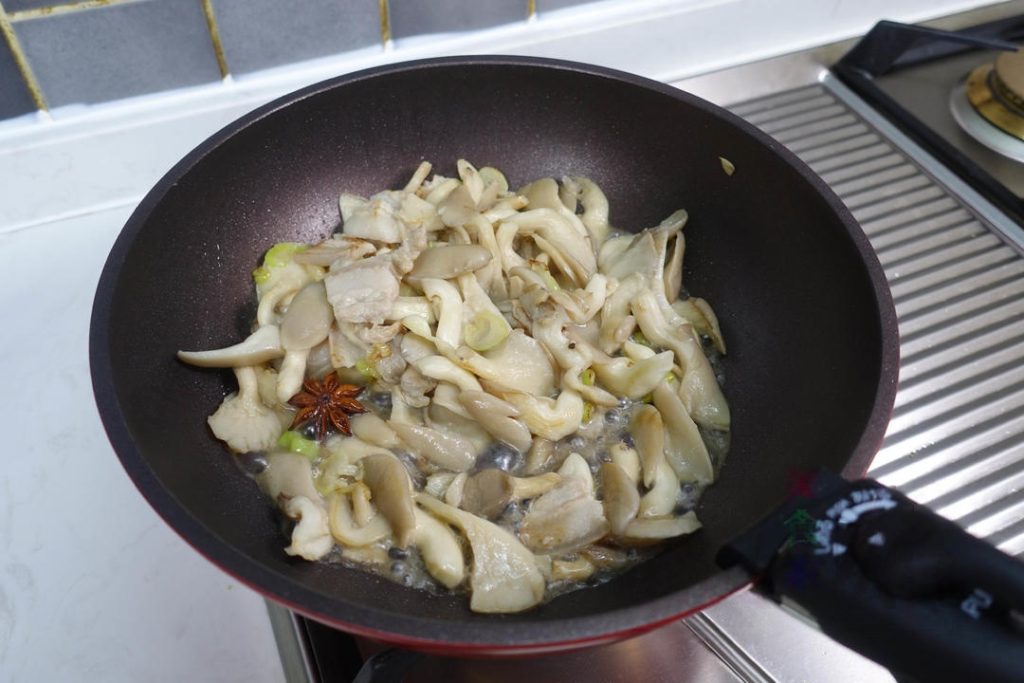
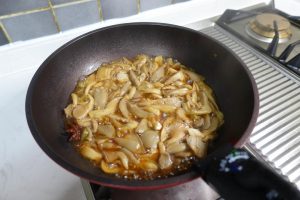
- Braise: Pour in your pre-mixed sauce bowl (soy sauce, vinegar, salt, water). Bring it to a boil. Once boiling, cover the wok with a lid. Turn the heat down to low and let it simmer for 5 minutes.
- Why cover? This steam-braising ensures the pork becomes tender and the mushrooms absorb the soy sauce mixture.
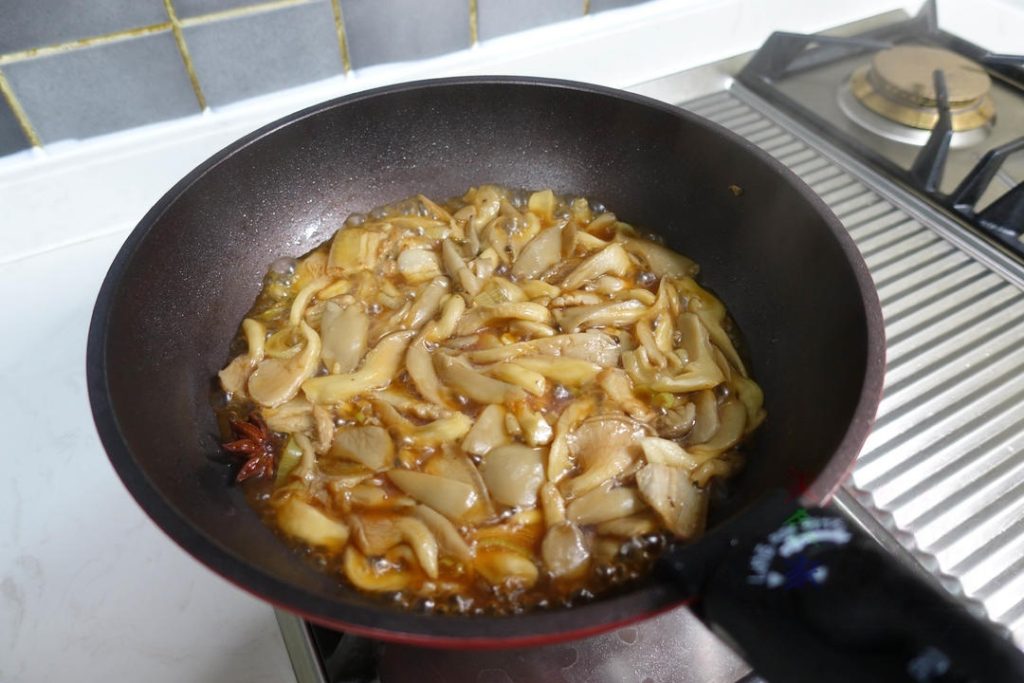
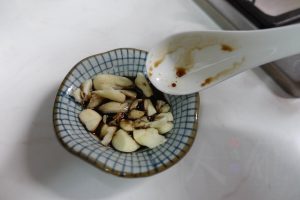
- The “Finishing Touch”: While the pot simmers, take a small bowl and mix the remaining (2/3) minced garlic with the remaining 1 tablespoon of vinegar.
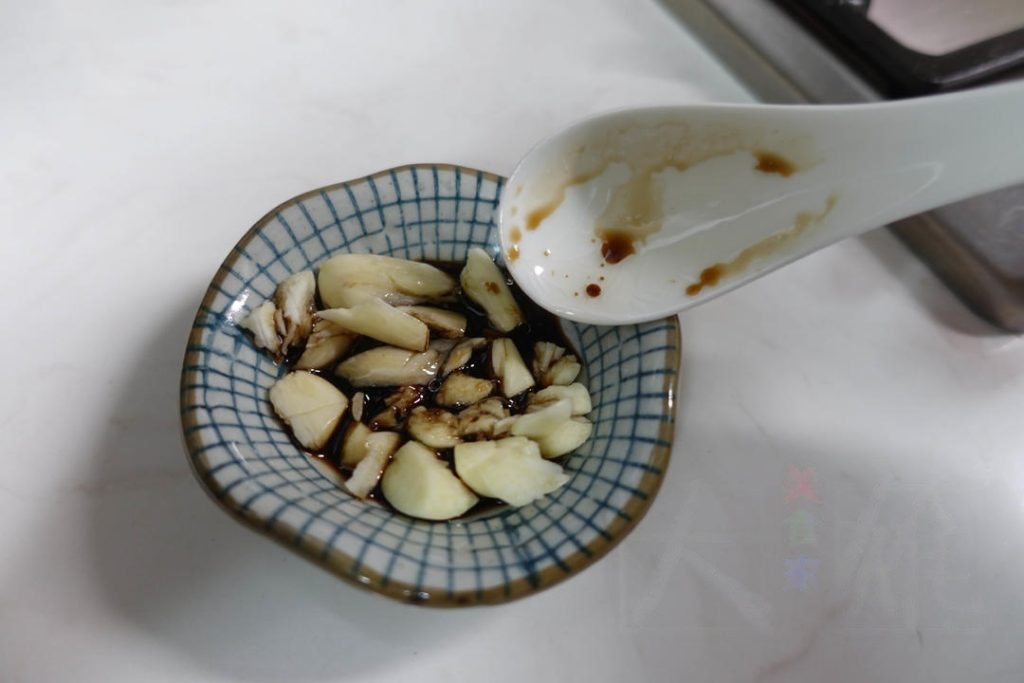
- Final Stir-fry: After 5 minutes, uncover the wok. Pour in the garlic-vinegar mixture. Turn the heat back up to high.
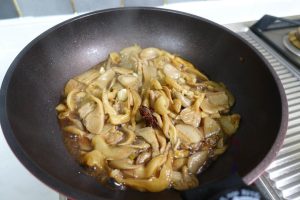
- Thicken and Serve: Stir-fry rapidly for about 30-60 seconds. You want to evaporate the excess water and let the sauce cling to the mushrooms and meat. When the sauce has thickened and the garlic aroma hits your nose, turn off the heat. Transfer to a serving plate immediately.
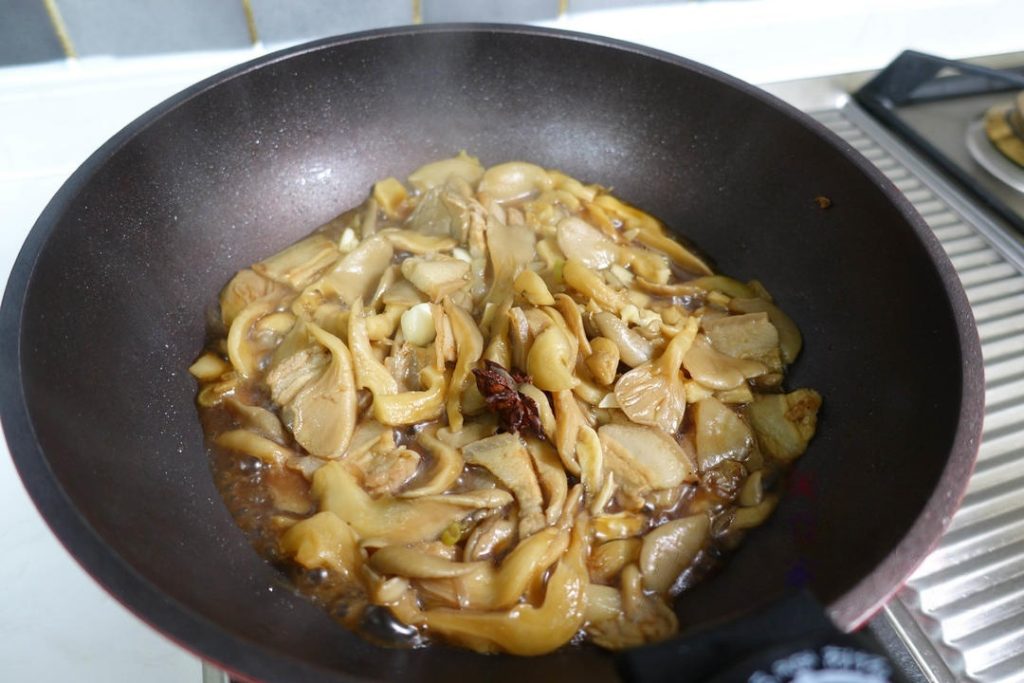
Common Mistakes When Making Braised Pork Belly with Mushrooms
- Adding all the garlic at the start: If you cook all the garlic at the beginning, it loses its pungency. The raw garlic added at the end provides a necessary sharp contrast to the rich pork.
- Not cooking the liquid down: If you skip the final high-heat stir-fry (step 7), the dish will be watery and the flavor diluted. You want a glossy sauce, not a soup.
- Overcrowding the pan: If using a small skillet, the mushrooms might steam too much before browning. Use your largest pan or a wok.
Notes
- Vinegar: Use Chinkiang vinegar for a more authentic, robust flavor.
- Texture: Do not overcook the mushrooms in the final step; they should be tender but not mushy.
- Allergens: Contains Soy, Wheat (in soy sauce). Gluten-free if using Tamari.
Food Safety and Preparation
- Pork Safety: Ensure the pork belly reaches an internal temperature of at least 145°F (63°C) during the cooking process. Since we are slicing it thin and braising it, it will be well-done and safe.
- Mushroom Storage: Fresh oyster mushrooms spoil quickly. Store them in a paper bag in the fridge and use within 3-4 days of purchase. Do not store them in plastic bags, or they will become slimy.
Tips for Success
- Vinegar Type Matters: While the recipe calls for “rice vinegar,” using an aged vinegar like Chinkiang Vinegar will give you a darker color and a more complex, smoky flavor profile.
- Don’t Skip the Anise: That single star anise does a lot of heavy lifting to mask any gamey flavor from the pork.
Serving Suggestions
This dish is a “rice killer” (xia fan cai). It is salty, savory, and rich.
- Rice: Serve with plenty of steamed short-grain or jasmine rice.
- Pairing: To balance the richness of the pork belly, pair this with a refreshing vegetable side like my Smashed Cucumber Salad or a light Tomato Egg Drop Soup.
- Tofu Alternative: If you love this flavor profile but want a meat-free option (using vegetable oil instead of pork fat), check out my Homestyle Tofu recipe.
How to Store & Reheat
- Fridge: Store leftovers in an airtight container for up to 3 days.
- Reheat: Reheat in a microwave or on the stovetop over medium heat. If the sauce has dried up, add a splash of water to loosen it.
- Freezing: I do not recommend freezing this dish. Oyster mushrooms become rubbery and watery when thawed.
Nutrition Information (Estimate)
- Calories: ~320 kcal per serving
- Protein: 14g
- Fat: 26g
- Carbohydrates: 8g
- Sodium: 750mg
(Disclaimer: Nutrition information is calculated using an ingredient database and should be considered an estimate. Garnishes and optional items are not included. Actual values vary based on the fat content of your specific piece of pork belly.)
Authoritative References
For more information on the nutritional benefits of mushrooms, refer to the USDA FoodData Central. For guidelines on safe pork cooking temperatures, please visit FoodSafety.gov.
Final Thoughts
This dish represents the heart of Chinese home cooking: taking economical ingredients like pork belly and mushrooms and turning them into a feast through technique. The interplay of the savory braising liquid and the sharp garlic-vinegar finish is something you have to taste to understand.
If you enjoy this recipe, you might also like trying my Stir-fry King Oyster Mushrooms with Hot Peppers for a spicier kick!
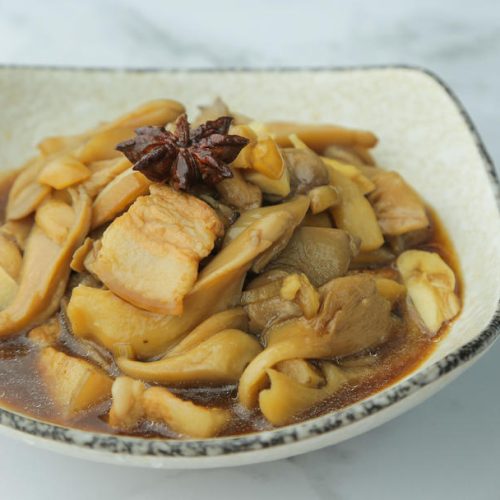
Braised Pork Belly with Oyster Mushrooms (Wuhuarou Shao Mogu)

Equipment
- Wok or large skillet
- Chef’s knife
Ingredients
The Main Stir-fry
- 1.1 lbs Fresh oyster mushrooms (Ping Gu) torn into strips
- 6 oz Pork belly thinly sliced, skin-on or skin-off
- 1 tbsp Neutral cooking oil vegetable, canola, or grapeseed
- 1 Scallion (green onion) chopped
- 4 cloves Garlic minced (divided use)
- 1 whole Star anise
The Braising Sauce
- 2 tbsp Light Soy Sauce or “Fresh Taste” soy sauce
- 0.5 tbsp Rice vinegar or Chinkiang vinegar
- 0.25 tsp Salt
- 0.5 cup Water approx. 120ml
The Finishing Touch
- 1 tbsp Rice vinegar or Chinkiang vinegar
Instructions
- Prep: Rinse the oyster mushrooms gently and pat them dry. Tear them by hand into bite-sized strips. Thinly slice the pork belly (about 1/4 inch thick). Chop the scallion into small rounds and mince the garlic. Important: Separate the minced garlic into two piles: one small (1/3) and one large (2/3). In a small bowl, combine the Braising Sauce ingredients (2 tbsp light soy sauce, 1/2 tbsp vinegar, 1/4 tsp salt, and 1/2 cup water). Stir until salt is dissolved.

- Sear the Pork: Place your wok or large skillet over medium heat. Add 1 tbsp oil. When the oil shimmers, add the sliced pork belly, chopped scallions, star anise, and the small pile (1/3) of minced garlic.
- Render the Fat: Stir-fry steadily for 3-4 minutes. You want the pork belly to release its oil and turn white/opaque. Depending on your heat, the edges might just start to golden. This builds the flavor foundation.
- Fry Mushrooms: Dump in the torn oyster mushrooms. Turn the heat up to high. Stir-fry energetically. Continue until the mushrooms wilt and release their natural liquid. You will see liquid pooling at the bottom of the pan.
- Braise: Pour in the pre-mixed Braising Sauce bowl. Bring it to a boil. Once boiling, cover the wok with a lid. Turn the heat down to low and let it simmer for 5 minutes. This ensures the pork becomes tender and the mushrooms absorb the sauce.
- Prepare Finishing Touch: While the pot simmers, take a small bowl and mix the remaining (2/3) minced garlic with the remaining 1 tbsp of vinegar.
- Final Stir-fry: After 5 minutes, uncover the wok. Pour in the garlic-vinegar mixture. Turn the heat back up to high.
- Thicken and Serve: Stir-fry rapidly for about 30-60 seconds. You want to evaporate the excess water and let the sauce cling to the mushrooms and meat. When the sauce has thickened and the garlic aroma is pungent, turn off the heat. Transfer to a serving plate immediately.





Leave a Reply