There is a particular kind of magic that happens when beef and tomatoes cook together for a long time. The tomatoes break down into something sweet and jammy, the beef gives up its collagen, and what’s left in the pot is a glossy, deep-red sauce that tastes like it took all day — even when it didn’t. Braised oxtail with tomato (番茄焖牛尾) is that magic applied to the most flavorful, most stubborn cut in the whole animal.
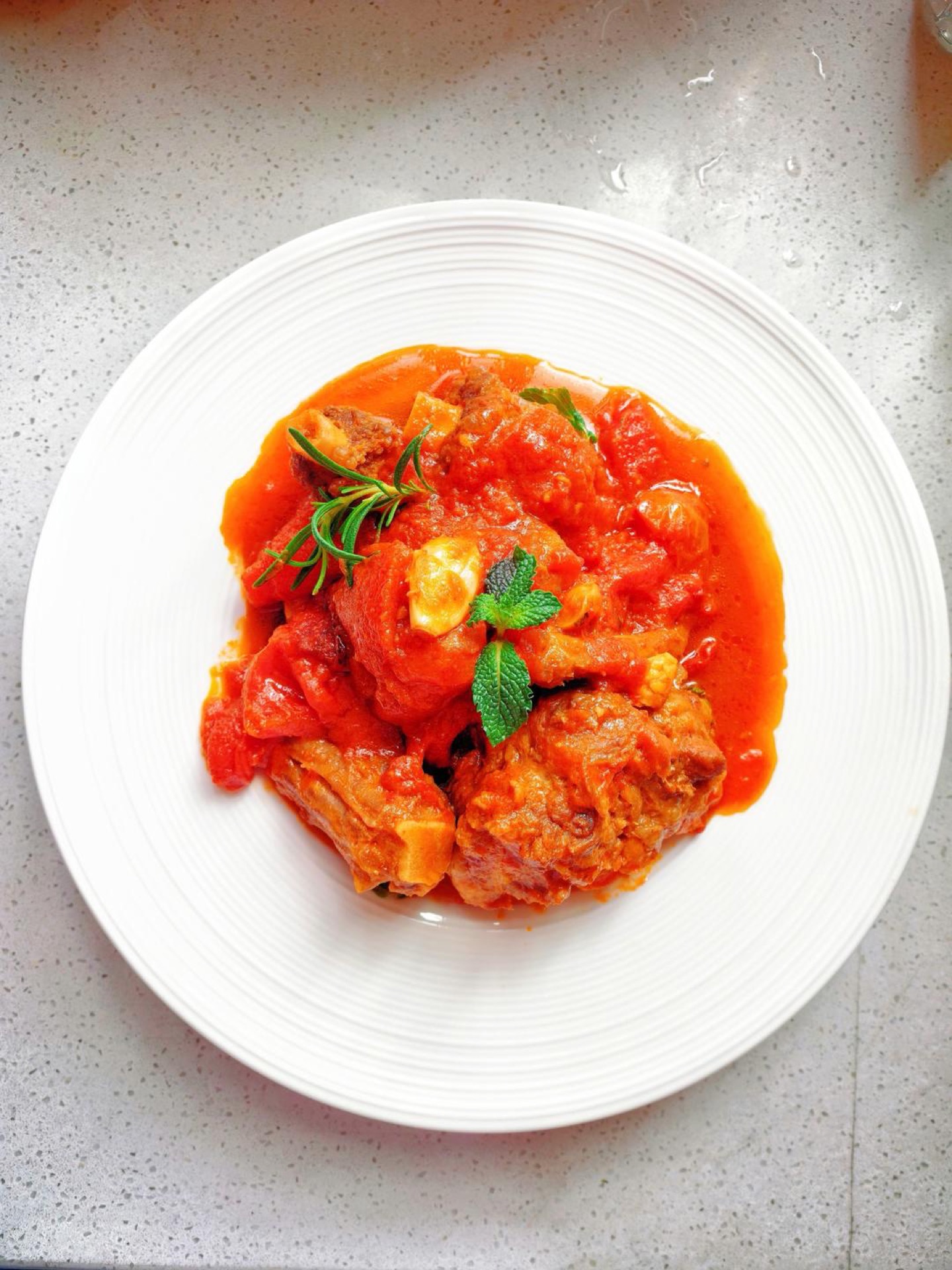
Oxtail is not a quick cut. It is bone, marrow, and a lot of connective tissue wrapped in a relatively small amount of meat, and that is exactly why it is so good. When you give it enough time and moisture, all of that tendon melts into gelatin, and the sauce turns silky and sticky in a way that no roux or starch can imitate. The marrow leaches into the braising liquid and gives it a beefy, almost roasted depth.
The Chinese home-cooking version keeps the seasoning almost absurdly simple: garlic, ginger, a little sugar, a splash of Shaoxing wine and soy sauce, and then tomatoes doing the heavy lifting twice — once as fresh wedges and once as a can of tomato. That double hit is what makes the sauce taste bright and layered instead of flat and canned. You barely need salt, and you certainly don’t need a long list of spices.
What you do need is patience with the first step. Oxtail that hasn’t been given a head start will fight you. Oxtail that has been pressure-cooked for ten minutes first will fall apart under a spoon. That single trick is the difference between a chewy braise and one you’ll want to make every cold weekend from now on.
What Is Braised Oxtail with Tomato?
Braised oxtail with tomato is a Chinese home-style braise — 焖 (mèn) in Mandarin, meaning a covered, low, moist cook — built on the same tomato-and-beef foundation as the classic tomato beef stews that show up all over northern and northeastern Chinese home kitchens. The oxtail goes in first, the tomatoes go in second, and everything cooks together until the meat slides off the bone and the sauce thickens on its own from all that rendered collagen.
It sits somewhere between a stew and a sauce. Eaten with rice, it’s a main course. Spooned over noodles, it’s dinner with almost no extra work. And the leftovers, honestly, are better than the first night, because the gelatin sets in the fridge and the flavors marry overnight.
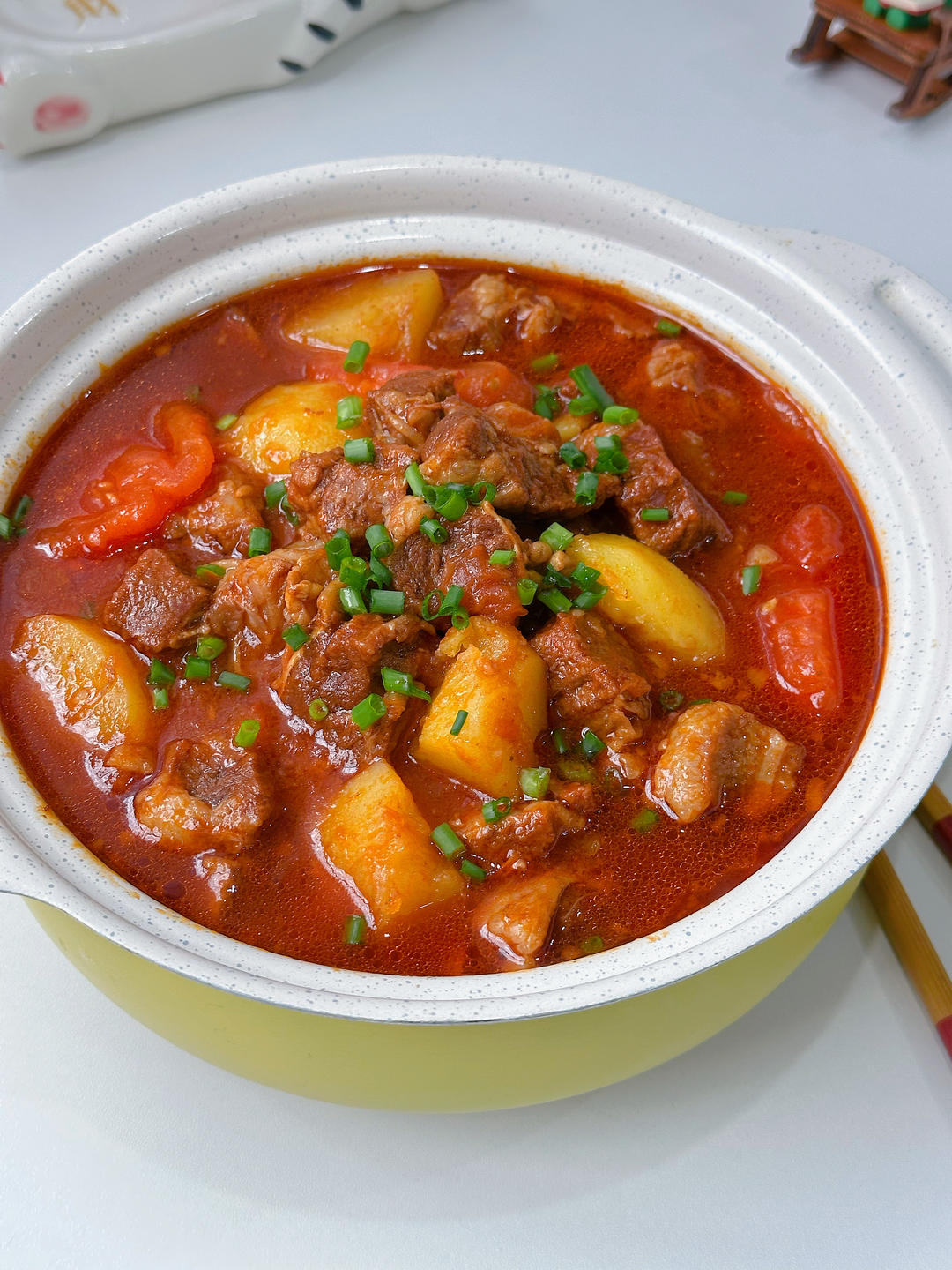
If you love this style of slow tomato-and-beef cooking, our hearty tomato and potato beef stew is the same idea with potatoes soaking up the sauce — a great next pot to try.
1Hearty Tomato and Potato Beef Stew (Fan Qie Tu Dou Dun Niu Rou)A classic Chinese comfort dish featuring tender beef, fluffy potatoes, and a rich, tangy tomato gravy. High in EEAT and flavor!Check out this recipe
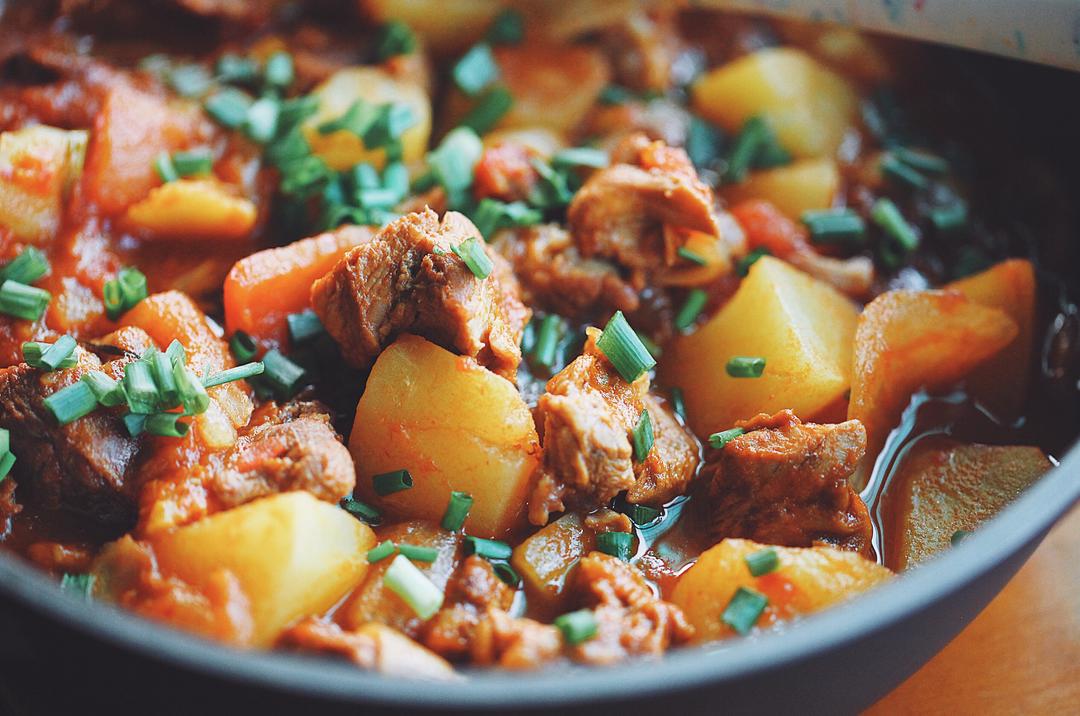
For a slightly different, more classic take on the same flavor family, our hearty tomato beef stew is simpler and even more weeknight-friendly.
2Hearty Tomato Beef Stew (番茄土豆炖牛肉)This easy, no-fail Tomato Beef Stew features fall-apart tender beef and fluffy potatoes in a rich, savory tomato broth. Perfect comfort food for the whole family.Check out this recipe
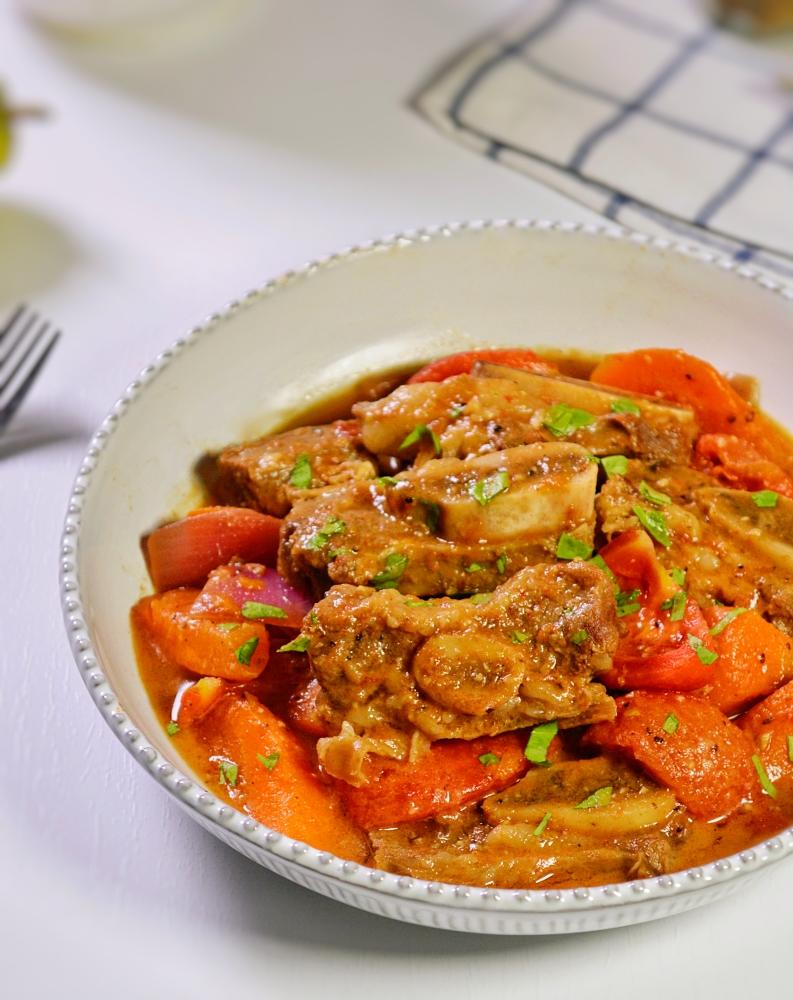
And if you want to see how far this tomato-braise idea can travel, our Provence braised beef short ribs applies the same tomato-and-slow-cooking logic with a French accent.
3Provence-Style Braised Beef Short Ribs (普罗旺斯番茄炖牛排)A hearty fusion stew featuring tender beef short ribs braised with tomatoes, bell peppers, and Montreal steak seasoning. A one-pot comfort dish that bridges Western flavors with Chinese braising techniques.Check out this recipe
Why This Recipe Works
Three things make this recipe reliable.
First, the pressure-cooker head start. Oxtail is loaded with collagen and elastin. Ten minutes under pressure doesn’t cook it through — it just breaks the toughest connective tissue enough that the subsequent braise can finish the job in 40 minutes instead of three hours. This is the single most important step, and skipping it is why most home oxtail attempts end up chewy.
Second, tomatoes twice. Fresh tomatoes give sweetness, acidity, and texture. Canned tomato gives concentration and body, plus a consistent depth that out-of-season fresh tomatoes can’t deliver. Together they build a sauce that tastes like summer tomatoes even in January.
Third, sugar and wine, not salt. A tablespoon of sugar rounds off the tomato’s acid and helps the sauce glaze. The Shaoxing wine adds a fermented, slightly nutty backbone. Salt comes last, if at all, because the canned tomato, soy sauce, and oyster sauce are already salty enough. If you want to understand why this kind of layering matters, our notes on restaurant style stir fry techniques apply just as much to braising — seasoning in stages beats seasoning at the end.
There’s real food science behind why this works: collagen converts to gelatin at roughly 160–180°F (71–82°C) over sustained time, and gelatin is what gives a braise its body and that lip-sticking richness. The Serious Eats Food Lab guide to braising explains the conversion in detail. This is also why braised meat tastes better the next day — the gelatin continues to hydrate and the sauce thickens further as it cools.
Equipment Needed
You don’t need much, but two pieces of equipment make this dramatically easier.
- A pressure cooker or Instant Pot. Used only for the 10-minute head start on the oxtail. If you don’t have one, you can simmer the oxtail in water for 60–90 minutes instead, then proceed with the recipe.
- A heavy braising pot or Dutch oven. Something with a tight-fitting lid and a thick base. A wok works for the initial stir-fry of aromatics, but for the long covered simmer a heavy pot retains heat far more evenly.
- A cutting board and a sharp knife. For the tomato wedges and the aromatics.
- A slotted spoon. For lifting the blanched oxtail out of the water and for skimming fat off the finished sauce if you want a leaner result.
If you only own a pressure cooker and no braising pot, you can absolutely do the whole thing in the pressure cooker — sauté mode for the aromatics, then pressure-cook the tomato stage. The texture will be slightly softer, but the flavor is the same.
Ingredients
Here’s what goes into the pot. Full amounts are in the recipe card at the bottom of this post.
- Oxtail — one whole oxtail, cut into segments, about 2.5–3 lb. Ask your butcher to cut it if it isn’t already.
- Fresh tomatoes — two ripe ones, cut into wedges. Any variety works; juicier is better.
- Canned tomato — one 14.5 oz can of crushed or diced tomato. This is not tomato paste; it’s the whole crushed/diced product.
- Garlic — four cloves, smashed and roughly chopped.
- Ginger — four slices, about 1/4 inch thick.
- Sugar — one tablespoon, to balance the tomato’s acid.
- Shaoxing wine — one tablespoon. Dry sherry is a fine substitute.
- Light soy sauce — one tablespoon. Tamari works for gluten-free.
- Oyster sauce — one tablespoon, optional but recommended for depth.
- Hot water — about a cup, to loosen the braise.
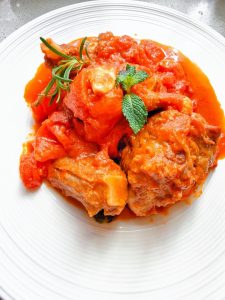
- Rosemary and basil or mint — optional garnishes. Genuinely optional; the dish is complete without them.
Ingredient Notes
Oxtail. Look for pieces that are a mix of thick meaty sections and thinner tail-end pieces. The thick ones give you the spoonable meat; the thin ones give you the most gelatin and the best sauce. If your oxtail is frozen, thaw it fully in the fridge overnight before blanching.
Canned tomato vs. tomato paste. These are not interchangeable. Canned crushed or diced tomato is the base of the sauce and provides volume and sweetness. Tomato paste is concentrated and intensely savory — a tablespoon of it can be a nice addition for extra depth, but it cannot replace the can. If you want to understand how dried aromatics can add another layer to braises like this, our guide to dried mandarin orange peel is worth a read — a small piece dropped in with the ginger changes the whole aroma.
Fresh tomatoes. Ripe, in-season tomatoes are best. In winter, Roma tomatoes or even good-quality canned whole tomatoes (drained and crushed by hand) will outperform pale, mealy fresh ones. Don’t stress about it — the canned tomato carries most of the flavor load anyway.
Soy sauce. Use light soy sauce, not dark. Dark soy is for color and is much less salty; using it here will leave the braise underseasoned and oddly dark. If you’re gluten-free, tamari is a straight swap.
Oyster sauce. This is the one ingredient that quietly makes the dish taste “restaurant-y.” It adds a savory, slightly sweet umami note that soy sauce alone can’t replicate. If you don’t have it, the dish still works — just add a pinch more sugar and a few drops of fish sauce, or leave it out entirely.
Sugar. One tablespoon sounds like a lot for a savory dish, but tomatoes are acidic and the long simmer concentrates that acid. The sugar balances it. If your tomatoes are very sweet, you can cut it to two teaspoons.
Prep & Mise en Place
This is a braise, which means the cooking itself is mostly hands-off — so do the chopping and measuring before you turn on the heat. It takes about 15 minutes and makes the rest of the process feel effortless.
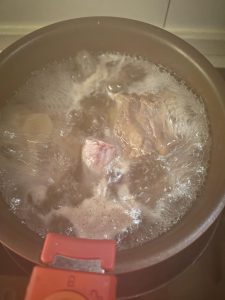
- Blanch the oxtail. Put the oxtail segments in a pot, cover with cold water, bring to a boil, and boil for 3–5 minutes. You’ll see gray scum rise to the surface. Drain, rinse the oxtail under warm water, and set aside. This removes impurities and gives you a cleaner-tasting sauce.
- Prep the aromatics. Smash and roughly chop the garlic. Slice the ginger into four coins about 1/4 inch thick. No need to peel if the skin is clean.
- Cut the tomatoes. Core the fresh tomatoes and cut them into thick wedges. Keep them on a plate near the stove.
- Measure the liquids. Combine the Shaoxing wine and light soy sauce in a small bowl. Measure the sugar into another small bowl. Have the oyster sauce ready.
- Open the can. Open the canned tomato and set it next to the fresh tomatoes.
- Boil the water. Have about a cup of hot water ready — hot water added to a hot pot keeps the braise from stalling.
Once everything is on the counter within arm’s reach, the actual cooking goes fast until the simmer starts.
Cooking Process
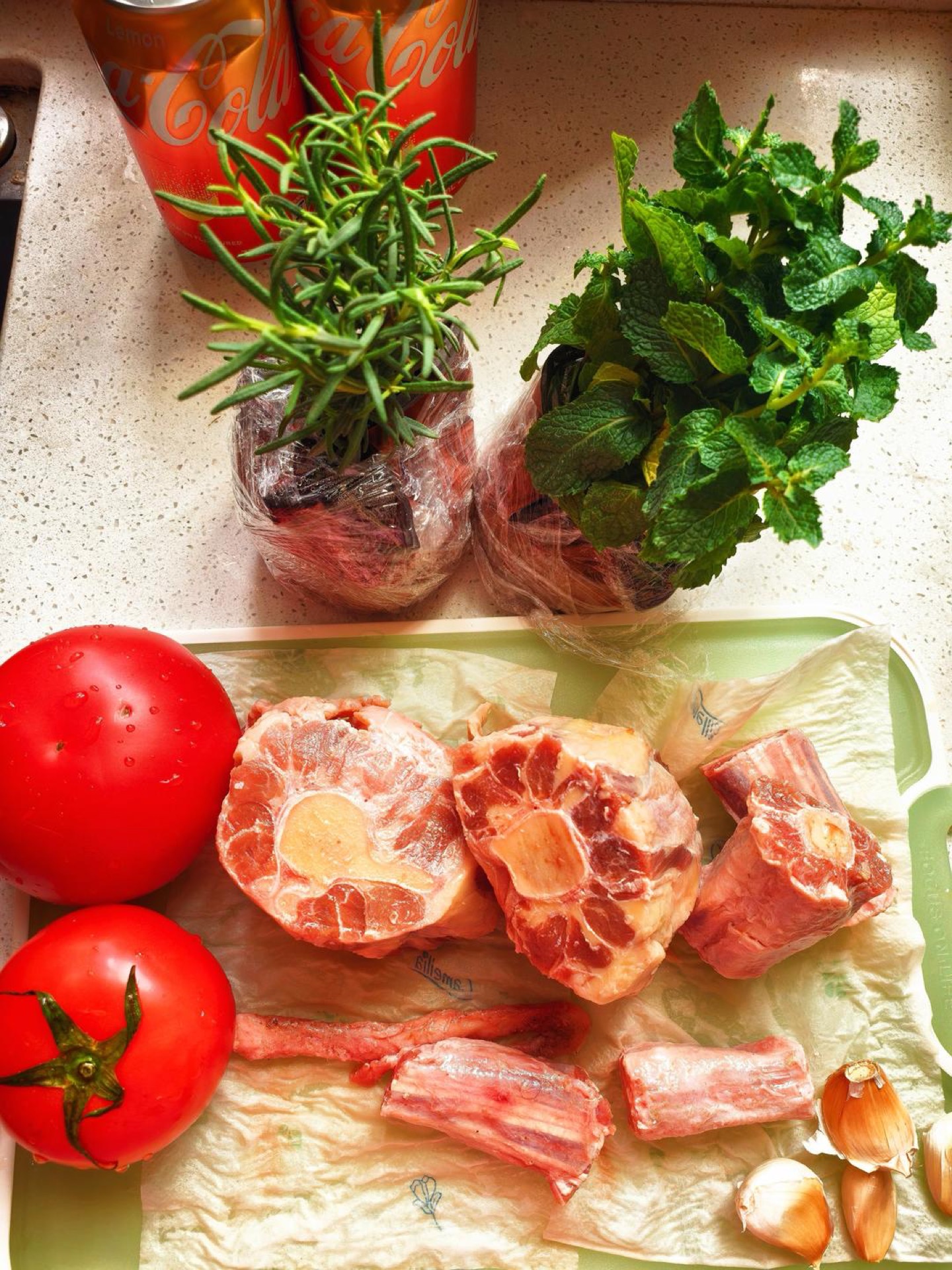
Step 1 — Gather Everything
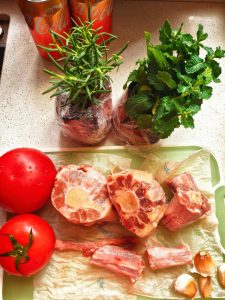
Everything, plus the rosemary and mint or basil, is just a bonus and entirely optional. There’s also a can of tomato paste that shows up later.
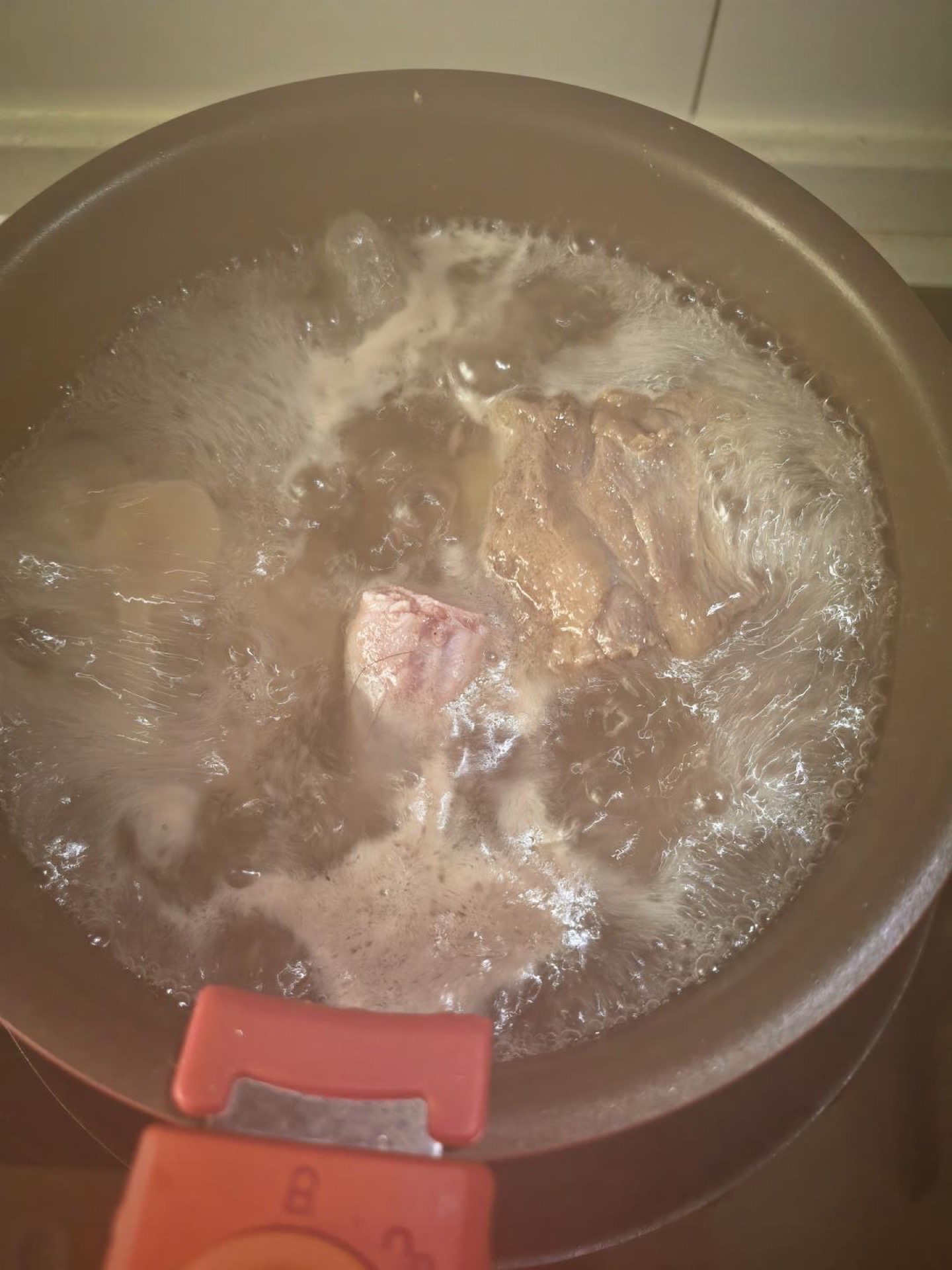
Step 2 — Blanch and Pressure-Cook
Blanch the oxtail in boiling water, then pressure-cook it for 10 minutes once the cooker comes up to pressure. Because I’m using a braising pot, I pressure-cook first — otherwise oxtail has so much tendon that it’s too tough to chew.
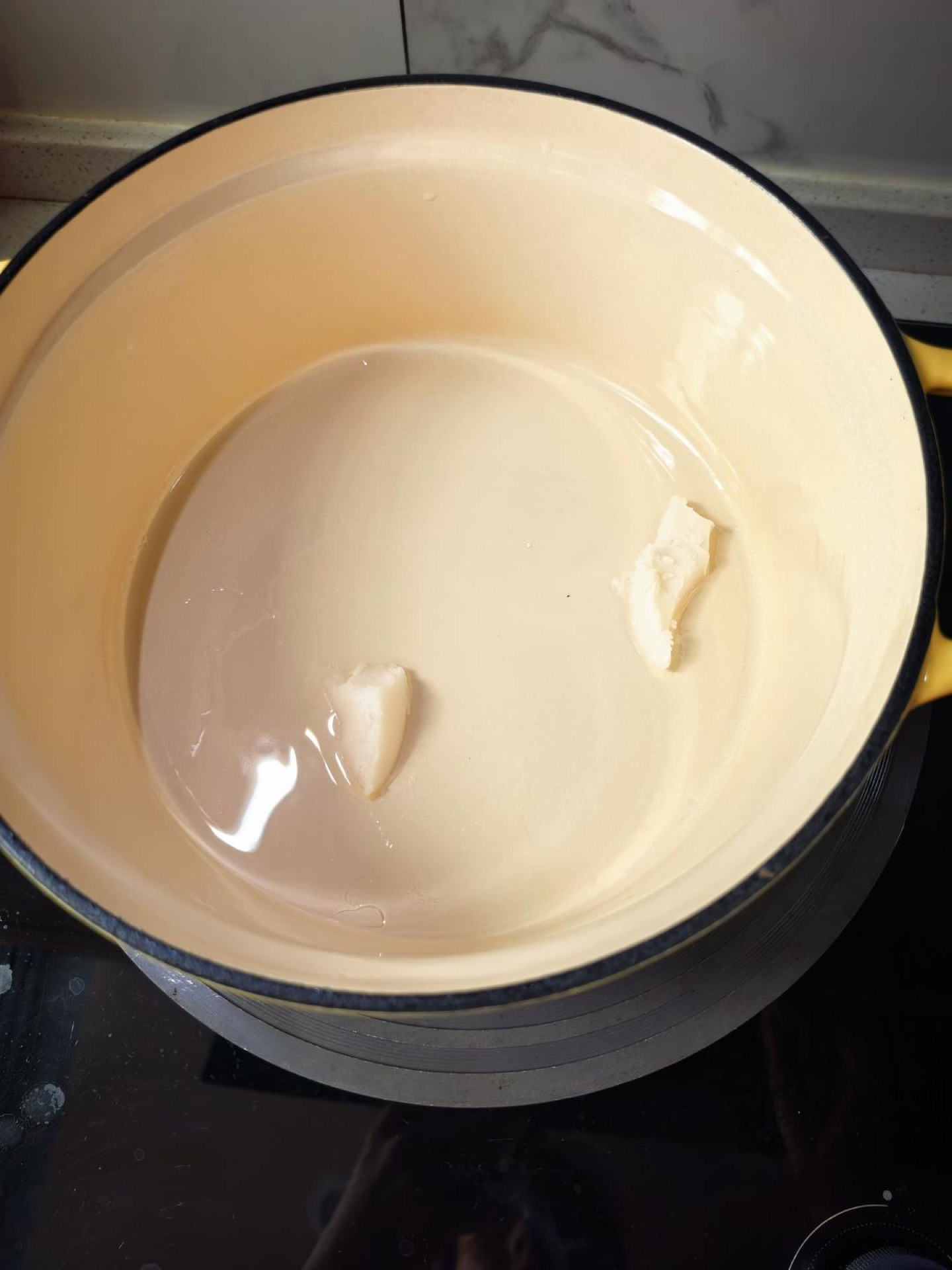
Step 3 — Heat the Oil
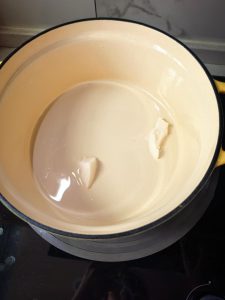
Add a little oil — if you don’t have a braising pot, a pressure cooker works the same way.
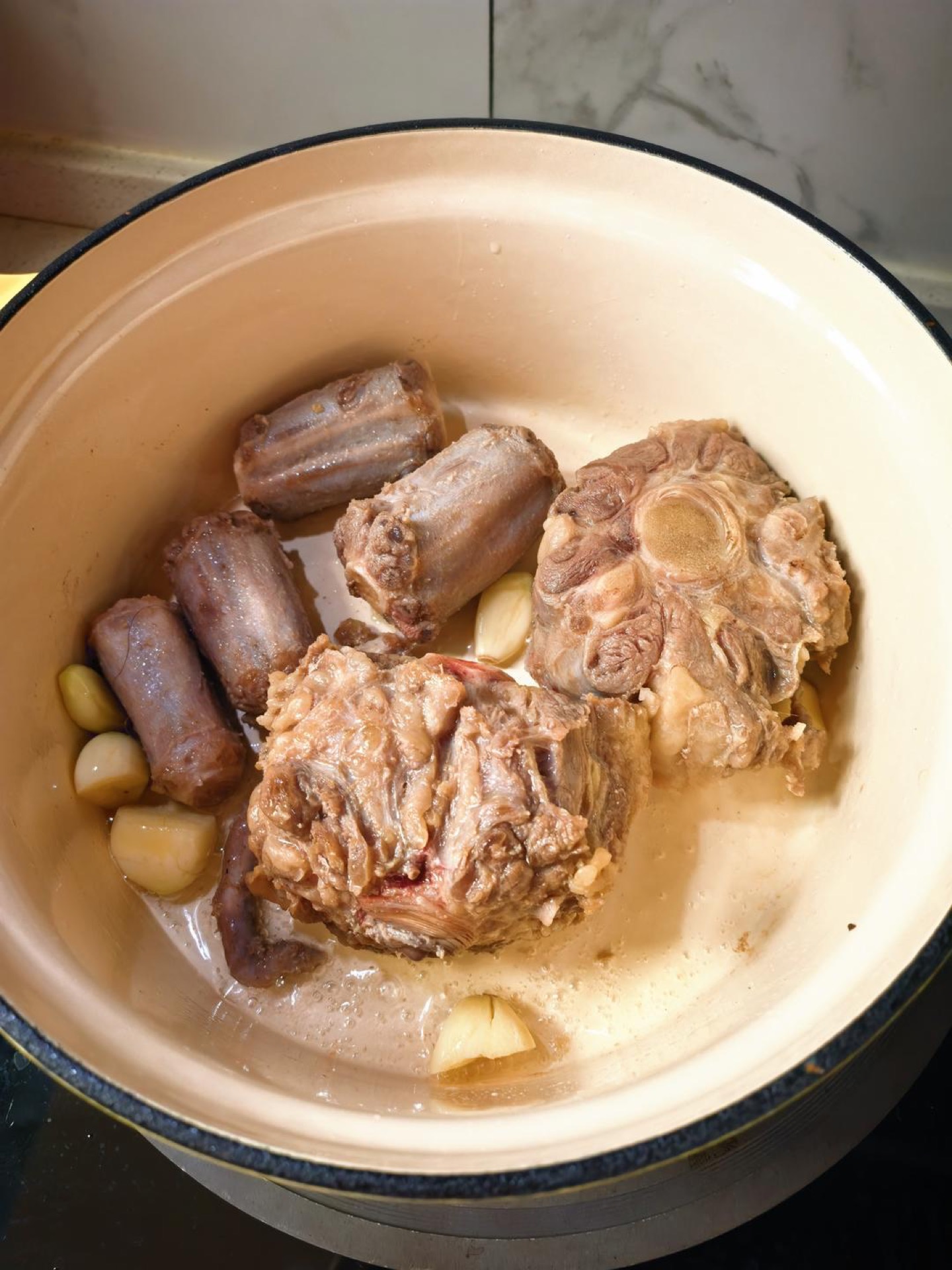
Step 4 — Aromatics and Seasoning
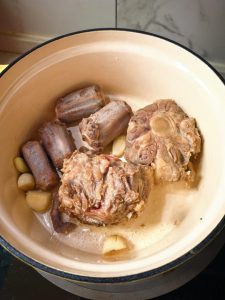
Stir-fry the garlic and ginger, add a little sugar, Shaoxing wine, and soy sauce, and stir-fry again.
Step 5 — Add the Tomatoes
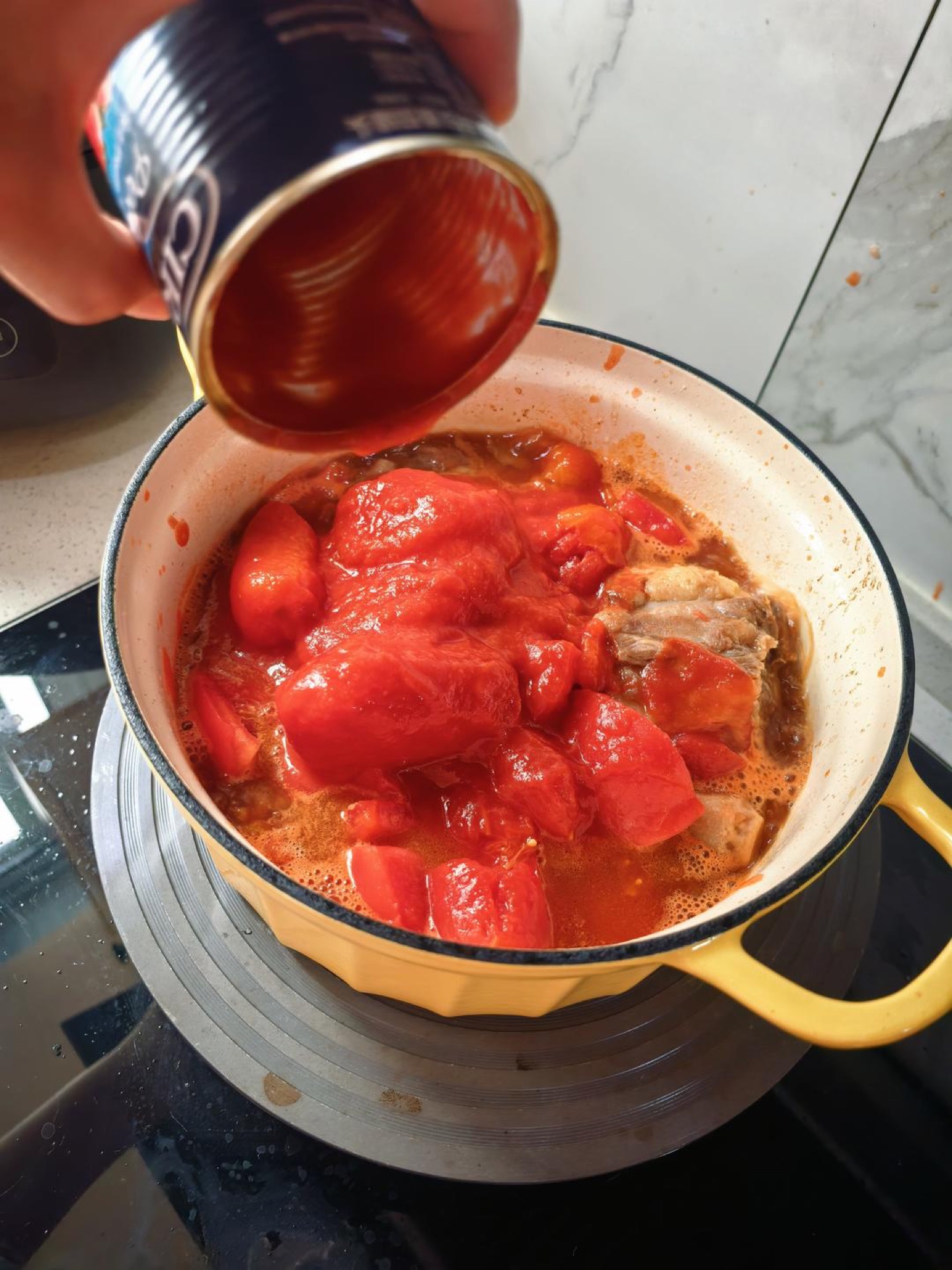
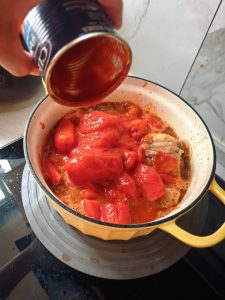
Add one can of canned tomato, the chopped fresh tomatoes, and a little hot water. Braise, or pressure-cook it — bring it up to pressure over high heat, then turn to low.
Step 6 — Simmer and Cool
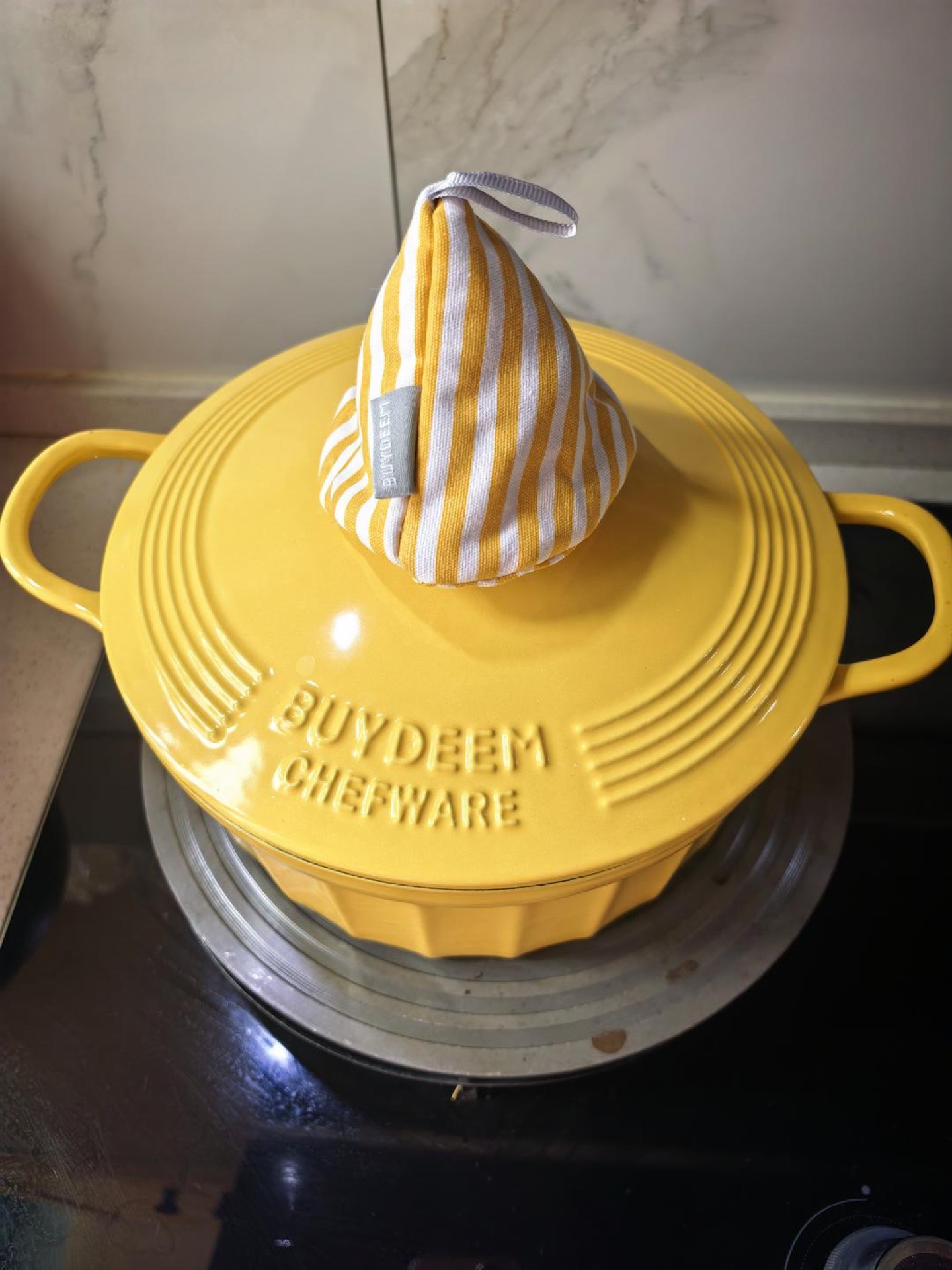
Simmer over medium heat for 40 minutes. Turn off the heat and let it cool. With a braising pot you can add a little rosemary and basil leaves whenever you like — no need for much.
Step 7 — Plate It
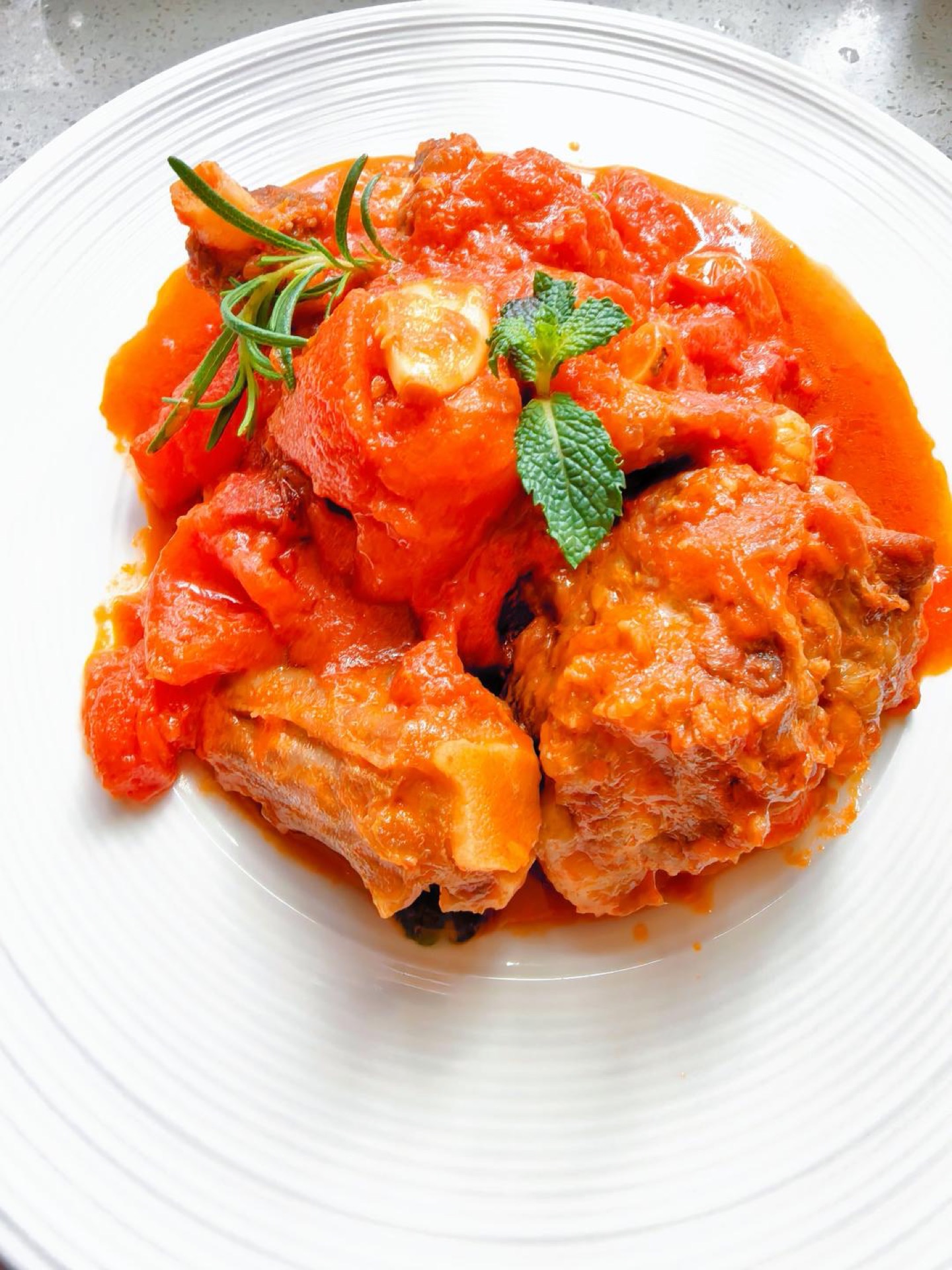
Plate it up. No salt added, and it’s still delicious.
Common Mistakes When Making Braised Oxtail with Tomato
1. Skipping the pressure-cooker head start. This is the number one reason home braised oxtail comes out chewy. Oxtail has more connective tissue per pound than almost any other cut, and a 40-minute stovetop simmer alone won’t break it down. Fix: pressure-cook for 10 minutes first, or simmer stovetop for 60–90 minutes before starting the braise.
2. Not blanching the oxtail. Skipping the blanch leaves impurities and coagulated blood in the pot, which clouds the sauce and gives it a slightly muddy, iron-heavy taste. Fix: always blanch in boiling water for 3–5 minutes, then rinse the pieces clean before they go back in the pot.
3. Adding salt too early. Canned tomato, soy sauce, and oyster sauce are all salty, and the sauce reduces significantly during the braise. Salting at the start almost guarantees an over-seasoned dish. Fix: taste at the very end, after the sauce has reduced, and add salt only if it genuinely needs it. In my experience, it usually doesn’t.
4. Using dark soy sauce instead of light. Dark soy is primarily a coloring agent and is far less salty. If you use it here, the braise will taste flat and look almost black. Fix: use light soy sauce, or tamari for a gluten-free version, and save the dark soy for red-braised dishes where color is the point.
5. Boiling hard instead of simmering gently. A rolling boil agitates the meat, toughens the muscle fibers, and can make the sauce break and turn greasy. Fix: once the pot comes to a boil, immediately drop it to the lowest heat that maintains a bare simmer — small bubbles around the edge, not a churn.
6. Not letting it rest before serving. Braised oxtail straight off the heat is good; braised oxtail that’s rested 20 minutes — or better, chilled overnight and reheated — is spectacular. The gelatin needs time to fully hydrate and the fat needs time to re-emulsify. Fix: turn off the heat and let the pot sit, covered, for at least 20 minutes before plating.
7. Adding too much water at the start. The tomatoes release a surprising amount of liquid as they cook, and the oxtail releases more. If you top up generously at the beginning, you’ll end up with a thin, soupy braise. Fix: add just one cup of hot water at the start, then top up in small increments only if the pot looks dry.
Variations
Pressure-cooker only. Do everything in the Instant Pot: sauté the aromatics on sauté mode, add the tomatoes and oxtail, then pressure-cook for 35–40 minutes with a natural release. The meat will be softer and the sauce slightly thinner, but it’s a genuinely good weeknight version.
Add potatoes or daikon. Chunks of waxy potato or daikon radish added in the last 20 minutes soak up the tomato sauce beautifully. Our braised beef brisket with daikon radish is a good reference for how daikon behaves in a long braise — it turns translucent and silky.
Make it spicy. Add a tablespoon of doubanjiang (fermented chili bean paste) with the aromatics, or a few dried chilies. This pushes the dish toward a Sichuan-leaning flavor profile.
Herb-forward version. Add a sprig of rosemary and a handful of basil in the last 10 minutes of simmering. The herbs perfume the sauce without overpowering the tomato.
Serve over noodles. Thicken the sauce slightly by reducing it uncovered for 10 minutes, then ladle it over fresh wheat noodles. This is one of the best ways to use the leftovers.
Swap the protein. Short ribs, beef shank, or beef brisket all work with the same method. Adjust the pressure-cooking time based on the cut — short ribs need about 25 minutes, brisket about 45.
Frequently Asked Questions
Can I make this without a pressure cooker? Yes. Simmer the blanched oxtail in water to cover for 60–90 minutes, until the meat starts to loosen from the bone, then proceed with the recipe as written. The total cook time roughly doubles, but the result is the same.
My oxtail is still tough after 40 minutes. What went wrong? Almost always one of two things: you skipped the pressure-cooker head start, or you simmered at too high a heat. Oxtail needs both time and gentle heat. Put the lid back on and simmer another 30–45 minutes — it will eventually give in.
Do I really not need salt? Taste it at the end. Between the canned tomato, soy sauce, and oyster sauce, most batches are perfectly seasoned without added salt. If yours tastes flat, add a pinch — but taste first, because over-salting a reduced braise is hard to fix.
Can I use fresh tomatoes only, no canned? You can, but you’ll need about 3 lb of very ripe tomatoes, and the sauce will be thinner and less intensely flavored. Canned tomato is doing real work here — it’s worth keeping in.
How do I make the sauce thicker? Uncover the pot and simmer for 10–15 minutes to reduce. Alternatively, mash a few of the cooked tomato pieces against the side of the pot with a spoon, or stir in a teaspoon of cornstarch slurry. The natural gelatin from the oxtail will also thicken the sauce considerably as it cools.
How to Serve
Braised oxtail with tomato is best served over plain steamed white rice, with a vegetable on the side to cut the richness. The sauce is the point, so don’t be shy with it — spoon it generously over the rice and let it soak in.
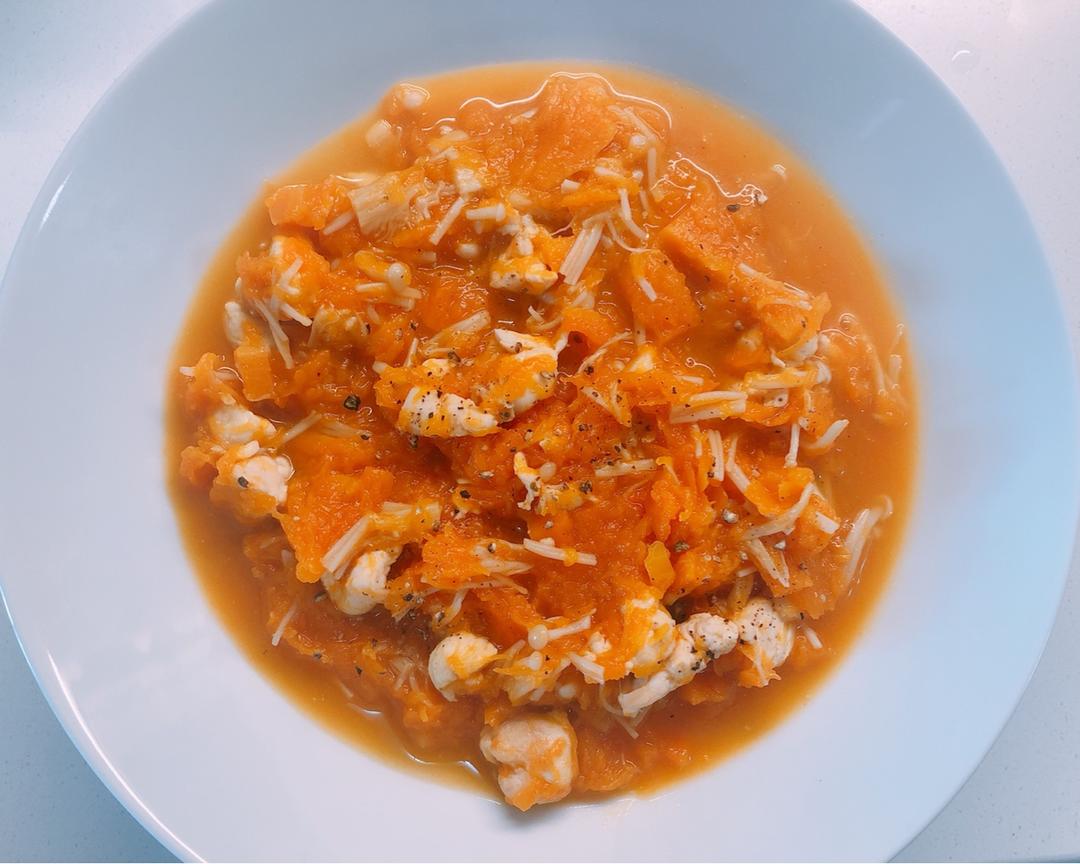
For a heartier variation, serve it over noodles or with crusty bread to mop up the sauce. If you want a lighter, more vegetable-forward plate alongside it, our savory chicken and pumpkin mash makes an unexpectedly good companion — the sweetness of the pumpkin plays well against the tart tomato.
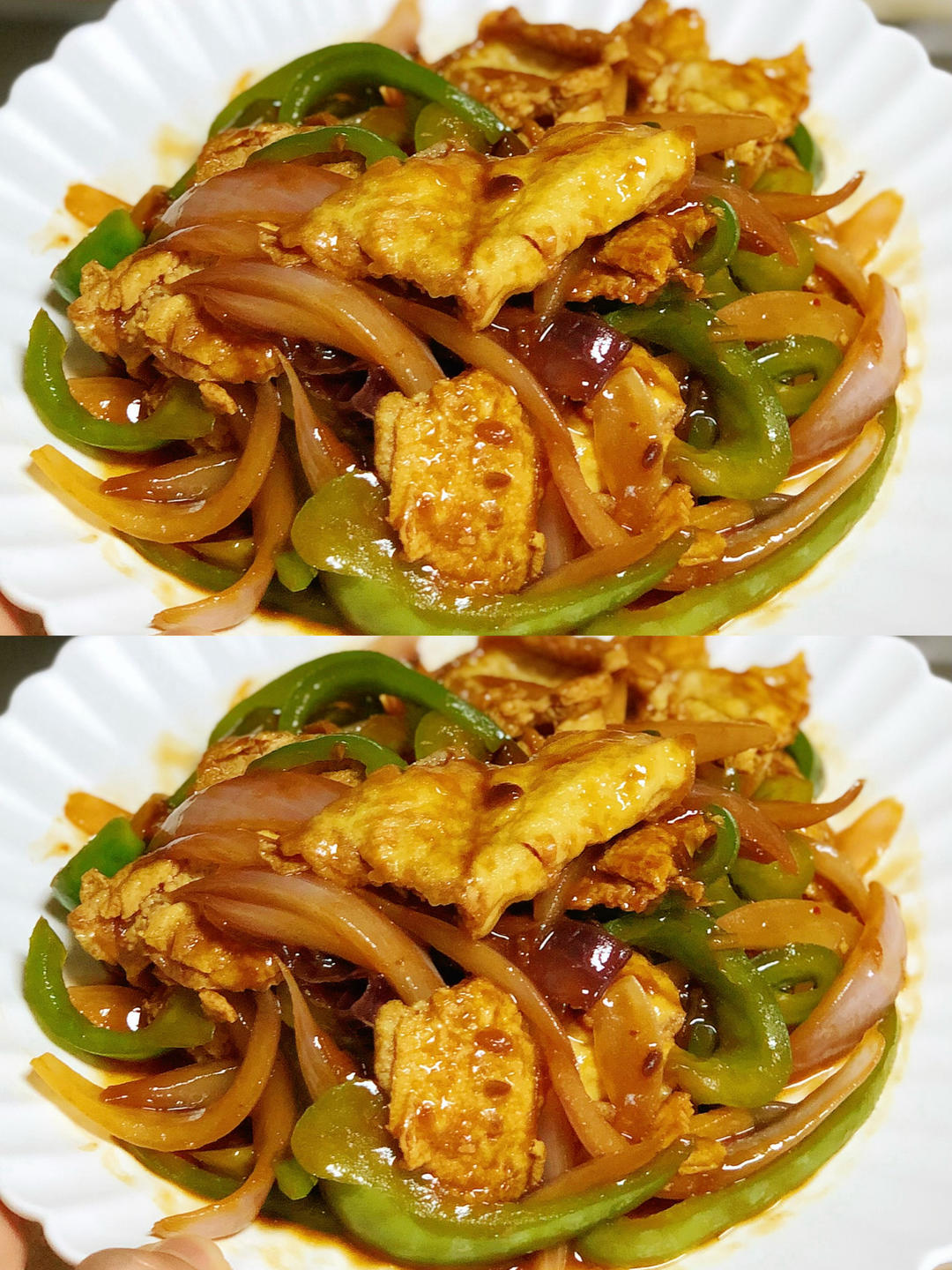
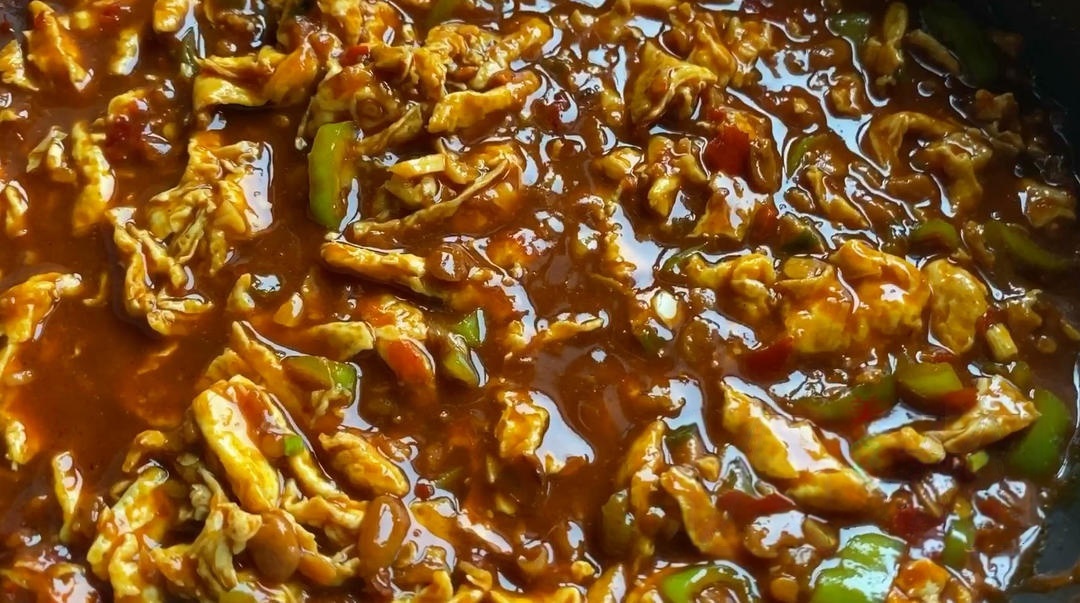
If you’re feeding a crowd and want a second protein on the table, our sauce stir fried eggs takes five minutes and adds a soft, savory contrast. And for a punchy, garlicky vegetable side that cuts through the richness, our Northeast Chinese egg sauce is a natural pairing with rice.
Storage & Reheat
Braised oxtail with tomato keeps exceptionally well — better than most dishes, because the gelatin sets in the fridge and the flavors deepen. Cool the pot within 2 hours of cooking, then transfer to a shallow airtight container and refrigerate for up to 4 days.
The fat will rise and solidify on the surface overnight. You can lift it off with a spoon for a leaner sauce, or stir it back in for a richer one. Both are correct.
To reheat, transfer to a pot over low heat with a splash of water, cover, and warm gently for 10–15 minutes, stirring occasionally. In the microwave, cover and heat in 1-minute intervals, stirring between each, until steaming hot — 165°F (74°C).
Freezing works well too. Freeze in portions for up to 3 months. Thaw overnight in the fridge, then reheat as above. The texture of the meat holds up beautifully; the sauce may look slightly grainy after freezing but smooths out completely once reheated.
Allergen Notice
This recipe contains soy, from the light soy sauce. If you use oyster sauce, check the label — some brands contain wheat and some contain shellfish. To make it soy-free, substitute coconut aminos for the soy sauce and omit the oyster sauce, adding a pinch more sugar instead. If you’re avoiding gluten, use tamari and a gluten-free oyster sauce, and confirm your Shaoxing wine is gluten-free (most are, but not all).
Nutrition Disclaimer
Nutrition information is calculated using an ingredient database and should be considered an estimate. In cases where multiple ingredient alternatives are given, the first listed is calculated for nutrition. Garnishes and optional ingredients are not included.
About the Author & Recipe Development
Hi, I’m Lin — I grew up cooking Chinese food at home and have spent the last decade testing and retesting the recipes on Woks of Love so that they work in a real home kitchen, with real supermarket ingredients, on a real weeknight schedule. This braised oxtail with tomato started as a way to use up a can of crushed tomatoes and a stubborn oxtail from the butcher, and it’s become one of the most-requested dishes in my house.
Every recipe here is tested at least twice, usually three times, and adjusted until the instructions are clear enough to follow without guessing. If you make this one, I’d love to hear how it turned out — and if you changed anything, tell me that too, because the variations are often better than the original.
Authoritative References
For safe cooking temperatures and food handling guidance, see the USDA safe minimum internal temperature chart. For storage and cooling guidance, the FDA cold food storage guidance is a useful reference. For the science of collagen conversion in braises, the Serious Eats Food Lab braising guide is an excellent explainer.
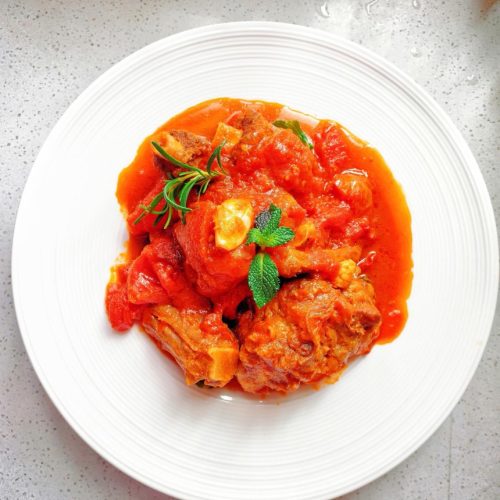
Braised Oxtail with Tomato (番茄焖牛尾): Fall-Off-The-Bone Oxtail in

Equipment
- Wok
- Cutting Board
- Slotted Spoon
Ingredients
For the Oxtail
- 1 whole oxtail about 2.5-3 lb, cut into segments
- 4 cups water for blanching
For the Aromatics
- 2 tbsp vegetable oil or any neutral oil
- 4 cloves garlic smashed and roughly chopped
- 4 slices ginger about 1/4 inch thick
- 1 tbsp granulated sugar about 1/4 inch thick
- 1 tbsp Shaoxing wine or dry sherry
- 1 tbsp light soy sauce or tamari
- 1 tbsp oyster sauce optional
For the Tomato Braise
- 2 whole tomatoes ripe, cut into wedges
- 1 can canned tomato 14.5 oz, crushed or diced
- 1 cup hot water plus more as needed
- 2 sprigs fresh rosemary optional
- 1 handful fresh basil or mint, optional
Instructions
- Everything, plus the rosemary and mint or basil, is just a bonus and entirely optional. There’s also a can of tomato paste that shows up later.

- Blanch the oxtail in boiling water, then pressure-cook it for 10 minutes once the cooker comes up to pressure. Because I’m using a braising pot, I pressure-cook first — otherwise oxtail has so much tendon that it’s too tough to chew.
- Add a little oil — if you don’t have a braising pot, a pressure cooker works the same way.
- Stir-fry the garlic and ginger, add a little sugar, Shaoxing wine, and soy sauce, and stir-fry again.
- Add one can of canned tomato, the chopped fresh tomatoes, and a little hot water. Braise, or pressure-cook it — bring it up to pressure over high heat, then turn to low.
- Simmer over medium heat for 40 minutes. Turn off the heat and let it cool. With a braising pot you can add a little rosemary and basil leaves whenever you like — no need for much.
- Plate it up. No salt added, and it’s still delicious.













Leave a Reply