In the vast treasure trove of Chinese seasonings, there is an ingredient that, while less flashy than chili or Sichuan peppercorn, plays an indispensable role in countless classic dishes. It is Dried Mandarin Orange Peel, known in Chinese as Chénpí (陈皮) or Guǒpí (果皮). Much like how a fine wine or a complex balsamic vinegar improves with time, this humble citrus rind transforms into a powerful aromatic that adds a haunting, earthy depth to everything from braised meats to sweet dessert soups.

What Is Dried Mandarin Orange Peel?
Dried Mandarin Orange Peel refers to the sun-dried skin of the mandarin orange (Citrus reticulata Blanco). In Chinese, the name “Chenpi” literally translates to “aged peel,” highlighting the cultural belief that the longer the peel is stored, the more potent and valuable it becomes.
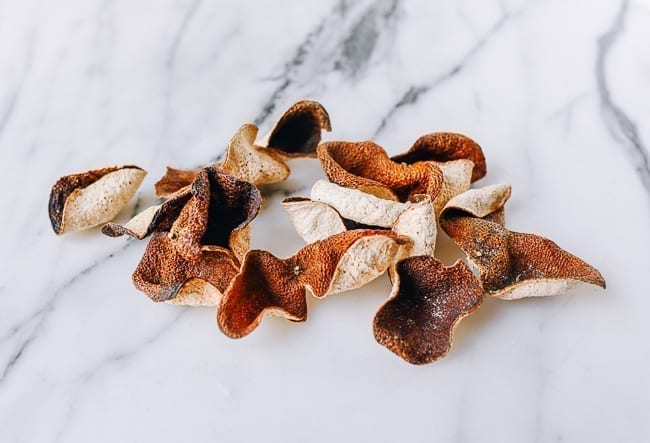
- Botanical Origin: It primarily comes from the mandarin orange tree. The most prestigious variety is harvested in Xinhui, Guangdong Province, where the specific local cultivar and climate produce peels with exceptionally high essential oil content [Britannica – Mandarin Orange].
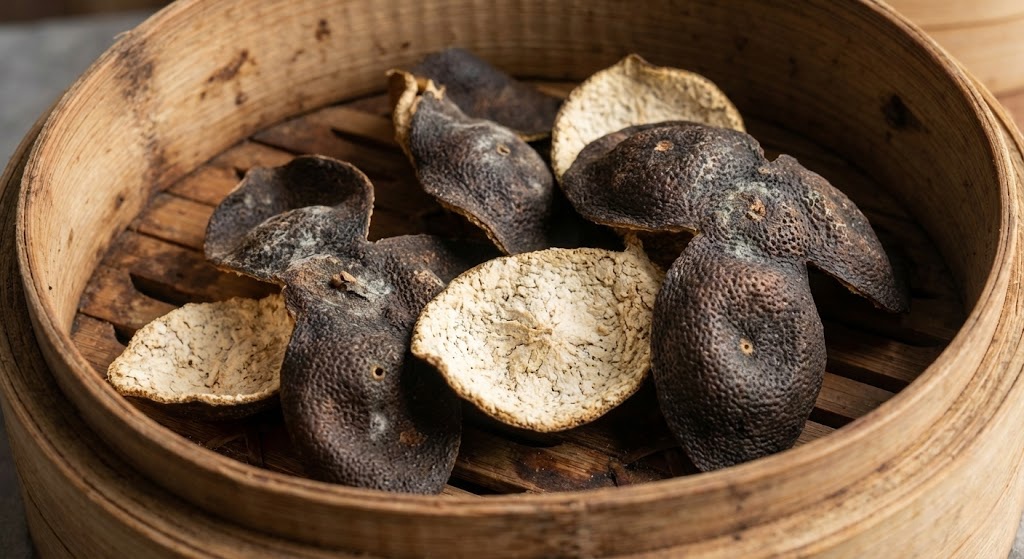
- Appearance: When fresh, the peels are bright and vibrant. After the aging process, they darken to a deep mahogany or even charcoal black. The interior (the pith) is typically scraped thin to prevent bitterness, leaving a leathery, textured surface.
- Historical Context: The use of dried citrus rinds in China dates back over 700 years to the Song and Yuan dynasties. It has long been a staple in both the imperial kitchen and traditional apothecaries.
Flavor Profile
Unlike the sharp, acidic zest of a fresh lemon or lime, aged Chenpi offers a flavor profile that is remarkably complex. It is aromatic and woody, with a concentrated citrus fragrance that feels “warm” rather than “bright.” You will notice a subtle sweetness balanced by a mild, pleasant bitterness and a lingering, camphor-like coolness. As it ages, the volatile oils—such as limonene—oxidize and mellow, reducing the acridity found in fresh rinds and replacing it with an earthy umami [NCBI – Chemical Composition of Citrus Peels].
Culinary Applications: The Art of Braising and Beyond
In Chinese cuisine, Chenpi is rarely eaten as a primary ingredient; instead, it acts as a “bridge” aromatic that harmonizes other flavors and neutralizes “gamey” odors in meats.
Traditional Uses and Pairings
- Savory Braises: This is where the peel truly shines. It is an essential component in dishes featuring pork belly, where its oils help “cut” the richness of the fat. For a truly authentic experience, try adding a small segment to your Braised Pork Belly to add a layer of sophisticated fragrance that fresh citrus simply cannot replicate.
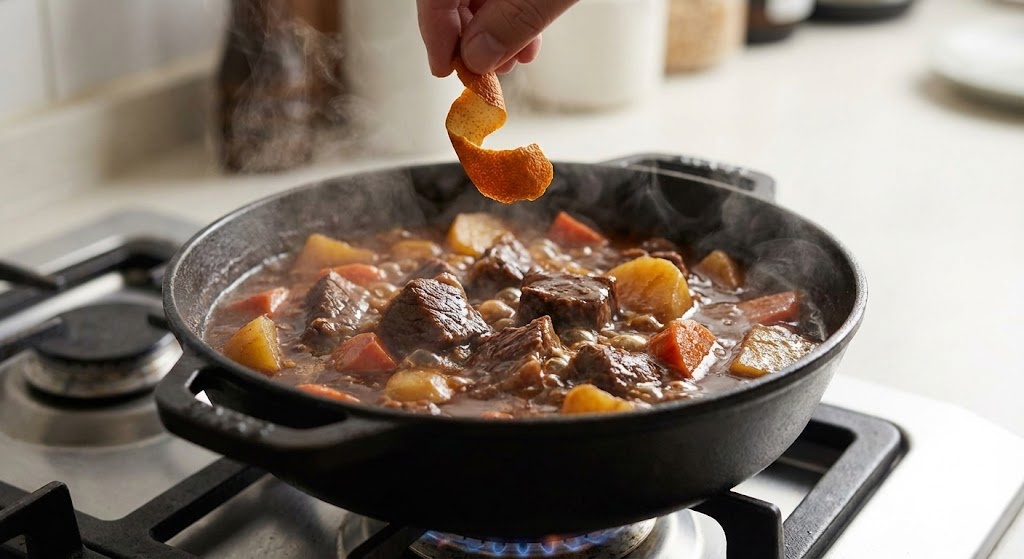
- Beef and Poultry: The pairing of beef and orange is legendary. A piece of rehydrated peel is often used in Braised Beef Brisket with Potatoes to provide a counterpoint to the heavy beef tallow.
- Sweet Soups: In Cantonese cuisine, no Red Bean Soup is complete without Chenpi. It adds a citrusy backbone to the sweet beans, creating a deeply comforting dessert.
Professional Usage Tips
- Preparation: Always soak the dried peel in warm water for 15–30 minutes until soft.
- The Secret Step: Use a small spoon or knife to gently scrape off any excess white pith from the inside of the soaked peel. This removes the source of potential bitterness.
- Seasoning Combinations: Beginners should learn to pair it with Shaoxing Wine and Dark Soy Sauce. It is also a key, though often hidden, ingredient in many traditional recipes for Five Spice Powder.
Buying and Storing Guide
You can find dried mandarin orange peel at most Asian grocery stores or through specialized herb vendors.
- How to Choose: Look for peels that are thin, dry, and crisp to the touch. The most expensive and flavorful ones are “aged” for at least 3 to 10 years. They should have a deep, pleasant citrus-woody aroma even before soaking.
- Storage: Keep them in an airtight glass jar in a cool, dry place away from direct sunlight. Unlike most spices, Chenpi is incredibly shelf-stable; if kept dry, it can last for decades.
Substitutions
If you cannot find authentic Chenpi, the closest substitute is fresh orange zest, though the flavor will be much more volatile and acidic. Use about 1 teaspoon of fresh zest for every piece of dried peel called for in a recipe. Alternatively, a small amount of dried tangerine peel can work, though it lacks the complex “aged” notes of true Chenpi.
Authoritative References
- Britannica: Citrus reticulata (Mandarin Orange) botanical profile.
- NCBI/PubMed: Research on the bioactive compounds and aging process of Citrus reticulata peels.
- Journal of Food Science: Analysis of volatile compounds in aged citrus rinds.
Recommended Recipes
- Braised Beef Brisket with Potatoes – A classic hearty stew.
- Braised Pork Rice (Lu Rou Fan) – The aromatic peel elevates this Taiwanese comfort staple.
- Braised Pork Belly (Hong Shao Rou) – Perfectly balanced fat and fragrance.
- Cantonese Red Bean Soup with Aged Chenpi
- Tangerine Beef Stir-fry
Related Articles
- Shaoxing Wine: The Essential Chinese Cooking Wine
- A Guide to Different Types of Soy Sauce
- Five Spice Powder: How to Use It Correctly
About Woks of Love
Woks of Love is your gateway to authentic Chinese home cooking. We combine traditional techniques with modern culinary science to help you understand the “why” behind every ingredient in your pantry. Our mission is to preserve the rich heritage of Chinese flavors for the modern kitchen.





Leave a Reply