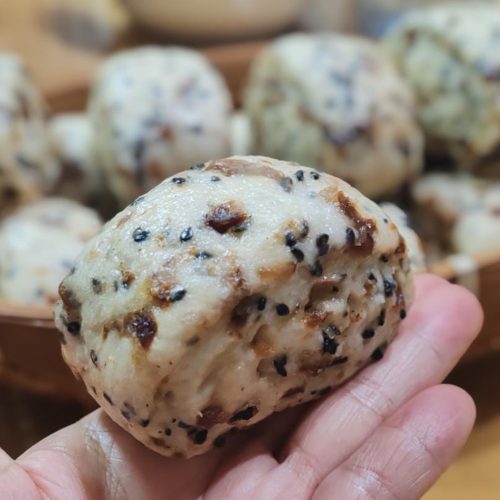
There is something deeply comforting about pulling a lid off a steamer and watching a cloud of sweet steam rise up. These apple yam steamed buns are exactly that kind of moment — soft, pillowy, and gently sweet, with no added sugar at all. The sweetness comes entirely from fresh apple, Chinese yam, and red dates, which are mashed into the dough and carry all their natural fragrance with them.
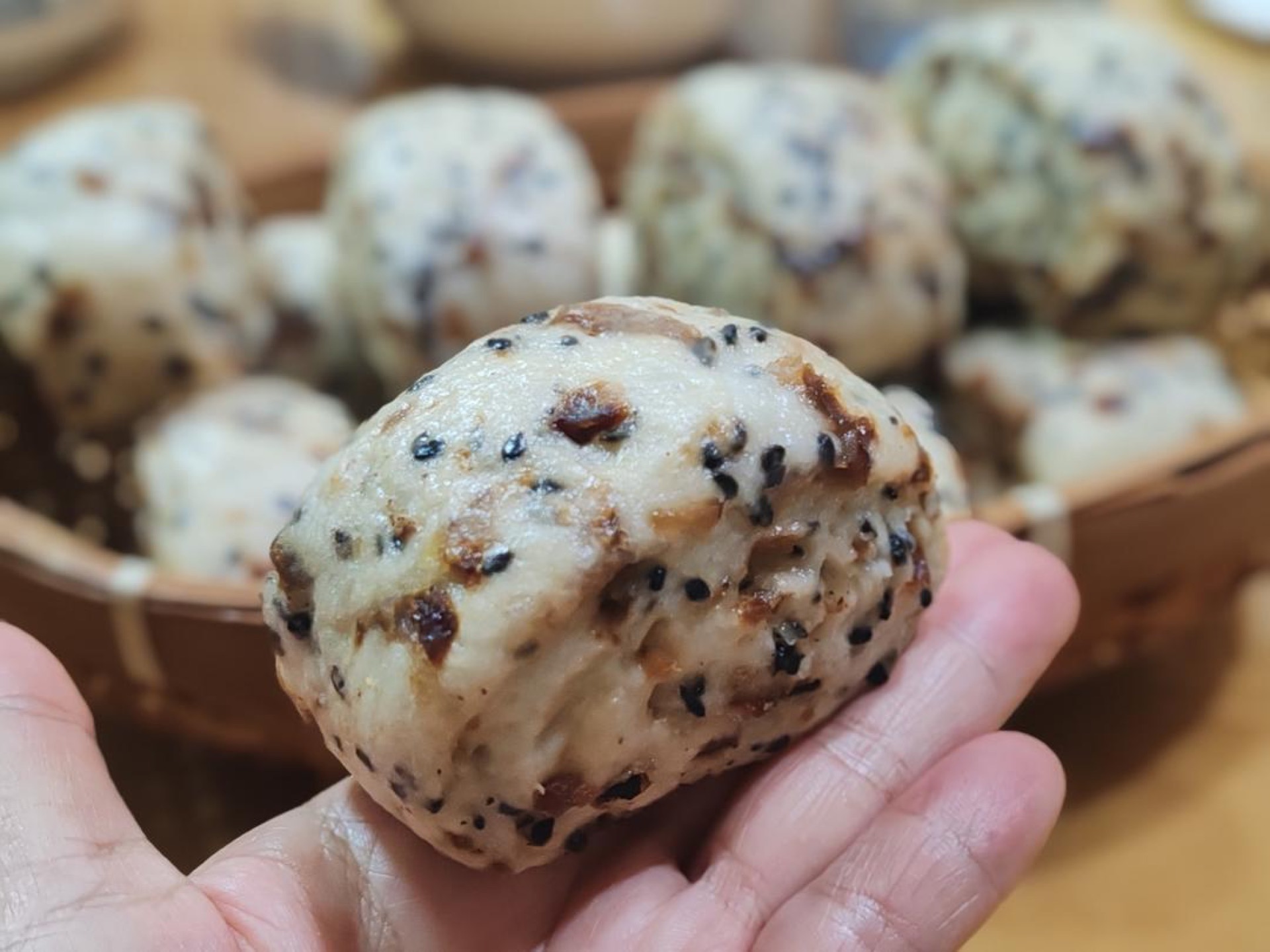
This is a recipe for anyone who loves mantou but wants something a little more nourishing than plain white flour and sugar. The apple and yam keep the crumb moist for days, the red dates add little pockets of jammy sweetness, and the toasted black sesame gives a warm, nutty finish. Best of all, it comes together in one bowl with no stand mixer required and no long kneading session.
What Is 苹果山药馒头?
苹果山药馒头 is a naturally sweet Chinese steamed bun made by folding mashed apple and Chinese yam into a simple flour-and-yeast dough. It belongs to the mantou family — the plain, un-filled steamed buns that have been a staple of northern Chinese breakfast tables for centuries. Unlike the soft, sugary milk breads of the south, mantou are lean and chewy, and they are usually eaten alongside savory dishes or dipped into congee.
What makes this version special is that the fruit and vegetable do the sweetening. Apple brings a bright, fruity note, yam brings a starchy creaminess, and red dates bring a deep caramel-like sweetness that lingers. The buns are cut rather than shaped into rounds, which is the 刀切 (“knife-cut”) style — faster, more uniform, and honestly just as pretty once they puff up in the steamer.
If you love the idea of a soft homemade bun but want to start with something even simpler, try these bread machine whole wheat buns, which let the machine do the kneading for you.
1Quick Bread Machine Whole Wheat Buns (Quan Mai Bao Zi)Learn how to make authentic, fluffy whole wheat steamed buns (Quan Mai Bao Zi) using a bread machine for effortless kneading. A foolproof Chinese breakfast recipe perfect for sweet or savory fillings.Check out this recipe
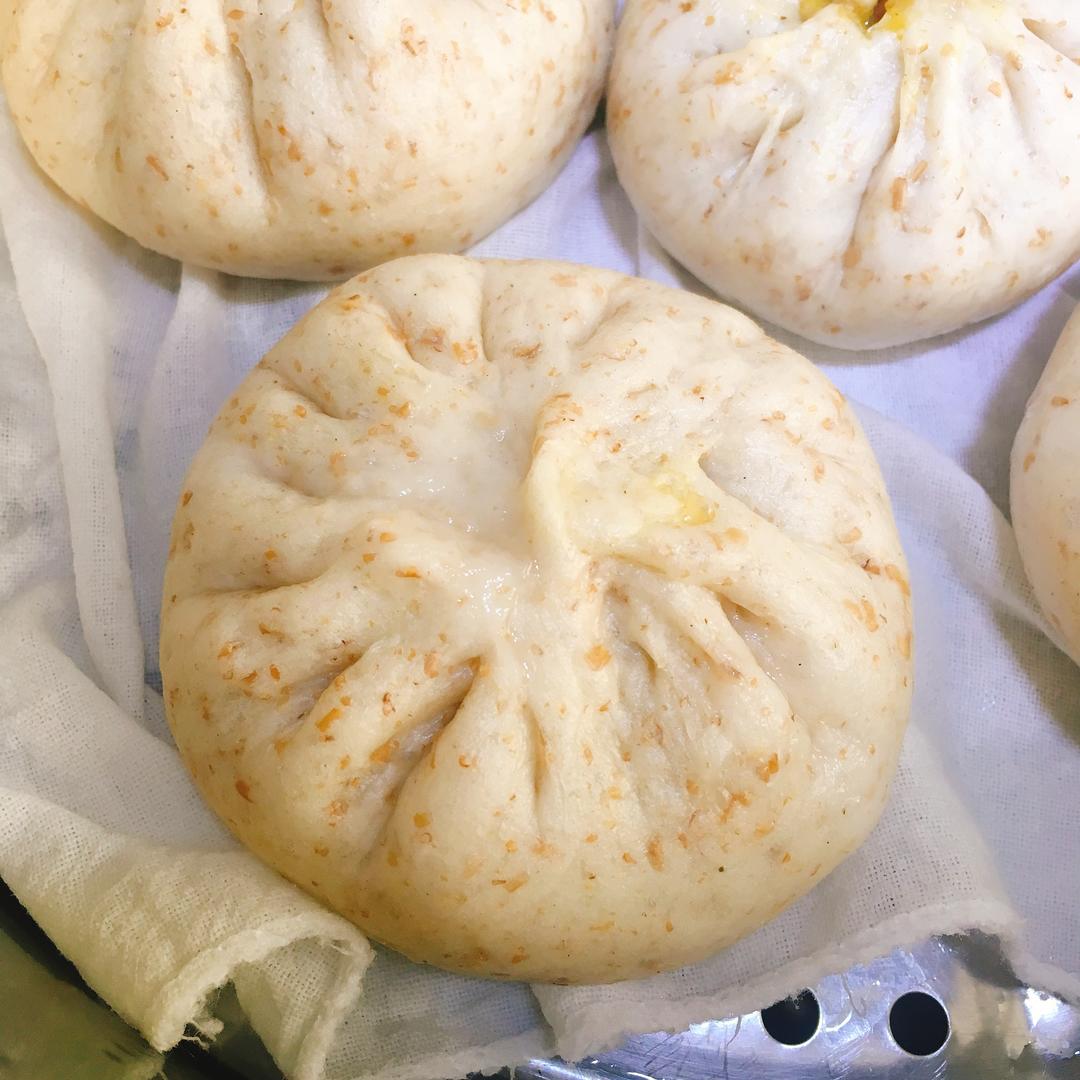
For the classic northern version with a chewier, more substantial crumb, these Shandong steamed buns are the benchmark to learn from.
2Authentic Shandong Steamed Buns (Da Mantou)Learn the secrets to authentic, dense, and chewy Shandong Da Mantou. This recipe uses the traditional double-knead method and precise hand-shaping techniques for flawlessly smooth, wrinkle-free steamed buns.Check out this recipe
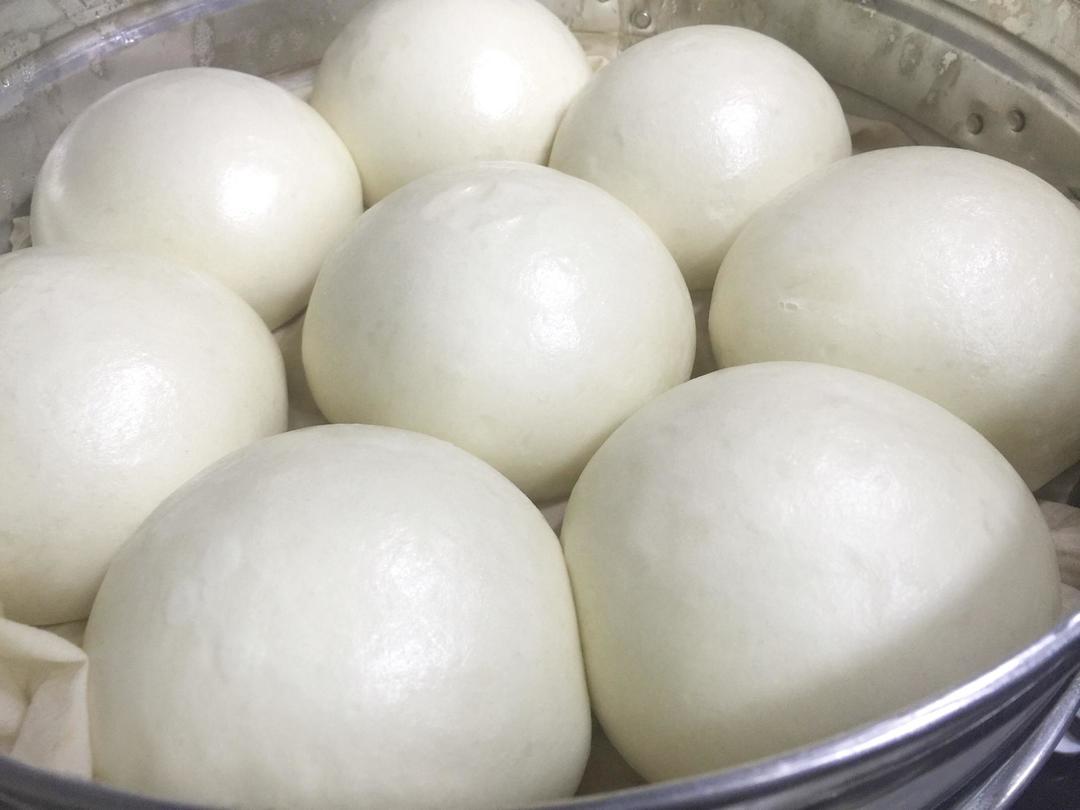
And if you want to keep the whole-grain goodness going, these whole wheat steamed buns swap in whole wheat flour for a nuttier, heartier bun.
3Healthy Whole Wheat Steamed Buns (Mantou)Learn how to make healthy, fluffy Whole Wheat Steamed Buns (Mantou) with this easy 45-minute recipe. Expert tips for a smooth surface and no collapsing.Check out this recipe
Ingredient Notes
Apple. Use a sweet, crisp variety like Fuji, Gala, or Honeycrisp. A tart apple such as Granny Smith works too, but you may want to add one more date to balance the acidity. Peel it — the skin stays tough after steaming and shows up as flecks in the crumb.
Chinese yam (山药). Look for the long, slender variety (often sold as “iron stick yam” or 铁棍山药), which is starchier and less watery than the fat, smooth-skinned kind. If you can only find the thick variety, steam it a little longer so more moisture cooks off. Wear gloves when peeling, since the raw sap can irritate sensitive skin.
Red dates (红枣). Pitted dried jujubes are sold in most Asian groceries. Chop them finely so they distribute evenly and don’t tear the dough as you roll it. If your dates are very dry, soak them in warm water for 10 minutes and pat dry before chopping.
All-purpose flour. Standard all-purpose flour gives a soft, tender bun. Bread flour will make them chewier and more bread-like; cake flour will make them too soft to hold their shape. Stick with all-purpose unless you have a reason to change it.
Instant yeast. The recipe calls for 3 grams, about one teaspoon. If you only have active dry yeast, proof it in the 20 grams of warm water with a pinch of sugar for 5 minutes first, then add it to the dough.
Toasted black sesame. Toast raw sesame in a dry pan over medium-low heat for 2 to 3 minutes, until it smells nutty and starts to pop. Crush it lightly with the back of a spoon to release more aroma.
Ingredients
- 180 g apple, peeled, cored, and cut into chunks
- 150 g Chinese yam, peeled and cut into chunks
- 70 g pitted red dates, finely chopped
- 300 g all-purpose flour, plus extra for dusting
- 3 g instant yeast (about 1 teaspoon)
- 20 g warm water, about 110°F (43°C)
- 20 g toasted black sesame seeds, lightly crushed
Equipment Needed
You do not need much for this recipe, and nothing specialized beyond a steamer. A bamboo steamer basket gives the nicest result because it wicks away condensation instead of letting it drip back onto the buns, but a metal steamer insert in a covered pot works perfectly well.
- A steamer pot with a bamboo basket or metal insert
- A food processor, meat grinder, or sturdy fork for mashing and mixing
- A rolling pin
- A bench scraper or sharp knife for cutting the buns
- A kitchen scale, which matters more here than in most recipes because the fruit-to-flour ratio controls the dough’s hydration
- Parchment paper squares or cabbage leaves to line the steamer
If you are still deciding what to cook with, our guide to the flat bottom round bottom wok covers the pan question that comes up most often in a Chinese kitchen.
Why This Recipe Works
The magic here is that the apple and yam are steamed and mashed before they ever meet the flour. That does two things. First, it drives off excess water so the puree is dense and concentrated rather than watery, which means the dough stays workable without a long flour-adjustment dance. Second, cooking the fruit breaks down its cell walls, so its sugars and starches are already released and ready to feed the yeast and sweeten the crumb.
Because the puree is roughly 60 percent of the flour’s weight, the dough is softer and more hydrated than a standard mantou dough, which is exactly what gives these buns their tender, almost cake-like crumb. The red dates act as little pockets of concentrated sweetness, and the toasted sesame adds fat and aroma that plain mantou lacks.
Steaming is a gentle, moist-heat cooking method that keeps the dough’s surface from drying out, so the buns rise evenly and stay soft; the same principle is why steamed breads across Asia have such a distinctive pillowy texture compared to baked bread.
Finally, the short 5-to-10-minute rest before shaping is not a full proof — it just relaxes the gluten so the dough rolls out without snapping back. That small pause is the difference between neat, even buns and lopsided ones.
Prep & Mise en Place
Before you start, peel and chunk the apple and yam and get them into the steamer. While they cook, pit and finely chop the dates and toast the sesame. By the time the fruit is tender and mashed, everything else is ready to go, and the whole assembly takes about ten minutes.
Weigh your flour rather than scooping it from the bag. A cup of flour can vary by 20 percent depending on how it is packed, and that variation is enough to make this dough either sticky or dry. A scale removes the guesswork entirely.
Have your steamer basket lined and ready before you cut the buns, because once they are shaped you want to move them straight into the basket without handling them again. Parchment squares or napa cabbage leaves both work; cabbage leaves add a faint vegetal sweetness that suits these buns nicely.
One more thing worth doing during prep: if your dates are hard and leathery, soak them in warm water for ten minutes and pat them dry. Soft dates chop cleanly and melt into the crumb instead of staying chewy.
Cooking Process
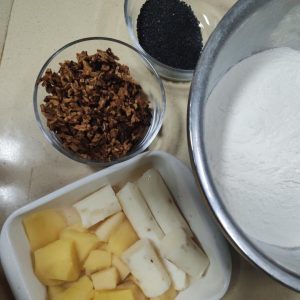
Step 1 — Gather the Ingredients
Prepare all the ingredients and set them out on the counter before you begin.
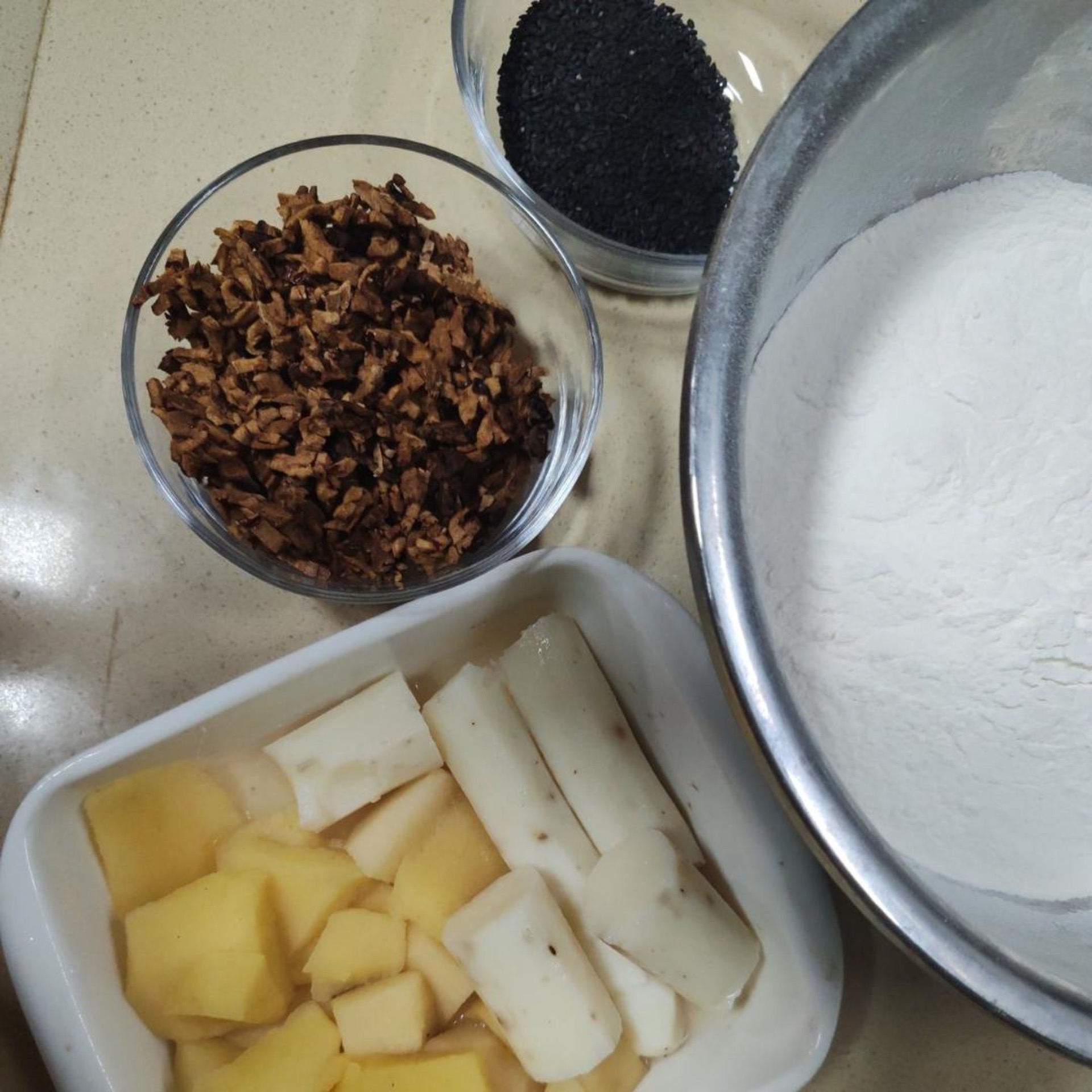
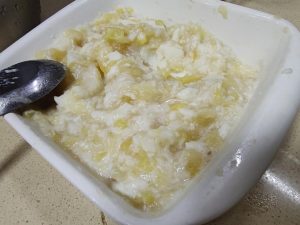
Step 2 — Steam and Mash the Apple and Yam
Peel and cut the yam and apple into chunks, steam them until tender, then mash them into a smooth puree and set aside.
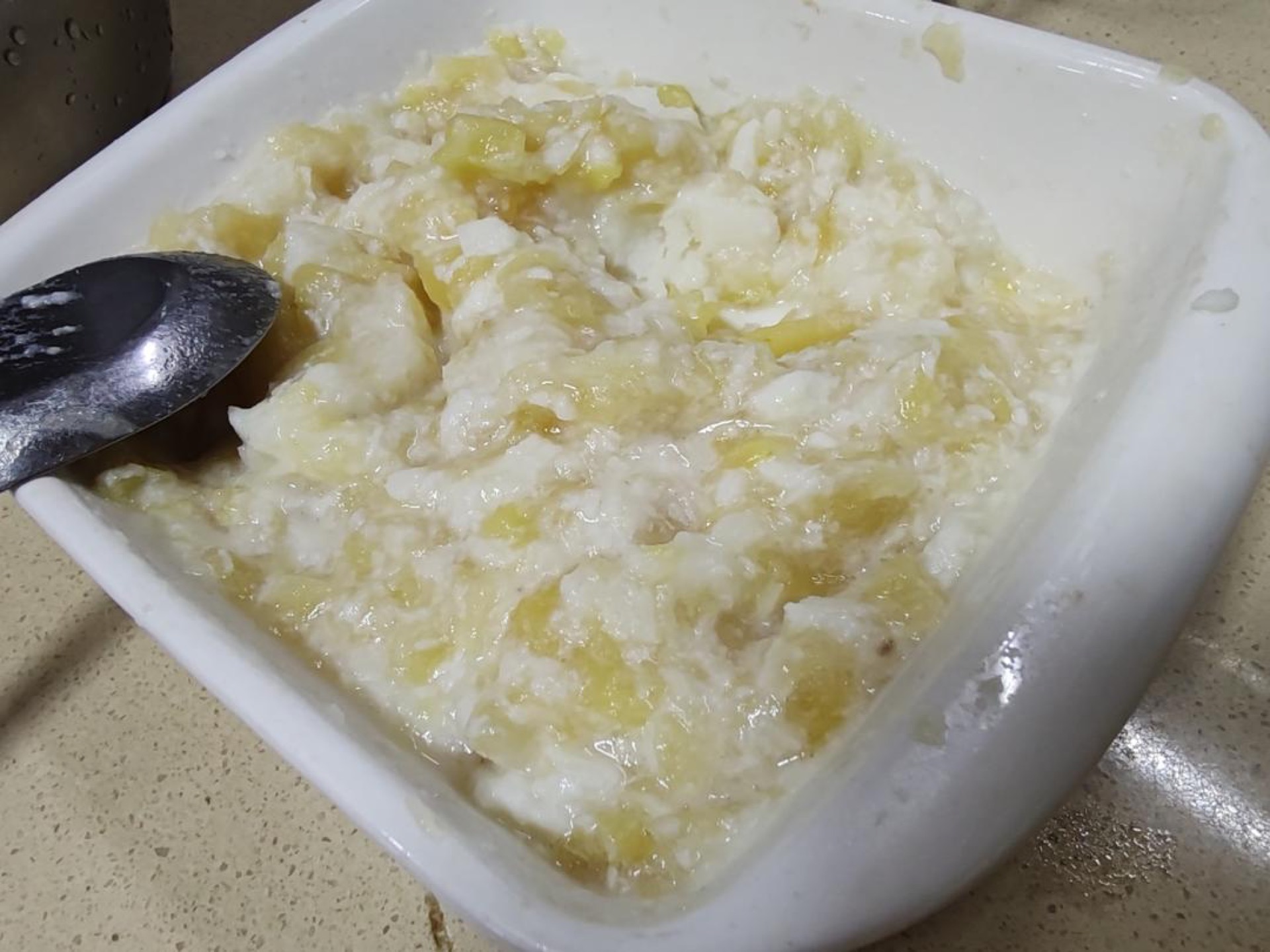
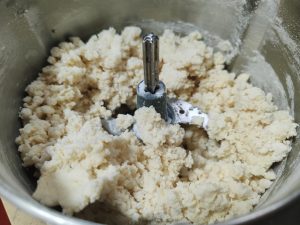
Step 3 — Mix the Dough
Combine the flour, yeast, and cooled apple-yam puree in a food processor or mixer and blend until it forms a shaggy mixture, then turn it onto a board and knead until smooth; this recipe needs no added water, but you can add a little if your flour is very absorbent.
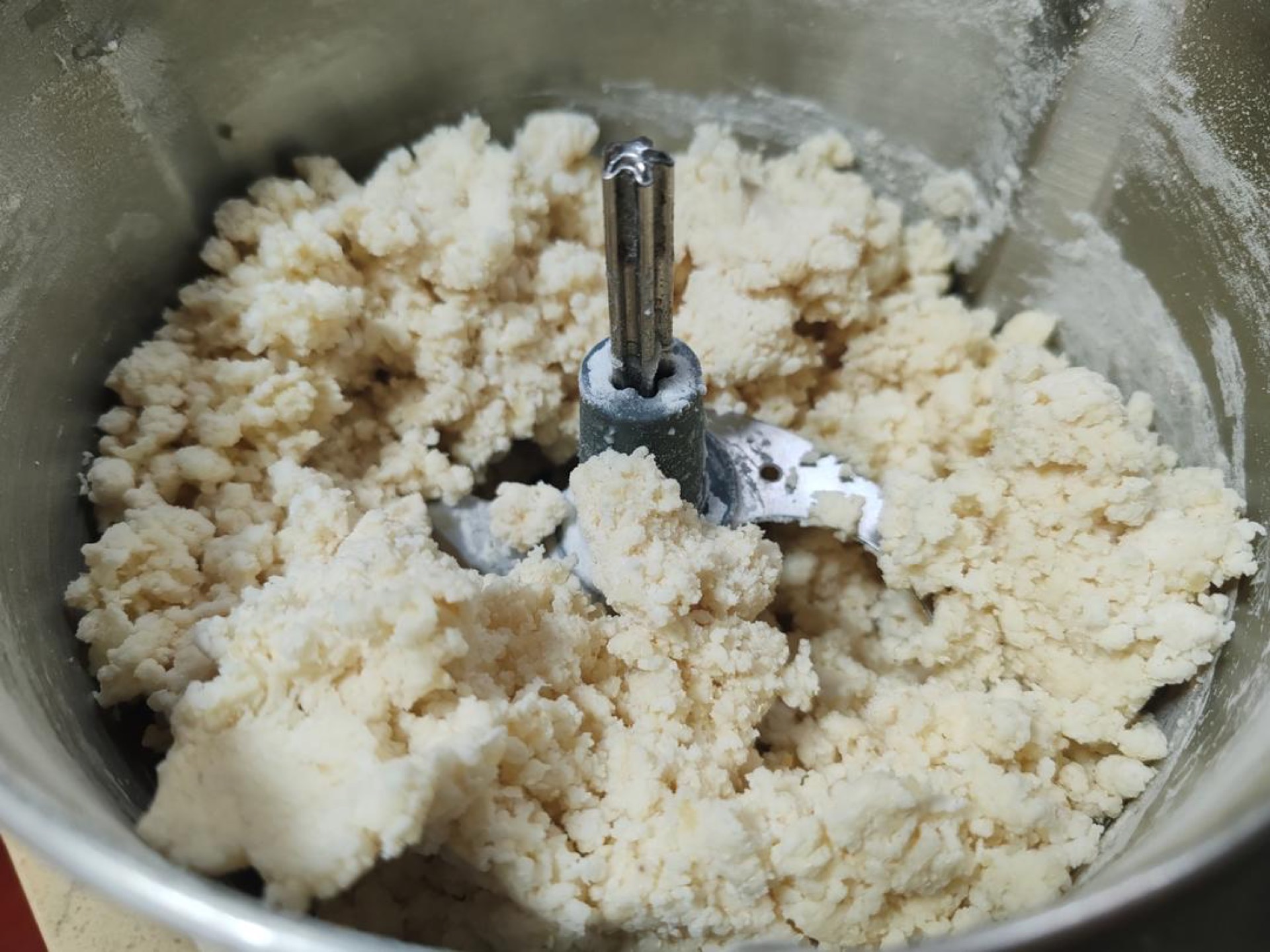
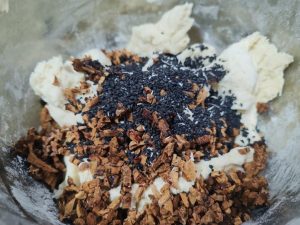
Step 4 — Add the Dates and Sesame
Add the chopped red dates and toasted sesame seeds to the dough and knead by hand until evenly distributed, which takes only a minute.
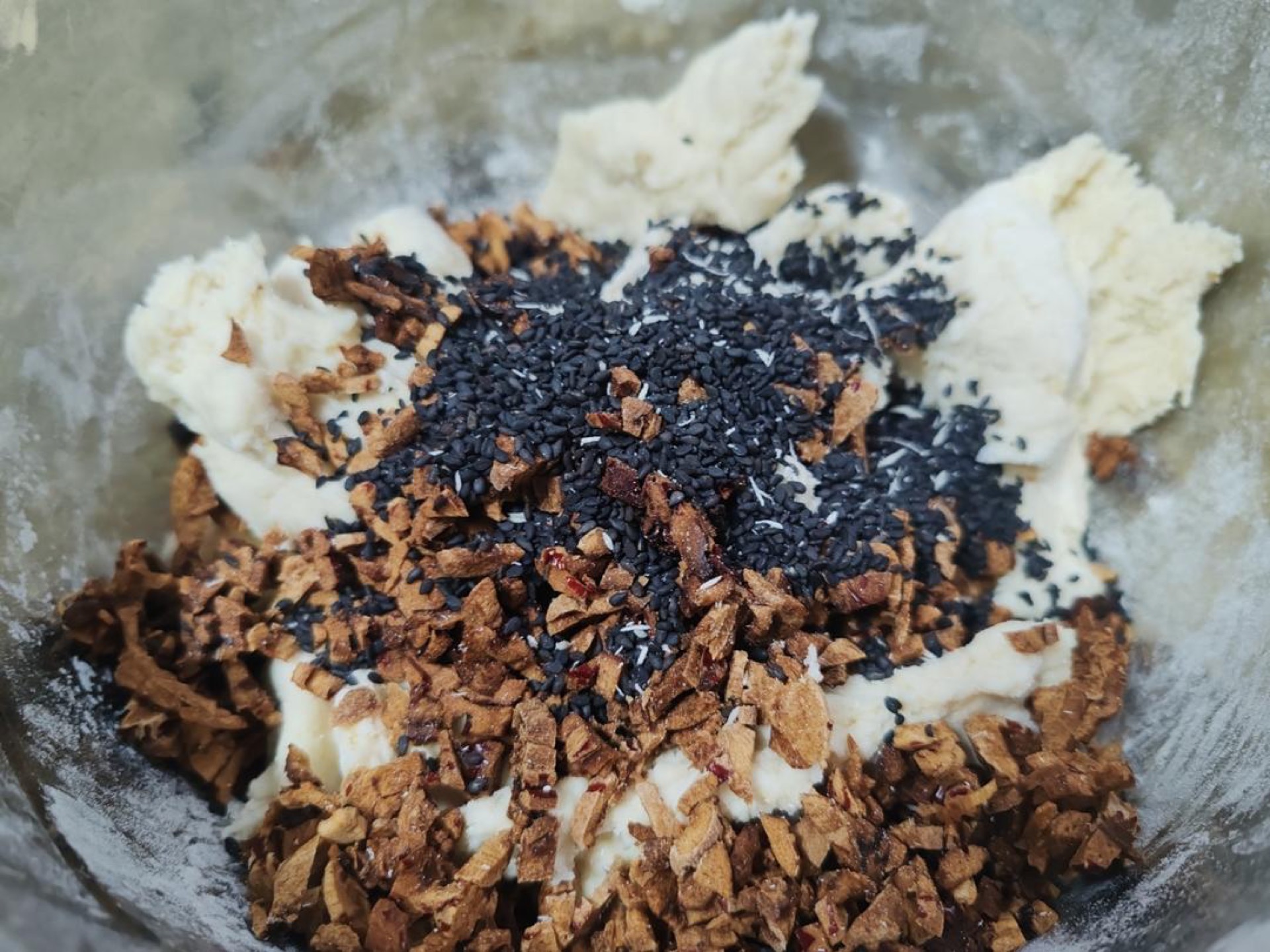
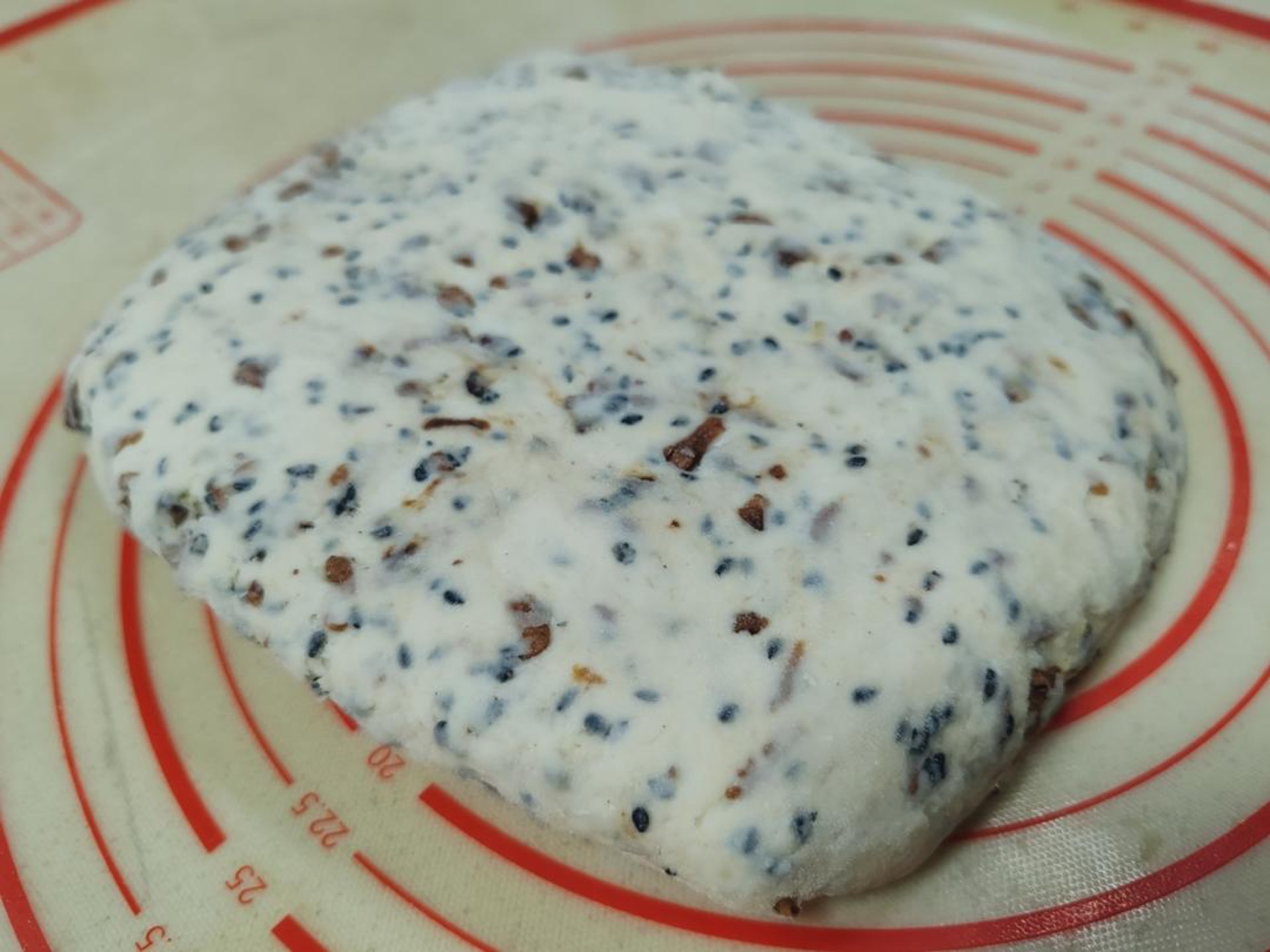
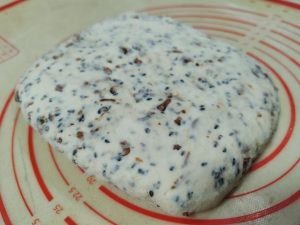
Step 5 — Rest the Dough
Cover the smooth dough with plastic wrap and let it rest for 5 to 10 minutes.
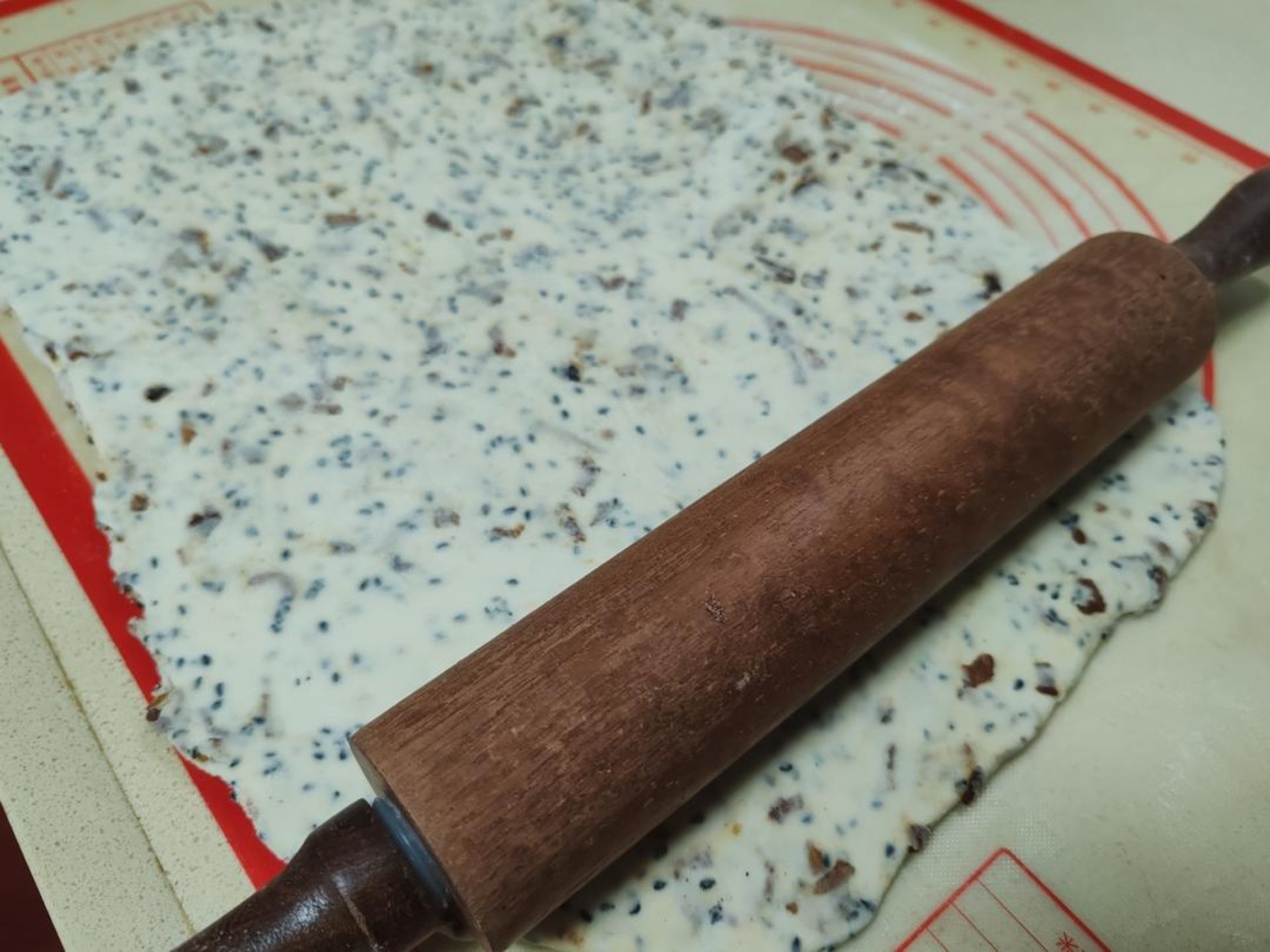
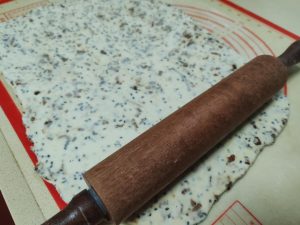
Step 6 — Roll Out the Dough
Dust the surface with flour and roll the dough out into a large rectangle.
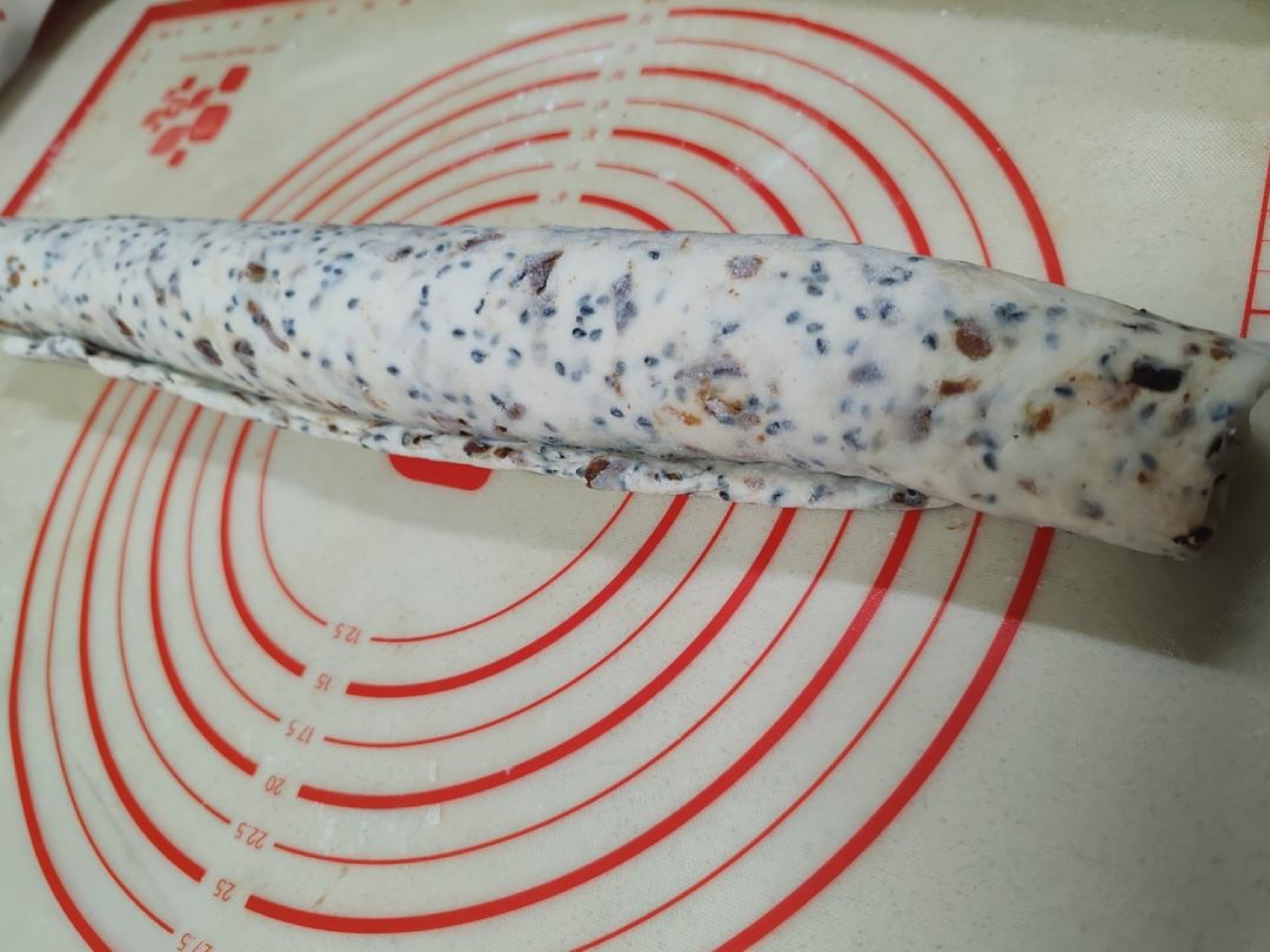
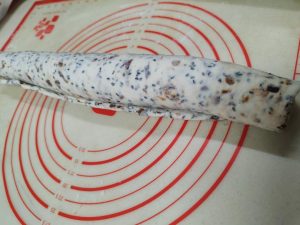
Step 7 — Roll It Up
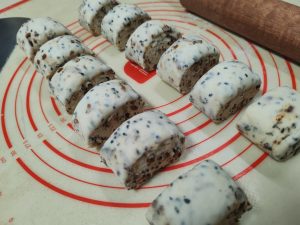
Spritz the surface lightly with water, then roll the dough up into a tight log.
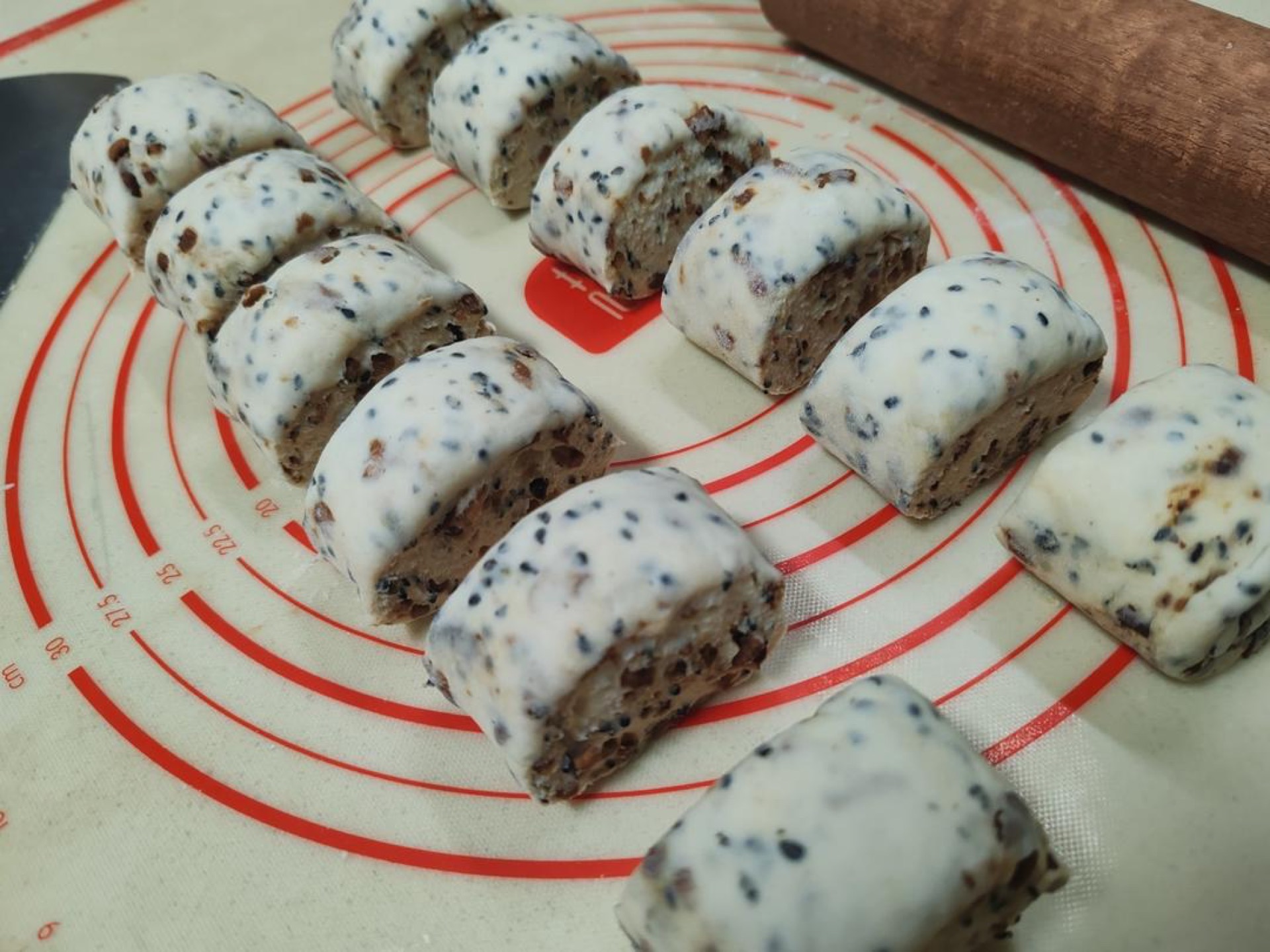
Step 8 — Cut the Buns
Cut the log into equal-sized pieces; this batch makes 12 buns.
Step 9 — Let the Buns Proof
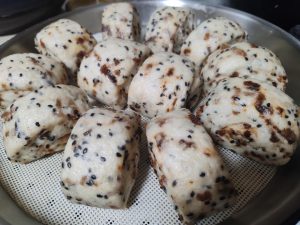
Place the buns in the steamer basket and let them proof for 15 to 20 minutes, until they have grown to about 1.2 to 1.5 times their original size.
Step 10 — Steam the Buns
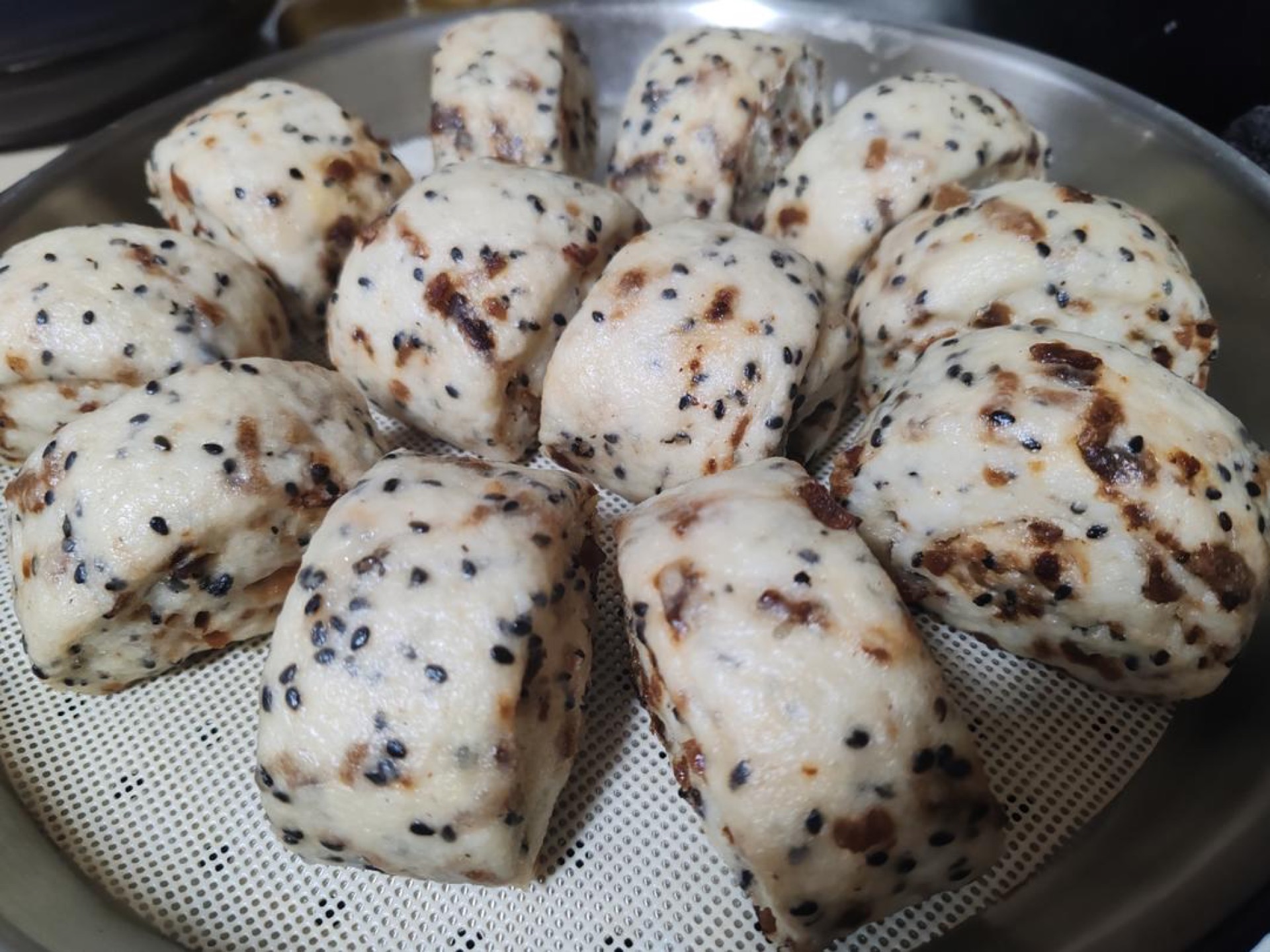
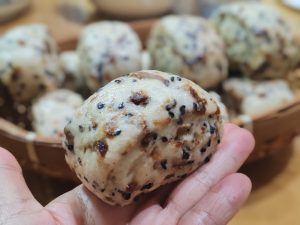
After proofing, turn on the heat and steam for 10 to 13 minutes, then let them rest covered for 2 minutes before opening the lid.
Step 11 — Cool and Store
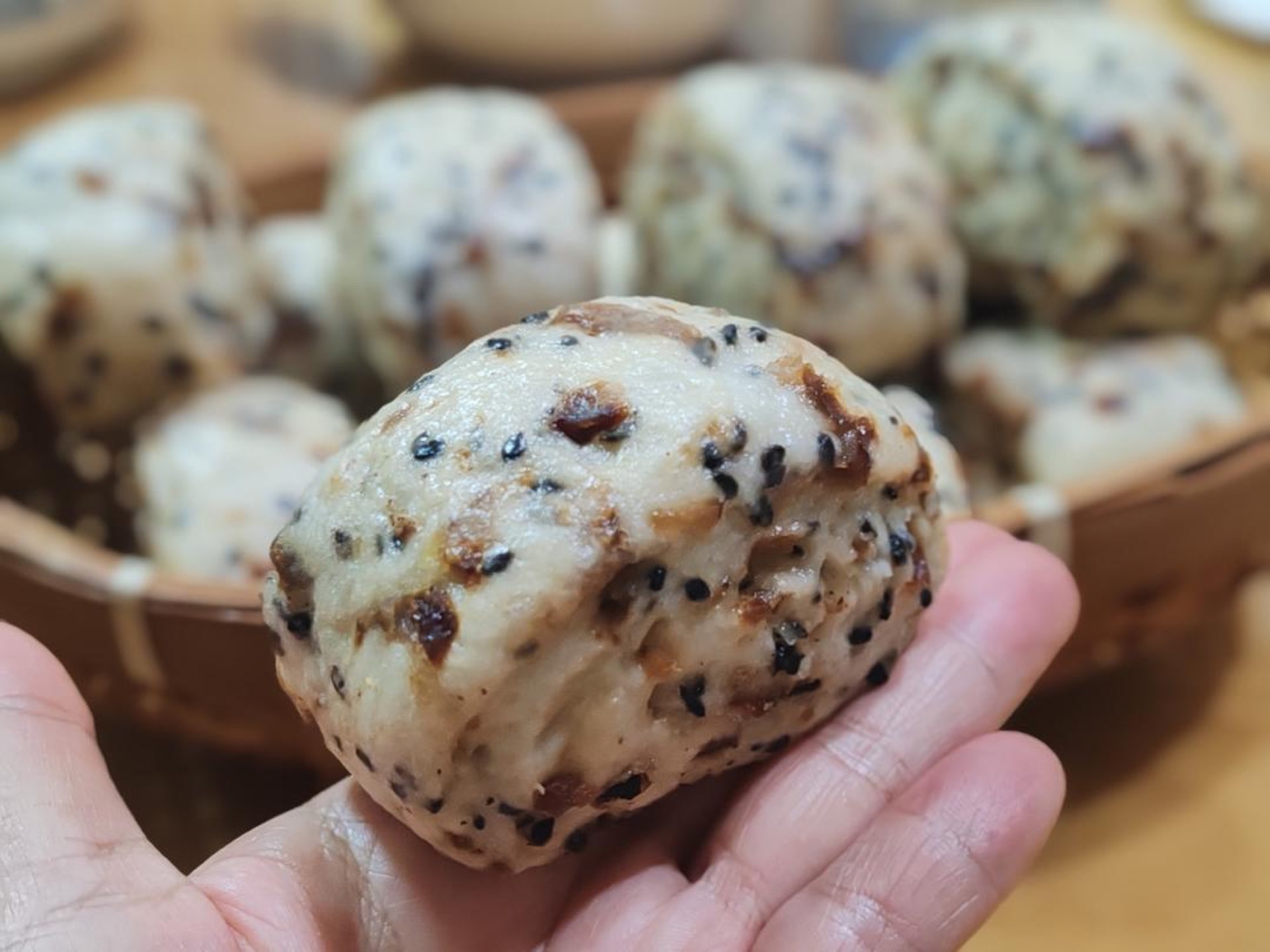
These buns are wonderfully soft; let any leftovers cool completely, then seal and freeze them, and re-steam when you are ready to eat.
Common Mistakes When Making Apple Yam Steamed Buns
1. Using hot puree straight from the steamer. Yeast dies above about 130°F (54°C), and freshly mashed apple and yam are well past that. Let the puree cool to lukewarm — around 100°F to 110°F (38°C to 43°C) — before it touches the flour and yeast. Test it with a clean finger; it should feel barely warm, not hot.
2. Adding too much water out of habit. This dough is designed to need no added water because the apple and yam supply all the moisture. If you pour in water before mixing, you will end up with a sticky, unworkable dough and have to add extra flour, which throws off the sweetness and texture. Mix first, then add water a teaspoon at a time only if the flour truly will not come together.
3. Skipping the rest before rolling. Dough that has just been kneaded is tight and elastic, and it will fight the rolling pin. The 5-to-10-minute covered rest lets the gluten relax so the dough rolls out thin and even. If you skip it, the buns will shrink back after cutting and proof unevenly.
4. Under-proofing or over-proofing. The buns should grow to about 1.2 to 1.5 times their original size, which takes 15 to 20 minutes in a warm kitchen. Under-proofed buns steam up dense and heavy; over-proofed ones collapse and wrinkle when the lid comes off. Poke one gently — it should spring back slowly, not instantly.
5. Lifting the lid too soon. The 2-minute covered rest after steaming is not optional. Steamed buns are full of hot steam, and a sudden rush of cool air makes them deflate. Turn off the heat, wait two minutes, then slide the lid off at an angle so condensation runs down the side instead of onto the buns.
6. Cutting the buns unevenly. Uneven pieces proof and cook at different rates, so you end up with some raw centers and some over-steamed edges. Use a bench scraper and cut in one firm motion rather than sawing, and if you want to be precise, weigh each piece — 12 pieces from this dough come out around 55 grams each.
Variations
Pumpkin or sweet potato version. Swap the apple and yam for equal weights of steamed, mashed pumpkin or orange sweet potato. Both are starchy and sweet, and the buns come out a beautiful golden orange. You may need a tablespoon or two of water, since these are slightly drier than apple.
Purple yam (紫薯) buns. Use purple sweet potato in place of the Chinese yam for a striking lavender crumb. The flavor is milder, so bump the dates up to 90 grams if you want them noticeably sweet.
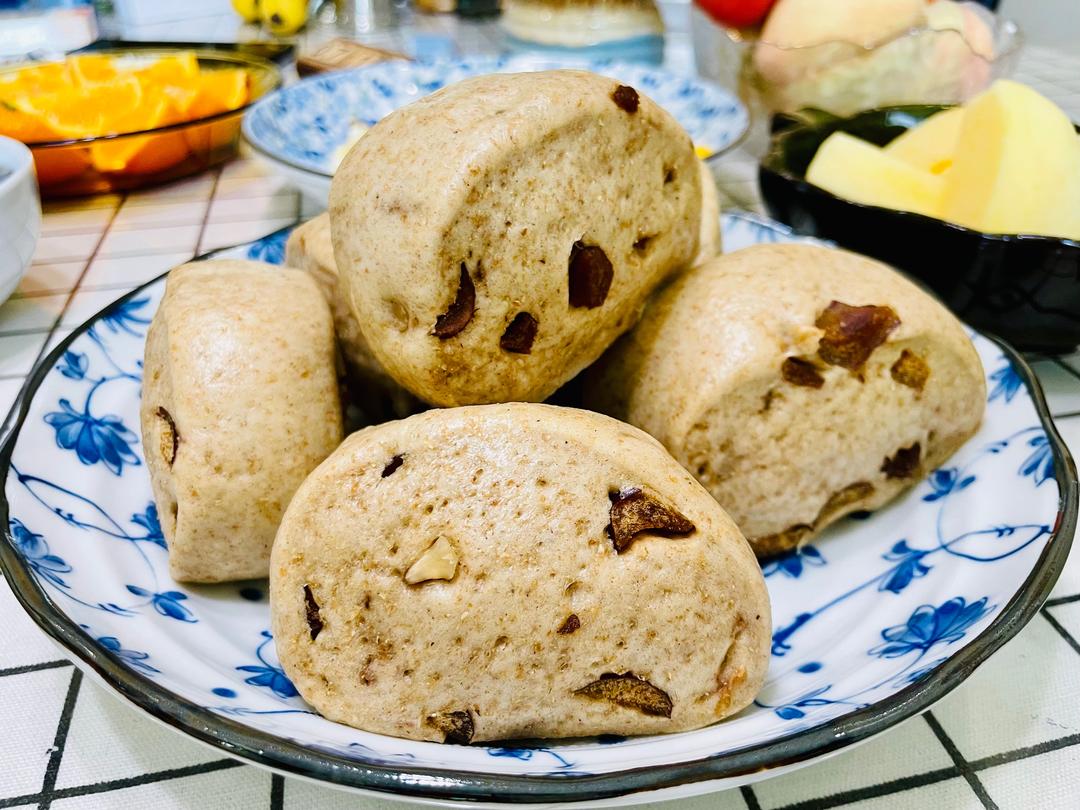
Whole wheat blend. Replace up to 100 grams of the all-purpose flour with whole wheat flour for a nuttier, more fiber-rich bun. Add 10 to 15 grams of extra warm water, since whole wheat absorbs more liquid. Our whole wheat steamed buns walk through the whole-grain approach in more detail.
Savory twist. Skip the dates and add a pinch of salt and a handful of chopped scallions to the dough. The apple and yam sweetness recedes into the background and the buns become a great vehicle for braised meats — try them alongside this mapo tofu for a contrast of soft and spicy.
Steamed then pan-fried. For a crisp bottom, steam the buns as written, then finish them in a hot oiled pan for 2 minutes per side. This is the same trick behind crispy shepherds purse spring rolls, where a quick fry adds a shattering crust.
Frequently Asked Questions
Can I make these buns without a food processor? Yes. Steam the apple and yam until very tender, then mash them thoroughly with a fork or potato ricer. The puree should be smooth; lumps will show up as dense spots in the crumb. Mixing the dough by hand takes about 8 to 10 minutes of kneading, which is a bit more work but entirely doable.
Why did my buns turn out yellow or gray? A grayish tint usually means the yam oxidized, which is harmless but not pretty. A squeeze of lemon juice in the steaming water helps. A yellow tint can come from certain yam varieties or from over-steaming; it does not affect the taste.
Can I use a different sweetener instead of dates? Absolutely. Replace the dates with 40 grams of raisins, dried apricots, or even a mashed ripe banana. If you want a more conventional mantou, add 30 grams of sugar to the dough and reduce the apple to 150 grams.
How do I know the buns are fully cooked? They should feel light for their size and spring back when pressed. If you want to be certain, a instant-read thermometer inserted into the center should read 200°F (93°C). If they feel heavy or doughy, steam them for another 3 minutes.
Can I make the dough ahead of time? Yes. After kneading, cover the dough and refrigerate it for up to 12 hours. Let it come to room temperature for 30 minutes, then shape, proof, and steam as written. The cold ferment actually deepens the flavor slightly.
How to Serve
These buns are at their best warm, straight from the steamer, when the crumb is at its softest and the sesame smells the most fragrant. They make a lovely breakfast with a bowl of hot soy milk or congee, and they are equally good torn open and used to mop up the sauce from a braised dish.
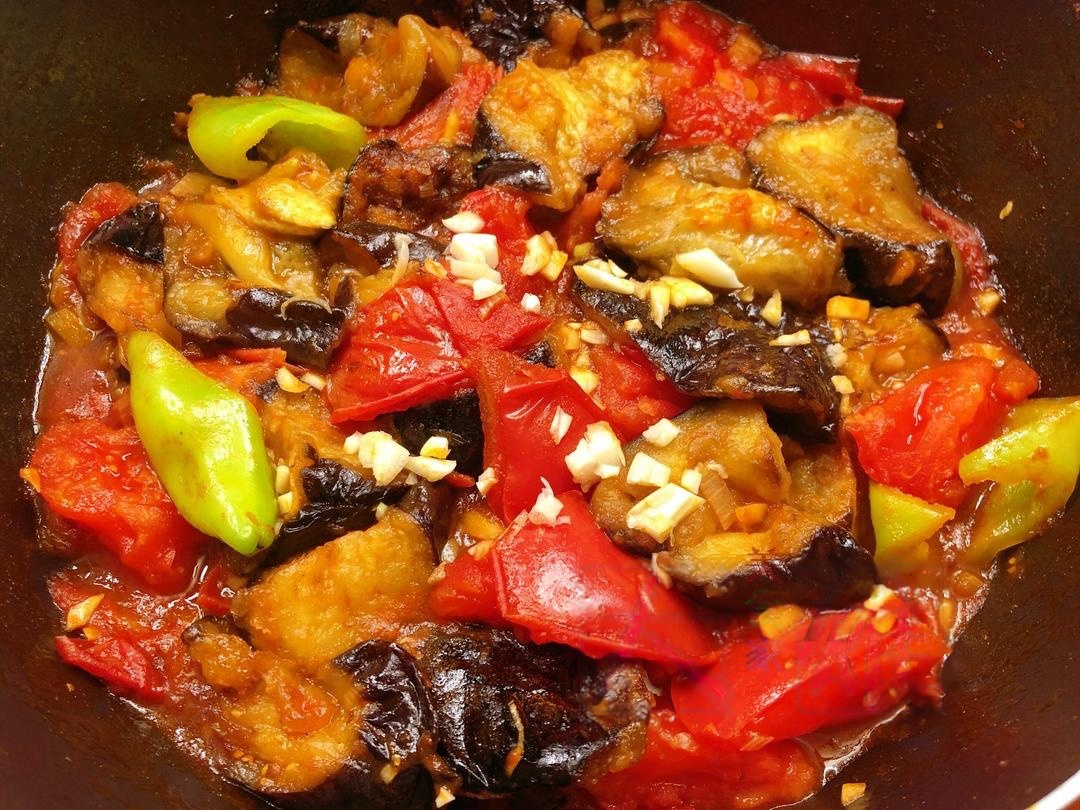
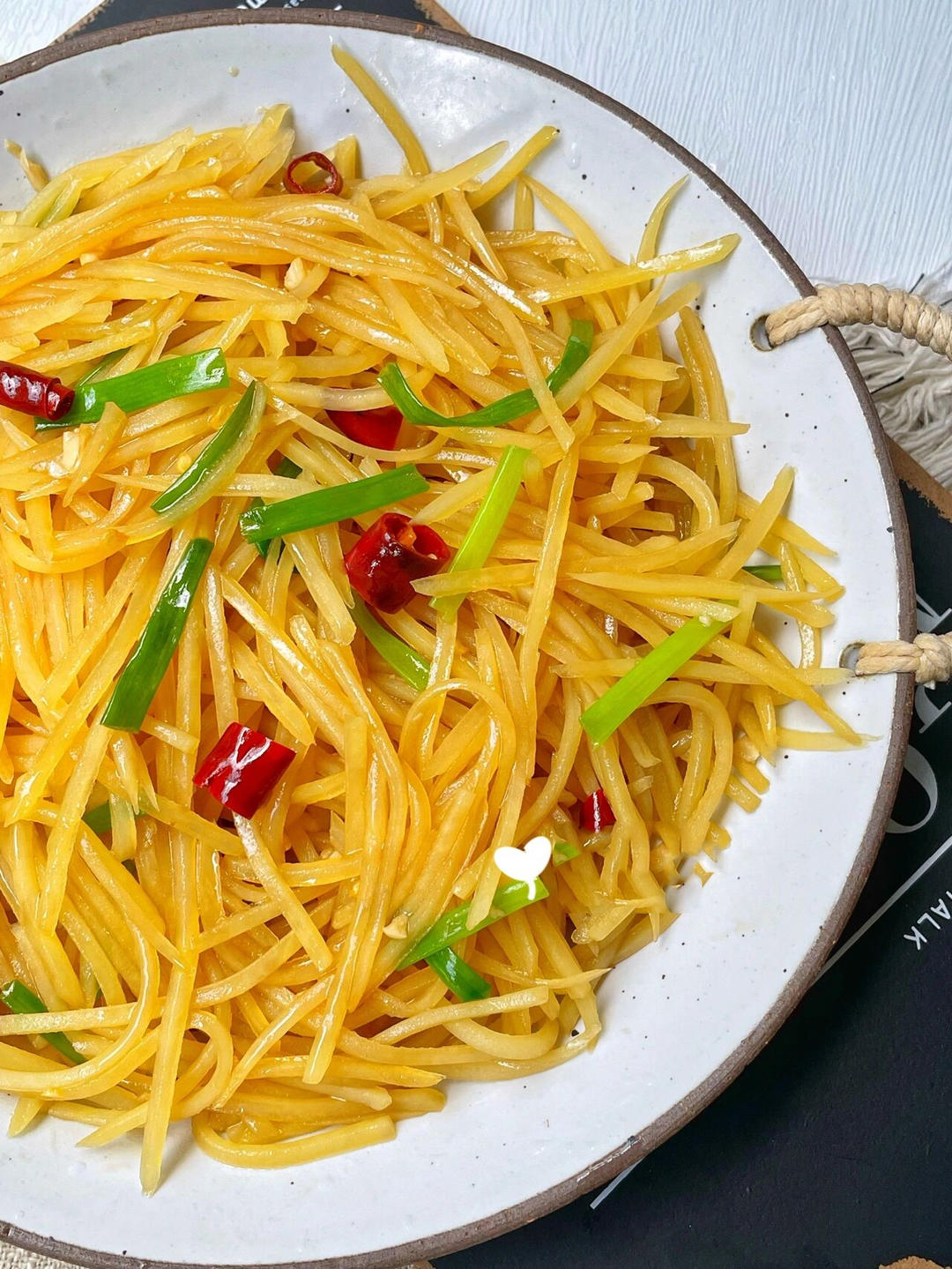
For a savory pairing, serve them next to braised eggplant with tomato, whose tangy, silky sauce is a natural match for a plain, slightly sweet bun. If you want something with a little heat and crunch, hot and sour shredded potatoes with oyster sauce adds a bright, vinegary counterpoint. And for a lighter, broth-based meal, a bowl of rich tomato shrimp soup with vermicelli turns these buns into a complete dinner.

Storage & Reheat
Let any leftover buns cool completely on a wire rack before storing them. Sealed while still warm, they will sweat and turn soggy. Once cool, put them in an airtight container or a zip-top bag and refrigerate for up to 3 days.
For longer storage, freeze them. Wrap each bun individually in plastic wrap, then place them in a freezer bag, pressing out as much air as possible. They keep for up to 2 months. There is no need to thaw them before reheating.
To reheat, steam the buns directly from frozen for 8 to 10 minutes, or from refrigerated for 5 to 6 minutes. A quick 30-second spin in the microwave with a damp paper towel over them works in a pinch, but the texture is noticeably better from the steamer. Avoid the oven, which dries them out and turns the crust tough.
One note on reheating: because these buns contain no preservatives, they will firm up in the refrigerator. That is normal and not a sign they have gone stale — the steamer brings them right back to their original softness.
Allergen Notice
This recipe contains wheat (gluten) from the all-purpose flour. It also contains sesame from the toasted black sesame seeds. If you are cooking for someone with a sesame allergy, simply omit the sesame and increase the dates slightly for sweetness. Check your red dates and any packaged ingredients for shared-facility warnings if you have severe allergies. This recipe is naturally dairy-free, egg-free, nut-free, and soy-free as written.
Nutrition Disclaimer
Nutrition information is calculated using an ingredient database and should be considered an estimate. In cases where multiple ingredient alternatives are given, the first listed is calculated for nutrition. Garnishes and optional ingredients are not included.
About the Author & Recipe Development
Lin is the writer and recipe developer behind Woks of Love, a site devoted to honest, home-kitchen Chinese cooking. She grew up watching her grandmother steam mantou in a big bamboo basket on the stove, and this apple yam version is her attempt to bring that memory into a modern kitchen — less sugar, more fruit, but the same soft, comforting result.
This recipe was developed and tested over several batches to nail the fruit-to-flour ratio. The 180-gram apple and 150-gram yam amounts are deliberate: less and the buns lose their sweetness, more and the dough becomes too wet to roll. The 20 grams of warm water is a safety valve for dry flour, not a required ingredient — Lin’s test kitchen found that most all-purpose flours need none at all.
Authoritative References
For safe internal cooking temperatures, see the USDA safe temperature chart, which lists 200°F (93°C) as the target for fully cooked breads and doughs. For general food handling and storage guidance, the FDA Food Code is the standard reference used by health departments across the United States.
Apple Yam Steamed Buns (苹果山药馒头): Soft, Naturally Sweet Steamed

Equipment
- Steamer
- Bamboo steamer basket
- Rolling Pin
- Mixing bowls
- Bench Scraper
- Kitchen Scale
Ingredients
For the Fruit Base
- 180 g apple peeled, cored, and cut into chunks
- 150 g Chinese yam peeled and cut into chunks
- 70 g red dates pitted
For the Dough
- 300 g all-purpose flour plus extra for dusting
- 3 g instant yeast about 1 teaspoon
- 20 g warm water lukewarm, about 110°F
- 20 g toasted black sesame seeds lightly crushed
Instructions
- Prepare all the ingredients and set them out on the counter before you begin.

- Peel and cut the yam and apple into chunks, steam them until tender, then mash them into a smooth puree and set aside.

- Combine the flour, yeast, and cooled apple-yam puree in a food processor or mixer and blend until it forms a shaggy mixture, then turn it onto a board and knead until smooth; this recipe needs no added water, but you can add a little if your flour is very absorbent.
- Add the chopped red dates and toasted sesame seeds to the dough and knead by hand until evenly distributed, which takes only a minute.
- Cover the smooth dough with plastic wrap and let it rest for 5 to 10 minutes.
- Dust the surface with flour and roll the dough out into a large rectangle.
- Spritz the surface lightly with water, then roll the dough up into a tight log.
- Cut the log into equal-sized pieces; this batch makes 12 buns.
- Place the buns in the steamer basket and let them proof for 15 to 20 minutes, until they have grown to about 1.2 to 1.5 times their original size.
- After proofing, turn on the heat and steam for 10 to 13 minutes, then let them rest covered for 2 minutes before opening the lid.
- These buns are wonderfully soft; let any leftovers cool completely, then seal and freeze them, and re-steam when you are ready to eat.












Leave a Reply