There is a particular kind of quiet in a Cantonese kitchen when a pot of soup has been murmuring on the stove for hours. This pork rib soup with corn and yam — 玉米山药龙骨汤, a restaurant classic — is that quiet in a bowl: sweet corn, earthy yam, tender ribs, and a broth so milky and rich that people assume cream went into it. Nothing did. The yam does the work.

What makes this soup special is the final move: part of the yam is lifted out, mashed, and stirred back in. The broth thickens to a soft, opaque silk, and the sweetness of the corn and dates deepens into something almost caramel-like. You can serve it without a grain of salt and it will still taste full. Add a pinch and it becomes the soup you order at a banquet and then think about for a week.
The whole pot is built on pantry-level ingredients and one good cut of ribs. It is forgiving, it reheats beautifully, and it feeds a family with almost no hands-on time. If you have ever wondered why Chinese soups taste deeper than the sum of their parts, this recipe is a very good place to find out.
What Is 玉米山药龙骨汤?
玉米山药龙骨汤 is a Cantonese-style slow-simmered soup (老火汤) built around pork ribs, sweet corn, carrot, and Chinese yam (山药, shān yào). “龙骨” literally means “dragon bone” and refers to the pork spine and rib bones that give the broth its body. The soup is simmered low and slow until the corn releases its sweetness, the carrot softens, and the yam turns tender enough to mash into the liquid.
The result is a broth that looks creamy but contains no dairy, no thickener, and often no added salt. It sits somewhere between a soup and a tonic — the kind of thing a grandmother makes when someone needs feeding. In restaurants it is often served in a clay pot, still bubbling, with a slotted spoon for fishing out the ribs.
The technique is simple but not careless. The order of ingredients matters: sturdy vegetables go in early, tender yam goes in with everything else but gets pulled out at the end. The simmering time is long because the goal is extraction, not cooking. And the final mash is what separates a good corn rib soup from a great one.
Because the broth is built from bones, the collagen and marrow slowly dissolve into the water, giving it that faintly sticky, lip-coating quality that Chinese soup lovers prize. The corn adds a clean, grassy sugar. The dates add a rounder, dried-fruit sweetness. The tangerine peel — just one small piece — cuts through the richness with a citrus perfume you notice only if it is missing.
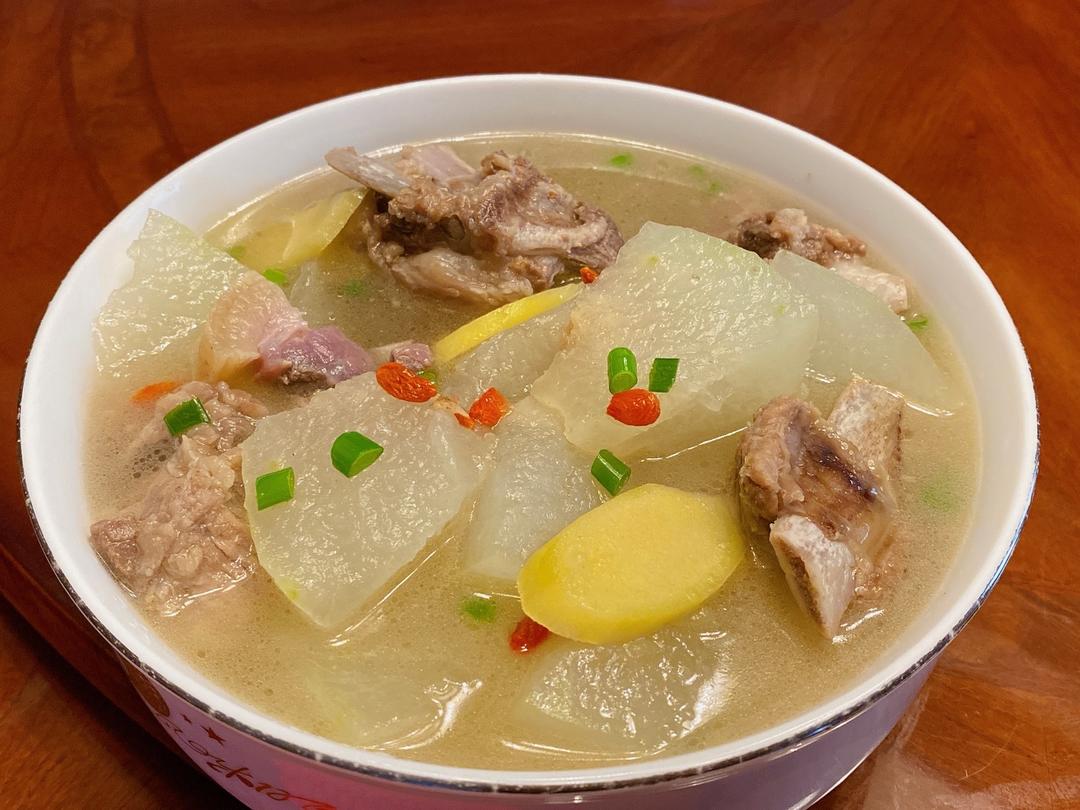
If you love this style of soup, the winter melon pork rib soup is the lighter, cooling counterpart — same bones, same patience, completely different mood.
1Authentic Winter Melon Pork Rib Soup (Dong Gua Pai Gu Tang)A comforting, hydrating summer soup featuring tender pork ribs, savory salted pork, and melt-in-your-mouth winter melon. Authentic, simple, and naturally healthy.Check out this recipe
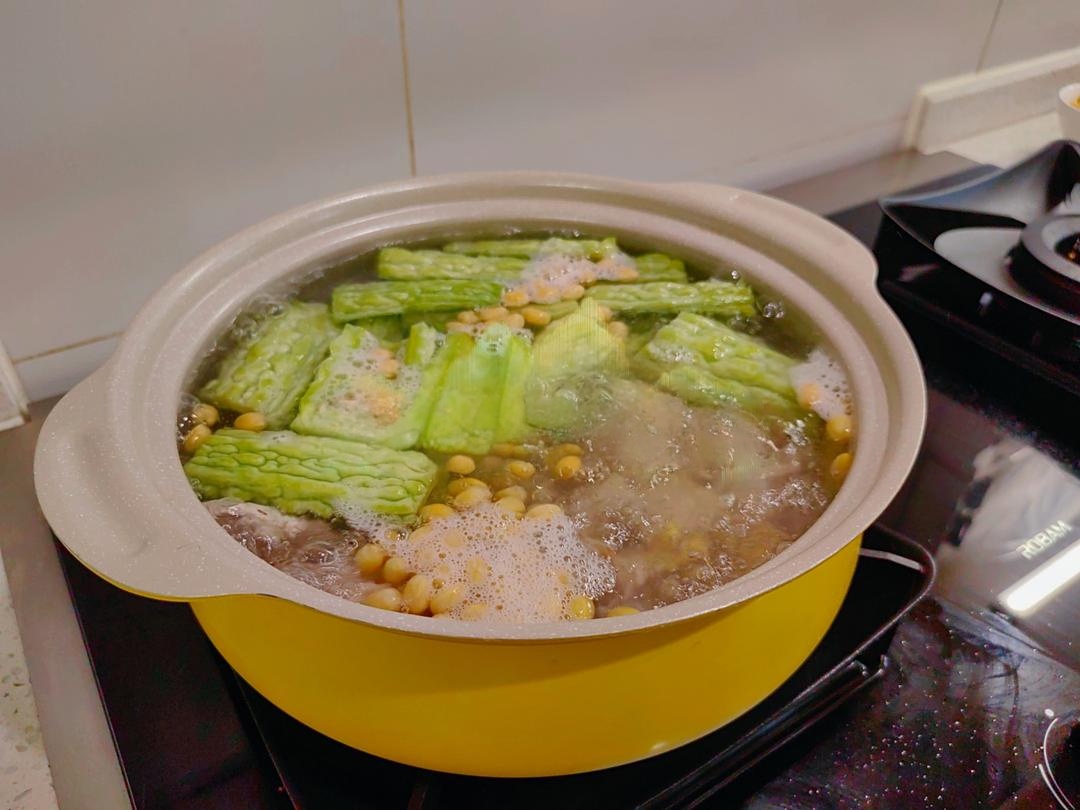
If you enjoy a soup with a gentle bitter edge that cleans the palate, the bitter melon pork rib soup is worth a pot of its own.
2Bitter Melon Pork Rib Soup (Ku Gua Pai Gu Tang)A classic, cooling Cantonese soup featuring tender pork ribs, savory soybeans, and bitter melon. This recipe uses traditional techniques to reduce bitterness for a refreshing summer tonic.Check out this recipe
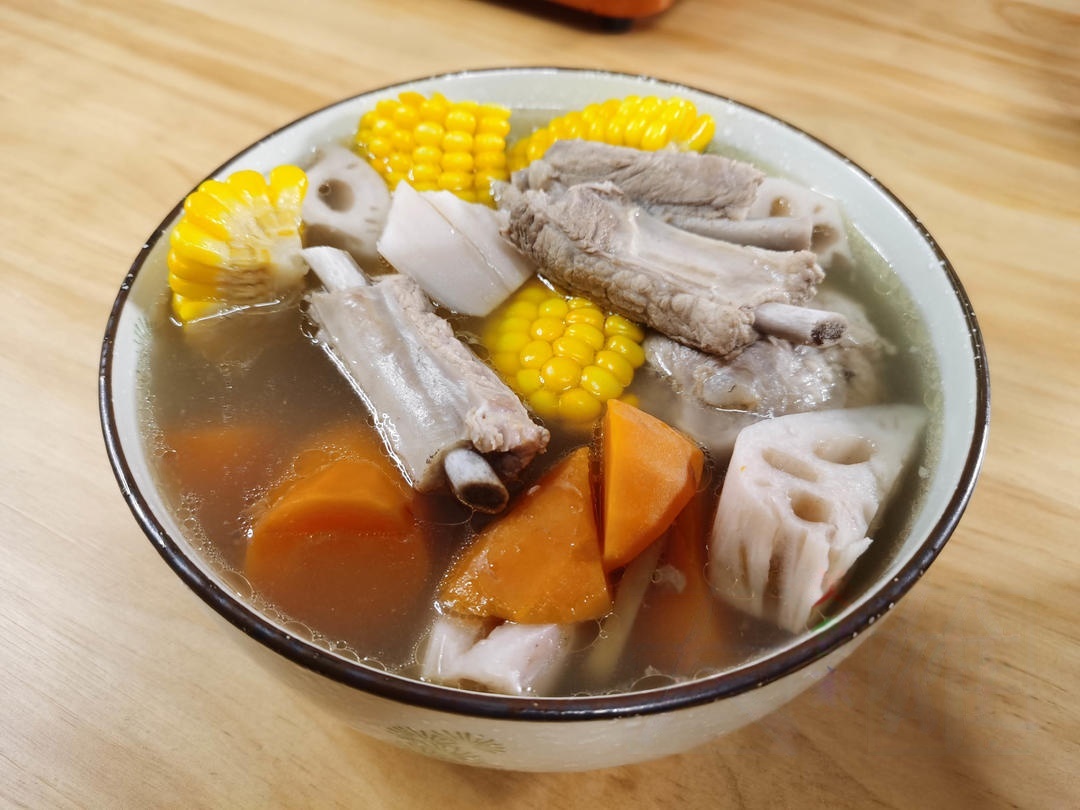
For a nuttier, starchier bowl, the lotus root and pork rib soup is the classic Cantonese pairing of lotus and bone.
3Lotus Root and Pork Rib Soup (Lian Ou Pai Gu Tang)A classic, clear Chinese soup featuring tender pork ribs, sweet corn, crunchy lotus root, and carrots. This nutritious soup is served with a savory dipping sauce for the meat.Check out this recipe
Ingredient Notes
Pork ribs (排骨 / 龙骨): Use meaty ribs with some bone and a little fat. Ask your butcher for the spine-and-rib cut if you can; it gives more body than a lean rack. Fresh ribs only need rinsing. Frozen ribs should be blanched first to remove the icy, gamey note that freezing leaves behind.
Corn (玉米): Sweet corn is the point here. Half a cob is plenty for four servings — cut it into thick rounds so the kernels stay intact and release sweetness slowly rather than disintegrating.
Chinese yam (山药): Also called shān yào or nagaimo. Look for the long, pale, slightly fuzzy variety. It is starchy and mild, and it is what makes the broth milky. Peel it with gloves if your skin is sensitive — the sap can itch.
Carrot (胡萝卜): One carrot adds color and a soft background sweetness. Cut it into rough chunks so it holds up over the long simmer.
Red dates (红枣): Pitted jujubes add a dried-fruit sweetness. Two is enough; more and the soup turns candy-sweet.
Dried tangerine peel (陈皮): A small piece is the quiet secret. It is citrusy, slightly bitter, and rounds out the fat. Do not skip it if you have it.
Ginger (姜): A few slices for aroma and to keep the pork clean-tasting.
Water: Mineral or filtered water makes a noticeable difference over tap. Use a full pot — you want the ingredients submerged and the broth generous.
Ingredients
- 500 g (about 1 lb) pork ribs, rinsed
- 1/2 corn cob, cut into 2-inch rounds
- 1 carrot, peeled and cut into chunks
- 1 Chinese yam, peeled and cut into chunks
- 4 slices fresh ginger
- 2 pitted red dates
- 1 small piece dried tangerine peel (about 1 inch)
- 6 cups (1.4 L) mineral or filtered water
- Salt, optional, to taste
Equipment Needed
- A heavy pot — clay pot, Dutch oven, or electric pressure cooker
- A cutting board and a sharp knife
- A vegetable peeler (for the yam and carrot)
- A slotted spoon (for lifting out the yam and serving)
- A fork (for mashing the yam)
Why This Recipe Works
The long, gentle simmer extracts collagen from the ribs and sugars from the corn at the same time, so the broth gains body and sweetness in one pass. The yam is the star of the technique: mashing part of it back into the pot releases its starch directly into the liquid, thickening the broth without flour, cream, or cornstarch. That is why the soup looks milky and tastes rich while staying completely dairy-free.
The dried tangerine peel and ginger keep the pork flavor clean and bright, and the red dates round out the corn’s sweetness so it never tastes one-note. Finally, the no-salt default is deliberate: the ingredients carry enough natural sodium and sweetness that salt becomes a finishing choice, not a requirement.
Prep & Mise en Place
Rinse the ribs under cold water and pat them dry. If they were frozen, blanch them in boiling water for 2–3 minutes, then rinse again — this removes the cloudy impurities that would otherwise muddy the broth. Cut the corn into thick rounds, peel and chunk the carrot, peel and chunk the yam, pit the dates, and slice the ginger.
Set everything within arm’s reach of the stove. This is a dump-and-simmer recipe, so once the pot is on, there is nothing to chase. If you are using a clay pot, soak it in water for 30 minutes first so it heats evenly and does not crack.
Cooking Process
Step 1 — Prepare the Ribs and Vegetables
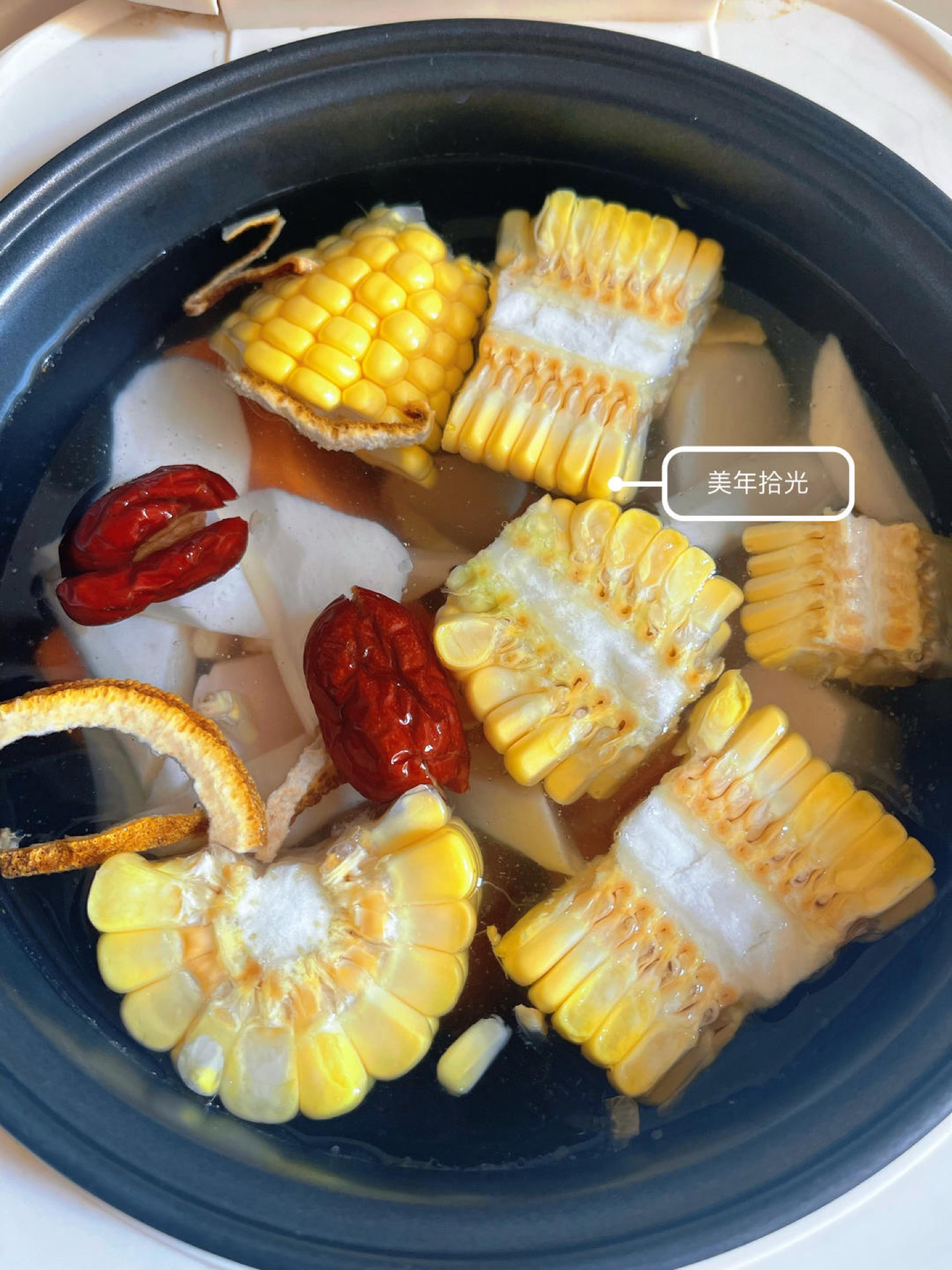
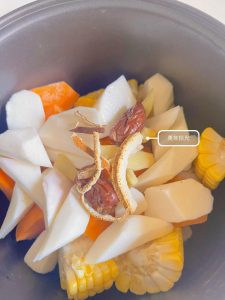
Add the rinsed pork ribs to the pot — fresh ribs only need rinsing, no blanching, but if the ribs were frozen, blanch them first — and cut the carrot and corn into chunks.
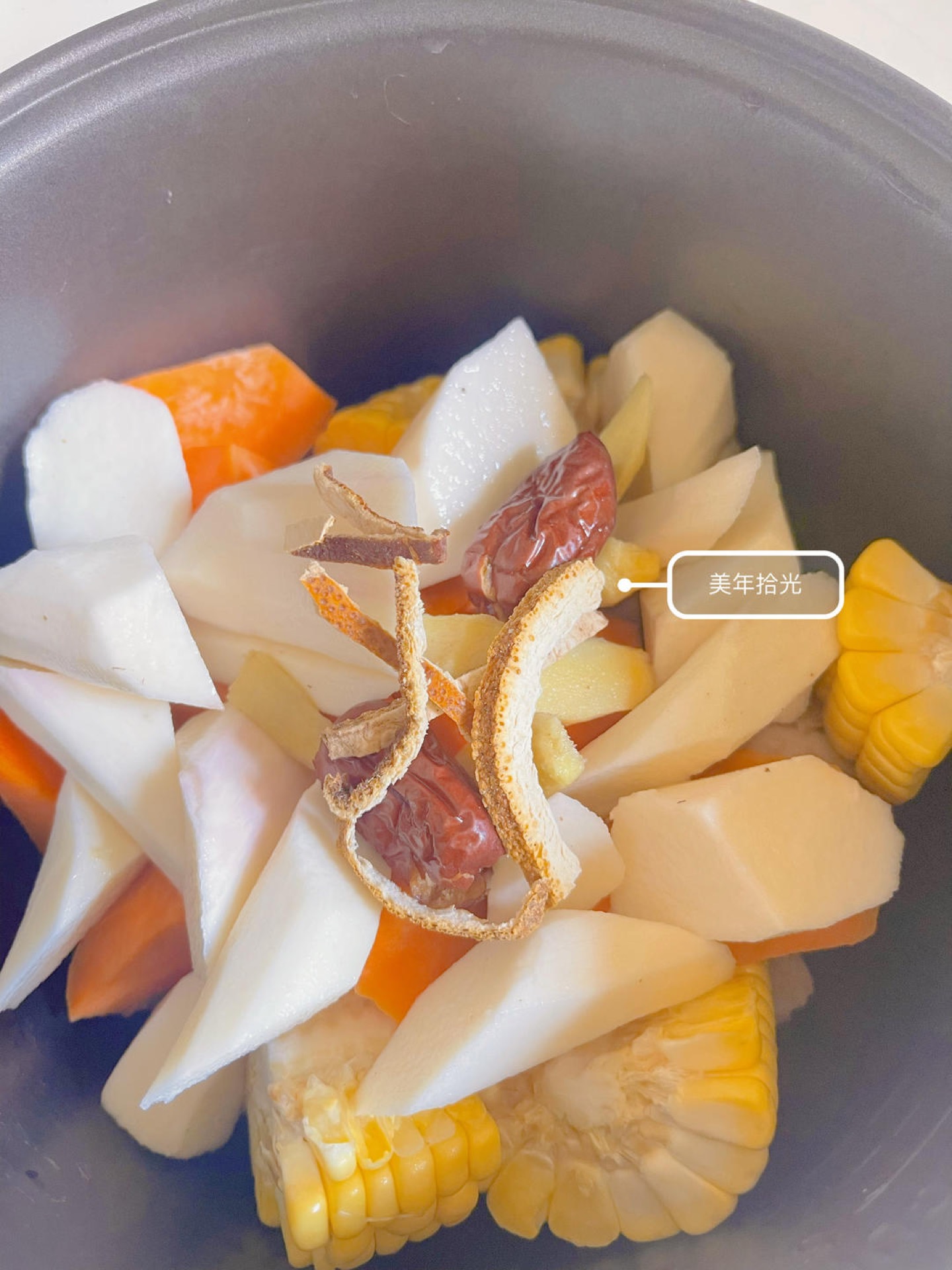
Step 2 — Add the Aromatics
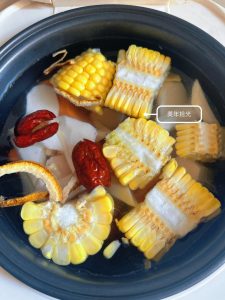
Cut the yam into chunks, pit the red dates, slice the ginger, wash all the ingredients, and add everything to the pot together.
Step 3 — Simmer the Soup
Fill the pot with mineral water; for a clay pot, simmer 30 minutes over high heat, 30 minutes over medium, and 1.5 hours over low for about 2.5 hours total, while an electric pressure cooker on soup mode takes roughly 2.5 to 3 hours.
Step 4 — Mash the Yam
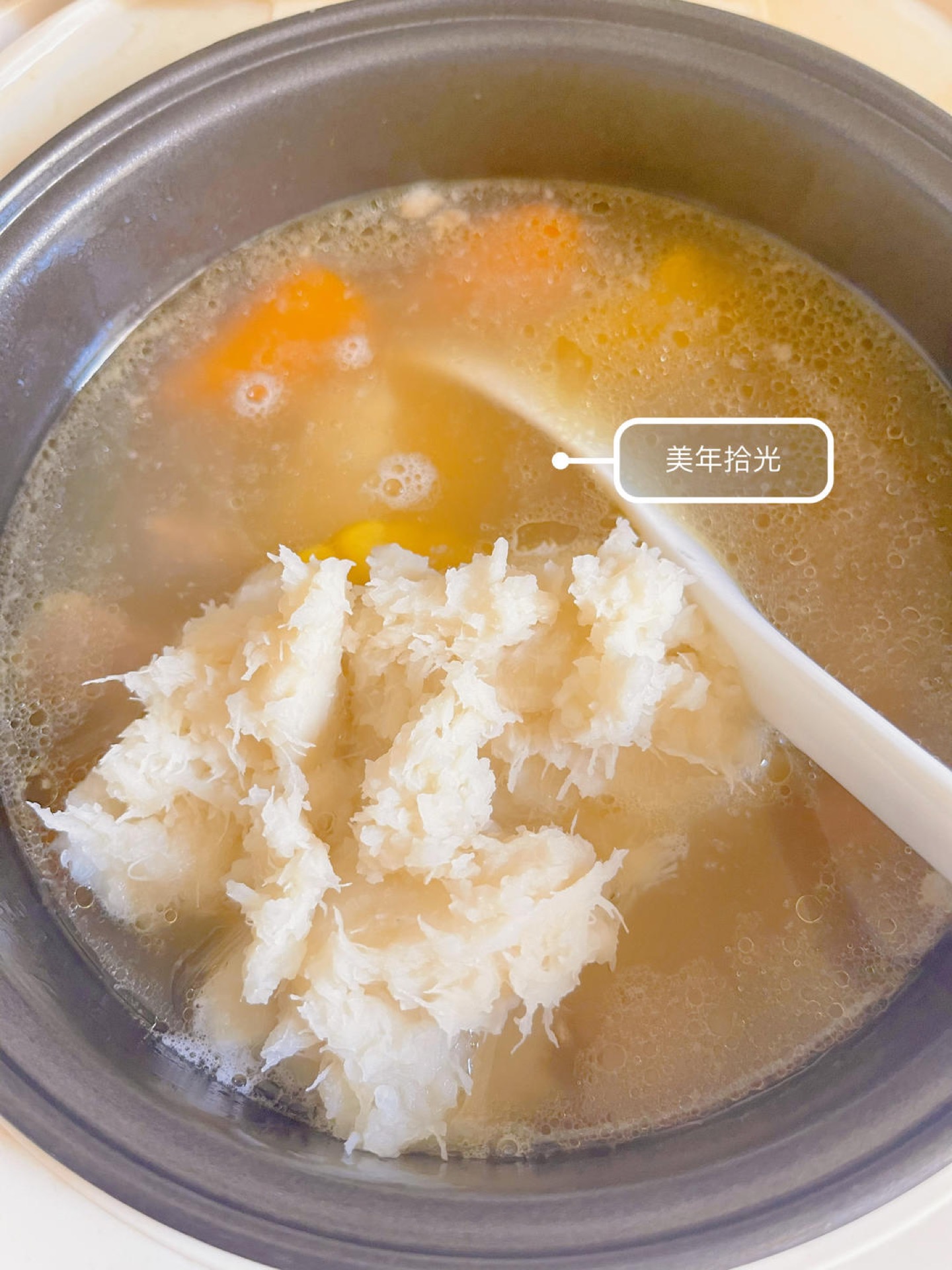
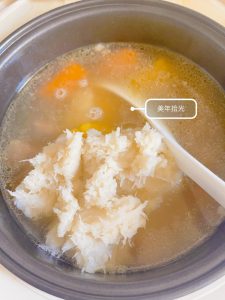
When the time is up, scoop out the yam on its own, mash it with a fork, and stir it back into the soup — no salt is needed, it is rich and delicious, though you can add a little salt if you like it savory.
Step 5 — Serve
Go make it — it is so good to drink!

Common Mistakes When Making 玉米山药龙骨汤
1. Blanching fresh ribs. Fresh ribs only need rinsing. Blanching them unnecessarily washes away flavor and leaves the broth thinner. Save the blanch for frozen ribs, where it removes the freeze note.
2. Boiling hard instead of simmering. A rolling boil emulsifies fat and can make the broth greasy and cloudy in the wrong way. Keep it at a gentle simmer so the fat stays pooled and easy to skim.
3. Adding salt at the start. Salt early tightens the meat and mutes the corn’s sweetness. Taste at the end and add a pinch only if you want it savory.
4. Skipping the yam mash. Without mashing part of the yam, the broth stays thin. The mash is what gives the soup its signature milky body.
5. Overloading the pot. Too many ingredients and too little water produces a stew, not a soup. Keep the water level generous and the solids submerged.
6. Using too many red dates. Two is balance; five is dessert. The dates are a supporting sweetness, not the main event.
Variations
Clay pot version: The traditional method — 30 minutes high, 30 minutes medium, 1.5 hours low for about 2.5 hours total. The clay retains heat and gives a slightly rounder flavor.
Pressure cooker version: An electric pressure cooker on soup mode takes roughly 2.5 to 3 hours and produces a broth that is nearly identical, with less evaporation. Add a little less water if you want a concentrated result.
Add-ons: A handful of goji berries in the last 10 minutes, a few dried scallops for extra umami, or a small piece of kombu for a subtle marine depth. Keep additions light so the corn and yam stay the headline.
Leaner cut: Swap pork ribs for pork shank or neck bones for a less fatty broth, though the body will be slightly lighter.
Frequently Asked Questions
Do I have to blanch the ribs? Only if they were frozen. Fresh ribs just need a good rinse. If you are unsure, a quick blanch does no harm, but it does cost some flavor.
Can I use a different yam? Chinese yam (nagaimo) is ideal because it is starchy and mild. A regular potato will thicken the broth but taste different; taro works but turns the soup slightly purple-gray.
Why is my broth not milky? The mash step is the usual culprit. Make sure you lift out a good portion of the cooked yam, mash it thoroughly, and stir it back in while the soup is still hot.
Can I make this in advance? Yes. The soup actually improves the next day as the flavors settle. Reheat gently and add a splash of water if it has thickened too much.
Is this soup supposed to be salty? No. The default is unsalted, and many families serve it that way. Salt is a personal finishing touch, not a requirement.
How to Serve
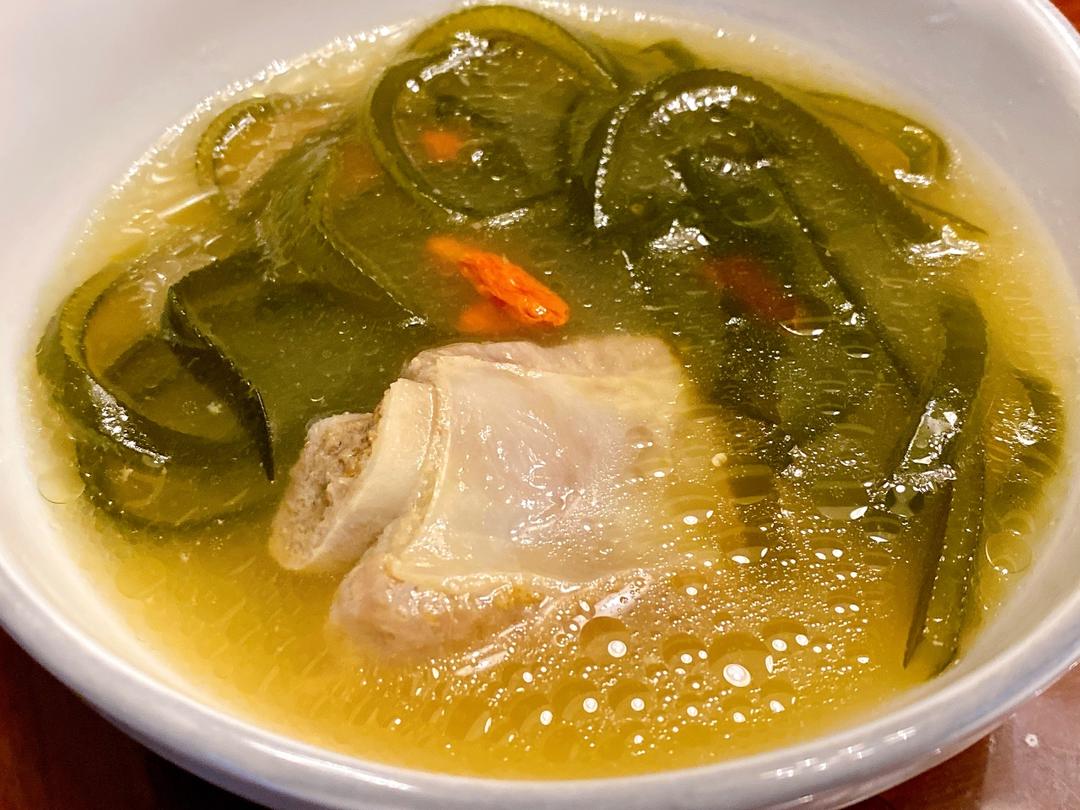
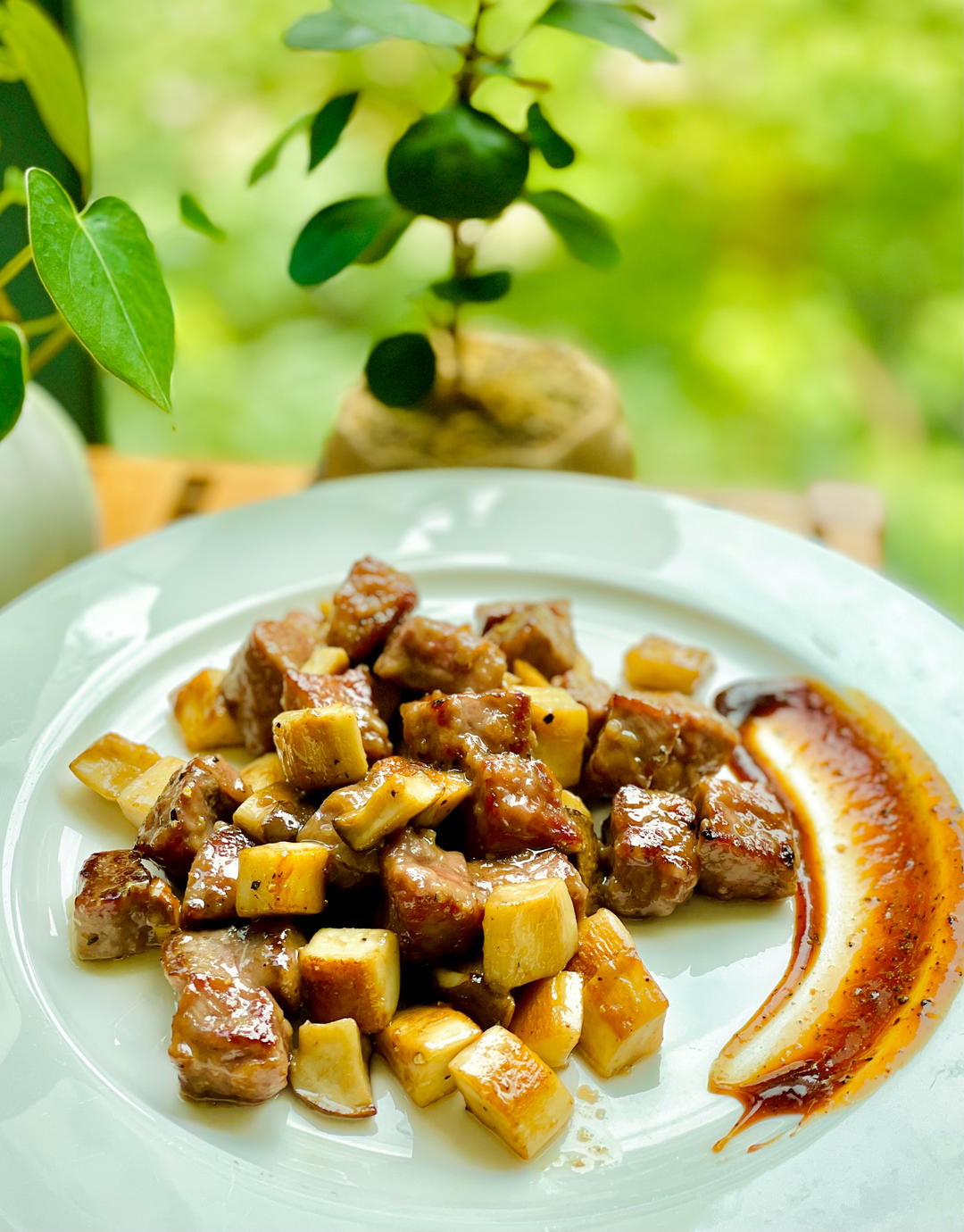
Serve the soup hot in deep bowls, with a slotted spoon for the ribs and vegetables and a small dish of salt on the side for anyone who wants it. It pairs beautifully with steamed white rice and a simple green vegetable, and it is equally good as a standalone light meal. If you want to round out the table, try our corn and pork rib soup as a companion for a bigger soup spread, or our nourishing kelp and pork rib soup for a brinier contrast. A crisp stir-fry like our black pepper beef and king oyster mushroom stir fry makes a nice textural counterpoint, and a plate of braised green beans and noodles turns the meal into a full table. For something heartier alongside, our braised beef brisket with dried bamboo shoots is a natural pairing on a cool evening, and our radish pork rib soup is a lovely alternative if you want a peppery, clean-tasting broth.

Storage & Reheat
Cool the soup to room temperature within two hours, then refrigerate in an airtight container for up to 3 days. The fat will solidify on top and can be lifted off for a leaner broth. Reheat gently on the stove over medium-low heat, adding a splash of water if it has thickened, and bring it to a simmer. Do not boil hard, or the yam can break down further and turn the broth gluey. Freeze for up to 2 months; thaw overnight in the refrigerator before reheating.
Allergen Notice
This recipe contains no dairy, eggs, wheat, soy, shellfish, fish, peanuts, or tree nuts. It is naturally gluten-free and dairy-free. If you add goji berries or dried scallops, check the packaging for cross-contamination notes.
Nutrition Disclaimer
Nutrition information is calculated using an ingredient database and should be considered an estimate. In cases where multiple ingredient alternatives are given, the first listed is calculated for nutrition. Garnishes and optional ingredients are not included.
About the Author & Recipe Development
Lin is the recipe developer behind Woks of Love, where she documents the home-style Chinese cooking she grew up with and the restaurant classics she has spent years reverse-engineering. This recipe was developed from a Cantonese 老火汤 template and tested across a clay pot and an electric pressure cooker to make sure the timing works in a real kitchen. The yam-mash technique was refined over several pots to hit the right balance of creamy and light. Every recipe on the site is tested at least twice before publishing.
If you liked this, radish pork rib soup is worth cooking next.
If you liked this, braised beef brisket with dried bamboo shoots is worth cooking next.
Authoritative References
For safe handling and cooking temperatures for pork, see the USDA safe minimum internal temperature chart. For general food safety guidance on storing and reheating soups, see the FDA refrigerator and food safety guidance.

Pork Rib Soup with Corn and Yam (玉米山药龙骨汤): Sweet Corn, Silky Yam, Slow-Simmered Comfort

Equipment
- Wok
- Cutting Board
- Slotted Spoon
Ingredients
For the Soup
- 500 g pork ribs rinsed; blanch first if frozen
- 1/2 whole corn cut into 2-inch rounds
- 1 whole carrot peeled, cut into chunks
- 1 whole yam peeled, cut into chunks
- 4 slices ginger fresh
- 2 whole red dates pitted
- 1 small piece dried tangerine peel about 1 inch
- 6 cups mineral water or filtered water
To Finish
- 1 pinch salt optional, to taste
Instructions
- Add the rinsed pork ribs to the pot — fresh ribs only need rinsing, no blanching, but if the ribs were frozen, blanch them first — and cut the carrot and corn into chunks.
- Cut the yam into chunks, pit the red dates, slice the ginger, wash all the ingredients, and add everything to the pot together.

- Fill the pot with mineral water; for a clay pot, simmer 30 minutes over high heat, 30 minutes over medium, and 1.5 hours over low for about 2.5 hours total, while an electric pressure cooker on soup mode takes roughly 2.5 to 3 hours.
- When the time is up, scoop out the yam on its own, mash it with a fork, and stir it back into the soup — no salt is needed, it is rich and delicious, though you can add a little salt if you like it savory.
- Go make it — it is so good to drink!




Leave a Reply