There are soups that demand your full attention, and then there is the one you make when the kitchen needs to smell like warmth and you want nothing to do with it. Luo bo dun pai gu (萝卜炖排骨) — radish and pork rib soup — is that soup for me. It is my lazy autumn and winter soup, the one I reach for at the first cold snap, when the market is full of fat, sweet winter daikon. No searing, no stock, no layering of flavors. You chop a radish into rough chunks, give the ribs a cold-water blanch, and let a clay pot murmur on the stove for about an hour while the radish goes translucent and the meat loosens from the bone.
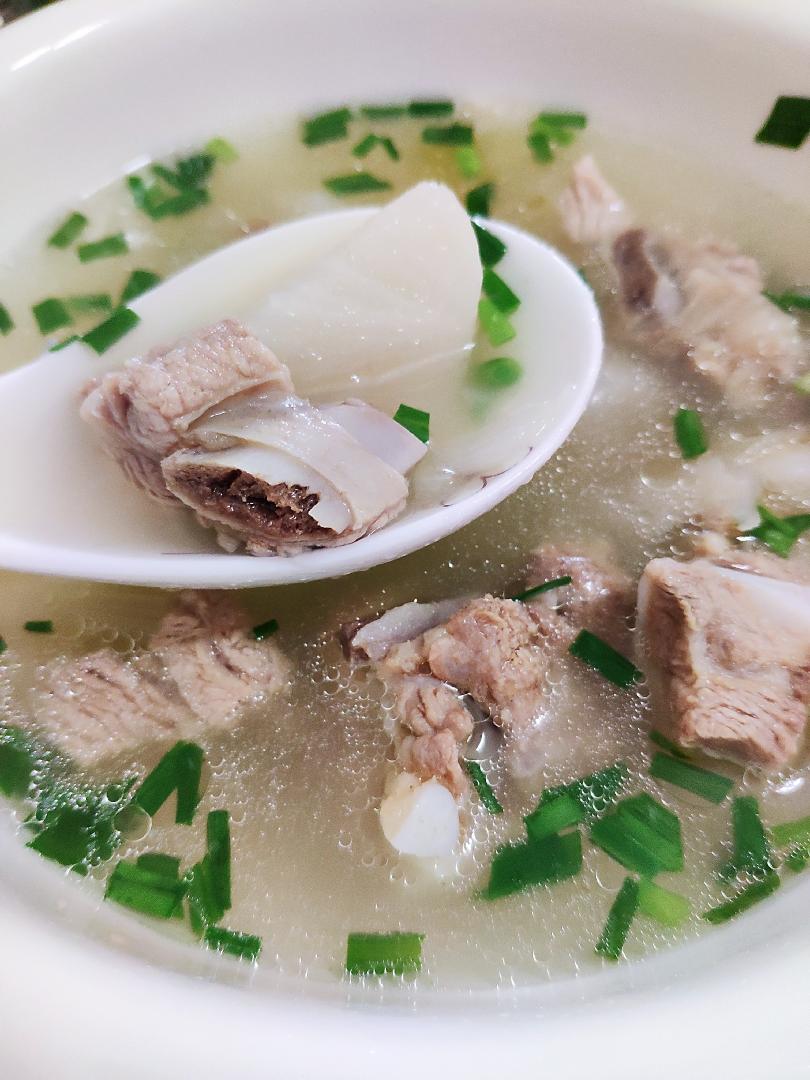
I grew up eating this soup whenever the weather turned. When the air got sharp and the clay pot came down from the top shelf, winter had arrived at our house. My mother never measured anything — a few ribs, one big radish, ginger, scallion, water and time. She seasoned only at the end with white pepper and salt and sprinkled scallions over each bowl, and the broth came out pale, clean, gently sweet, and so comforting that a bowl of it fixed almost anything.
It is also the soup that taught me why blanching and patience beat technique. Get those two basics right and it cooks itself into something far more composed than its short ingredient list suggests.
What Is Radish and Pork Rib Soup (Luo Bo Dun Pai Gu)?
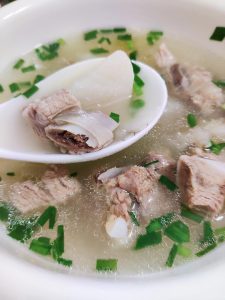
Luo bo dun pai gu (萝卜炖排骨) is a classic Chinese winter soup: pork ribs simmered with white daikon radish, ginger and scallion in plain water, seasoned at the very end with white pepper and salt. That is the entire formula. The daikon is the quiet star. Raw, it bites with a peppery sharpness; simmered for an hour, it turns translucent and almost creamy, absorbing the pork’s richness while releasing its own mellow sweetness into the broth.
In Chinese homes this is less a written recipe than a reflex. Every family has a slightly different habit — corn or carrots for sweetness, goji berries, cilantro instead of scallions — but the bones of the dish never change: pork, radish, water and time. It is one of the simplest members of the long, gentle slow-soup family, because almost nothing is added: no soy, no oil, no sugar. The flavor is built entirely from the ingredients and from patience.
The pot matters more than you might expect. Chinese cooks reach for a clay pot (砂锅, shā guō) because clay heats gently and evenly, holds heat long after the stove is off, and keeps the broth in steady bubbles rather than a rolling boil. That even heat is what coaxes the daikon sweet and draws collagen from the ribs without clouding the liquid. No clay pot? A ceramic Dutch oven or a sturdy stainless pot does the same job.
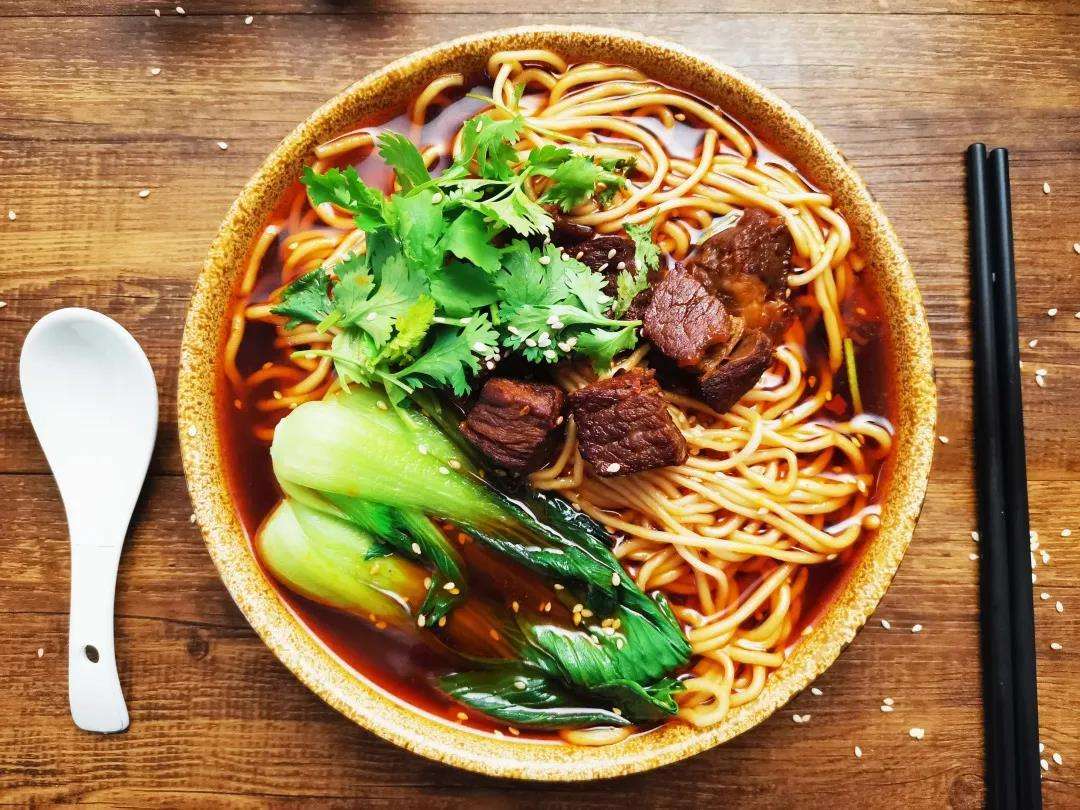
If you love a slow, deeply flavored broth, my braised beef noodle soup is the noodle-bowl sibling to this radish soup — beef shank and tendons simmered until they fall apart, ladled over noodles with a spoon of chili oil.
1Braised Beef Noodle Soup (红烧牛肉面)A deeply comforting, homestyle Braised Beef Noodle Soup (Hong Shao Niu Rou Mian). Tender braised beef in a rich, slightly spicy, and aromatic broth served over chewy noodles.Check out this recipe
Why This Recipe Works
- Cold-water blanching gives a clear broth: starting the ribs in cold water and heating them slowly draws blood and protein scum out gradually, so you can skim it cleanly — the soup stays pale and translucent instead of cloudy.
- The daikon does the seasoning: an hour of gentle simmering turns the radish sweet and translucent and releases its juices into the broth — no sugar, no stock, no shortcuts.
- Slow heat breaks down collagen: a long, low simmer melts the connective tissue around the ribs into gelatin, giving the broth body and leaving the meat to fall off the bone.
- Seasoning at the end keeps the soup bright: white pepper and salt go in only during the final minutes, so the bowl tastes clean and fresh rather than flat or salty.
- It is a set-and-forget dinner: once the pot is on, there is nothing to stir or watch — an hour of gentle bubbling does all the work.
Equipment Needed
- A clay pot or ceramic pot — the best choice for this soup; a pressure cooker or rice cooker also works
- A separate pot for blanching the ribs
- A slotted spoon or fine-mesh strainer for skimming foam
- A sharp knife and a sturdy cutting board
- A ladle for serving
Ingredients
- 450 g (1 lb) pork ribs, cut into bite-sized pieces
- 3 white daikon radishes (about 1 kg / 2.2 lb total)
- 4 slices of ginger
- 2 sections of scallion (white and pale green parts)
- 1 tbsp (15 ml) cooking wine, for blanching
- 1/2 tsp (1 g) white pepper
- 1 tsp (5 g) salt
- Sliced scallions, for finishing
- Hot water, for the pot (about 6 cups / 1.5 L)
Ingredient Notes
White daikon radish is the long white winter radish sold in every Asian market; do not swap in small red radishes or round turnips, which behave differently when simmered. Choose radishes that feel heavy with smooth, unwrinkled skin — a light or spongy one turns fibrous and bitter in the pot. I use the same vegetable in my braised beef brisket with daikon radish, where it turns sweet and melting the same way.
Choosing the ribs: for soup, ask for meaty ribs on the bone — baby back or spare ribs both work. The bone and connective tissue give the broth its body; boneless meat makes a leaner, less satisfying bowl. Ask the butcher to cut the rack into 2 to 3 cm (1-inch) segments.
Why blanch in cold water: this step is the difference between a clear soup and a murky one. Blood proteins dissolve slowly as cold water warms and rise to the surface as foam you can skim. Boiling water seals the meat too quickly, trapping impurities inside and clouding the broth. Start cold, bring slowly to a boil, skim, then rinse with hot water.
Prep & Mise en Place
Wash the radishes and cut them into rough chunks about 4 cm (1.5 inches) across, big enough to stay intact through an hour of simmering. Slice four coins of ginger, cut the scallion into two sections (saving the dark green tops for the garnish), trim any large fat caps off the ribs, and have your cooking wine and a kettle of hot water ready. Doing this before the pot goes on makes the rest of the recipe completely hands-off.
Cooking Process
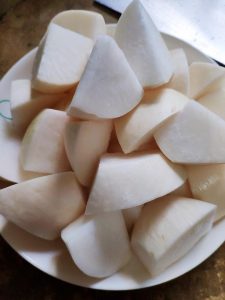
Step 1 — Cut the Radishes into Chunks
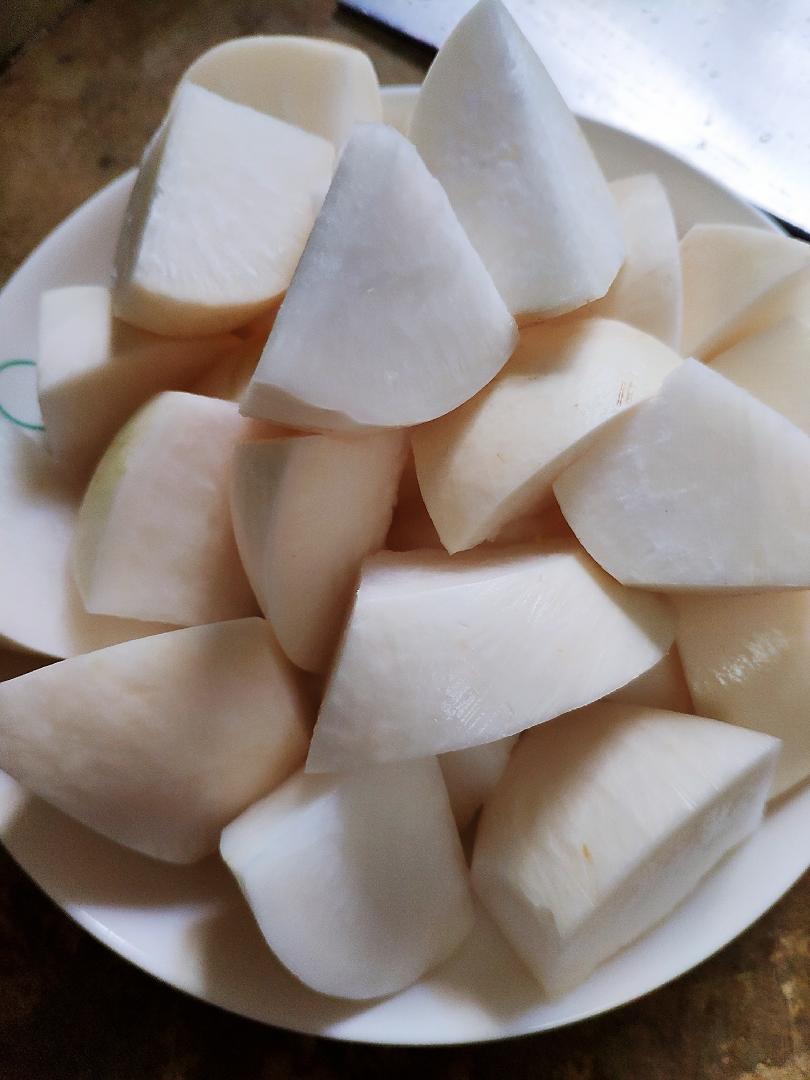
Wash the daikon radishes and cut them into chunky pieces about 4 cm (1.5 inches) on each side. Leave the skin on if it is clean and thin — it helps the chunks hold their shape — or peel if it looks thick and coarse.
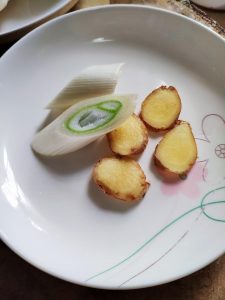
Step 2 — Prepare the Aromatics
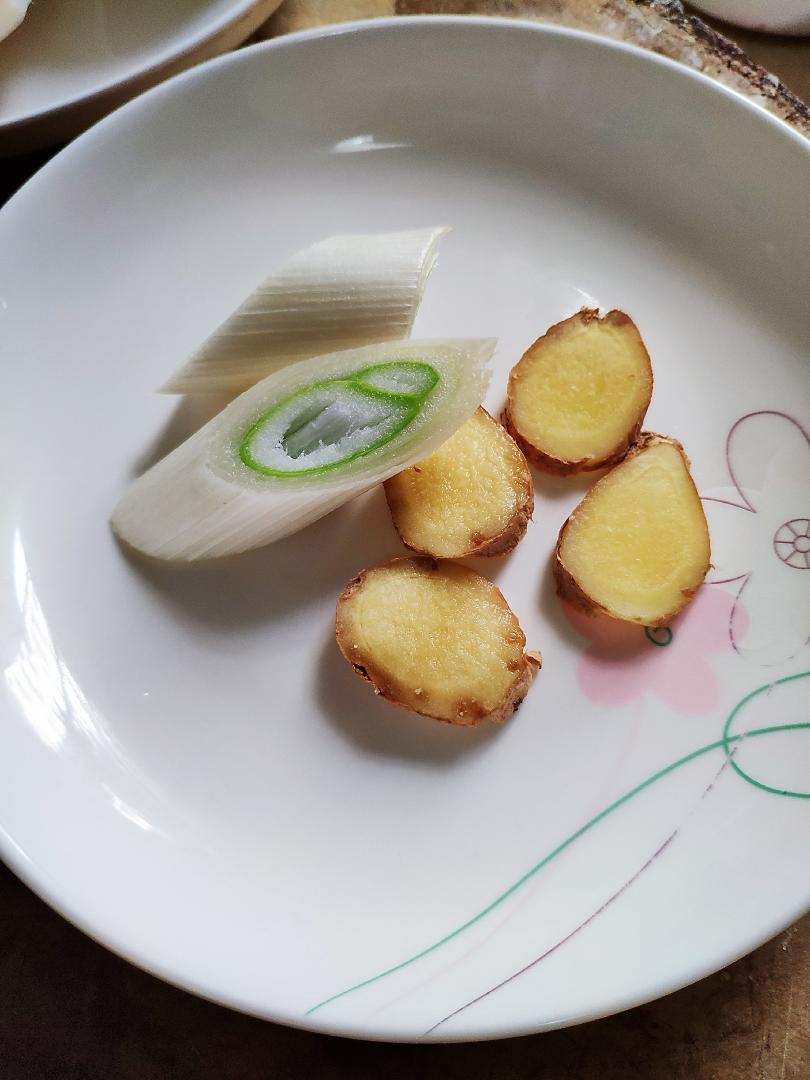
Cut the scallion into two sections and slice the ginger into four thick coins. Everything is rough-cut here — this is a rustic soup, not a fine-dining plate.
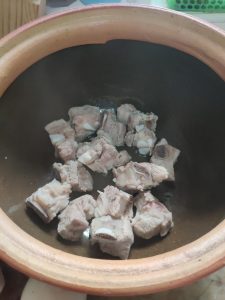
Step 3 — Blanch the Ribs in Cold Water
Put the ribs in a pot, cover them with cold water, and add a spoon of cooking wine. Bring to a boil over medium-high heat and cook for 1 to 2 minutes as gray foam rises to the surface. Skim the foam with a slotted spoon, drain the ribs, and rinse them under hot water to wash away any clinging scum.
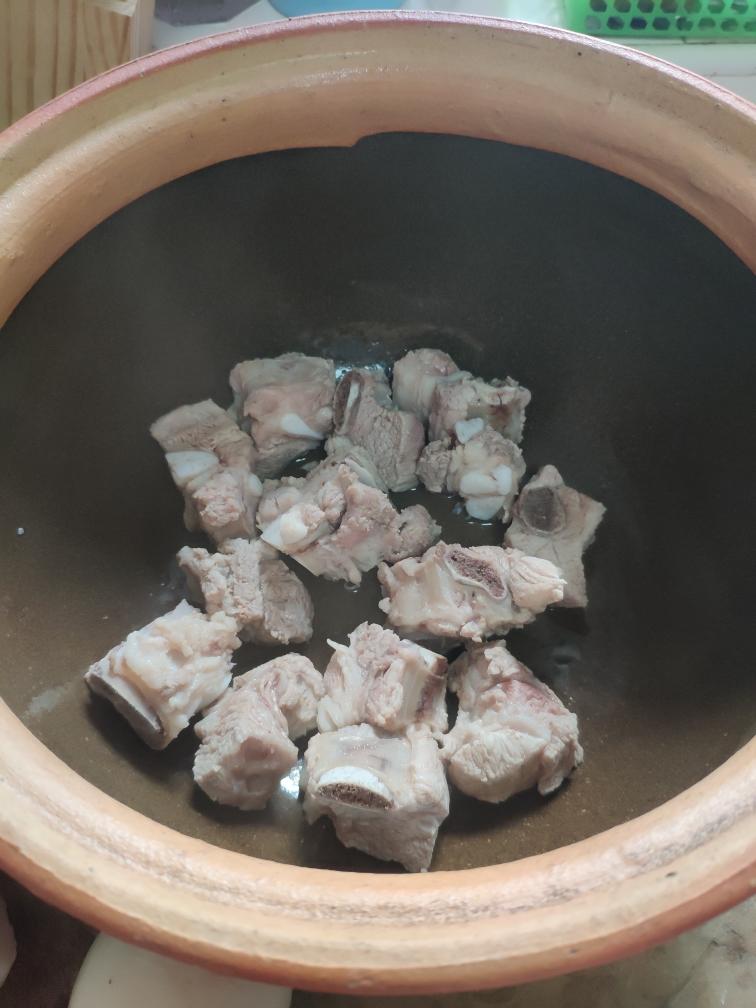
The cold-water start is not superstition. Blood and bone proteins dissolve steadily as the water warms, coagulate at the surface and lift into foam you can scoop away. Start with boiling water and the protein seals the meat, trapping impurities inside — the broth turns cloudy and the meat tastes faintly iron-y. The brief boil also drives off the cooking wine’s raw note.
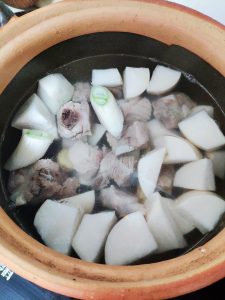
Step 4 — Build the Soup in a Clay Pot
A clay pot (or a ceramic pot; a pressure cooker or rice cooker also works) is best for this soup. Add the blanched ribs, the radish chunks and the aromatics, then pour in enough hot water to cover everything generously. Always add hot water — never cold — so the pot does not crack and the soup returns to a simmer quickly.
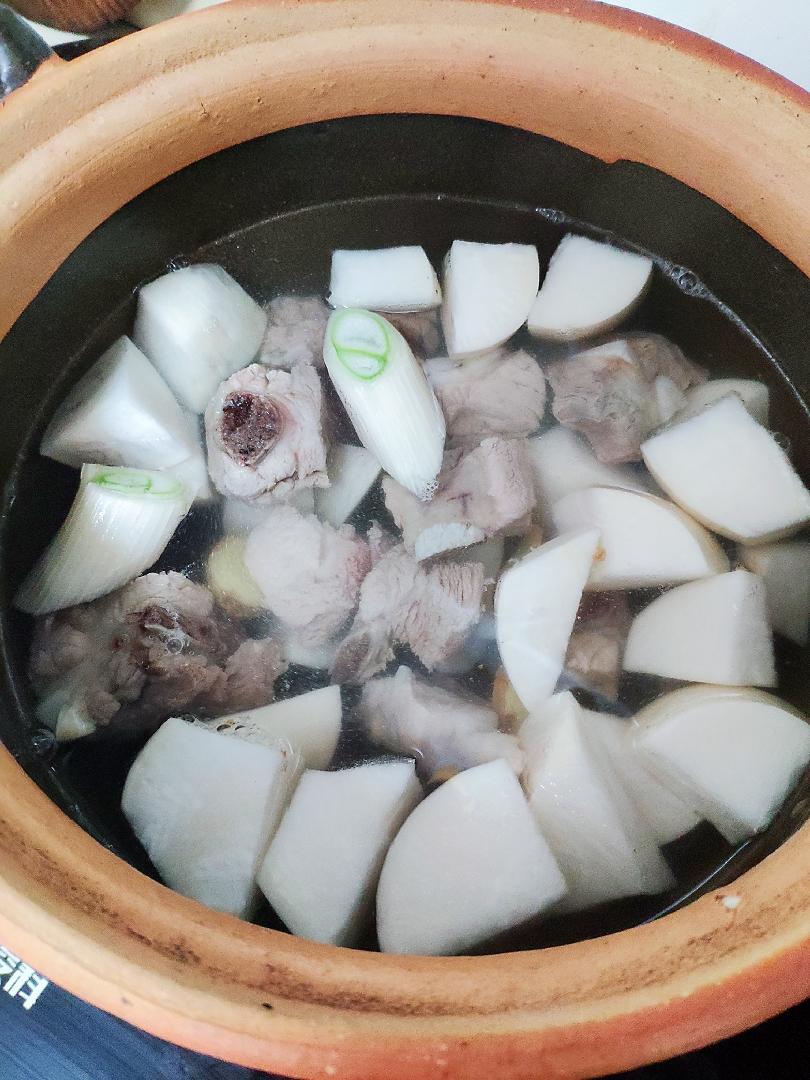
Clay conducts heat slowly and evenly, so the liquid rolls in small, steady bubbles instead of violent boils — exactly what a clear soup wants. The porous clay also breathes, letting moisture escape gently, which concentrates the broth without scorching. Adding hot water protects the pot from thermal shock and shortens the return to a simmer.
Step 5 — Simmer Slowly, Then Season at the End
Bring the pot to a gentle boil, then lower the heat so the soup barely murmurs. Simmer for about 1 hour in a clay pot, until the radish is translucent and nearly melting and the meat pulls easily from the bone. In the last few minutes, season with a small spoon of white pepper and a small spoon of salt, taste and adjust, then ladle into bowls and sprinkle sliced scallions over the top.
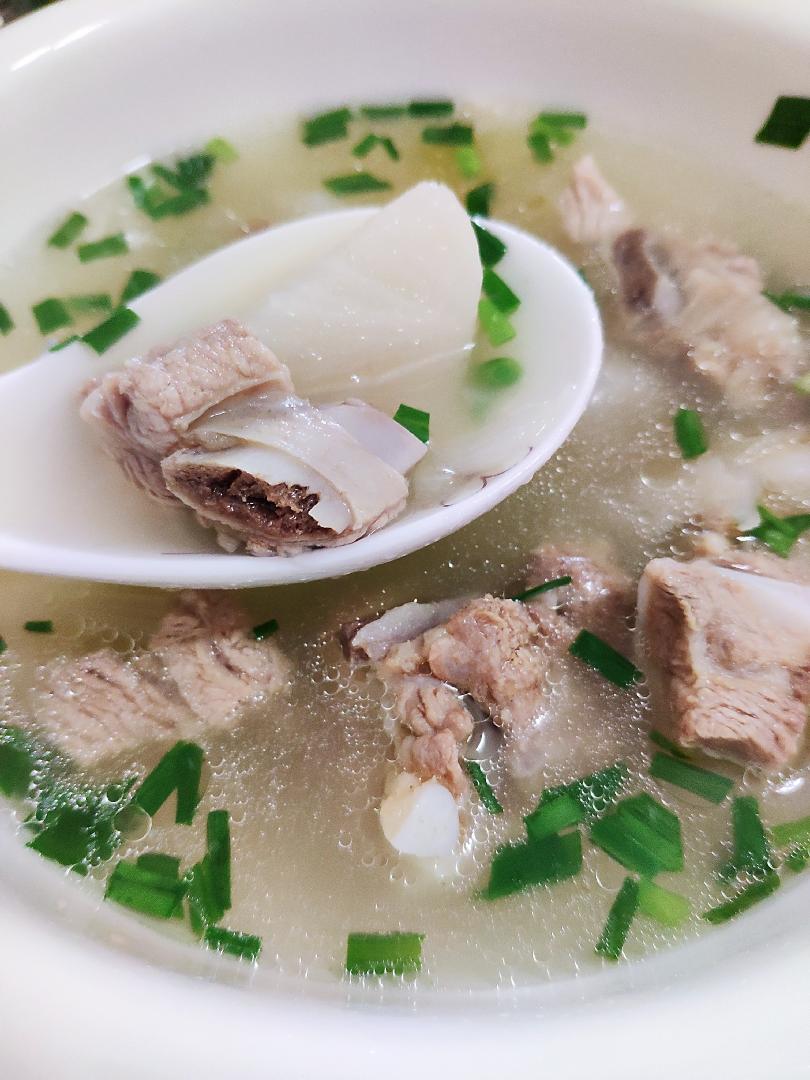
That hour of simmering does two separate jobs. Collagen in the ribs slowly dissolves into gelatin, giving the broth its silky body and freeing the meat from the bone. Meanwhile the daikon’s cell walls soften, its peppery compounds fade, and the mild heat converts some of its starch into sugars — which is why a vegetable that bites like horseradish when raw turns sweet and translucent in the bowl. Seasoning last protects both: white pepper loses its fragrance with prolonged heat, and early salt makes the soup taste flat.
Common Mistakes When Making Radish and Pork Rib Soup
1. The broth is cloudy and murky. Cause: ribs dropped into boiling water, or foam never skimmed. Fix: start in cold water, skim thoroughly after the boil, and rinse the meat with hot water before it goes into the pot.
2. The soup tastes gamey. Cause: the blanching step was skipped or rushed. Fix: give the ribs the full 1 to 2 minutes of boiling with the cooking wine, and skim the foam — the alcohol carries off the raw note while the foam takes the rest.
3. The daikon is still hard and sharp. Cause: chunks cut too large, or the liquid boiled instead of simmering. Fix: cut to about 4 cm (1.5 inches), bring to a boil only once, then keep a low, gentle bubble for the full hour.
4. The radish turned bitter. Cause: an old, light or bruised daikon. Fix: buy heavy, dense radishes, cut away any soft spots, and peel the skin if the root is old — the bitterness concentrates near the skin.
5. The broth tastes flat and underseasoned. Cause: salt added too early, or not enough of it. Fix: season only in the last 5 minutes, taste, and adjust in small pinches — the white pepper is essential for the warm finish.
6. The soup is greasy. Cause: fatty ribs or leftover scum. Fix: trim big fat caps before blanching, and skim any oil slick from the surface before serving.
Variations
This soup is a canvas. Add corn cut into rounds for sweetness, or carrot chunks for color. Drop in goji berries in the last 15 minutes for a northern-Chinese winter classic; Cantonese cooks add dried scallops or a few slices of tangerine peel for depth. Want the same ribs in a different mood? My authentic braised pork ribs take the soy-braised route, sweet and sour pork ribs go glossy and candy-like, and steamed pork ribs with black bean sauce are steamed to a different kind of tenderness.
Frequently Asked Questions
Why blanch ribs that are already clean? Clean meat still contains blood and proteins that will cloud your broth. The cold-water blanch dissolves them, lifts them into foam, and removes them — leaving a clear, clean-tasting soup.
Can I use a pressure cooker or rice cooker instead of a clay pot? Yes. A pressure cooker cuts the simmer to about 20 minutes; a rice cooker can run its soup setting for the full hour. Just keep the cold-water blanch, because no pot can fix a murky start.
How do I know when the soup is done? The daikon should be translucent and give no resistance to a chopstick, and the meat should pull easily off the bone.
Do I need to peel the daikon? Not necessarily. Thin-skinned, fresh daikon can go in unpeeled and holds its shape better; peel older roots, where the bitterness concentrates near the skin.
Can I freeze this soup? Yes. Freeze the broth and meat (ideally without the radish, which turns mushy) for up to 3 months, and add fresh daikon chunks when you reheat.
How to Serve
Serve the soup in deep bowls, broth first, with the radish and ribs ladled on top and a shower of sliced scallions. It is a meal on its own with a bowl of steamed rice, or a first course before a stir-fry. The clean broth pairs beautifully with other light Chinese soups — try seaweed egg drop soup or tomato egg drop soup for variety, or Cantonese wonton soup when you want a little more substance. For noodle lovers, my simple clear beef noodle soup follows the same logic of a clear, slowly simmered broth.
Storage & Reheat
Leftovers keep refrigerated in an airtight container for 3 to 4 days and actually improve overnight. Reheat gently until piping hot — for pork, the meat should reach at least 145°F (63°C), though an hour’s simmer has it past that within seconds. The radish softens further on reheating, which most people consider a feature. To freeze, strain the broth and meat (without the radish) for up to 3 months and add fresh daikon chunks when you reheat.
Allergen Notice
This recipe contains no gluten, soy, dairy, nuts, eggs or shellfish as written. Traditional Shaoxing cooking wine is fermented from rice and is generally gluten-free, but if you are highly sensitive, check the label or simply omit it — the soup still works beautifully.
Nutrition Disclaimer
Nutrition information is calculated using an ingredient database and should be considered an estimate. In cases where multiple ingredient alternatives are given, the first listed is calculated for nutrition. Garnishes and optional ingredients are not included.
About the Author & Recipe Development
I’m Lin, a chef who spent a decade in Chinese restaurant kitchens before writing recipes for home cooks. Radish and pork rib soup was the first soup I ever made on my own, standing on a stool at my mother’s side, and it is the one I still make every winter. When I developed this version, I tested the blanch three ways — cold-water start, boiling-water drop, and no blanch — and cold water won for clarity and taste. I also tested daikon chunks from 2 cm to 6 cm; 4 cm is the sweet spot, big enough to hold its shape and small enough to turn tender and sweet in one hour. The recipe looks too plain to need testing, but that plainness is the point — there is nowhere to hide.
Authoritative References
For safe handling and cooking temperatures of pork, I follow the USDA safe minimum internal temperature chart, which recommends 145°F (63°C) with a three-minute rest for pork — an hour of simmering exceeds this comfortably. For the nutritional profile of daikon radish, the USDA FoodData Central entry for daikon radish is a reliable reference.
Homemade Radish and Pork Rib Soup (Luo Bo Dun Pai Gu)

Equipment
- Clay Pot or Ceramic Pot
- Pot (for blanching)
- Slotted Spoon or Fine-Mesh Strainer
Ingredients
For the Soup
- 1 lb pork ribs 450 g, cut into bite-sized pieces
- 3 white daikon radishes about 1 kg (2.2 lb) total, cut into chunks
- 4 slices ginger
- 2 sections scallion white and pale green parts
- 1 tbsp cooking wine 15 ml, for blanching
- 1/2 tsp white pepper 1 g, to finish
- 1 tsp salt 5 g, to taste
- sliced scallions for finishing
- 6 cups hot water 1.5 L, for the pot
Instructions
- Wash the radishes and cut them into chunky pieces, about 4 cm (1.5 inches) on each side.

- Cut the scallion into two sections and slice the ginger into four thick coins.
- Put the ribs in cold water with a spoon of cooking wine. Bring to a boil and cook 1 to 2 minutes, skimming the foam, then drain and rinse the ribs with hot water.
- A clay pot or ceramic pot is best. Add the ribs, radish chunks and aromatics, then pour in enough hot water to cover everything generously.
- Simmer about 1 hour until the radish is translucent and the meat pulls from the bone. Near the end, season with white pepper and salt, then sprinkle sliced scallions over the top.







Leave a Reply