There is a saying in my family: the meat is the star, but the vegetable absorbs the soul.
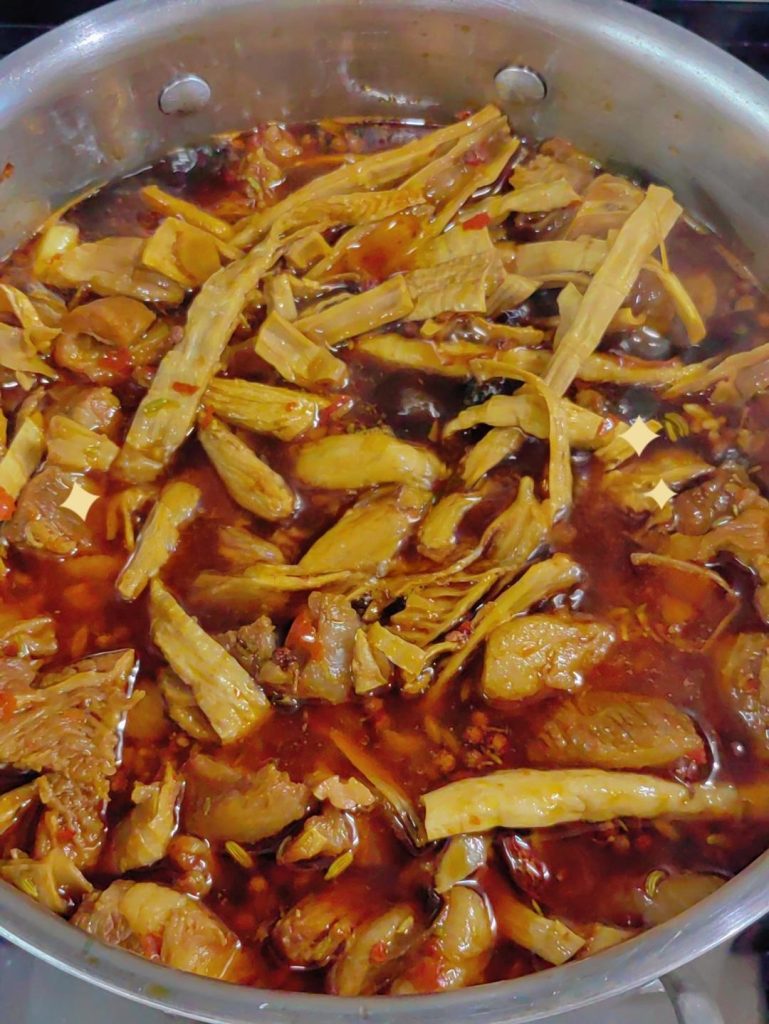
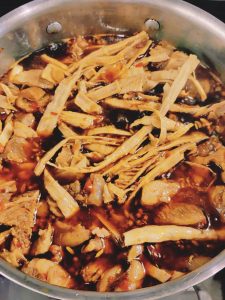
I recently took a trip to Ya’an, a city in Sichuan province famous for its rainy climate and lush bamboo forests. I picked up a bag of high-quality dried bamboo shoots there, and immediately, my mind went to one specific dish: Braised Beef Brisket with Dried Bamboo Shoots.
Growing up, my father—a chef with over 20 years of experience—taught me that dried vegetables often have a more concentrated, meaty flavor than their fresh counterparts. When braised slowly with beef brisket, the bamboo shoots act like sponges, soaking up the spicy, savory, and umami-rich broth.
Honestly? I often find the bamboo shoots in this dish even tastier than the beef itself!
Plus, there is a hidden bonus to making a large pot of this stew. The leftovers make the most incredible topping (Shaozi) for noodles the next morning. Just boil some wheat noodles, ladle this rich beef and bamboo broth over the top, and you have a breakfast that rivals any street vendor in Chengdu.
If you have enjoyed my Braised Beef Brisket with Daikon Radish, you are going to love this earthier, texturally complex variation.
What is Dried Bamboo Shoot Braised Beef?
This is a classic Sichuan-style “Red Braised” (Hong Shao) dish. Unlike the lighter Simple Clear Beef Noodle Soup, this recipe relies on a heavy hitter lineup of aromatics: Pixian Doubanjiang (chili bean paste), Sichuan peppercorns, and a variety of dried spices.
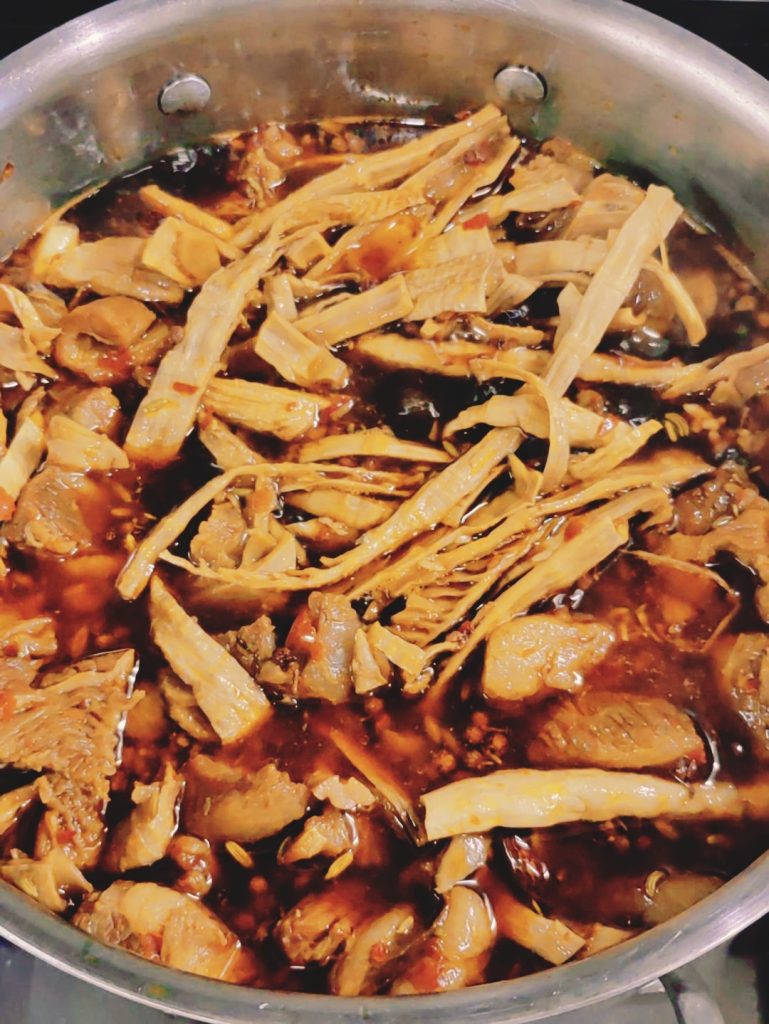
The unique element here is the Dried Bamboo Shoot (Sun Gan). Unlike canned bamboo shoots which can be metallic, or fresh shoots which are crisp, rehydrated dried shoots have a unique, chewy-tender texture similar to mushrooms or meat. They add a woody, smoky depth to the stew that is impossible to replicate with other vegetables.
Why This Recipe Works
- Texture Contrast: The gelatinous, soft beef brisket contrasts perfectly with the slight “bite” and fibrous chew of the rehydrated bamboo.
- Deep Flavor Extraction: We render the beef fat first, then fry the spices in that fat. This technique unlocks fat-soluble flavor compounds that boiling alone cannot achieve.
- Natural Tenderizer: We use Liao Zao (fermented sweet rice wine water) in the braise. The enzymes and mild sweetness tenderize the beef and balance the salty bean paste without making the dish overtly sweet.
Key Ingredients & Substitutions
1. Dried Bamboo Shoots (Sun Gan)
This is the heart of the dish. You can find these in Asian markets, usually sold in bags in the dried goods aisle.
- Substitution: If you absolutely cannot find dried shoots, you can use frozen bamboo shoots (thawed). Avoid canned shoots if possible. However, please note that the texture of dried shoots is distinct and superior for long braising.
2. Beef Brisket (Niu Nan)
We need a cut with connective tissue and fat. Lean meat will turn into dry leather after an hour of braising.
- Recommendation: Look for “Rough Flank” or boneless short ribs if brisket isn’t available.
3. Pixian Doubanjiang
The soul of Sichuan cooking. It provides the salty, spicy base and the rich red color.
- Sourcing: Look for the “Pixian” brand from Juan城 (Juancheng).
4. Liao Zao Water (Fermented Rice Wine Liquid)
In my original Chinese recipe, I use 3 spoonfuls of the liquid from fermented glutinous rice. It adds a subtle floral sweetness and helps fermentation.
- Substitution: If you don’t have this, use 2 tablespoons of Shaoxing Wine mixed with 1 teaspoon of sugar.
5. The Spices
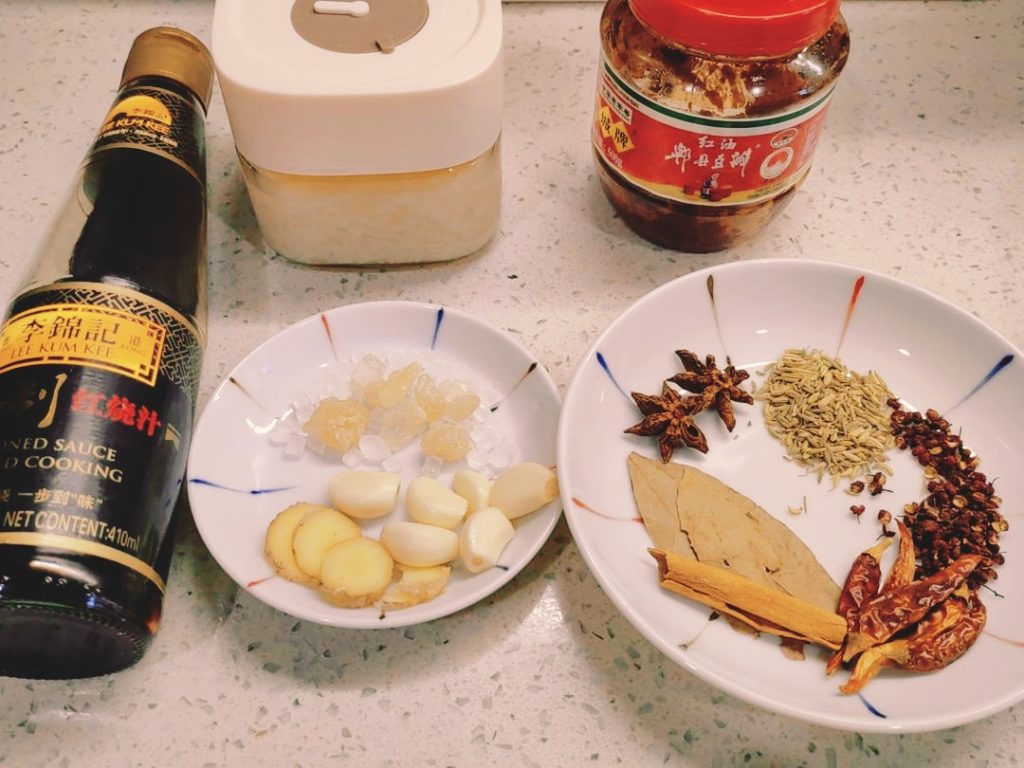
We use Star Anise, Bay Leaf, Cinnamon Bark, Fennel Seeds, and Dried Chilies.
- Tip: If you don’t want to buy all these individually, a high-quality “Five Spice” powder bag or a pre-made “Lu Wei” spice packet can work in a pinch, but whole spices are always better.
Recipe Notes Before We Begin
Plan Ahead: The dried bamboo shoots require significant prep time. They need to be soaked overnight (12 to 24 hours). Do not try to rush this, or they will be tough and inedible.
Pot Selection: A clay pot (sand pot) is traditional and retains heat beautifully for braising. A heavy-bottomed Dutch Oven (like Le Creuset or Staub) is the perfect Western alternative. A standard wok works for the initial frying, but transfer to a pot for the long simmer.
The Sweetness Factor: In my testing, I found that using rock sugar to create a “sugar color” (tang se) made the final dish too sweet for my family’s taste. Therefore, this recipe relies on the savory depth of soy sauce and the mild sweetness of the Liao Zao, skipping the rock sugar caramelization step.
Instructions
Part 1: Rehydrating the Bamboo (The Day Before)
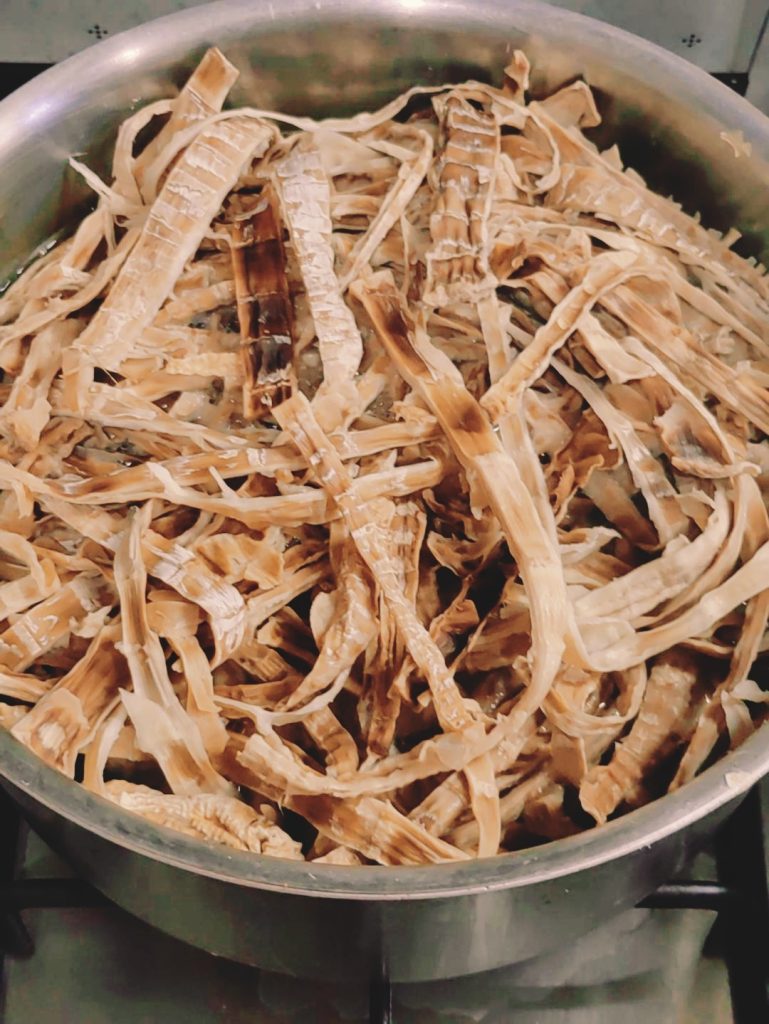
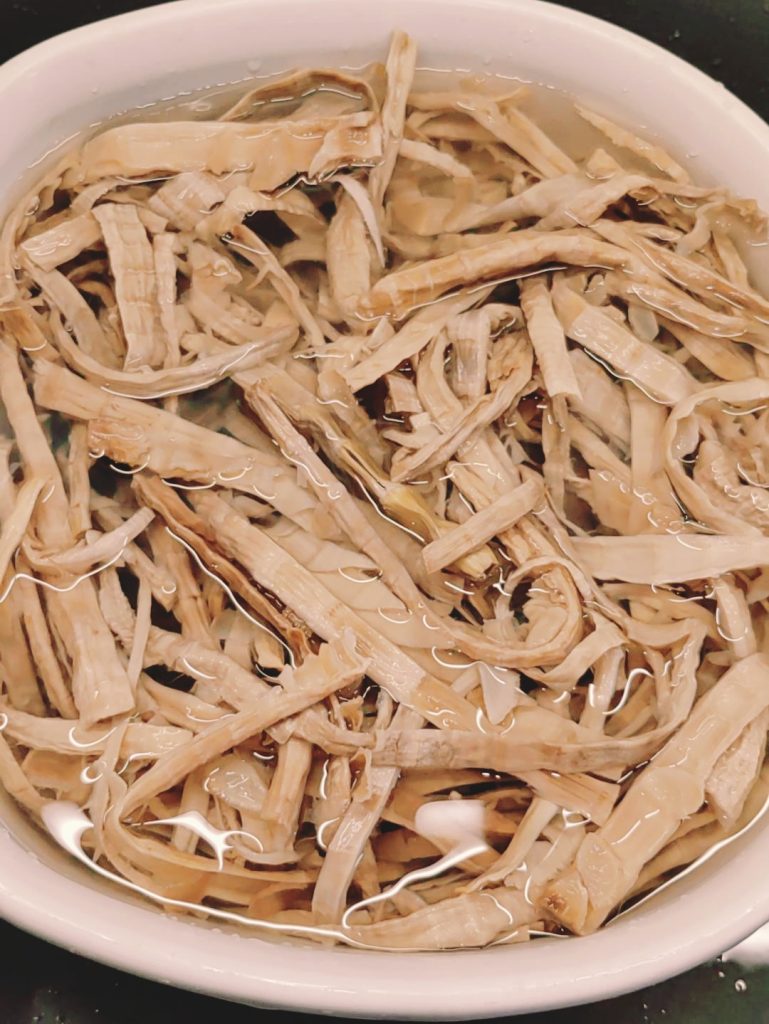
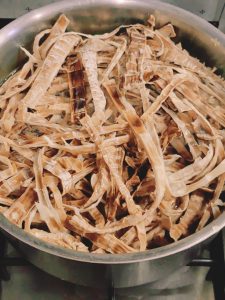
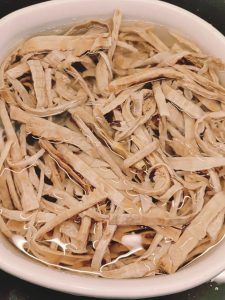
- Soak: Place the dried bamboo shoots in a large bowl and cover with plenty of cold water. Let them soak for 12 to 24 hours.
- Refresh: Change the water at least once or twice during this period. The shoots will expand significantly.
- Tear: Halfway through soaking, if the shoots are soft enough, tear them lengthwise into thinner strips by hand. This helps the water penetrate the thicker parts.
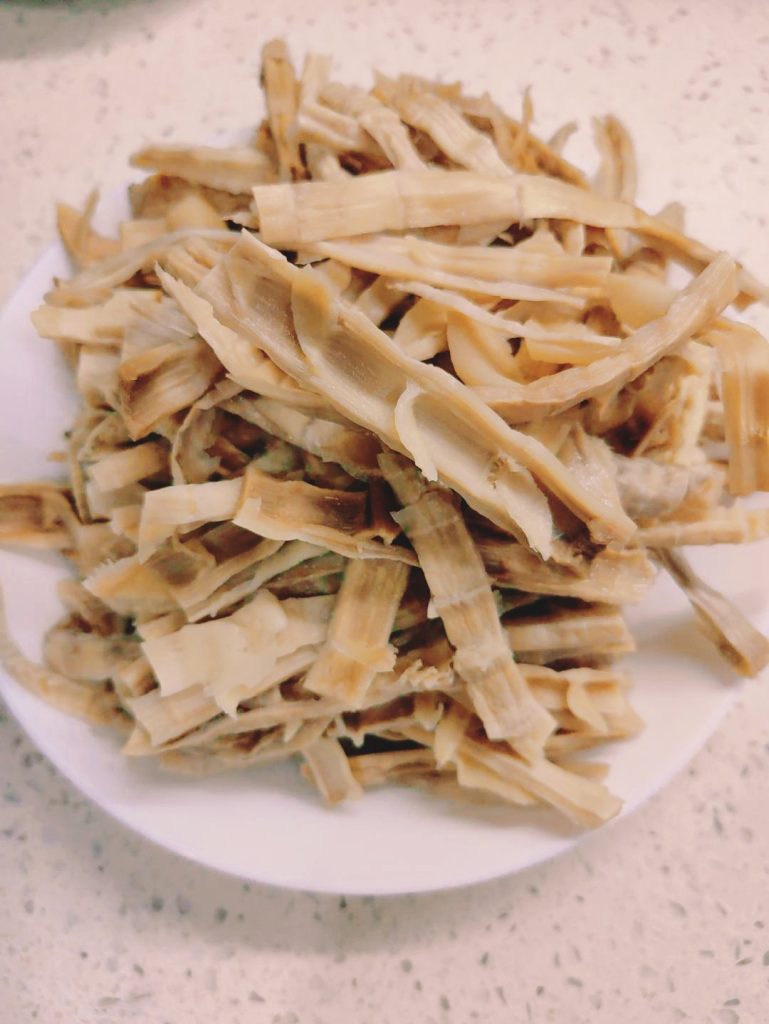
- Boil: After the soaking period, place the shoots in a pot of fresh water. Bring to a boil and simmer on low heat for 30 minutes.
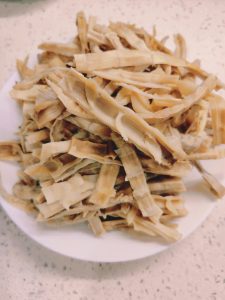
- Rinse: Drain and rinse thoroughly with cold water. Squeeze out excess moisture. Now they are ready to absorb the beef broth!
Part 2: Prepping the Beef
- Soak the Beef: Cut the beef brisket into 1.5-inch chunks. Soak them in a bowl of cold water for 30 minutes to draw out excess blood.
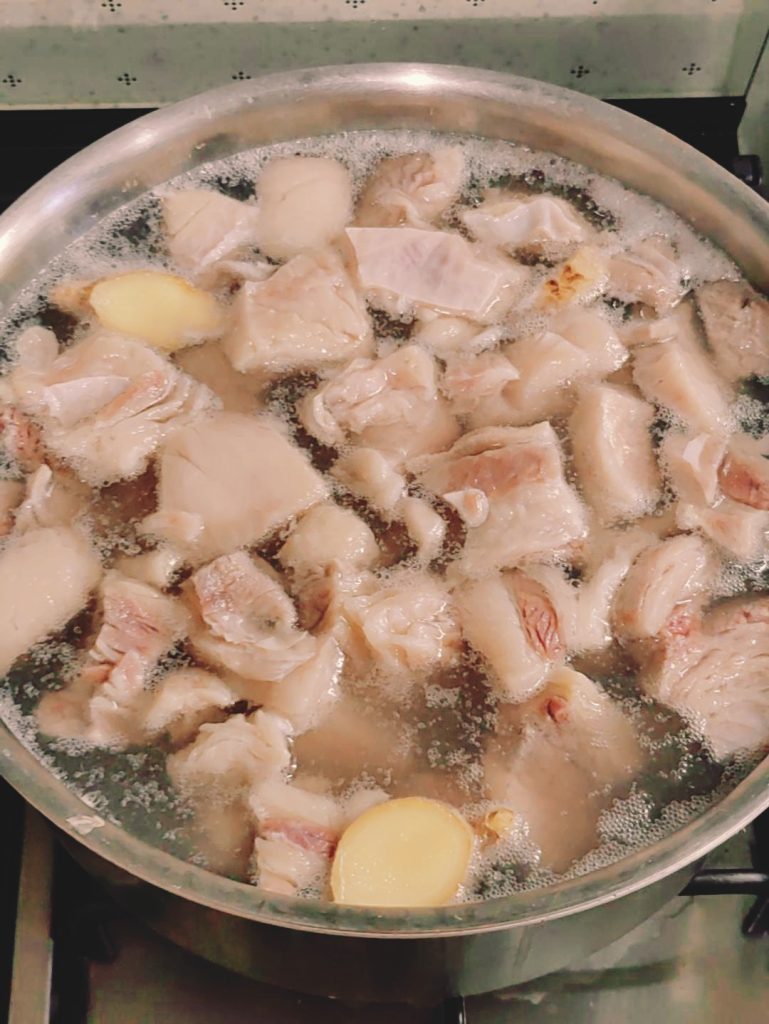
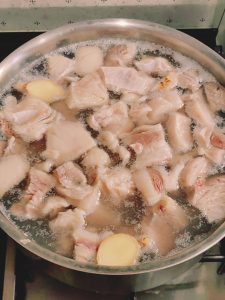
- Blanch: Place the beef in a pot of cold water. Add a few slices of ginger and a splash of cooking wine. Bring to a boil over high heat.
- Clean: Skim off the scum. Boil for 2-3 minutes until the meat turns opaque. Drain and wash the beef under warm running water to remove any impurities. Drain well.
Part 3: The Aromatics
- Cut: While the beef blanches, cut the prepared bamboo shoots into 2-inch segments. My family prefers them longer, but bite-sized is fine too.
- Prepare Spices: Gather your star anise, bay leaves, cinnamon, fennel seeds, Sichuan peppercorns, dried chilies, peeled garlic cloves, and sliced ginger. (Optional: 10-15 white peppercorns for extra warmth).
Part 4: The Braise
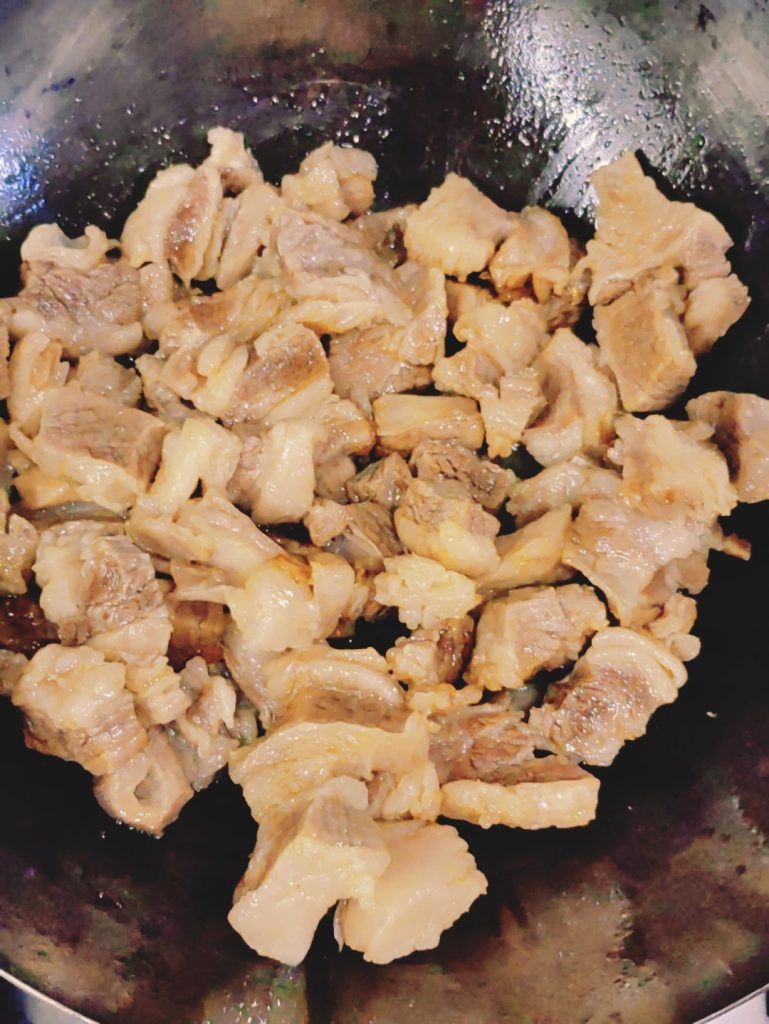
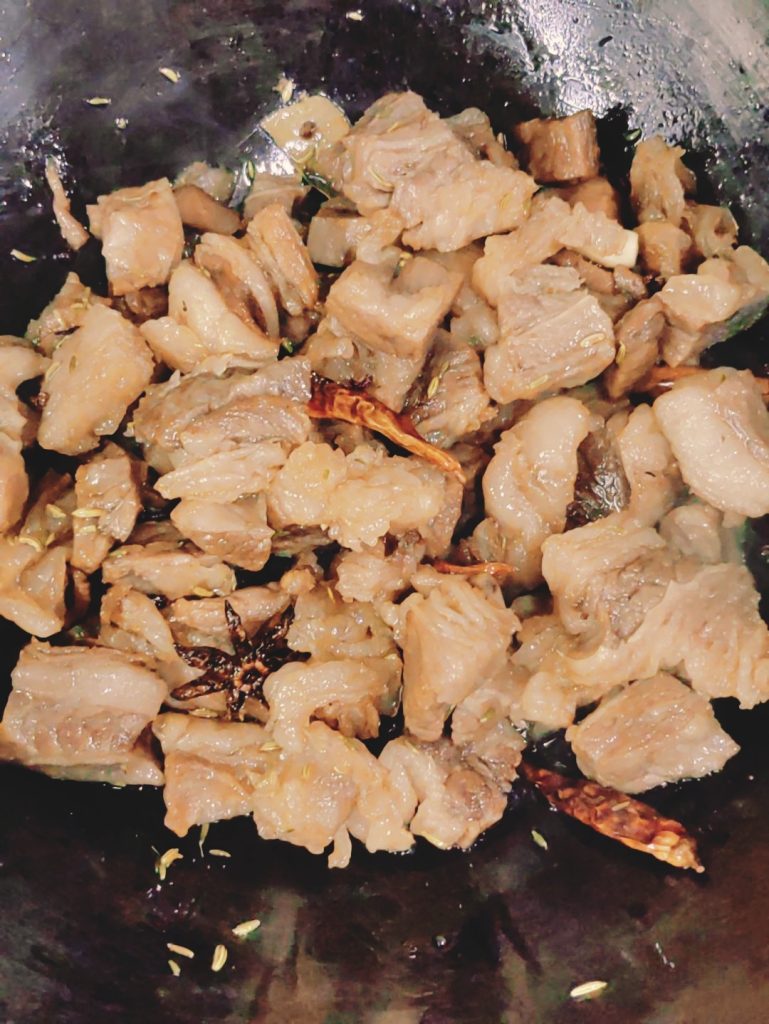
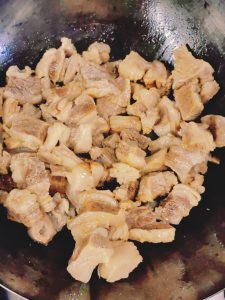
- Render Fat: Heat your wok or pot over medium heat. Add about 2 tablespoons of oil. Add the blanched beef chunks. Stir-fry patiently until the beef is slightly browned and the fatty parts have rendered some oil. This removes the “greasy” mouthfeel.
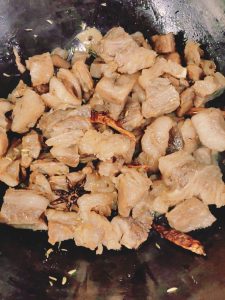
- Fry Spices: Push the beef to one side. Add the ginger, garlic, and dry spices into the oil. Fry for 2-3 minutes until fragrant.
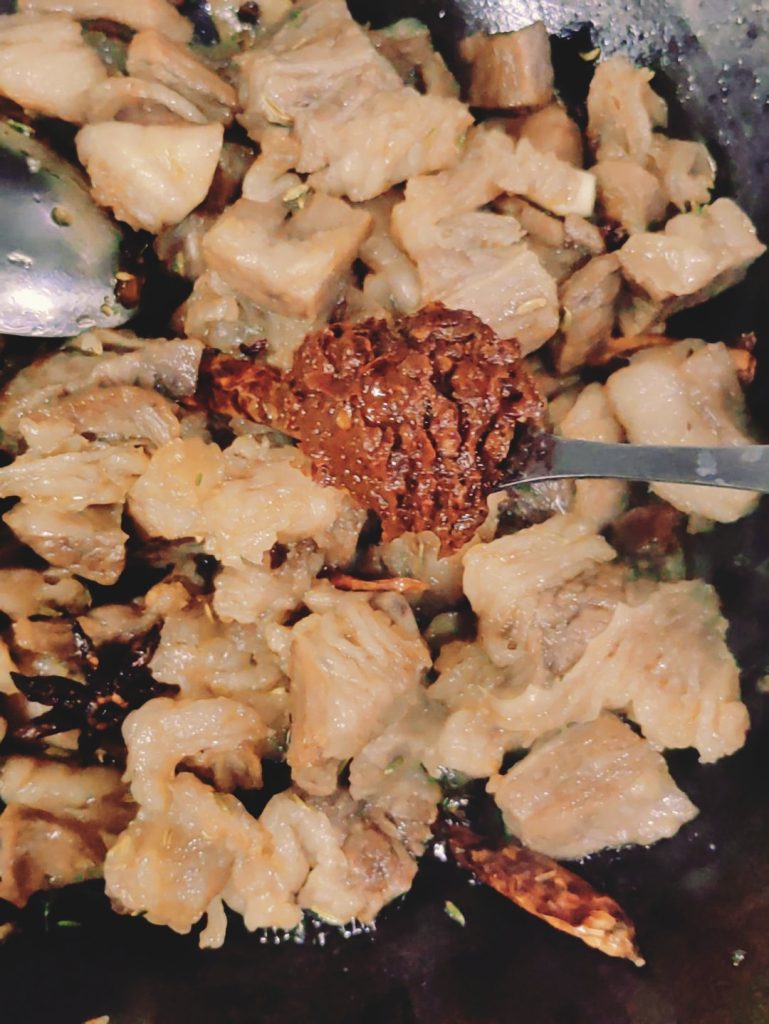
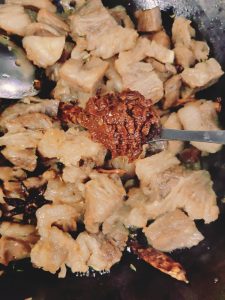
- Red Oil: Add the Pixian Doubanjiang (Bean Paste) to the hot oil. Stir-fry constantly until the oil turns a brilliant red color. This releases the pigment and flavor from the chilies.
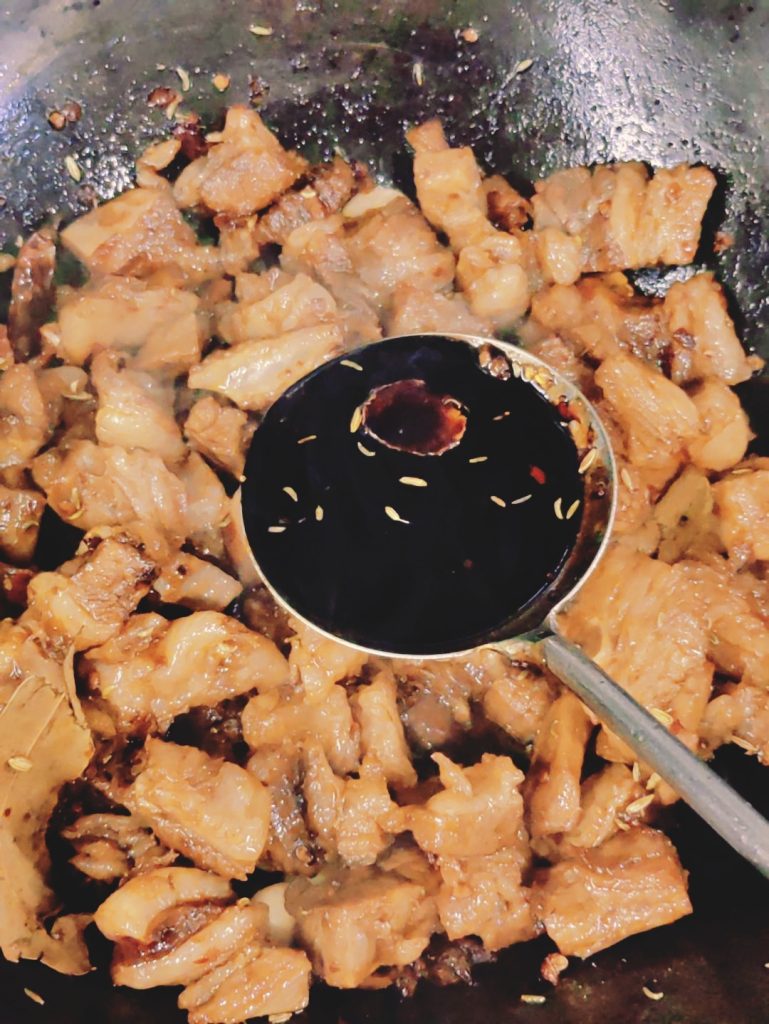
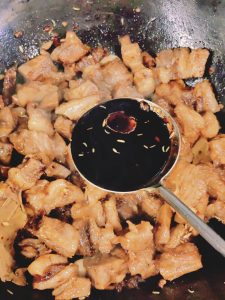
- Season: Add the Braised Soy Sauce (or dark soy sauce). Toss everything together to coat the beef in that rich dark color.
- Simmer: Pour in enough boiling water to completely cover the ingredients. (Never add cold water to hot meat, or it will seize up and become tough). Add the Liao Zao water (or Shaoxing wine substitute).
- Combine: Add the prepared bamboo shoots. Bring to a vigorous boil, then turn the heat down to the lowest setting. Cover with a lid.
- Stew: Simmer gently for about 60 minutes.
- Finish: Taste the broth. The bamboo shoots should be fully tender and flavorful, and the beef should yield easily to a fork. If it tastes bland, add a pinch of salt (the bean paste is salty, so taste first!). If the sauce is too thin, you can turn up the heat to reduce it slightly, but we want plenty of sauce for rice or noodles.
Our Systematic Test Kitchen Notes
We tested this recipe using different vessels to see which yielded the best texture.
- Clay Pot vs. Wok: The clay pot maintained a gentle, even heat that kept the beef moister than the wok. However, the wok reduced the sauce faster for a more concentrated flavor.
- Verdict: Use a Dutch Oven or Clay Pot for the braising stage for the most tender result.
- Bamboo Texture: We tried skipping the 30-minute boil for the bamboo shoots and just soaking them. The result was slightly crunchy and fibrous. The boiling step is mandatory to break down the tough fibers.
- Sweetener Test: We compared Rock Sugar vs. Liao Zao. The Rock Sugar version was glossy but sweeter. The Liao Zao version had a more complex, fermented aroma that paired beautifully with the bamboo.
Food Safety and Preparation
- Beef Temperature: Ensure the beef reaches a minimum internal temperature of 145°F (63°C), though for brisket, you want to cook it far past this point (until collagen breaks down) for tenderness.
- Bamboo Safety: Dried bamboo must be rehydrated fully. Inadequately soaked bamboo can cause digestive discomfort due to high fiber content.
- Storage: This dish keeps excellently in the fridge for 3-4 days. In fact, it tastes even better on day two as the flavors meld. Reheat thoroughly on the stove until piping hot.
Pairing Suggestions
This dish is savory and robust. It needs a neutral starch to balance it.
- Steamed Rice: The classic choice to soak up the sauce.
- Noodles: As mentioned, save the leftovers! Boil fresh wheat noodles, blanch some baby bok choy, and ladle the beef and bamboo soup over the top. It’s an instant Braised Beef Noodle Soup.
- Vegetable Side: A refreshing Smashed Cucumber Salad cuts through the richness of the beef fat perfectly.
FAQ
Q: My bamboo shoots are still tough after cooking. What happened? A: This usually means they weren’t soaked long enough. Some thick varieties of dried bamboo need a full 24-36 hours of soaking. If they are still tough, keep adding water and simmering the stew; the beef will just get more tender.
Q: Can I make this not spicy? A: You can omit the dried chilies and reduce the Doubanjiang, but Doubanjiang provides the core savory flavor. If you remove it entirely, you are making a completely different dish (Hong Shao). Try using a non-spicy broad bean paste if you can find it.
Q: Why is my beef tough? A: Brisket takes time. If it’s tough, it simply hasn’t cooked long enough. Keep the lid on and simmer for another 30 minutes. Also, ensure you didn’t add cold water to the hot pot during step 15.
Authoritative References
- For guidelines on safe beef handling and cooking temperatures, refer to the USDA Beef Safety Guide.
- For information on the nutritional benefits of bamboo shoots, check this overview from NutritionValue.org.
Nutrition Information (Estimate)
- Calories: 450 kcal
- Protein: 35g
- Fat: 30g
- Carbohydrates: 8g
- Sodium: 980mg
Disclaimer: Nutrition information is calculated using an ingredient database and should be considered an estimate. In cases where multiple ingredient alternatives are given, the first listed is calculated for nutrition. Garnishes and optional ingredients are not included.
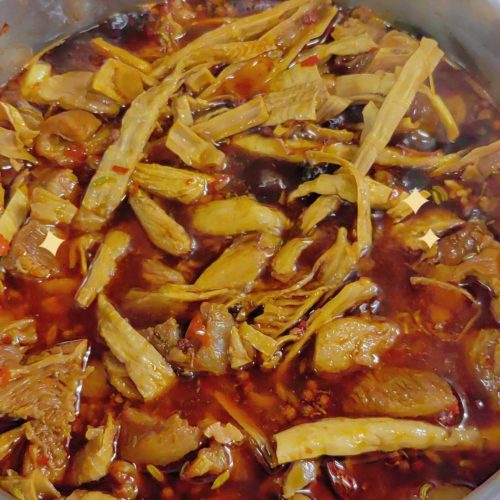
Braised Beef Brisket with Dried Bamboo Shoots

Equipment
- 1 Wok or Dutch Oven For browning and braising
- 1 Large Bowl For soaking bamboo
Ingredients
Main Ingredients
- 2.2 lbs beef brisket cut into 1.5 inch chunks
- 3.5 oz dried bamboo shoots weighed before soaking
Seasonings & Aromatics
- 2 tbsp Pixian Doubanjiang spicy bean paste
- 1.5 ladles braised soy sauce or mix of light and dark soy sauce
- 3 tbsp Liao Zao water fermented sweet rice wine liquid (substitute with Shaoxing wine + sugar)
- 2 slices ginger
- 3 cloves garlic peeled
Spices
- 2 whole star anise
- 2 leaves bay leaf
- 1 stick cinnamon bark
- 1 tsp Sichuan peppercorns
- 1 tsp fennel seeds
- 5 dried chili peppers adjust to taste
Instructions
- Soak dried bamboo shoots in cold water for 12-24 hours, changing water twice.

- Boil the soaked bamboo shoots in fresh water for 30 minutes, then rinse and drain.
- Cut beef into chunks and soak in cold water for 30 minutes to remove blood.
- Blanch beef in cold water with ginger and cooking wine; bring to boil, skim scum, and rinse clean.
- Cut bamboo shoots into desired lengths.
- In a wok/pot, stir-fry beef in oil over medium heat until fat renders and edges brown.
- Add ginger, garlic, and all dry spices; stir-fry for 2-3 minutes until fragrant.
- Add Doubanjiang (bean paste) and stir-fry until the oil turns red.
- Add soy sauce to coat the beef.
- Add boiling water to cover, pour in Liao Zao water (or wine/sugar), add bamboo shoots.
- Cover and simmer on low heat for about 1 hour until beef is tender. Season with salt if needed before serving.



Leave a Reply