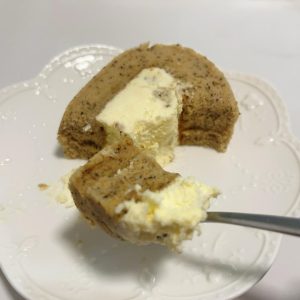
There is a moment in a bakery roll cake that separates the good ones from the great ones: the first cut, when the spiral of cream shows against the tea-tinted sponge. This Earl Grey roll cake from xiachufang is built for exactly that moment. The tea is not just sprinkled in — it is simmered into the milk until the liquid turns the color of a proper cup of milk tea, then steeped under a lid so the bergamot scent has nowhere to go but into the cake.
What I love about this recipe is how completely it explains the process. The baker simmers Earl Grey tea powder into the milk, then cools the tea milk before it meets the yolks and oil. The whites are whipped with sugar and lemon juice to glossy, stable peaks, folded into the batter in thirds, and baked at a gentle 150/130°C (300/265°F) until the top colors. Then comes the cream, the five-step roll, and a rest in the fridge before slicing — the baker even admits to chilling the rolled cake in a box because she has no special rolling frame.
What Is an Earl Grey Roll Cake (伯爵红茶蛋糕卷)?
An Earl Grey roll cake is a light Swiss-roll sponge infused with Earl Grey tea, rolled around a whipped-cream filling. The cake layer is a classic chiffon-style sponge — egg whites whipped separately for lift — with the liquid swapped for tea-simmered milk. The result is a pale, tea-tinted roll with a fragrant bergamot aroma and a soft, moist crumb.
This recipe follows the technique used across Chinese bakery shops: tea powder is simmered into the milk and steeped to extract maximum flavor, the batter is mixed to a smooth, ribboning consistency, and the whites are folded in gently so the cake stays airy. The baked sheet is rolled while still warm, filled with sweetened whipped cream, and chilled before slicing for clean, bakery-style rounds.
If you enjoy soft, cream-filled bakes, my lemon curd roll cake is another silky roll with a citrus twist.
1Vanilla Peach-Pear Jam (香草黄桃雪梨酱): Thick and FruitySlow-simmered yellow peach and pear jam scented with real vanilla, naturally thickened with apple — thick, glossy, and never cloying.Check out this recipe
Why This Recipe Works
- Simmering the tea into milk extracts real flavor. Earl Grey’s bergamot oils are fat-soluble; steeping the tea in warm milk pulls the aroma deep into the cake, not just onto the surface.
- Cooling the tea milk protects the batter. Hot liquid would cook the yolks; the baker lets it steep and cool first.
- Lemon juice stabilizes the meringue. A little acid helps the whipped whites hold firm, glossy peaks that support the batter.
- A gentle oven keeps the sponge moist. Baking at 150/130°C (300/265°F) cooks the sheet evenly without browning or drying it.
- Chilling the rolled cake sets the shape. Thirty minutes in the fridge firms the cream so the cake slices cleanly.
Equipment Needed
- Electric mixer
- Large mixing bowls
- Swiss-roll or sheet pan lined with parchment
- Whisk
- Pastry bag for the cream (optional)
- Refrigerator space for chilling
Ingredients
- 5 large eggs (use 6 if small), separated
- 50 g (1/4 cup) corn or neutral oil
- 60 g (1/2 cup) cake flour (低筋面粉)
- 65 g (1/4 cup plus 1 tsp) milk
- 40 g (3 tbsp) fine sugar
- 4 g (1.5 tbsp) Earl Grey tea powder (红茶粉)
- 3 g (1/2 tsp) lemon juice
- For the cream filling: 200 g (1 cup minus 1 tbsp) heavy cream, 12 g (1 tbsp) sugar
Ingredient Notes
Earl Grey tea powder (红茶粉). The recipe calls for finely ground black tea powder, about 4 g. If you only have loose Earl Grey, grind it in a spice grinder, or steep 2 tea bags in the warm milk instead and skip the powder.
Tea milk. Simmer the milk with the tea powder over low heat until it turns the color of milk tea, then cover and steep 5 minutes. Strain if you used loose leaves; the powder can stay.
Cake flour (低筋面粉). Low-protein cake flour gives the sponge its tender, delicate crumb. If you only have all-purpose, replace 1 tablespoon with cornstarch.
Eggs. Five large eggs; the baker notes to use six if your eggs are small. Separate carefully — any yolk in the whites will stop them whipping.
Prep & Mise en Place
Weigh all the ingredients before starting. Separate the eggs, putting the whites in a clean, dry bowl. Line a Swiss-roll or sheet pan with parchment. Simmer the milk with the tea powder over low heat until it colors, then cover and steep 5 minutes; cool it while you prepare the rest. Preheat the oven to 150°C top / 130°C bottom (300°F / 265°F) if your oven allows separate temperatures, otherwise 145°C (290°F).
Cooking Process
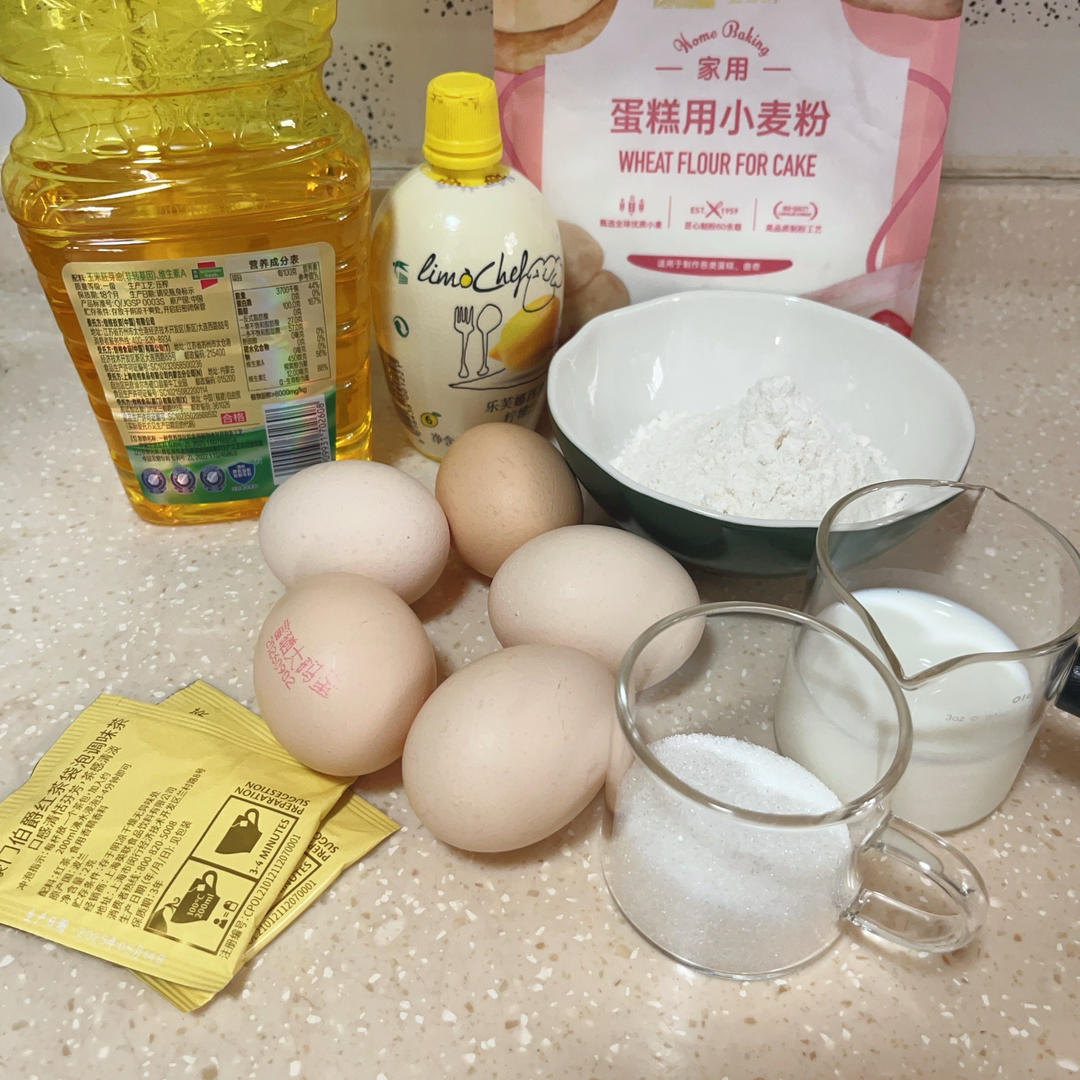
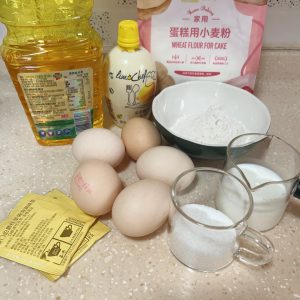
Step 1 — Weigh the Ingredients
Weigh out everything before you start — the baker notes you can use six eggs if yours are on the small side.
Step 2 — Simmer the Tea Into the Milk
For a strong tea flavor, cook the milk with the tea powder over low heat until it turns the color of milk tea, then turn off the heat, cover, and steep for 5 minutes to draw out the aroma.
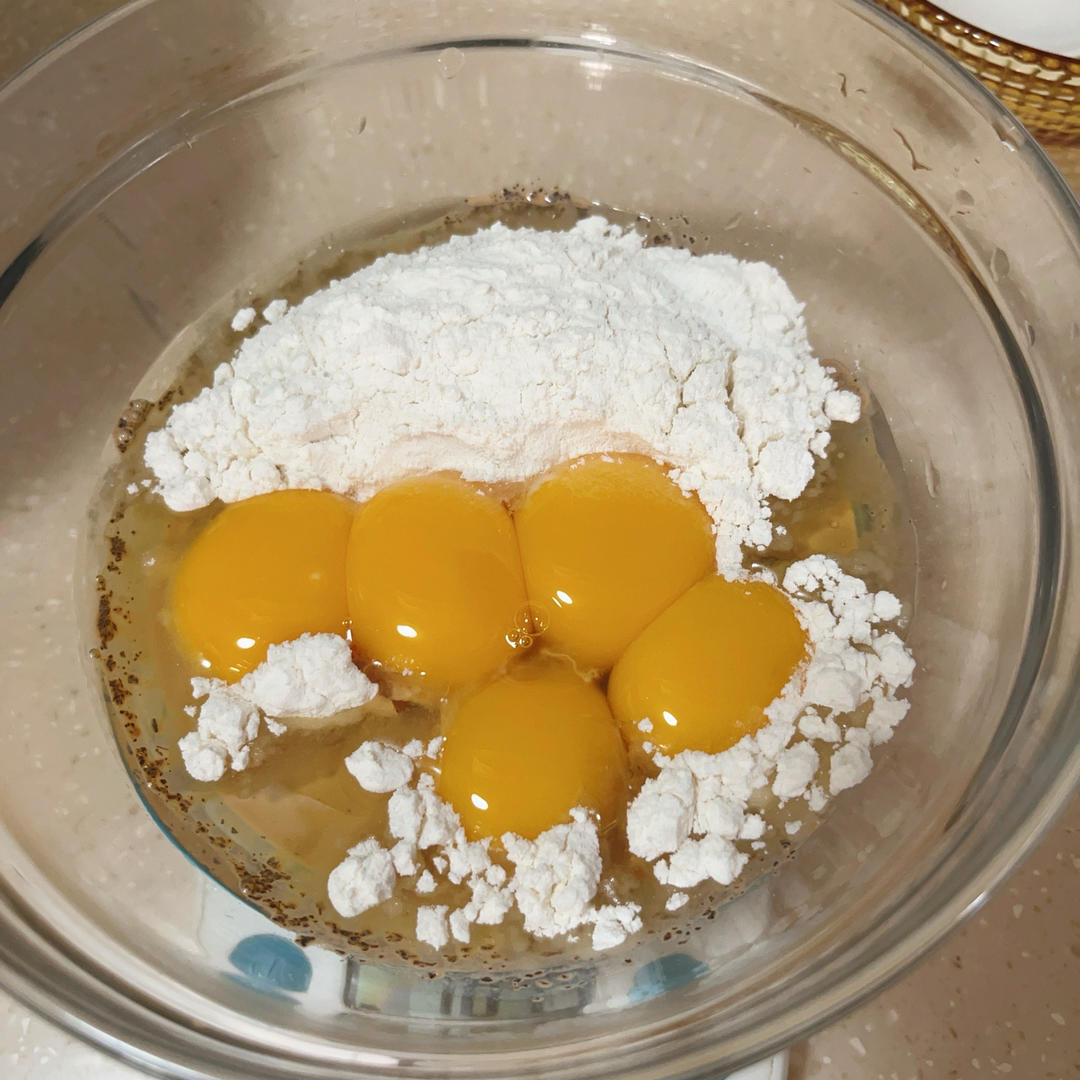
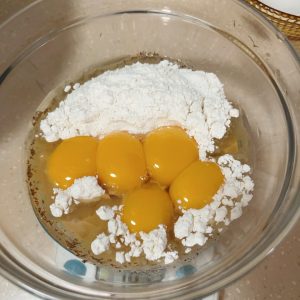
Step 3 — Combine the Tea Milk, Oil, Flour, and Yolks
Pour the warm tea milk (with the tea sediment) into a large bowl and add the corn oil, cake flour, and egg yolks.
Step 4 — Whip the Egg Whites
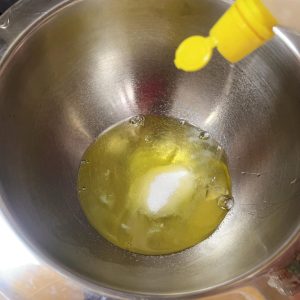
In a clean bowl, whip the egg whites, adding the sugar and lemon juice.
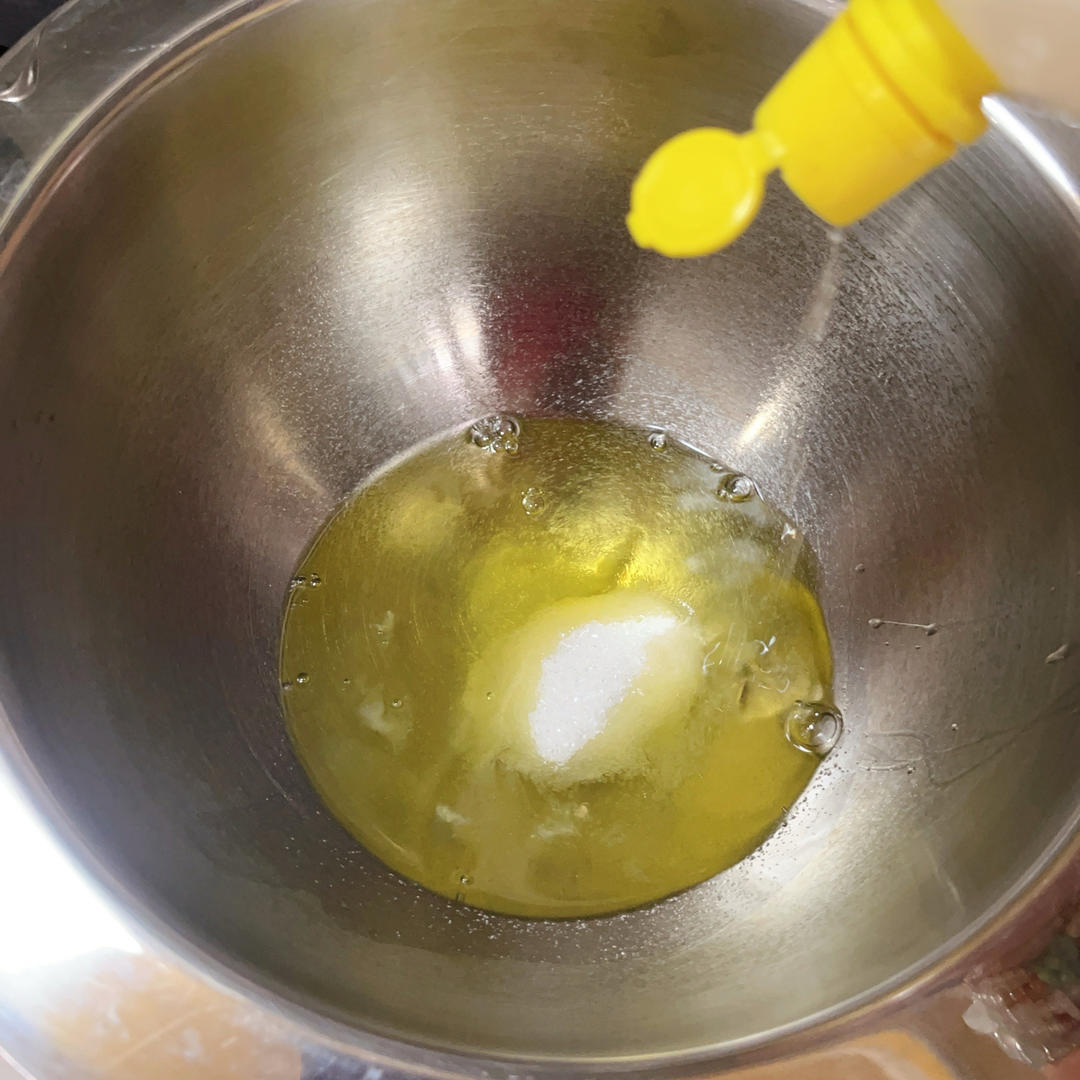
Step 5 — Whip to Firm, Glossy Peaks
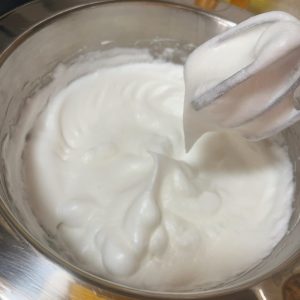
Whip on low speed until the meringue is fine, smooth, and forms small, glossy hooks that hold their shape.
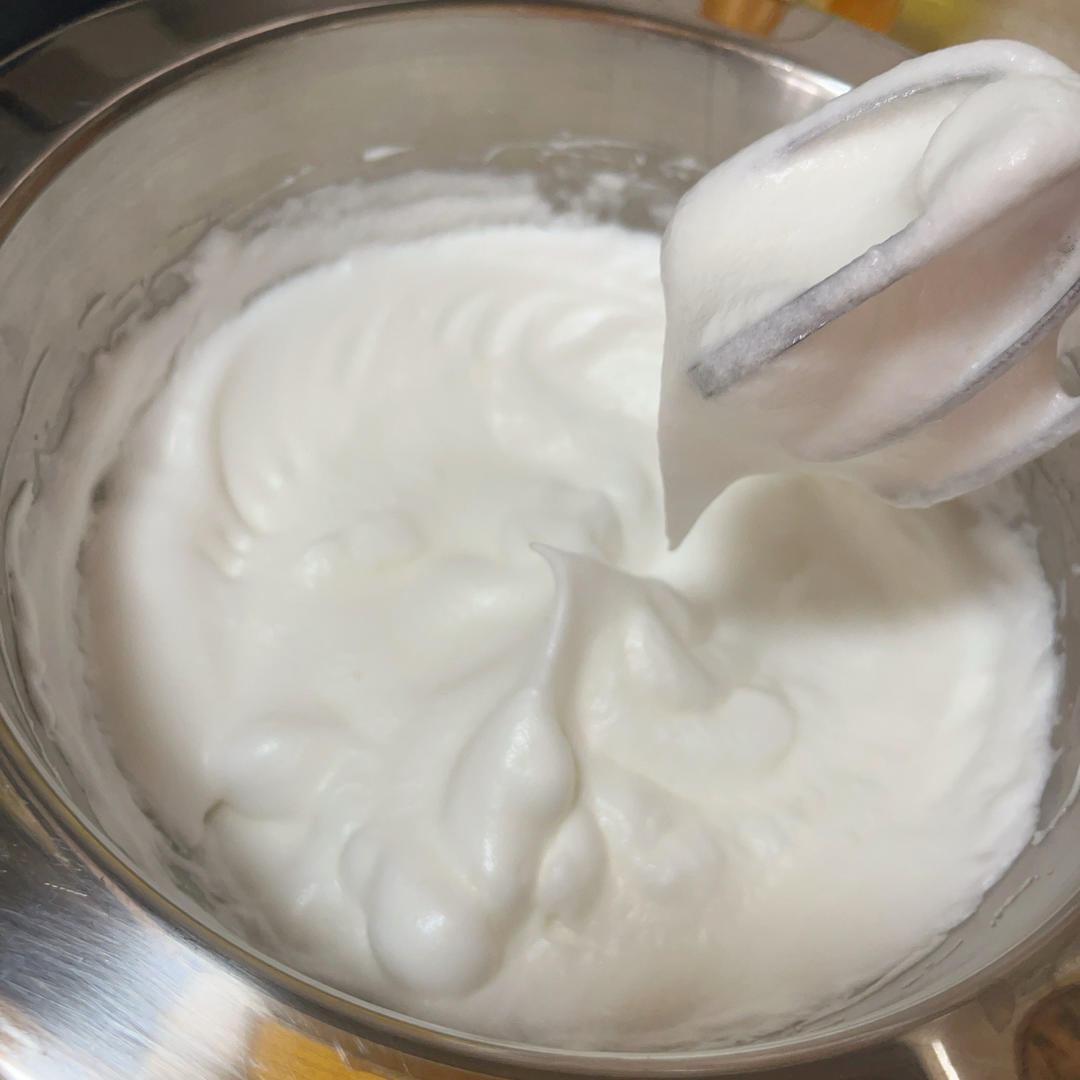
The lemon juice is not for flavor — it is for stability. A small amount of acid lowers the meringue’s pH, which tightens the egg-white proteins so they whip into finer, firmer bubbles that hold their shape through folding and baking instead of weeping or deflating.
Step 6 — Smooth the Yolk Batter
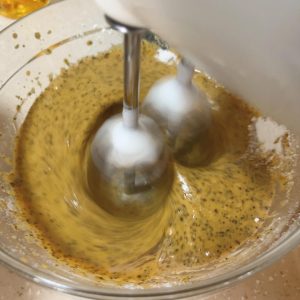
Whisk the yolk mixture with a balloon whisk until it is smooth and uniform.
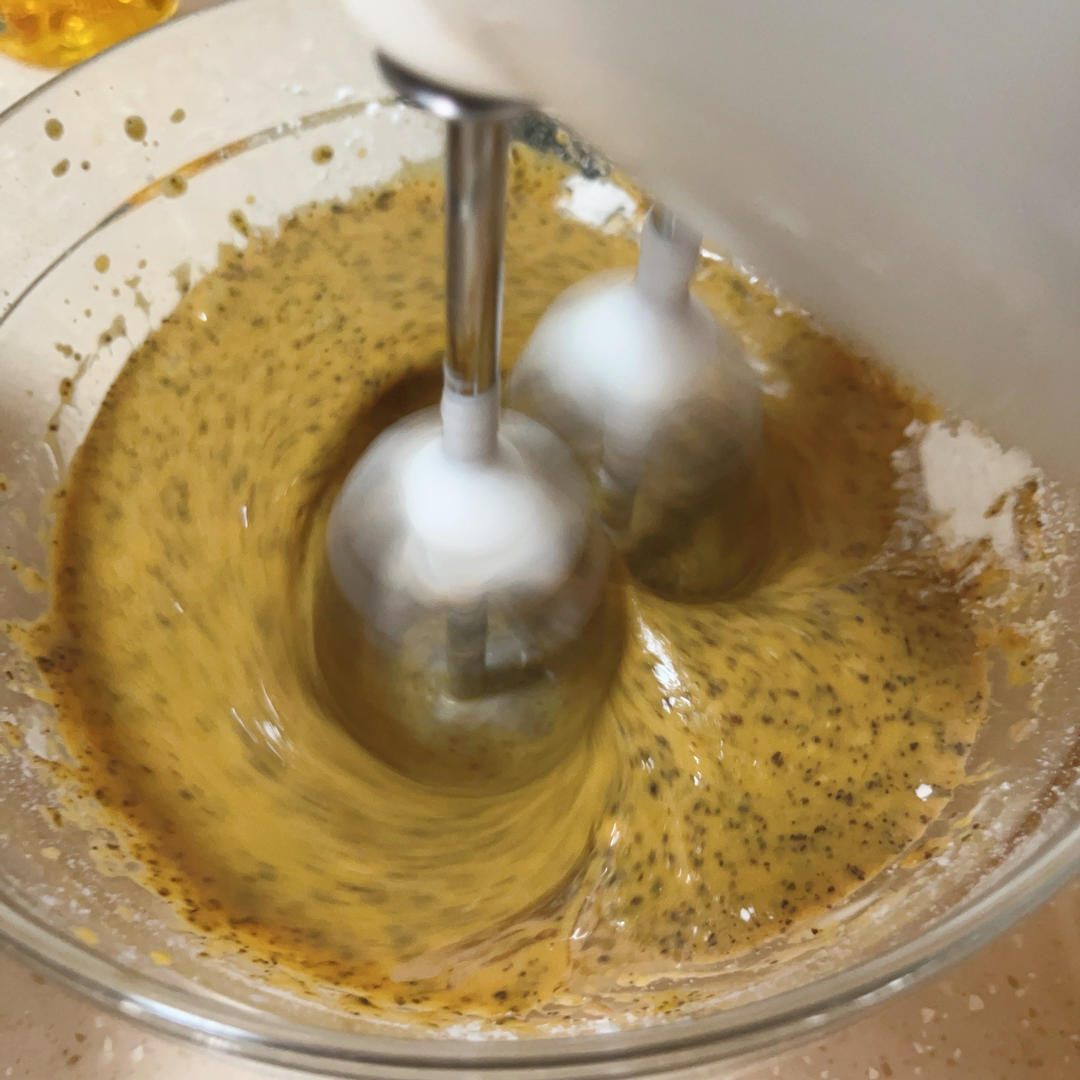
Step 7 — The Batter Turns Silky
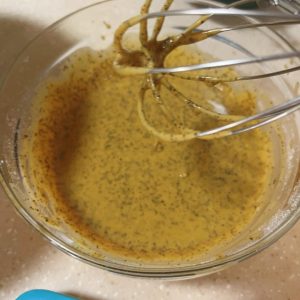
Whisk until the batter is fine and glossy, with no lumps — the baker shows the exact smooth, flowing texture to aim for.
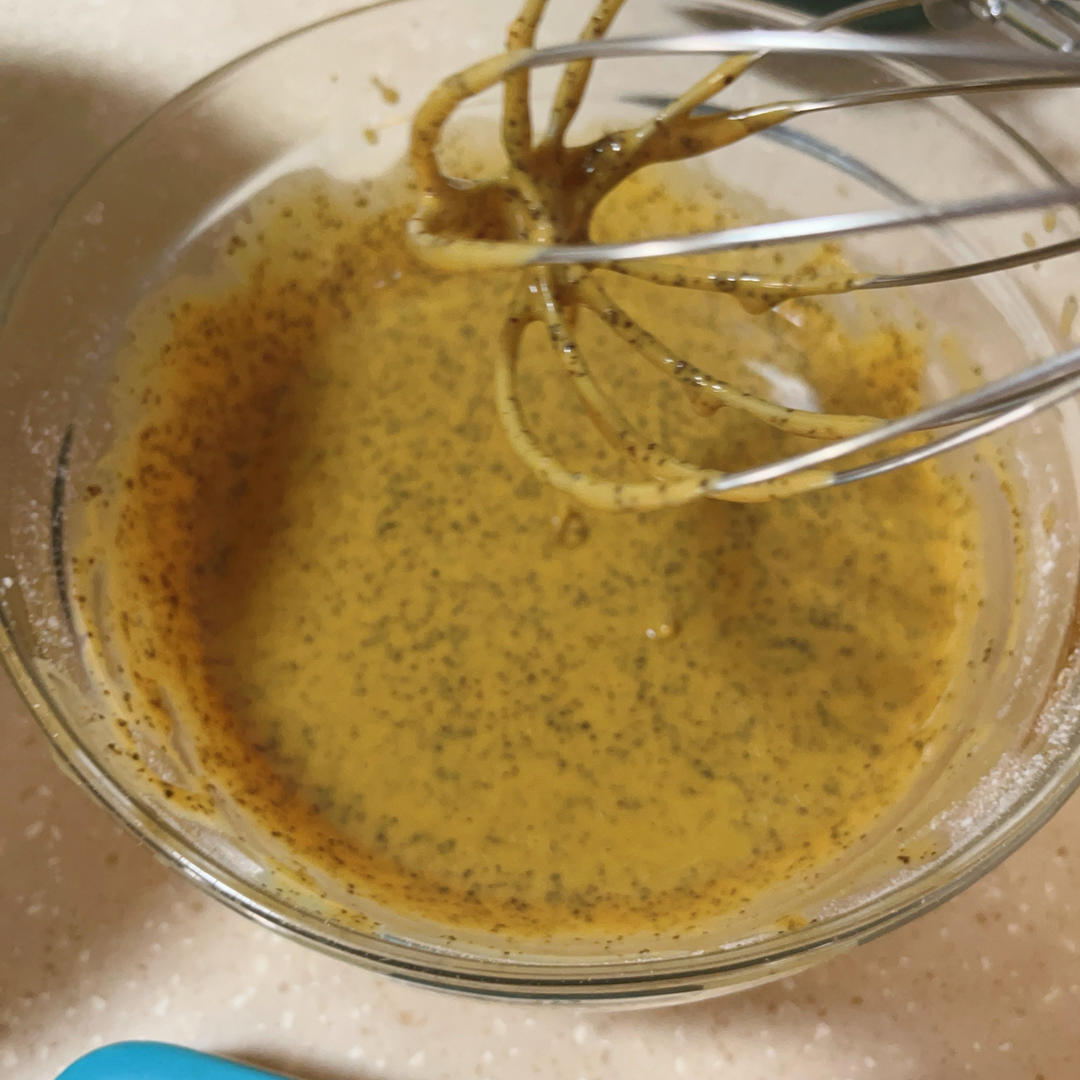
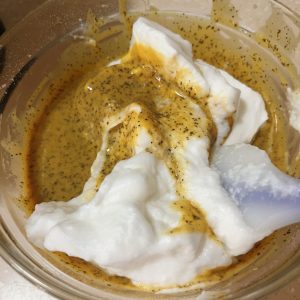
Step 8 — Fold in One-Third of the Meringue
Take one-third of the meringue and stir it into the yolk batter to lighten it.
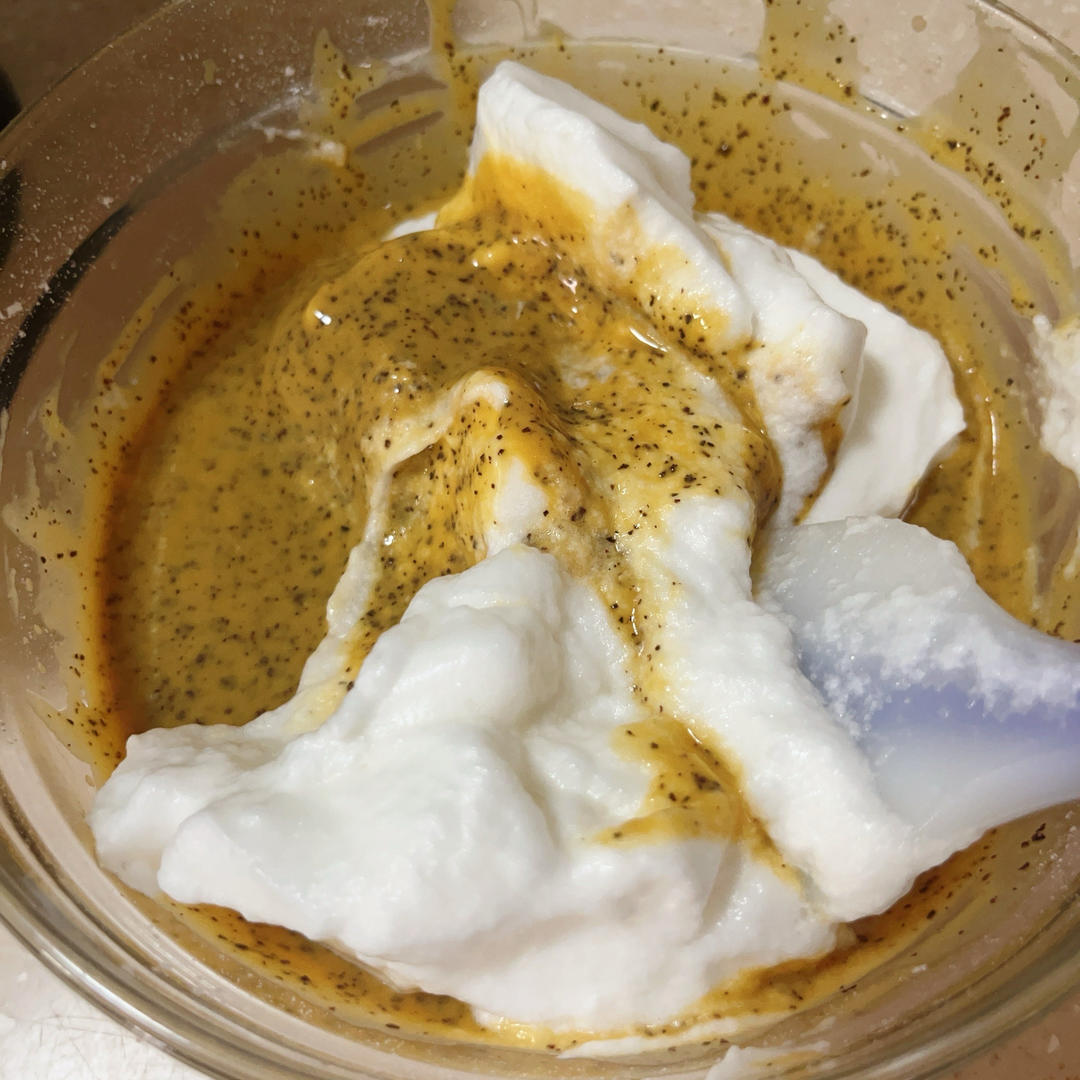
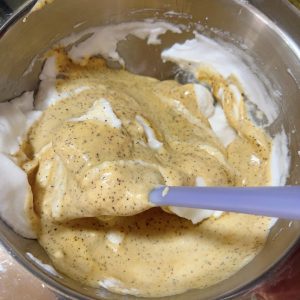
Step 9 — Fold in the Remaining Meringue
Pour the lightened batter back into the remaining meringue and fold gently until just combined.
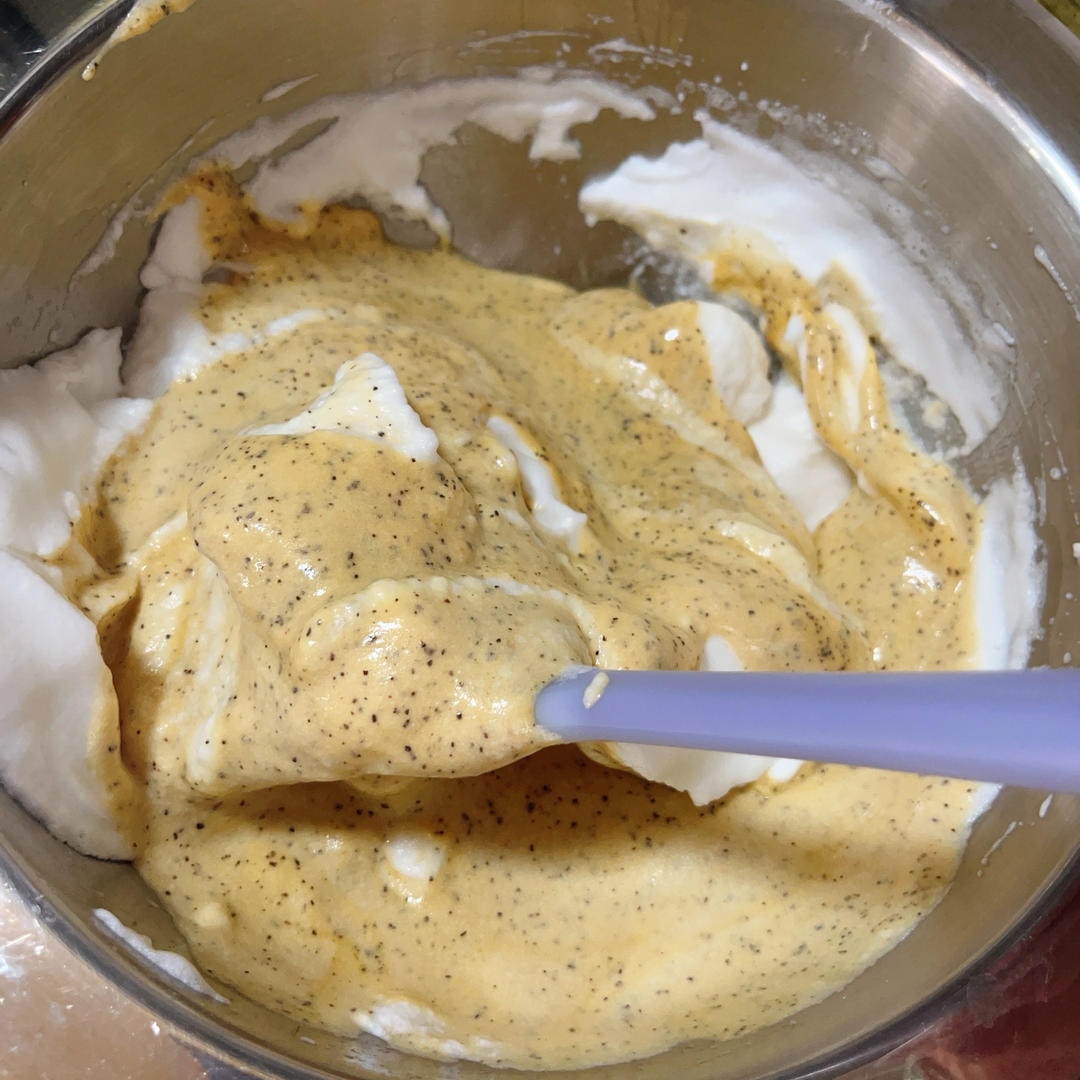
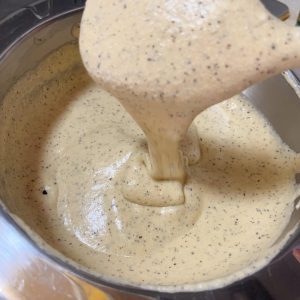
Step 10 — The Batter Ribbons Off the Whisk
The finished batter should fall from the whisk in a long, thick ribbon that folds back on itself — the classic chiffon consistency.
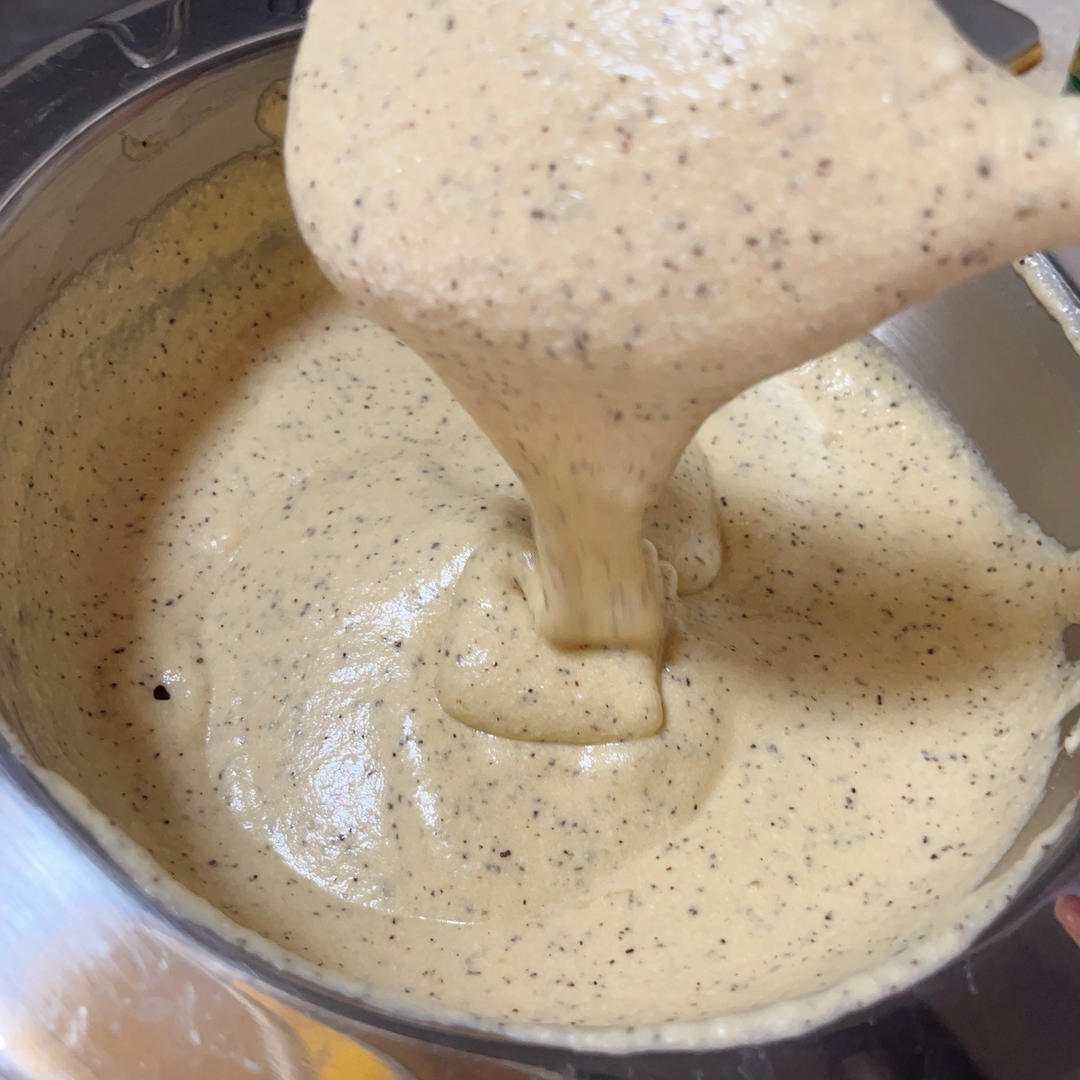
Step 11 — Pour Into the Lined Pan
Pour the batter into the parchment-lined sheet pan.
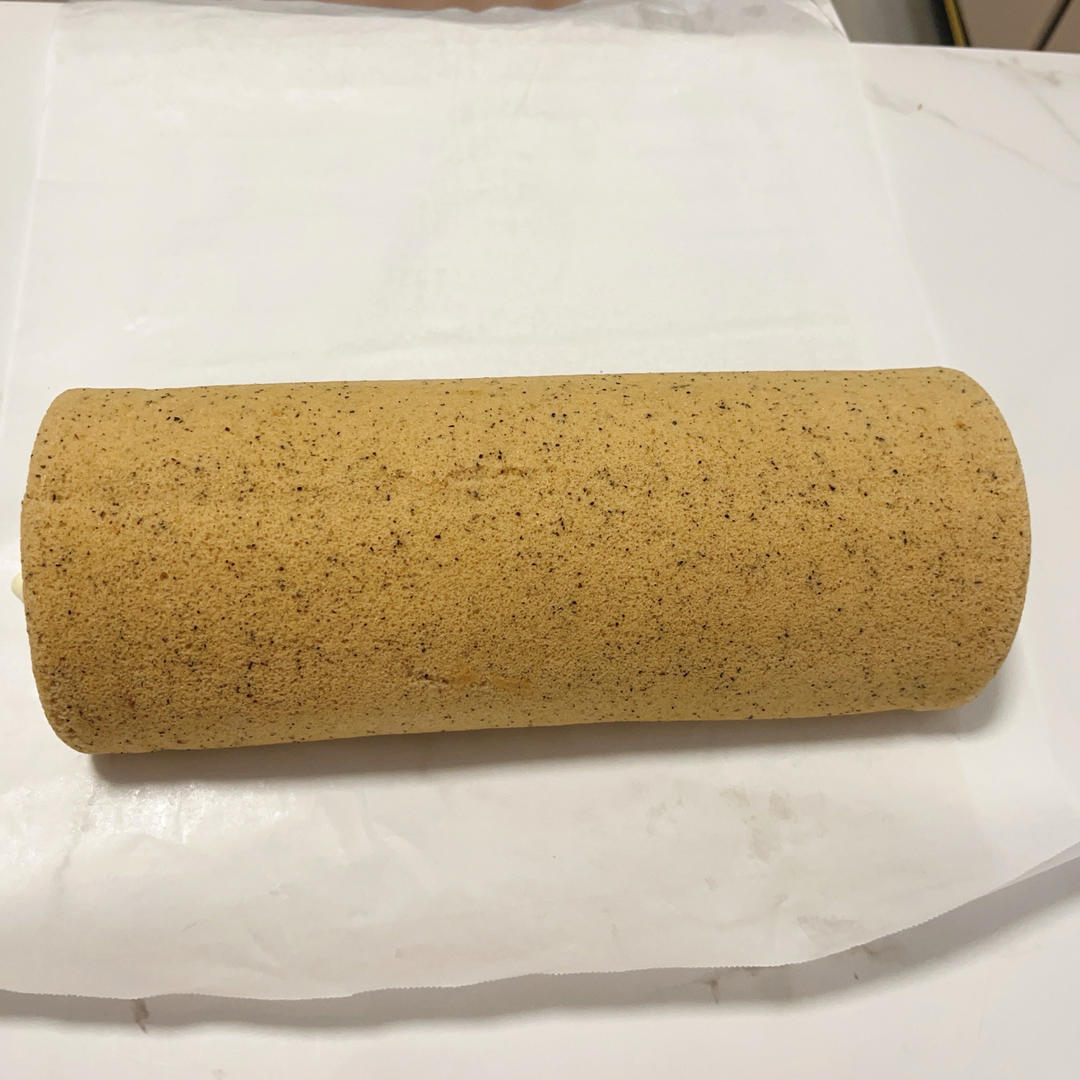
Step 12 — Level the Batter and Tap Out the Bubbles
Spread the batter evenly, then lift and tap the pan to release large air bubbles before baking.
Step 13 — Bake at 150/130°C for About 30 Minutes
Bake in the preheated oven on the middle-lower rack at 150°C top / 130°C bottom (300°F / 265°F) for about 30 minutes, adjusting to your own oven. The exact time depends on your oven.
Step 14 — Remove and Tap Out the Steam
When the top is nicely colored, take the cake out and tap the pan lightly to release the hot steam.
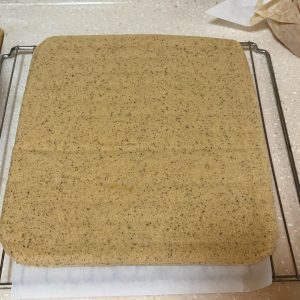
Step 15 — Cool on a Rack
Turn the cake out onto a cooling rack and let it cool completely.
Step 16 — Whip the Cream to Stiff Peaks
Whip the heavy cream with the sugar until it holds firm, stiff peaks.
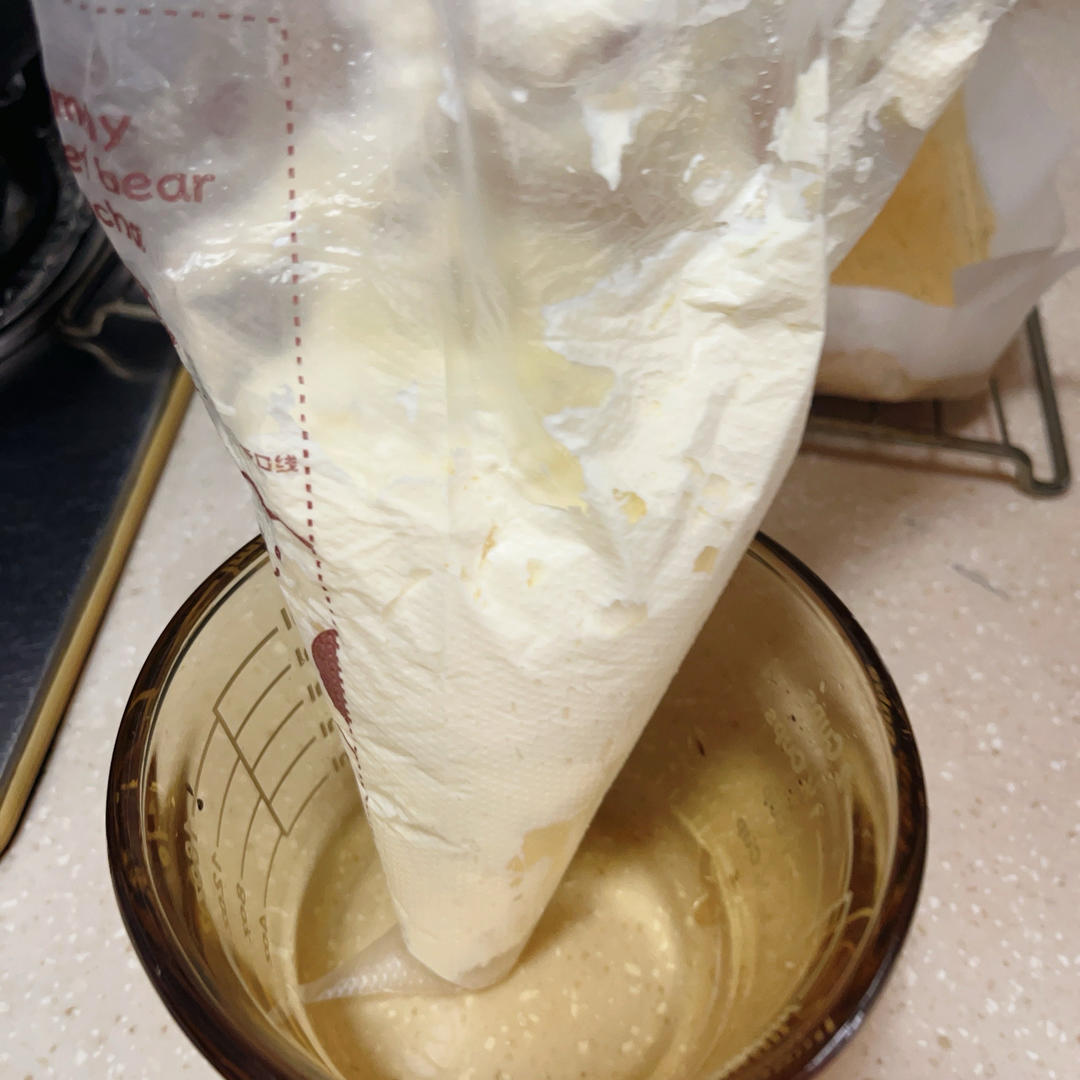
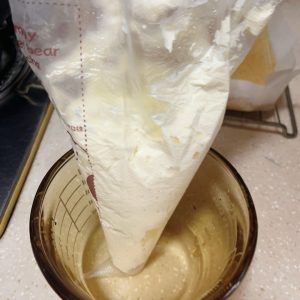
Step 17 — Fill the Piping Bag
Spoon the whipped cream into a piping bag fitted with a plain tip.
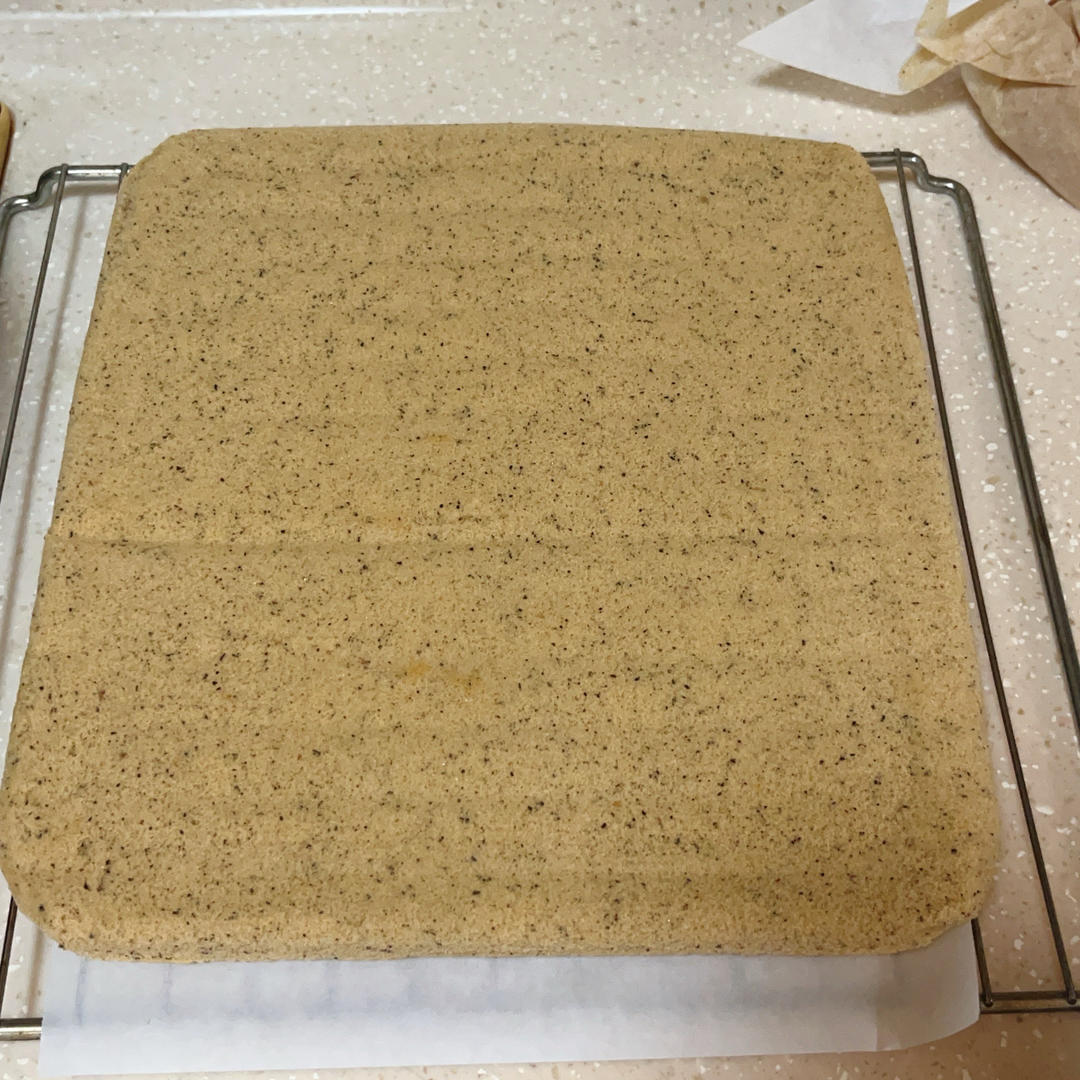
Step 18 — Flip the Cake to Reveal the Towel Texture
Turn the cooled cake over and peel off the parchment to reveal the pretty towel-textured (毛巾面) underside.
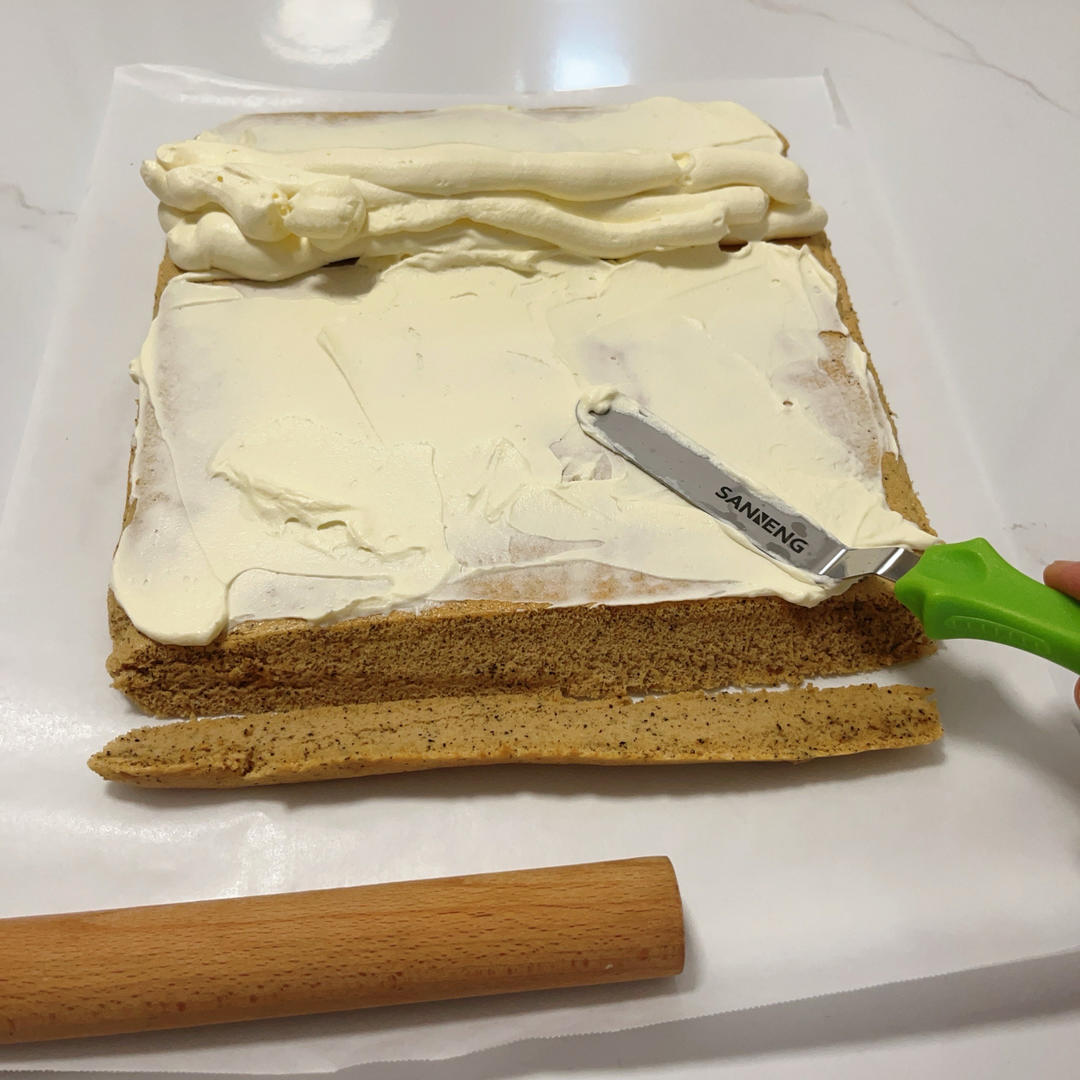
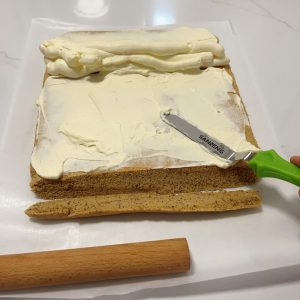
Step 19 — Pipe Cream Generously at One Edge
Pipe a thick line of cream about one-third of the way across, and spread a thin layer over the rest of the cake.
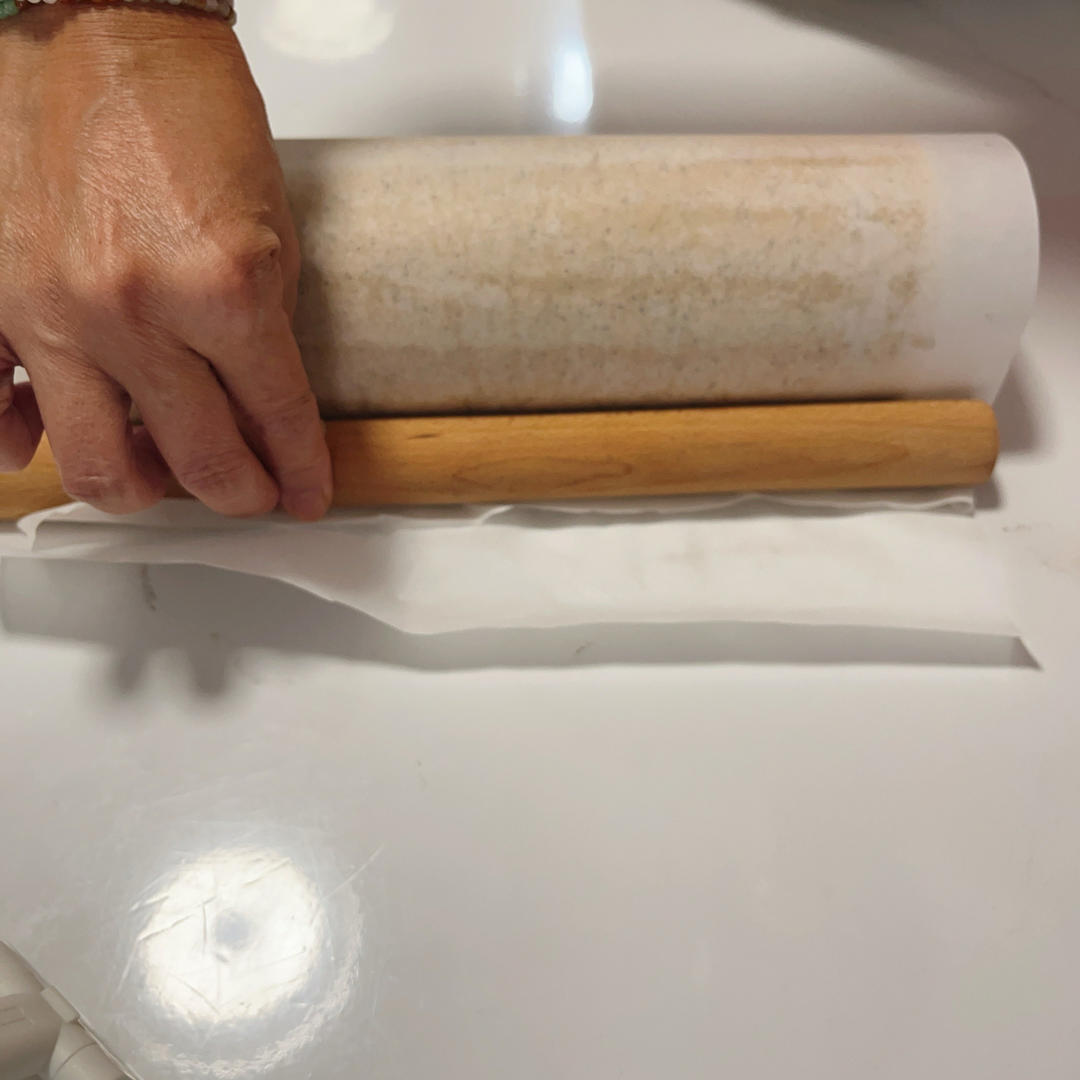
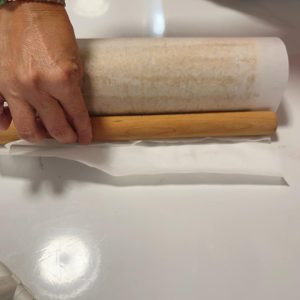
Step 20 — Roll With the Five-Step Method
Roll the cake using the baker’s method: lift, press, support, raise, roll, then tuck — and press the roll gently inward at the end.
Step 21 — Chill the Rolled Cake
Refrigerate the rolled cake to set its shape.
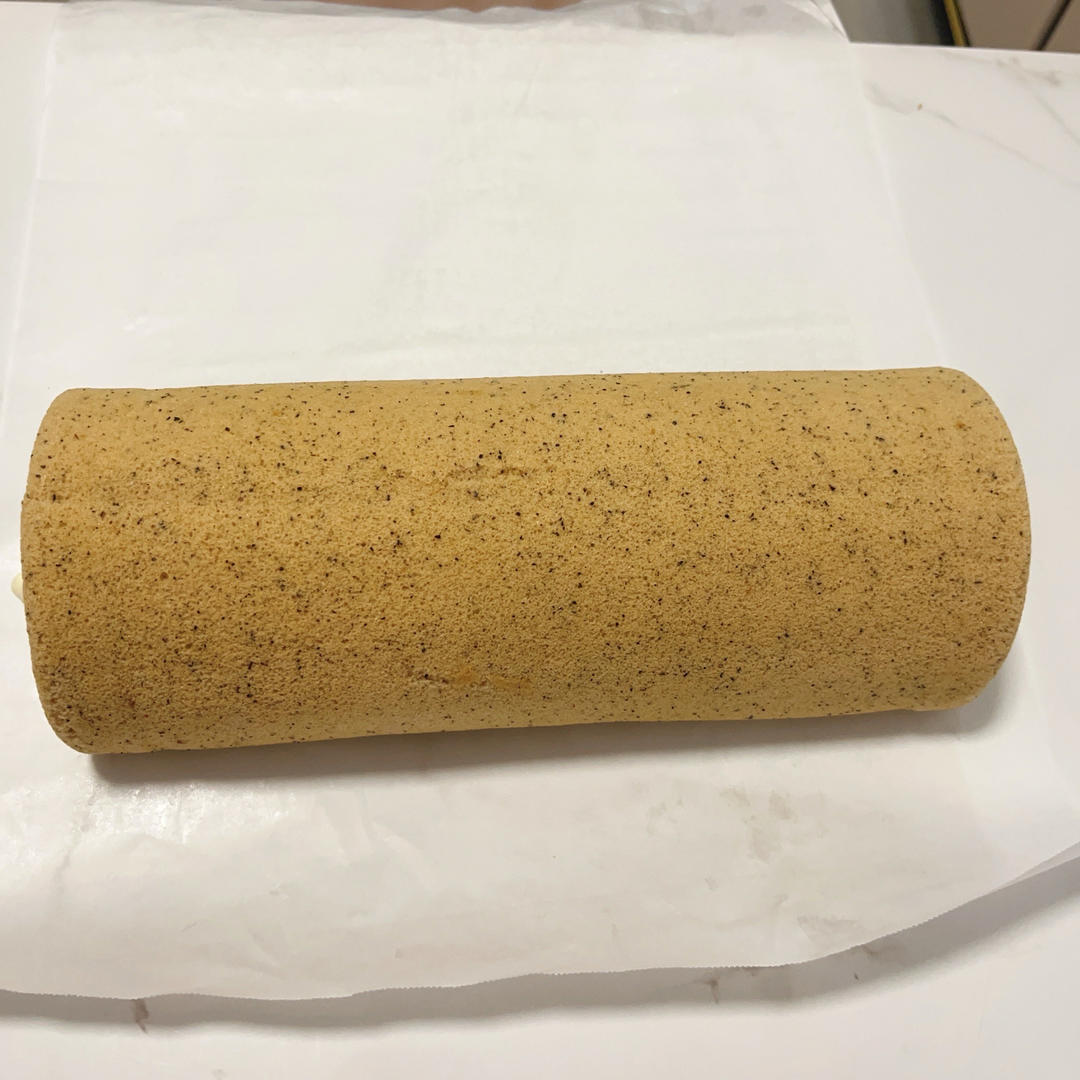
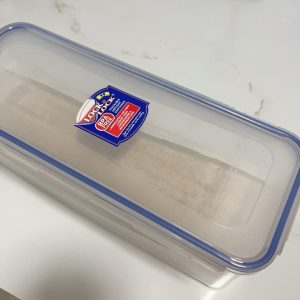
Step 22 — No Rolling Frame? Use a Box
If you do not have a rolling frame, the baker simply sets the cake in a box and chills it for about 30 minutes before slicing.
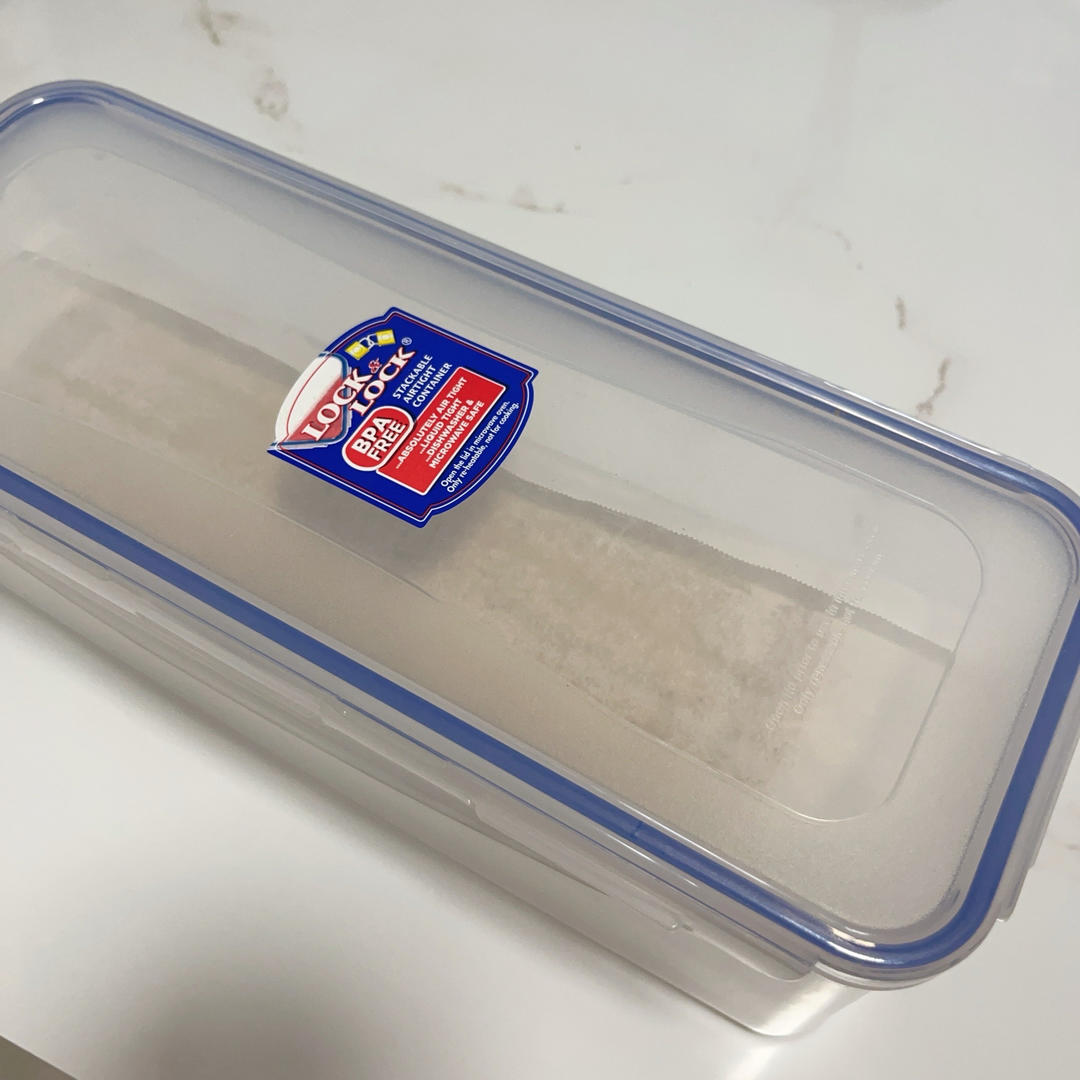
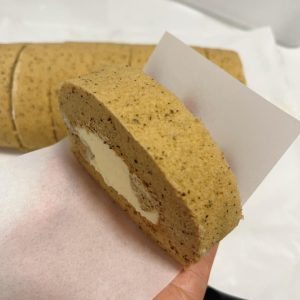
Step 23 — Slice Cleanly
After chilling, slice the cake — it cuts as cleanly as a bakery version.
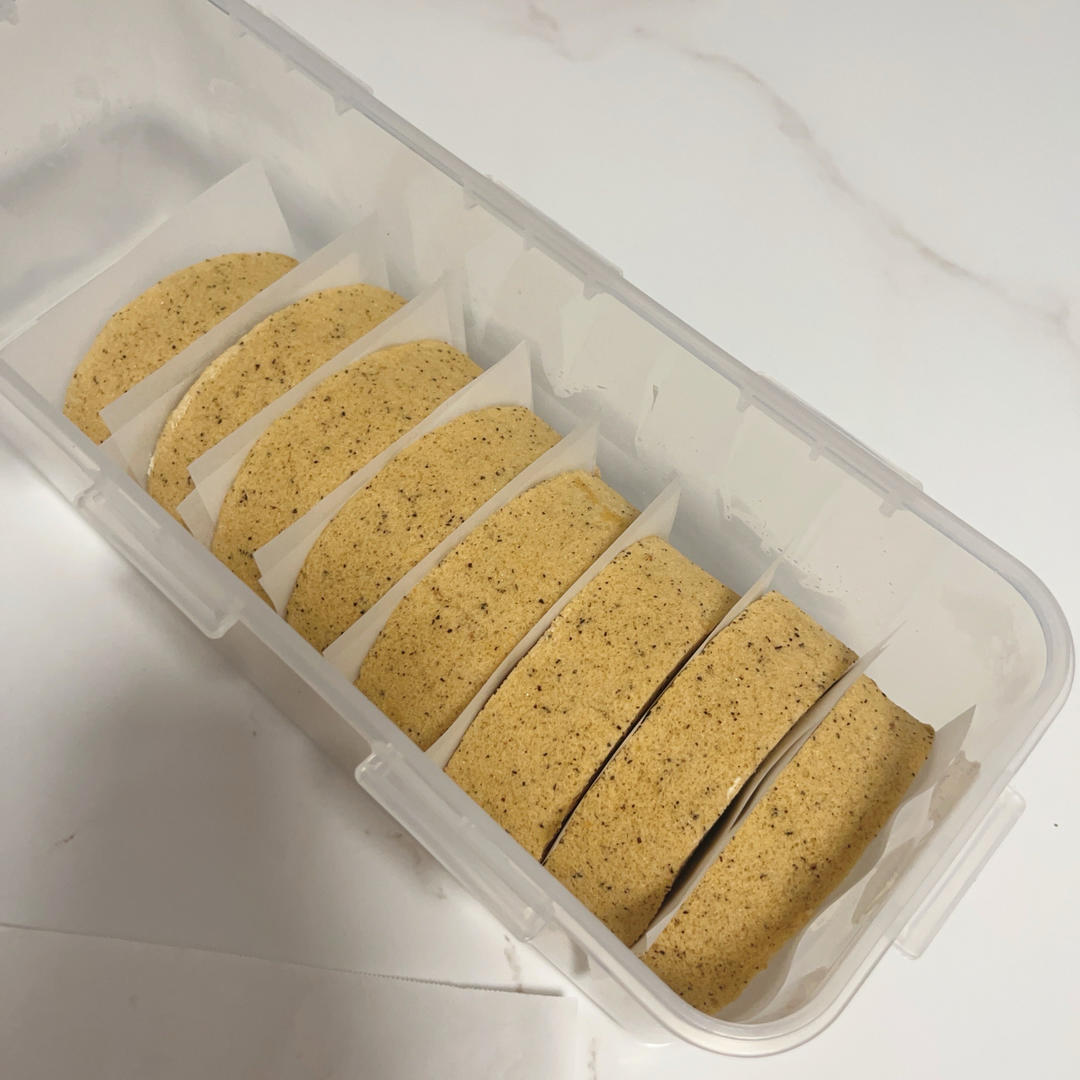
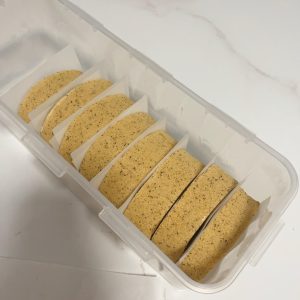
Step 24 — Wrap the Slices
Wrap each slice in parchment paper and store them in a box so they keep their shape.
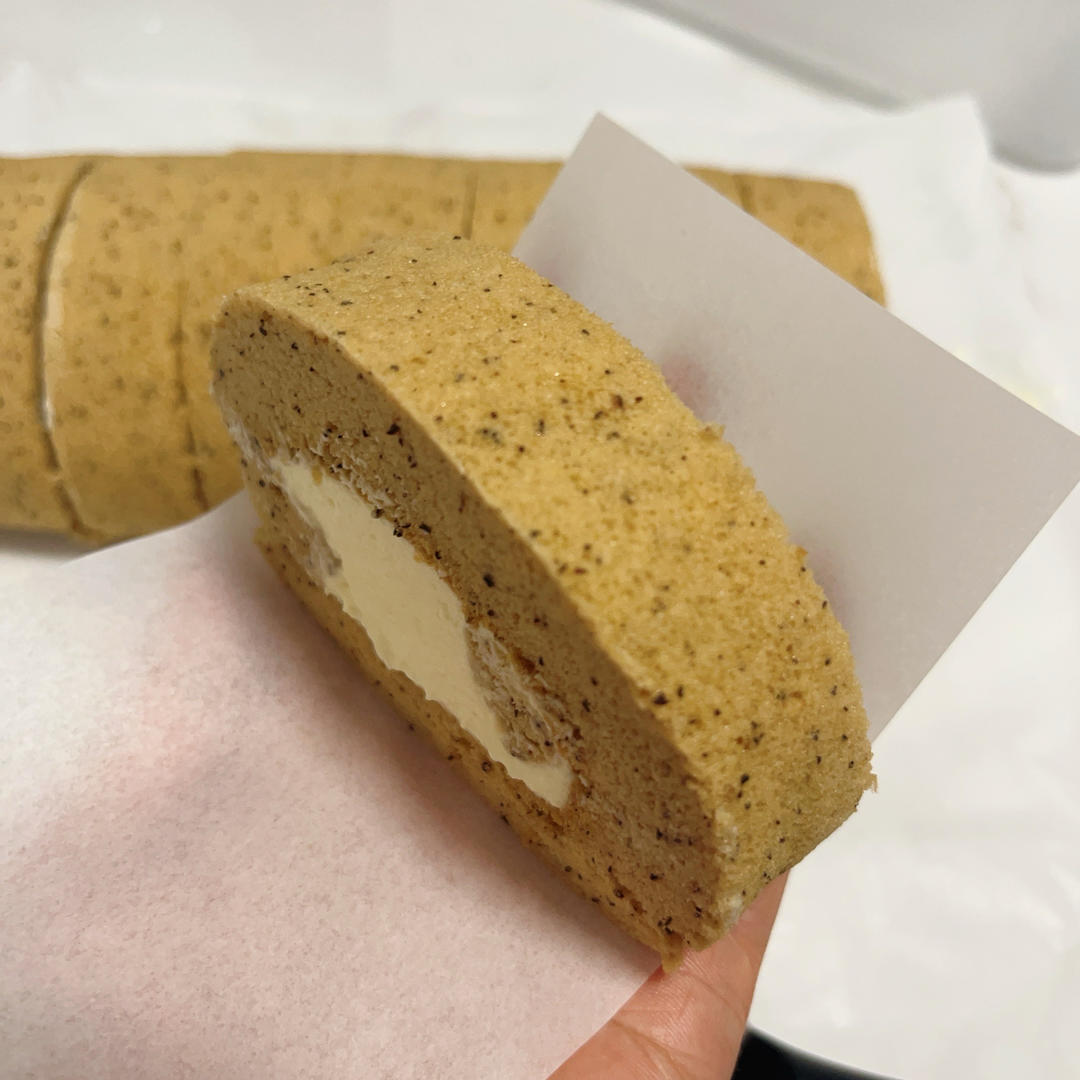
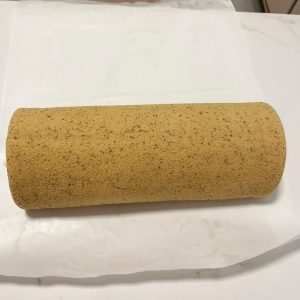
Step 25 — Perfect
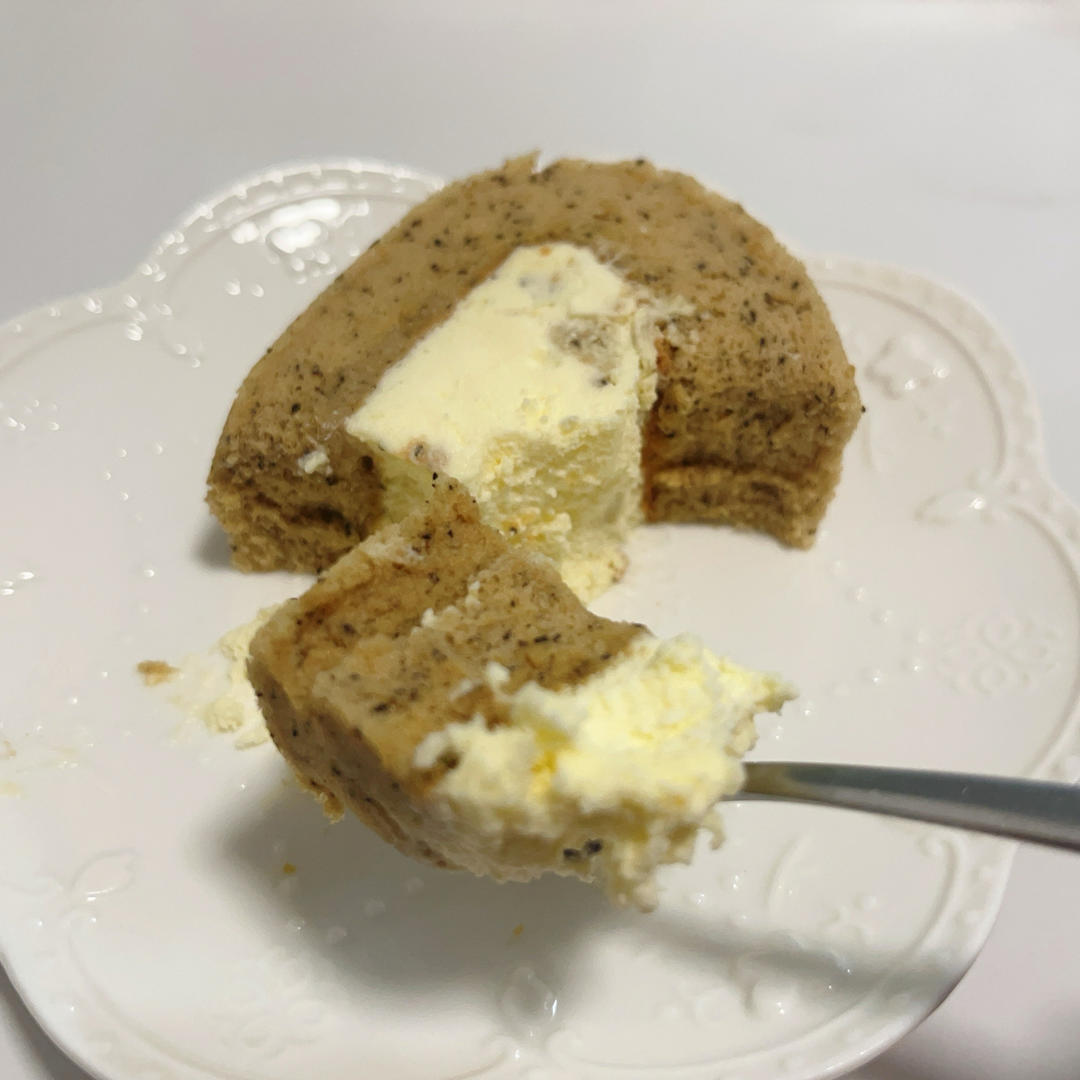
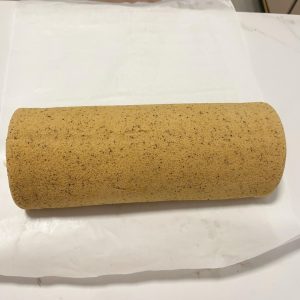
The finished roll — soft, tea-scented, and neatly spiraled.
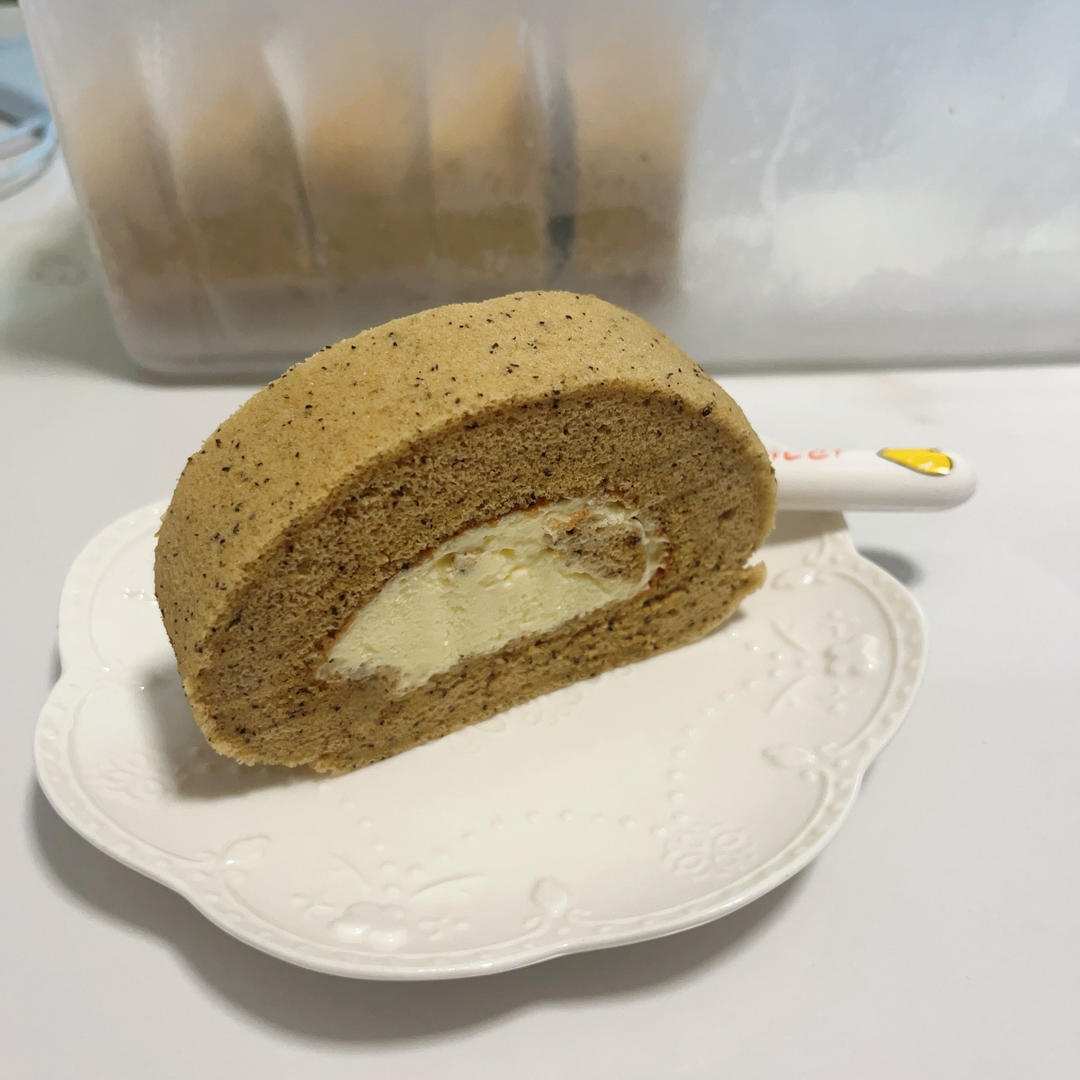
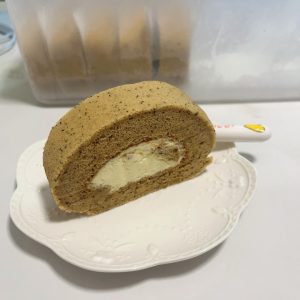
Step 26 — Enjoy Every Bite
Serve and enjoy — the baker calls it delicious, and it is.
Common Mistakes When Making an Earl Grey Roll Cake
1. The cake is tough or dense. Cause: over-folding the meringue. Fix: fold just until no streaks remain — the batter should stay light and airy.
2. The sponge cracks when rolled. Cause: over-baking or rolling when too cool. Fix: bake only until set and roll the cake while it is still slightly warm and flexible.
3. The tea flavor is weak. Cause: skipping the simmer-and-steep step. Fix: cook the tea into the milk and steep 5 minutes under a lid — that is where the flavor comes from.
4. The cream squishes out when rolling. Cause: too much cream or not enough chill. Fix: pipe a modest center line, spread the rest thin, and chill the rolled cake 30 minutes before slicing.
5. The meringue deflates. Cause: yolk in the whites or under-whipping. Fix: separate carefully and whip until firm, glossy peaks hold their shape.
Variations
Matcha roll. Swap the Earl Grey for 4 g of matcha powder, whisked into the milk.
Chocolate roll. Replace 10 g of the flour with cocoa powder for a chocolate-roll version — the technique is identical to my banana chocolate cake.
Fruit cream. Add sliced strawberries or mango to the cream line before rolling for a fruit roll, or swirl in the vanilla peach pear jam for a jam-filled spiral.
Frequently Asked Questions
Can I use tea bags instead of tea powder? Yes — steep 2 Earl Grey bags in the warm milk for 5 minutes, then remove them.
Why is my cake sticking to the parchment? Use good parchment and let the cake cool before peeling; the towel-textured side should release cleanly.
How long does it keep? Wrapped and refrigerated, the roll keeps 2 to 3 days; the cream is freshest on day one.
Can I freeze it? Yes — freeze the un-iced roll (before filling) wrapped well for up to a month, then thaw and fill.
Do I need a piping bag? No — spread the cream with a spatula, thicker at one edge, and roll.
Where else do I use this sponge? The same tea-milk chiffon base also makes lovely tea cakes, or pair it with coconut bread strips and pumpkin steamed buns for a tea-time board.
How to Serve
Serve the roll cake chilled with tea or coffee — the bergamot pairs beautifully with a pot of Earl Grey. For a bakery-style spread, set it beside soft milk bread rolls and butter sugar toast, or with red bean porridge for an East-meets-West afternoon.
For more cream-and-cake ideas, serve it beside the lemon curd roll cake, or pair a slice with banana chocolate cake and a pot of tea.
Storage & Reheat
Keep the roll refrigerated in a covered box for 2 to 3 days. Slice only what you will eat and wrap the rest, as the cut end dries faster. Serve chilled or at room temperature — do not reheat the cream-filled roll.
Allergen Notice
Contains egg, dairy (milk, cream), and wheat (cake flour). Earl Grey tea is not a common allergen.
Nutrition Disclaimer
Nutrition information is calculated using an ingredient database and should be considered an estimate. In cases where multiple ingredient alternatives are given, the first listed is calculated for nutrition. Garnishes and optional ingredients are not included.
About the Author & Recipe Development
I am Lin, and I grew up in my parents’ restaurant kitchen in Chengdu, where the pastry section was small but proud — and roll cakes, with their precise meringues and clean spirals, were the kind of thing we only made for birthdays. This Earl Grey roll from xiachufang is the version that convinced me to make them at home. I tested it twice: the first time I skipped steeping the tea and the cake tasted only faintly of bergamot; the second time, simmering the tea into the milk for the full 5 minutes, the whole kitchen smelled like a tea house. The baker’s honest tip about chilling the roll in a plain box made me like her even more — great baking is full of small, practical workarounds.
Authoritative References
King Arthur Baking on meringue for stable-peak technique, and USDA Safe Temperature Chart for storing cream-filled cakes safely.
Earl Grey Roll Cake (伯爵红茶蛋糕卷): Soft Tea-Scented Sponge

Equipment
- Electric Mixer
- Swiss-roll pan
- Pastry bag (optional)
Ingredients
For the Sponge
- 5 large eggs, separated use 6 if small
- 0.25 cup corn or neutral oil 50 g
- 0.5 cup cake flour 60 g
- 0.27 cup milk 65 g
- 3 tbsp fine sugar 40 g
- 1.5 tbsp Earl Grey tea powder 4 g
- 0.5 tsp lemon juice 3 g
For the Cream Filling
- 0.85 cup heavy cream 200 g
- 1 tbsp sugar 12 g
Instructions
- Weigh out all the ingredients; use 6 eggs if yours are small.

- Simmer the milk with the tea powder over low heat until it colors like milk tea, cover, and steep 5 minutes.
- Combine the warm tea milk with the oil, cake flour, and egg yolks in a bowl.
- Whip the egg whites, adding the sugar and lemon juice.
- Whip on low speed until the meringue forms fine, glossy, firm peaks.
- Whisk the yolk batter until smooth.
- Whisk until the batter is silky with no lumps.
- Fold one-third of the meringue into the yolk batter to lighten it.
- Fold the lightened batter into the remaining meringue until just combined.
- The batter should fall in a long thick ribbon that folds back on itself.
- Pour the batter into the parchment-lined sheet pan.
- Level the batter and tap the pan to release large bubbles.
- Bake on the middle-lower rack at 150°C top / 130°C bottom (300°F / 265°F) for about 30 minutes, adjusting to your oven.
- When the top is nicely colored, remove the cake and tap the pan to release the steam.
- Turn the cake out onto a rack and cool completely.
- Whip the cream with the sugar to stiff peaks.
- Spoon the cream into a piping bag.
- Flip the cooled cake and peel off the parchment to reveal the towel texture.
- Pipe a thick line of cream one-third of the way across, and spread a thin layer over the rest.
- Roll with the five-step method and press the roll inward at the end.
- Refrigerate the rolled cake to set its shape.
- If you have no rolling frame, set the cake in a box and chill about 30 minutes.
- Slice the chilled cake cleanly.
- Wrap the slices in parchment and store in a box.
- Admire the perfect tea-scented spiral.
- Serve and enjoy every bite.




Leave a Reply