Every region of China has a condiment that locals guard like a family secret, and in Yunnan that condiment is 油鸡枞 — wild termite mushrooms slowly fried in rapeseed oil until they turn dark, chewy, and impossibly savory. This recipe from xiachufang is called “Grandpa’s oil chicken mushroom” because it is exactly that: a grandfather’s patient, hands-on method, written down by someone who watched him work. Reading it, you can feel the scale of the project — four kilograms of wild mushrooms, three batches cooked over nearly five hours, and a final blend with fried chiles that locks in the flavor.
This is not a quick recipe, and it should not be. The mushrooms must be cleaned meticulously, pre-cooked to shed their water, then fried in batches over gentle heat until chewy but still tender. The chiles are a separate fry, cooked until they are crisp but not burnt — the grandfather’s rule is to pull them just before they look done, because they keep darkening in the hot oil. The reward is a jar of intensely savory, faintly sweet, gently spicy mushrooms in oil that transforms plain rice, noodles, or eggs into something special.
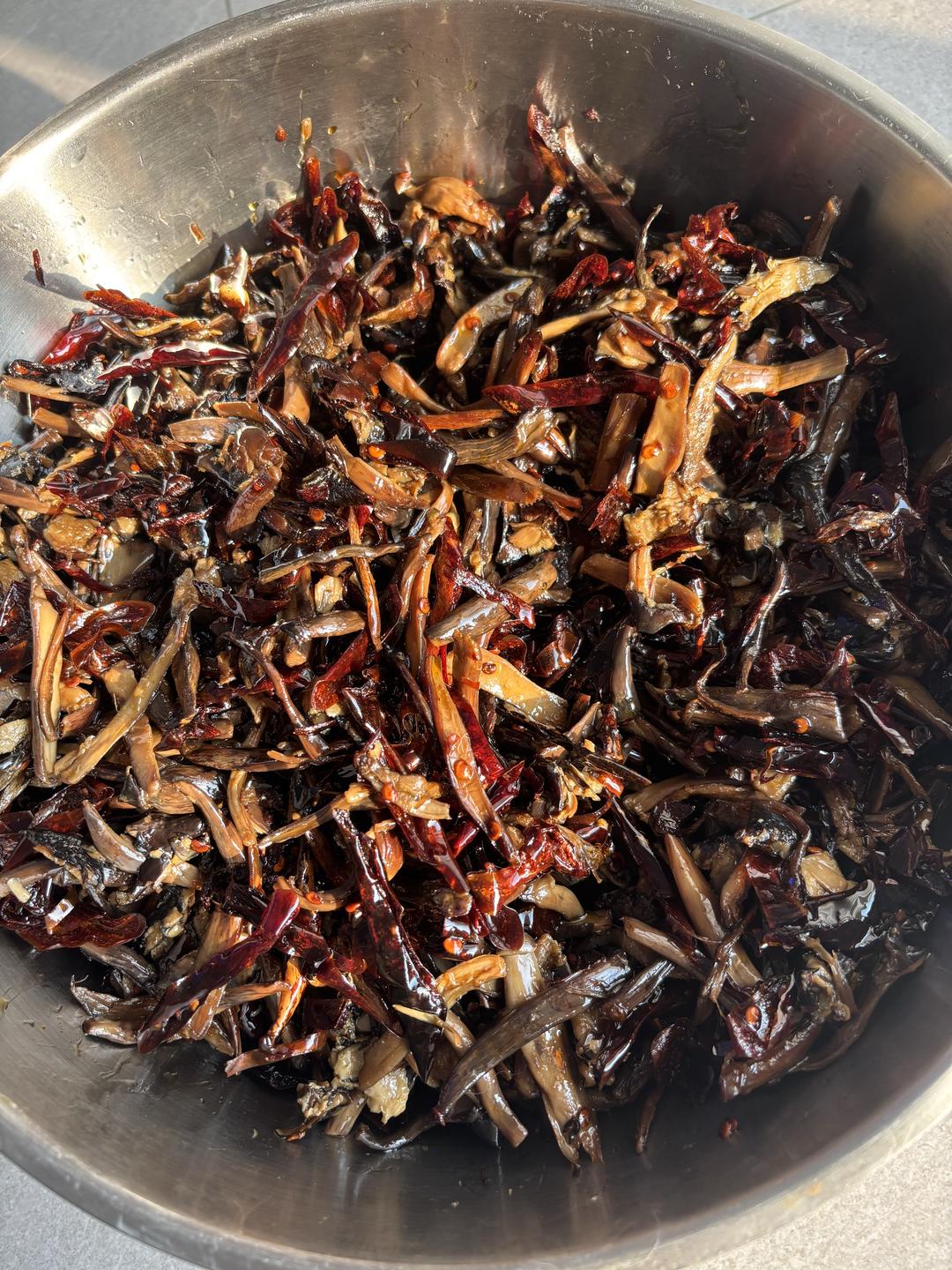
What Is Yunnan Oil-Preserved Mushroom (油鸡枞)?
油鸡枞 is a Yunnan specialty: wild termite mushrooms (鸡枞菌, also written jizong) slowly fried in rapeseed oil with chiles and salt until they become a chewy, intensely savory preserve. The mushrooms are first pre-cooked to remove moisture, then fried in batches over low, controlled heat, and finally combined with separately fried chiles. Packed in their frying oil, they keep for a long time and are eaten as a condiment over rice or noodles.
The name means “oil chicken mushroom” — 鸡枞 (jizong) is a prized wild mushroom whose flavor some describe as chicken-like. This recipe is the home version of the commercial jars sold across Yunnan, made with a whole day’s patience and a grandfather’s insistence on doing every step properly: no shortcuts on cleaning, no high heat to rush the frying, no chiles fried past the moment they are crisp.
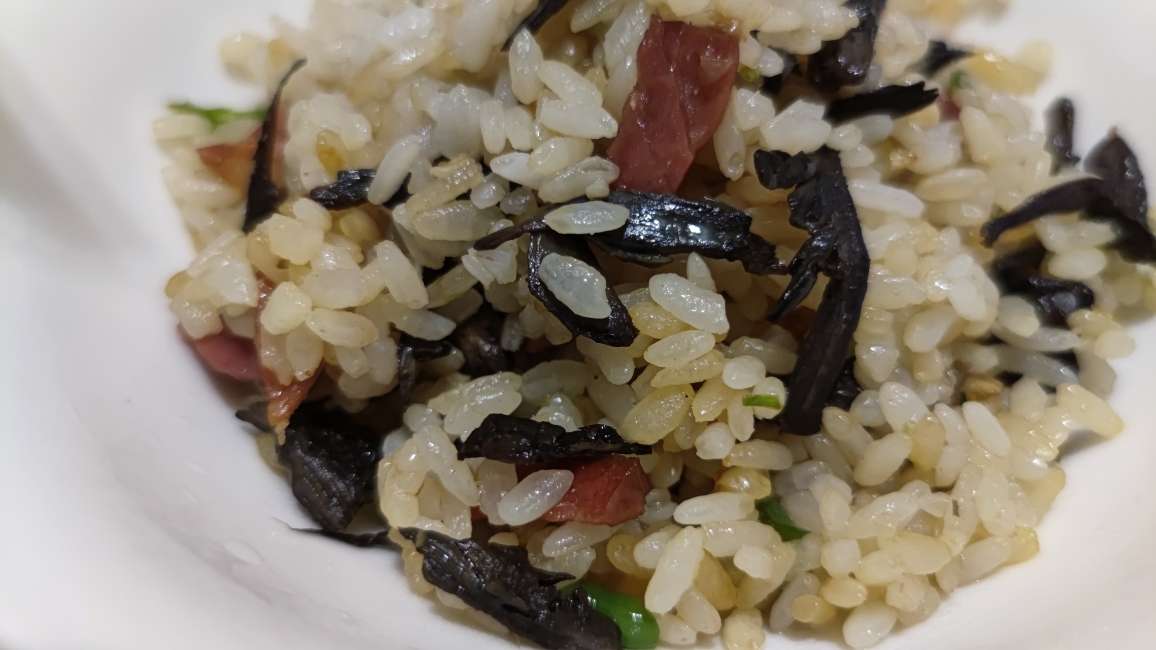
If this mushroom rice bowl tempts you, my Yunnan ganba jun fried rice with ham uses another beloved Yunnan mushroom the same savory way.
1Yunnan Ganba Jun Fried Rice with Ham (Gan Ba Jun Chao Fan)The Yunnan wild ganba mushroom fried rice: hand-torn ganba jun exploded in lard with chilies and garlic, joined by Xuanwei ham and cold rice, finished with a splash of soy along the wok edge. The self-proclaimed ceiling of fried rice — and it earns the title.Check out this recipe
Why This Recipe Works
- Cleaning is non-negotiable. Wild mushrooms carry grit; the recipe’s meticulous washing (several passes, even a pressure washer for the commercial service) is what makes the final texture clean.
- Pre-cooking removes water before frying. Mushrooms that still hold water will stew instead of fry; cooking them first concentrates flavor and keeps them from turning soggy in the oil.
- Rapeseed oil (菜籽油) is the traditional medium. Its nutty aroma is part of the dish — the recipe insists on it for flavor.
- Low, even heat with constant stirring prevents burning. The grandfather fries over a controlled flame (he prefers an induction cooker) and stirs constantly.
- Chiles are pulled just before they look done. They keep darkening in the hot oil, so stopping early keeps them crisp, not bitter.
Equipment Needed
- Very large stockpot or rice cooker for pre-cooking
- Large wok or pot for frying
- Induction burner or well-controlled stove
- Long-handled spatula for constant stirring
- Glass jars for storing the finished preserve
- Pressure washer or very thorough hand washing (for the mushrooms)
Ingredients
- 4 kg (8.8 lb) wild termite mushrooms (鸡枞菌 / jizong), or substitute firm wild mushrooms
- 400 g (1.75 cups) rapeseed oil (菜籽油)
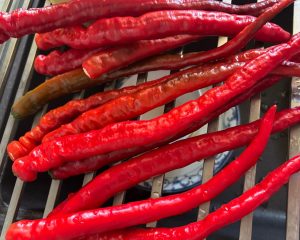
- 600 g (1.3 lb) mild red chiles (不太辣的红辣椒)
- Salt, for seasoning
Ingredient Notes
Termite mushrooms (鸡枞菌 / jizong). The true 鸡枞 is a wild mushroom that grows near termite mounds and is prized across Yunnan. It is seasonal and expensive; outside Yunnan you can substitute firm, meaty wild mushrooms — porcini, king oyster, or shiitake — though the flavor will differ. This recipe is written for 4 kg, a true batch; scale down proportionally for a first test.
Rapeseed oil (菜籽油). The recipe is explicit: rapeseed (canola) oil is essential for the traditional aroma. Use cold-pressed rapeseed oil if you can find it, or plain canola as a neutral fallback.
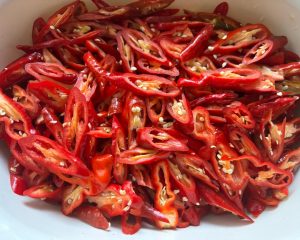
Mild red chiles. These are not for heat — they are for color, texture, and a gentle fruity note. The grandfather uses chiles that are “not too spicy,” sliced on the bias.
Prep & Mise en Place
This recipe rewards preparation. Separate the mushroom caps from the stems, clean them meticulously (the commercial service uses a pressure washer; at home, several rinses with water), then slice the caps into pieces and cut or tear the stems into even segments. Measure the oil, slice the chiles, and line up your jars. Block out a long afternoon — the grandfather’s batch took nearly five hours from start to finish.
Cooking Process
Step 1 — Choose Your Mushrooms Carefully
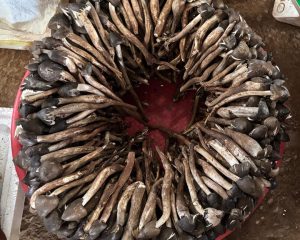
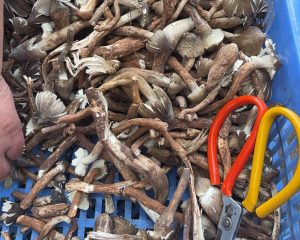
Selection is everything: this recipe needs good, fresh wild mushrooms — the grandfather received a basket of fire-torch termite mushrooms, a gift of nature’s timing.
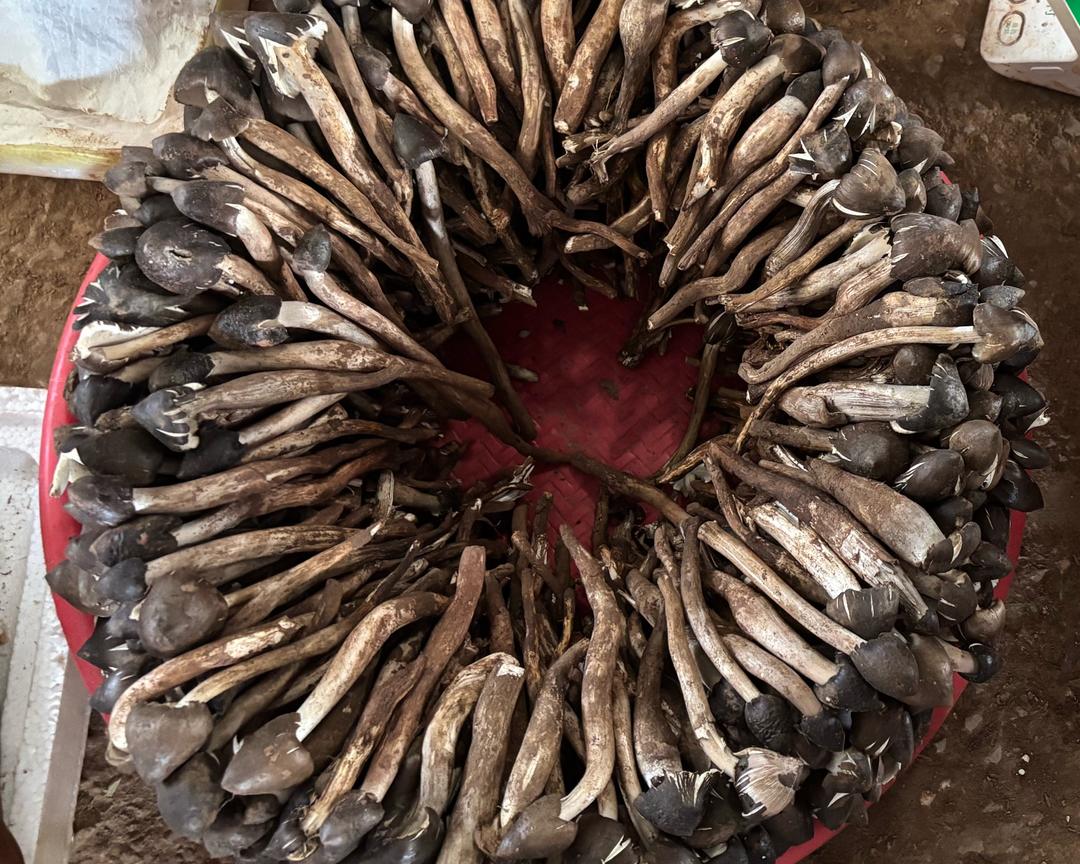
Step 2 — Separate the Caps From the Stems
Cleaning wild mushrooms is the hardest step. The grandfather is lucky to have a market service that picks and washes them, but you can do it at home: first cut the caps from the stems.
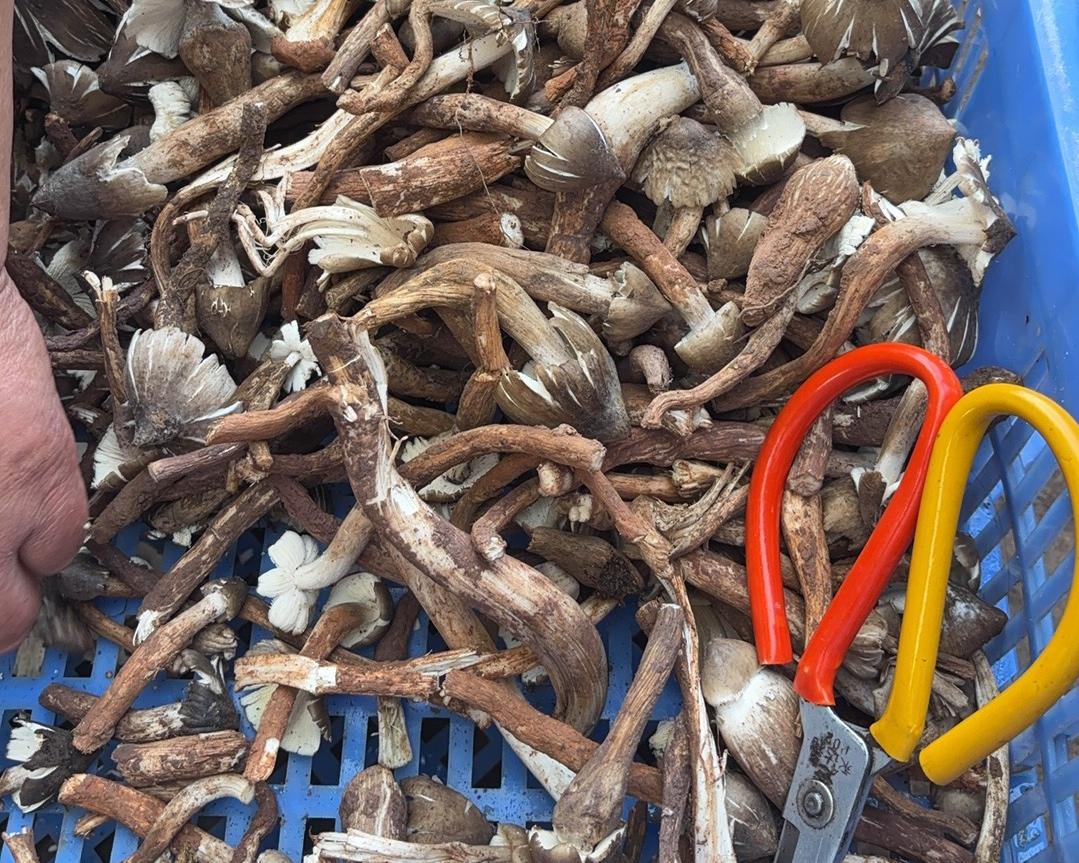
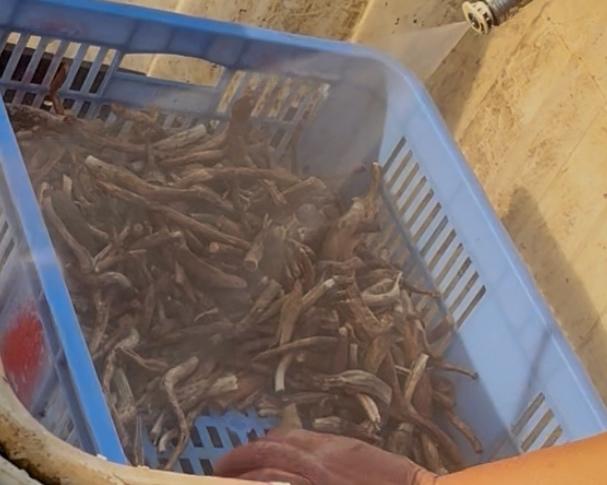
Step 3 — Rinse the Dirt Off With Strong Water
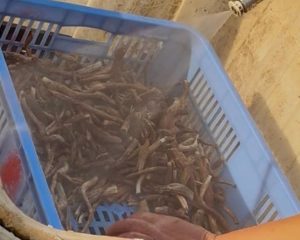
Use a strong stream of water (the commercial service uses a pressure washer) to blast the mud off the caps and stems.
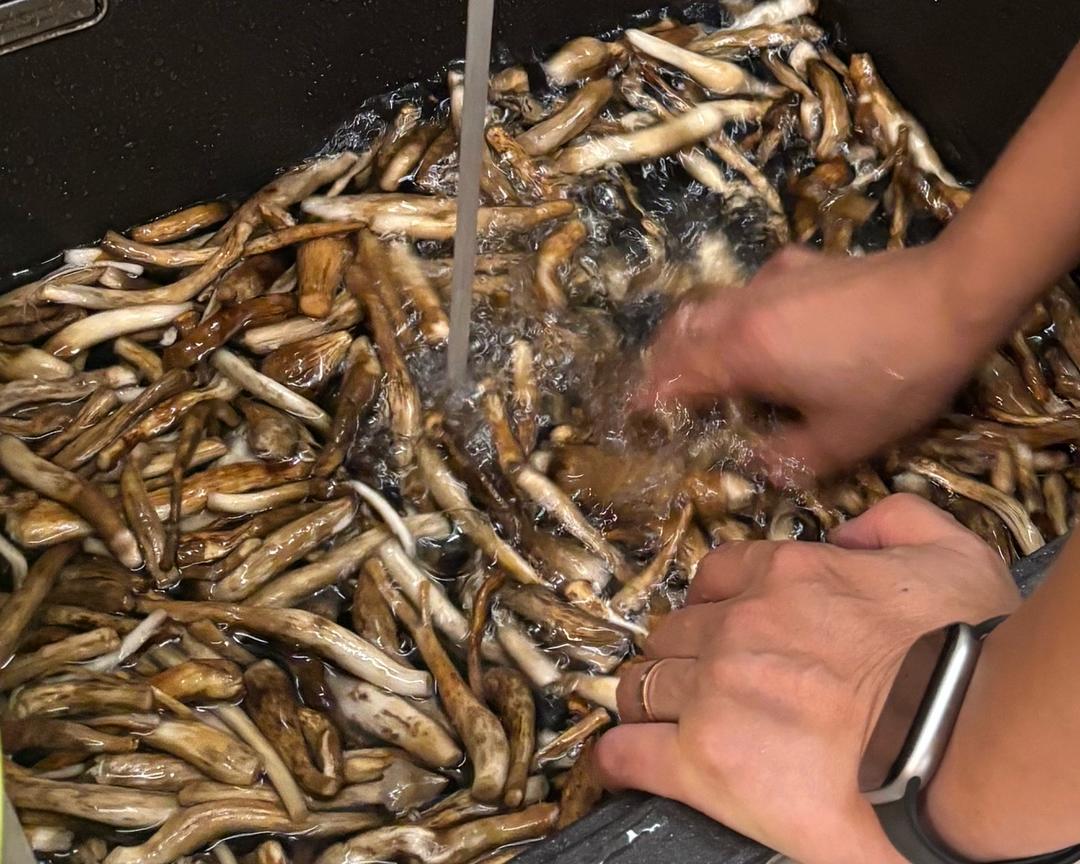
Step 4 — Rinse Again at Home, 4-5 Times
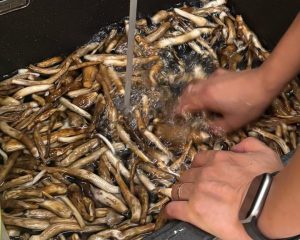
Back home, rinse the mushrooms another four or five times in fresh water until every trace of grit is gone. Wild mushrooms hide dirt in their gills, so this step is not optional.
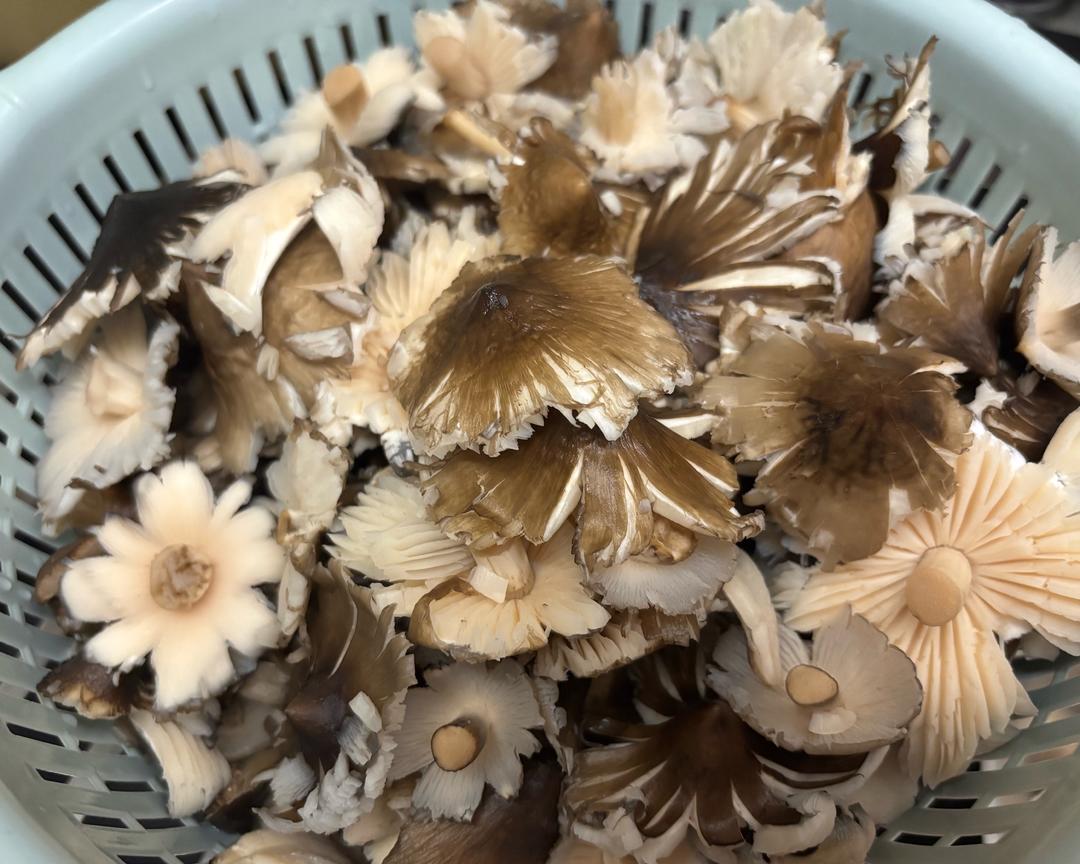
Step 5 — Tear the Caps Into Small Pieces
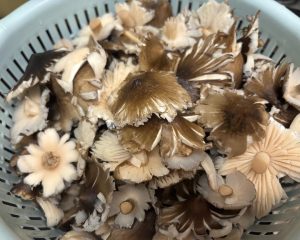
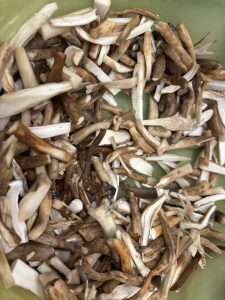
There is no shortcut in frying mushrooms — once clean, break the caps into small pieces by hand.
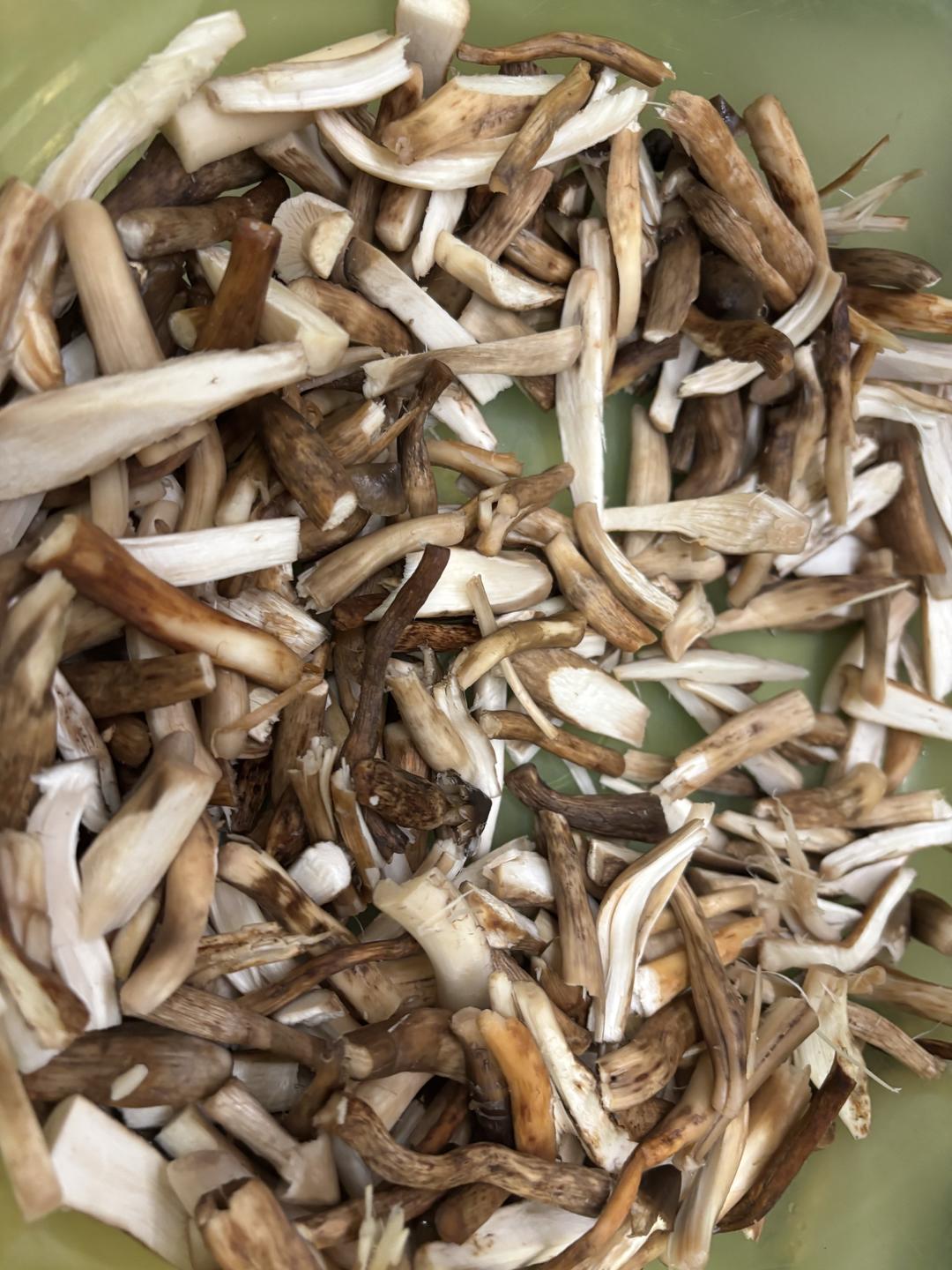
Step 6 — Cut the Stems Into Even Segments
Cut or tear the stems into even, uniform pieces so they cook at the same rate as the caps.
Step 7 — Pre-Cook in the Rice Cooker
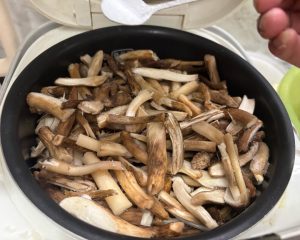
Put the prepared mushrooms in the rice cooker, sprinkle with salt, and run the cook cycle. This first cook releases and removes much of the water, which is what allows the later frying to crisp rather than stew.
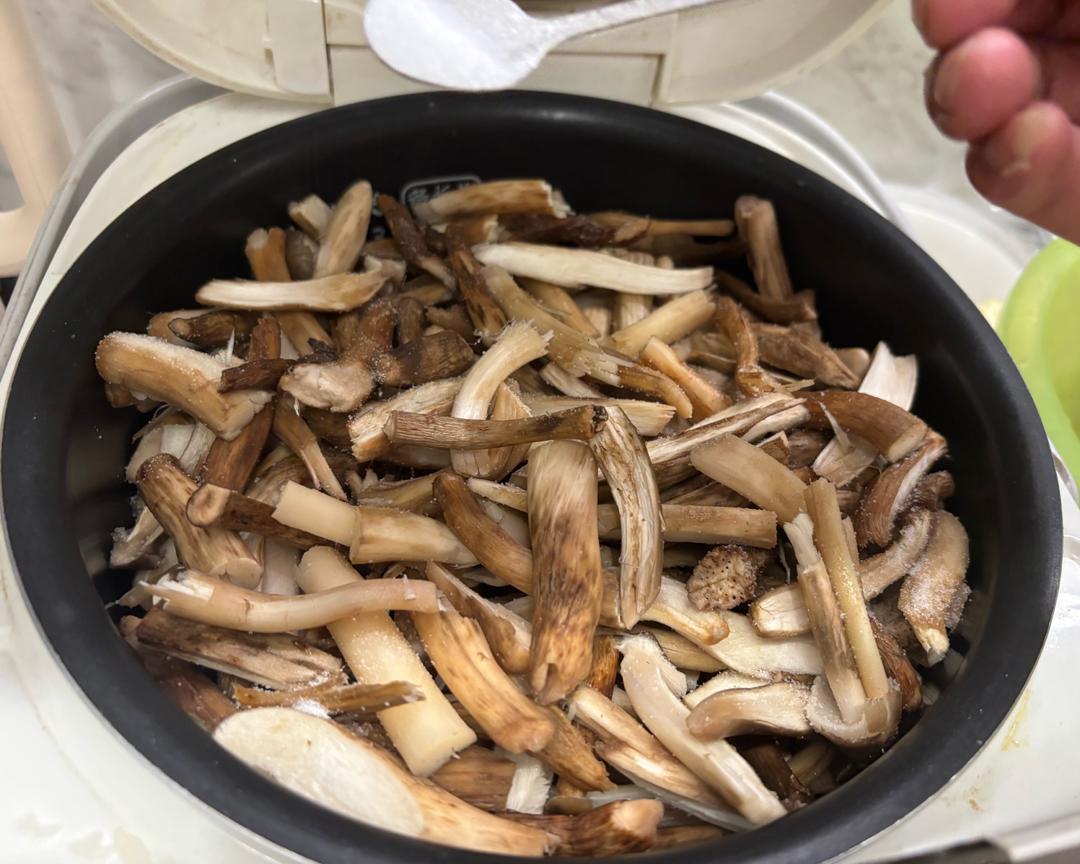
Step 8 — Cool the First Batch and Continue
When some of the water has cooked off, take the mushrooms out to cool, then cook the remaining batches the same way. Four kilograms took three rice-cooker batches and nearly five hours.
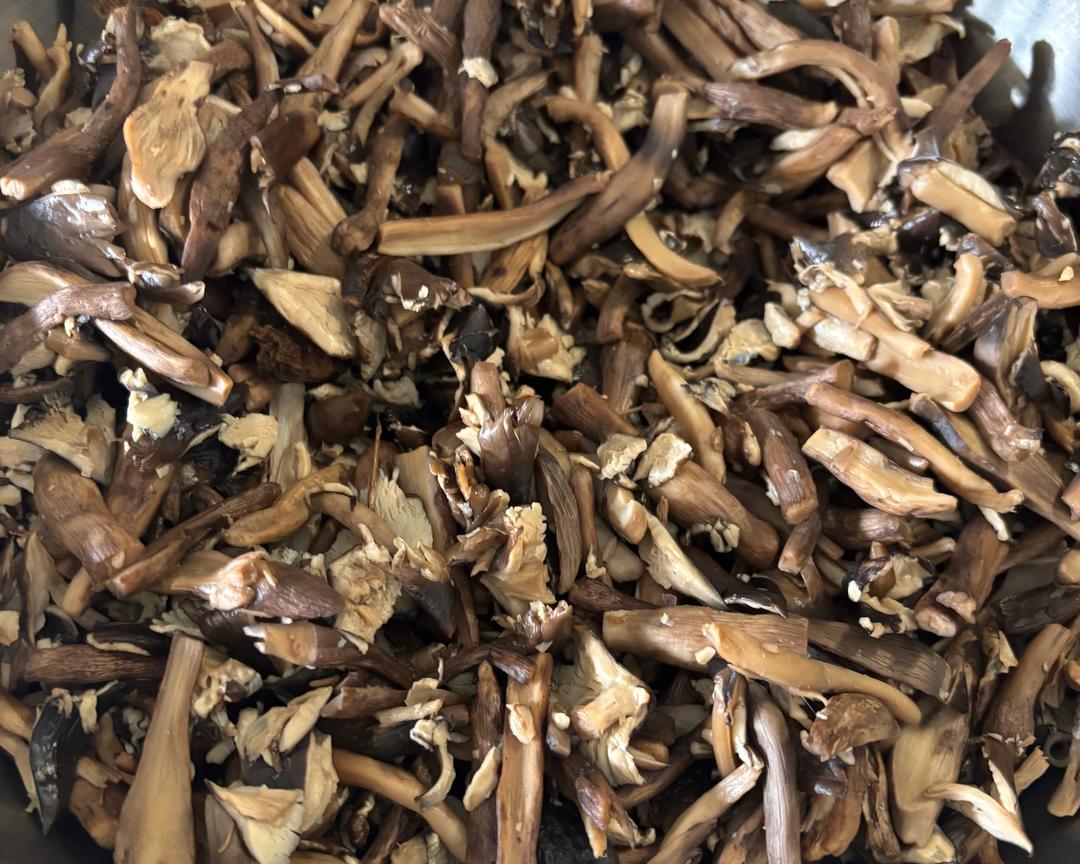
Step 9 — Start the Soul of the Dish: Frying in Rapeseed Oil
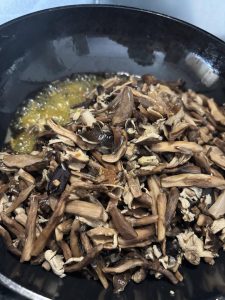
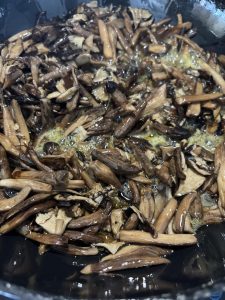
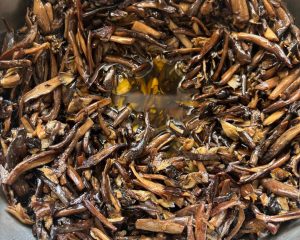
Heat rapeseed oil in the wok — the recipe insists on rapeseed oil for its aroma. Add half of the pre-cooked mushrooms.
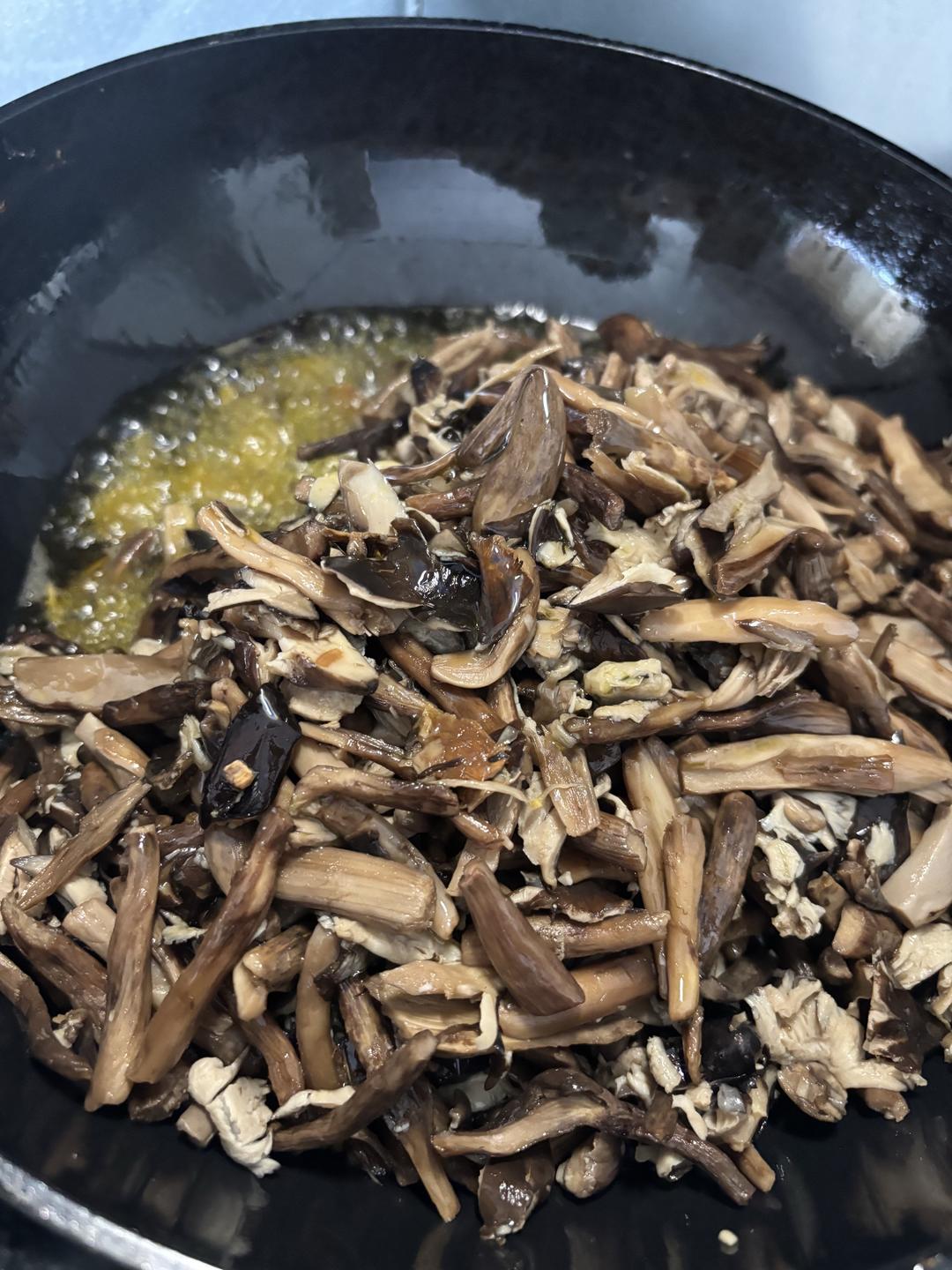
The low-temperature fry is a dehydration, not a crisp. Mushrooms are mostly water; frying gently drives that water off so the flavor concentrates and the texture turns chewy, while the oil slowly replaces the water and carries the aroma into the finished jar. Rush the heat and the outside browns before the inside dries — the exact failure this patient method avoids.
Step 10 — Use an Induction Cooker for Even Heat
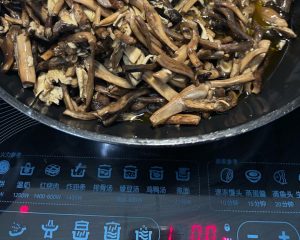
Fry on an induction cooker if you have one — the grandfather prefers it because the heat is even and easy to control.
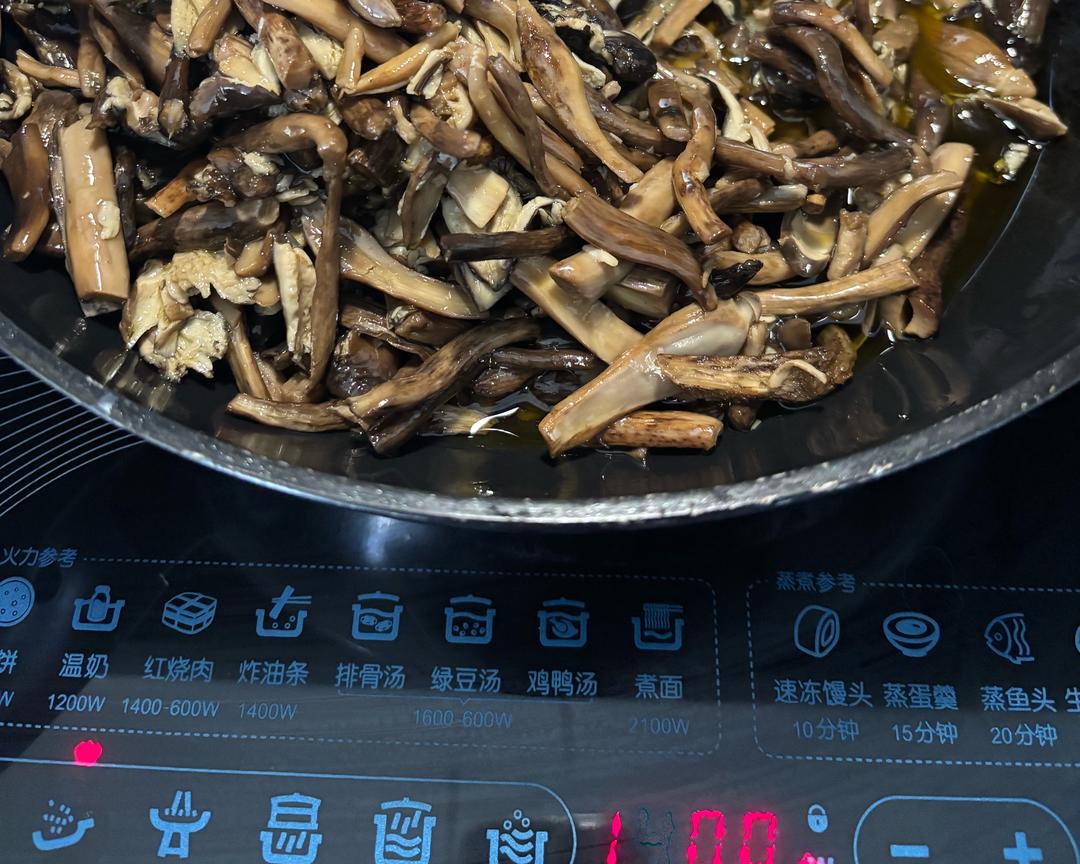
Step 11 — Fry Low and Stir Constantly
The heat must stay low, and you must stir constantly so nothing scorches — a burned batch is ruined, not rescued.
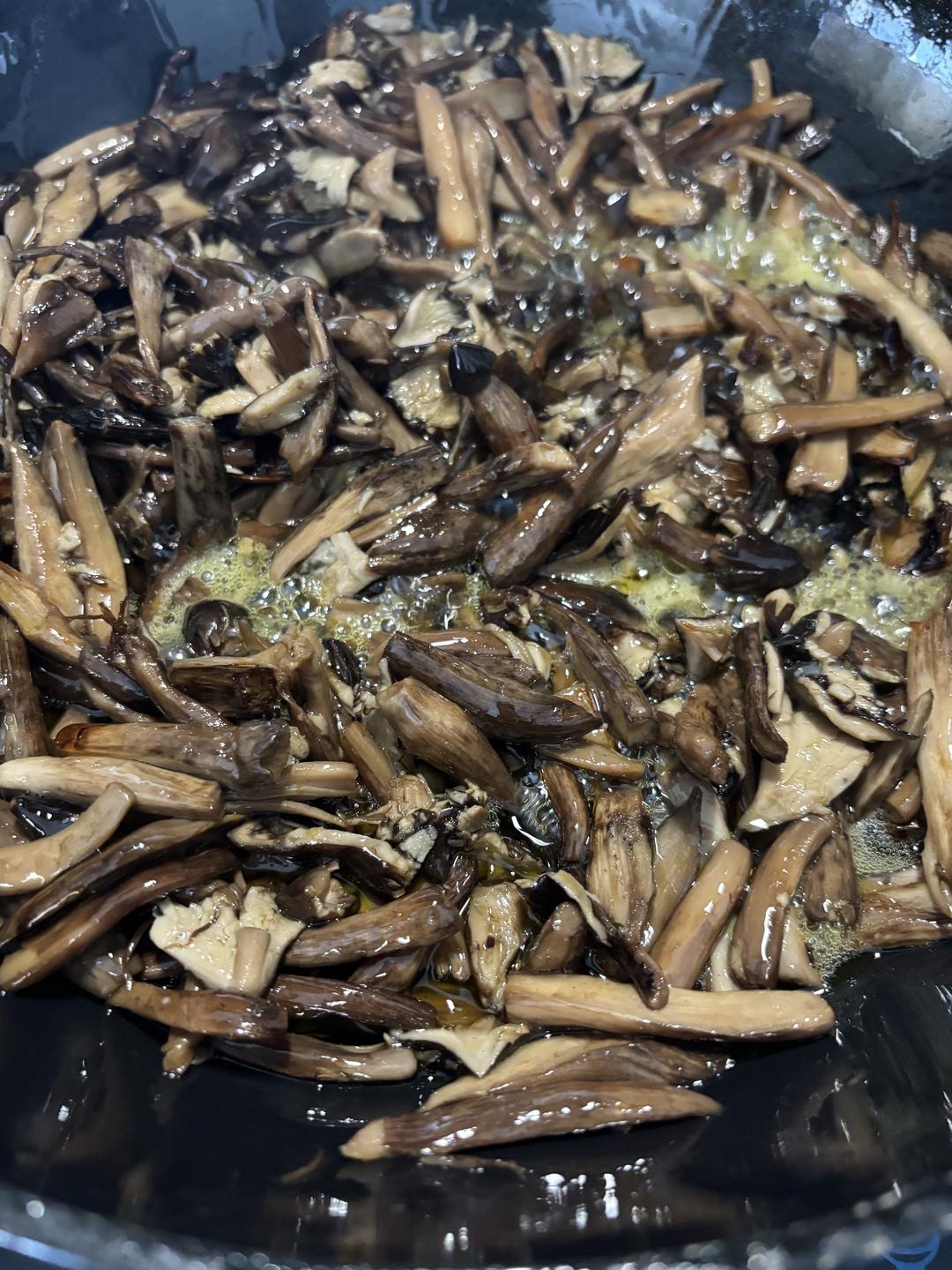
Step 12 — Fry Until Dry, Oil and All
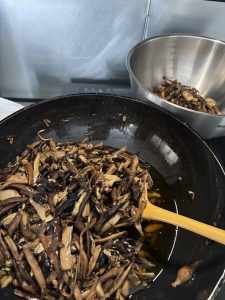
Fry until the mushrooms reach the right dryness, then scoop them out together with the oil and start the next batch.
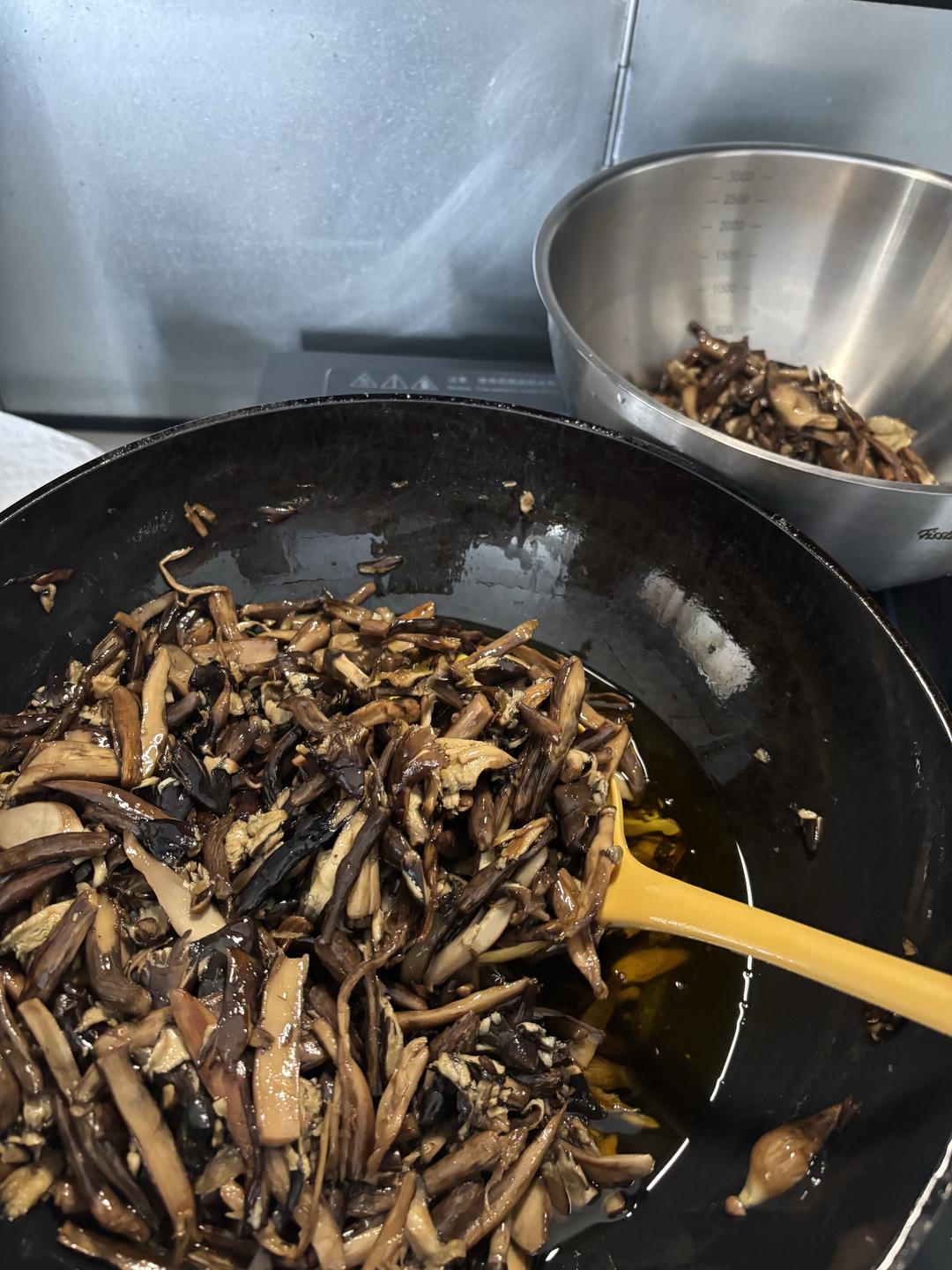
Step 13 — Fry the Remaining Batches
Repeat with the remaining mushrooms until every batch matches in color and doneness.
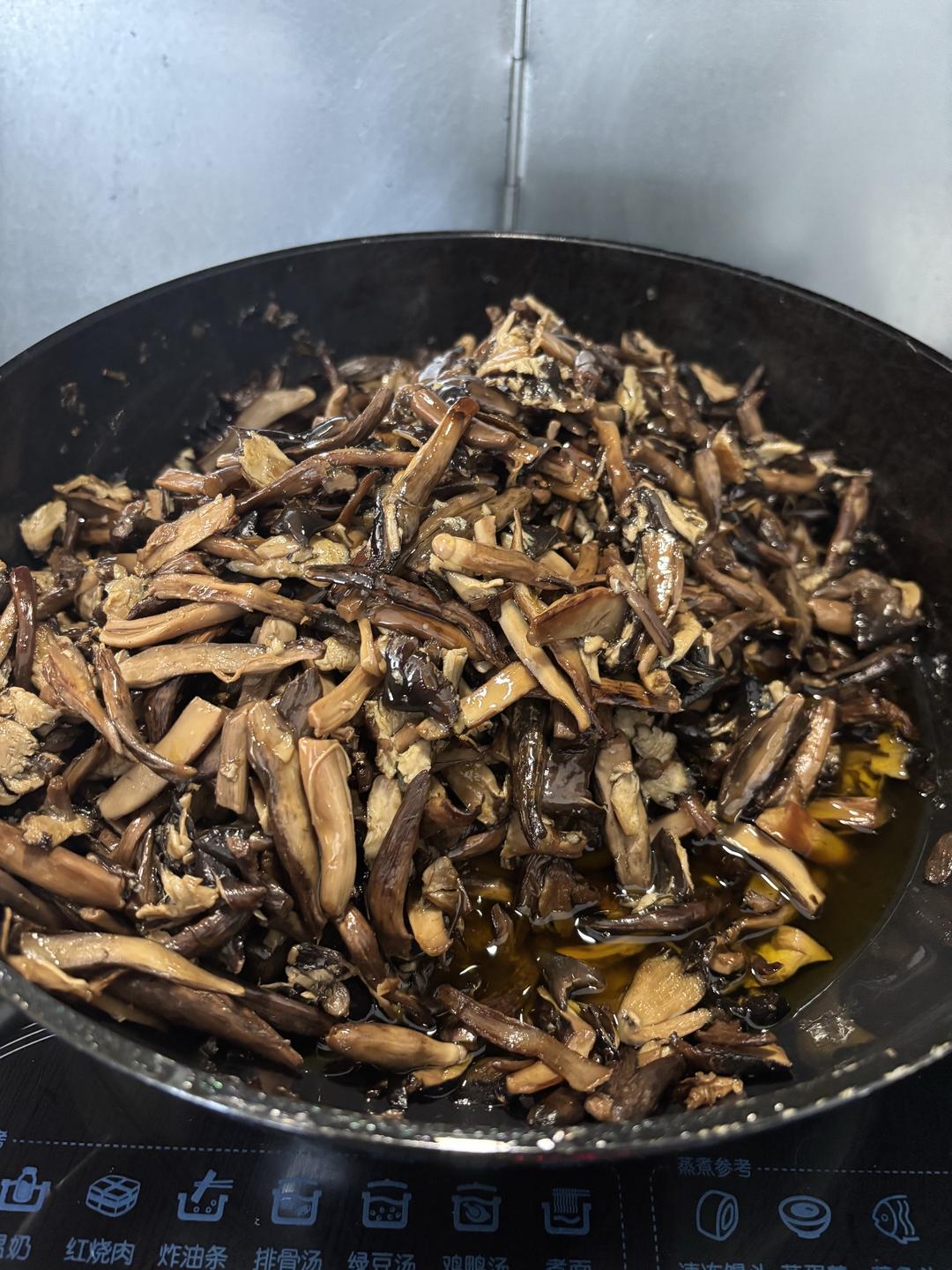
Step 14 — Combine and Re-fry Slowly
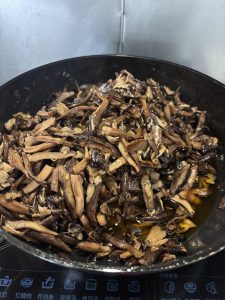
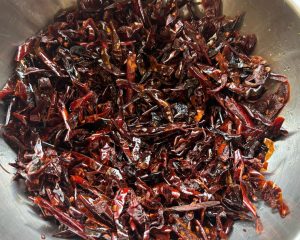
Once the batches match, combine them and continue frying gently over low heat, so the pieces finish evenly.
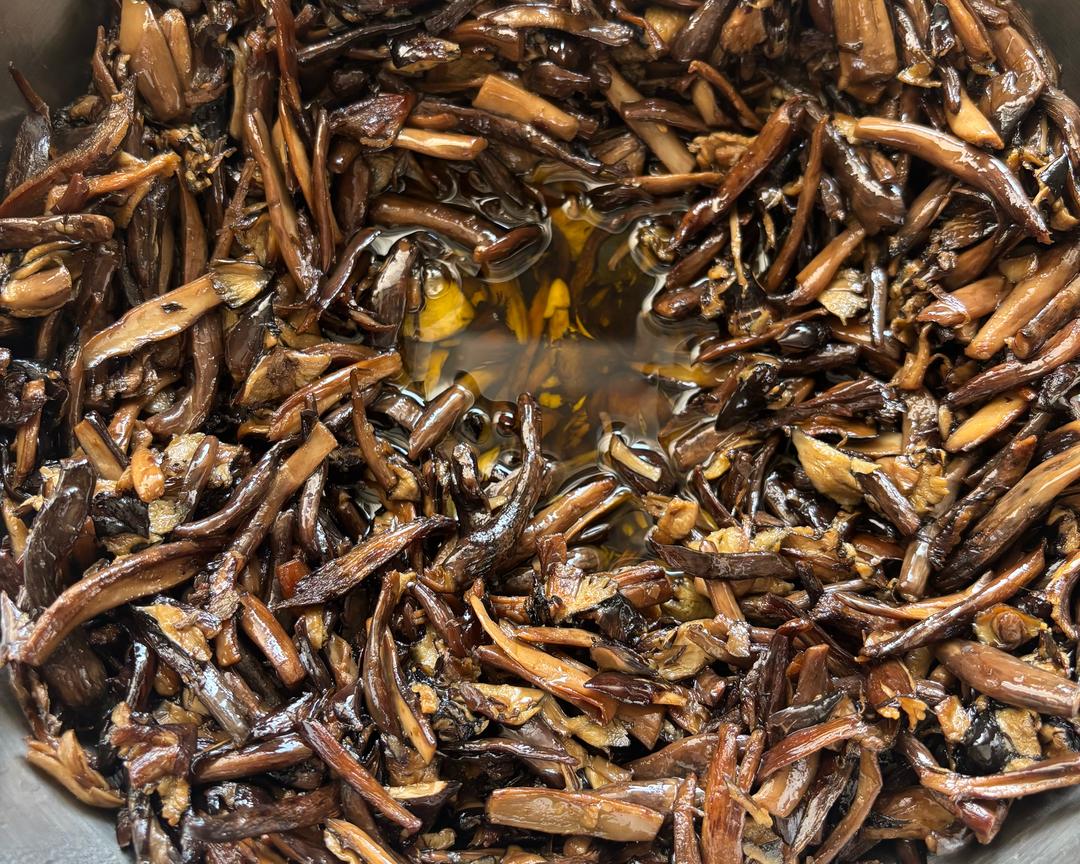
Step 15 — Fry the Final Batches a Little Drier
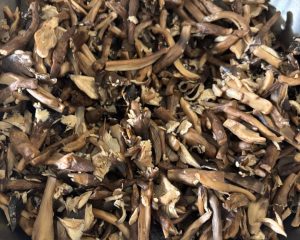
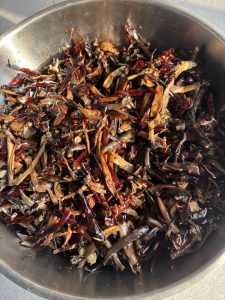
Fry the last portions a little drier, but keep some moisture and softness — the finished pieces should be chewy, not crunchy. Set them aside to cool.
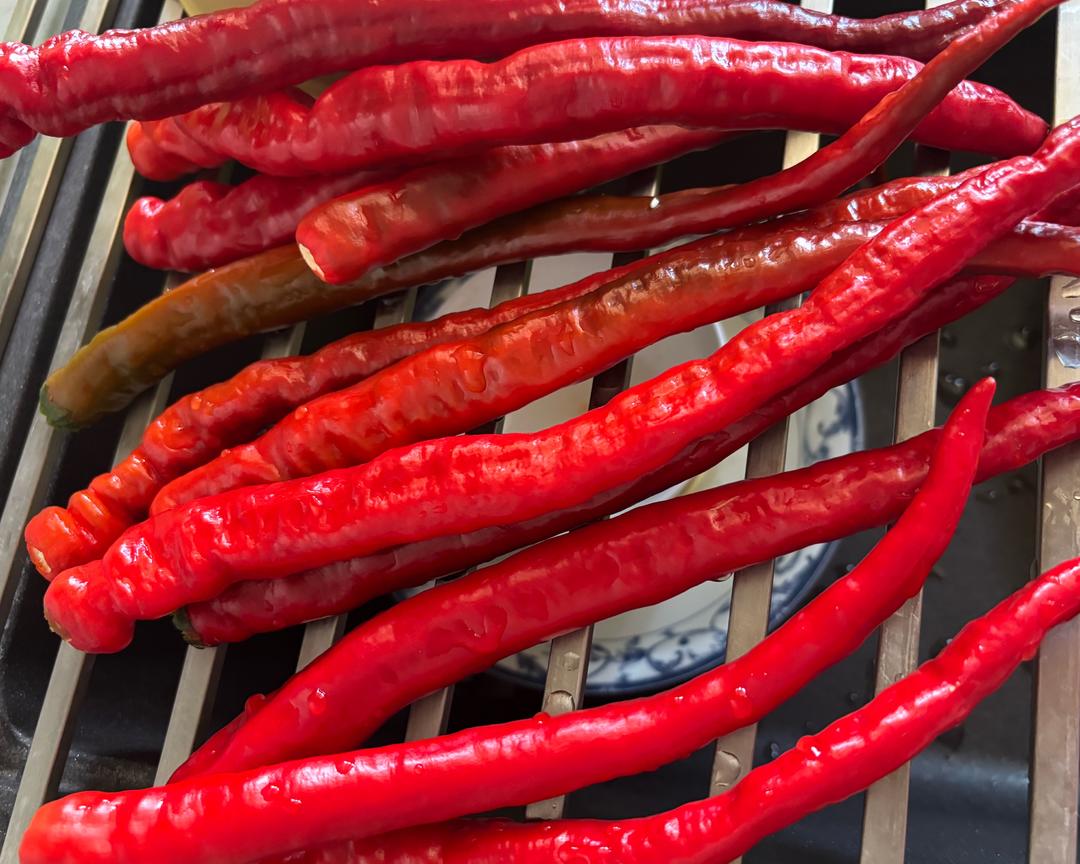
Step 16 — Prepare the Chiles
Wash the mild red chiles and let them dry completely — surface water would splatter and steam in the oil.
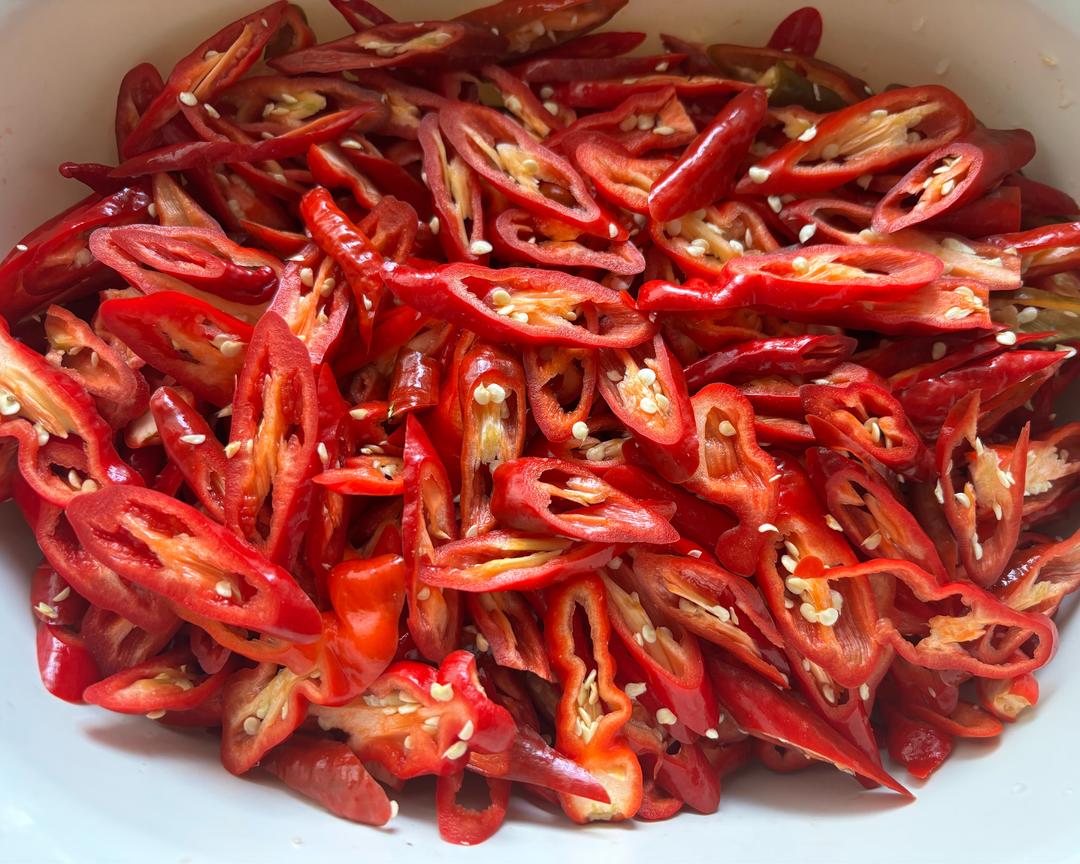
Step 17 — Slice the Chiles on the Bias
Cut the chiles diagonally into slices so they fry evenly and look beautiful in the jar.
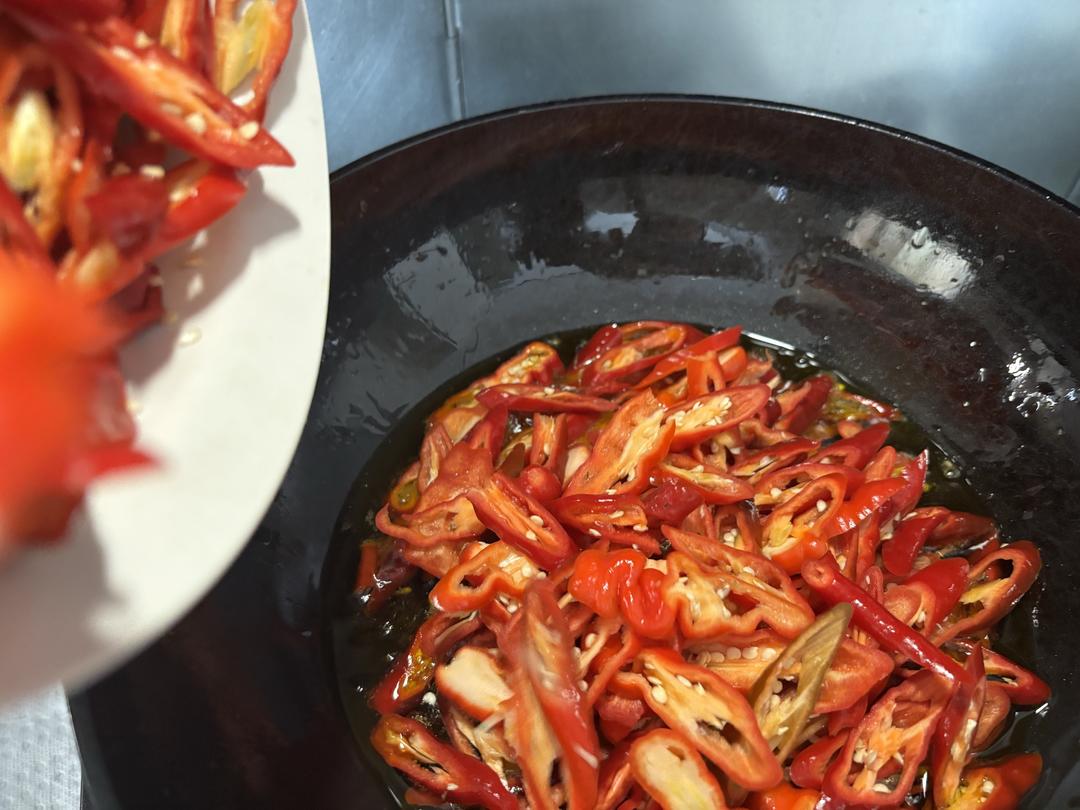
Step 18 — Fry the Chiles in Oil
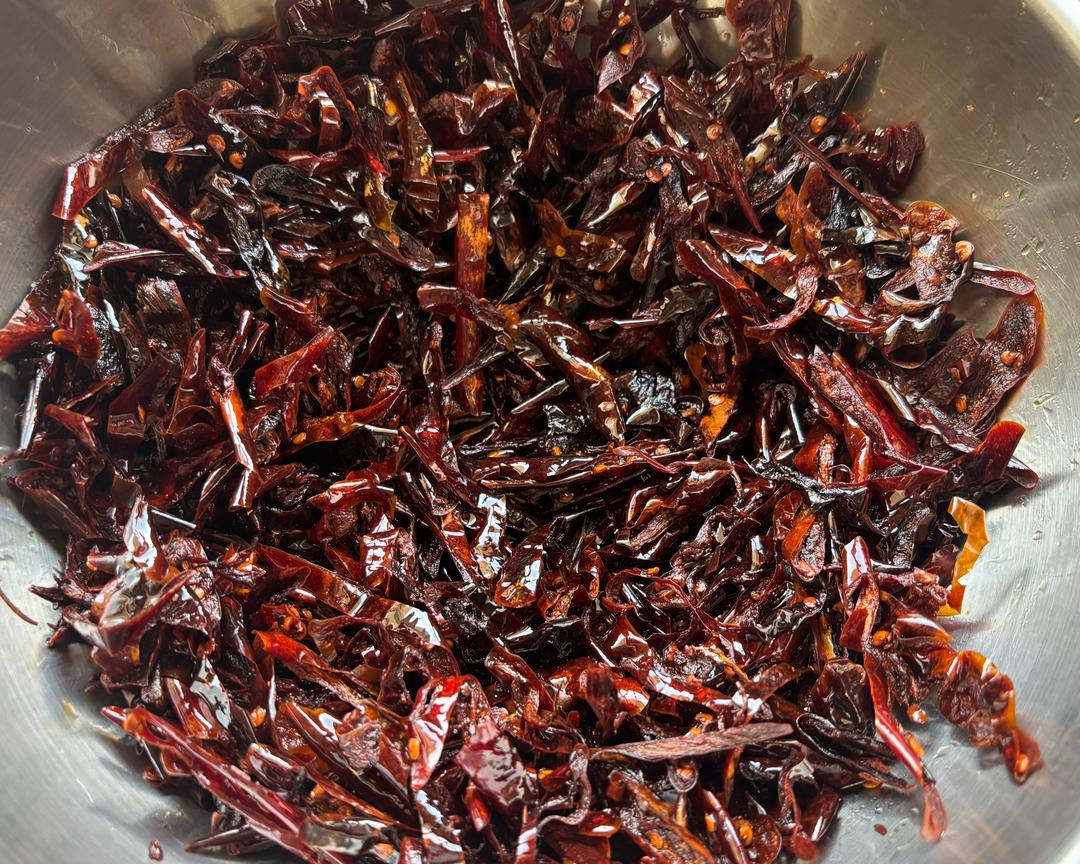
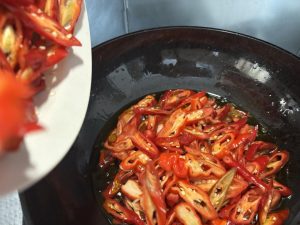
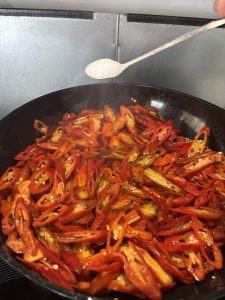
Heat oil in the pan, add the sliced chiles, and season with salt, stirring constantly.
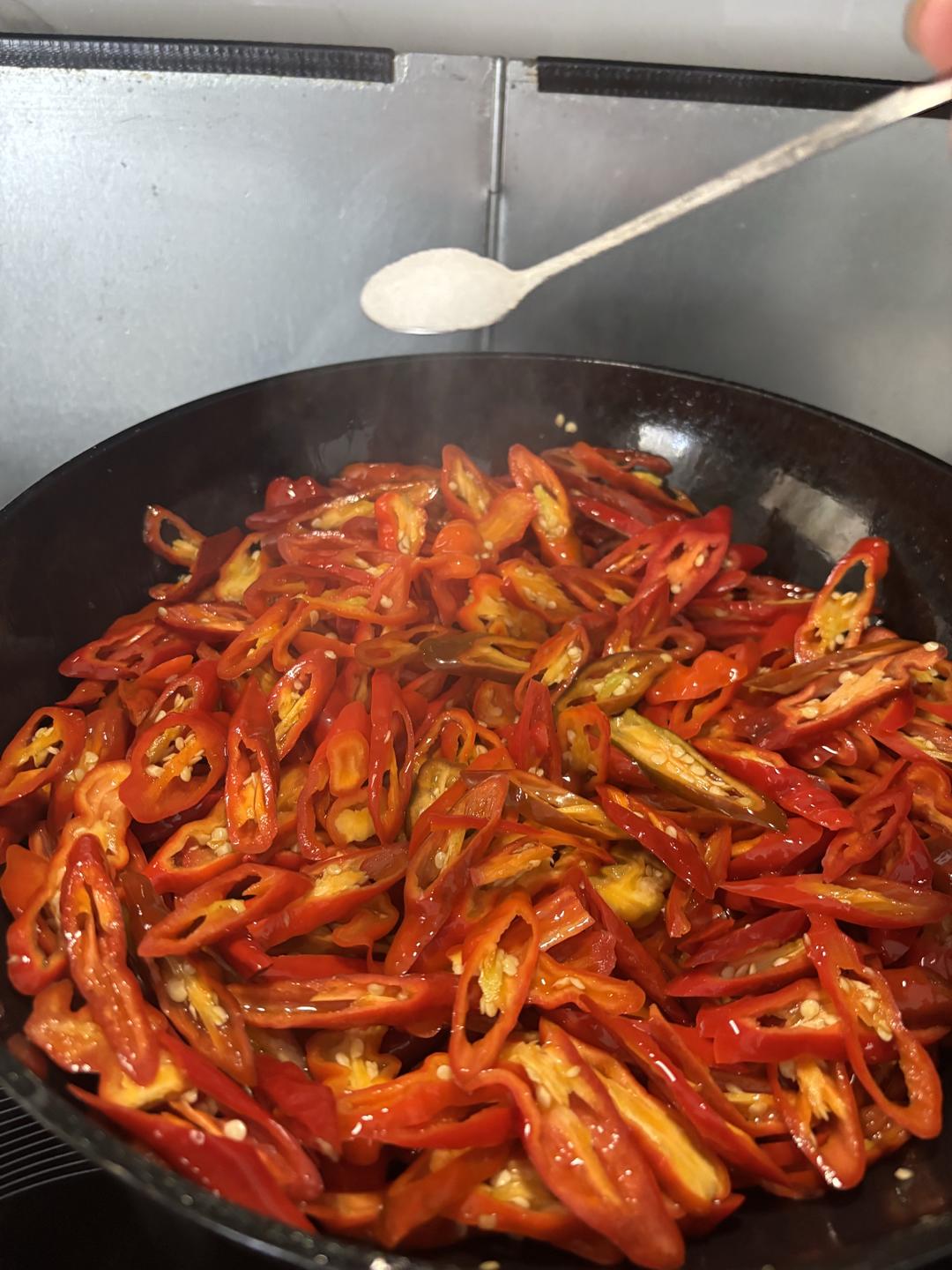
Step 19 — Fry Until Nearly Black, Then Stop
Keep frying until the chiles are almost black, then turn off the heat — they keep darkening in the hot oil, so stopping just before they look done is what keeps them crisp without burning. Pour them out of the pan to halt the cooking.
Step 20 — Combine, Jar, and Let the Oil Work
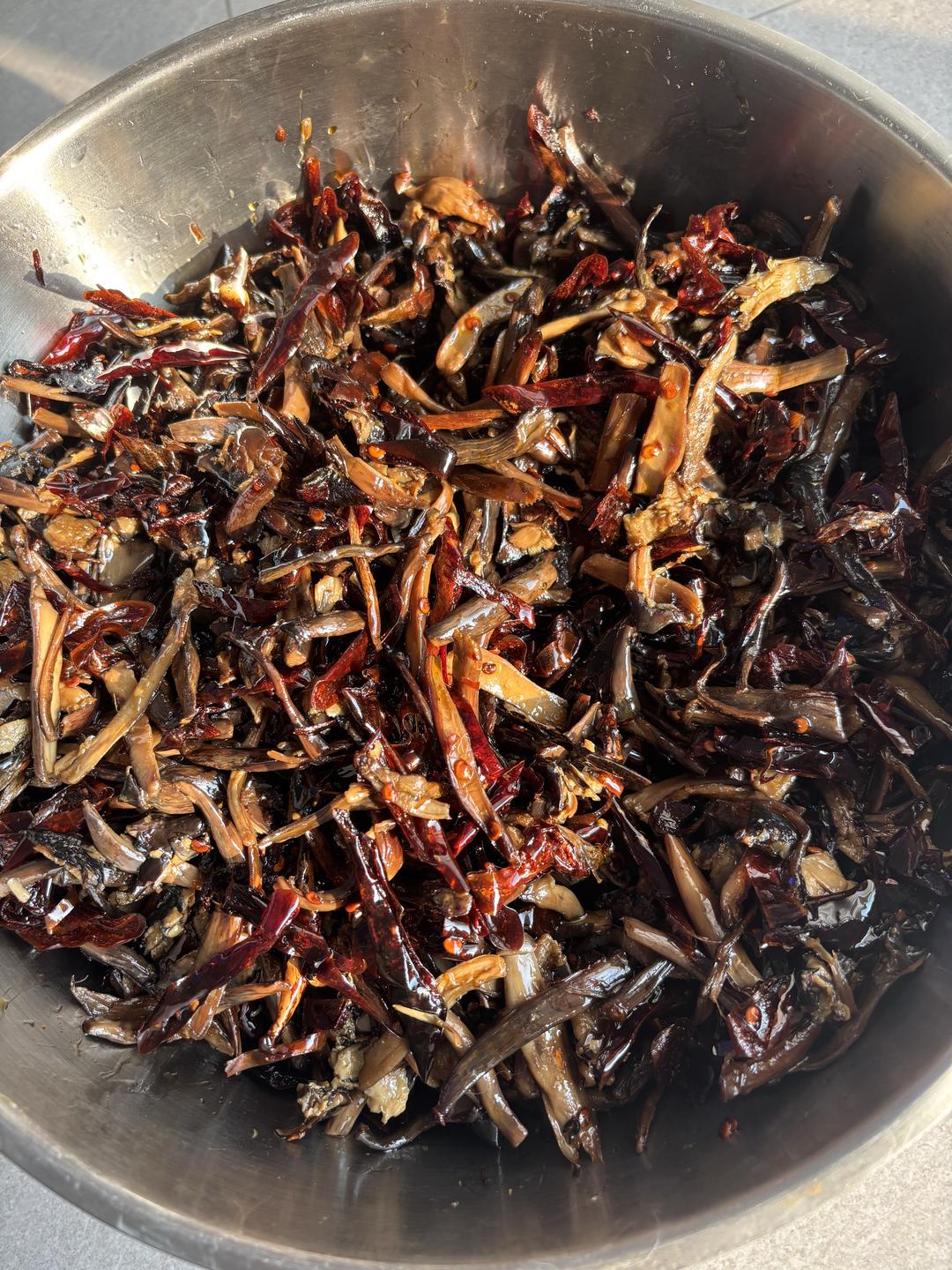
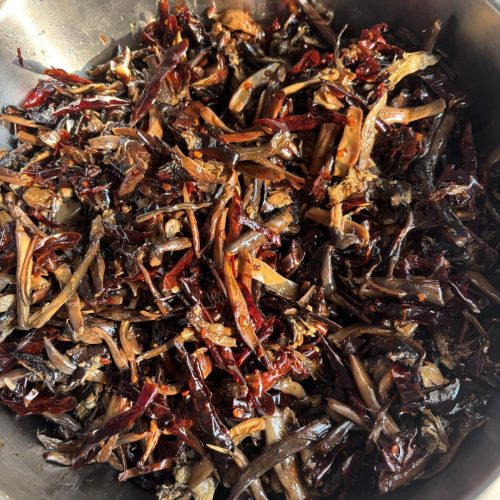
Pour the fried chiles over the mushrooms and mix well. The hot oil seals in the mushroom aroma, and the crisp chiles add a fruity, gently spicy counterpoint that never overwhelms the mushroom’s own flavor — sweet, savory, and layered. Store in jars with the oil covering the mushrooms.
Common Mistakes When Making Oil-Preserved Mushrooms
1. The mushrooms taste gritty. Cause: insufficient cleaning. Fix: rinse four or five times (or use a pressure washer) — wild mushrooms hide dirt in their gills.
2. They stew instead of fry. Cause: skipping the pre-cook. Fix: run the salted mushrooms through the rice cooker first to shed their water.
3. The batch burns. Cause: heat too high or no stirring. Fix: fry over low heat on an even burner and stir constantly.
4. The chiles turn bitter. Cause: frying them too far. Fix: pull them just before they look done — they keep darkening in the hot oil.
5. The mushrooms are too dry or too wet. Cause: not watching the final fry. Fix: keep some moisture and softness — the finished texture should be chewy, not crunchy.
Variations
Smaller batch. Scale the recipe down — the method is identical, just shorter; aim for the same visual doneness.
Other wild mushrooms. Outside Yunnan, use firm meaty mushrooms like porcini or king oyster; the flavor will differ but the technique holds.
As a seasoning. Spoon the oil and a few mushrooms over rice, noodles, or eggs, or stir a little into stir-fries like mushroom chicken clay pot rice for extra depth.
Frequently Asked Questions
Can I use cultivated mushrooms? Yes — use firm, meaty varieties; you will lose some of the wild-mushroom aroma but keep the technique and texture.
How long does it keep? Packed with oil covering the mushrooms and refrigerated, it keeps for months — the oil is the preservative. Always use a clean, dry spoon.
Why rapeseed oil specifically? Its nutty aroma is traditional and part of the flavor. Plain canola is the closest neutral fallback.
Do the chiles make it very spicy? No — mild chiles are used for color and texture. For heat, add a few dried chiles to taste.
Can I use a regular stove? Yes — just keep the heat low and control it carefully; the grandfather prefers an induction cooker for even heat.
How to Serve
Spoon the mushrooms and their oil over plain rice or noodles, toss with eggs, or set out as a condiment alongside chili oil and garlic sauce for a DIY seasoning bar. A spoonful also elevates a simple bowl of congee or porridge more than you would expect, and a tiny bit stirred into mushroom chicken clay pot rice adds an extra layer of mushroom depth.
For a condiment collection, keep a jar beside my universal street-food sauce and hawthorn jam so every meal has a choice.
Storage & Reheat
Store the mushrooms in clean glass jars with the oil completely covering them, refrigerated, for up to several months. Always use a clean, dry spoon. No reheating needed — serve at room temperature or let the jar come to room temperature before using.
Allergen Notice
This recipe contains no gluten, dairy, egg, or nuts. Wild mushrooms can cause reactions in sensitive individuals; if you are serving someone new to them, start with a small amount.
Nutrition Disclaimer
Nutrition information is calculated using an ingredient database and should be considered an estimate. In cases where multiple ingredient alternatives are given, the first listed is calculated for nutrition. Garnishes and optional ingredients are not included.
About the Author & Recipe Development
I am Lin, and I grew up in my parents’ restaurant kitchen in Chengdu, where a good condiment was treated like money in the bank — something to make when ingredients were abundant and spend all year. This “Grandpa’s oil chicken mushroom” recipe from xiachufang speaks to me exactly that way. The cook writes with real affection for her grandfather’s ritual: the meticulous cleaning, the nearly five hours of patient frying, the rule about pulling the chiles just before they look done. I scaled the method down with cultivated mushrooms in my own kitchen and the technique held beautifully. It is not a quick project, but a jar of it is worth every minute.
Authoritative References
USDA Safe Temperature Chart for safe handling and storage of oil-preserved foods, and FDA safe food handling guidance for general kitchen practice.
Yunnan Oil-Preserved Mushrooms (油鸡枞): Grandpa’s Recipe

Equipment
- Rice Cooker
- Large Wok
- Induction cooker (optional)
- Glass Jars
Ingredients
For the Mushrooms
- 8.8 lb wild termite mushrooms (鸡枞菌), or firm wild mushrooms 4 kg
- 1.75 cups rapeseed oil (菜籽油) 400 g
- 1.3 lb mild red chiles 600 g
- 1 tbsp salt to taste
Instructions
- Choose fresh, good-quality wild mushrooms — selection is everything.

- Cut the mushroom caps from the stems.
- Blast the mud off with a strong stream of water (or a pressure washer).
- Rinse at home another 4-5 times until every trace of grit is gone.
- Tear the clean caps into small pieces by hand.
- Cut or tear the stems into even segments.

- Put the mushrooms in the rice cooker with salt and run the cook cycle to remove water.
- Cool the first batch and continue cooking the rest — 4 kg took three batches and nearly five hours.
- Heat rapeseed oil and add half the pre-cooked mushrooms.
- Fry on an induction cooker if possible for even, controllable heat.
- Keep the heat low and stir constantly so nothing scorches.
- Fry until dry, then scoop out with the oil and start the next batch.
- Repeat until every batch matches in color and doneness.
- Combine the batches and re-fry gently over low heat until even.
- Fry the final batch a little drier but keep some softness — chewy, not crunchy. Cool.
- Wash the mild red chiles and dry them completely.
- Slice the chiles diagonally into even pieces.

- Fry the chile slices in oil with salt, stirring constantly.
- Fry until almost black, then stop — the chiles keep darkening in the hot oil. Pour out to halt cooking.
- Combine the chiles with the mushrooms, mix well, and pack into jars with the oil covering everything.












Leave a Reply