My son is absolutely obsessed with those savory braised pork wraps (Luroujuan) sold by street vendors here in China. You know the ones—crispy, flaky pancakes rolled up with tender meat and crisp lettuce. But the real magic isn’t just the meat; it’s that dark, glossy, savory-sweet sauce brushed on the inside.
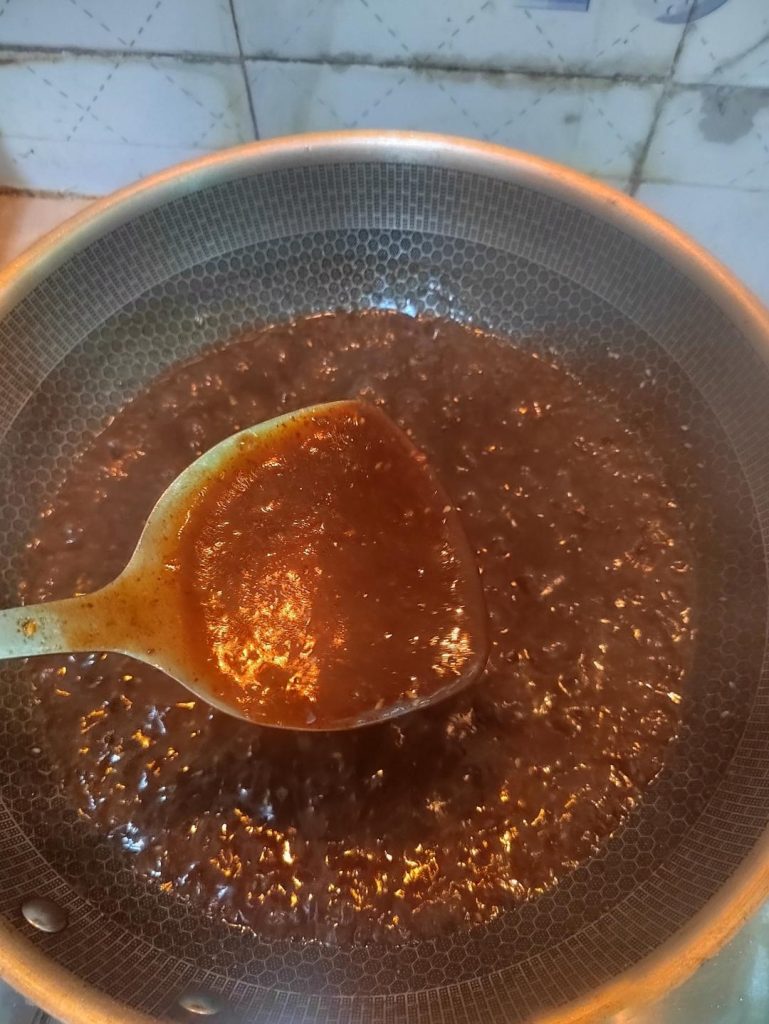
To satisfy his cravings (and ensure I know exactly what’s going into his food), I spent weeks researching and testing to crack the code of that specific taste. Based on professional vendor techniques and my own kitchen experiments, I’ve finally perfected this “Universal Sauce” (万能酱, Wànnéng Jiàng).
Whether you are making Flaky Scallion Pancakes , Jianbing (savory crepes), or just need a dipping sauce for Braised Pork Belly, this sauce is the secret weapon that makes homemade food taste like a professional street stall.
Why This Recipe Works
- Layered Aromatics: Unlike store-bought jarred sauces, this recipe starts by infusing oil with spices, creating a lipophilic base that carries flavor deeper into the taste buds.
- The “Street Food” Profile: By combining sweet bean paste (Tianmianjiang) and hoisin with specific umami enhancers, we replicate that addictive “can’t stop eating” quality found in night markets.
- Versatility: It has the perfect viscosity—thick enough to cling to a Scallion Pancake, but fluid enough to spread easily.
What is “Universal Sauce”?
In the context of Chinese street food, “Wanneng” (万能) means universal or all-purpose. This isn’t a traditional ancient recipe but rather a modern culinary invention used by vendors selling Shouzhua Bing (hand-grabbed pancakes) and Luroujuan (braised meat rolls). It bridges the gap between the salty depth of Northern soybean pastes and the sweet, spiced profiles of Southern barbecue sauces.
Key Ingredients & Substitutions
This recipe uses a long list of ingredients to achieve a complex flavor profile. Don’t be intimidated; I’ve grouped them to make it manageable.
- The Sauce Base:
- Hoisin Sauce & Sweet Bean Sauce (Tianmianjiang): These provide the main body. If you can’t find Tianmianjiang, you can use a bit more Hoisin or Yellow Soybean Paste, though the flavor will change slightly.
- Sesame Paste: Adds a nutty creaminess that rounds out the sharp salty notes. Tahini is a decent substitute, though Chinese sesame paste is roasted darker.
- The Spices:
- Green Sichuan Peppercorn Powder: Provides a subtle citrusy numbing note.
- Cumin & Five Spice: Essential for that “barbecue” aroma.
- The Umami Boosters (The Street Food Secret):
- The original vendor recipe calls for specific industrial enhancers like “3A Spice Powder” (a vanilla-like enhancer) and “Chicken Meat Powder.”
- Home Cook Swap: To keep this accessible and cleaner for home cooking, you can simply use Chicken Bouillon Powder and MSG. If you don’t have “Concentrated Fresh Scent Powder,” omit it; the sauce is still incredible without it.
💡 Note: This recipe aims to replicate the commercial taste, which relies heavily on umami. You can adjust the MSG/Chicken essence levels to your personal preference.
Recipe Notes Before We Begin
- Kitchen Scale is Mandatory: This recipe relies on specific ratios (e.g., 120g Hoisin vs. 35g Sweet Bean Paste). Using cups and spoons is too inaccurate for this type of sauce.
- Safety First: We will be pouring water into a pot that recently contained hot oil. Please read the instructions carefully to avoid splattering.
- Batch Size: This makes a large batch (about 1 liter/quart). It keeps well in the fridge, or you can halve the recipe.
Mise en Place
- Weigh the Spices: Combine the green peppercorn powder, star anise powder, cumin, five-spice, and 13-spice in a small bowl.
- Weigh the Seasonings: In a separate bowl, mix the salt, chicken essence, MSG, sugar, and soy sauces.
- Weigh the Pastes: Combine the sesame paste, sweet bean sauce, oyster sauce, and hoisin sauce in a bowl.
- Prepare Slurry: Mix the cornstarch and 70g water in a small cup until smooth.
How to Make Universal Street Food Sauce
Step 1: Infuse the Oil
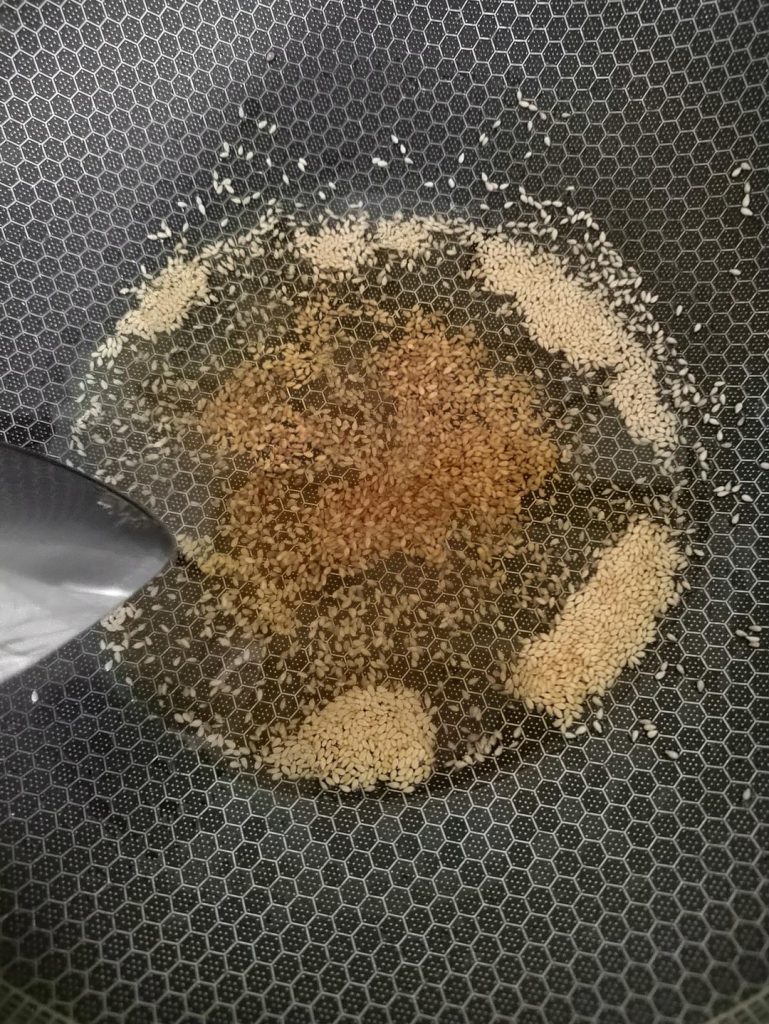
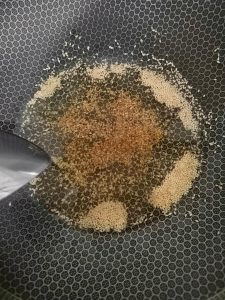
Heat 100g of vegetable oil (salad oil) in a wok or deep saucepan over low heat. Add 12g of white sesame seeds. Fry gently until the seeds turn golden brown. This toasts the seeds and infuses the oil with a nutty aroma.
Step 2: Bloom the Spices
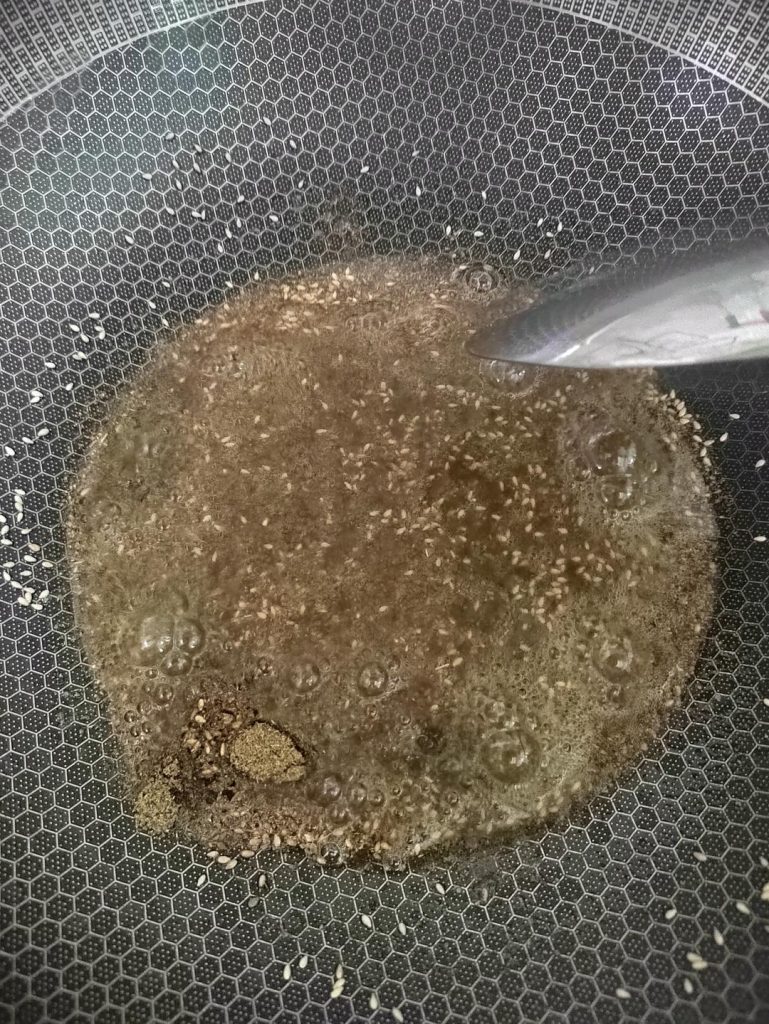
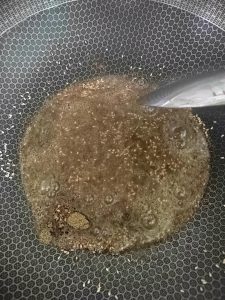
Add your spice blend (green pepper powder, anise powder, cumin, five-spice) to the oil.
Visual Cue: Cook on low heat for about 3 minutes. The oil should bubble gently around the spices, releasing a potent fragrance. Do not burn them!
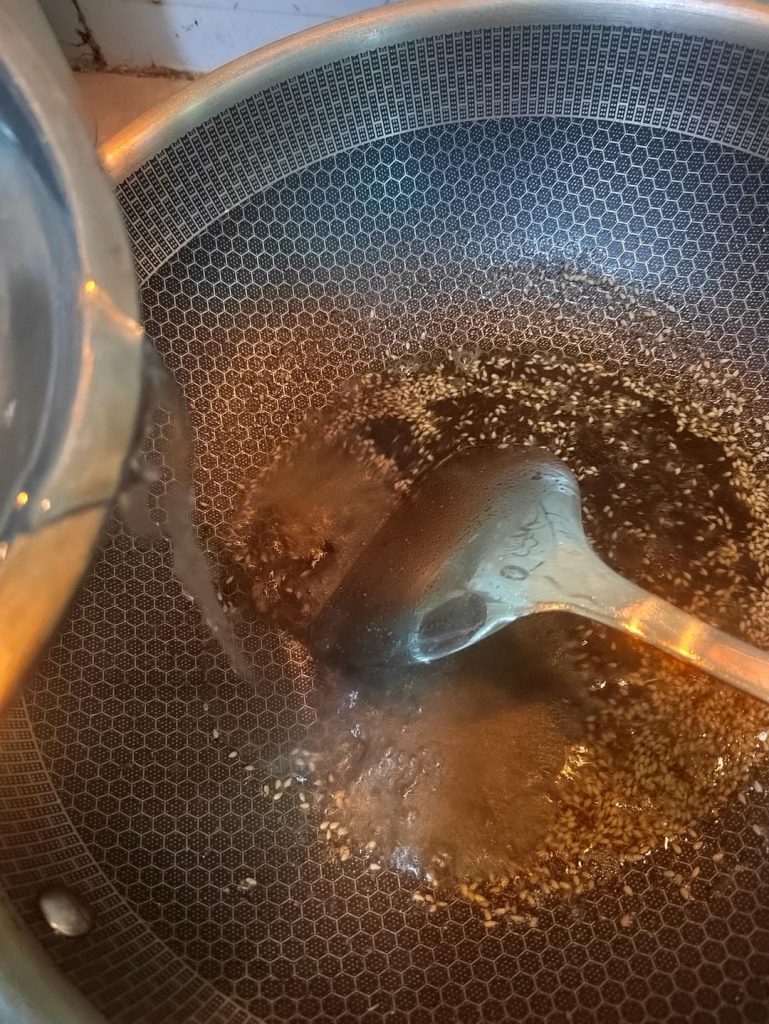
Step 3: Create the Broth (CAUTION)
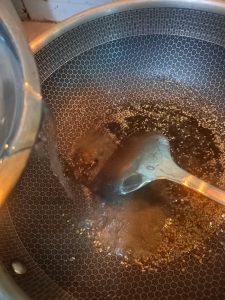
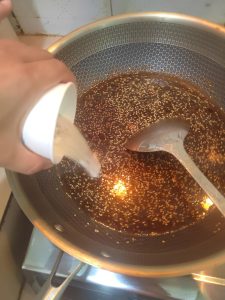
Add 750g of water to the pot.
Safety Tip: Because the oil is hot, pouring water in can cause vigorous sputtering. I recommend removing the pot from the heat for a minute to let the oil cool slightly before adding the water, then returning it to the heat.
Step 4: Add Dry Seasonings & Soy
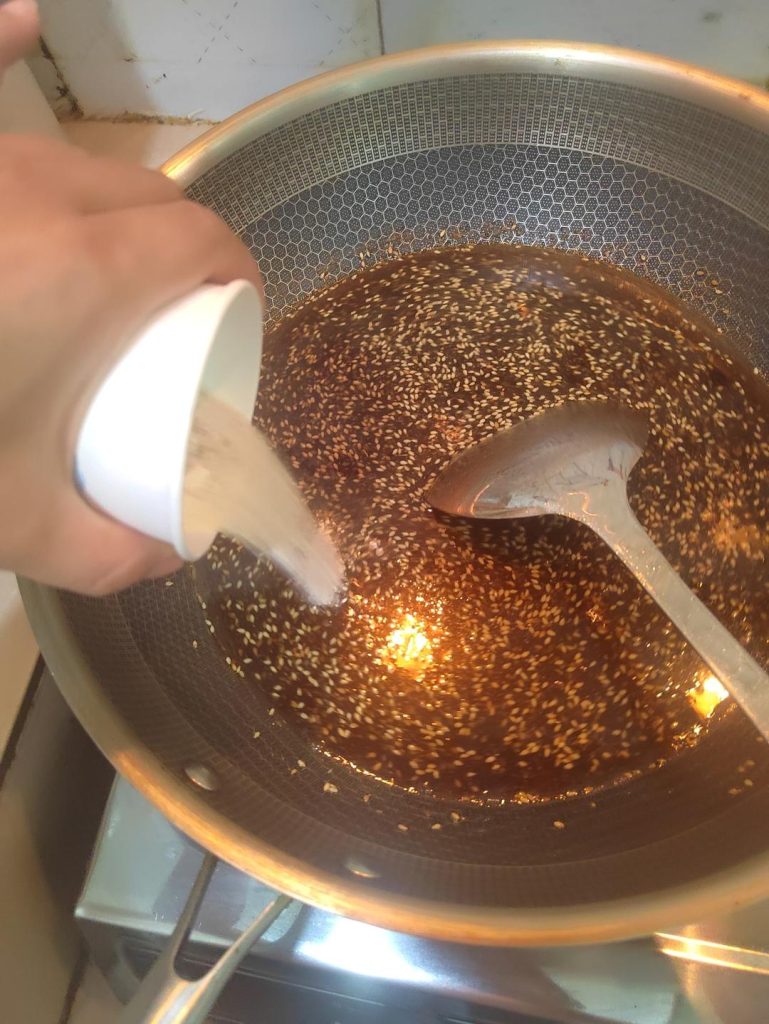
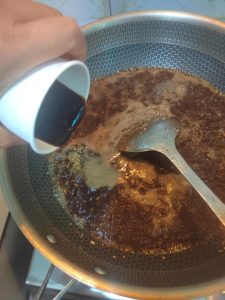
Add the 13-spice, salt, chicken essence, MSG, sugar, optional flavor enhancers (if using), dark mushroom soy sauce, and seasoned soy sauce for seafood. Stir well and bring to a boil.
Step 5: Incorporate the Pastes
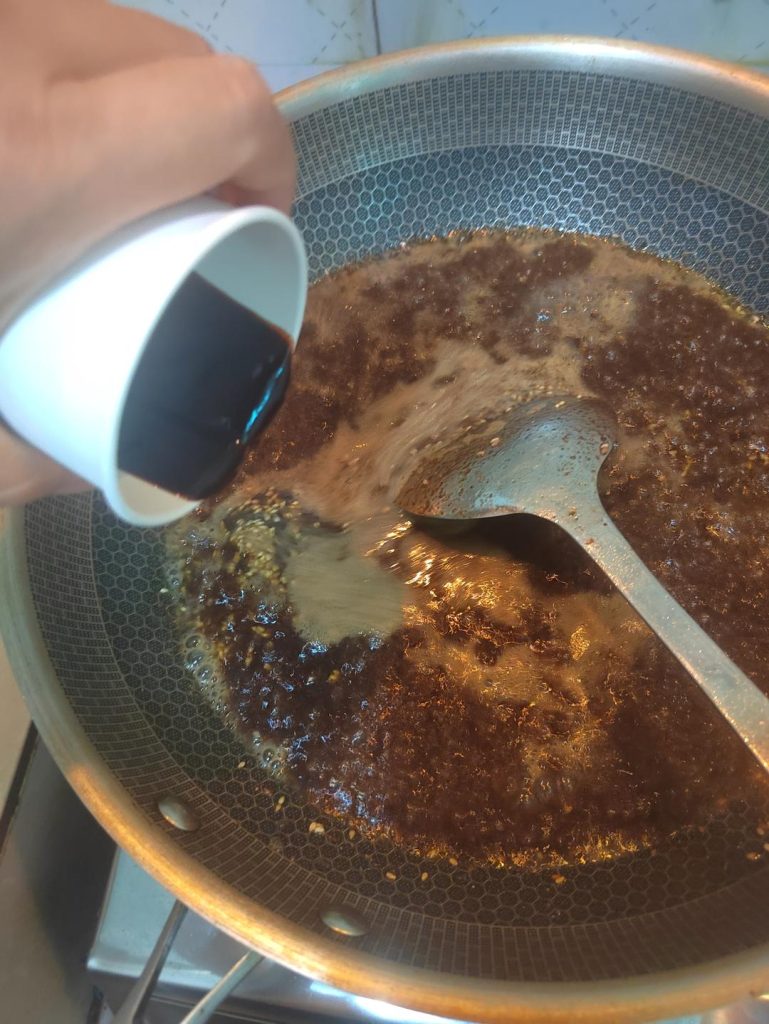
Once the water is boiling, add the heavy pastes: sesame paste, sweet bean sauce, oyster sauce, and hoisin sauce. Stir constantly to ensure the thick pastes dissolve completely into the liquid.
Step 6: Thicken
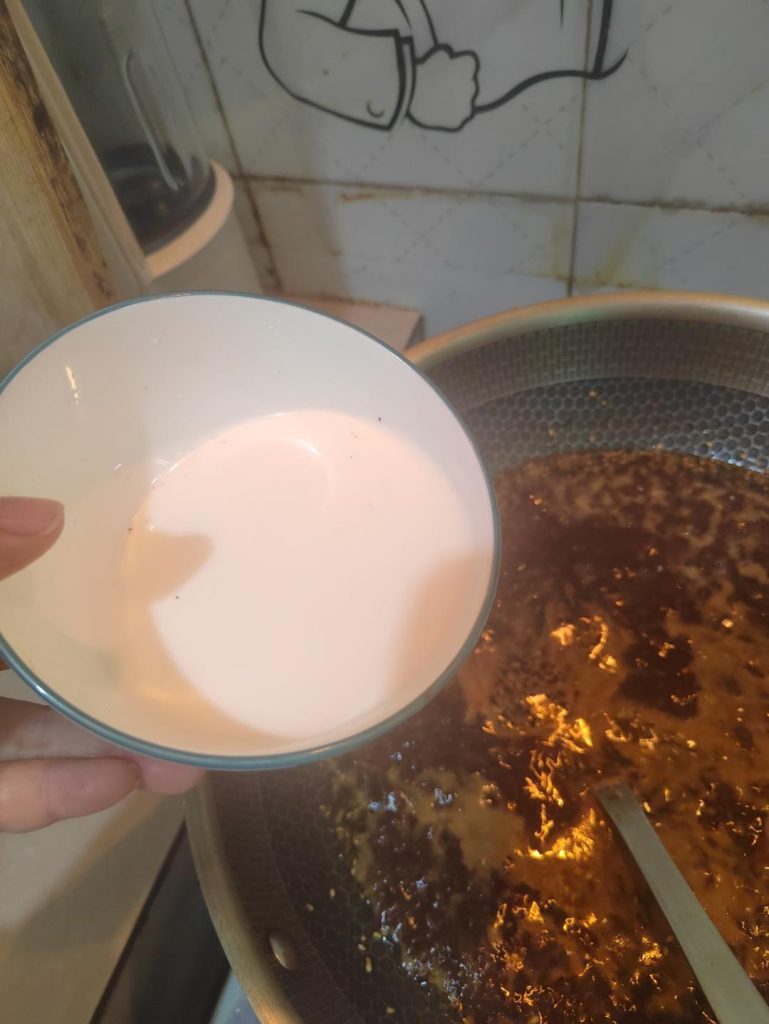
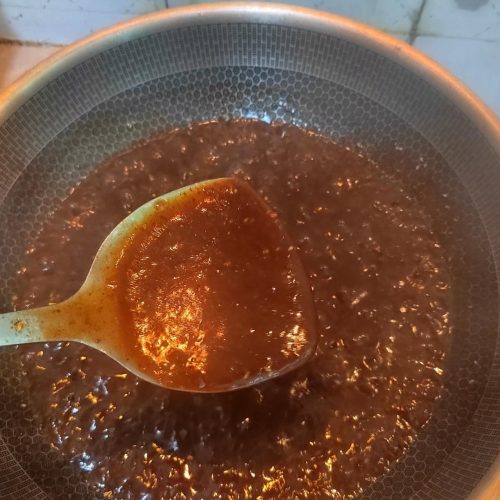
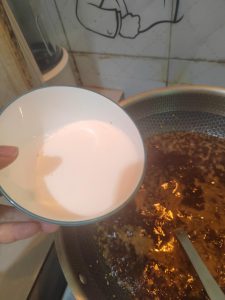
Stir your cornstarch slurry again (starch tends to settle). With the sauce boiling, slowly pour in the slurry while stirring continuously.
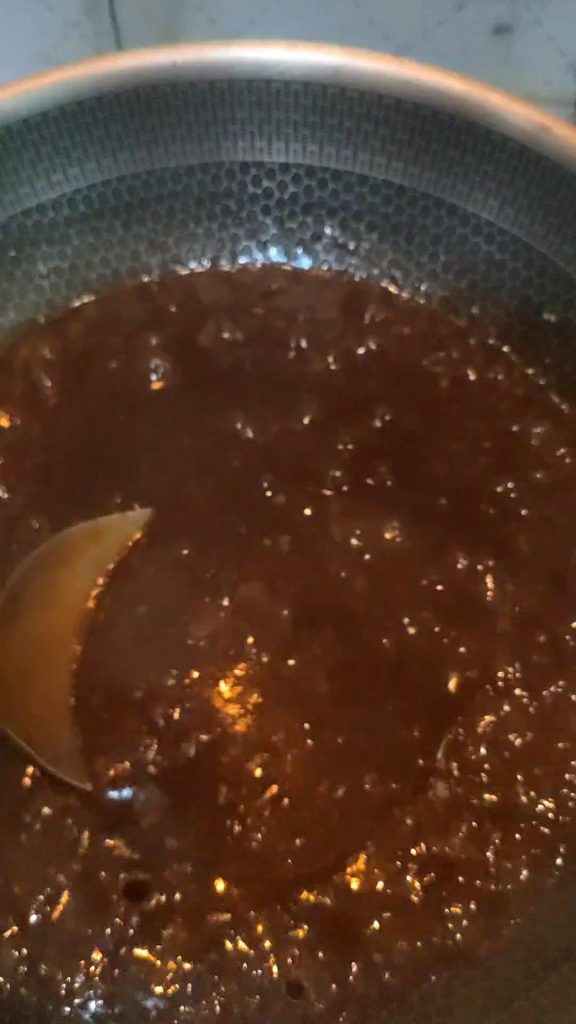
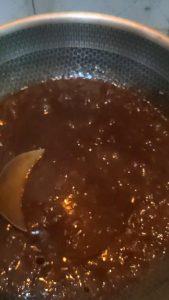
Texture Check: The sauce is ready when it bubbles, becomes glossy, and coats the back of a spoon. It will thicken further as it cools.
Step 7: Cool and Store
Pour the sauce into a heat-proof container. Let it cool completely before sealing.
Our Systematic Test Kitchen Notes
- Texture Control: In our testing, we found that the consistency is key. If it’s too runny, it drips out of the wrap. If it’s too thick, it’s hard to spread. The 40g cornstarch to 70g water ratio works well for a spreadable glaze.
- Flavor Balance: The combination of Cumin and Hoisin might seem odd to Western palates, but it creates a unique “East-meets-West” BBQ profile that defines modern Chinese street food.
Food Safety and Preparation
- Hot Oil Safety: Never pour water into smoking hot oil. Always use a deep pot to contain any potential splatter.
- Storage: Because this sauce contains fresh water and starch (which can spoil), it must be stored in the refrigerator.
- Shelf Life: Keep in an airtight container in the fridge for up to 1 week. Always use a clean spoon to scoop it out to prevent bacterial contamination.
Tips for Success
- Don’t Skip the Cumin: Even if you aren’t a huge fan of cumin, don’t skip it. In this quantity, it provides a background warmth rather than an overpowering taco flavor.
- Commercial vs. Home: If you are making this for a stall (commercial use), you can double or triple the recipe. For home use, this batch lasts a week of breakfasts!
Serving Suggestions
This sauce is incredibly versatile. Here is how we use it:
- Wraps: Brush on a tortilla or pancake, add lettuce, cooked ham or braised pork, and roll it up.
- Dipping: Use it as a dip for Spring Rolls or even fried chicken.
- Stir-fry: Use a tablespoon of this sauce near the end of a vegetable stir-fry for an instant flavor bomb.
FAQ
Q: Can I make this gluten-free? A: Traditional Hoisin and Sweet Bean Sauce contain wheat. You would need to find specific gluten-free alternatives for Hoisin, Oyster sauce, and Soy sauce to make this GF.
Q: Why does my sauce taste powdery? A: This usually happens if the spices weren’t fried long enough in the oil, or if the cornstarch wasn’t cooked through. Make sure the sauce comes to a full boil after adding the starch.
Q: Can I freeze this sauce? A: I do not recommend freezing sauces thickened with cornstarch, as the texture tends to break and become spongy upon thawing.
Authoritative References
- For understanding the role of Tianmianjiang (Sweet Bean Sauce), refer to the Michelin Guide’s overview of Essential Chinese Sauces.
- Food safety guidelines regarding cooling and storing starch-based sauces can be found via the USDA Food Safety and Inspection Service.
Nutrition Information (Estimate)
- Calories: 45 kcal per tbsp
- Sodium: 280 mg
- Sugar: 3 g
- Fat: 2.5 g
- Carbohydrates: 4 g
- Allergens: Soy, Wheat (Gluten), Sesame, Shellfish (Oyster).
(Disclaimer: Nutrition information is calculated using an ingredient database and should be considered an estimate. In cases where multiple ingredient alternatives are given, the first listed is calculated for nutrition. Garnishes and optional ingredients are not included.)
Universal Chinese Street Food Sauce (Wanneng Jiang)

Equipment
- Kitchen Scale Essential for accuracy
- Small Saucepan or Wok
- Whisk
Ingredients
Oil Infusion
- 100 g Vegetable Oil Salad oil
- 12 g White Sesame Seeds
- 6 g Green Sichuan Peppercorn Powder
- 5 g Star Anise Powder
- 7 g Cumin Powder
- 4 g Five Spice Powder
The Liquid Base
- 750 ml Water
Seasonings
- 1 g 13-Spice Powder Shisanxiang
- 8 g Salt
- 9 g Chicken Essence Bouillon powder
- 9 g MSG Optional but recommended for authenticity
- 6 g White Sugar
- 3 g Concentrated Fresh Scent Powder Optional, see notes
- 2 g Chicken Powder Optional
- 1 g 3A Spice Powder Optional
- 14 g Mushroom Dark Soy Sauce
- 16 g Seasoned Soy Sauce for Seafood
The Pastes (Thickeners)
- 16 g Sesame Paste Chinese style
- 35 g Sweet Bean Sauce Tianmianjiang
- 30 g Oyster Sauce
- 120 g Hoisin Sauce Seafood Sauce/Haixianjiang
Thickener
- 40 g Cornstarch
- 70 g Water
Instructions
- Pour 100g oil into a wok or saucepan. Add 12g white sesame seeds. Turn heat to low and fry until seeds are golden.

- Add the green peppercorn powder, star anise powder, cumin, and five-spice powder. Fry on low heat for 3 minutes until aromatic.
- Carefully pour 750ml water into the pot. (Caution: It may sizzle!).
- Add the 13-spice, salt, chicken essence, MSG, sugar, optional powders, dark soy sauce, and seafood soy sauce. Stir to combine.
- Once the water boils, add the sesame paste, sweet bean sauce, oyster sauce, and hoisin sauce. Whisk well to dissolve the pastes.
- Mix 40g cornstarch with 70g water to make a slurry. Pour slowly into the boiling sauce while stirring continuously.
- Cook until the sauce bubbles and thickens (it should coat a spoon). Remove from heat.

- Let cool completely before transferring to a jar. Store in the fridge for up to 1 week.












Leave a Reply