In Yunnan, there is a mushroom so prized that foragers rise before dawn to find it in the mountain pine forests, and a plate of it fried with rice is called, without exaggeration, “the ceiling of fried rice” (炒饭中的天花板). It is ganba jun (干巴菌) — a wild fungus that looks like a dark, weathered coral and smells like nothing else on earth: deeply savory, almost meaty, with a perfume that fills a kitchen the moment it hits hot lard. This recipe, from a Yunnan home cook who clearly lives and breathes the mushroom season, shows exactly why it earns that title.
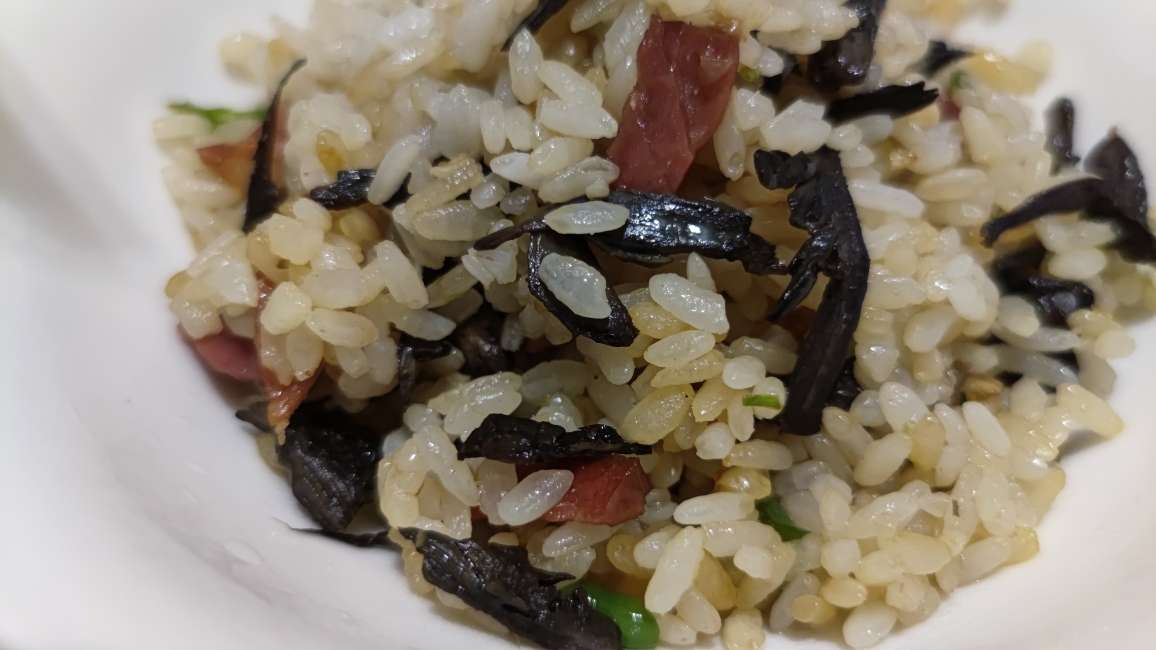
What makes this fried rice special is not technique — the stir-fry itself is simple — but the ingredient. Ganba jun grows wild in the pine and fir forests around Luoci, Yunnan, and arrives at the market with pine needles, soil and forest debris clinging to it. Cleaning it is a patient, hands-on ritual: tear it apart piece by piece, wash it in many changes of water, and dry it. The reward is a mushroom with an intensity that a handful of dried porcini can only dream of. Paired with Xuanwei ham, lard, chilies and cold rice, it is the kind of bowl that makes you understand why Yunnan cooks treat mushrooms like treasure.
What Is Gan Ba Jun Chao Fan (干巴菌炒饭)?
Gan ba jun chao fan is a Yunnan fried rice built around ganba jun (Thelephora gambajun), a wild mushroom that grows on pine and fir forest floors in the highlands of Yunnan. Its name comes from its dry, chewy texture — “gan ba” (干巴) means dry and tough — and its flavor is intense, savory and uniquely perfumed. The mushroom is hand-torn (never cut, to keep its frilly structure), cleaned meticulously, then stir-fried in lard with chilies, garlic and diced Xuanwei ham before cold rice is added. It is a seasonal dish from the mushroom harvest, eaten at home and in restaurants as a celebration of the forest, and the original cook describes the finished bowl with one word: “amazing” (黯然销魂 — soul-destroying in the best way).
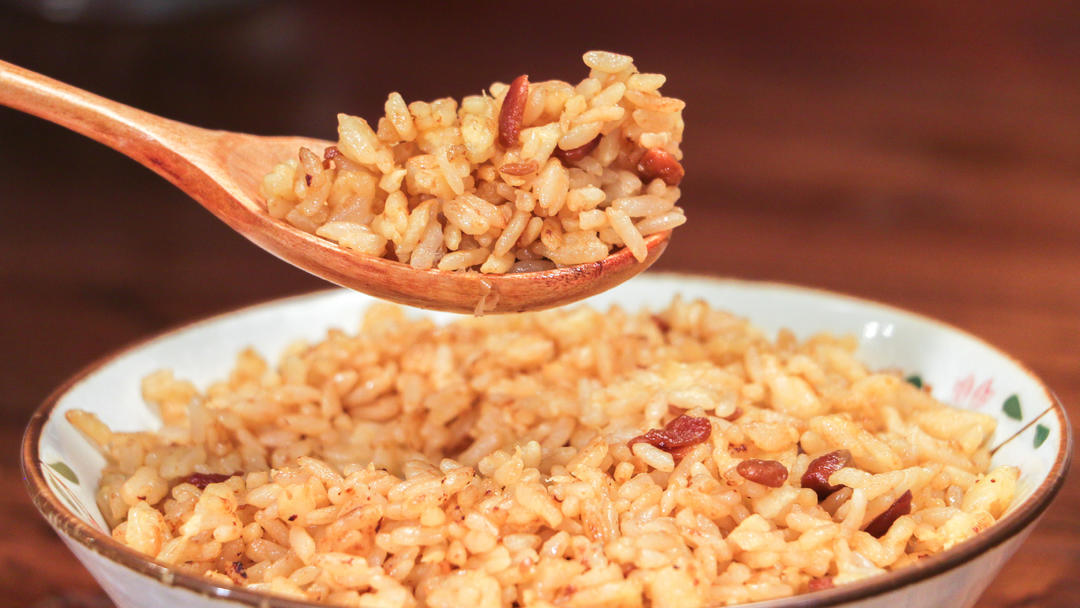
If you love the depth that a great fried rice can reach, my golden egg fried rice with soybean paste is the everyday-brilliant cousin of this wild-mushroom version — same cold-rice technique, completely different flavor engine.
15-Minute Golden Egg Fried Rice with Soybean PasteThis 5-minute Golden Egg Fried Rice uses a classic Chinese technique to coat every grain in egg, creating a fluffy, non-sticky texture. Flavored with savory Yellow Soybean Paste (Huang Dou Jiang), it turns simple pantry staples into an umami-packed meal.Check out this recipe
Why This Recipe Works
- Ganba jun is the star, and the technique protects it: hand-tearing keeps the mushroom’s frilly structure so it fries crisp-edged and chewy; cutting would crush its character.
- Lard is the right fat: rendered pork lard carries the mushroom’s aroma and coats every grain of rice — the original calls for a generous wok-spoon of it.
- Xuanwei ham adds a salt-meat counterpoint: the aged, cured Yunnan ham provides the savory, slightly smoky note that makes the mushroom taste even wilder.
- Cold rice is non-negotiable: day-old refrigerated rice is dry on the surface and separates into individual grains instead of clumping into paste.
- Minimal seasoning trusts the ingredients: salt, a little MSG and a splash of soy along the wok edge — nothing masks the mushroom and ham.
Equipment Needed
- A wok or large skillet
- A fine colander or sieve (for washing the mushrooms)
- A sharp knife (for the chilies, garlic and ham)
- A wok spatula or wooden spoon
Ingredients
- 60 g (about 2 oz) ganba jun (dried or fresh wild ganba mushroom)
- 2 fresh red chilies (the original uses Yunnan “twisted” chilies; any fresh red chili works)
- 3 cloves garlic
- 2 tbsp (30 ml) rendered pork lard (or neutral oil)
- 50 g (about 2 oz) Xuanwei ham, diced (or prosciutto / salted ham)
- Salt, to taste
- 2 g (1/2 tsp) MSG
- 1 tbsp (15 ml) light soy sauce
- 3 cups (450 g / 1 lb) cold cooked rice, ideally day-old
Ingredient Notes
Ganba jun (干巴菌) is the wild Thelephora gambajun mushroom from Yunnan — sold dried or fresh at specialty markets, and online from Yunnan vendors. Fresh is best for this recipe; dried needs a soak in warm water to rehydrate. There is no true substitute — the flavor is unique — but a mix of fresh shiitake and porcini comes closest for a first try. Xuanwei ham (宣威火腿) is China’s famous dry-cured ham from Yunnan, aged and intensely savory; prosciutto or a good salted ham is the Western stand-in. Lard is the traditional fat and really is better here than oil; if you render none at home, any neutral oil works, though the flavor drops a notch. The chilies — the original uses Yunnan “twisted chilies” (扭扭辣) and says only a genuinely spicy chili is worthy of ganba jun’s fragrance; adjust to your heat tolerance.
Prep & Mise en Place
Most of this dish’s “work” is in the mushroom. If using fresh ganba jun, expect to spend time on it: tear it into small, frilly pieces by hand — the original is explicit that you pick it apart with your fingers, not cut it — then wash it gently in many changes of water, rubbing the pieces with your hands until the water runs clear with no grit at the bottom. The original cook describes washing it “about several rounds” until the water is clear, then draining it well in a colander. Have the chilies sliced fine, the garlic minced finer, the ham diced small, and the cold rice broken up before the wok heats.
Cooking Process
Step 1 — Meet the Ganba Jun
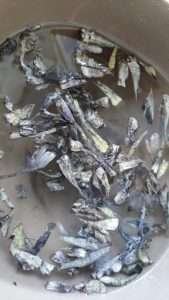
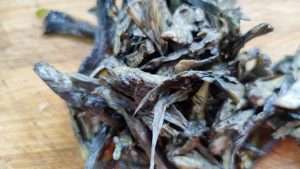
Ganba jun grows on pine-needle forest floors in Yunnan’s highlands, and even cleaned it arrives with the forest still attached — pine needles, soil, fern and moss debris. This is the sign of a genuinely wild mushroom, not a defect.
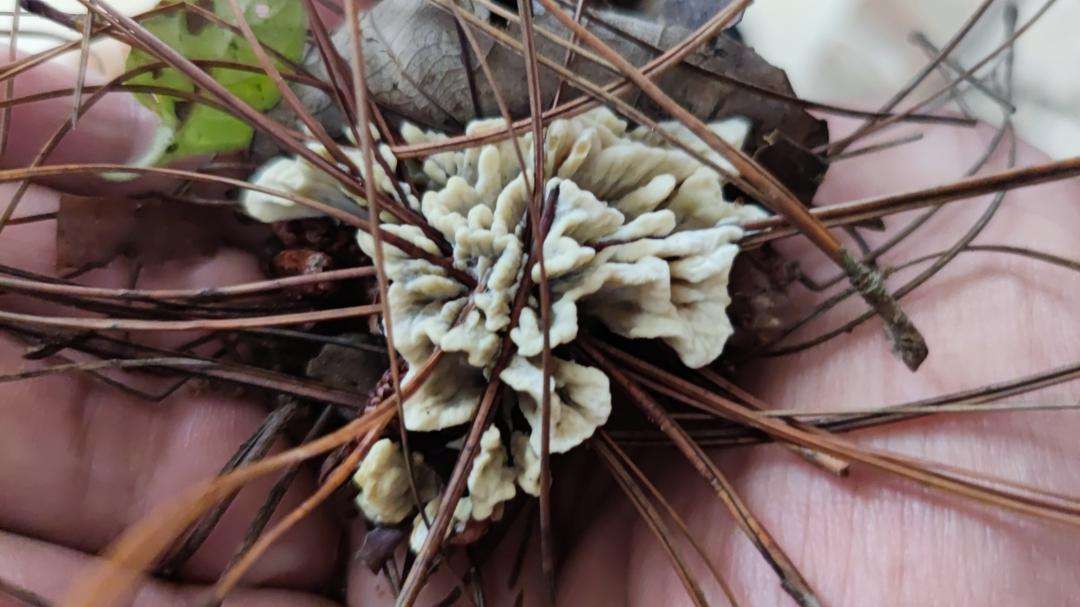
The original cook’s pages read like a love letter to the forager’s world: the farmers pick these mushrooms in the dark of the mountain morning, and knowing how to choose them is a skill passed down. Wild mushrooms are mycelial wonders — their intense aroma comes from volatile compounds that develop as they fruit on the forest floor.
Step 2 — Tear the Mushroom by Hand
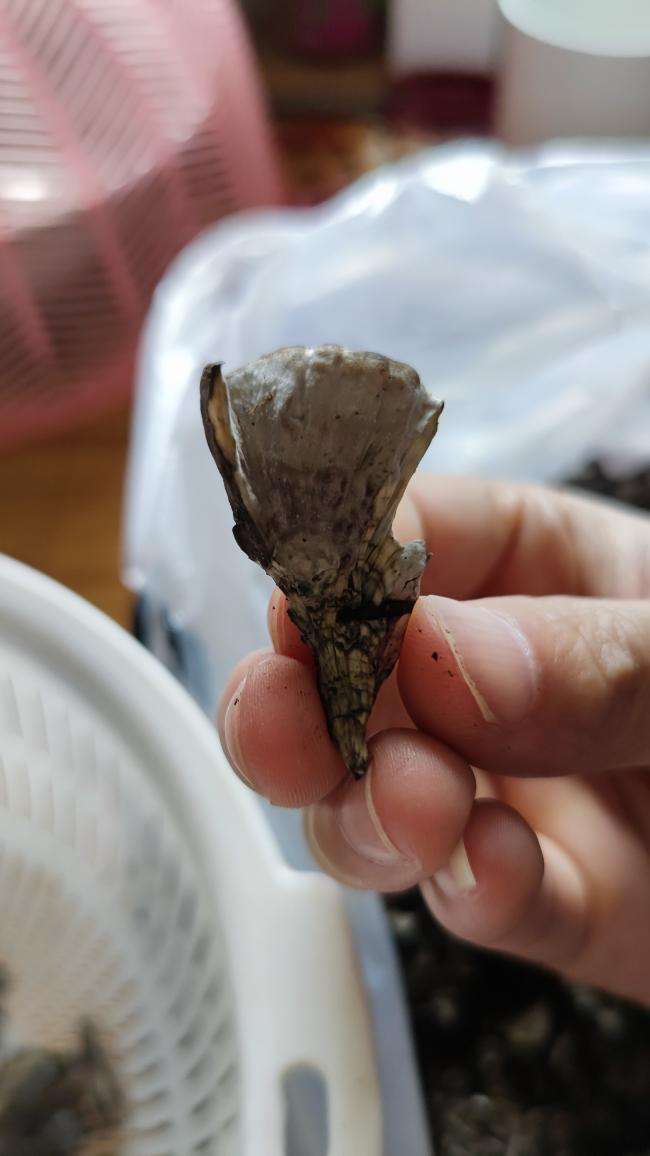
Tear the ganba jun into small, frilly pieces by hand — never cut it. Where there is stuck-on soil or forest debris, trim it away with a knife. The hand-tearing keeps the mushroom’s natural structure so it fries up crisp-edged.
Step 3 — Wash in Many Changes of Water
Put the torn pieces in a bowl of water and rub them gently with your hands, then drain in a colander. Repeat several times — until the water runs clear with no sand settling at the bottom. This is the patience step; it is non-negotiable.
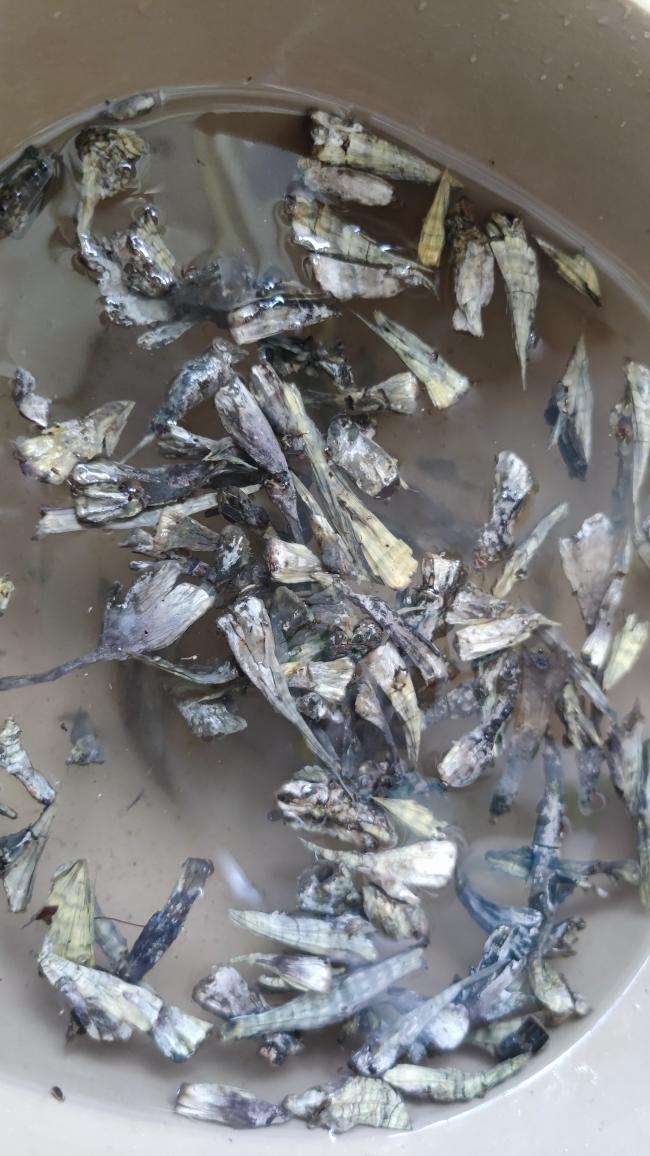
Step 4 — Drain the Cleaned Mushroom
Lift the washed mushroom into a colander and let it drain well — excess water will make the wok spit and steam instead of fry.
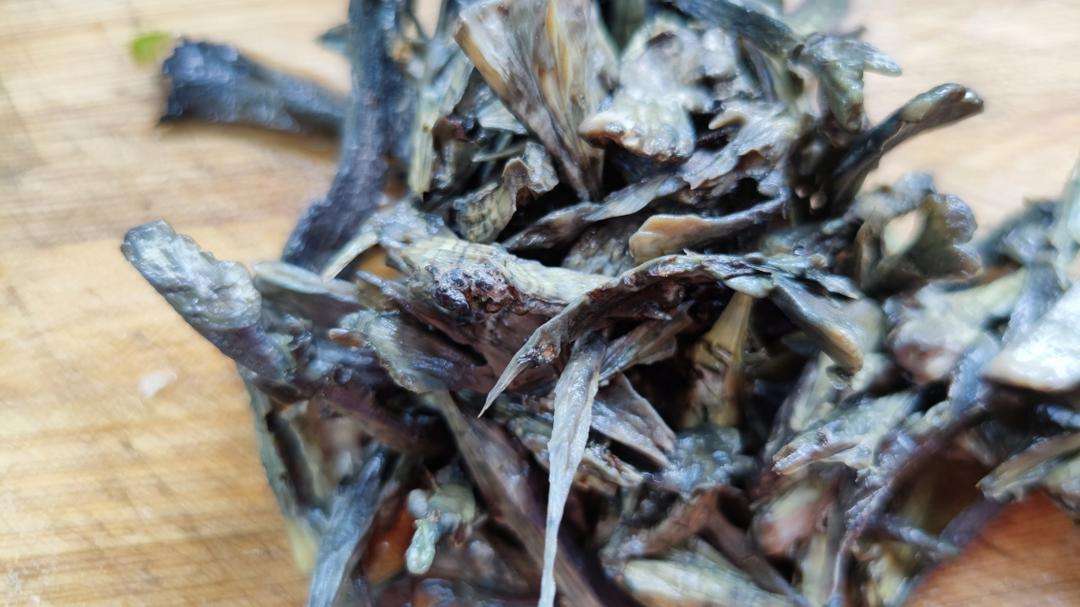
Step 5 — Prep the Simple Aromatics
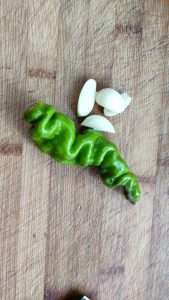
Fried rice needs few aromatics — the original says less is more here. Slice the chilies fine and mince the garlic even finer.
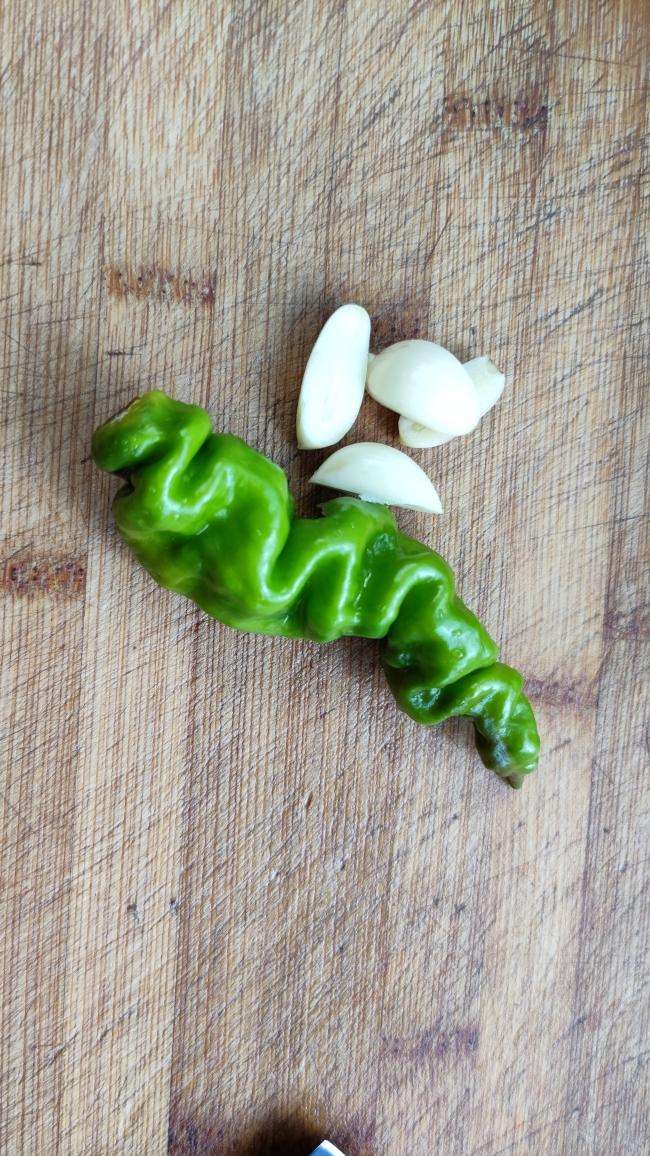
Step 6 — Dice the Xuanwei Ham
Dice the Xuanwei ham into small pieces, about the size of a pea.
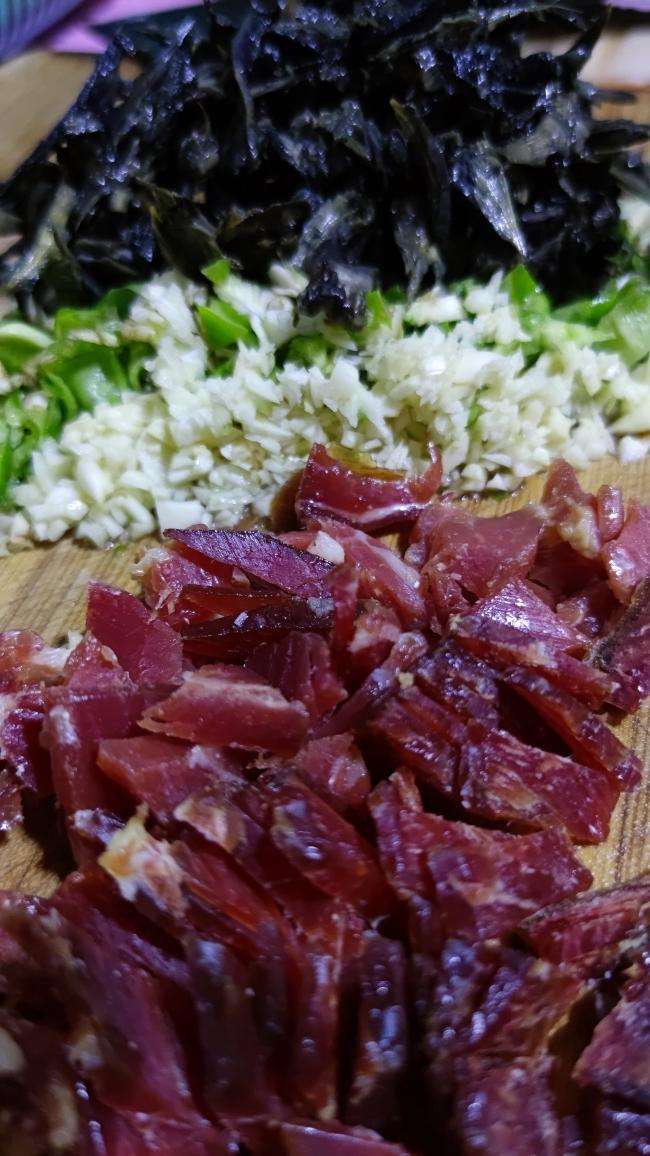
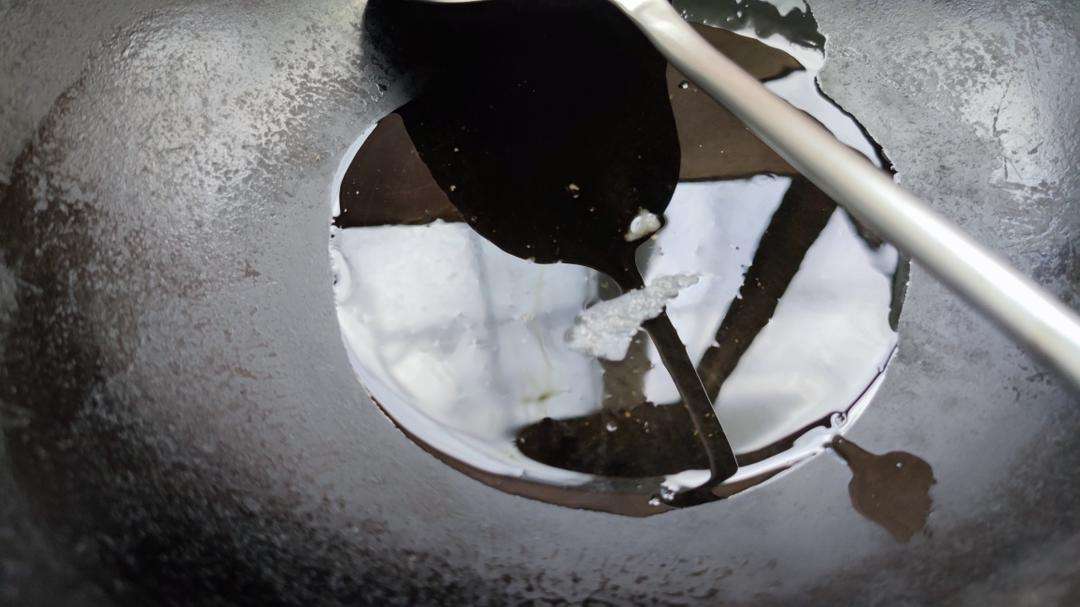
Step 7 — Heat the Lard
Add the lard to a wok and heat it over high heat until it shimmers.
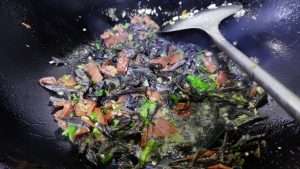
Step 8 — Explode the Mushroom with Chilies and Garlic
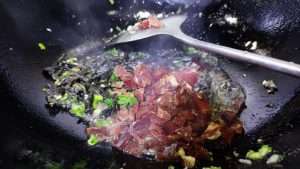
Add the chilies, garlic and ganba jun to the hot lard and stir-fry hard to combine. Season with salt — the original notes to use less salt if the ham is salty — and keep stir-frying until the mushroom smells intensely fragrant.
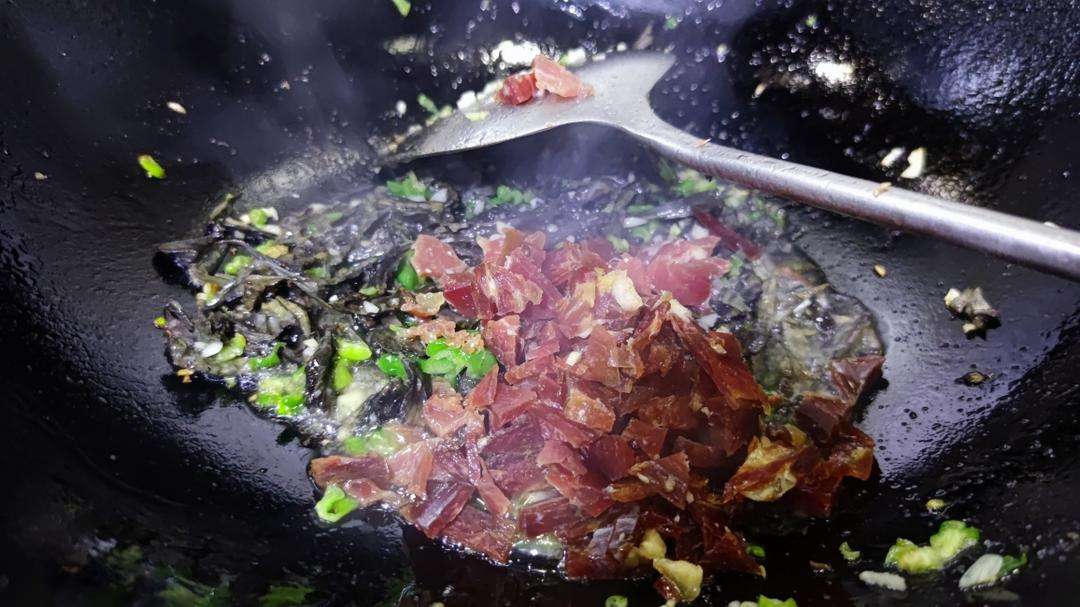
High heat and lard are the mushroom’s best friend: the fat conducts intense heat into the torn pieces, driving off moisture and concentrating the mushroom’s volatile aroma compounds — the same reason mushrooms are seared hard rather than steamed. The torn, frilly structure maximizes surface area, so every edge crisps.
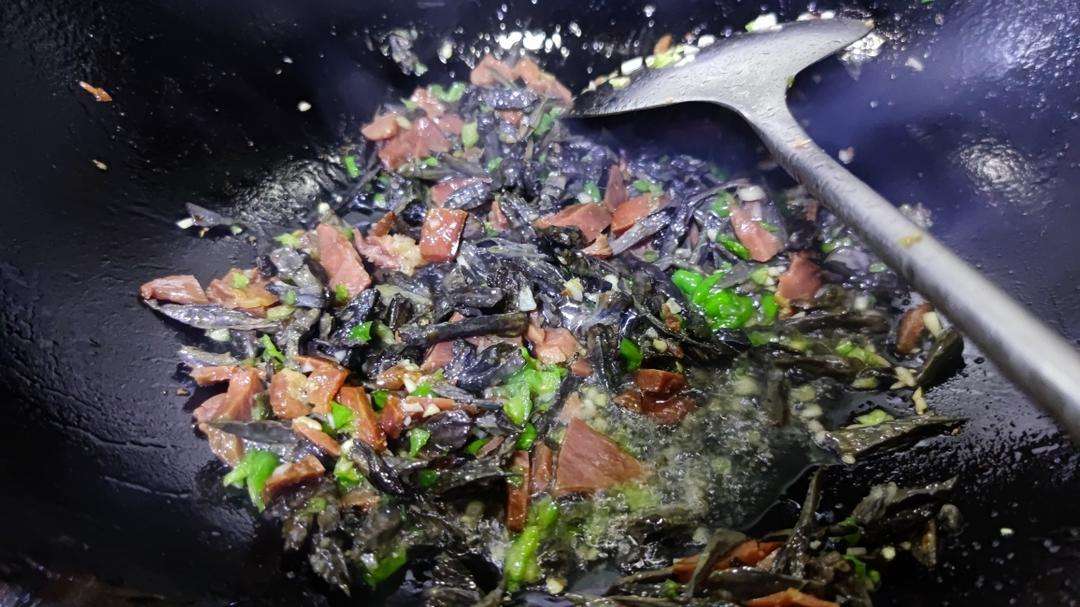
Step 9 — Add the Ham and Fry Until Fragrant
Add the diced Xuanwei ham and stir-fry until it is heated through and its own savory aroma blooms, about 1 minute.
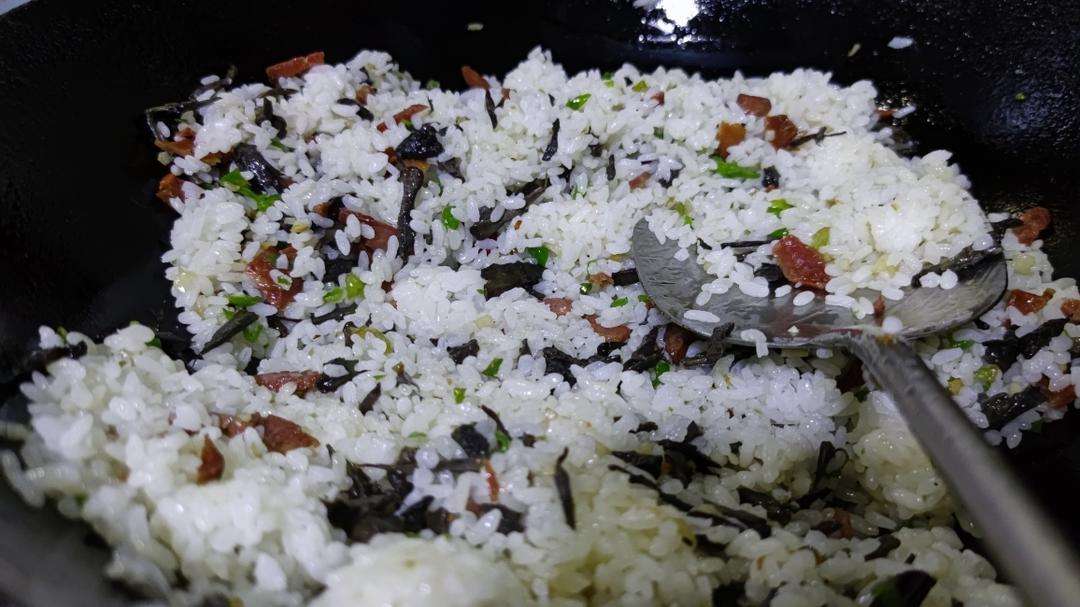
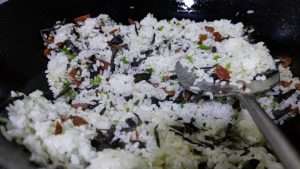
Step 10 — Add the Cold Rice and MSG
Add the cold rice and sprinkle over the MSG. Toss and stir, breaking up any clumps, until every grain is coated in the lard and mushroom flavor.
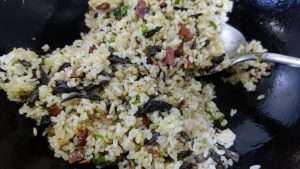
Step 11 — Splash Soy Along the Wok Edge
Drizzle the light soy sauce along the edge of the wok — the hot edge cooks it instantly, releasing a toasty aroma into the rice — and toss to combine.
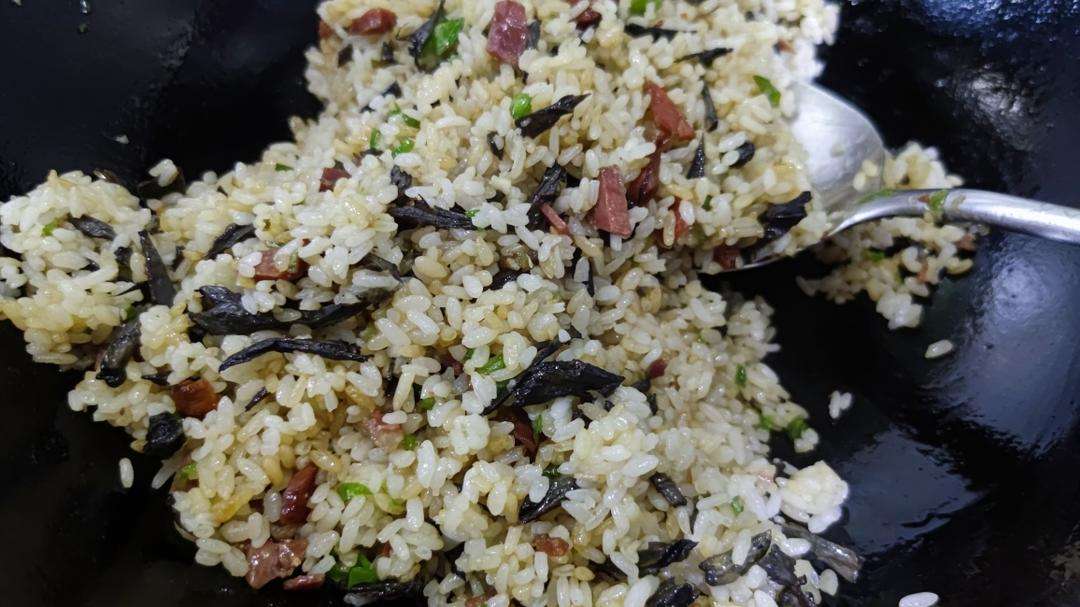
Soy “along the wok edge” is a classic wok technique: the sauce hits the screaming-hot metal and caramelizes instantly instead of steaming the rice. The brief, focused heat transforms the soy’s sugars — that toasted, slightly smoky note is why the rice tastes wok-fried rather than just soy-sauced.
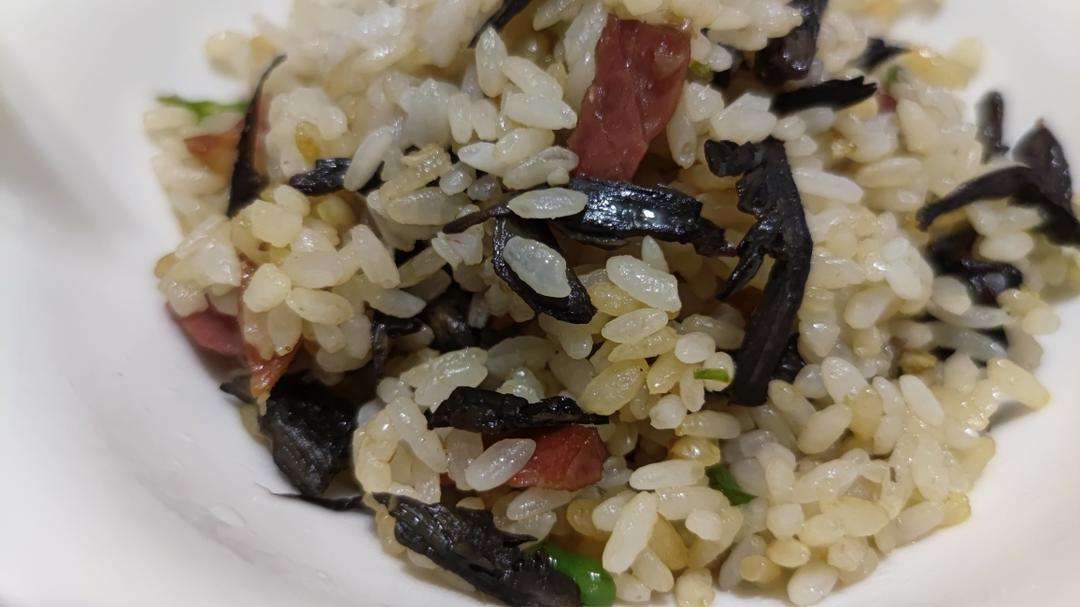
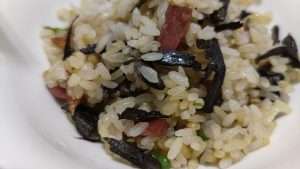
Step 12 — Plate the Bowl
Turn the fried rice out onto plates or into a bowl and eat it immediately. Big pieces of ham, plenty of ganba jun, and every mouthful “soul-destroying” in the best way.
Common Mistakes When Making Gan Ba Jun Chao Fan
1. Grit in every bite. Cause: washing the mushroom too quickly. Fix: wash in many changes of water, rubbing and draining until no sand settles at the bottom — this is the step that cannot be rushed.
2. The mushroom steams instead of crisping. Cause: leftover water on the mushroom, or heat too low. Fix: drain the washed mushroom well and fry over high heat in plenty of lard.
3. The rice clumps. Cause: warm or freshly cooked rice. Fix: use cold, day-old rice, and break it up before it goes in the wok.
4. The dish is too salty. Cause: salting without accounting for the ham. Fix: the original warns — reduce the salt when the Xuanwei ham is salty, and taste before adding more.
5. The garlic burns. Cause: adding it too early or chopping it too large. Fix: mince the garlic very fine and stir it in with the chilies right before the mushroom, keeping everything moving over high heat.
Variations
The formula — wild mushroom + cured ham + lard + cold rice — adapts to whatever your market offers. Substitute other fragrant wild mushrooms (porcini, matsutake, or a fresh shiitake-porcini mix) for ganba jun when it is out of season. Swap Xuanwei ham for prosciutto or Chinese lap cheong (cured sausage) for a different salt-meat note. For a vegetarian version, drop the ham and lard for mushroom stock and a good oil — the mushroom still carries the dish. And if you want the same wok technique with a more accessible ingredient, my golden egg fried rice with lettuce and shiitake and eggplant fried rice are the everyday siblings of this bowl.
Frequently Asked Questions
What does ganba jun taste like? It is intensely savory and meaty with a unique, almost smoky perfume — the original cook describes the finished rice as “soul-destroying” (黯然销魂). Dried ganba jun is milder but still unmistakable.
Where can I buy ganba jun? Specialty Asian markets and Yunnan-focused online vendors sell it dried (and in season, fresh). Dried ganba jun needs a warm-water soak to rehydrate before washing.
Can I use other mushrooms? Yes — the flavor will not be identical, but a mix of fresh shiitake and porcini, or any fragrant wild mushroom, follows the same technique beautifully.
Is MSG necessary? The original uses 2 g and it rounds out the savory depth; if you prefer to skip it, add a little more soy or a pinch of sugar instead.
Do I really need day-old rice? For the best result, yes — cold rice from the refrigerator is dry enough to separate into individual grains. Fresh rice can work if you spread it on a tray to cool and dry for 30 minutes first.
How to Serve
Serve the fried rice hot, straight from the wok, with a bowl of clear soup on the side if you like. It is a complete meal on its own — the mushroom and ham carry it. For a fried-rice exploration, my Yangzhou fried rice is the classic banquet version and broccoli egg fried rice the vegetable weeknight bowl. If you want to understand the science of a perfect fried rice, my guide to rubbery eggs in fried rice explains the common failure, and oyakodon shows the egg-and-rice idea from the Japanese side. For rice-bowl comfort with mushrooms, my salmon mushroom rice and minced pork mushroom rice bowl are the steamed cousins of this wok bowl.
Storage & Reheat
Fried rice keeps refrigerated for up to 3 days. Reheat in a hot wok with a splash of water (to re-steam the grains) or in a covered pan over medium heat, stirring until piping hot. It also freezes well for up to a month — thaw in the refrigerator and re-fry. Reheat to an internal temperature of 165°F (74°C), and never leave cooked rice at room temperature for more than 2 hours.
Allergen Notice
This recipe contains soy (soy sauce) and gluten (soy sauce). It contains no eggs, nuts, dairy or shellfish as written. Use gluten-free tamari for a gluten-free version.
Nutrition Disclaimer
Nutrition information is calculated using an ingredient database and should be considered an estimate. In cases where multiple ingredient alternatives are given, the first listed is calculated for nutrition. Garnishes and optional ingredients are not included. Nutrition information is an estimate and provided for informational purposes only.
About the Author & Recipe Development
I’m Lin, a chef who spent a decade in Chinese restaurant kitchens before writing recipes for home cooks. Mushroom season in Yunnan is a legend among Chinese chefs — the market stalls piled with wild fungi, the air full of their scent — and ganba jun is the one every chef mentions first. When I tested this recipe, I followed the original cook’s page-long love letter to the forager’s ritual: hand-tearing the mushroom, washing it through five changes of water until not a grain of sand remained, and frying it in a wok-spoon of lard. The moment the mushroom hit the hot fat, the kitchen smelled like a pine forest after rain — that is the only way I can describe it. Served with the Xuanwei ham and cold rice, it was, without hyperbole, the best fried rice I have eaten.
Authoritative References
For safe handling of cooked rice, I follow the USDA guidance on rice safety, which emphasizes refrigerating cooked rice within 2 hours. For wild mushroom identification, always buy from a trusted source — the USDA notes that wild mushrooms must be correctly identified, which is exactly why this recipe relies on the market-grade, forager-picked ganba jun of Yunnan.
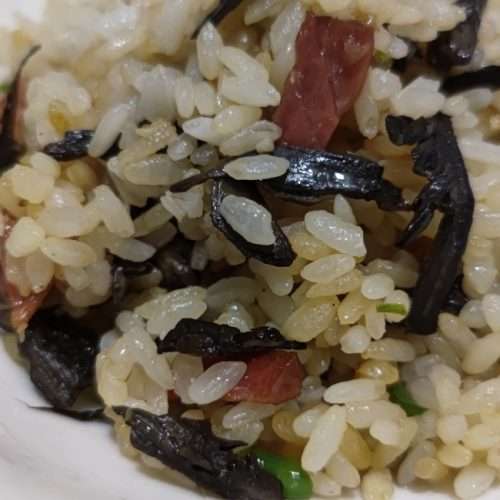
Yunnan Ganba Jun Fried Rice with Ham (Gan Ba Jun Chao Fan)

Equipment
- Wok or large skillet
- Fine Colander
Ingredients
For the Fried Rice
- 60 g ganba jun wild ganba mushroom, hand-torn and washed
- 2 fresh red chilies Yunnan twisted chilies preferred
- 3 cloves garlic minced fine
- 2 tbsp rendered pork lard or neutral oil
- 50 g Xuanwei ham diced small; or prosciutto
- salt to taste; less if the ham is salty
- 2 g MSG about 1/2 tsp
- 1 tbsp light soy sauce splashed along the wok edge
- 450 g cold cooked rice day-old, about 3 cups
Instructions
- Tear the ganba jun into small frilly pieces by hand, trimming away stuck-on soil with a knife.

- Wash the torn pieces in many changes of water, rubbing gently and draining, until the water runs clear with no sand.
- Drain the washed mushroom well in a colander.

- Slice the chilies fine and mince the garlic finer. Dice the Xuanwei ham into small pieces.
- Heat the lard in a wok over high heat until it shimmers.
- Add the chilies, garlic and ganba jun and stir-fry hard, seasoning with salt. Fry until the mushroom is intensely fragrant.
- Add the Xuanwei ham and stir-fry until its aroma blooms, about 1 minute.
- Add the cold rice and MSG, tossing until every grain is coated and separate.
- Drizzle the soy sauce along the hot wok edge and toss to combine.
- Plate immediately and eat hot.




Leave a Reply