I still remember the first head chef in Guangzhou who stopped me before I poured a single egg into the pot. “Peel the tomatoes first,” she said, and for a moment I thought she was joking. I had grown up watching my mother make tomato egg drop soup — 西红柿鸡蛋汤, xi hong shi ji dan tang — without ever peeling a tomato. But I peeled that first tomato anyway, and the bowl that followed was brighter, cleaner, and deeper-tasting than any version I had made before. That is the whole story of this recipe: it is not about fancy ingredients, it is about six small habits that separate a homey soup from a restaurant-quality one.
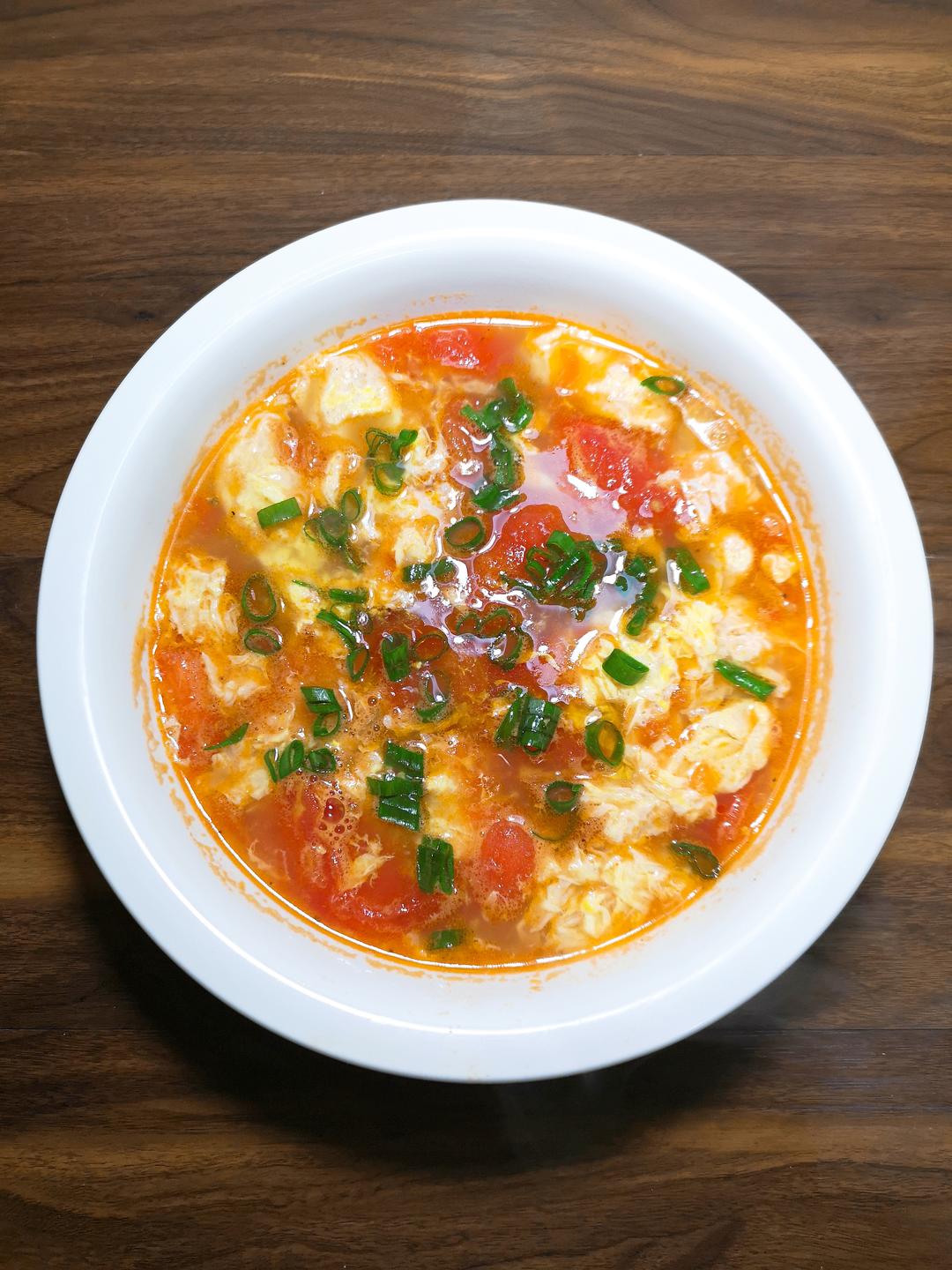
Every Chinese family has its own xi hong shi ji dan tang, and every family insists theirs is the best. The dish is simplicity itself — ripe tomatoes, eggs, a little ginger, a handful of scallions, and water — yet the gap between a homey bowl and the one you remember from a restaurant is enormous. After a decade of professional cooking, I have narrowed that gap to six moves: peel the tomatoes, cut them small, sauté them until they release their juice, beat the eggs with a spoonful of cooking wine, pour the egg in a thin stream along the edge of the pot, and turn off the heat on the count of ten. None of them costs more than ten seconds. Together they make this the soup I reach for when I want comfort that still tastes like a restaurant made it.
What Is Tomato Egg Drop Soup (Xi Hong Shi Ji Dan Tang)?
Xi hong shi ji dan tang (西红柿鸡蛋汤) is a Chinese soup made from ripe tomatoes simmered into a bright, tangy broth, with beaten eggs poured in at the end to form soft, silky ribbons. It is quite possibly the most-loved soup in China — the bowl that appears on family dinner tables, in canteens, and at hotel buffets across the country. Every child in China grows up with it, and every adult has an opinion about it: thicker or thinner, sweeter or tangier, with or without ginger.
What makes the dish remarkable is how much flavor it gets from so little. There is no stock, no bones, no long simmering — just ripe tomatoes, water, and eggs. The whole trick is in the handling, which is why I have collected the six habits in this post. They are the difference between a watery tomato soup with egg in it and the glossy, layered, faintly sweet-and-sour broth that the restaurant version delivers.
If you love this soup, my full step-by-step write-up of the same dish — tomato egg drop soup (xi hong shi ji dan tang) — is the version I keep coming back to, with every tip spelled out so you never have to guess.
1Tomato Egg Drop Soup (Xi Hong Shi Ji Dan Tang)A silky, savory, and tangy authentic Chinese tomato egg drop soup. Features tender egg ribbons and a rich tomato broth created by a specific frying technique.Check out this recipe

Why This Recipe Works
- Peeled tomatoes taste like more tomato: the skin is a thin waxy film that dulls both flavor and texture. Blanching for five seconds loosens it without cooking the flesh, so you keep every drop of brightness.
- Small pieces break down into a real broth: cutting the peeled tomatoes small means they collapse into the water in minutes, releasing juice, pulp and all, instead of floating around as pale wedges.
- Sautéing concentrates the umami: a minute of stir-frying the tomatoes in oil deepens their natural glutamates and sugars — the single biggest flavor upgrade in the whole recipe.
- Cooking wine makes the egg ribbons tender and fragrant: a spoonful of wine beaten into the eggs cuts the eggy aroma and keeps the ribbons soft instead of rubbery.
- The count-to-ten heat cutoff is non-negotiable: eggs set in seconds in simmering water; over-boiling turns silky ribbons into tough clumps.
- One pot, no stock needed, twenty minutes: the tomatoes make their own broth. No bones, no bouillon, no extra pans.
Equipment Needed
- A medium pot (about 2.5 to 3 L / 2.5 to 3 qt) with a lid
- A small pot or kettle for boiling water for the blanch
- A slotted spoon or spider for moving the tomatoes
- A mixing bowl and a fork or chopsticks for beating the eggs
- A chef’s knife and cutting board
- A ladle for serving
Ingredients
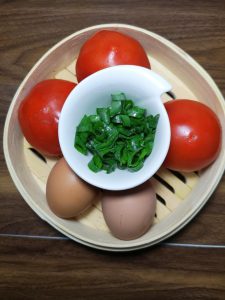
- 3 small ripe tomatoes (about 350 g / 12 oz total)
- 2 large eggs (about 100 g)
- 1 tbsp cooking wine (15 ml), for the eggs
- 3 slices fresh ginger (about 10 g)
- 2 tbsp sliced scallions (about 15 g), white and green parts separated
- 1 tsp salt (6 g), or to taste
- 1 tbsp neutral oil (15 ml), such as peanut or canola
- 3 cups water (750 ml), plus extra for the blanch
Ingredient Notes
Ripe tomatoes are everything. The entire flavor of this soup comes from the tomatoes, so pick ones that are soft, deeply red, and heavy for their size — the kind that smells like tomato before you cut it. Underripe, pale tomatoes will give you a sour, watery broth no matter how well you follow the steps. If ripe tomatoes are hard to find, an extra pinch of sugar will help, but nothing replaces a truly ripe fruit.
The cooking wine in the eggs is not optional — it is the secret. Any Chinese cooking wine works; Shaoxing wine is the classic, and a dry sherry is a fine substitute. The wine does two jobs: its alcohol evaporates quickly in the hot pot, carrying away the raw eggy smell, and its subtle fermented sweetness makes the egg ribbons taste rounder and more fragrant. If you skip it, the soup is still good — but you will notice the difference on the very first sip.
Prep & Mise en Place
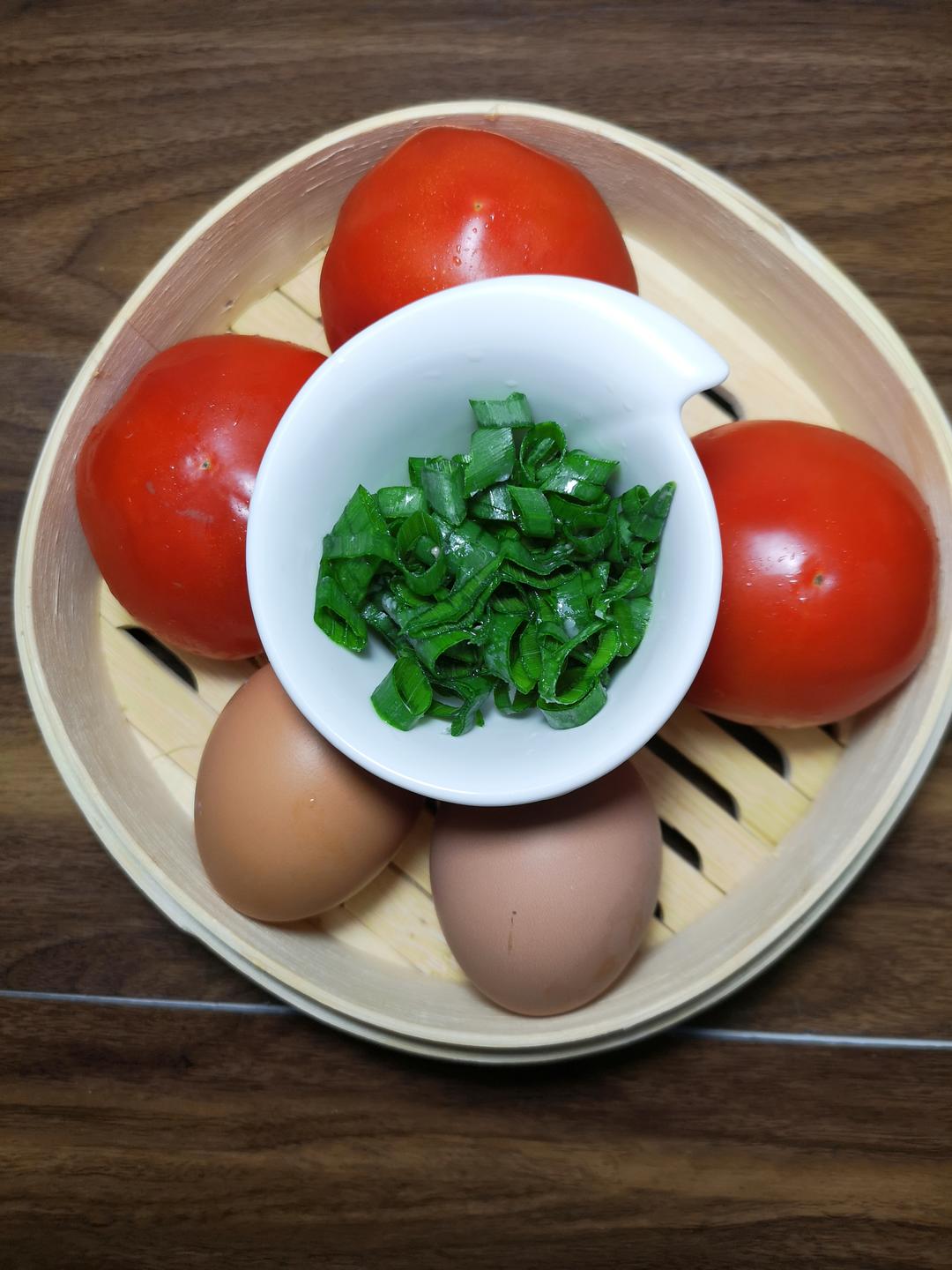
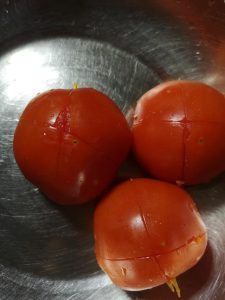
Tomato egg drop soup cooks in minutes, so everything needs to be ready before the water boils. Score the tomatoes first: use the tip of a knife to cut a shallow cross into the skin at the bottom of each one. Get a small pot of water boiling while you slice the ginger into thin coins and separate the scallion whites from the greens — the whites go in with the ginger for the sauté, the greens are saved to finish the bowl. Crack the eggs into a bowl, add the tablespoon of cooking wine, and beat until the yolks and whites are fully combined and slightly foamy. When everything is measured and waiting, you can cook without rushing, and the whole soup comes together in one continuous flow.
Cooking Process
Step 1 — Prep the Ingredients
Set up your mise en place: slice the ginger, separate the scallion whites and greens, beat the eggs with a spoonful of cooking wine, and measure the salt. Score the tomatoes with a cross on the bottom of each one and have a pot of boiling water ready on the stove.
Step 2 — Score, Blanch and Peel the Tomatoes
Drop the scored tomatoes into the boiling water for exactly 5 seconds. The skin will loosen at the cuts and pull away from the flesh almost on its own. Lift them out with a slotted spoon, let them cool for a moment, then peel — the skin comes off in a few quick strips. Never skip this step; the skin dulls the tomato flavor and leaves chewy shreds floating in an otherwise silky soup.
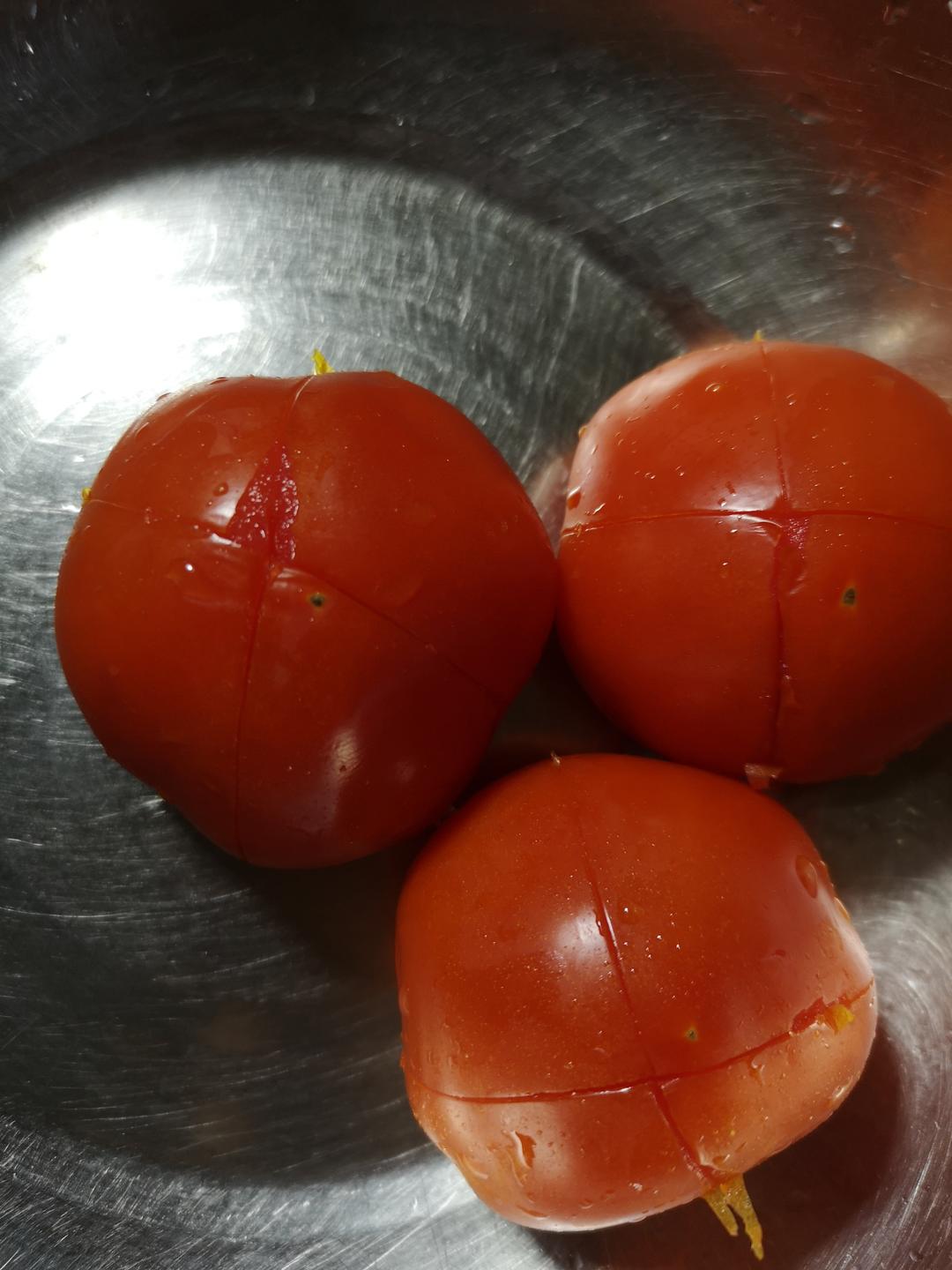
Why the blanch works: the tomato skin is a thin, waxy cuticle that does not break down in water the way the flesh does — it stays as tough little shreds that dull both flavor and mouthfeel. A 5-second dip in boiling water loosens the bond between skin and flesh (the layer under the skin softens and swells), so the peel slides off cleanly while the flesh underneath stays perfectly raw. Boiling longer would cook the tomato and rob the soup of its fresh brightness.
Step 3 — Cut the Peeled Tomatoes into Small Pieces
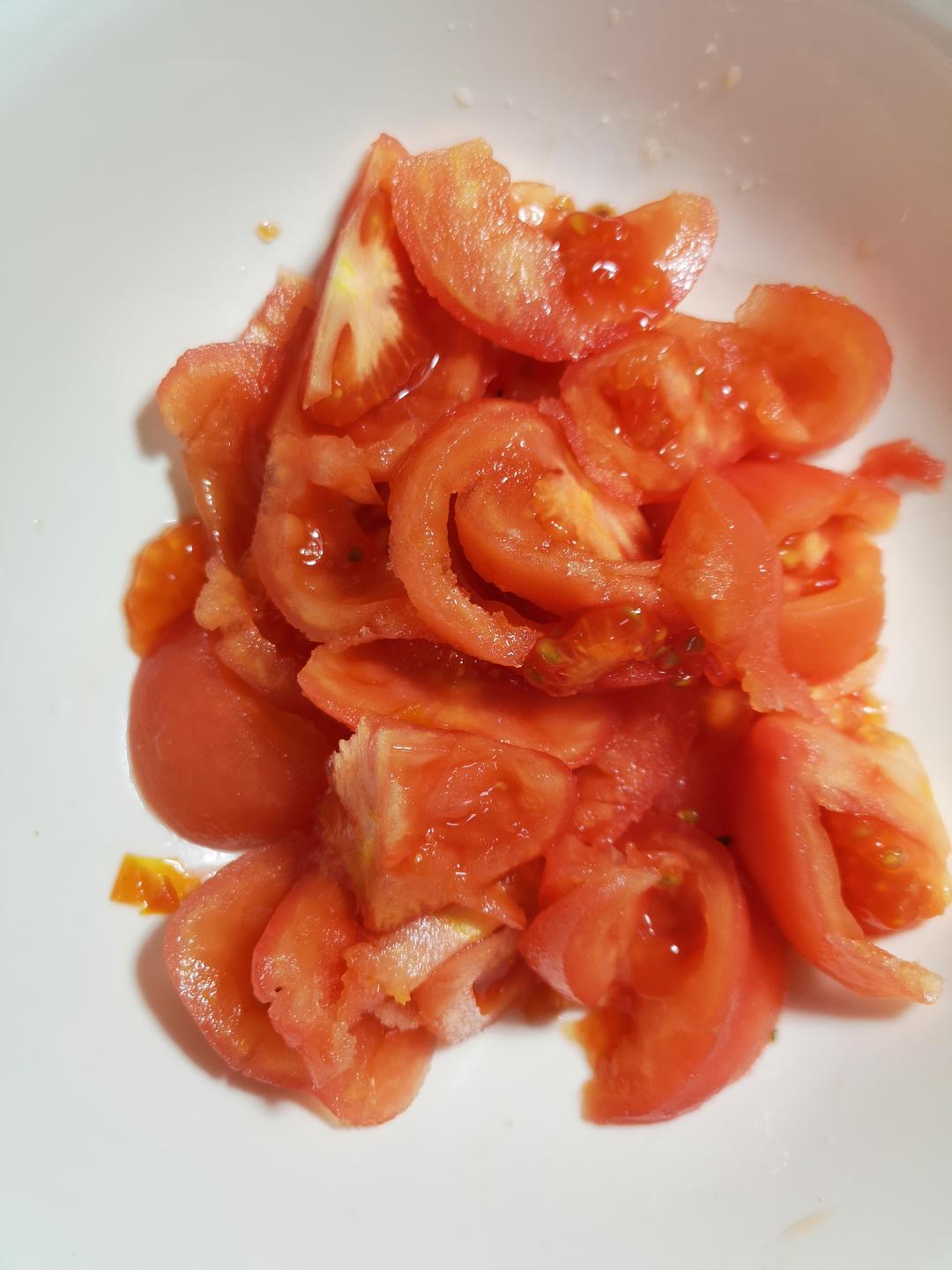
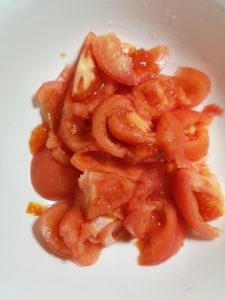
Cut each peeled tomato into small dice, about 1 to 2 cm (½ to ¾ inch). Small pieces are the point: the smaller you cut, the faster they collapse into the broth, releasing their juice, pulp and natural sweetness into the water. Large wedges stay intact and leave you with a pale, watery soup.
Step 4 — Sauté the Ginger and Tomatoes
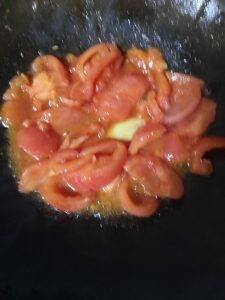
Heat the neutral oil in the pot over medium heat. Add the ginger slices and the scallion whites and cook until fragrant, about 30 seconds. Add the chopped tomatoes and stir-fry for about 1 minute, pressing them gently with a spatula, until they soften and release their juice into a thick, glossy red pulp. This step is what turns plain water into a real tomato broth.
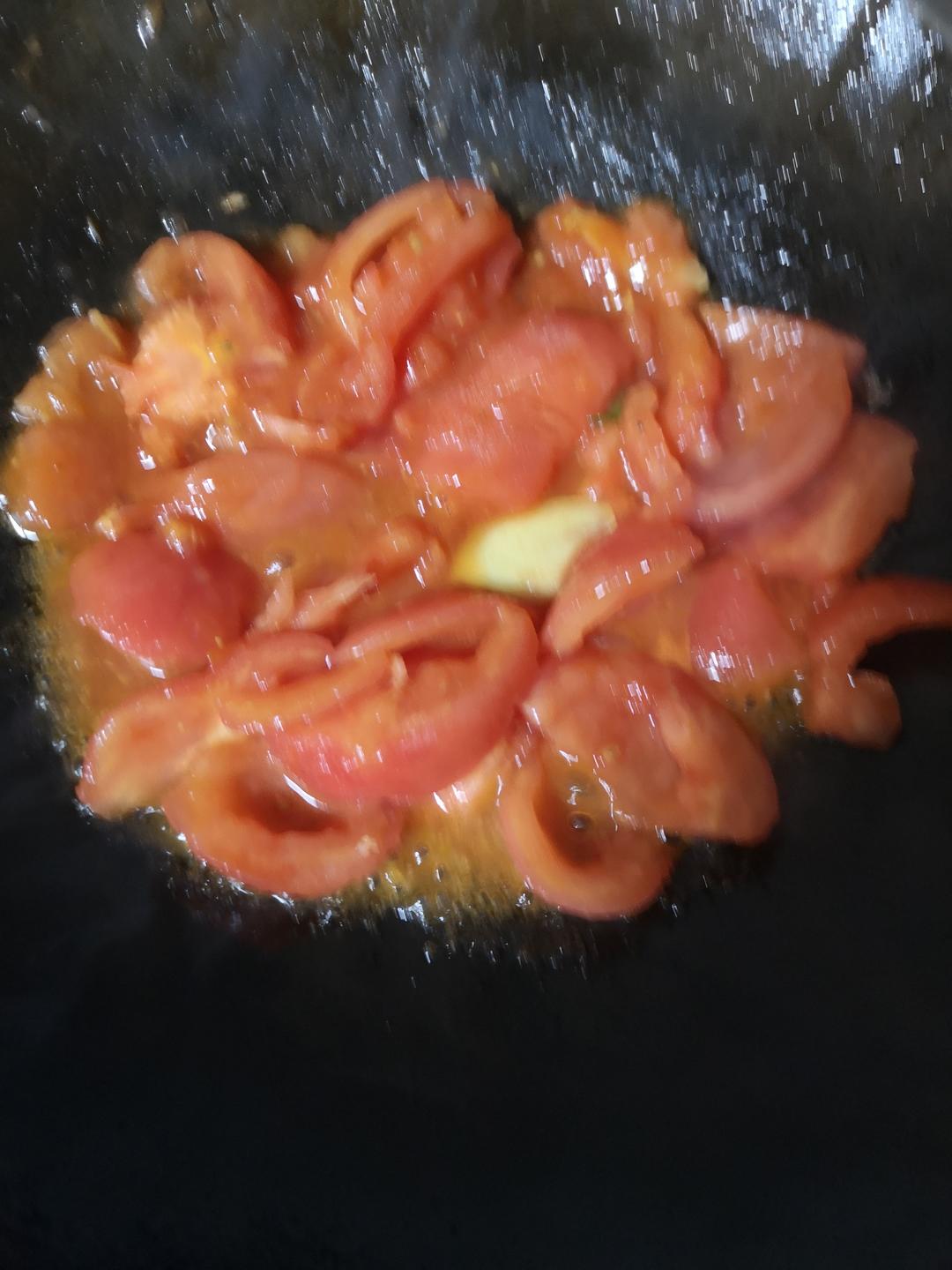
Why sautéing matters so much: heat breaks down the tomato cell walls and releases the glutamates and sugars trapped inside, then drives off some water to concentrate them. This brief browning (a light Maillard reaction on the cut surfaces) adds a layer of savory depth that you simply cannot get from boiling tomatoes in water. The restaurant version of this soup is really a quick tomato sauce that gets thinned into soup — the sauté is what makes it taste that way.
Step 5 — Beat the Eggs with Cooking Wine
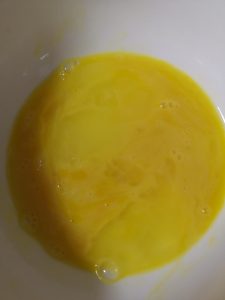
While the pot of water comes up to a boil, beat the eggs in a bowl with a spoonful of cooking wine. Beat until the mixture is uniform and just slightly foamy — you want a single, even liquid so the ribbons set evenly in the pot. The wine is what keeps the ribbons tender and gives them a gentle fragrance instead of that faint eggy taste.
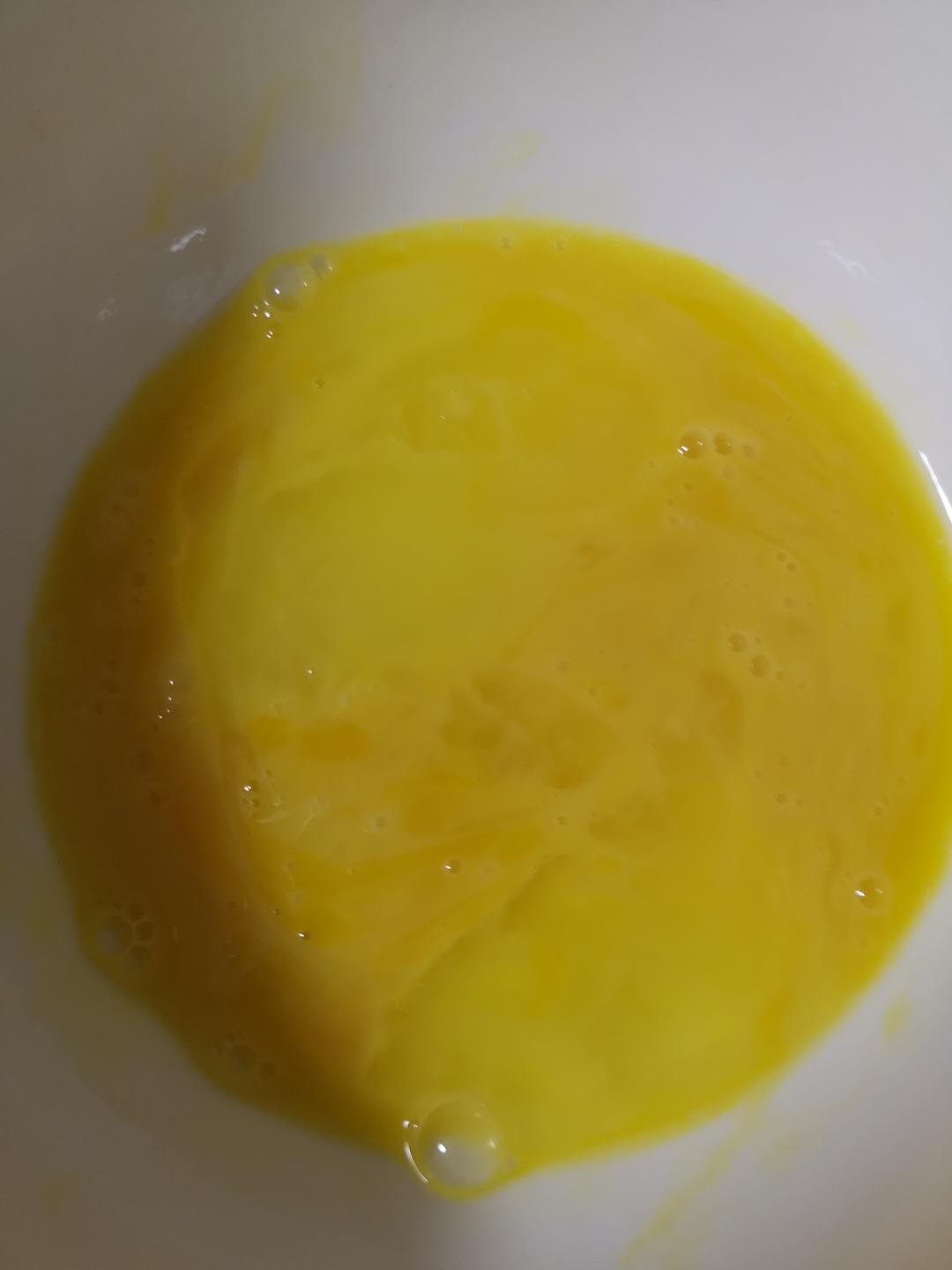
The science of the wine: egg proteins are delicate, and heat makes them contract and squeeze out moisture — that is why eggs can turn rubbery. The alcohol in the cooking wine evaporates quickly in the hot pot, but before it does it gently loosens the protein structure and carries away volatile sulfur compounds (the source of that “eggy” smell). The result is ribbons that stay soft and taste cleaner, with a faint fermented sweetness from the wine that pairs perfectly with the tomato.
Step 6 — Pour the Egg, Count to Ten, and Stop
Add the 3 cups of water to the sautéed tomato pulp, raise the heat to high, and bring it to a rolling boil. Add the salt and give the soup a stir. Now pour the beaten egg liquid in a slow, thin stream along the edge of the pot while gently nudging the soup with a spoon or chopstick so the egg forms long, wispy ribbons. Count to ten slowly from the moment the last of the egg is in — then immediately turn off the heat. Never over-boil the egg; those ten seconds are all it needs to set.
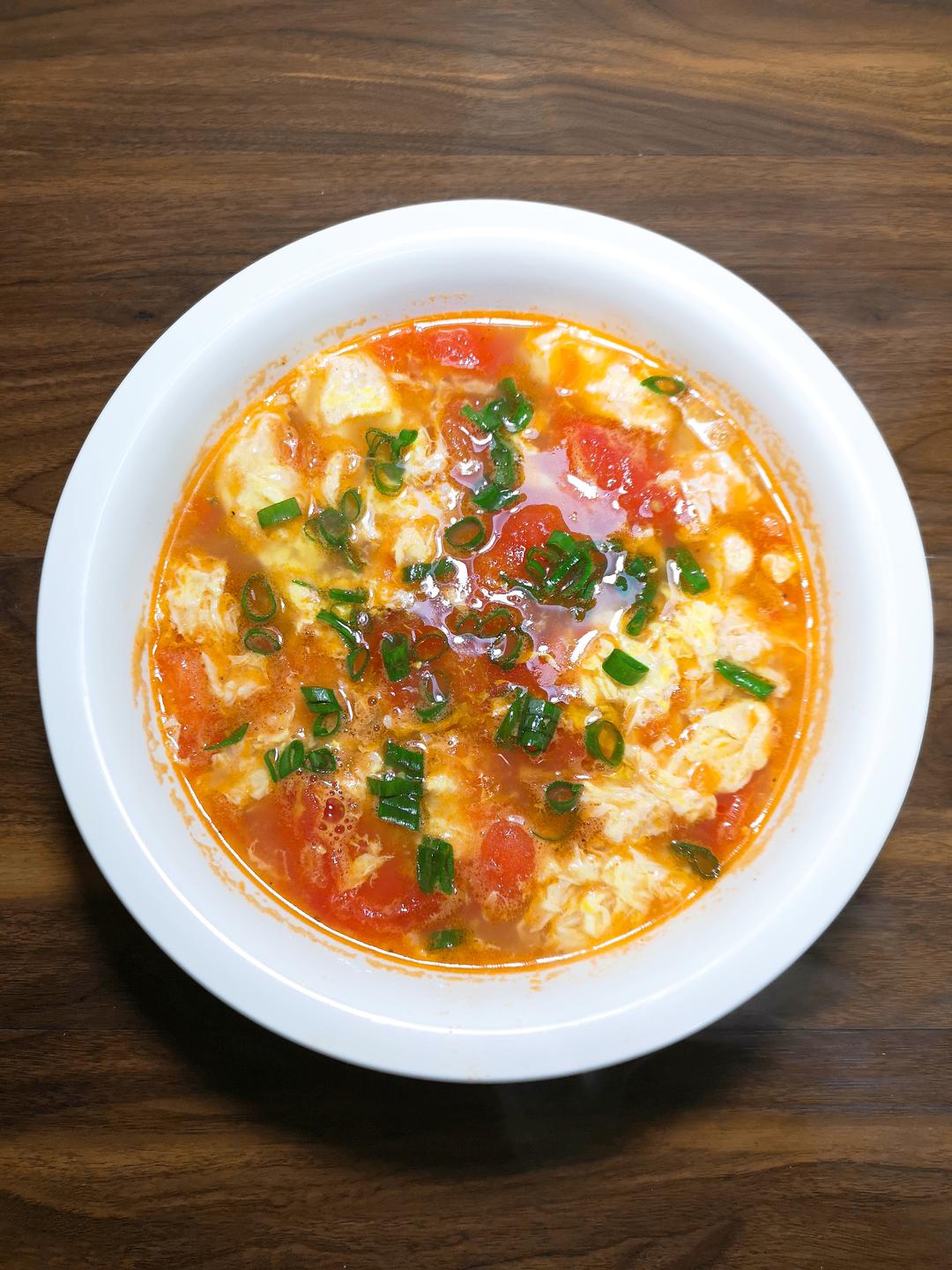
Why the egg cooks in seconds: egg proteins (mainly ovalbumin) begin to unfold and set as soon as they hit liquid that is above about 70°C (158°F). Pouring in a thin stream — not dumping in a blob — gives every ribbon the same instant exposure to the hot broth, so it sets evenly into a silky sheet instead of forming clumps. And because the setting happens in seconds, the count-to-ten then cutting the heat is exactly right: any longer and the delicate ribbons tighten into rubbery shreds.
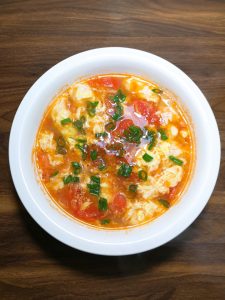
Ladle the soup into bowls immediately and shower with the sliced scallion greens. Serve hot, with steamed rice on the side — this is comfort food at its most honest.
Common Mistakes When Making Tomato Egg Drop Soup
1. Leaving the skin on the tomatoes. Cause: it feels like an extra step you can skip. Fix: it is the difference between a bright broth and a dull one — the skin turns into chewy shreds and muffles the tomato flavor. Score, blanch for 5 seconds, peel. Every single time.
2. The egg turns into scrambled clumps. Cause: pouring the egg in too fast or all in one spot, then stirring aggressively. Fix: pour in a slow, thin stream along the edge of the pot and only nudge the broth gently; the swirl of the boiling liquid does the work for you.
3. The egg is overcooked and rubbery. Cause: letting the soup keep boiling after the egg goes in. Fix: eggs set in seconds — count to ten from the moment the egg is fully in, then turn off the heat immediately.
4. The soup tastes watery and flat. Cause: skipping the sauté, or adding too much water. Fix: stir-fry the tomatoes until they release a thick red pulp before adding water — that pulp is your stock. Keep the water to about 3 cups for 3 tomatoes.
5. The broth is too sour or too bland. Cause: underripe tomatoes and underseasoned water. Fix: use fully ripe tomatoes; when they are sour, add a tiny pinch of sugar (about ¼ tsp) with the salt. Season the boiling water itself, not the finished bowl — salt in the boil dissolves evenly into the whole broth.
6. A faint eggy smell lingers in the soup. Cause: eggs beaten with no cooking wine. Fix: that spoonful of wine is what cleans up the egg aroma — use Shaoxing wine or dry sherry, and you will notice the difference on the first sip.
Variations
The beauty of this soup is how willingly it takes on additions. For a heartier version, stir in silken tofu cubes or a handful of corn kernels with the water. To thicken the broth restaurant-style, whisk 1 tsp cornstarch into 2 tbsp cold water and stir it in just before the egg. Love the egg ribbons but not the tomato? My easy seaweed egg drop soup is the same silky-ribbon technique in a lighter broth. For a full, spoon-standing meal, add flour-and-water dough drops — see my tomato egg drop soup with dough drops (geda tang). And if you like your tomato tang partnered with a second vegetable, a tomato cabbage stir-fry on the same table is a natural pairing.
Frequently Asked Questions
Can I skip the cooking wine in the eggs? You can, but you will miss out on two things: a cleaner, less eggy aroma and a touch of tenderness in the ribbons. Shaoxing wine is classic; dry sherry, mirin or even white wine all work.
Why do my egg ribbons come out as clumps? Almost always because the egg was poured in too fast or the soup was stirred too hard. Pour in a slow, thin stream along the edge of the pot and let the boil swirl it into ribbons — gentle is the whole game.
Can I use canned tomatoes? Yes, in a pinch. Canned whole peeled tomatoes are already skinless; crush them into the pot, sauté briefly, and use a little less water since they carry their own juice. Fresh ripe tomatoes still give the brightest flavor.
How do I make the soup thicker? Sauté the tomatoes longer so more liquid cooks off into a deep pulp, reduce the water to 2½ cups, or whisk 1 tsp cornstarch into 2 tbsp cold water and stir it in right before adding the egg.
Should the soup be sweet or sour? It depends entirely on your tomatoes. Ripe ones are naturally sweet-tangy; pale ones need a pinch of sugar. Taste the boiling broth before adding the egg and adjust — that is what restaurant cooks do.
How to Serve
Serve the soup piping hot in deep bowls, scattered with scallion greens, with steamed rice alongside — the tangy broth is made for spooning over plain rice. It is a natural companion to egg-based dishes: a plate of Chinese tomato and egg stir-fry gives you the same flavors in two textures, and Chinese chives and eggs rounds out an egg-forward dinner. For a soup-focused table, pair it with hot and sour soup (suan la tang) for two very different Chinese classics. Leftover broth can even do double duty: toss in cooked noodles for tomato egg noodles the next day, or pour it over a bowl of braised beef noodle soup for a deeply comforting, tomato-accented meal.
Storage & Reheat
Tomato egg drop soup is best eaten the day it is made — the ribbons stay silkiest when fresh. Leftovers keep in the refrigerator for up to 2 days in an airtight container. Reheat gently over medium-low heat just until steaming, and stop as soon as bubbles appear; boiling it again will toughen the egg ribbons. Because of the delicate egg, this soup does not freeze well — freezing breaks the ribbons into fragments and dulls the fresh tomato brightness.
Allergen Notice
This recipe contains egg and alcohol (cooking wine, which is cooked off during cooking). It is naturally gluten-free when a gluten-free cooking wine (such as a pure rice wine) is used, and contains no soy, dairy, nuts or shellfish.
Nutrition Disclaimer
Nutrition information is calculated using an ingredient database and should be considered an estimate. In cases where multiple ingredient alternatives are given, the first listed is calculated for nutrition. Garnishes and optional ingredients are not included.
About the Author & Recipe Development
I’m Lin, a chef who spent a decade working in Chinese restaurant kitchens before turning to recipe writing for home cooks. Tomato egg drop soup was one of the first dishes I ever learned in a professional kitchen, and the “six tips” in this post are the exact habits the head chefs there drilled into me. I tested this version across three continents — on gas, electric and induction stoves — to make sure the count-to-ten cutoff and the 5-second blanch hold up in any home kitchen. The recipe below is the one I make for myself on cold evenings, and it is the one I hope becomes a habit in your kitchen too.
Authoritative References
For the safe minimum internal temperature for cooked egg dishes, I follow the USDA safe minimum internal temperature chart, which recommends cooking egg dishes to 160°F (71°C). The science of how heat sets egg proteins — the mechanism behind the silky ribbons — is covered in the ScienceDirect overview of egg protein denaturation and coagulation.
Tomato Egg Drop Soup (Xi Hong Shi Ji Dan Tang)

Equipment
- Medium Pot (2.5 to 3 L) with Lid
- Small Pot for Boiling Water (for the blanch)
- Slotted Spoon or Spider
- Mixing Bowl and Whisk (or Chopsticks)
Ingredients
For the Soup
- 3 small ripe tomatoes about 350 g (12 oz) total, peeled and diced
- 3 slices fresh ginger about 10 g
- 2 tbsp sliced scallions about 15 g, white and green parts separated
- 1 tsp salt 6 g, or to taste
- 1 tbsp neutral oil peanut or canola
- 3 cups water 750 ml, plus extra for the blanch
For the Egg Ribbons
- 2 large eggs about 100 g
- 1 tbsp cooking wine 15 ml, Shaoxing wine or dry sherry
Instructions
- Set up your mise en place: slice the ginger, separate the scallion whites and greens, beat the eggs with a spoonful of cooking wine, and measure the salt. Score the tomatoes with a cross on the bottom of each one and have a pot of boiling water ready.

- Drop the scored tomatoes into the boiling water for exactly 5 seconds. Lift them out with a slotted spoon, let them cool briefly, then peel — the skin comes off in quick strips. Never skip this step; the skin dulls the flavor and texture.
- Cut each peeled tomato into small dice, about 1 to 2 cm (½ to ¾ inch), so they break down quickly into the broth.
- Heat the oil in the pot over medium heat. Add the ginger and scallion whites and cook until fragrant, about 30 seconds. Add the chopped tomatoes and stir-fry for about 1 minute, pressing gently, until they release their juice into a thick red pulp.
- While the water comes to a boil, beat the eggs with a spoonful of cooking wine until uniform and slightly foamy — the wine makes the ribbons more tender and fragrant.
- Add 3 cups water to the tomato pulp, bring to a rolling boil, and add the salt. Pour the egg in a slow, thin stream along the edge of the pot while gently nudging the broth. Count to ten from the moment the egg is all in, then immediately turn off the heat — never over-boil the egg. Finish with scallion greens and serve hot.












Leave a Reply