When the summer heat rolls in and humidity spikes, my appetite for heavy, greasy roasts usually disappears. Growing up in Sichuan, my chef father taught me that the best cure for a “summer slump” appetite isn’t salads, but quick, high-heat stir-fries that balance acidity with savory depth.

Tomato Cabbage Stir-Fry (Fan Qie Bao Cai) is exactly that dish. It is a humble, rustic home-cooking staple that you rarely see on takeout menus, but it appears constantly on dinner tables across China. The natural tartness of the tomatoes cuts through the richness of the pork belly, while the cabbage provides a satisfying, sweet crunch.
I have cooked this dish hundreds of times, both in professional restaurant kitchens and for my own family. It takes less than 15 minutes from prep to plate, making it an absolute lifesaver on busy weeknights.
Why This Recipe Works
- Flavor Balance: The combination of savory soy sauce, sweet cabbage, and acidic tomatoes creates a complex flavor profile without a heavy sauce.
- Texture Contrast: By adding the tomatoes after the cabbage has started to wilt, we ensure the cabbage stays crisp-tender rather than turning into a soggy mush.
- Pork Fat Infusion: Rendering a small amount of pork belly creates a flavorful oil base that permeates every leaf of the cabbage.
What Is Tomato Cabbage Stir-Fry?
Fan Qie Bao Cai (番茄包菜) literally translates to “Tomato Wrapped Vegetable” (Cabbage). It belongs to a category of Chinese food called jiachang cai (home-style cooking). Unlike banquet dishes which focus on presentation, this dish focuses entirely on the interplay of fresh vegetable flavors.
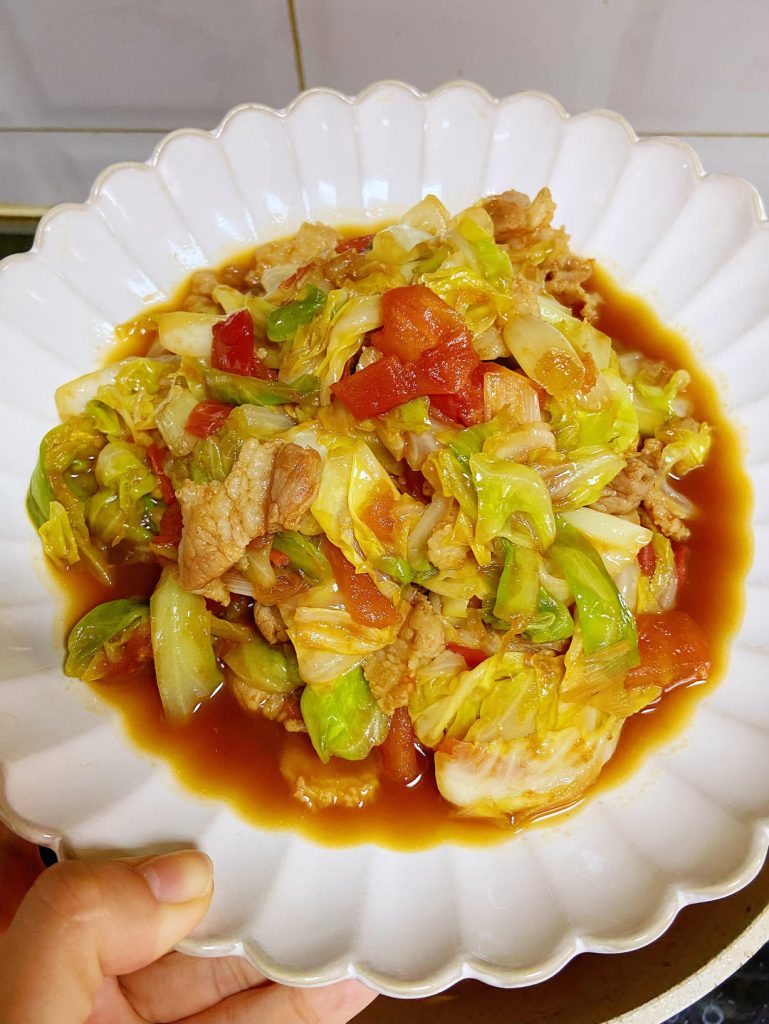
While traditional versions might use lard, my version uses fresh pork belly to render fat in the pan, which is a technique I picked up working in kitchens in Chengdu to add smokiness and depth.
Key Ingredients & Substitutions
- Round Cabbage (Bao Cai): I recommend using Taiwanese Cabbage (often flat and lighter green) if you can find it at Asian markets. It is sweeter and crunchier than the dense, ball-shaped Western green cabbage (Cannonball cabbage). However, regular green cabbage works fine; just slice it slightly thinner.
- Tomatoes: Use ripe, red tomatoes. Roma or vine-ripened tomatoes are excellent because they have a good flesh-to-juice ratio.
- Pork Belly: You only need a small amount (about 4 oz) to flavor the oil.
- Substitution: You can use thick-cut bacon (reduce the added salt later) or skip it entirely for a vegetarian version.
- Light Soy Sauce: This provides the salty, umami kick. I prefer Pearl River Bridge or Lee Kum Kee.
- Substitution: Kikkoman soy sauce is a perfectly safe alternative.
- Scallions (Green Onions): Used for aromatics.
- Sugar: Essential. It doesn’t make the dish “sweet,” but rather balances the acidity of the tomatoes and the saltiness of the soy sauce.
A Note on Cabbage Varieties
If you use Savoy cabbage (crinkly leaves), cook it for a shorter time as it softens faster. If you use standard Green cabbage, give it an extra minute in the wok to break down the fibrous ribs.
Recipe Notes Before You Start
- Hand-Tear the Cabbage: In professional Chinese kitchens, we often tear cabbage by hand rather than cutting it with a knife for stir-fries. The irregular, torn edges have more surface area to absorb the sauce and oil compared to clean knife cuts.
- Mise en Place: This stir-fry happens fast. Have your sauce ingredients measured and your vegetables prepped before you turn on the heat.
- Equipment: A carbon steel wok is ideal for getting that wok hei (breath of the wok), but a large 12-inch stainless steel or non-stick skillet works well too. If using a skillet, manage your heat carefully so you don’t steam the veggies.
Mise en Place / Prep
- Prep the Cabbage: Wash the cabbage thoroughly. Remove the hard core. Tear the leaves into bite-sized pieces (about 2-3 inches). Crucial: Spin it dry or pat perfectly dry with paper towels. Wet cabbage will steam instead of fry, resulting in a watery dish.
- Prep the Tomato: Cut the tomato into wedges or bite-sized chunks.
- Prep the Pork: Slice the pork belly thinly. If it’s slippery, freeze it for 15 minutes before slicing.
- Aromatics: Chop the scallions into small rings.
How to Make Tomato Cabbage Stir-Fry
Step 1: Render the Pork Belly
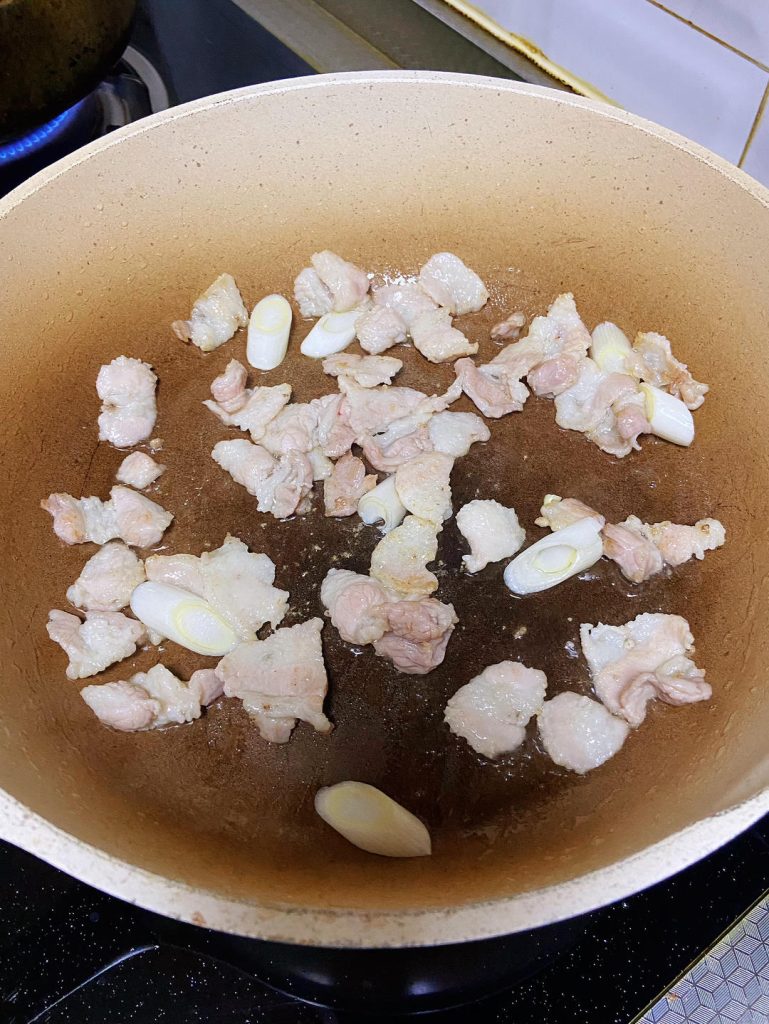
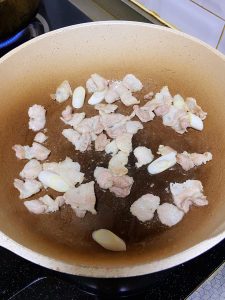
Heat your wok or large skillet over medium heat. Add 1 tablespoon of oil and the sliced pork belly. Stir-fry slowly until the meat turns pale and releases its fat, and the edges begin to brown slightly.
Why? We are rendering the fat to create a flavorful cooking medium. If you use high heat immediately, the meat will burn before the fat renders.
Step 2: Sauté Aromatics
Add the chopped scallions to the pork and stir-fry for about 20 seconds until fragrant.
- Visual Cue: The onions should look glossy, and the smell should be distinct.
Step 3: The Soy Sauce Sear (Important Technique)
Pour the 4 teaspoons of light soy sauce directly onto the pork and onions (or around the perimeter of the wok). Let it sizzle for 5 seconds before adding the vegetable.
- Why? This technique creates a savory, caramelized aroma that raw soy sauce doesn’t have.
Step 4: Stir-fry the Cabbage
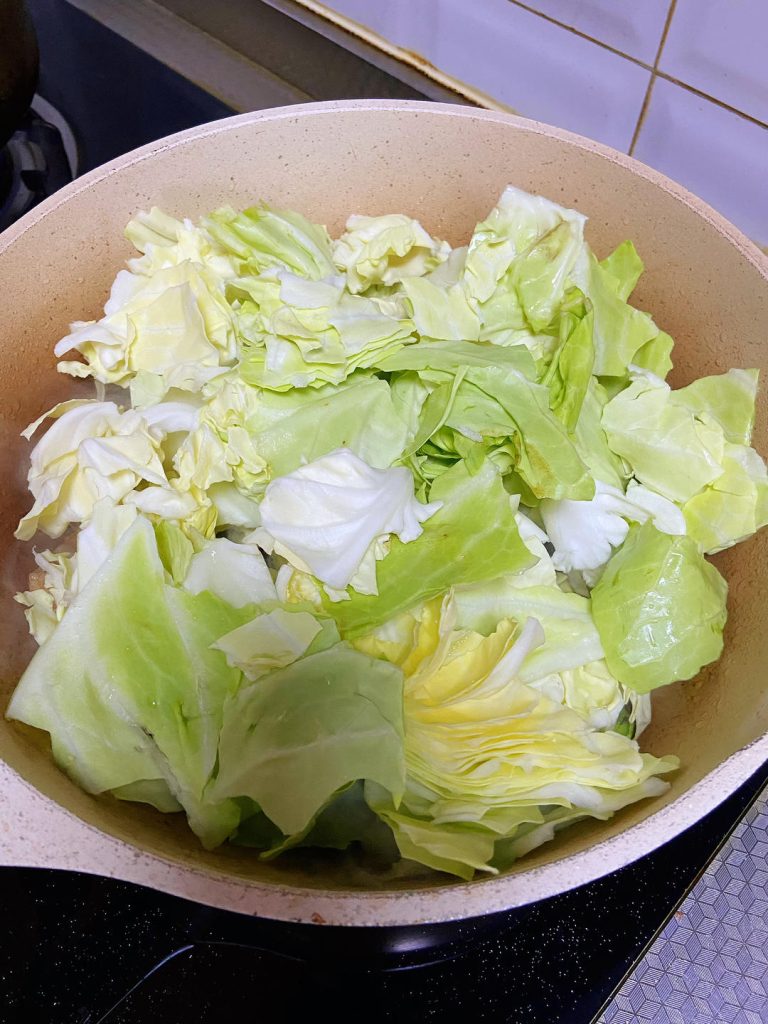
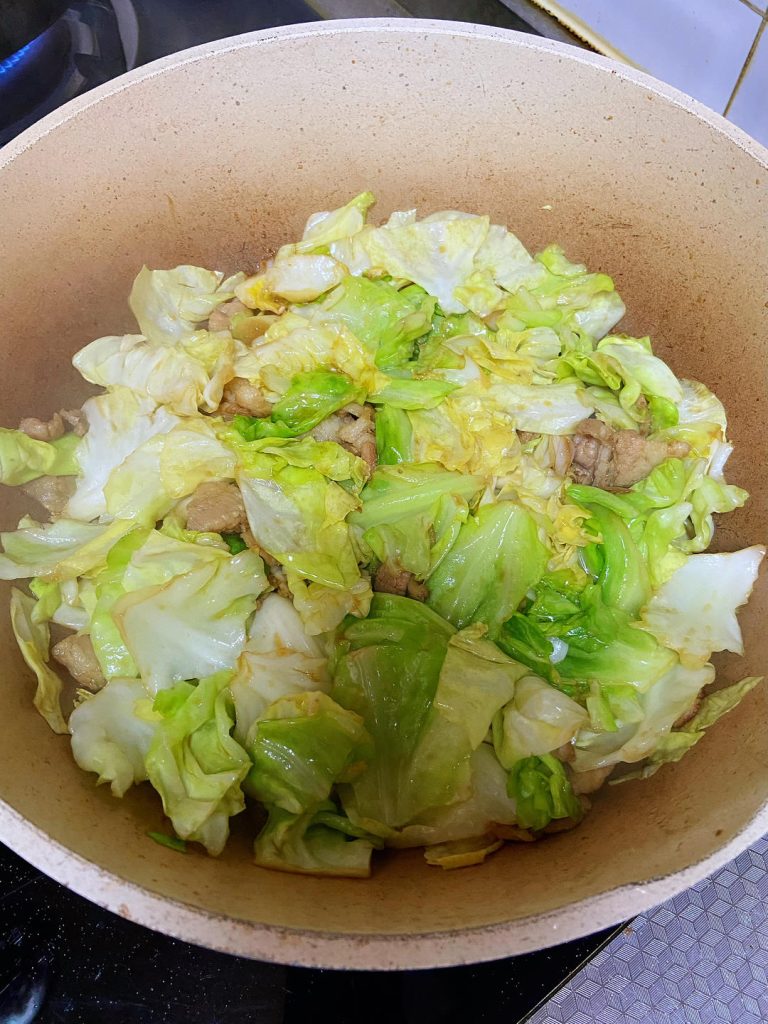
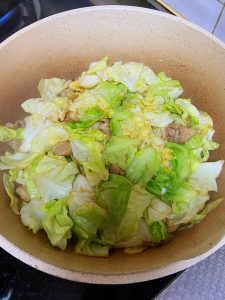
Immediately turn the heat to high. Add the torn cabbage. Toss rapidly to coat the leaves in the soy sauce and pork fat. Stir-fry for about 2-3 minutes until the cabbage softens slightly but still retains its structure.
Tip: If the pan looks too dry, add a teaspoon of water, but not too much. We want a dry stir-fry texture.
Step 5: Add Tomatoes and Season
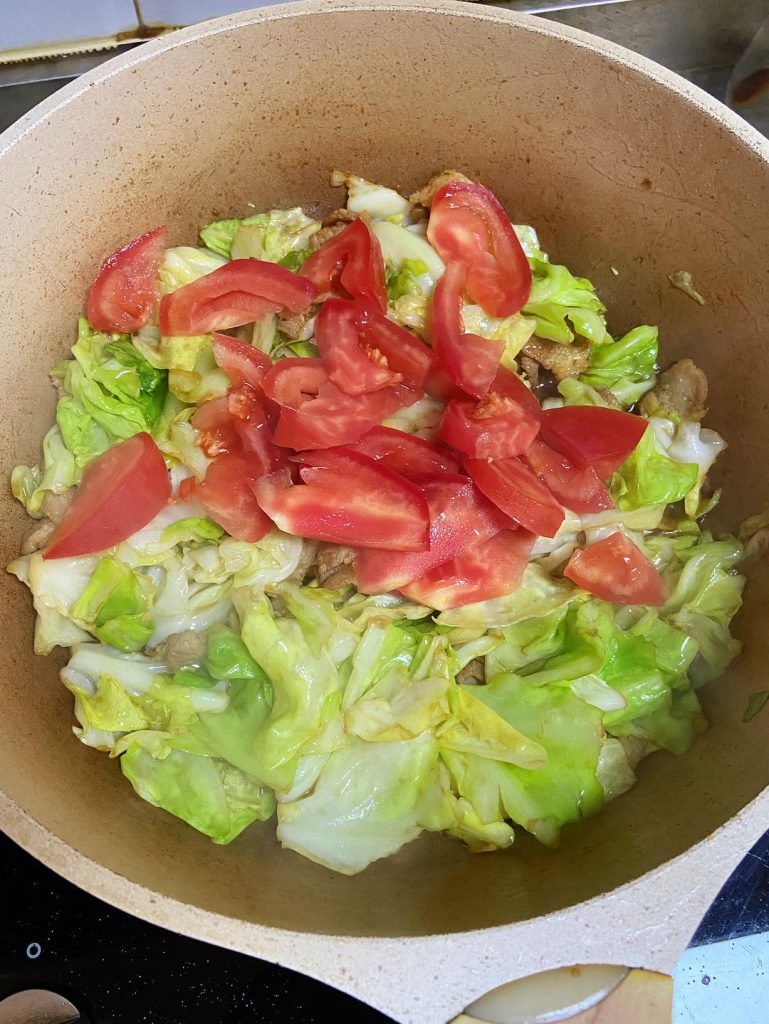
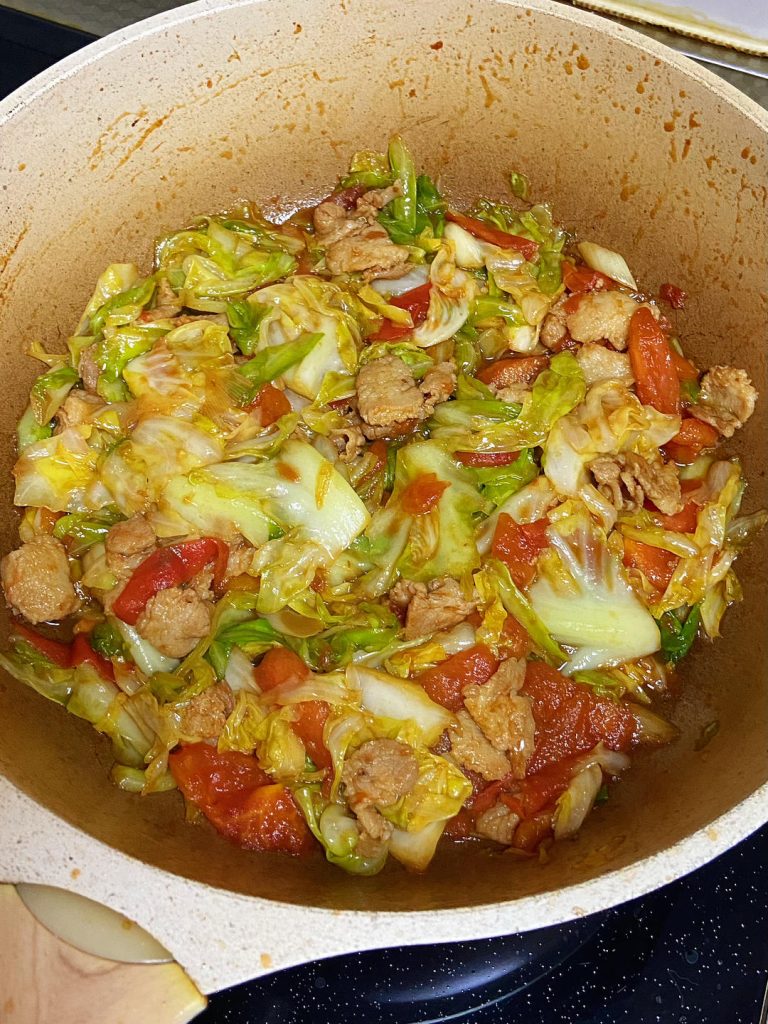
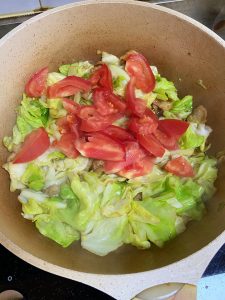
Add the tomato chunks. Continue to stir-fry for another 1-2 minutes until the tomatoes start to soften and release a little red juice, creating a natural sauce. Sprinkle in the 4 teaspoons of sugar and 2 teaspoons of salt (adjust salt based on your taste and soy sauce brand). Toss everything together for a final 30 seconds.
Step 6: Serve
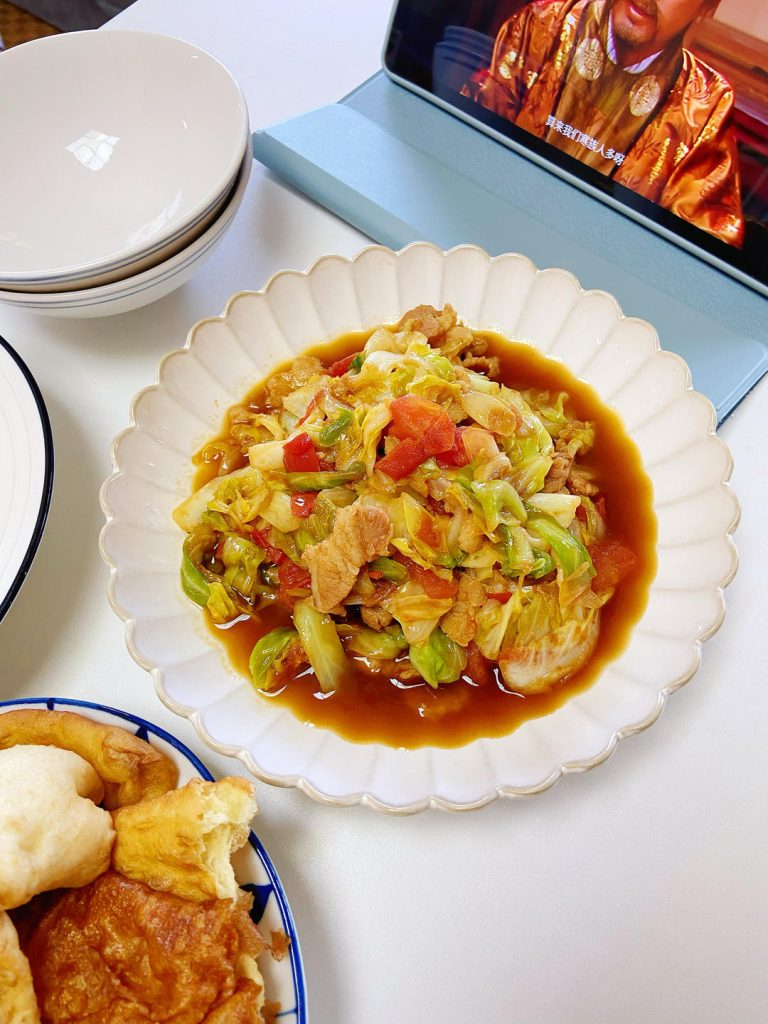
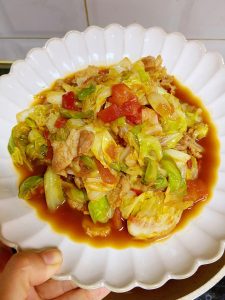
Transfer to a serving plate immediately. The residual heat will finish softening the tomatoes.
Expert Tips & Troubleshooting (FAQ)
Q: Why did my stir-fry turn out watery? A: This usually happens for two reasons: either the cabbage wasn’t dried thoroughly after washing, or the heat was too low. Stir-frying requires high heat to evaporate moisture instantly. If using a home electric stove, cook the cabbage in two batches if necessary to maintain pan temperature.
Q: Can I make this spicy? A: Absolutely. Being from Sichuan, I often add 1-2 dried red chili peppers or a teaspoon of Homemade Chili Garlic Sauce during Step 2 with the scallions.
Q: Can I use chicken instead of pork? A: Yes. Sliced chicken thigh works well. However, chicken is leaner, so you may need to add an extra tablespoon of vegetable oil since you won’t have the rendered pork fat.
Serving Suggestions
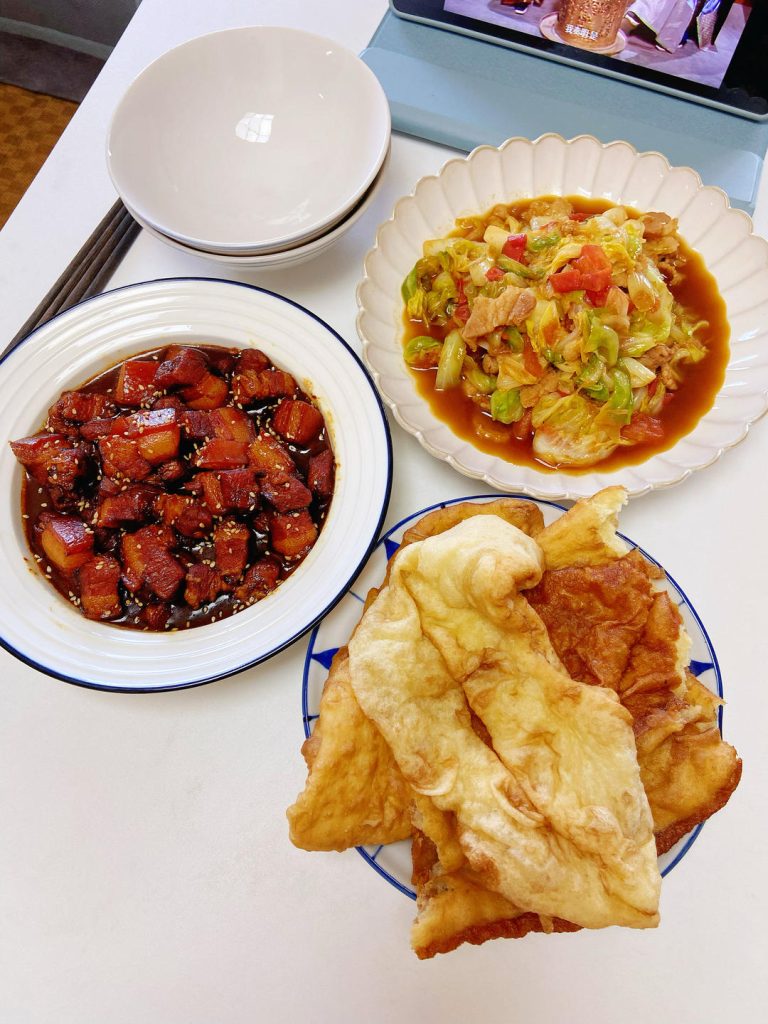
This dish is best served family-style. It pairs beautifully with steamed jasmine rice, which soaks up the tangy tomato juices.
For a complete meal, I recommend pairing this with:
- Protein: Braised Pork Belly (Hong Shao Rou) for a rich contrast.
- Soup: Tomato Egg Drop Soup is a classic pairing, though it repeats the tomato theme. Alternatively, a clear broth works well.
- Starch: If you aren’t feeling rice, Scallion Pancakes are a delicious side.
How to Store & Reheat
- Storage: Store leftovers in an airtight container in the refrigerator for up to 3 days.
- Reheating: Reheat in a microwave or a hot skillet for 1-2 minutes. Note that the cabbage will lose its crunch upon reheating, becoming softer (similar to a stewed cabbage texture), which is still delicious but different.
- Freezing: I do not recommend freezing this dish. The tomatoes and cabbage will release all their water upon thawing, ruining the texture.
Food Safety and Preparation
- Pork Cooking: Ensure the pork belly slices are cooked through. The USDA recommends pork reach an internal temperature of 145°F (63°C), though in stir-fries, the visual cue is that the meat is opaque and slightly browned edges.
- Cross Contamination: Always wash your cutting board and knife after slicing raw pork before cutting the vegetables, or use separate boards.
Nutrition Information (Estimate)
- Calories: ~220 kcal per serving
- Carbohydrates: 12g
- Protein: 8g
- Fat: 16g (varies based on pork belly fat content)
- Sodium: 600mg
- Fiber: 3g
Disclaimer: Nutrition information is calculated using an ingredient database and should be considered an estimate. Garnishes and optional items are not included. Actual values vary based on specific product brands used.

Tomato Cabbage Stir-Fry (Fan Qie Bao Cai)

Equipment
- 1 Wok Carbon steel preferred, or a large skillet
- 1 Knife and Cutting Board
Ingredients
- 0.5 head Round Cabbage approx. 10 oz / 300g, preferably Taiwanese flat cabbage
- 1 large Tomato ripe
- 4 oz Pork Belly fresh, skin-on or off
- 1 tbsp Vegetable Oil neutral oil like canola
- 2 stalks Scallions (Green Onions) chopped
- 4 tsp Light Soy Sauce
- 4 tsp Sugar White granulated
- 2 tsp Kosher Salt adjust to taste
Instructions
- Prepare Ingredients: Wash cabbage and tear into bite-sized pieces. Dry thoroughly (crucial for texture). Cut tomato into wedges. Thinly slice pork belly. Chop scallions.
- Render Pork: Heat wok over medium heat. Add oil and pork belly. Stir-fry until pork turns pale and edges brown slightly to render the fat.

- Aromatics: Add scallions to the pork and stir-fry for 20 seconds until fragrant.
- Caramelize Soy Sauce: Pour light soy sauce into the mixture. Let it bubble for a few seconds to develop a savory aroma.
- Stir-Fry Cabbage: Turn heat to high. Add cabbage immediately. Toss rapidly for 2-3 minutes until slightly softened but still crisp.
- Add Tomatoes: Add tomato wedges. Stir-fry for 1-2 minutes until tomatoes begin to soften.
- Season: Sprinkle sugar and salt over the dish. Toss well to combine.
- Serve: Transfer to a plate and serve hot with steamed rice.

Notes
Vegetarian Option: Omit pork belly. Use 2 tbsp oil total to ensure the vegetables are well coated.
Nutrition Disclaimer: Nutrition information is calculated using an ingredient database and should be considered an estimate. Garnishes and optional items are not included. Actual values vary based on specific product brands used.





Leave a Reply