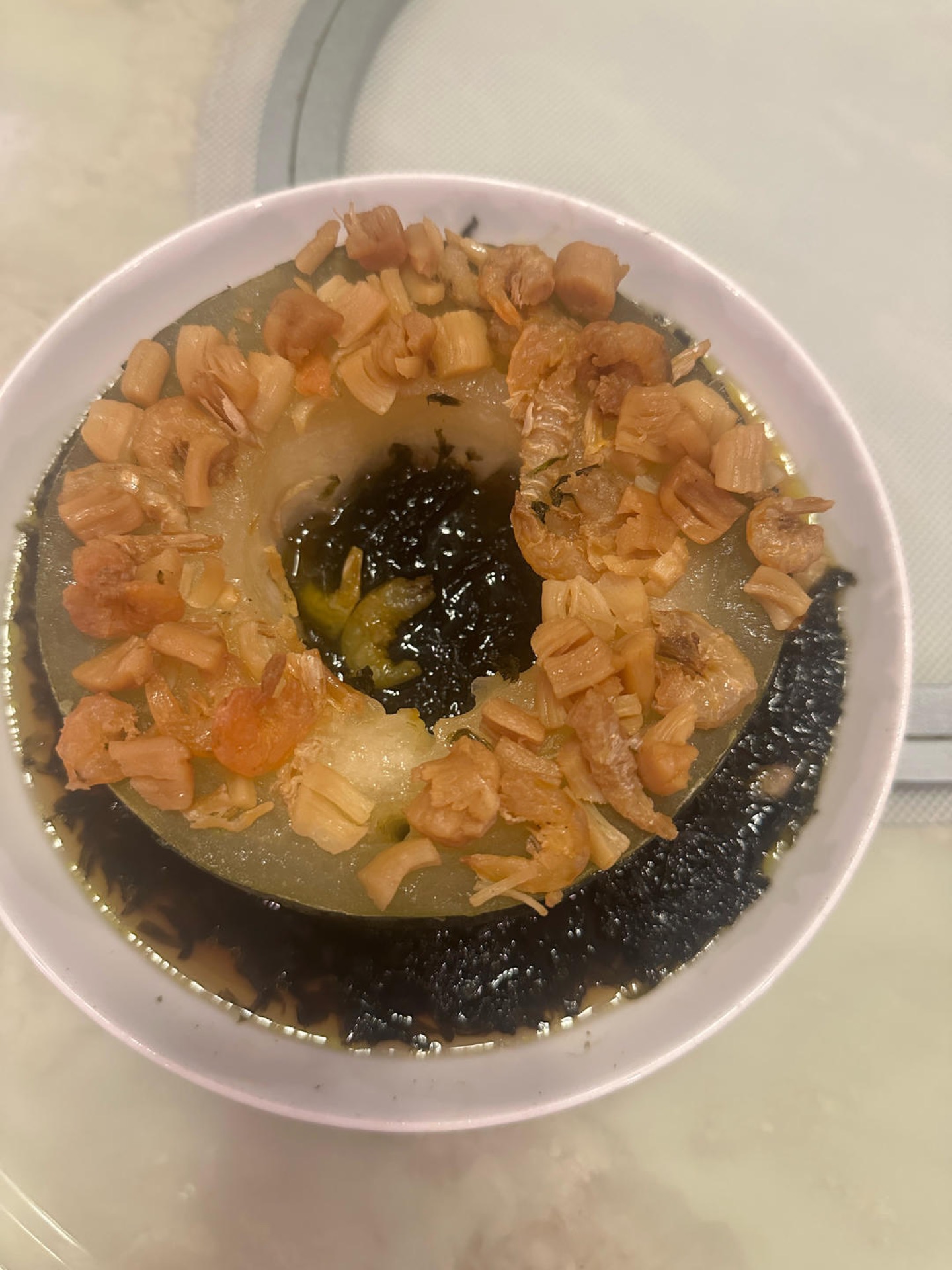
There is a whole category of Cantonese home cooking that never shouts — dishes built on steam, patience, and one or two ingredients doing quiet, heavy lifting. Steamed winter melon rings belong squarely to it. A thick cross-section of winter melon is hollowed into a ring, the green skin left on to hold its shape, and the empty center is piled with dried scallop and dried shrimp that have been soaked overnight and quickly fried until fragrant. Then the whole thing goes into the steamer, where the melon slowly gives up its crispness and turns silky, translucent, and faintly sweet, while the briny topping melts down into a small pool of savory juice at the center of the ring.
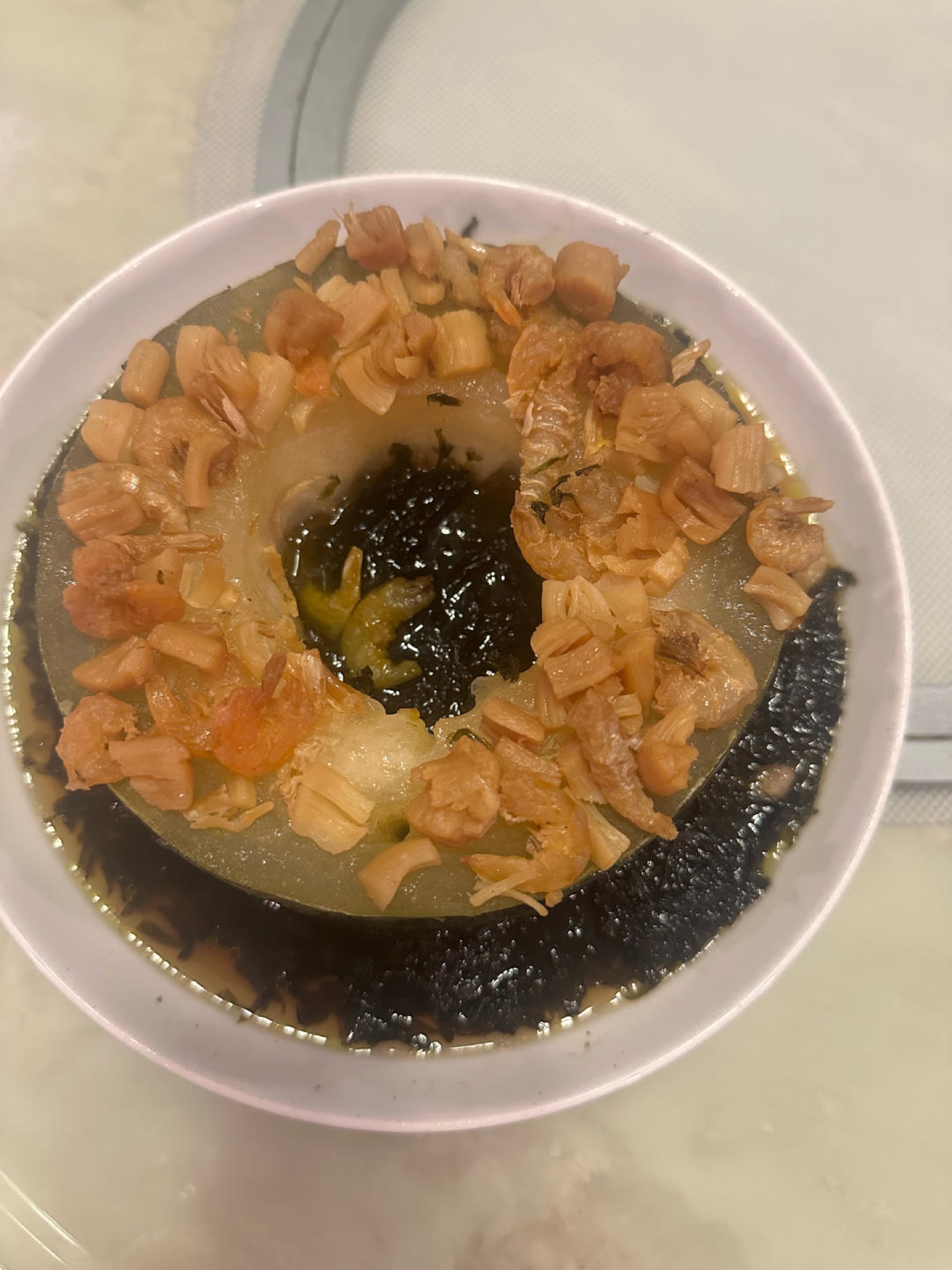
It is a dish that looks like almost nothing and tastes like a great deal. The melon itself is mostly water, so it drinks up whatever you put on it — which is exactly why the dried seafood matters so much here. Dried scallop, or conpoy, is one of the great umami ingredients of the Chinese pantry, and its soaking liquid is liquid gold. If you have ever made a steamed dish and wondered why restaurant versions taste deeper than yours, the answer is usually that they kept the soak water and you poured it down the sink.
This recipe is also forgiving in a way that few Chinese dishes are. There is no wok hei to chase, no split-second timing, no risk of overcooking a protein. The only real variable is how long the melon needs, and that depends entirely on how thick you cut it. Once you learn to read the melon instead of the clock, this becomes one of the easiest things in your repertoire — and one of the most impressive for how little effort it takes.
What Is 蒸冬瓜圈?
蒸冬瓜圈 — zhēng dōng guā quān, literally “steamed winter melon rings” — is a Cantonese home dish in which thick rounds of winter melon are hollowed into rings and steamed with a savory topping tucked into the center. It belongs to the same family as other gentle steamed vegetable dishes: stuffed bitter melon, steamed eggplant with garlic, and the many steamed egg custards that anchor a Cantonese family meal. The point is never heat or drama; it is texture and the concentration of flavor that steam allows.
Winter melon (dōng guā, 冬瓜) is a large, mild gourd with a pale, firm flesh and a waxy green skin. Despite the name, it is a warm-weather crop, and the name is usually explained by the fact that the melon’s waxy coating lets it keep for months — historically, all the way into winter. Raw, its flesh is crisp and nearly flavorless; cooked, it turns soft, glossy, and faintly sweet, and it absorbs the seasoning around it like a sponge. That quality is why it appears in soups, braises, and stir-fries across southern China, and why it works so well here, where a small amount of intensely savory topping is asked to flavor a large volume of mild vegetable.
If you enjoy the way winter melon soaks up a savory sauce, orange winter melon shrimp balls takes the same idea in a brighter, citrusy direction — melon rounds steamed and paired with springy shrimp.
1Orange Winter Melon Shrimp Balls (Xiang Cheng Dong Gua Xia Qiu)A refreshing, oil-free appetizer combining sweet navel oranges, tender winter melon, and bouncy shrimp balls in a Thai-style spicy dressing. Perfect for a healthy, low-carb meal.Check out this recipe
For another steamed favorite that leans on the same gentle, clean cooking method, whole wheat steamed buns show how much a steamer can do with simple ingredients.
2Healthy Whole Wheat Steamed Buns (Mantou)Learn how to make healthy, fluffy Whole Wheat Steamed Buns (Mantou) with this easy 45-minute recipe. Expert tips for a smooth surface and no collapsing.Check out this recipe

And if you like the idea of a soft, silky steamed base carrying a savory topping, steamed egg with shrimp and broccoli is the same technique in a different form.
3Steamed Egg with Shrimp and BroccoliA silky, savory steamed egg custard enriched with milk, silken tofu, and topped with tender shrimp and broccoli. A healthy, protein-packed meal ready in 20 minutes.Check out this recipe
Why This Recipe Works
The technique here rests on three small decisions, and each one matters more than it looks.
First, the skin stays on. Winter melon flesh is soft and watery once cooked, and a ring of it would collapse into a puddle without support. The green rind is firm and slightly waxy, and it holds the ring’s shape through an hour of steaming. It is entirely edible once fully tender — many people eat it, and many scrape the flesh away and leave the rind behind. Either is fine. What matters is that you do not peel it before cooking.
Second, the dried seafood gets fried, not just sprinkled. Dried scallop and dried shrimp are both intensely savory, but they are also tough and a little leathery straight out of the soak. A brief turn in a hot pan with a little oil and a splash of soy sauce softens them, blooms their aroma, and — critically — coats them in fat, which carries flavor into the melon as they steam. Skipping this step gives you a dish that tastes flat and slightly raw.
Third, the topping sits in the hollow, not on the surface. Because the ring has a well in the middle, the juices from the scallop, shrimp, and soy sauce collect there instead of running off into the steamer. The melon’s inner walls absorb that liquid from the inside out, which is why the center of the ring tastes so much better than the edges.
Steam is a far gentler cooking medium than boiling water or hot oil: it transfers heat through condensation at around 212°F (100°C) at sea level, so delicate vegetable flesh cooks through without the mechanical agitation that would break it apart. That is why winter melon can hold a ring shape for an hour in a steamer but would fall to pieces in a pot of simmering water. If you want to go deeper on how cooking fats and heat interact in Chinese cooking, this guide to oil for stir fry smoke point is a useful companion read.
Equipment Needed
You do not need much, but the steamer setup is worth getting right.
- A steamer that fits the melon ring with room to spare. A wok with a bamboo or metal steamer insert works beautifully, as does a large pot with a steamer rack. The ring should sit flat with at least an inch of clearance around it so steam can circulate.
- A small skillet or wok for frying the dried scallop and shrimp. Nonstick is fine; so is carbon steel.
- A sturdy cutting board and a sharp knife for cutting the melon crosswise into a clean, even round.
- A large spoon — a metal serving spoon or a sturdy soup spoon — for scooping out the seeds and soft center.
- A slotted spoon for lifting the finished ring out of the steamer without losing the juices.
- A lid that fits your steamer. Trapping steam is the whole point; an ill-fitting lid will slow everything down.
One note on the vessel you steam the melon in: choose a shallow heatproof plate or bowl that fits inside your steamer with a little clearance. The melon will release a surprising amount of liquid, and you want to keep every drop of it.
Ingredients
Everything here is either a pantry staple or a short trip to an Asian grocery. The full measured list is in the recipe card below; this is what each piece is doing.
- Winter melon — one ring, cut about 4 cm (1½ inches) thick. Ask for a cross-section cut from the middle of the melon if you can; the middle has the most even flesh and a clean, round cavity.
- Dried scallop (conpoy) — about 6 to 8 pieces. These are the most expensive item on the list, and also the one that defines the dish. Buy plump, pale-golden ones that smell sweet and oceanic, not sharply fishy.
- Dried shrimp — small ones are ideal here; they soften faster and distribute more evenly.
- Dried seaweed — a small pinch of nori or zi cai, crumbled by hand. This is a late addition that adds a clean, mineral note and a little visual contrast.
- Light soy sauce — about half a tablespoon. Light soy brings salt and umami without darkening the pale melon.
- Neutral oil — for frying the topping. Anything with a high smoke point and a clean flavor works.
- Salt — a pinch for the topping, plus more to taste at the end.
- Scallion — optional, for garnish.
Ingredient Notes
On the dried scallop. Soak it in cold water in the refrigerator for at least 8 hours, ideally overnight. Cold water gives a slower, cleaner rehydration than warm, and the soaking liquid stays sweet rather than turning bitter. After soaking, the scallop should be pliable enough to crush easily with the flat of a knife. Do not discard the soaking water — strain it and add a spoonful or two to the hollow of the melon before steaming, or use it to loosen the topping as it cooks.
On the dried shrimp. These rehydrate faster than scallop, usually in 2 to 4 hours, but soaking them alongside the scallop overnight is simplest. If your dried shrimp are very salty, rinse them once more after soaking.
On the winter melon. Look for a melon with firm, unblemished flesh and a matte, waxy rind. If you are buying a pre-cut section, check that the flesh is pale and crisp, not spongy or translucent — that means it is old. A 4 cm ring is the sweet spot: thick enough to hold a well and steam for a long time without collapsing, thin enough that it cooks through in about an hour. If your ring is thinner, reduce the time; if thicker, add to it.
On the soy sauce. Light soy sauce (生抽) is the right choice here. Dark soy sauce would muddy the pale, clean look of the dish and add a molasses note that fights the seafood. If you are avoiding gluten, tamari is a direct substitute. If you are avoiding soy entirely, a splash of fish sauce plus a pinch of salt gets you close.
On the seaweed. A little goes a long way. You want a faint marine background note, not a seaweed-forward dish. Toast it briefly in a dry pan first if you want it crisper.
Prep & Mise en Place
This dish is almost all waiting, so the prep is short and worth doing completely before you turn on any heat.
- Soak the dried goods the night before. Put the dried scallop and dried shrimp in separate bowls of cold water, cover, and refrigerate for at least 8 hours. Strain both, reserving the scallop liquid.
- Cut the melon. Slice a cross-section about 4 cm (1½ inches) thick. Set it flat on the board.
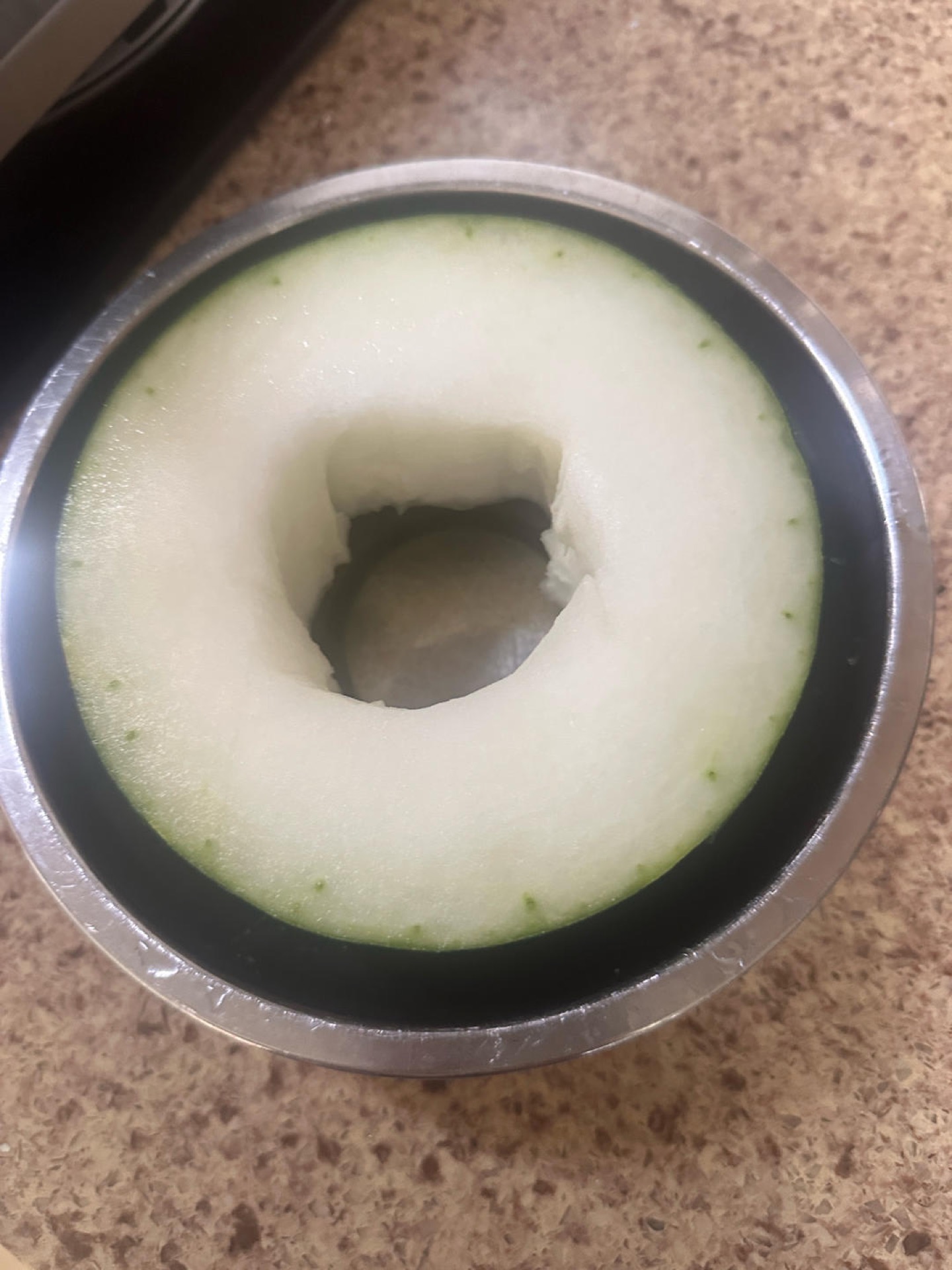
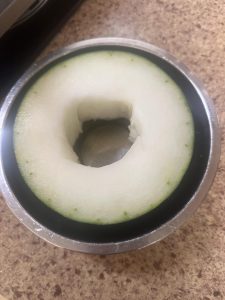
- Hollow it. Run a spoon around the inside edge and scoop out the seeds and the soft, spongy center, leaving a clean well with walls about 2 cm thick. Do not peel the rind.
- Rinse and dry. Rinse the ring under cold water and pat the outside dry so it does not slide around the steamer.
- Crush the scallop. With the flat side of a chef’s knife, press each soaked scallop until it breaks into shreds. Tear any large pieces with your fingers.
- Set up your steamer. Fill the base with enough water to steam for an hour without running dry — check it once midway if you are unsure. Bring it to a boil while you fry the topping.
- Prep the garnish. Slice the scallions and crumble the seaweed now, so both are ready the moment the melon comes out.
Once the topping is fried, everything moves quickly into the steamer. Having the melon ring already sitting on its steaming plate means you can spoon the topping in and slide the plate in without losing any of the juices.
Cooking Process
Step 1 — Hollow the Melon
Cut the winter melon into a ring about 4 cm (1½ inches) thick, scoop out the seeds and soft center with a spoon, but leave the green skin on, then rinse it clean.
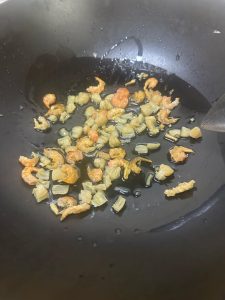
Step 2 — Fry the Scallop and Shrimp
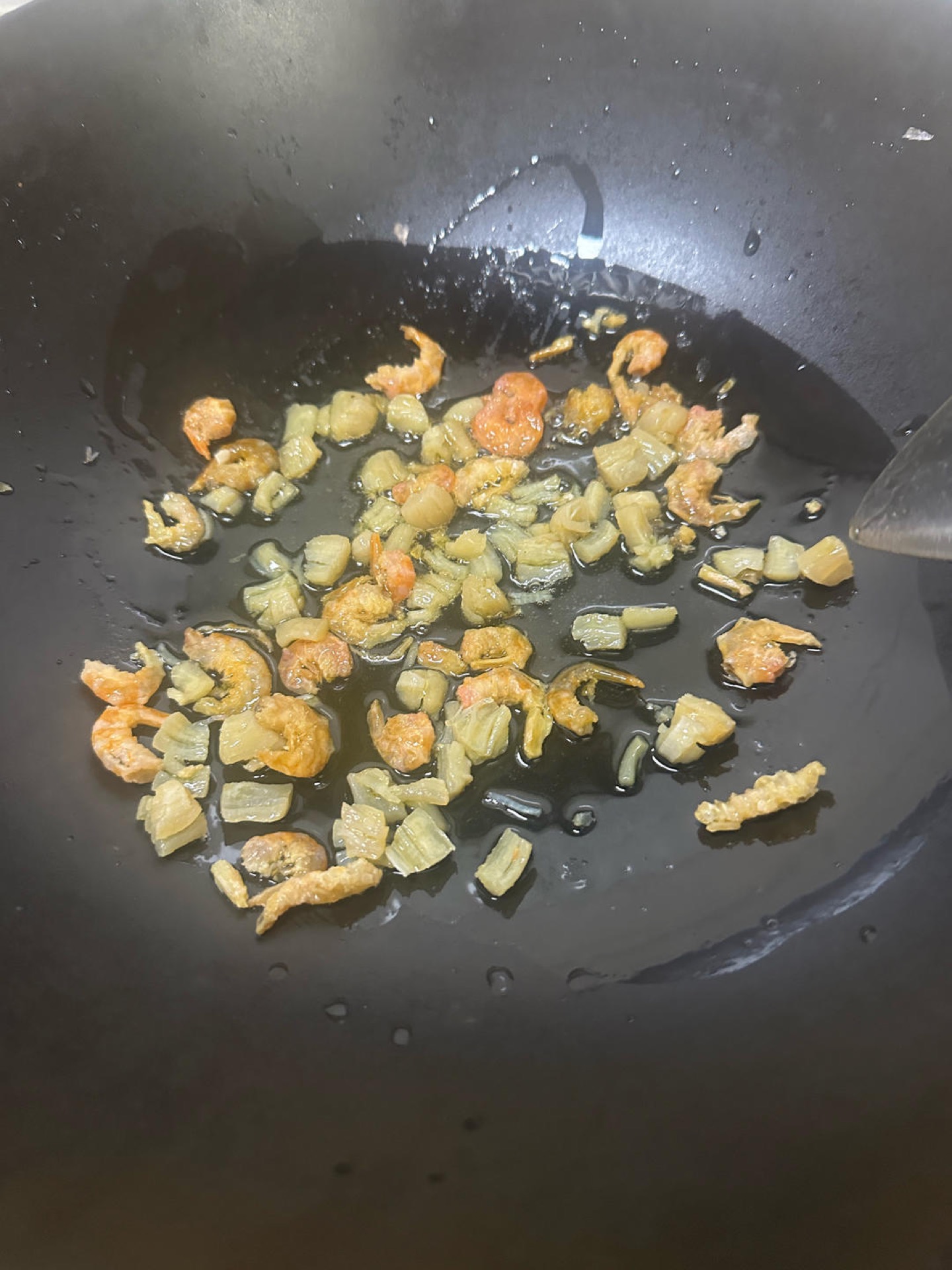
Rinse the dried scallop and dried shrimp, crush the scallop with the flat side of a knife, heat a little oil in a skillet, add both and fry briefly, then season with a pinch of salt and the soy sauce and stir.
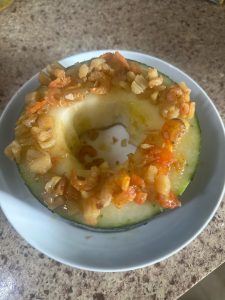
Step 3 — Steam the Rings
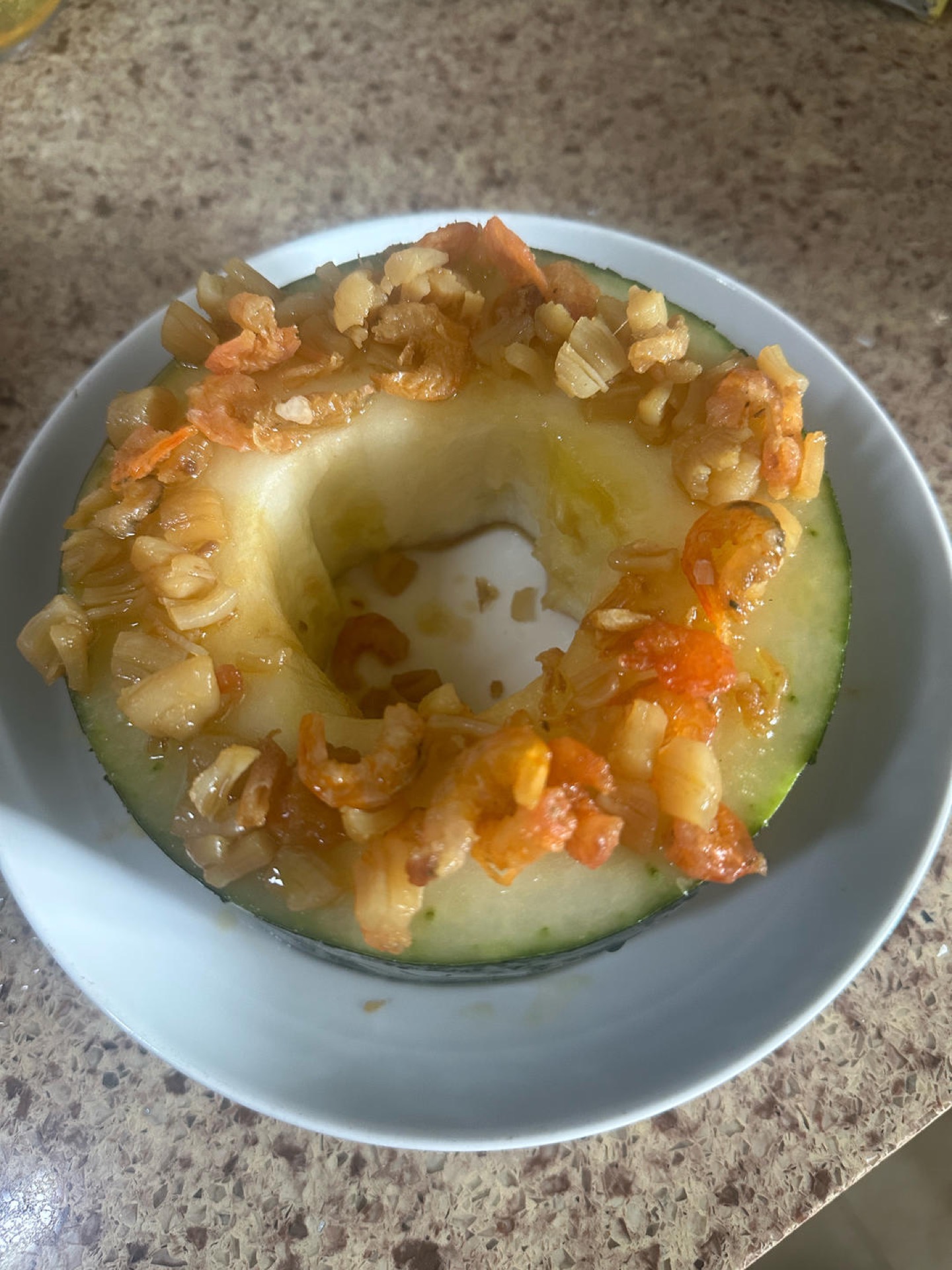
Spread the fried scallop and shrimp evenly over the top of the winter melon ring, then steam for about 1 hour, adjusting the time to the thickness of the melon.
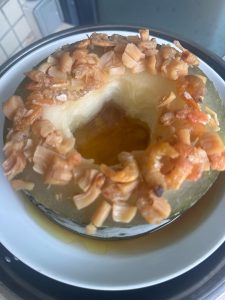
Step 4 — Check for Doneness
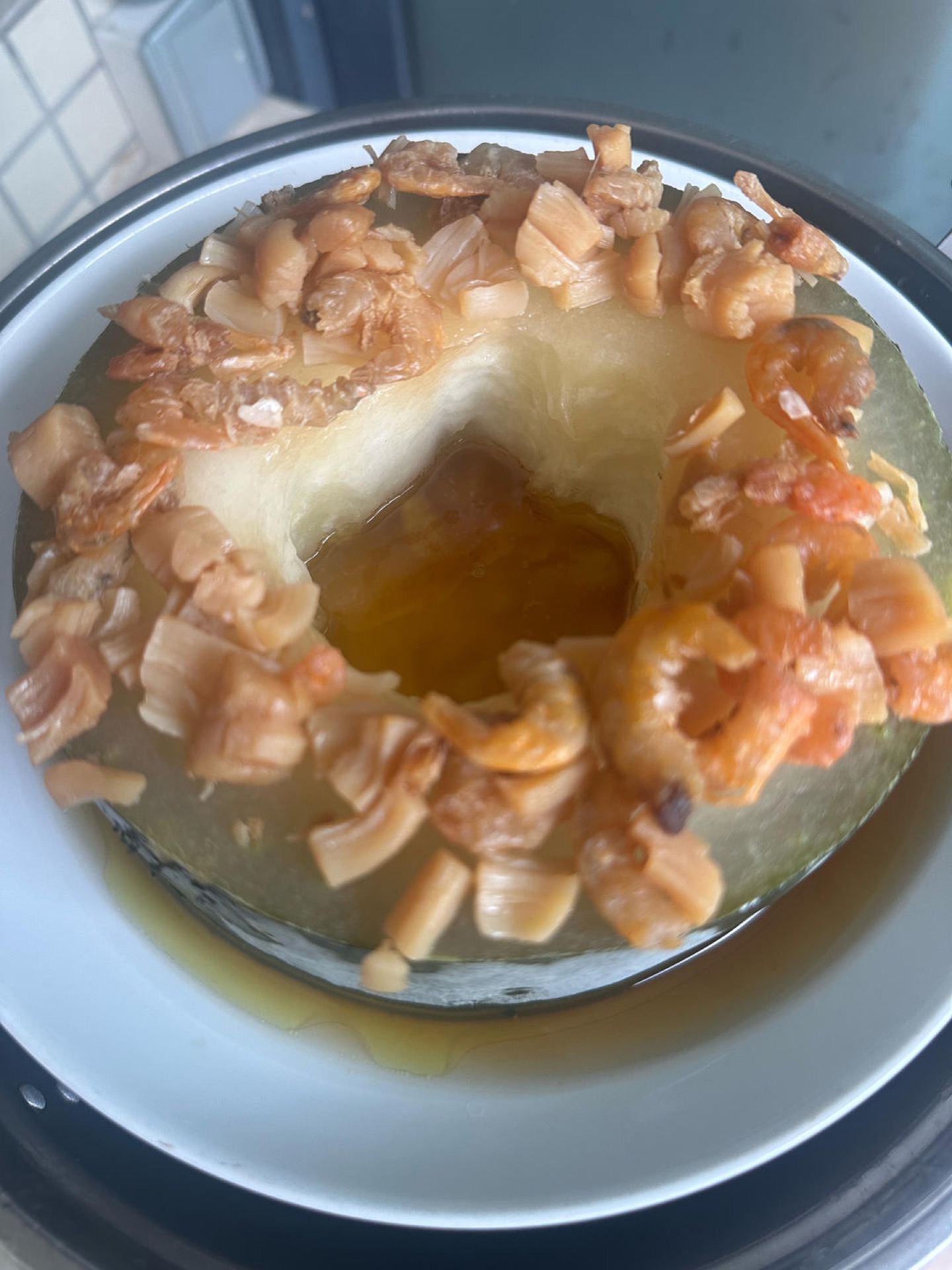
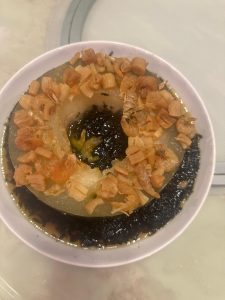
When the melon is nearly cooked through, it should look soft and slightly translucent around the edges, like this.
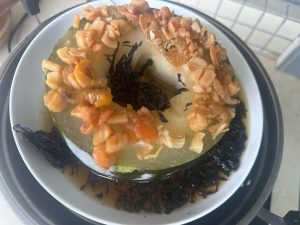
Step 5 — Add the Seaweed
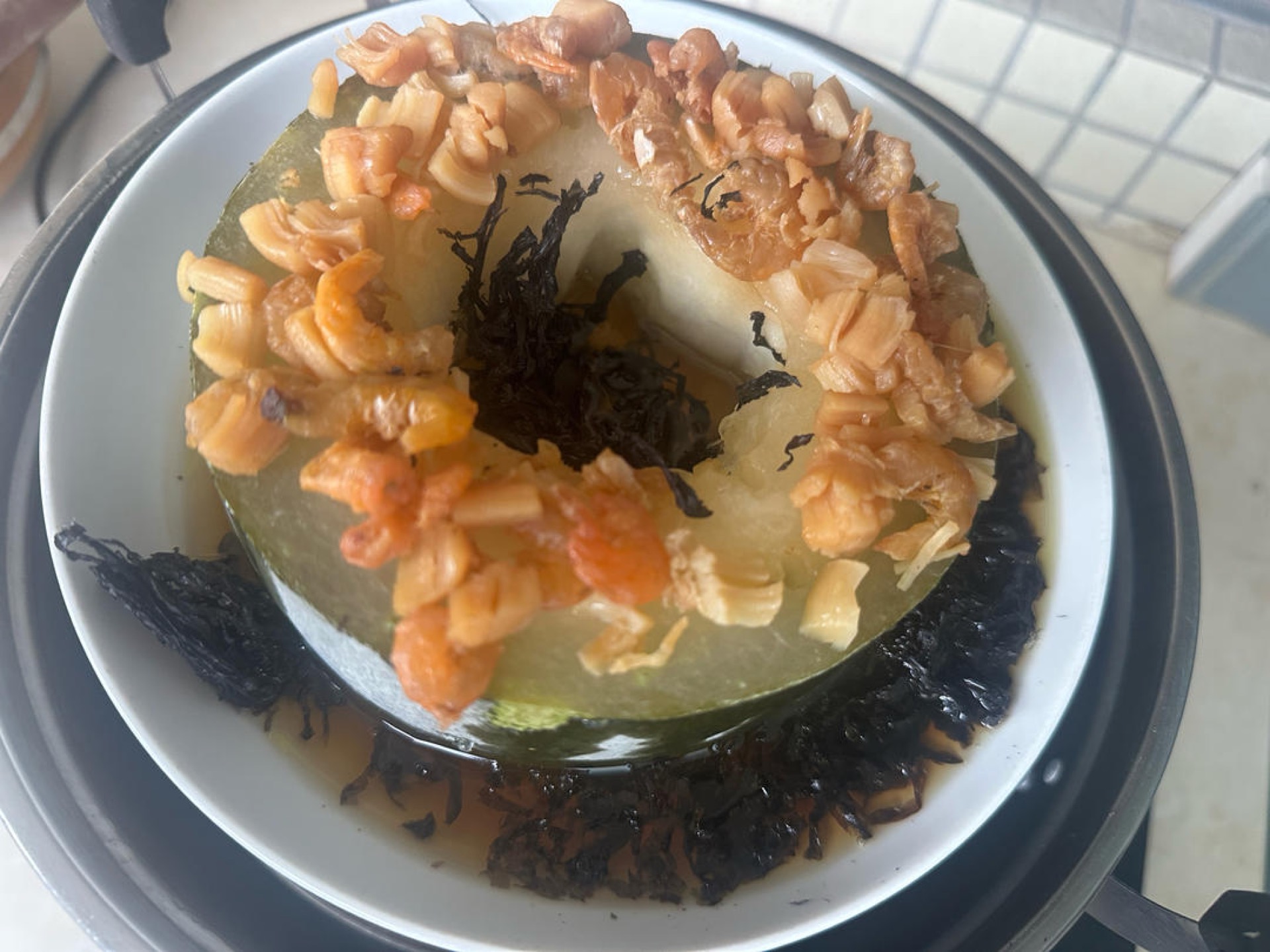
Crumble the dried seaweed by hand, scatter it around the melon and into the juices in the center, and keep steaming until the winter melon is fully tender and soft.
Step 6 — Garnish and Serve
If you like, scatter a few sliced scallions over the top, and it is ready to eat.
Common Mistakes When Making Steamed Winter Melon Rings
1. Peeling the winter melon. This is the single most common mistake, and it ruins the dish’s structure. Without the rind, the soft cooked flesh has nothing to hold it together and the ring slumps into a shapeless mound. Fix: leave the green skin on, and simply scrape the flesh away from it at the table if you prefer not to eat it.
2. Skipping the soak, or soaking in hot water. Under-soaked dried scallop stays tough and never releases its flavor properly, and hot water makes the soaking liquid bitter and slightly fishy. Fix: cold water, at least 8 hours, in the refrigerator. If you are short on time, soak in cold water for 4 hours and then simmer gently in the soaking water for 20 minutes.
3. Not frying the topping. Dried seafood straight from the soak tastes flat and a bit leathery. The brief fry in oil is what blooms the aroma and gives the fat that carries flavor into the melon. Fix: always give the scallop and shrimp a quick turn in a hot pan with oil, salt, and soy sauce before they go on the melon.
4. Cutting the ring too thin. A thin ring cooks fast but cannot hold a proper well, so the topping and its juices run straight off. Fix: aim for 4 cm (1½ inches). If you already cut it thin, build a shallow foil collar around it, or simply accept a shorter steam and a looser presentation.
5. Steaming by the clock instead of by feel. Winter melon thickness varies enormously, and an hour is a guideline, not a rule. A ring that is underdone tastes raw and crunchy; one that is overdone turns to mush. Fix: start checking at 45 minutes with a skewer. It is ready when the skewer slides through the flesh with zero resistance and the flesh looks glossy and translucent.
6. Letting the steamer run dry. An hour is a long steam, and a pot that boils dry will scorch and can crack. Fix: start with plenty of water and top it up with boiling water from a kettle if needed — never cold water, which will stall the steam.
7. Adding the seaweed too early. Seaweed crumbled in at the start dissolves into a dark, murky slick. Fix: add it in the last 10 to 15 minutes, as the recipe does, so it keeps some texture and a clean, bright flavor.
Variations
With minced pork. A classic variation replaces or supplements the dried seafood with a small amount of seasoned minced pork pressed into the well, which turns the dish into a fuller main course. Brown the pork first with a little soy sauce and shaoxing wine, then steam as directed, adding 10 minutes.
With crab or fresh shrimp. If you have fresh shrimp, chop them roughly and fold them into the fried scallop mixture. They will cook through in the steamer and add a springier texture.
With black bean and garlic. Mash a tablespoon of fermented black beans with two cloves of garlic and a little oil, and use that as the topping instead of the dried seafood. This is a punchier, more intensely savory version — and a good one to pair with a bowl of plain rice.
With chicken stock instead of the soaking liquid. If you did not save the scallop soak, spoon a little light chicken stock into the well before steaming. It will not have the same briny depth, but it keeps the center moist and gives you a sauce.
Thinner rings, faster steam. Cut the melon into 2 cm rounds and steam for 25 to 30 minutes for a quicker weeknight version. The rings will be more delicate, so lift them carefully with a slotted spoon.
Frequently Asked Questions
Can I eat the green skin of the winter melon? Yes. Once fully steamed, the rind softens considerably and is entirely edible — it has a slightly firmer, more vegetal texture than the flesh. Many people eat it, and many prefer to scrape the soft flesh away and leave the rind on the plate. Either way, leave it on during cooking, because it is what holds the ring together.
How do I know when the winter melon is done? Insert a thin skewer or the tip of a knife into the thickest part of the ring. If it slides in with no resistance at all, and the flesh around it looks glossy and slightly translucent rather than opaque white, it is ready. If there is any firmness left, give it another 10 minutes and check again.
Can I make this ahead of time? Yes, and it reheats well. Steam the dish completely, cool it within 2 hours, and refrigerate in a sealed container for up to 3 days. Reheat by steaming for 8 to 10 minutes, or in the microwave covered, until piping hot. The melon will be a little softer on the second day, but the flavor deepens.
What if I cannot find dried scallop? Dried shrimp alone works, though the dish loses some of its sweetness and depth. You can also use a combination of dried shrimp and a small piece of dried squid or a few dried anchovies, all soaked and chopped. If you use only dried shrimp, add an extra pinch of sugar to the fry to round out the flavor.
Is this dish supposed to be soupy? It should have a small pool of savory liquid in the center of the ring and a little around the base — that juice is the best part, and it is meant to be spooned over rice. If yours is swimming, you likely used a melon that released a lot of water; spoon off the excess before serving, or reduce it briefly in a small pan with a splash of soy sauce.
How to Serve
Steamed winter melon rings are at their best with plain steamed rice, which soaks up the juice from the center of the ring. Serve the dish in its steaming plate so no one loses a drop. Alongside it, a simple green vegetable rounds out the meal — a quick tomato cabbage stir fry adds a bright, tangy counterpoint to the gentle, savory melon, and it comes together in the time the melon steams.
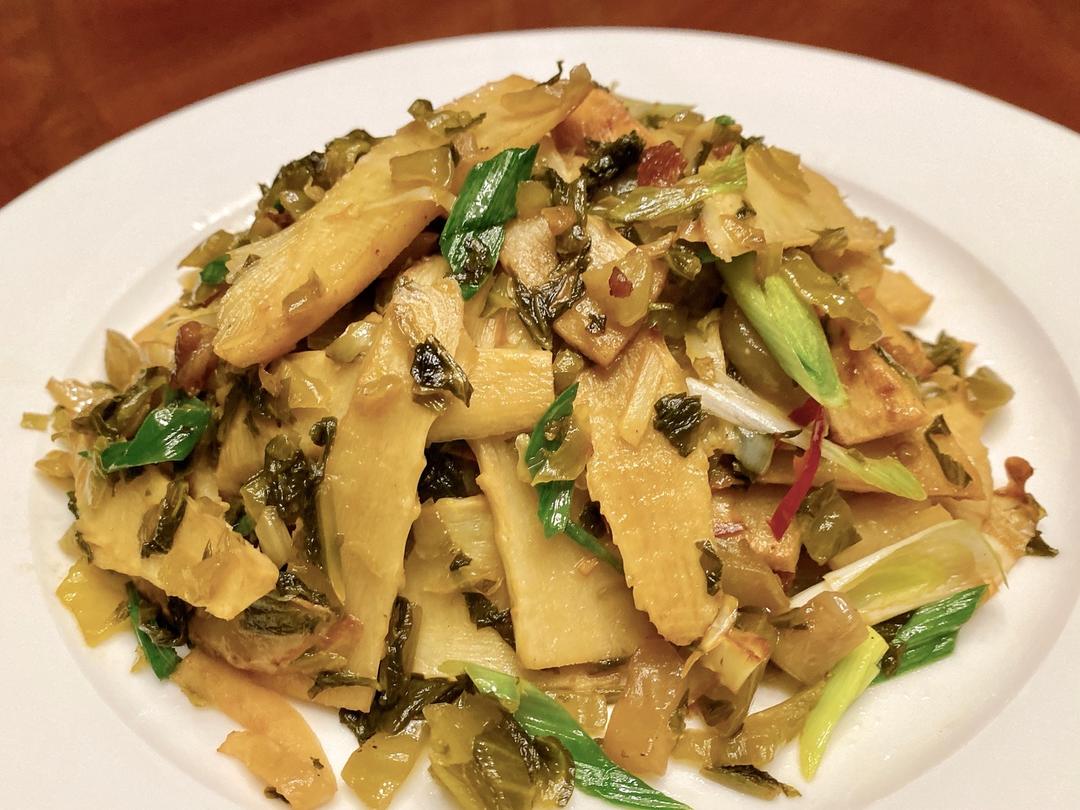
For a slightly more substantial table, stir fried winter bamboo shoots share the same clean, vegetable-forward character and a similar delicate crunch. And if you want a heartier centerpiece next to the melon, sweet and sour pork ribs give you the rich, sticky contrast that a light steamed dish is asking for.


Storage & Reheat
Cool any leftovers within 2 hours of cooking, then transfer the melon and its juices to a sealed container and refrigerate for up to 3 days. The dish actually improves overnight as the melon continues to absorb the savory liquid.
To reheat, steam the rings for 8 to 10 minutes, until piping hot throughout. A covered microwave works too — 2 to 3 minutes on high, checking halfway — though the melon will soften further. Avoid reheating in a dry pan, which will cause the melon to stick and lose its juices.
This dish does not freeze well. The high water content of winter melon means ice crystals break down the flesh, and thawed rings turn watery and mushy. If you have a large batch, it is better to share it than to freeze it.
Allergen Notice
This recipe contains shellfish (dried scallop and dried shrimp). Light soy sauce contains soy and, in most brands, wheat; check the label if you are cooking for someone with a soy or gluten allergy, and substitute tamari or coconut aminos if needed. Dried seaweed is generally allergen-free, but check the packaging for shared-facility warnings. If you are serving this to someone with a shellfish allergy, the dish can be made with the black bean and garlic variation instead — it keeps the savory character without any seafood.
Nutrition Disclaimer
Nutrition information is calculated using an ingredient database and should be considered an estimate. In cases where multiple ingredient alternatives are given, the first listed is calculated for nutrition. Garnishes and optional ingredients are not included.
About the Author & Recipe Development
Lin is the cook, writer, and photographer behind Woks of Love, a site devoted to the home-style Chinese cooking she grew up with and the techniques she has spent years refining in her own kitchen. Her approach is practical: fewer gadgets, honest ingredients, and recipes written the way a family cook would actually explain them.
This recipe was developed from a Cantonese home method for steaming winter melon with dried seafood, tested repeatedly to pin down the variables that matter most — the thickness of the ring, the length of the soak, and the moment the melon turns from crisp to silky. The version here keeps the original’s restraint: a short ingredient list, a long gentle steam, and a topping that does all the seasoning for you. If you make it, the only thing worth adjusting to your own taste is the amount of soy sauce in the fry.
Authoritative References
For safe handling and storage of cooked vegetable dishes, the FDA’s guidance on refrigerator thermometers and cold food safety is a clear, practical reference. For internal cooking temperatures and leftovers guidance, the USDA safe minimum internal temperature chart is the standard source, and the USDA leftovers and food safety page covers the two-hour cooling rule used above.
Steamed Winter Melon Rings with Dried Scallop (蒸冬瓜圈): Tender

Equipment
- Wok
- Steamer rack
- Cutting Board
- Small Skillet
- Slotted Spoon
Ingredients
For the Melon and Topping
- 1 ring winter melon about 4 cm (1½ inches) thick, cut crosswise
- 1/4 cup dried scallop about 6-8 pieces, soaked 8 hours
- 2 tbsp dried shrimp soaked 8 hours
- 1 pinch dried seaweed nori or zi cai, torn small
- 2 tbsp neutral oil for frying the topping
- 1/4 tsp salt plus more to taste
- 1/2 tbsp light soy sauce or tamari
For the Garnish
- 2 stalks scallion thinly sliced, optional
Instructions
- Cut the winter melon into a ring about 4 cm (1½ inches) thick, scoop out the seeds and soft center with a spoon, but leave the green skin on, then rinse it clean.

- Rinse the dried scallop and dried shrimp, crush the scallop with the flat side of a knife, heat a little oil in a skillet, add both and fry briefly, then season with a pinch of salt and the soy sauce and stir.
- Spread the fried scallop and shrimp evenly over the top of the winter melon ring, then steam for about 1 hour, adjusting the time to the thickness of the melon.
- When the melon is nearly cooked through, it should look soft and slightly translucent around the edges, like this.
- Crumble the dried seaweed by hand, scatter it around the melon and into the juices in the center, and keep steaming until the winter melon is fully tender and soft.

- If you like, scatter a few sliced scallions over the top, and it is ready to eat.












Leave a Reply