As a citrus enthusiast, oranges are easily one of my top favorite fruits. While I usually enjoy them straight, juiced, or in desserts, I also love incorporating them into savory dishes to brighten up the meal.

A while back, I was hosting some friends and decided to experiment with a cold appetizer on a whim. The result was a massive hit! This dish combines sweet navel oranges, mild winter melon, and savory shrimp balls (shrimp paste). It is incredibly refreshing, delicious, and—best of all—low in fat and calories.
By using fresh, sweet navel orange juice as the soup base, we effectively neutralize any fishiness from the shrimp while transforming the usually plain winter melon into something fruity and fragrant. The seasoning leans towards a Thai-style sour and spicy profile. While many people use lemon for this type of dressing, I find that navel oranges offer a sweetness that makes the acidity much softer and more palatable than lemon, pairing perfectly with the kick of fresh chili peppers.
If you are looking for a light, healthy, and visually stunning dish to impress guests or just want a guilt-free dinner option, this is it.
Why This Recipe Works
- Natural Sweetness: Using orange juice instead of sugar or heavy syrups provides a complex, floral sweetness that balances the savory soy sauce and spicy chili.
- Texture Contrast: The “bouncy” texture of the shrimp balls contrasts beautifully with the soft, melt-in-your-mouth texture of the boiled winter melon.
- Zero Oil: Unlike many stir-fries, this dish relies on natural fruit juices and aromatics for flavor, making it completely oil-free.
What is Winter Melon?
Winter Melon (Dong Gua) is a mild, cooling vegetable widely used in Chinese cuisine, often in soups or braised dishes. Despite its name, it is grown in the summer but can be stored through the winter.

It has a texture similar to the white rind of a watermelon but without the sweetness. Because it has very little flavor of its own, it is a master at absorbing the flavors of the sauce it is cooked in—in this case, the zesty orange and savory shrimp.
💡 Link: If you enjoy refreshing cold dishes like this, you might also love mySmashed Cucumber Salad, which offers a similar garlicky kick!
Key Ingredients & Substitutions
Here is what you will need to make this vibrant dish. I have adjusted the measurements for Western kitchens while keeping the authentic flavor profile.

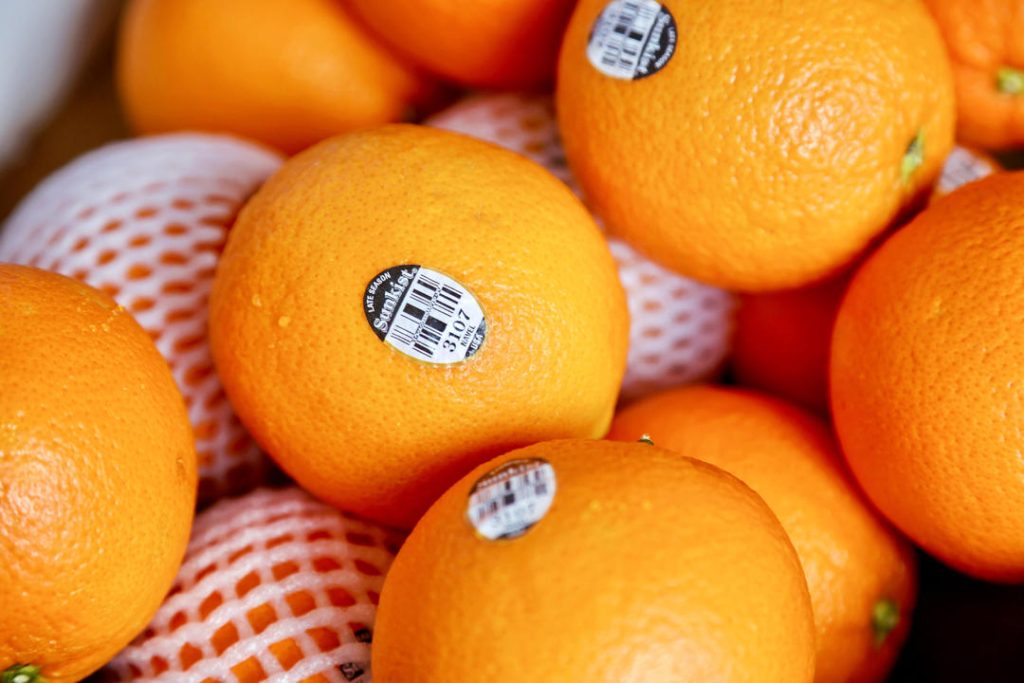
- Navel Oranges: You’ll need about 2 large oranges. I highly recommend sweet varieties like Sunkist or Cara Cara.
- Substitution: If your oranges are sour, you may need to increase the sugar slightly. Avoid juice from a carton; fresh is essential here.
- Winter Melon: You need about 7 oz (200g).
- Substitution: If you cannot find winter melon at your local Asian market, Daikon Radish or Cucumber (peeled and seeded) can work, though the cooking time for daikon will be longer, and cucumber should not be boiled (just use raw).
- Shrimp Paste (Shrimp Slide/Xia Hua): 5 oz (150g). In China, we buy this pre-made as “shrimp slide.” It is essentially raw shrimp minced into a paste with egg white and starch to make it bouncy.
- DIY Hack: If you can’t find frozen shrimp paste, simply pulse peeled shrimp in a food processor with 1 egg white, 1 tsp cornstarch, and a pinch of white pepper until sticky.
- Bird’s Eye Chili (Thai Chili): 2 peppers. These pack a punch!
- Substitution: For less heat, use half a Jalapeño or omit entirely.
- Aromatics: 2 cloves of garlic (minced) and 1 sprig of cilantro (coriander).
- Seasonings: Light soy sauce (for savory umami), salt, and a little sugar to balance the acid.
Ingredient Deep Dive: Winter Melon vs. Daikon
I often get asked if Daikon is the same as Winter Melon. Here is a quick comparison to help you choose:
- Winter Melon: Cooks very fast (translucent in minutes), very soft texture, neutral flavor. Best for absorbing fruit broths.
- Daikon Radish: Takes longer to boil, retains a slight crunch, has a peppery/earthy flavor. If using Daikon here, boil it until it is fully tender to mimic the melon texture.
Recipe Notes Before You Start
- The “Ice Bath” Trick: Although not strictly required, preparing a bowl of ice water to shock the cooked winter melon and shrimp balls will stop the cooking process immediately. This keeps the shrimp bouncy (Q-texture) and the melon from turning into mush.
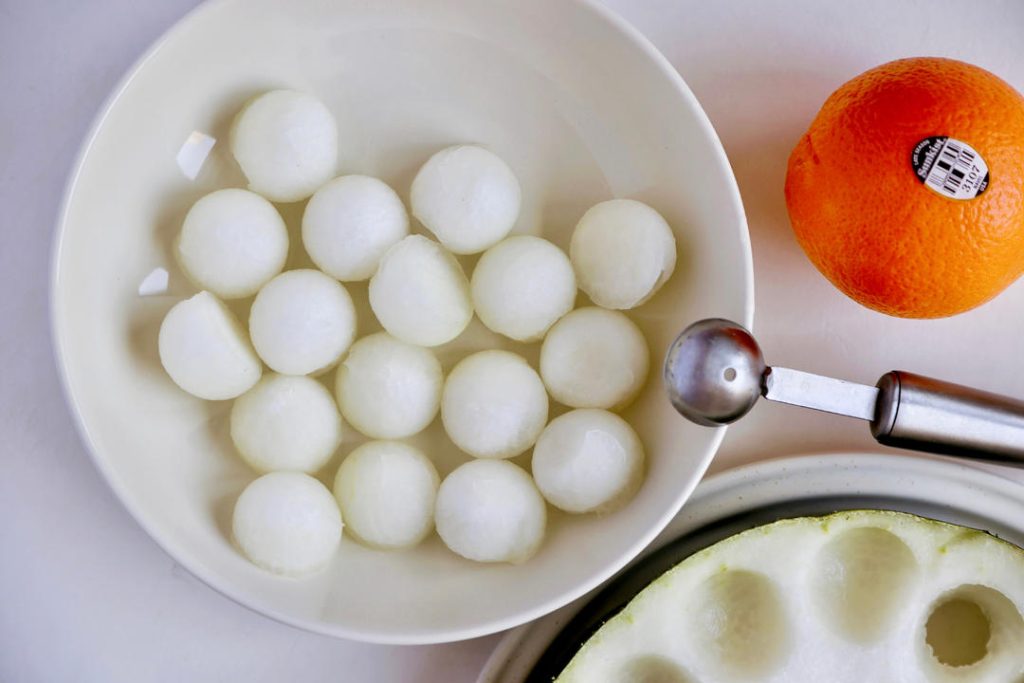
- Use a Melon Baller: To achieve the “pearls on a plate” look, a melon baller is highly recommended. However, cutting them into uniform cubes tastes just as good!
How to Make Orange Winter Melon Shrimp Balls
Step 1: Mise en Place
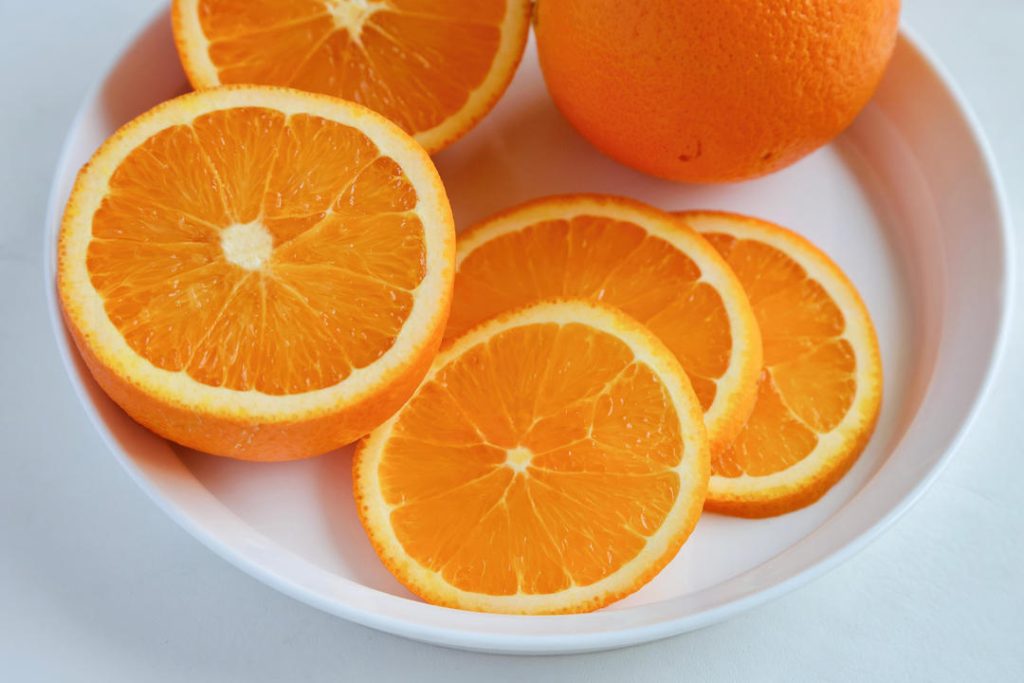
Gather all your ingredients. Wash the oranges thoroughly. Slice a few thin rounds from one orange to use as a garnish later.
Step 2: Extract the Juice
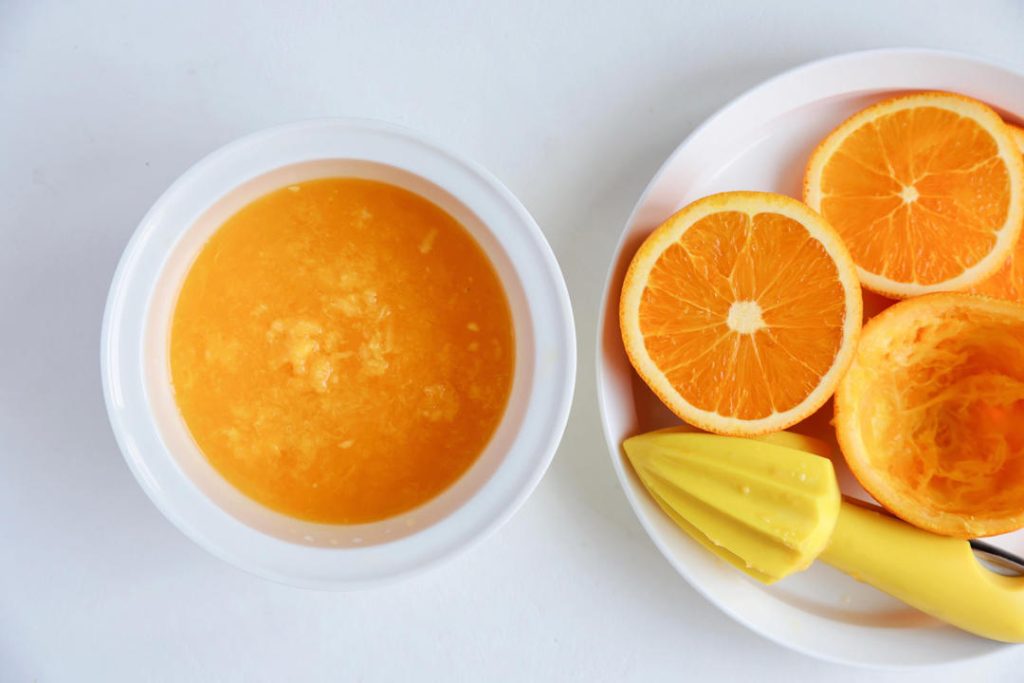
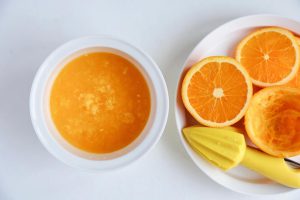
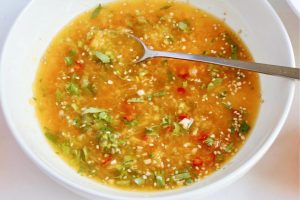
Juice the remaining oranges. You want all that fresh juice! There is no need to filter out the pulp; the fruit fiber adds a nice texture to the sauce. Pour the juice into a large mixing bowl.
Step 3: Prep the Winter Melon
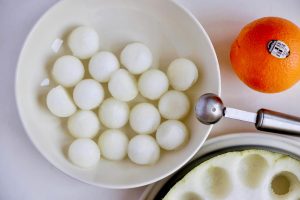
Peel the winter melon and remove the seeds. Use a melon baller to scoop out round spheres of melon.
- Why do this? Uniform shapes ensure even cooking, and the round shape matches the shrimp balls for a beautiful presentation. If you don’t have a tool, simply cut them into 1-inch cubes.
Step 4: Blanch the Melon
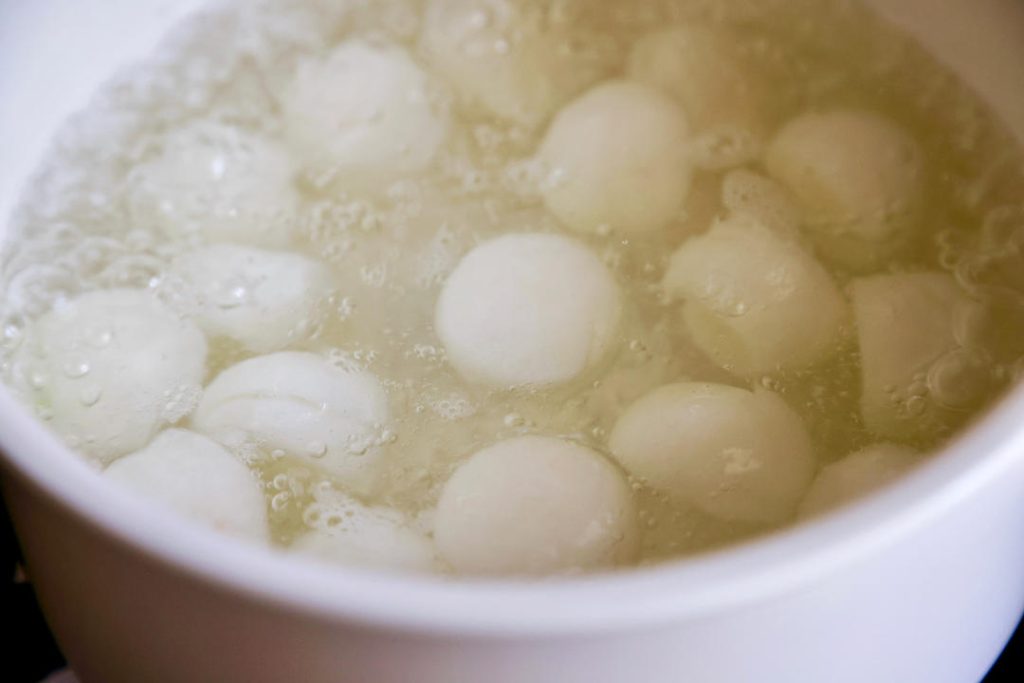
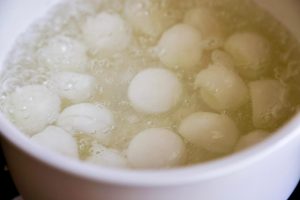
Bring a pot of water to a boil. Add the winter melon balls. Cook until the water returns to a boil and the melon turns slightly translucent (about 2-3 minutes).
- Tip: Do not overcook them, or they will dissolve! Remove them with a slotted spoon and set aside (or place in an ice bath). Do not discard the water.
Step 5: Cook the Shrimp Balls
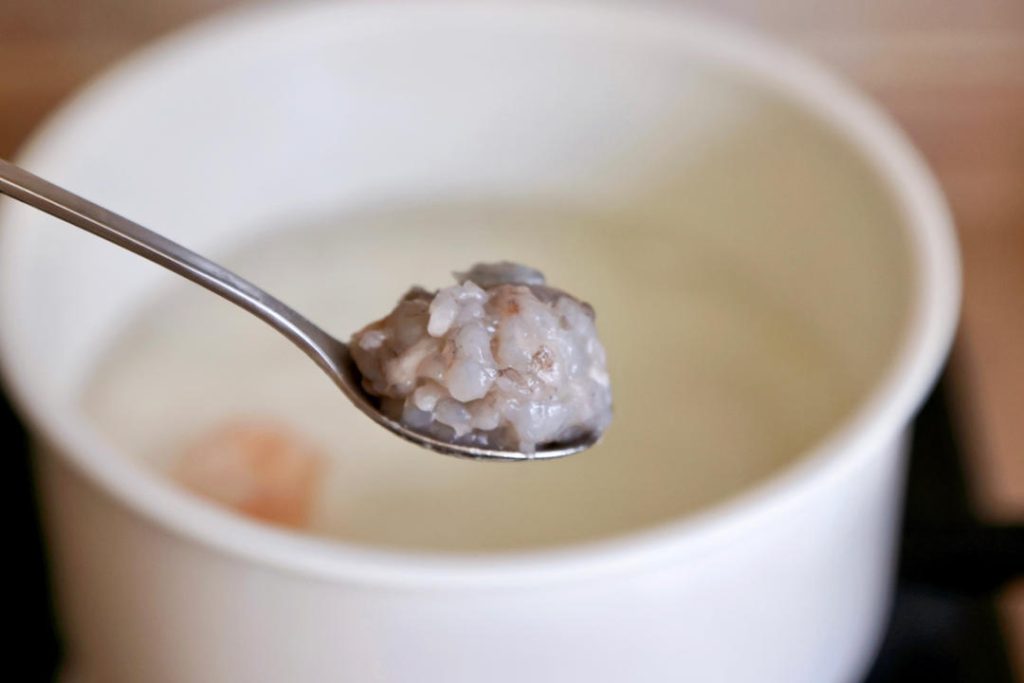
Keep the water boiling. If you are using a piping bag of shrimp paste, squeeze the paste through the opening and cut it off with a spoon or use your thumb and forefinger (the “tiger mouth” method) to squeeze out round balls. Drop them into the boiling water.
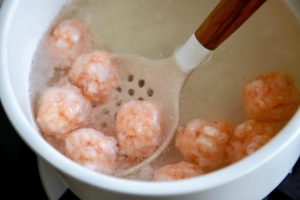
- Visual Cue: Boil until they float to the surface and turn pink. This usually takes 2-3 minutes. Remove and drain.
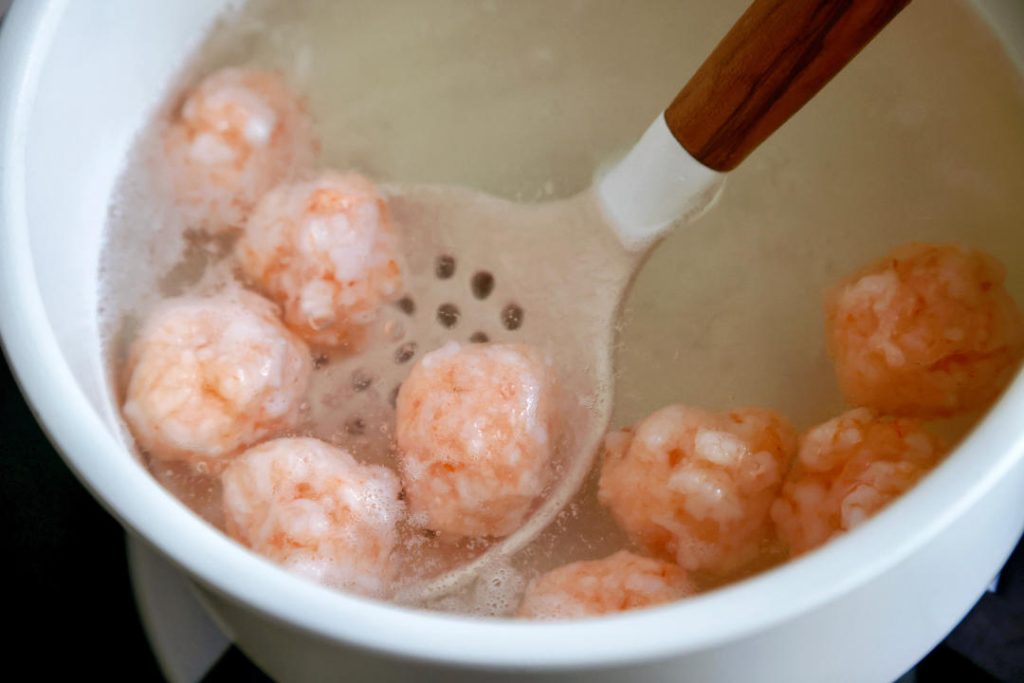
Safety Note: Ensure the shrimp reaches an internal temperature of 145°F (63°C). Undercooked seafood poses a food safety risk.
Step 6: Make the Sauce
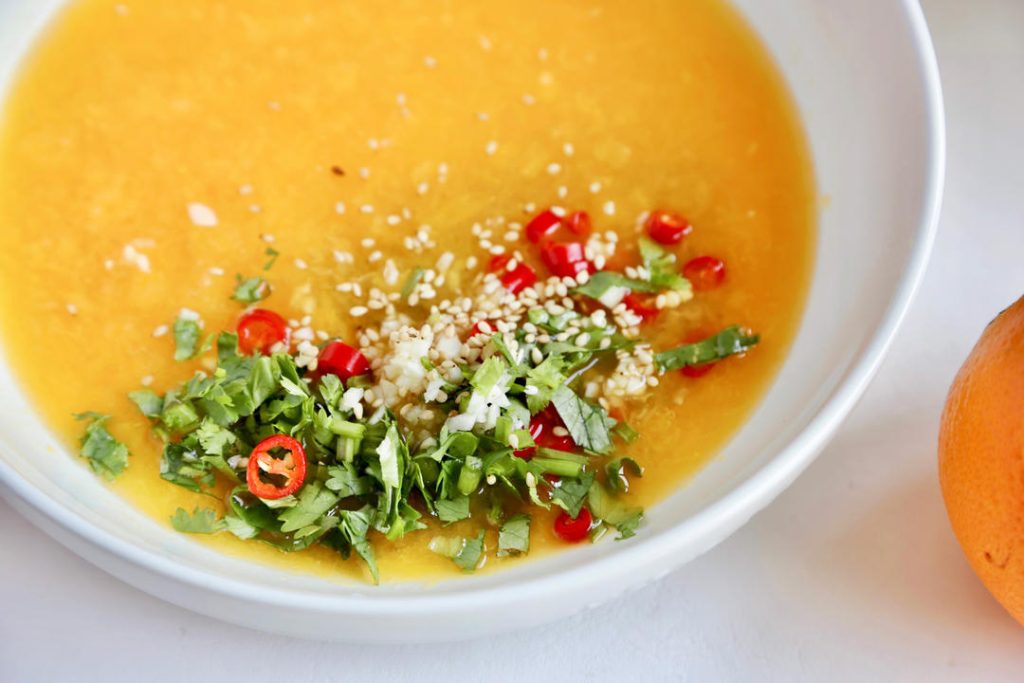
To the bowl with the fresh orange juice (from Step 2), add the minced bird’s eye chili, minced garlic, chopped cilantro, and white sesame seeds. Next, add the 1 tsp Light Soy Sauce, ½ tsp Salt, and ½ tsp Sugar. Stir vigorously until the sugar and salt are completely dissolved.
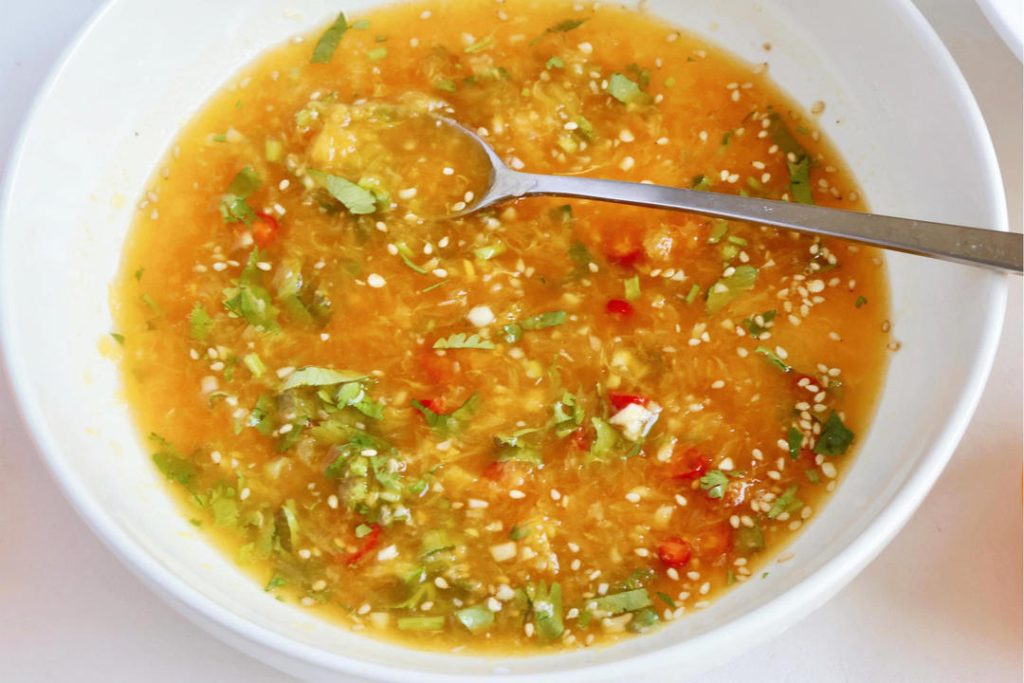
Step 7: Assemble and Serve
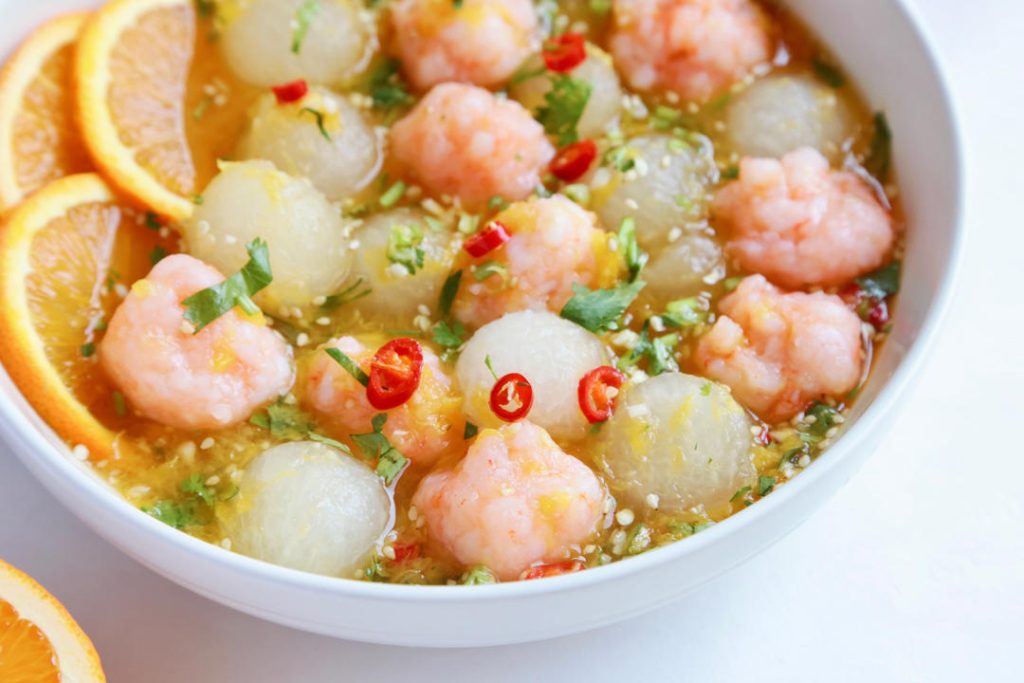
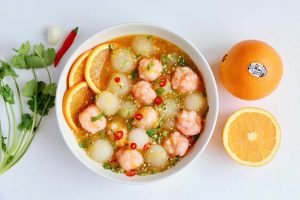
Add the cooked winter melon and shrimp balls into the orange sauce. Toss gently to coat every piece. Garnish with the orange slices you reserved earlier.
For the best flavor, let it sit in the fridge for 15 minutes before serving so the flavors meld together.
💡 Link: This dish makes a fantastic appetizer. If you are building a full meal, it pairs wonderfully with a main course likeKung Pao Chickenfor a balance of hot and cold, spicy and sweet.
FAQ & Troubleshooting
Q: My shrimp balls fell apart in the water. Why? A: This usually happens if the shrimp paste isn’t sticky enough. If you made your own paste, ensure you blended the shrimp until it became a sticky paste (not just chopped) and added cornstarch. The cornstarch acts as a binder.
Q: Can I make this ahead of time? A: Yes! In fact, it tastes better after marinating for 30 minutes in the fridge. However, don’t leave it for more than 24 hours, or the acid in the orange juice might start to break down the texture of the shrimp too much.
Q: It tastes too sour! A: Oranges vary in sweetness throughout the year. If your oranges are tart, simply add a little more sugar or a drizzle of honey to balance the acidity.
Nutrition Facts (Per Serving):
- Calories: 180 kcal
- Total Fat: 2g
- Saturated Fat: 0g
- Cholesterol: 110mg
- Sodium: 650mg
- Total Carbohydrates: 18g
- Dietary Fiber: 3g
- Sugars: 12g
- Protein: 16g
- Vitamin C: 90mg
- Calcium: 80mg
- Iron: 1.5mg
Food Safety & Allergen Warnings:
- Shellfish Safety: Ensure the shrimp balls are cooked thoroughly to an internal temperature of 145°F (63°C). The shrimp should turn opaque and pearly pink.
- Allergen Alert: This recipe contains Shellfish (shrimp), Soy (soy sauce), and Sesame seeds. Please exercise caution if serving guests with food allergies.
- Consume Fresh: Since this dish uses fresh fruit juice and seafood, it is best consumed within 24 hours. Do not leave it at room temperature for more than 2 hours.
Recipe Notes:
- Nutrition Disclaimer: Nutrition information is calculated using an ingredient database and should be considered an estimate. In cases where multiple ingredient alternatives are given, the first listed is calculated for nutrition. Garnishes and optional ingredients are not included.
- The “Ice Bath” Trick: To keep the shrimp balls “bouncy” (that desirable Q-texture) and prevent the winter melon from becoming mushy, prepare a bowl of ice water. Once boiled, immediately transfer the cooked melon and shrimp into the ice bath for 1 minute before draining. This stops the cooking process instantly.
- Make Ahead Tip: This dish actually tastes better after the flavors have melded. You can prepare the sauce and cook the ingredients ahead of time, but combine them and let them marinate in the fridge for about 15–30 minutes before serving for the best flavor profile.
- Choosing Oranges: Sweet Navel oranges or Cara Cara oranges work best. If your oranges are on the sour side, you may need to increase the sugar slightly to balance the savory soy sauce.
Final Thoughts
This dish is poetic in Chinese—described as “large and small pearls falling onto a jade plate.” It is high in visual appeal, bursting with Vitamin C, and satisfies that craving for something spicy and sour without the heavy oil of traditional stir-fries.
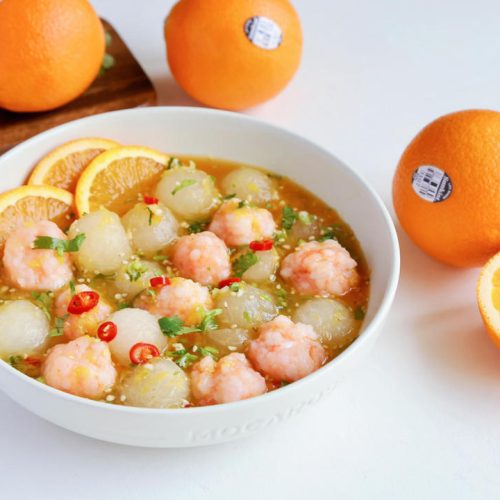
Orange Winter Melon Shrimp Balls (Xiang Cheng Dong Gua Xia Qiu)

Equipment
- 1 Melon Baller Optional, for shaping the winter melon
- 1 Large Pot For boiling water
Ingredients
Main Ingredients
- 2 large Navel Oranges Sweet variety like Sunkist recommended
- 7 oz Winter Melon Peeled and seeded (approx 200g)
- 5 oz Shrimp Paste (Shrimp Slide) Can substitute with homemade minced shrimp (approx 150g)
Dressing & Aromatics
- 2 Bird’s Eye Chilies Finely chopped (adjust to taste)
- 2 cloves Garlic Minced
- 1 sprig Cilantro Finely chopped
- 1 tsp White Sesame Seeds Toasted
- 1 tsp Light Soy Sauce
- 0.5 tsp Salt
- 0.5 tsp Sugar
Instructions
- Prepare all ingredients. Wash the oranges thoroughly. Slice a few thin rounds from one orange to use as a garnish later.

- Juice the remaining oranges into a large mixing bowl. There is no need to filter out the pulp; the fruit fiber adds texture.
- Use a melon baller to scoop the winter melon into round spheres. If you do not have a tool, peel and cut into 1-inch cubes.
- Bring a pot of water to a boil. Add the winter melon balls and cook until the water boils again and the melon turns slightly translucent (about 2-3 minutes). Remove and set aside. Do not discard the water.
- In the same boiling water, squeeze the shrimp paste into balls (about the size of a walnut) and drop them in. Boil until they float to the surface (about 2-3 minutes). Remove and drain.
- In the bowl with the orange juice, add the chopped chili, minced garlic, cilantro, white sesame seeds, light soy sauce, salt, and sugar. Stir until well combined.
- Add the cooked winter melon and shrimp balls into the sauce. Toss gently to coat. Garnish with the reserved orange slices and serve.





Leave a Reply