Growing up around the fast-paced woks of my parents’ Sichuan restaurant in Chengdu, I learned early on that the best ingredients are often the most seasonal ones. Winter bamboo shoots are a prime example. They are incredibly tender, crisp, and carry a subtle sweetness that you simply cannot find in canned alternatives.
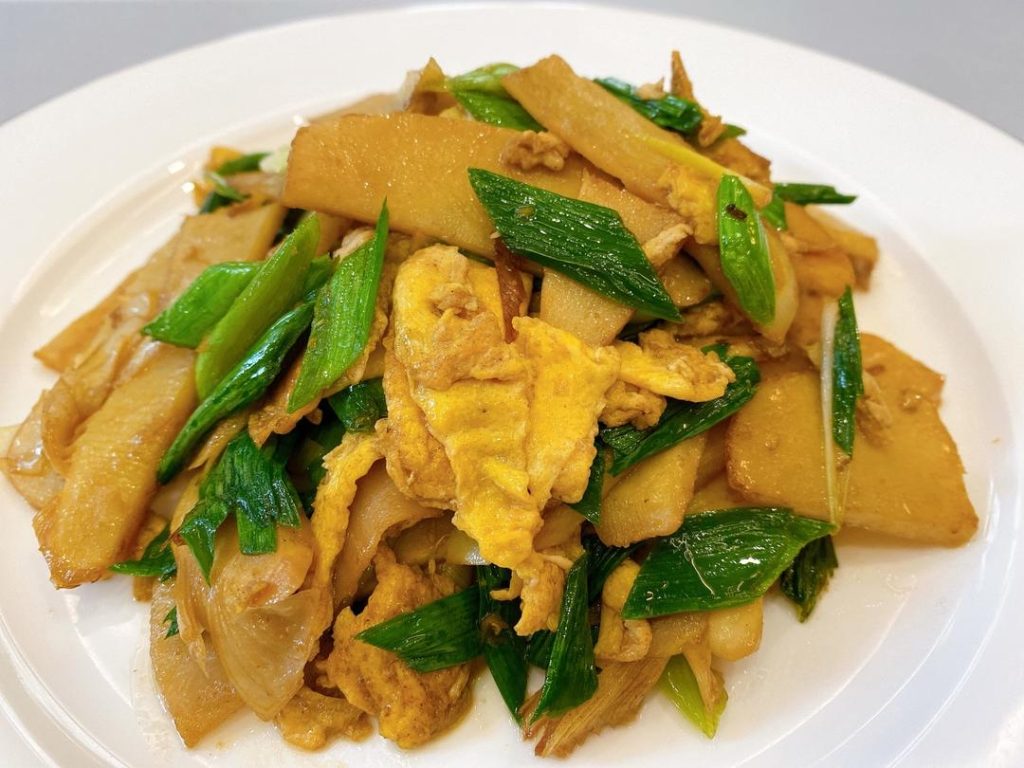
However, many home cooks shy away from fresh winter bamboo shoots because they can taste unpleasantly astringent or numb the mouth if not handled correctly. Today, I am going to show you exactly how to choose, store, prep, and stir-fry them to perfection, using a classic homestyle pairing of cured pork and snow cabbage.
What Are Winter Bamboo Shoots (Dong Sun)?
Winter bamboo shoots (冬笋, Dōng Sǔn) are the young, tender shoots of the bamboo plant harvested before they break through the soil surface in the winter. Because they haven’t seen sunlight, they are pristine white, tightly packed, and possess a delicate crunch. This is quite different from spring shoots, which have already breached the earth and have a more robust texture.
If you are a fan of bamboo shoots, you might also enjoy exploring Oil Braised Spring Bamboo Shoots for a seasonal variation, or Pickled Bamboo Shoots if you prefer a tangy, spicy flavor profile.

Ingredients
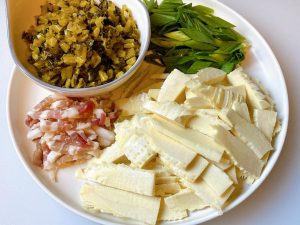
- Fresh Winter Bamboo Shoots: 500g (about 1 lb). Look for shoots with white bottoms. If the bottom is turning green, it means it has been out of the soil for a few days and will be more fibrous and bitter.
- Snow Cabbage (Xuecai): 100g (3.5 oz). This pickled mustard green adds a beautiful savory tang. You can find this in vacuum-sealed packets at most Asian grocers.
- Chinese Cured Pork (Laba Rou / Salted Meat): 50g (1.7 oz), sliced into thin strips. If you have some Homemade Chinese Cured Pork Belly, this is the perfect time to use it.
- Green Garlic (or Garlic Scapes): 2 stalks, cut into 1-inch pieces.
- Salt: 1g (about 1/4 tsp). Because the snow cabbage and cured pork are already salty, go easy on the Salt.
- Sugar: A pinch, to balance the flavors. A tiny bit of Sugar helps round out the harsh edges of the pickled greens.
- Oyster Sauce: 1 tbsp. A good quality Oyster Sauce adds depth and umami.
- Cooking Oil: 2 tbsp. Bamboo shoots absorb oil well, so we use slightly more than a standard vegetable stir-fry.
Equipment Needed
- A carbon steel wok or a large, heavy-bottomed skillet.
- A sharp chef’s knife for precise peeling and slicing.
Prep & Mise en Place
Peeling the Shoots: The easiest way to peel a fresh bamboo shoot is to make a deep lengthwise slit down the side with the heel of your knife, cutting through the tough outer leaves but stopping before you hit the tender core. Then, pry the leaves off with your fingers.

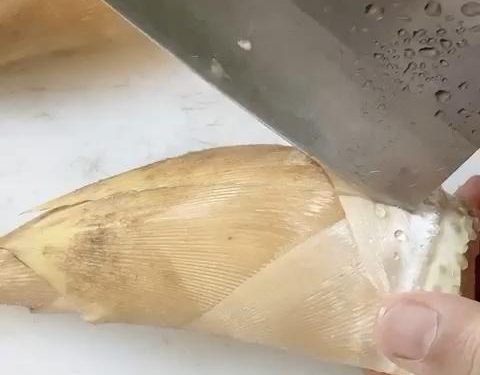

To Blanch or Not to Blanch: * If your bamboo shoots are freshly dug, pristine white, and tender: You do not need to blanch them. They can go straight into the wok.
If the shoots have a greenish tint at the base or have been sitting for a few days: You must blanch them. Slice them, drop them into a pot of boiling salted water for 3 to 5 minutes, then drain. This draws out the astringency.
Cooking Process
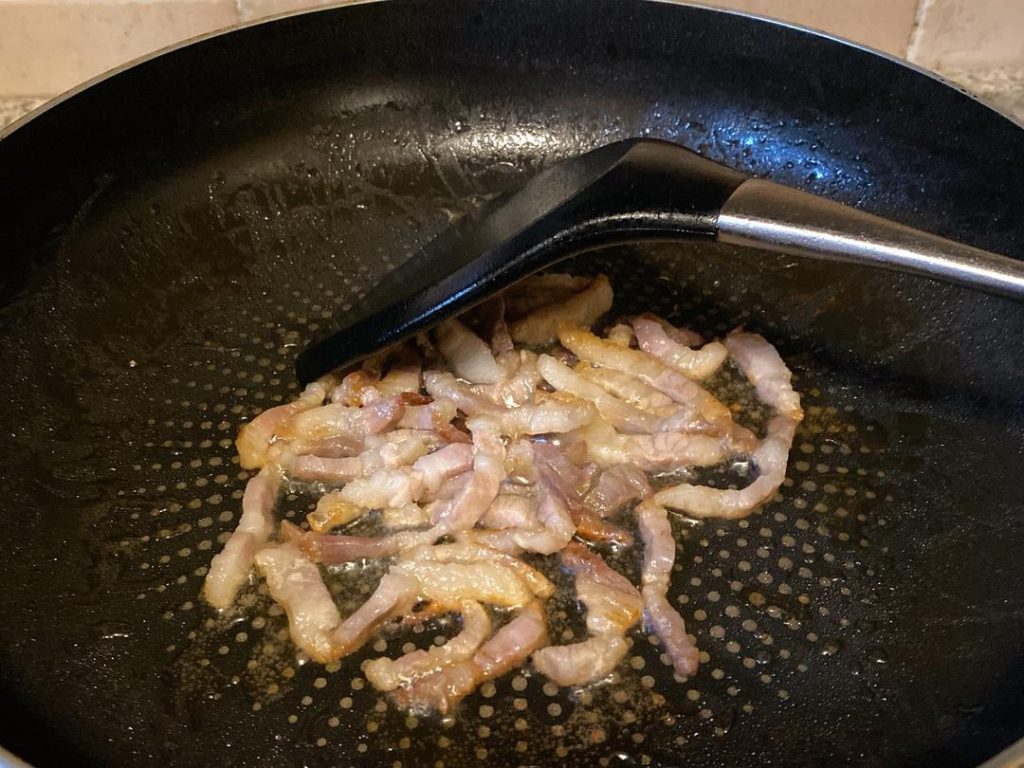
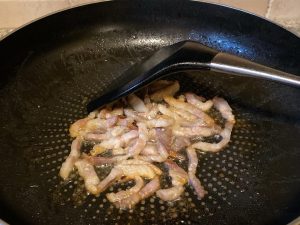
- Render the Pork Fat (2–3 minutes): Place your wok over medium-low heat. Add 1 tablespoon of oil and the sliced cured pork. Stir-fry slowly until the pork turns translucent and releases its fragrant fat into the wok.
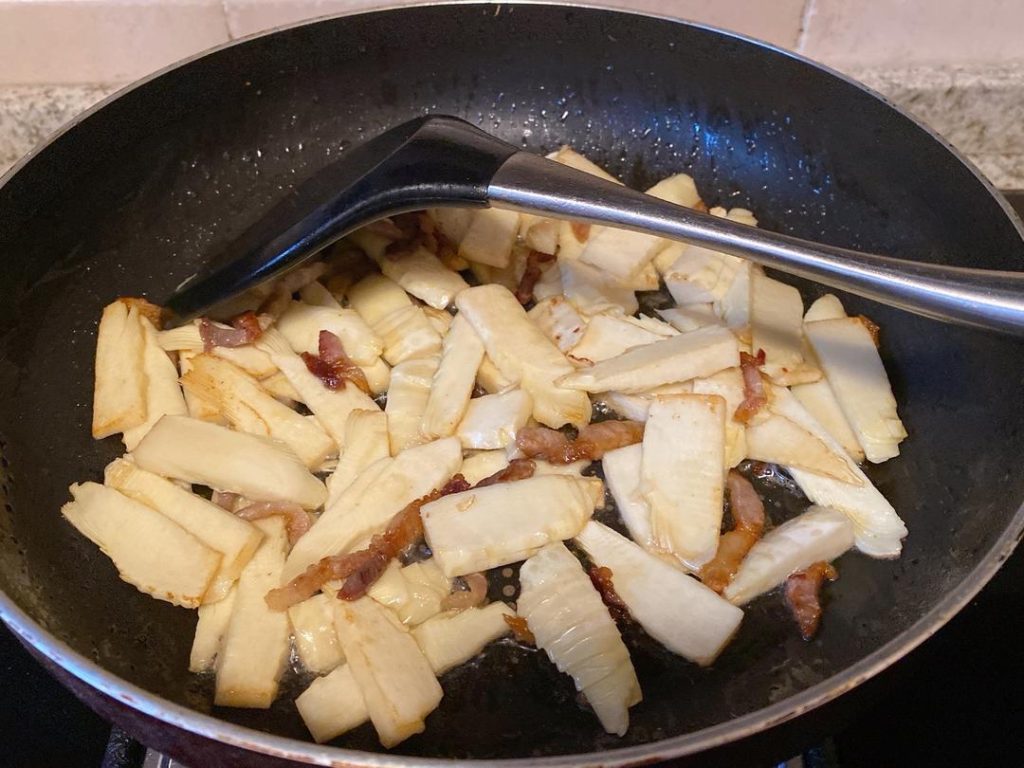
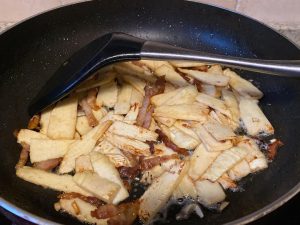
- Fry the Bamboo Shoots (4–6 minutes): Add the remaining tablespoon of oil to the wok, then add the sliced bamboo shoots. Keep the heat at medium.We do not want high heat here. Frying the bamboo shoots slowly in the pork fat until they are slightly golden ensures they are cooked all the way through, eliminating any residual raw, astringent taste without burning the exterior.
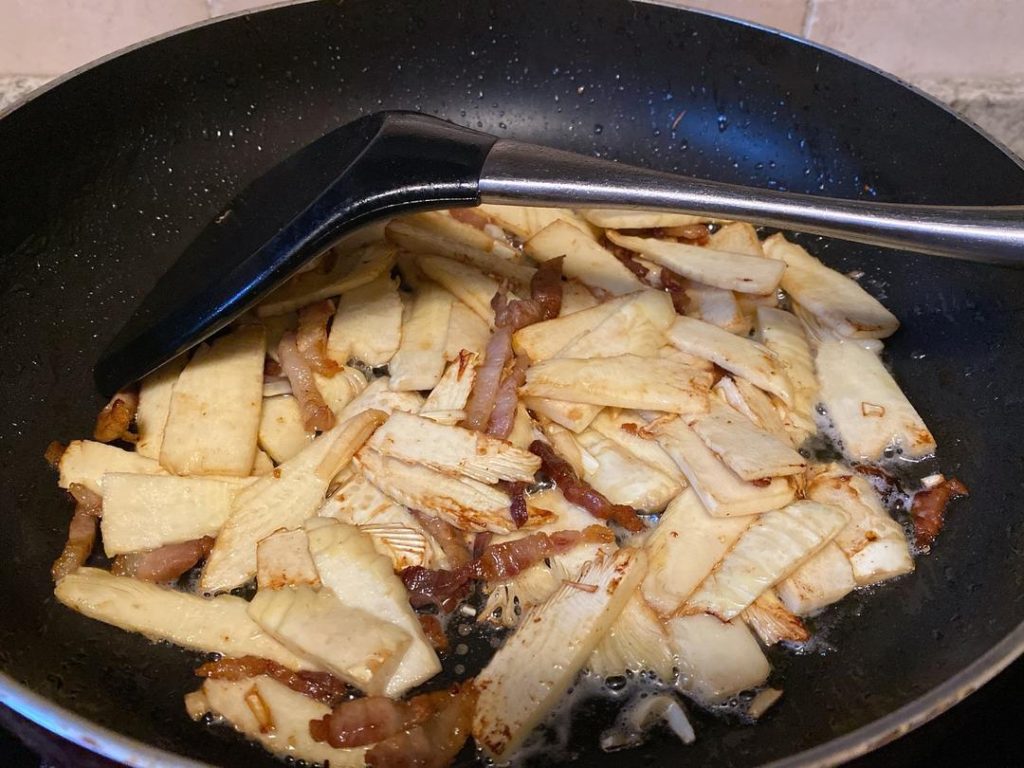
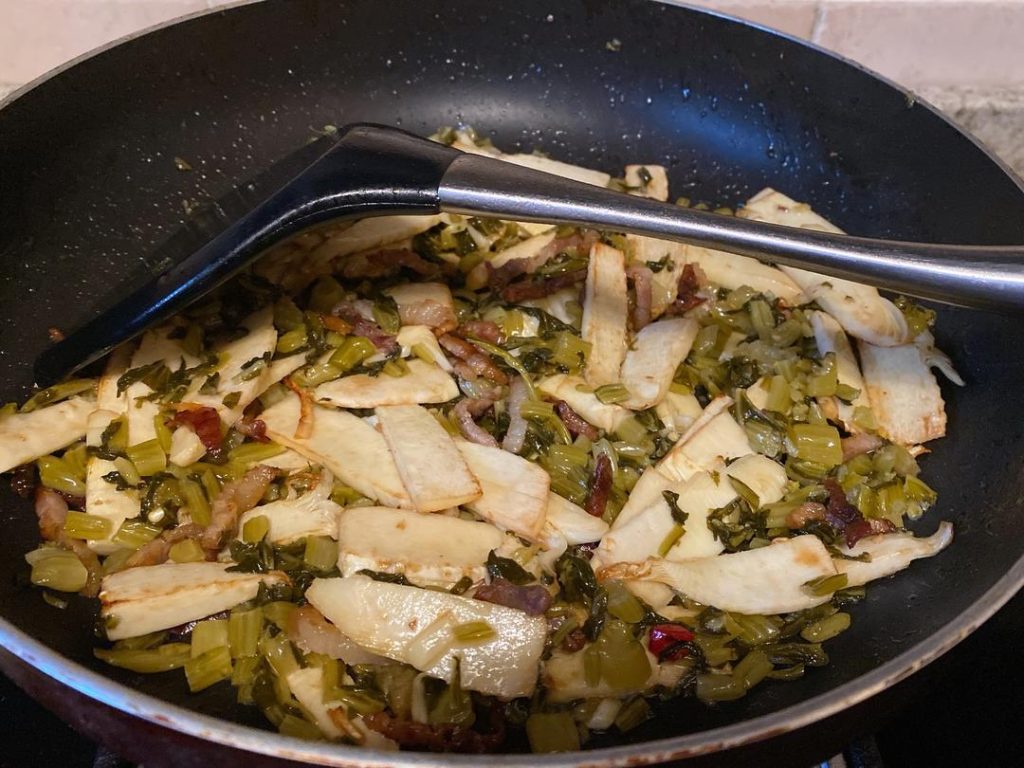
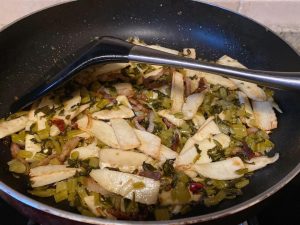
- Incorporate the Snow Cabbage (1–2 minutes): Add the snow cabbage to the wok. Toss everything together until the greens are fragrant and well-distributed.
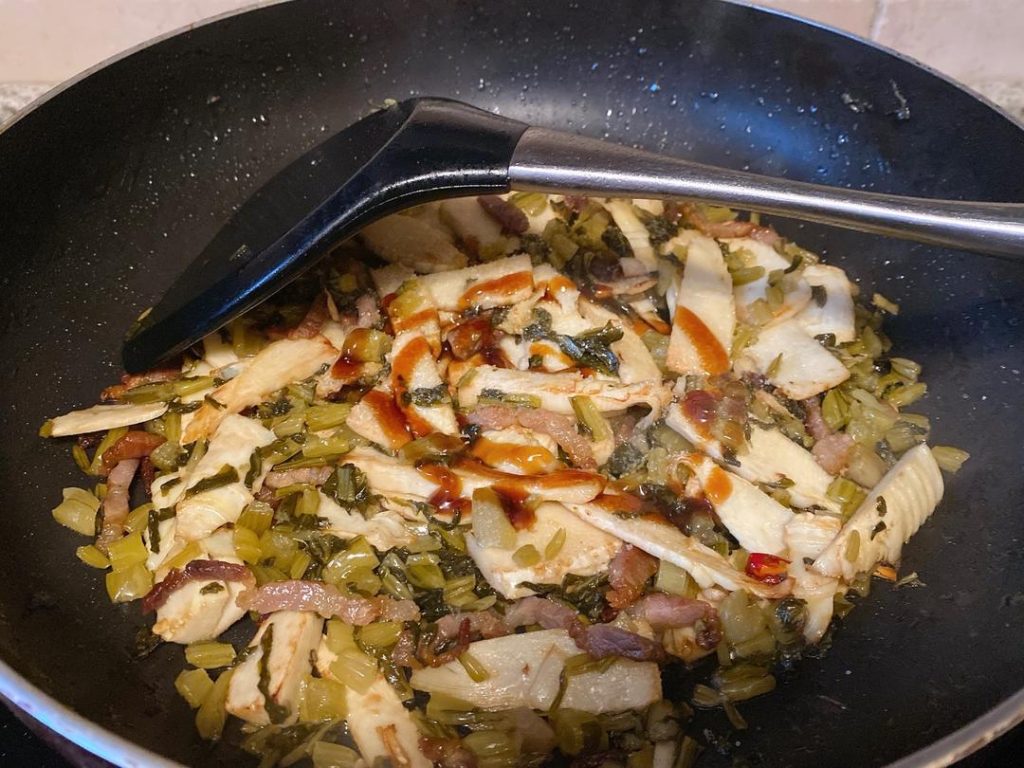
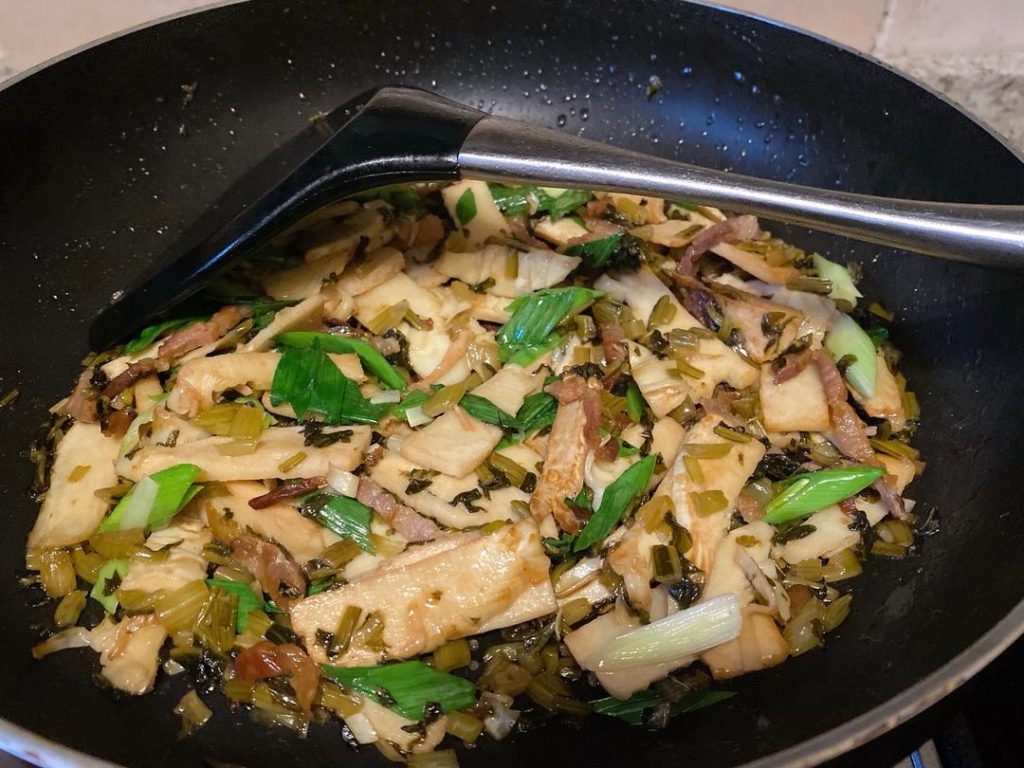
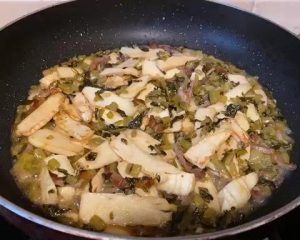
- Season and Braise (3–4 minutes): Add the oyster sauce, sugar, and salt (taste the snow cabbage first to gauge how much salt you actually need). Pour in about 1/4 cup of water. Turn the heat up slightly to let the liquid bubble. This brief braising step allows the bamboo shoots to absorb the savory flavors of the meat and pickled greens.
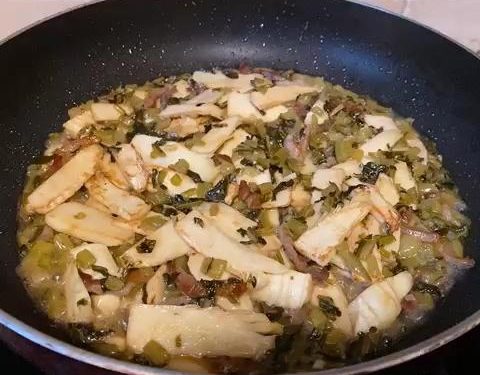
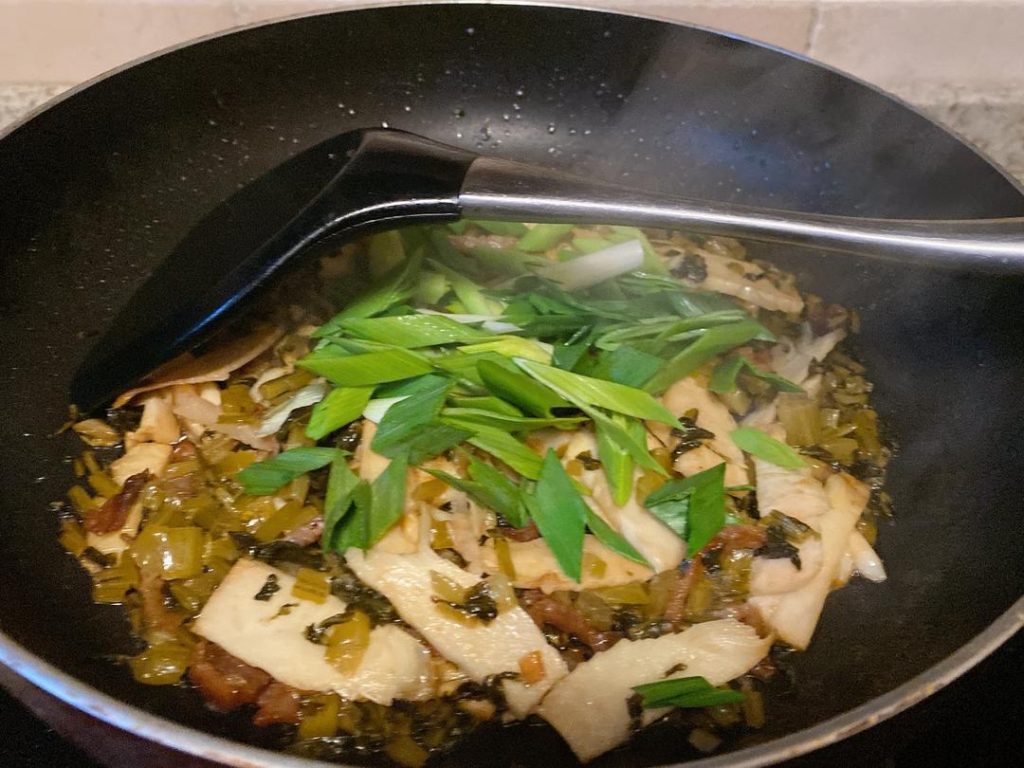
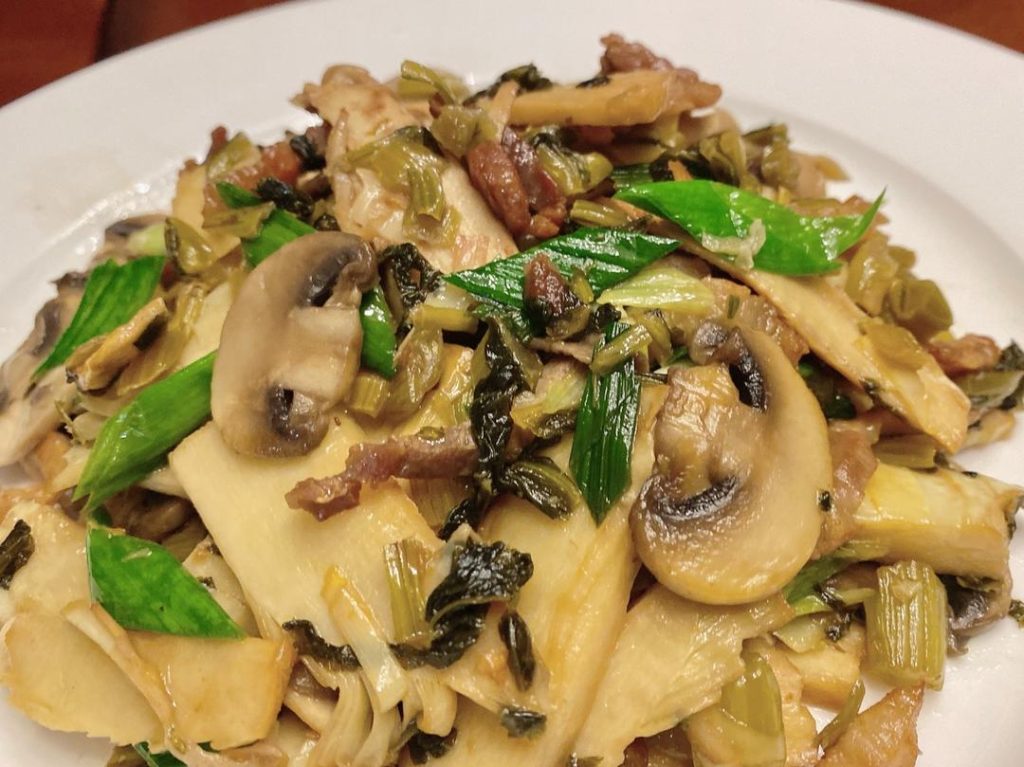
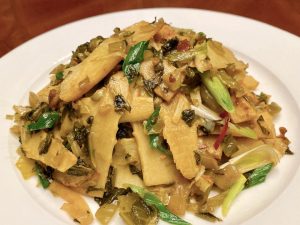
- Finish with Green Garlic (30 seconds): Once the liquid has mostly reduced and clings tightly to the ingredients, toss in the green garlic. Stir-fry briefly just until the garlic brightens in color and releases its aroma. Dish out and serve immediately.
Why This Recipe Works
- Fat is Flavor: Bamboo shoots are incredibly lean and can taste dry if under-seasoned. Cooking them in the rendered fat of the cured pork gives them a luxurious mouthfeel.
- The Power of Time: Cooking the shoots over medium heat for a longer period, rather than a rapid high-heat flash fry, guarantees the fibrous interior breaks down properly and any bitter compounds are neutralized.
- Umami Balance: The combination of cured pork, pickled snow cabbage, and oyster sauce hits every savory note on the palate, making this a highly addictive dish.
Common Mistakes & Troubleshooting
- Mistake: The bamboo shoots taste bitter and numb the tongue.
- Cause: The shoots were slightly older/greener and were not blanched prior to stir-frying, or they were undercooked in the wok.
- Solution: Always check the color of the base. If in doubt, blanch the sliced shoots in boiling water for 5 minutes before proceeding with the recipe.
- Mistake: The dish is overly salty.
- Cause: Snow cabbage and cured pork vary wildly in their salt content depending on the brand.
- Solution: Always taste a small piece of your snow cabbage before adding any extra salt to the wok.
Frequently Asked Questions
Can I freeze fresh winter bamboo shoots? No. Freezing raw bamboo shoots will destroy their cellular structure, turning them spongy and mushy.
How do I store leftover raw bamboo shoots? Do not blanch them if you plan to store them. Wrap the unpeeled shoots tightly in plastic wrap and keep them in the crisper drawer of your refrigerator. They will easily last for up to a month. Alternatively, if you have a garden, burying them back in dry soil or sealing them in a clay crock works beautifully.
Can I use canned bamboo shoots for this? While you can, the texture and flavor will be drastically different. Canned shoots lack the natural sweetness and crisp snap of fresh winter shoots. If using canned, rinse them very thoroughly in hot water first.
How to Serve
This dish is a classic “rice killer” (下饭菜). Serve it alongside a steaming bowl of jasmine rice. To round out the meal, pair it with a refreshing cold dish like Smashed Cucumber Salad and a simple green vegetable such as Stir-Fried AA Choy with Fried Dace.
Storage & Reheat
- Fridge: Store leftovers in an airtight container in the refrigerator for up to 3 days.
- Reheat: Warm gently in a skillet over medium heat with a splash of water until heated through, or microwave in 30-second bursts.
Allergen Notice
- Soy & Gluten: Present in the oyster sauce. Use a gluten-free oyster sauce alternative if necessary.
About the Author & Recipe Development
Hi, I’m Lin! I spent ten years working as a professional chef, and my culinary foundation was built in the loud, chaotic, and incredibly fragrant kitchen of my parents’ Sichuan restaurant. Today, I run Woks of Love to share authentic, workable Chinese recipes with home cooks. Right now, alongside testing recipes for the blog, my very first cookbook is currently in preparation (I’m pouring all my kitchen secrets into it!). This bamboo shoot recipe is a family staple that relies on proper ingredient handling rather than complicated techniques.
Authoritative References
Fresh bamboo shoots contain taxiphyllin, a cyanogenic glycoside that can cause a bitter taste and stomach upset if consumed raw. Proper application of heat through boiling or thorough pan-frying neutralizes these compounds, making the shoots safe and delicious to eat. For more information on safely preparing foods containing natural plant toxins, you can refer to the World Health Organization’s guidelines on natural toxins in food.
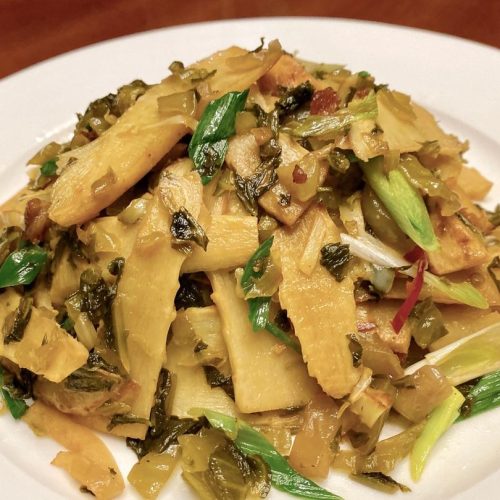
Homestyle Stir-Fried Winter Bamboo Shoots

Equipment
- Wok or large skillet
- Chef’s knife
Ingredients
Main Ingredients
- 500 g fresh winter bamboo shoots peeled and sliced
- 100 g snow cabbage (xuecai)
- 50 g Chinese cured pork sliced into strips
- 2 stalks green garlic cut into 1-inch pieces
Seasonings
- 1 g salt to taste, depending on the saltiness of the snow cabbage
- 1 pinch sugar
- 1 tbsp oyster sauce
- 2 tbsp cooking oil divided
Instructions
- If your bamboo shoots are older or have green bottoms, blanch the slices in boiling salted water for 3-5 minutes, then drain well. If they are fresh and white, skip this step.

- Heat 1 tablespoon of oil in a wok over medium-low heat. Add the cured pork and stir-fry slowly for 2-3 minutes until the fat renders and the meat turns translucent.
- Add the remaining 1 tablespoon of oil to the wok, followed by the bamboo shoots. Keep the heat at medium. Stir-fry slowly for 4-6 minutes until the shoots turn slightly golden. Do not use high heat.
- Add the snow cabbage to the wok and toss well for 1-2 minutes until fragrant.
- Add the oyster sauce, sugar, and salt. Pour in about 1/4 cup of water. Turn the heat up slightly and let it braise for 3-4 minutes until the liquid reduces and the shoots absorb the flavor.

- Toss in the green garlic and stir-fry for 30 seconds. Remove from heat and serve immediately.




Leave a Reply