There is a moment in late summer when nothing sounds good except something cold. Not ice cream cold, not iced-drink cold — properly cold, the kind that resets your whole body. Spinach jelly noodles are that dish. They arrive at the table as a block of trembling jade green, get shredded into silky ribbons, and then disappear under a slick of soy, vinegar and chili oil. One bite and the heat outside stops mattering.
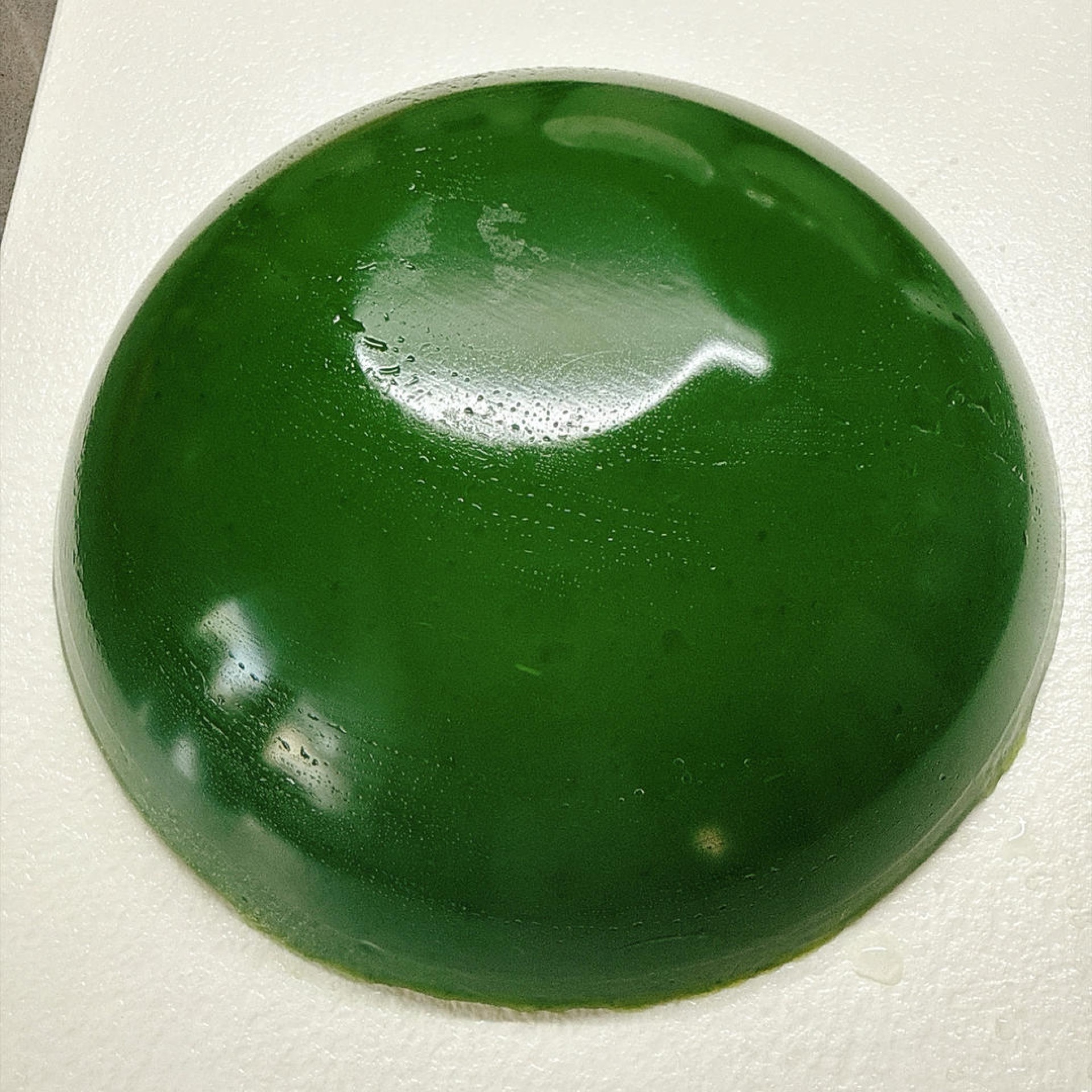
This is a home cook’s version of liangfen, the cold starch jelly that shows up all over Sichuan and Shaanxi. Traditionally it is made with mung bean starch and served plain white. Here, fresh spinach juice does double duty: it colors the jelly a green so vivid it looks dyed, and it adds a faint vegetal sweetness that plays beautifully against the sharp dressing. It is also, quietly, one of the easiest things you can make — three ingredients, no special skill, no oven.
If you have ever made a starch jelly before, you already know the rhythm: whisk, cook, pour, wait. If you have not, this is a good place to start. There is no kneading, no frying, no timing window that punishes you. The only thing the recipe truly asks for is patience during the setting time — and that patience is rewarded with a texture that is simultaneously bouncy and tender, slippery and substantial.
What Is Spinach Jelly Noodles?
Spinach jelly noodles — bocai liangfen (菠菜凉粉) — are a cold Chinese dish made by cooking spinach juice with pea starch until it thickens into a paste, then letting that paste set into a firm, sliceable block. The block is cut or shredded into noodle-like strands and tossed with a dressing. Despite the name, there is no wheat and no noodle dough involved; the “noodles” are pure starch jelly.
The dish belongs to the liangfen family, which has been eaten in China for centuries and varies wildly by region. In Sichuan it is often made with mung bean starch and dressed with chili oil, garlic and Sichuan pepper. In Shaanxi it may be made with buckwheat or potato starch. Pea starch — wandou fen — is prized because it sets to a particularly clear, elastic jelly that shreds cleanly without breaking, which is exactly what you want here.
The texture is the whole point: a good liangfen should quiver when you shake the plate, slice without crumbling, and slip between chopsticks without falling apart. If yours does all three, you nailed it.
Because the base is starch and water rather than flour and gluten, the jelly is naturally gluten-free and very light. It carries almost no fat of its own, which is why it drinks up dressing so eagerly and why a bowl of it never feels heavy — even in the middle of a heat wave.
If you enjoy cold noodle dishes, there are a few others on the site worth trying. chili garlic cold noodles are the fastest way into the genre — chewy wheat noodles tossed in a punchy garlic-chili sauce that comes together in about fifteen minutes.
1Easy Chili Garlic Cold Noodles (Liangban Mian)These 15-minute authentic Chinese cold noodles feature a savory, tangy sauce poured over chewy noodles and crunchy cucumbers. A perfect quick meal for hot days.Check out this recipe

Once you are comfortable with cold noodles, braised green beans and noodles is a lovely next step — a northern Chinese dish where the noodles soak up a savory braising liquid until every strand is deeply flavored.
2Braised Green Beans and Noodles (Dou Jiao Men Mian)An authentic Northern Chinese one-pot meal featuring chewy fresh noodles steam-braised over a savory stew of pork belly and crisp green beans. The perfect balance of carbs, protein, and veggies.Check out this recipe
And if you want that same idea with a little more richness, braised green beans and noodles with pork adds pork to the braise, turning a simple bowl into a full meal.
3Braised Green Beans and Noodles (Men Mian)This traditional Northern Chinese Braised Green Beans and Noodles (Men Mian) creates chewy, flavorful noodles by steaming them directly on top of a savory stew of pork, potatoes, and tomatoes. It is a hearty one-pot meal that captures the essence of home cooking.Check out this recipe

Ingredient Notes
Spinach. Use fresh, tender leaves — baby spinach works perfectly. You need 200 grams (about 7 ounces) of leaves, packed but not compressed. Older, thicker leaves give a slightly duller color and a more pronounced grassy flavor. There is no need to blanch the spinach first; the raw juice is what gives the jelly its brightness, and the cooking step later pasteurizes it.
Pea starch (豌豆淀粉, wandou fen). This is the one ingredient you cannot casually substitute. Pea starch sets into a clear, elastic jelly with a clean bite. Cornstarch gives a softer, more opaque set that shreds poorly. Potato starch works in a pinch but the jelly is more fragile and slightly gluey. If you can only find mung bean starch, that is the classic choice for liangfen and will work beautifully — just expect a slightly firmer set. Look for pea starch in the international aisle of a Chinese grocery or online.
Water. The recipe uses 700 grams of water to blend the spinach and then tops up to 900 grams of total spinach water for the starch. Filtered water gives the cleanest flavor, but tap water is fine.
The dressing. Light soy sauce for salt, black vinegar (Chinkiang) for a malty tang, chili oil for heat and color, a little sugar to round everything out, and garlic because garlic belongs here. Toasted sesame oil is optional but adds a lovely nutty note. If you have never bought chili oil with sediment, look for one — the crispy flakes at the bottom are the good part. Our guide to cumin seeds is a useful read if you want to branch out into the spiced, northern-style dressings that often accompany cold dishes.
The toppings. Shredded omelet, cucumber, carrot and crushed roasted peanuts are the classic combination and give the dish crunch, protein and richness. See the Variations section for more ideas.
Ingredients
Here is everything you need. Full measurements are in the recipe card at the bottom of this post.
- 200 g (7 oz) fresh spinach leaves
- 700 g (3 cups) water, for blending
- 100 g (about 3/4 cup) pea starch (wandou fen)
- 1 tsp neutral oil, for greasing the dish
- 2 tbsp light soy sauce
- 1 tbsp black vinegar
- 1 tsp chili oil, or to taste
- 1 tsp toasted sesame oil (optional)
- 1 clove garlic, minced
- 1 tsp sugar
- 1 large egg, pan-fried into a thin omelet and sliced
- 1 small cucumber, julienned
- 1 small carrot, julienned
- 2 tbsp roasted peanuts, crushed
Equipment Needed
You do not need much, and nothing here is specialty equipment. A blender or food processor gets the spinach broken down in seconds. A fine-mesh strainer or a steamer basket lined with cheesecloth handles the straining. For cooking the starch, a wok or a heavy-bottomed saucepan is ideal because the wider surface helps the slurry heat evenly and the sturdy base resists scorching — this matters, because a starch slurry will catch and burn the moment your attention wanders.
You will also want a whisk or a sturdy spatula, an 8×8-inch dish or a large bowl for setting the jelly, and a jelly noodle shredder if you have one. If you do not, a sharp knife works perfectly well — just cut the block into thin slices, then stack and cut those into ribbons. A cutting board and a slotted spoon round out the list.
Why This Recipe Works
The 1:9 starch-to-liquid ratio is the backbone of the whole thing. Too much starch and the jelly turns tough and rubbery, resisting the shredder and bouncing unpleasantly in the mouth. Too little and it never fully sets, staying slack and weepy no matter how long you wait. Nine parts liquid to one part pea starch by weight gives a jelly that is firm enough to unmold in one piece but tender enough to yield between your teeth.
Cooking the slurry at a steady temperature for a full fifteen minutes is the second key. Starch needs both heat and time to gelatinize completely. If you pull it off the heat as soon as it looks thick, the center of the mixture may still contain ungelatinized starch, and the jelly will set unevenly — firm at the edges, soft in the middle.
The third key is patience during setting. Room temperature, four hours, no refrigerator. This is not folklore. Chilling a starch jelly quickly traps the mixture before its network has fully organized, and the result is a rubbery, watery block that releases liquid as it sits. Letting it set slowly at room temperature produces a smoother, more cohesive jelly with a cleaner bite. If you have ever wondered why your day-old rice science works so well, it is the same principle at play — starch structure responds to how it cools.
Prep & Mise en Place
Get everything ready before you turn on the heat, because once the starch goes into the pan you will be stirring continuously and will not have a free hand.
Wash and dry the spinach leaves, discarding any thick stems. Grease your setting dish lightly with neutral oil — this is what allows the jelly to slide out in one clean piece later. Set out your strainer over a large bowl. Weigh the pea starch into a bowl and have the strained spinach water measured and ready. Prepare the dressing in a small jar so you can shake it together at the last minute, and have your toppings julienned and waiting in the fridge.
One practical note: the spinach water should be at room temperature or slightly warm when it meets the starch. Cold liquid can cause the starch to clump, and clumps will not fully dissolve once cooking begins. If your spinach water has been sitting in a cool room, give it a brief warm-up.
Cooking Process
Step 1 — Blend the Spinach
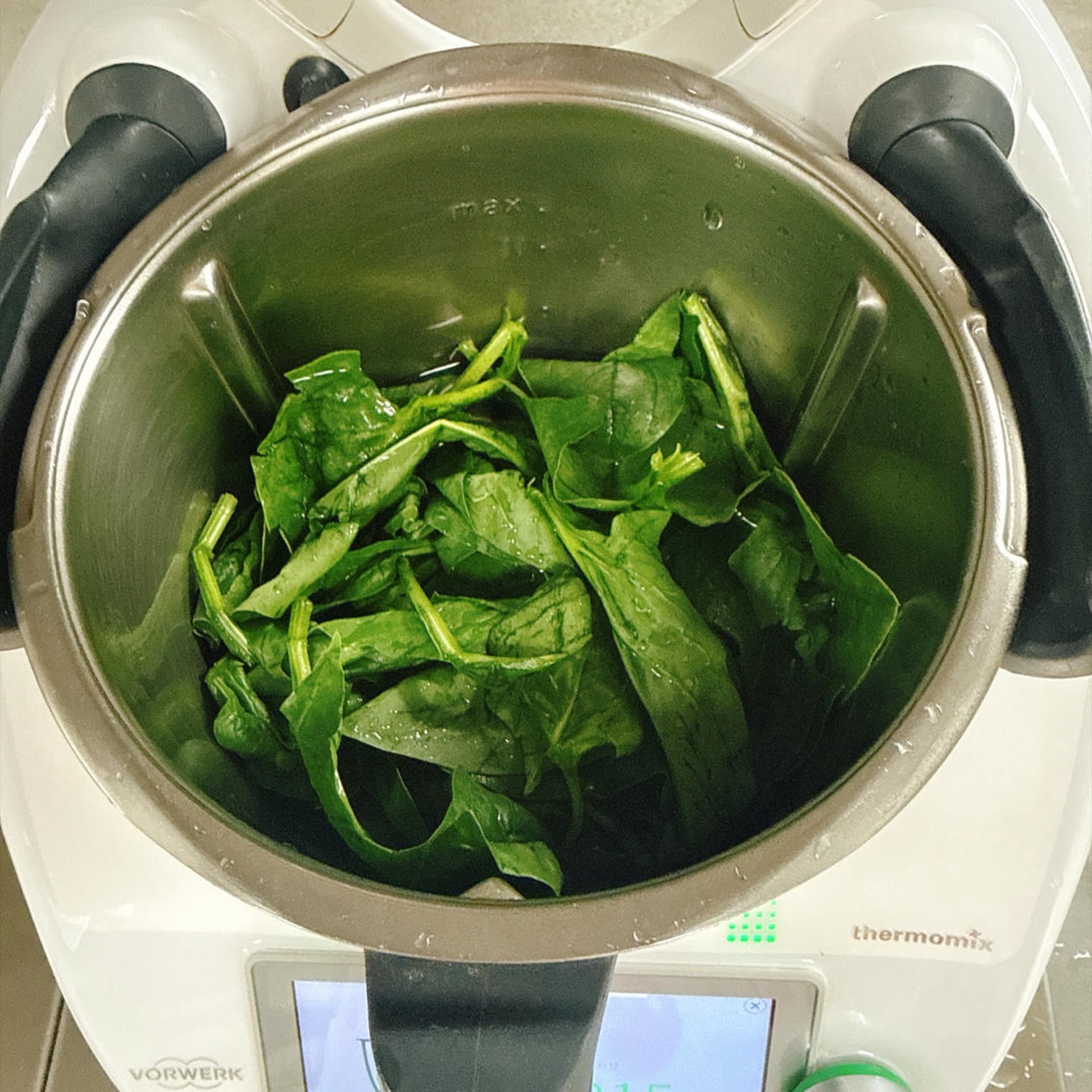
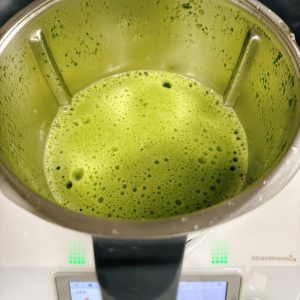
Add 200 grams of spinach leaves and 700 grams of water to the blender.
Step 2 — Blitz Until Smooth
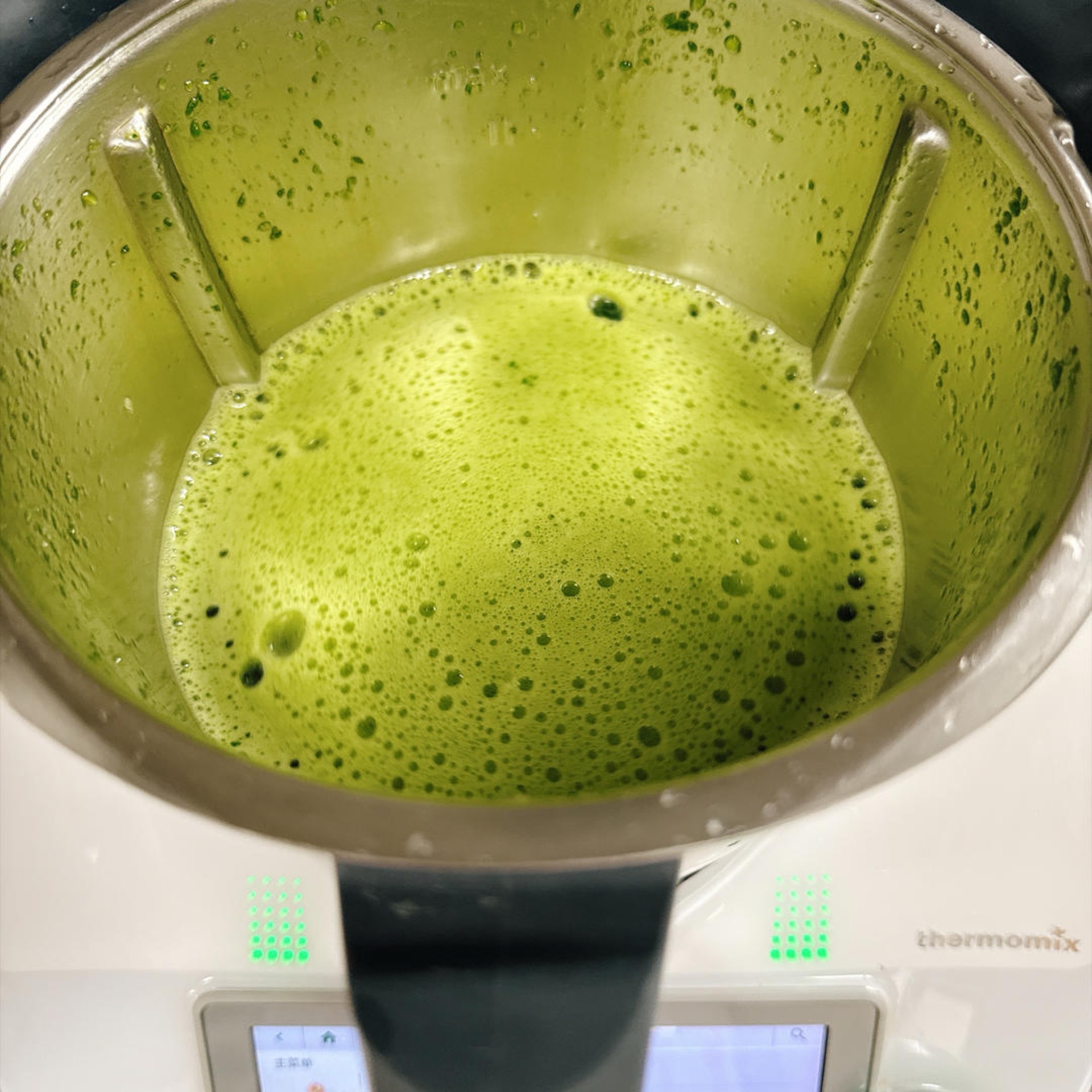
Blend for 10 seconds on the highest speed until completely liquidized.
Step 3 — Strain the Juice
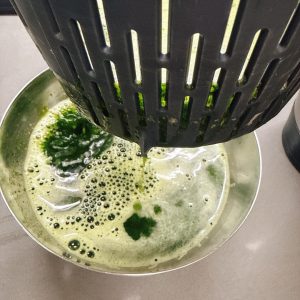
Pour the green liquid through a fine-mesh strainer or steamer basket to filter out the pulp.
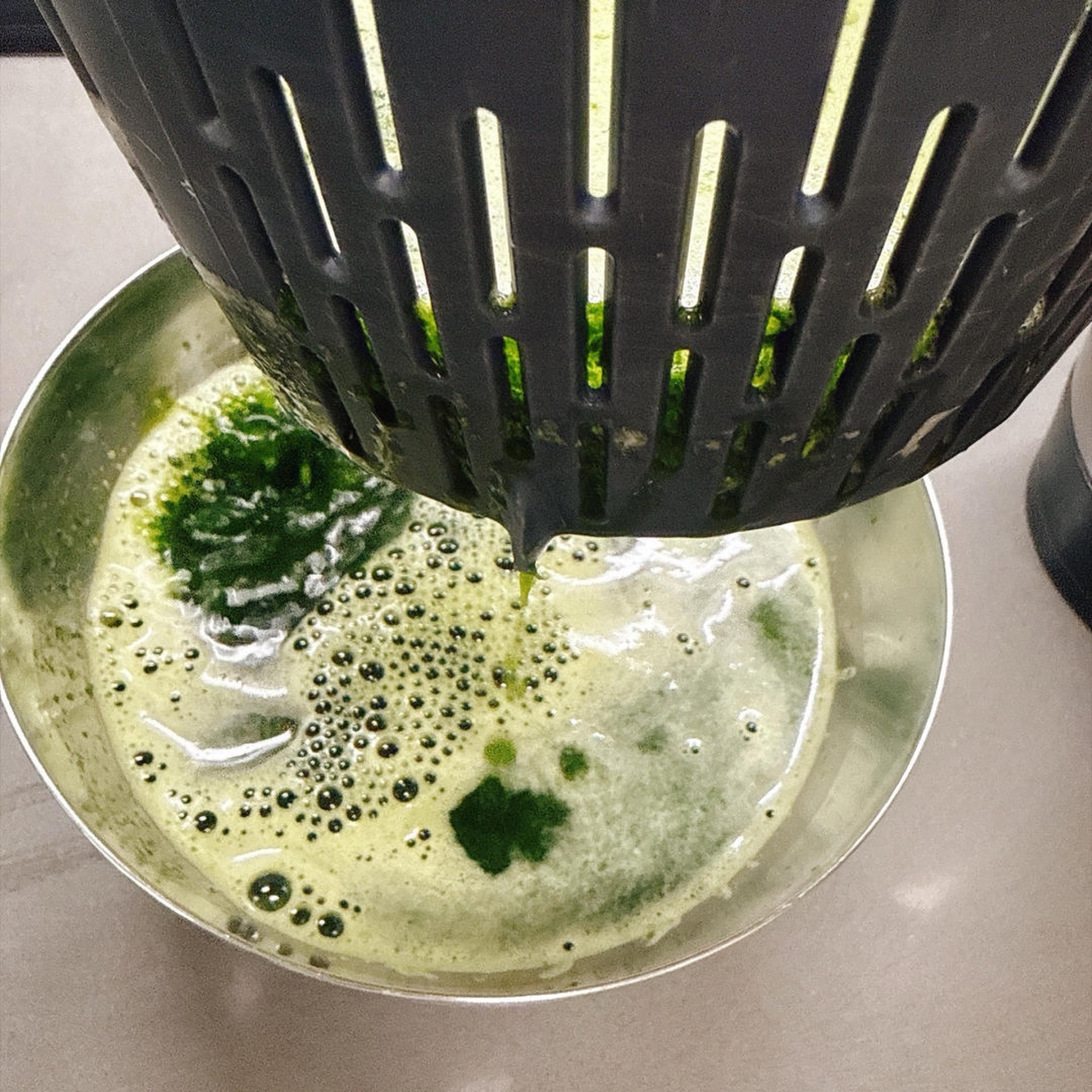
Step 4 — Collect the Green Water
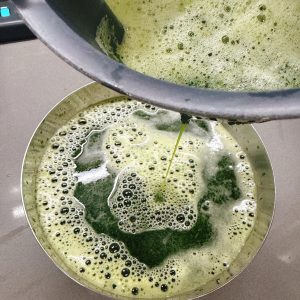
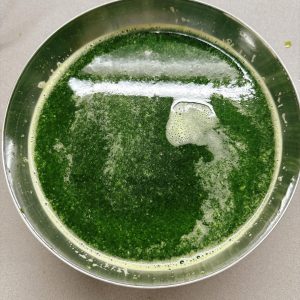
You should end up with a large bowl of vivid emerald-green water.
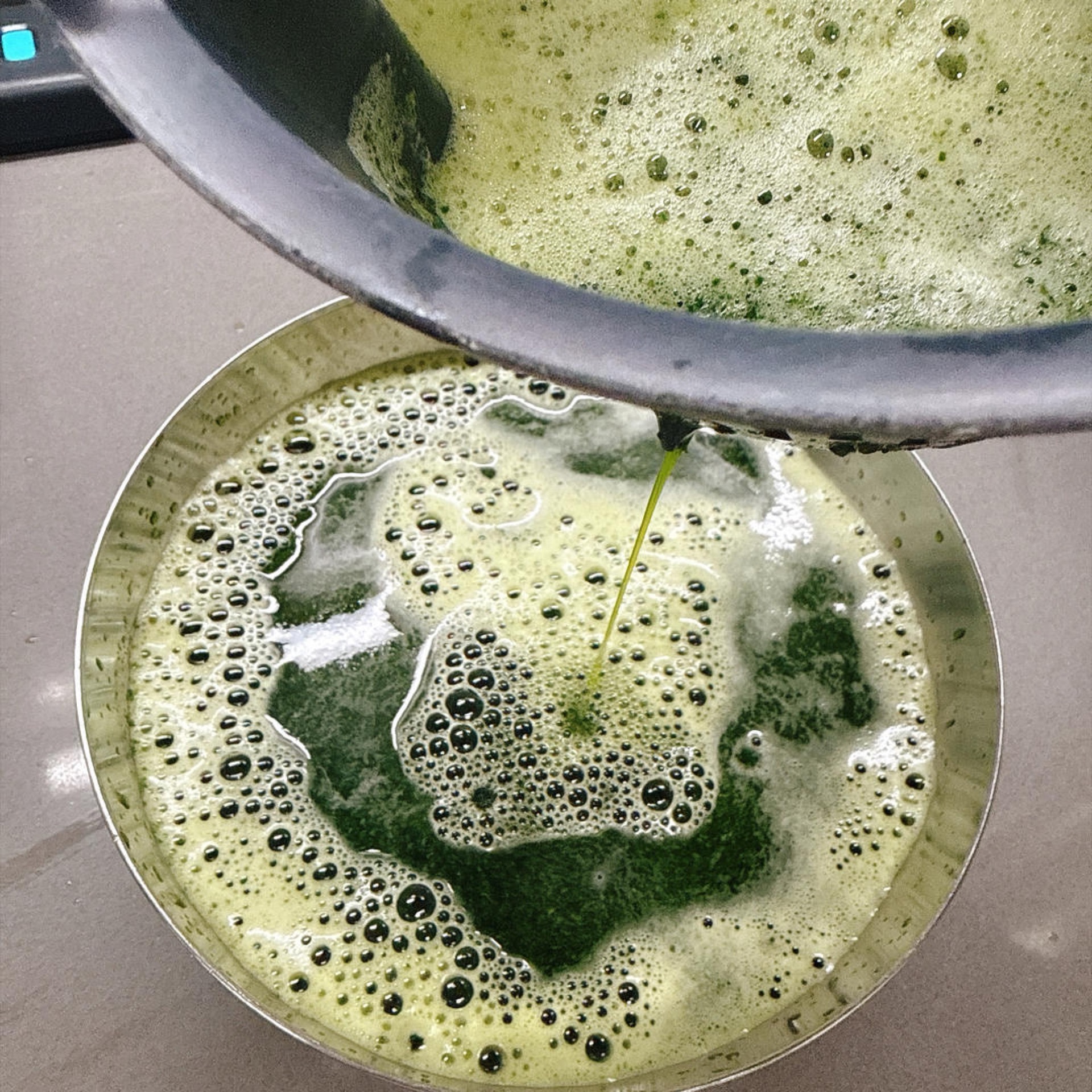
Step 5 — Skim the Foam
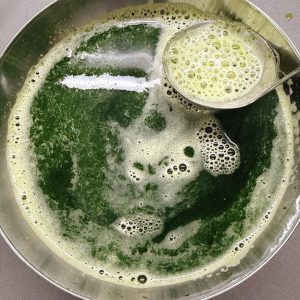
Skim off the foam floating on the surface of the spinach water.
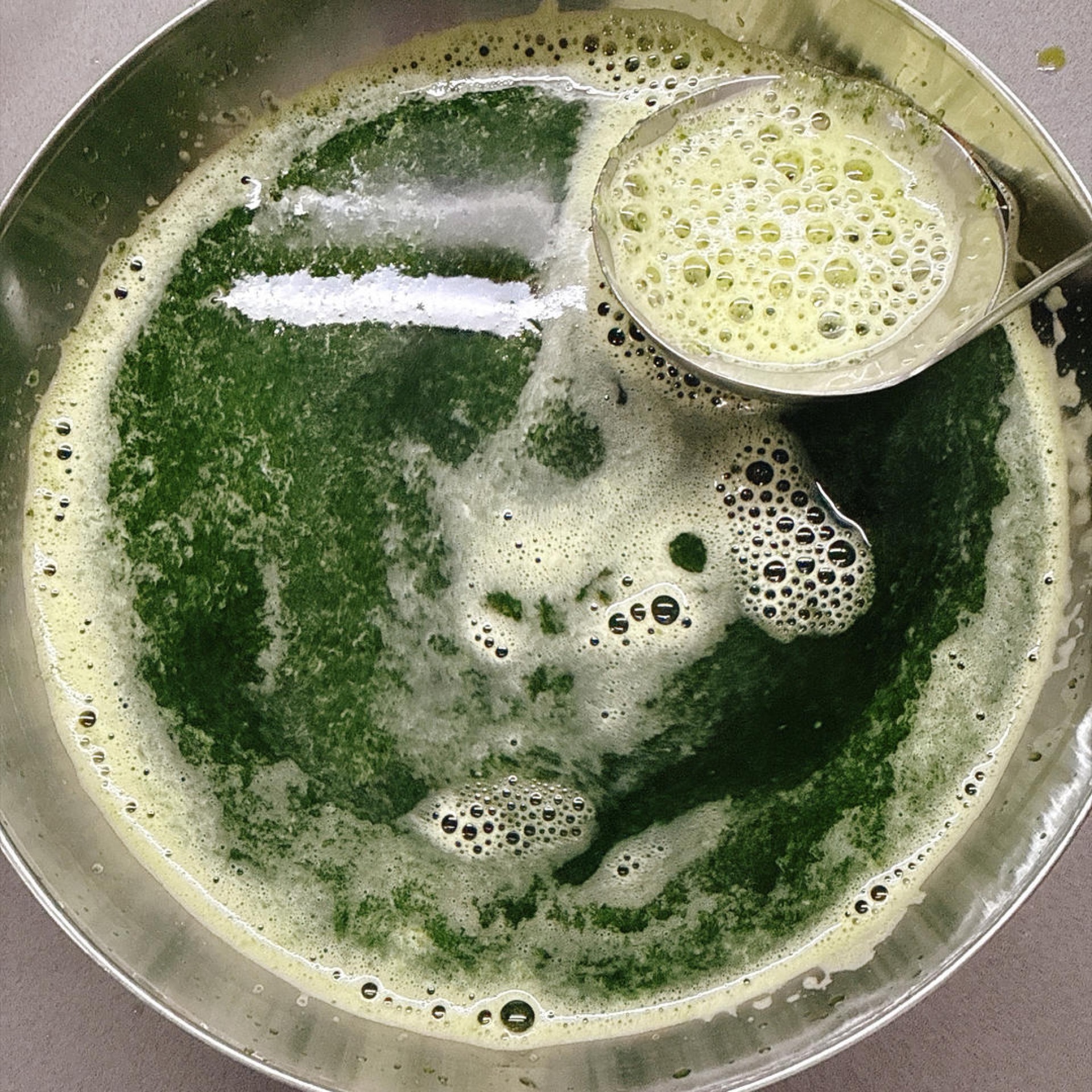
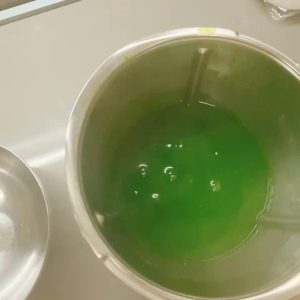
Step 6 — Admire the Color
The water is icy green and translucent, and just looking at it cools you down.
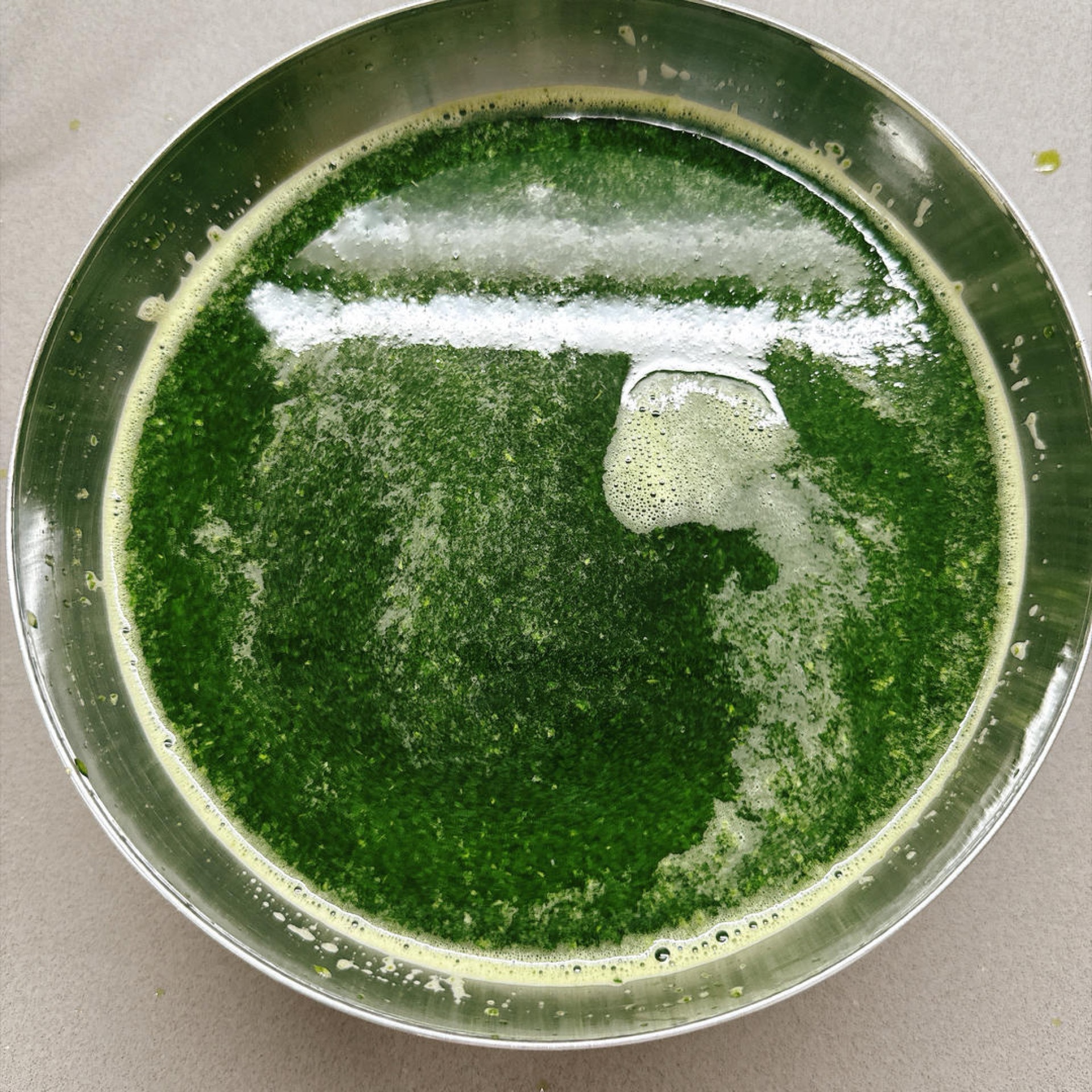
Step 7 — Measure the Starch
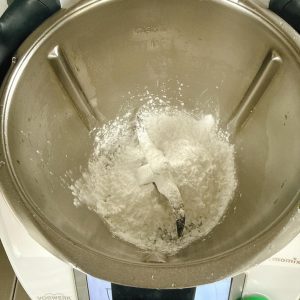
Put 100 grams of pea starch into a large bowl.
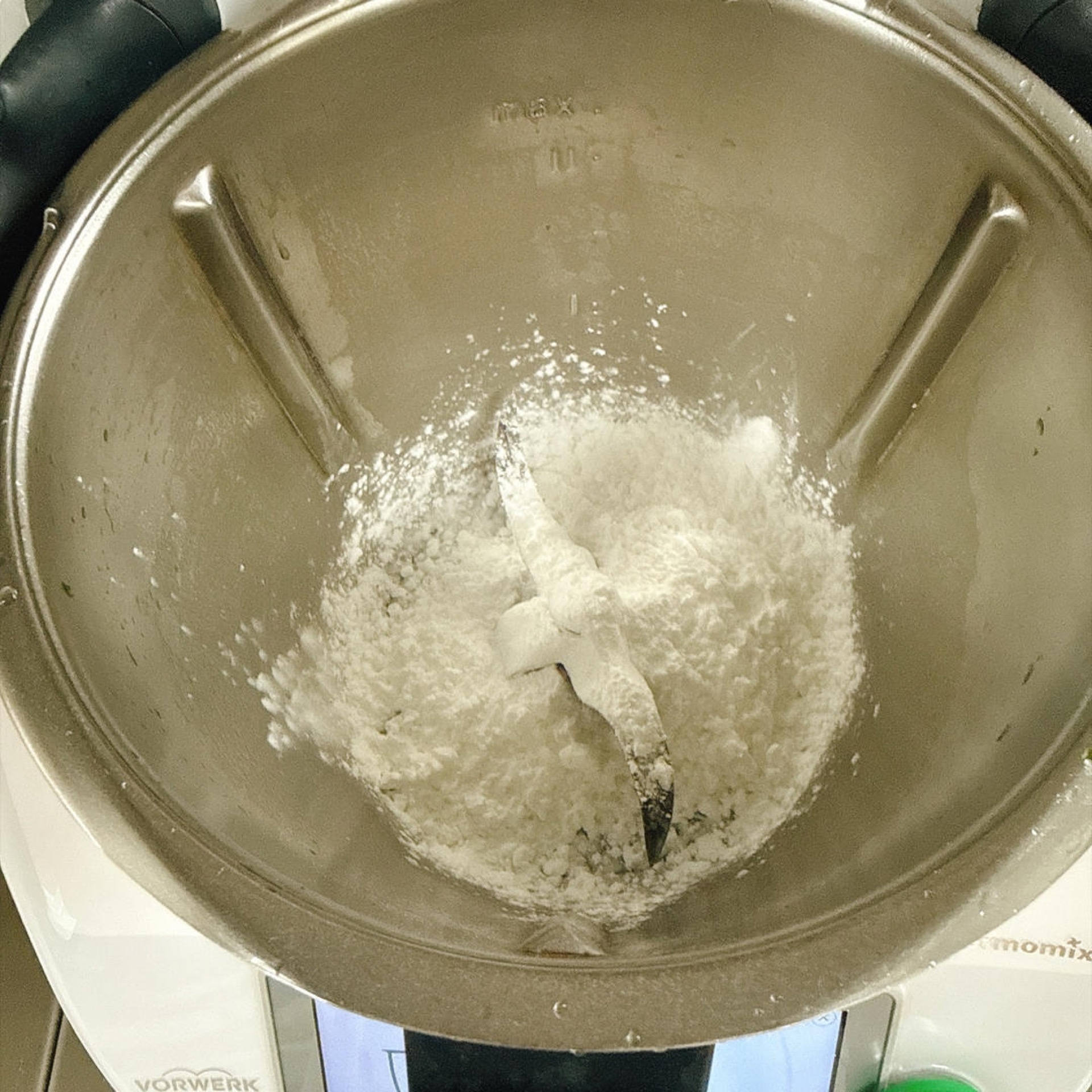
Step 8 — Add the Spinach Water
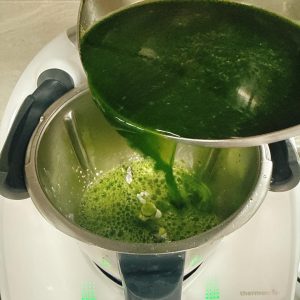
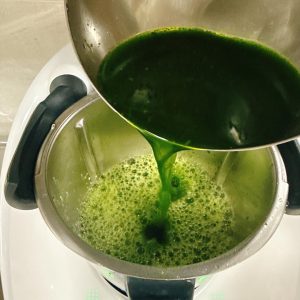
Pour in 900 grams of the strained spinach water.
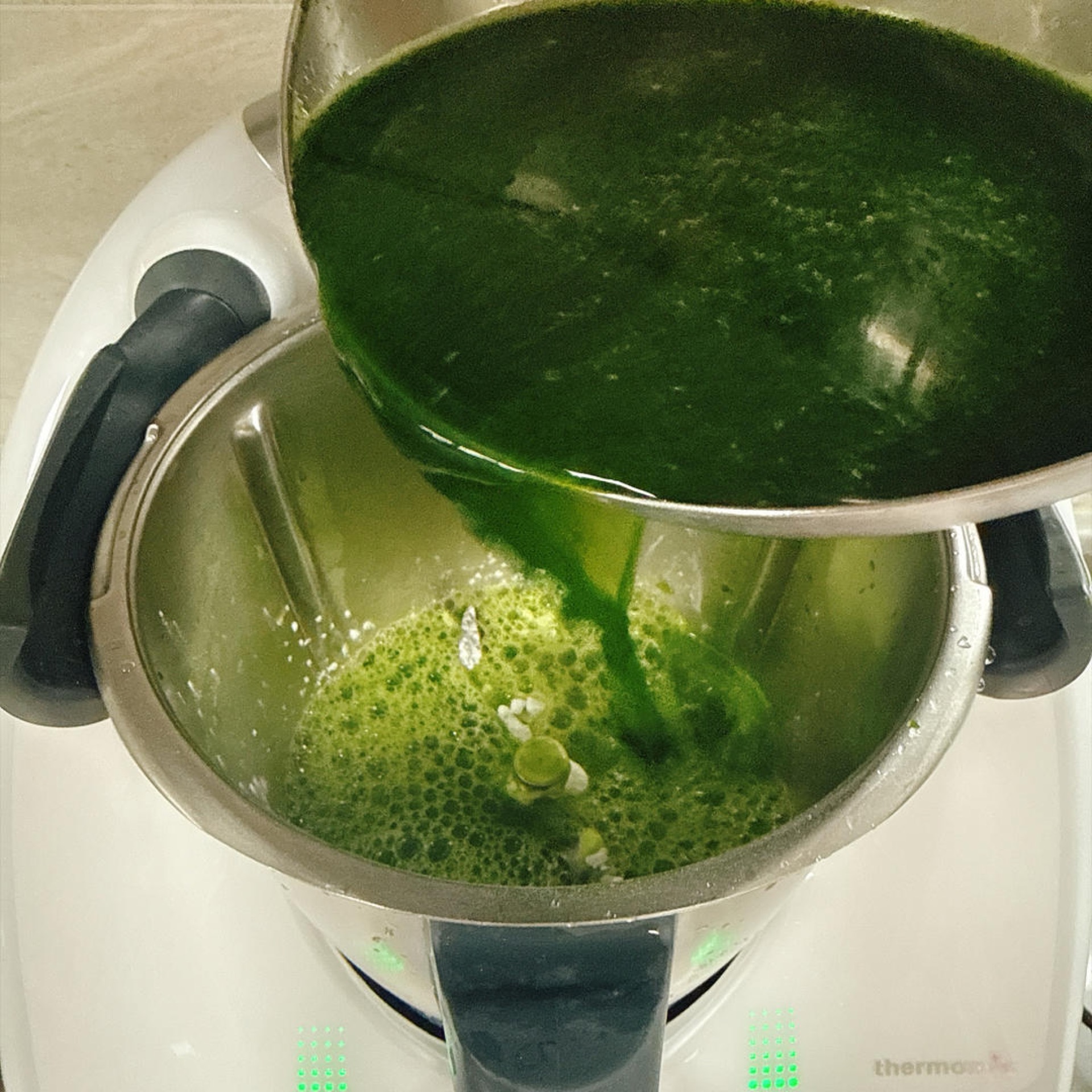
Step 9 — Check the Ratio
The starch-to-water ratio is 1:9.
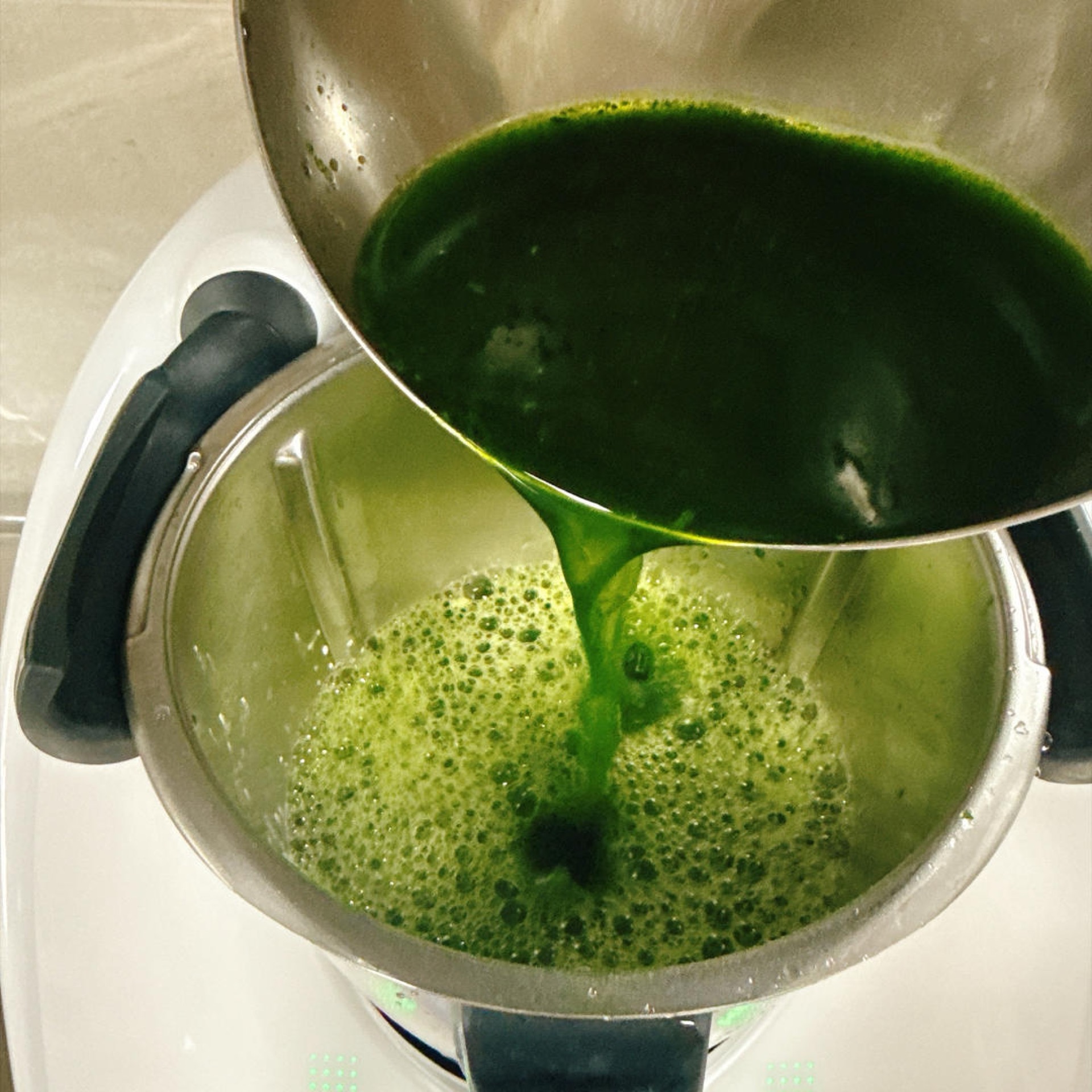
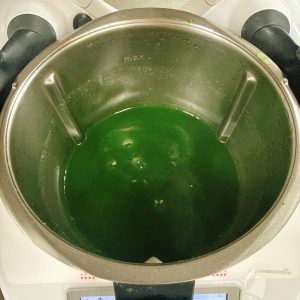
Step 10 — Cook the Slurry
Cook the mixture for 15 minutes at 100°C (212°F), stirring constantly at a steady speed, until it thickens into a glossy paste.
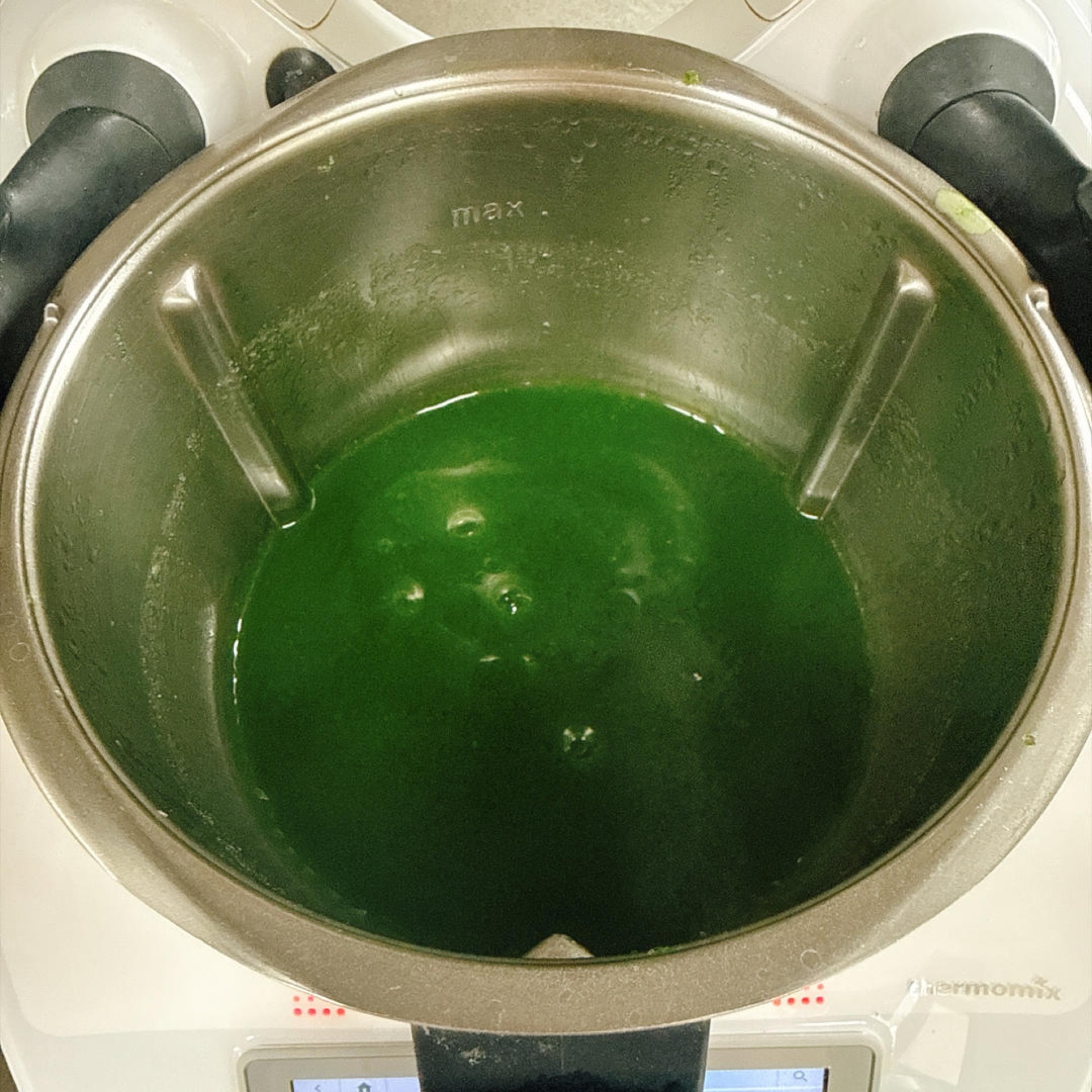
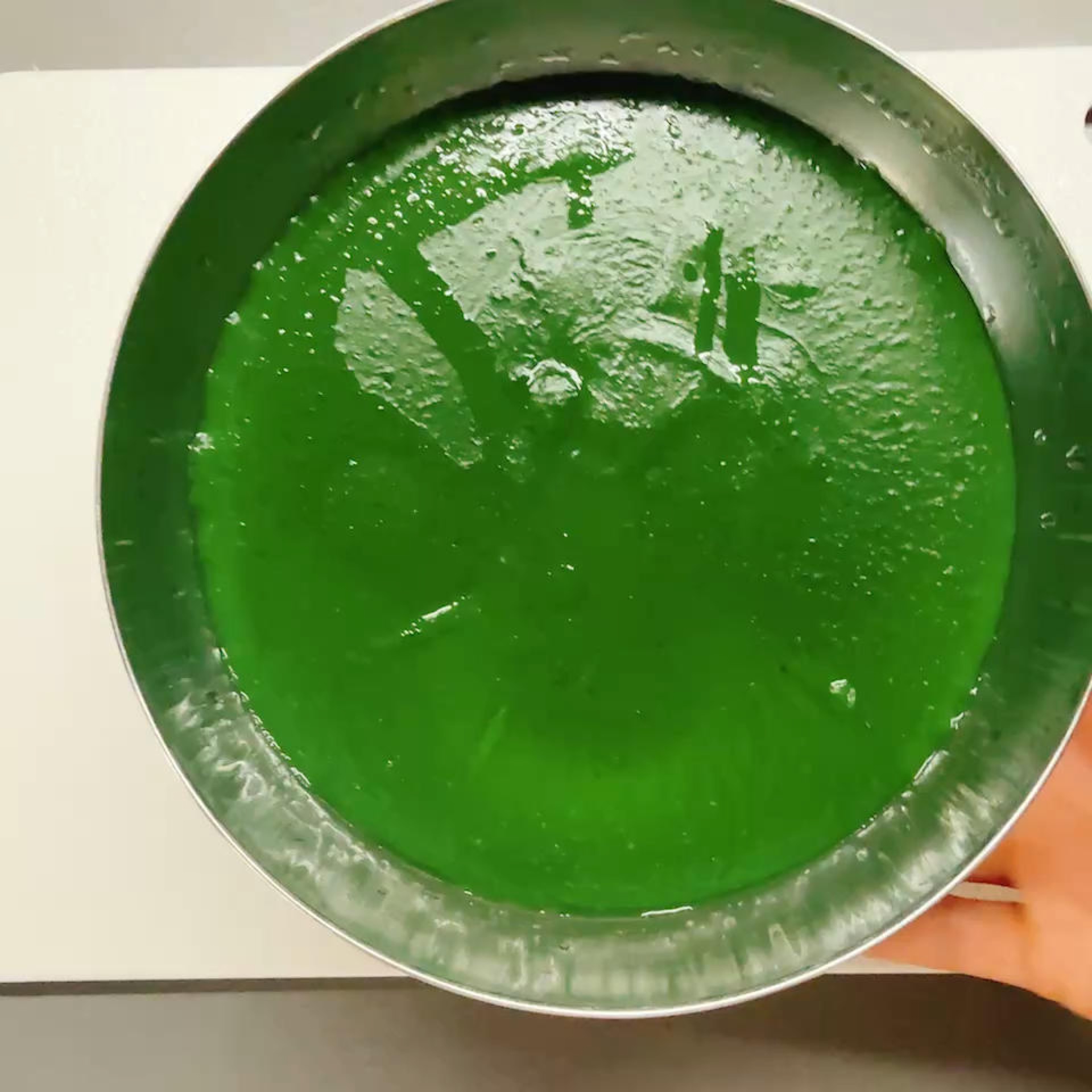
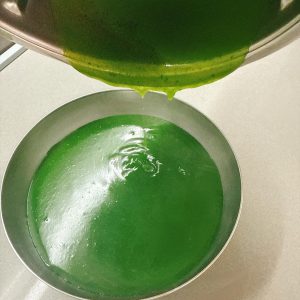
Step 11 — Pour into the Dish
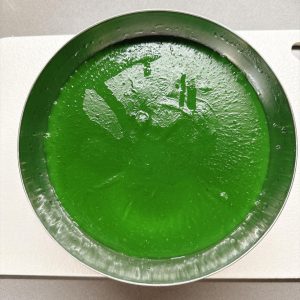
Pour the cooked jelly into a large bowl greased with a little cooking oil.
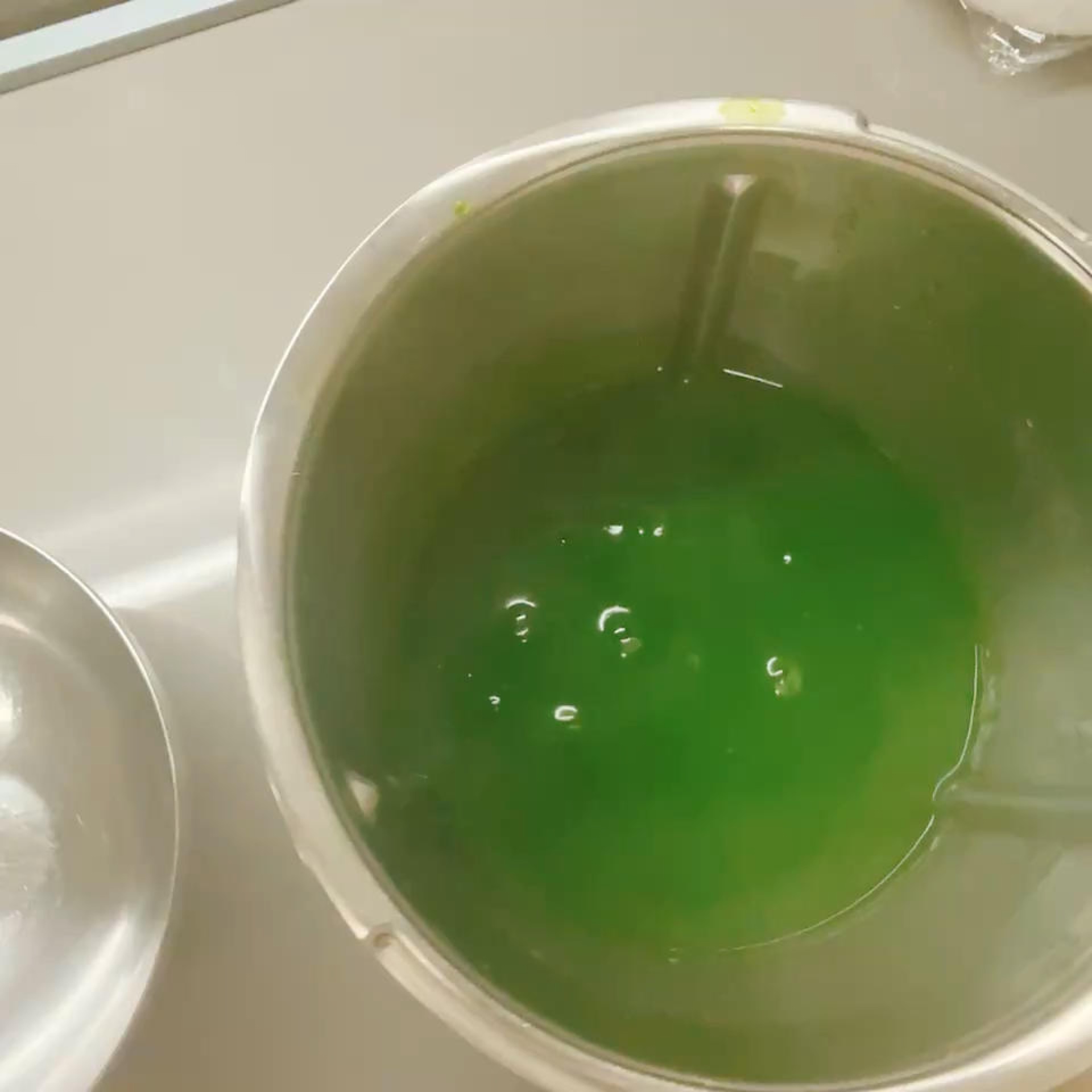
Step 12 — Enjoy the Color
The jade-green color is truly beautiful.
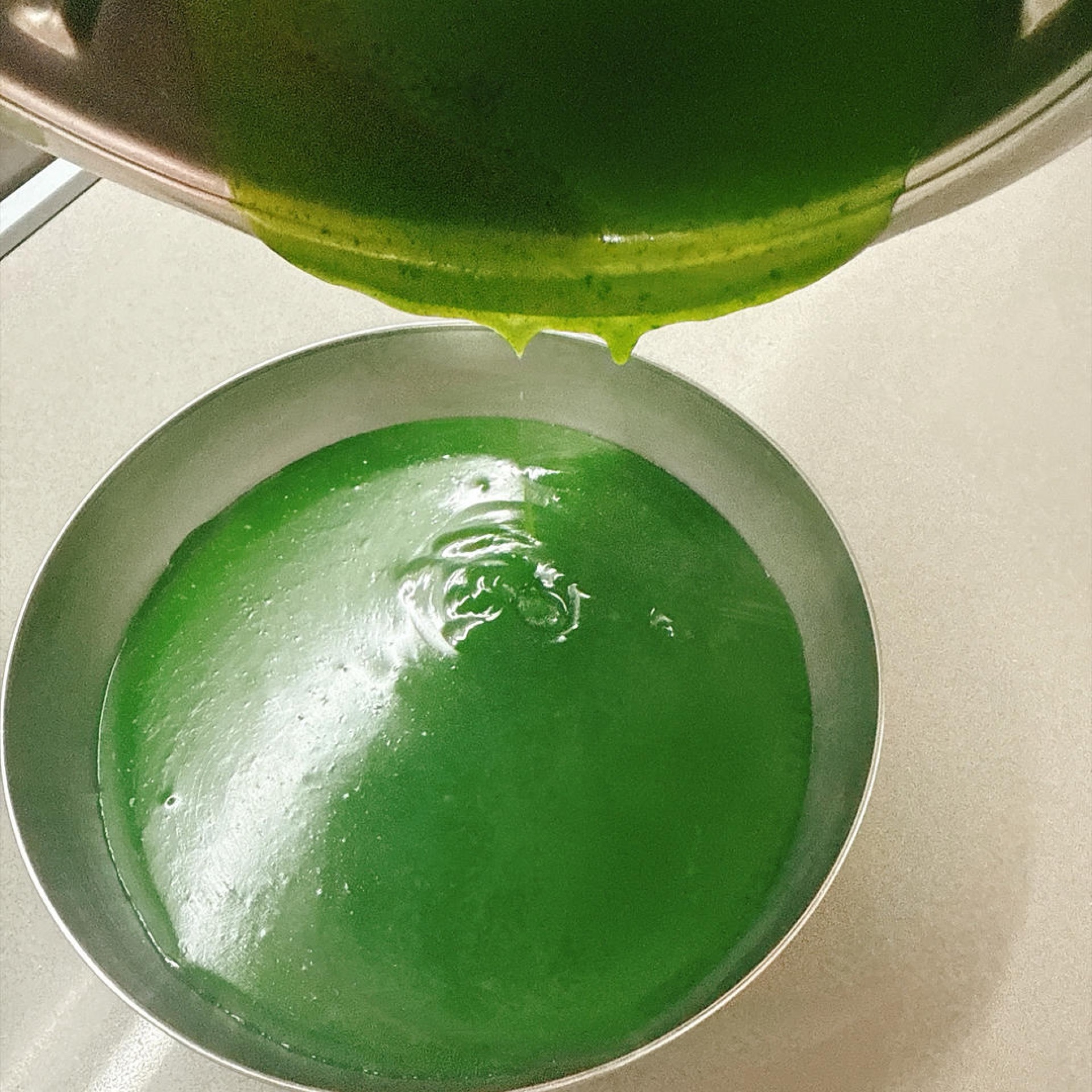
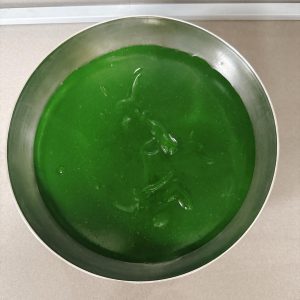
Step 13 — Let It Set
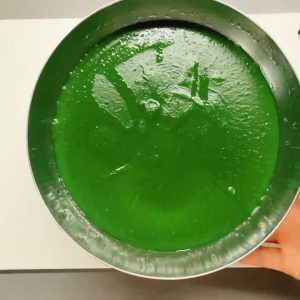
Leave it at room temperature for 4 hours to set — do not put it in the refrigerator.
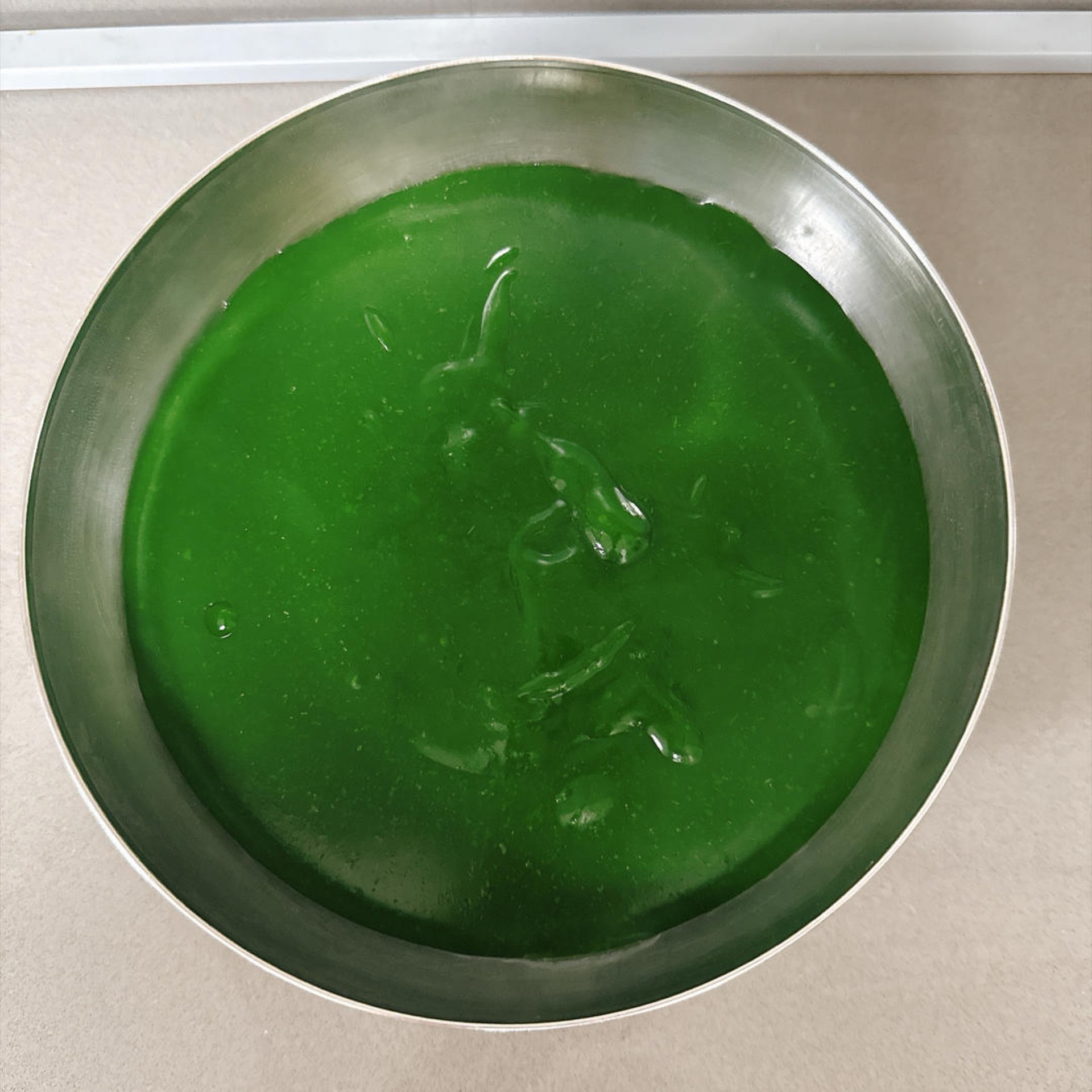
Step 14 — Check the Set
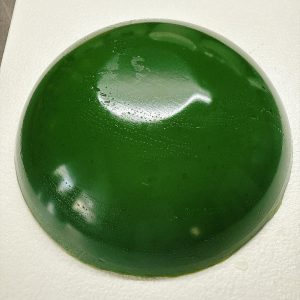
After 4 hours the jelly is a deep jade green, like polished stone.
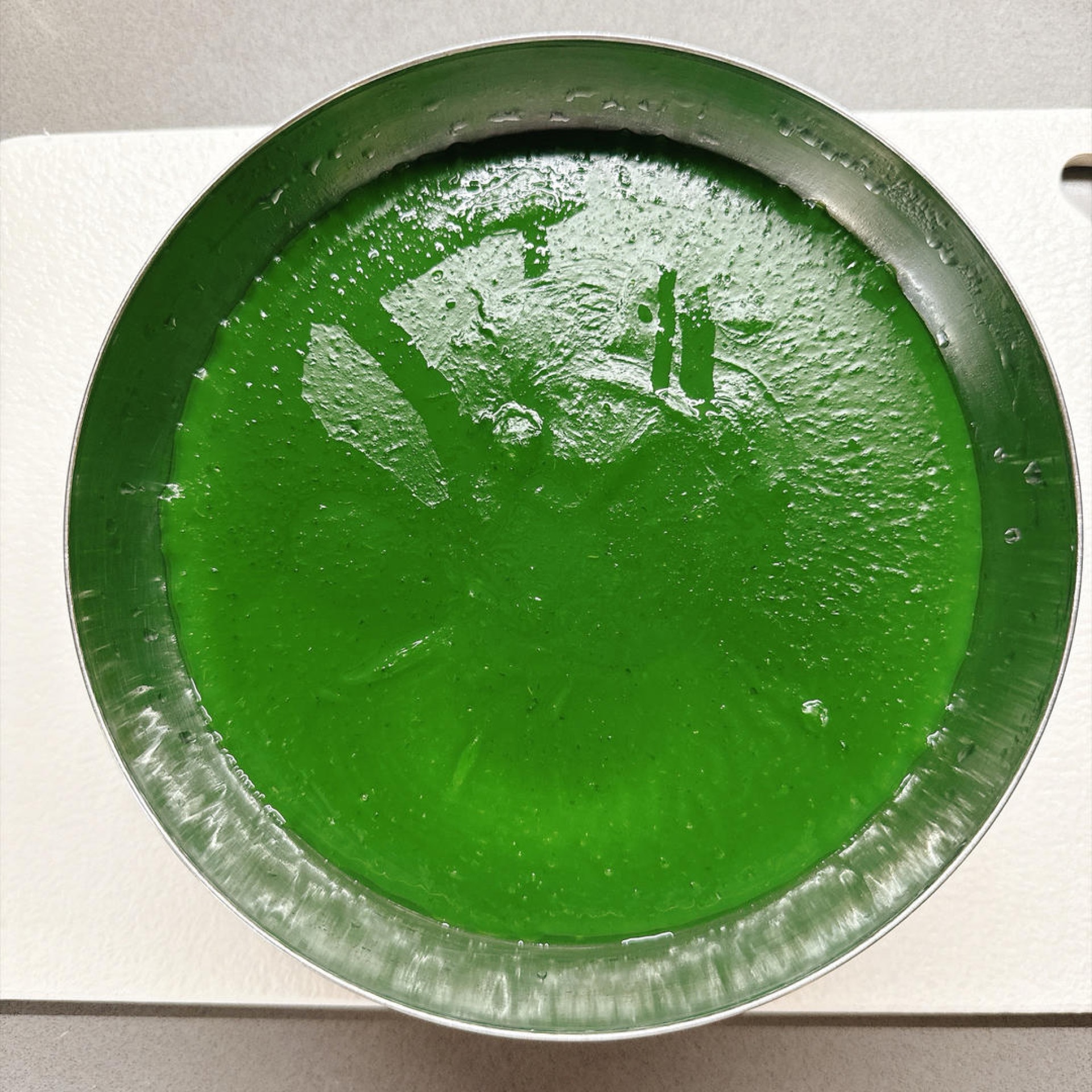
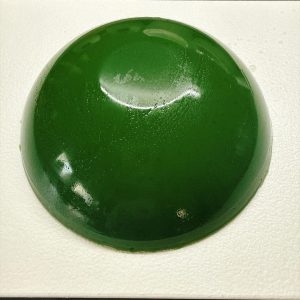
Step 15 — Unmold Gently
With a light tap it slides out in one piece, trembling and glossy, and the air around it feels cooler.
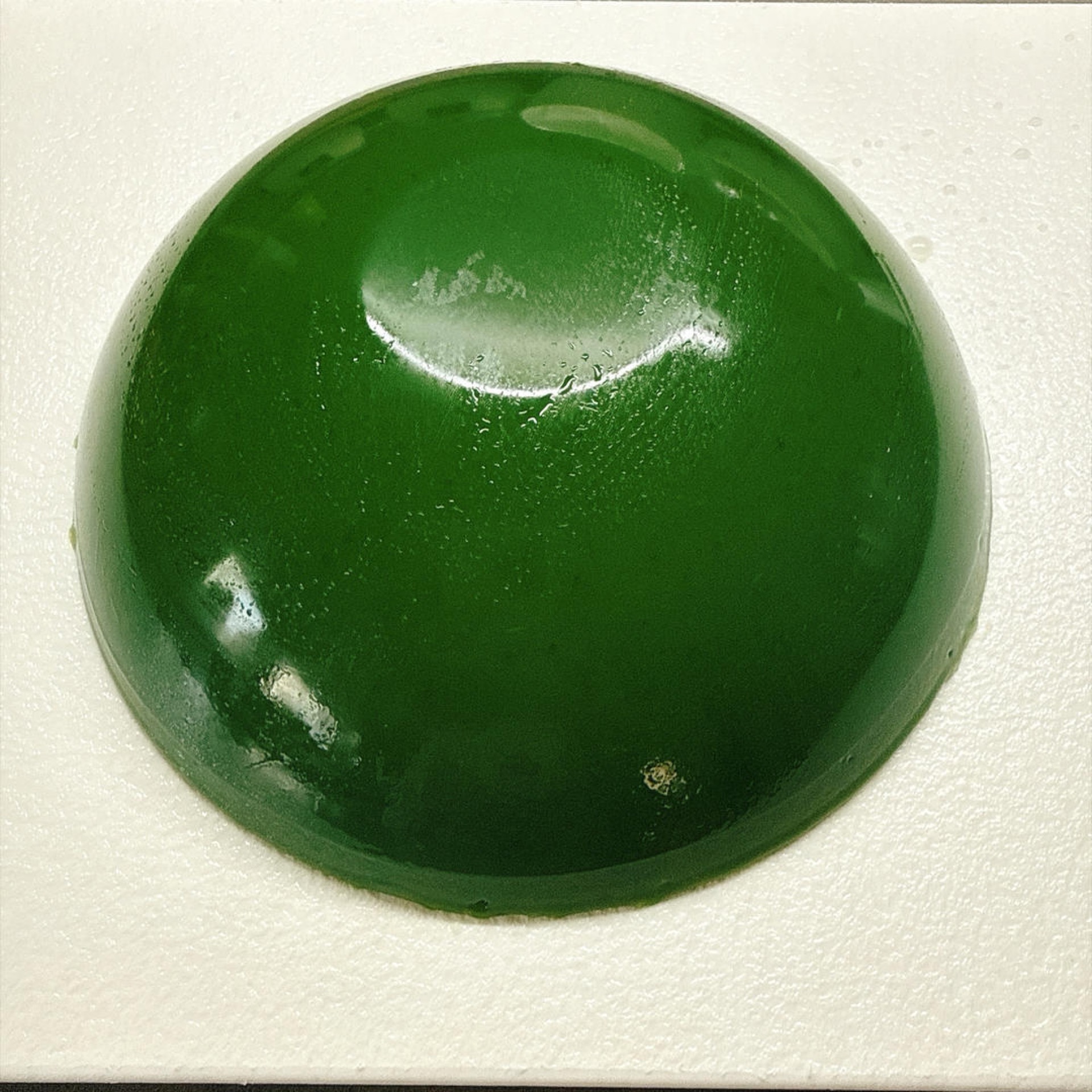
Step 16 — The Reveal
It flops out with a soft thud, a big translucent green block that wobbles like jelly and begs to be bitten.
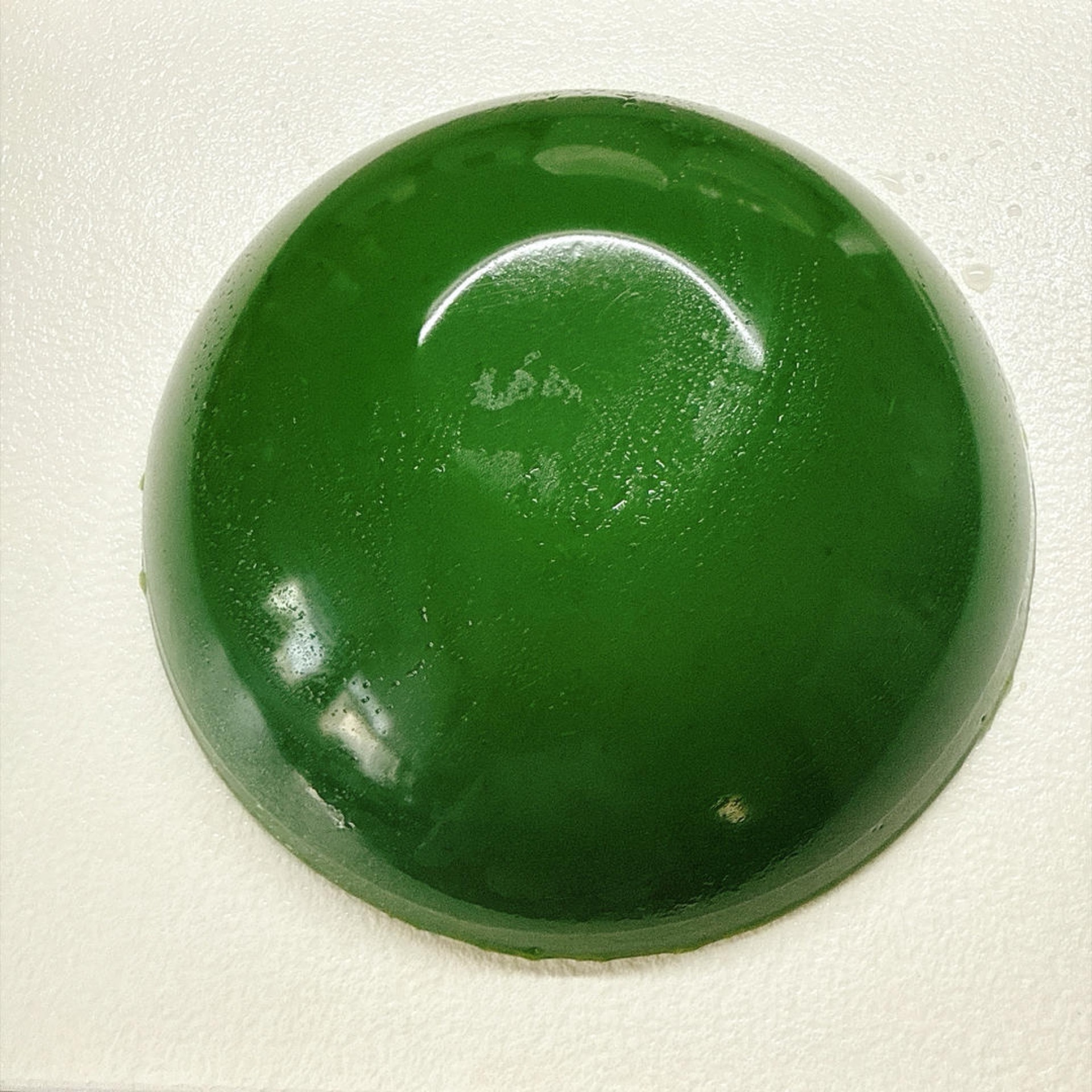
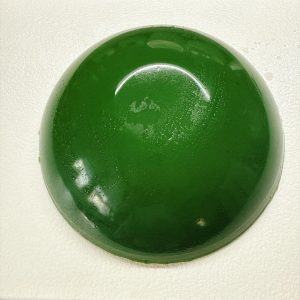
Step 17 — Final Look
Emerald and glistening, like a block of clear jade — cooling just to look at.
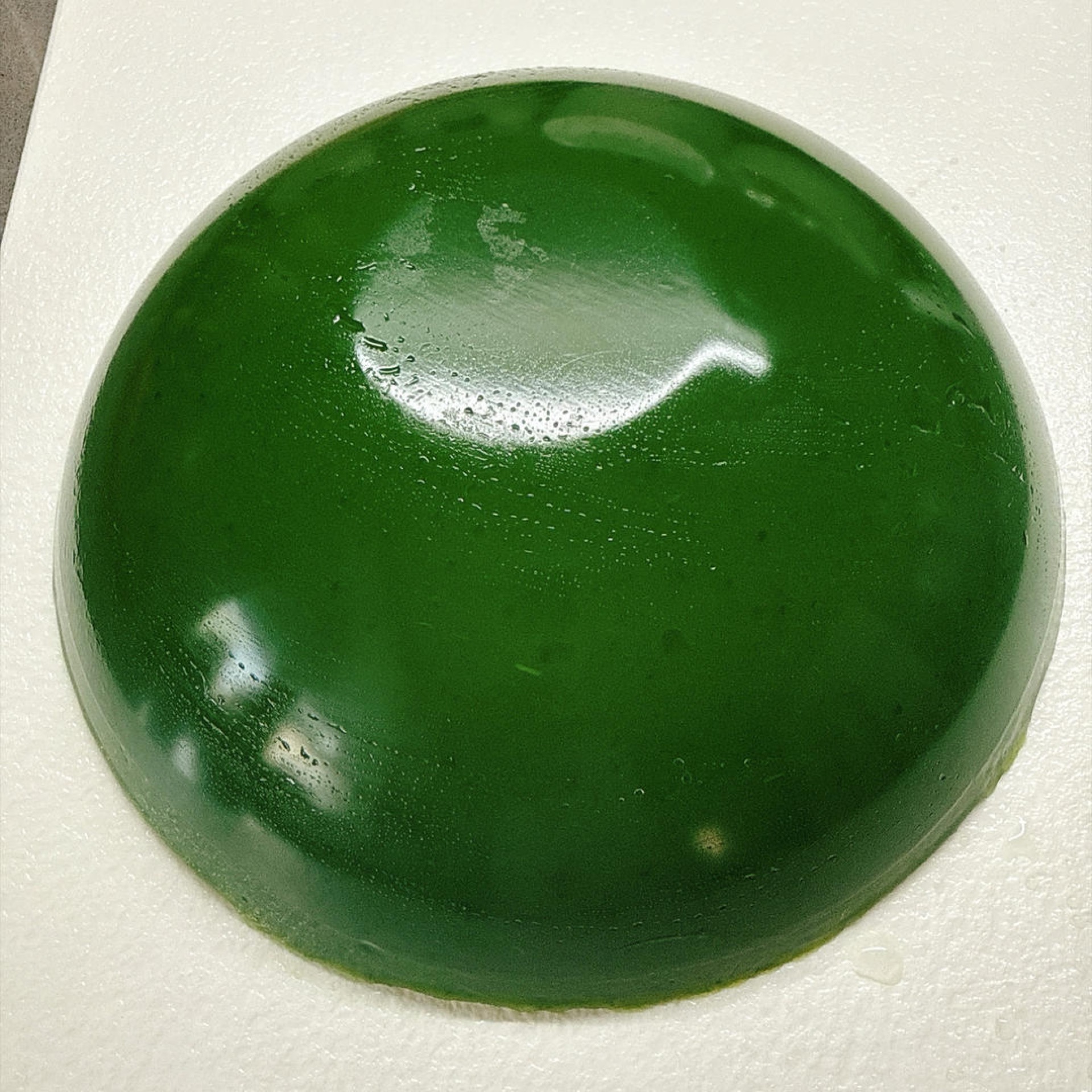
Step 18 — Cool and Clear
Bright green and translucent, the coolness travels from your eyes to your heart.
Step 19 — Get the Shredder
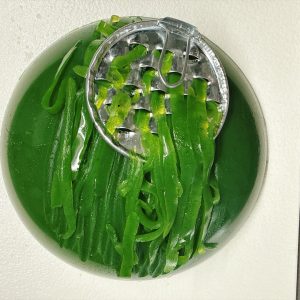
Take out the jelly noodle shredder.
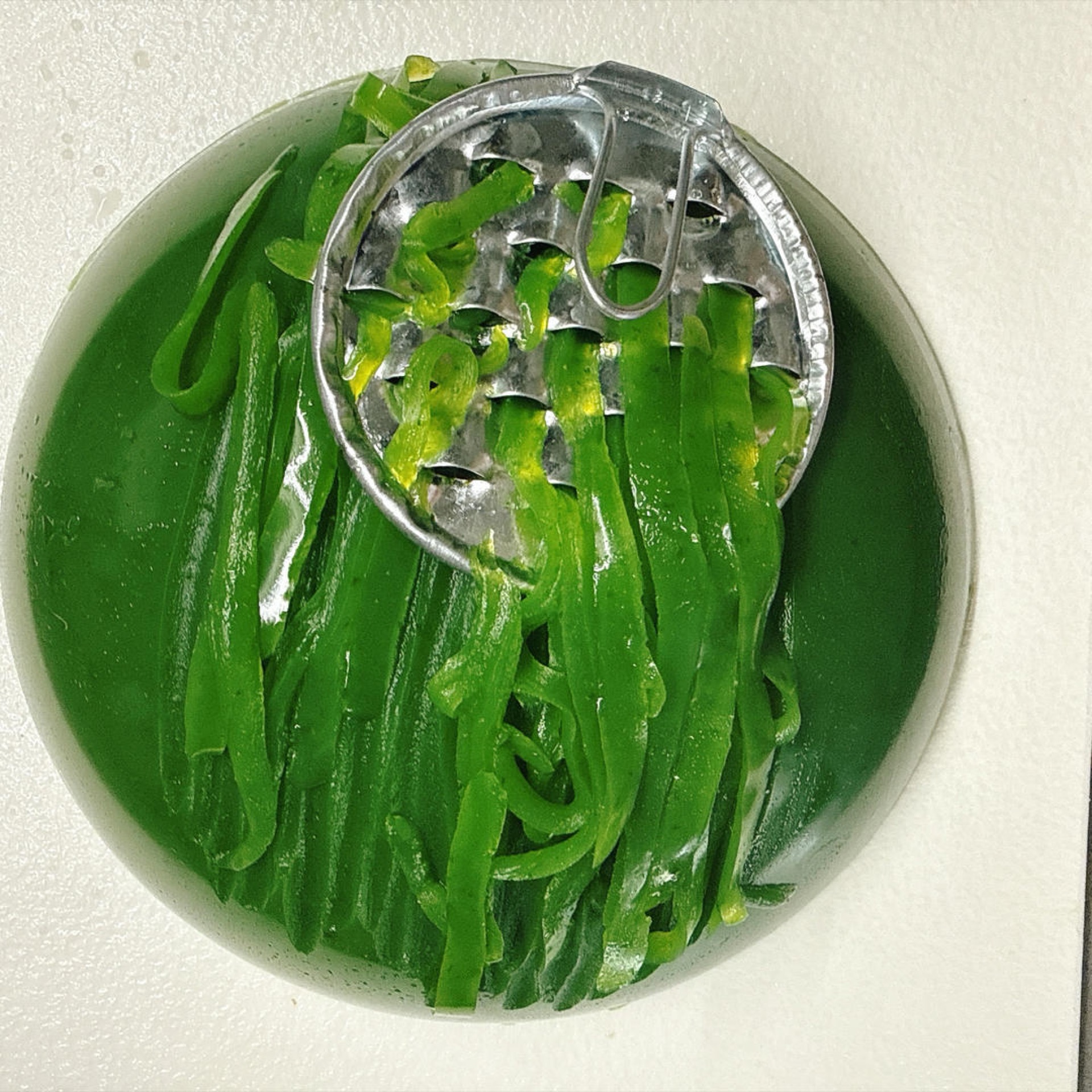
Step 20 — Shred the Jelly
Shred the jelly into fine strands.
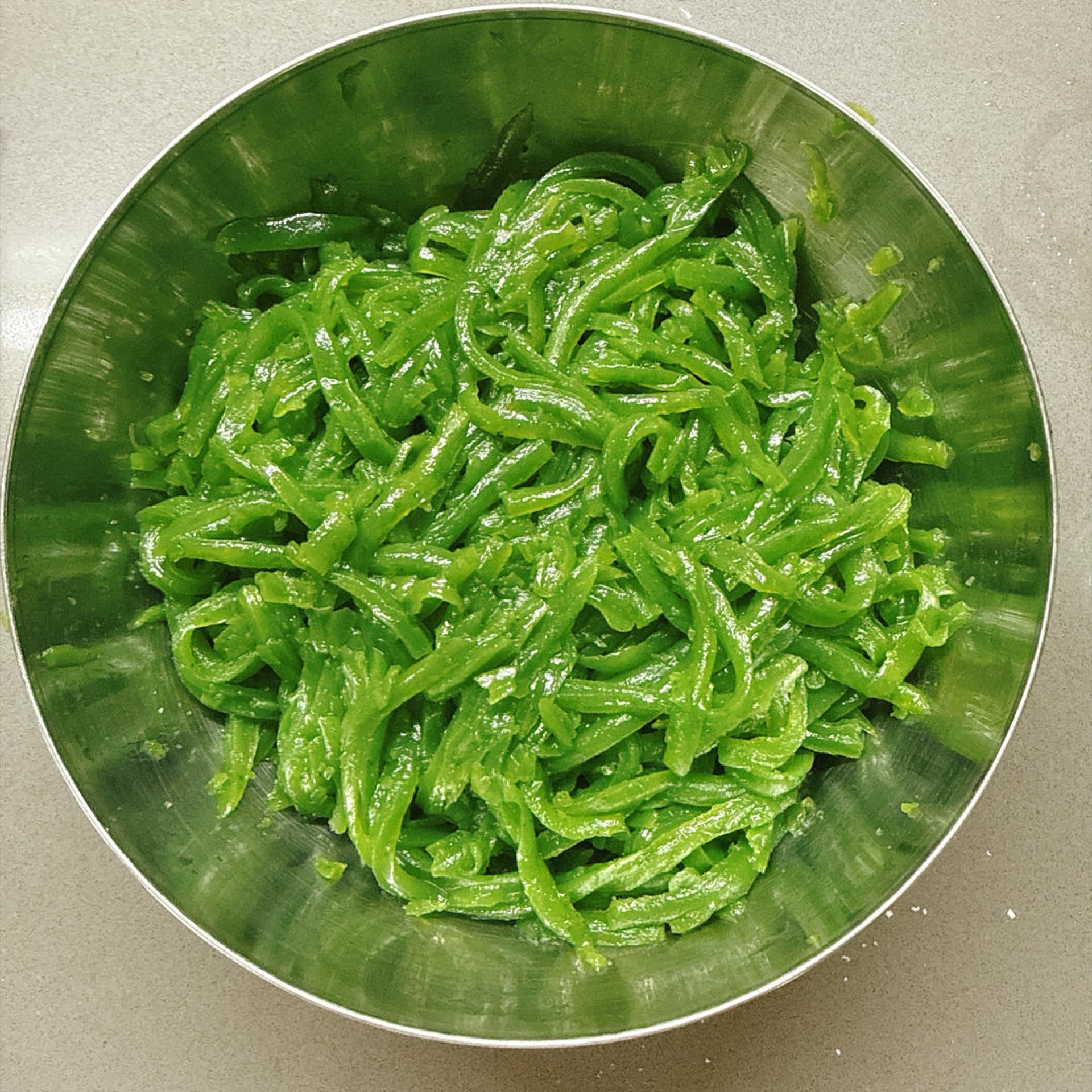
Step 21 — Into the Bowl
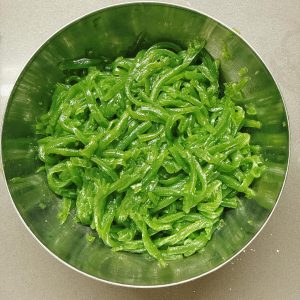
Pile the shredded jelly into a large bowl.
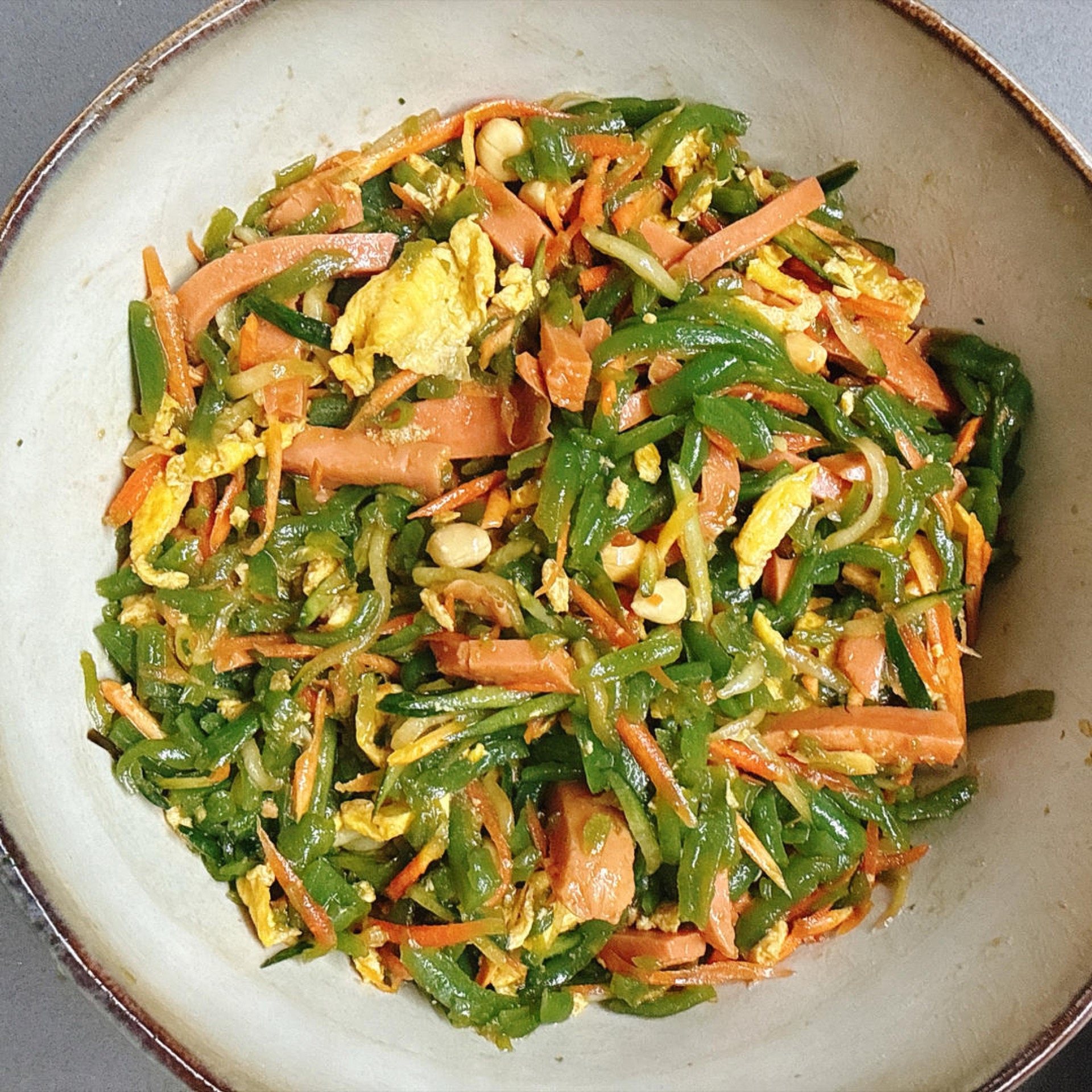
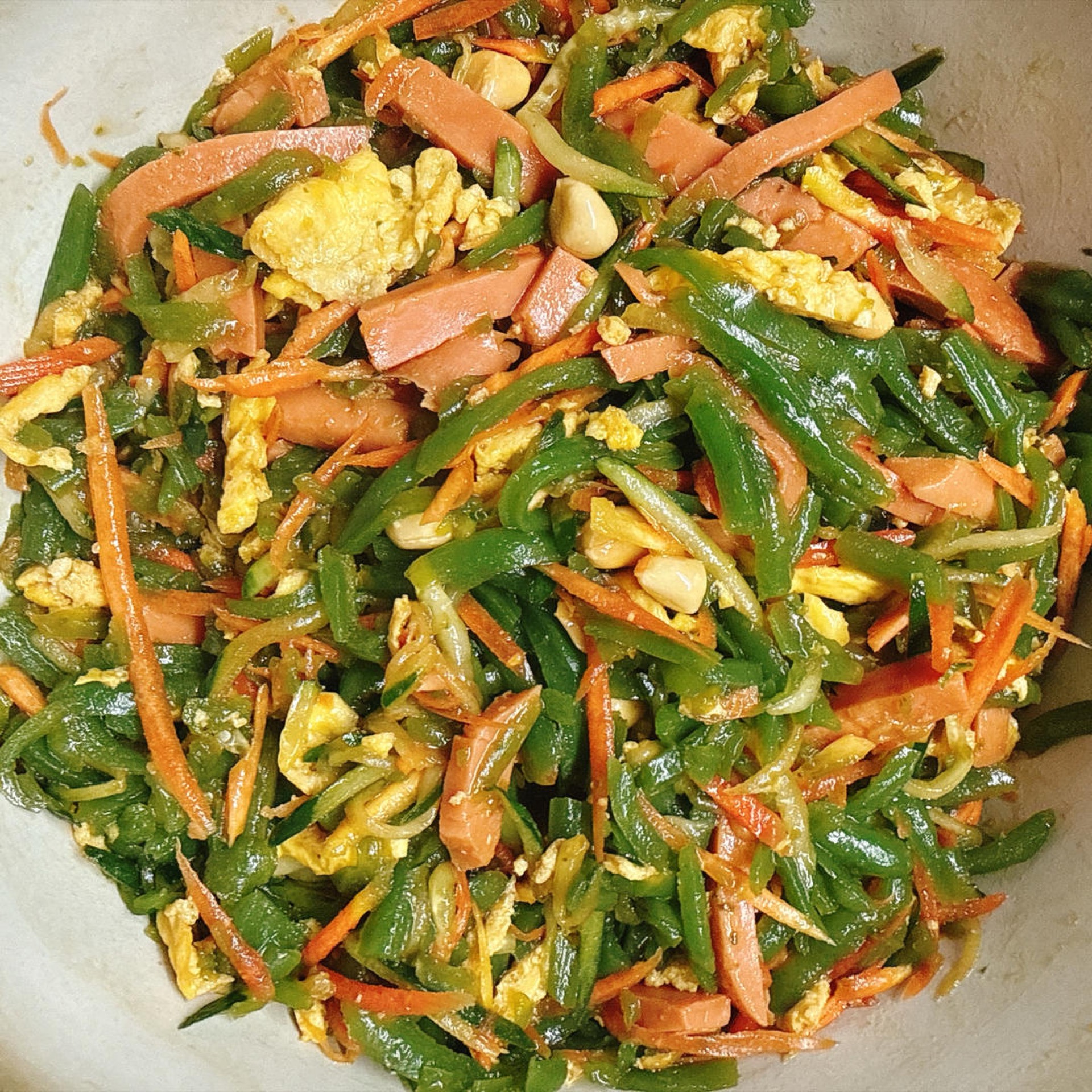
Step 22 — Add the Toppings
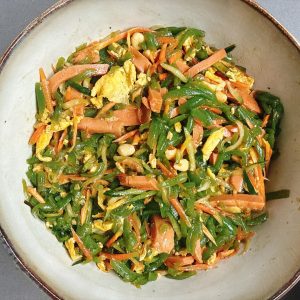
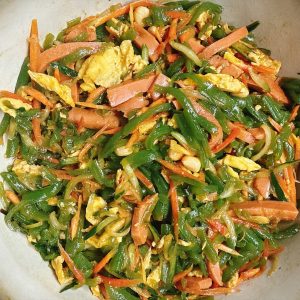
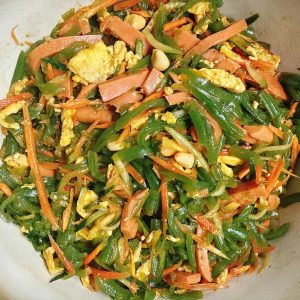
Season however you like — I added shredded omelet, ham, cucumber, carrot and roasted peanuts.
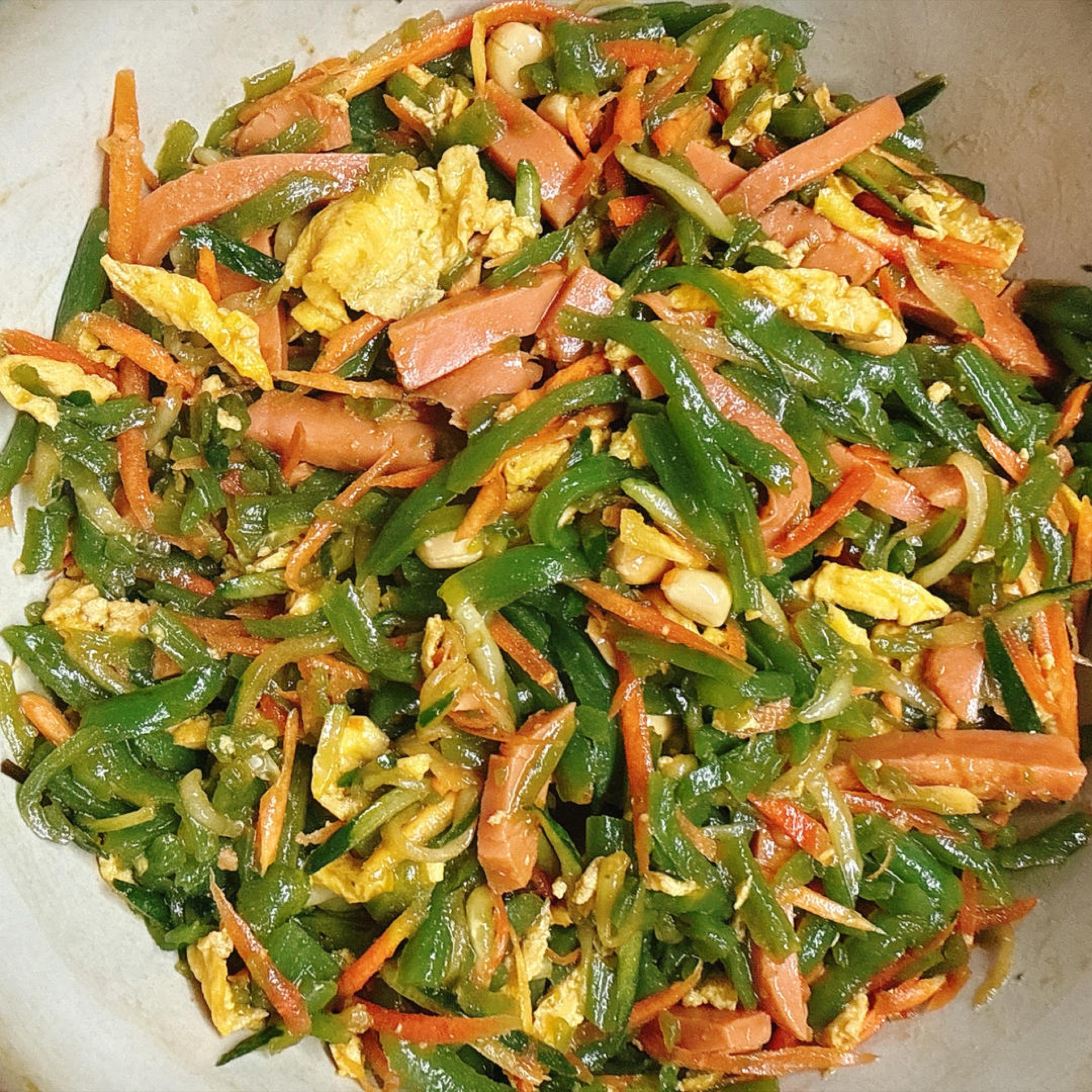
Step 23 — Toss and Serve
The emerald jelly is sour, spicy, slippery and refreshing — one bite cools you down, and this green is the cure for a summer with no appetite.
Step 24 — Enjoy
Jelly made from spinach juice is bouncy, cuts richness and is light enough to eat without guilt.
Common Mistakes When Making Spinach Jelly Noodles
1. Using the wrong starch. Cornstarch is the most common stand-in and the most disappointing. It sets opaque and soft, and it will not shred into clean strands — you will end up with a pile of broken pieces. The cause is simply that cornstarch gels differently from pea starch. The fix: buy pea starch or mung bean starch specifically. There is no workaround.
2. Getting the ratio wrong. Eyeballing the starch instead of weighing it is the fastest way to a failed batch. A “cup” of pea starch can weigh anywhere from 90 to 130 grams depending on how it is scooped, which is a swing big enough to ruin the texture. The cause is volume measuring. The fix: use a kitchen scale and weigh both the starch and the spinach water.
3. Under-cooking the slurry. The mixture looks thick long before it is actually done, and pulling it early leaves raw starch in the center. The cause is that surface thickening happens fast while the interior lags. The fix: keep stirring over steady heat for the full cooking time, until the paste is glossy, pulls away from the sides, and a spoon dragged through it leaves a clean trail that fills in slowly.
4. Chilling the jelly to speed things up. This is the mistake that ruins more batches than any other. The cause is impatience, and the result is a rubbery, weeping jelly that tastes fine but feels wrong. The fix: leave it on the counter at room temperature for the full four hours. If your kitchen is very hot, move it to the coolest spot in the house, but do not refrigerate.
5. Dressing it too early. If you toss the shredded jelly with the sauce and then let it sit, the salt in the soy sauce will draw water out of the jelly and you will end up with a soupy bowl. The cause is osmosis. The fix: dress the jelly right before serving, and keep any leftovers undressed.
6. Skimping on the skim. The foam that rises when you blend the spinach is bitter and slightly gritty. The cause is trapped air and fine plant particles. The fix: skim it off before you measure the water, and if you want an even cleaner result, let the strained juice rest for ten minutes and skim again.
Variations
Classic white liangfen. Skip the spinach entirely and use 900 grams of plain water with 100 grams of pea starch. The method is identical. This is the version you will find in Sichuan, and it is the best canvas for a really aggressive chili oil dressing.
Mung bean starch version. Substitute an equal weight of mung bean starch. The jelly sets slightly firmer and shreds even more cleanly. This is the more traditional choice and worth trying once you have the spinach version down.
Sichuan-style dressing. Add a teaspoon of toasted ground Sichuan peppercorns to the dressing for a numbing tingle, and increase the chili oil. A splash of sweet dark soy sauce deepens the color and adds a molasses note.
Sesame version. Whisk two tablespoons of Chinese sesame paste with a little warm water, soy sauce, vinegar and sugar until pourable, then spoon it over the shredded jelly. Top with crushed peanuts and call it lunch.
Add protein. Shredded poached chicken, thinly sliced braised chicken with mushrooms, or a handful of stir fried shrimp and eggs with lily bulb all turn this from a side into a main course.
Frequently Asked Questions
Can I make this ahead of time? The jelly itself can be made up to two days ahead and kept in the refrigerator, tightly covered. Bring it back to room temperature for about thirty minutes before shredding — cold jelly is brittle and will crack. Do not dress it until you are ready to eat.
Why did my jelly not set? Almost always because the ratio was off — usually too little starch, or too much water left in the spinach pulp. It can also happen if the slurry was under-cooked. If your jelly is still soft after four hours, you can rescue it: scrape it back into a pan, add a tablespoon or two of starch slurry, and cook it again for ten minutes before re-setting.
Can I use frozen spinach? Yes, but the color will be duller. Thaw it, squeeze it thoroughly dry, then blend with fresh water. You may need to adjust the water slightly since frozen spinach holds more moisture.
Is this dish gluten-free? As written, yes — pea starch and the listed dressings are gluten-free. Double-check your soy sauce, since many standard soy sauces contain wheat; use tamari if you need to be certain.
Why does my jelly release water? That is syneresis, and it happens when the jelly is chilled too fast or held too long. Setting at room temperature minimizes it. If some liquid does pool, simply pour it off before dressing — the jelly itself is fine.
How to Serve
Spinach jelly noodles are best served cold or at cool room temperature, in shallow bowls so the dressing coats every strand. They work as a light main course for two, or as a side dish alongside richer food — the clean, acidic bite cuts through fried and braised dishes beautifully.
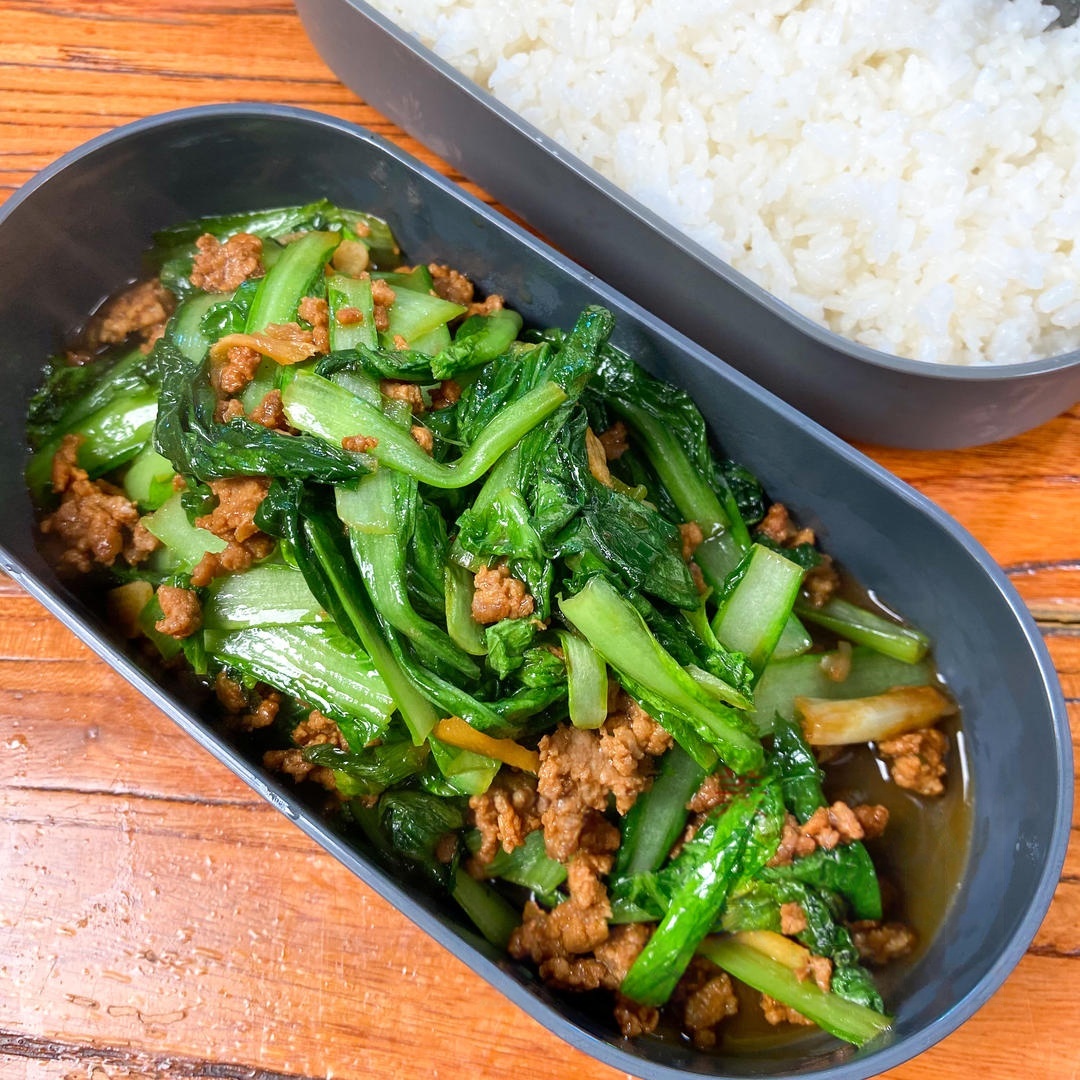
For a full table, pair them with minced pork with baby bok choy — the savory, saucy pork is a perfect contrast to the cool, slippery jelly. A plate of turnip cake also works wonderfully, especially if you pan-fry it until the edges crisp. And if you are feeding a crowd that likes to nibble, braised chicken feet with tiger skin eggs rounds out the spread with something rich and gelatinous.
For a lighter, more casual meal, serve the jelly alongside a bowl of plain rice and a simple soup, or plate it as part of a cold appetizer spread with smashed cucumber and chilled tofu.


Storage & Reheat
Store the unshredded jelly block in an airtight container in the refrigerator for up to three days. Wrap it well — starch jelly absorbs surrounding odors readily, and an unwrapped block will taste like whatever else is in your fridge by morning. Some liquid may pool in the container; pour it off before using.
There is no reheating here. Warming the jelly will melt it back into paste, and while you could technically re-set it, the texture will not be the same. Serve it cold.
Leftover dressed jelly should be eaten within a few hours, since the salt in the dressing will continue to draw out water. If you have dressed more than you can finish, drain the leftovers, rinse them briefly in cold water, and store them undressed for up to a day.
Allergen Notice
This recipe as written contains egg and peanuts in the toppings, and soy in the dressing. It is naturally free of gluten, dairy, shellfish, fish, tree nuts and sesame if you omit the toasted sesame oil. If you are cooking for someone with a soy allergy, substitute coconut aminos for the soy sauce. Always check the labels on your pea starch, chili oil and any prepared sauces, since cross-contamination and hidden ingredients vary by brand.
Nutrition Disclaimer
Nutrition information is calculated using an ingredient database and should be considered an estimate. In cases where multiple ingredient alternatives are given, the first listed is calculated for nutrition. Garnishes and optional ingredients are not included.
About the Author & Recipe Development
Lin is the cook, writer and photographer behind Woks of Love, a site devoted to honest Chinese home cooking — the kind of food that shows up on a family table rather than a restaurant menu. She grew up watching her mother and grandmother cook, and she has spent years translating those instincts into recipes that work in a Western kitchen with Western ingredients.
This version of spinach jelly noodles came out of a summer of testing. Lin wanted a liangfen that was bright enough to look festive on a hot day, and spinach juice turned out to be the answer — but only after several batches that were too rubbery, too soft, or too pale. The 1:9 ratio and the room-temperature set in this recipe are the result of those failures. The toppings are deliberately flexible: use what you have, and dress it the way you like it.
Authoritative References
For safe handling and storage of the cooked jelly, see the FDA Food Code, which sets the two-hour cooling window referenced above. For general guidance on starch-based foods and cold storage, the USDA guidance on leftovers and food safety is a useful companion read.
Spinach Jelly Noodles (菠菜凉粉): Emerald Green, Silky Cool Jelly

Equipment
- Blender or Food Processor
- Fine-mesh strainer
- Wok or heavy saucepan
- Whisk
- 8×8 inch dish or bowl
- Jelly noodle shredder or knife
- Cutting Board
- Slotted Spoon
Ingredients
For the Spinach Jelly
- 200 g spinach leaves about 7 oz, packed, washed
- 700 g water for blending, plus more for steaming
- 100 g pea starch also sold as pea flour or wandou fen
- 1 tsp neutral oil for greasing the dish
For the Sauce
- 2 tbsp light soy sauce or tamari
- 1 tbsp black vinegar Chinkiang style
- 1 tsp chili oil with sediment, to taste
- 1 tsp toasted sesame oil optional
- 1 clove garlic minced
- 1 tsp sugar to balance
For the Toppings
- 1 large egg beaten and pan-fried into a thin omelet, sliced
- 1 small cucumber julienned
- 1 small carrot julienned
- 2 tbsp roasted peanuts roughly crushed
Instructions
- Add 200 grams of spinach leaves and 700 grams of water to the blender.

- Blend for 10 seconds on the highest speed until completely liquidized.
- Pour the green liquid through a fine-mesh strainer or steamer basket to filter out the pulp.
- You should end up with a large bowl of vivid emerald-green water.
- Skim off the foam floating on the surface of the spinach water.
- The water is icy green and translucent, and just looking at it cools you down.
- Put 100 grams of pea starch into a large bowl.
- Pour in 900 grams of the strained spinach water.
- The starch-to-water ratio is 1:9.
- Cook the mixture for 15 minutes at 100°C (212°F), stirring constantly at a steady speed, until it thickens into a glossy paste.
- Pour the cooked jelly into a large bowl greased with a little cooking oil.
- The jade-green color is truly beautiful.
- Leave it at room temperature for 4 hours to set — do not put it in the refrigerator.
- After 4 hours the jelly is a deep jade green, like polished stone.
- With a light tap it slides out in one piece, trembling and glossy, and the air around it feels cooler.
- It flops out with a soft thud, a big translucent green block that wobbles like jelly and begs to be bitten.
- Emerald and glistening, like a block of clear jade — cooling just to look at.
- Bright green and translucent, the coolness travels from your eyes to your heart.
- Take out the jelly noodle shredder.
- Shred the jelly into fine strands.
- Pile the shredded jelly into a large bowl.
- Season however you like — I added shredded omelet, ham, cucumber, carrot and roasted peanuts.
- The emerald jelly is sour, spicy, slippery and refreshing — one bite cools you down, and this green is the cure for a summer with no appetite.
- Jelly made from spinach juice is bouncy, cuts richness and is light enough to eat without guilt.












Leave a Reply