If you have ever ordered a cold plate at a Sichuan restaurant and wondered why the chicken tastes so much silkier than anything you make at home, this spicy cold shredded chicken — 香辣凉拌鸡丝 — is the answer. It is a liangban (凉拌) dish in the truest sense: cool, bright, garlicky, and glossed with chili oil, built on hand-torn strands of poached chicken breast rather than chopped chunks. The whole thing comes together in about 35 minutes, most of which is hands-off poaching time.
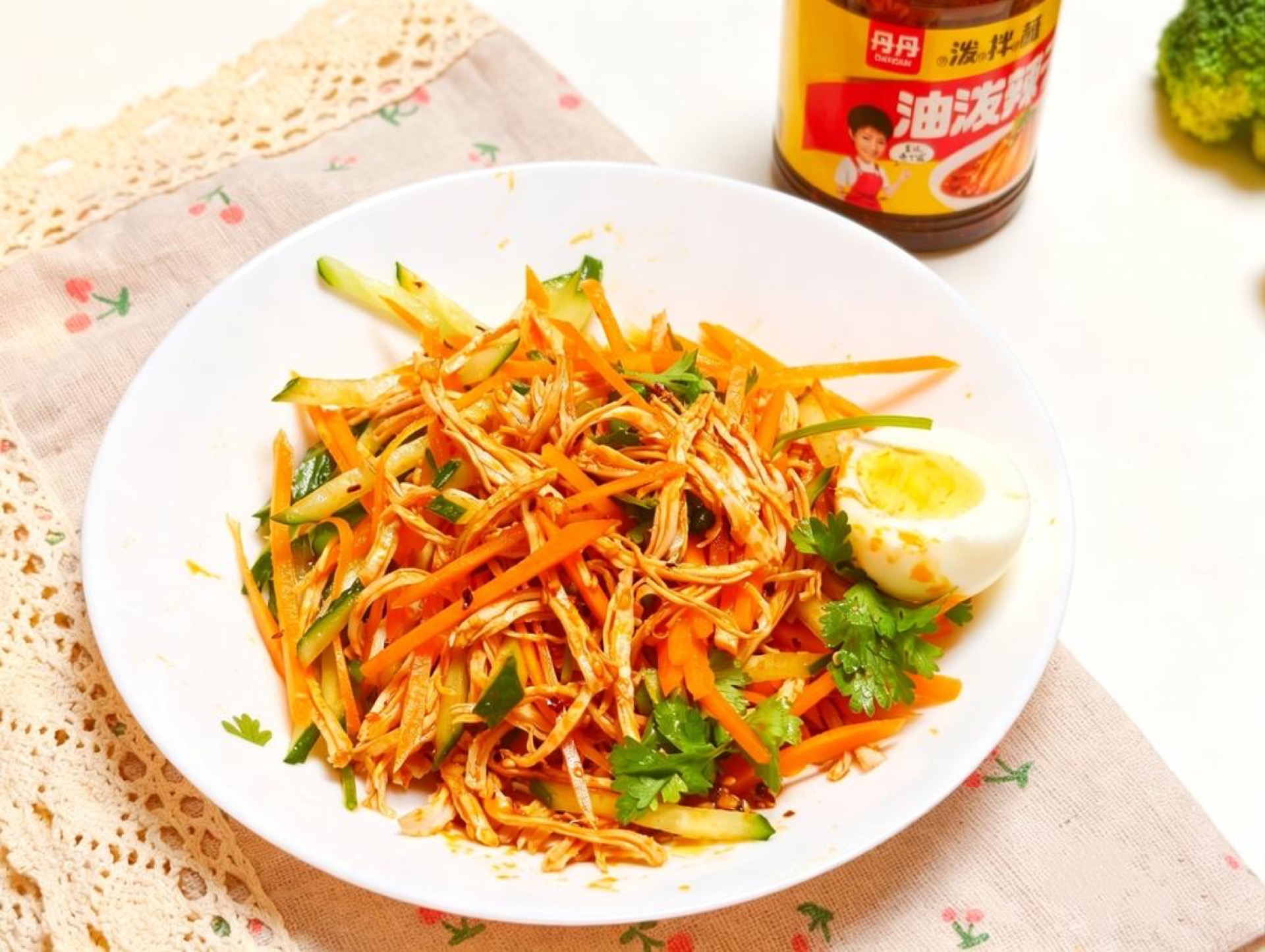
What makes this version genuinely weeknight-friendly is that it skips the long braise and the from-scratch red oil. A single chicken breast, a handful of aromatics, and a jar of good oil-poached chili crisp do almost all the work. The cucumber and carrot stay raw and crunchy underneath, the hard-boiled egg adds a little richness, and the dressing — soy, black vinegar, garlic, chili oil — pulls it all into something sharp, savory, and genuinely addictive.
It is also one of the most forgiving recipes on this site. You cannot really overcook the dressing, the vegetables take two minutes, and the only step that demands attention is the poach-and-shock on the chicken. Get that right and the rest is assembly. If you have made our creamy cold shredded chicken before, you already know the basic rhythm of a liangban plate; this one swaps the sesame-cream dressing for a leaner, sharper chili-vinegar one.
What Is Spicy Cold Shredded Chicken (香辣凉拌鸡丝)?
Spicy cold shredded chicken is a Sichuan-style cold appetizer made from poached chicken breast that has been cooled, torn into fine shreds by hand, and tossed with a dressing of chili oil, soy sauce, black vinegar, and raw garlic. It is usually served over or alongside raw julienned vegetables — cucumber and carrot are the classic pair — and finished with something rich, often a halved hard-boiled egg or a scatter of toasted sesame.
The name breaks down neatly. 香辣 (xiāng là) means “fragrant and spicy,” 凉拌 (liáng bàn) means “cold-tossed,” and 鸡丝 (jī sī) means “chicken shreds.” So the dish is literally “fragrant-spicy cold-tossed chicken shreds.” The 清爽开胃 (qīng shuǎng kāi wèi) part of the title describes what it does rather than what it is: refreshing and appetite-opening, which is exactly the role cold dishes play in a Chinese meal.
In a traditional banquet or family-style dinner, a liangban plate like this is not a main course at all — it is the first thing on the table, meant to wake up your palate before the hot dishes arrive. That is why the seasoning leans so hard into vinegar and chili: it is engineered to make you hungry, not to fill you up. Served at home as a light lunch or a side to a bigger spread, it does both jobs surprisingly well.
The technique that separates a good version from a great one has nothing to do with the sauce. It is the poaching and the ice-water shock, which together give you chicken that shreds into clean, tender filaments instead of crumbling into dry nubs. Once you have that down, you can dress it a dozen different ways.
If you enjoy the punchy, aromatic style of Sichuan cold plates, our fish fragrant shredded chicken takes the same shredded-chicken base in a completely different direction — sweet, sour, garlicky, and just as fast to put together.
1Taiwanese Braised Pork Rice (卤肉饭): The 6-Step Comfort BowlSmall-diced pork belly braised with fried shallots, dried shiitake, beer, and whole spices, served over rice with tiger-skin eggs.Check out this recipe
Why This Recipe Works
Three things make this recipe reliable, and all three are worth understanding before you start.
First, cold water start. The chicken goes into the pot with cold water, not boiling water. Starting cold means the meat heats gradually and evenly, so the proteins set slowly and the muscle fibers retain more moisture. Drop a chicken breast into already-boiling water and the outside overcooks while the inside is still raw, which is the single most common reason home-poached chicken turns out chalky.
Second, the ice-water shock. The moment the chicken comes out of the hot liquid, it goes into ice water. This is not just about cooling it down fast enough for food safety — it is a texture step. The rapid chill firms the muscle fibers so they hold together when you tear them, and it stops the carryover cooking dead. Chicken that cools slowly on a plate keeps cooking and keeps drying out.
Third, tearing instead of cutting. Shredding by hand along the grain gives you long, irregular strands with lots of surface area. Those rough edges grab the dressing far better than a clean knife cut would, and the strands stay tender because you are following the natural direction of the muscle rather than slicing across it.
The science behind the ice bath is simple protein chemistry: heat causes myosin and actin in the muscle to denature and contract, squeezing out water. Chilling rapidly halts that contraction and lets the fibers relax while still holding their shape, which is why shocked chicken stays moist and shreds cleanly instead of turning stringy and dry.
Everything else — the flour scrub, the aromatics in the poaching water, the vinegar in the dressing — is refinement rather than foundation. The flour rub lifts surface impurities and any lingering smell from the raw breast, the ginger and scallion perfume the poaching liquid so the chicken picks up a faint savory note, and the black vinegar cuts through the chili oil so the finished dish tastes bright rather than greasy.
Equipment Needed
You do not need much for this one, and none of it is specialty equipment.
- A wok or a medium saucepan — the chicken poaches in a saucepan, but a wok works perfectly if that is what you have within reach. Anything deep enough to submerge a chicken breast with an inch of water to spare will do.
- A cutting board and a sharp knife — for the cucumber and carrot julienne. A sharp knife matters more than a fancy one here; dull blades crush cucumber into watery mush.
- A slotted spoon or spider strainer — for skimming the foam off the poaching liquid and for lifting the chicken out without dragging a cloud of scum with it.
- A large bowl of ice water — set this up before you start cooking, not after. You want it ready the second the chicken comes off the heat.
- A small bowl for the dressing and a serving bowl deep enough to toss everything without flinging chili oil across the counter.
A kitchen thermometer is optional but genuinely useful if you are new to poaching chicken. Aim for 165°F (74°C) at the thickest point, and you will never guess wrong again.
Ingredients
Here is what goes into the dish. Full quantities are in the recipe card at the bottom of this post.
- Chicken breast — one large boneless, skinless breast, about 1 pound. You want it to be roughly even in thickness so it poaches uniformly; if one end is much thicker, butterfly it or pound it lightly.
- All-purpose flour — for scrubbing the raw chicken. This is a Chinese home-kitchen trick for lifting surface impurities and odor.
- Ginger and scallion — the classic poaching aromatics. They go into the water, not the dressing.
- Shaoxing wine — a splash in the poaching liquid to round out the chicken’s flavor. Dry sherry is a fine substitute.
- Cucumber and carrot — half of each, julienned fine. These form the cool, crunchy bed under the chicken.
- A hard-boiled egg — halved and tucked in at the end. Optional, but it makes the plate feel like a proper meal.
- Oil-poached chili crisp — two tablespoons, and this is the ingredient that defines the dish. Use one with visible sediment and flakes, not a thin clear chili oil.
- Light soy sauce — one tablespoon. Light, not dark; dark soy would muddy the color and taste too molasses-heavy.
- Chinkiang black vinegar — half a tablespoon. Rice vinegar works in a pinch, but black vinegar has a rounder, slightly malty edge that suits chili oil beautifully.
- Garlic — two cloves, minced fresh. Do not substitute garlic powder here; raw garlic is part of the point.
Ingredient Notes
On the chili crisp. The quality of your chili oil is the single biggest variable in this recipe. A good oil-poached chili crisp has visible chili flakes, sesame, and sometimes peanuts suspended in a deep red oil, and it tastes fragrant rather than just hot. If yours is mostly clear oil with a few flakes at the bottom, stir it well before measuring, and consider adding an extra half spoonful of the sediment. If you keep a jar of white pepper on hand, a small pinch stirred into the dressing adds a warm background note that pairs well with chili.
On the chicken. Chicken breast is traditional and keeps the dish lean, but it is also the least forgiving cut. If you want a richer result, boneless chicken thigh poaches in about the same time and shreds beautifully — just add a minute or two to the simmer. And if you are already comfortable with braising poultry, the gentle poaching method here is close cousins with the technique used in Shunde sauna chicken, where controlled, moist heat is what keeps the meat silky.
On the vinegar. Black vinegar is the default, but the amount is worth tuning. Start with half a tablespoon, taste the dressing before it hits the chicken, and add a splash more if it tastes flat. Too much and the chili oil loses its roundness; too little and the whole dish feels heavy.
On the vegetables. Cucumber and carrot are the classic pairing, but the real rule is: something watery and crisp, plus something sweet and crunchy. Daikon, celery, and even lightly blanched bean sprouts all work. Whatever you choose, cut it fine — thin julienne gives you crunch in every bite without overwhelming the delicate chicken.
On salt. Light soy sauce brings most of the salt here, and chili crisp brands vary wildly in sodium. Season the dressing, taste it on a piece of chicken, and only then decide whether it needs more soy.
Prep & Mise en Place
This dish moves fast once the chicken is cooked, so set yourself up properly before you turn on the heat.
- Fill a large bowl with ice water and set it next to the stove. This is non-negotiable — you will need it the moment the chicken comes out of the pot.
- Scrub the chicken. Sprinkle the flour over the breast, rub it in with your hands for about 30 seconds, then rinse thoroughly under cold running water and pat dry. The flour lifts surface grit and any faint raw smell.
- Prep the aromatics. Slice the ginger into coins and cut the scallion into segments. No need to be precise; they are going into the poaching water and will be discarded.
- Julienne the vegetables. Cut the cucumber and carrot into fine matchsticks, about 2 inches long and an eighth of an inch thick. Spread them across the bottom of your serving bowl and refrigerate while you cook.
- Hard-boil and peel the egg if you have not already, and halve it lengthwise.
- Mix the dressing. Mince the garlic, then whisk it with the soy sauce, black vinegar, and chili crisp in a small bowl. Let it sit while the chicken poaches so the garlic mellows slightly into the liquid.
- Set out a slotted spoon for skimming and lifting.
With that done, you are about 20 minutes from a finished dish, and most of it is unattended simmering.
Cooking Process
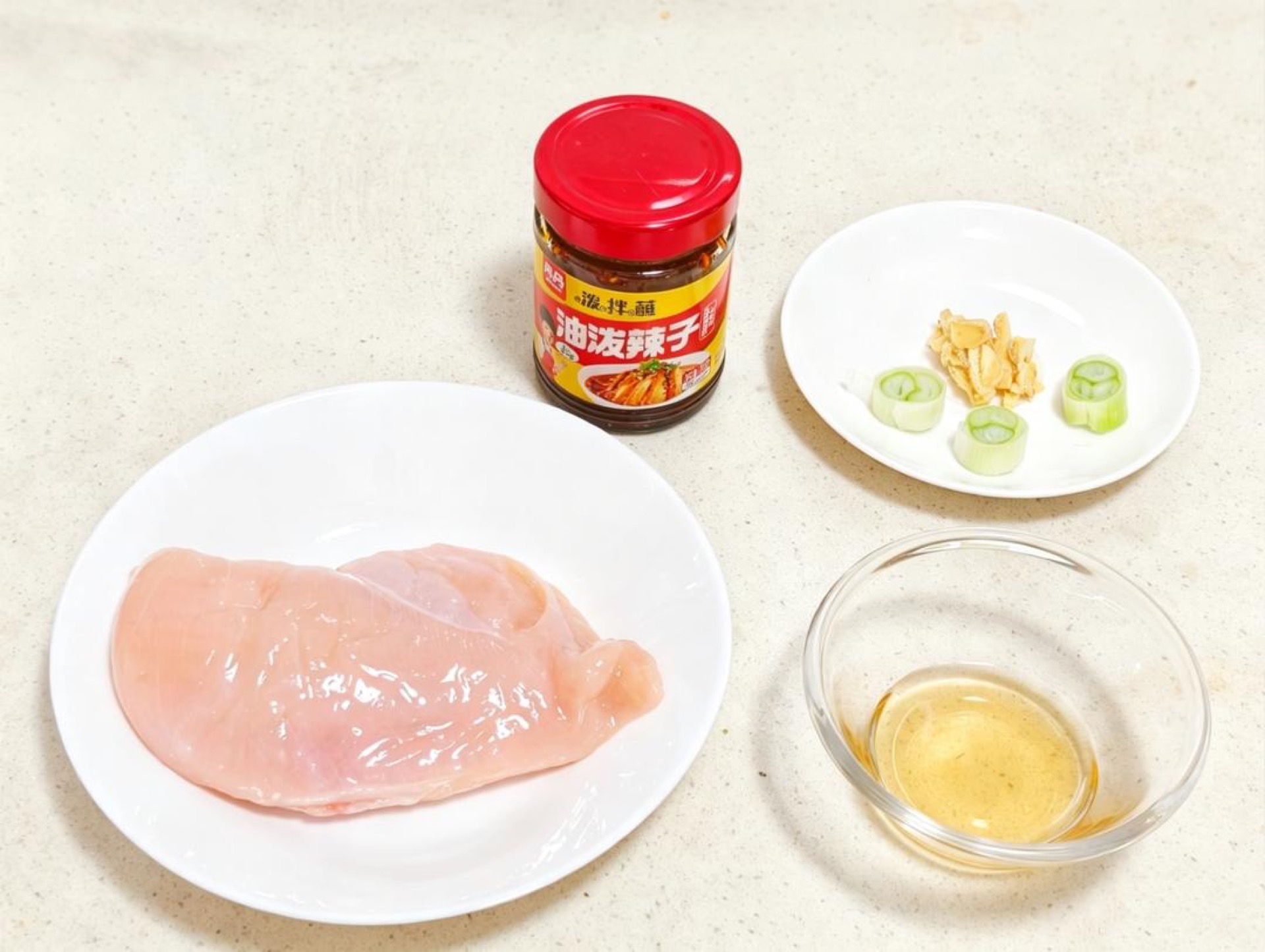
Step 1 — Gather the Ingredients
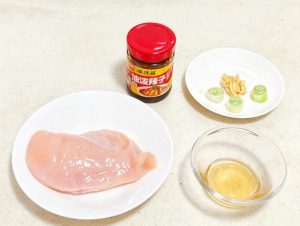
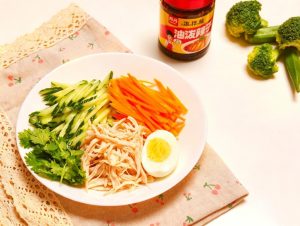
Set out the chicken breast, ginger, scallion, Shaoxing wine, cucumber, carrot, egg, and all the dressing ingredients so everything is within reach before you start.
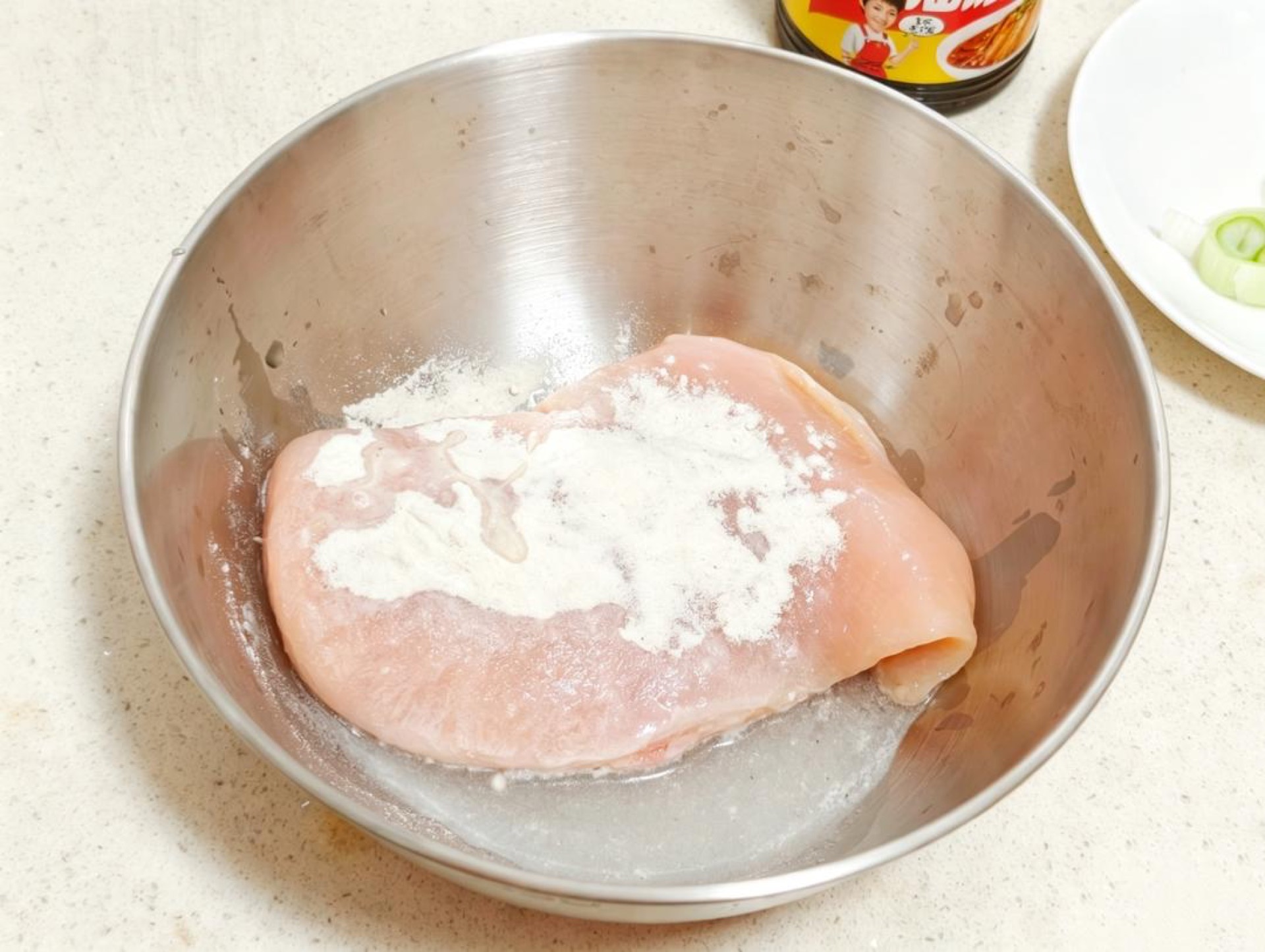
Step 2 — Scrub the Chicken
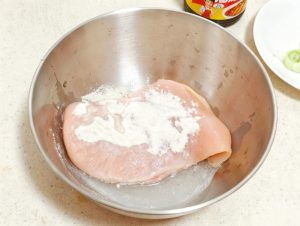
Sprinkle the flour over the chicken breast and rub it in with your hands, working the flour into the surface, then rinse the breast thoroughly under cold running water and pat it dry.
Step 3 — Start the Poaching Liquid
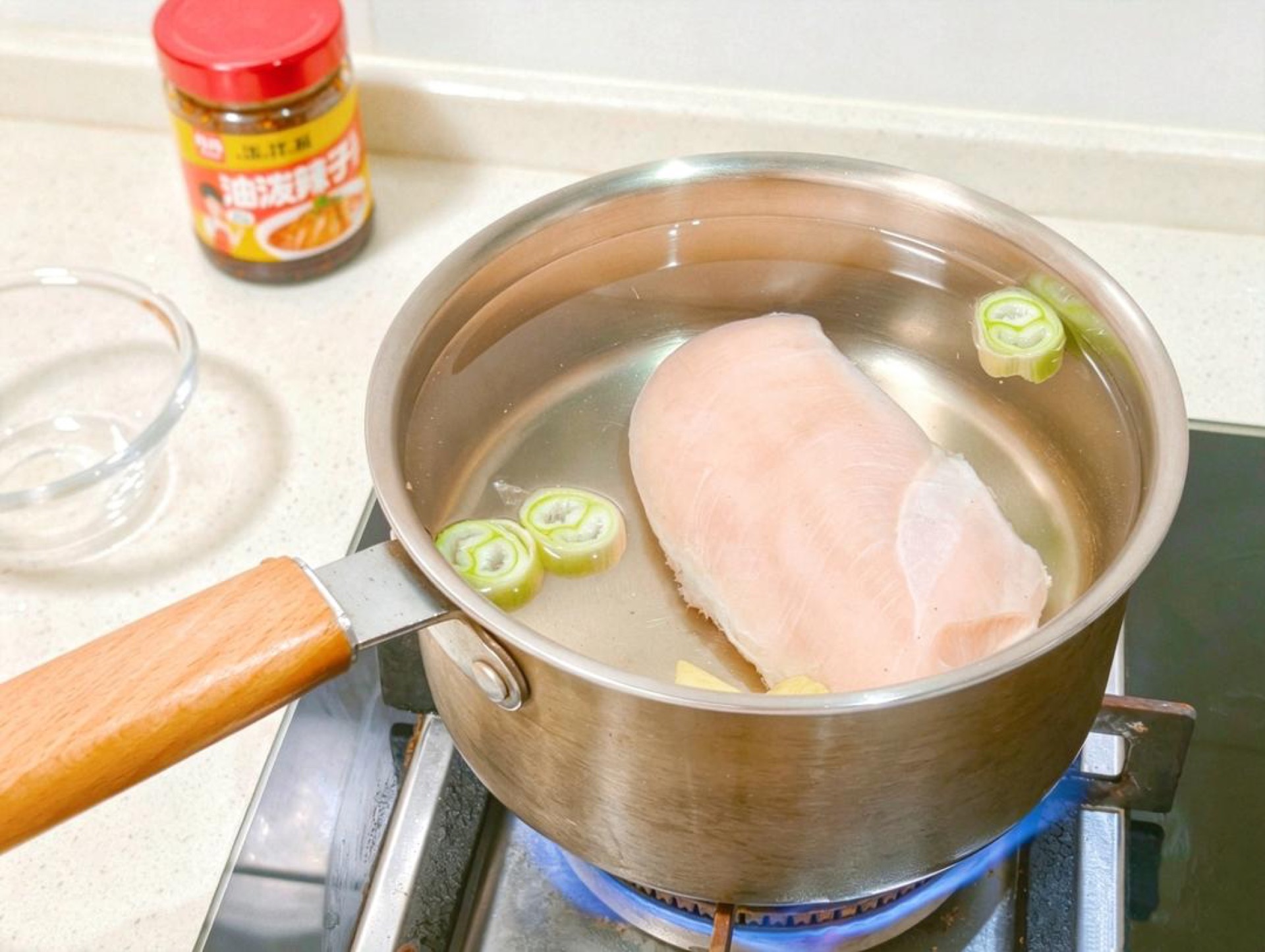
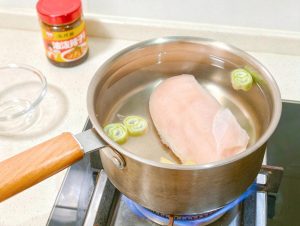
Place the chicken breast in a pot and add cold water to cover it by about an inch, then add the ginger slices, scallion segments, and Shaoxing wine.
Step 4 — Poach and Shock
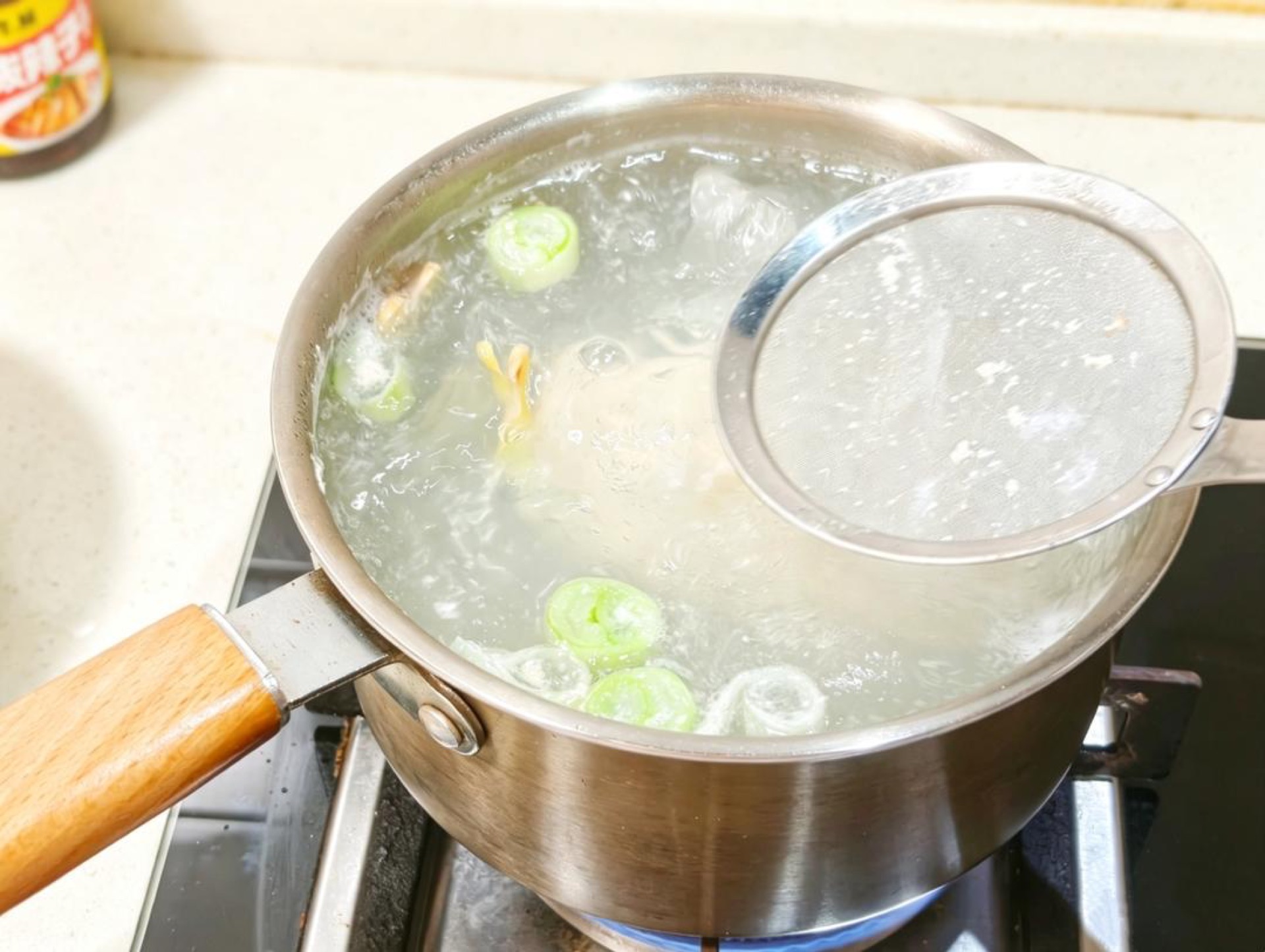
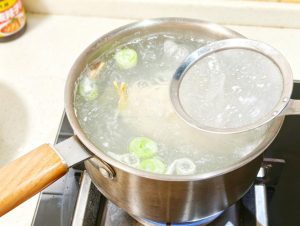
Bring the pot to a boil over high heat, skim off the grey foam, then lower the heat and simmer gently for 15 minutes; turn off the heat and let the chicken sit in the hot liquid for 5 more minutes, then lift it out and plunge it into ice water until fully cool.
Step 5 — Shred the Chicken
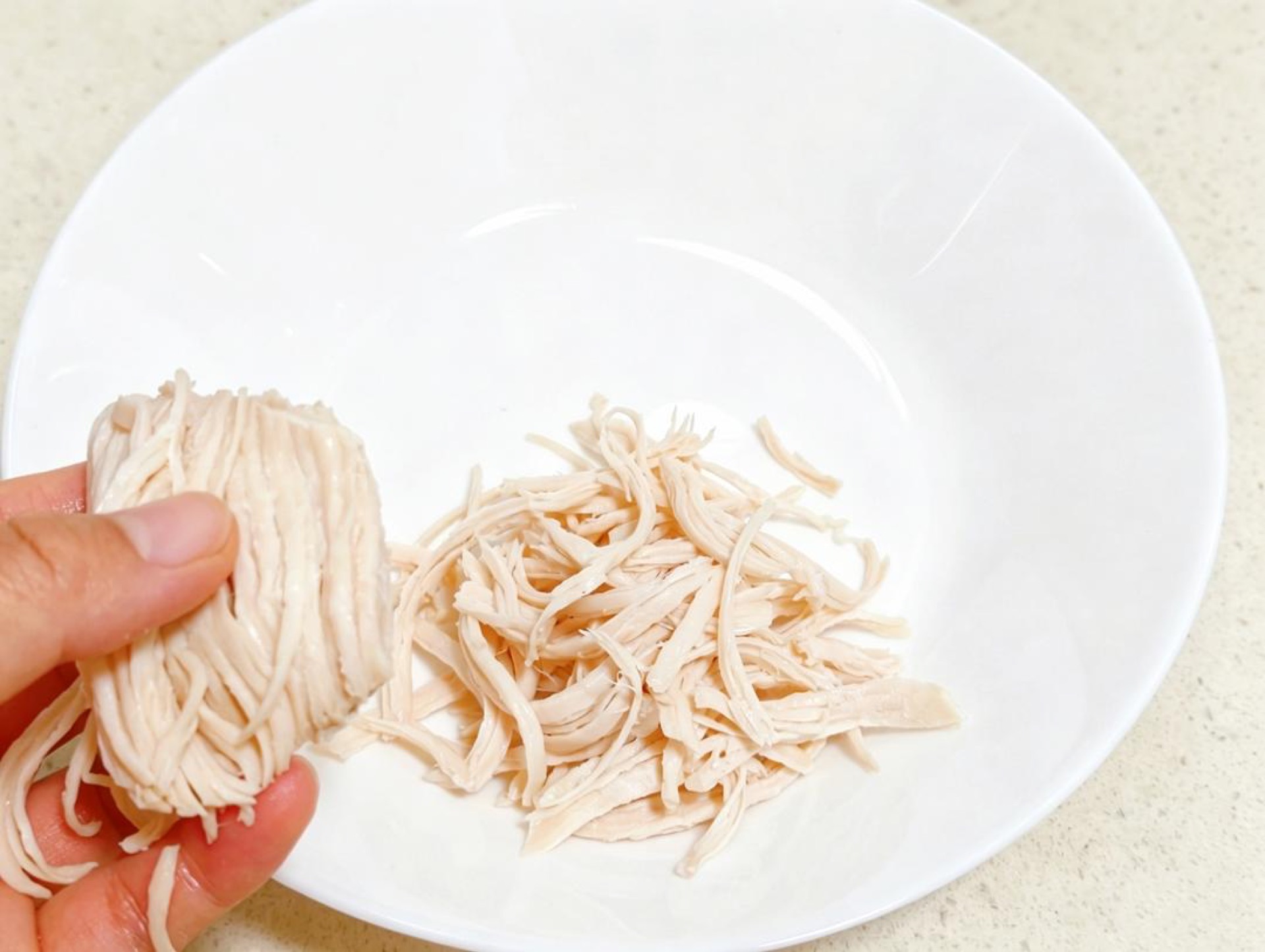
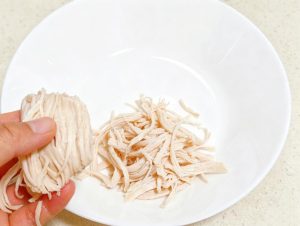
Lift the cooled breast from the ice water, pat it dry, and tear it apart along the grain into fine, even shreds with your fingers.
Step 6 — Build the Vegetable Bed
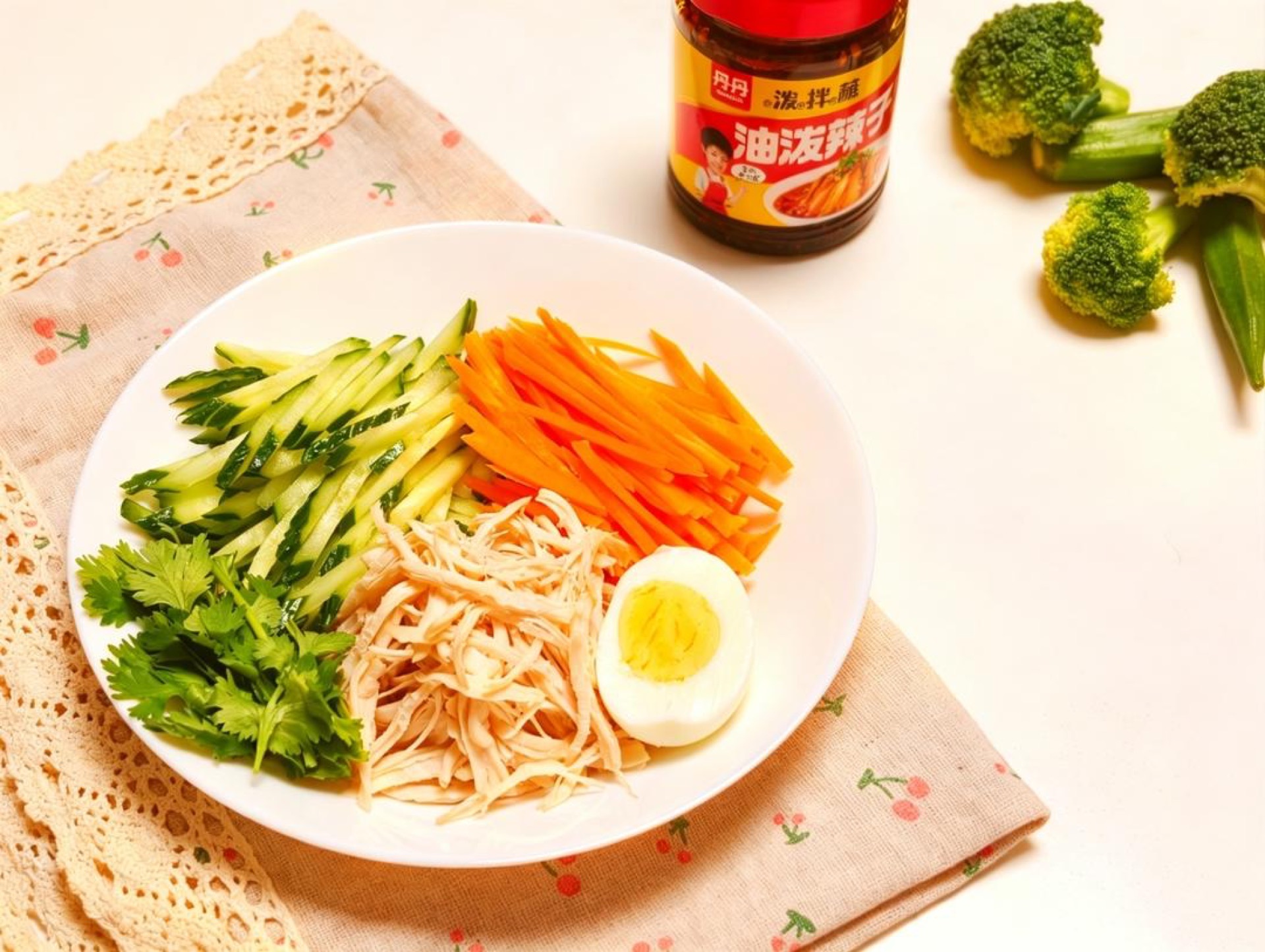
Julienne the cucumber and carrot into fine matchsticks and spread them across the bottom of a serving bowl, then halve the hard-boiled egg and set it aside.
Step 7 — Mix the Dressing
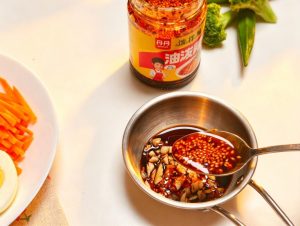
Put the minced garlic in a small bowl, add the light soy sauce and black vinegar, spoon in the chili oil with its sediment, and stir everything together into a glossy, well-combined dressing.
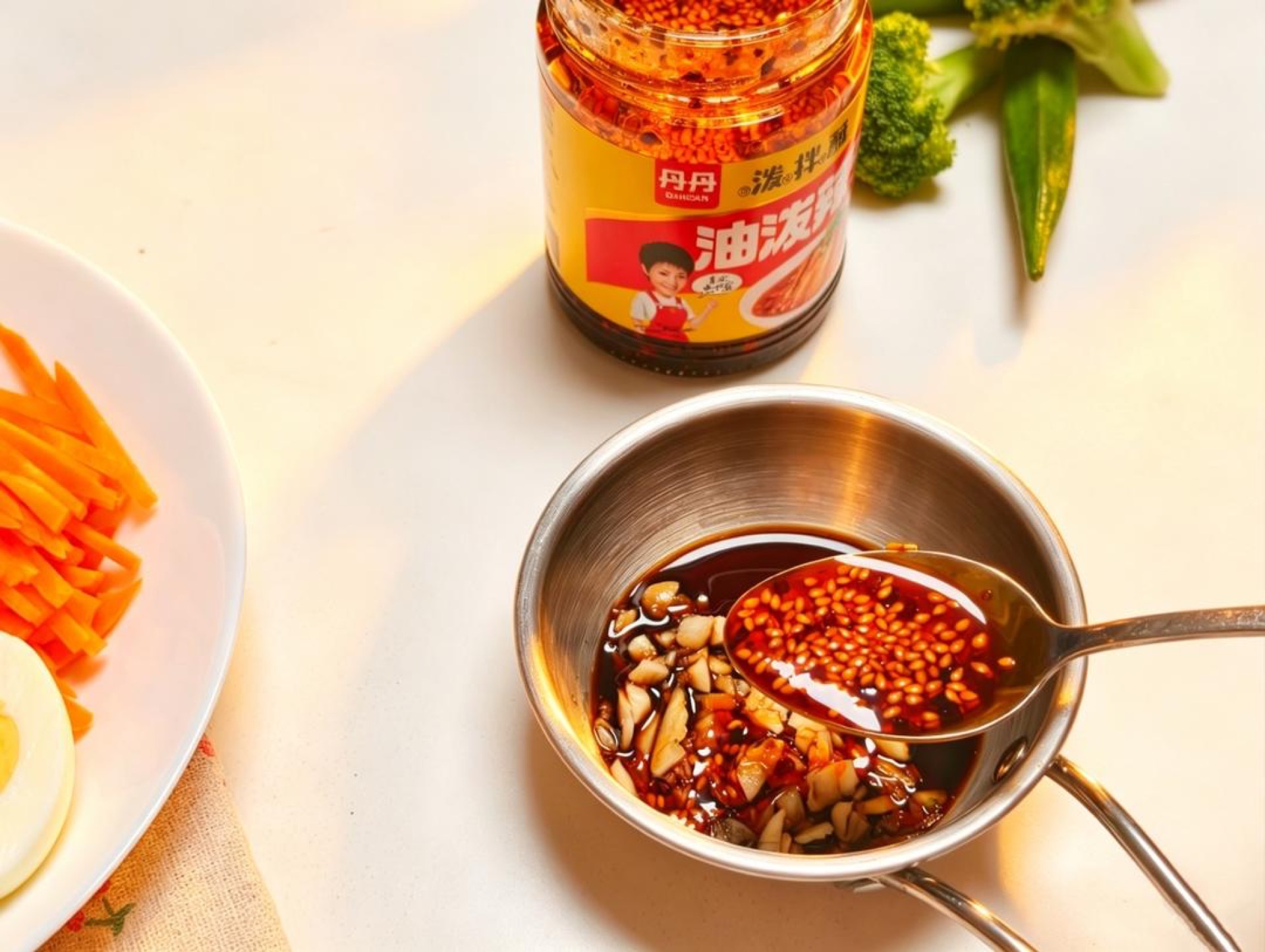
Step 8 — Toss and Plate
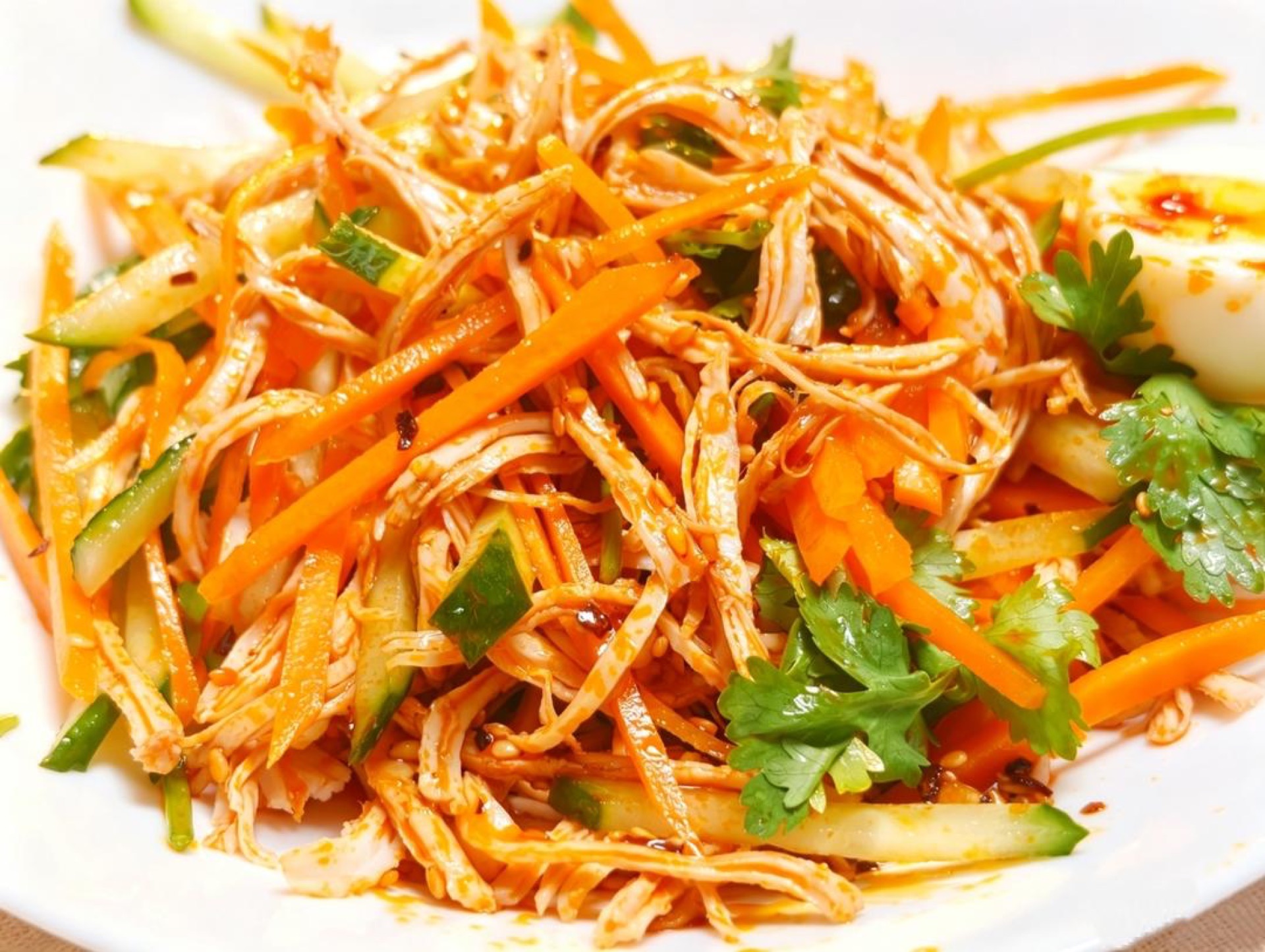
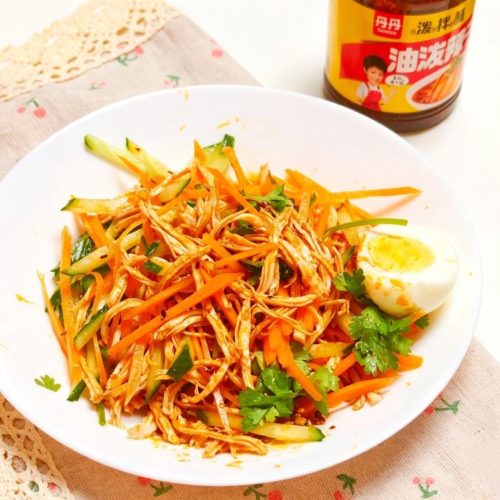
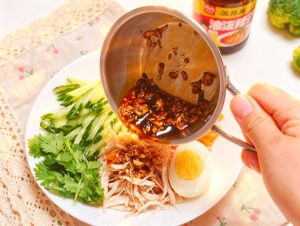
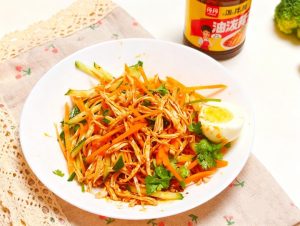
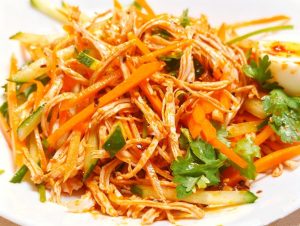
Pile the shredded chicken over the cucumber and carrot, pour the dressing over the top, and toss thoroughly until every strand is coated, then add the halved egg and serve.
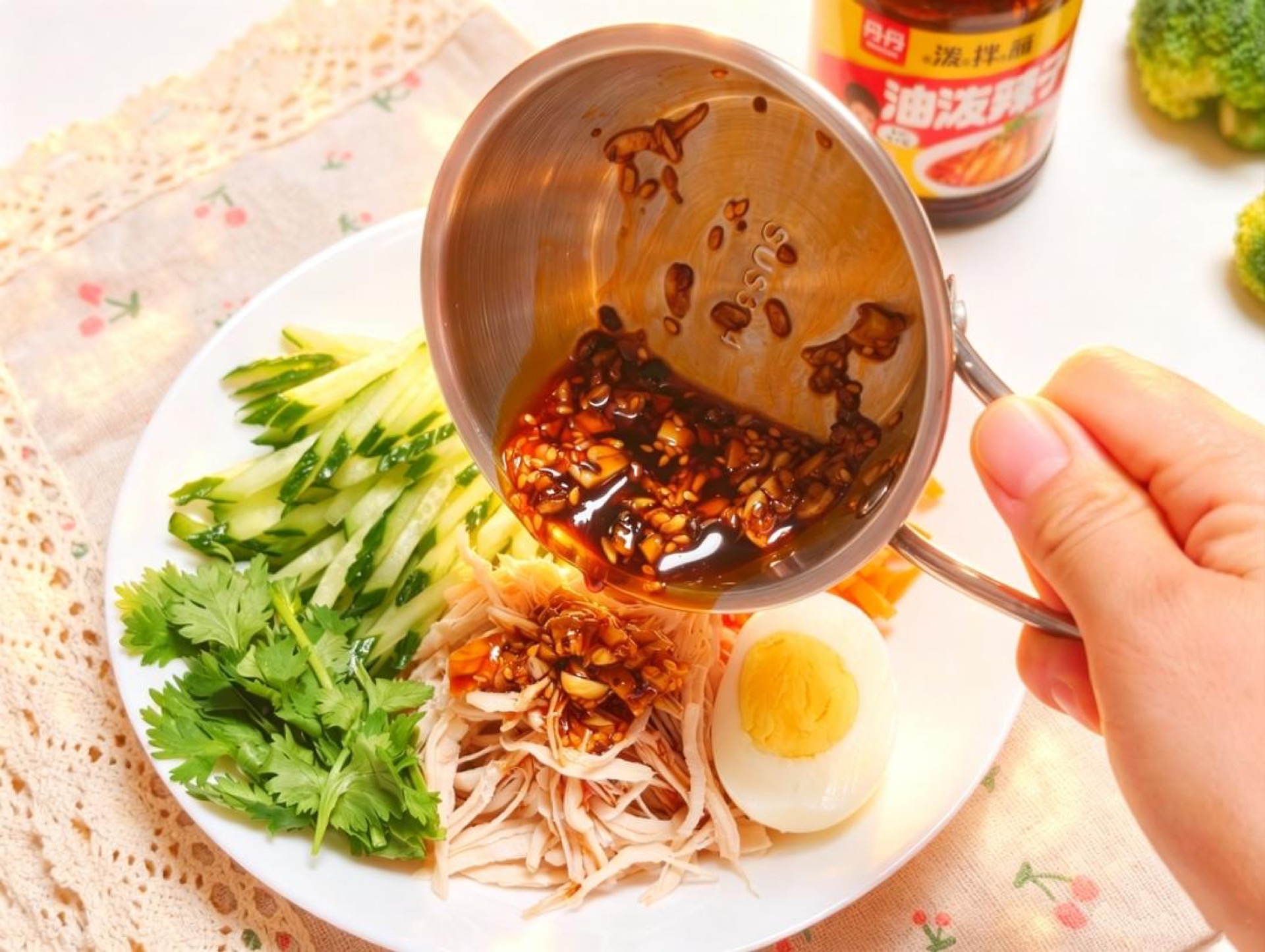
Step 9 — A Low-Fat, Appetizing Cold Dish
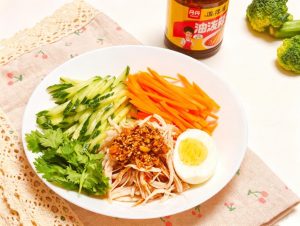
This spicy cold shredded chicken is a light, appetite-whetting summer plate — the oil-poached chili crisp can be poured, tossed, or dipped, making it a fast and easy cold side for any meal.
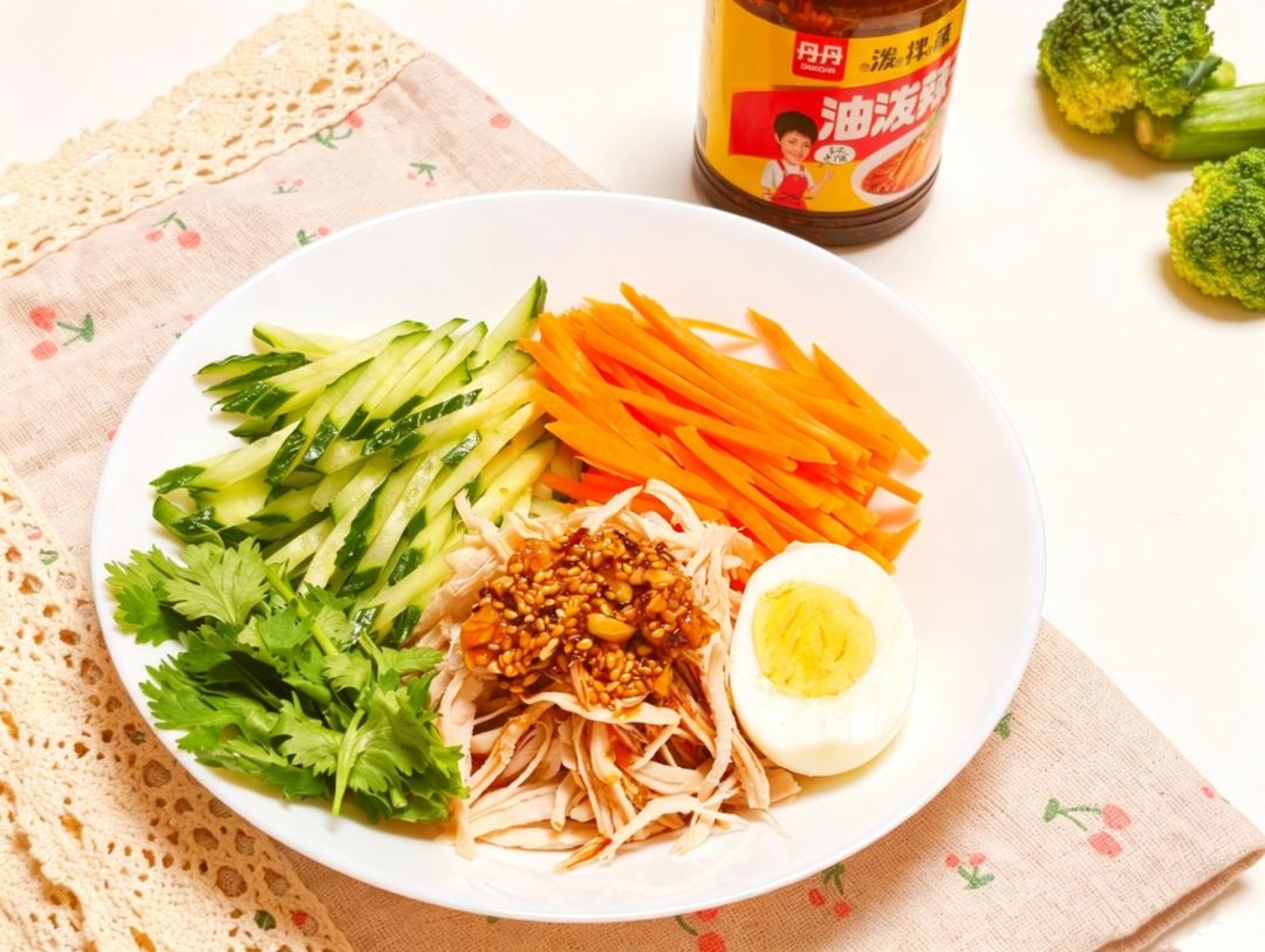
Step 10 — Adjust the Heat
If you love heat, add another spoonful of chili oil; the seasoning is entirely flexible, so taste and adjust the soy sauce, vinegar, and chili to your own preference.
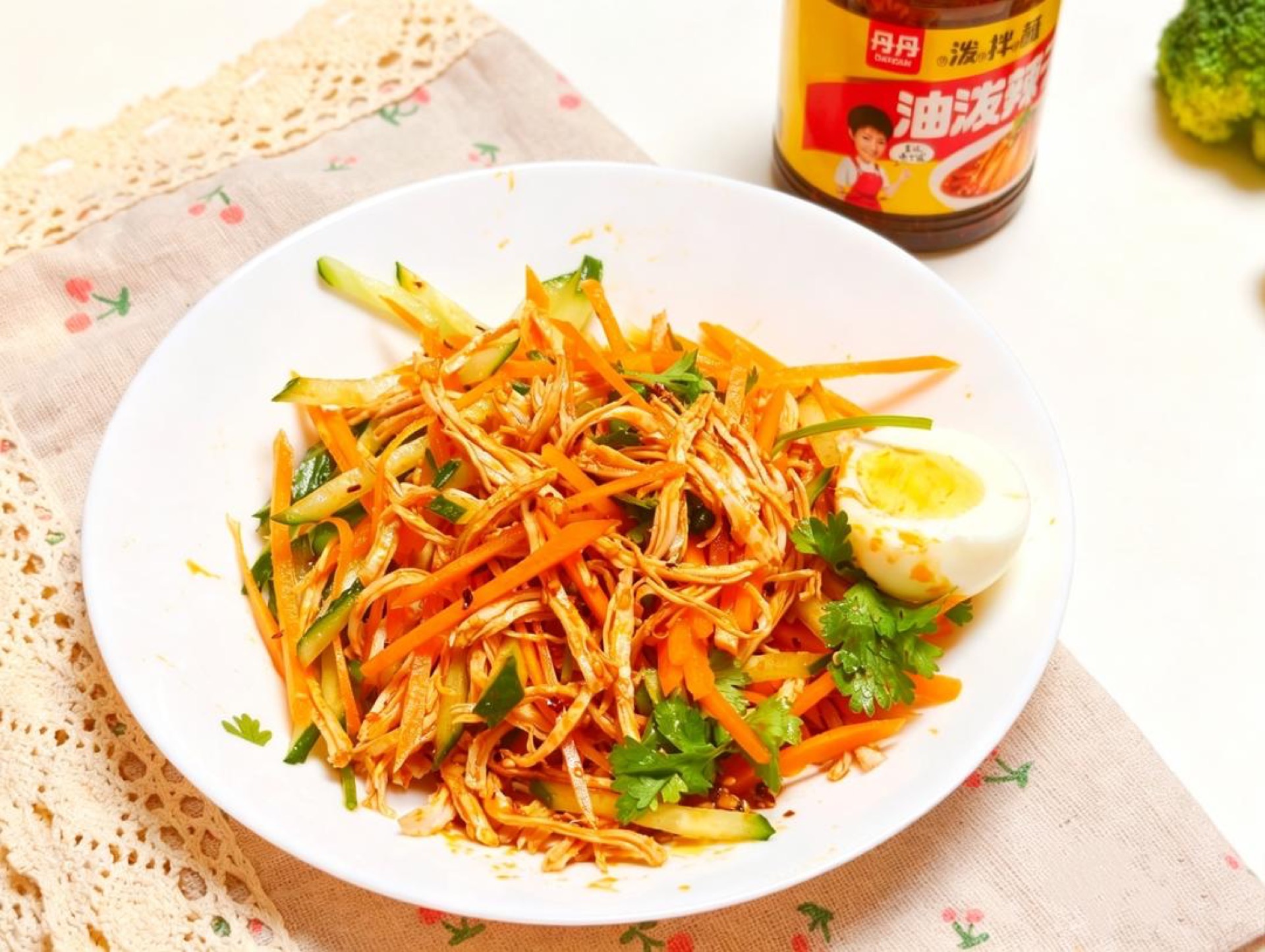
Step 11 — Toss and Enjoy
One pour and one toss gives you a fragrant, fiery, low-fat dish the whole family will reach for again and again.
Step 12 — Tips
(1) Always shock the poached chicken in cold or ice water — that is what keeps the texture tender rather than dry and chalky. (2) Using a prepared oil-poached chili crisp saves you the trouble of rendering red chili oil from scratch while still delivering deep, aromatic heat. (3) Add another spoonful of chili oil if you like it hot, and adjust the overall seasoning to taste. (4) Chill the dressed salad for 10 minutes before eating so it absorbs the dressing more fully.
Common Mistakes When Making Spicy Cold Shredded Chicken
These are the errors that turn a bright, tender cold plate into something dull and stringy. Each one has a simple fix.
- Boiling the chicken hard. A rolling boil toughens the meat and makes it shred into crumbs. Once the water comes up, drop the heat immediately to a bare simmer — just a few lazy bubbles breaking the surface — and hold it there.
- Skipping the ice bath. This is the mistake that ruins the texture more than any other. Chicken left to cool on a plate keeps cooking and dries out. Have the ice water ready before you start, and get the breast into it within seconds of coming out of the pot.
- Shredding while the chicken is still warm. Warm chicken tears unevenly and clumps together. Let it chill completely in the ice bath — five to ten minutes — then pat it dry and shred. Dry chicken also holds dressing better than wet chicken.
- Cutting the chicken with a knife instead of tearing it. Knife-cut strips are smooth and slippery, so the dressing slides right off. Hand-torn shreds have rough edges and far more surface area for the sauce to cling to.
- Using thin, flake-free chili oil. If your chili oil is mostly clear liquid, the dressing will taste oily and one-dimensional. Stir the jar thoroughly, use the sediment, and if the jar is nearly empty of flakes, buy a better one — it is the whole flavor of the dish.
- Dressing the salad too far in advance. The cucumber and carrot will weep water and dilute the sauce, and the chicken will go soggy. Toss it right before serving, or at most ten minutes ahead if you are chilling it for extra flavor.
- Undersalting because the chili crisp is already salty. Different brands vary enormously. Taste the finished dressing on a piece of chicken and adjust — a flat liangban plate is almost always a salt problem, not a chili problem.
Variations
Once you have the poach-and-shock technique down, this dish becomes a template. Here are the directions worth trying.
Sesame version. Whisk a tablespoon of toasted sesame paste or tahini into the dressing along with a splash of the poaching liquid to loosen it. The result is creamier and milder — closer to the sesame-forward style of creamy cold shredded chicken than to the sharp chili-vinegar version here.
Mala version. Add a teaspoon of ground toasted Sichuan peppercorn to the dressing for a numbing tingle alongside the chili heat. Toast whole peppercorns in a dry pan until fragrant, then grind them fresh — pre-ground peppercorn loses its aroma fast.
Shredded pork or beef version. The same dressing works on poached or braised pork. A braised cut like pork shoulder shreds beautifully once cooled, and the richer meat stands up well to a heavier hand with the chili oil.
Vegetarian version. Swap the chicken for shredded blanched tofu skin, or use the same dressing on a plate of cold shredded cucumber and mung bean noodles. The chili-garlic-vinegar combination is forgiving enough to carry almost anything.
Extra-crunchy version. Scatter toasted peanuts, fried shallots, or crushed up wonton wrappers over the top just before serving. Add them at the table so they stay crisp instead of softening under the dressing.
Noodle version. Toss the dressed chicken with cold cooked wheat noodles and a little extra dressing, and you have a full meal in a bowl. It is a natural fit alongside the flavors in our chow mein, just served cold.
Frequently Asked Questions
Can I use chicken thigh instead of breast? Yes. Boneless, skinless thigh poaches in roughly the same time — add a minute or two to the simmer — and shreds even more easily because of its higher fat content. The dish will be slightly richer and less lean.
How spicy is this? It depends entirely on your chili crisp. Two tablespoons of a mild oil-poached chili crisp gives a gentle warmth; a fiery brand will make it genuinely hot. Start with one tablespoon, taste, and add more. The recipe is designed to be adjusted.
Can I make it ahead? Yes, and it is arguably better that way. Poach and shred the chicken up to two days ahead and refrigerate it separately. Mix the dressing up to three days ahead. Toss everything together no more than ten minutes before serving so the vegetables stay crisp.
Why is my chicken dry even though I poached it? Almost always one of two things: the water was boiling rather than simmering, or the chicken sat in the hot pot too long after the heat was off. Simmer gently, stick to the 15-minute simmer plus 5-minute rest, and get it into ice water promptly.
Do I have to scrub the chicken with flour? It is not strictly necessary, but it does make a difference. The flour rub lifts surface impurities and any faint raw odor, giving you cleaner-tasting chicken. It takes 30 seconds, so it is worth doing.
Can I serve this warm? You can, but it stops being a liangban dish. The whole appeal is the contrast between cool chicken and crisp cold vegetables against warm, fragrant chili oil. If you want warm shredded chicken, a quick stir-fry is a better vehicle.
What if I do not have black vinegar? Rice vinegar is the closest everyday substitute, though it is sharper and less malty. Balsamic is too sweet and dark — avoid it. In a pinch, rice vinegar plus a tiny pinch of sugar gets you closer to the right balance.
How long do leftovers keep? Up to three days in an airtight container in the refrigerator. The vegetables will soften over time and release water, so the salad gets a little wetter each day. Drain off any excess liquid before eating.
How to Serve
Serve this cold or well-chilled, straight from the refrigerator, as the opening act of a larger Chinese meal or as a light lunch on its own. In a traditional spread, a cold liangban plate goes on the table first, before the hot stir-fries and braises arrive — the vinegar and chili are there to wake up your appetite. If you are building a full dinner around it, it sits comfortably next to a bowl of steamed rice, a simple stir-fried green, and something braised. For a lighter meal, serve it with a halved hard-boiled egg and a small bowl of congee or plain rice.
It also travels well to potlucks and picnics, since it is meant to be eaten cold and actually improves after ten minutes in the fridge. If you are putting together a cold-plate spread, this pairs naturally with braised tofu and mushrooms served at room temperature, and a scoop of salmon fried rice with brown rice makes it a complete meal. On a hot day, a cold noodle bowl like our one pot rice cooker pork ribs and rice is a heartier companion if you want something more substantial alongside.
Storage & Reheat
This is a cold dish, so there is no reheating involved — in fact, reheating it would ruin the texture of both the chicken and the vegetables.
Refrigerator: Store leftovers in an airtight container for up to 3 days. The salad will release some liquid as it sits, especially from the cucumber. Drain off the excess before serving, and give it a quick toss to redistribute the dressing.
Make-ahead strategy: For the best results, store the components separately. Keep the shredded chicken in one container, the julienned vegetables in another, and the dressing in a small jar. Toss them together when you are ready to eat. This keeps the vegetables crisp and the chicken from getting soggy, and everything holds for up to 3 days.
Freezing: Not recommended. Cucumber and carrot turn mushy and watery when frozen and thawed, and the dressing separates. If you want to freeze something, freeze plain shredded poached chicken on its own for up to 2 months and dress it fresh.
Food safety: Refrigerate within 2 hours of serving. Do not leave the dressed salad out at room temperature for longer than 2 hours total, and less than that if the room is warm. Discard anything that has been out longer.
Allergen Notice
This recipe contains soy from the light soy sauce. If you are cooking for someone with a soy allergy, substitute a soy-free tamari or coconut aminos and check your chili crisp label carefully, since many brands include soybean oil or fermented soybean paste.
Chili crisp brands vary widely in their ingredient lists. Some contain sesame, peanuts, or tree nuts, and some include wheat-based ingredients. Read the label before using if you are cooking for anyone with those allergies. The egg is optional and can simply be omitted. This recipe is naturally dairy-free and gluten-free only if you confirm that your soy sauce and chili crisp are certified gluten-free.
Nutrition Disclaimer
Nutrition information is calculated using an ingredient database and should be considered an estimate. In cases where multiple ingredient alternatives are given, the first listed is calculated for nutrition. Garnishes and optional ingredients are not included.
About the Author & Recipe Development
Hi, I am Lin, the cook and writer behind Woks of Love. I grew up watching my grandmother and mother cook the food of Sichuan and Hunan — food that leans on chili, vinegar, garlic, and fermented ingredients, and that treats cold dishes as seriously as hot ones. This spicy cold shredded chicken is adapted from a home recipe that shows up on our family table every summer, usually made with whatever chili oil happens to be in the cupboard.
I tested this version several times to nail down the poaching timing and the dressing ratio. The 15-minute simmer plus 5-minute rest was the sweet spot for a one-pound breast: any shorter and the center was still slightly pink, any longer and the texture started to tighten. The ice-water shock was the change that made the biggest difference, and it is now the one step I refuse to skip. I also tested the dressing with both thin chili oil and a sediment-rich oil-poached chili crisp, and the difference was dramatic enough that I now call for the latter specifically.
If you make this dish, I would love to hear how you adjusted the heat and what vegetables you used. The whole point of a liangban plate is that it bends to your taste.
Authoritative References
For background on the food-safety guidance used in this recipe, see the USDA Food Safety and Inspection Service guidance on safe minimum internal temperatures, which sets 165°F (74°C) as the target for poultry. For the refrigeration and storage timing referenced in the storage section, the FDA’s refrigerator and food safety guidance covers the two-hour rule and recommended holding temperatures. For a broader look at the cold-tossed (liangban) tradition in Chinese cooking, Harold McGee’s On Food and Cooking remains a useful reference on how heat and rapid chilling affect muscle proteins.
Spicy Cold Shredded Chicken (香辣凉拌鸡丝): Tender, Chilled & Fiery

Equipment
- Wok
- Cutting Board
- Slotted Spoon
Ingredients
For the Chicken
- 1 lb chicken breast boneless, skinless
- 2 tbsp all-purpose flour for scrubbing the chicken
- 3 slices ginger fresh
- 3 stalks scallion cut into segments
- 1 tbsp Shaoxing wine or dry sherry
For the Vegetables & Egg
- 1/2 whole cucumber cut into fine julienne
- 1/2 whole carrot cut into fine julienne
- 1 whole egg hard-boiled, peeled, halved
For the Dressing
- 2 tbsp chili oil with sediment Dan Dan-style oil-poached chili crisp
- 1 tbsp light soy sauce or tamari
- 1/2 tbsp Chinkiang black vinegar or rice vinegar
- 2 cloves garlic minced
Instructions
- Set out the chicken breast, ginger, scallion, Shaoxing wine, cucumber, carrot, egg, and all the dressing ingredients so everything is within reach before you start.

- Sprinkle the flour over the chicken breast and rub it in with your hands, working the flour into the surface, then rinse the breast thoroughly under cold running water and pat it dry.
- Place the chicken breast in a pot and add cold water to cover it by about an inch, then add the ginger slices, scallion segments, and Shaoxing wine.
- Bring the pot to a boil over high heat, skim off the grey foam, then lower the heat and simmer gently for 15 minutes; turn off the heat and let the chicken sit in the hot liquid for 5 more minutes, then lift it out and plunge it into ice water until fully cool.
- Lift the cooled breast from the ice water, pat it dry, and tear it apart along the grain into fine, even shreds with your fingers.
- Julienne the cucumber and carrot into fine matchsticks and spread them across the bottom of a serving bowl, then halve the hard-boiled egg and set it aside.
- Put the minced garlic in a small bowl, add the light soy sauce and black vinegar, spoon in the chili oil with its sediment, and stir everything together into a glossy, well-combined dressing.
- Pile the shredded chicken over the cucumber and carrot, pour the dressing over the top, and toss thoroughly until every strand is coated, then add the halved egg and serve.
- This spicy cold shredded chicken is a light, appetite-whetting summer plate — the oil-poached chili crisp can be poured, tossed, or dipped, making it a fast and easy cold side for any meal.
- If you love heat, add another spoonful of chili oil; the seasoning is entirely flexible, so taste and adjust the soy sauce, vinegar, and chili to your own preference.
- One pour and one toss gives you a fragrant, fiery, low-fat dish the whole family will reach for again and again.
- (1) Always shock the poached chicken in cold or ice water — that is what keeps the texture tender rather than dry and chalky. (2) Using a prepared oil-poached chili crisp saves you the trouble of rendering red chili oil from scratch while still delivering deep, aromatic heat. (3) Add another spoonful of chili oil if you like it hot, and adjust the overall seasoning to taste. (4) Chill the dressed salad for 10 minutes before eating so it absorbs the dressing more fully.












Leave a Reply