Hey there! Welcome back to my kitchen.
If you’ve been cooking with me for a while, or if you’ve ever scrolled through the ingredient list of my Hot and Sour Soup, you’ve probably paused at one specific item: White Pepper.
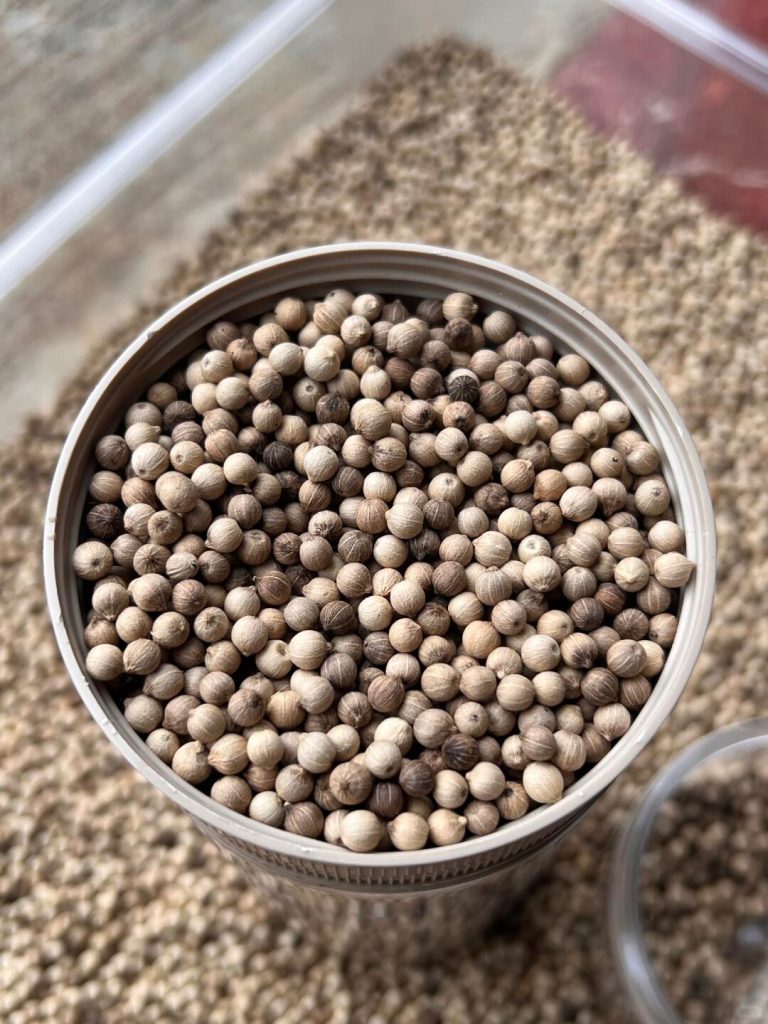
Let’s be real—growing up in my parents’ loud, chaotic restaurant in Chengdu, the smell of white pepper was the smell of “hustle” . I remember watching my dad toss a pinch into a roaring wok, and the scent was so potent it would make you sneeze instantly. But that sneeze? That was the sign of flavor .
While Western kitchens often treat white pepper just as “black pepper without the black specks,” in culinary school, I learned it is a distinct, powerhouse ingredient . It’s not just about looks; it’s about that unique, earthy, back-of-the-throat heat that chili oil just can’t replicate.
Today, I’m taking off the chef’s coat and inviting you to the table to break down exactly what white pepper is, why we use it, and how to master it in your home kitchen.
The Science: White vs. Black Pepper
What’s the actual difference?
It might surprise you to know that white peppercorns, black peppercorns, and even green peppercorns all come from the exact same vine: Piper nigrum. The difference comes down to harvest time and processing.
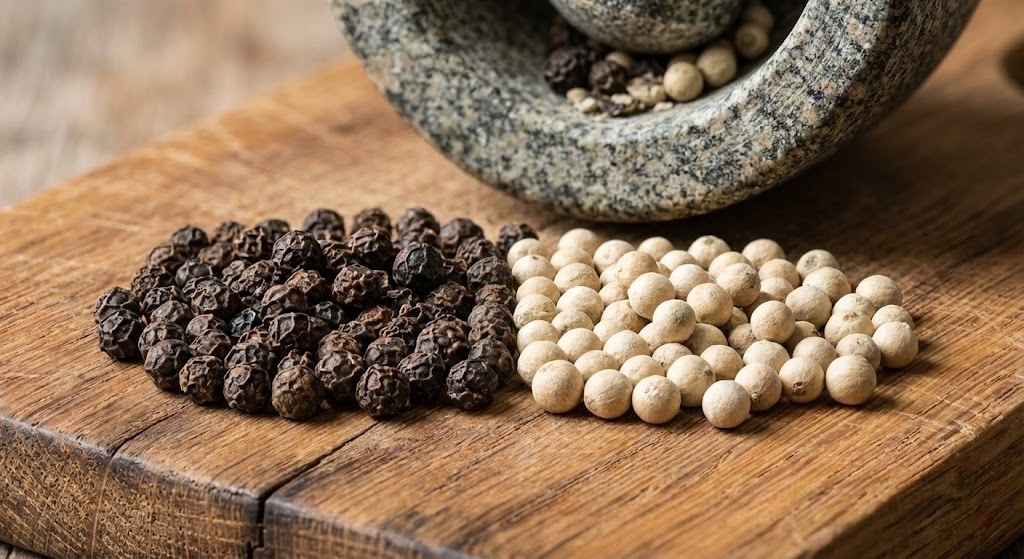
Here is the culinary logic :
- Black Peppercorns: These are harvested when the berries are still green (unripe). They are cooked and dried, causing the outer skin to shrivel and turn black. This skin contains compounds like terpenes, which give black pepper its floral, piney, and citrusy aroma.
- White Peppercorns: These are allowed to fully ripen on the vine. They then go through a process called retting (soaking in water) to ferment and decompose the outer skin. Once the skin is scrubbed away, only the inner seed remains.
Why does this matter? Because we remove the skin, we remove those floral, terpene-heavy notes. What’s left is the seed, which is high in piperine (the chemical compound that causes heat). This process gives white pepper a simpler, sharper heat but adds a complex, earthy, slightly fermented aroma—often described by chefs as “barnyard-y” or “funky” (in a good way!).
Note: For a deeper dive into the botanical classification of Piper nigrum, you can reference this botanical profile by Kew Gardens.
Sensory Cues: What Does It Taste Like?
The Chef’s Instinct
If you close your eyes and smell freshly ground black pepper, it tickles your nose—it’s spicy but aromatic.
White pepper is different. When you smell high-quality white pepper, it should hit you differently :
- The Smell: It’s earthy, musty, and intense.
- The Taste: The heat doesn’t burn your lips like chili peppers. Instead, it creates a slow, lingering burn at the back of your throat.
If you are making a delicate dish like Salt and Pepper Squid, white pepper provides a heat that doesn’t overpower the natural sweetness of the seafood, whereas black pepper would be visually distracting and flavor-wise too floral.
How We Use It (And Why)
In Western French cuisine (think Béchamel sauce), white pepper is often used for aesthetics—chefs don’t want black specks ruining a pristine white sauce.
In Chinese cooking, we use it for flavor functionality. Because of its fermentation process, white pepper has the ability to cut through gaminess and fishiness better than black pepper.
1. Marinades
We almost always add a pinch to meat marinades, especially for pork and chicken. It neutralizes the “raw meat” smell.
- Try it here: It’s essential in the marinade for General Tso’s Chicken. It adds a background warmth that balances the sweet and tangy sauce.
- Pro Tip: When making my Juicy Pork Dumpling Filling, white pepper is non-negotiable to cut the richness of the fatty pork.
2. Soups
This is where white pepper shines brightest. It provides the signature “heat” in soups where you don’t see red chili oil.
- Try it here: It is the soul of Cantonese Wonton Soup. Without a dash of white pepper, the broth feels flat and one-dimensional.
3. Stir-Fries
We add it at the very end of cooking to preserve its volatile oils.
- Try it here: A dash elevates a simple Shrimp and Broccoli Stir-Fry.
Perfect Pairings: The Flavor Friends
White pepper rarely works alone. To get that authentic restaurant flavor profile, we pair it with specific ingredients that enhance its earthiness.
- Sesame Oil: The nuttiness of Sesame Oil smooths out the sharp edge of white pepper. They are almost always added together at the very end of a soup recipe to “wake up” the nose.
- Black Vinegar: The acidity of vinegar balances the musty heat of the pepper. This combination is the foundation of Hot and Sour soup.
- White Sugar: A tiny pinch of sugar helps round out the funkiness of the pepper so it doesn’t taste bitter.

Buying and Storing: No Secrets Held Back
Recipes That Actually Work Promise
I know it’s tempting to buy that giant pre-ground tub of pepper that has been sitting on the shelf for two years. Don’t do it.
Once the white pepper seed is ground, those volatile oils oxidize rapidly. Pre-ground pepper loses its “punch” within months and just tastes like old dust.
Lin’s Recommendation:
- Buy Whole: Buy whole white peppercorns. Look for a package where the peppercorns are uniform in size and creamy in color (not gray).
- Toast Them: Briefly toast the peppercorns in a dry pan over low heat until they smell fragrant. This wakes up the oils.
- Grind Fresh: Use a dedicated spice grinder or a mortar and pestle.
Pro Tip: If you absolutely must buy powder (I get it, life is busy!), buy the smallest bottle possible so you use it up while it’s fresh.
Common Questions & Substitutions
“Can I just use black pepper?” Let’s be real: Yes, you can, but the flavor trade-off is significant . Black pepper will make the dish taste more floral and “Western.” If you are making Shanghai Fried Pork Chops, black pepper will change the profile entirely. If you have no other choice, use black pepper, but use slightly less of it.
“Is this the same as Sichuan Peppercorn?” No! This is a huge misconception.
- White Pepper: Heat (Spicy).
- Sichuan Peppercorn: Ma (Numbing). These two are often used together, but they are completely different spices. You can learn more about the numbing spice in my Homemade Sichuan Peppercorn Oil guide.
Ready to Cook?
Now that you know the secret, try using White Pepper in these classic recipes. Trust me, you will taste the difference immediately.
- Hot and Sour Soup: The ultimate test of white pepper’s heat.
- Salt and Pepper Squid: A crispy classic where the pepper is the star.
- Cantonese Wonton Soup: Use it in the broth and the filling.
- General Tso’s Chicken: For that subtle background warmth.
Authoritative References
We take our ingredients seriously! If you want to dive deeper into the science, botany, and safety standards of white pepper, check out these trusted academic and industry sources:
- The Science of Heat: To understand the specific chemical compound (piperine) that gives white pepper its unique “back-of-the-throat” heat, read the study Piperine: Chemistry and Biology published by the National Institutes of Health (NIH/PubMed Central).
- Botanical Origins: View the official botanical profile of the pepper plant, Piper nigrum L., at the Royal Botanic Gardens, Kew (Plants of the World Online).
Next Step for You: Go check your spice cabinet! If you have white pepper that is older than a year, toss it out. Treat yourself to a fresh bag of whole peppercorns this week—your tastebuds will thank you.
Happy Cooking! – Lin












Leave a Reply