There is a category of dishes in Chinese cuisine we affectionately call xiafan cai (下饭菜), which translates roughly to “dishes that send the rice down.” This Pork Stir-fry with Green Peppers (Luosijiao Xiaochao Rou) is the definition of a rice killer. It features savory, rendered pork belly, the bright heat of fresh peppers, and the deep umami of fermented black beans.
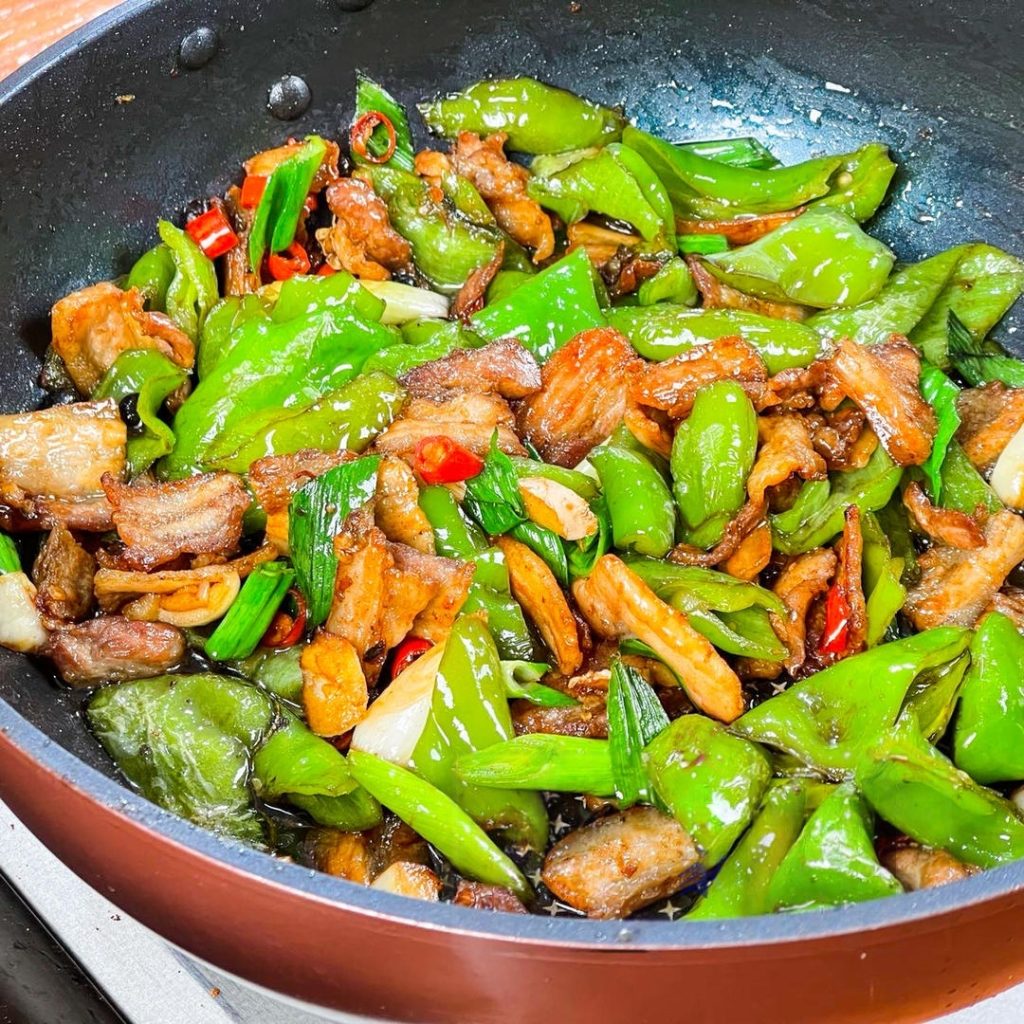
Growing up in my family’s kitchen in Sichuan, my father—a chef who believed that “heat” was a flavor, not just a sensation—taught me that not all stir-fries are created equal. This particular dish relies on “Screw Peppers” (Luosijiao), a wrinkled, thin-skinned variety that blisters beautifully and holds onto the sauce. It reminds me of the simple, lightning-fast staff meals we would eat in the back of the restaurant before the dinner rush began.
If you enjoy the rich flavors of Twice-Cooked Pork, you will love this. It’s faster, doesn’t require boiling the meat first, and delivers an incredible punch of flavor in under 15 minutes.
What is Luosijiao Xiaochao Rou?
Literally translated, it means “Screw Pepper Small Stir-fry Meat.” The star vegetable here is the Screw Pepper (螺丝椒). These are long, green, slightly wrinkled peppers that look a bit like a screw’s thread. They have a moderate to high spice level and a distinct, fresh grassy flavor.
Unlike a heavy, saucy stew, this is a “dry” stir-fry. The flavor comes from rendering the pork fat and infusing it with aromatics like ginger, garlic, and fermented black beans. The result is savory, spicy, and incredibly aromatic.
About the Author & Recipe Development
I am Lin, a culinary instructor and writer with over a decade of experience in professional Chinese kitchens. This recipe was developed based on a traditional “ceramic spoon” method often used by home cooks in Hunan and Sichuan provinces.
In testing this recipe for Western kitchens, I converted the traditional ratios into precise standard measurements. I also tested this on a standard gas range (12k BTU) versus a high-output wok burner. While a wok burner gives you that smoky wok hei, I found that by removing the meat halfway through—a technique I outline below—you can achieve restaurant-quality texture even on a standard home stove. I’ve also provided accessible pepper substitutes for those who cannot find specific Chinese varieties.
Why This Recipe Works
- Rendering the Fat: By starting the pork belly in the pan, we render out the excess grease. This leaves the meat chewy and fragrant (not flabby) and provides a flavorful oil base for frying the peppers.
- Two-Stage Cooking: Removing the meat before cooking the peppers ensures the pork remains tender while allowing us to blister the peppers thoroughly—a technique known as creating “tiger skin” (similar to Braised Tiger Skin Peppers with Minced Pork).
- The Umami Bomb: The combination of Oyster Sauce, Dark Soy Sauce, and fermented black beans creates a complex, savory layer that coats every ingredient.
Key Ingredients & Substitutions
- Pork Belly: You need a cut with fat. Pork belly is traditional and best. If you prefer a leaner cut, use pork shoulder (butt), but the result will be less succulent.
- Tip: Slice it while it is partially frozen to get paper-thin slices.
- Screw Peppers (Luosijiao): These are long, wrinkled, and spicy.
- Substitute: If you can’t find them at an Asian market, use Anaheim peppers (mild) or Long Hot Peppers (spicy). You can even use Shishito peppers, though they are smaller. Avoid standard green bell peppers as they are too watery and thick-skinned.
- Fermented Black Beans (Douchi): These little black beans are salty and pungent. They are the soul of many dishes, like Hunan Stir-fried Beef. Do not skip them!
- Seasoned Soy Sauce for Seafood: This is slightly sweeter and more umami-rich than regular soy.
- Substitute: Regular Light Soy Sauce mixed with a pinch of sugar.
- Garlic Sprouts (Green Garlic): These look like thick scallions but have a mild garlic flavor.
- Substitute: Scallions (green onions) cut into 2-inch lengths.
Recipe Notes Before You Start
- Ventilation is Key: We are frying spicy peppers and rendering pork fat. Turn your range hood fan to high!
- Prep is Mandatory: This dish cooks in less than 5 minutes once the heat is on. Have your sauces mixed and veggies chopped before you heat the wok.
- The “Ceramic Spoon” Ratio: The original inspiration for this recipe uses a Chinese ceramic soup spoon as a unit of measure. I have converted this to standard Tablespoons (Tbsp) and teaspoons (tsp) below for accuracy.
Equipment Needed
- Wok or Large Skillet: A carbon steel wok is ideal for heat distribution, but a large 12-inch stainless steel or cast iron skillet works well too.
- Sharp Knife: For slicing the pork thinly.
Ingredients
The Stir-Fry Base
- 8 oz (250g) Pork belly, skin removed and thinly sliced
- 4-5 Long Green Peppers (Screw peppers/Luosijiao), roll-cut into bite-sized chunks
- 2 stalks Garlic sprouts (or scallions), cut into 1.5-inch sections
- 5 fresh Thai Bird Eye Chilies (Millet chili), sliced into rings (adjust for spice tolerance)
- 1 tbsp Fermented black beans (about 10-15 pieces)
- 1 inch Ginger, sliced
- 2 cloves Garlic, smashed and roughly sliced
- 1 tbsp Neutral cooking oil (or Render Lard for extra flavor)
The Seasoning Sauce
- 1/2 tsp Salt (for the peppers)
- 1/2 tbsp Dark Soy Sauce (for color)
- 2 tbsp Seasoned soy sauce for seafood (or Light Soy Sauce)
- 1 tbsp Oyster Sauce
- 1/4 tsp MSG (optional, but highly recommended for authenticity)
How to Make Pork Stir-fry with Green Peppers
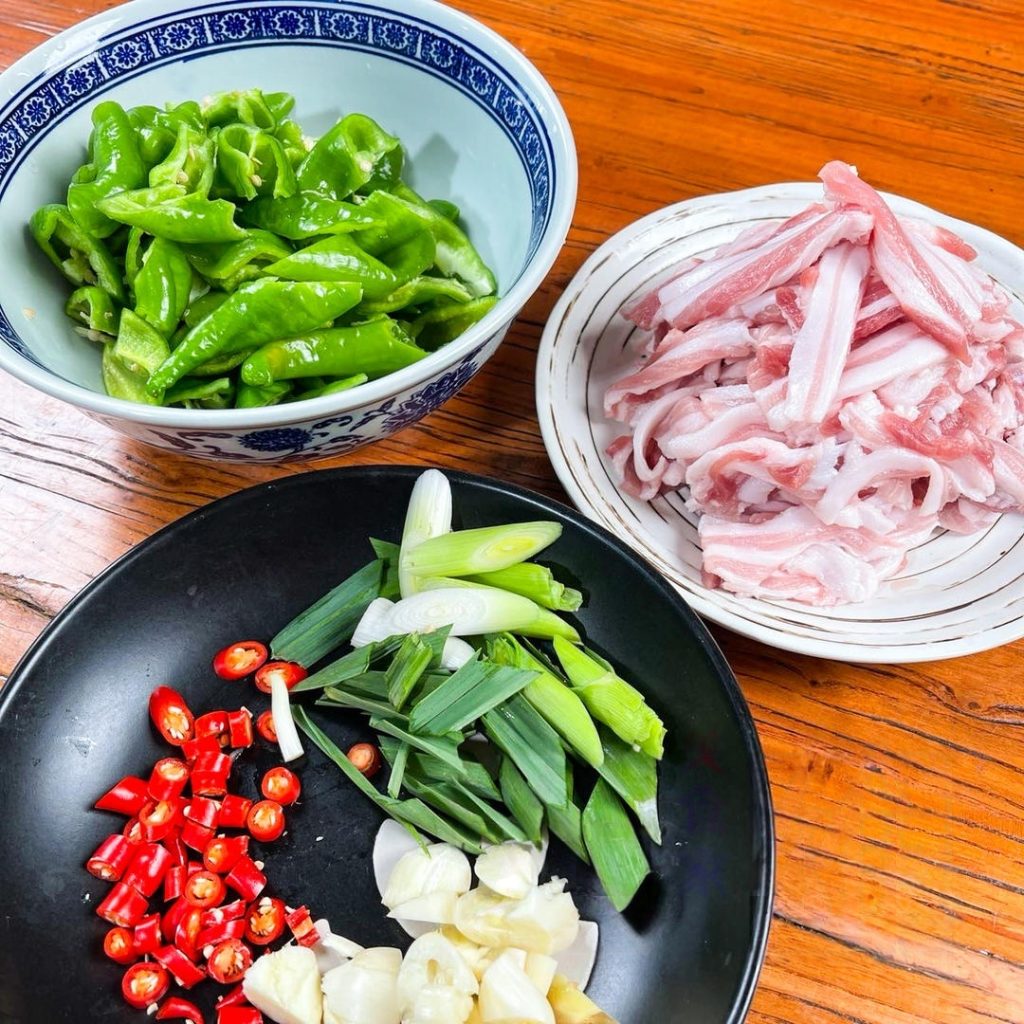
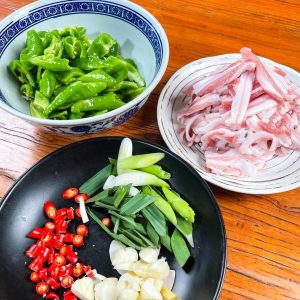
Step 1: Mise en Place (Prep Work) Wash the peppers. To “roll cut” them, hold the knife at a 45-degree angle, make a cut, roll the pepper a quarter turn, and cut again. This increases the surface area to catch the sauce. Slice the pork belly as thin as possible (about 1/8 inch). Smash the garlic and slice the ginger.
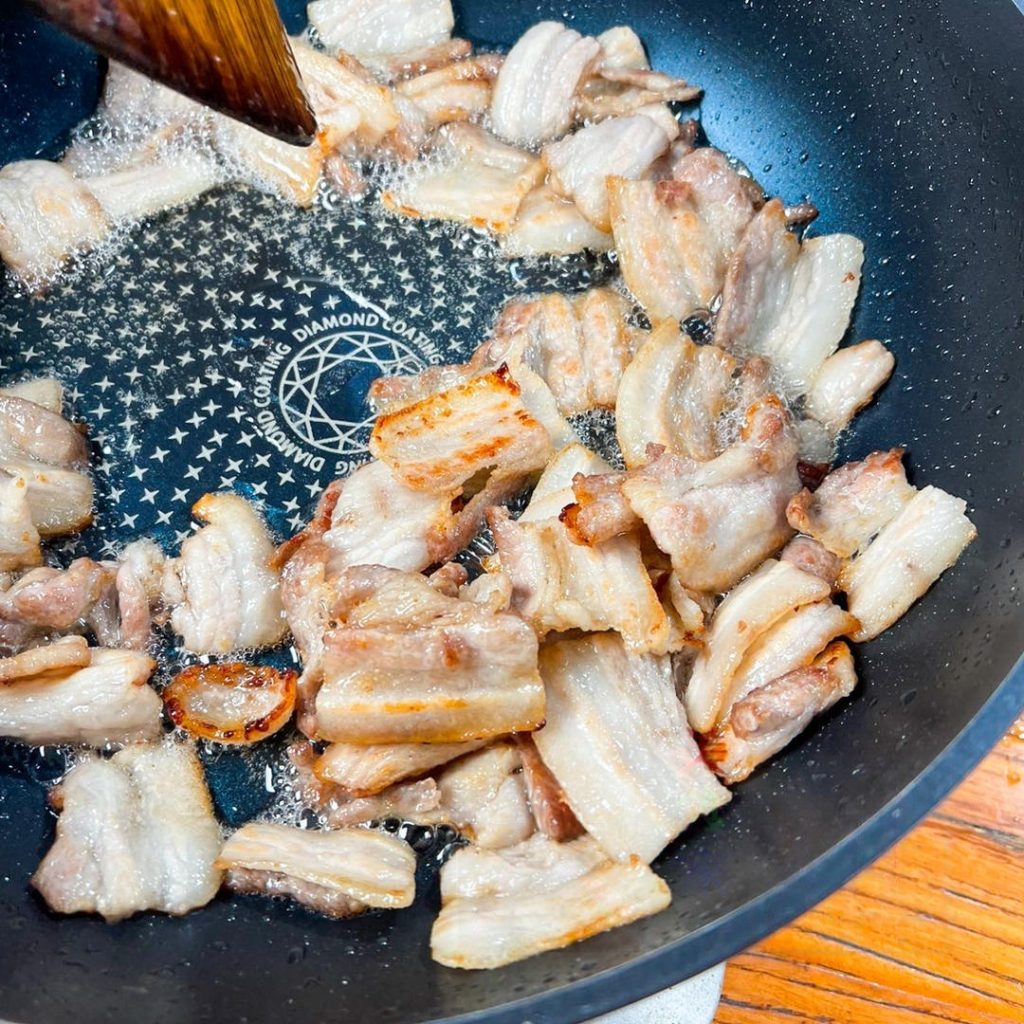
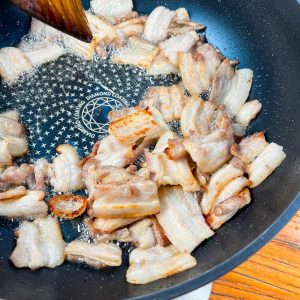
Step 2: Render the Pork Heat your wok over medium heat and add 1 tablespoon of oil (or Universal Scallion Oil for extra aroma). Add the sliced pork belly. Stir-fry for about 3 minutes until the meat turns white, releases its clear oil, and the edges begin to curl and brown slightly. This is called creating “jiao bian” (scorched edges).
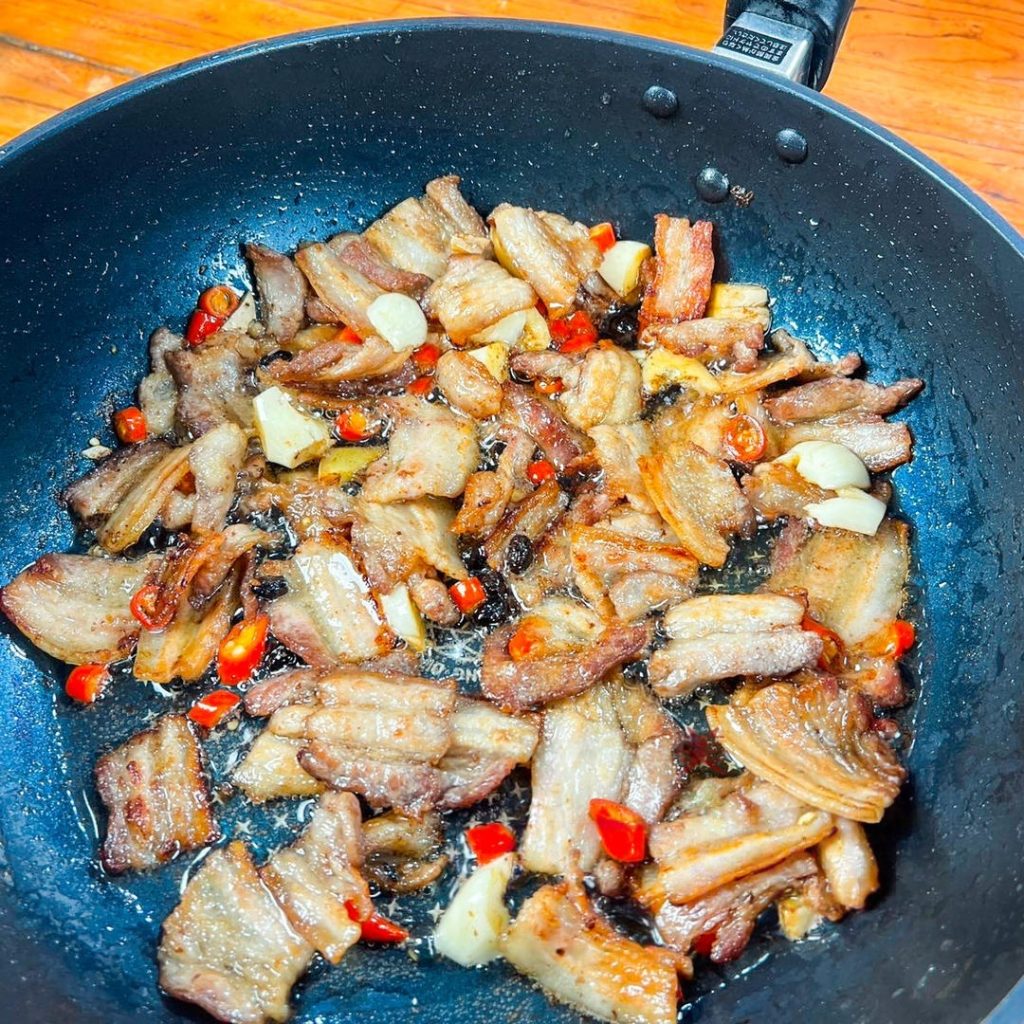
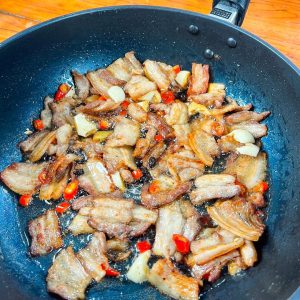
Step 3: Aromatics Add the fermented black beans, sliced ginger, garlic, bird eye chilies, and 1/2 tablespoon of dark soy sauce. Stir-fry for 1-2 minutes until the aromatics are fragrant and the pork is coated in the dark soy color.
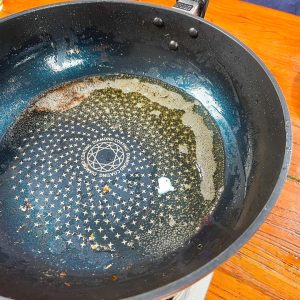
Step 4: Remove the Meat Using a slotted spoon, remove the cooked meat and aromatics from the wok, leaving the rendered pork fat and oil behind in the pan.
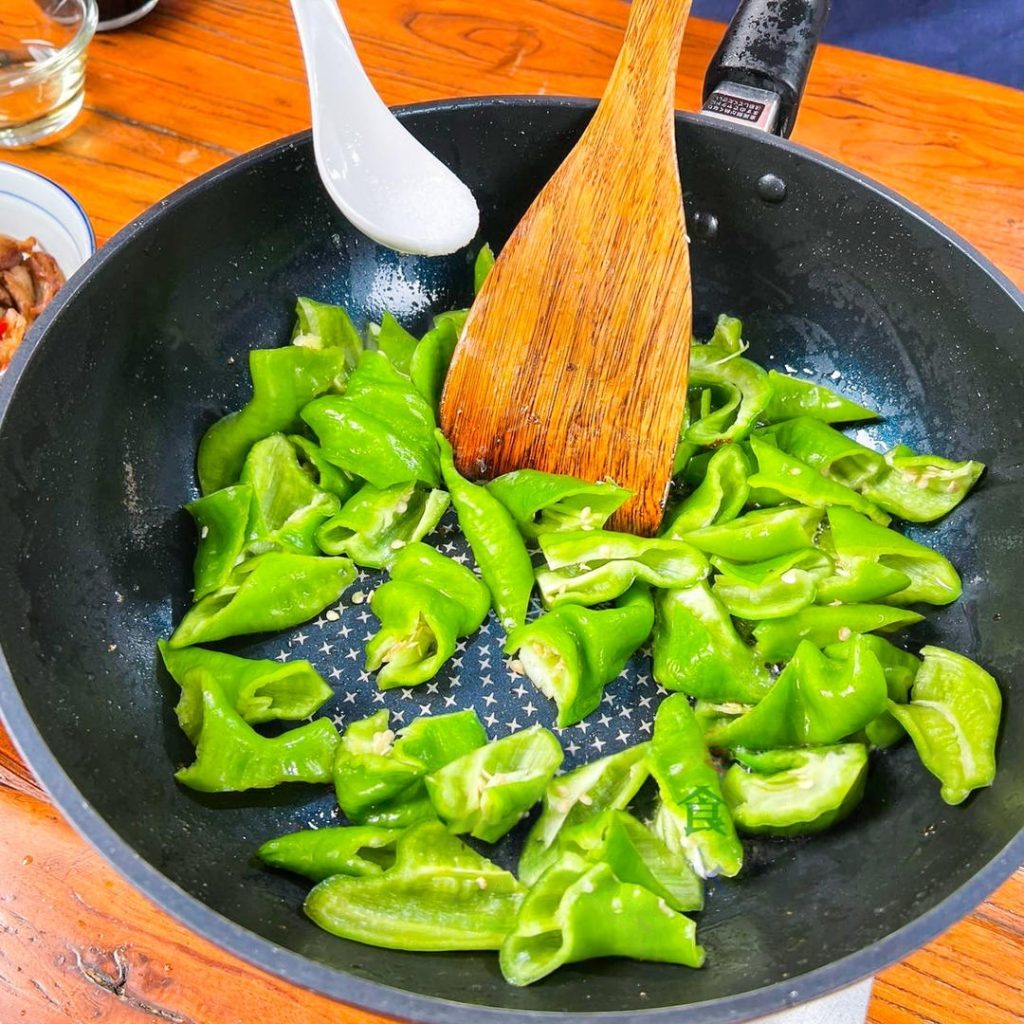
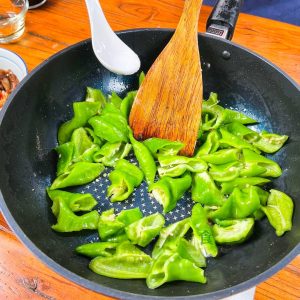
Step 5: Blister the Peppers Turn the heat up to medium-high. Add the roll-cut green peppers to the hot oil remaining in the wok. Sprinkle with 1/2 teaspoon of salt. Stir-fry vigorously for about 2 minutes. You want the skin of the peppers to blister and look slightly wrinkled (the “tiger skin” effect), but they should still retain some crunch.
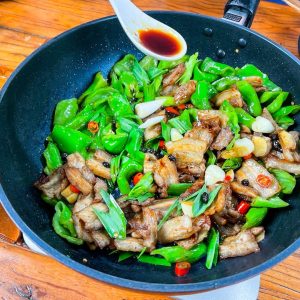
Step 6: Combine and Finish Return the cooked pork and aromatics to the wok. Add the garlic sprouts. Pour in the 2 tablespoons seasoned soy sauce, 1 tablespoon oyster sauce, and 1/4 teaspoon MSG.
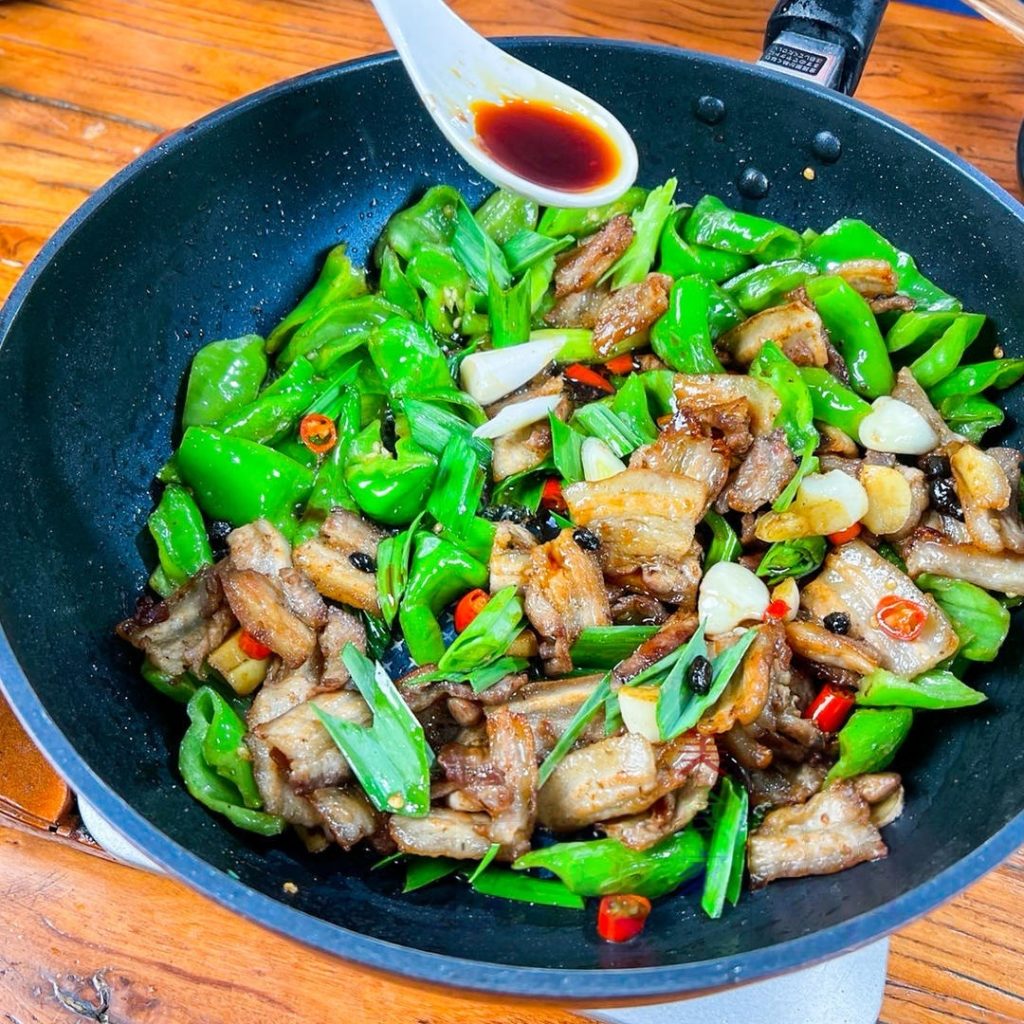
Step 7: Final Toss Crank the heat to high. Toss everything together rapidly for 30 seconds to mix the flavors and slightly wilt the garlic sprouts. The sauce should cling to the meat and peppers, not pool at the bottom.
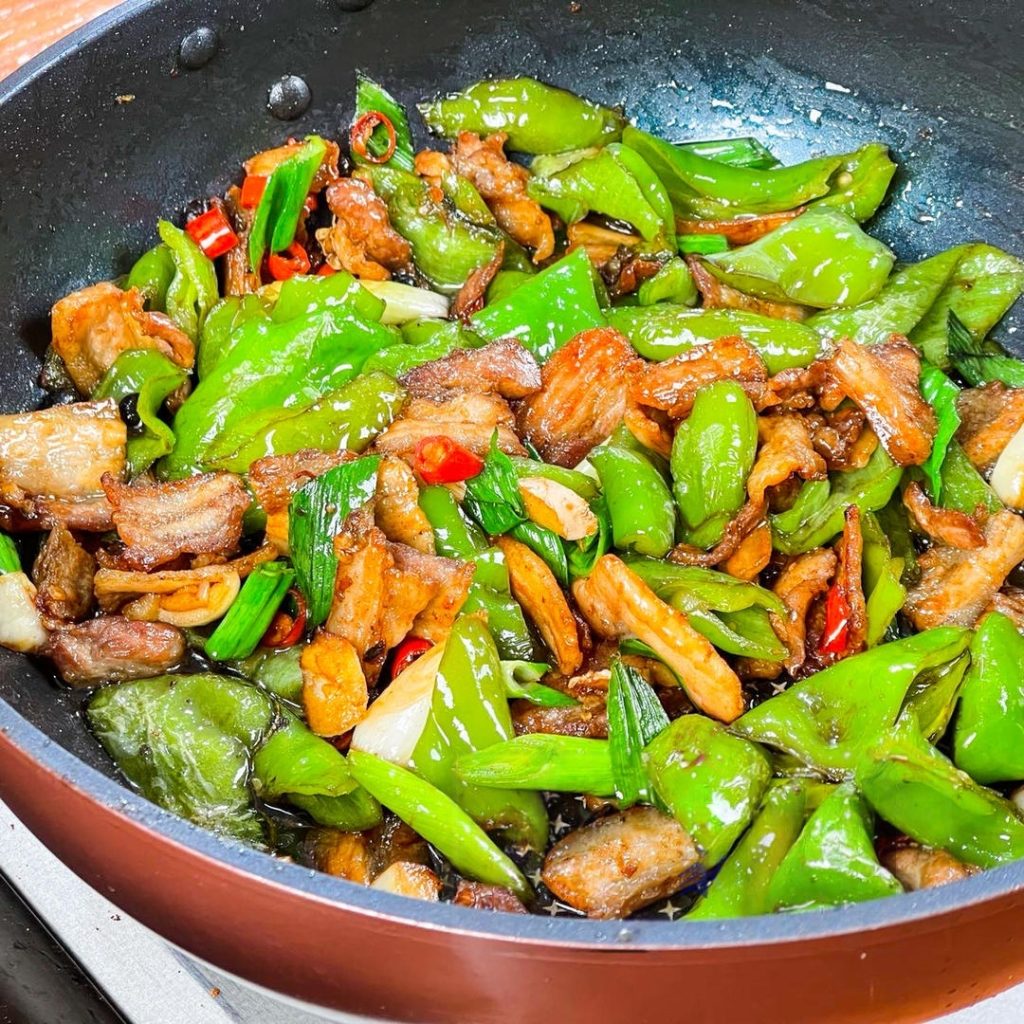
Step 8: Serve Transfer to a plate immediately. Serve hot with plenty of steamed white rice.
Troubleshooting & FAQ
Q: My peppers are too tough. A: Screw peppers can vary in skin thickness. If they feel tough, you can press them against the hot wok with your spatula during Step 5 to help break down the fibers and blister them faster.
Q: Can I make this less spicy? A: Absolutely. Omit the Thai bird eye chilies entirely. For the green peppers, slice them open and remove the seeds and white pith before cooking—this significantly reduces the heat while keeping the pepper flavor.
Q: Why did my pork turn out dry? A: You likely cooked it too long in Step 2. Once the edges curl and brown slightly, move on. If you render it until it’s like bacon, it will be tough.
Comparison: Screw Peppers vs. Bell Peppers
While you can use bell peppers, they lack the specific texture needed for this dish. Bell peppers have thick, watery flesh that tends to steam rather than fry. Screw peppers (or Anaheim/Cubanelle) have thinner walls, allowing them to blister and char, imparting a smoky flavor that is characteristic of Hunan and Sichuan “dry-fried” dishes like Tiger Skin Peppers.
Serving Suggestions
This is a robust, salty, and spicy dish. It needs balance.
- Rice: Short or medium-grain white rice is essential to soak up the savory oils.
- Soup: A gentle soup like Tomato Egg Drop Soup provides a perfect palate cleanser.
- Seafood Side: For a surf-and-turf Chinese banquet style, try pairing with Garlic Fried Shrimp.
How to Store & Reheat
- Fridge: Store leftovers in an airtight container for up to 3 days.
- Reheat: Reheat in a skillet or wok over medium heat until hot. Avoid the microwave if possible, as it can make the rendered pork belly rubbery.
- Freezing: Not recommended. The peppers will become mushy upon thawing.
Food Safety & Nutrition
- Pork Safety: Ensure the pork belly reaches an internal temperature of at least 145°F (63°C) during the rendering phase.
- Allergens: This dish contains soy and gluten (in the soy sauce) and shellfish (in the oyster sauce).
- Nutrition Disclaimer: Nutrition information is calculated using an ingredient database and should be considered an estimate. Garnishes and optional items are not included. Actual values vary based on the specific brands of sauces used.
Authoritative References
- For safe pork cooking temperatures, refer to the USDA Food Safety and Inspection Service.
- To understand more about the role of MSG in Chinese cooking, see the Center for Science in the Public Interest’s assessment.
Pork Stir-fry with Green Peppers (Luosijiao Xiaochao Rou)

Equipment
- Wok Carbon steel preferred, or a large skillet
- Chef’s knife For slicing pork thinly
Ingredients
Stir-Fry Ingredients
- 8 oz pork belly skin removed, thinly sliced (approx 250g)
- 4 long green peppers Screw peppers/Luosijiao, roll-cut
- 2 stalks garlic sprouts or scallions, cut into 1.5 inch sections
- 5 Thai bird eye chilies sliced into rings (adjust for heat)
- 1 tbsp fermented black beans douchi
- 1 inch ginger sliced
- 2 cloves garlic smashed and sliced
- 1 tbsp cooking oil neutral oil
Seasonings
- 2 tbsp seasoned soy sauce for seafood or light soy sauce
- 0.5 tbsp dark soy sauce
- 1 tbsp oyster sauce
- 0.5 tsp salt
- 0.25 tsp MSG optional
Instructions
- Prep ingredients: Roll-cut the green peppers into bite-sized chunks. Slice pork belly thinly. Smash garlic, slice ginger, and slice Thai chilies.

- Heat the wok over medium heat with 1 tablespoon of oil. Add the pork belly and stir-fry for about 3 minutes until the meat whitens, releases oil, and edges become slightly scorched (jiao bian).
- Add the 1/2 tbsp dark soy sauce, Thai chili rings, ginger, garlic, and fermented black beans. Stir-fry for 1-2 minutes until fragrant and the meat is colored.
- Remove the meat and aromatics from the wok using a slotted spoon, leaving the oil behind.
- Increase heat to medium-high. Add the green pepper chunks to the remaining oil. Add 1/2 tsp salt. Stir-fry for 2 minutes until the peppers are blistered (tiger skin effect).
- Return the meat and aromatics to the wok. Add the garlic sprouts. Add 2 tbsp seasoned soy sauce, 1 tbsp oyster sauce, and 1/4 tsp MSG.
- Turn heat to high and toss everything rapidly for 30 seconds to combine flavors. Serve immediately with rice.
Notes
Calories: 420
Fat: 32g
Carbohydrates: 9g
Protein: 18g
Sodium: 1100mg
(Disclaimer: Nutrition information is calculated using an ingredient database and should be considered an estimate. Garnishes and optional items are not included. Actual values vary.) Safety: Ensure pork belly is cooked to an internal temperature of 145°F (63°C). This dish contains soy and gluten.












Leave a Reply