There is a moment in early spring when the markets in northern China are nothing but bundles of garlic chives — flat, dark green, and smelling faintly of garlic before you even cut them. That is the moment this chive and egg pancake exists for. The dough is scalded with boiling water, rested under a film of oil, then stretched by hand until you can almost see through it. The filling is nothing more than chives, softly scrambled egg, soy sauce and oyster sauce, and yet the whole thing disappears off the plate faster than it takes to cook.
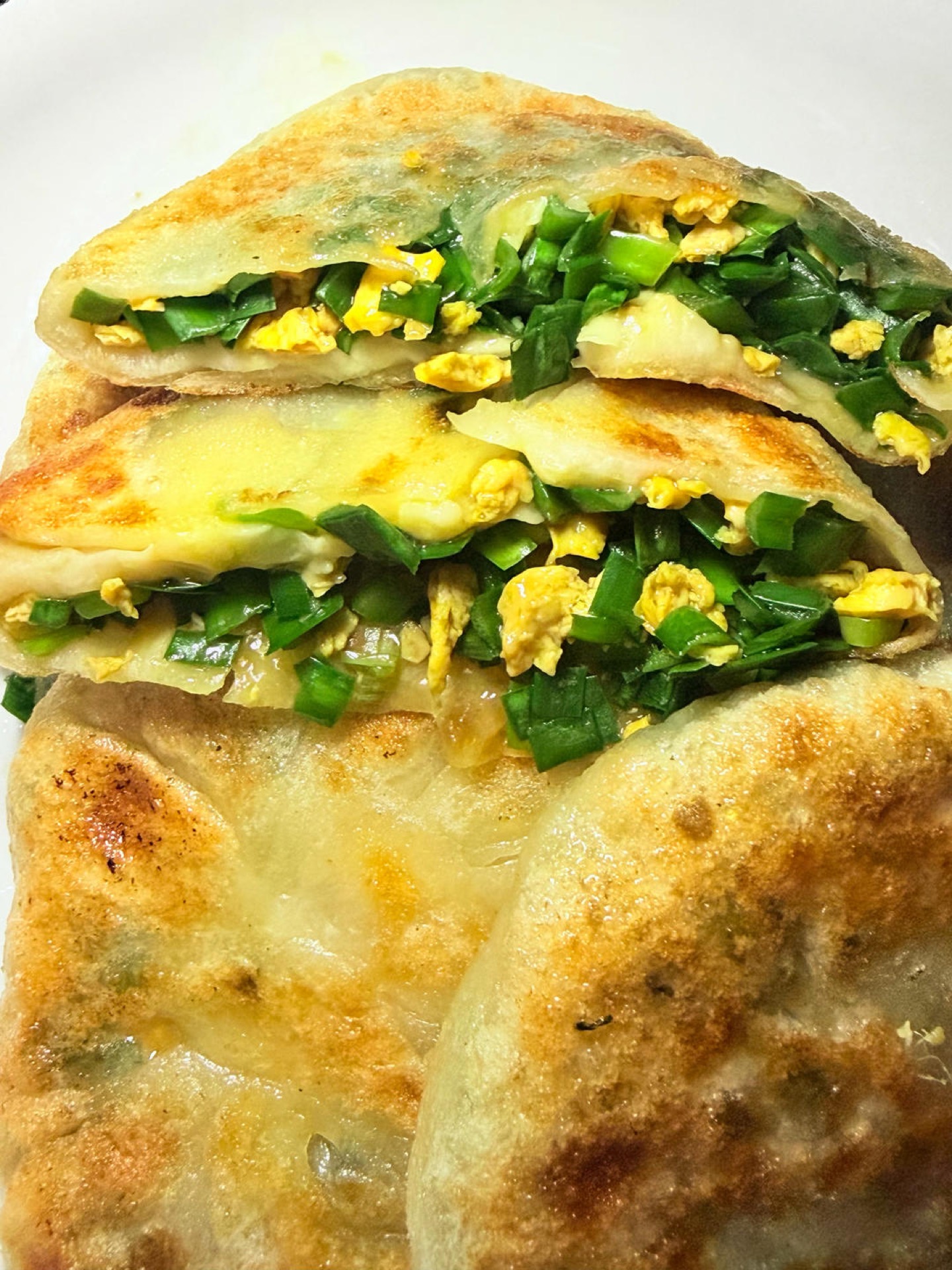
What makes this version different from the dry, stiff pancakes you may have eaten is the dough. A portion of the flour is cooked with boiling water, which gelatinizes the starch and stops gluten from forming in the usual tight network. The result is a wrapper that behaves more like a soft, pliable sheet than a bread dough — it stretches thin without springing back, and it stays soft after it cools. If you have ever made savory Chinese breakfast pancakes, you already know how forgiving a soft, hydrated dough can be. This one takes the same idea and pushes the hydration and the rest time further.
What Is Chive and Egg Pancake?
Chive and egg pancake, or jiucai jidan bing (韭菜鸡蛋饼), is a northern Chinese home-style flatbread: a thin, pan-fried wheat wrapper folded around a filling of garlic chives and scrambled egg. It is not a scallion pancake — that one is a laminated, oil-brushed flatbread with no filling at all — and it is not a dumpling either, though the filling logic is close. It sits somewhere between a stuffed flatbread and a folded omelet, and it is eaten at breakfast, as a snack, or as a side dish at dinner.
There are two broad schools. One uses a cold-water dough rolled very thin and cooked quickly, which gives a slightly chewier, more brittle skin. The other — the one here — uses a half-scalded hot-water dough that is rested under oil. That second method is what gives this version its signature: a wrapper thin enough to show the green of the chives through it, yet soft enough to fold without cracking.
Garlic chives (jiucai) are the key ingredient and are not the same as the green tops of common onions. They are flatter, milder when raw, and sweeter once they hit heat. If you only have regular scallions, the pancake will still work, but the flavor will be sharper and more oniony rather than the gentle, almost grassy sweetness jiucai brings.
If you like the idea of a stuffed, hand-stretched pancake but want something even faster, the egg filled pancake skips the kneading entirely and still gives you a soft wrapper with egg cooked right into it.
1Easy Jidan Guanbing (Egg-Filled Pancake) – No Knead Batter MethodA quick 10-minute hack for authentic Chinese Jidan Guanbing. This no-knead batter method creates a crispy, savory egg-filled pancake perfect for a busy breakfast.Check out this recipe
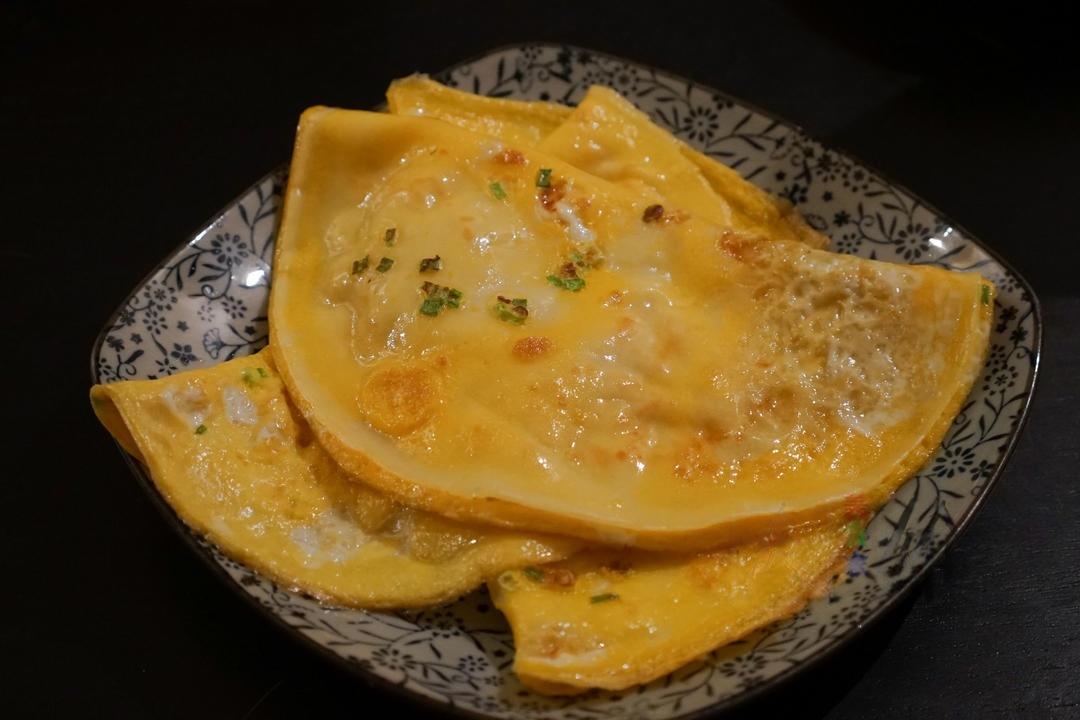
Cooked this way once, you will want the next one too: savory Chinese breakfast pancakes starts from the same base and the same pan.
2Savory Chinese Breakfast Pancakes (Milk & Egg Soft Pancakes)These soft, savory pancakes are a classic Chinese homestyle breakfast. Made with a simple batter of flour, milk, and eggs, and studded with ham and scallions, they are ready in 15 minutes.Check out this recipe

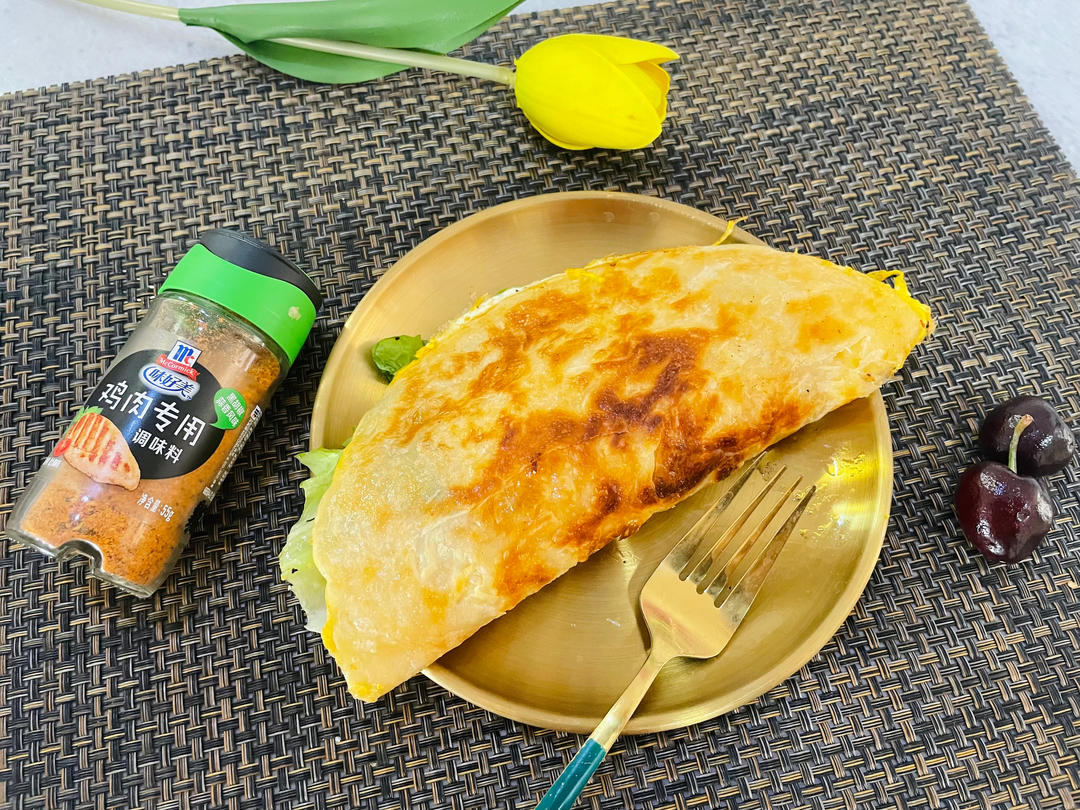
For the next cook from the same playbook, scallion pancake rolls is the recipe I point people to.
3Black Pepper Garlic Scallion Pancake Roll (Shou Zhua Bing)This Black Pepper Garlic Scallion Pancake Roll (Shou Zhua Bing) transforms a frozen supermarket staple into a savory, flaky, restaurant-quality breakfast in just 10 minutes. Featuring a homemade spice blend and fresh aromatics.Check out this recipe
Ingredient Notes
All-purpose flour. Plain all-purpose flour is right here. Bread flour makes the dough fight back when you stretch it, and cake flour gives a wrapper so tender it tears. If you keep a medium-protein Chinese flour like Hong Kong flour, that is ideal.
Boiling water. It must be genuinely boiling when it hits the flour, not just hot from the tap. The point is to scald part of the flour so the starch gelatinizes. Let the kettle come to a full rolling boil, then pour immediately.
Cold water. Added second, after the hot water, to bring the dough together and keep a little structure. The 50/50 split between boiling and cold water is what gives the dough both tenderness and stretch.
Garlic chives (jiucai). Look for bunches with crisp, upright blades and no yellowing at the tips. They must be bone-dry before chopping — water on the leaves is the single most common reason a filling turns soupy.
Eggs. Four large eggs for 200 g of chives gives a filling that is generous but still holds together. Scramble them softly and let them cool completely; warm egg will start cooking the chives and releasing moisture.
Light soy sauce and oyster sauce. These two do the entire seasoning job. Light soy brings salt and umami; oyster sauce brings body and a faint sweetness. If you want a vegetarian version, vegetarian oyster sauce made from mushrooms works well.
Neutral oil. Any neutral oil works for both brushing the dough and frying. Toasted sesame oil is too strong for the dough — save it, if you use it at all, for a few drops in the filling.
Ingredients
Everything below makes 6 pancakes, which serves 4 as a main course or 6 as a snack. The dough uses a 50/50 split of boiling and cold water by weight, which is the ratio that gives the most reliable thin-skin result.
- 150 g all-purpose flour (about 1 cup plus 1 tbsp)
- 2 g salt (about 1/3 tsp)
- 50 g boiling water (about 3 1/2 tbsp), freshly boiled
- 50 g cold water (about 3 1/2 tbsp)
- 1 tbsp neutral oil, for brushing the dough
- 200 g garlic chives (about 7 oz), washed, dried and finely chopped
- 4 large eggs, beaten
- 2 tbsp light soy sauce (or tamari)
- 1 tbsp oyster sauce (or vegetarian oyster sauce)
- 2 tbsp neutral oil, for frying the eggs and the pancakes
Equipment Needed
You need less than you think. A bowl, a pan, and your hands do most of the work — the dough is deliberately soft enough to press out by palm, so a rolling pin is optional.
- A large mixing bowl for the dough
- Chopsticks for stirring the shaggy dough
- A cutting board and a sharp knife for the chives
- A non-stick or well-seasoned frying pan — a flat-bottomed wok works beautifully here
- A slotted spoon or spatula for the eggs
- Plastic wrap for resting the dough
- A rolling pin, optional — the dough stretches by hand
- An instant-read thermometer, for checking the egg filling is cooked through
If you are building out a Chinese kitchen from scratch, our guide to the best kitchen tools for Chinese cooking covers the pans and utensils that earn their space.
Why This Recipe Works
The hot-water scald. Pouring boiling water into part of the flour gelatinizes starch granules and disrupts gluten development. That is why this dough stretches without snapping back and why the finished skin stays soft rather than turning leathery as it cools. It is the same principle behind many northern Chinese flatbreads.
Oil-resting the dough. One hour under a film of oil does two things: it stops the surface from drying into a skin, and it lubricates the dough so the gluten strands slide past each other. After an hour, a piece of dough the size of a golf ball will press out into a disc you can read a newspaper through.
Oil on the chives first. Tossing the chopped chives with oil before the egg and sauces go in coats every cut edge and slows the release of water. The filling stays loose and glossy instead of weeping into the wrapper.
Cooling the egg completely. Warm egg would steam the chives from the inside and turn the filling wet. Letting it come to room temperature keeps the mix stable right up to the moment it hits the pan.
Scrambling eggs in a pan that has just been taken off the heat is a classic Chinese home technique: the residual heat in the pan and the oil finishes the eggs gently, which is why the curds come out silky rather than rubbery. The same principle is behind the soft egg in a good egg filled pancake, where the egg sets against a hot wrapper instead of a hot pan.
Prep & Mise en Place
This is a dough that rewards planning ahead, because the rest time is not optional. Start the dough first, then do everything else while it rests.
- Make the dough. Combine flour and salt, pour in boiling water, stir to shaggy flakes, add cold water, stir again, cool, then knead smooth.
- Divide and oil. Cut into 6 equal pieces and brush each with a thin film of oil.
- Rest one hour. Cover with plastic wrap. This is the step that makes the thin skin possible.
- Dry and chop the chives. Wash them early so they have time to dry completely, then chop finely.
- Scramble and cool the eggs. Cook them softly, then spread them out on a plate to cool fast.
- Mix the filling. Chives plus oil, then egg, soy sauce and oyster sauce. Taste and adjust.
- Set up your station. Dough, filling, a lightly oiled mat, and your pan within arm’s reach.
If your kitchen is warm, the resting dough can sit at room temperature the whole hour. If it is very hot, rest it in the coolest spot you have — the oil keeps it from drying either way.
Cooking Process
Step 1 — Make the Hot-Water Dough
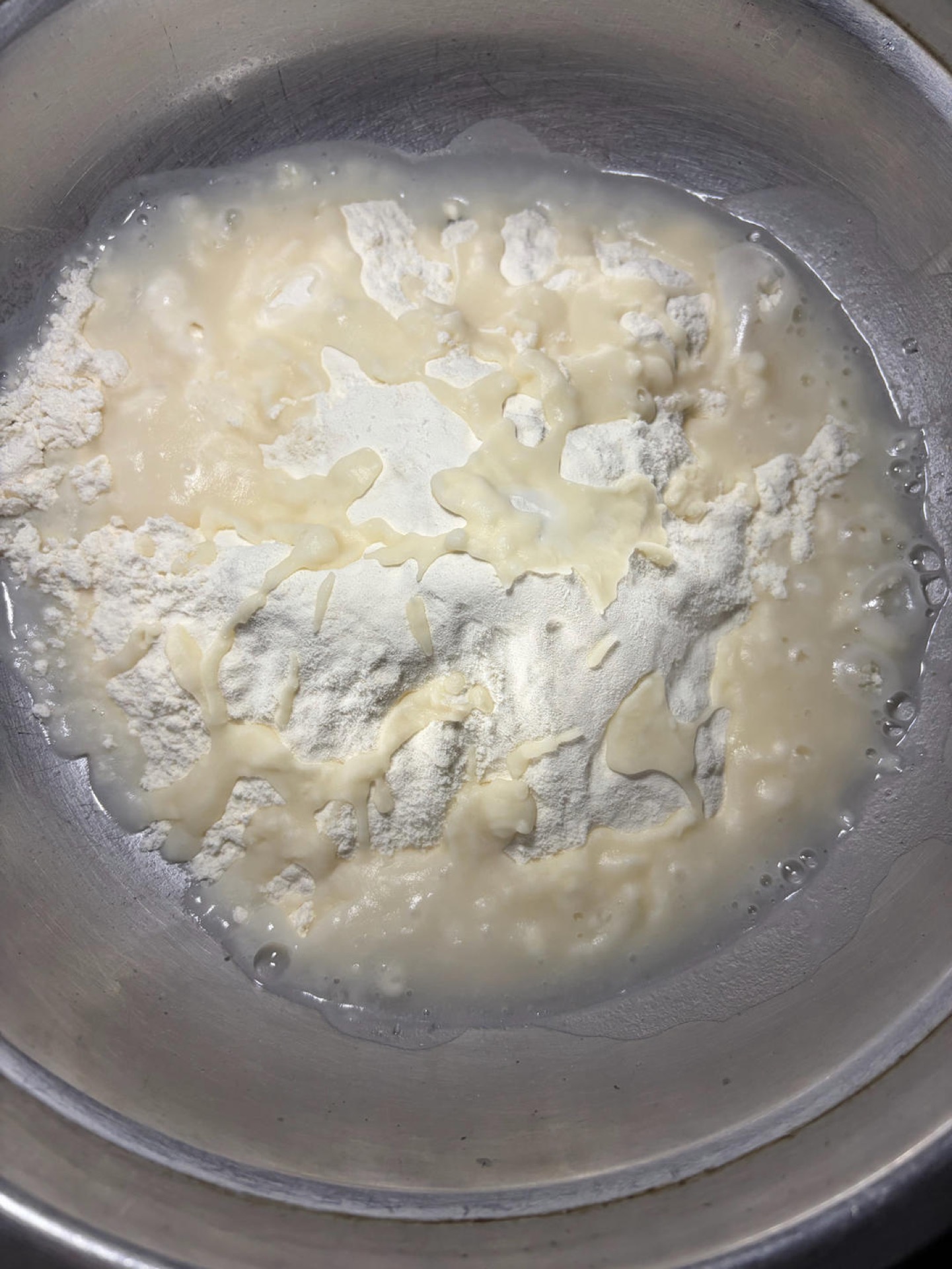
Put the flour and salt in a large bowl and stir to combine, pour in the freshly boiled water and stir quickly with chopsticks until it turns into shaggy flakes, then add the cold water and keep stirring until no dry flour remains. Let it cool until it is no longer hot to the touch, then knead with your hands into a smooth dough.
Step 2 — Divide and Oil the Dough
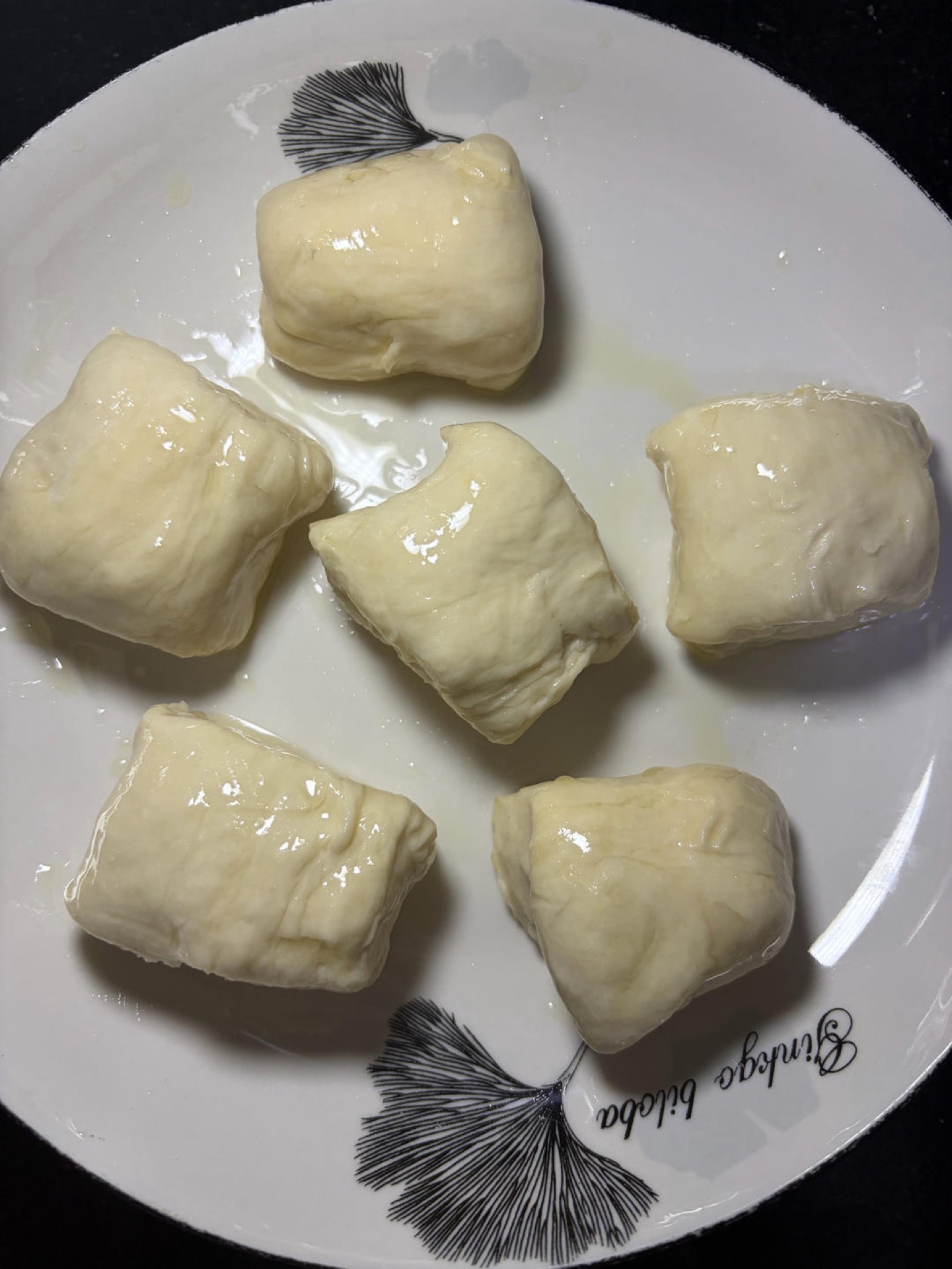
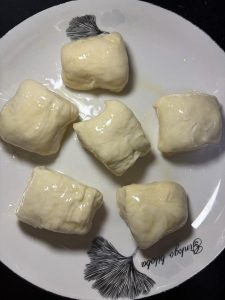
Roll the dough into a long log and cut it into 6 equal pieces, then brush a thin layer of oil over the surface of each piece.
Step 3 — Rest the Dough
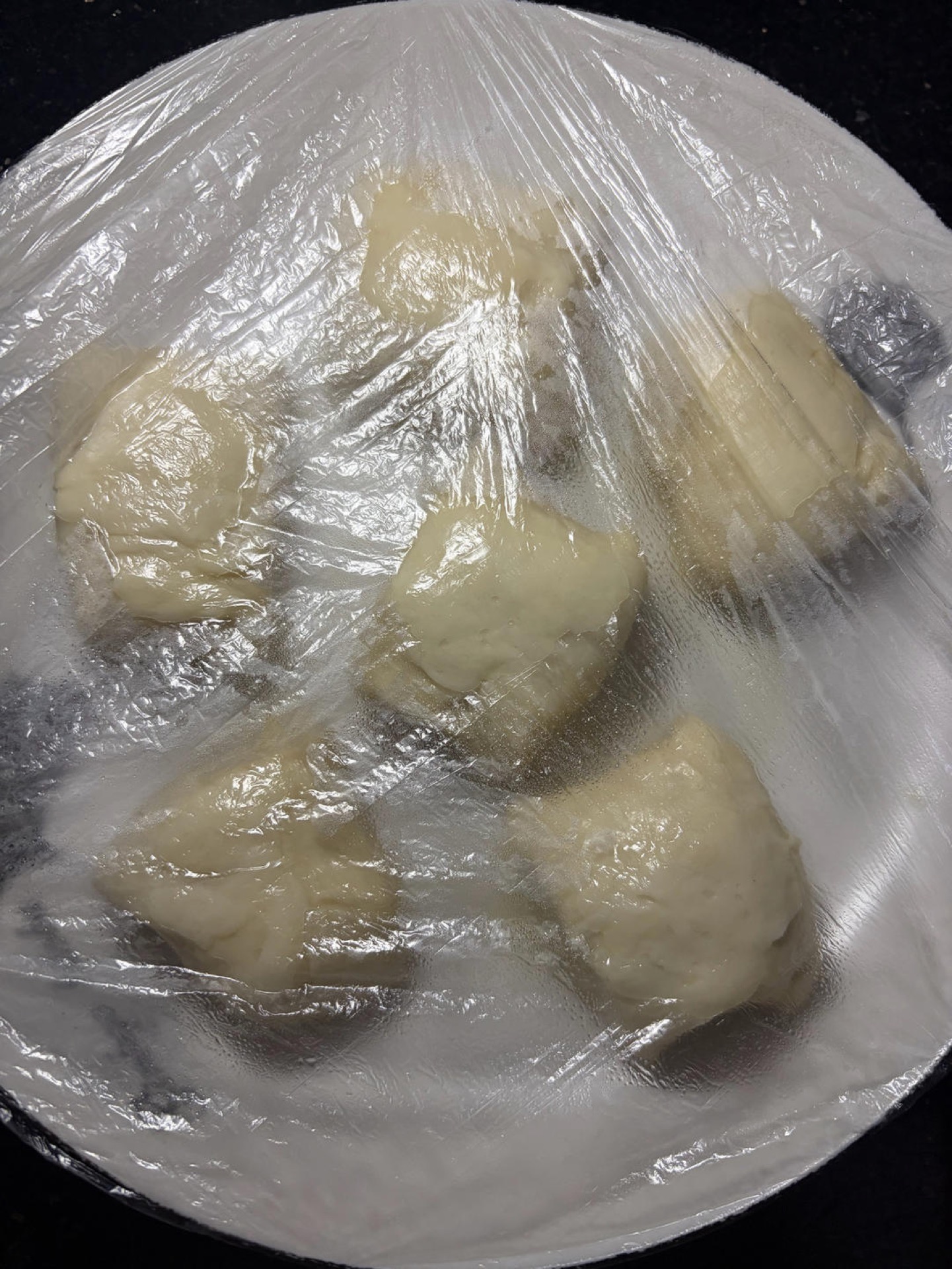
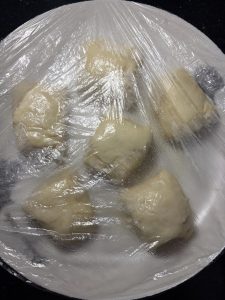
Cover the bowl with plastic wrap and let the dough rest for 1 hour; resting it under oil gives it excellent extensibility.
Step 4 — Prep the Chives
Wash the garlic chives clean, spread them out to dry completely, then chop them finely and toss with two tablespoons of cooking oil to lock in the moisture.
Step 5 — Scramble the Eggs
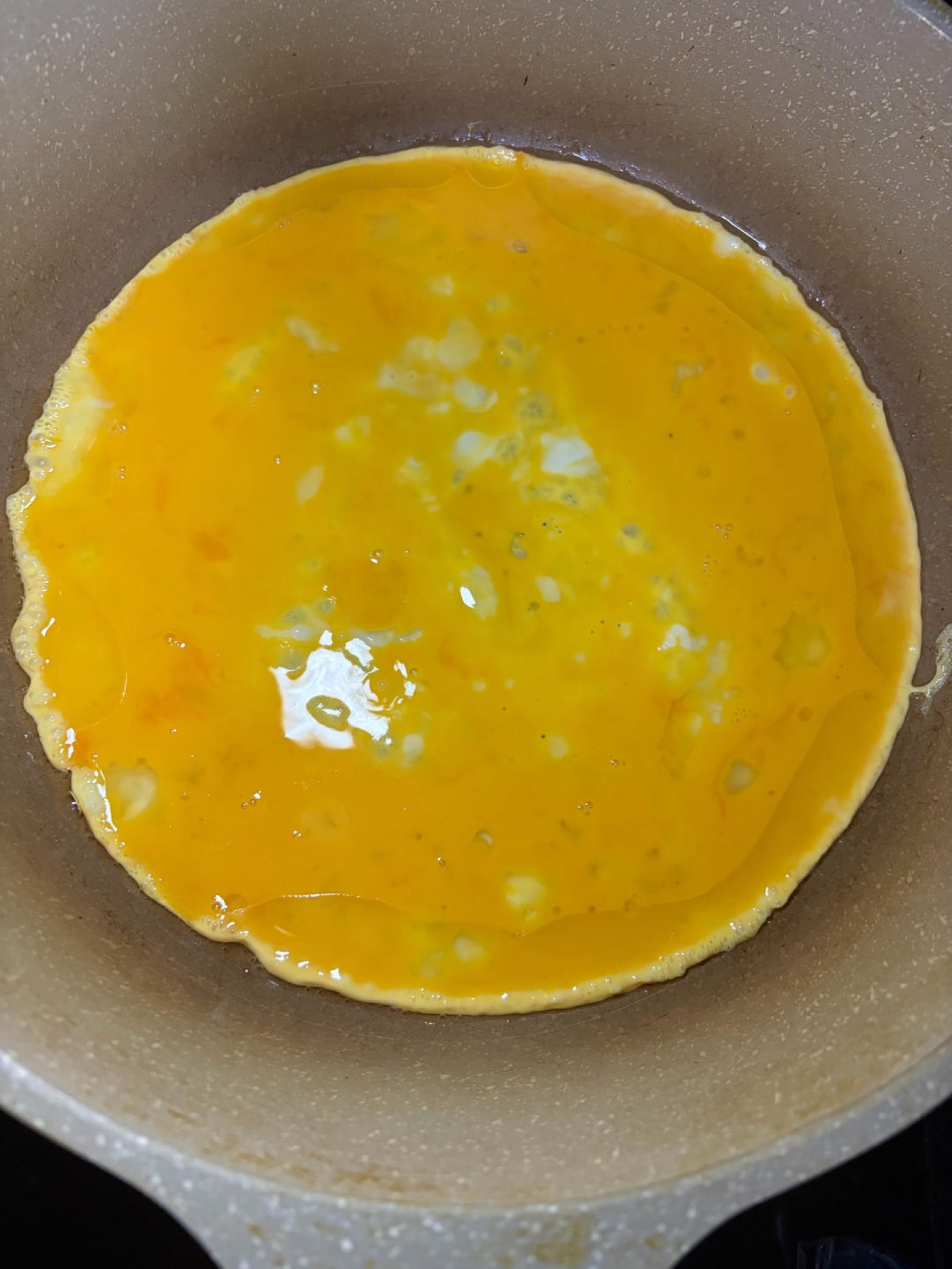
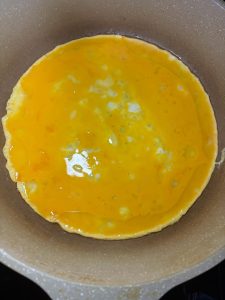
Heat a frying pan over medium heat with oil, pour in the beaten egg and scramble it into small curds, then let it cool completely before mixing it with the chives. Here is a trick for very tender scrambled eggs: heat the oil in the pan until it starts to smoke, immediately turn off the heat, pour in the egg and keep stirring with chopsticks until it breaks into soft curds.
Step 6 — Mix the Filling
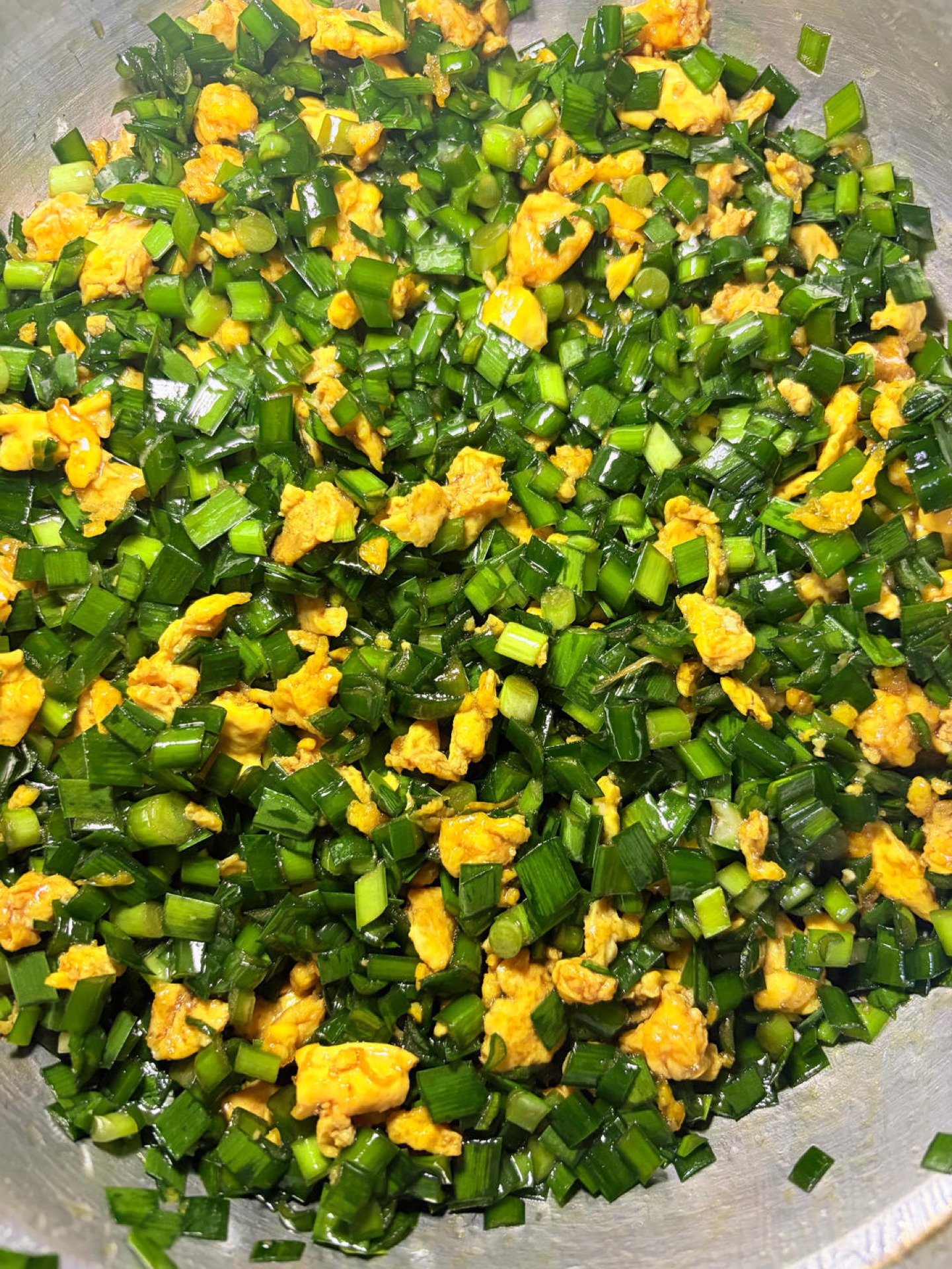
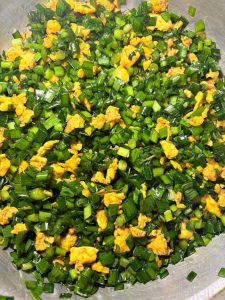
Add the scrambled egg to the chives, pour in two tablespoons of light soy sauce and one tablespoon of oyster sauce and stir well, then set aside.
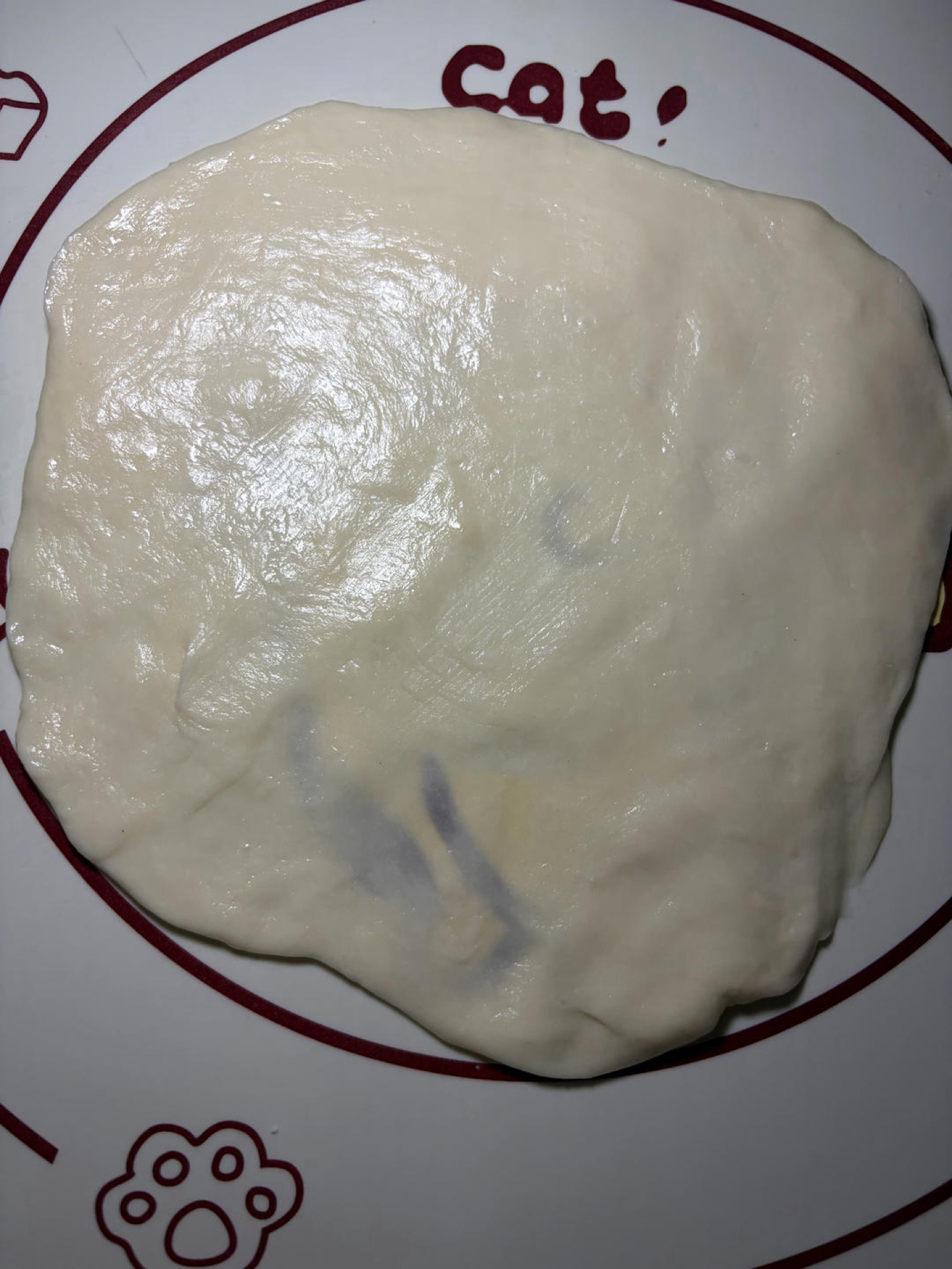
Step 7 — Roll the Wrapper
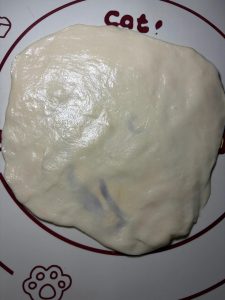
Take one piece of dough onto a mat, put on gloves, and press it flat with your palm, then stretch it into a very thin wrapper; you do not even need a rolling pin because the dough is so extensible.
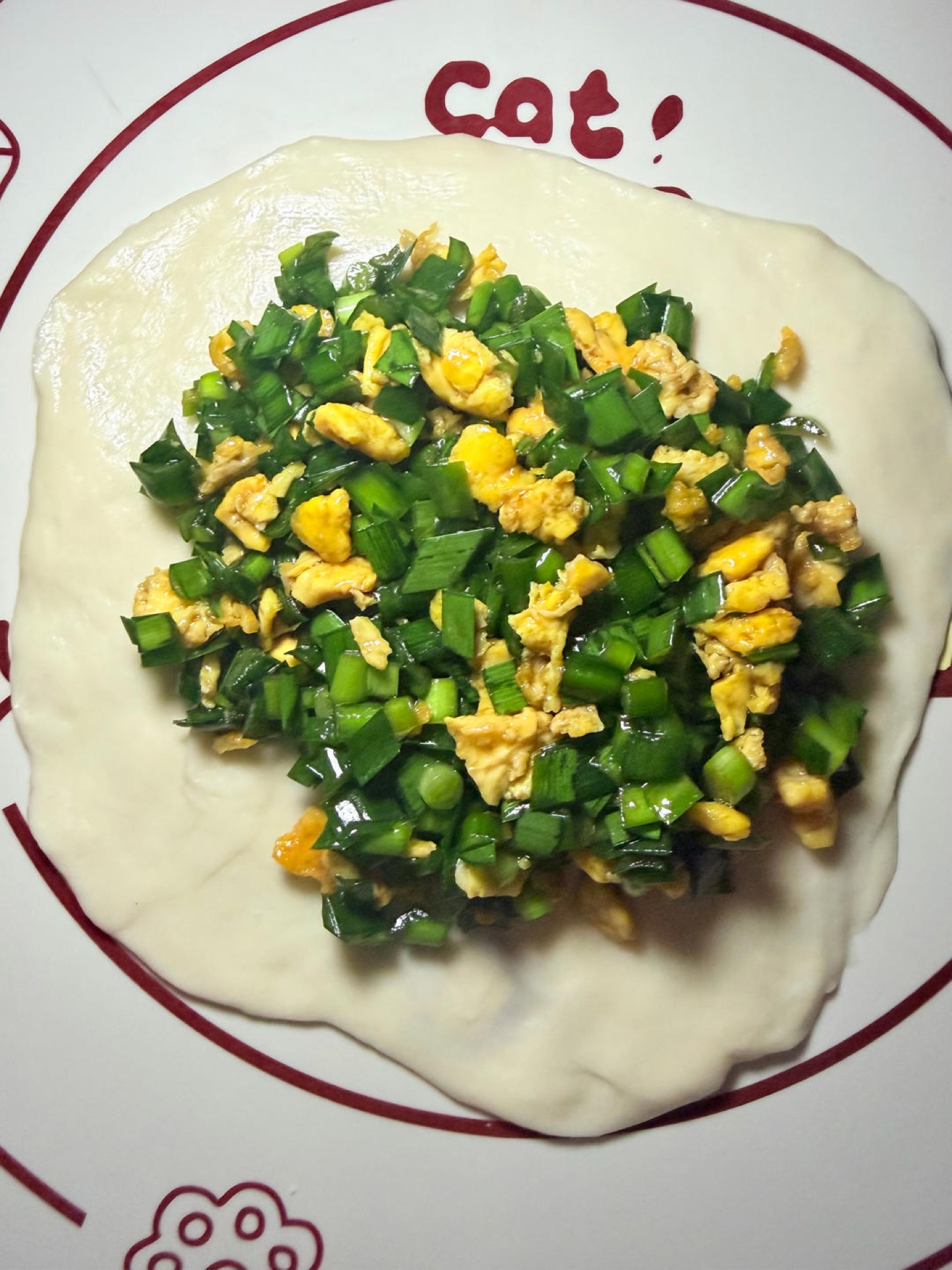
Step 8 — Fill and Seal
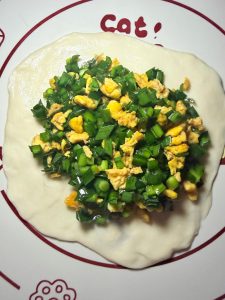
Place a generous amount of the chive and egg filling in the center and pinch the dough closed tightly.
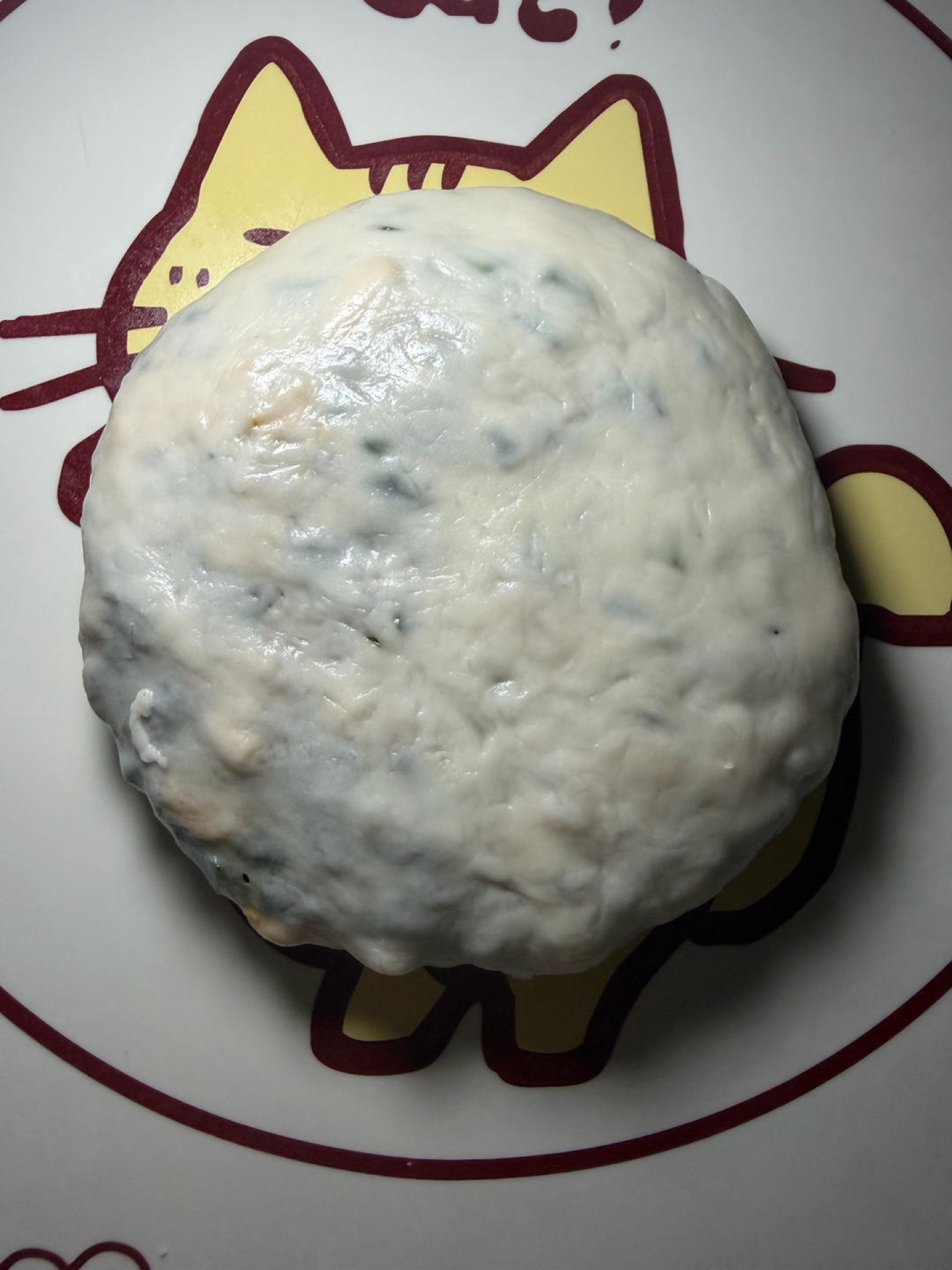
Step 9 — Flatten the Pancake
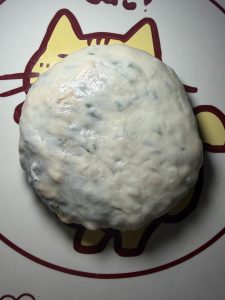
Place the sealed side down and gently press it into a thin pancake; do not roll it with force or the skin will tear and the filling will leak out.
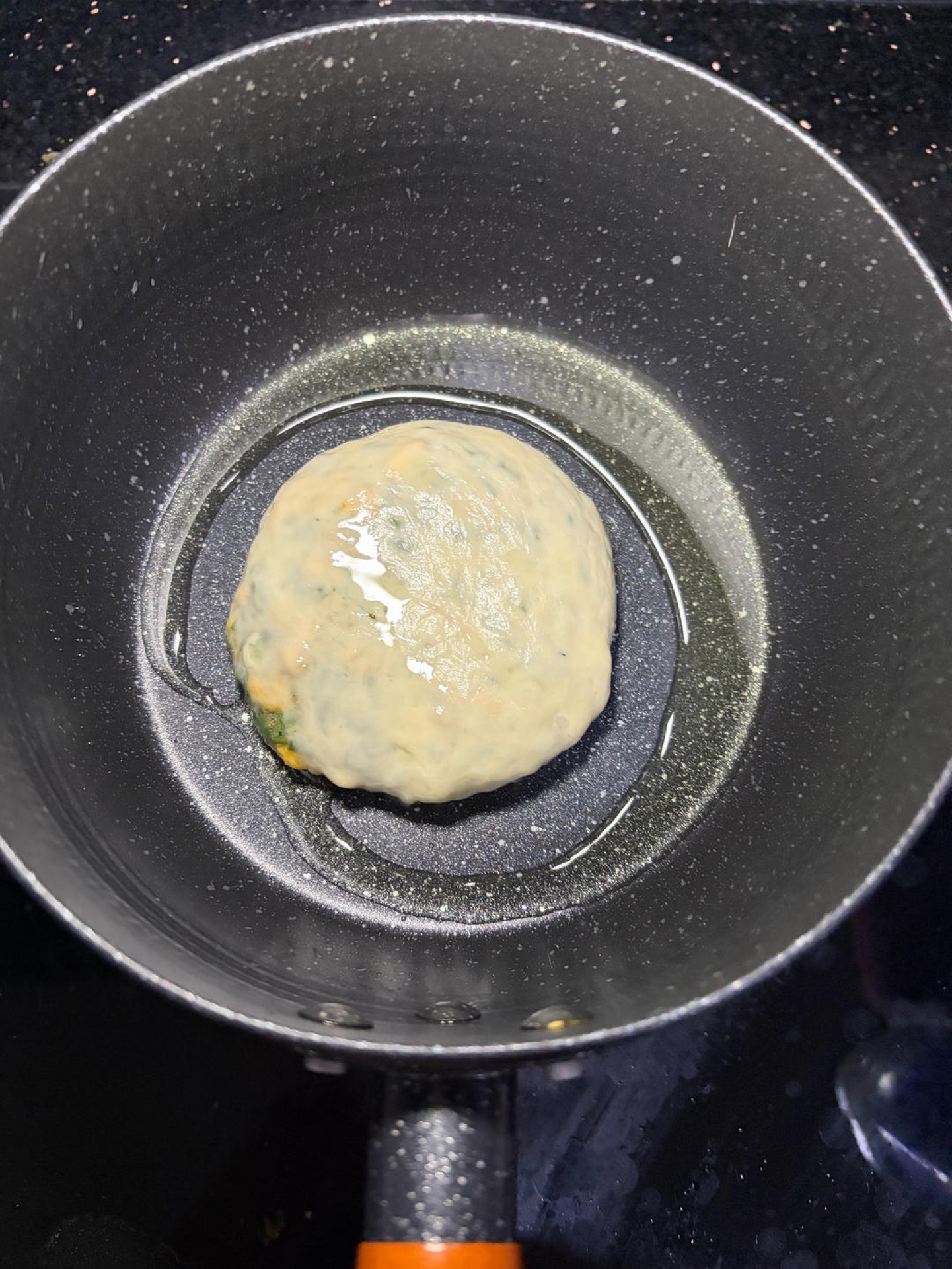
Step 10 — Pan-Fry Until Golden
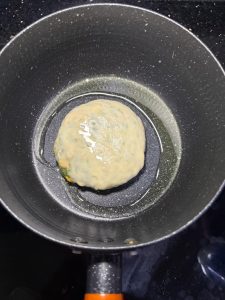
Preheat a frying pan with oil, add the pancake and cook over medium-low heat, flipping back and forth; fry one side until golden and set before flipping to the other side, and remove once the surface is lightly browned.
Step 11 — Serve and Enjoy
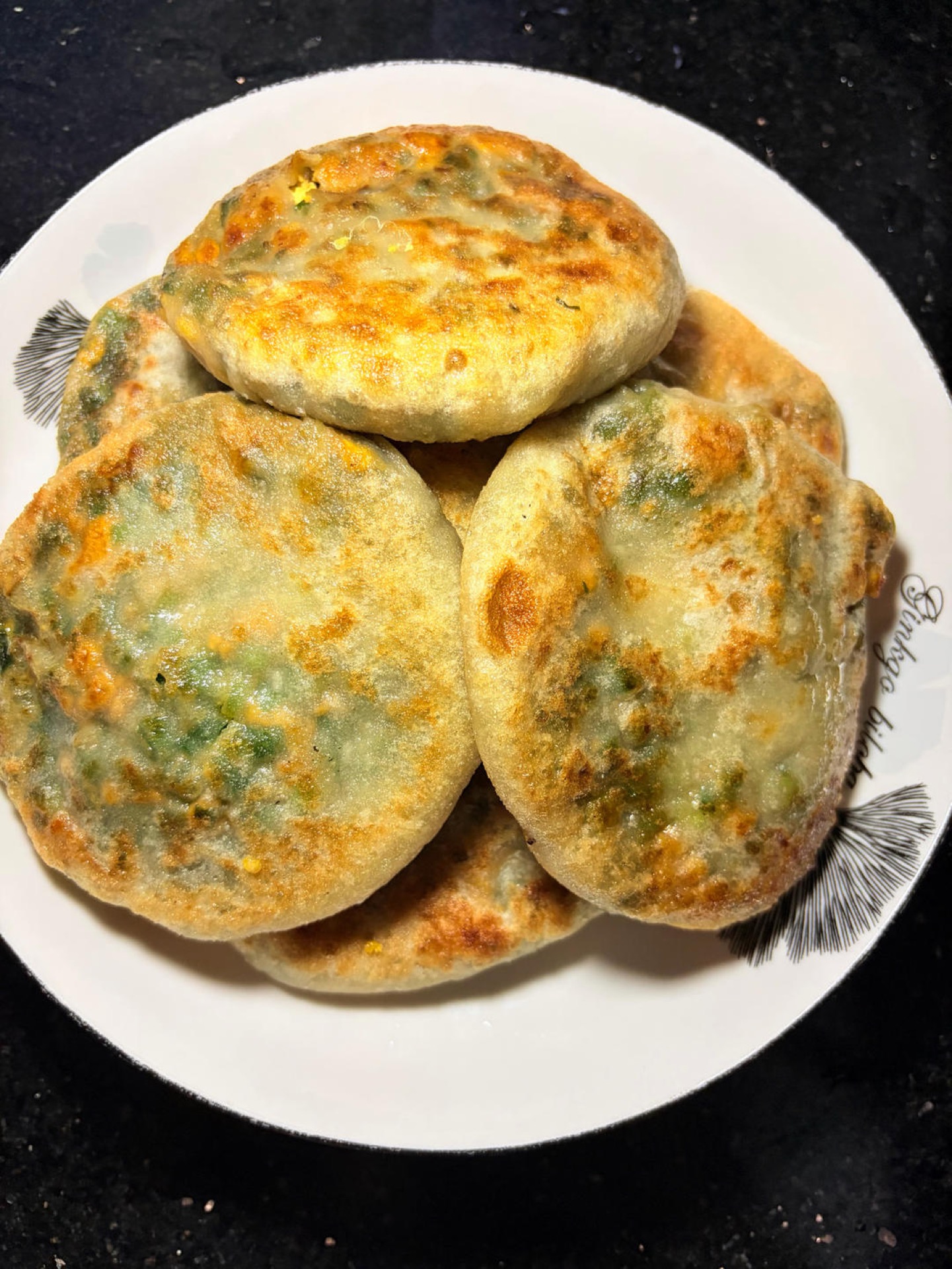
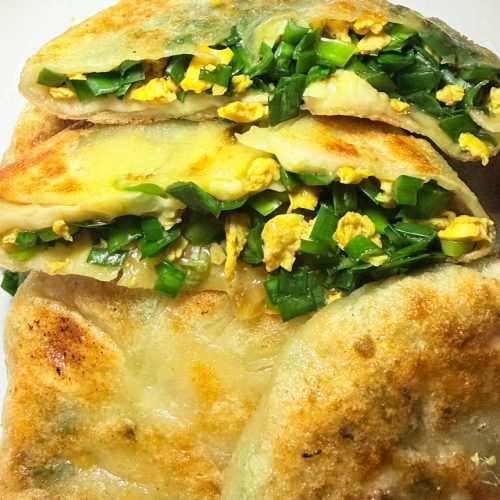
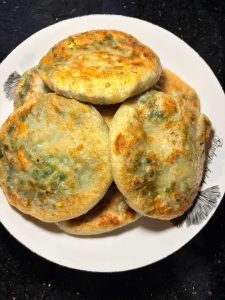
The skin is thin, soft and translucent, wrapping a generous amount of tender green chives with a full egg aroma.
Common Mistakes When Making Chive and Egg Pancake
1. Using water that is not actually boiling. Lukewarm water will not gelatinize the starch, and you end up with a dough that springs back and a skin that turns tough. Fix: boil the kettle, measure 50 g immediately, and pour it in while it is still steaming.
2. Skipping or shortening the rest. Dough rested for 15 minutes will tear when you stretch it. Fix: give it the full hour under oil. If you are short on time, 40 minutes is the absolute floor, and the wrappers will be noticeably less cooperative.
3. Chives that are still wet. Any water clinging to the leaves ends up in the filling, and the pancakes leak and go soggy. Fix: wash the chives well ahead, shake them out, and spread them on a clean towel until bone-dry before chopping.
4. Salting the filling too early. Salt draws water out of the chives within minutes. Fix: mix the filling only when the dough is rested and you are ready to wrap. If you must hold it, keep the egg and the dressed chives separate and combine at the last moment.
5. Rolling or pressing with force. A thin wrapper full of filling will split if you lean on it. Fix: press gently with your palm from the center outward, and stop as soon as the pancake is an even thickness. A few thicker spots are better than a tear.
6. Flipping too early. If you flip before the bottom has set and browned, the skin sticks and rips. Fix: leave the first side alone until it releases easily and is golden, then flip. Medium-low heat, patience, and repeated flipping at the end is the rhythm.
Variations
With dried shrimp. A tablespoon of finely chopped dried shrimp soaked in warm water and stirred into the filling adds a deep savory note that pairs beautifully with the chives.
With glass noodles. Soak 30 g of mung bean vermicelli, chop it short, and mix it into the filling. It absorbs any stray moisture and makes the filling stretch further.
With five-spice. A small pinch of five-spice powder in the egg mixture gives a warmer, more aromatic filling. Go light — it can easily overpower the chives.
With a dipping sauce. A simple dip of light soy sauce, a few drops of chinese black vinegar, and a little minced garlic cuts through the richness. For a sweeter, thicker dip, loosen a spoonful of hoisin with water.
With a curry note. A quarter teaspoon of curry powder whisked into the egg before scrambling gives the filling a gentle warmth that works surprisingly well with chives.
Frequently Asked Questions
Can I use a rolling pin instead of my hands? Yes, but go gently. Roll from the center outward with light pressure and stop before the wrapper gets too thin at the edges. The dough is soft enough that your palm alone can do the job, and hands are less likely to tear it.
Can I make the dough ahead of time? Yes. Rest it, then refrigerate the oiled pieces in an airtight container for up to 24 hours. Bring them back to room temperature for 30 minutes before stretching, or they will resist.
Why does my filling get watery? Almost always because the chives were not fully dry, or because the filling was salted and left to sit. Dry the chives thoroughly and mix the filling at the last minute.
Can I use regular scallions or other greens? Yes. Scallions, Chinese chives (jiucai), or a mix of chives and shredded cabbage all work. Cabbage should be salted, squeezed dry, and then dressed with oil.
Can I freeze the finished pancakes? Yes. Cool them completely, stack with parchment between each one, and freeze for up to 2 months. Reheat straight from frozen in a dry pan over medium-low heat until hot through.
How to Serve
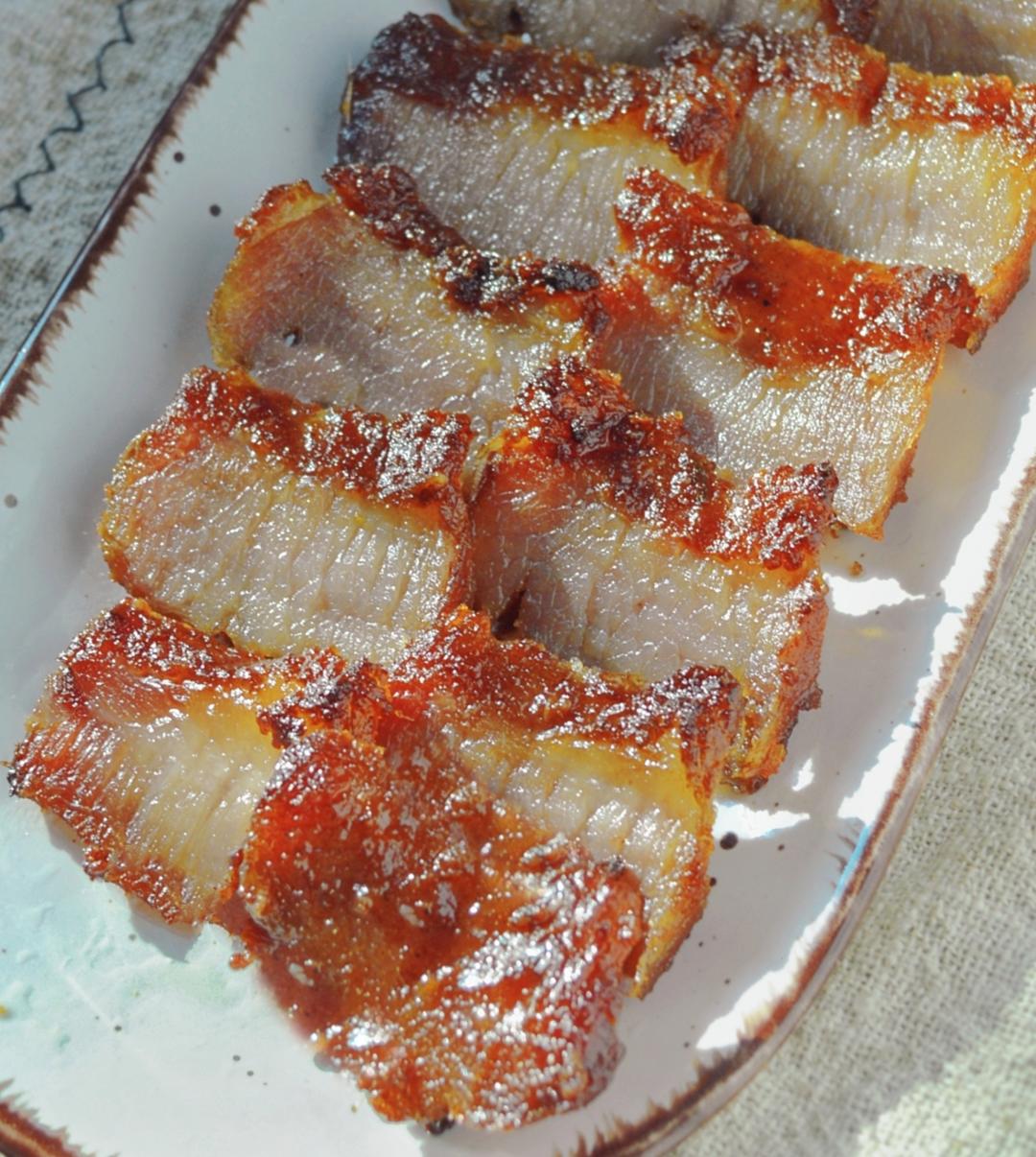
These pancakes are at their best hot from the pan, but they are genuinely good at room temperature too, which makes them a natural breakfast or lunchbox item. Serve them with a small bowl of dipping sauce — light soy, black vinegar, a little garlic — and something cold and crisp alongside. A plate of stir-fried luffa is a lovely light partner, and if you want to turn the meal into something heartier, a bowl of rice and a few slices of char siu round it out nicely. For a cold-weather spread, serve them next to a bowl of soup and a plate of tender sweet and sour chicken, and let everyone help themselves.

Storage & Reheat
Let the pancakes cool completely, then store them in an airtight container in the refrigerator for up to 3 days. Stack them with a sheet of parchment between each one so they do not stick.
To reheat, the pan is better than the microwave. Warm them in a dry frying pan over medium-low heat for about 2 minutes per side, until the skin is soft again and the filling is steaming hot. If you are in a hurry, 20 to 30 seconds in the microwave works, but the skin will be a little more limp. For longer storage, freeze cooled pancakes with parchment between them for up to 2 months and reheat from frozen in a dry pan.
Allergen Notice
This recipe contains wheat (gluten) and eggs. Light soy sauce and oyster sauce commonly contain soy and wheat; check the labels if you are avoiding either, and use tamari and a vegetarian oyster sauce if needed. If you are cooking for someone with a severe allergy, verify every bottled sauce individually, since formulations vary by brand.
Nutrition Disclaimer
Nutrition information is calculated using an ingredient database and should be considered an estimate. In cases where multiple ingredient alternatives are given, the first listed is calculated for nutrition. Garnishes and optional ingredients are not included.
About the Author & Recipe Development
Lin is the cook and writer behind Woks of Love, where she has been documenting Chinese home cooking for years — the weeknight stir-fries, the dumpling fillings, the flatbreads that get made on a Sunday morning without a recipe card in sight. This chive and egg pancake comes from the northern home kitchen tradition: a hot-water dough, a filling of whatever greens are in season, and a pan that never stops moving. The version here was tested until the skin could be stretched thin enough to see the chives through it while still holding together on the flip, and until the pancakes stayed soft after cooling — the test that separates a good jiucai bing from a merely acceptable one.
Authoritative References
For safe handling and cooking temperatures, see the FDA Food Code and the USDA’s guidance on safe minimum internal temperatures, which set the 165°F (74°C) target for egg dishes. For background on how scalding water changes wheat starch and gluten in flatbread doughs, Harold McGee’s On Food and Cooking remains the standard reference.
Chive and Egg Pancake (韭菜鸡蛋饼): Thin Skin, Generous Filling, Stays

Equipment
- Wok
- Cutting Board
- Slotted Spoon
- Rolling Pin
- Non-stick Pan
Ingredients
For the Dough
- 150 g all-purpose flour about 1 cup plus 1 tbsp
- 2 g salt about 1/3 tsp
- 50 g boiling water about 3 1/2 tbsp, freshly boiled
- 50 g cold water about 3 1/2 tbsp
- 1 tbsp neutral oil for brushing the dough
For the Filling
- 200 g garlic chives about 7 oz, washed, dried and finely chopped
- 4 large eggs beaten
- 2 tbsp light soy sauce or tamari
- 1 tbsp oyster sauce or vegetarian oyster sauce
- 2 tbsp neutral oil for frying the eggs and the pancakes
Instructions
- Put the flour and salt in a large bowl and stir to combine, pour in the freshly boiled water and stir quickly with chopsticks until it turns into shaggy flakes, then add the cold water and keep stirring until no dry flour remains. Let it cool until it is no longer hot to the touch, then knead with your hands into a smooth dough.

- Roll the dough into a long log and cut it into 6 equal pieces, then brush a thin layer of oil over the surface of each piece.
- Cover the bowl with plastic wrap and let the dough rest for 1 hour; resting it under oil gives it excellent extensibility.
- Wash the garlic chives clean, spread them out to dry completely, then chop them finely and toss with two tablespoons of cooking oil to lock in the moisture.
- Heat a frying pan over medium heat with oil, pour in the beaten egg and scramble it into small curds, then let it cool completely before mixing it with the chives. Here is a trick for very tender scrambled eggs: heat the oil in the pan until it starts to smoke, immediately turn off the heat, pour in the egg and keep stirring with chopsticks until it breaks into soft curds.
- Add the scrambled egg to the chives, pour in two tablespoons of light soy sauce and one tablespoon of oyster sauce and stir well, then set aside.
- Take one piece of dough onto a mat, put on gloves, and press it flat with your palm, then stretch it into a very thin wrapper; you do not even need a rolling pin because the dough is so extensible.
- Place a generous amount of the chive and egg filling in the center and pinch the dough closed tightly.
- Place the sealed side down and gently press it into a thin pancake; do not roll it with force or the skin will tear and the filling will leak out.
- Preheat a frying pan with oil, add the pancake and cook over medium-low heat, flipping back and forth; fry one side until golden and set before flipping to the other side, and remove once the surface is lightly browned.
- The skin is thin, soft and translucent, wrapping a generous amount of tender green chives with a full egg aroma.












Leave a Reply