Braised noodles with green beans is one of those dishes that looks humble and eats like a celebration. A handful of pork belly, a bundle of green beans and a pile of fresh noodles go into one wok, and twenty minutes later you have glossy, savory strands that have drunk up every bit of the braising liquid. This is the kind of dinner I make on a weeknight when I want something deeply comforting but do not want to stand at the stove for an hour.
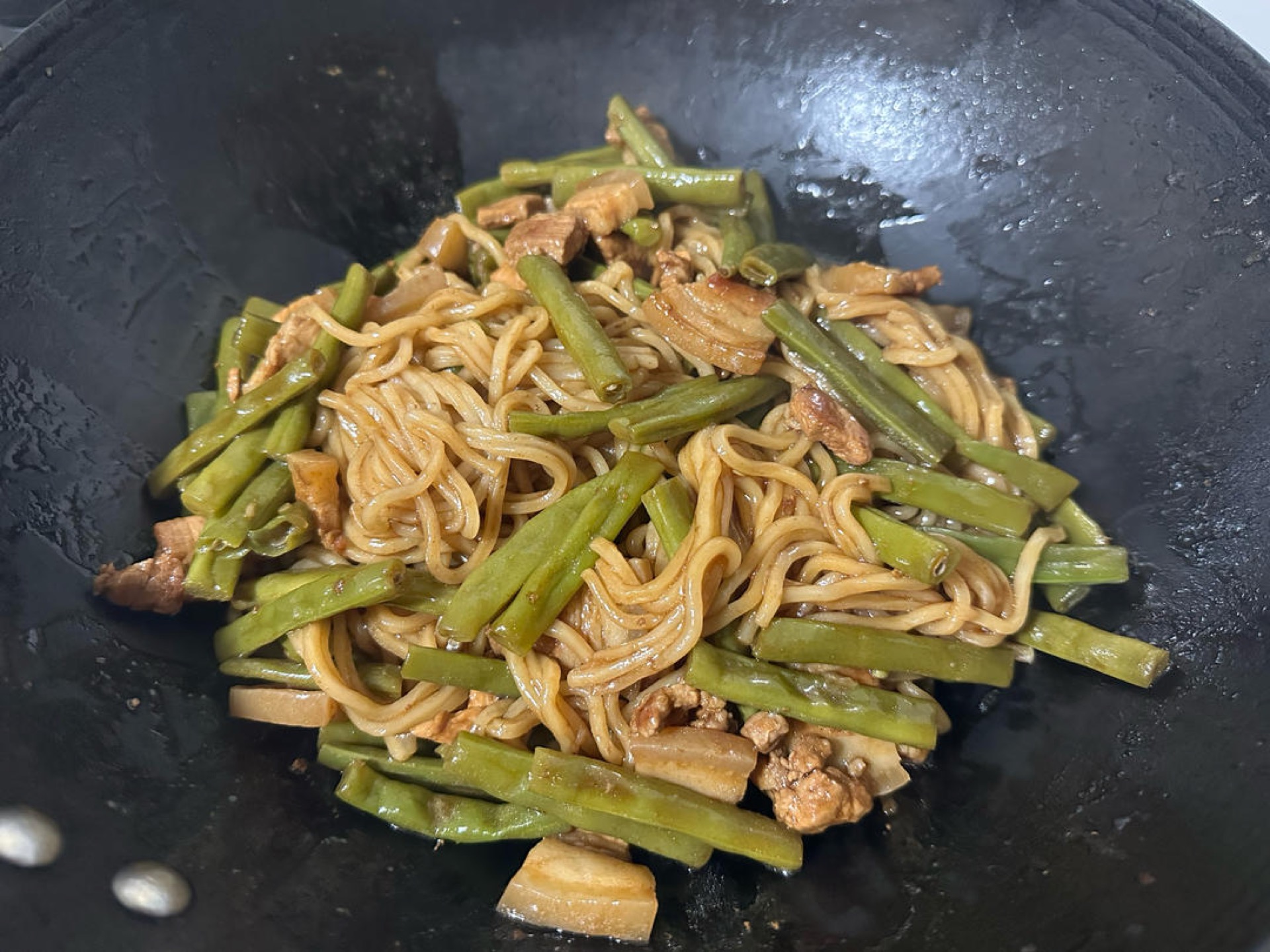
The technique is called men — braise and steam — and it is the reason the noodles taste like they were cooked in the sauce rather than dressed with it. You build a shallow braise of pork and beans, lay fresh noodles on top, and let the steam do the rest. The noodles stay loose and separate instead of clumping, and the beans keep a little snap.
If you have ever ordered this in a northern Chinese restaurant and wondered why your home version came out gluey, the answer is almost always in two small moves: keeping the noodles off the wok walls and adding the reserved broth back at exactly the right moment. Both are easy once you see them done.
What Is Braised Noodles with Green Beans?
Doujiao menmian (豆角焖面) is a northern Chinese one-pan noodle dish from Henan and Shanxi, where fresh wheat noodles are steamed directly over a braise of pork and green beans. Unlike a stir-fried noodle dish where everything is tossed together at the end, menmian cooks the noodles in the rising steam of the braise, so they absorb the savory liquid from below while staying intact. The result is somewhere between a noodle dish and a stew — tender beans, crisp-edged pork, and noodles that are silky rather than saucy.
If you like the idea of noodles cooked in their own sauce, this dish is the northern Chinese answer to a one-pot pasta — same instinct, completely different flavor.
The name is worth remembering, because once you know the technique you can apply it to eggplant, potatoes or cabbage with equal success. It is less a recipe than a method: braise something savory, lay noodles on top, steam, then fold everything together at the end.
For a version with a slightly different rhythm, Henan steamed noodles uses the same family of ingredients and a lighter hand with the sauce.
1Henan Steamed Noodles with Pork & Green Beans (河南蒸面条)A classic Northern Chinese dish where fresh noodles are steamed twice, first to cook, and a second time to infuse them with a rich, savory pork belly and green bean sauce.Check out this recipe
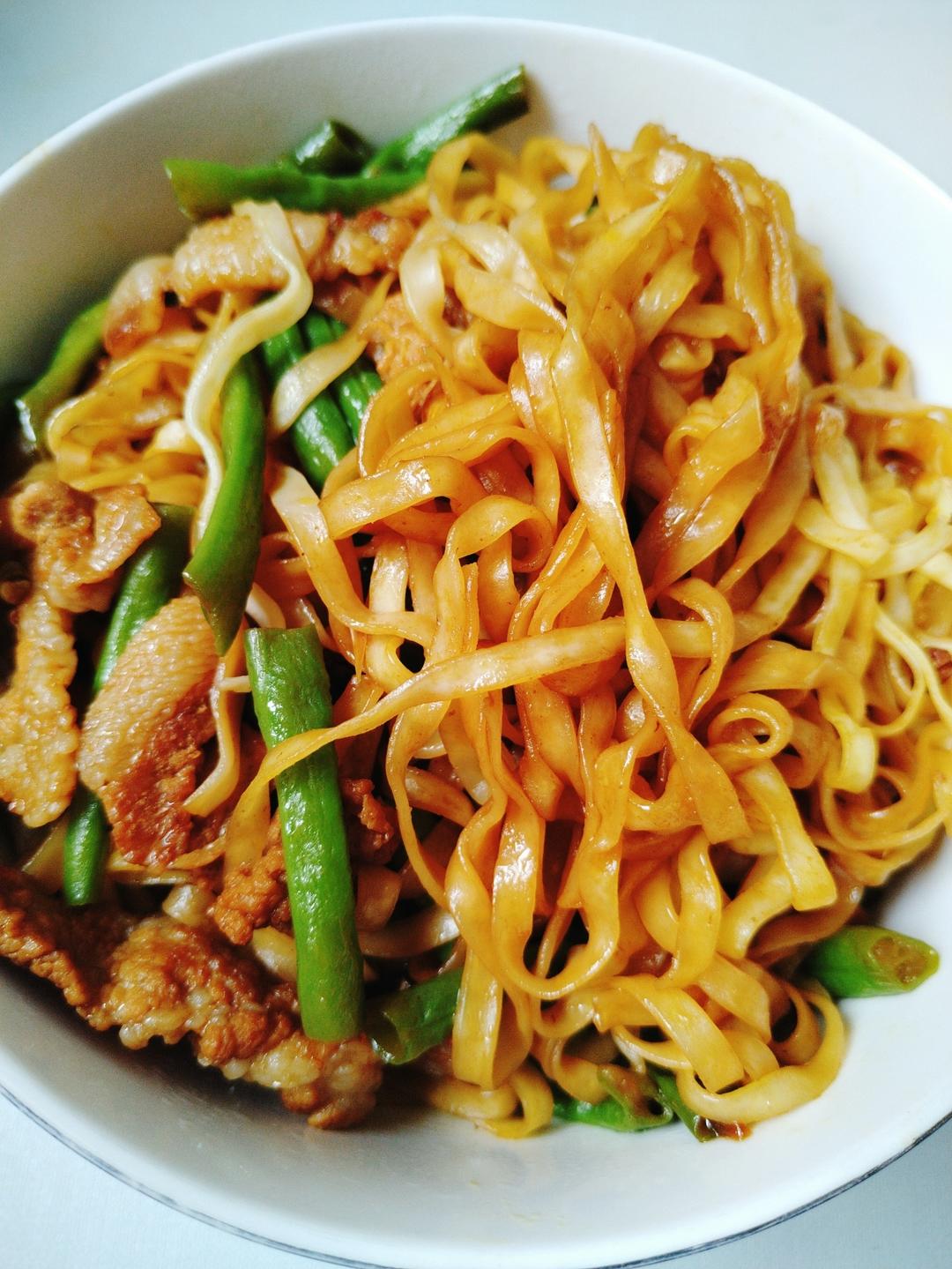
If you want a richer, saucier bowl, scallion braised pork chop noodles takes the braised-noodle idea in a pork-chop direction.
2Scallion Braised Pork Chop Noodles (Cong Shao Da Pai Mian)A classic Shanghainese comfort dish featuring tenderized bone-in pork chops braised in a rich, aromatic scallion sauce. The noodles are cooked directly in the savory juices, ensuring every strand is packed with flavor.Check out this recipe
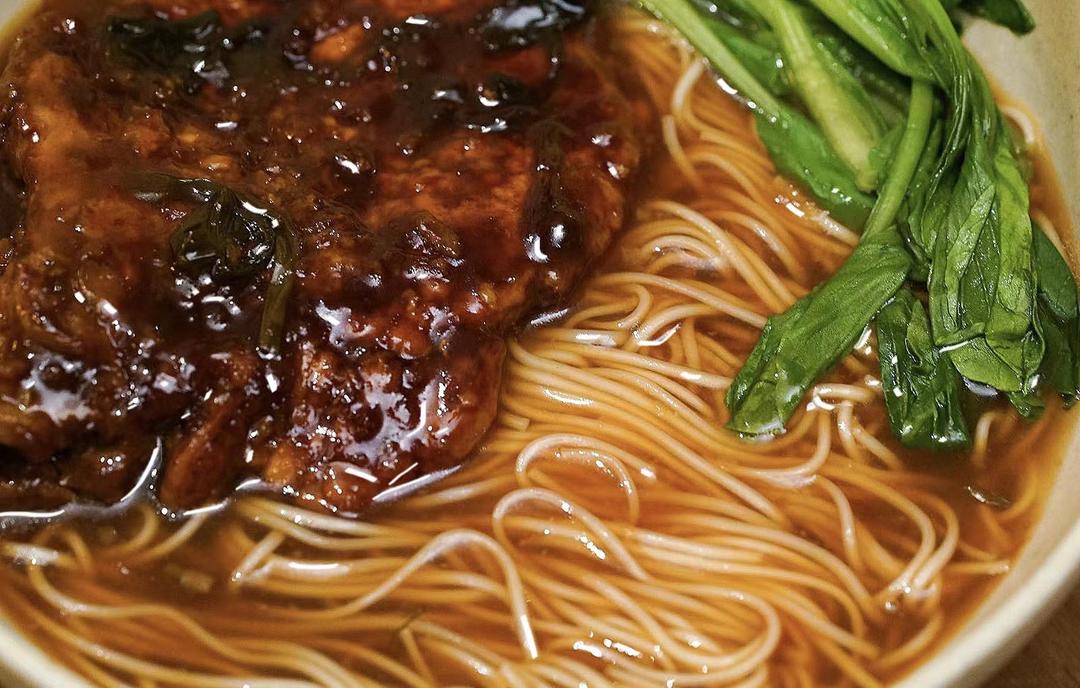
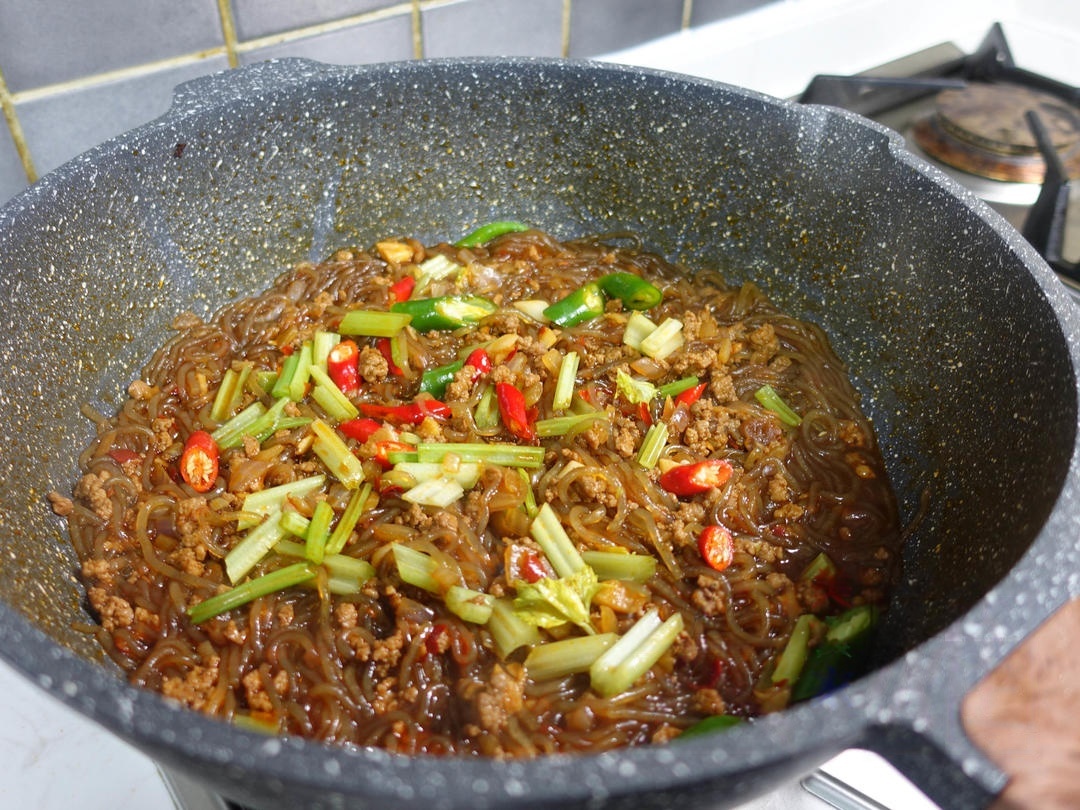
And for a silkier, more delicate take on braised noodles, braised vermicelli with minced pork swaps wheat noodles for glass noodles.
3Braised Vermicelli with Minced PorkA rich, savory Sichuan dish featuring chewy sweet potato noodles braised with minced pork and spicy broad bean paste. A perfect comfort meal ready in 30 minutes.Check out this recipe
Why This Recipe Works
The pork belly goes in first, alone, so its fat renders and seasons the wok before anything else arrives. That rendered fat is what carries the soy sauce and coats the beans, and it is also why you need so little added oil.
Reserving half a bowl of the braising liquid before the noodles go in is the single most important step. If you leave all the liquid in the pan, the noodles at the bottom steam into a paste. By pulling some out and pouring it back over the flipped noodles halfway through, you rehydrate the top layer and keep the whole pile evenly cooked.
Steaming rather than boiling is what gives the noodles their texture. They never sit submerged, so they never lose their bite or turn to mush. The hole poked through the center of the noodle pile lets steam rise through the middle instead of only around the edges, which is the difference between evenly cooked noodles and a gummy center.
Finally, the rest at the end matters. Turning off the heat and letting the wok sit covered for five minutes lets the last of the liquid distribute itself through the noodles, so nothing is dry and nothing is soupy.
Equipment Needed
A wok is ideal because its sloping sides let you spread the noodles wide without them touching the hot metal, but a wide deep skillet or a Dutch oven works too — just keep the noodles away from the walls. You will also want a cutting board and a sharp knife for the pork and beans, a slotted spoon or spider for pulling out the reserved broth, and a lid that fits your pan snugly. A pair of chopsticks or tongs makes flipping the noodle layer much easier than a spatula.
If your pan does not have a lid, a sheet of foil crimped over the top will hold steam well enough for this dish.
Ingredients
Everything here is supermarket-friendly. The only ingredient worth a small detour is the noodles — see the notes below.
- Pork belly (250 g / about 9 oz) — thinly sliced, skin removed or left on if you like the chew.
- Green beans (300 g / about 10 oz) — fresh, trimmed and cut into 2-inch lengths. Flat Romano beans work beautifully too.
- Fresh wheat noodles (300 g / about 10 oz) — thin, fresh, ideally alkaline.
- Light soy sauce (1 tbsp) — for salt and savoriness.
- Dark soy sauce (2 tbsp) — for color and a deeper, slightly caramel note.
- Shaoxing wine (1 tbsp) — for aroma; dry sherry is a fine substitute.
- Salt (1 tsp, plus more to taste).
- Water (2 cups, plus more if needed).
- Cooking oil (1 tbsp) — just enough to get the pork started.
Ingredient Notes
The noodles are the whole dish. Use fresh thin wheat noodles — the kind sold in the refrigerated section of an Asian market, sometimes labeled hand-pulled or alkaline noodles. Dried noodles can work, but they need a longer steam and tend to break; if that is all you have, parboil them for a minute and drain well before laying them on the braise.
Pork belly over lean pork. Belly gives you the rendered fat that flavors the beans and the chew that makes each bite interesting. If you substitute lean pork loin, add another tablespoon of oil and expect a leaner, less silky result.
Dark soy sauce is not optional here. It is what gives menmian its signature mahogany color. Light soy alone will taste fine but look pale and washed out, which somehow makes the whole dish feel less satisfying.
Green beans should be fresh and dry. Wet beans spit in hot fat and steam instead of searing. Pat them dry after washing. Frozen beans release too much water and will thin out your braise.
If you want to see how pork belly behaves in a similar braise without noodles, braised green beans with pork belly is a good companion read.
Prep & Mise en Place
This dish moves quickly once the wok is hot, so get everything ready before you turn on the heat. Slice the pork belly thinly — about ⅛ inch — and keep the slices roughly even so they render at the same rate. Trim the green beans and cut them into 2-inch lengths, discarding any strings. Loosen the fresh noodles with your hands so they are separate strands rather than a compressed block; this is the step people skip and then wonder why their noodles clumped.
Measure your soy sauces, wine and salt into small bowls so you can add them in one motion. Have your 2 cups of water ready, plus a slotted spoon and a bowl for the reserved broth. Set the lid within reach. Total prep is about 15 minutes, and the cooking itself takes roughly 20.
One more thing worth doing: taste your soy sauces before you start. Brands vary a lot in saltiness, and if yours is on the salty side you may want to hold back a little of the teaspoon of salt and adjust at the end.
Cooking Process
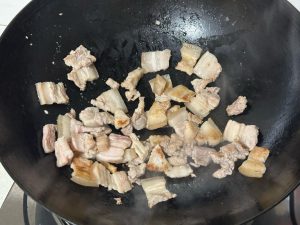
Step 1 — Render the Pork Belly
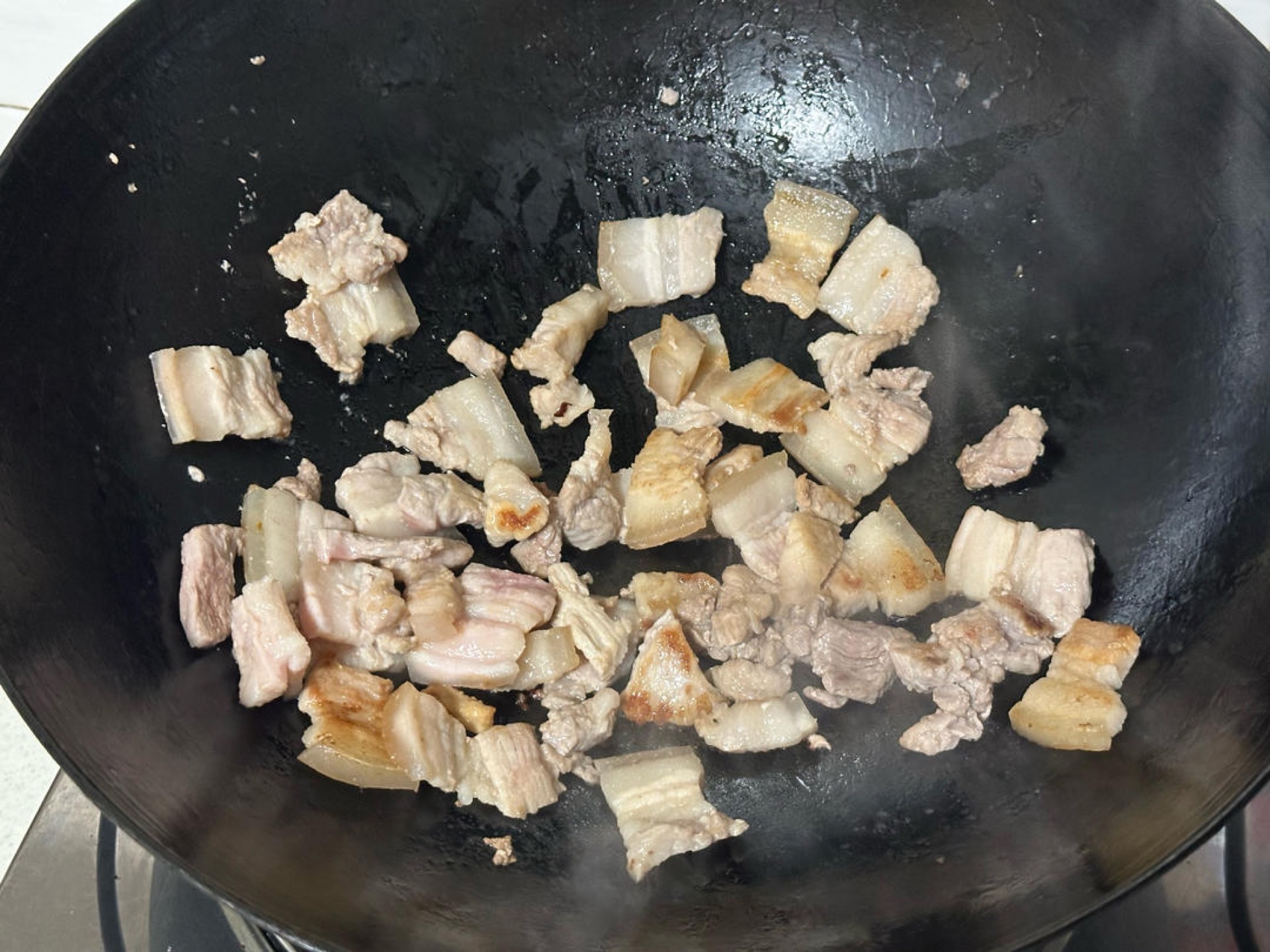
Heat a splash of oil in a wok over medium heat, add the sliced pork belly, and fry until the fat renders out and the edges are lightly browned and dry.
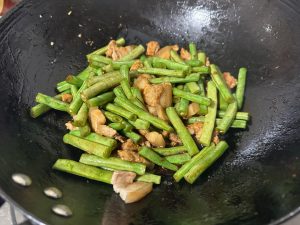
Step 2 — Fry the Beans and Season
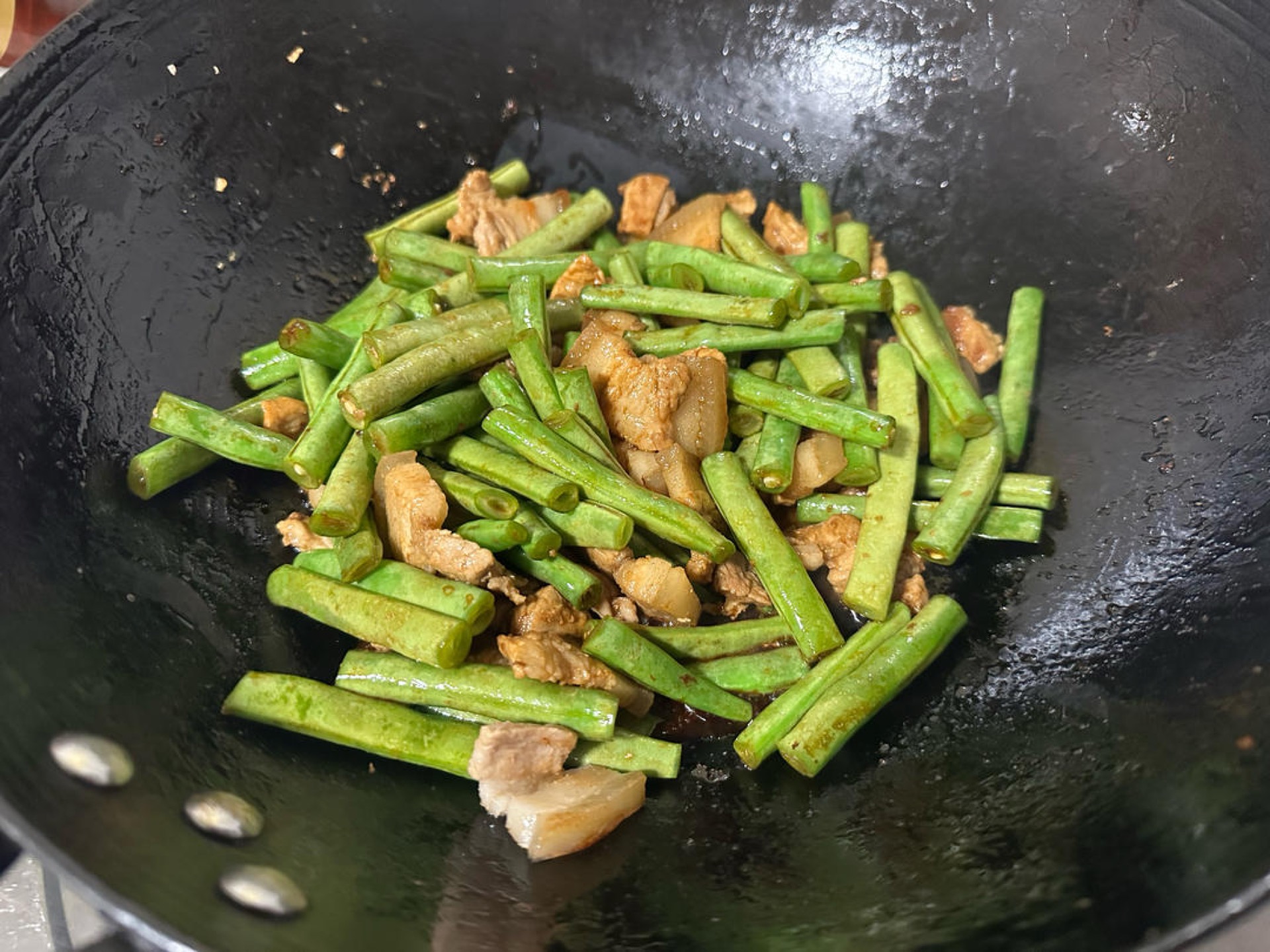
Add the green beans and stir-fry for 2 to 3 minutes, then season with Shaoxing wine, light soy sauce, dark soy sauce and salt, using a little extra dark soy sauce for color.
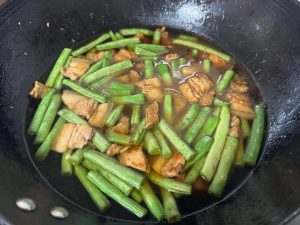
Step 3 — Add Water and Reserve Broth
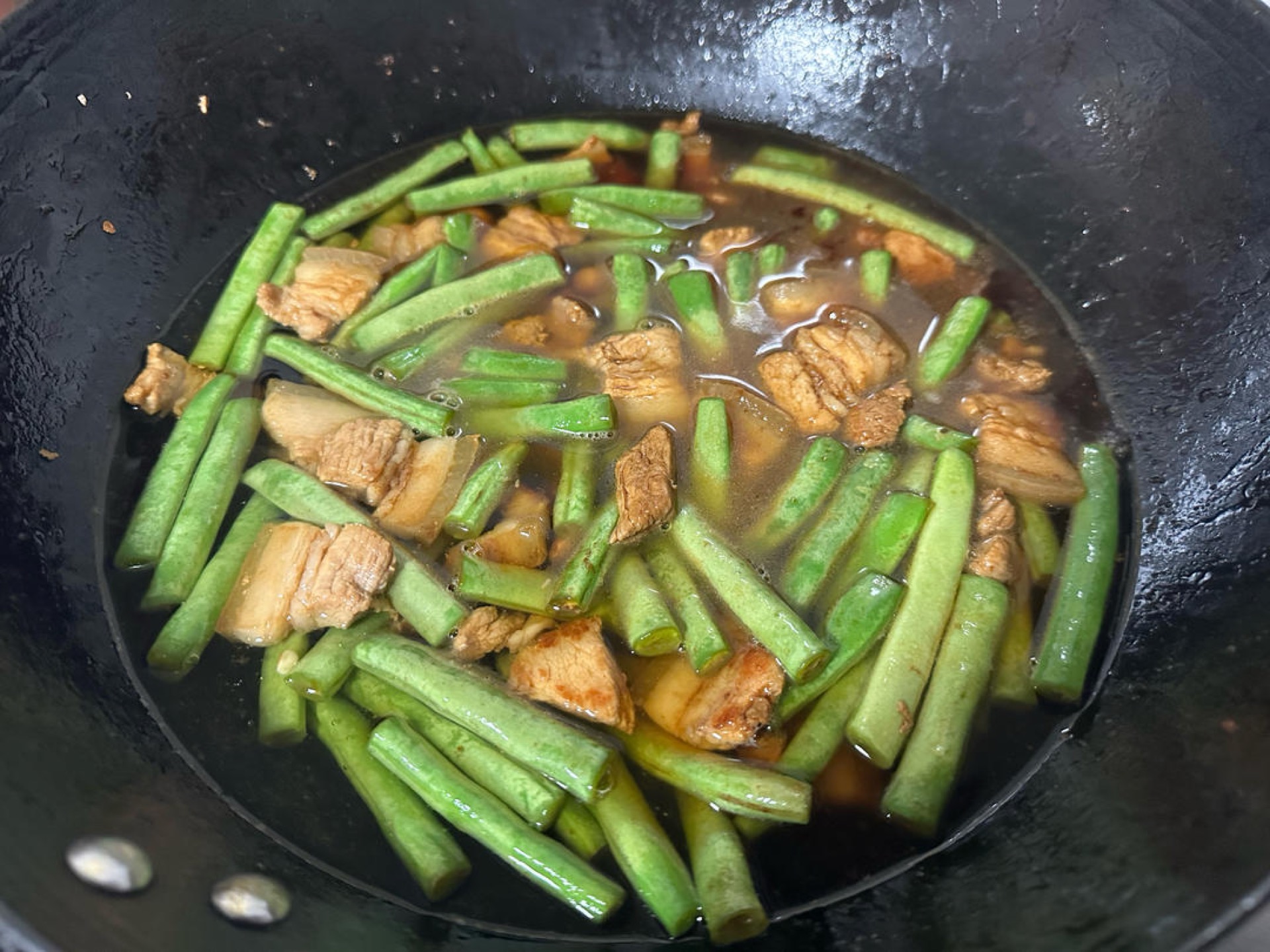
Pour in enough water to just cover the ingredients, bring it to a boil, then ladle out about half a bowl of the broth and set it aside for later.
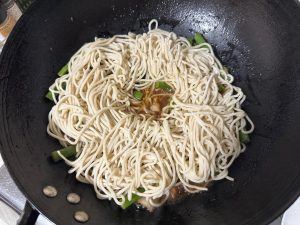
Step 4 — Steam the Noodles
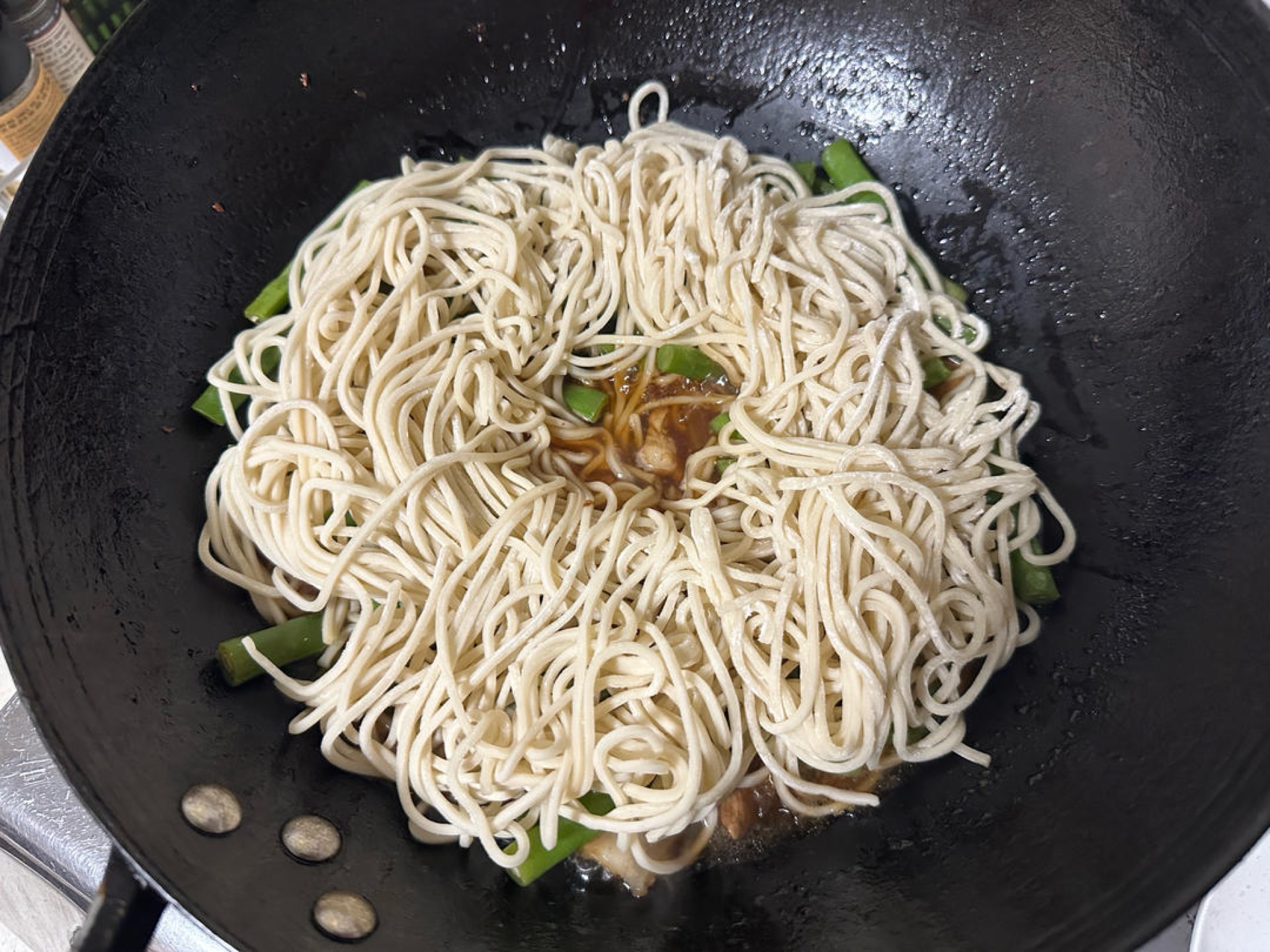
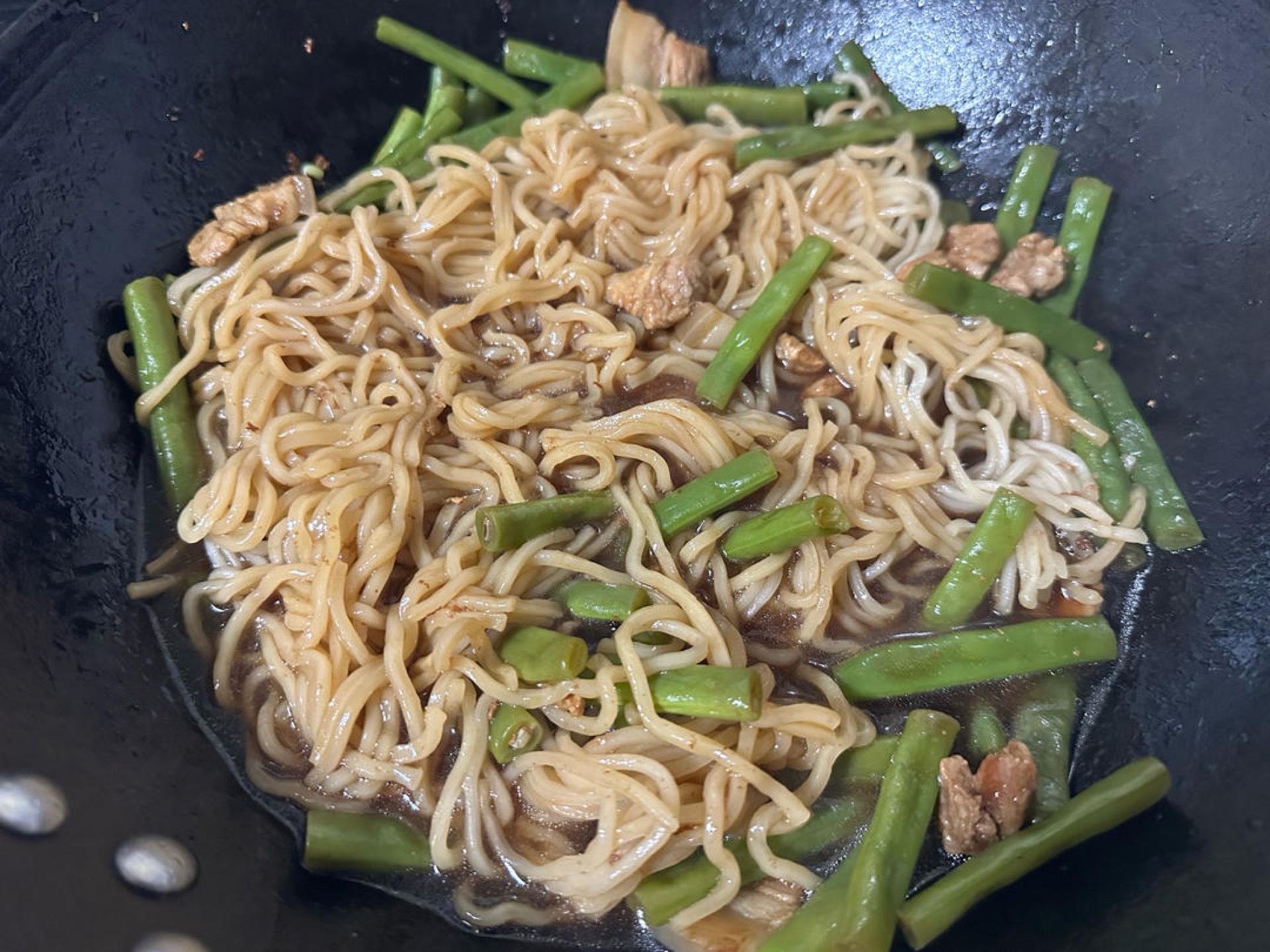
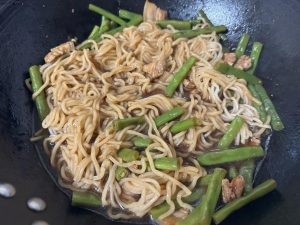
Loosen the noodles and spread them over the top, keeping them away from the sides of the wok, poke a hole through the center for steam to escape, cover, and steam over medium heat for about 5 minutes.
Step 5 — Flip, Add Broth and Finish
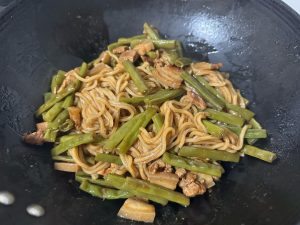
Lift the lid, flip the noodles over, pour the reserved half bowl of broth back in so the top noodles soak it up, and steam for another 5 minutes, checking often so nothing burns; when only a little liquid remains, turn off the heat and let it sit covered for about 5 minutes.
Step 6 — Serve
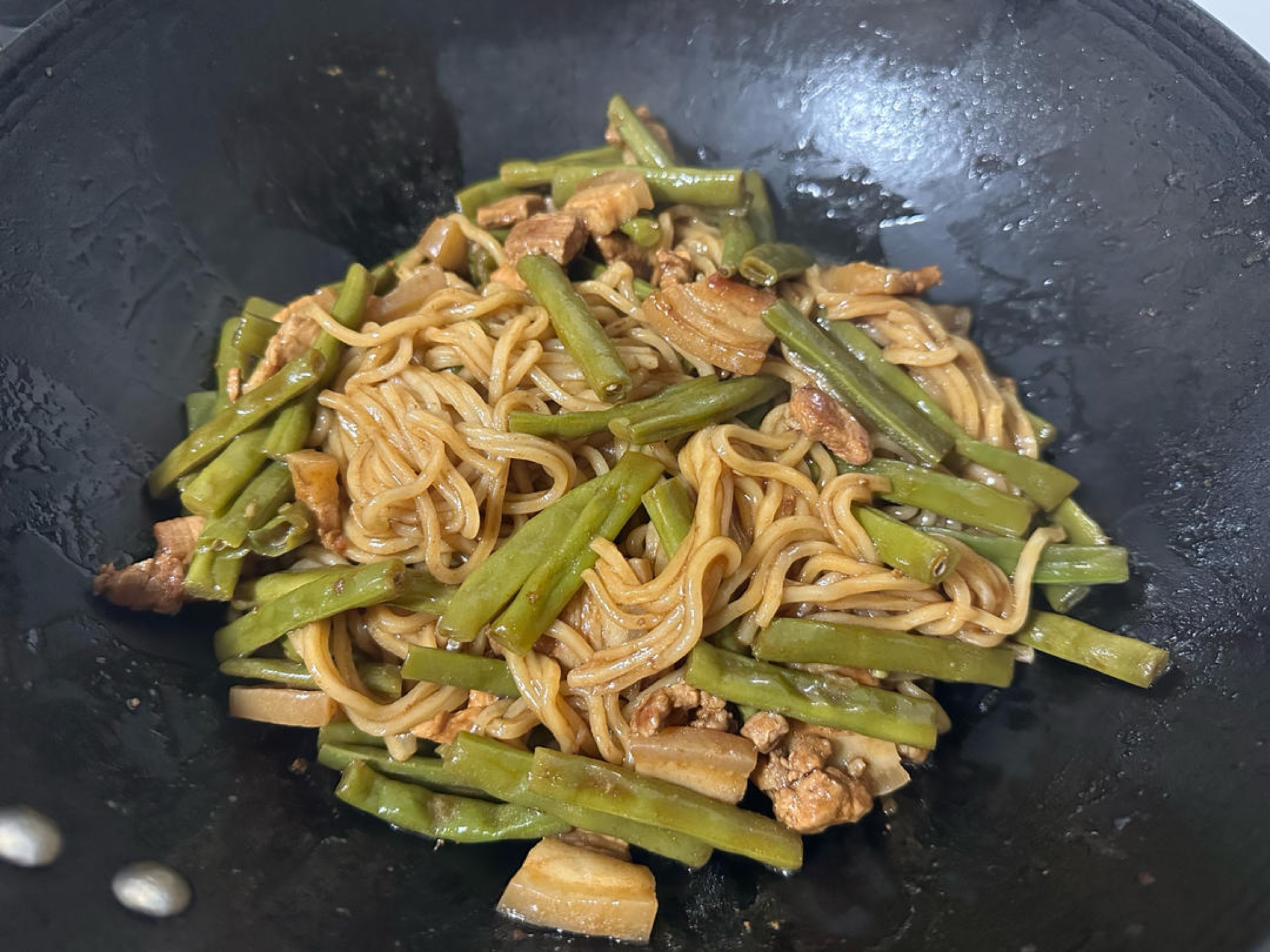
Uncover, toss the noodles with the beans and pork, and serve hot straight from the wok.
Common Mistakes When Making Braised Noodles with Green Beans
1. Letting the noodles touch the sides of the wok. The metal walls run hotter than the braise, so any strand pressed against them scorches and sticks. Fix: spread the noodles in a mound in the center and leave a clear ring of liquid around the edge.
2. Skipping the reserved broth. If all the liquid stays in the pan, the bottom noodles overcook while the top ones stay dry and chalky. Fix: ladle out half a bowl before the noodles go in and pour it back after you flip them.
3. Using too much water to start. The braise should just barely cover the pork and beans, not drown them. Fix: add water a little at a time until the ingredients are just submerged, and remember you will be adding some back later.
4. Not loosening the noodles. A compressed block of fresh noodles steams into a solid cake in the middle. Fix: rub the strands apart with your fingers before they go anywhere near the wok.
5. Walking away during the second steam. The liquid reduces fast in the final five minutes and the bottom can catch. Fix: stay at the stove, lift the lid once or twice, and pull the pan off the heat the moment only a little liquid remains.
6. Forgetting the rest. Serving immediately leaves the noodles unevenly hydrated. Fix: turn off the heat, cover, and wait five minutes — the residual steam finishes the job for you.
Variations
With eggplant. Swap half the green beans for slender eggplant cut into batons. Eggplant drinks up the sauce and turns custardy; add it at the same time as the beans. For a stir-fried take on that pairing, see stir fried eggplant and green beans.
With potato. Add a small potato cut into thick matchsticks along with the beans. It thickens the braise slightly and makes the dish heartier.
Spicier. Add a spoonful of doubanjiang or a few dried chilies with the pork. The fermented bean paste adds depth as well as heat.
Vegetarian. Skip the pork, use shiitake mushrooms for savoriness, and add an extra tablespoon of oil. The technique is unchanged.
Different pork. If you want a punchier, more intensely flavored pork layer, twice-cooked pork belly is worth reading for how the fat behaves under high heat.
Frequently Asked Questions
Can I use dried noodles instead of fresh? Yes, but parboil them for about a minute, drain thoroughly, and toss with a few drops of oil so they do not stick. Expect a slightly softer result than fresh noodles give.
Why did my noodles turn mushy? Almost always too much liquid left in the pan, or noodles touching the hot sides of the wok. Reserve the half bowl of broth, keep the noodles in the center, and stop cooking as soon as only a little liquid remains.
Can I make this ahead? It is best fresh, but it reheats well. Store it in the refrigerator for up to three days and reheat in a covered pan with a splash of water to loosen the noodles.
How do I know when it is done? The noodles should be tender but still hold their shape, the beans should be soft with a little resistance, and there should be just a thin film of glossy sauce at the bottom of the wok rather than a pool.
Can I double the recipe? Yes, but use a wider pan rather than a deeper one, and expect the second steam to take a couple of minutes longer.
How to Serve
Serve it straight from the wok in deep bowls, with a drizzle of the pan sauce over the top and a scattering of sliced scallions if you have them. A crisp cucumber salad or a quick pickled vegetable cuts through the richness beautifully. If you want to round out the table with another pork dish, pan fried pork belly is a natural companion, and poached pork belly with garlic sauce makes a cooling contrast on a hot day.

Storage & Reheat
Cool leftovers within two hours and refrigerate in an airtight container for up to three days. The noodles will absorb more sauce as they sit, so reheat them in a covered pan over low heat with a tablespoon or two of water, tossing gently until hot. A microwave works in a pinch — cover the bowl and heat in 30-second bursts. Reheat to 165°F (74°C), and do not refreeze once reheated. This dish does not freeze well; the noodles break down and the beans go soft.
Allergen Notice
This recipe contains wheat (noodles) and soy (soy sauce). If you are avoiding gluten, use gluten-free noodles and tamari in place of both soy sauces. Shaoxing wine is generally gluten-free, but check the label if you are highly sensitive. If you are cooking for someone with a soy allergy, coconut aminos can substitute for both soy sauces, though the color will be lighter.
Nutrition Disclaimer
Nutrition information is calculated using an ingredient database and should be considered an estimate. In cases where multiple ingredient alternatives are given, the first listed is calculated for nutrition. Garnishes and optional ingredients are not included.
About the Author & Recipe Development
Lin is the cook and writer behind Woks of Love, where she has been documenting Chinese home cooking for years — the braises, the stir-fries, the dumplings, and the small techniques that make them work. This recipe was developed from the home-style doujiao menmian she grew up eating in a northern Chinese kitchen, then tested repeatedly to pin down the two variables that matter most: how much liquid to reserve and how long to steam each layer of noodles. The version here is written for a home wok and a weeknight schedule, but the method is the same one used in Henan and Shanxi for generations.
Every recipe on the site is tested in a home kitchen with ingredients available at ordinary supermarkets and Asian grocers. If you make this one, the comment section is the best place to tell her how it went.
Authoritative References
For safe handling and cooking temperatures for pork, see the USDA safe minimum internal temperature chart. For guidance on cooling and storing cooked leftovers, see the FDA refrigerator and food safety guidance. For background on how wheat noodles behave when steamed, the Serious Eats food science archives are a useful starting point.
Braised Noodles with Green Beans (豆角焖面): Savory Noodles Steamed

Equipment
- Wok
- Cutting Board
- Slotted Spoon
Ingredients
For the Braise
- 250 g pork belly thinly sliced
- 300 g green beans trimmed, cut into 2-inch lengths
- 1 tbsp light soy sauce
- 2 tbsp dark soy sauce
- 1 tbsp Shaoxing wine
- 1 tsp salt plus more to taste
- 2 cups water plus more if needed
- 1 tbsp cooking oil
For the Noodles
- 300 g fresh wheat noodles thin, preferably alkaline or hand-pulled
Instructions
- Heat a splash of oil in a wok over medium heat, add the sliced pork belly, and fry until the fat renders out and the edges are lightly browned and dry.

- Add the green beans and stir-fry for 2 to 3 minutes, then season with Shaoxing wine, light soy sauce, dark soy sauce and salt, using a little extra dark soy sauce for color.
- Pour in enough water to just cover the ingredients, bring it to a boil, then ladle out about half a bowl of the broth and set it aside for later.
- Loosen the noodles and spread them over the top, keeping them away from the sides of the wok, poke a hole through the center for steam to escape, cover, and steam over medium heat for about 5 minutes.
- Lift the lid, flip the noodles over, pour the reserved half bowl of broth back in so the top noodles soak it up, and steam for another 5 minutes, checking often so nothing burns; when only a little liquid remains, turn off the heat and let it sit covered for about 5 minutes.
- Uncover, toss the noodles with the beans and pork, and serve hot straight from the wok.












Leave a Reply