When autumn arrives, the air in my hometown fills with the intoxicating, sweet fragrance of blooming osmanthus trees. During my ten years working in professional kitchens, I learned that while many commercial kitchens layer white sugar with osmanthus flowers, extracting that delicate floral aroma with pure honey yields a vastly superior, deeply complex flavor profile.

This traditional Osmanthus Honey, or Gui Hua Mi, is a foundational ingredient in classic Chinese dessert making. Taking the time to properly clean, dry, and ferment these tiny blossoms at home will reward you with a jar of liquid gold that deepens in flavor over time.
What Is Gui Hua Mi (Osmanthus Honey)?
Gui Hua Mi (桂花蜜) is a traditional Chinese preserve made by curing fresh sweet osmanthus flowers in high-quality honey. The process extracts the essential oils from the petals, creating a fragrant, floral syrup. It is traditionally drizzled over lotus root, mixed into glutinous rice balls (tangyuan), or stirred into warm teas.
Explore Similar Sweet Recipes: While this syrup is a pantry staple, if you love traditional Chinese sweets, you might also enjoy making our Chinese Date Cake or the comforting Pumpkin Chestnut Pound Cake, both of which pair beautifully with the floral notes of osmanthus.
Ingredients
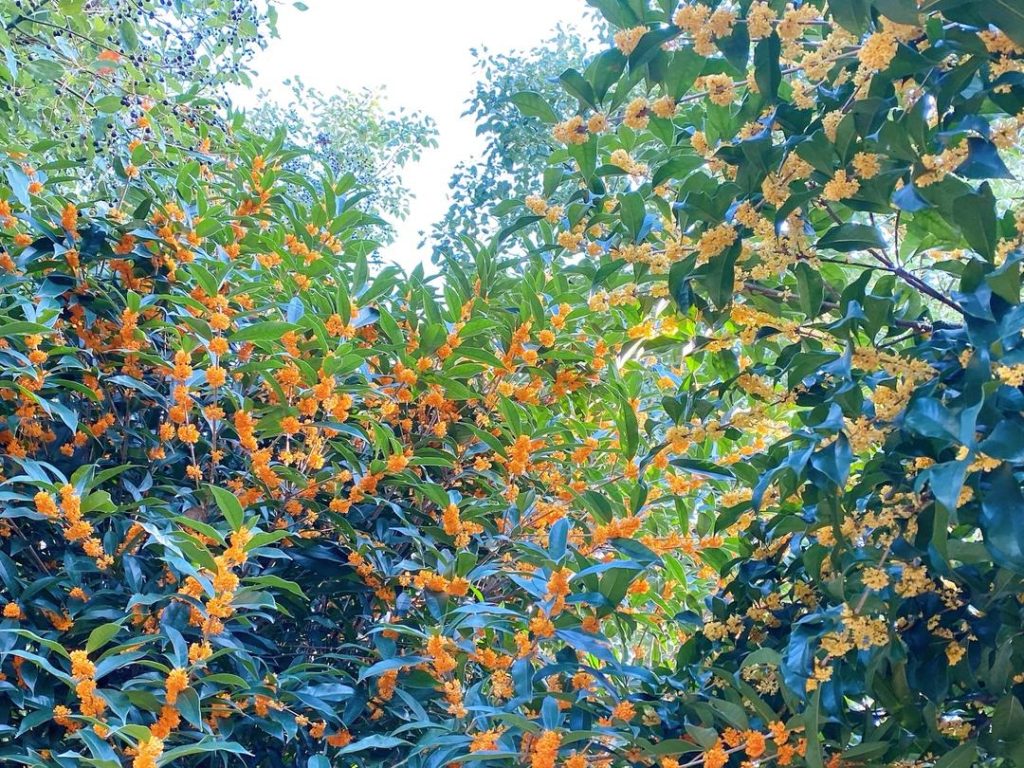
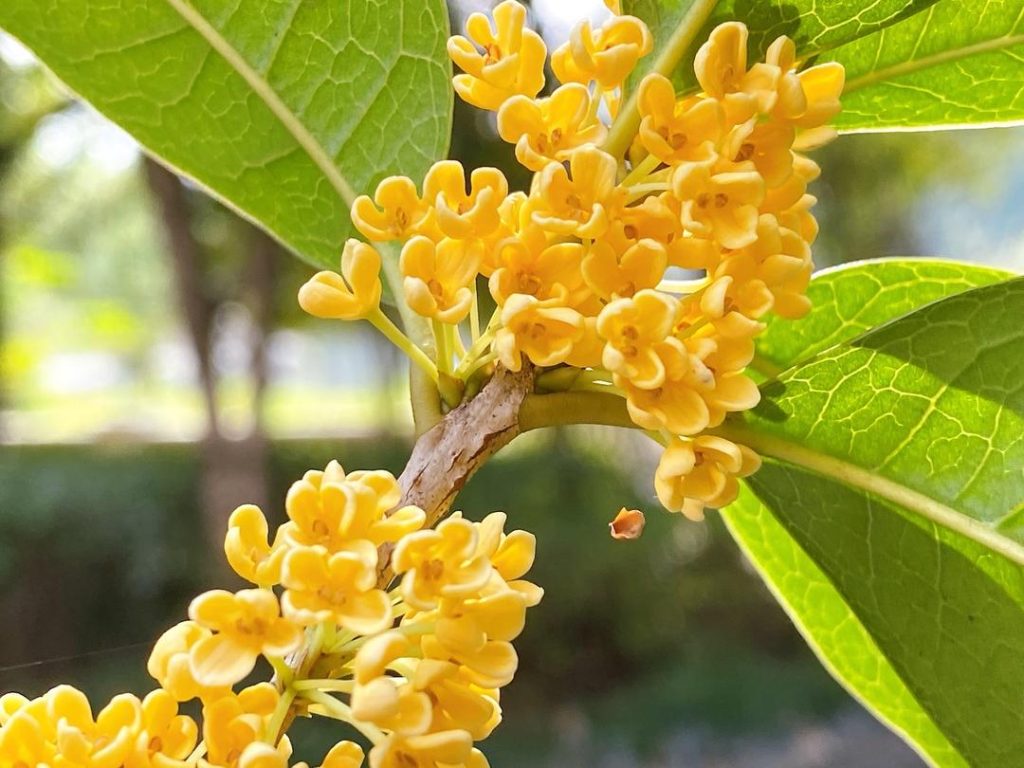
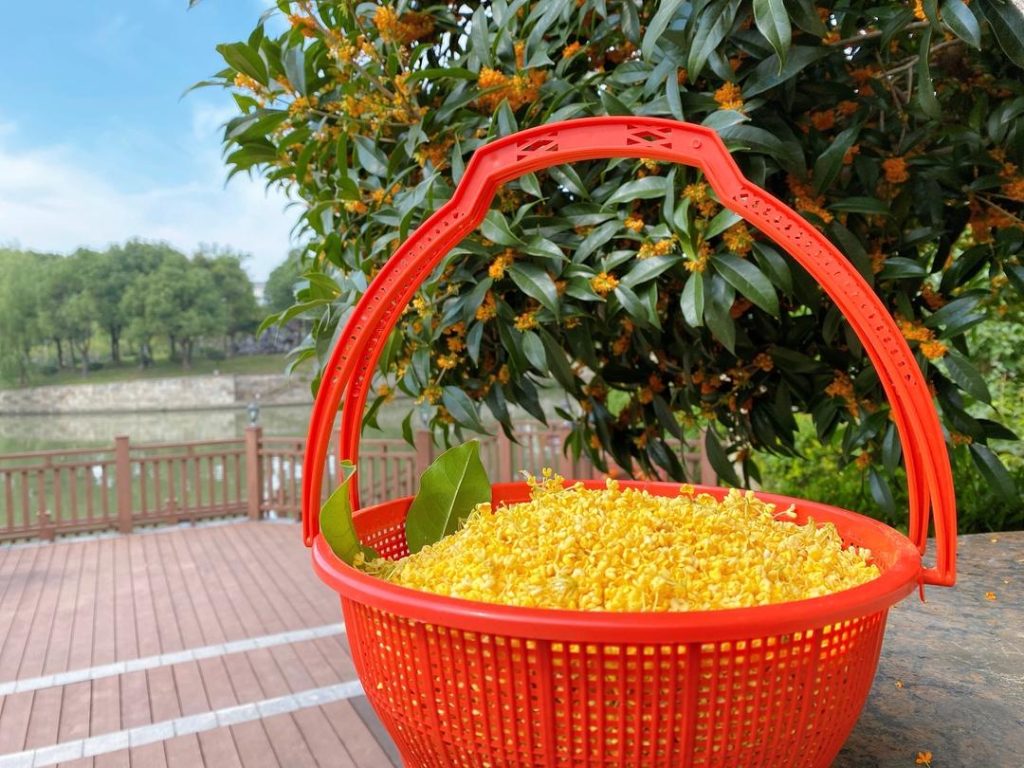
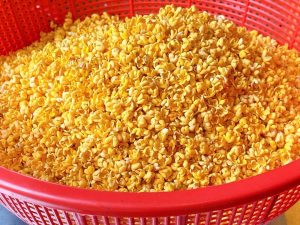
- Fresh Osmanthus Flowers (桂花): 500g (1.1 lbs). Golden osmanthus (金桂) provides the strongest fragrance, but silver or orange varieties work too. Ensure they are freshly picked, preferably early in the blooming cycle before they begin to drop naturally.
- Honey (蜂蜜): 300g (10.5 oz / roughly 1 cup). Choose a light-colored, mild-flavored honey (like clover or acacia) so it doesn’t overpower the delicate floral notes.
- Salt (盐): 10g (2 tsp). Used for the cleaning and blanching process to remove impurities and bitterness.
Equipment Needed
- Large mixing bowl
- Kitchen paper towels or a clean kitchen towel
- Sterilized glass jars with tight-fitting lids (Mason jars work perfectly)
- Bamboo skewers (optional, for pressing down flowers)
Prep & Mise en Place
Sort the Flowers: Carefully sift through your freshly picked osmanthus. Pick out any stems, leaves, or impurities.
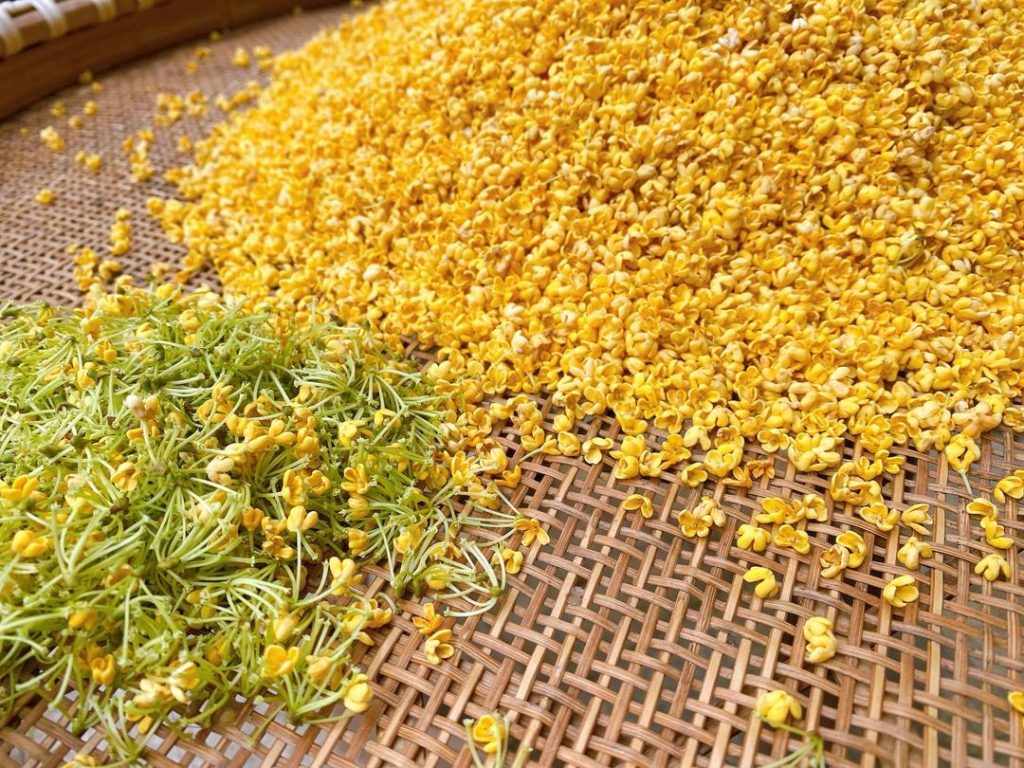
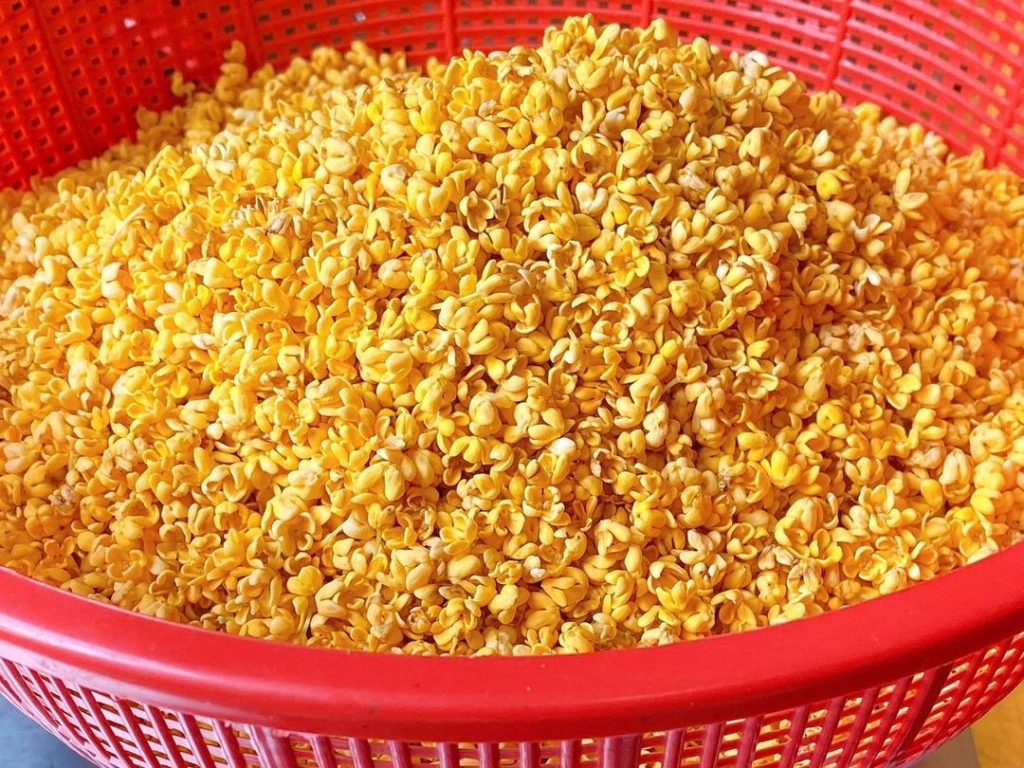
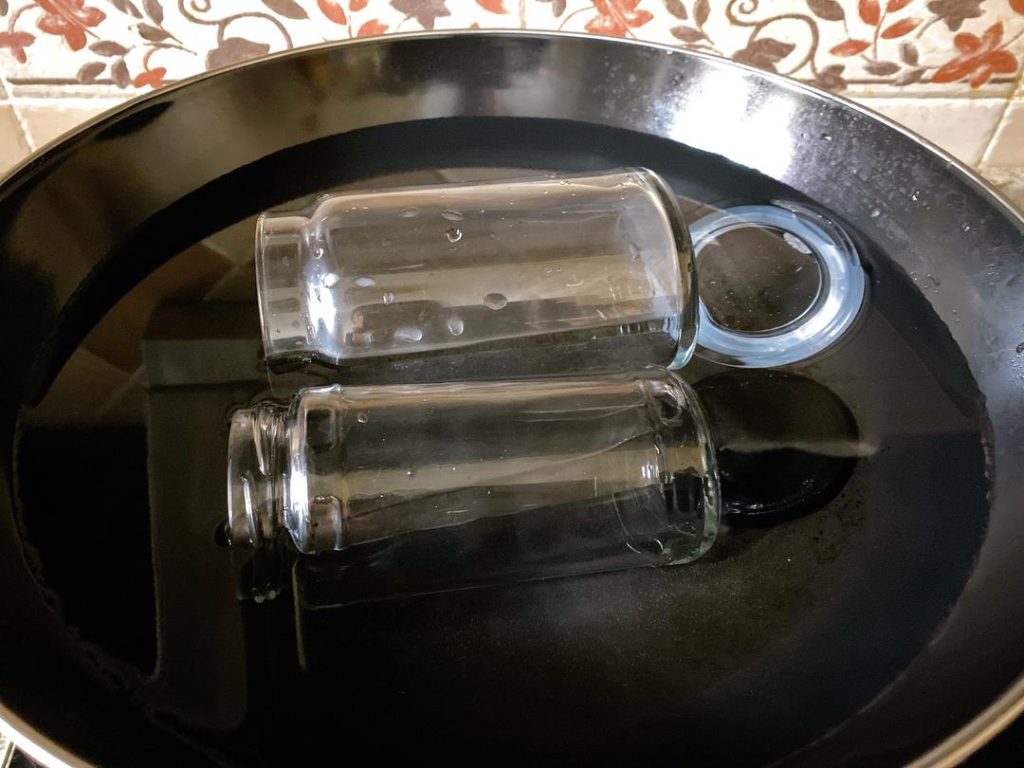
Sterilize the Jars: Boil your glass jars and lids in water for 10 minutes, then let them air dry completely. Moisture is the enemy of preservation here.
Cooking Process
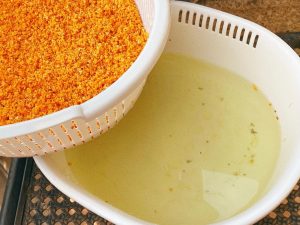
- The Salt Wash (15 minutes): Boil a large pot of water and stir in the salt until dissolved. Let the water cool to room temperature (around 70°F/21°C). Submerge the fresh osmanthus flowers in the saltwater for exactly 15 minutes.Chef’s Note: The mild saline solution serves a triple purpose: it cleans microscopic impurities, lightly sanitizes the petals, and draws out the natural astringent bitterness found in fresh blossoms.
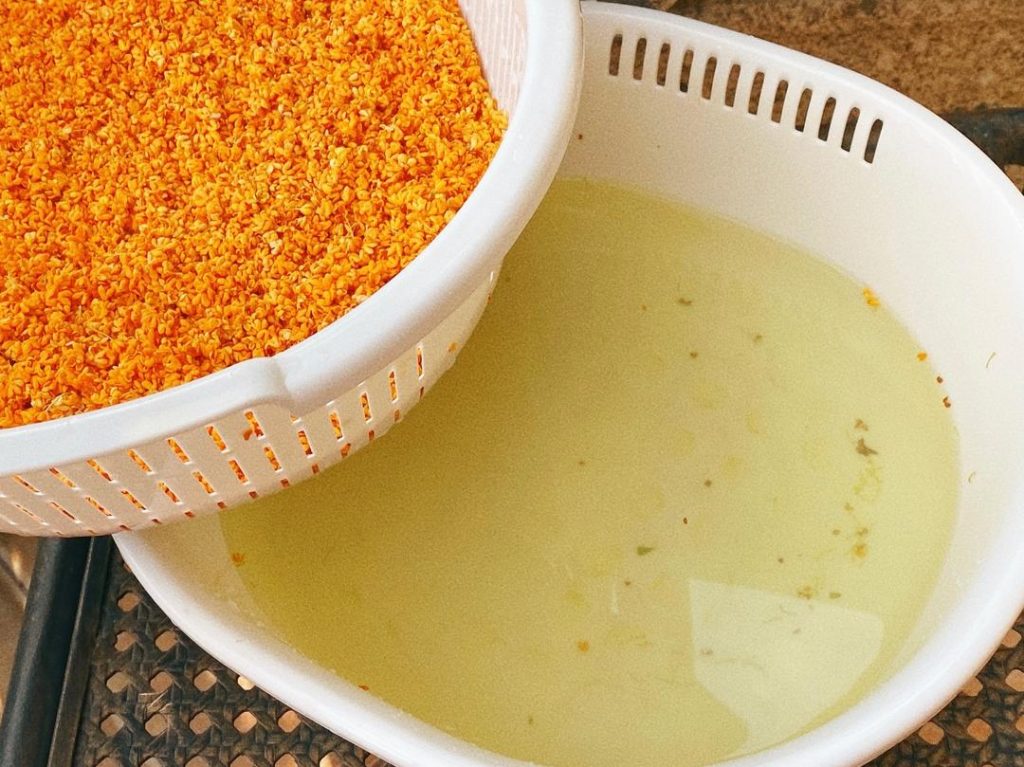
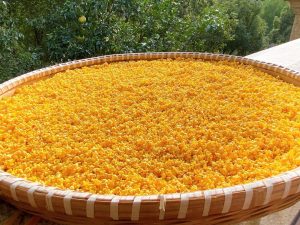
- Drain and Dry (2–3 hours): Drain the flowers thoroughly. Lay them out on kitchen paper towels and gently pat them to absorb excess moisture. Let them air dry in a well-ventilated area until the surface moisture is completely gone. Do not over-dry them or leave them in direct sunlight, as this will cause them to oxidize and lose their vibrant color. (Your 500g yield should shrink slightly during this process).
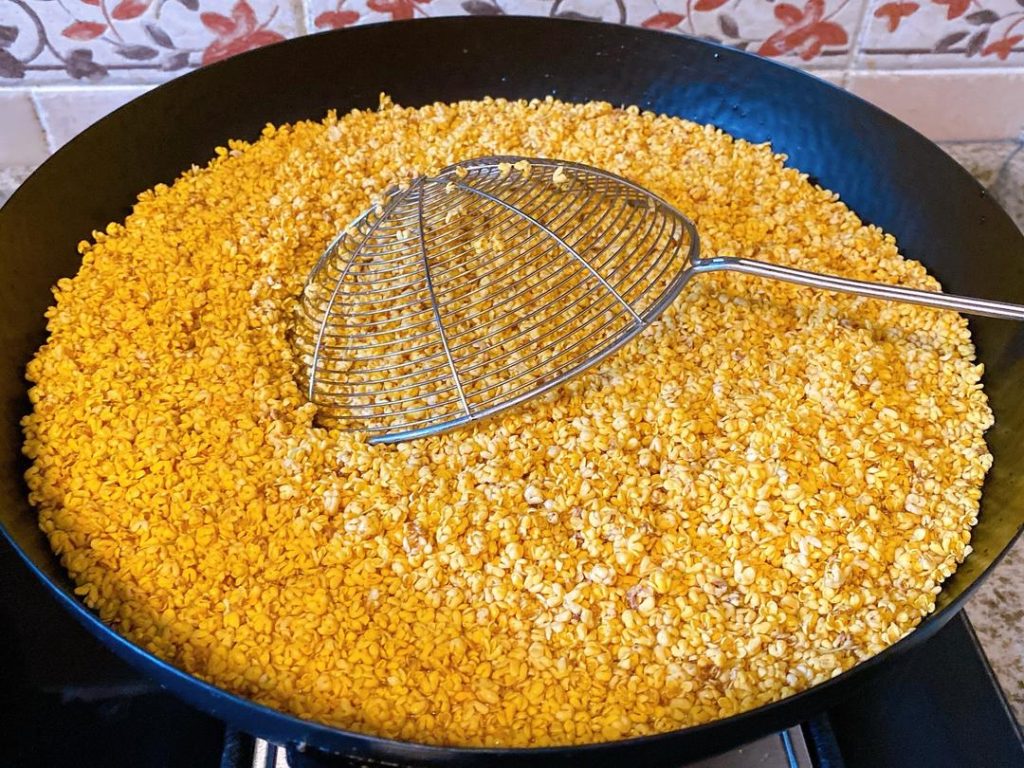
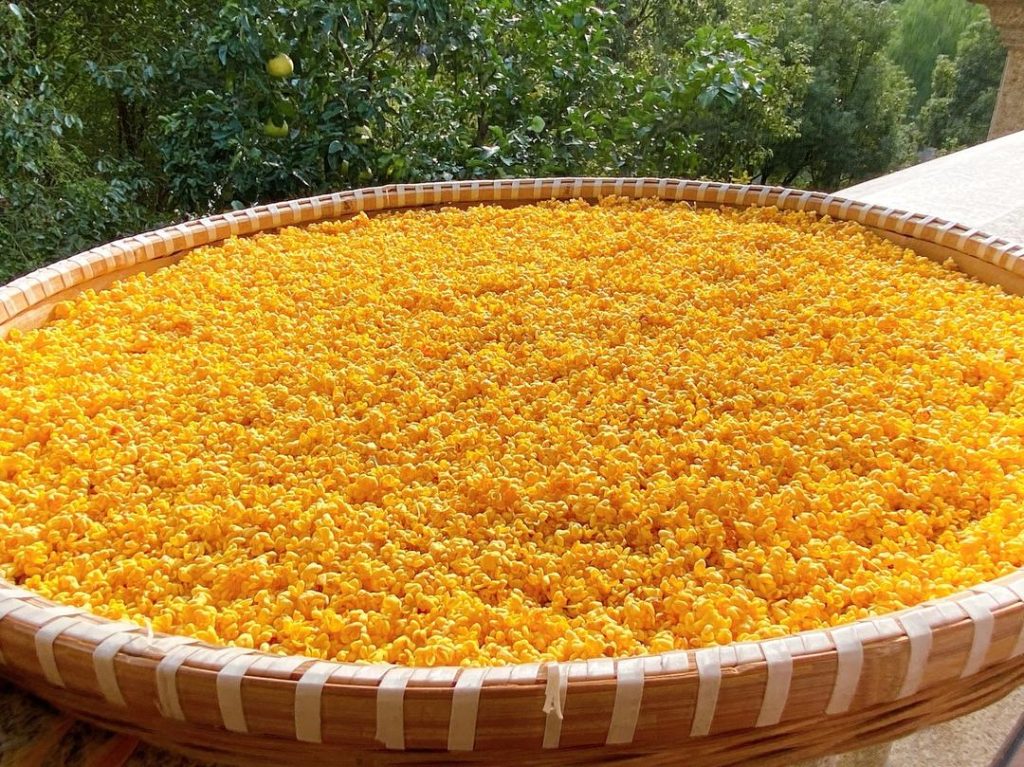
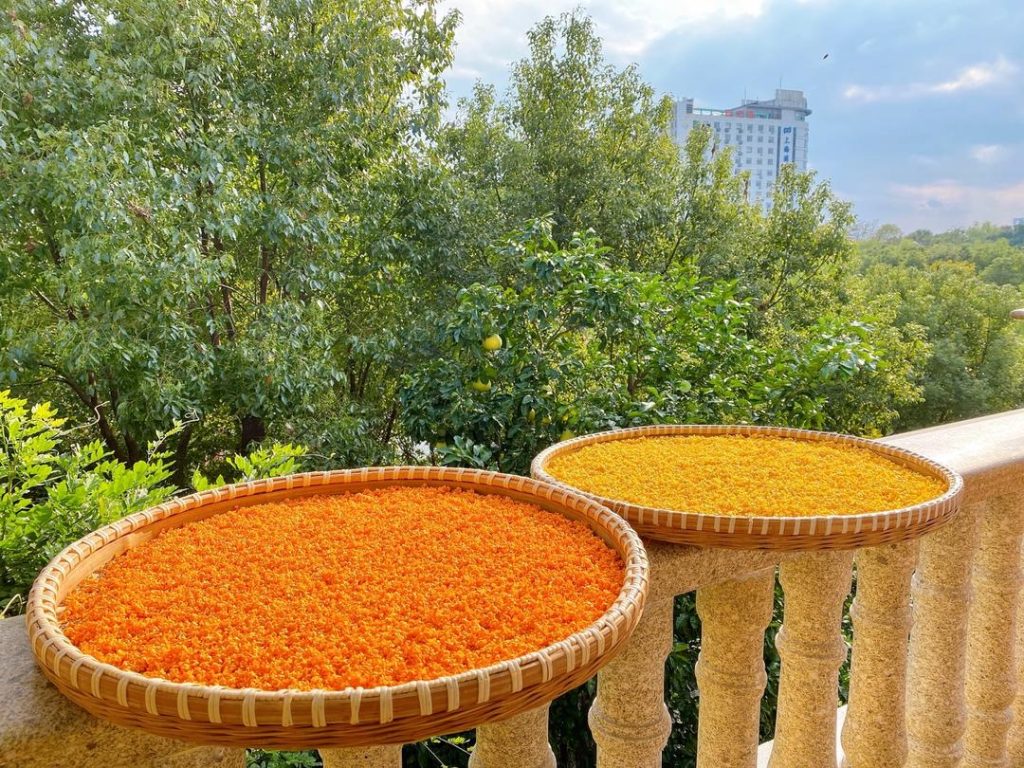
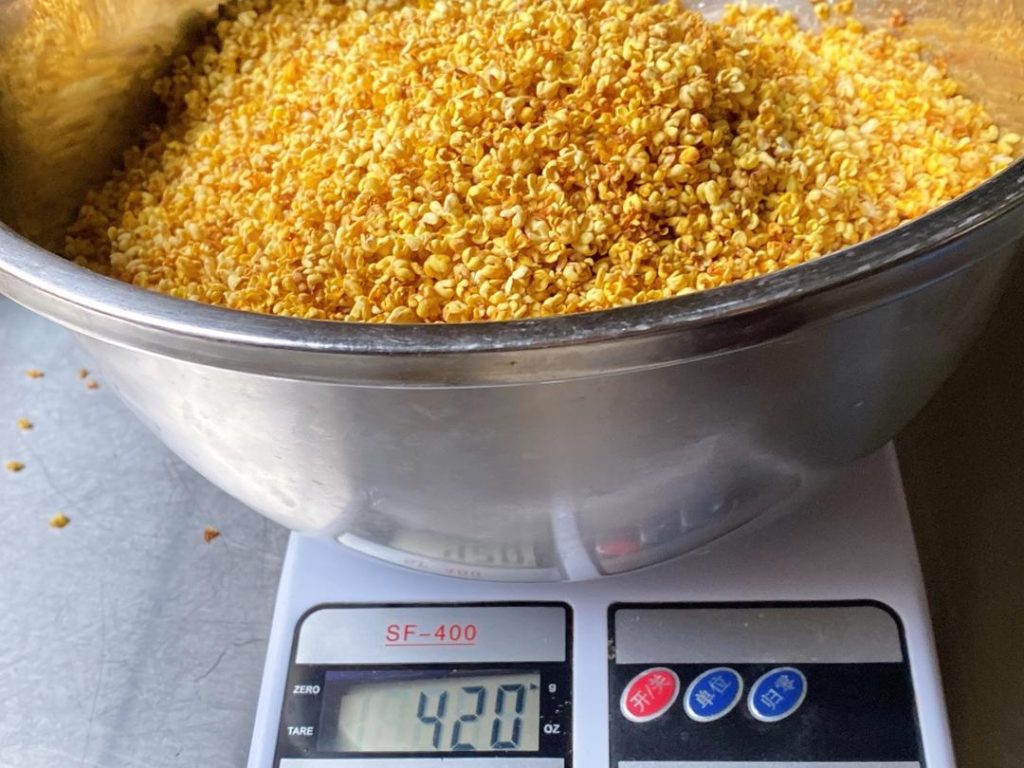
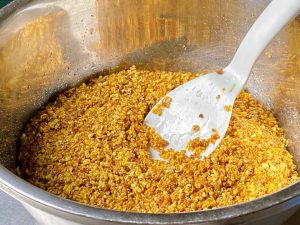
- Mix with Honey (10 minutes): In a large, completely dry mixing bowl, fold the honey into the dried osmanthus flowers. Mix gently until every petal is coated. Let the mixture rest for 10 minutes. The flowers will begin to shrivel slightly and release their internal moisture.The Science: Using a mild honey creates a hypertonic environment. Through osmosis, the honey draws out the moisture and water-soluble aromatic compounds from the flower petals, preserving them naturally without the need for heat, which would destroy the delicate essential oils.
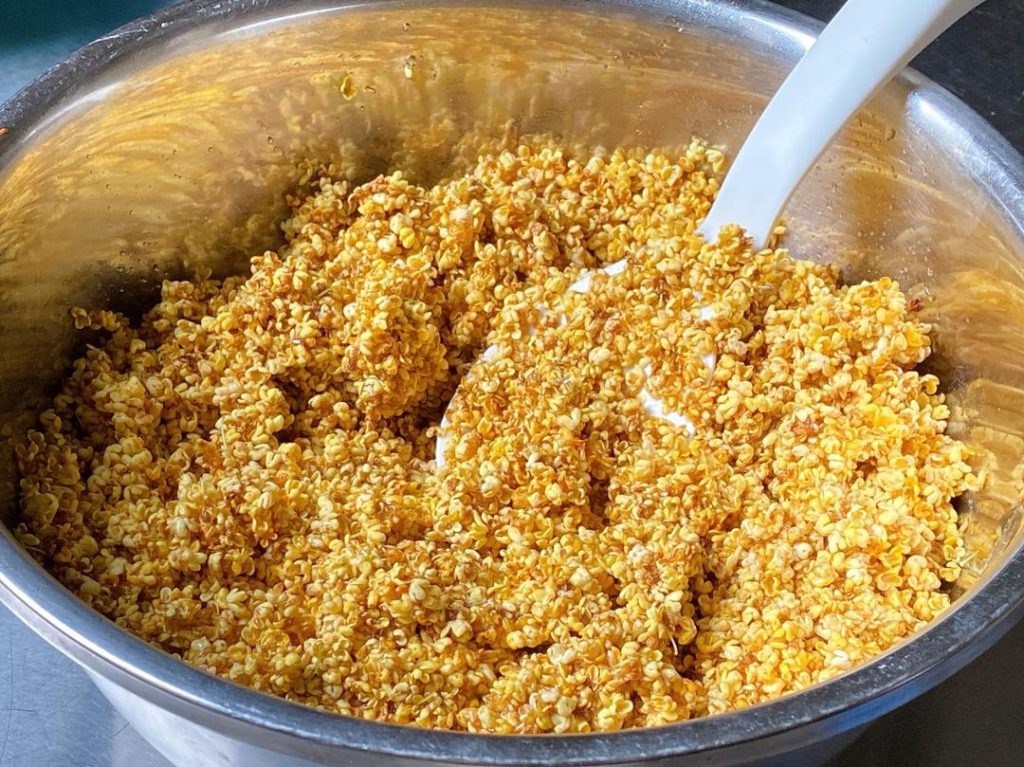
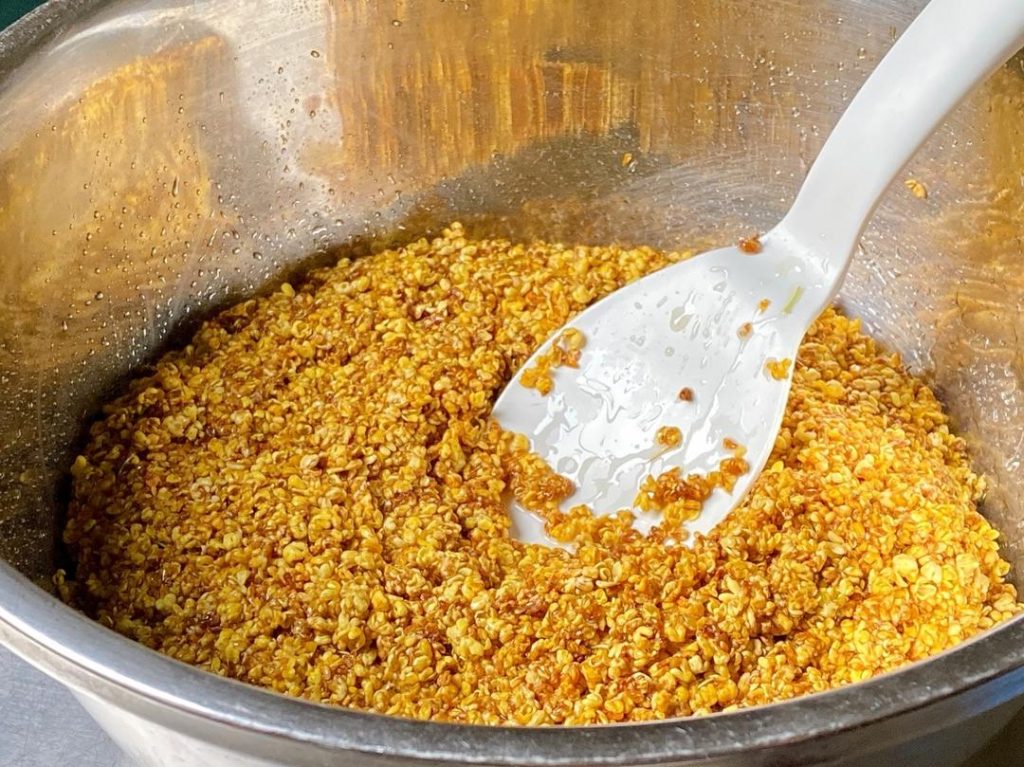
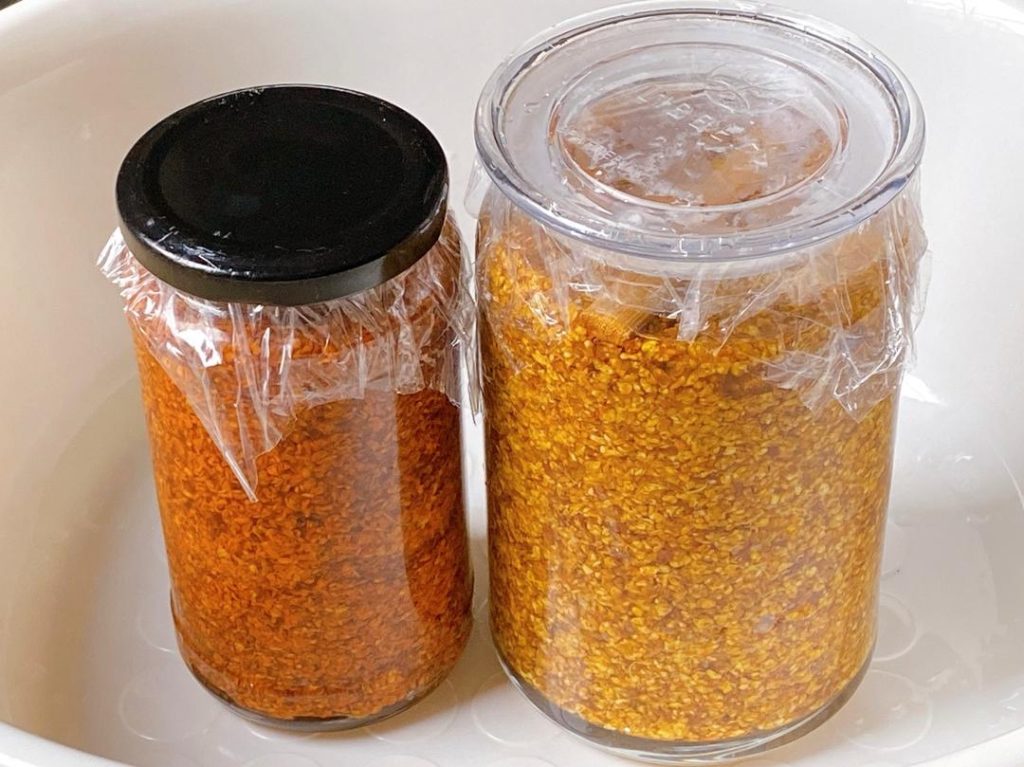
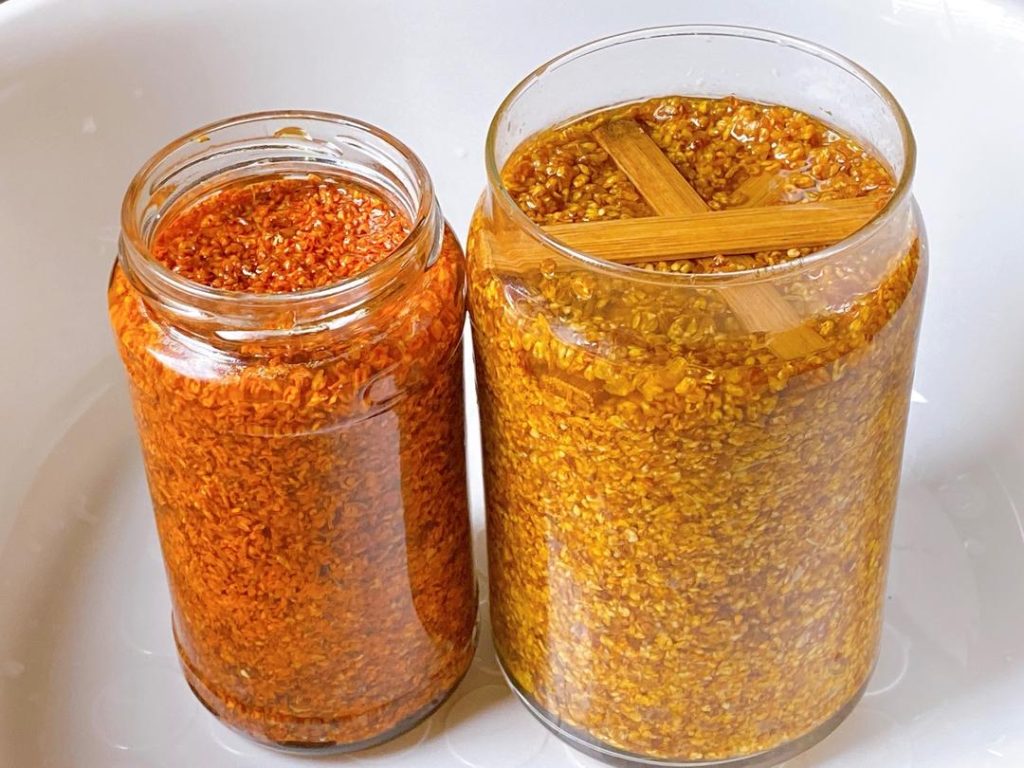
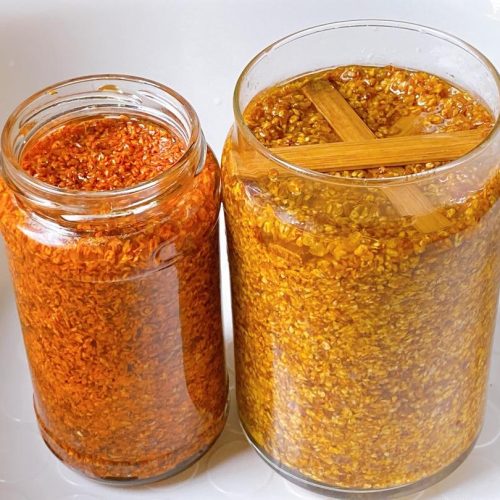
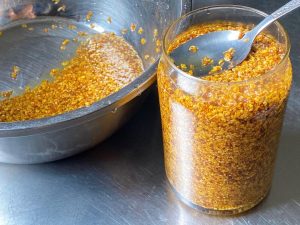
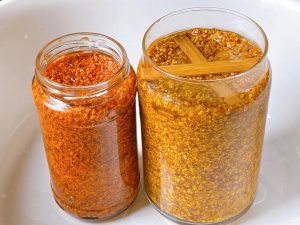
- Jar and Seal: Pack the mixture tightly into your sterilized glass jars. If you are making a large batch, press a clean bamboo skewer across the top layer to keep the flowers submerged in the honey.
- Final Cap: Pour an extra 2 tablespoons of honey over the very top to create an airtight liquid seal. Cover the mouth of the jar with plastic wrap, then screw the lid on tightly.
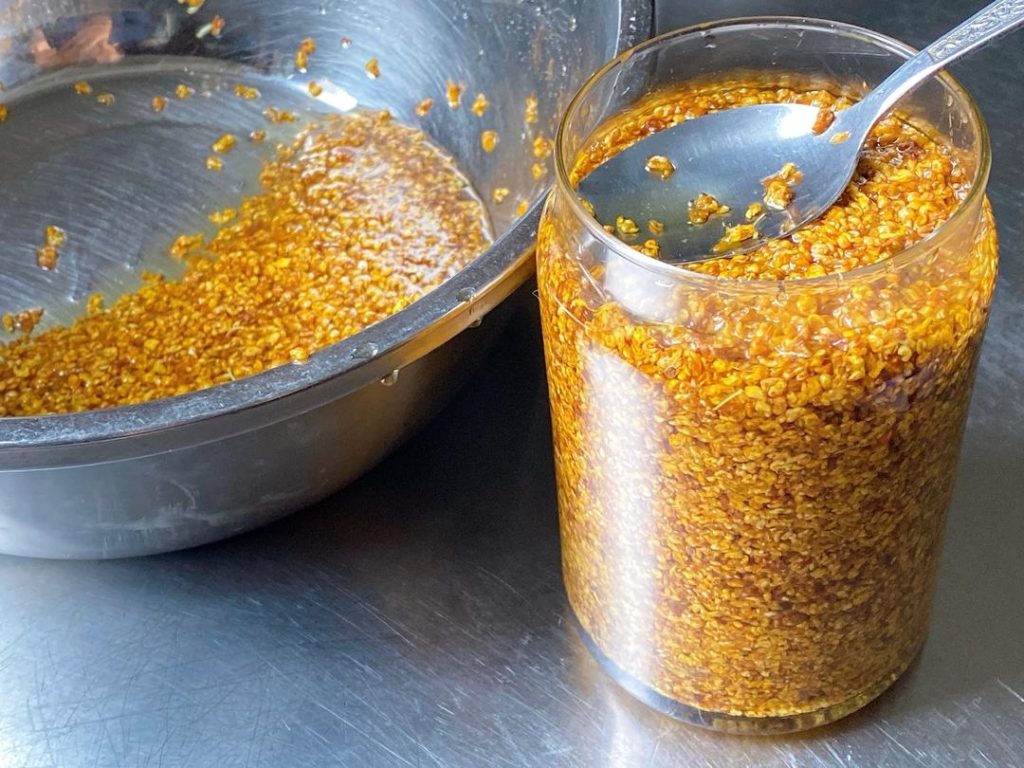
- Fermentation: Store the jars in the refrigerator. The mixture will undergo a slow, cold fermentation. It is ready to use after a week, but the flavor will become incredibly rich and mellow after 2 to 3 months.
Why This Recipe Works
- Cold Extraction: Avoiding heat ensures the highly volatile floral aromas do not evaporate.
- Salt Water Soak: Eliminates the tannic bitterness that ruins many commercially rushed osmanthus products.
- Honey Cap: Creating a top seal prevents oxygen exposure, stopping mold growth and ensuring a shelf life of up to 2–3 years.
Common Mistakes & Troubleshooting
- Mistake: The honey ferments too actively or grows mold. * Cause: The flowers were not dried properly after washing, introducing excess water into the jar, or the jars were not fully sterilized.
- Solution: Always ensure flowers are fully air-dried (surface dry) and use the honey-cap method to block oxygen.
- Mistake: The aroma is masked by the honey.
- Cause: Using a robust, dark honey like buckwheat or wildflower.
- Solution: Stick to very mild, light-colored honeys.
Frequently Asked Questions
- Can I use dried osmanthus flowers instead of fresh? While fresh is vastly superior for this technique, you can use high-quality dried golden osmanthus. You will need to skip the washing step and simply layer the dried flowers with honey, adding a tiny splash of warm water to help them rehydrate.
- How long does this keep? Stored in the back of the refrigerator with a tight seal, properly made osmanthus honey can easily last 2 to 3 years, with its flavor deepening over time.
- Can I substitute sugar for honey? You can, which is known as Gui Hua Tang. However, honey provides a much better osmotic pull and adds a richer mouthfeel.
How to Serve
This syrup is incredibly versatile. I love drizzling it over Crispy Stuffed Lotus Root for a sweet and savory contrast. It is also the perfect sweetener to stir into a warm bowl of Red Bean and Black Rice Porridge. For breakfast, try serving it alongside Sticky Rice Apple Cakes , or even add a tiny drop to the braising liquid of Chinese Tea Eggs for a unique floral hint.
Storage & Reheat
- Refrigeration: Always keep the jar in the refrigerator. Use a completely clean, dry spoon every time you scoop some out to prevent contamination.
- Temperature: Do not boil the syrup when adding it to dishes; stir it in at the very end of cooking to retain the fragrance.
Allergen Notice
Contains pollen. Individuals with severe pollen allergies should consume with caution. Gluten-free, soy-free, nut-free, and dairy-free.
About the Author & Recipe Development
Hi, I’m Lin! I spent ten years working as a professional chef, and my culinary roots trace back to my parents’ loud, aromatic Sichuan restaurant in Chengdu. I developed this technique for Woks of Love by combining traditional preservation methods with the precision of professional kitchen prep. Right now, alongside sharing these homestyle secrets with you, I’m pouring all of this knowledge into writing my very first cookbook (currently in preparation!).
Authoritative References
For more information on the principles of safe home jarring and preservation, refer to the National Center for Home Food Preservation guidelines on sterilization.
Authentic Osmanthus Honey (Gui Hua Mi)

Equipment
- Glass Mason Jars
- Large Mixing Bowl
Ingredients
Syrup Base
- 500 g fresh osmanthus flowers stems removed
- 300 g honey light colored, mild flavor (plus 2 extra tbsp for sealing)
- 10 g salt for washing only
Instructions
- Pick through the fresh osmanthus flowers to remove any stems or leaves.

- Boil water with the salt, let it cool to room temperature, and soak the flowers for 15 minutes to clean and remove bitterness.
- Drain the flowers well and pat dry with kitchen paper. Let them air dry until surface moisture is completely gone (do not over-dry).
- In a large bowl, mix the dried flowers with the honey until fully coated. Let rest for 10 minutes.
- Pack the mixture tightly into sterilized glass jars. Press down lightly to ensure flowers are submerged.
- Top with a little extra honey to create a seal, cover with plastic wrap, then seal the lid tightly. Store in the refrigerator.












Leave a Reply