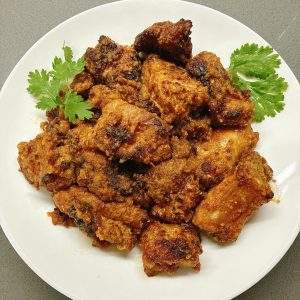
There is a moment in Cantonese cooking when salted duck egg yolk hits hot oil and foams into a golden, sandy sauce — and that is exactly the moment that makes salted egg yolk pork ribs so hard to stop eating. The ribs are marinated, pan-fried until their edges caramelize, then tossed in that foaming yolk coating so every piece comes out crisp outside, juicy inside, and wrapped in a savory, faintly sweet golden cloak.
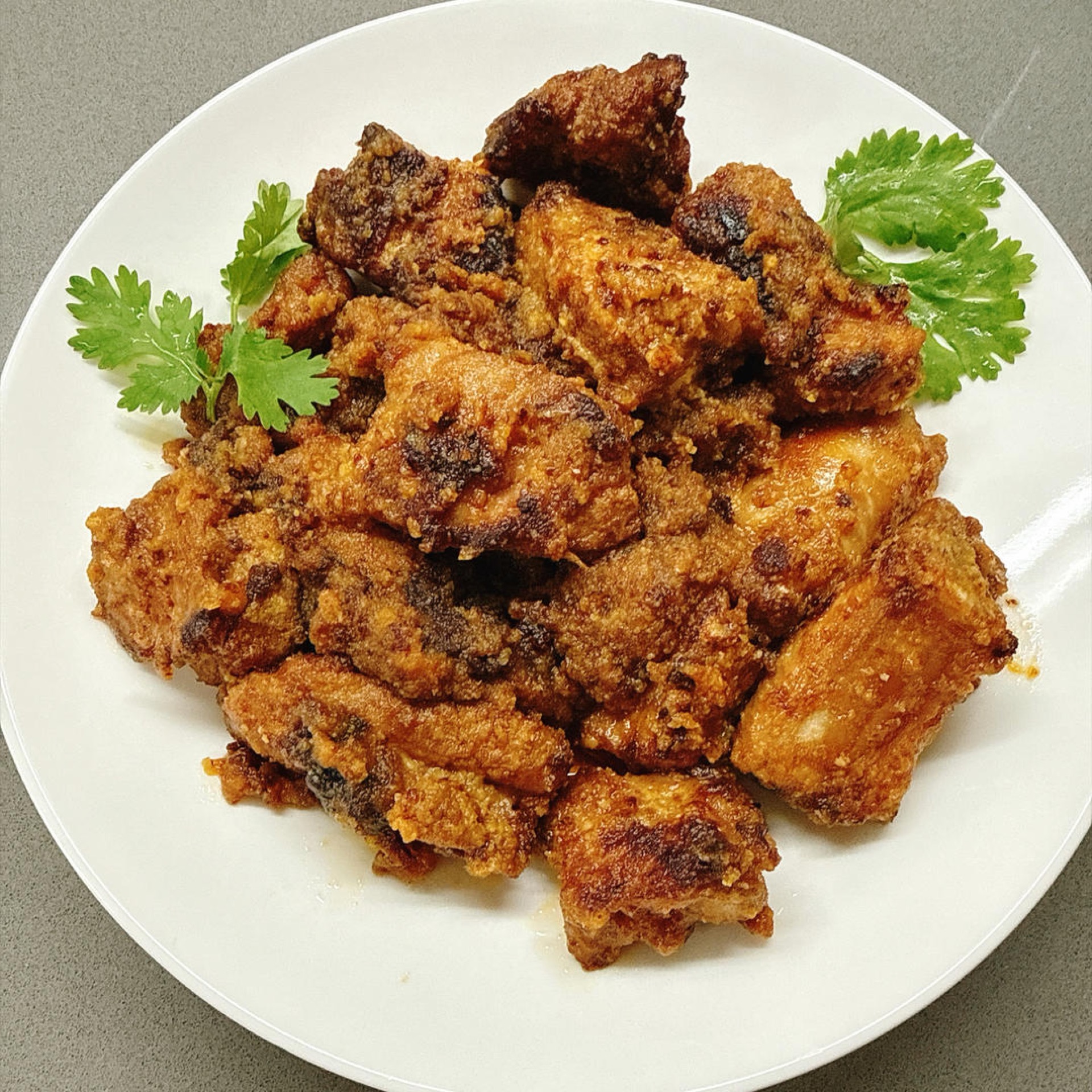
It is the kind of dish that looks like banquet food but behaves like a weeknight dinner. You roast the yolks, blitz a quick marinade, give the ribs a shallow fry in a pan, and finish them in a yolk sauce that comes together in about five minutes. The contrast — crunchy golden shell, tender pork, that little numbing tickle of Sichuan pepper underneath — is what makes people go quiet at the table.
This version is built for a home kitchen with a food processor or a thermal cooker on the counter. It skips the deep fryer entirely, and it keeps the yolk sauce stable so the coating stays creamy instead of grainy. If you have ever had a plate of salted egg yolk prawns or salted egg yolk squid at a Cantonese restaurant and wished you could make that texture at home, this is the recipe to start with.
What Is Salted Egg Yolk Pork Ribs?
Salted egg yolk pork ribs, or 咸蛋黄排骨, is a Cantonese dish in which marinated pork ribs are fried until crisp and then folded through a sauce made from mashed salted duck egg yolks. The yolks are roasted, crushed, and cooked briefly in oil until they foam and turn sandy — a texture Cantonese cooks call 起沙, literally “rising sand.” That foaming yolk sauce coats the ribs in a thin, golden, savory-sweet layer that sets slightly as it cools.
The technique sits in the same family as salted egg yolk prawns, salted egg yolk fish skin, and salted egg yolk pumpkin. What ties them together is the yolk sauce, not the protein. Once you can make the sauce foam properly, you can put it on almost anything. Pork ribs are a particularly good match because their richness and slight chew stand up to the yolk’s density, and the little bones give you something to hold while the coating crackles.
At its core the dish is a contrast exercise. The marinade brings soy, wine, and a whisper of Sichuan peppercorn. The coating brings starch and flour, which fry into a thin shell. The yolk sauce brings fat, salt, and a natural sweetness that comes from the curing process, not from added sugar.
If you want a rib dinner with a different finishing move, these oven baked garlic ribs keep things hands-off and garlicky — a good counterpoint when you want big flavor without standing at the stove.
For a glossy, tangy glaze instead of a sandy yolk coating, sweet and sour pork ribs deliver that classic sticky red shine with the same cut of meat.
And if you like the way pork ribs soak up a savory, slightly sour braising liquid, Sichuan pickled greens with pork ribs is the slow-simmered cousin worth having in your rotation.
If you like this kind of cooking, my oven baked garlic ribs is the closest recipe on the site — the same technique and the same pantry.
1Easy Oven-Baked Garlic Ribs (Suan Xiang Kao Paigu / 蒜香烤排骨)These oven-baked garlic ribs are unbelievably easy to make, delivering that perfect crispy-on-the-outside, tender-and-juicy-on-the-inside texture without any deep-frying. A simple, flavor-packed marinade transforms pork ribs into a dish so good, you'll be licking your fingers!Check out this recipe
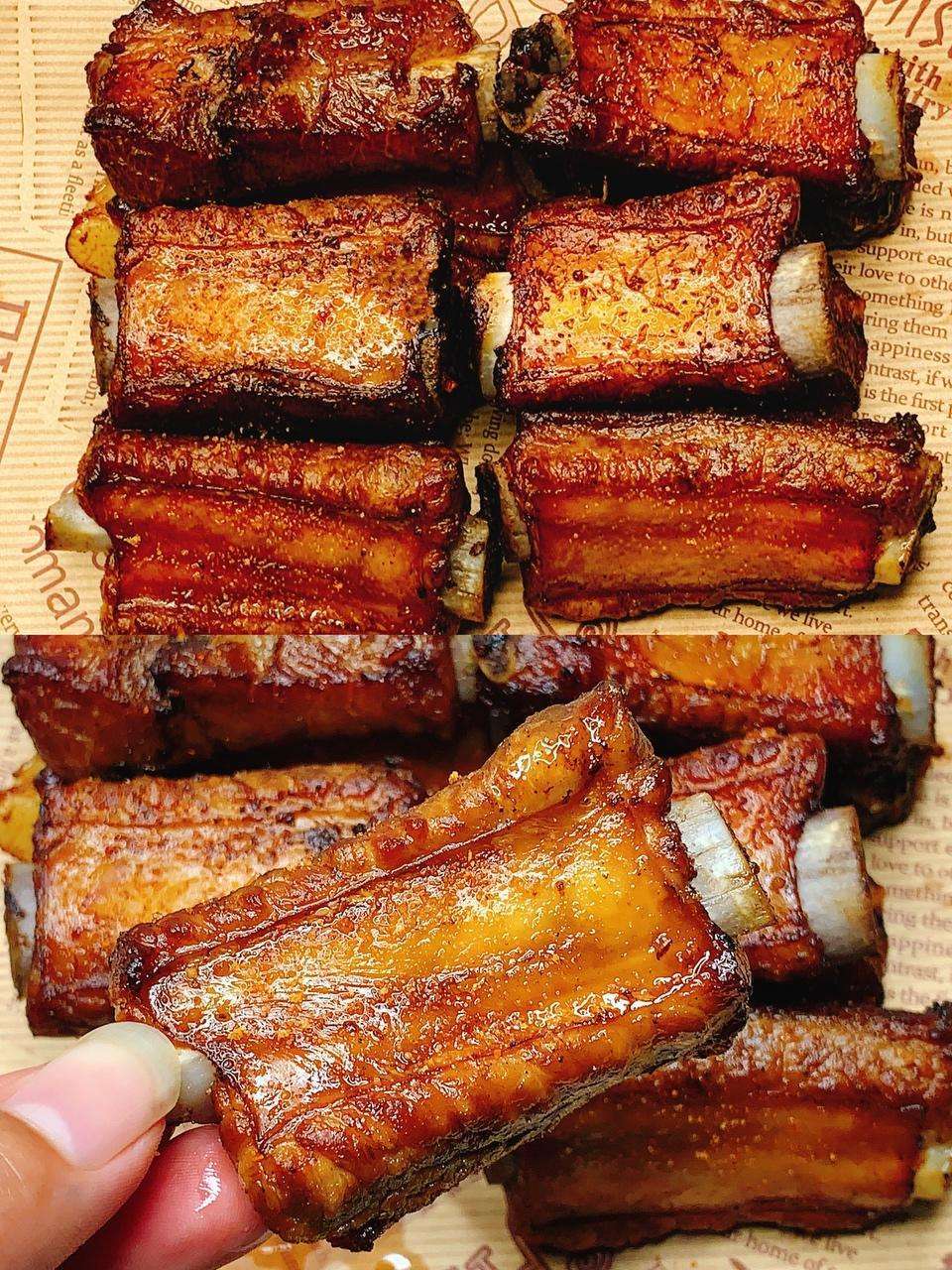
Cooked this way once, you will want the next one too: sweet and sour pork ribs starts from the same base and the same pan.
2Sweet and Sour Pork Ribs (Tang Cu Pai Gu) – The No-Fry MethodA beginner-friendly, foolproof recipe for authentic Chinese Sweet and Sour Pork Ribs. This method skips the deep-frying and complex sugar caramelization, utilizing a golden ratio sauce and slow braising to achieve tender, glossy, and flavorful ribs.Check out this recipe

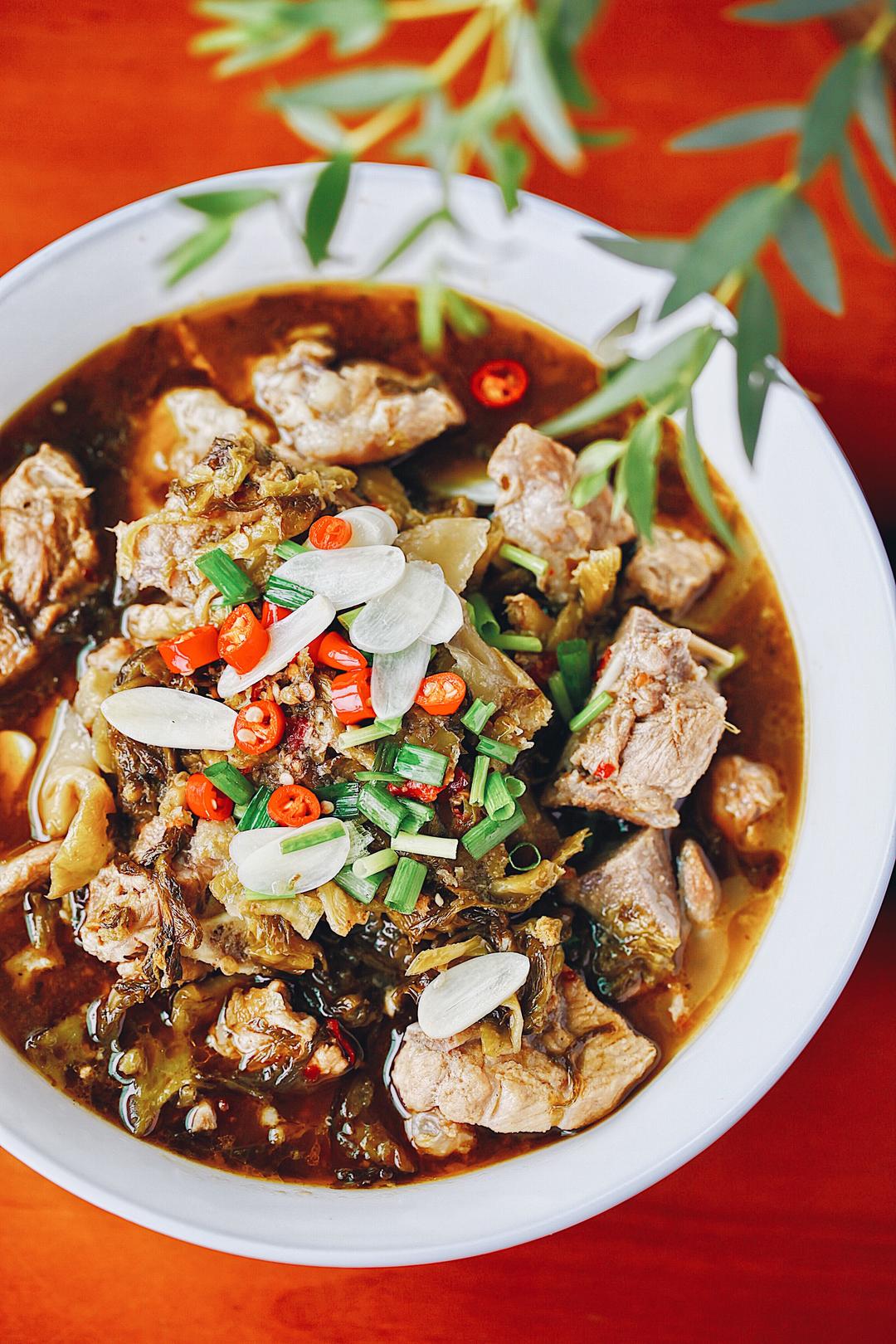
For the next cook from the same playbook, Sichuan pickled greens with pork ribs is the recipe I point people to.
3Sichuan Pickled Greens with Pork Ribs (Suancai Paigu)A tangy and spicy Sichuan-style pork rib stew using a Suancai fish seasoning hack. Perfectly tender ribs in a sour mustard green broth.Check out this recipe
Why This Recipe Works
Most home versions of salted egg yolk pork ribs fail in one of two places: the ribs are either dry and tough, or the yolk sauce turns grainy and bitter. This recipe solves both problems with technique rather than equipment.
First, the ribs are marinated with cornstarch and flour, not just liquid seasonings. That starch coating fries into a thin, brittle shell that gives the yolk something to grip. Without it, the yolk slides right off and pools on the plate.
Second, the yolks are roasted before they are mashed. Roasting drives off moisture and concentrates the yolk’s fat, so when it hits the pan it foams instead of steaming. Cold, raw yolks from the refrigerator will clump and stay lumpy no matter how long you stir them.
Third, the yolk sauce is cooked at a controlled, moderate temperature. Salted egg yolk is mostly fat and protein, and once it goes past a certain heat it separates and browns into bitter grains. Keeping the pan at a gentle sizzle — around 248°F (120°C) — lets the yolk melt and foam without breaking.
The foaming stage is really an emulsion: as the yolk’s fat melts, tiny air bubbles get trapped in the protein-and-fat mixture, which is what gives the sauce its pale, sandy, almost creamy body. That is also why overheating ruins it — too much heat collapses the emulsion and the fat leaks out as greasy pools.
Finally, the ribs are pan-fried rather than deep-fried. A shallow fry with enough oil to come partway up the sides of the ribs gives you crisp edges and fully cooked meat without a vat of oil. You get the texture of fried food with far less cleanup.
Equipment Needed
You do not need a restaurant kitchen for this, but a few pieces of equipment make the process smoother.
- Wok or deep non-stick skillet — wide enough to hold the ribs in a single layer without crowding. Crowding steams the ribs instead of frying them.
- Food processor or thermal cooker — for chopping the aromatics and crushing the roasted yolks. A small blender or a mortar and pestle also works.
- Baking tray — for roasting the salted egg yolks.
- Cutting board and knife — for trimming and portioning the ribs.
- Slotted spoon — for lifting the ribs out of the oil and leaving excess fat behind.
- Instant-read thermometer — optional but genuinely useful for confirming the ribs are cooked through.
If you are using a thermal cooker, the temperature control is one of its real advantages here. Holding the yolk at a steady, moderate heat is the single hardest part of this dish to manage on a bare stovetop, and it is exactly what the machine is good at.
Ingredients
Here is everything you need. The full amounts are in the recipe card below.
- Pork ribs — 500 g, cut into 1-inch pieces. Ask your butcher for ribs cut across the bone into short, even lengths so they cook at the same rate.
- Salted duck egg yolks — 12 pieces. These are sold vacuum-packed or in brine; either works. They are not the same as fresh duck eggs.
- Garlic and ginger — 6 cloves and 5 g, for the marinade base.
- Shaoxing wine — 30 g, for aroma and to cut the pork’s richness.
- Light soy sauce — 30 g, for seasoning.
- Dark soy sauce — 10 g, mainly for color.
- Sichuan peppercorn powder — 1 g, freshly ground if possible.
- Cornstarch and all-purpose flour — 10 g each, for the frying coating.
- Neutral oil — for shallow frying and for blooming the yolk sauce.
Ingredient Notes
Salted duck egg yolks. Quality matters more here than in almost any other dish. Good yolks are firm, deep orange, and slightly oily when cut. If yours are pale and crumbly, the sauce will taste flat. If you buy them in brine, drain and pat them dry before roasting.
Pork ribs. Look for meaty ribs with a good ratio of meat to bone. Ribs cut into 1-inch pieces are sometimes sold as “rib tips” or “short-cut ribs.” If you can only find larger racks, cut them down yourself with a cleaver — the smaller pieces fry faster and more evenly.
Light vs. dark soy sauce. They are not interchangeable. Light soy sauce carries the salt and the fresh soybean flavor; dark soy sauce is thicker, slightly sweet, and mostly there for that deep mahogany color. Using only dark soy sauce will make the ribs too sweet and too dark.
Sichuan peppercorn powder. A little goes a long way. Ground Sichuan peppercorn loses its aroma quickly, so grind it fresh if you can, or buy it in small quantities. The goal is a faint citrusy tingle, not numbing heat.
Shaoxing wine. Dry sherry is the closest substitute. Do not use “cooking wine” that has salt added — it will throw off the seasoning.
If you already cook a lot of pork ribs, you will recognize this marinade logic from other Chinese pork ribs recipes — soy, wine, starch, and a long rest. The yolk coating is the variable that makes this one different.
Prep & Mise en Place
This dish moves fast once the pan is hot, so get everything ready before you turn on the stove.
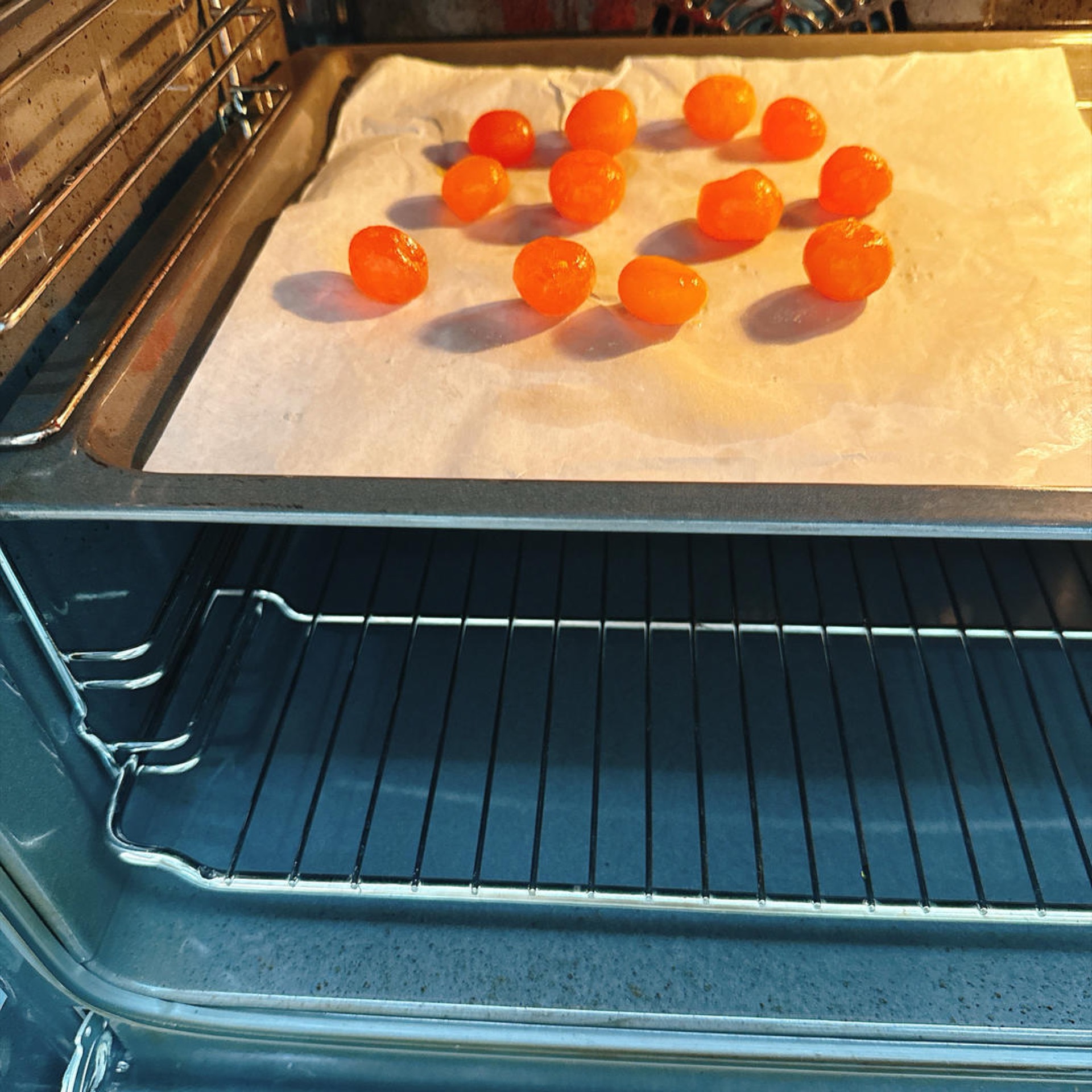
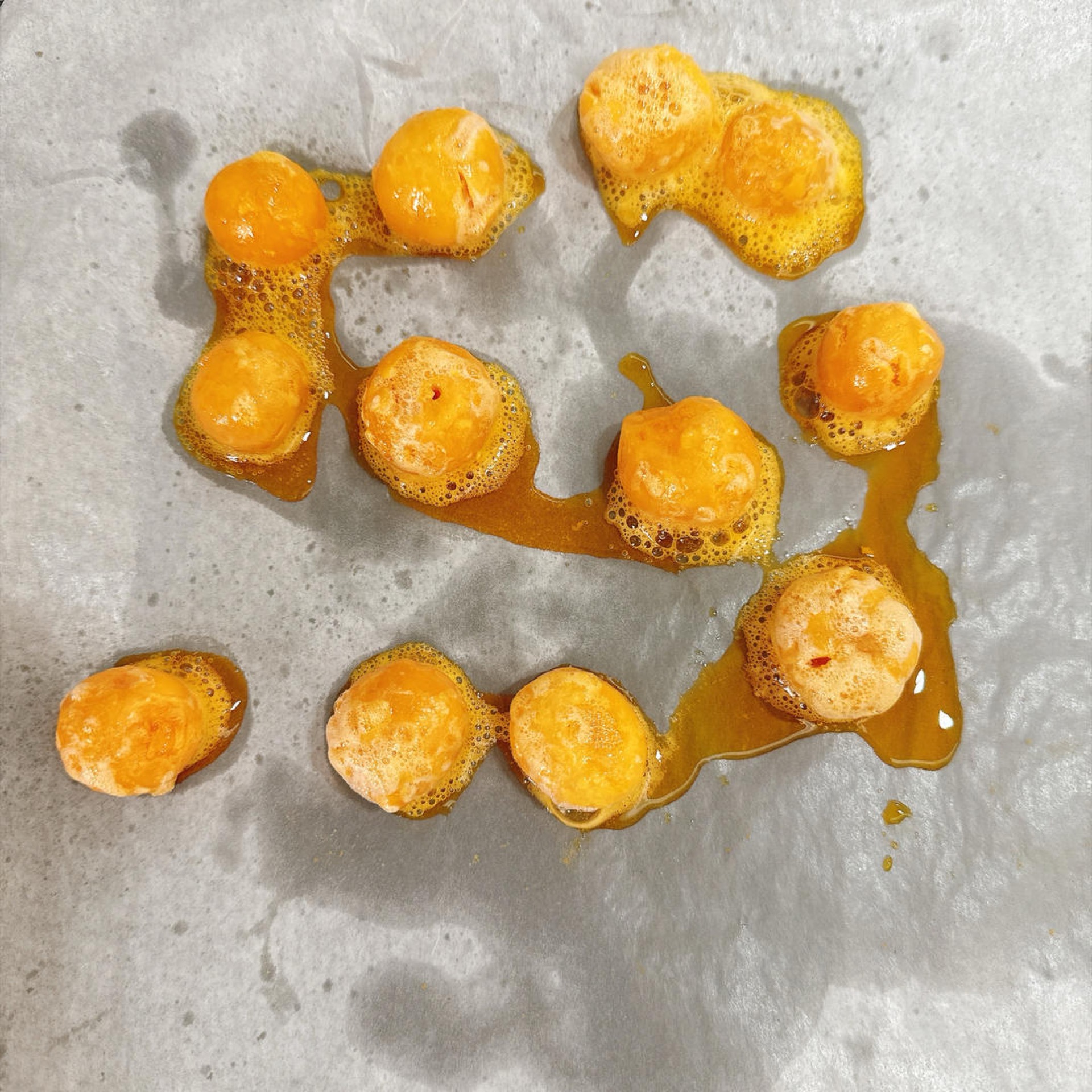
- Roast the yolks. Preheat the oven to 350°F (180°C), spread the 12 salted egg yolks on a baking tray, and roast for about 15 minutes. They should darken slightly and smell nutty. Cool completely.
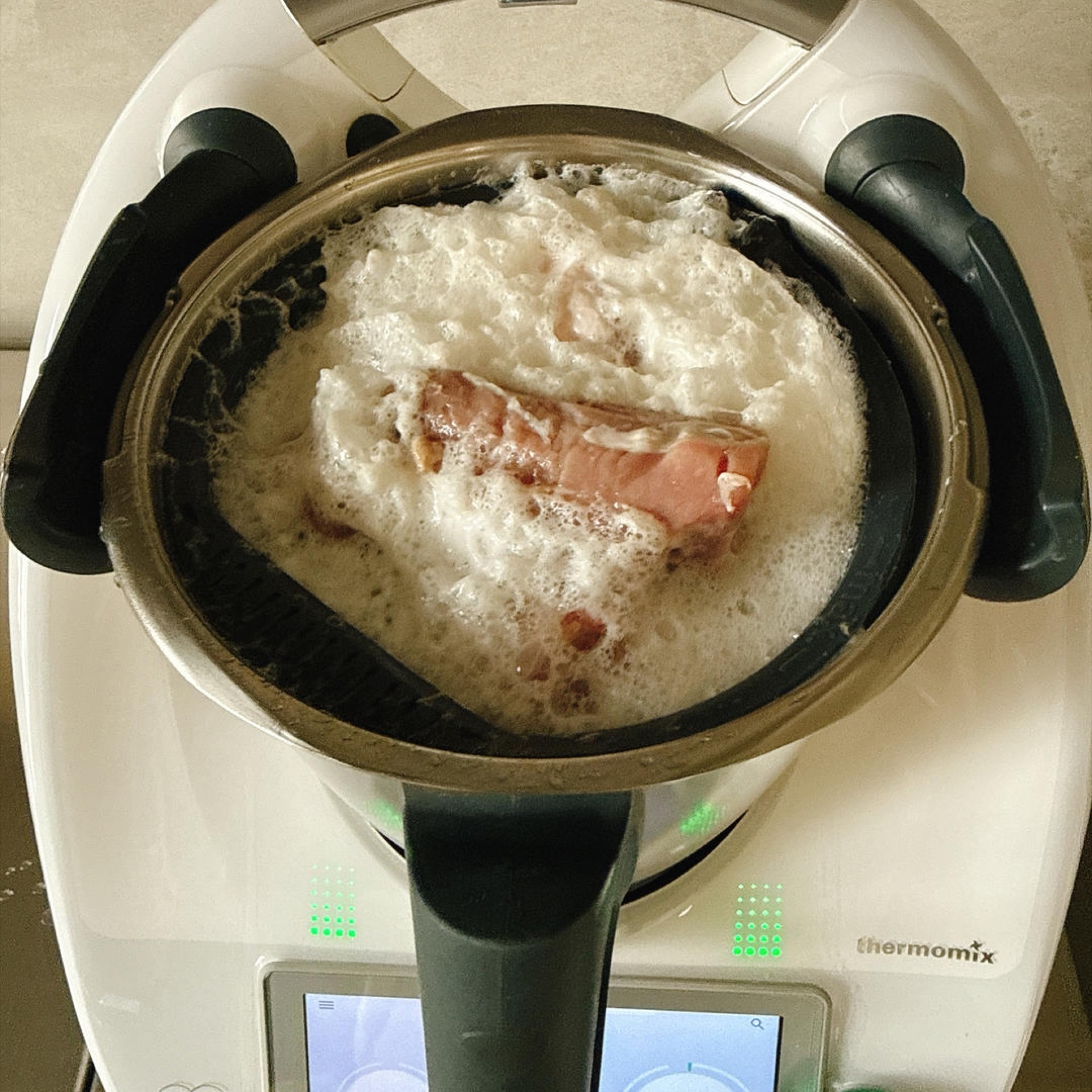
- Clean the ribs. Rinse the ribs and pat them dry. If you have a thermal cooker, the 5-minute wash at 122°F (50°C) on speed 5 pulls out blood and impurities; otherwise, soak the ribs in cold water for 30 minutes, changing the water once, then drain and dry.
- Make the marinade base. Blitz 4 of the roasted yolks with the garlic and ginger until finely chopped.
- Marinate. Combine the ribs with the yolk-garlic mixture, Sichuan peppercorn powder, Shaoxing wine, light soy sauce, dark soy sauce, cornstarch, and flour. Mix until every piece is coated, then rest for about 1 hour.
- Crush the remaining yolks. Pulse the remaining 8 roasted yolks until finely crushed and set aside.
- Set up your frying station. Line a plate with paper towels and have your slotted spoon within reach.
The one-hour marinade is not optional. It is what lets the soy and wine penetrate the meat and gives the starch coating time to hydrate and adhere. Ribs marinated for ten minutes will taste seasoned on the surface only.
Cooking Process
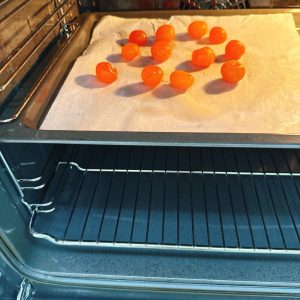
Step 1 — Roast the Salted Egg Yolks
Preheat the oven to 350°F (180°C) and place the 12 salted duck egg yolks on a baking tray, then roast them at 350°F (180°C) for about 15 minutes.
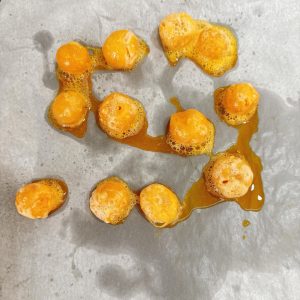
Step 2 — Cool the Yolks
Take the roasted yolks out of the oven and let them cool completely before using.
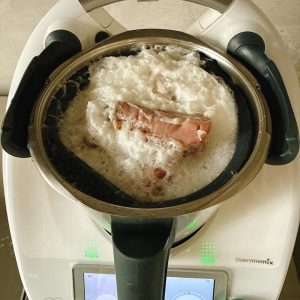
Step 3 — Clean the Ribs
Put the pork ribs into a steaming basket, add enough water to cover them, and wash for 5 minutes at 122°F (50°C) on speed 5.
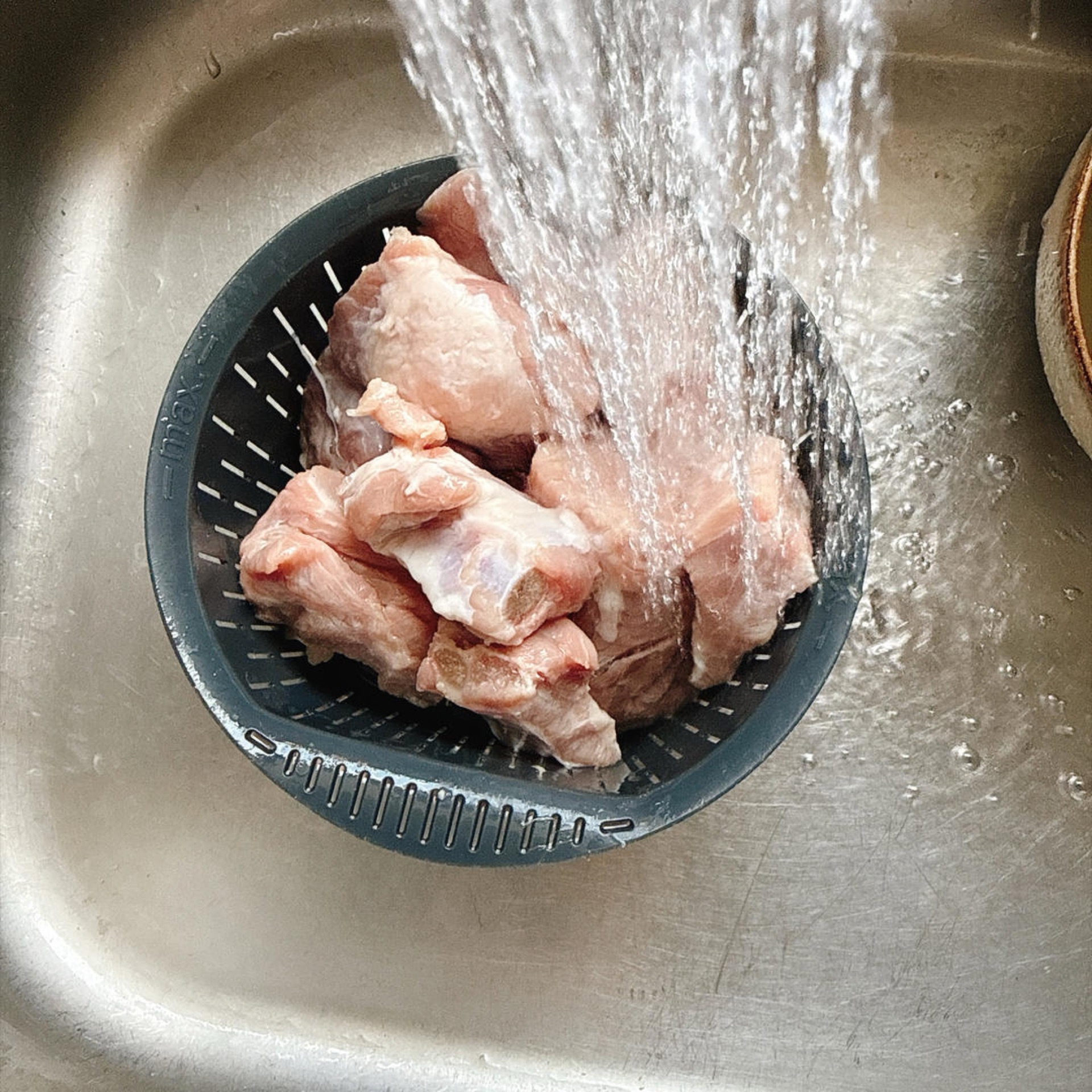
Step 4 — Rinse and Drain
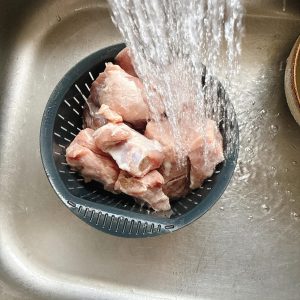
Rinse the ribs clean under running tap water and set them aside to drain.
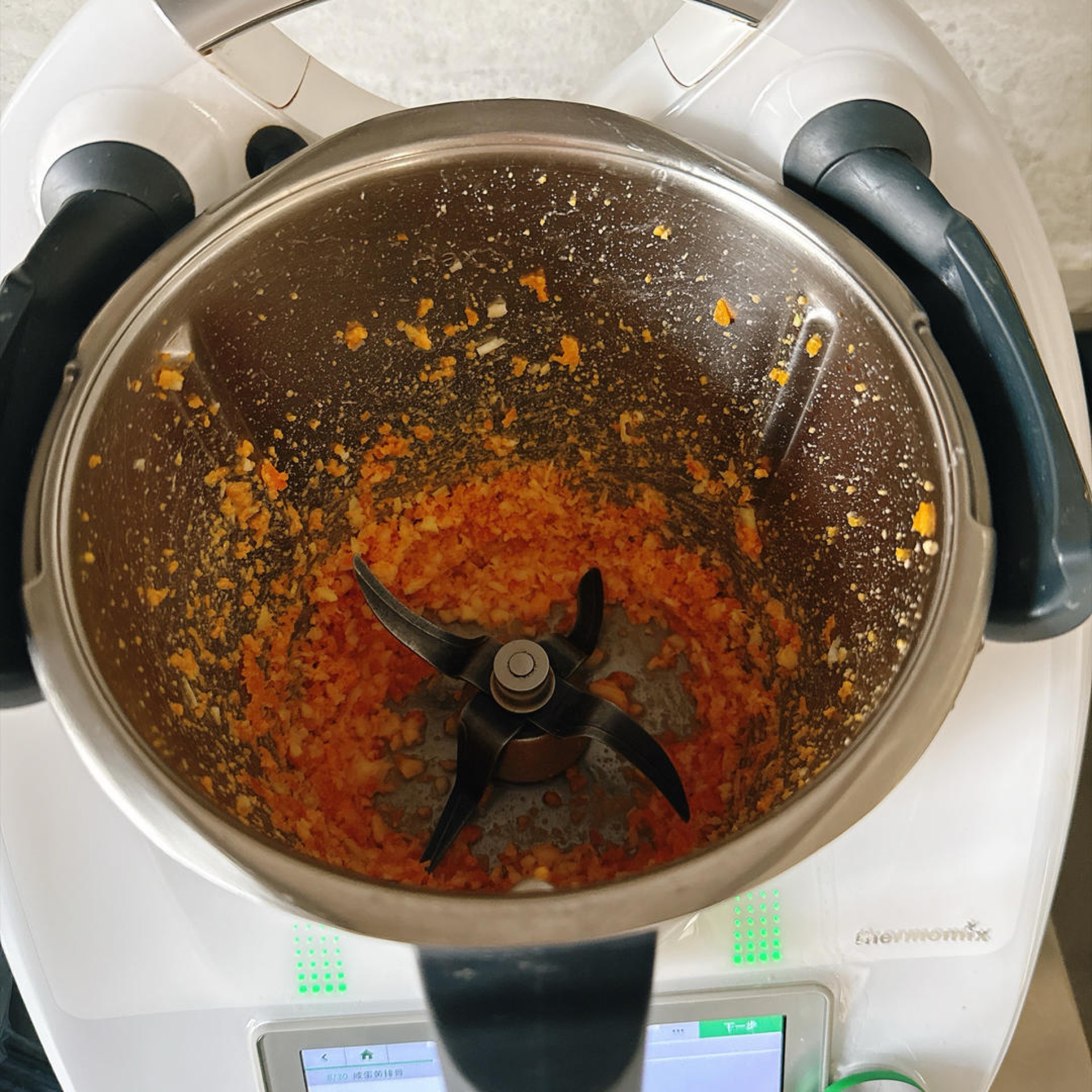
Step 5 — Combine Yolk, Garlic and Ginger
Place 4 of the roasted salted egg yolks, the garlic, and the ginger into the main pot of the food processor.
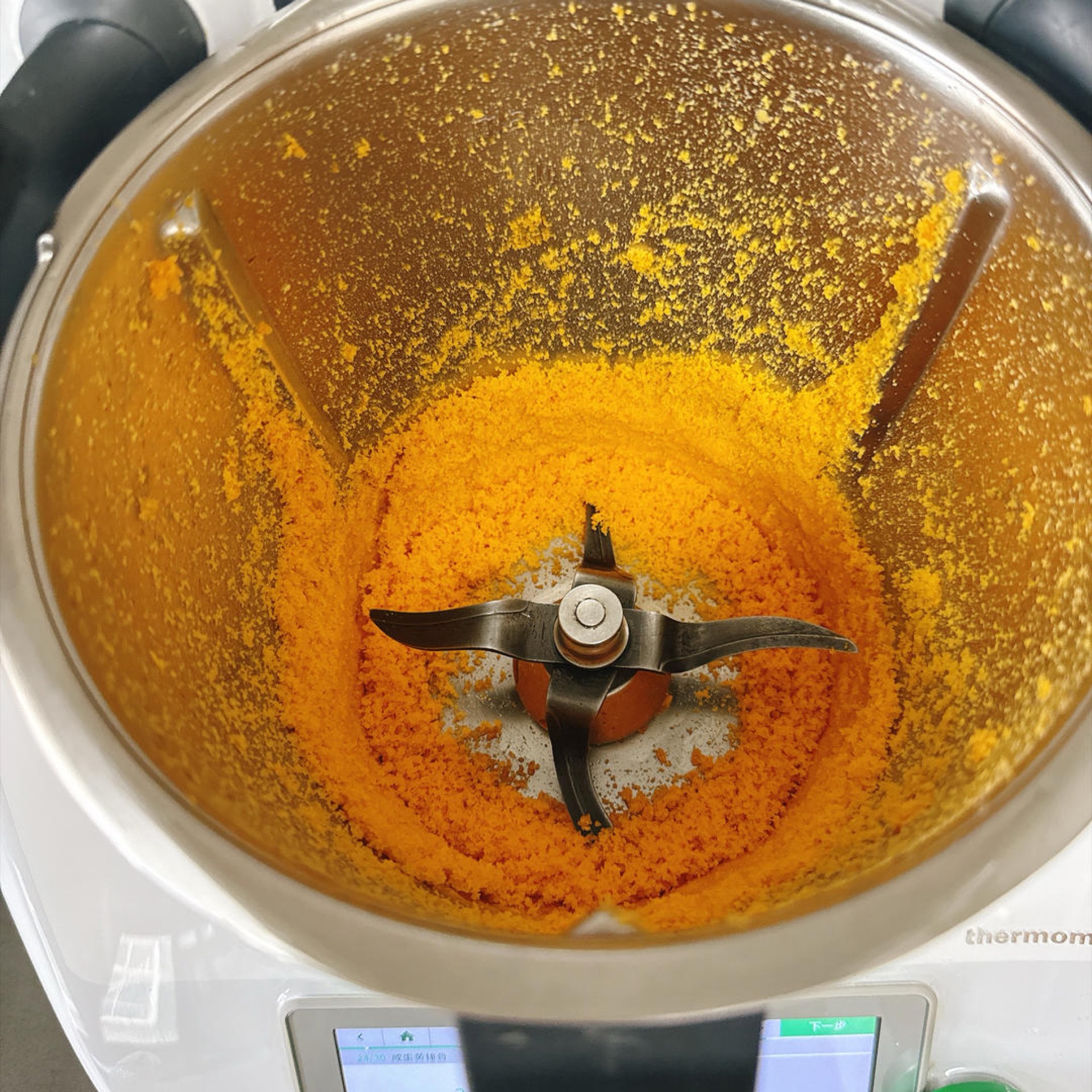
Step 6 — Chop the Aromatics
Blend for 5 seconds on speed 6 until finely chopped.
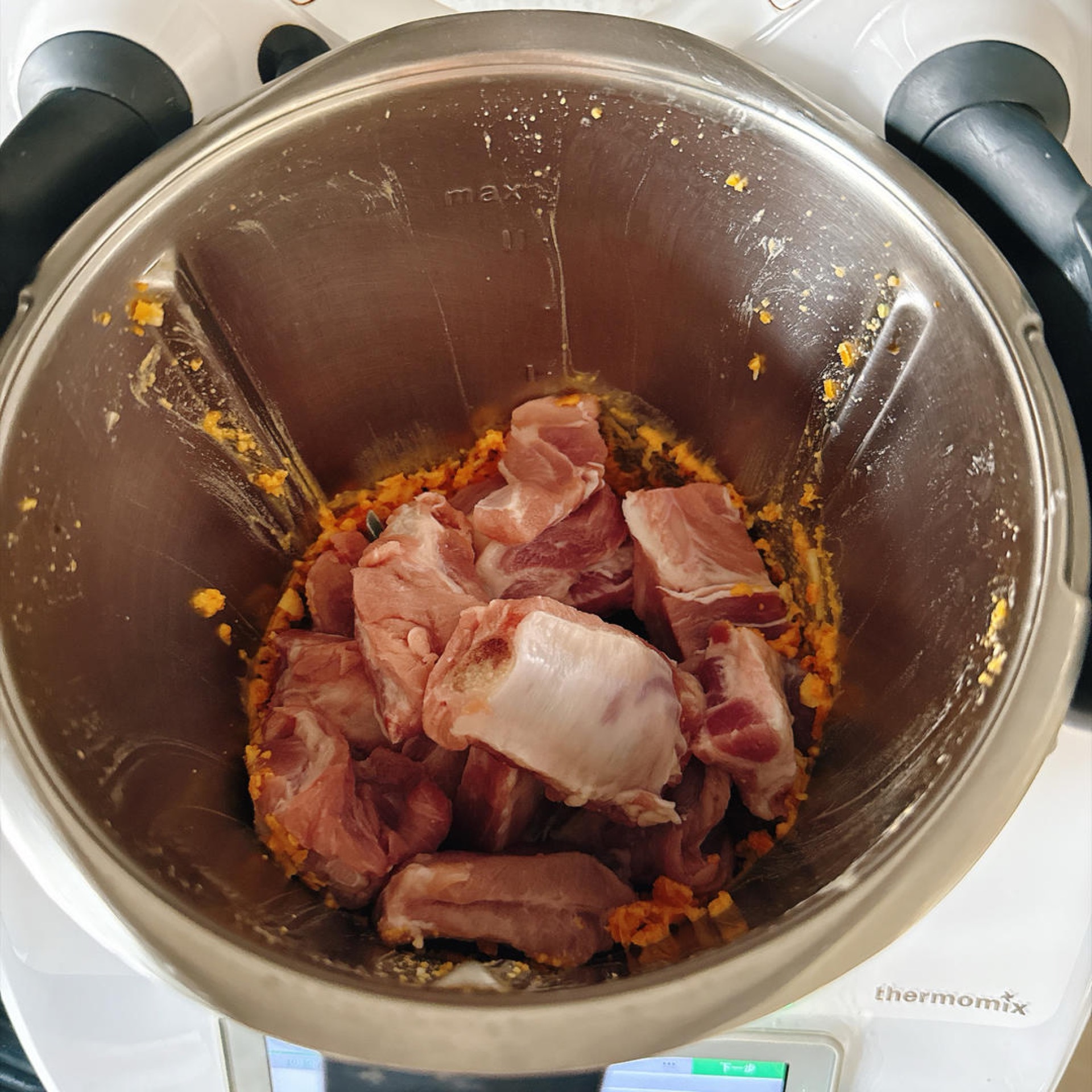
Step 7 — Add Ribs and Peppercorn
Add the pork ribs and the Sichuan peppercorn powder to the pot.
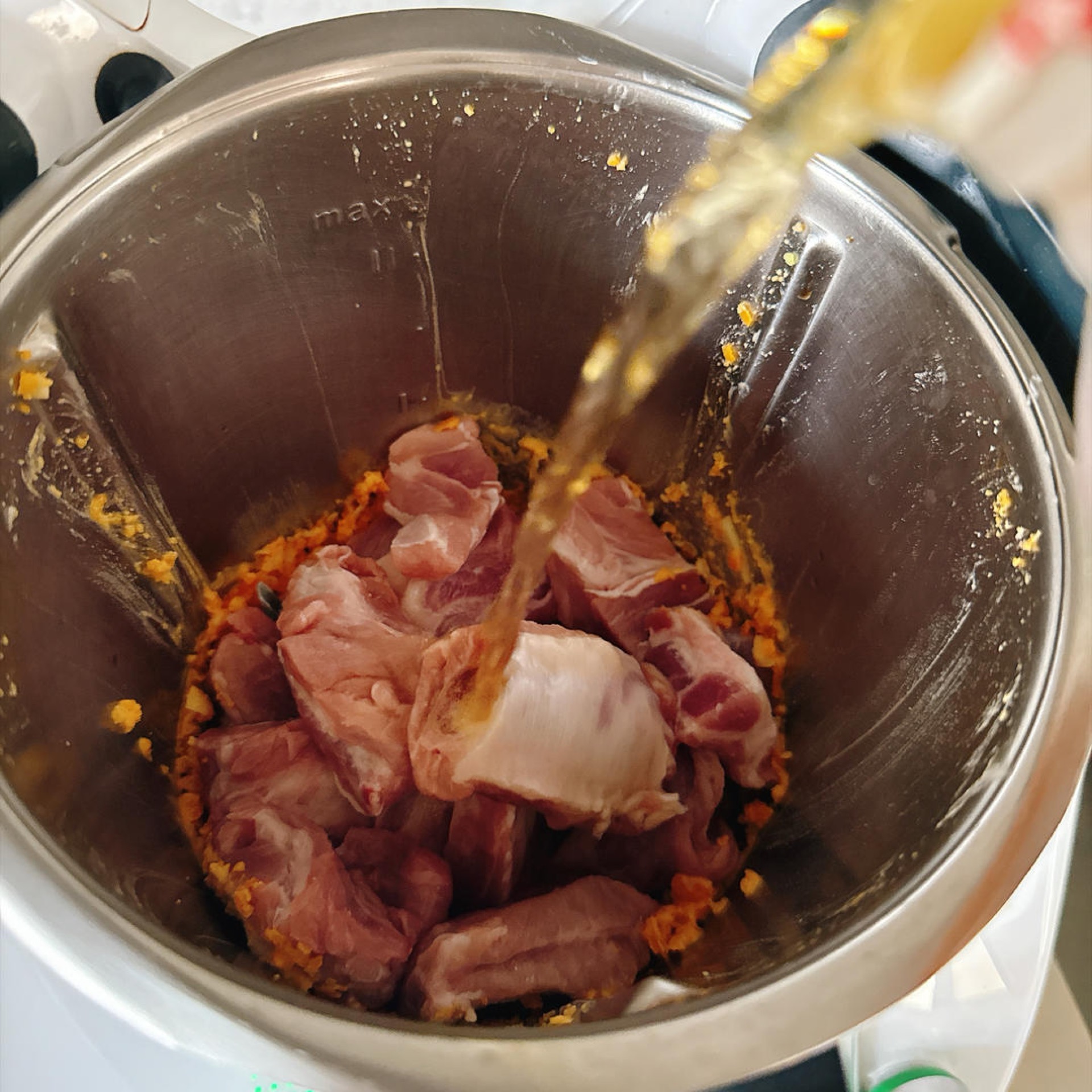
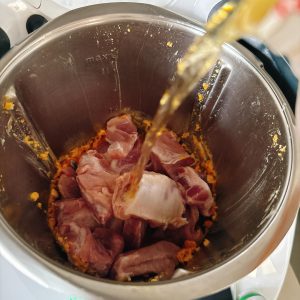
Step 8 — Add the Wine
Pour in the 30 g of Shaoxing wine.
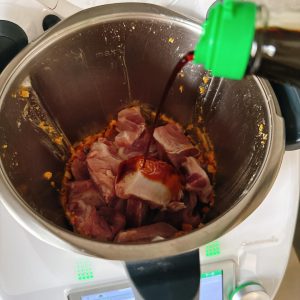
Step 9 — Add Light Soy Sauce
Pour in the 30 g of light soy sauce.
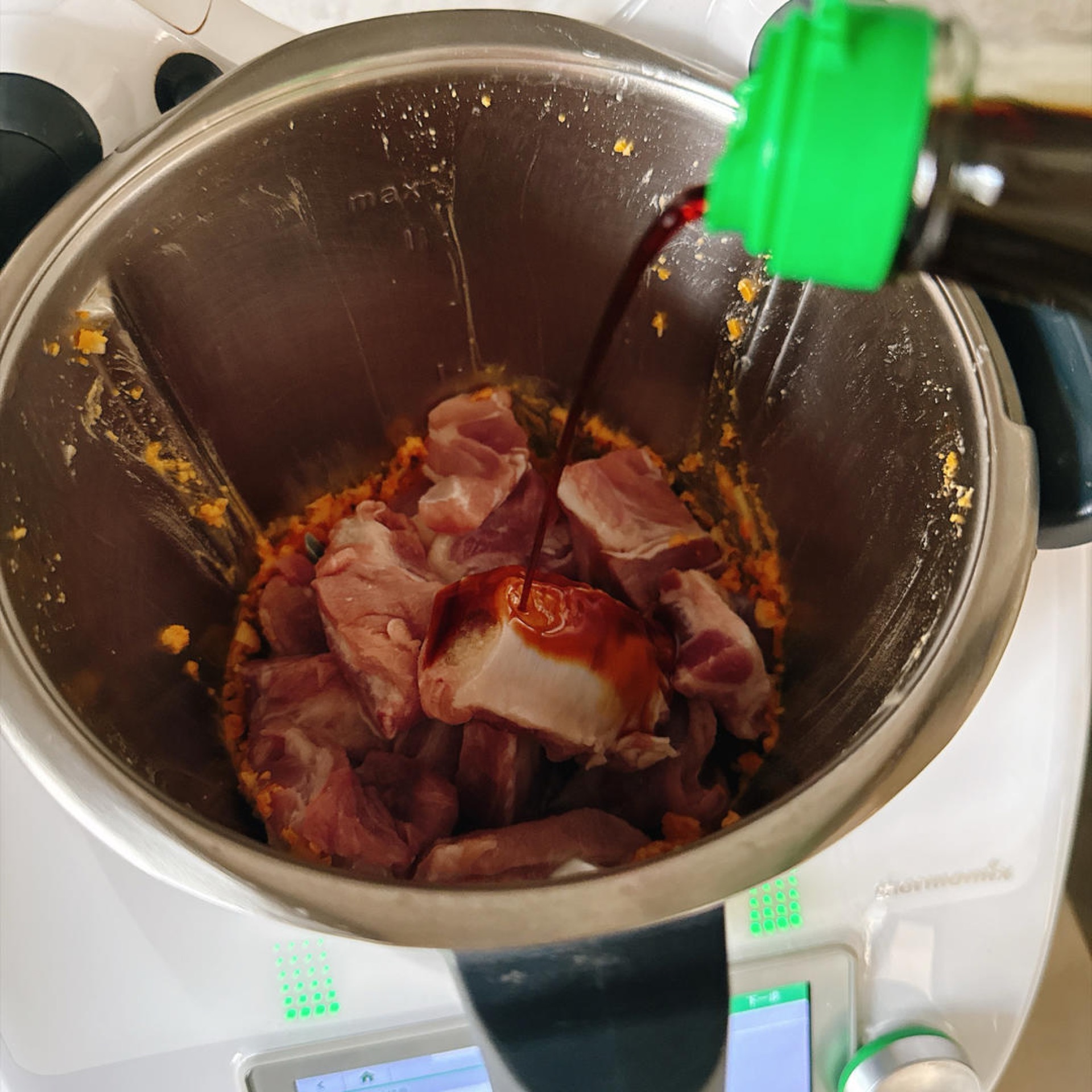
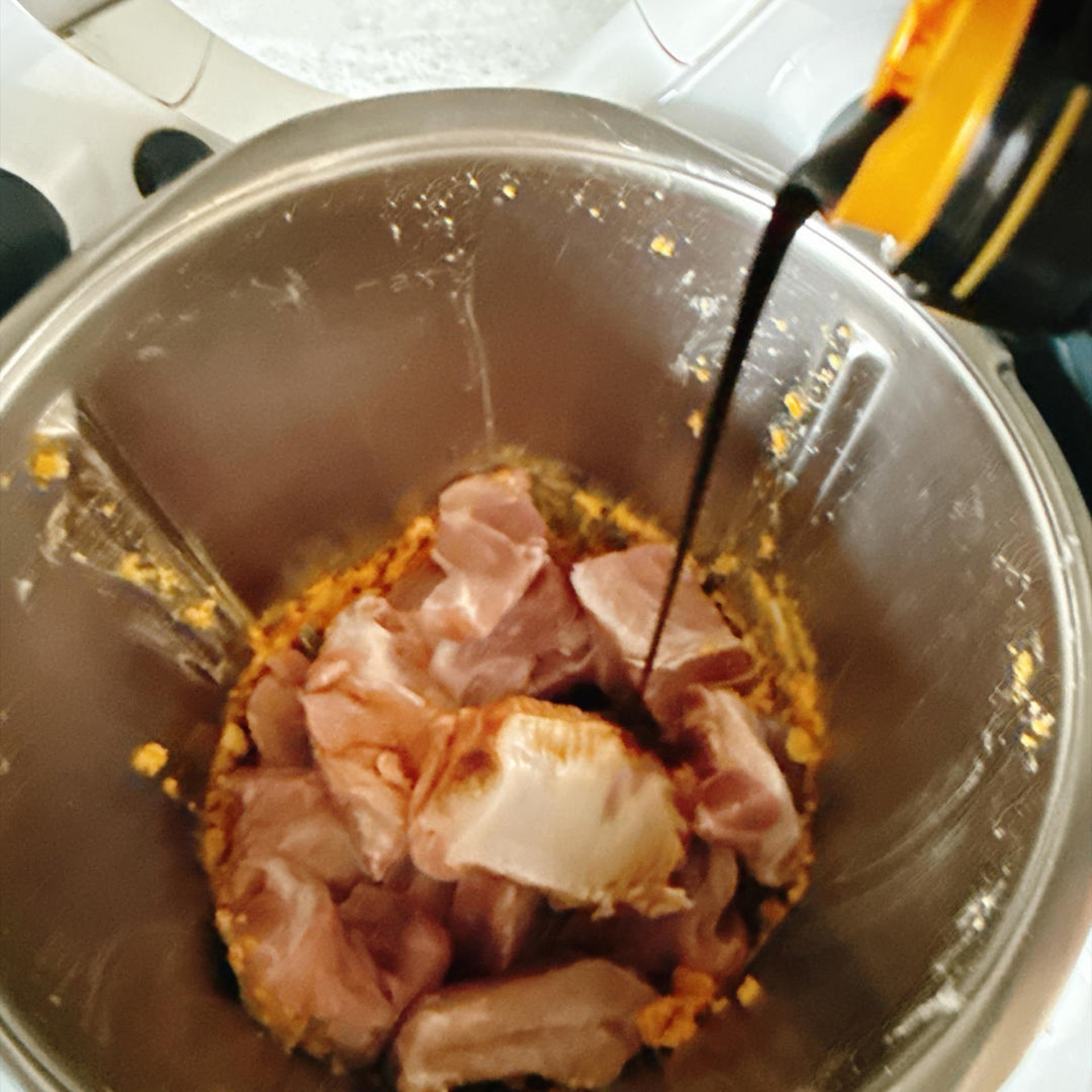
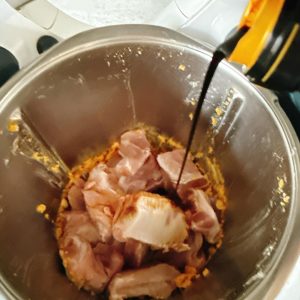
Step 10 — Add Dark Soy Sauce
Pour in the 10 g of dark soy sauce.
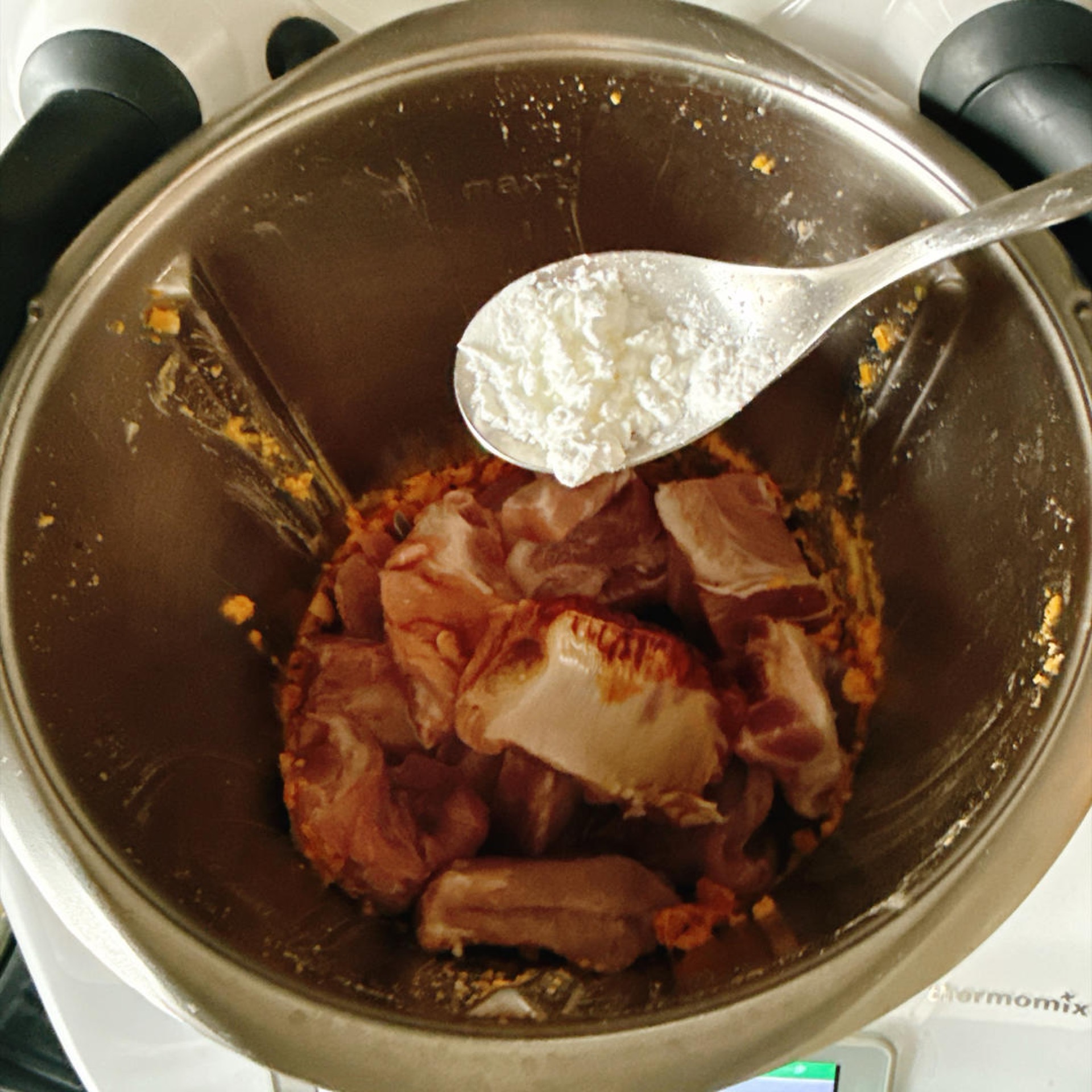
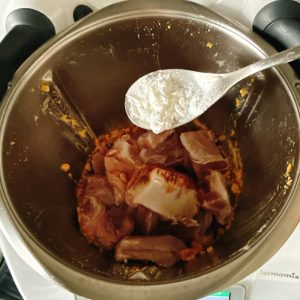
Step 11 — Add the Cornstarch
Add the 10 g of cornstarch.
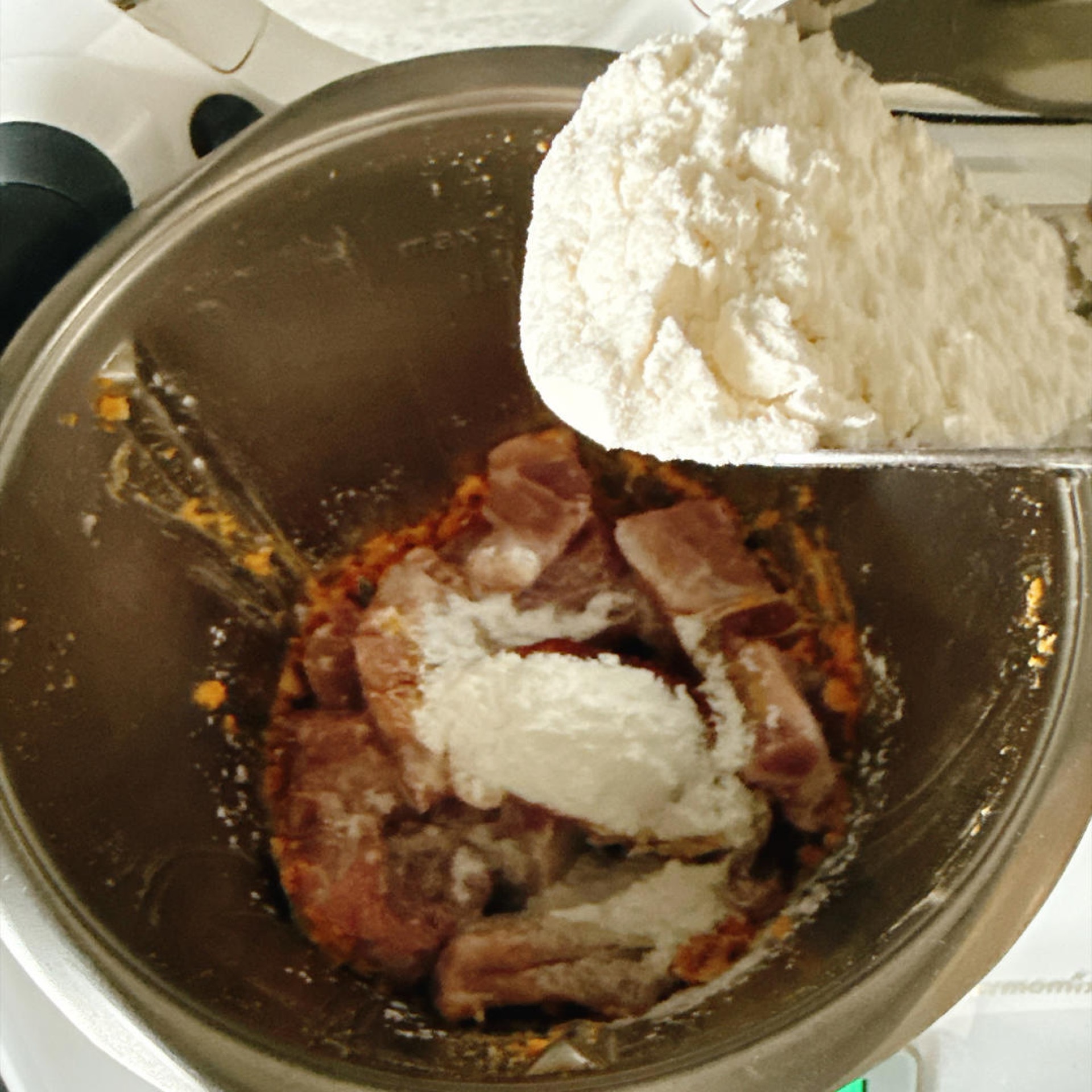
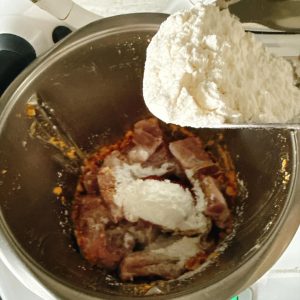
Step 12 — Add the Flour
Add the 10 g of all-purpose flour.
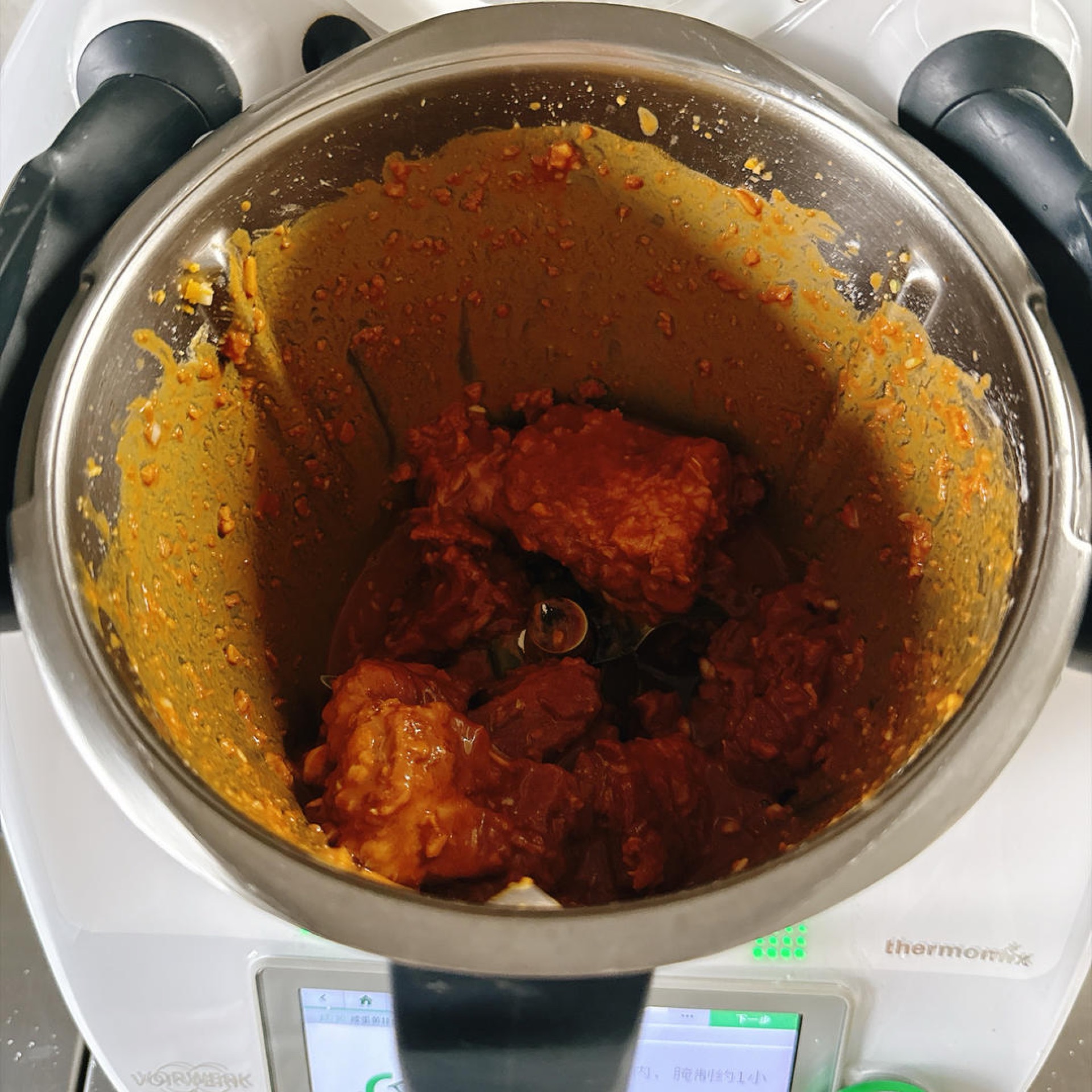
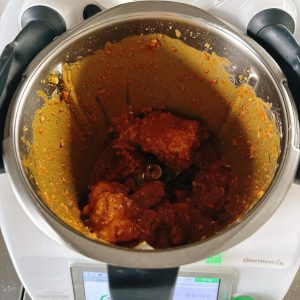
Step 13 — Mix the Marinade
Mix for 30 seconds on reverse speed 2 until everything is evenly combined.
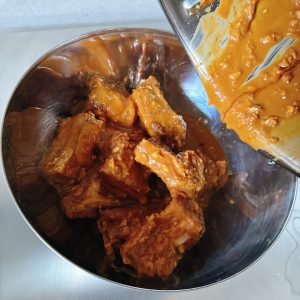
Step 14 — Transfer to a Bowl
Pour the coated ribs out into a bowl.
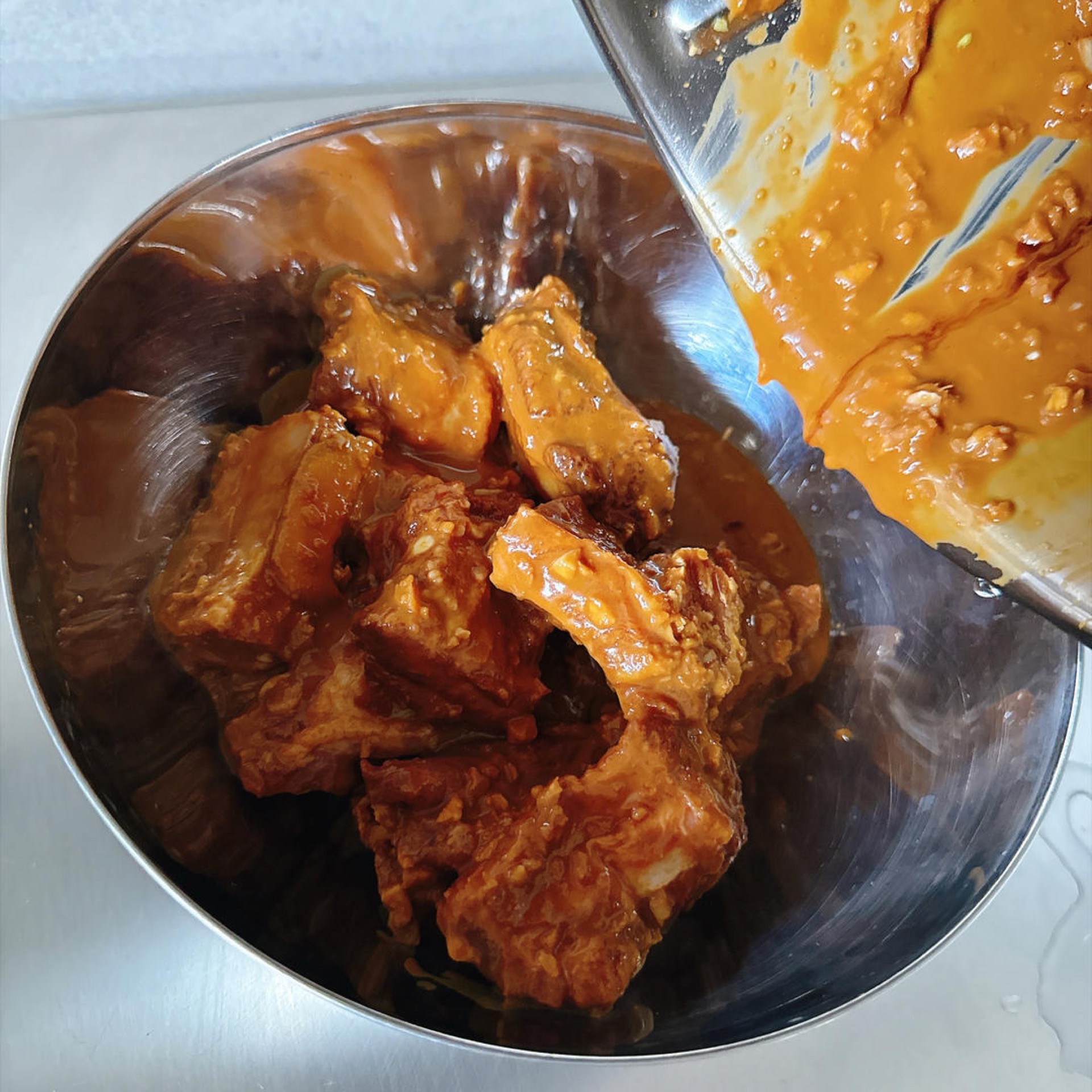
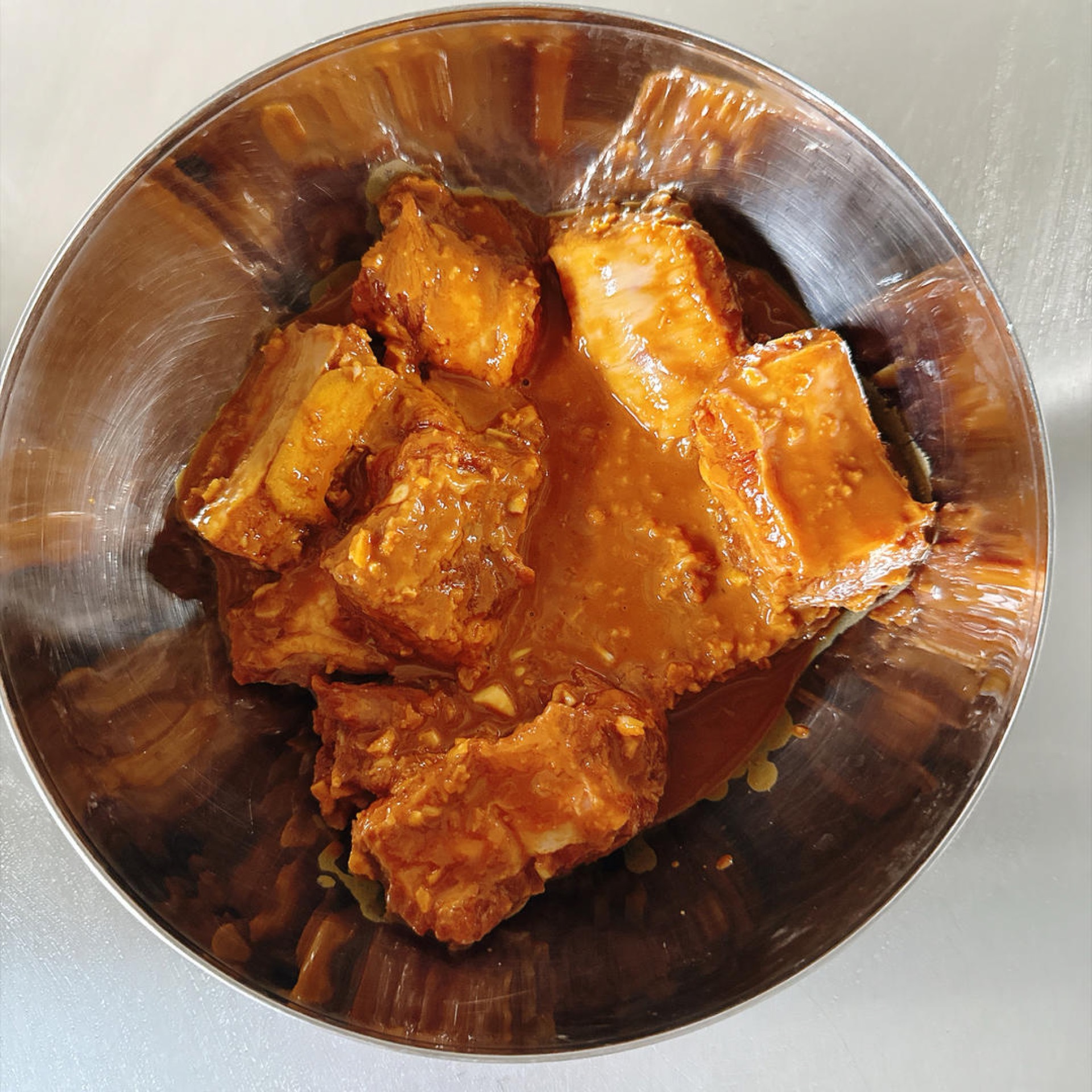
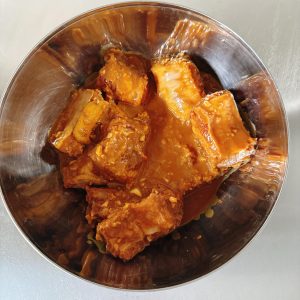
Step 15 — Marinate the Ribs
Marinate the ribs for about 1 hour, then clean the main pot.
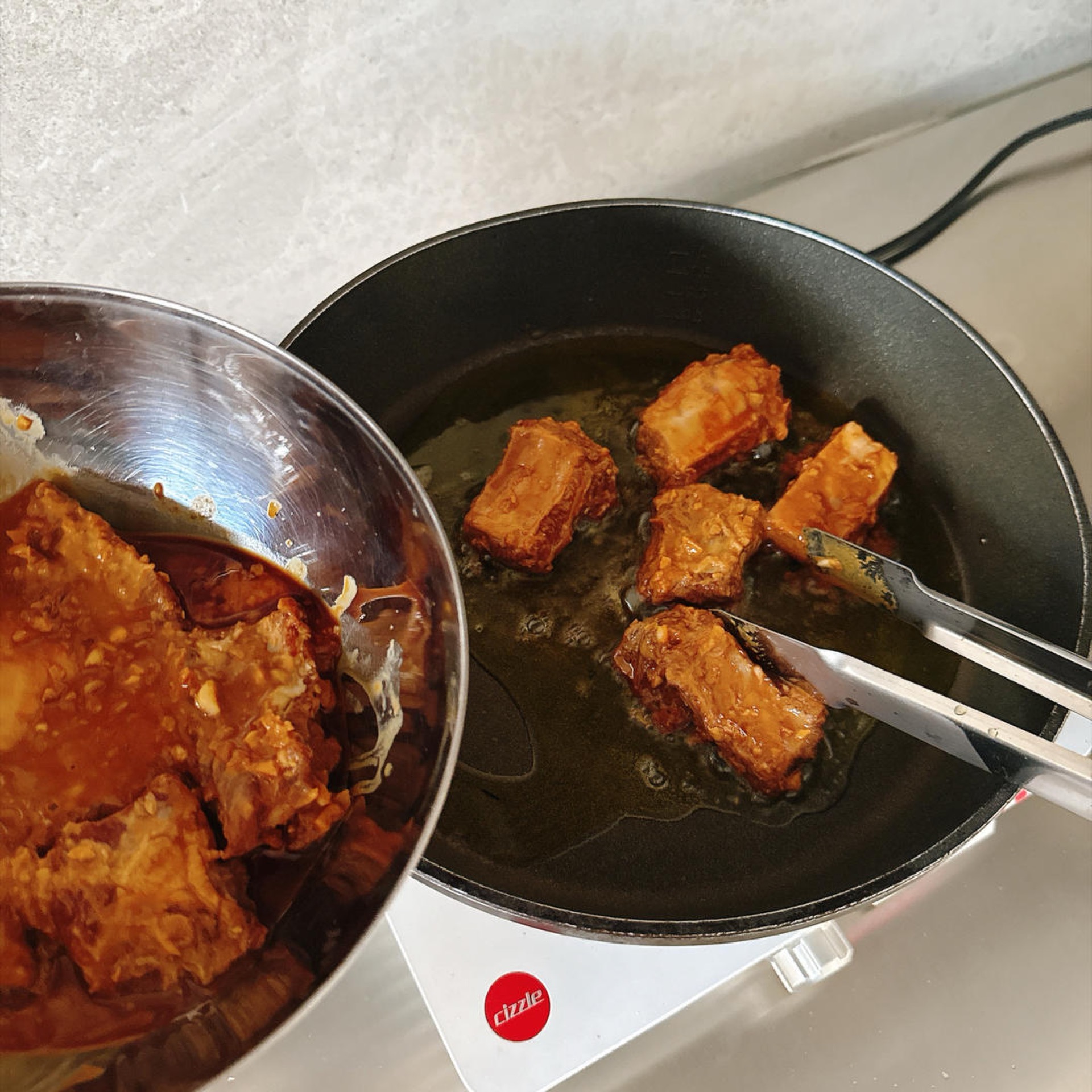
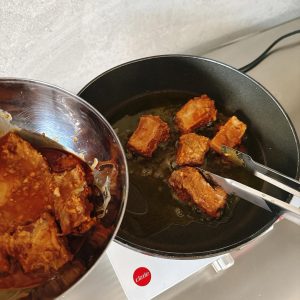
Step 16 — Heat the Oil and Add the Ribs
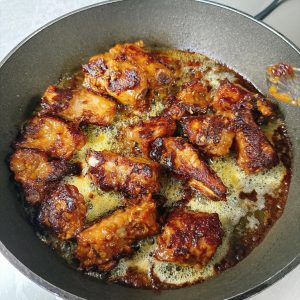
Take a non-stick pan, add a suitable amount of oil and heat it to 350°F (180°C), then place the marinated pork ribs into the pan.
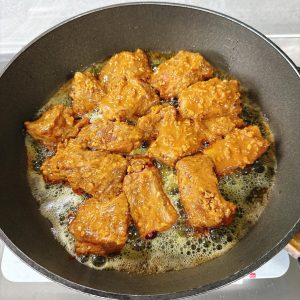
Step 17 — Sear Until Golden
Pan-fry the ribs until they turn golden brown.
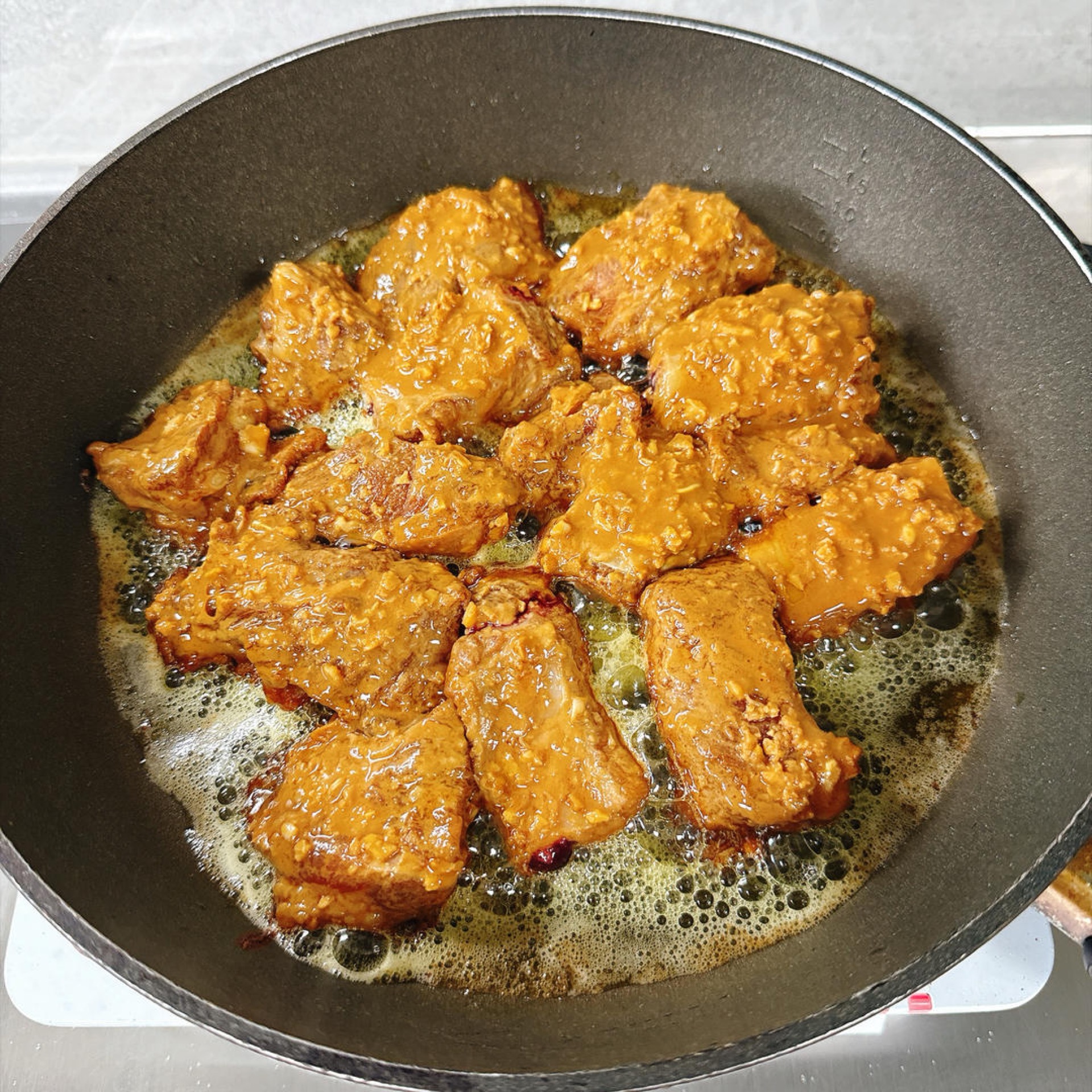
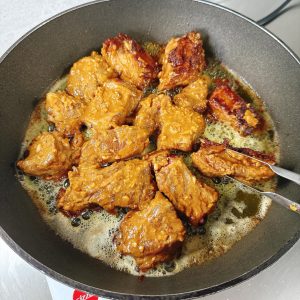
Step 18 — Fry Until Cooked Through
Continue frying for another 3 to 4 minutes until the ribs are fully cooked.
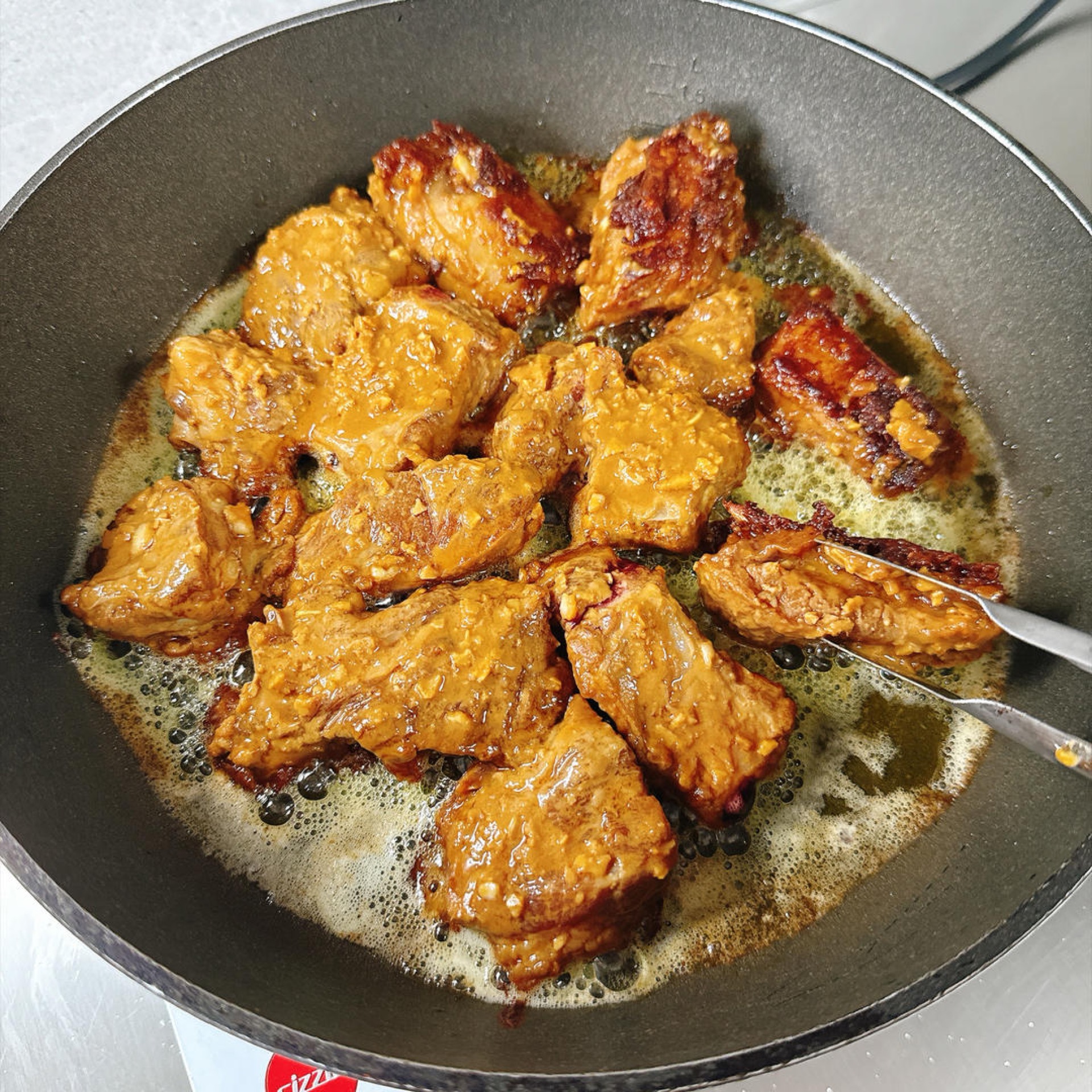
Step 19 — Check Doneness
Keep frying until the ribs are cooked all the way through.
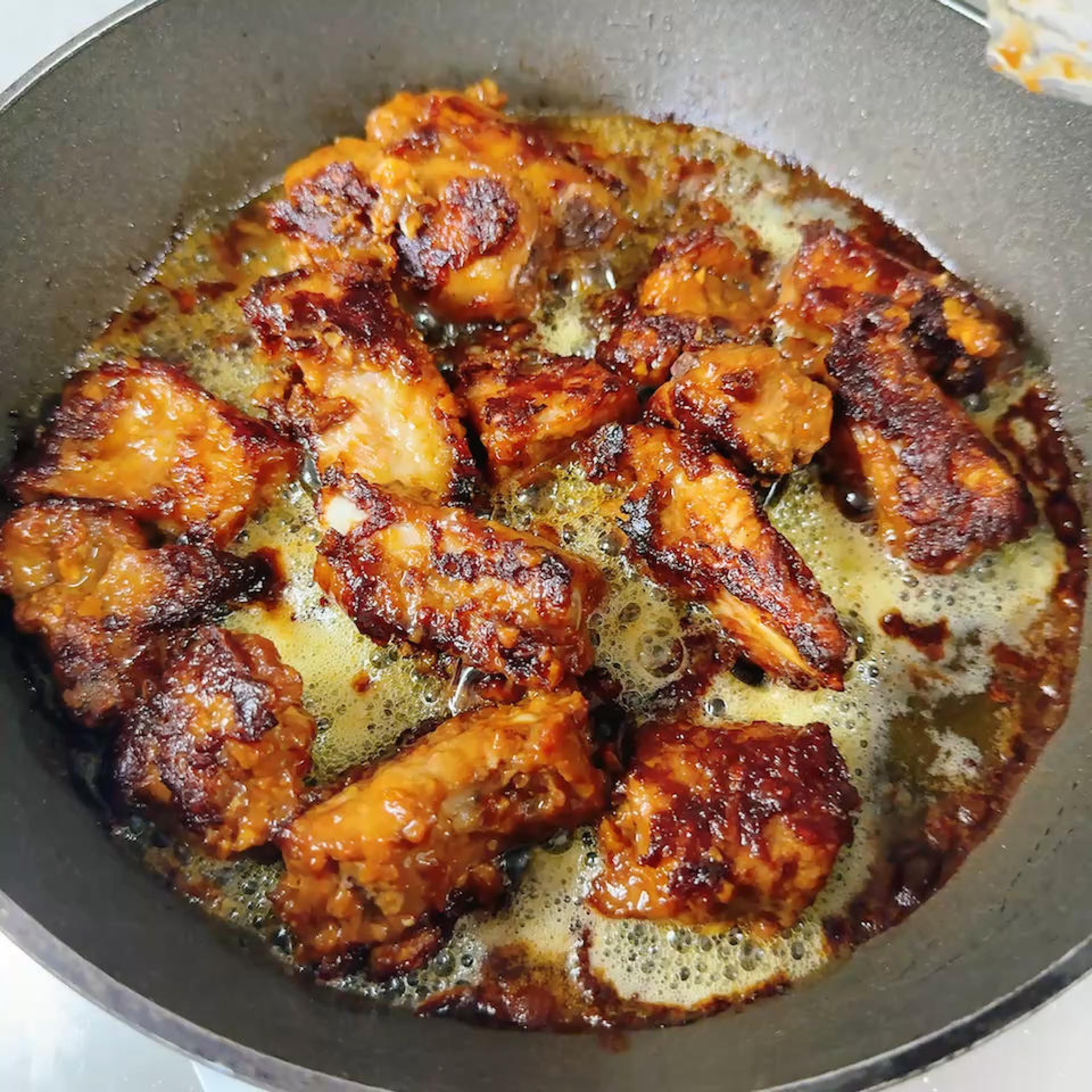
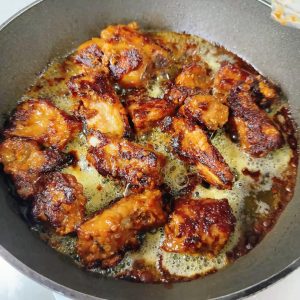
Step 20 — Look for the Crisp Edges
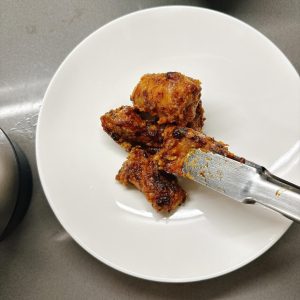
The color should be glossy and red, and the edges should already have that crisp, caramelized texture that looks so appetizing.
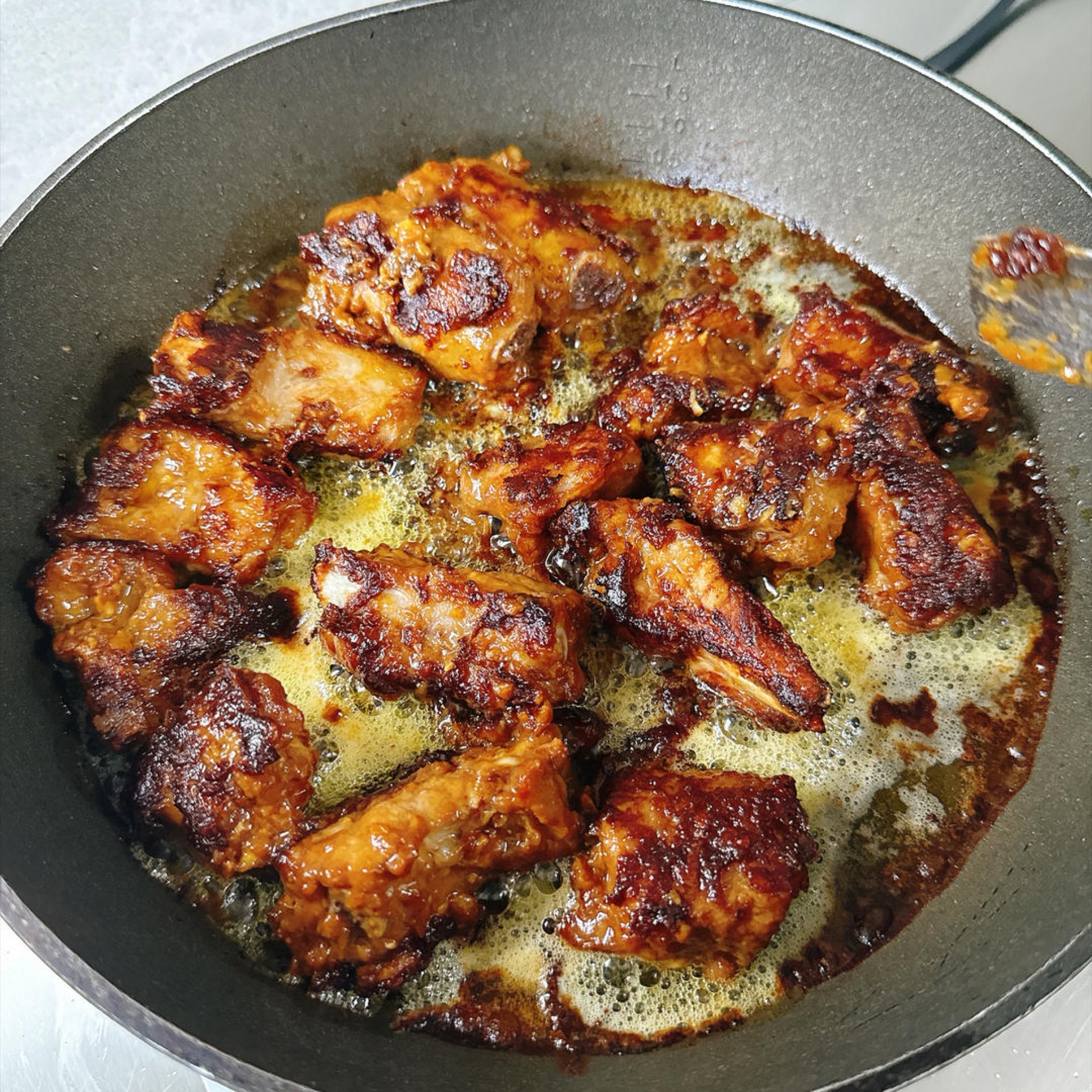
Step 21 — Add the Remaining Yolks
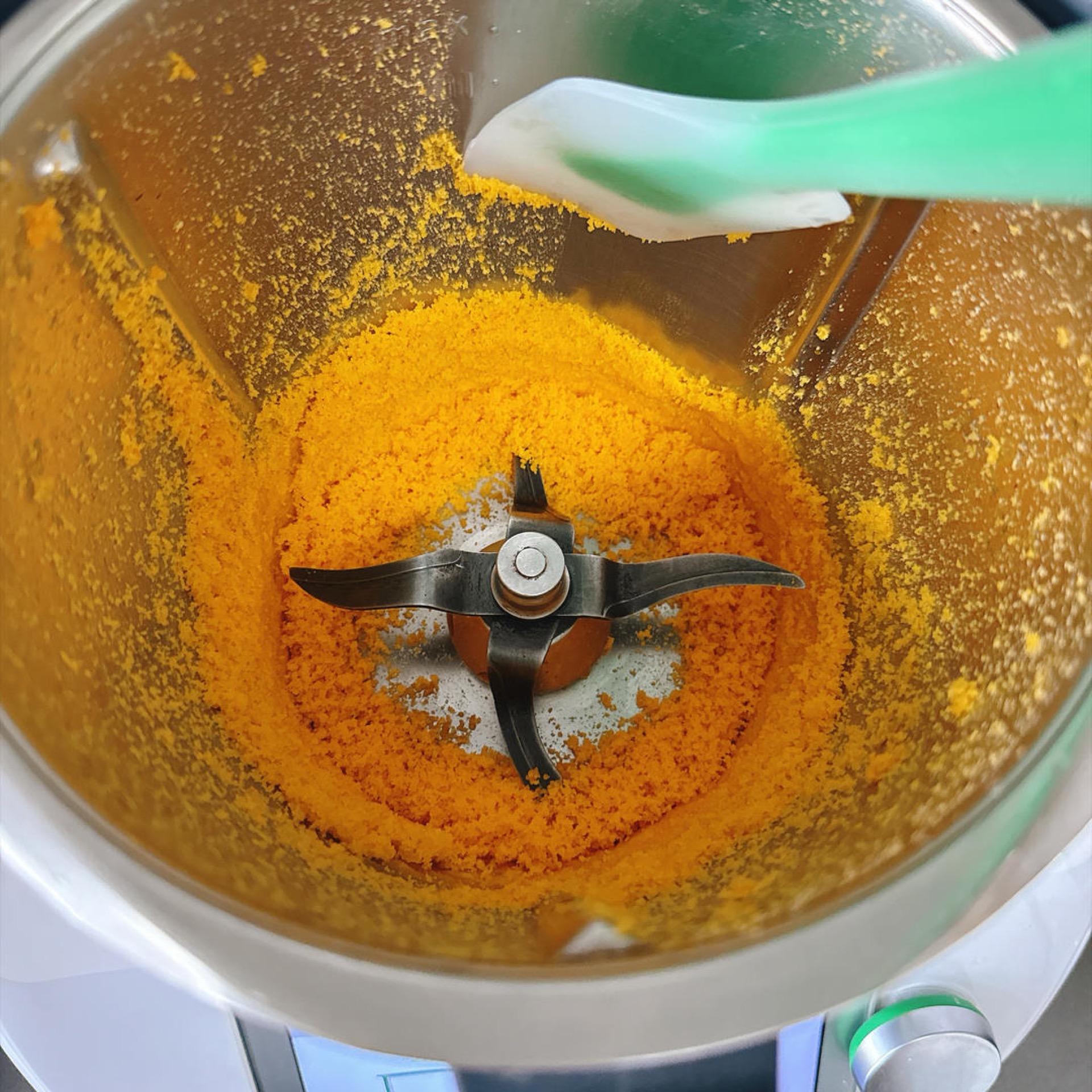
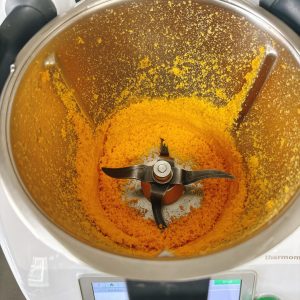
Put the remaining roasted salted egg yolks into the main pot.
Step 22 — Pulverize the Yolks
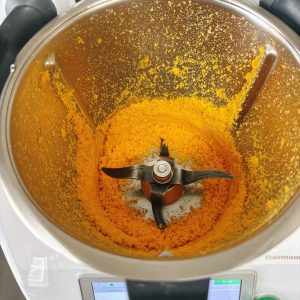
Blend for 5 seconds on speed 8 until the yolks are finely crushed.
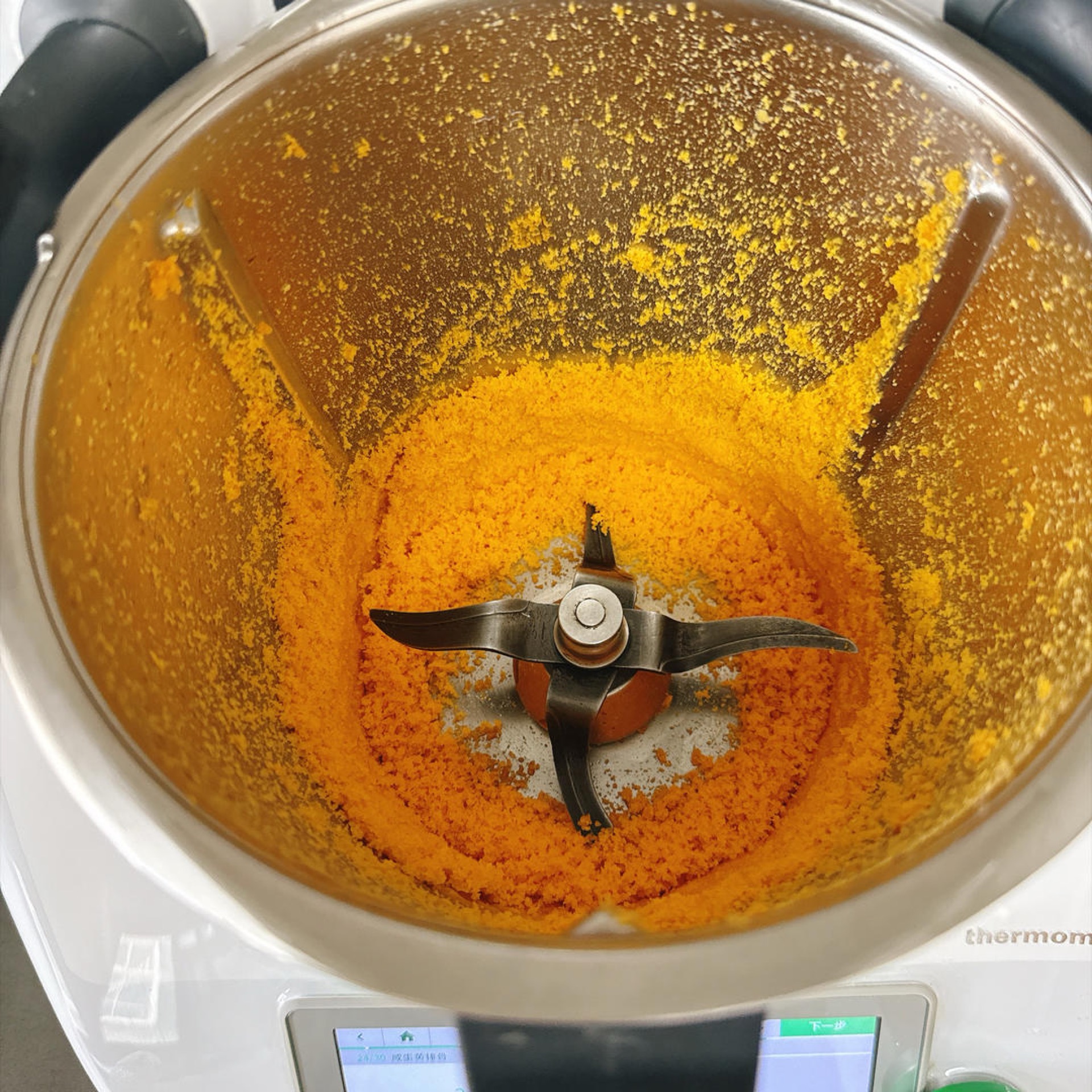
Step 23 — Scrape Down the Pot
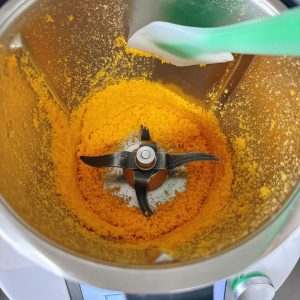
Use a spatula to scrape the ingredients down to the bottom of the main pot.
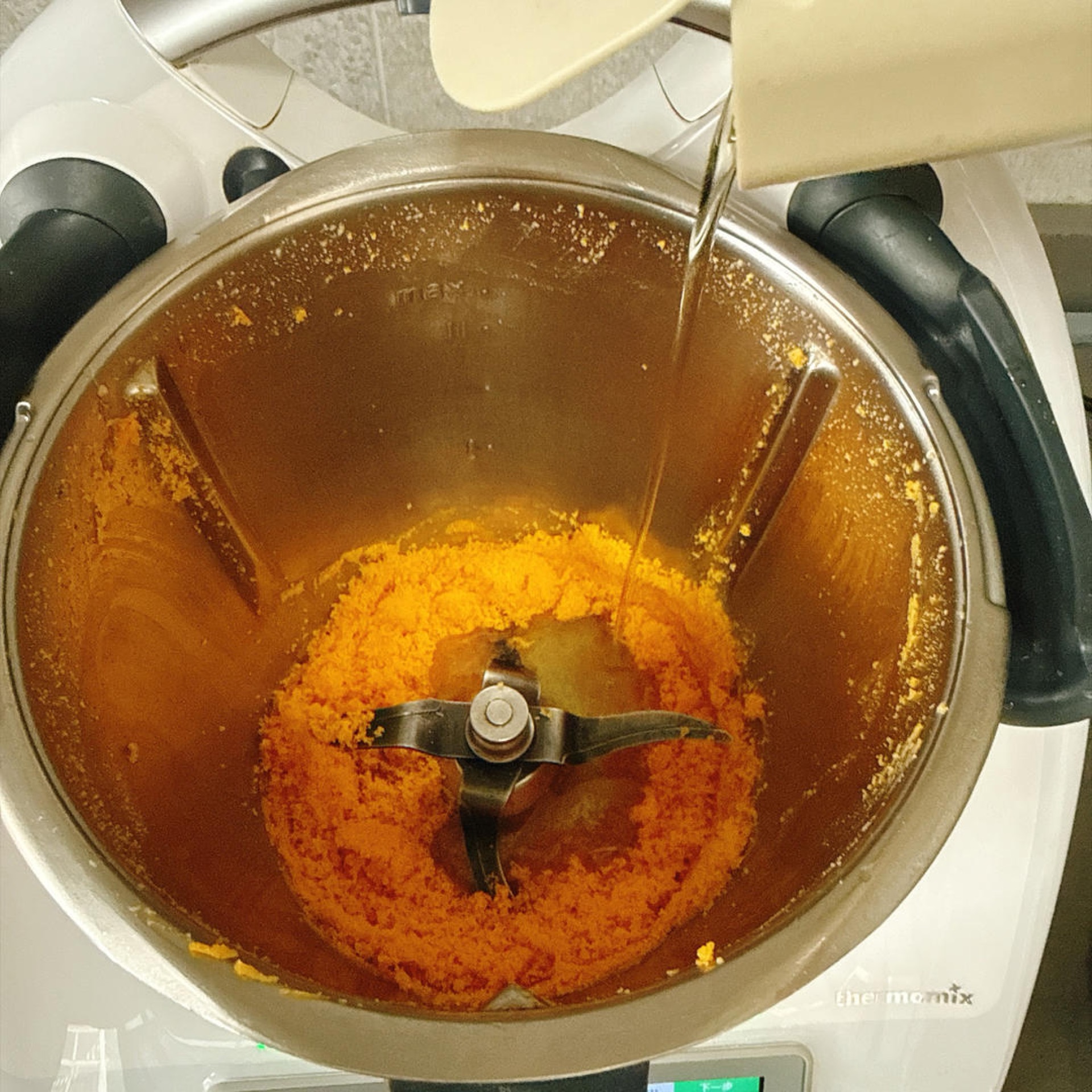
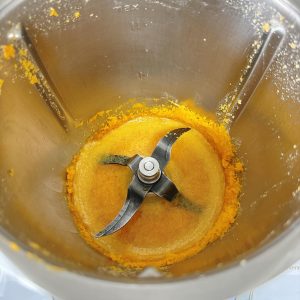
Step 24 — Add the Oil
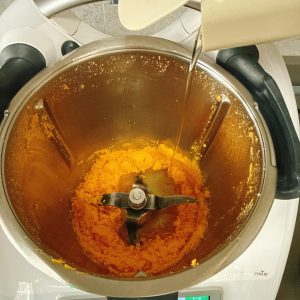
Add the 50 g of oil.
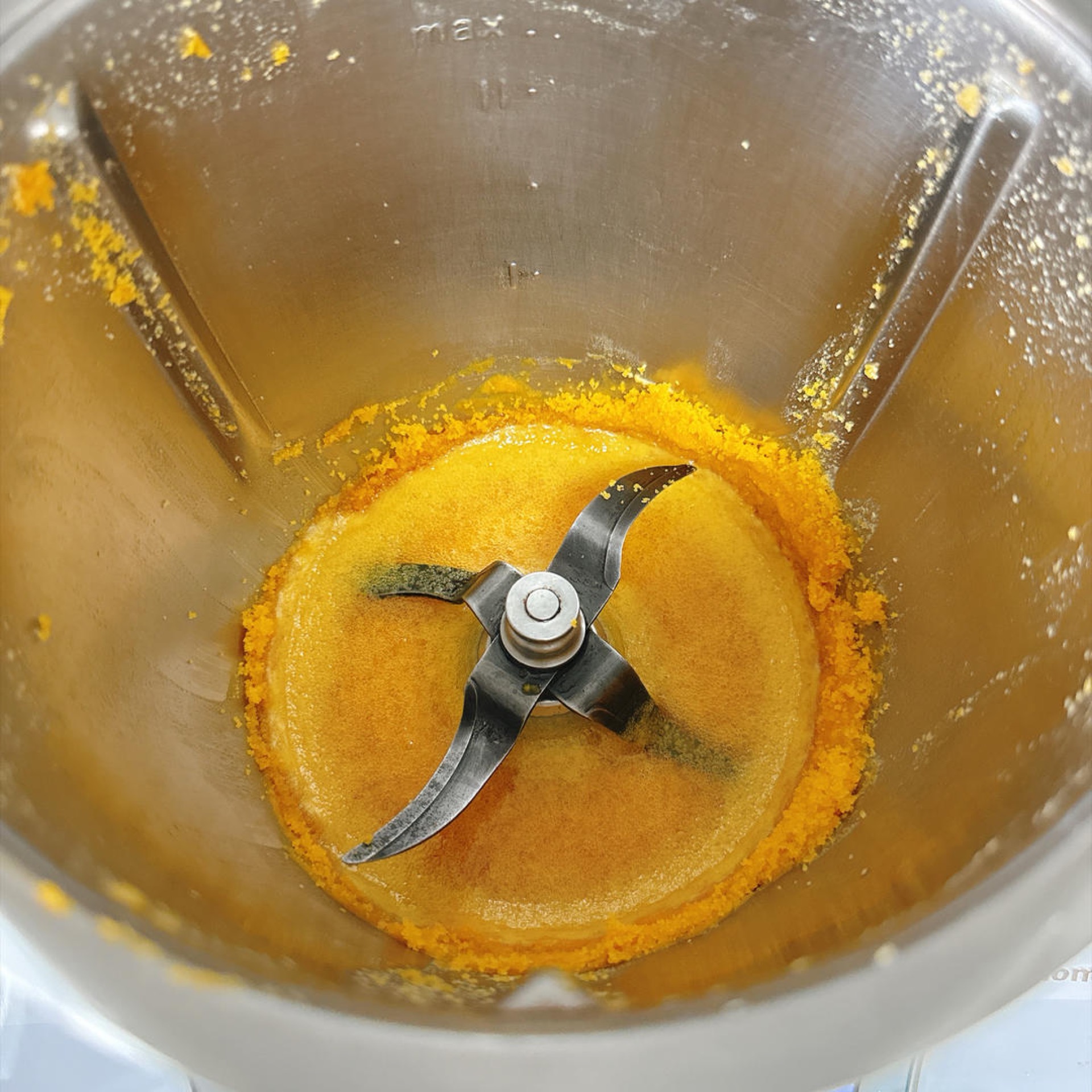
Step 25 — Fry the Yolk Sauce
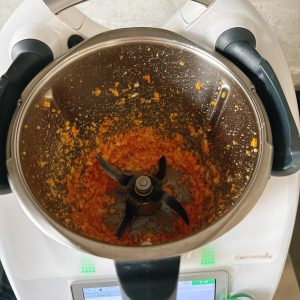
Cook for 5 minutes at 248°F (120°C) on speed 1 to bloom the yolk into a fragrant sauce.
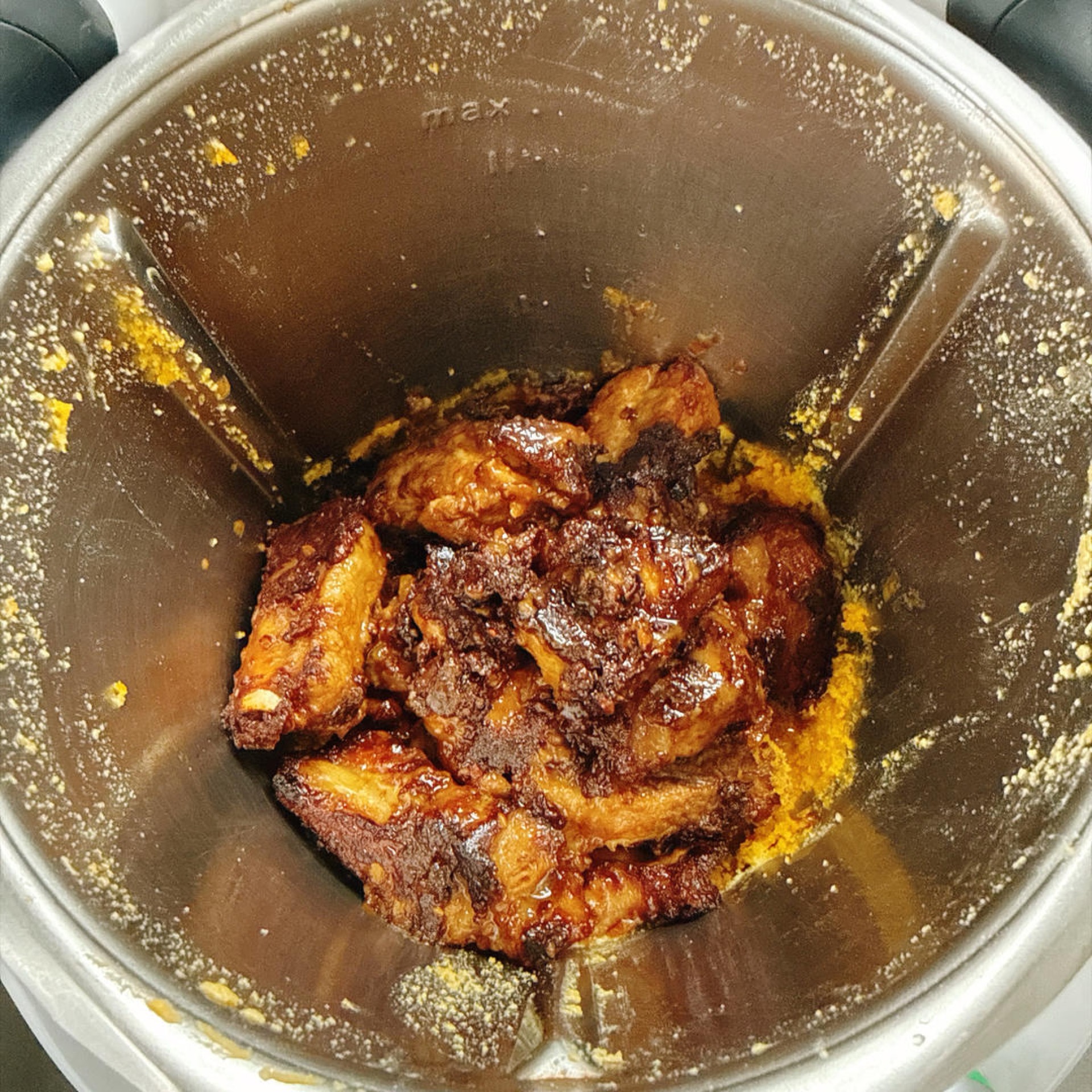
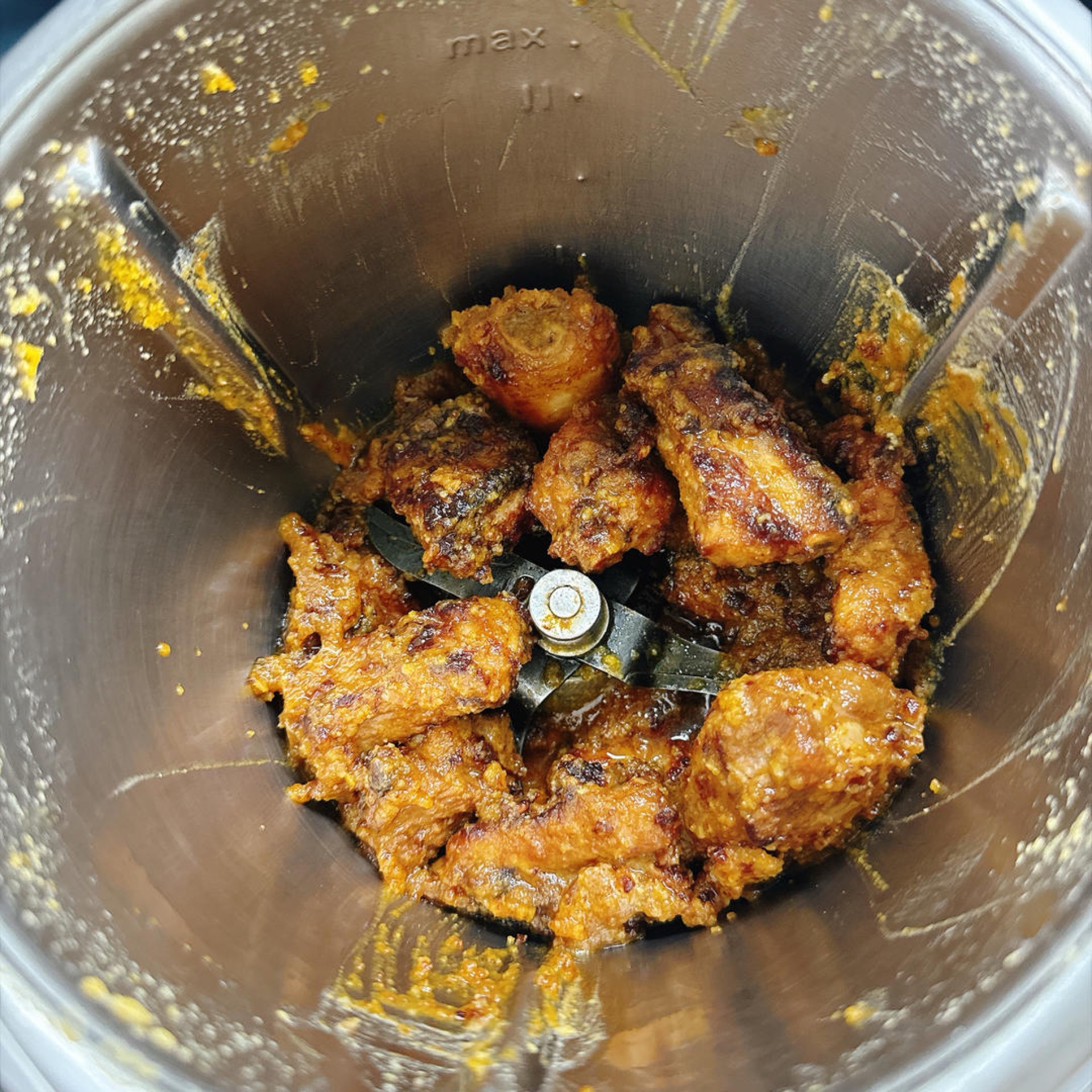
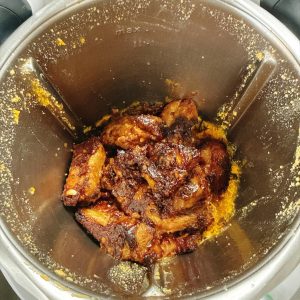
Step 26 — Add the Fried Ribs
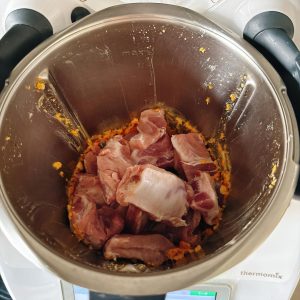
Add the pan-fried pork ribs to the yolk sauce.
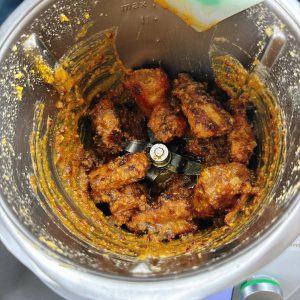
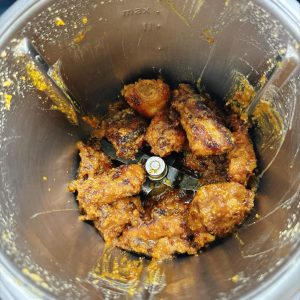
Step 27 — Toss to Coat
Toss for 10 seconds on reverse speed 1.5 until every rib is coated.
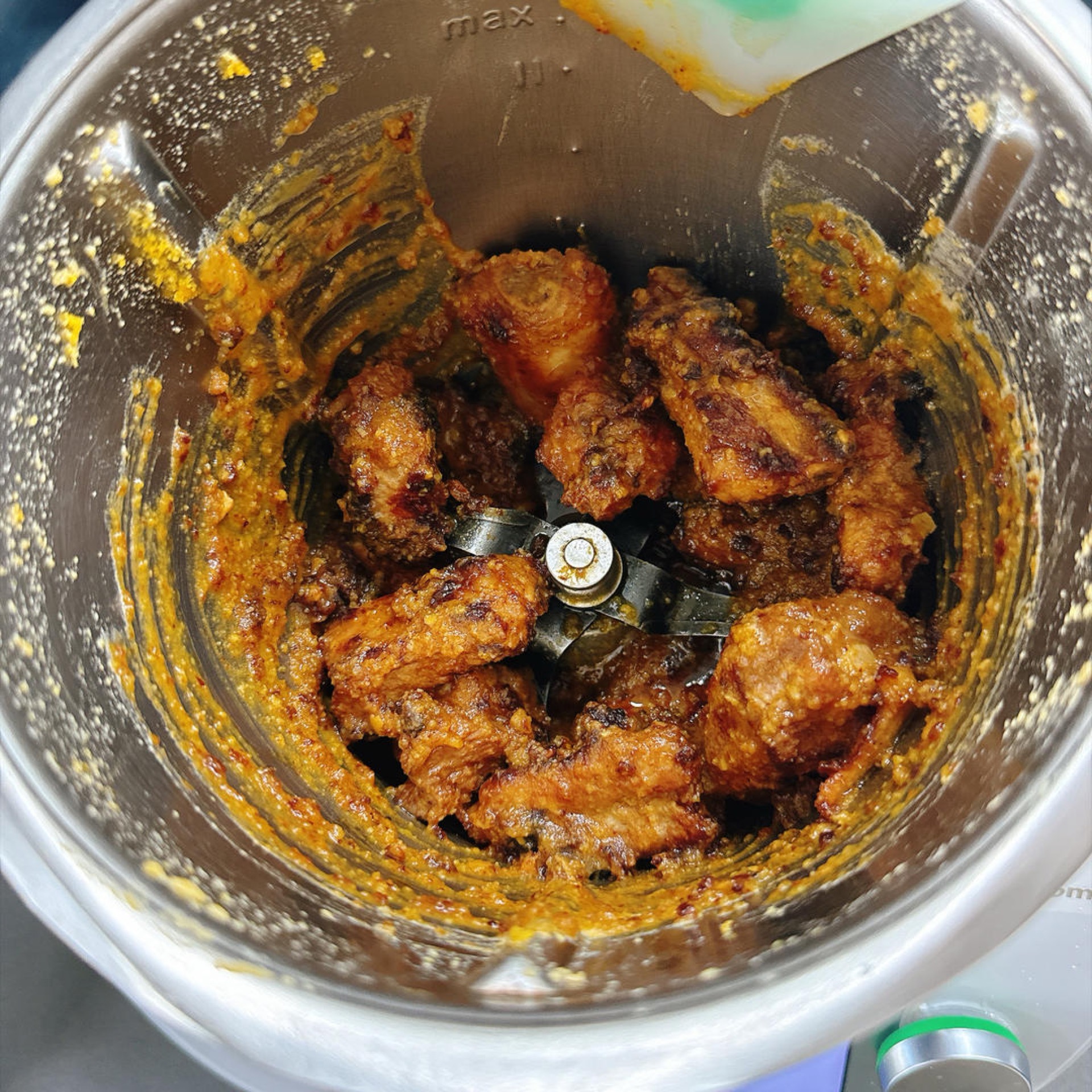
Step 28 — Take It Out
Remove the ribs from the pot.
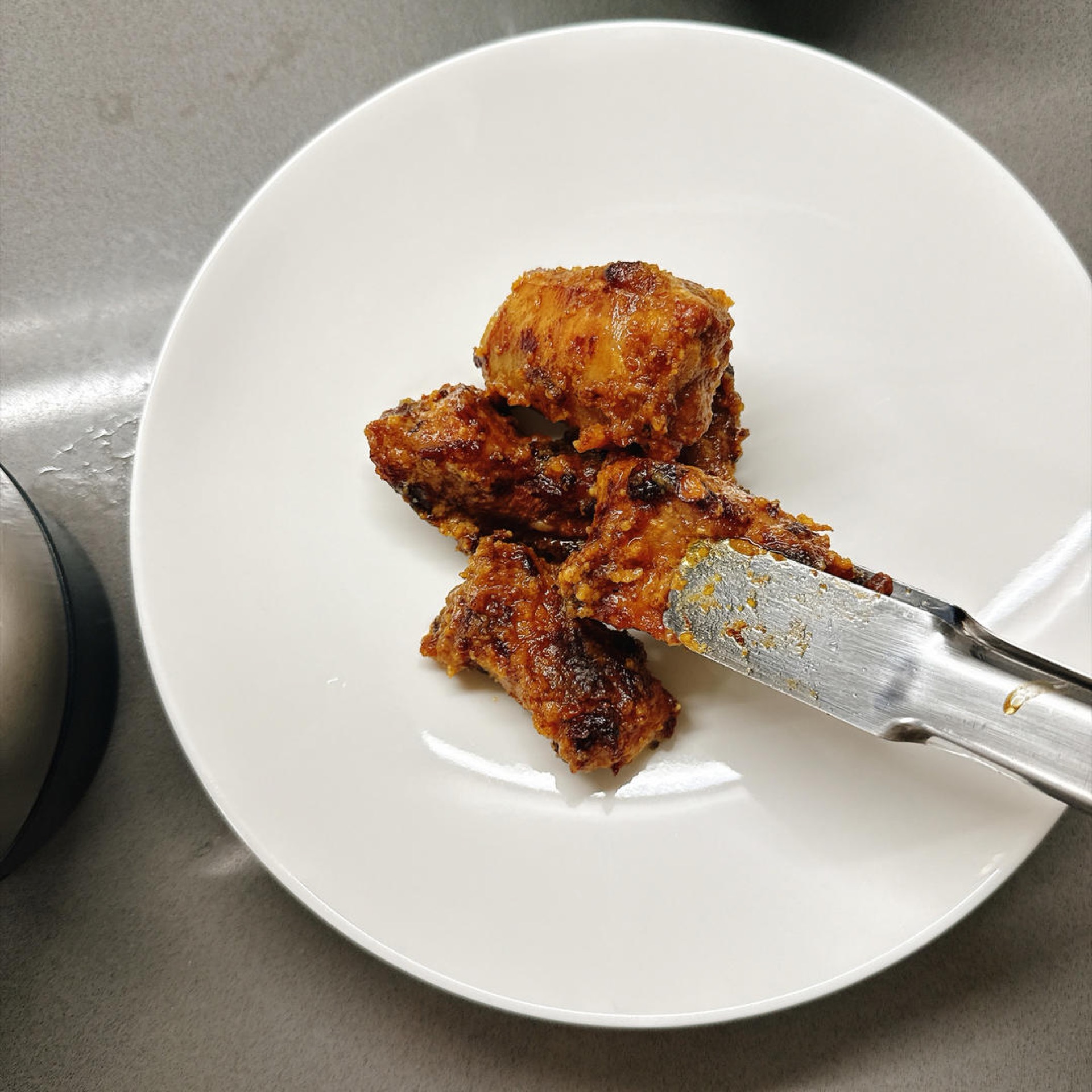
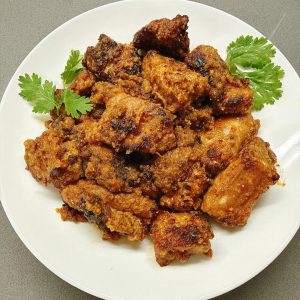
Step 29 — Plate the Ribs
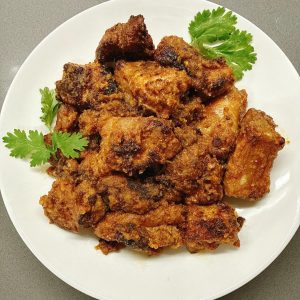
Arrange the ribs on a serving plate.
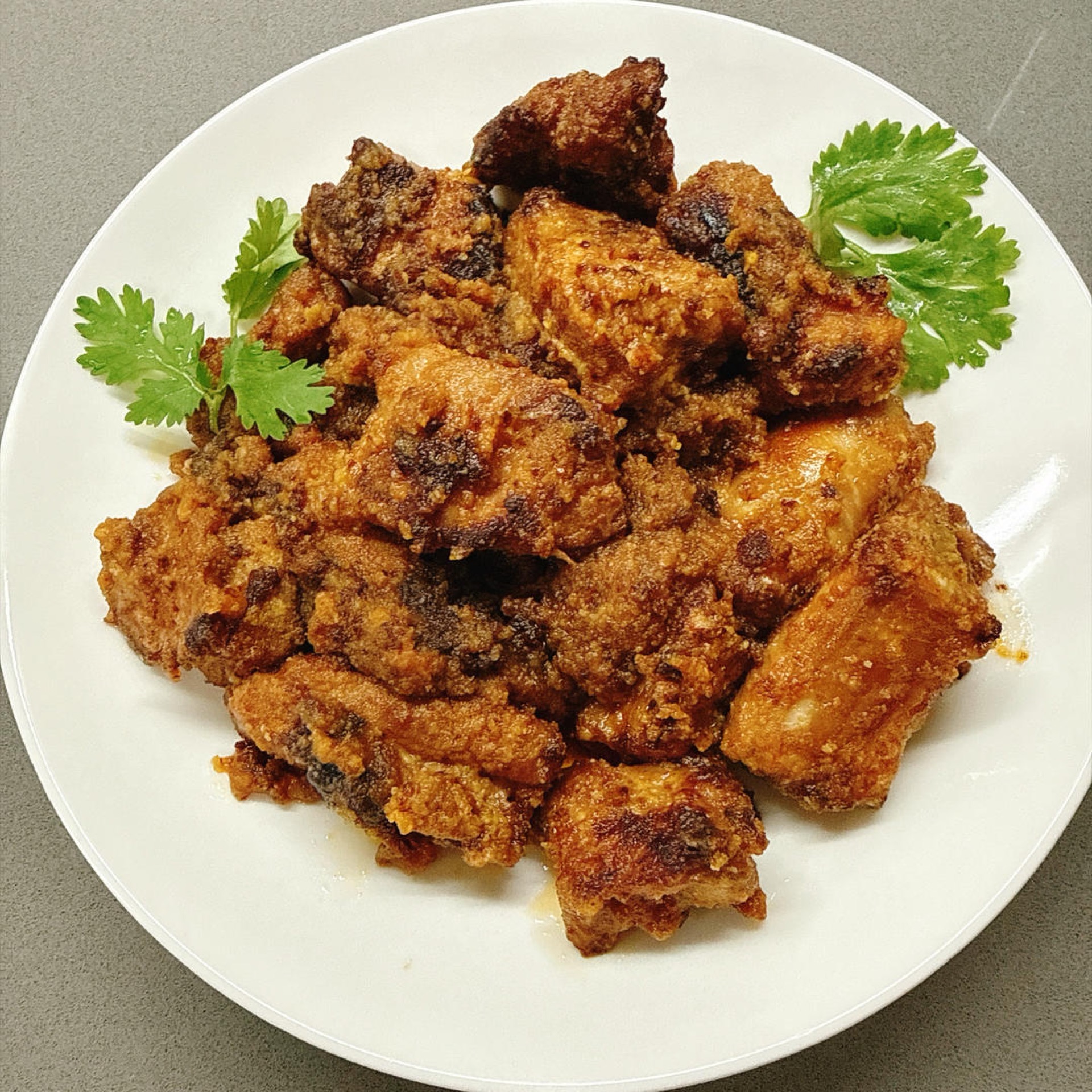
Step 30 — Admire the Result
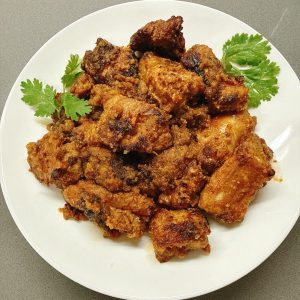
It looks incredibly appetizing and makes you want to dig in right away.
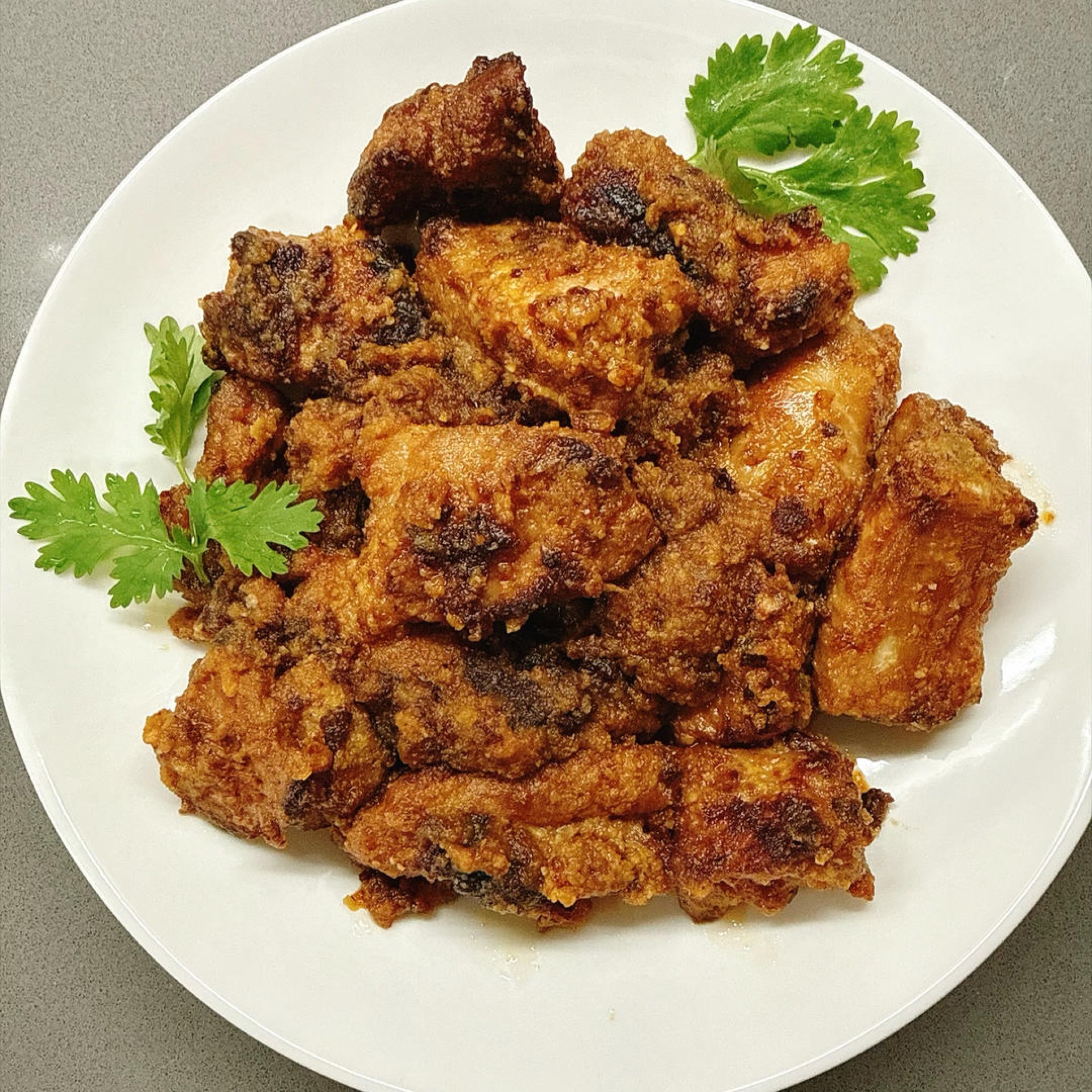
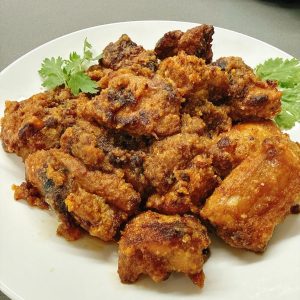
Step 31 — Note the Sandy Yolk Texture
The moment salted egg yolk turns sandy is a delicate one, and the food processor holds the temperature in exactly the right range so the yolk cooks up dense, fluffy, and creamy as it clings to the ribs without ever tasting heavy.
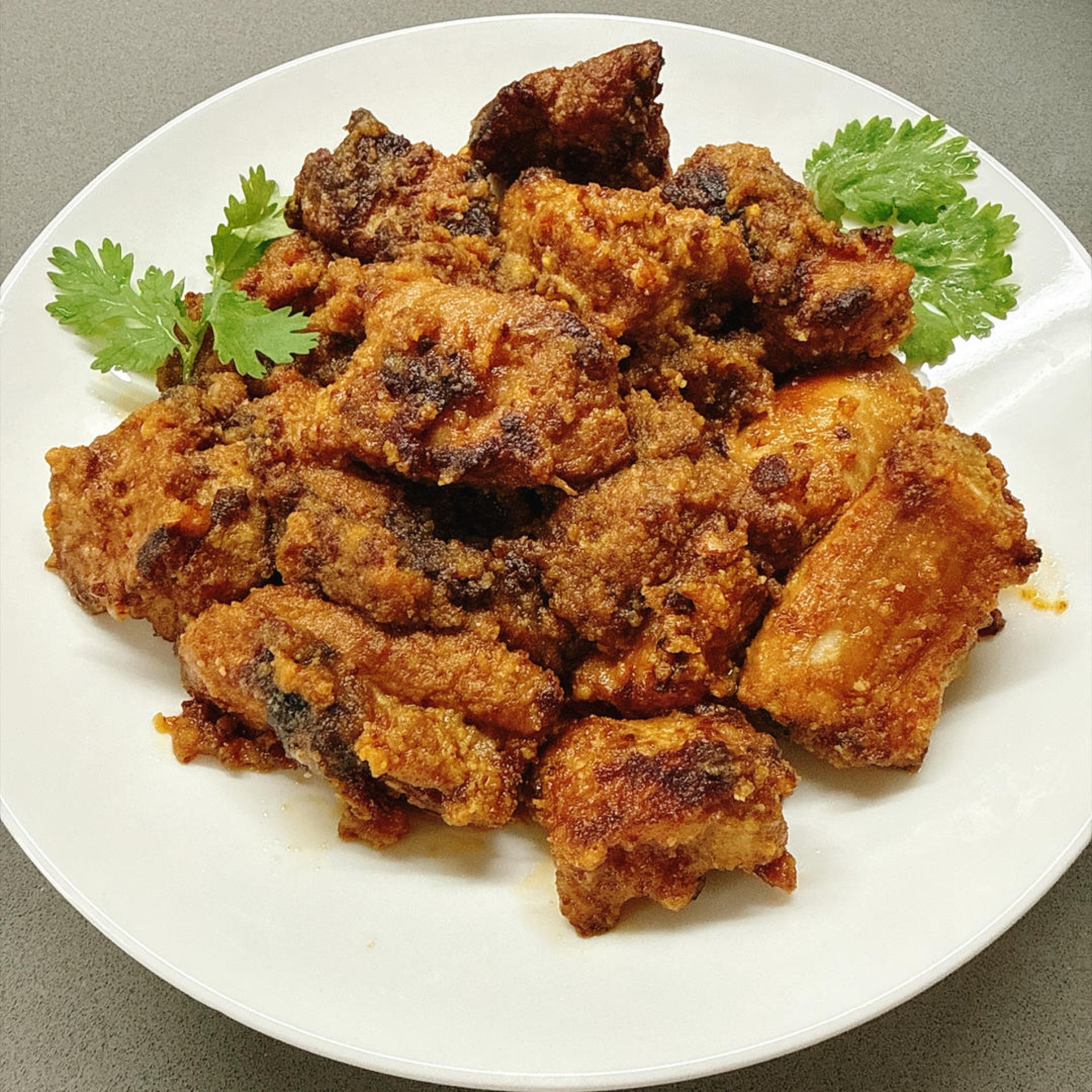
Step 32 — An Easy Crowd-Pleaser
This is one of those dishes that gets compliments at the table even though it really was not much work.
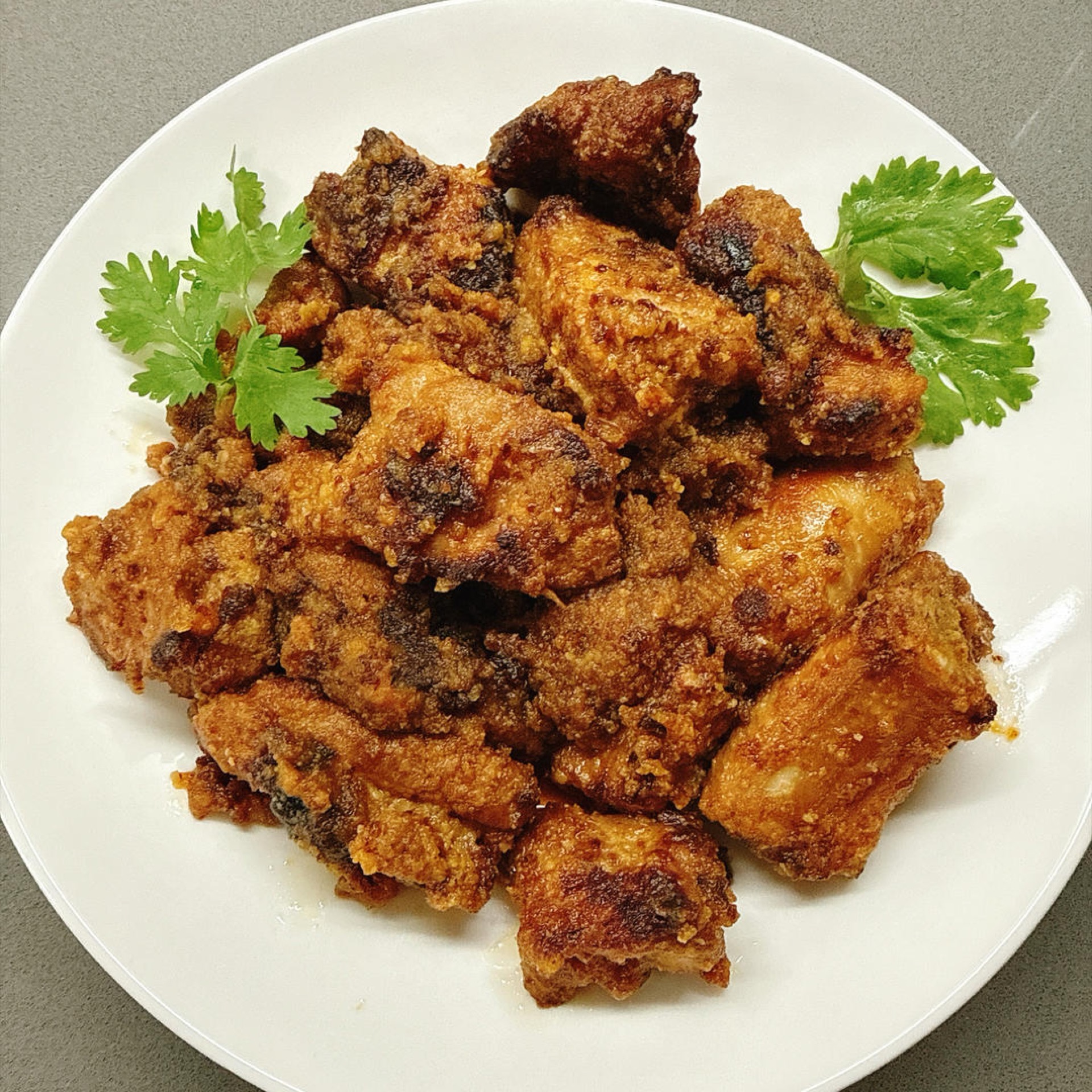
Step 33 — Enjoy the Crisp and Juicy Bite
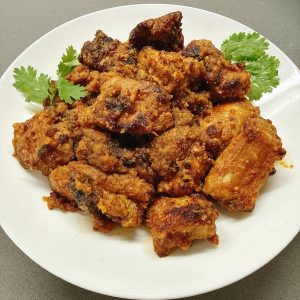
The ribs are not deep-fried over a roaring flame, yet they come out crisp outside and tender inside, and when you bite through the golden sandy coating the meat is still juicy, savory with a faint numbing tingle of Sichuan pepper that keeps you reaching for more.
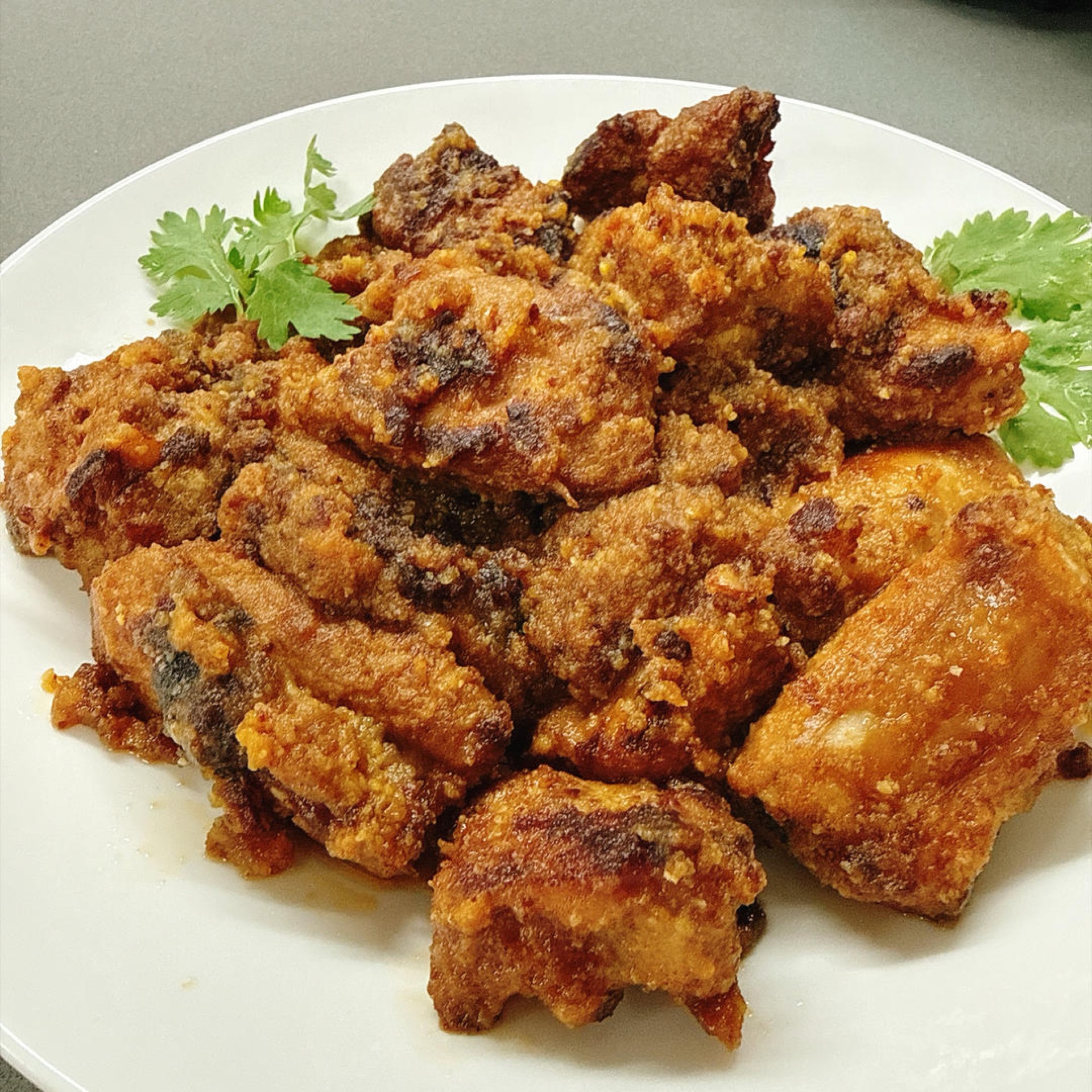
Step 34 — Taste the Balance
Savory, crisp, tender, with a subtle milky sweetness on the finish.
Common Mistakes When Making Salted Egg Yolk Pork Ribs
1. Using cold or unroasted yolks. Cold yolks mash into sticky clumps instead of a smooth, sandy paste, and they release water into the pan. Cause: skipping the roasting step or not letting the yolks cool properly. Fix: roast the yolks at 350°F (180°C) for about 15 minutes, then cool them completely before crushing.
2. Overheating the yolk sauce. This is the most common failure. The yolk foams beautifully for a moment, then suddenly turns grainy, dark, and bitter. Cause: a pan that is too hot or yolk cooked too long. Fix: keep the heat moderate — around 248°F (120°C) — and pull the pan off the heat the instant the yolk foams and smells nutty.
3. Crowding the pan. If the ribs touch each other, they steam rather than fry, and the coating turns soggy. Cause: too many ribs in too small a pan. Fix: fry in batches, or use a wider wok so the ribs sit in a single layer with space between them.
4. Skipping the starch coating. Without cornstarch and flour, the yolk sauce has nothing to cling to and slides off onto the plate. Cause: treating the starch as optional or reducing it. Fix: keep the 10 g cornstarch and 10 g flour, and make sure the ribs are evenly coated before frying.
5. Frying at too low a temperature. Oil that is not hot enough lets the coating absorb fat and turn heavy. Cause: adding the ribs before the oil reaches 350°F (180°C). Fix: test with a pinch of flour — it should sizzle immediately — and let the oil come back up to temperature between batches.
6. Undercooking the ribs. Ribs that look golden outside can still be pink near the bone. Cause: pieces cut too large or fried too briefly. Fix: cut the ribs into even 1-inch pieces, fry for 3 to 4 minutes after the initial sear, and check the thickest piece for an internal temperature of 145°F (63°C).
7. Tossing the ribs too long in the yolk. The coating is meant to be a thin, clinging layer. Over-tossing crushes the crust and turns the ribs greasy. Cause: leaving the ribs in the yolk sauce while you finish other tasks. Fix: toss for about 10 seconds, then plate immediately.
Variations
Salted egg yolk prawns. Swap the ribs for large peeled prawns, pat them dry, dust lightly with cornstarch, and fry for about a minute per side. The yolk sauce is identical.
Salted egg yolk chicken wings. Use split wings, marinate them the same way, and fry a little longer — about 6 to 8 minutes total — since wings are thicker than 1-inch rib pieces.
Air-fryer version. Marinate the ribs as written, then air-fry at 375°F (190°C) for about 14 to 16 minutes, shaking the basket halfway. Make the yolk sauce on the stovetop and toss the ribs in it right before serving.
Spicier finish. Add a teaspoon of chili crisp or a pinch of ground dried chili to the yolk sauce as it blooms. The fat in the yolk carries the heat beautifully.
Gluten-free. Use tamari instead of light soy sauce and a gluten-free all-purpose flour blend in place of the wheat flour. The texture is very close.
Less salty. Reduce the light soy sauce to 20 g and add a splash of water to the marinade. Salted egg yolks vary a lot in saltiness between brands, so taste the yolk paste before you commit.
Frequently Asked Questions
Can I use fresh duck egg yolks instead of salted ones? No. The salted yolk’s firm, dense texture and its salty-sweet, faintly creamy flavor are what make the sauce work. Fresh yolks are too liquid and will not foam the same way.
Where do I buy salted duck egg yolks? Asian grocery stores sell them vacuum-packed or in brine, usually near the eggs or the preserved foods. Online retailers also carry them. If you can only find whole salted eggs, crack them, rinse the whites off the yolks, and roast the yolks as directed.
Do I have to roast the yolks? Yes, and it is worth the 15 minutes. Roasting firms them up, concentrates their flavor, and drives off surface moisture so they crush into a sandy paste rather than a wet mash.
Can I make this ahead of time? You can marinate the ribs up to 24 hours in advance and roast the yolks up to 3 days ahead. The finished dish is best served immediately, while the coating is still crisp.
Why did my yolk sauce turn grainy? Almost always heat. Salted egg yolk is an emulsion of fat and protein, and once it gets too hot the fat separates out and the protein grains up. Cook it gently, stir constantly, and take it off the heat as soon as it foams.
Is this dish very spicy? Not at all. Sichuan peppercorn powder gives a light citrusy tingle, not chili heat. If you want heat, add chili crisp or dried chili flakes to the yolk sauce.
How to Serve
Salted egg yolk pork ribs are rich, so pair them with something clean and slightly acidic. Steamed jasmine rice is the classic base — the yolk coating melts into the rice and seasons every bite. A simple plate of blanched gai lan or bok choy with a drizzle of oyster sauce cuts through the fat nicely.
If you want another rib dish on the table, one pot rice cooker pork ribs and rice is an easy, hands-off companion that cooks while you fry, and it means you do not have to make rice separately.
For a lighter, brighter contrast, coca cola sweet and sour pork ribs brings a tangy, caramelized glaze that plays well against the savory yolk coating — serve both and let people mix and match.
And if you want a vegetable-forward side that still feels substantial, rice cooker braised pork ribs with tofu is a gentle, saucy dish that rounds out a table of richer plates.
Storage & Reheat
Salted egg yolk pork ribs are at their best within 30 minutes of cooking, while the coating is still crisp. That said, they store well if you manage expectations about texture.
Refrigerator: Cool the ribs completely, then store them in an airtight container for up to 3 days. The yolk coating will soften in the fridge — this is normal and unavoidable.
Freezer: Freeze the cooked ribs in a single layer on a tray, then transfer to a freezer bag for up to 2 months. Thaw overnight in the refrigerator.
Reheating: The best method is a hot skillet or air fryer at 375°F (190°C) for 4 to 6 minutes, which brings back some crispness. The microwave works in a pinch but will leave the coating soft and slightly oily.
Make-ahead: Marinate the ribs and roast the yolks up to a day ahead, then fry and toss the dish fresh just before serving. This is the best way to get restaurant texture on a busy night.
Allergen Notice
This recipe contains soy (light and dark soy sauce), wheat (all-purpose flour), and egg (salted duck egg yolks). It also contains pork. If you are cooking for someone with a soy allergy, use coconut aminos instead of soy sauce and check that your Shaoxing wine is soy-free. For a gluten-free version, substitute tamari and a gluten-free flour blend. Always read the labels on your salted egg yolks, as some brands add preservatives or flavorings.
Nutrition Disclaimer
Nutrition information is calculated using an ingredient database and should be considered an estimate. In cases where multiple ingredient alternatives are given, the first listed is calculated for nutrition. Garnishes and optional ingredients are not included.
About the Author & Recipe Development
Lin is the cook, writer, and photographer behind Woks of Love, where she has been documenting Chinese home cooking — the marinades, the frying techniques, the regional variations — for years. Her approach is practical: fewer gadgets, clearer steps, and honest notes about what actually goes wrong in a home kitchen.
This salted egg yolk pork ribs recipe was developed to solve a specific problem. Most versions online either assume you have a deep fryer or gloss over the yolk sauce, which is the part that actually determines whether the dish works. Lin tested this version with a thermal cooker and with a plain non-stick pan, and both routes are written into the steps so you can use whichever you have. The one-hour marinade, the roasted yolks, and the moderate yolk temperature are the three details that make the difference, and they are the three details most recipes skip.
For another dish in the same spirit, one pot rice cooker pork ribs and rice is worth cooking next.
For another dish in the same spirit, sweet and sour pork ribs is worth cooking next.
For another dish in the same spirit, one pot rice cooker pork ribs is worth cooking next.
For another dish in the same spirit, one pot rice cooker pork ribs is worth cooking next.
For another dish in the same spirit, coca cola sweet and sour pork ribs is worth cooking next.
Authoritative References
For safe handling and cooking temperatures for pork, see the USDA safe minimum internal temperature chart, which lists 145°F (63°C) with a 3-minute rest for fresh pork. For guidance on cooling and storing cooked leftovers, the FDA food safety guidance on refrigerator storage recommends refrigerating perishable food within 2 hours and keeping it at or below 40°F (4°C).
Salted Egg Yolk Pork Ribs (咸蛋黄排骨): Golden Crisp Ribs, Savory Yolk

Equipment
- Wok
- Cutting Board
- Slotted Spoon
Ingredients
For the Ribs
- 500 g pork ribs cut into 1-inch pieces
- 30 g Shaoxing wine or dry sherry
- 30 g light soy sauce or tamari
- 10 g dark soy sauce for color
- 1 g Sichuan peppercorn powder freshly ground
- 10 g cornstarch for the coating
- 10 g all-purpose flour for the coating
For the Salted Egg Yolk Coating
- 12 pieces salted duck egg yolks roasted
- 6 cloves garlic peeled
- 5 g ginger sliced
- 50 g neutral oil for frying the yolk
For Pan-Frying
- 50 g neutral oil for the pan
Instructions
- Preheat the oven to 350°F (180°C) and place the 12 salted duck egg yolks on a baking tray, then roast them at 350°F (180°C) for about 15 minutes.

- Take the roasted yolks out of the oven and let them cool completely before using.
- Put the pork ribs into a steaming basket, add enough water to cover them, and wash for 5 minutes at 122°F (50°C) on speed 5.
- Rinse the ribs clean under running tap water and set them aside to drain.
- Place 4 of the roasted salted egg yolks, the garlic, and the ginger into the main pot of the food processor.
- Blend for 5 seconds on speed 6 until finely chopped.
- Add the pork ribs and the Sichuan peppercorn powder to the pot.
- Pour in the 30 g of Shaoxing wine.
- Pour in the 30 g of light soy sauce.
- Pour in the 10 g of dark soy sauce.
- Add the 10 g of cornstarch.
- Add the 10 g of all-purpose flour.
- Mix for 30 seconds on reverse speed 2 until everything is evenly combined.
- Pour the coated ribs out into a bowl.
- Marinate the ribs for about 1 hour, then clean the main pot.
- Take a non-stick pan, add a suitable amount of oil and heat it to 350°F (180°C), then place the marinated pork ribs into the pan.
- Pan-fry the ribs until they turn golden brown.
- Continue frying for another 3 to 4 minutes until the ribs are fully cooked.
- Keep frying until the ribs are cooked all the way through.
- The color should be glossy and red, and the edges should already have that crisp, caramelized texture that looks so appetizing.
- Put the remaining roasted salted egg yolks into the main pot.
- Blend for 5 seconds on speed 8 until the yolks are finely crushed.
- Use a spatula to scrape the ingredients down to the bottom of the main pot.
- Add the 50 g of oil.
- Cook for 5 minutes at 248°F (120°C) on speed 1 to bloom the yolk into a fragrant sauce.
- Add the pan-fried pork ribs to the yolk sauce.
- Toss for 10 seconds on reverse speed 1.5 until every rib is coated.
- Remove the ribs from the pot.
- Arrange the ribs on a serving plate.
- It looks incredibly appetizing and makes you want to dig in right away.
- The moment salted egg yolk turns sandy is a delicate one, and the food processor holds the temperature in exactly the right range so the yolk cooks up dense, fluffy, and creamy as it clings to the ribs without ever tasting heavy.
- This is one of those dishes that gets compliments at the table even though it really was not much work.
- The ribs are not deep-fried over a roaring flame, yet they come out crisp outside and tender inside, and when you bite through the golden sandy coating the meat is still juicy, savory with a faint numbing tingle of Sichuan pepper that keeps you reaching for more.
- Savory, crisp, tender, with a subtle milky sweetness on the finish.












Leave a Reply