The mooncake that finally won me over is not the glossy, stamped Cantonese kind. It is the Huangzhuang mooncake, a rough, craggy disc from northern China that crumbles the instant you bite it, showering your plate with pale pastry flakes before you reach the soft, golden salted-egg center. I first tried one at a cousin’s table around the Mid-Autumn Festival and spent the rest of the evening picking flakes off my sweater, completely unbothered.
This xiachufang recipe makes those mooncakes at home with a technique that looks intimidating and is really just patience: a soft water-oil dough wrapped around an oil dough, rolled and rested twice, then pressed around a filling of crushed salted egg yolk and sweet white bean paste. Corn oil keeps the pastry light and honest, no lard required. The irregular, textured top is not a mistake, it is the Huangzhuang signature, and it is exactly what makes these mooncakes crumble so beautifully.
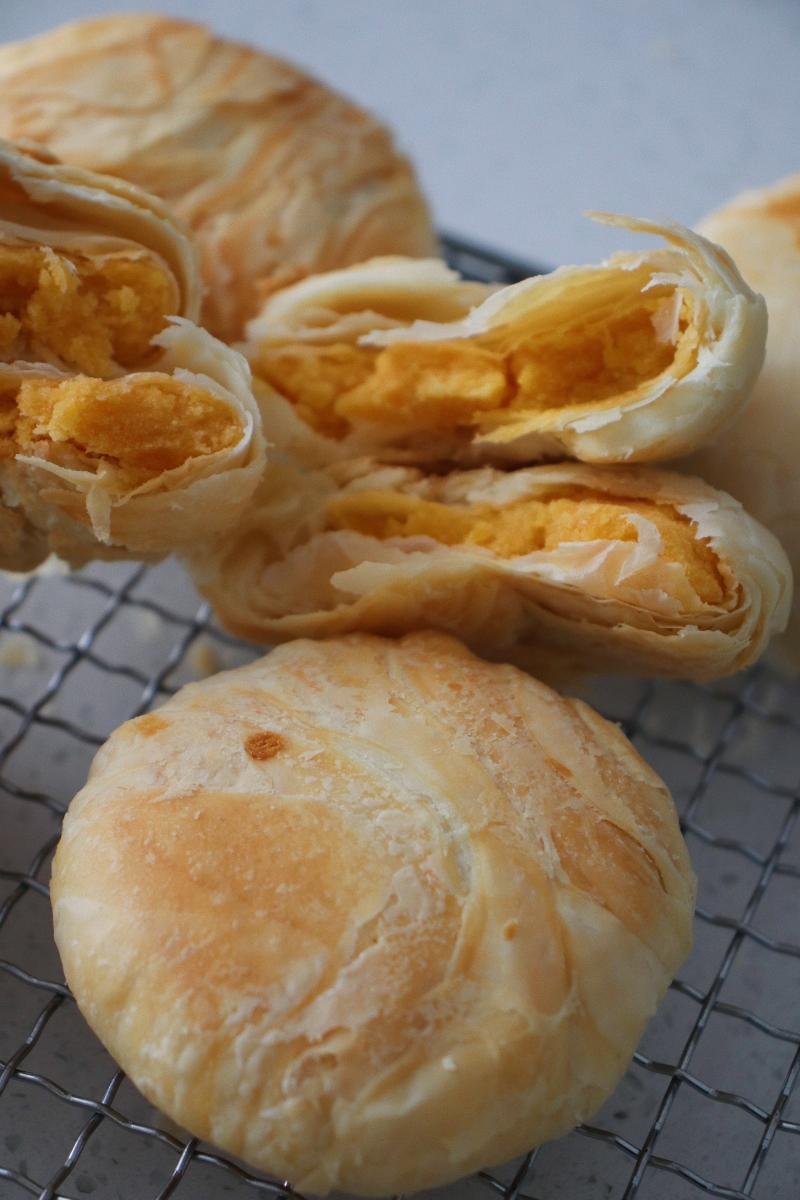
What Are Huangzhuang Mooncakes (黄庄月饼)?
Huangzhuang mooncakes are a regional Chinese pastry from Huangzhuang, famous for their extremely flaky, crumbly crust made by wrapping an oil dough inside a water-oil dough and rolling it in layers, the same shortcrust family as other northern 酥皮 (su pi) pastries. Unlike the dense, molded mooncakes of the south, Huangzhuang mooncakes are free-form, pale, craggy discs whose pastry shatters into thin leaves when you bite them.
The filling here is a favorite modern twist: salted duck egg yolk mixed through sweet white bean paste, a combination that balances salty and sweet the way the best mooncake fillings do. At home, the recipe makes twelve mooncakes and asks for a few rests rather than any special equipment. Corn oil is used for both doughs, which keeps everything pantry-friendly, and the whole batch bakes in about twenty-six minutes.
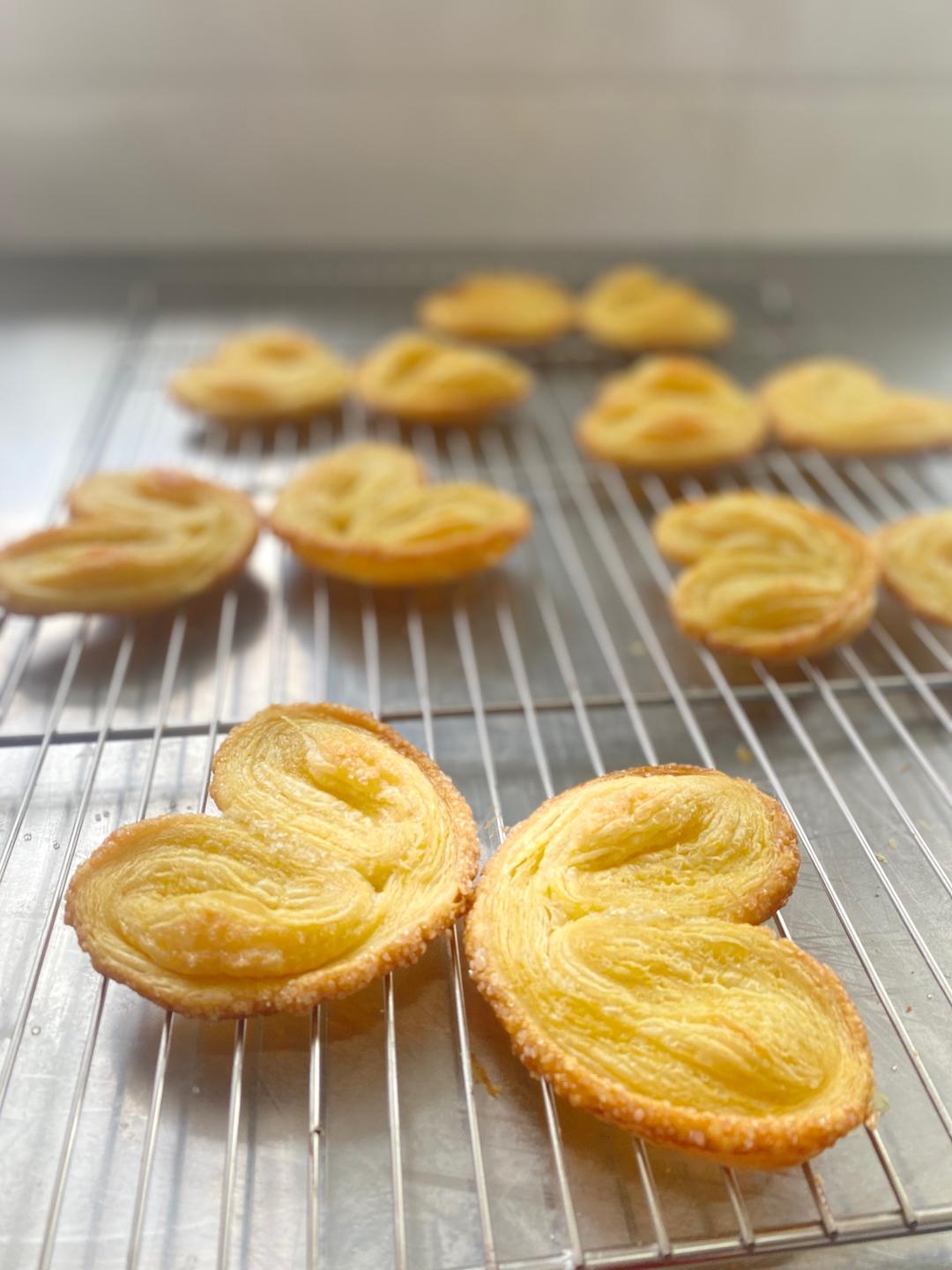
If you enjoy laminated pastry that bakes into shattering layers, my Chinese butterfly pastry uses a similar wrapping-and-rolling logic with a sweeter finish.
1Homemade Butterfly Pastry (Hu Die Su)Flaky, caramel-sweet butterfly pastry (hu die su), the Chinese name for French palmiers: buttery laminated dough folded with sugar into paper-fan strips and baked until golden and shattering. Made with a rolling pin, no sheeter needed.Check out this recipe
Why This Recipe Works
- Two doughs, one simple ratio. The water-oil crust gives the pastry strength to hold the layers; the oil dough provides the fat that separates into flakes when baked.
- A rested, elastic water-oil dough. Kneading to a smooth, stretchy membrane makes the crust easy to roll thin without tearing, even with corn oil instead of lard.
- Chilling between rolls. Cold rests relax the gluten and firm the fat, so each roll creates clean, even layers instead of squishing them together.
- Double rolling multiplies the flakes. Two roll-and-fold passes build dozens of paper-thin layers, which is what makes the mooncake shatter.
- The craggy surface is intentional. Sealing the pastry seam-side down and leaving the top textured gives the classic Huangzhuang look and helps the flakes separate.
Equipment Needed
- Bread machine (optional, for kneading the water-oil dough) or a mixing bowl and hands
- Kitchen scale
- Rolling pin
- Plastic wrap and a tray for the fridge rests
- Baking sheet
- Bamboo skewer or toothpick for poking the tops
- Oven thermometer (recommended, since the two-stage bake is precise)
Ingredients
For the Water-Oil Crust (油皮)
- 180 g (1 1/2 cups) all-purpose flour
- 40 g (3 tbsp) corn oil
- 20 g (1 1/2 tbsp) fine sugar
- 70 g (1/4 cup plus 1 tbsp) water
- 20 g (1 1/2 tbsp) whole egg, lightly beaten
- 1 g (1/4 tsp) fine salt
For the Oil Dough (油酥)
- 135 g (1 cup plus 2 tbsp) cake flour
- 45 g (3 1/2 tbsp) corn oil
For the Filling
- 160 g (5.6 oz) salted egg yolks
- 1 tsp baijiu or other white spirit, for the yolks
- 280 g (10 oz) sweet white bean paste (white kidney bean paste)
Ingredient Notes
Salted egg yolks. These come from salted duck eggs, sold cooked in vacuum packs at Asian grocers or inside whole salted eggs. The recipe sprays them with a little baijiu before roasting, which removes the eggy smell; any clear spirit over about 40 percent alcohol works. If you cannot find them, omit the yolk and use plain white bean paste, though the golden salty-sweet contrast is the point of this version.
White bean paste. The recipe uses sweetened white kidney bean paste (白芸豆沙), often homemade and low in sugar, or bought ready-made at Chinese grocers. Sweetened red bean paste is the standard substitute in a pinch.
Corn oil in pastry. Corn oil gives a mild, neutral flavor and, with proper resting, still produces excellent flake. If you want a more traditional, richer crust, replace the corn oil in both doughs with lard.
Prep & Mise en Place
Weigh both doughs and the filling before you start, because the recipe moves in timed stages: a forty-minute fridge rest, a thirty-minute filling chill, and two short rests during the rolling. Measure the water-oil crust ingredients into the bread machine or a bowl, and blend the oil dough with a spatula in a separate container. Prepare the egg yolks so they can roast while the doughs rest.
Clear space in the fridge for a tray of dough, and set out plastic wrap for covering everything, since exposed dough dries and cracks. This is a recipe for a relaxed afternoon, not a rushed one; the rests do most of the work.
Cooking Process
Step 1 — Knead the Water-Oil Crust
Put all the water-oil crust ingredients into the bread machine pan (or mix by hand) and knead until the dough is smooth and elastic. Either method works; the machine just saves your arms.
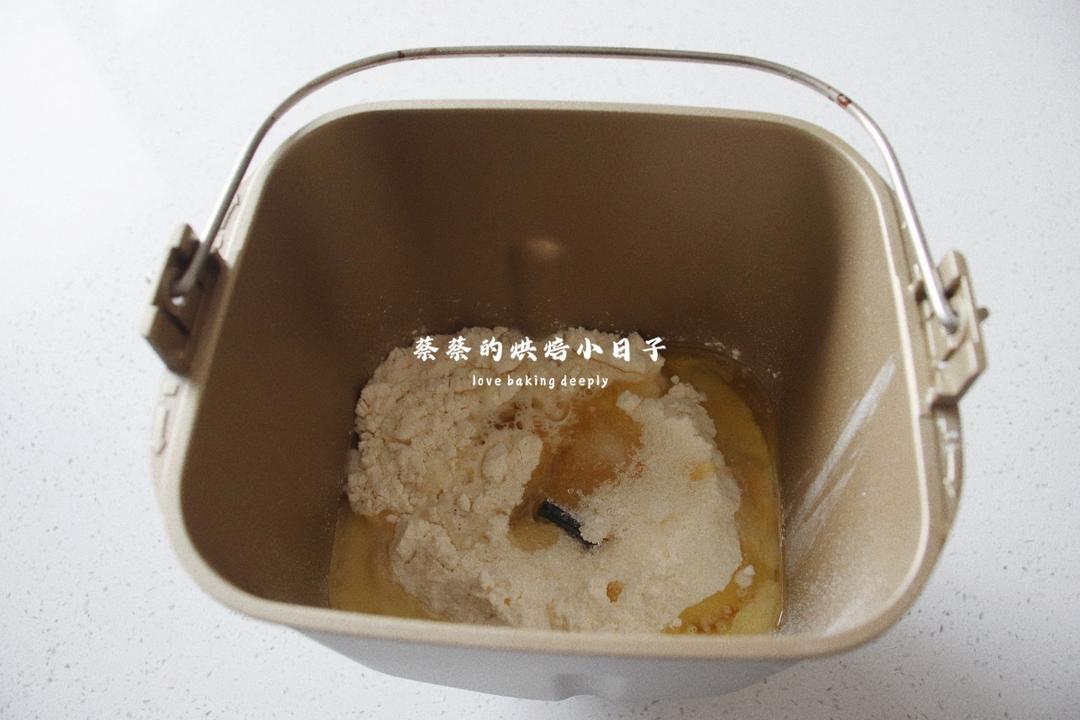
Step 2 — Knead to an Elastic Membrane
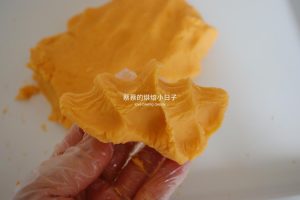
For flaky pastries, this cook likes to knead the water-oil dough until it stretches into a very elastic, thin membrane, which makes the later rolling much easier. It is a matter of habit, and a corn-oil crust does not need a full windowpane, so knead to smooth and stretchy and move on.
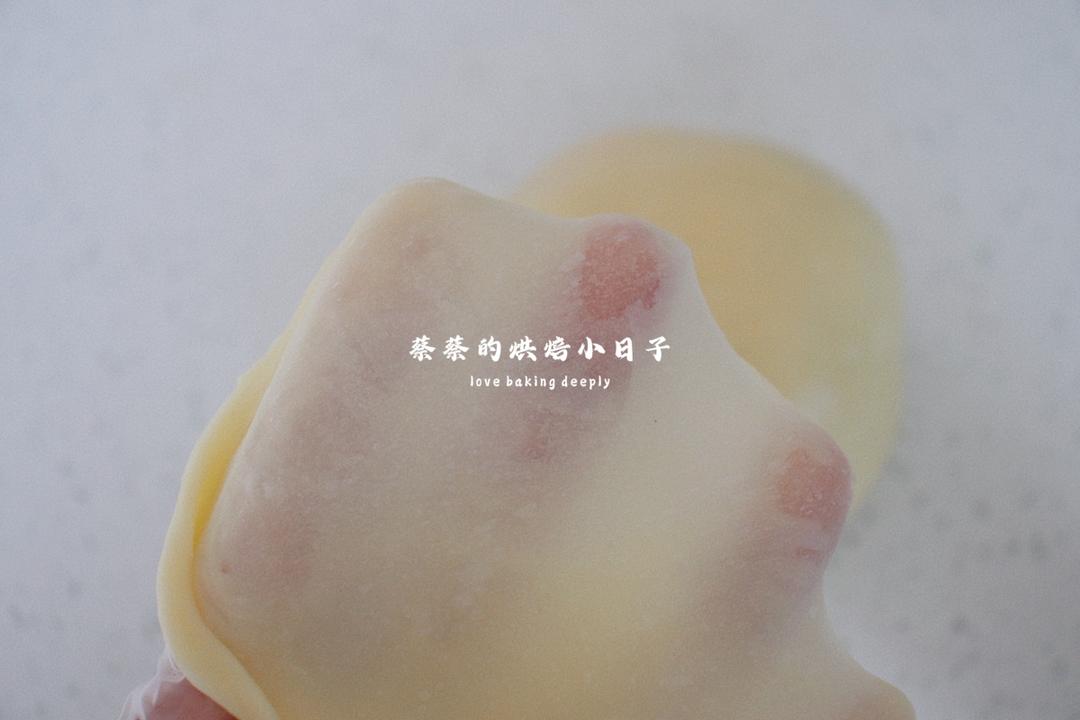
An elastic water-oil dough is what lets you roll the pastry thin without tearing. Gluten gives the crust strength, while the oil dough inside stays soft and short, so when the two are rolled together and baked, the fat between the layers melts and steams into the paper-thin flakes that make the mooncake crumble.
Step 3 — Mix the Oil Dough
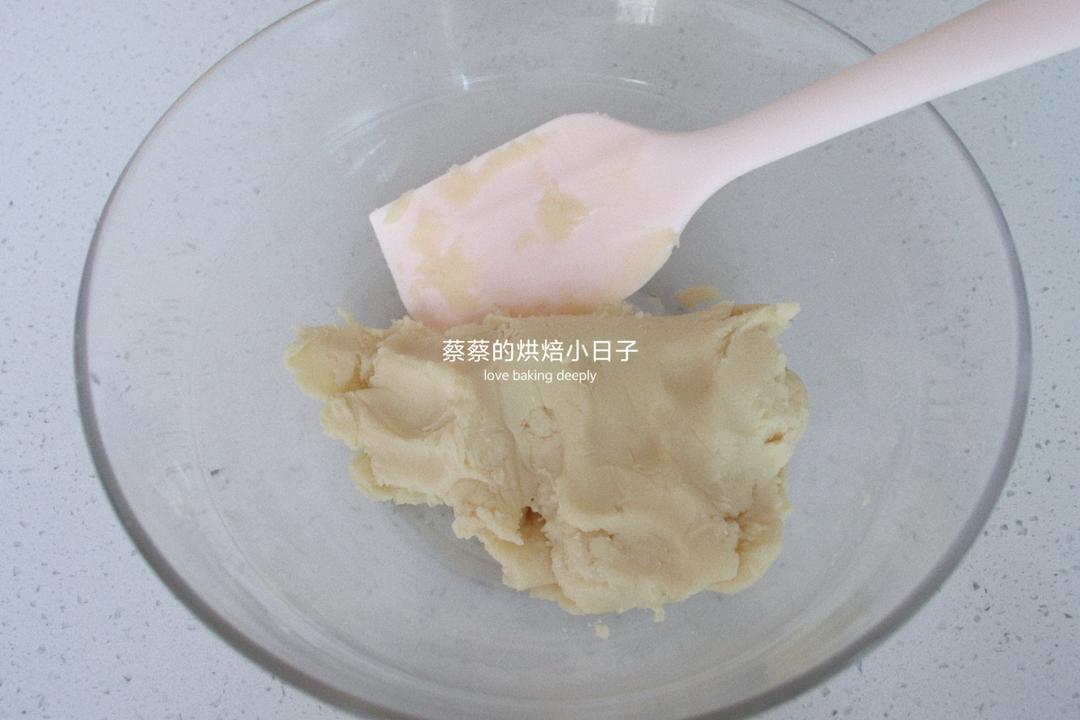
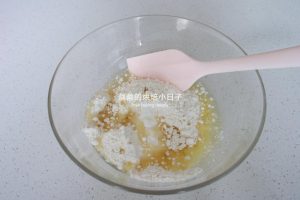
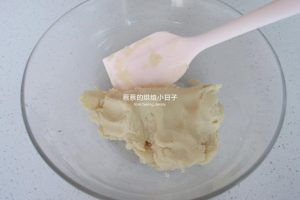
Put 135 g (1 cup plus 2 tbsp) cake flour and 45 g (3 1/2 tbsp) corn oil in a large container.
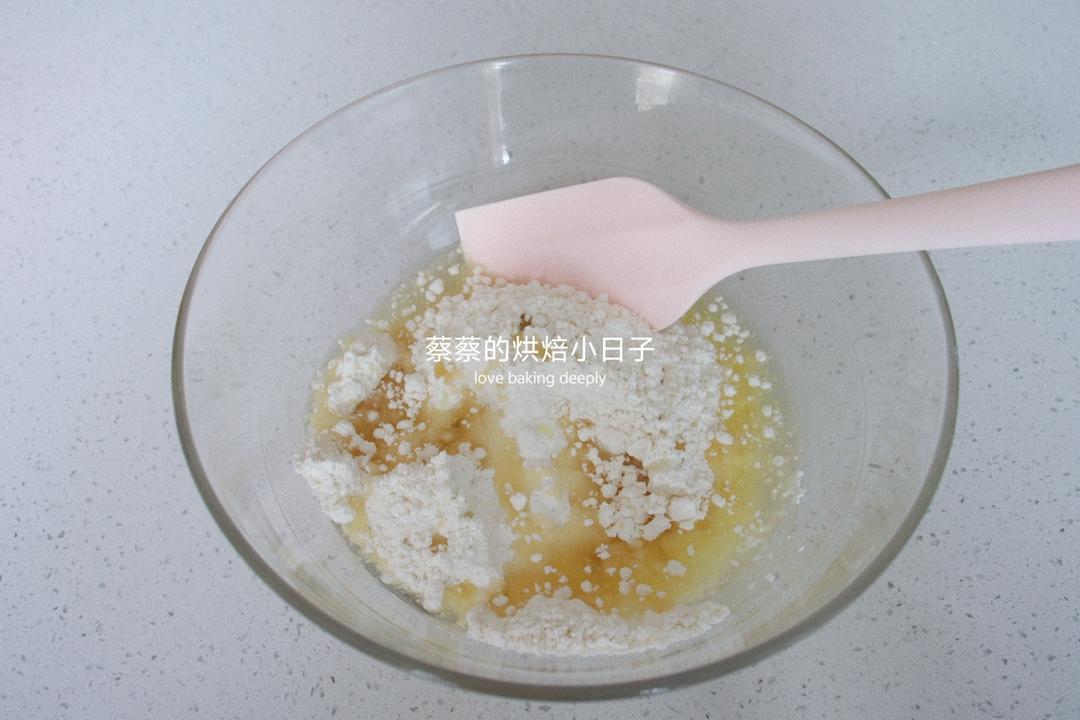
Step 4 — Blend the Oil Dough Until Smooth
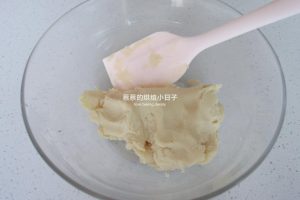
Use a spatula to mix the oil dough completely until it comes together into a smooth, soft paste with no dry flour. Do not knead it; overworking makes it tough.
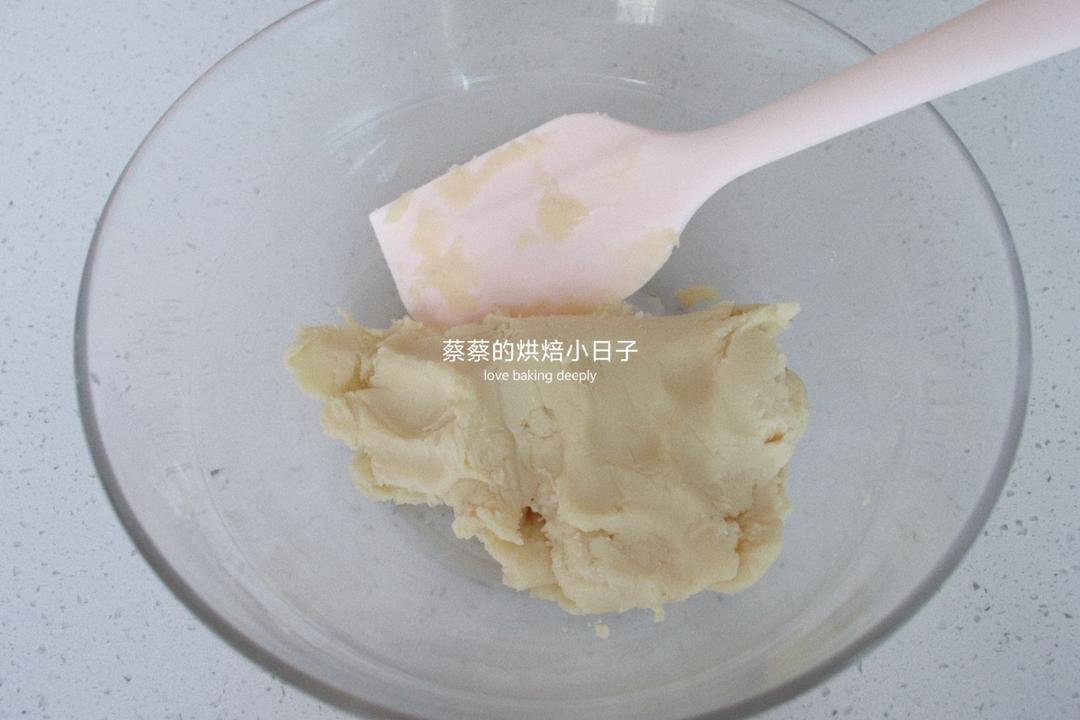
Step 5 — Wrap Both Doughs and Chill for 40 Minutes
Wrap the finished water-oil dough and the oil dough separately in plastic wrap. Refrigerate both for 40 minutes so they firm up and relax before rolling.
Step 6 — Roast and Crush the Salted Egg Yolks
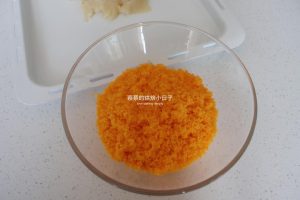
Place the salted egg yolks on a lined tray, spray or brush them with a little baijiu, and roast at 355°F (180°C) for about 8 minutes until cooked through and slightly dry. Cool, then crush the yolks into fine crumbs.
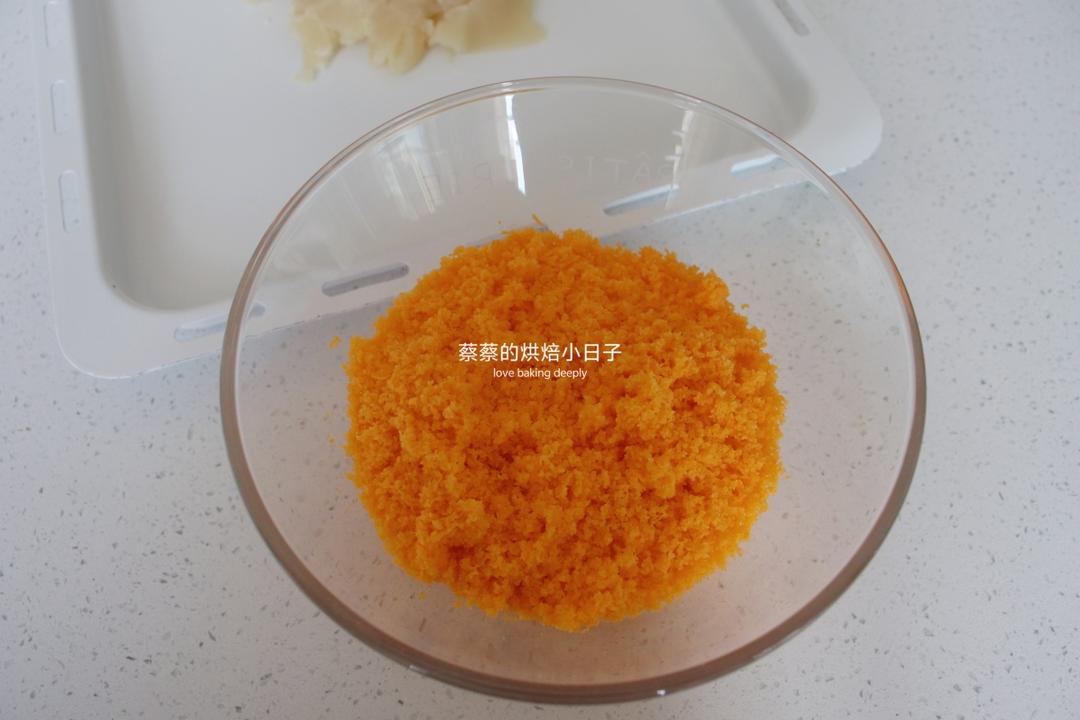
Step 7 — Get the White Bean Paste Ready
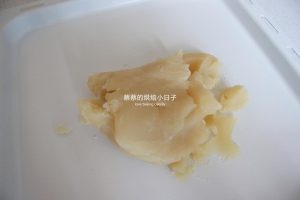
Measure out 280 g (10 oz) sweet white bean paste. Store-bought paste is fine; if you use homemade, the author recommends a lower-sugar version so the salted yolk shines.
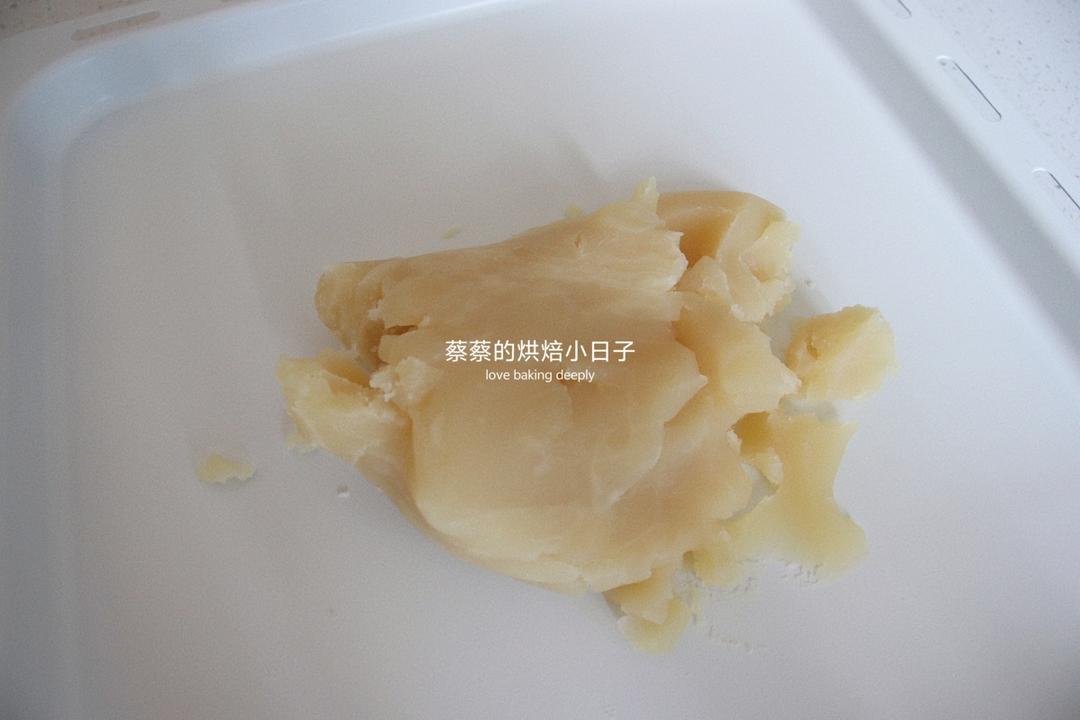
Step 8 — Mix the Yolk Into the Bean Paste
Add the crushed salted egg yolks to the white bean paste and mix until evenly combined into a smooth, fine-textured paste with no large yolk lumps.
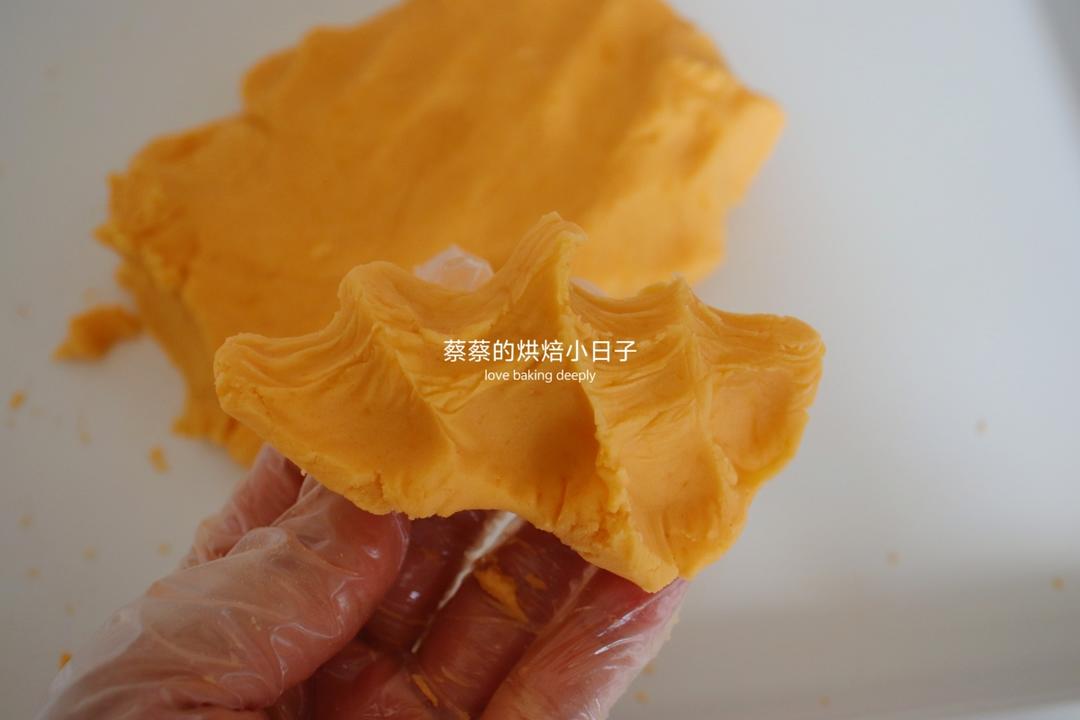
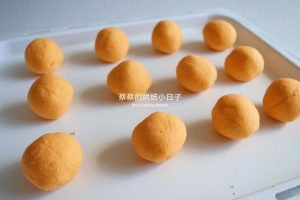
Step 9 — Divide Into Twelve and Chill
Divide the filling into 12 equal portions, roll each into a ball, and refrigerate them for 30 minutes so they firm up and are easier to wrap.
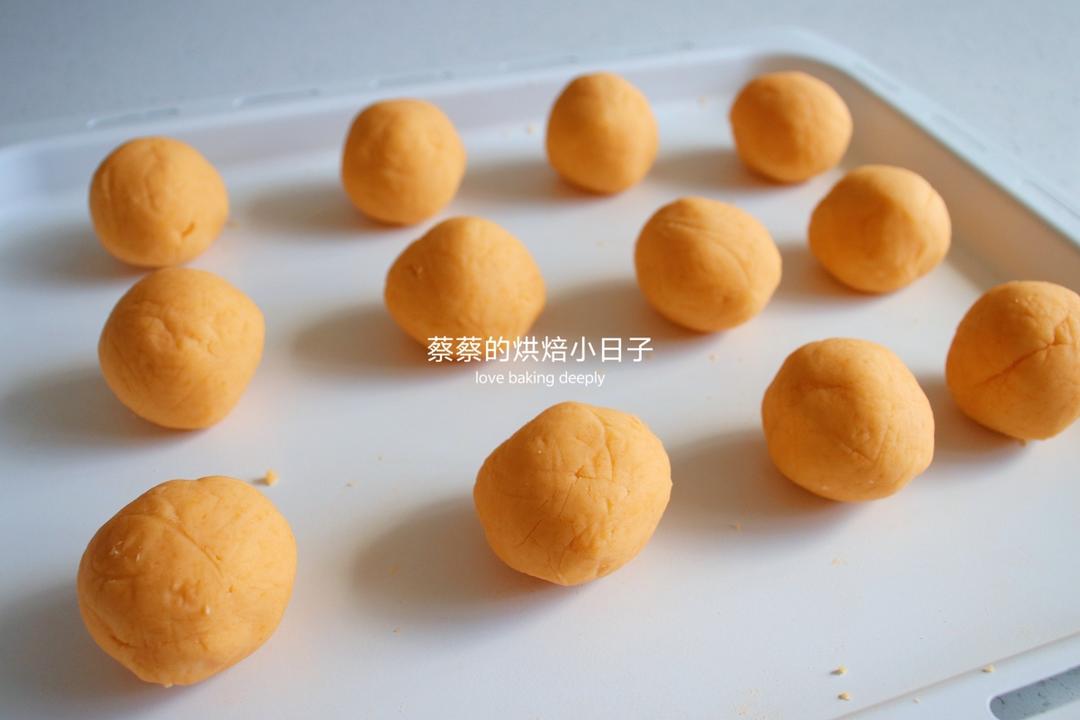
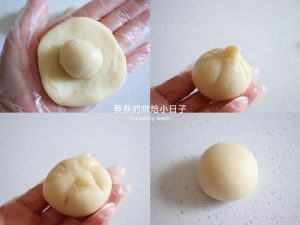
Step 10 — Wrap the Oil Dough in the Water-Oil Crust
Take one portion of the chilled water-oil dough, press it flat, and thin the edges with your fingers. Place a portion of oil dough in the center, then use the heel of your hand to push the water-oil dough up and over the oil dough, turning the ball as you go, until the seam is fully closed around the oil dough.
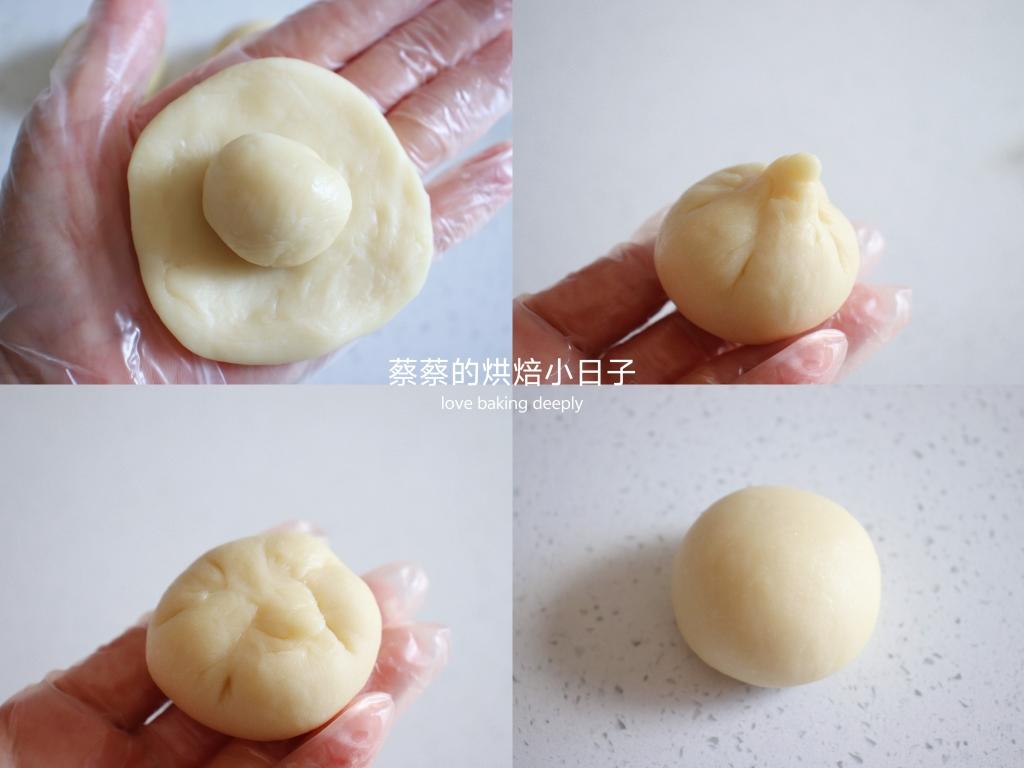
Step 11 — First Roll: Lengthen and Roll Up
Take the wrapped round and gently press it from both sides into an oval. Place the rolling pin in the center and roll outward to both ends to lengthen it evenly, then roll the sheet up from one end like a tight scroll, using your fingertips to keep it even.
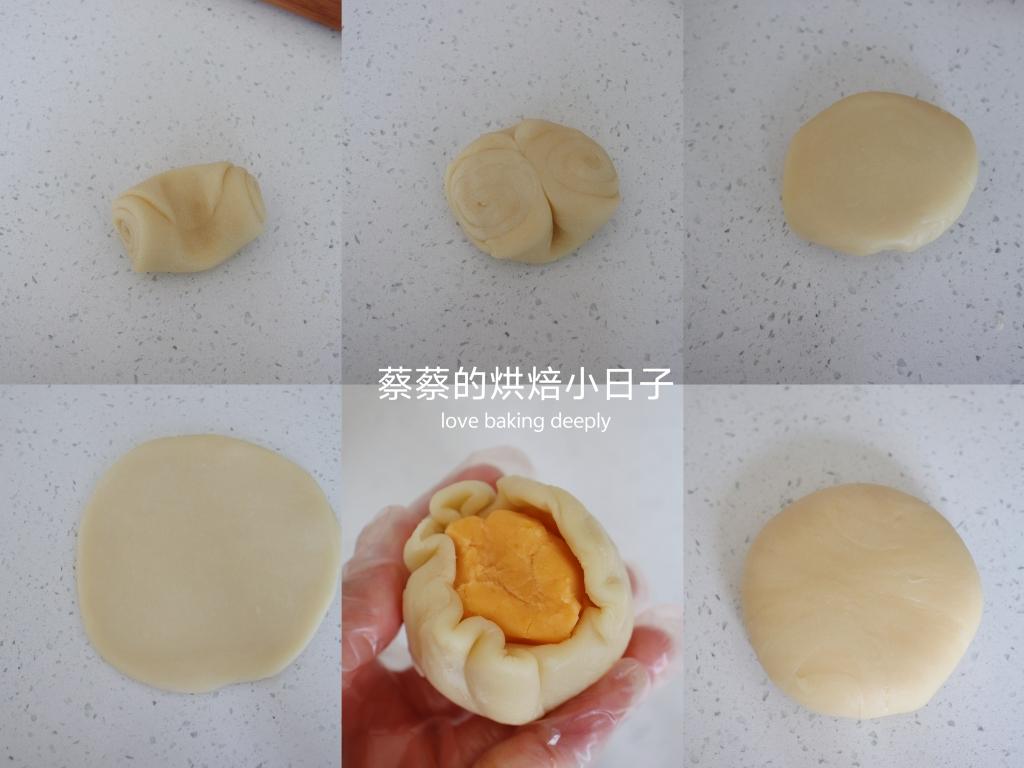
Step 12 — Chill the First Rolls for 20 Minutes
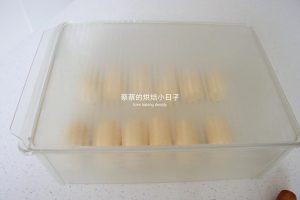
When all the pieces are rolled, cover them tightly and refrigerate for 20 minutes. The rest relaxes the gluten so the second roll goes smoothly.
Step 13 — Second Roll: Repeat the Lengthen-and-Roll
After the 20-minute rest, take each roll out and repeat the same technique: place the pin in the center, roll gently out to both ends to lengthen the piece, and roll it up from one end with your fingertips into a second tight scroll.
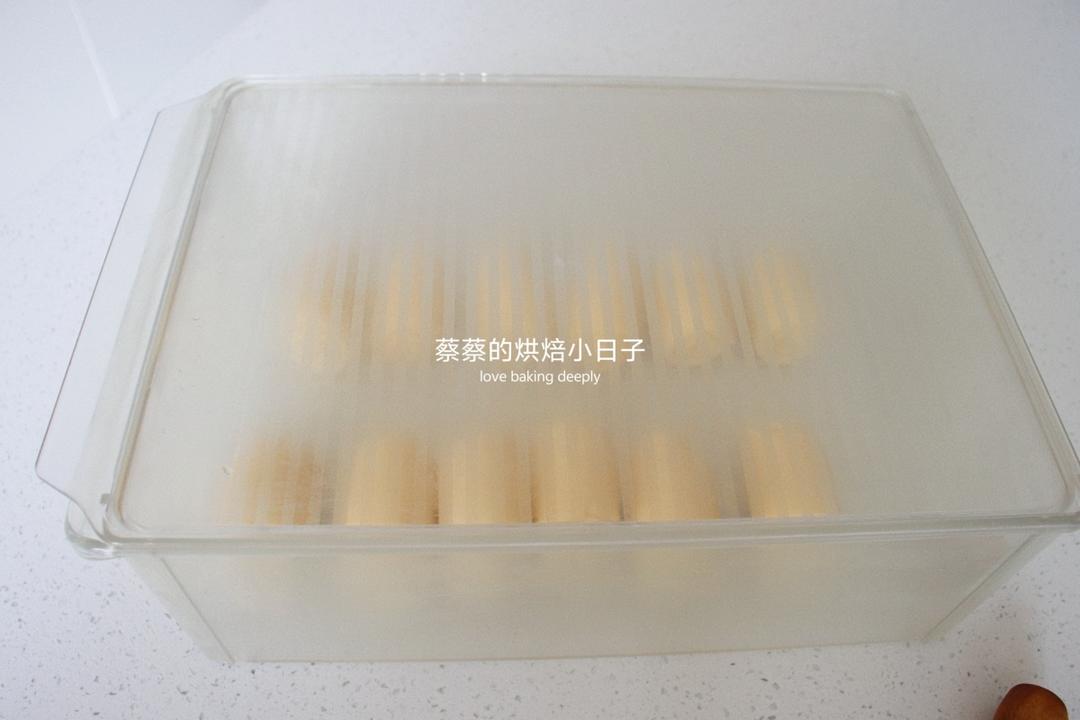
Step 14 — Rest the Second Rolls at Room Temperature
Cover the finished second rolls and let them rest at room temperature for 15 to 20 minutes, giving the pastry a final chance to relax before shaping.
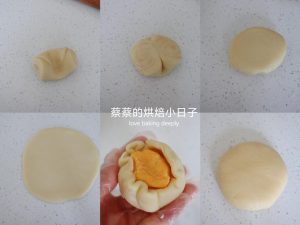
Step 15 — Shape, Fill, and Seal
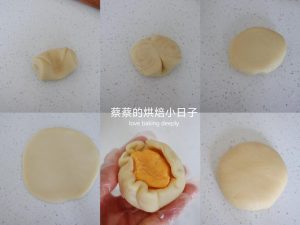
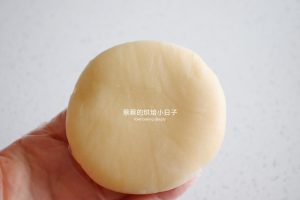
Take one roll with the seam facing up and press your finger firmly into the center. Fold the two ends toward the middle, then flip the piece so the textured side faces down and the smooth side faces up. Roll it into a round wrapper, place a ball of yolk-bean filling in the center, and seal it completely, keeping the textured side on the outside.
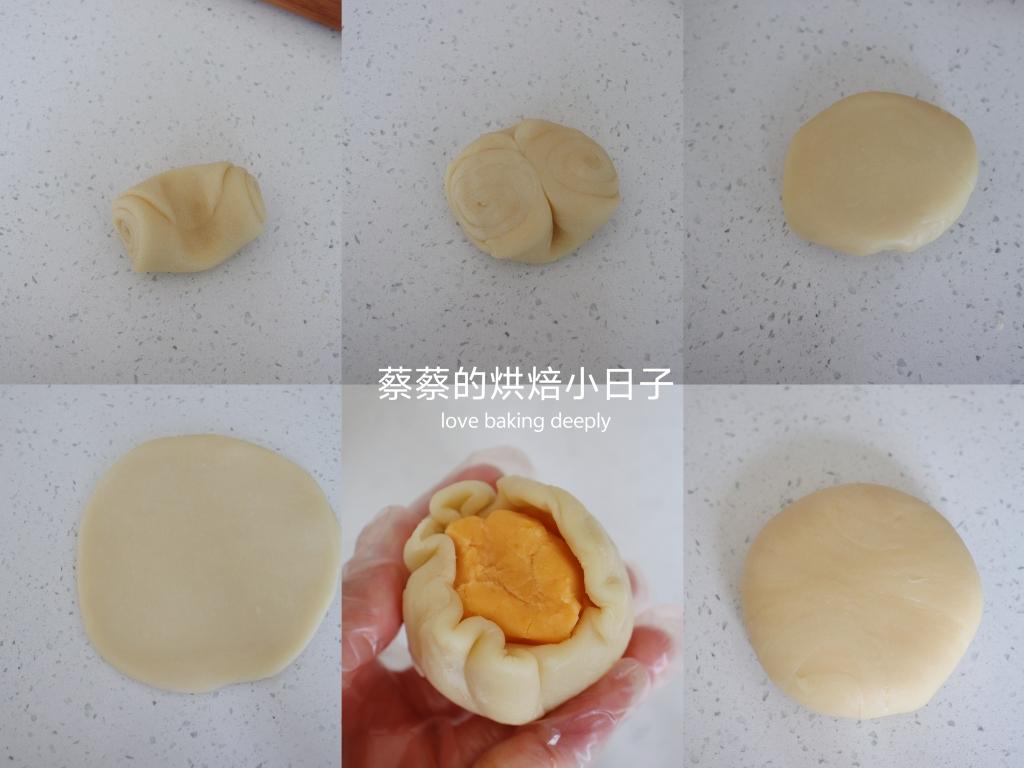
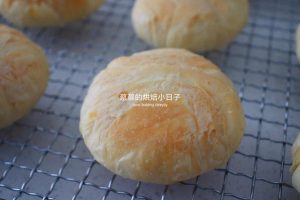
Step 16 — Leave the Surface Irregular
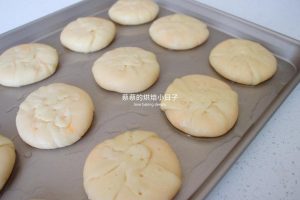
Do not smooth the surface after sealing. The irregular, textured top is exactly what you want; it is the Huangzhuang look and it encourages the flakes to separate during baking.
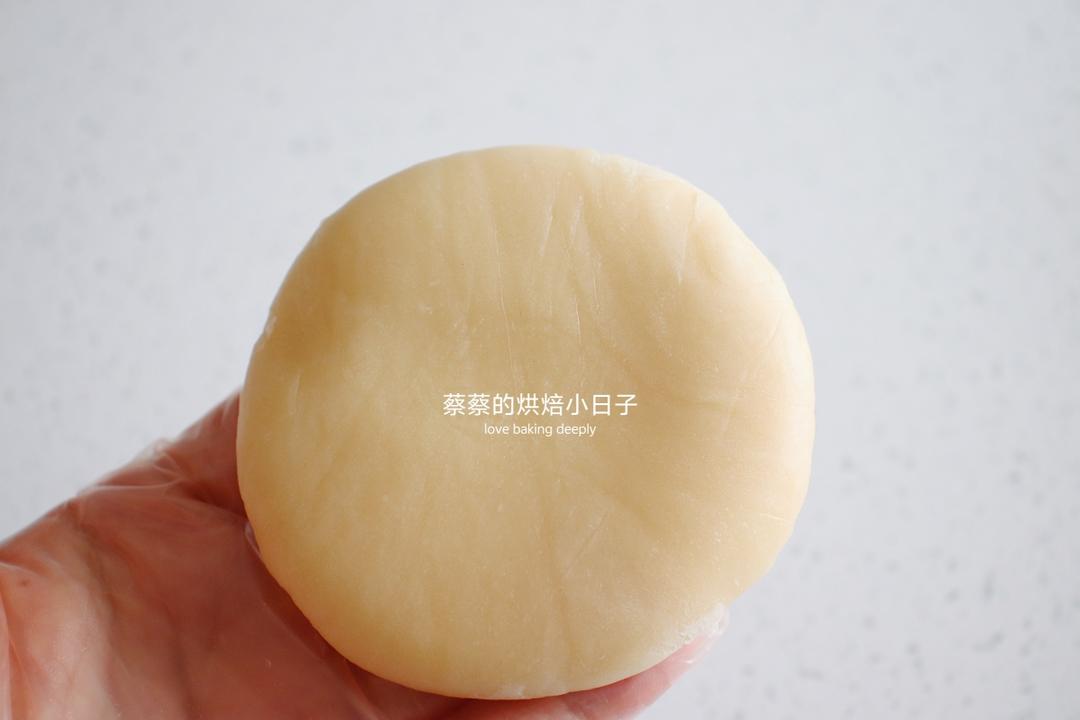
Step 17 — Poke Holes and Oil the Pan Lightly
After shaping all twelve, turn each mooncake bottom-side up and poke a few small holes in the surface with a bamboo skewer so steam can escape. Add a little corn oil to the baking sheet so the bottoms do not stick.
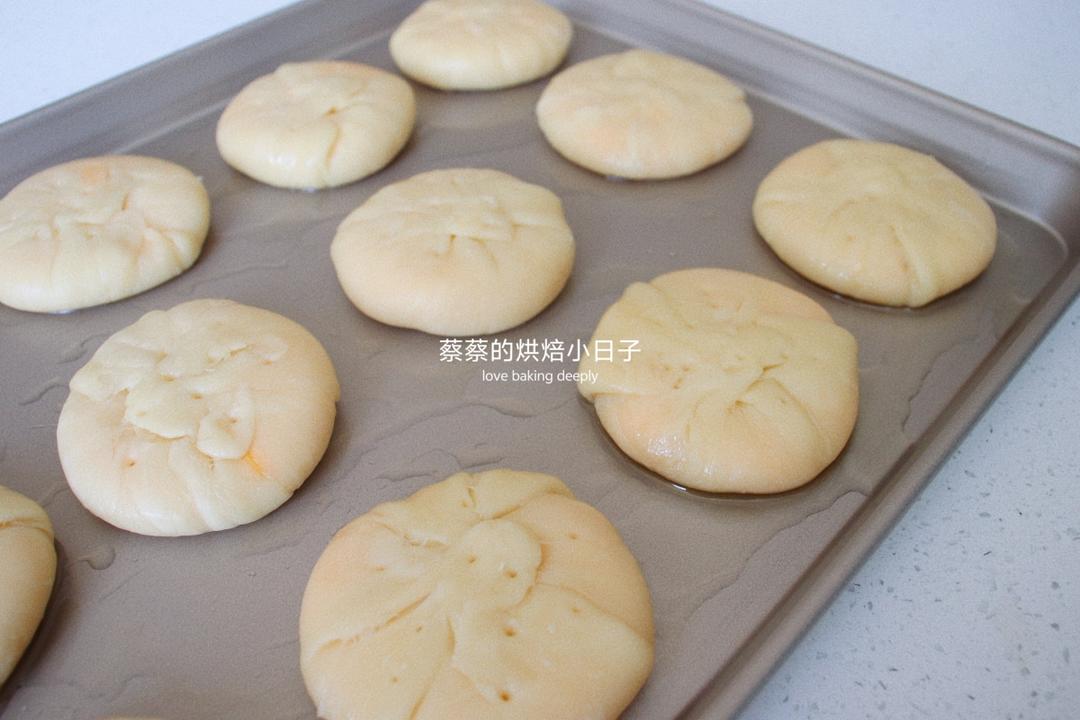
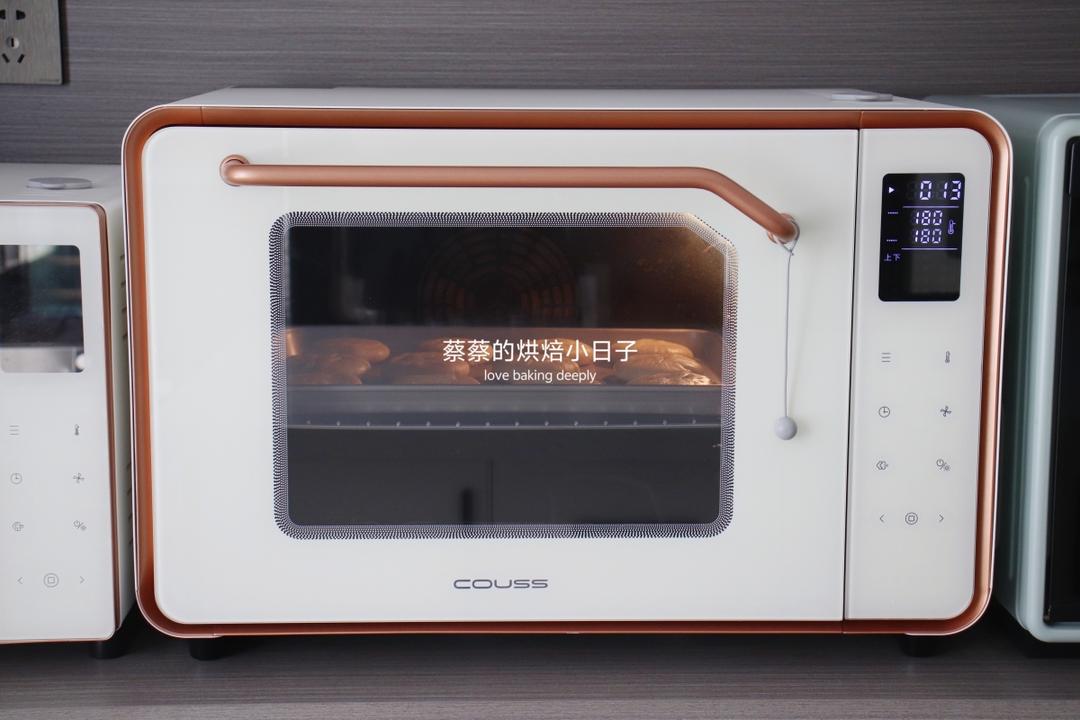
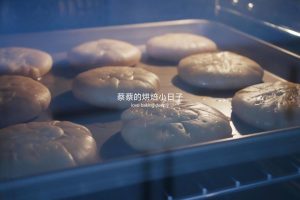
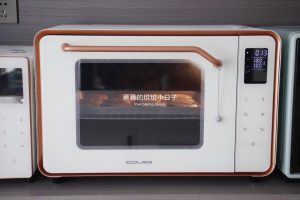
Step 18 — First Bake: 13 Minutes at 355°F
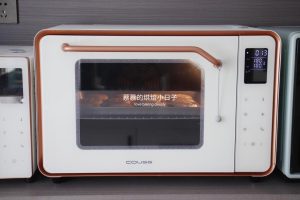
Bake in a fully preheated oven at 355°F (180°C) with both top and bottom heat for 13 minutes, until the pastries are set and just beginning to color.
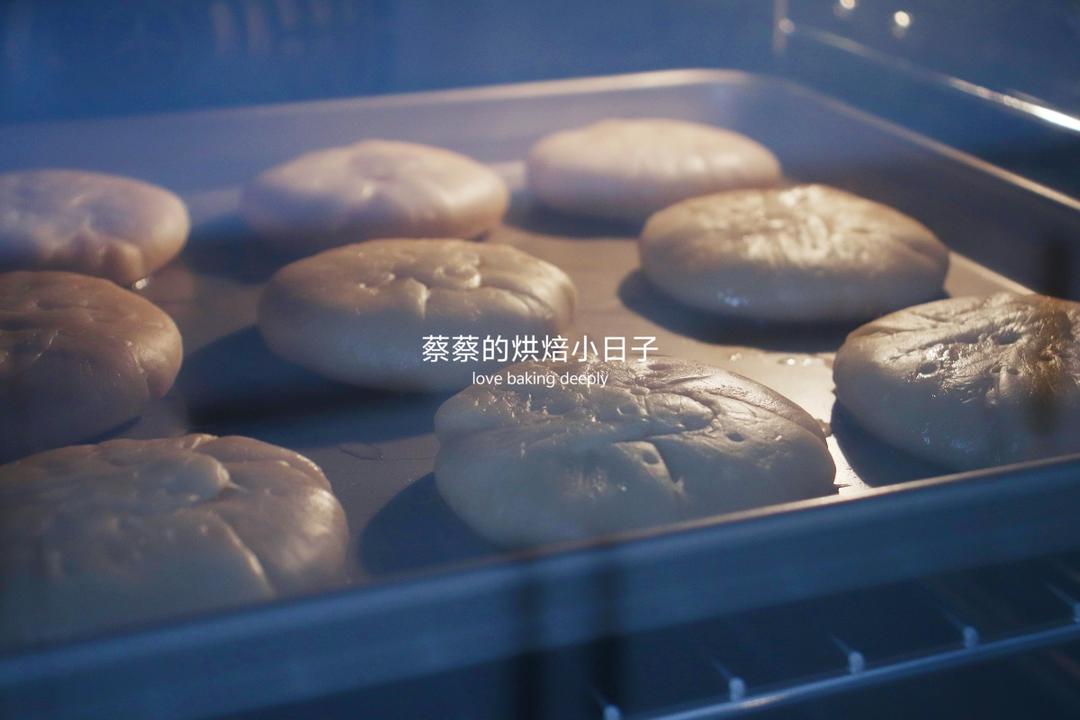
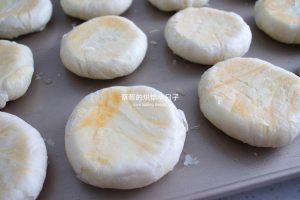
Step 19 — Flip the Mooncakes
Take the mooncakes out and carefully flip them over. Keep the oven running empty while you do this, because they go straight back in for the second bake.
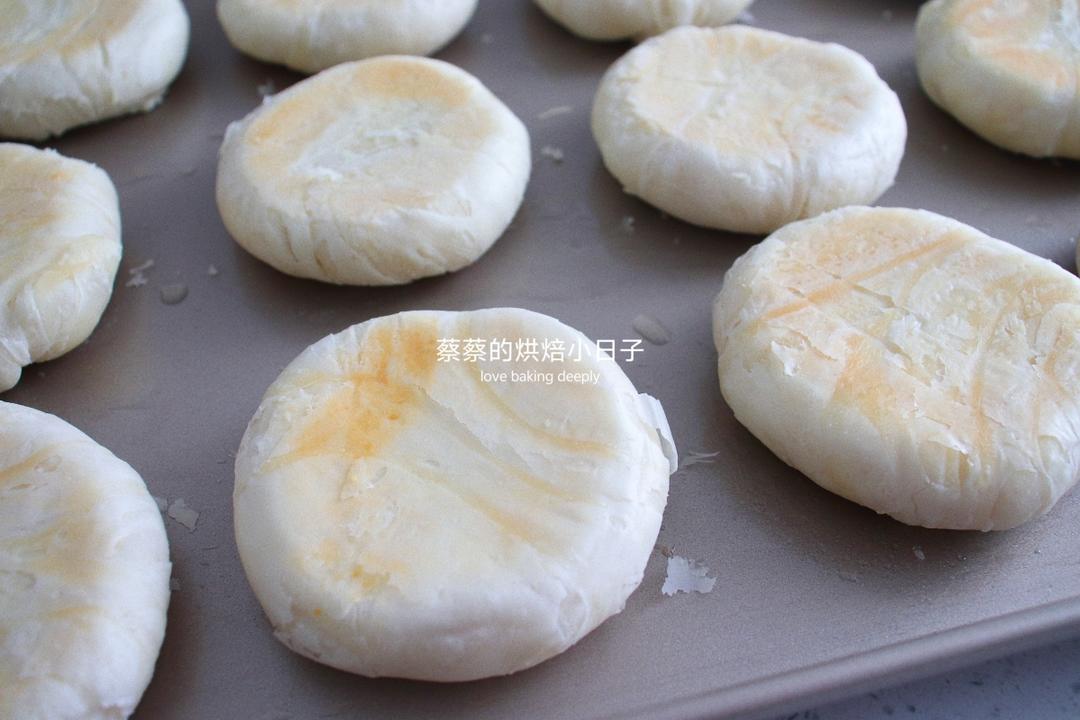
Step 20 — Second Bake: 13 More Minutes at 355°F
Return the flipped mooncakes to the oven and bake for another 13 minutes at 355°F (180°C), until golden and crisp. These times and temperatures are only a reference, so adjust them to your own oven.
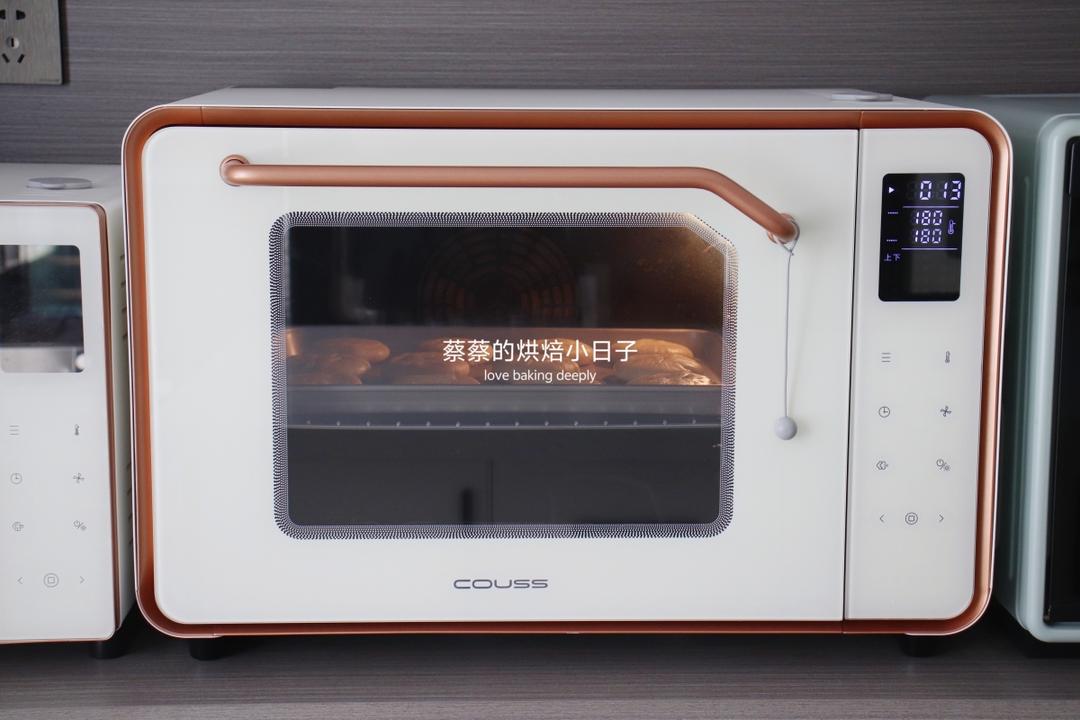
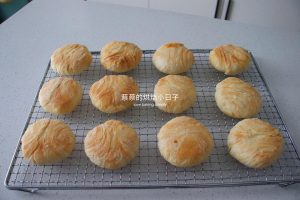
Step 21 — Out of the Oven
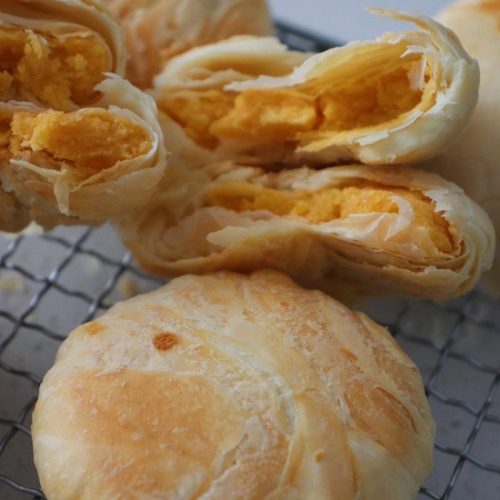
Take the mooncakes out and cool them on the sheet for a few minutes. The irregular, textured tops bake into a beautiful craggy pattern.
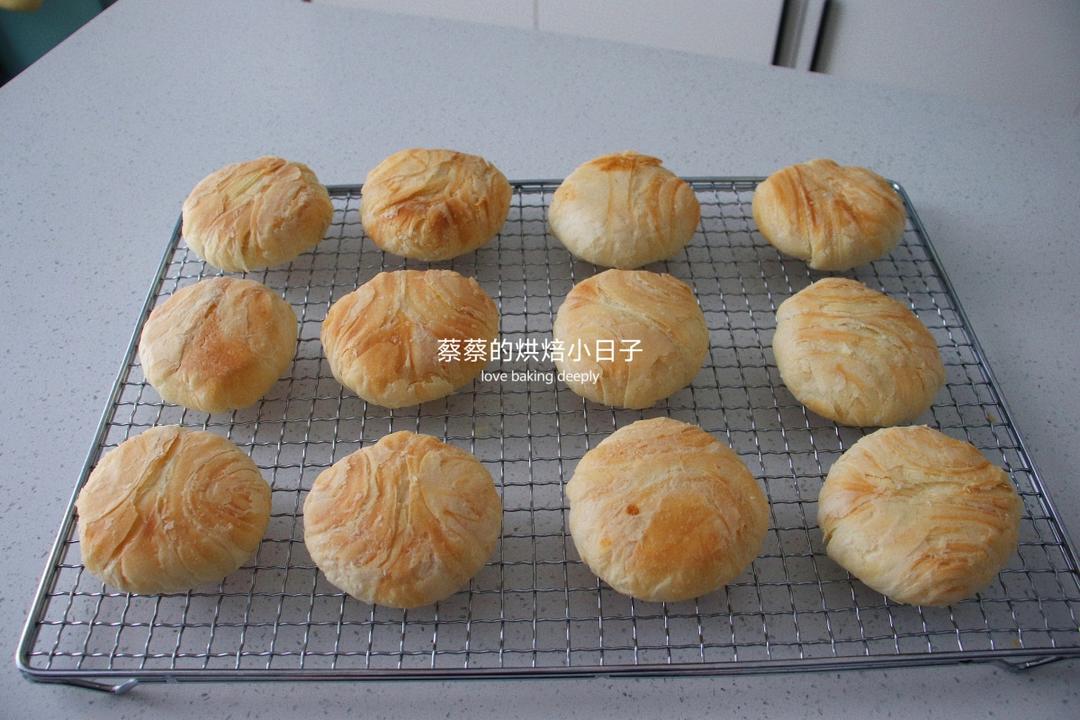
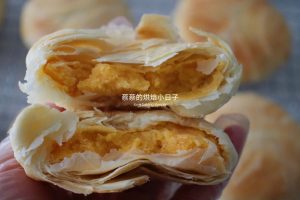
Step 22 — Admire the Corn-Oil Layers
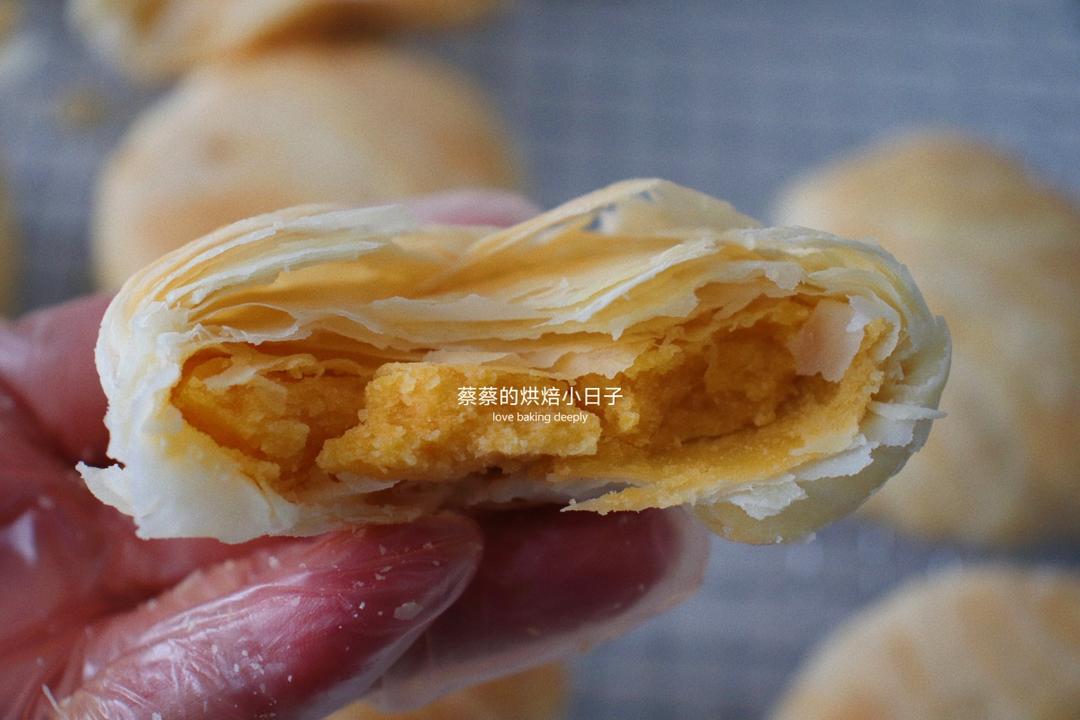
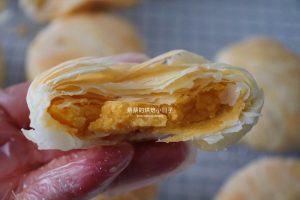
Break one open and look at the layers. Corn oil produces excellent flake, and the interior should show fine, separate sheets of pastry around the golden filling.
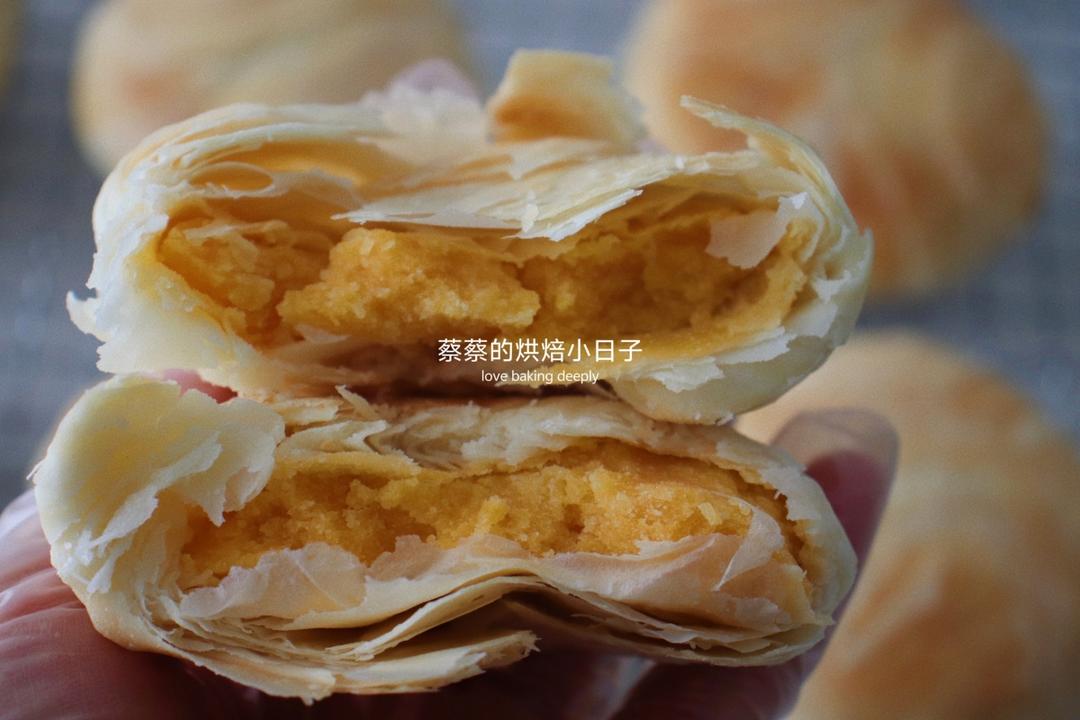
Step 23 — You Have to Try These
Huangzhuang mooncakes are one of those pastries you have to make once to believe, because the crumbly texture does not photograph half as well as it eats.
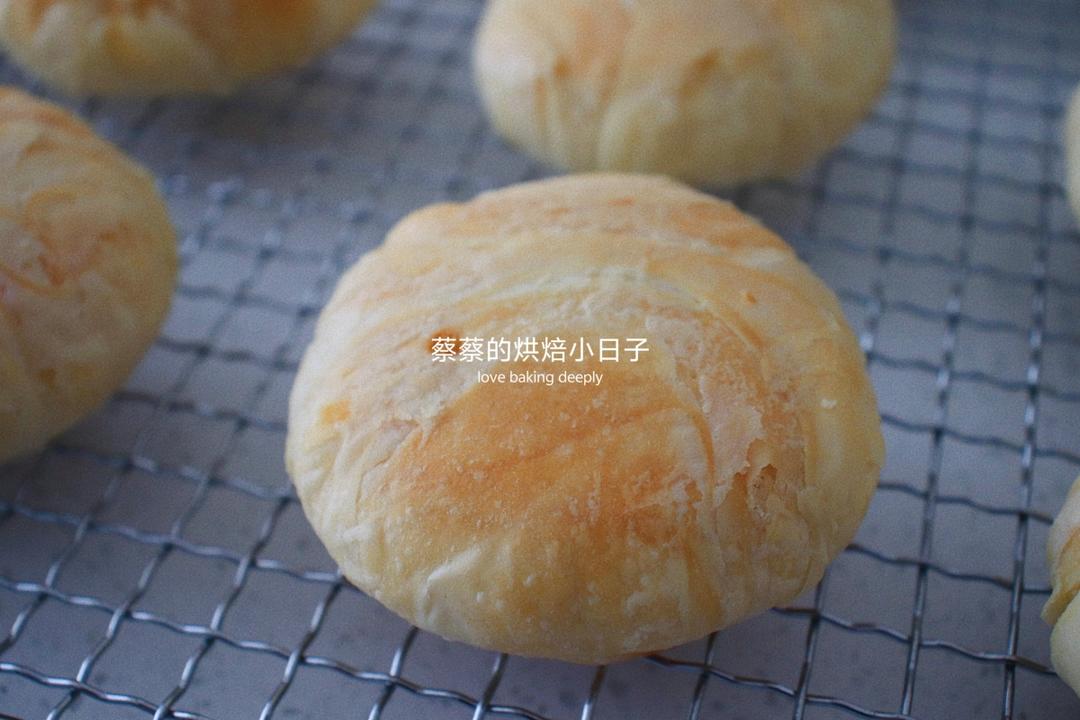
Step 24 — Crumbly Outside, Golden Inside
Serve the mooncakes at room temperature, over a plate or napkin, because they crumble gloriously. The salted-egg filling stays rich and never greasy, and one is never quite enough.
Common Mistakes When Making Huangzhuang Mooncakes
1. The pastry tears while rolling. Cause: the water-oil dough was not kneaded elastic enough, or the rests were skipped. Fix: knead to a smooth, stretchy dough and respect the 20-minute rests between rolls.
2. Flat, dense layers instead of flakes. Cause: the oil dough was overworked or the rolls were not tight. Fix: mix the oil dough just until combined and roll each sheet into a firm, even scroll.
3. The filling bursts through the pastry. Cause: the wrapper was too thin or the seam was not sealed. Fix: roll the wrapper to an even thickness and pinch the seal firmly, textured side out.
4. The mooncakes puff up or crack open in the oven. Cause: trapped steam. Fix: poke a few holes in each top with a skewer before baking, as the recipe does.
5. Pale, doughy centers. Cause: the oven runs cool or the second bake was cut short. Fix: bake the full 13 minutes on each side at 355°F (180°C) and check with an oven thermometer.
6. An eggy smell in the filling. Cause: the salted yolks were not treated. Fix: always spray the yolks with baijiu or white spirit before roasting, and crush them well into the paste.
Variations
Classic red bean filling. Swap the white bean paste for sweet red bean paste and keep the crushed yolk, or skip the yolk entirely for a plain sweet version.
Lard crust. Replace the corn oil in both doughs with lard for a more traditional, deeply flaky northern crust. The rolling technique stays identical.
Other flaky pastries. If the wrapping-and-rolling method appeals to you, the same skill builds my Chinese butterfly pastry and the savory flaky scallion pancakes or a thousand-layer scallion pancake.
Frequently Asked Questions
What is the difference between Huangzhuang mooncakes and Cantonese mooncakes? Cantonese mooncakes use a molded, dense crust and are often served in thin slices; Huangzhuang mooncakes are free-form, pale, and extremely flaky, made to be bitten and crumbled.
Can I skip the baijiu on the egg yolks? You can, but the alcohol removes the eggy odor of the salted yolks. Dry sherry or vodka work as substitutes.
Why rest the dough in the fridge between rolls? Chilling relaxes the gluten and firms the fat, so each roll produces clean, separate layers. Skipping the rests gives a tougher, less flaky pastry.
Can I freeze the unbaked mooncakes? Yes. Shape and fill them, freeze on a tray, then store in a bag for up to 2 months. Bake from frozen, adding about 5 minutes to the first bake.
How long do baked mooncakes keep? They are best within 3 to 4 days in an airtight container at room temperature; after that the flakes soften. They freeze well baked, too, for up to 2 months.
How to Serve
Serve Huangzhuang mooncakes as a festive treat with tea, alongside other tea-time sweets like Qi Zi Mo tea biscuits, Chinese shortbread cookies, or taro paste star buns. For a fuller festival table, add yellow millet sticky rice cake and a bowl of creamy red bean and black rice porridge.
Storage & Reheat
Store baked mooncakes in an airtight container at room temperature for up to 4 days, or freeze for up to 2 months. Refresh frozen or day-old mooncakes in a 300°F (150°C) oven for 6 to 8 minutes to bring back some of the flake. Because the filling contains cooked egg yolk and dairy-free bean paste, keep the pastries out of direct sun and humidity, which soften the crust. Do not leave them at room temperature longer than a few days, and always check for off smells before serving leftovers.
Allergen Notice
Contains gluten (wheat flour), egg (in the water-oil crust and the salted egg yolk filling), and soy (check the bean paste and any store-bought yolks for soy lecithin). This version uses no nuts, milk, or shellfish, but check packaged fillings for trace allergens.
Nutrition Disclaimer
Nutrition information is calculated using an ingredient database and should be considered an estimate. In cases where multiple ingredient alternatives are given, the first listed is calculated for nutrition. Garnishes and optional ingredients are not included.
About the Author & Recipe Development
I am Lin, and I grew up in my parents’ Sichuan restaurant before working a decade in professional kitchens, where pastry was always the station that kept me honest. Huangzhuang mooncakes came into my life through a northern Chinese cousin, and this xiachufang recipe is the one I now make every autumn. I tested it twice, once skipping the fridge rests in a hurry, which taught me exactly why they matter, and once with lard instead of corn oil to compare. The corn-oil version here is the everyday keeper, and the craggy, flaky tops never fail to make people ask where I bought them.
Authoritative References
USDA Safe Temperature Chart for handling egg-based fillings, and King Arthur Baking on laminated dough for why resting between rolls builds flaky layers.
Flaky Huangzhuang Mooncakes (黄庄月饼): Crumbly Golden Yolk

Equipment
- Bread machine (optional)
- Kitchen Scale
- Rolling Pin
- Baking Sheet
- Bamboo skewer
Ingredients
For the Water-Oil Crust (油皮)
- 1.5 cups all-purpose flour
- 3 tbsp corn oil
- 1.5 tbsp fine sugar
- 70 g water about 1/4 cup plus 1 tbsp
- 1.5 tbsp whole egg, lightly beaten
- 0.25 tsp fine salt
For the Oil Dough (油酥)
- 1 cup plus 2 tbsp cake flour
- 3.5 tbsp corn oil
For the Filling
- 160 g salted egg yolks
- 1 tsp baijiu or white spirit, for the yolks
- 280 g sweet white bean paste (white kidney bean paste)
Instructions
- Knead all the water-oil crust ingredients in a bread machine (or by hand) until smooth.

- Knead until the dough is elastic and stretches into a thin membrane. A full windowpane is optional with corn oil.
- Put the cake flour and corn oil for the oil dough in a large container.
- Mix the oil dough with a spatula until completely smooth; do not knead.
- Wrap both doughs in plastic and chill in the fridge for 40 minutes.
- Spray the salted egg yolks with baijiu, roast at 355°F (180°C) for about 8 minutes, then crush into crumbs.
- Measure out the sweet white bean paste.
- Mix the crushed yolks into the bean paste until smooth and even.
- Divide the filling into 12 balls, then chill for 30 minutes.
- Press the water-oil dough flat, wrap a portion of oil dough in the center, and seal by pushing the edges up and over.

- Press the wrapped ball into an oval, roll it out evenly from the center, and roll it up into a tight scroll.
- Cover all the rolls and chill for 20 minutes.
- Repeat the lengthen-and-roll technique a second time on each piece.
- Cover and rest the second rolls at room temperature for 15 to 20 minutes.
- Press the center, fold the ends in, flip, roll out, fill with the yolk-bean ball, and seal, keeping the textured side out.
- Leave the surface irregular; this is the signature Huangzhuang look.
- Poke small holes in the tops with a skewer and add a little corn oil to the baking sheet.
- Bake at 355°F (180°C) with both heats for 13 minutes.
- Flip the mooncakes, keeping the empty oven running.
- Return to the oven and bake 13 more minutes at 355°F (180°C). Adjust for your own oven.
- Cool the baked mooncakes on the sheet.
- Break one open to check the fine, flaky layers.
- Enjoy the crumbly, golden mooncakes.
- Serve at room temperature over a plate, because they crumble gloriously.



Leave a Reply