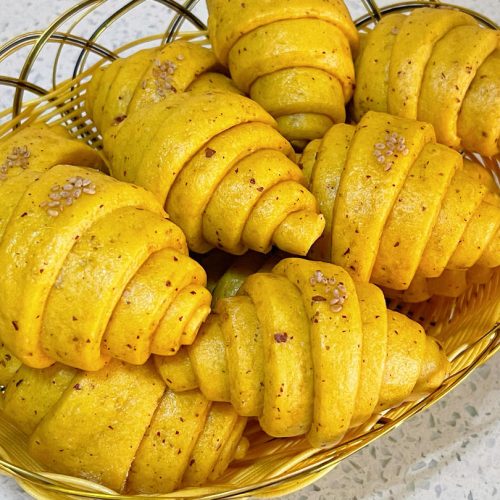
There is a baker in my family who measures sweetness with fruit instead of sugar, and these buns are exactly her kind of recipe. A kabocha pumpkin is steamed until it collapses, then blended with sweet red dates and water into a golden purée that colors and sweetens the dough all on its own. Rolled into little triangles and curled into horn shapes, the buns steam up soft, faintly orange, and dotted with sesame, and they taste like autumn mornings.
This xiachufang recipe is my favorite kind of weekday bake because there is no complicated fermentation schedule. The dough rests for only ten minutes, not to rise but simply to relax, then it is rolled, cut into fifteen triangles, curled, and left to proof for half an hour before steaming. Red dates and pumpkin do the sweetening, so the buns need no extra sugar, and they pair perfectly with a glass of milk and an egg for breakfast, exactly as the baker suggests.
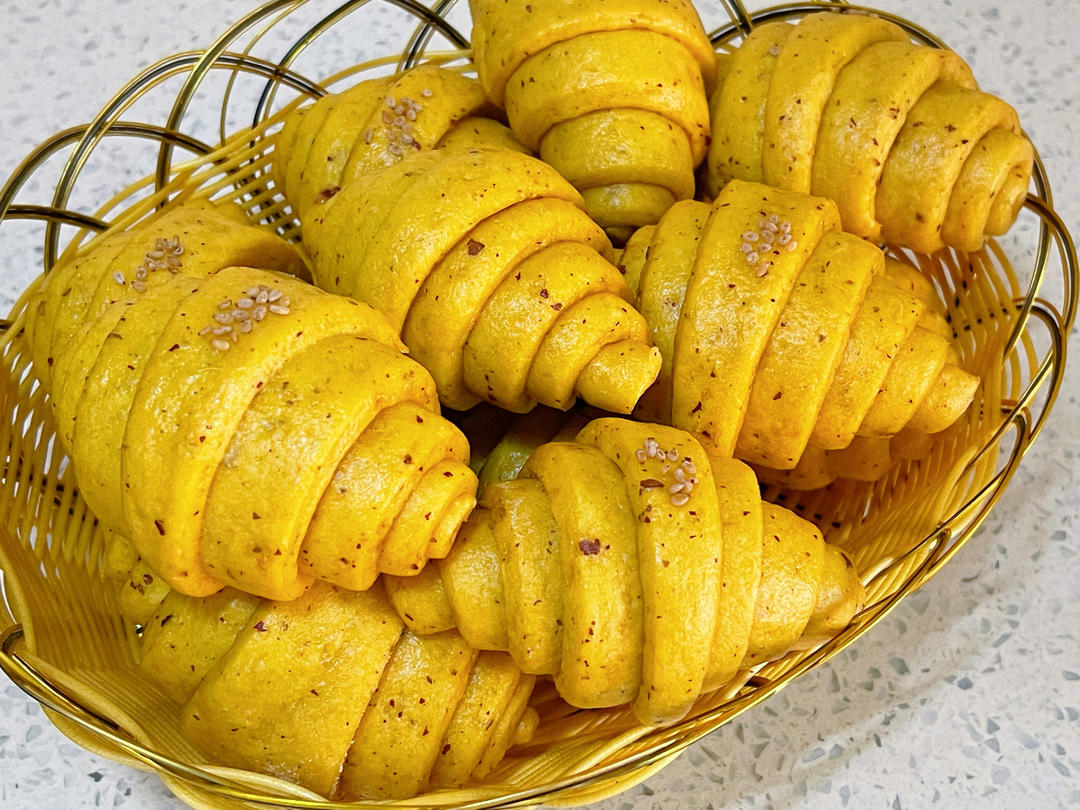
What Are Pumpkin Red Date Buns (南瓜红枣馒头)?
Pumpkin red date buns are Chinese steamed buns, mantou, made from a dough that swaps plain water for a purée of steamed kabocha pumpkin and red dates. The pumpkin tints the dough a warm gold and keeps the crumb tender, while the dates add pockets of natural sweetness, so the finished buns need little or no added sugar.
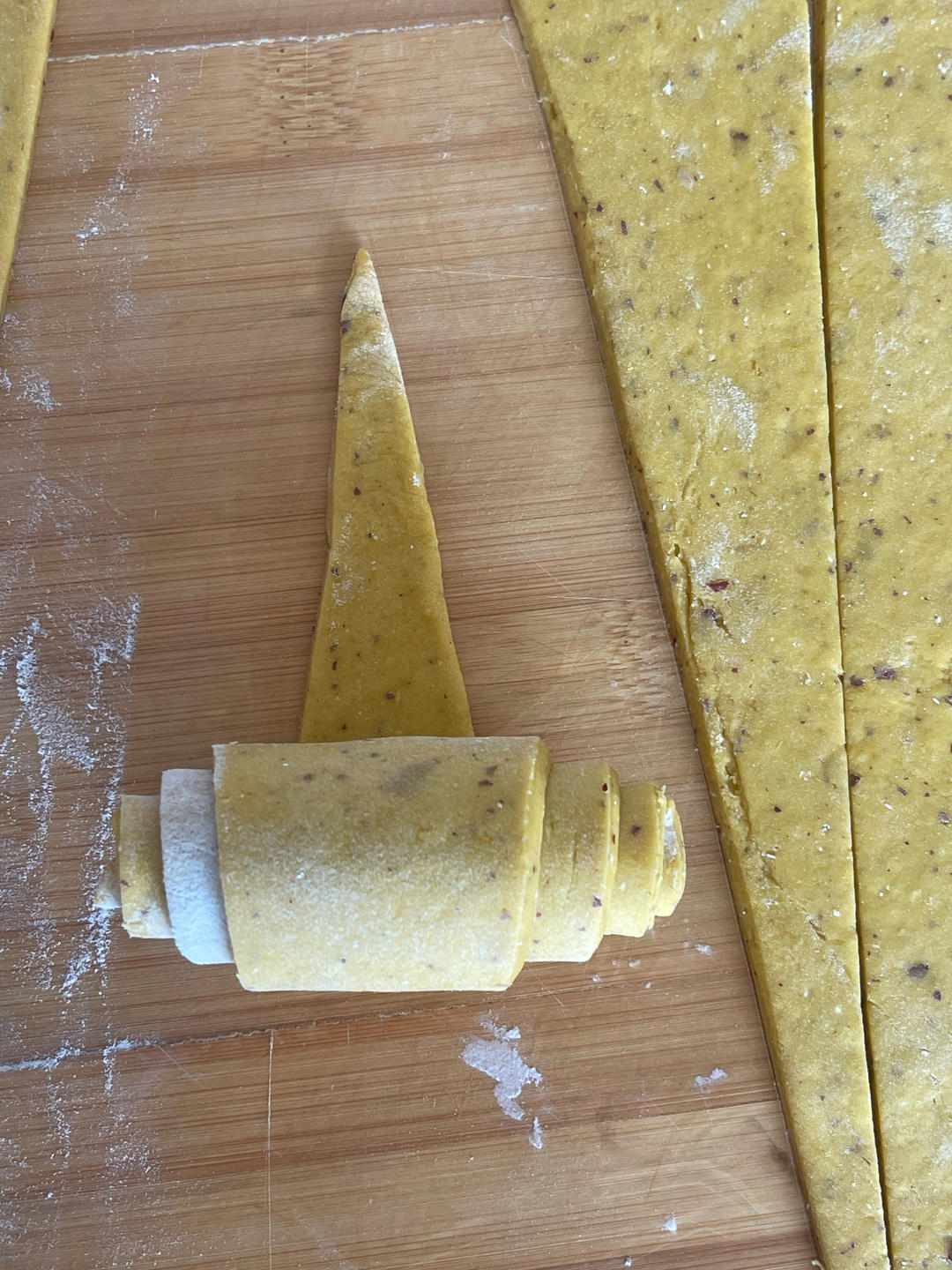
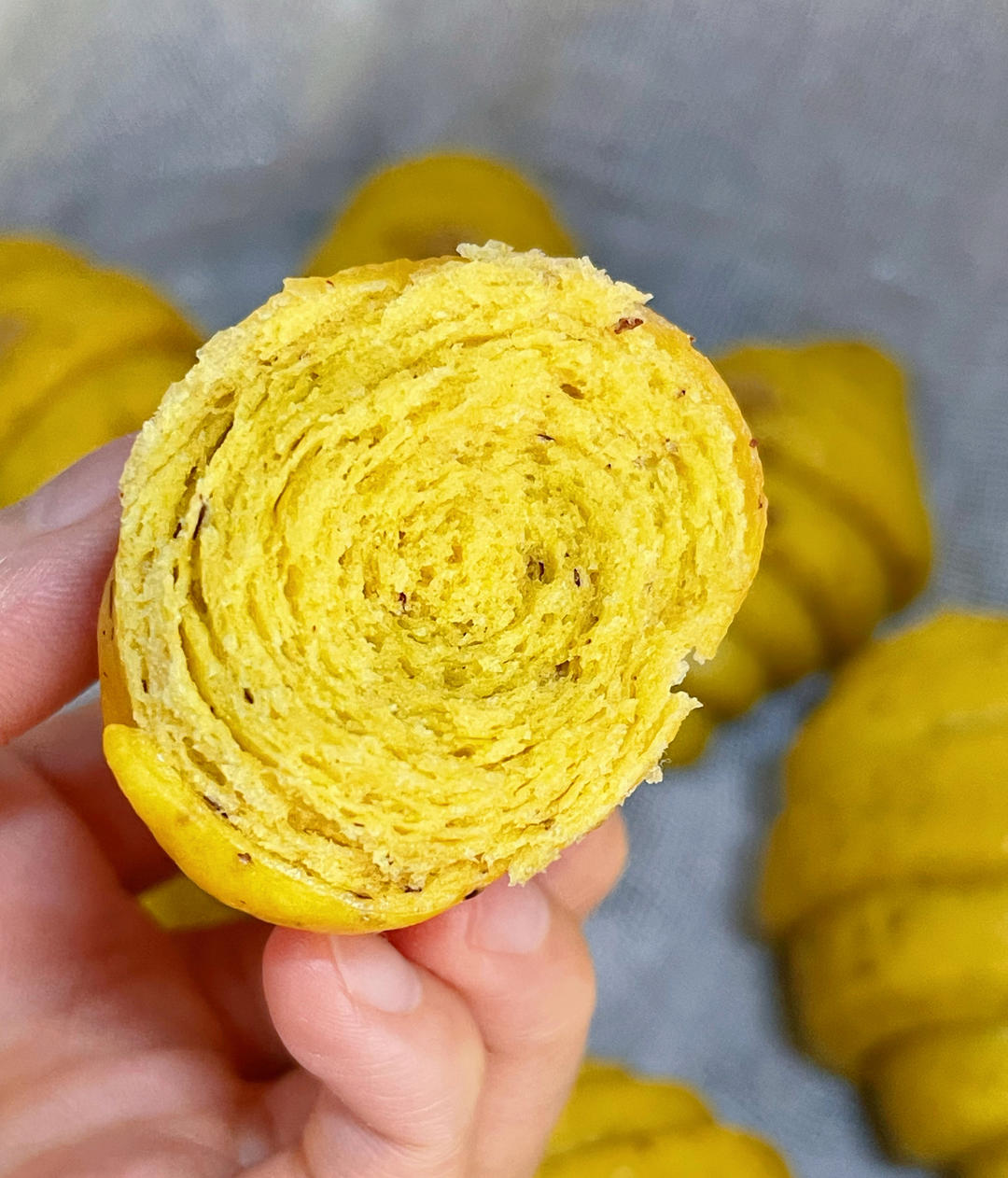
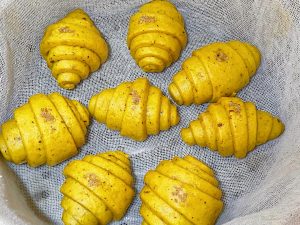
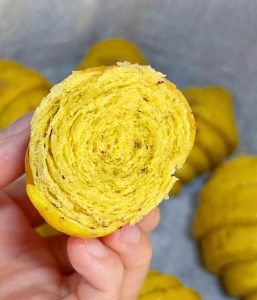
What makes this version distinctive is the shape. Instead of the usual round mantou, the dough is rolled flat, cut into isosceles triangles, and rolled up from the wide end, which gives each bun a spiral of layers and a slightly pointed horn shape. Steamed rather than baked, the buns stay soft and moist, and the red-date flecks through the crumb make every bite quietly sweet.
If you already love pumpkin in steamed buns, my pumpkin steamed buns are the classic round version of the same idea.
11-Hour Pumpkin Milk Steamed BunsA foolproof, single-proof method for making soft, fluffy, and vibrant yellow pumpkin steamed buns (mantou) in a fraction of the traditional time.Check out this recipe

Why This Recipe Works
- Pumpkin purée replaces the sugar. Steamed kabocha is naturally sweet and moist, so it colors, softens, and sweetens the dough in one step.
- Red dates add real fruit sweetness. Blended into the purée, they dot the crumb with caramel-like pockets that need no refined sugar.
- A ten-minute rest is enough. The dough is only relaxed, not fermented, before shaping, which keeps the buns tender and the process fast.
- Triangle rolling builds soft layers. Cutting and rolling the sheet gives every bun a gentle spiral that steams up fluffy.
- A short, warm proof does the rising. Thirty to forty minutes at room temperature is all the yeast needs to make the buns pillowy before steaming.
Equipment Needed
- Steamer (bamboo or metal) with a lid
- Steamer paper or lightly oiled parchment circles
- Mixing bowl
- Rolling pin
- Blender or food processor for the purée
- Knife for cutting the triangles
- Small brush for the water dots
Ingredients
- 60 g (1/3 cup) red dates (dried jujubes), pitted
- 200 g (7 oz) steamed kabocha pumpkin (weight after steaming, skin removed)
- 190 g (3/4 cup plus 1 tbsp) water
- 400 g (3 1/3 cups) all-purpose flour
- 4 g (1 1/4 tsp) instant yeast
- 4 g (1 tsp) baking powder
- White sesame seeds, for the tops (optional)
Ingredient Notes
Kabocha pumpkin (贝贝南瓜). The recipe calls for the small, dense kabocha variety, steamed and weighed after cooking. It is drier and sweeter than watery pumpkins, so the dough holds its color and needs less flour adjustment. Buttercup or red kuri squash are the closest substitutes.
Red dates. Chinese red dates (jujubes) are sweet and slightly chewy, not like western dates. Pit them before blending, or buy pre-pitted ones. If you cannot find them, chopped dried apricots or pitted dates work, though the flavor shifts.
Baking powder with yeast. The small amount of baking powder gives the steamed buns a bit of extra lift and a tender crumb alongside the yeast. Do not skip it if you want the same soft texture.
Prep & Mise en Place
Steam the kabocha first: halve it, remove the seeds, steam until a fork slides in easily, then scoop the flesh and weigh out 200 g (7 oz). Blend the warm pumpkin with the pitted red dates and water into a smooth purée; the recipe notes that a few small lumps are completely fine and actually add nice flecks of date to the crumb.
Measure the flour into a large bowl with the yeast and baking powder. Have a clean work surface dusted with a little flour, a rolling pin, and a knife ready, and set up your steamer with water so it can come to a boil by the time the buns finish proofing.
Cooking Process
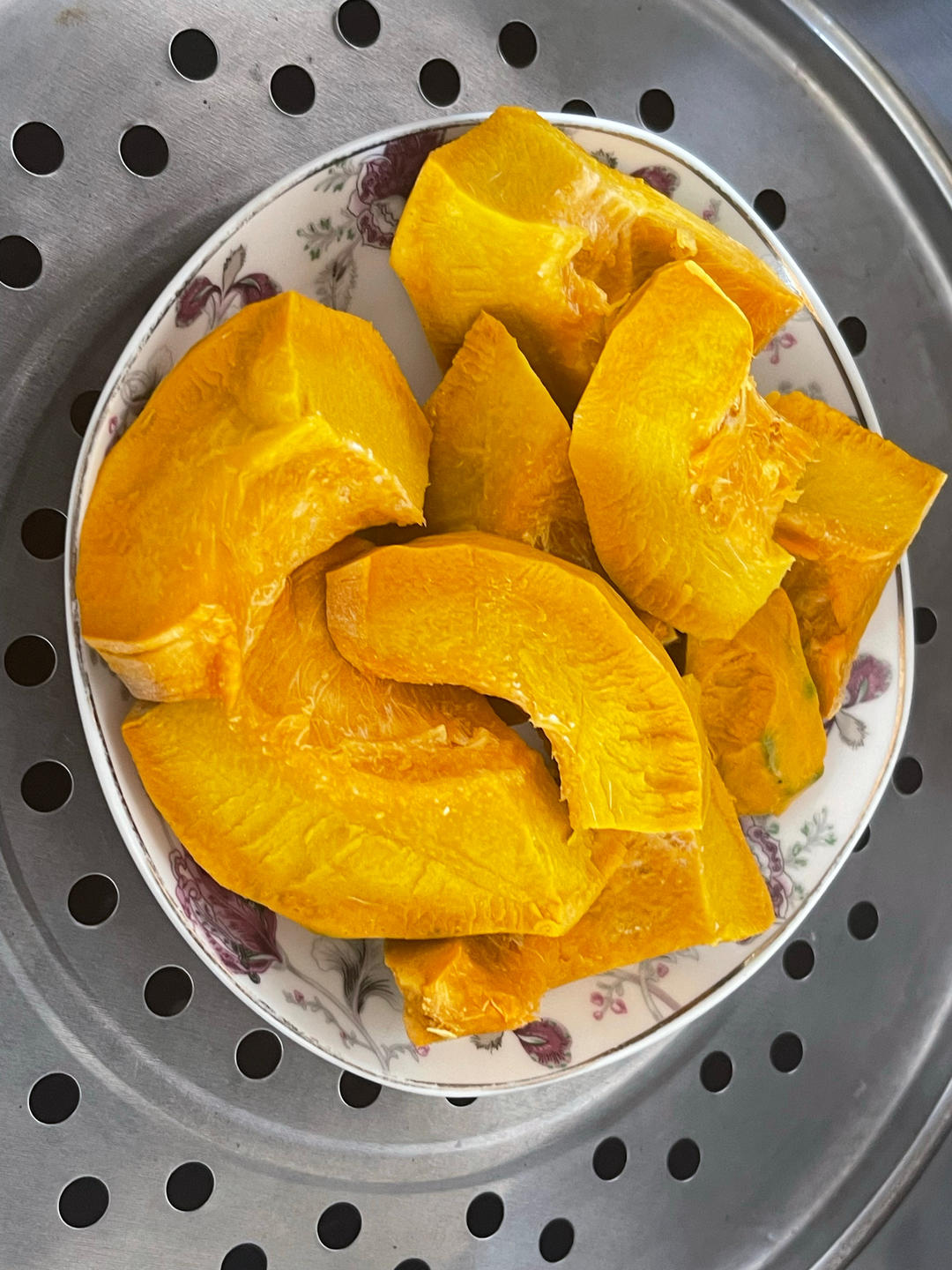
Step 1 — Steam the Kabocha and Weigh 200 g
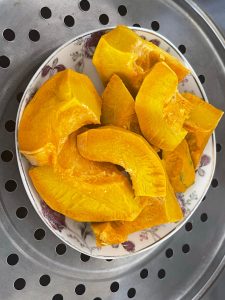
Steam a kabocha pumpkin until fully tender, then scoop the flesh and measure out 200 g (7 oz) of the cooked pumpkin.
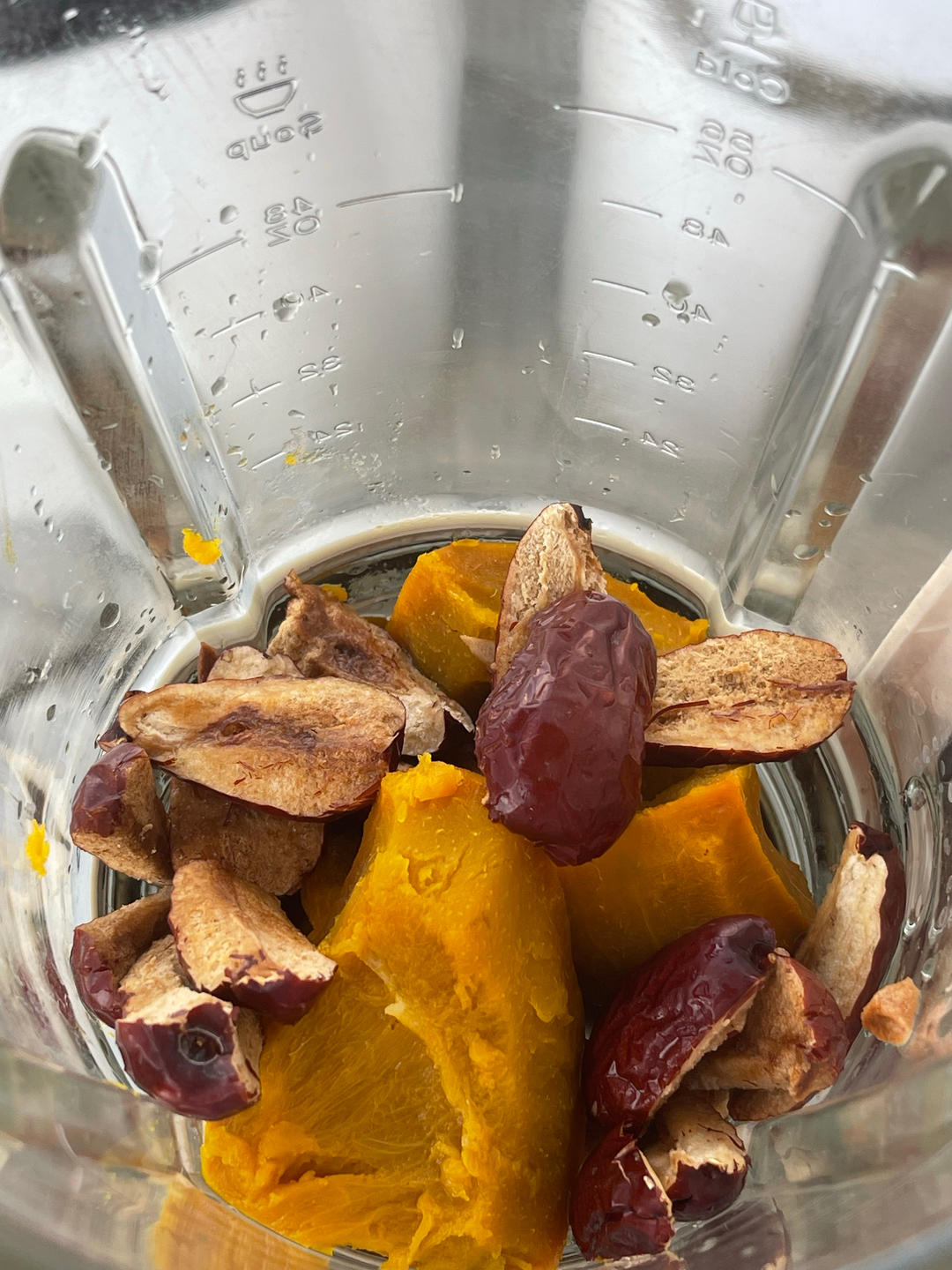
Step 2 — Blend the Pumpkin, Red Dates, and Water
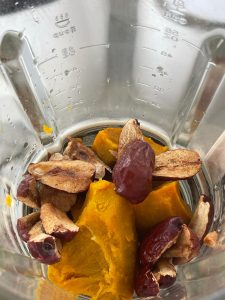
Combine the cooked pumpkin, the pitted red dates, and the water in a blender and process until smooth. It does not need to be perfectly silky; small date flecks are welcome.
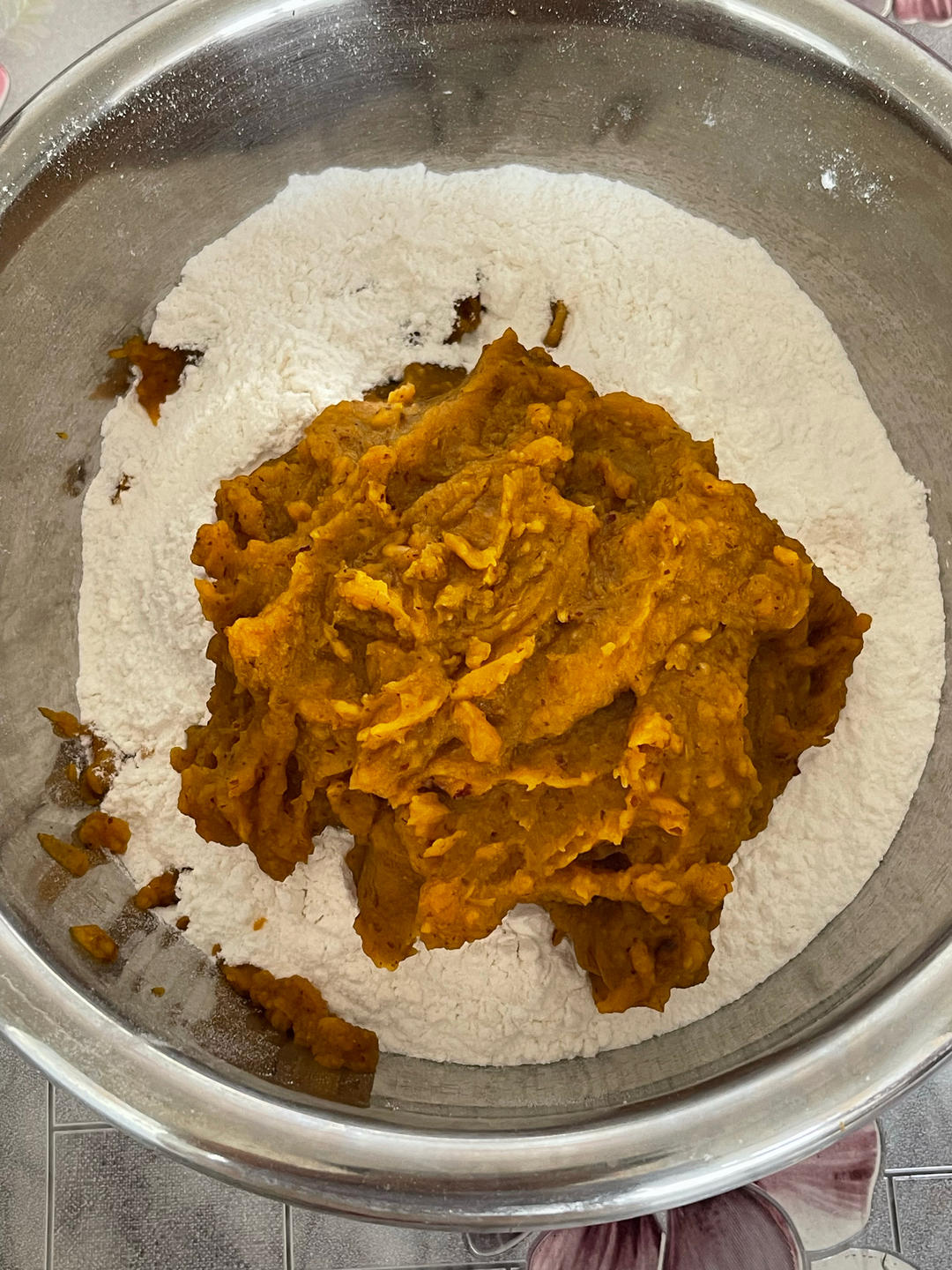
Step 3 — Mix the Dry Ingredients and Purée
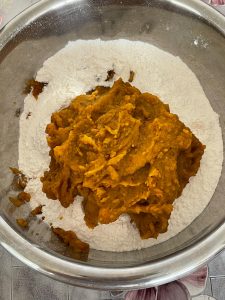
Put the all-purpose flour in a large bowl and add the yeast and baking powder. Pour in the pumpkin-date purée.
Step 4 — Knead Into a Dough and Rest 10 Minutes
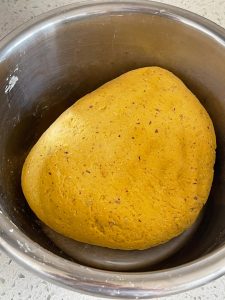
Mix and knead everything into a smooth dough. Cover it and let it rest for 10 minutes. This rest is not for fermentation; it simply relaxes the gluten so the dough rolls easily without springing back.
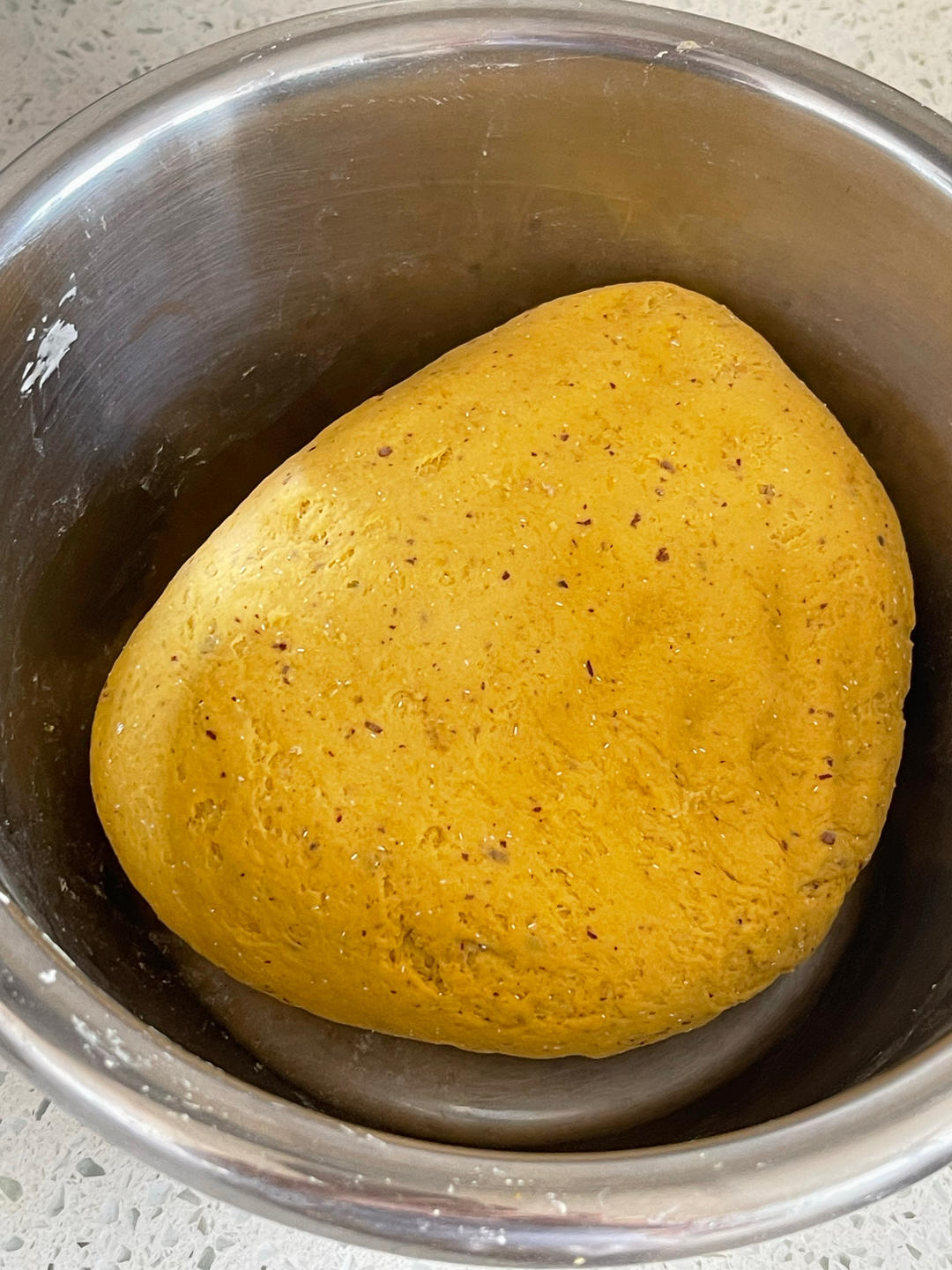
Step 5 — Knead Again to Release the Air
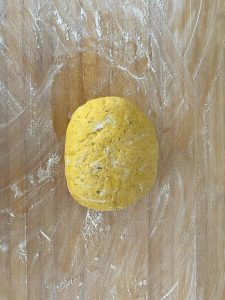
After 10 minutes, take the dough out and knead it briefly to push out the air, smoothing it into an even ball ready for rolling.
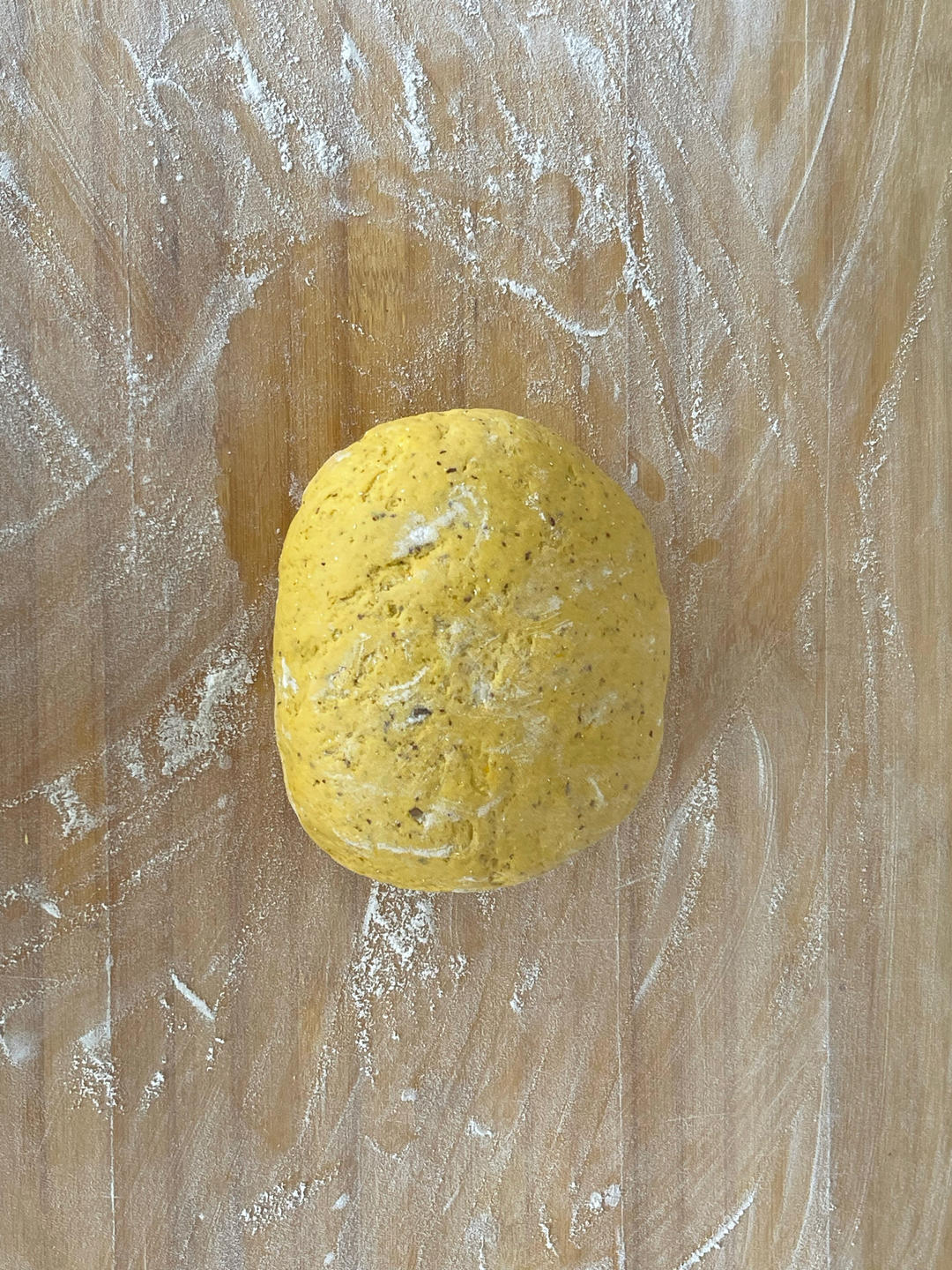
Step 6 — Roll the Dough Into a Large Sheet
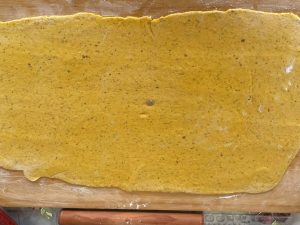
Dust the work surface with a little flour to prevent sticking. Roll the dough into a large sheet about 1 cm (1/3 in) thick and 35 cm (14 in) wide. The length does not matter much; use a big enough sheet to cut fifteen triangles.
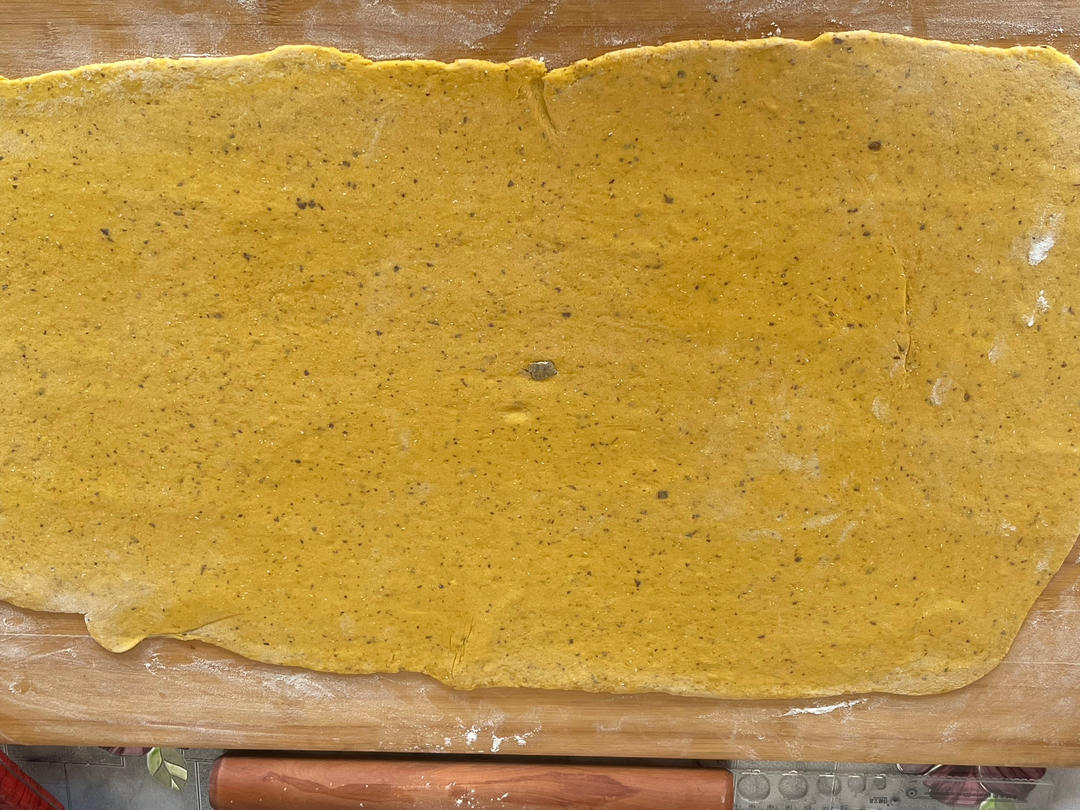
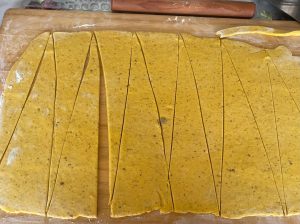
Step 7 — Cut Into 15 Isosceles Triangles
Using a knife, cut the sheet into 15 isosceles triangles, each with a wide base that tapers to a point, the way you would cut a round pastry into wedges.
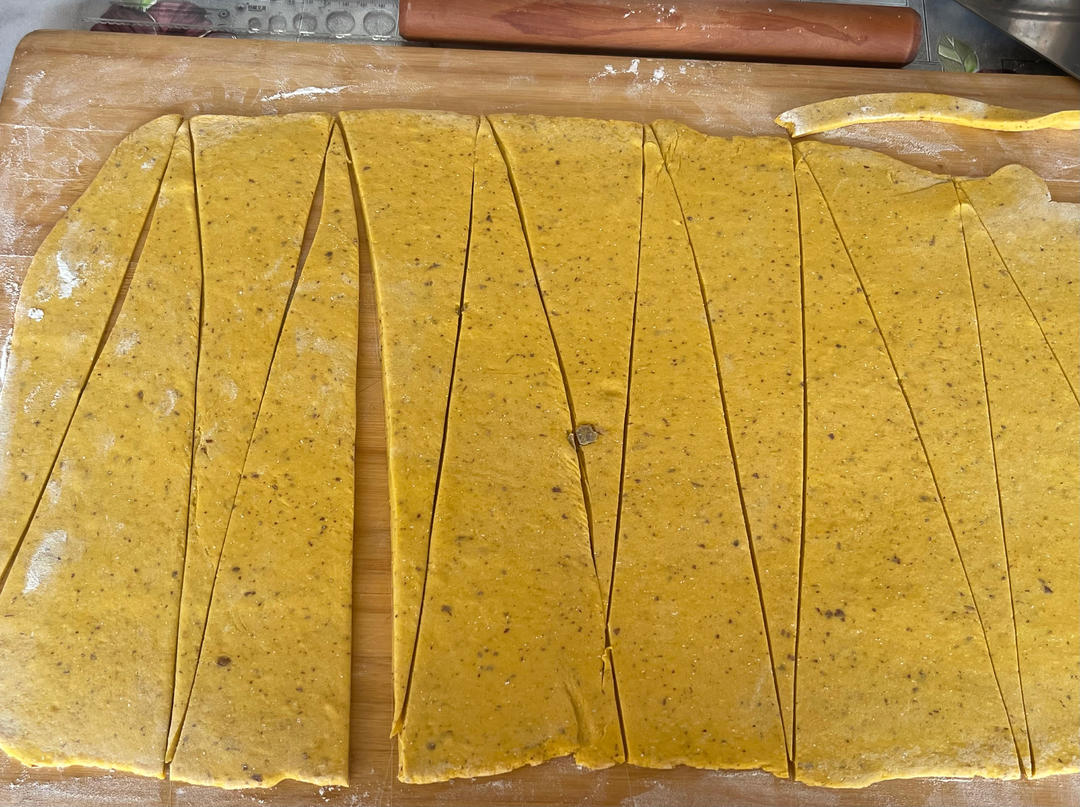
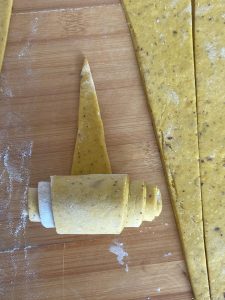
Step 8 — Roll Each Triangle From the Wide End
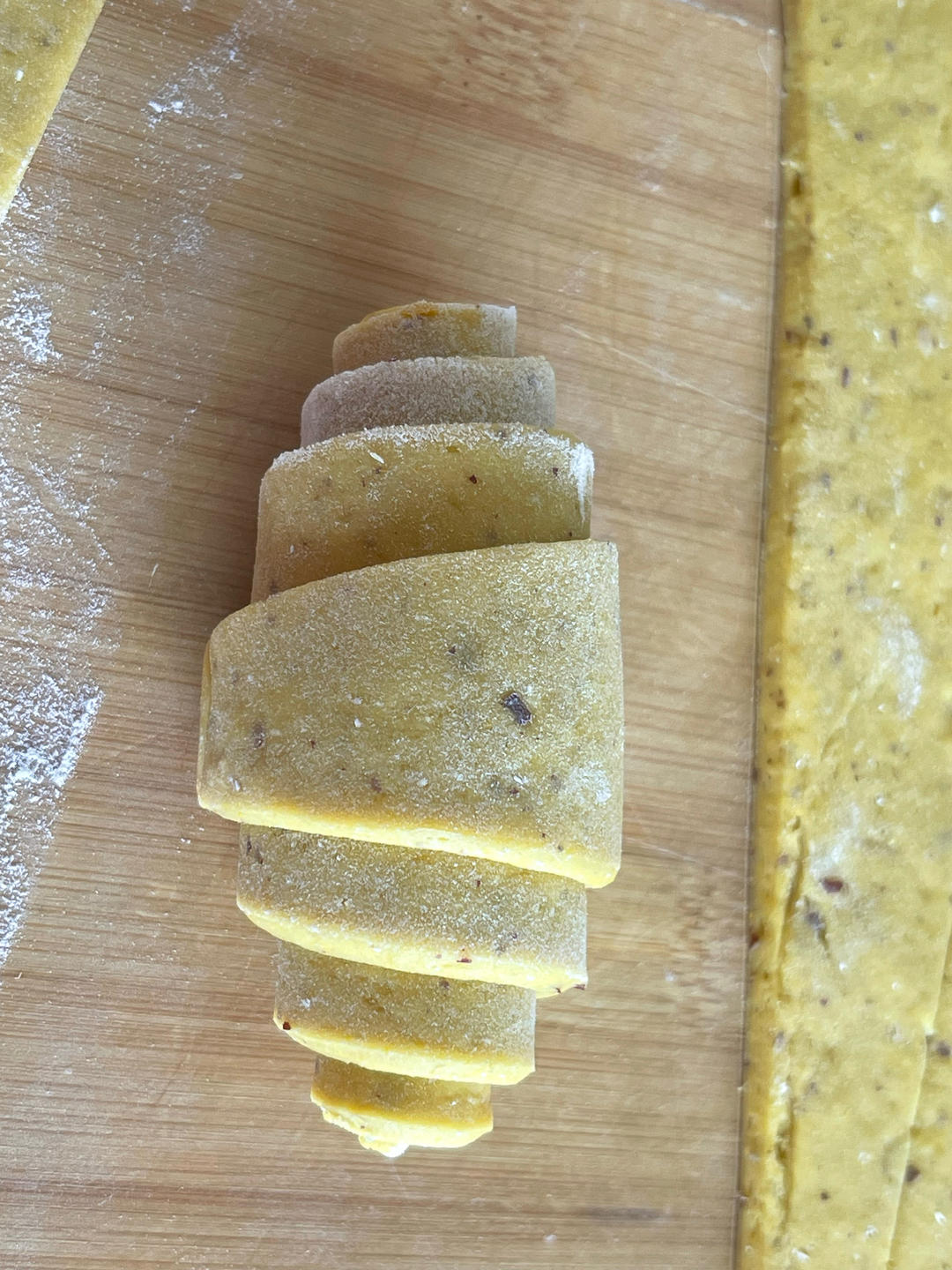
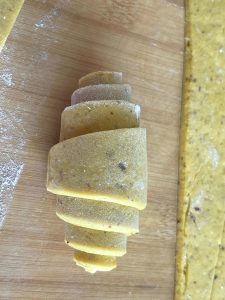
Take one triangle and roll it up starting from the wide end toward the point, so the bun forms a spiral with a slightly pointed tip, like a little horn.
Step 9 — Shape All Fifteen Buns
Roll all fifteen triangles the same way and arrange the shaped buns on steamer paper with space between them, since they will puff as they proof and steam.
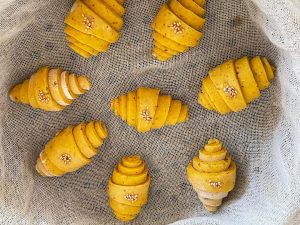
Step 10 — Dot the Tops and Proof for 30 to 40 Minutes
Brush or dab a little water on the top of each bun and press on a few white sesame seeds. Let the buns proof at room temperature for 30 to 40 minutes. In a 82°F (28°C) kitchen they took about 35 minutes; the buns are ready when they look puffy and a fingertip pressed lightly into the side leaves a dent that slowly springs back.
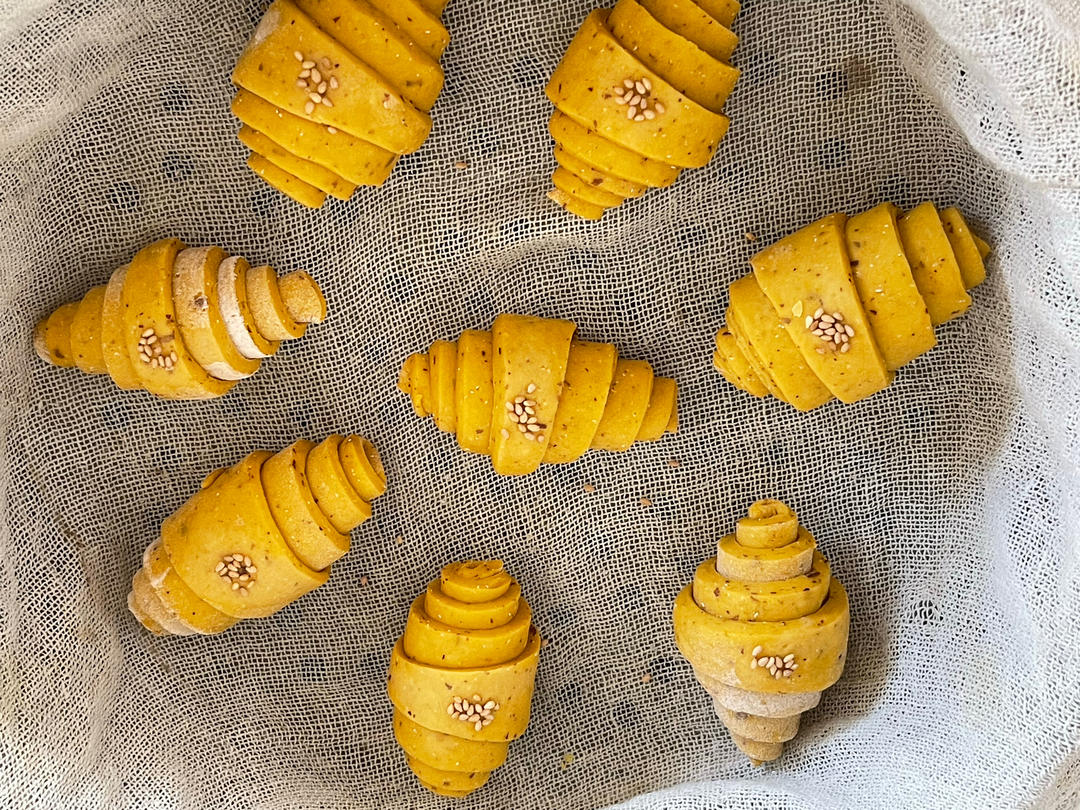
Steamed buns proof differently from baked bread because steam, not oven spring, does the final lifting. Proofing only until the buns are puffy and barely doubled keeps them from collapsing under the steamer lid, and steaming over gently boiling water lets the yeast’s last burst of gas expand the dough into a soft, glossy crumb.
Step 11 — Steam Until Sweet and Fragrant
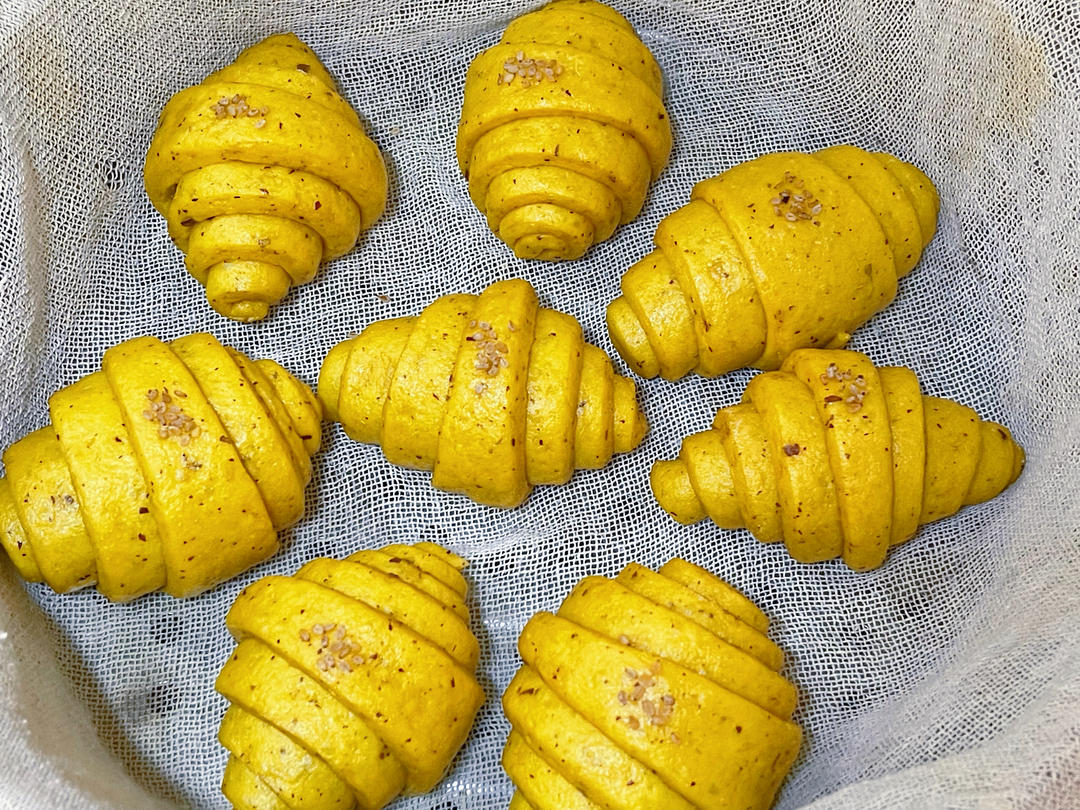
Bring the steamer water to a full boil, then reduce to a medium boil. Place the buns in the steamer, cover, and steam for about 12 to 15 minutes. Turn off the heat and let them sit, covered, for 3 minutes before opening the lid so they do not collapse from the sudden temperature drop.
Step 12 — Serve for Breakfast With Milk and an Egg
Serve the buns warm. They are sweet, soft, and naturally flavored, and with a glass of milk and a boiled egg they make a complete, nourishing breakfast, just as the baker intended.
Common Mistakes When Making Pumpkin Red Date Buns
1. The buns come out dense and heavy. Cause: under-proofing or too much flour worked in during kneading. Fix: proof until puffy, about 30 to 40 minutes, and only flour the surface lightly when rolling.
2. The dough is too wet and sticky. Cause: the pumpkin purée held more water than expected. Fix: add flour a tablespoon at a time and knead until the dough is soft but no longer sticking to the bowl.
3. The buns collapse when the lid opens. Cause: the steam was cut too abruptly. Fix: turn off the heat and rest the covered buns for 3 minutes before lifting the lid.
4. Flat, wrinkled buns. Cause: over-proofing, so the dough ran out of rising power. Fix: steam as soon as the buns look puffy and pass the fingertip test, before they double completely.
5. The triangles unroll during steaming. Cause: the roll was not snug or the seam was not pressed. Fix: roll each triangle tightly from the wide end and tuck the point under the bun.
Variations
Plain pumpkin buns. Skip the red dates for a softer, less sweet version; my pumpkin steamed buns are the classic round shape for this.
Whole-wheat swap. Replace half the flour with whole-wheat flour and add an extra tablespoon of water; expect a denser, nuttier bun. For a full whole-grain batch, my whole-wheat steamed buns are a great guide.
Plain mantou shapes. If you prefer the traditional round or knife-cut mantou, my Shandong steamed buns show the classic shaping technique.
Savory companions. For a savory steamed-bun spread, add steamed BBQ pork buns, Beijing-style soup dumplings, or Shanghai pan-fried pork buns to the table.
Frequently Asked Questions
Why is there baking powder in a yeasted dough? The small amount of baking powder gives steamed buns extra lift and a softer crumb alongside the yeast. Steamed buns do not get oven spring, so the extra leavening helps them puff.
Can I make the dough the night before? You can mix and shape the buns, then refrigerate them covered overnight and proof at room temperature for about an hour before steaming. The flavor will be slightly more developed.
How do I store leftover buns? Cool completely, then store in an airtight bag at room temperature for 2 days or freeze for up to 2 months. Re-steam frozen buns for 6 to 8 minutes, no thawing needed.
Can I use regular pumpkin? Yes, but watery pumpkins need a longer simmer or squeeze to dry out; otherwise add more flour. Kabocha or another dense squash gives the best color and sweetness.
Do these taste sweet like dessert? They are mildly sweet, closer to a breakfast bread than a dessert, with the dates providing gentle pockets of sweetness rather than sugar syrup.
How to Serve
Serve the buns warm with milk and an egg for breakfast, as the baker does, or with tea as an afternoon snack. For another pumpkin breakfast idea, my steamed egg in pumpkin turns the same squash into a savory custard bowl that sits nicely beside these buns.
Storage & Reheat
Store leftover buns in an airtight bag at room temperature for up to 2 days, or freeze for up to 2 months. Reheat by steaming for 6 to 8 minutes (frozen) or 3 to 4 minutes (chilled), or microwave each bun for 20 to 30 seconds for convenience. Steamed buns contain no meat, but they are moist, so keep them dry and cool and do not leave them out in a warm room for more than a day.
Allergen Notice
Contains gluten (wheat flour). Red dates, pumpkin, yeast, and sesame seeds are not common allergens, but if cooking for someone with a sesame allergy, simply omit the sesame topping.
Nutrition Disclaimer
Nutrition information is calculated using an ingredient database and should be considered an estimate. In cases where multiple ingredient alternatives are given, the first listed is calculated for nutrition. Garnishes and optional ingredients are not included.
About the Author & Recipe Development
I am Lin, and I grew up in my parents’ restaurant kitchen in Chengdu, where breakfast bread was always steamed rather than baked. This pumpkin red date bun recipe from xiachufang reminded me of the baker who used fruit to sweeten her doughs, and I tested it three times to get the hydration right: the first dough was sticky because my kabocha held more water, the second was perfect, and the third confirmed the 35-minute proof in a normal kitchen. The buns here are soft, gently sweet, and easy to re-steam, which is exactly what a weekday breakfast should be.
Authoritative References
King Arthur Baking on yeast and proofing for proofing guidance, and USDA Safe Temperature Chart for reheating leftovers.
Soft Pumpkin Red Date Buns (南瓜红枣馒头): Naturally Sweet

Equipment
- Steamer
- Rolling Pin
- Blender
- Mixing Bowl
Ingredients
For the Buns
- 0.33 cup red dates (dried jujubes), pitted
- 7 oz steamed kabocha pumpkin, skin removed weight after steaming
- 190 g water about 3/4 cup plus 1 tbsp
- 3.3 cups all-purpose flour
- 1.25 tsp instant yeast
- 1 tsp baking powder
- 1 sprinkle white sesame seeds, for the tops optional
Instructions
- Steam a kabocha pumpkin until tender and weigh out 200 g (7 oz) of the flesh.

- Blend the pumpkin with the pitted red dates and water into a purée; small lumps are fine.
- Add the yeast and baking powder to the flour, then pour in the pumpkin-date purée.
- Knead into a smooth dough and rest 10 minutes to relax the gluten.
- Knead the rested dough briefly to release the air.
- Roll the dough into a large sheet about 1 cm (1/3 in) thick and 35 cm (14 in) wide.

- Cut the sheet into 15 isosceles triangles.

- Roll each triangle up from the wide end toward the point.
- Shape all fifteen buns and arrange them on steamer paper with space between.
- Dot the tops with water and sesame seeds, then proof at room temperature for 30 to 40 minutes until puffy.
- Steam over a medium boil for about 12 to 15 minutes, then rest covered for 3 minutes before opening.
- Serve warm with milk and an egg for breakfast.








Leave a Reply