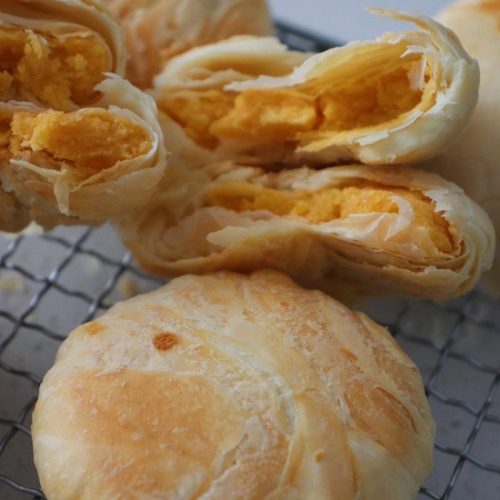
Flaky Huangzhuang Mooncakes (黄庄月饼): Crumbly Golden Yolk

Northern-style flaky Huangzhuang mooncakes with corn-oil pastry layered around a golden salted-egg yolk and sweet white bean filling.
Equipment
- Bread machine (optional)
- Kitchen Scale
- Rolling Pin
- Baking Sheet
- Bamboo skewer
Ingredients
For the Water-Oil Crust (油皮)
- 1.5 cups all-purpose flour
- 3 tbsp corn oil
- 1.5 tbsp fine sugar
- 70 g water about 1/4 cup plus 1 tbsp
- 1.5 tbsp whole egg, lightly beaten
- 0.25 tsp fine salt
For the Oil Dough (油酥)
- 1 cup plus 2 tbsp cake flour
- 3.5 tbsp corn oil
For the Filling
- 160 g salted egg yolks
- 1 tsp baijiu or white spirit, for the yolks
- 280 g sweet white bean paste (white kidney bean paste)
Instructions
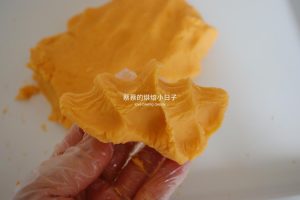
- Knead all the water-oil crust ingredients in a bread machine (or by hand) until smooth.
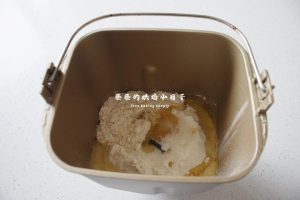
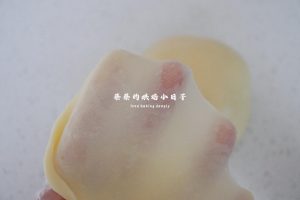
- Knead until the dough is elastic and stretches into a thin membrane. A full windowpane is optional with corn oil.
- Put the cake flour and corn oil for the oil dough in a large container.
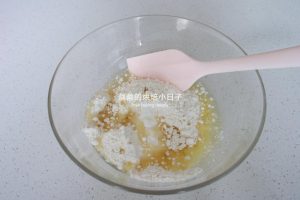
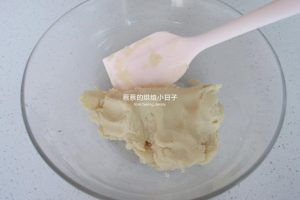
- Mix the oil dough with a spatula until completely smooth; do not knead.
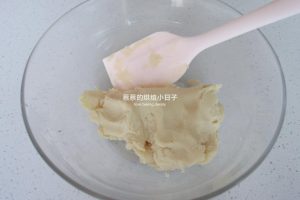
- Wrap both doughs in plastic and chill in the fridge for 40 minutes.
- Spray the salted egg yolks with baijiu, roast at 355°F (180°C) for about 8 minutes, then crush into crumbs.
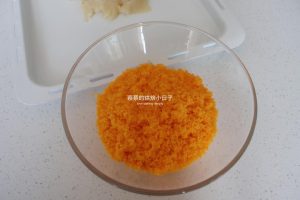
- Measure out the sweet white bean paste.
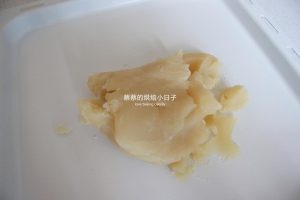
- Mix the crushed yolks into the bean paste until smooth and even.
- Divide the filling into 12 balls, then chill for 30 minutes.
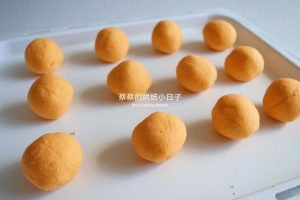
- Press the water-oil dough flat, wrap a portion of oil dough in the center, and seal by pushing the edges up and over.
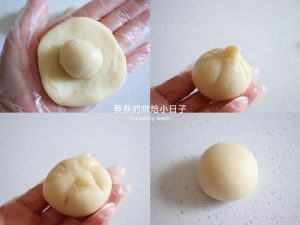
- Press the wrapped ball into an oval, roll it out evenly from the center, and roll it up into a tight scroll.
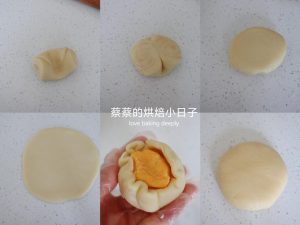
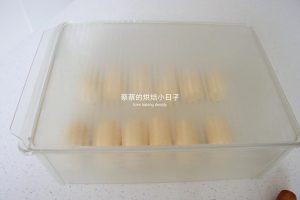
- Cover all the rolls and chill for 20 minutes.
- Repeat the lengthen-and-roll technique a second time on each piece.
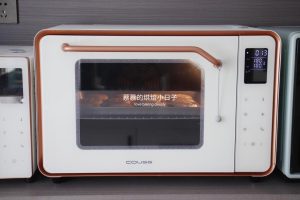
- Cover and rest the second rolls at room temperature for 15 to 20 minutes.
- Press the center, fold the ends in, flip, roll out, fill with the yolk-bean ball, and seal, keeping the textured side out.
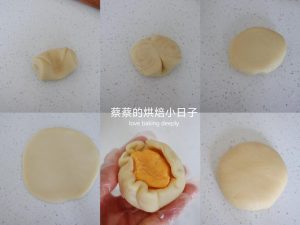
- Leave the surface irregular; this is the signature Huangzhuang look.
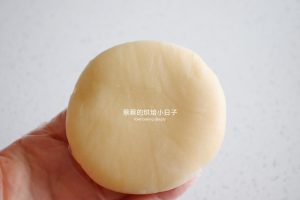
- Poke small holes in the tops with a skewer and add a little corn oil to the baking sheet.
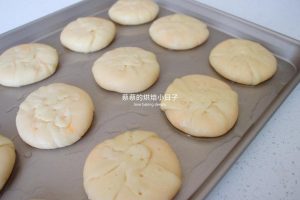
- Bake at 355°F (180°C) with both heats for 13 minutes.
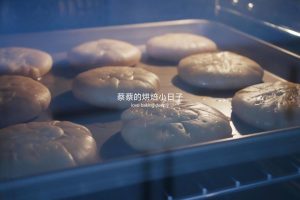
- Flip the mooncakes, keeping the empty oven running.
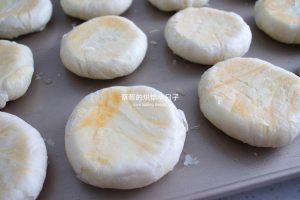
- Return to the oven and bake 13 more minutes at 355°F (180°C). Adjust for your own oven.
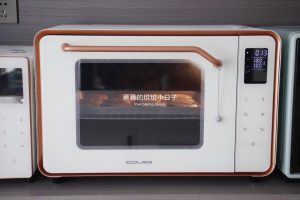
- Cool the baked mooncakes on the sheet.
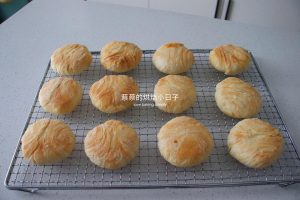
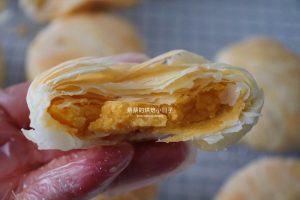
- Break one open to check the fine, flaky layers.
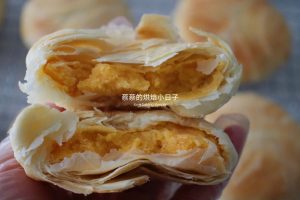
- Enjoy the crumbly, golden mooncakes.
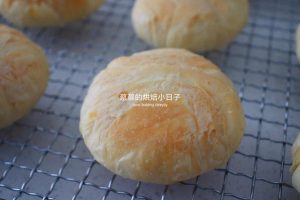
- Serve at room temperature over a plate, because they crumble gloriously.
Notes
Tips: Knead the water-oil dough until elastic and respect every rest; the cold rests create the flakes. Spray the salted yolks with baijiu before roasting. Poke holes in the tops so steam escapes. Bake 13 minutes per side at 355°F (180°C).
Food Safety: Store baked mooncakes in an airtight container up to 4 days or freeze up to 2 months. Do not leave egg-yolk-filled pastries at room temperature for more than a few days.
Allergen Notice: Contains gluten and egg. Soy may appear in packaged bean paste and salted egg yolks; check labels.
Nutrition Disclaimer: Nutrition information is calculated using an ingredient database and should be considered an estimate. In cases where multiple ingredient alternatives are given, the first listed is calculated for nutrition. Garnishes and optional ingredients are not included.