Whenever my family and I pack for a road trip or a picnic, there is one snack that is absolutely mandatory in our cooler: braised quail eggs. Growing up in Sichuan, I spent countless hours in the kitchen watching my parents—both professional chefs—master the art of braising. While they cooked elaborate banquet dishes, it was these simple, deeply savory, bite-sized eggs that I always stole from the prep station.

Quail eggs are often considered a nutritional powerhouse, boasting higher lecithin levels than standard chicken eggs. They are the perfect size for snacking, and when simmered in a rich, spiced broth, they absorb an incredible depth of flavor.
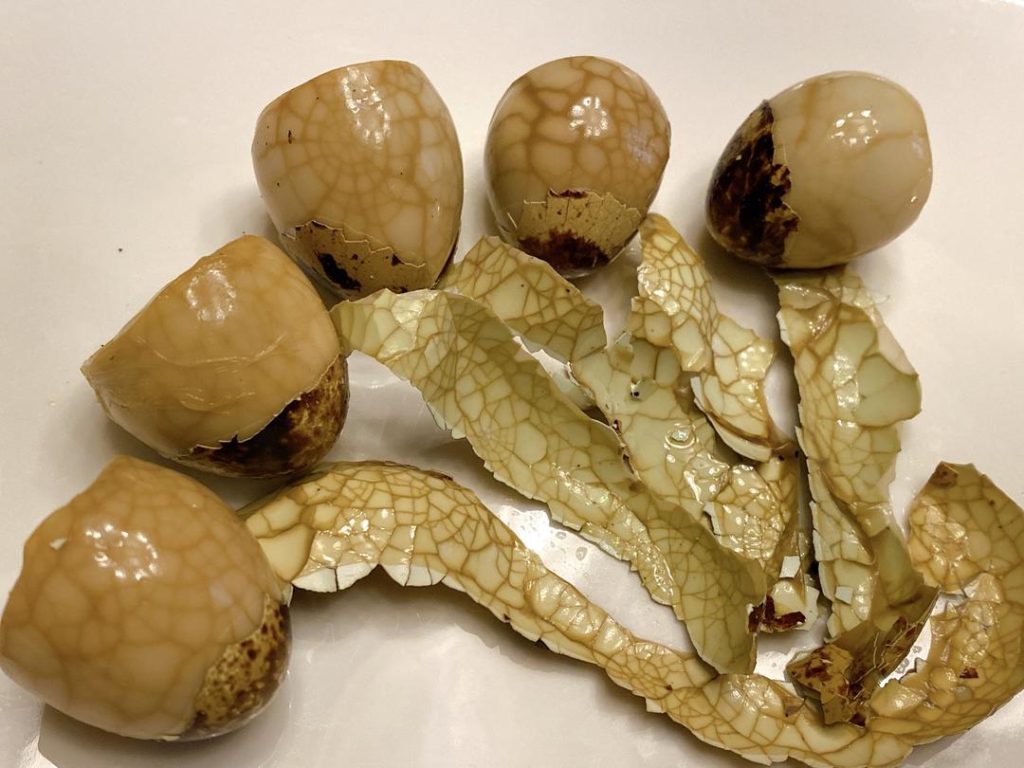
Today, as I test recipes for my upcoming cookbook, I want to share my family’s foolproof method for making these at home. The secret isn’t just in the spices; it’s in the careful temperature control to prevent the delicate shells from bursting, and the gentle cracking technique that creates a stunning, marbled appearance on the egg white.
What Is Wu Xiang Lu An Chun Dan?
“Wu Xiang” translates to “five spices,” referring to the aromatic flavor profile created by traditional Chinese dry spices. “Lu” is the master braising technique where ingredients are gently simmered in a seasoned soy sauce broth. “An Chun Dan” simply means quail eggs.

The result is a savory, aromatic, and slightly sweet bite-sized egg. They are commonly sold as street food across China, vacuum-sealed in convenience stores, or made in large batches in home kitchens for an easy, protein-rich breakfast or snack.
Similar Recipe Recommendation: If you love the flavor profile of this dish but only have standard chicken eggs on hand, you should absolutely try my Chinese Tea Eggs. The technique is remarkably similar, but the addition of black tea leaves gives them a distinct, earthy aroma.
1Chinese Tea Eggs (Cha Ye Dan)Authentic Chinese Tea Eggs featuring a beautiful marbled spiderweb pattern. Hard-boiled eggs are gently cracked and steeped in a savory blend of black tea, soy sauce, star anise, and cinnamon. A perfect make-ahead breakfast or protein-packed snack rooted in traditional Chinese cuisine.Check out this recipe

Ingredients
The Eggs
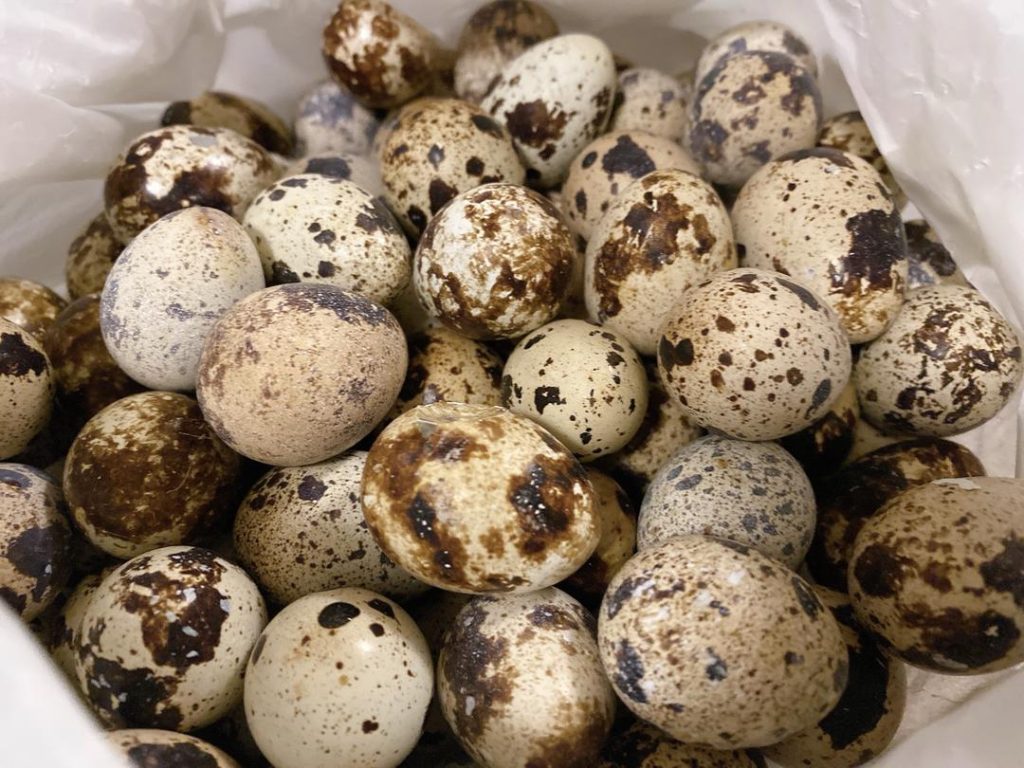
- Quail Eggs: 1 kg (about 2.2 lbs), which is roughly 90-100 eggs.
The Aromatics & Spices
- Fresh Ginger: 4 slices (unpeeled is fine).
- Chinese Cinnamon (Cassia Bark): 2 small pieces.
- Dried Tangerine Peel: 1 piece. (Also known as chenpi; see my guide on Dried Mandarin Orange Peel for sourcing tips).
- Bay Leaves: 2 whole leaves.
- Dried Chili Peppers: 2 whole peppers (leave whole for flavor, break them in half if you want a slight kick).
- Sichuan Peppercorns: 10 whole corns.
- Preserved Mustard Greens (Meigancai): 10g (about 1 tablespoon). Chef’s Note: If you don’t have meigancai, you can substitute it with 1 or 2 Star Anise pods.
The Braising Liquid
- Shaoxing Wine: 20g (approx. 1.5 tbsp).
- Light Soy Sauce: 20g (approx. 1.5 tbsp).
- Dark Soy Sauce: 5g (approx. 1 tsp) – purely for that beautiful amber color.
- Oyster Sauce: 10g (approx. 2 tsp).
- Salt: 5g (approx. 1 tsp).
- Sugar: 5g (approx. 1 tsp) – regular white sugar or rock sugar works perfectly.
Equipment Needed
- A medium to large pot or Dutch oven.
- A slotted spoon or spider skimmer.
- A metal spoon (for cracking the shells).
Prep & Mise en Place
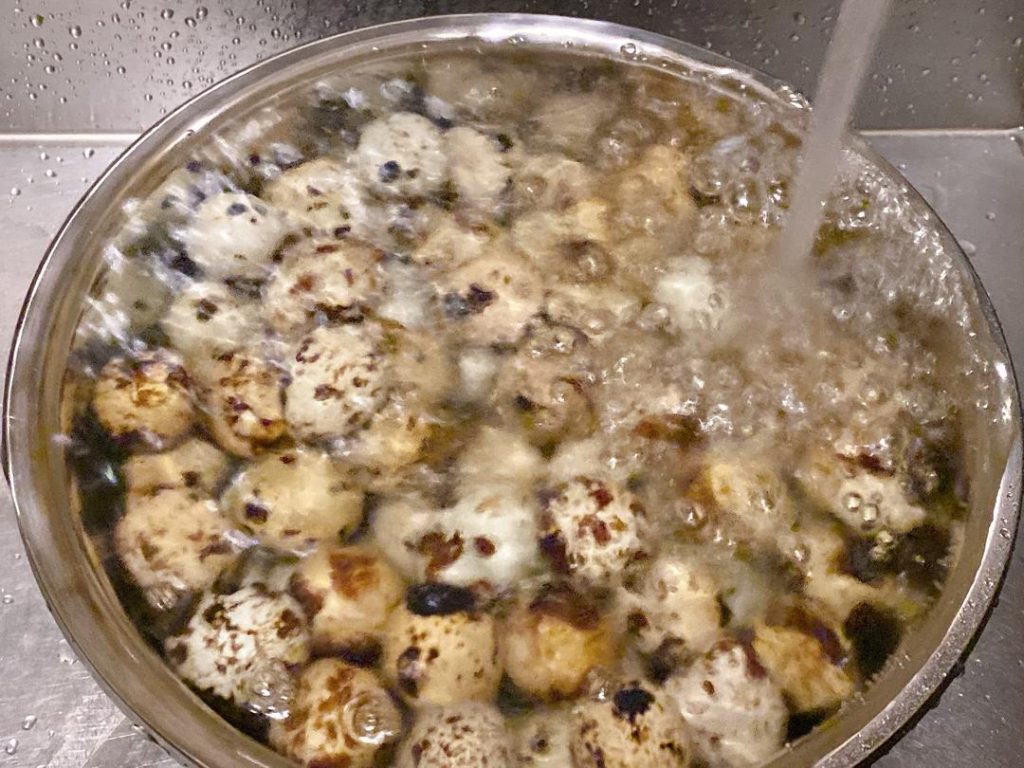
Quail eggs have very delicate shells. Place them in a colander and rinse them gently under cold running water to remove any debris. Do not scrub them roughly. Gather all your dry spices in a small bowl so they are ready to drop into the pot.
Cooking Process
Step 1: The Gentle Boil (10 minutes)
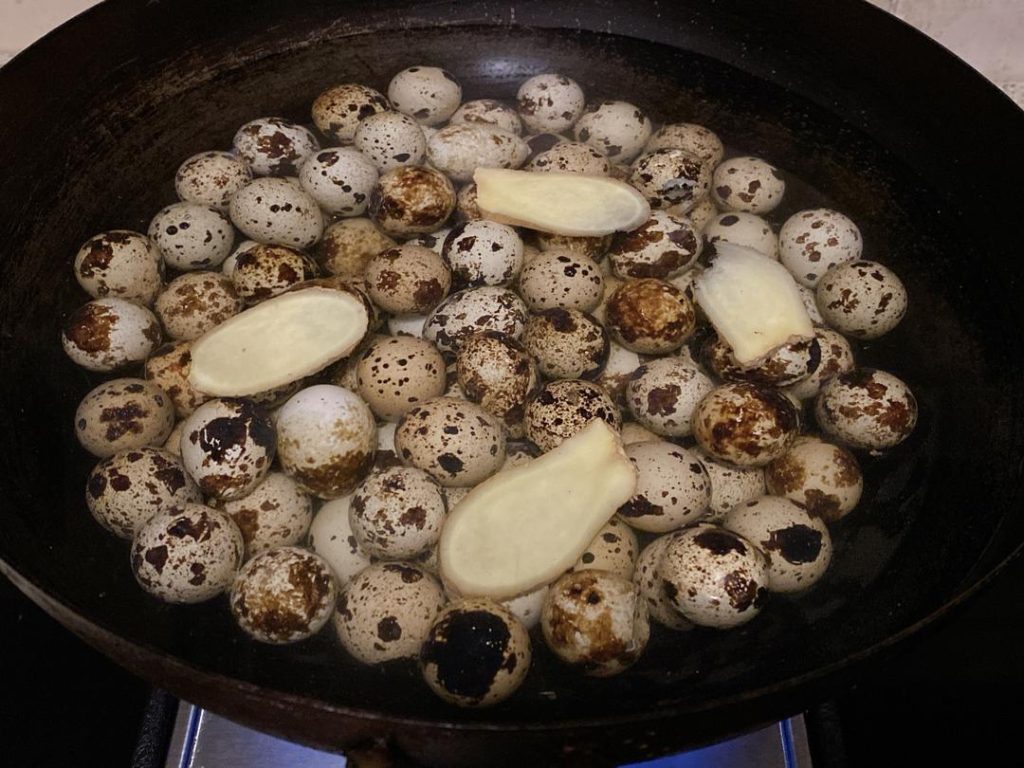
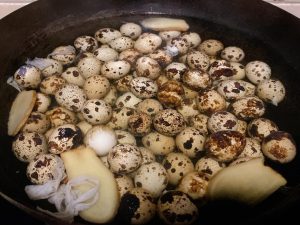
Place the rinsed quail eggs into your pot. Add the ginger slices, Shaoxing wine, and enough cold water to submerge the eggs completely. Turn the heat to your stove’s lowest setting.
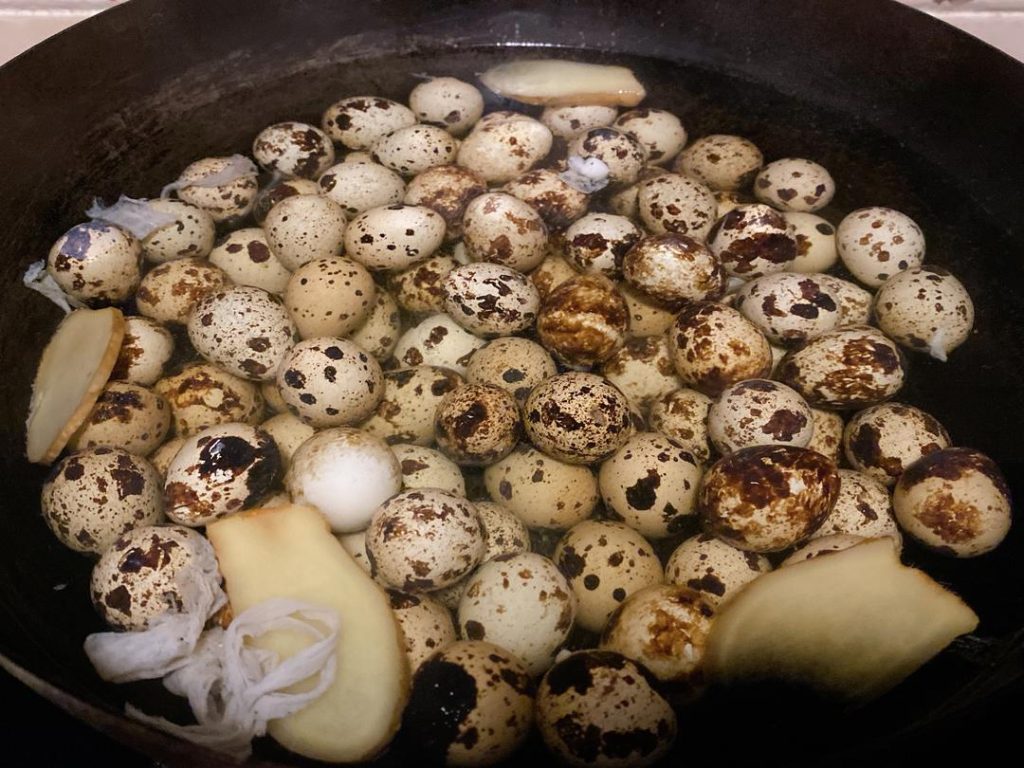
Chef’s Tip: Starting with cold water and using the lowest heat is crucial. Bringing the temperature up gradually prevents the delicate shells from cracking due to sudden thermal shock, which would cause the egg whites to leak out.
Once the water finally reaches a gentle boil, set a timer for exactly 5 minutes.
Step 2: The Ice Bath (5 minutes)
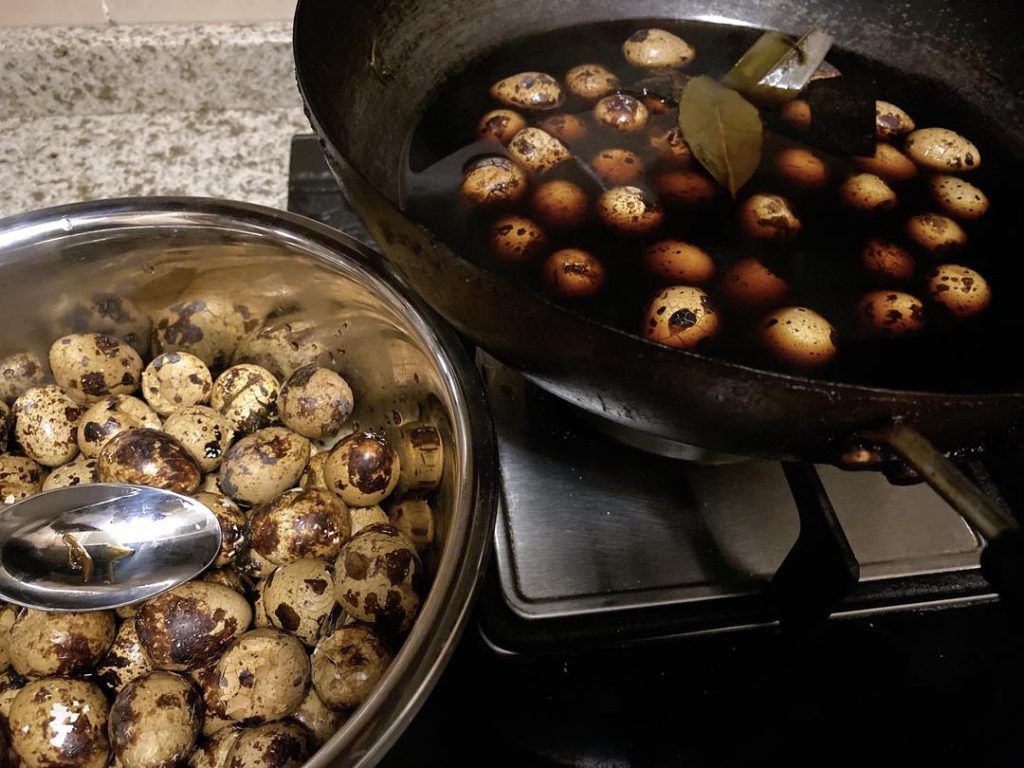
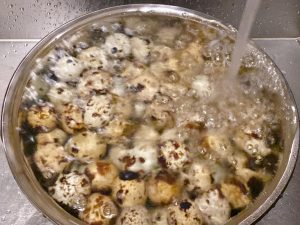
Using a slotted spoon, immediately transfer the cooked quail eggs into a large bowl filled with cold water (ice water is even better). Let them sit for 5 minutes.
The Science: Cooling them rapidly creates a sudden temperature differential that causes the egg inside to contract slightly, separating the inner membrane from the shell. This makes them significantly easier to peel later.
Step 3: Cracking the Shells
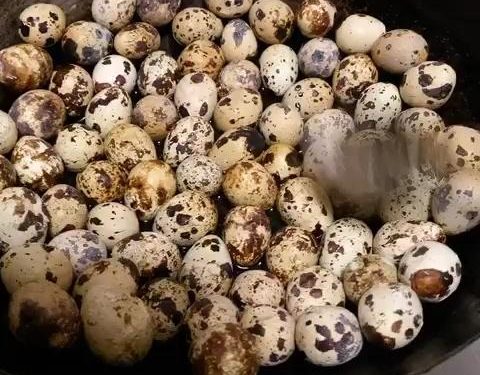
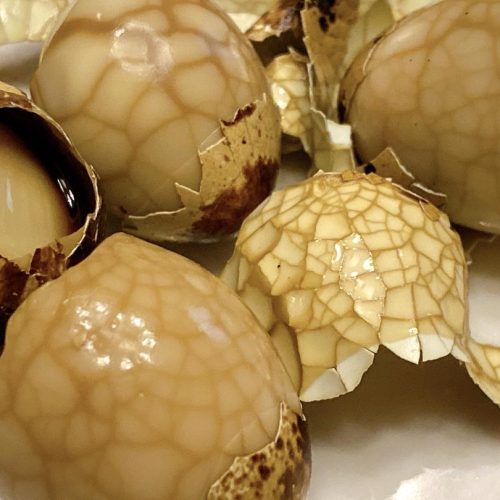
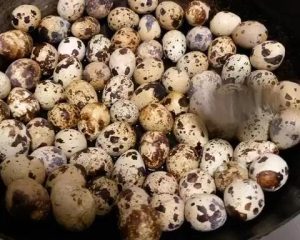
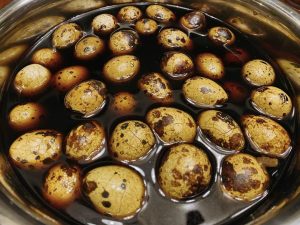
Once the eggs are cool enough to handle, use the back of a metal spoon to gently tap the shells all over. Do not peel them. You want the shell covered in a fine web of cracks. The more intricate the cracks, the more beautiful the marbled pattern will be once they are braised.
Step 4: The Braise (1 Hour)
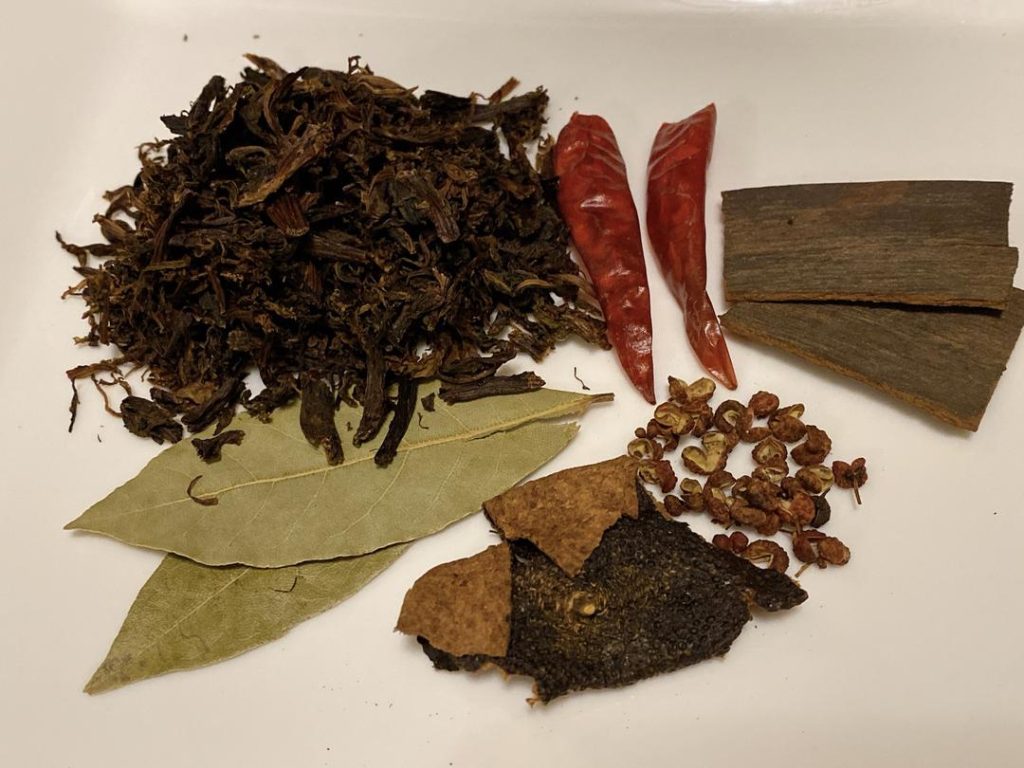
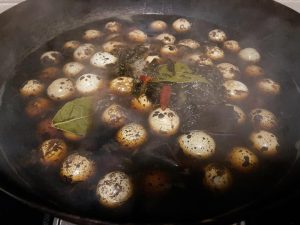
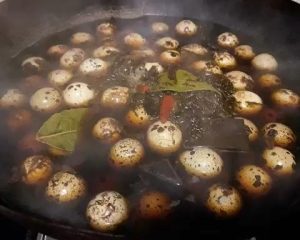
Return the cracked eggs to the pot. Add your cinnamon, dried tangerine peel, bay leaves, dried chilies, Sichuan peppercorns, and meigancai (or star anise). Pour in the light soy sauce, dark soy sauce, oyster sauce, salt, and sugar.
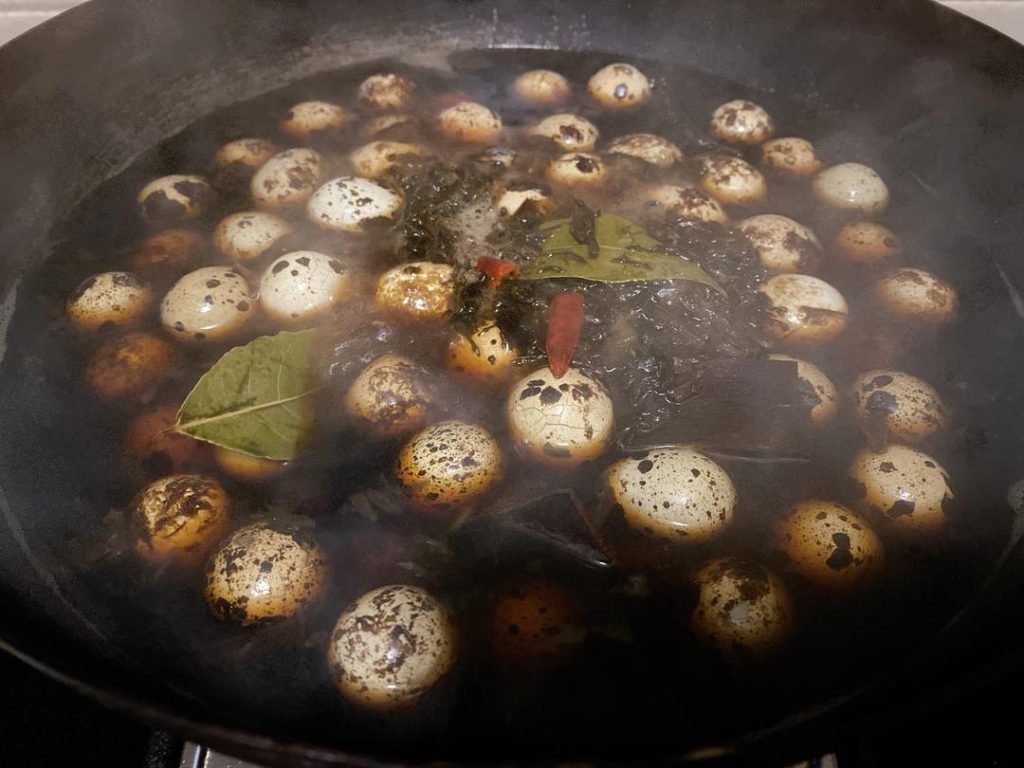
Add enough cold water to completely cover the eggs. Bring the pot to a boil over medium-high heat, then immediately reduce the heat to low. Cover and simmer gently for 1 hour.
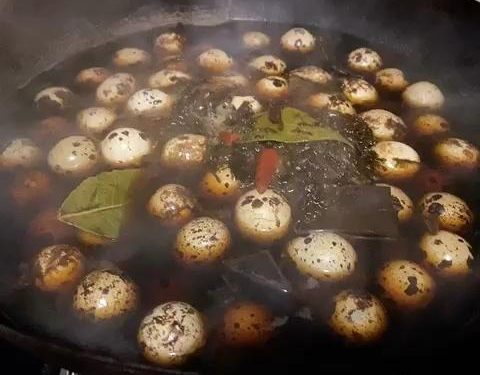
Step 5: The Steep (Crucial Step)
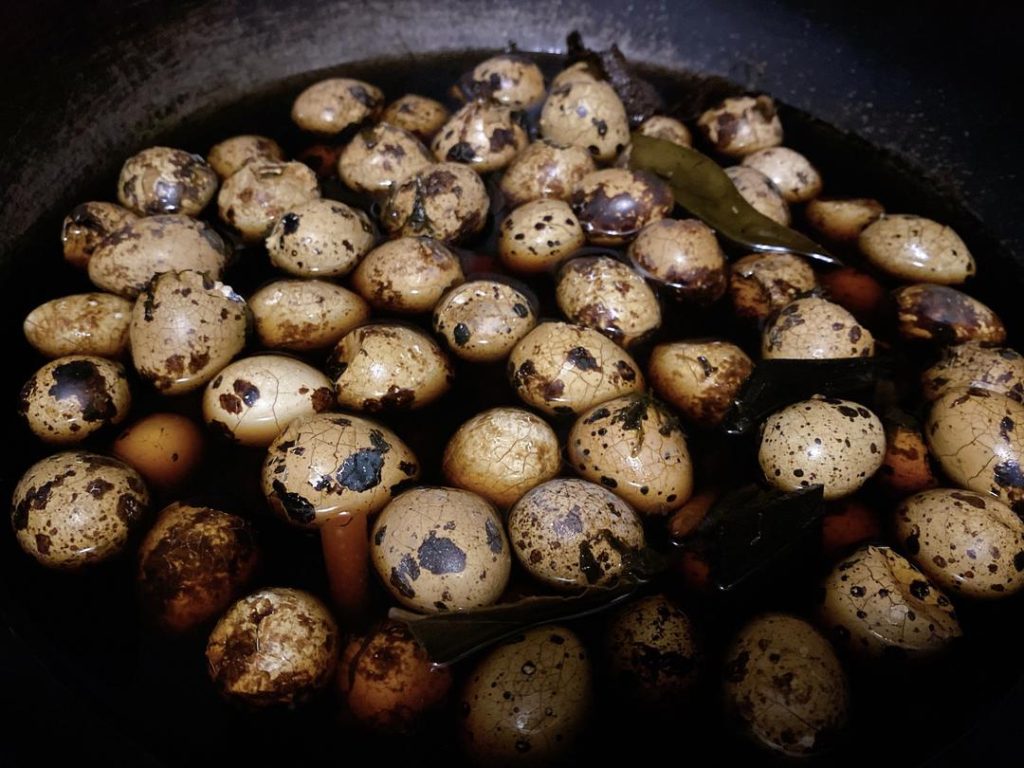
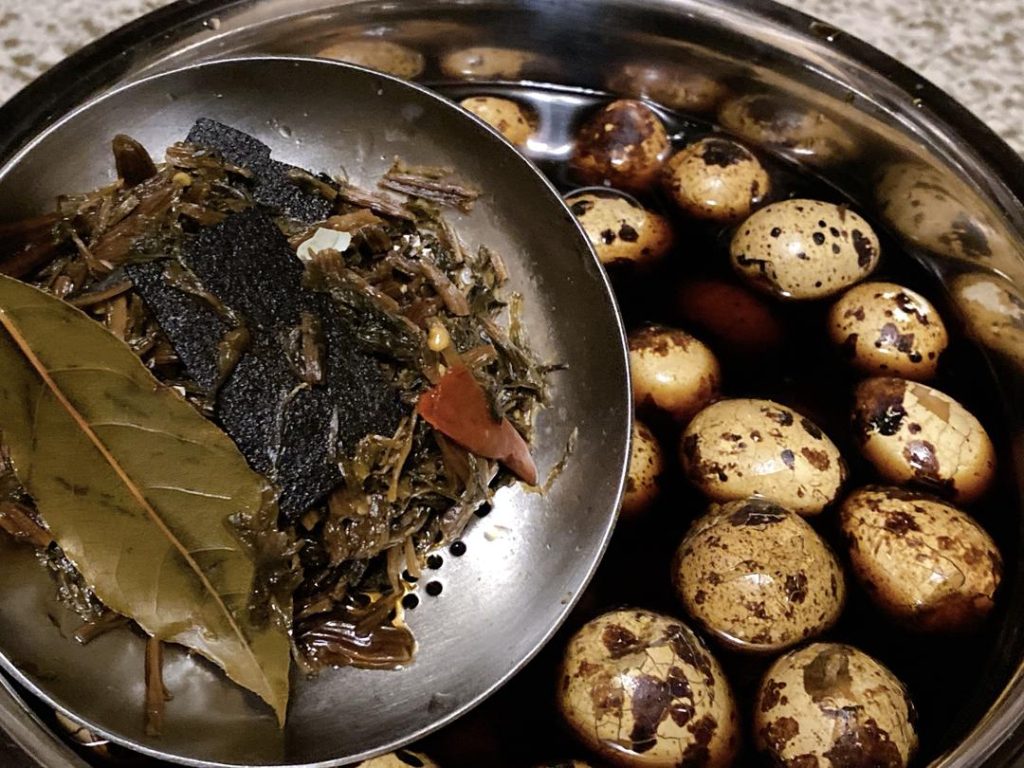
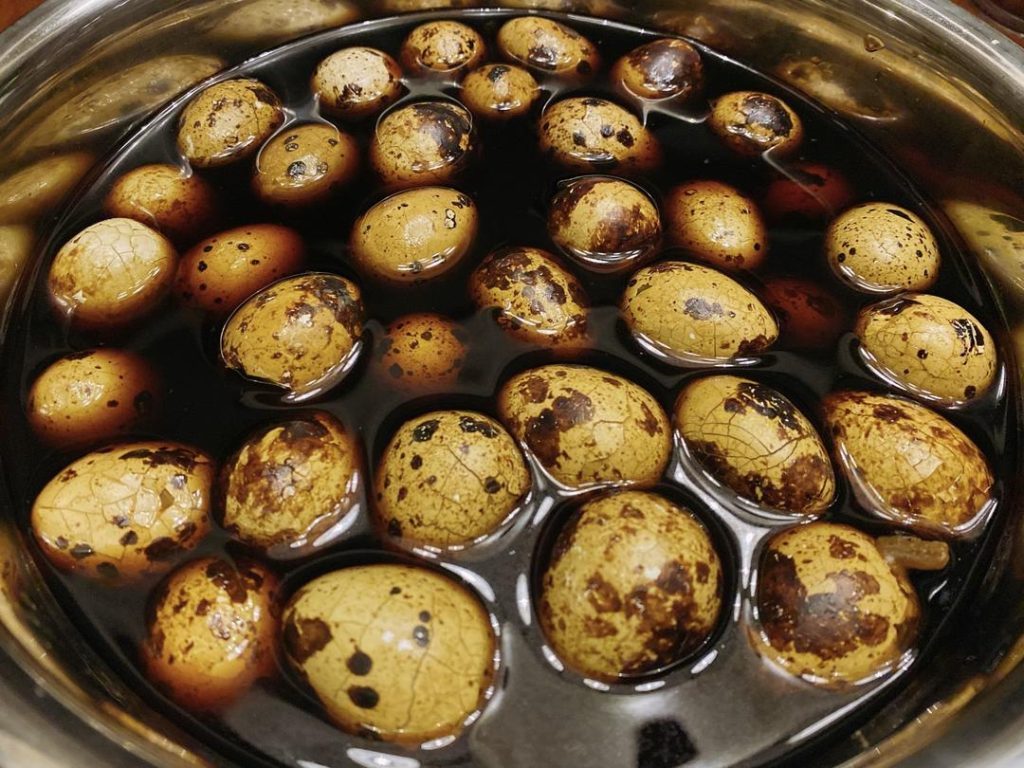
After 1 hour, turn off the heat. Do not remove the eggs! Let them sit in the braising liquid as it cools down to room temperature. For the absolute best flavor, transfer the eggs and the liquid to an airtight container and let them steep in the refrigerator overnight.
Why This Recipe Works
- Temperature Control: The cold-water start ensures your eggs stay perfectly intact without exploding in the pot.
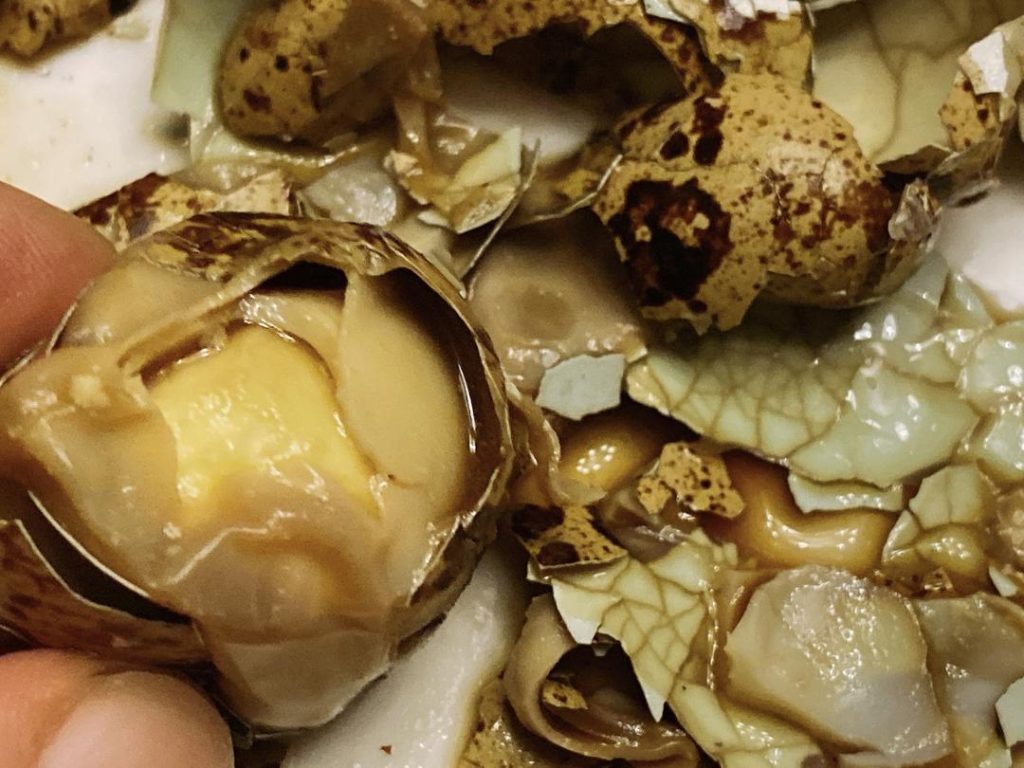
- The Crackling Technique: Leaving the shells on but fracturing them allows the deeply savory, salty-sweet broth to seep in, seasoning the egg white directly and creating a gorgeous visual texture.
- Extended Steeping: Braising for an hour cooks the flavor into the outer layers, but letting them steep as they cool is what draws the savory soy and spice notes all the way into the rich yolk.
Common Mistakes When Making Braised Quail Eggs
- Mistake: The eggs burst and leak white foam into the water.
- Reason: The water was brought to a boil too quickly, or you started with hot water.
- Solution: Always start with cold water and use the lowest possible heat until the boiling point is reached.
- Mistake: The eggs are beautiful but taste bland inside.
- Reason: They were eaten immediately after cooking.
- Solution: Patience! The steeping process (soaking in the cooled liquid overnight) is non-negotiable if you want a deep, authentic flavor.
Frequently Asked Questions
Can I substitute quail eggs with standard chicken eggs? Yes. You will need to boil the chicken eggs slightly longer (about 7-8 minutes) before the ice bath. The rest of the braising process remains exactly the same.
How long do these last in the fridge? Kept submerged in their braising liquid in an airtight container, they will easily last up to 5-7 days in the refrigerator. In fact, they taste better on day 3 than they do on day 1!
Can I freeze braised quail eggs? No. Freezing boiled eggs alters the protein structure of the egg white, turning it rubbery, spongy, and unpalatable when thawed.
Are quail eggs high in cholesterol? Yes, like all eggs, they contain cholesterol. While they are highly nutritious, moderation is key. Nutritional guidelines generally suggest 4-5 quail eggs are roughly equivalent to one standard chicken egg.
How to Serve
These are fantastic eaten cold straight from the fridge as a high-protein snack. For a comforting breakfast, peel a handful and serve them alongside a warm bowl of Century Egg and Pork Congee. If you are serving them as part of a larger dinner spread, they pair beautifully as a cold appetizer next to a refreshing Smashed Cucumber Salad.
Storage & Reheat
- Storage: Store unpeeled in the refrigerator, submerged in the braising liquid, for up to a week.
- Reheating: They are traditionally eaten cold or at room temperature. If you prefer them warm, simply microwave a few peeled eggs for 15-20 seconds, or gently warm the braising liquid on the stove before serving.
Allergen Notice
- Soy: Contains soy sauce.
- Gluten: Most traditional soy sauces and oyster sauces contain wheat. Use tamari and a gluten-free oyster sauce if you have Celiac disease.
Nutrition Disclaimer
Nutrition information is an estimate and provided for informational purposes only. Values may vary based on the specific brands of soy sauce and oyster sauce used.
About the Author & Recipe Development
I’m Lin, the recipe developer and chef behind Woks of Love. Growing up in a restaurant family in Sichuan, China, I learned early on that the secret to great Chinese cooking isn’t always complex techniques—it’s patience and respecting the ingredients. I tested this specific quail egg recipe multiple times in my home kitchen to find the perfect ratio of water to soy sauce so the eggs become deeply savory without being overly salty, ensuring it works perfectly for the home cook.
Authoritative References
- For comprehensive guidelines on the safe handling, boiling, and storage of shell eggs, please refer to the USDA Food Safety and Inspection Service Guidelines on Eggs.
Authentic Braised Quail Eggs (Wu Xiang Lu An Chun Dan)

Equipment
- Large pot or Dutch oven
- Slotted Spoon
Ingredients
Main Ingredients
- 1 kg quail eggs rinsed
Aromatics & Spices
- 4 slices fresh ginger
- 2 pieces Chinese cinnamon (cassia bark)
- 1 piece dried tangerine peel (chenpi)
- 2 bay leaves
- 2 dried chili peppers
- 10 Sichuan peppercorns
- 10 g preserved mustard greens (meigancai) Or substitute with 2 star anise
Braising Liquid
- 20 g Shaoxing wine
- 20 g light soy sauce
- 5 g dark soy sauce
- 10 g oyster sauce
- 5 g salt
- 5 g sugar
Instructions
- Place the rinsed quail eggs into a pot. Add the ginger slices, Shaoxing wine, and enough cold water to submerge the eggs completely. Turn the heat to your stove’s lowest setting.

- Once the water reaches a gentle boil, set a timer and simmer for exactly 5 minutes.
- Using a slotted spoon, immediately transfer the quail eggs into a large bowl filled with cold or ice water. Let sit for 5 minutes.
- Using the back of a metal spoon, gently tap the shells all over to create a web of cracks. Do not peel them.

- Return the cracked eggs to the pot. Add the cinnamon, tangerine peel, bay leaves, dried chilies, peppercorns, meigancai, light and dark soy sauce, oyster sauce, salt, and sugar.
- Add enough cold water to cover the eggs. Bring to a boil, then immediately reduce to low heat. Cover and simmer gently for 1 hour.
- Turn off the heat. Let the eggs steep in the liquid as it cools to room temperature, or ideally in the refrigerator overnight for maximum flavor.


Leave a Reply