Hi everyone, Lin here from Woks of Love! Whenever I used to pass by the famous Zhiweiguan restaurant in Hangzhou, I would always buy their signature Vegetarian Roast Goose (Su Shao E). But honestly? I was often a little disappointed. It was frequently too sweet for my taste and lacked a hearty, satisfying filling.
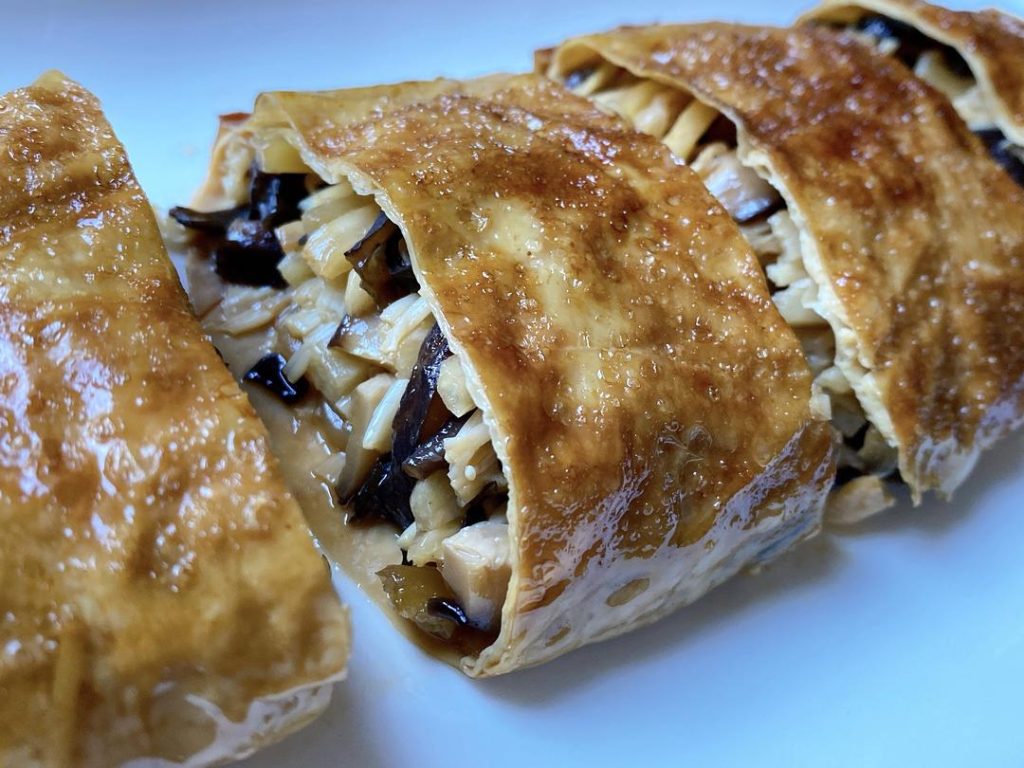
When I started working, our office cafeteria served a much heartier version. I loved it so much that I would often buy two massive rolls and eat them just as my main meal! After eating it so many times, I finally decided to deconstruct the flavors and develop my own recipe. My homestyle version perfectly balances the savory, umami-rich filling with the chewy, pan-fried tofu skin—without being overly sweet. It’s hearty, texturally complex, and absolutely delicious.
What Is Vegetarian Roast Goose (Su Shao E)?
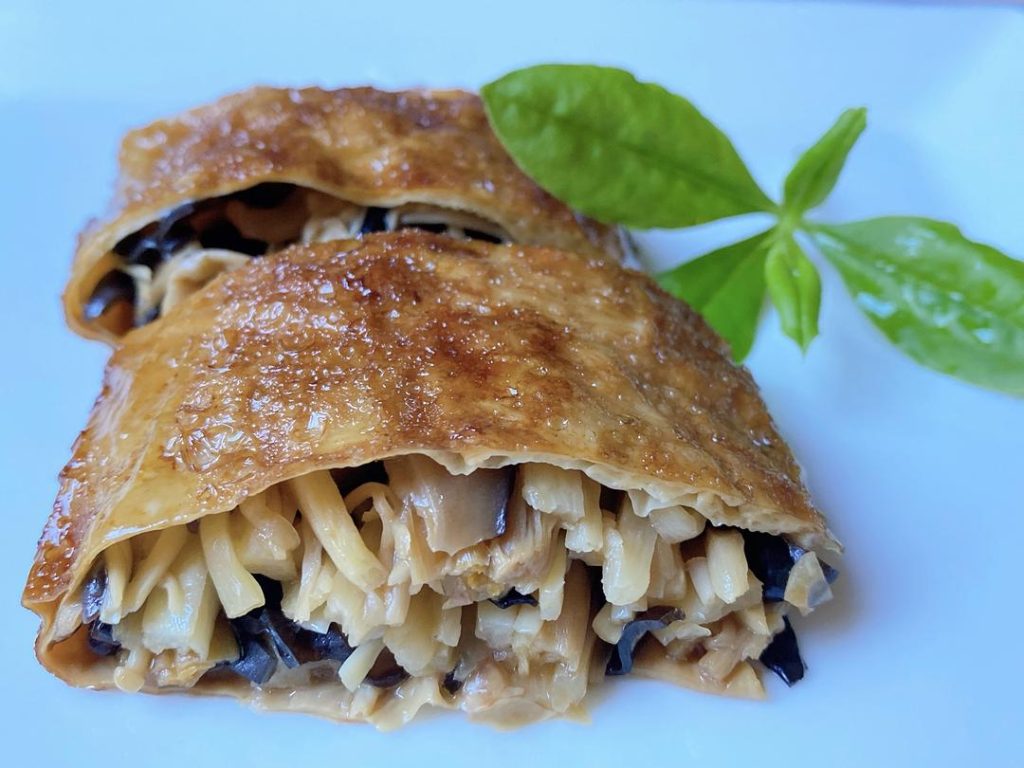
Vegetarian Roast Goose, or Su Shao E, is a classic dish in Chinese Buddhist cuisine. Despite the name, there is no goose involved! It gets its name because the pan-fried layers of tofu skin (yuba) mimic the golden-brown, crispy exterior and layered texture of traditional roast goose. While some versions are simply layered and braised tofu skin, this recipe features a rich, savory filling made of mushrooms, bamboo, and pickled mustard greens for an unforgettable texture.
If you are a fan of traditional Chinese tofu dishes, you might also enjoy our classic Homestyle Tofu. For another refreshing tofu skin appetizer, I highly recommend checking out our Spicy Cold Tofu Skin Salad.
Ingredients
For the Rolls & Filling:
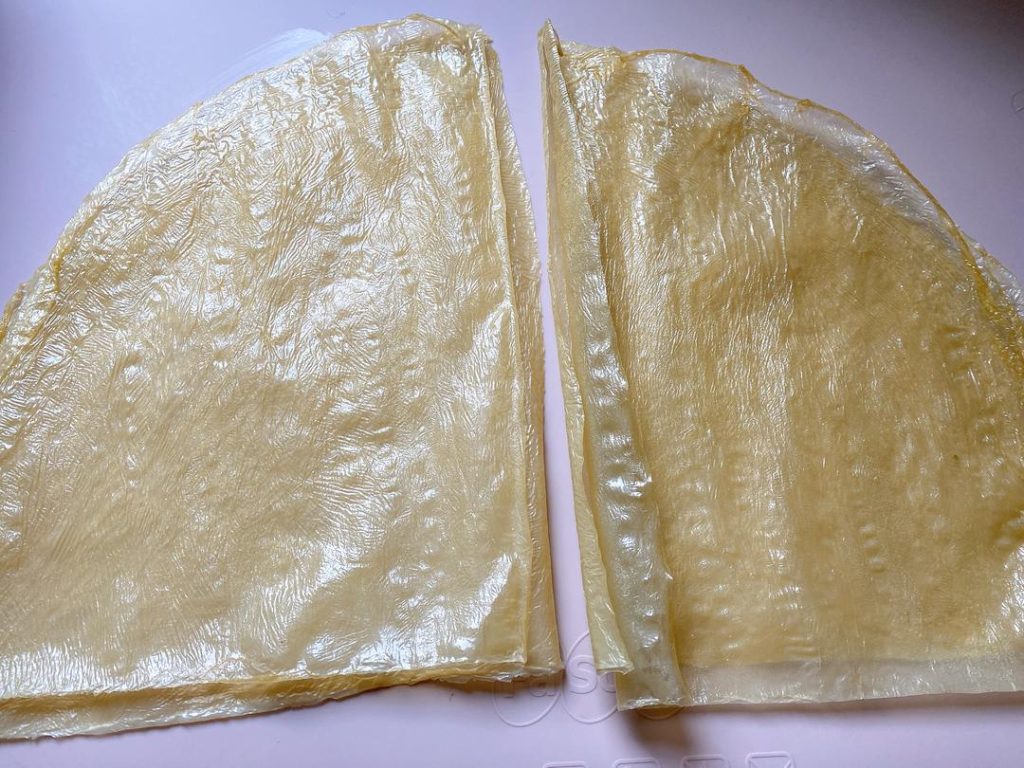
- Tofu Skin (Yuba): 2 large round sheets
- Dried Lily Flowers (Huang Hua Cai): 0.7 oz (20g)
- Dried Wood Ear Mushrooms: 0.2 oz (6g)
- Water Bamboo (Jiao Bai): 2 stalks (Can substitute with fresh bamboo shoots)
- Dried Shiitake Mushrooms: 5 pieces
- Zha Cai (Pickled Mustard Tuber): 1.7 oz (50g)
- Enoki Mushrooms: 2.8 oz (80g)
- Garlic: 5 cloves, minced
- Shaoxing Wine: 1 tbsp
- Light Soy Sauce: 1 tbsp
- Oyster Sauce: 1 tbsp (Use vegetarian mushroom oyster sauce to keep it 100% vegan)
- Salt: 1/2 tsp
For the Braising Liquid:
- Shaoxing Wine: 1 tbsp
- Light Soy Sauce: 2 tbsp
- Dark Soy Sauce: 1/2 tbsp
- Sugar: 1 tbsp
- Salt: 1/2 tsp
- Water: 2/3 cup (150ml)
Equipment Needed
- Non-stick pan or a well-seasoned wok: Essential for pan-frying the delicate tofu skin without tearing.
- Large mixing bowls: For rehydrating the dried ingredients.
Prep & Mise en Place
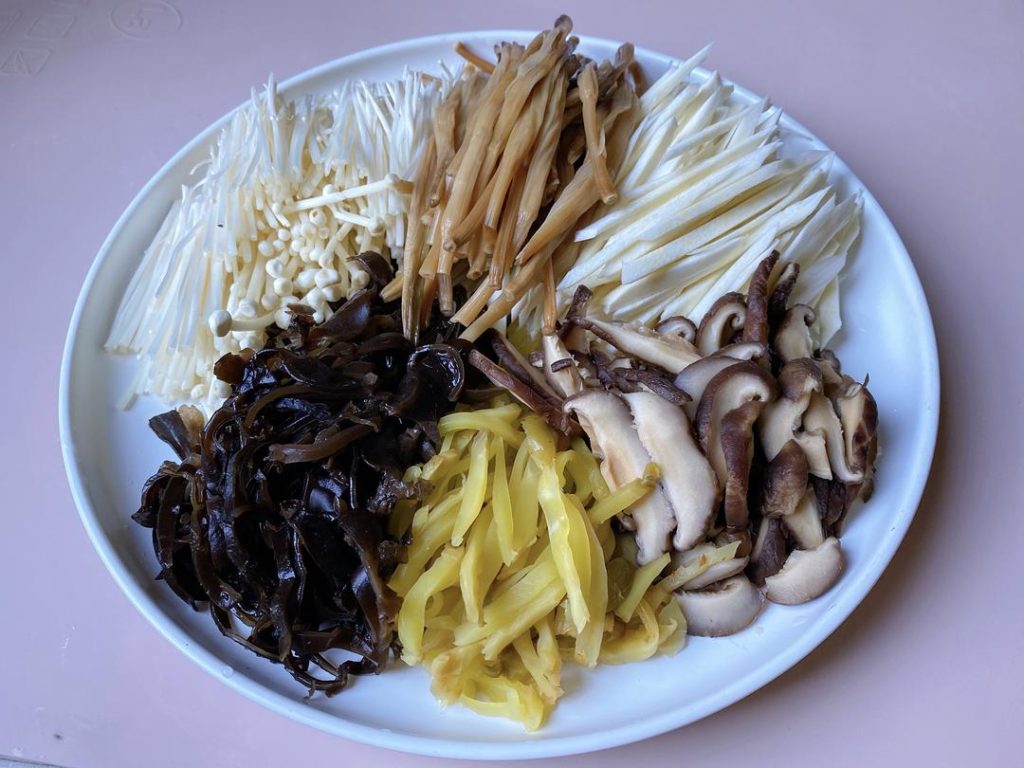
- Rehydrate: Soak the dried wood ear mushrooms, dried shiitake mushrooms, and dried lily flowers in warm water for about 30 minutes until fully softened.
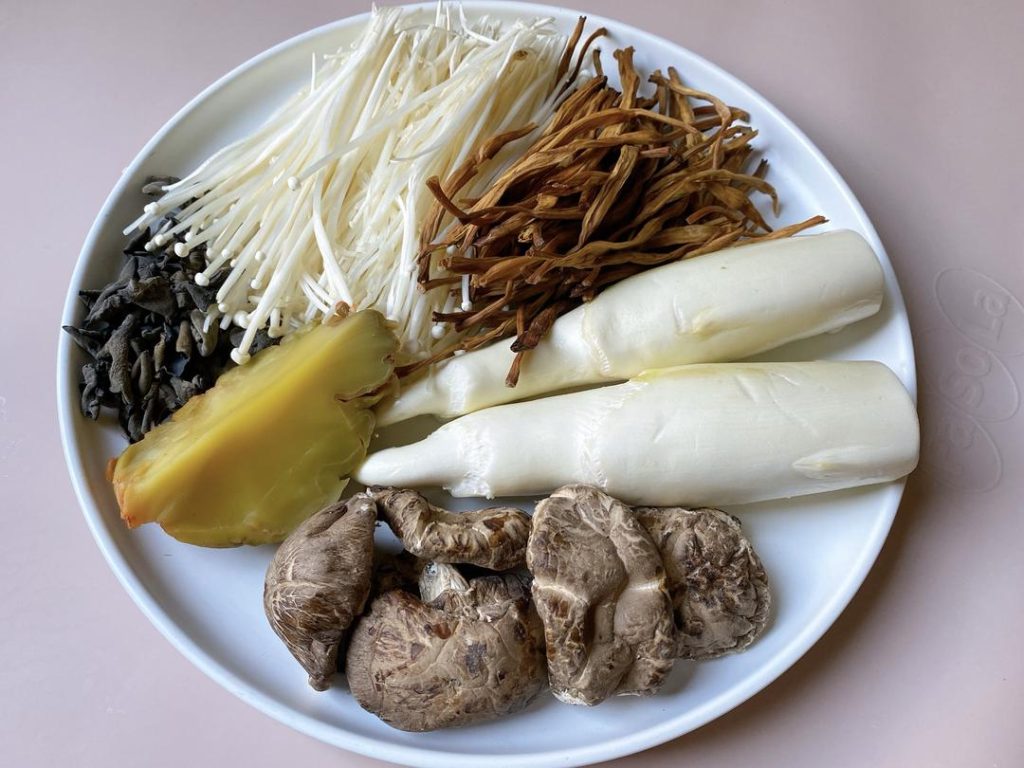
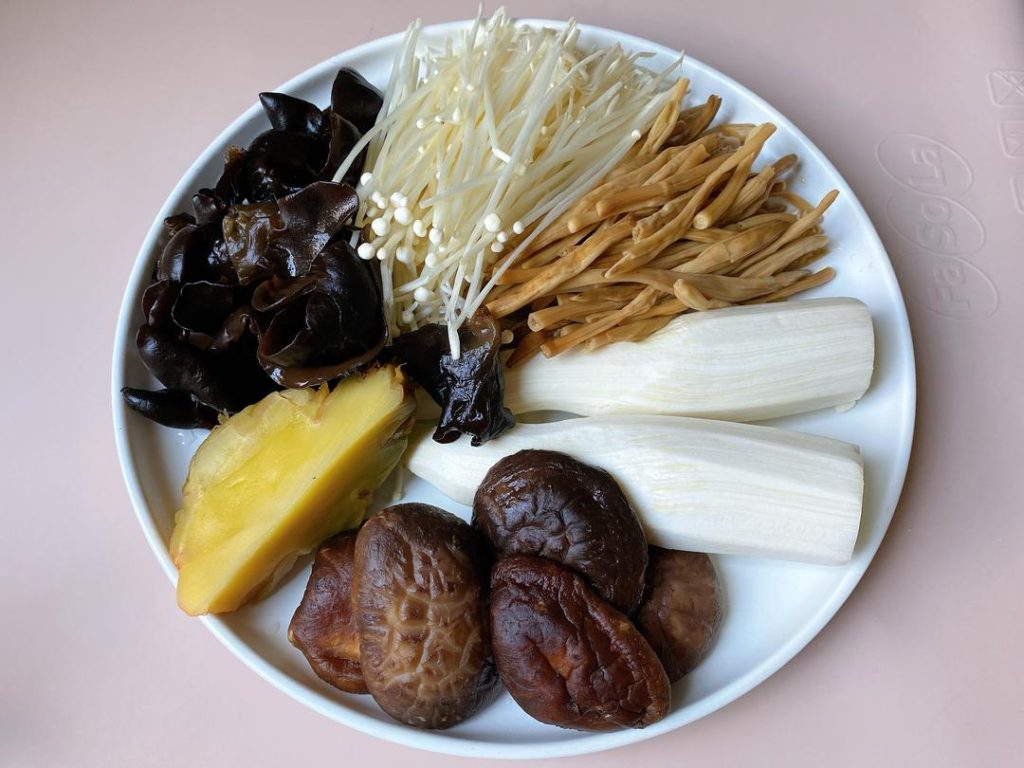
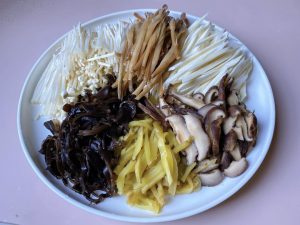
- Julienne: Peel the water bamboo. Thinly julienne the water bamboo, rehydrated wood ear mushrooms, Zha Cai, and shiitake mushrooms. Cut the enoki mushrooms into 2-inch sections.
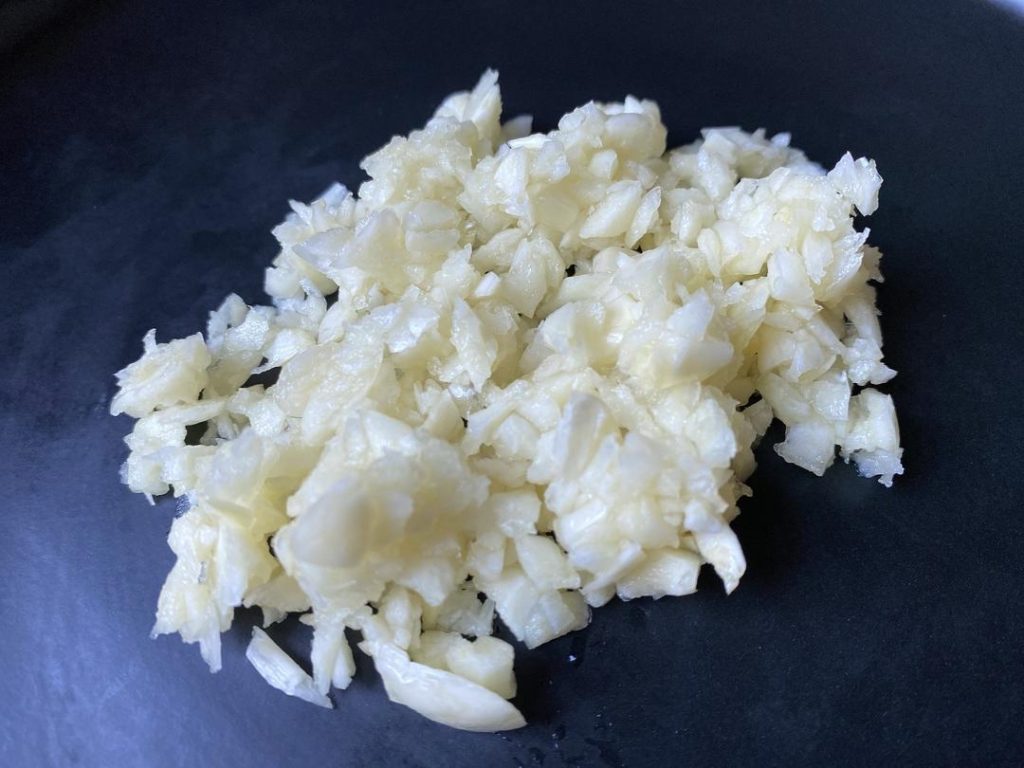
- Mince: Finely mince the 5 cloves of garlic.
Cooking Process
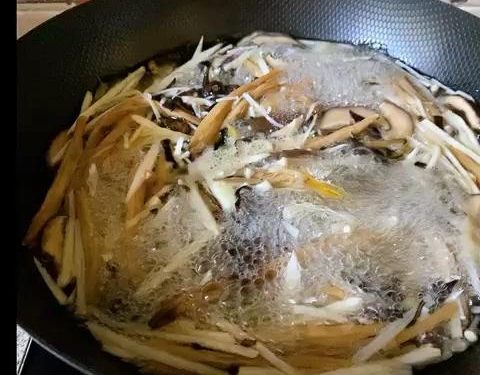
- Blanch the Vegetables: Bring a pot of water to a boil. Add the julienned bamboo, wood ear, Zha Cai, shiitake, and enoki mushrooms. Blanch for 2 minutes. Remove, rinse immediately under cold water to stop the cooking process, and drain thoroughly.
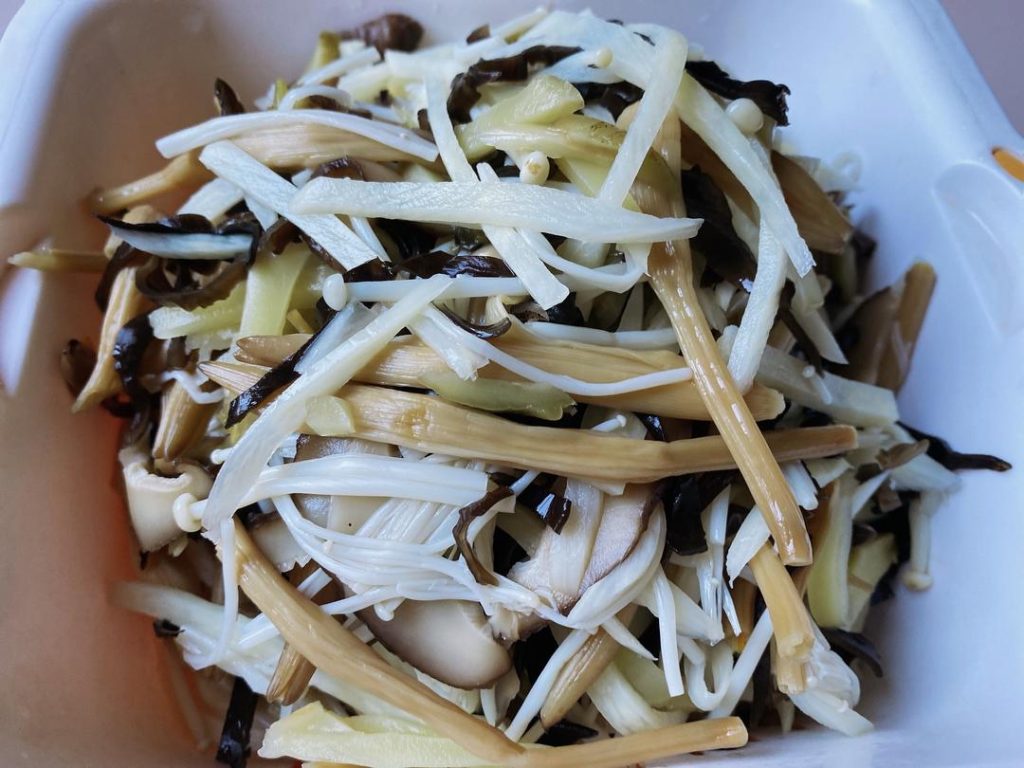
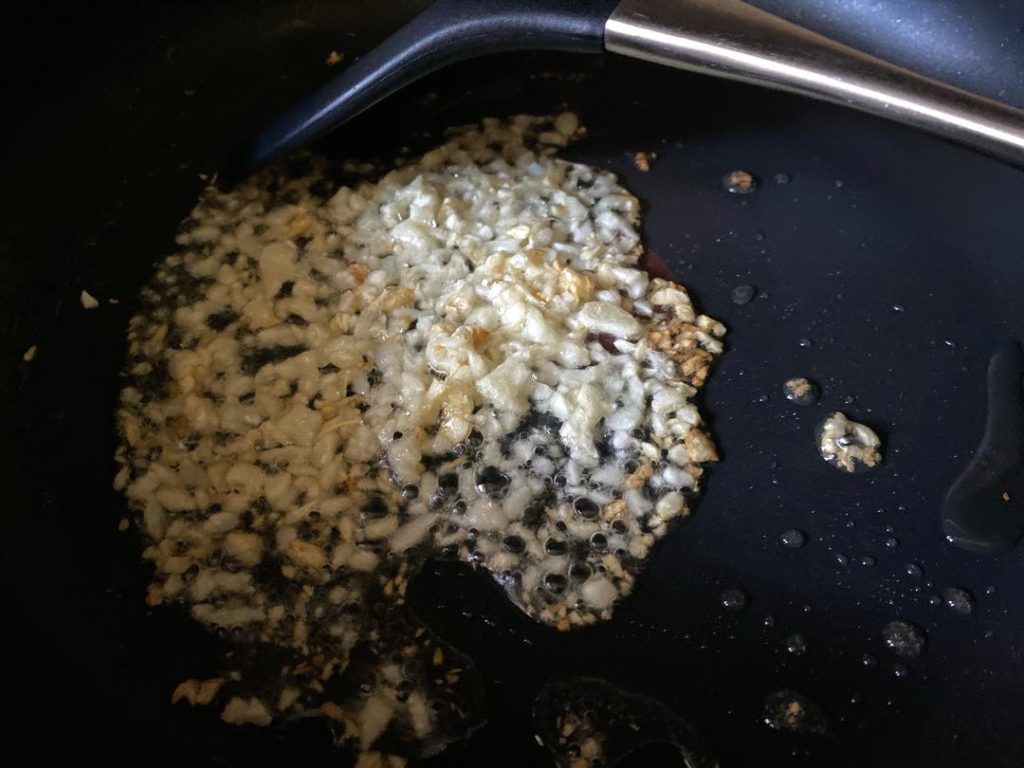
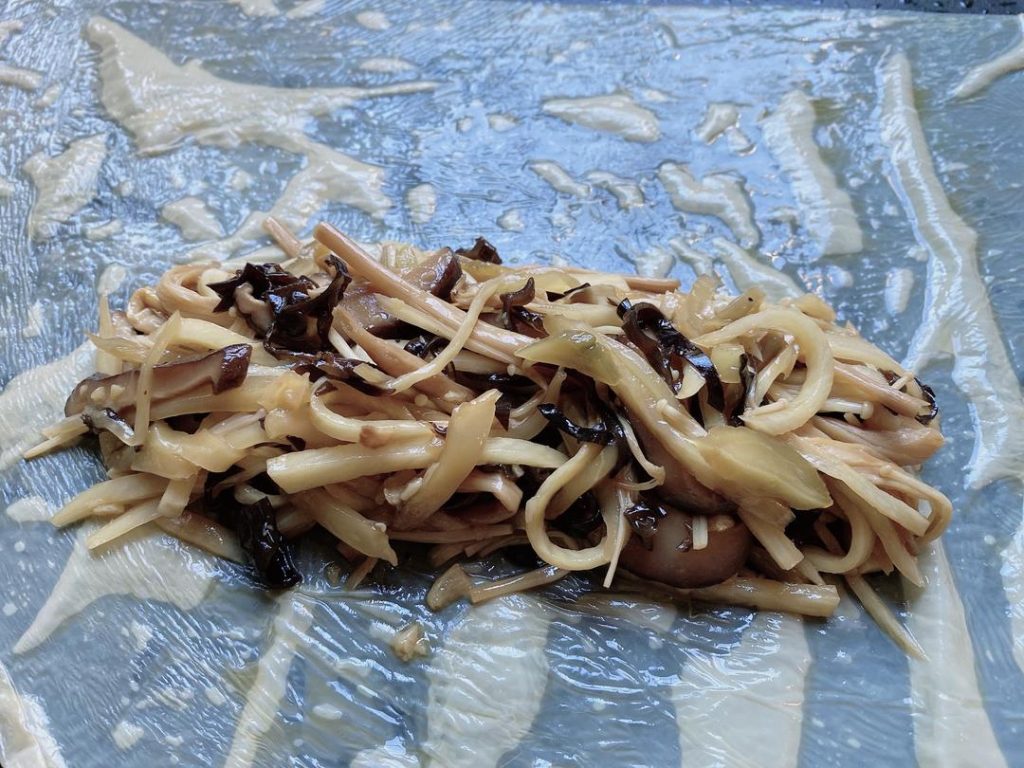
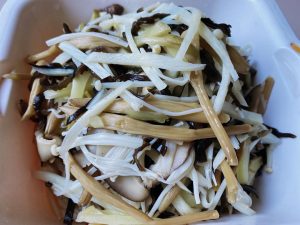
- Sauté the Filling: Heat 1 tablespoon of oil in a wok over medium-high heat. Add the minced garlic and sauté until fragrant (about 30 seconds). Add the drained vegetables and stir-fry.
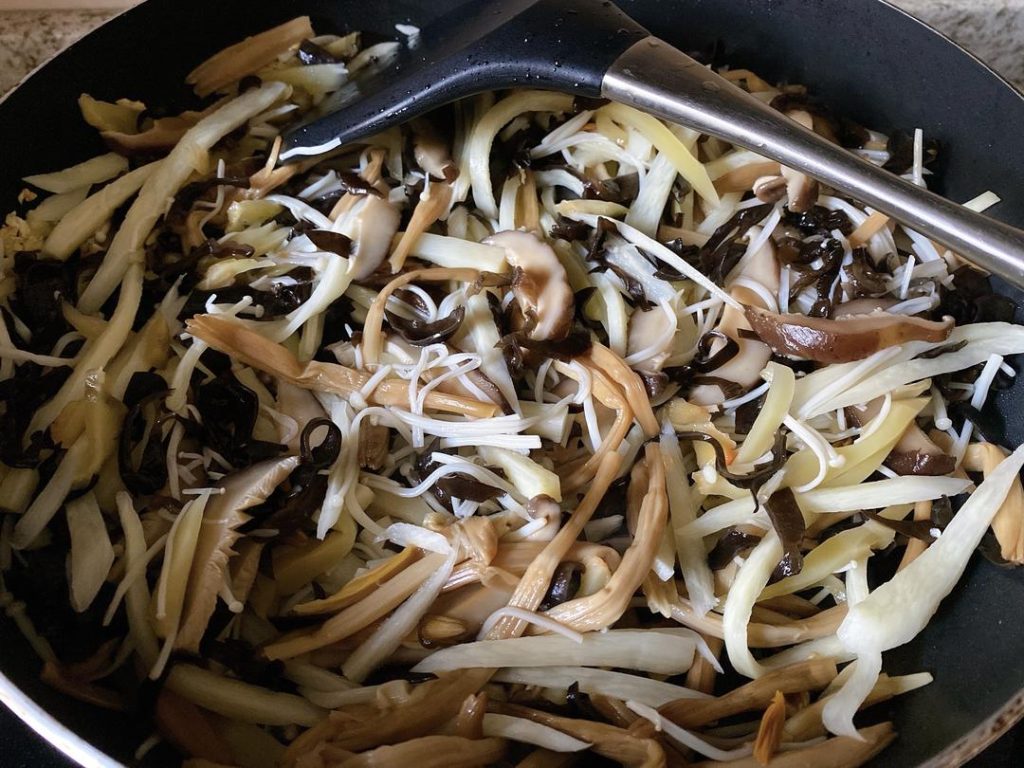
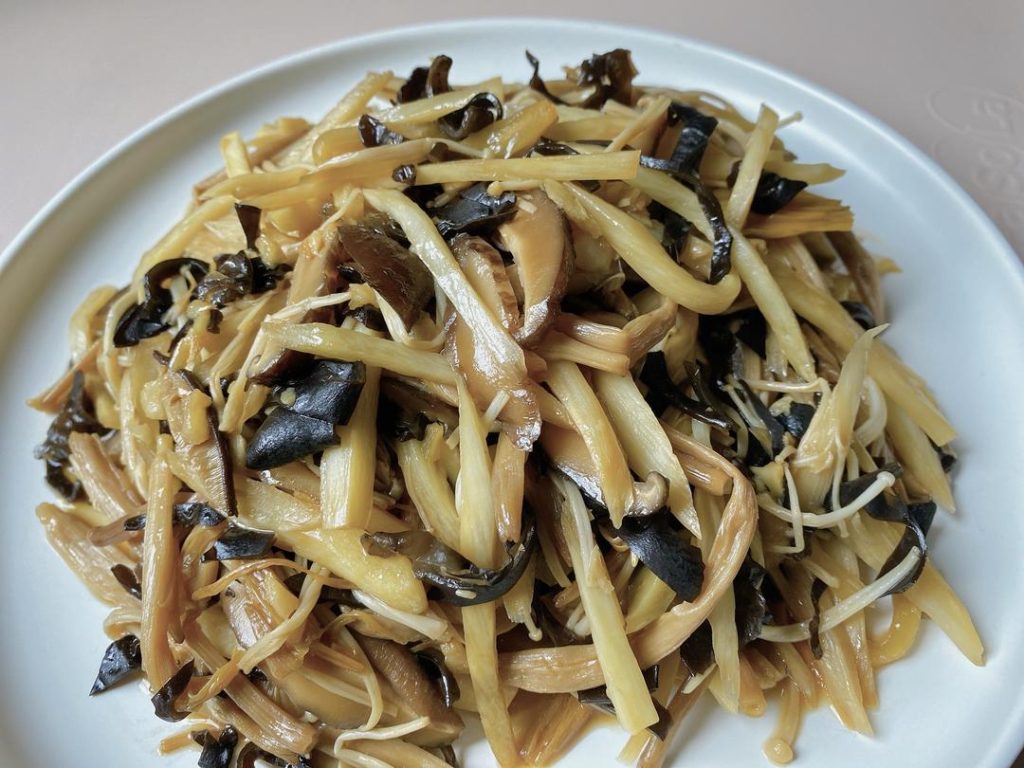
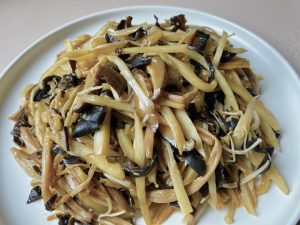
- Season the Filling: Add 1 tbsp Shaoxing wine, 1 tbsp light soy sauce, 1 tbsp oyster sauce, and 1/2 tsp salt. Stir well and remove from heat. Note: Keep the filling slightly under-seasoned at this stage, as the rolls will be braised in a savory liquid later.
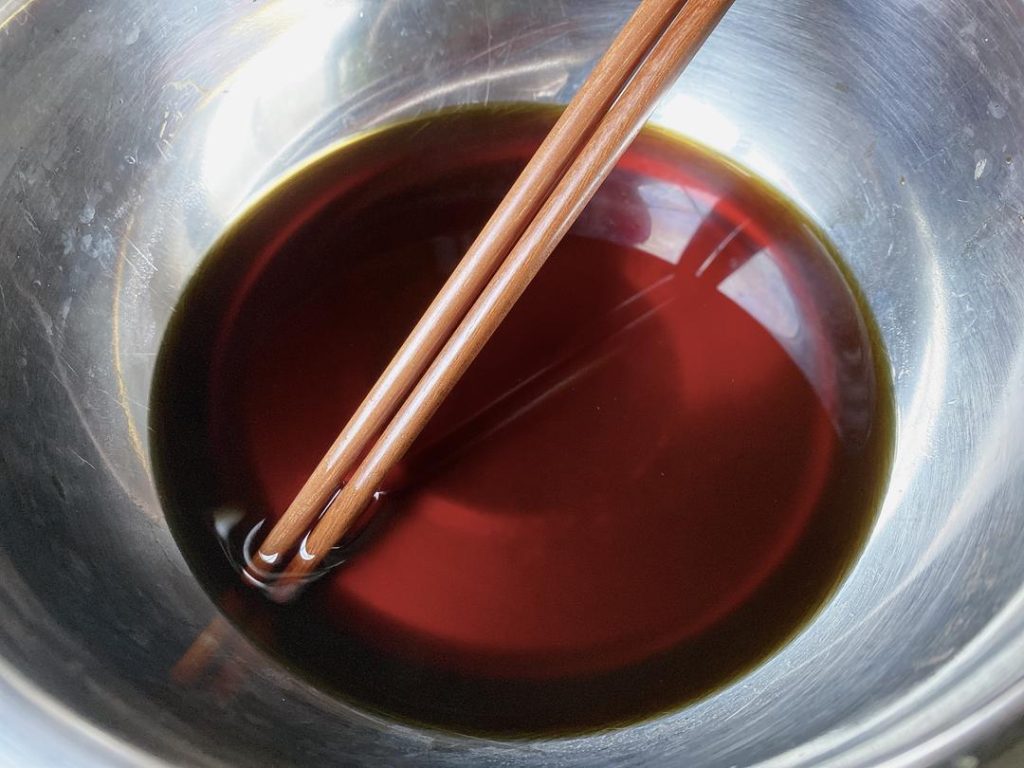
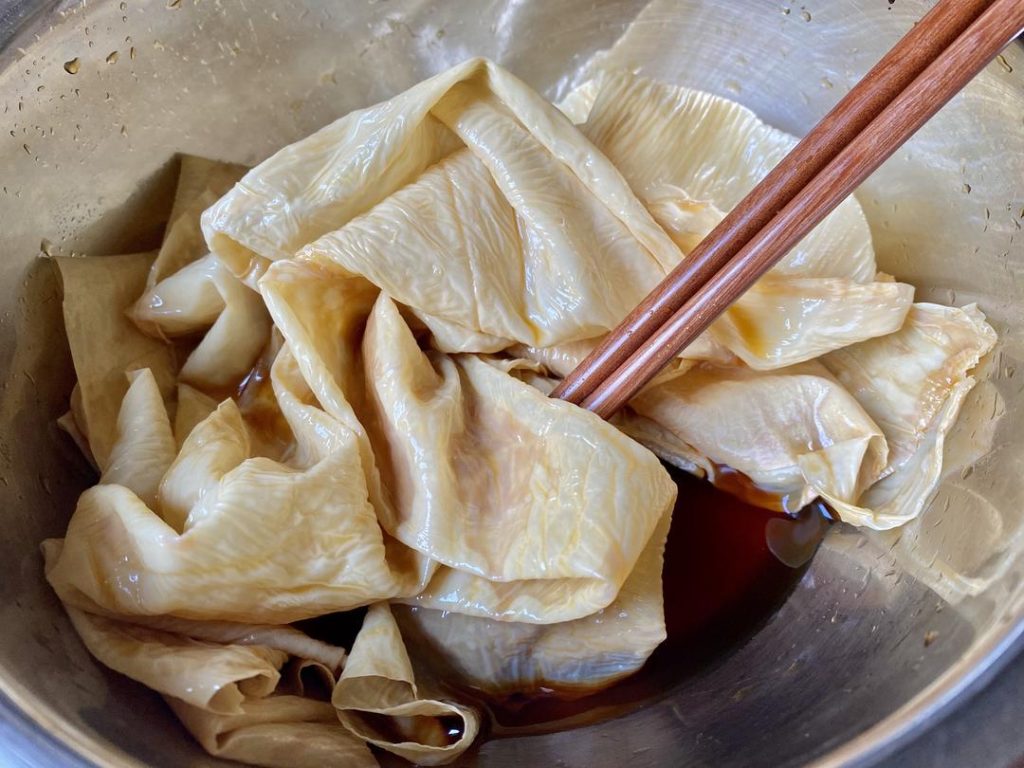
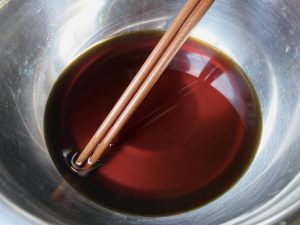
- Prepare the Braising Liquid: In a wide, shallow bowl, mix 1 tbsp Shaoxing wine, 2 tbsp light soy sauce, 1/2 tbsp dark soy sauce, 1 tbsp sugar, 1/2 tsp salt, and 2/3 cup (150ml) of water.
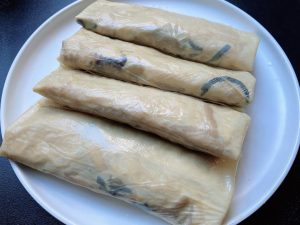
- Wrap the Rolls: Cut the 2 large tofu skin sheets in half to create 4 semi-circles. Briefly dip one piece of tofu skin into the braising liquid to soften it. Lay it flat on a cutting board. Place 1/4 of the filling in the center. Fold the three outer edges inward over the filling, then roll it up tightly like a burrito. Repeat for the remaining three rolls.
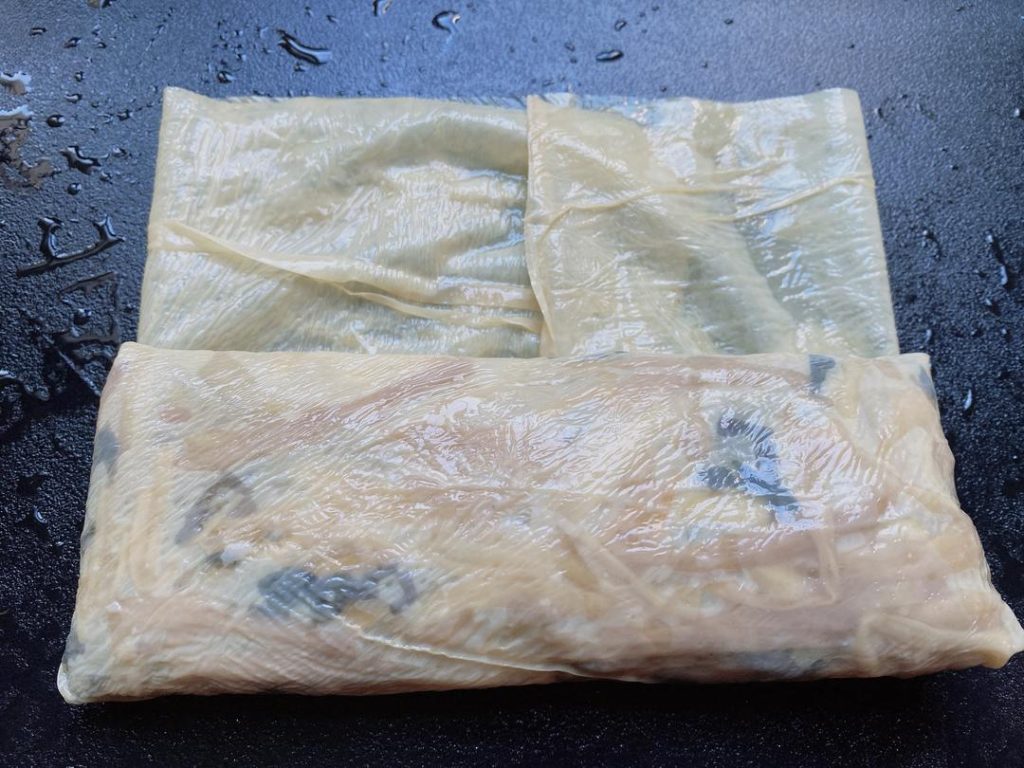
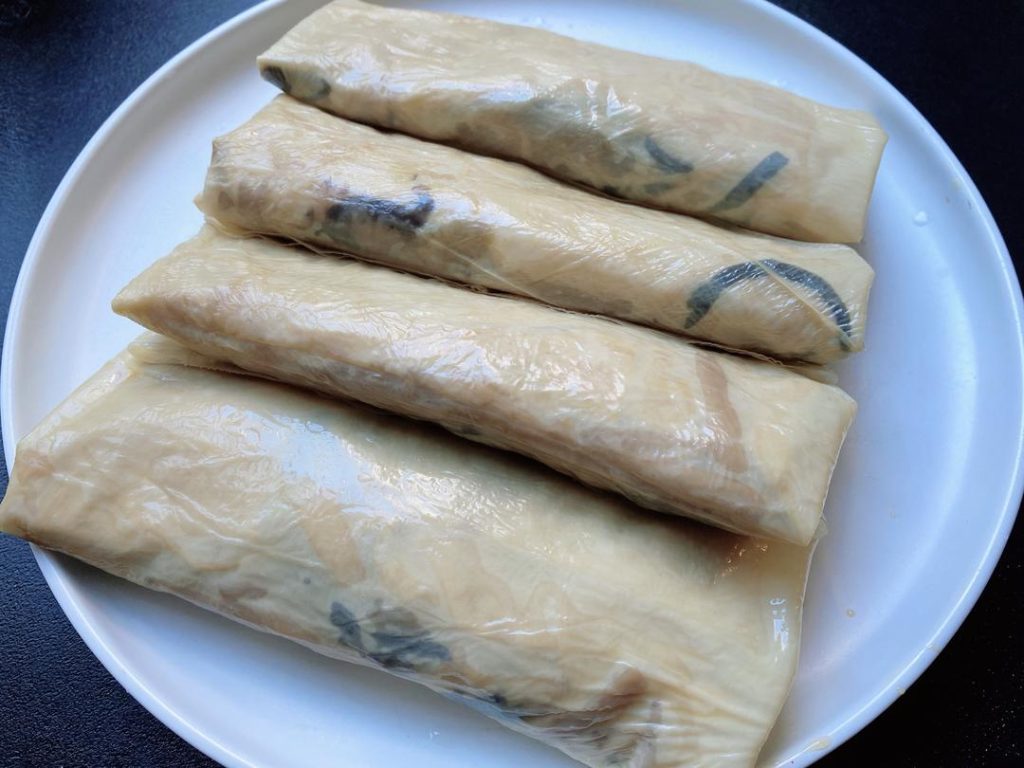
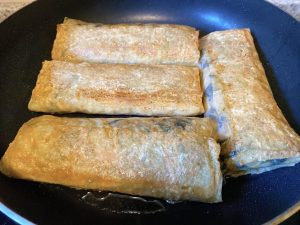
- Pan-Fry: Heat 2 tablespoons of oil in a non-stick pan over medium-low heat (around 300°F / 150°C). Carefully place the rolls in the pan, seam-side down. Pan-fry until golden brown and crispy on both sides (about 3-4 minutes per side).
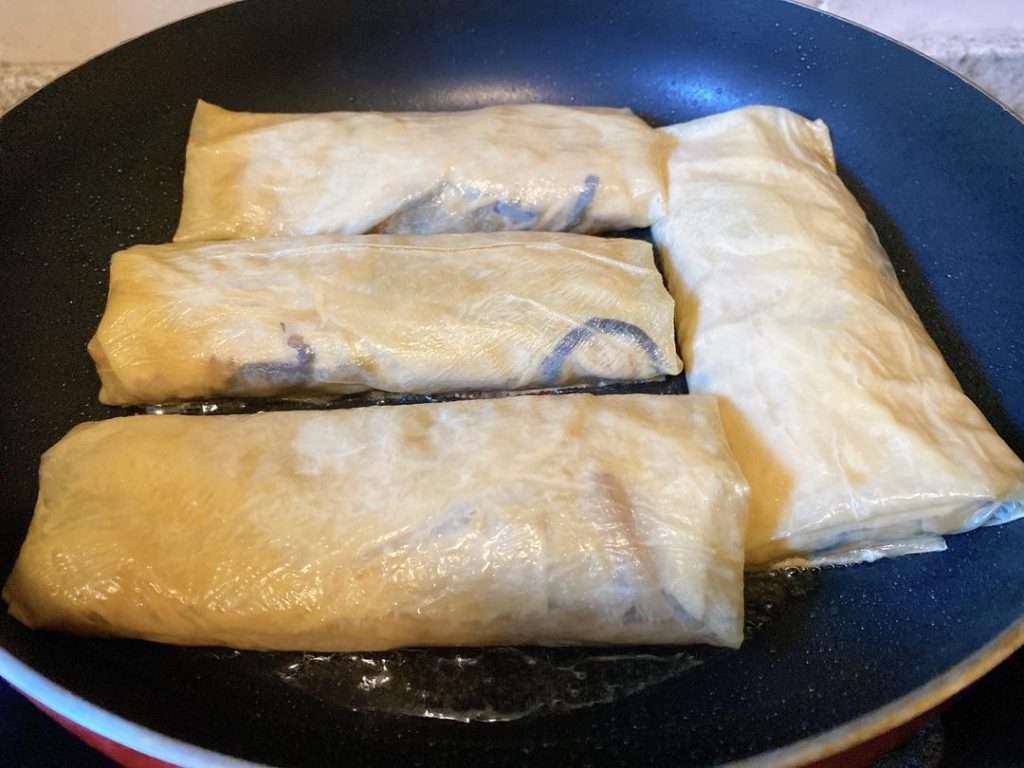
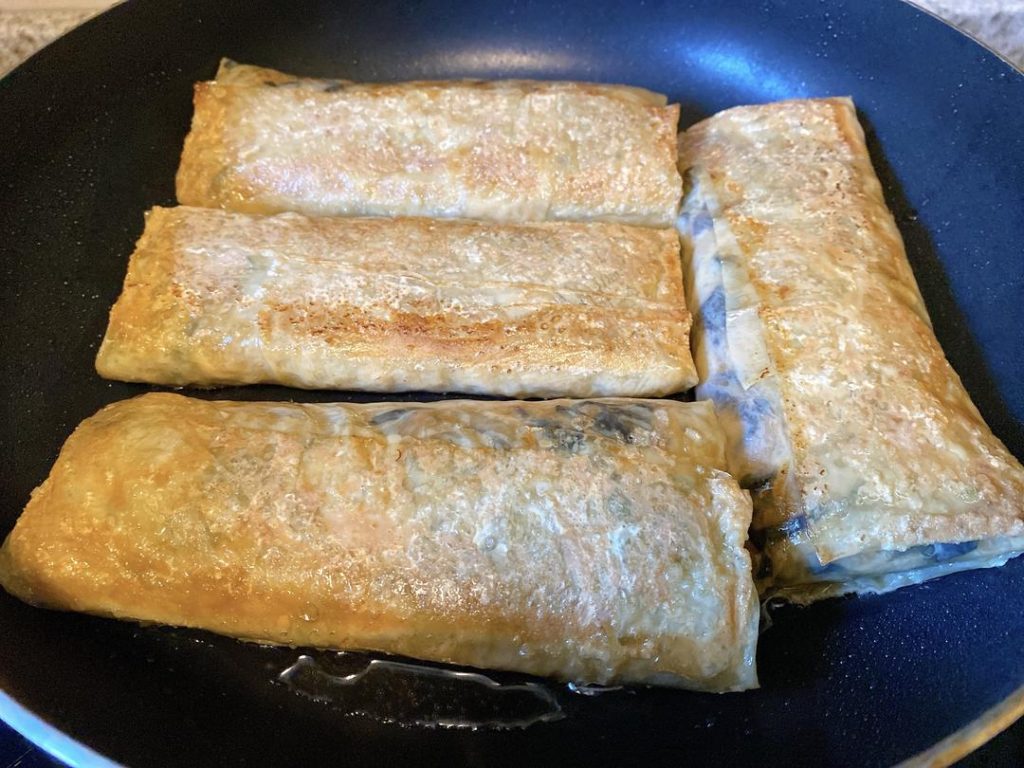
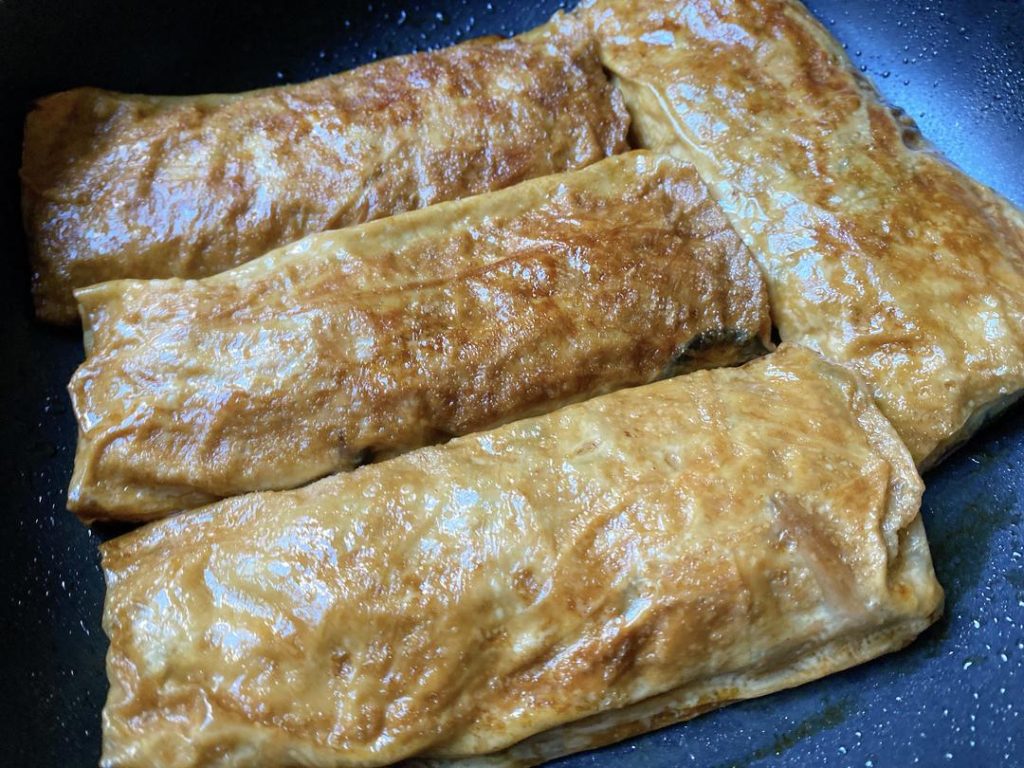
- Braise: Pour the remaining braising liquid into the pan with the rolls. Add a splash of extra water if needed. Bring to a boil, then reduce the heat to low.
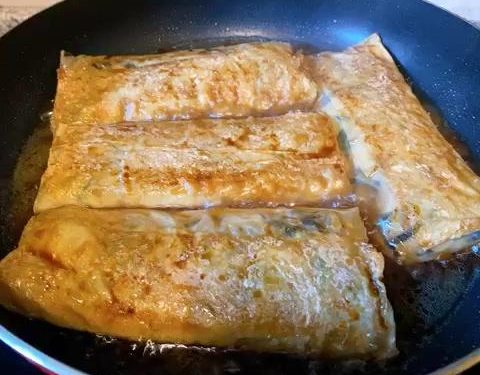
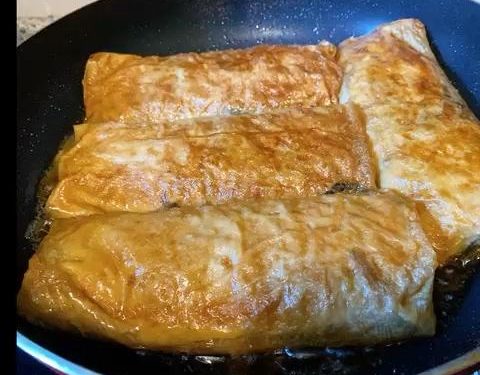
💡 Why We Braise: Braising allows the dehydrated cellular structure of the tofu skin and the porous shiitake mushrooms inside to act like a sponge, soaking up the savory braising liquid. The initial pan-frying creates a Maillard reaction on the tofu skin, sealing the shape and building a complex, roasted flavor profile before the liquid softens it into a tender, juicy bite.
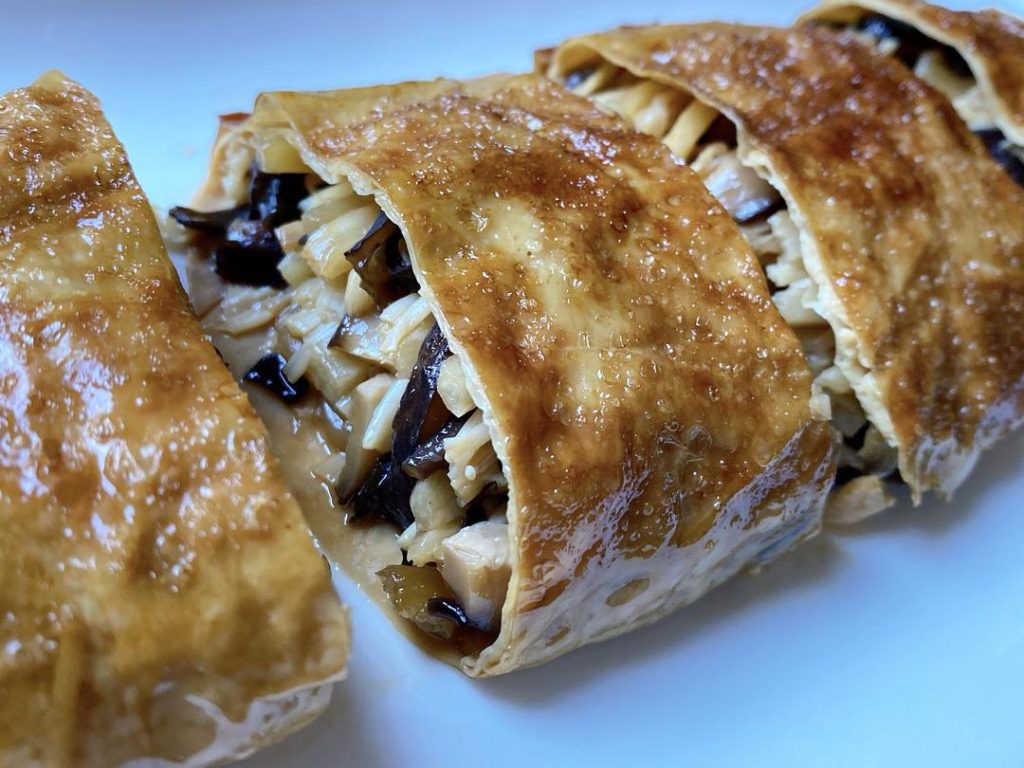
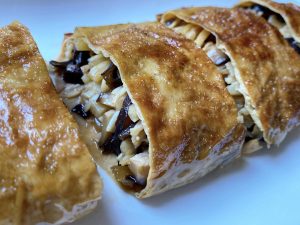
- Reduce and Serve: Let it simmer slowly until the liquid is mostly absorbed and reduced to a thick glaze. Remove from the pan, slice into bite-sized segments, and serve!
Why This Recipe Works
- Texture Contrast: The crunchy Zha Cai (pickled mustard greens) and crisp water bamboo provide a beautiful contrast to the chewy tofu skin and tender mushrooms.
- Two-Step Cooking: Pan-frying builds foundational flavor and structural integrity, while the low-and-slow braise infuses every layer with deep, savory-sweet notes.
- Balanced Seasoning: By intentionally under-seasoning the vegetable filling, we prevent the final dish from becoming overly salty once the braising liquid reduces.
Common Mistakes When Making Tofu Skin Rolls
- Tearing the Tofu Skin: Tofu skin is brittle when dry. Don’t leave it in the soaking liquid too long—just a quick dip to make it pliable enough to roll without cracking.
- Burning the Rolls: Tofu skin burns very quickly due to its protein content. Always pan-fry on medium-low heat and monitor it closely.
- Watery Filling: Failing to drain the blanched vegetables thoroughly will result in a soggy filling that dilutes the braising sauce. Squeeze out excess moisture!
Frequently Asked Questions
Can I substitute the water bamboo (Jiao Bai)? Yes! Fresh julienned bamboo shoots or even celery can provide a similar satisfying crunch.
Is this recipe completely vegan? It is, provided you swap the traditional oyster sauce for a vegetarian mushroom-based oyster sauce.
Can I make it ahead of time? Absolutely. Like many braised dishes, Vegetarian Roast Goose often tastes even better the next day after the flavors have had time to meld in the fridge.
What else can I serve this with? This pairs beautifully with a bowl of steamed rice. If you are looking to build a full vegetarian feast, try serving it alongside our Vegetable Steamed Dumplings.
Storage & Reheat
- Refrigerate: Store leftovers in an airtight container in the fridge for up to 3-4 days.
- Reheat: You can enjoy this cold as a traditional appetizer, or reheat it gently in a pan or the microwave until warmed through.
Allergen Notice
- Soy: Contains tofu skin and soy sauce.
- Gluten: Traditional soy sauce and oyster sauce contain wheat. Use tamari and gluten-free oyster sauce to make this recipe gluten-free.
Nutrition Disclaimer
Nutrition information is an estimate and provided for informational purposes only. Please consult a medical professional for specific dietary needs.
About the Author & Recipe Development
As a recipe developer for Woks of Love, I rigorously test traditional Chinese recipes to adapt them for the modern home kitchen. For this Su Shao E, I tested multiple ratios of the braising liquid. The famous restaurant versions often lean heavily on sugar for a glossy finish, but my testing showed that reducing the sugar to just 1 tablespoon and relying on the natural umami of the shiitake mushrooms and oyster sauce created a much more balanced, dinner-appropriate flavor profile.
Authoritative References
To understand why the pan-frying step is crucial for developing the “roast” flavor in this vegetarian dish, you can read more about the science of the Maillard Reaction from Serious Eats. Additionally, for guidelines on safely storing and reheating leftovers, always refer to the USDA Food Safety Basics.
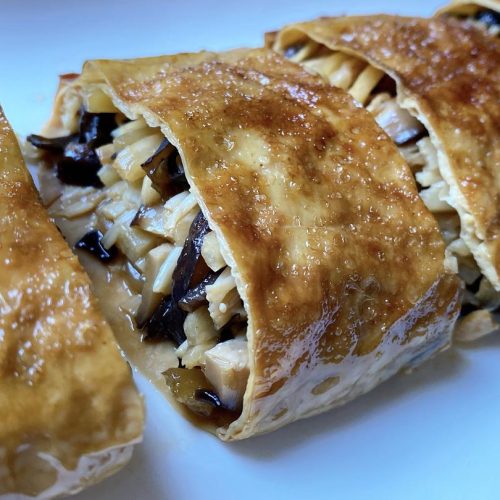
Authentic Vegetarian Roast Goose (Su Shao E)

Equipment
- Non-stick pan or Wok
- Mixing bowls
Ingredients
The Filling
- 2 sheets tofu skin (yuba) large round sheets
- 0.7 oz dried lily flowers rehydrated
- 0.2 oz dried wood ear mushrooms rehydrated
- 2 stalks water bamboo (Jiao Bai) can sub with bamboo shoots
- 5 pieces dried shiitake mushrooms rehydrated
- 1.7 oz Zha Cai (pickled mustard tuber)
- 2.8 oz enoki mushrooms
- 5 cloves garlic minced
- 1 tbsp Shaoxing wine
- 1 tbsp light soy sauce
- 1 tbsp oyster sauce use vegetarian oyster sauce for vegan
- 0.5 tsp salt
The Braising Liquid
- 1 tbsp Shaoxing wine
- 2 tbsp light soy sauce
- 0.5 tbsp dark soy sauce
- 1 tbsp sugar
- 0.5 tsp salt
- 0.66 cup water
Instructions
- Rehydrate the dried wood ear mushrooms, shiitake mushrooms, and lily flowers in warm water for 30 minutes. Peel the water bamboo. Julienne the bamboo, wood ear, Zha Cai, and shiitake. Cut enoki mushrooms into 2-inch sections.

- Blanch all the prepared vegetables in boiling water for 2 minutes. Remove, rinse with cold water, and drain thoroughly.
- Heat a wok with a little oil. Sauté the minced garlic until fragrant, then add the drained vegetables. Season with 1 tbsp Shaoxing wine, 1 tbsp light soy sauce, 1 tbsp oyster sauce, and 0.5 tsp salt. Stir well and remove from heat.
- In a bowl, mix the braising liquid ingredients: 1 tbsp Shaoxing wine, 2 tbsp light soy sauce, 0.5 tbsp dark soy sauce, 1 tbsp sugar, 0.5 tsp salt, and 2/3 cup water.
- Cut the 2 tofu skin sheets in half. Briefly dip a sheet into the braising liquid to soften it. Lay it flat, add 1/4 of the filling in the center, fold the three sides inward, and roll it up. Repeat for all 4 rolls.
- Heat oil in a non-stick pan over medium-low heat. Pan-fry the rolls seam-side down until golden on both sides (about 3-4 minutes per side).
- Pour the remaining braising liquid into the pan. Bring to a boil, then reduce to low heat and simmer until the liquid is mostly absorbed and the rolls are deeply flavored.

- Remove from pan, slice into segments, and serve warm or cold!













Leave a Reply