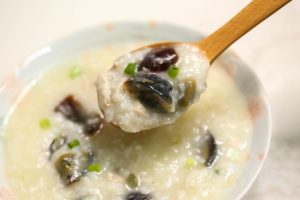
There is a saying in Chinese culture that a good bowl of congee (rice porridge) warms not just the stomach, but the soul. Century Egg and Pork Congee (皮蛋瘦肉粥) is perhaps the most iconic version of this comfort food. It is a staple at dim sum parlors, a go-to breakfast for millions, and the ultimate remedy when you are feeling a bit under the weather.

I remember my father making this for me when I was a child. He taught me that the secret to a great congee isn’t just boiling rice and water—it is about texture. It should be creamy, velvety, and flavorful, never watery or bland. The savory depth of the preserved egg combined with the tender, marinated pork creates a umami-rich balance that is incredibly satisfying.
While it might look intimidating if you have never worked with century eggs before, this recipe is surprisingly approachable. We are using a few restaurant techniques—like marinating the meat and a special trick with the eggs—to ensure your homemade version tastes just as good as the one from your favorite Cantonese restaurant.
If you are planning a full dim sum brunch at home, this congee pairs beautifully with Steamed BBQ Pork Buns or some crispy Flaky Scallion Pancakes.
What is Century Egg and Pork Congee?
This dish is a classic Cantonese porridge made by boiling rice until it breaks down into a thick, white soup. The star ingredients are lean pork and century eggs (also known as preserved duck eggs, thousand-year-old eggs, or pidan).
If you are new to century eggs, don’t let the name scare you. They aren’t actually a century old! They are duck eggs preserved in a mixture of clay, ash, salt, quicklime, and rice hulls. This process turns the yolk creamy and dark green, while the white becomes a translucent, amber jelly with a distinct savory flavor. We also use them in cold appetizers like Tofu with Century Egg.

Why This Recipe Works
- Velveting the Pork: We don’t just throw raw pork into the pot. We marinate it with starch and wine first. This ensures the meat stays incredibly tender and silky, even in the hot broth.
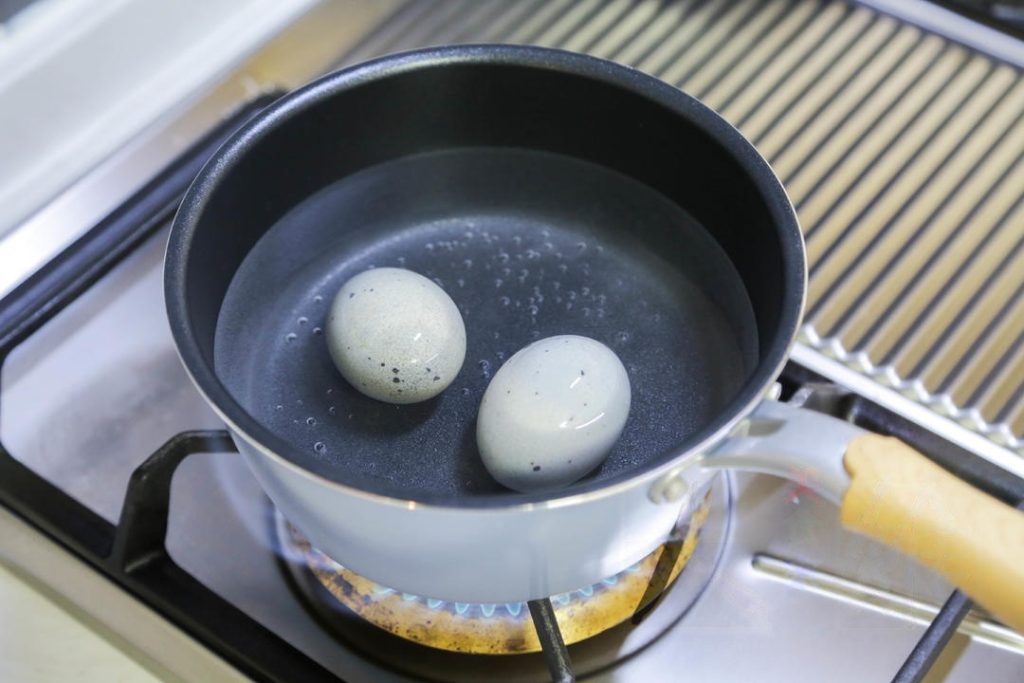
- The Boiling Egg Trick: We boil the century eggs before chopping them. This solidifies the creamy yolk, making it much easier to cut into clean chunks without creating a mess.
- Glutinous Rice Flour: This is a “secret weapon” from the original recipe. Adding a little slurry of glutinous rice flour gives the congee that signature thick, restaurant-style mouthfeel (viscosity) without needing to boil it for hours.
Key Ingredients & Substitutions
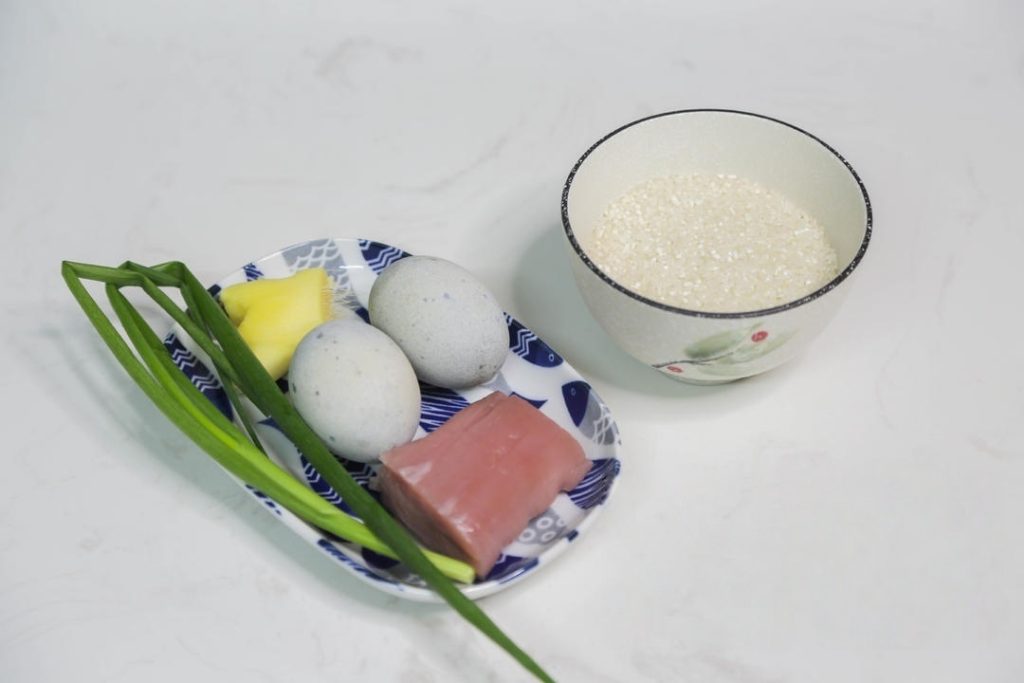
- Rice: Use short-grain or medium-grain white rice (like Japonica or Calrose). These have more starch than long-grain rice (Jasmine), which helps create a creamier texture.
- Century Eggs (Pidan): You can find these at any Asian grocery store. Look for eggs with the lead-free symbol.
- Pork Tenderloin: You want a lean cut, like pork loin or tenderloin. It needs to be sliced thinly.
- Ginger: Essential for cutting through the richness of the egg and adding a warming aroma.
- Shaoxing Wine: Used in the marinade to remove any gaminess from the pork. If you cannot find it, dry sherry is a decent substitute.
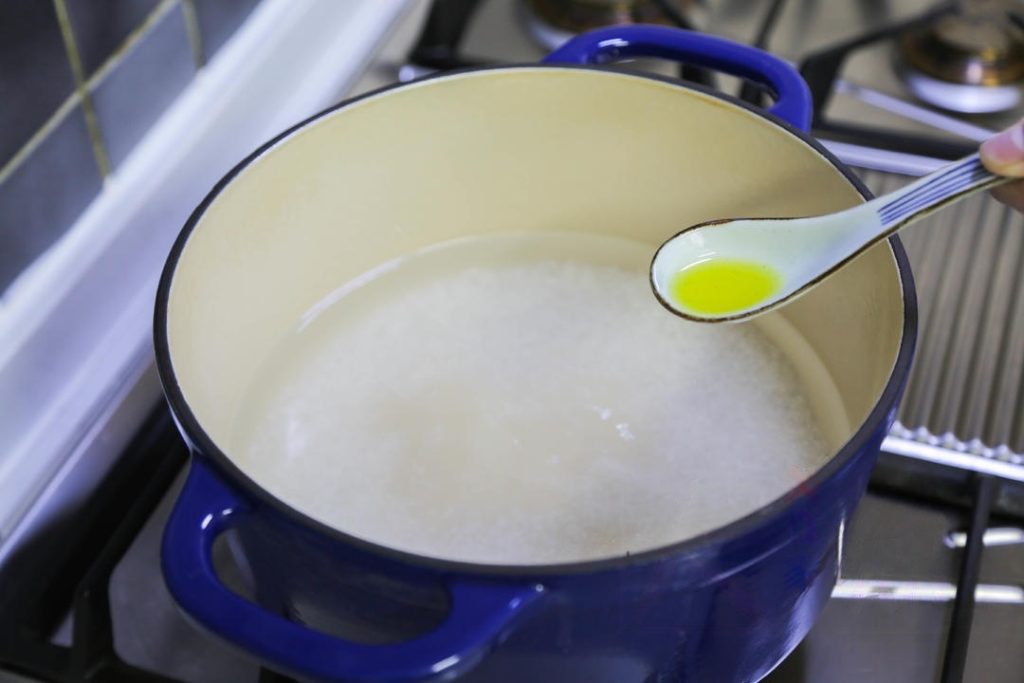
- Peanut Oil: Adds a subtle nuttiness and helps the rice grains break down during cooking.
- Glutinous Rice Flour: Optional, but highly recommended if you like your congee extra thick and sticky.
Recipe Notes Before You Start
Soaking is key. You must soak the rice for at least 30 minutes before cooking. This softens the grain and drastically reduces cooking time.
Water Ratio. Congee requires a high water-to-rice ratio. This recipe uses roughly 10 parts water to 1 part rice (by volume). Use filtered water if possible for the cleanest taste.
Pot Watch. Congee loves to boil over. Use a large, deep pot, and once it boils, keep an eye on it or leave the lid slightly ajar.
Mise en Place (Prep Work)
- Soak the Rice: Wash the rice, then soak it in cold water for 30 minutes. Drain, then toss with half a tablespoon of peanut oil.
- Boil the Eggs: Place the century eggs (shell on) in a pot of cold water. Bring to a boil and cook for 5 minutes. This firms up the yolk. Peel and chop into chunks.
- Prep Aromatics: Peel and slice the ginger. Finely chop the scallions (or shred lettuce if you prefer a crunch).
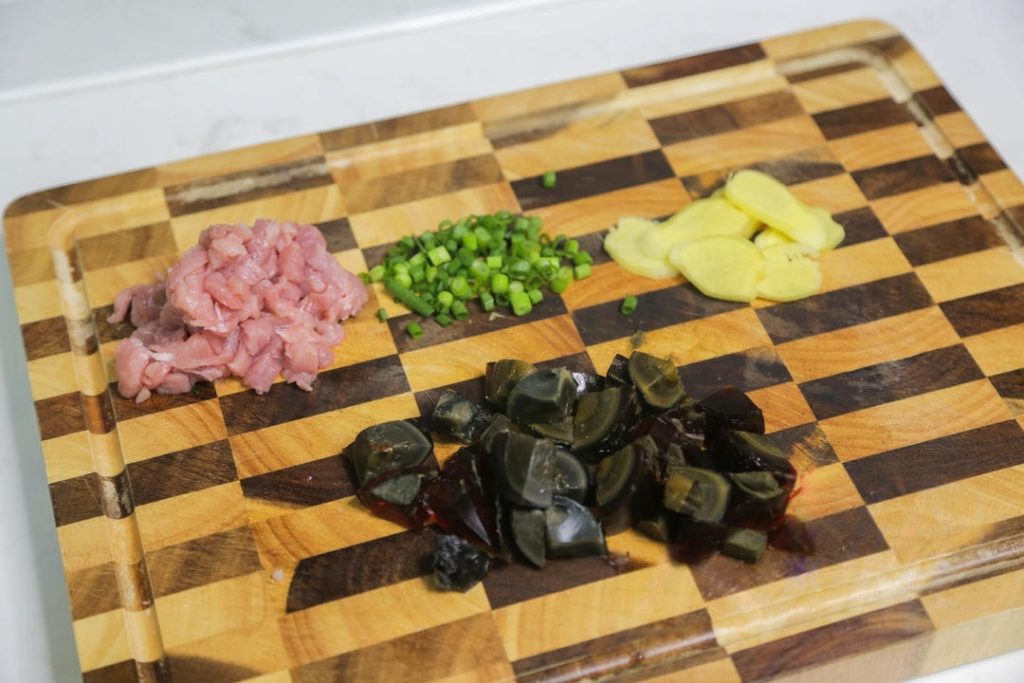
- Slice the Meat: Wash the pork loin and slice it into thin strips.
How to Make Century Egg and Pork Congee
Step 1: Cook the Congee Base
Place the soaked rice into a large pot. Add about 10 times the volume of water (compared to the rice). Add half a tablespoon of peanut oil. Bring to a boil over high heat, then reduce to a simmer.
Tip: Adding oil prevents the congee from bubbling over too aggressively and helps the rice texture become silky.
Step 2: Marinate the Pork
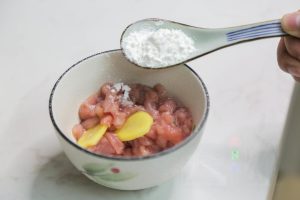
While the rice is boiling, place your sliced pork and ginger in a bowl. Add the salt (1/5 spoon), sugar (1/4 spoon), Shaoxing Wine, and water (1 spoon). Mix well. Then, add 1 spoonful of starch (cornstarch) and mix again. Let it marinate for 10 minutes.
Why? The starch creates a protective coating that keeps the meat juicy.

Step 3: Thicken and Add Eggs
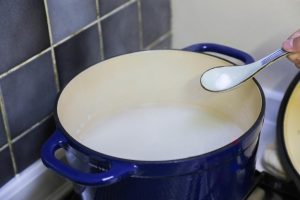
After boiling for about 15 minutes, the rice grains should be “blooming” (splitting open). If you like a thicker consistency, mix 3-5 spoons of glutinous rice flour with a little water to make a slurry and stir it in. Add 1/3 spoon of salt. Turn the heat up to high, add the chopped century eggs, and stir gently.
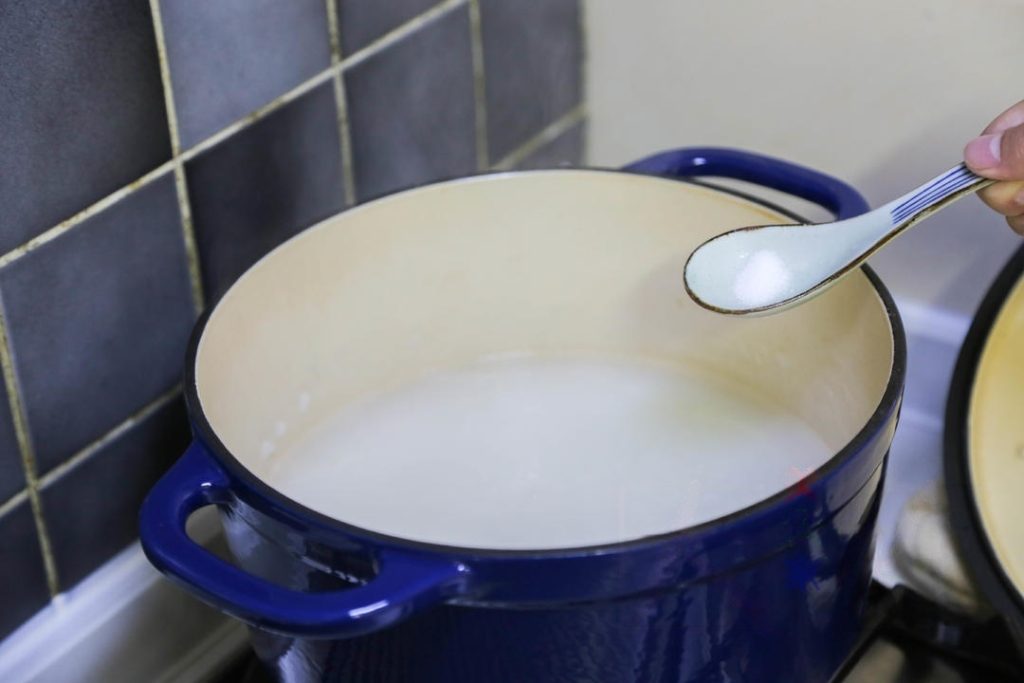
Step 4: Add the Pork
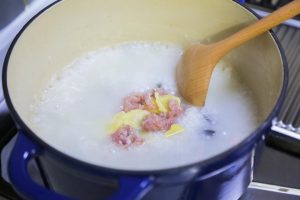
Let the eggs cook for about 3 minutes. Then, pour in the marinated pork slices. Stir gently to separate the pieces so they don’t clump together.

Step 5: Finish and Serve
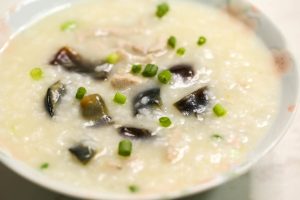
Once the pot boils again and the pork turns white (this happens very fast!), turn off the heat immediately. Do not overcook the pork. Sprinke with chopped scallions.

Step 6: Final Seasoning
Taste the congee. If serving to children or those preferring a lighter taste, it may be perfect. If you prefer a stronger flavor, add another half spoon of salt and half a spoon of white pepper powder. You can also add a few drops of Sesame Oil for extra aroma.
Common Mistakes When Making Congee
- Stirring too little: Rice tends to stick to the bottom of the pot. Make sure to scrape the bottom occasionally, especially after adding the starch or glutinous rice flour.
- Overcooking the pork: The pork is sliced thinly, so it cooks in seconds. If you boil it too long, it becomes tough and chewy.
- Slicing pork too thick: Thick pieces take longer to cook and ruin the delicate texture of the porridge.
Notes
- Safety: Ensure pork is cooked through, but do not boil for more than a minute or two or it will toughen.
- Texture: If the congee is too thick, add a little hot water. If too thin, boil slightly longer.
- Allergens: Contains Egg, Soy (if served with soy sauce), Wheat (glutinous rice flour is gluten-free, but check labels; Shaoxing wine contains wheat).
Serving Suggestions
Congee is a complete meal, but it is often served with sides to add texture contrasts.
- Fried Dough: The classic pairing is Youtiao (Chinese crullers).
- Greens: A plate of Stir-fried Lettuce with Garlic or a fresh Smashed Cucumber Salad adds a nice refreshing crunch.
- Dim Sum Feast: If you are feeling ambitious, serve this alongside Cantonese Wonton Soup for a soup-heavy comfort meal.
About the Author & Recipe Development
Hi, I’m Lin! Growing up in a household where food was the love language, I learned early on that patience is the most important ingredient in a Chinese kitchen. This recipe was adapted from a traditional method that uses glutinous rice flour—a trick I learned from a family friend to get that thick, luxurious texture without spending hours at the stove. I have tested this recipe multiple times to ensure the water-to-rice ratios work for modern home kitchens.
Authoritative References
- Food Safety: For safe pork cooking temperatures, refer to the USDA Food Safety and Inspection Service.
- Century Eggs: To understand the science behind the preservation of century eggs, you can read more at ScienceDirect’s Food Science overview.
Nutrition Information (Estimate)
- Calories: 280 kcal
- Carbohydrates: 35g
- Protein: 18g
- Fat: 9g
- Sodium: 650mg
- Cholesterol: 190mg (Disclaimer: Nutrition information is calculated using an ingredient database and should be considered an estimate. In cases where multiple ingredient alternatives are given, the first listed is calculated for nutrition. Garnishes and optional ingredients are not included.)
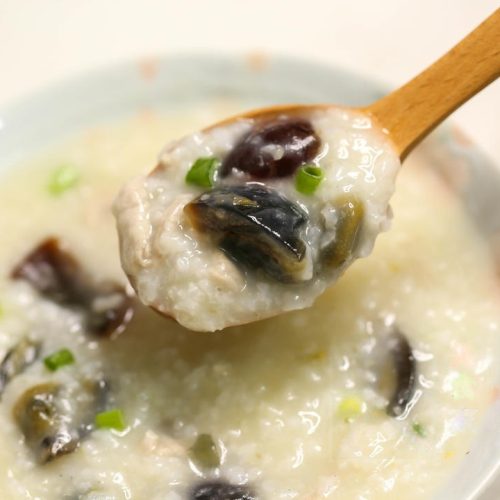
Century Egg and Pork Congee (Pi Dan Shou Rou Zhou)

Equipment
- Large Pot
- Knife and Cutting Board
Ingredients
The Congee Base
- 0.5 cup short or medium grain rice soaked for 30 mins
- 5 cups water approximate, adjust for thickness
- 0.5 tbsp peanut oil
- 3 tbsp glutinous rice flour optional, mixed with water for slurry
The Pork Marinade
- 3.5 oz pork tenderloin or loin sliced thinly
- 1 slice ginger
- 0.2 tsp salt
- 0.25 tsp sugar
- 1 tbsp Shaoxing wine or yellow wine
- 1 tbsp cornstarch
Assembly & Seasoning
- 2 century eggs
- 1 scallion finely chopped
- 0.3 tsp salt to taste
- 0.5 tsp white pepper powder to taste
Instructions
- Rinse the rice and soak in cold water for 30 minutes. Drain, place in a pot, add about 10 times the volume of water (approx 5-6 cups) and 1/2 tbsp peanut oil. Bring to a boil over high heat, then reduce heat to simmer.

- While rice soaks/cooks, place century eggs in a small pot of water. Boil for 5 minutes. Remove, peel, and chop into chunks.
- In a bowl, combine sliced pork, ginger, 1/5 tsp salt, 1/4 tsp sugar, 1 tbsp Shaoxing wine, and 1 tbsp water. Mix well. Add 1 tbsp cornstarch and mix again. Marinate for 10 minutes.
- Once rice grains have bloomed (about 15 mins of boiling), stir in glutinous rice flour slurry (if using) and 1/3 tsp salt. Increase heat to high. Add chopped century eggs.
- Cook for 3 minutes, then add the marinated pork slices. Stir gently to separate the meat.
- As soon as the pork turns white (approx 1-2 mins), turn off the heat immediately. Stir in chopped scallions.
- Taste and add more salt (approx 1/2 tsp) and white pepper if desired. Serve hot.












Leave a Reply