Steamed rice noodles with pork and pickled mustard is the kind of dish that quietly solves dinner: one plate, one steamer, and a result that tastes like far more effort than it took. The noodles soak up the savory juices from the pork, the 榨菜 adds a salty crunch that cuts through the richness, and a shower of scallions at the end wakes the whole thing up. It is Cantonese home cooking at its most practical — and, honestly, at its most delicious.
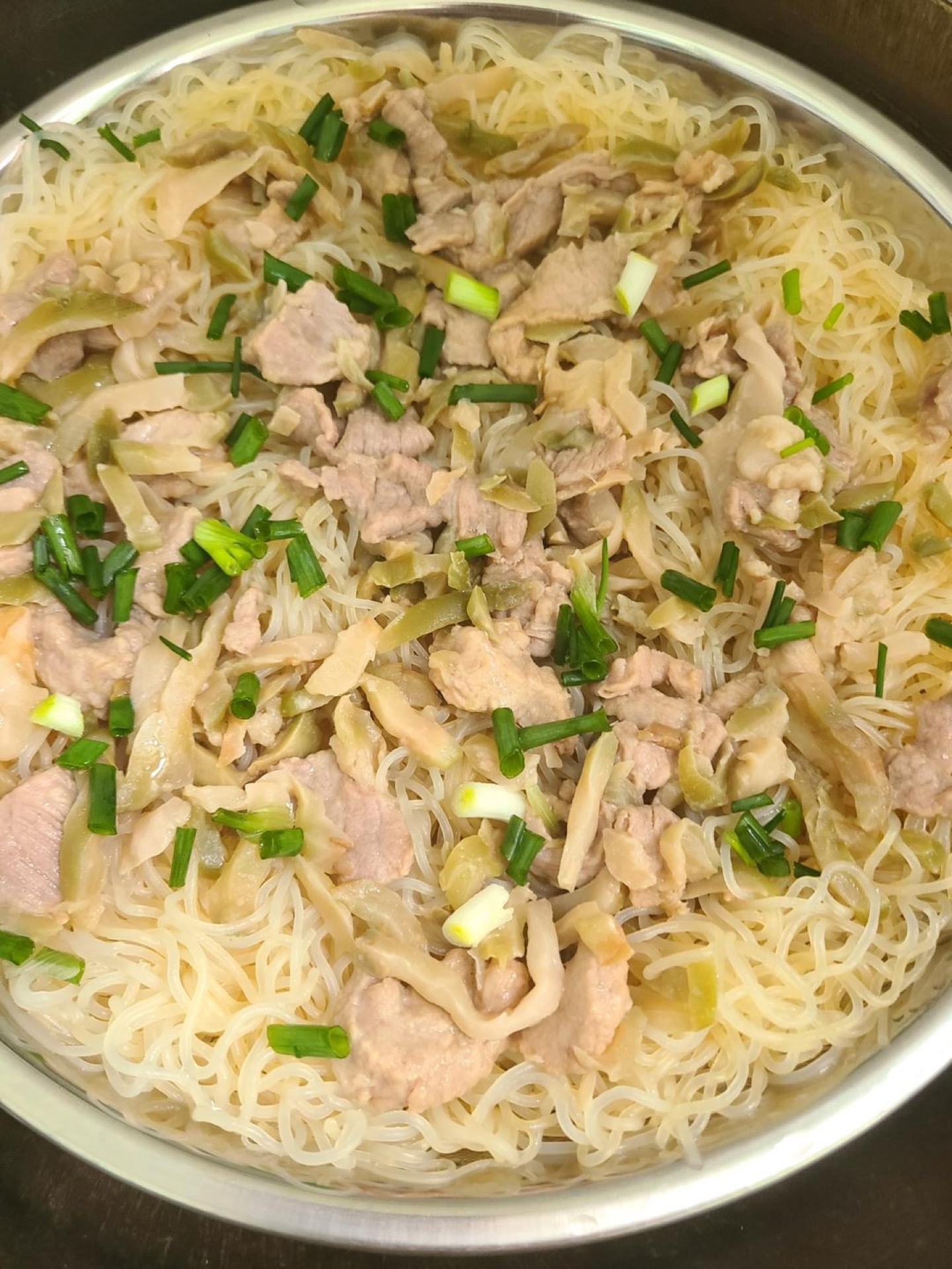
If you have ever stood in a Cantonese kitchen at dinnertime, you have seen this plate. It is not a restaurant showpiece; it is the food families actually eat on a weeknight, because the steamer does most of the work while you set the table. The only real skill involved is patience — soaking the noodles properly and giving the pork a few minutes to absorb its marinade. Everything else is assembly.
What makes this version worth cooking is the balance. Pickled mustard — 榨菜 — is salty, slightly sour, and fiercely crunchy, and it is exactly what keeps a plate of steamed noodles from tasting flat. Paired with thin slices of pork that have been velveted in cornstarch and oil, and noodles that have been tossed with soy and peanut oil before steaming, you get three distinct textures in every bite. The noodles stay springy rather than mushy, the pork stays tender, and the 榨菜 stays crisp. That is the whole trick, and it is a trick worth knowing.
What Is Steamed Rice Noodles with Pork and Pickled Mustard?
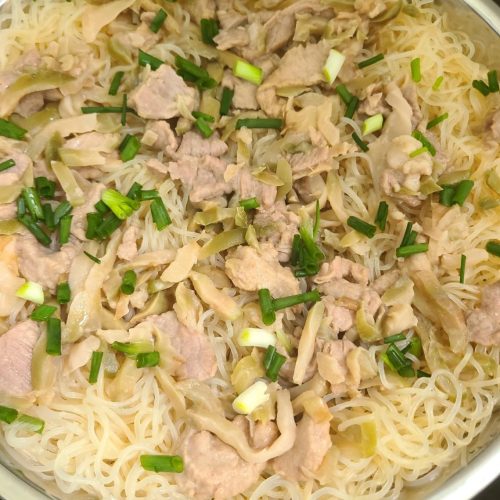
Steamed rice noodles with pork and pickled mustard — 榨菜肉片蒸米粉 — is a Cantonese home-style dish in which seasoned rice noodles are spread on a plate, topped with marinated sliced pork and chopped pickled mustard, and steamed until everything is cooked through. It belongs to the broader family of 蒸 (steamed) dishes that define Guangdong home cooking: 蒸肉饼, 蒸水蛋, 蒸鱼, and this one, 蒸米粉, where the starch and the protein cook together on one plate.
The key ingredient is 榨菜 (zhà cài), a pickled mustard stem from the Sichuan Basin that is salted, pressed, and often lightly spiced. It is sold vacuum-packed in Chinese groceries and keeps for months in the refrigerator. Its job here is twofold: it seasons the pork from within, and it provides a crunch that survives the steamer. Without it, the dish would still work, but it would lose its signature salty-sour snap.
The noodles are the other half of the story. Dried rice noodles (米粉) are soaked, not boiled, before steaming. That distinction matters enormously — boiled noodles arrive at the steamer already waterlogged and turn to paste under the lid, while soaked noodles finish cooking in the steam and absorb the pork juices instead. It is the same principle behind many steamed noodle dishes across southern China.
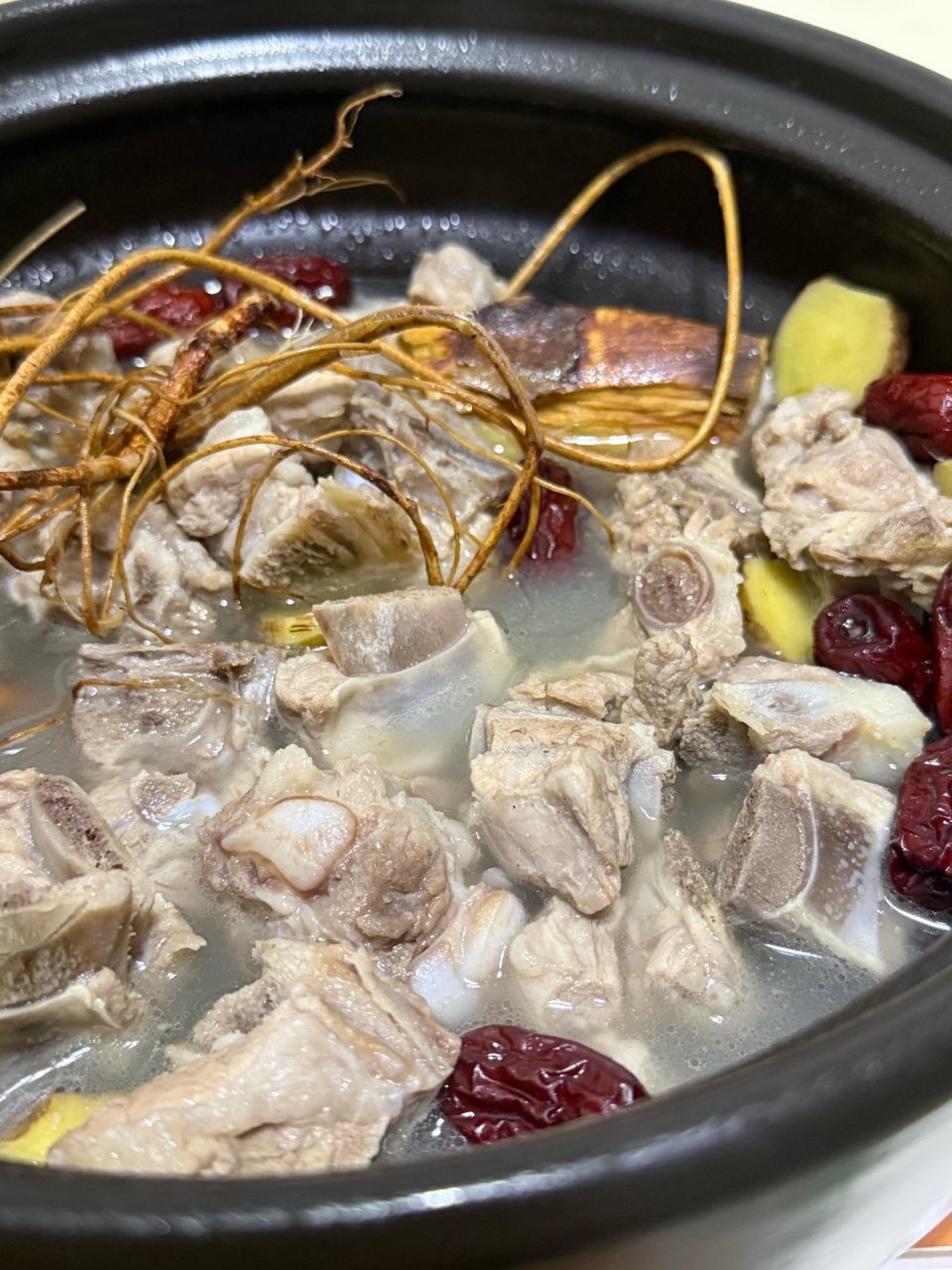
If you enjoy the salty-sour punch of pickled mustard in a brothy setting, our Five-Finger Peach Pork Rib Soup takes the same ingredient in a completely different direction — a warm, tangy bowl that is worth keeping in your rotation.
1Five-Finger Peach Pork Rib Soup (五指毛桃排骨汤): Herbal, Sweet, DeeplyFive-Finger Peach Pork Rib Soup is a Cantonese herbal classic that simmers pork ribs with wuzhimaotao root until the broth turns sweet and fragrant. The result is a clean, comforting soup with tender meat and a gentle coconut-vanilla aroma.Check out this recipe
Ingredient Notes
Before we get to the full list, here is what actually matters in each component. This dish has only nine ingredients, so the quality of each one shows up directly on the plate.
Dried rice noodles (米粉). Look for the thin, flat or round dried rice noodles sold in Chinese groceries, sometimes labeled 桂林米粉, 江西米粉, or simply “rice sticks.” They should be pale, dry, and snap cleanly. Avoid fresh rice noodles for this recipe — they are already cooked and will disintegrate in the steamer. If you can only find wide 河粉, the dish will still work, but reduce the steaming time by a couple of minutes.
Pork. Pork shoulder (butt) is ideal: it has enough intramuscular fat to stay tender under steam, and it slices neatly when partially frozen. Pork loin works too but is leaner, so keep the slices thin and do not overshoot the steaming time. Ask your butcher to slice it, or freeze the meat for 20 minutes before cutting to get consistent ⅛-inch slices.
Pickled mustard (榨菜). Buy the vacuum-sealed packets, not the canned version if you can help it — the flavor is brighter and the texture is far crunchier. Taste a piece before using it: some brands are extremely salty and benefit from a quick rinse and squeeze, while others are milder and can go straight into the marinade. If you want a deeper dive into the pickled-mustard family, our pickled mustard green noodle soup uses a related ingredient in a broth-based format.
Light soy sauce. Use light (thin) soy sauce, not dark. Dark soy sauce is for color and would make the noodles muddy and slightly bitter. Tamari is a fine gluten-free substitute.
Oyster sauce. This adds the round, briny-sweet depth that makes the pork taste “restaurant-y.” Vegetarian oyster sauce works well if you want a pescatarian-friendly version.
Cornstarch. This is the velvetting agent. It forms a thin protective layer around the pork slices so they stay juicy under steam rather than tightening up. Do not skip it, and do not substitute flour — the texture is noticeably different.
Peanut oil. Peanut oil is traditional and adds a faint roasted note. Any neutral oil works, but avoid olive oil, which fights the flavor profile. A small amount tossed through the noodles keeps them from clumping on the plate.
Scallions. Added off the heat, so they stay bright green and sharp. Slice them thin on a bias for the nicest look.
Salt. Use it sparingly and taste as you go, because both the soy sauce and the 榨菜 are already salty. Many home cooks find they need none at all in the noodle-tossing step.
Ingredients
Here is the full list for four servings. Everything is measured in US units, with metric equivalents in parentheses where it helps.
- 8 oz (225 g) dried rice noodles (米粉)
- 8 oz (225 g) pork shoulder or loin, thinly sliced
- 4 oz (115 g) pickled mustard (榨菜), sliced or julienned
- 1 tbsp light soy sauce — for the marinade
- 1 tbsp oyster sauce
- 2 tsp cornstarch
- 1/4 tsp salt — for the marinade
- 1 tbsp peanut oil — for the marinade
- 1 tbsp light soy sauce — for the noodles
- 1 tbsp peanut oil — for the noodles
- 1/4 tsp salt — optional, for the noodles
- 2 scallions, thinly sliced
That is it. No garlic, no ginger, no aromatics beyond the scallion finish — the 榨菜 does the heavy lifting on flavor, and adding more would muddy the clean, savory profile that defines this dish.
Equipment Needed
You do not need a wok for this recipe, but you do need a way to steam. Here is what to gather:
- A steamer setup. A bamboo steamer over a wok, a metal steamer insert in a large pot, or an electric steamer all work. The plate must fit inside with the lid able to close.
- A heatproof shallow plate. A 9- or 10-inch ceramic or stainless plate with a slight lip. The lip matters — it catches the juices that run off the pork, and those juices are the best part.
- A large bowl. For soaking the noodles and for marinating the pork.
- A slotted spoon or spider. For lifting the soaked noodles out of the water without dragging a puddle along with them.
- A cutting board and sharp chef’s knife. Thin, even pork slices are the single biggest determinant of how this dish turns out.
- A small bowl. For whisking the marinade before it hits the pork.
If you cook a lot of Chinese food, a few well-chosen tools make everything easier — our guide to the best kitchen tools for Chinese cooking covers the pieces worth owning, including the steamer inserts that make dishes like this one effortless.
Why This Recipe Works
Three things do the heavy lifting here, and understanding them makes the dish foolproof.
First, the noodles are soaked rather than boiled. Dried rice noodles absorb water at a predictable rate in warm water — roughly 10 minutes gets them pliable but still firm in the center. When they hit the steamer, that remaining firmness finishes cooking in the pork juices and the steam itself. The result is noodles that are tender but still have bite, with none of the gumminess that comes from boiling them ahead of time.
Second, the pork is velveted. Cornstarch, soy sauce, oyster sauce, and oil form a thin coating that traps moisture. Under steam, that coating sets into a silky layer rather than letting the meat dry out. This is the same technique used in countless Cantonese stir-fries and steamed dishes, and it is why the pork here tastes juicy even though it is fully cooked.
Third, the 榨菜 seasons everything. Because the pickled mustard is tossed with the pork before it goes on the plate, its salt and acidity seep into the meat and then drip down into the noodles as the dish steams. You are essentially building a self-seasoning plate. That is why the ingredient list is so short and why the result tastes so complete.
Steaming is one of the gentlest cooking methods there is: moist heat transfers energy to food without the high, dry temperatures that drive off moisture and cause browning. That is why delicate proteins like thinly sliced pork stay tender under steam, and why the technique is so central to Cantonese cooking — the food science behind moist-heat cooking explains why gentle, humid environments preserve texture so effectively.
One more thing worth mentioning: the timing is forgiving. Steaming for 10 minutes versus 13 minutes does not ruin the dish the way it would with a seared steak. If you are unsure whether the pork is cooked through, give it a few extra minutes — the noodles will hold up fine.
Prep & Mise en Place
This dish moves quickly once the steamer is on, so set yourself up before you turn on the heat.
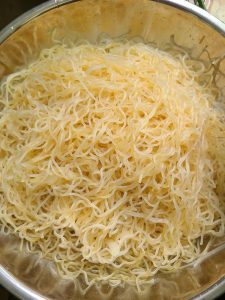
Step one: start the noodles soaking. Put the dried rice noodles in a large bowl and cover them with warm — not boiling — water. Let them sit for about 10 minutes while you do everything else. They should bend without snapping but still feel firm in the middle.
Step two: slice the pork. If your pork is not already sliced, put it in the freezer for 20 minutes first. Firm meat slices far more evenly. Aim for ⅛-inch (3 mm) slices — thin enough to cook through in 10 minutes of steaming, thick enough to stay juicy.
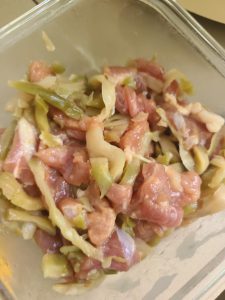
Step three: mix the marinade. In a small bowl, combine the light soy sauce, oyster sauce, cornstarch, salt, and peanut oil. Whisk until smooth, then add it to the pork and mix with your hand until every slice is coated. Let it sit for at least 10 minutes while the noodles finish soaking.
Step four: prep the 榨菜 and scallions. If your pickled mustard is very salty, rinse it briefly and squeeze it dry. Slice it into thin strips. Slice the scallions on a bias and set them aside — they go on at the very end, off the heat.
Step five: drain the noodles thoroughly. Lift them out with a slotted spoon and let them drain in a colander for a minute or two. Excess water on the noodles will make the finished plate soupy, so give them a good shake.
Step six: start the steamer water. Fill your steamer pot or wok with enough water to steam for 15 minutes without running dry, and set it over high heat so it is at a rolling boil by the time the plate goes in.
With everything prepped, the actual cooking takes about 12 minutes. This is the rhythm of most steamed Chinese dishes: long on setup, short on cooking, and very hard to get wrong once you are organized. If you want a broader framework for sequencing ingredients in Chinese cooking, our stir fry order of ingredients timing guide is a useful companion even for steamed dishes.
Cooking Process
Step 1 — Soak the Noodles and Marinate the Pork
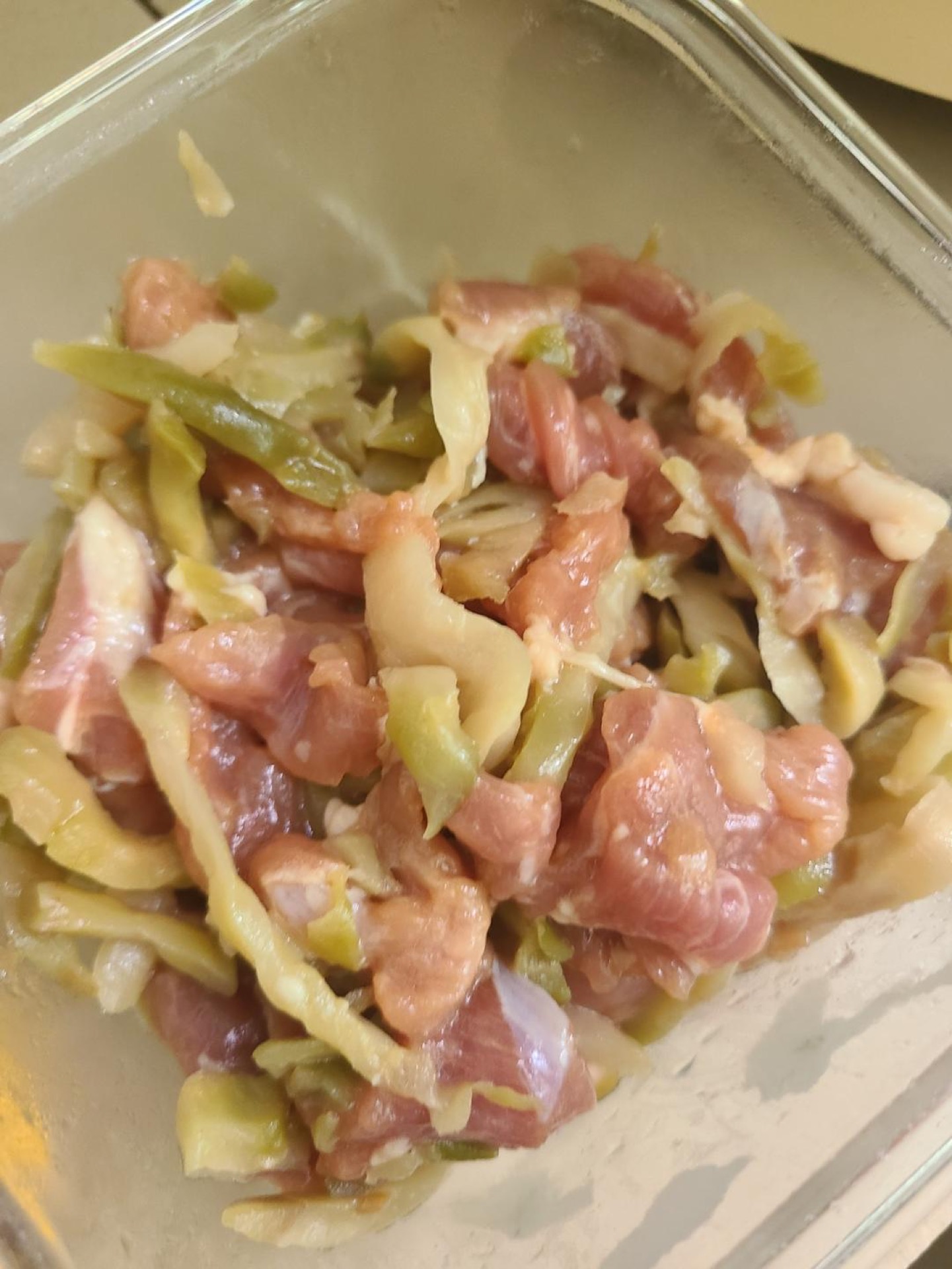
Soak the dried rice noodles in warm water for about 10 minutes; meanwhile slice the pork thinly, then add light soy sauce, oyster sauce, cornstarch, salt, and cooking oil and mix until evenly coated, then add the pickled mustard and toss to combine.
Step 2 — Season the Noodles
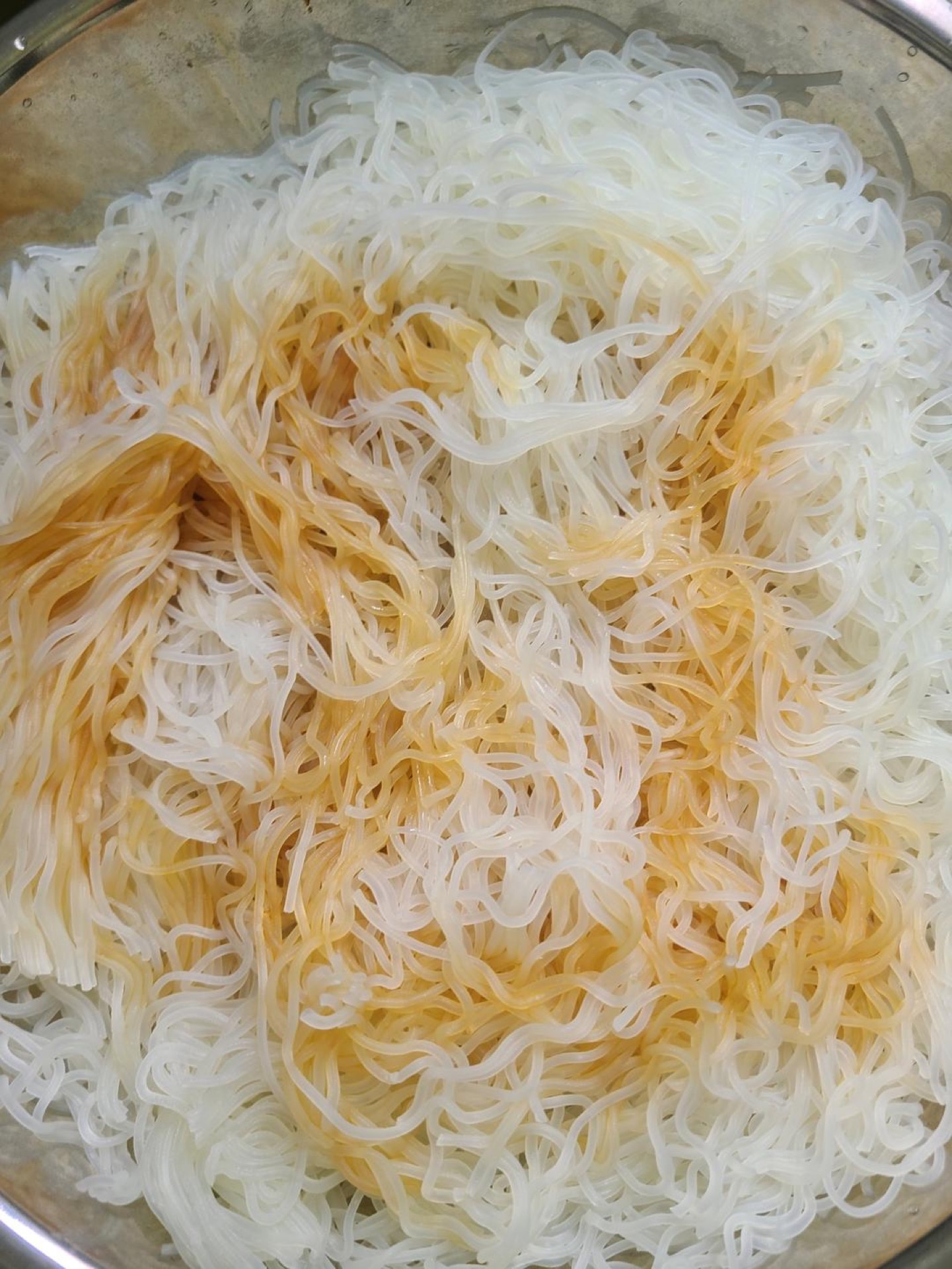
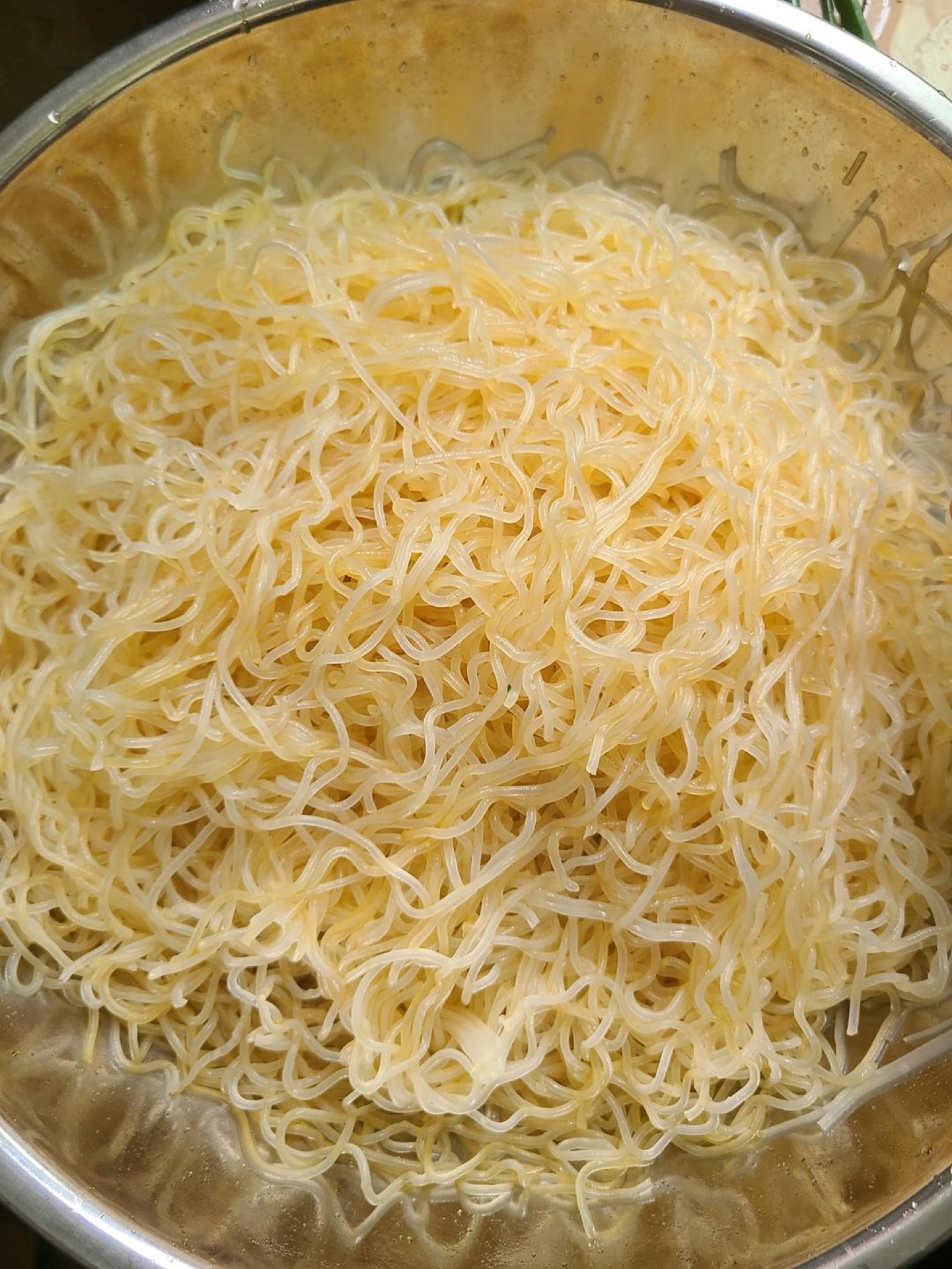
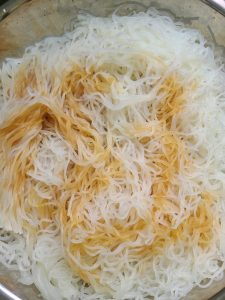
Lift the softened rice noodles out of the water and drain well, then add light soy sauce and peanut oil and toss gently to coat, adding a tiny pinch of salt if you like.
Step 3 — Spread the Noodles
Spread the rice noodles evenly across a heatproof plate, and while you do this, set the steamer over the heat and bring the water to a boil.
Step 4 — Steam the Pork and Noodles
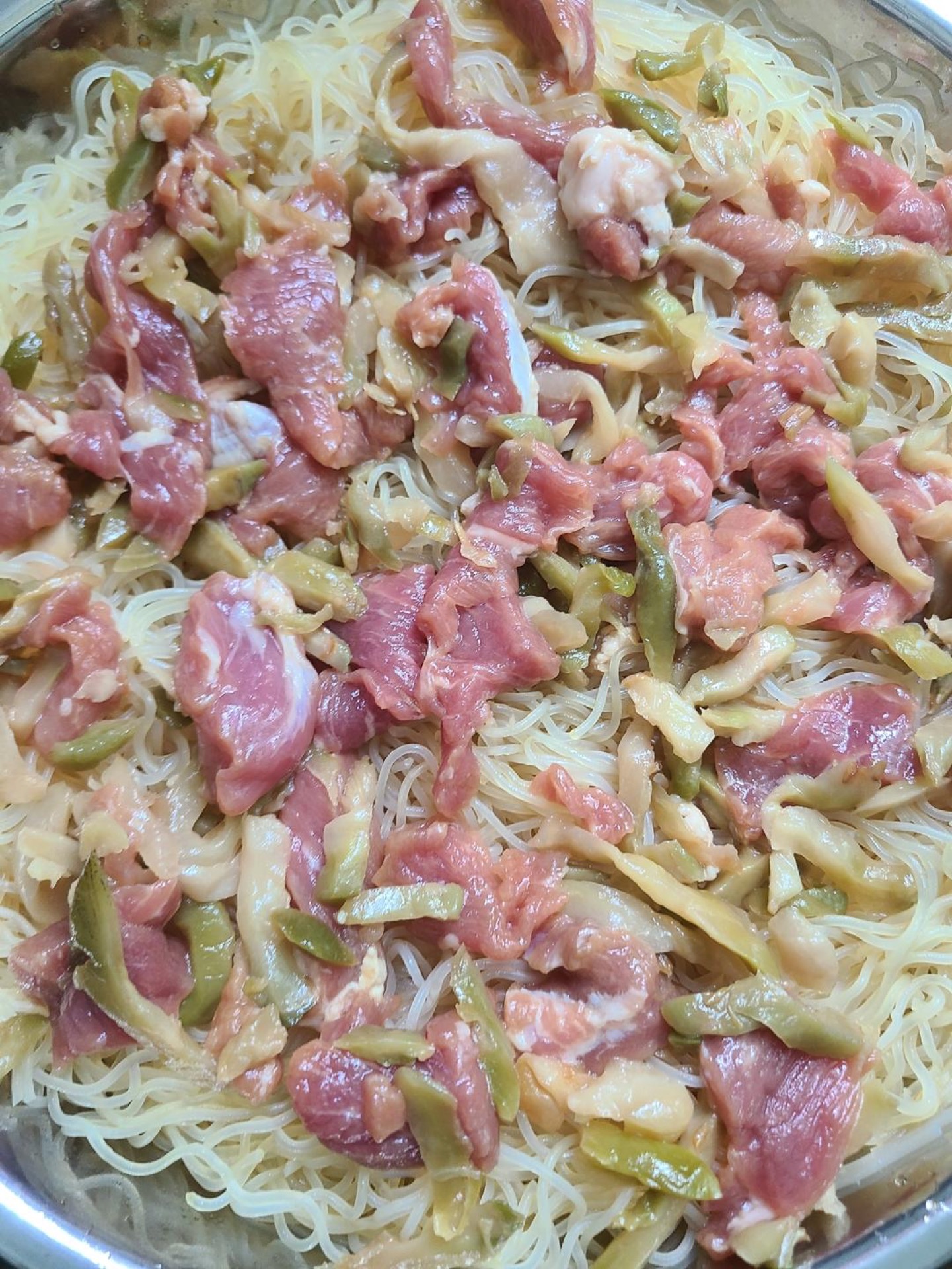
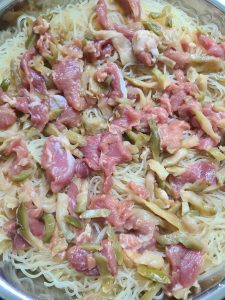
Scatter the pork slices and pickled mustard in an even layer over the noodles, then once the water is boiling set the plate into the steamer and steam over high heat for about 10 minutes, adding a few more minutes if you want to be certain it is cooked through.
Step 5 — Finish with Scallions
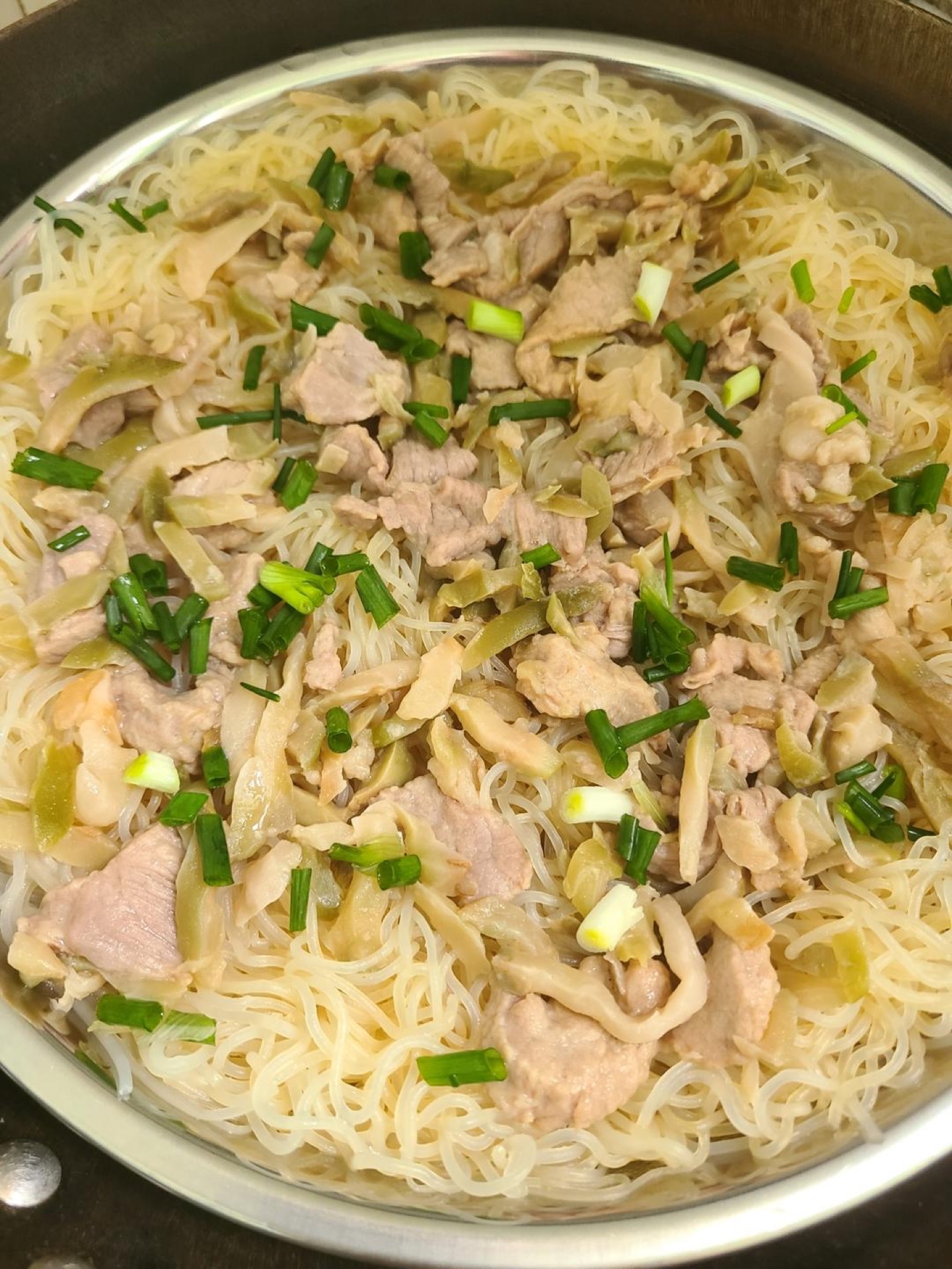
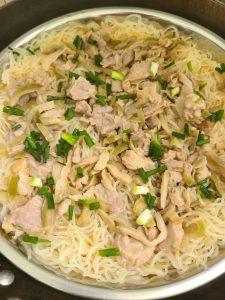
Turn off the heat and scatter the sliced scallions over the top, and it is done.
Common Mistakes When Making Steamed Rice Noodles with Pork and Pickled Mustard
Most problems with this dish come down to one of five things. Here is what goes wrong, why, and how to fix it.
1. Boiling the noodles instead of soaking them. Boiled rice noodles arrive at the steamer already saturated, so the additional cooking turns them soft and gluey. The cause is habit — most noodle recipes call for boiling. The fix is to soak in warm water for 10 minutes only, drain well, and let the steamer finish the job.
2. Slicing the pork too thick. Thick slices need far longer than 10 minutes to cook through, which means the noodles underneath overcook while you wait. The cause is usually a dull knife or room-temperature meat. The fix is to chill or partially freeze the pork before slicing and aim for ⅛-inch thickness.
3. Skipping the cornstarch in the marinade. Without it, the pork steams to a dry, tight texture rather than staying silky. The cause is assuming the marinade is only about flavor. The fix is to treat cornstarch as structural, not optional — 2 teaspoons for 8 ounces of pork.
4. Not draining the noodles well enough. Water clinging to the noodles pools on the plate and dilutes the sauce, giving you a soggy, bland result. The cause is lifting noodles straight from the bowl to the plate. The fix is a colander and a minute of patience.
5. Piling the pork in a mound instead of spreading it. A thick pile steams unevenly — the outer slices overcook while the center stays pink. The cause is rushing the assembly. The fix is to spread the pork and 榨菜 in a single, even layer across the noodles, leaving a little space between slices.
6. Adding the scallions before steaming. Scallions cooked under steam turn drab, olive-colored, and lose their bite. The cause is treating them like an aromatic to be cooked. The fix is to scatter them on after the heat is off — the residual steam is enough to soften them slightly while keeping them bright.
7. Over-salting. Between the soy sauce, oyster sauce, and 榨菜, this dish is already well seasoned. The cause is seasoning by reflex. The fix is to taste the 榨菜 first and only add salt to the noodles if the finished plate needs it.
Variations
The template here is flexible, and once you have made it once you will start improvising. A few directions that work well:
Chicken instead of pork. Boneless chicken thigh, sliced thin and marinated the same way, steams beautifully and needs the same 10–12 minutes. Chicken breast works but is less forgiving; keep the slices thin and do not exceed 10 minutes.
Add shrimp. A handful of peeled shrimp scattered over the noodles in the last 4 minutes of steaming turns this into a surf-and-turf plate. The flavor pairing of shrimp and pork is a Cantonese staple — our shrimp and tofu stir fry explores a related combination if you want more ideas.
Swap the pickled mustard. If 榨菜 is unavailable, 雪菜 (pickled mustard green) or a mild kimchi will work, though the flavor shifts. Rinse either one if it is very salty.
Make it spicy. A teaspoon of chili crisp or a few slices of fresh chili added with the pork gives the dish a welcome kick. A pinch of white pepper in the marinade adds warmth without heat and is very traditional in Cantonese cooking.
Use fresh rice noodles. If you have fresh 河粉 on hand, separate the strands gently, toss with the soy and oil, and reduce the steaming time to 8 minutes. The texture will be softer, but the flavor is just as good.
Add vegetables. Thinly sliced shiitake mushrooms, julienned carrots, or a handful of baby bok choy laid over the noodles before the pork goes on will steam in the same time and turn this into a fuller one-plate meal.
Frequently Asked Questions
Can I make this dish ahead of time? You can marinate the pork up to 24 hours in advance and soak-and-drain the noodles a few hours ahead, storing them covered in the refrigerator with a teaspoon of oil tossed through to prevent sticking. The actual steaming should happen right before serving, though, because steamed rice noodles are at their best within 20 minutes of coming off the heat.
What if I cannot find 榨菜? Look for it in the refrigerated or vacuum-packed section of a Chinese grocery, labeled “pickled mustard tuber” or “Sichuan pickled vegetable.” If you truly cannot find it, 雪菜 (pickled mustard greens) is the closest substitute, or you can use a mild, well-drained kimchi. The dish will taste different but still good.
Why did my noodles turn out mushy? Almost always because they were soaked too long, soaked in water that was too hot, or boiled before steaming. Warm water and 10 minutes is the target. If your noodles are very thin, check them at 8 minutes.
Is this dish very salty? It is on the savory side by design, but it should not be overwhelming. The two levers you control are the salt you add to the noodles and whether you rinse the 榨菜. Taste the pickled mustard before using it and adjust accordingly.
Can I steam this in a rice cooker or Instant Pot? Yes, with caveats. A rice cooker with a steamer insert works if you can run it in steam mode for 12 minutes. An Instant Pot works on a trivet with 1 cup of water and 3 minutes at high pressure, followed by a quick release — but the texture is slightly different, and the noodles come out a bit softer.
How to Serve
This dish is a complete meal on its own, but it also plays well as part of a larger Cantonese table. Serve it with a simple bowl of steamed white rice for a starch-on-starch dinner that nobody complains about, or alongside a light soup to balance the saltiness. A plate of quickly blanched greens dressed with a little soy sauce and sesame oil is the classic accompaniment — the freshness cuts right through the rich pork.
If you are building a fuller spread, our Cantonese steamed sea bass makes an elegant centerpiece that shares the same gentle steaming technique, and the two dishes together read as a proper home-style banquet. For something with a little more broth and heat, the Korean beef hot pot noodle soup is a cozy counterpoint if you are feeding a crowd with mixed cravings.
One small serving note: bring the plate to the table as it is, with the juices pooled in the bottom. Spoon those juices over each portion — they are the most flavorful part of the dish, and they carry the 榨菜’s salt and the pork’s richness straight into the noodles.
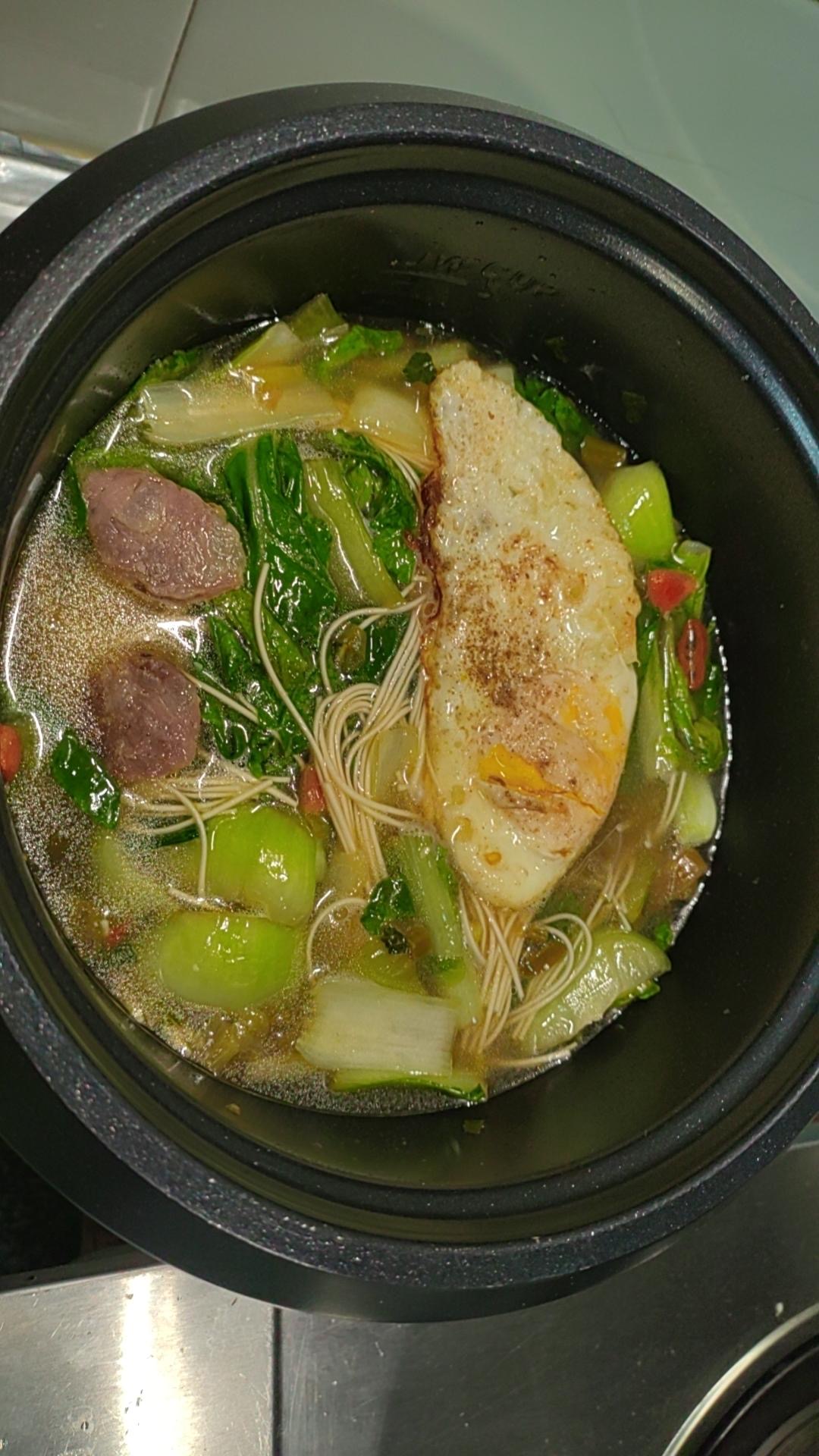
Serve it alongside Rice Cooker Sausage Veggie Noodles for a two-dish table.
Storage & Reheat
Steamed rice noodles keep reasonably well, though they are never quite as good as the first time. Let the dish cool to room temperature within two hours of cooking, then transfer it to an airtight container and refrigerate for up to 3 days.
To reheat, the steamer is your best friend again: return the noodles to a heatproof plate and steam for 5–6 minutes, until piping hot. A microwave works in a pinch — cover the plate with a damp paper towel and heat in 30-second bursts, stirring gently between each — but the noodles will be softer. Avoid reheating in a dry oven, which toughens both the pork and the noodles.
If you have leftover pork and noodles but no appetite for the same plate twice, chop everything roughly and fold it into a hot pan with a beaten egg for a quick fried-rice-style rescue. It is not traditional, but it is very good.
Allergen Notice
This recipe contains soy (light soy sauce, oyster sauce) and may contain wheat, since many commercial soy sauces and oyster sauces are brewed with wheat. If you are cooking for someone with celiac disease or a gluten sensitivity, use tamari in place of light soy sauce and a certified gluten-free oyster sauce, and check the label on your pickled mustard — some brands add wheat-derived ingredients.
Peanut oil is used in the marinade and to toss the noodles. If you have a peanut allergy, substitute a neutral oil such as canola, grapeseed, or avocado oil. The dish contains no dairy, no egg, and no shellfish as written.
Nutrition Disclaimer
Nutrition information is calculated using an ingredient database and should be considered an estimate. In cases where multiple ingredient alternatives are given, the first listed is calculated for nutrition. Garnishes and optional ingredients are not included.
About the Author & Recipe Development
Hi, I’m Lin — I grew up cooking Cantonese food in a home where the steamer ran more often than the oven, and I started Woks of Love to document the dishes my family actually eats rather than the ones that photograph best. This recipe comes from that everyday repertoire: a plate my mother made on busy weeknights when there was no time for a wok and no patience for a long ingredient list.
I tested this version several times to nail down the noodle-to-pork ratio and the soaking time, because both are the difference between a plate that sings and one that turns to mush. The 10-minute soak and the 10-minute steam are not arbitrary — they are the numbers that consistently produced springy noodles and juicy pork in my kitchen. If your noodles are a different thickness or your steamer runs cooler, adjust by a minute or two and trust your instincts.
If you make this, I would love to hear how it turned out — especially if you tried one of the variations. And if you are new to Chinese home cooking, this is a genuinely good place to start, because the technique is forgiving and the payoff is immediate.
Authoritative References
For safe handling and cooking temperatures for pork, see the USDA safe minimum internal temperature chart. For food storage and cooling guidance, the FDA guidance on refrigerator thermometers and cold food storage is a useful reference. For a deeper look at moist-heat cooking and why steaming preserves texture, Serious Eats’ food science coverage is a reliable starting point.
Steamed Rice Noodles with Pork and Pickled Mustard (榨菜肉片蒸米粉): A One-Plate Cantonese Classic

Equipment
- Steamer or wok with a rack
- Heatproof shallow plate
- Cutting Board
- Chef’s knife
- Large Bowl
- Slotted Spoon
- Small Bowl
Ingredients
For the Pork Marinade
- 8 oz pork thinly sliced, shoulder or loin
- 1 tbsp light soy sauce or tamari
- 1 tbsp oyster sauce
- 2 tsp cornstarch
- 1/4 tsp salt
- 1 tbsp peanut oil or any neutral oil
For the Noodles
- 8 oz dried rice noodles 米粉, soaked in warm water
- 1 tbsp light soy sauce
- 1 tbsp peanut oil
- 1/4 tsp salt optional, to taste
For Assembly
- 4 oz pickled mustard 榨菜, sliced or julienned
- 2 scallions thinly sliced
Instructions
- Soak the dried rice noodles in warm water for about 10 minutes; meanwhile slice the pork thinly, then add light soy sauce, oyster sauce, cornstarch, salt, and cooking oil and mix until evenly coated, then add the pickled mustard and toss to combine.

- Lift the softened rice noodles out of the water and drain well, then add light soy sauce and peanut oil and toss gently to coat, adding a tiny pinch of salt if you like.
- Spread the rice noodles evenly across a heatproof plate, and while you do this, set the steamer over the heat and bring the water to a boil.
- Scatter the pork slices and pickled mustard in an even layer over the noodles, then once the water is boiling set the plate into the steamer and steam over high heat for about 10 minutes, adding a few more minutes if you want to be certain it is cooked through.
- Turn off the heat and scatter the sliced scallions over the top, and it is done.












Leave a Reply