Some mornings the fridge offers exactly one egg, a stub of carrot, and a half-empty bag of flour — and somehow that is enough for breakfast. This egg pancake is what Chinese home cooks call jidan bobing (鸡蛋薄饼), the thin, soft, barely-there pancake that shows up on breakfast tables from Shandong to Sichuan, usually with a child on the other side of the table.
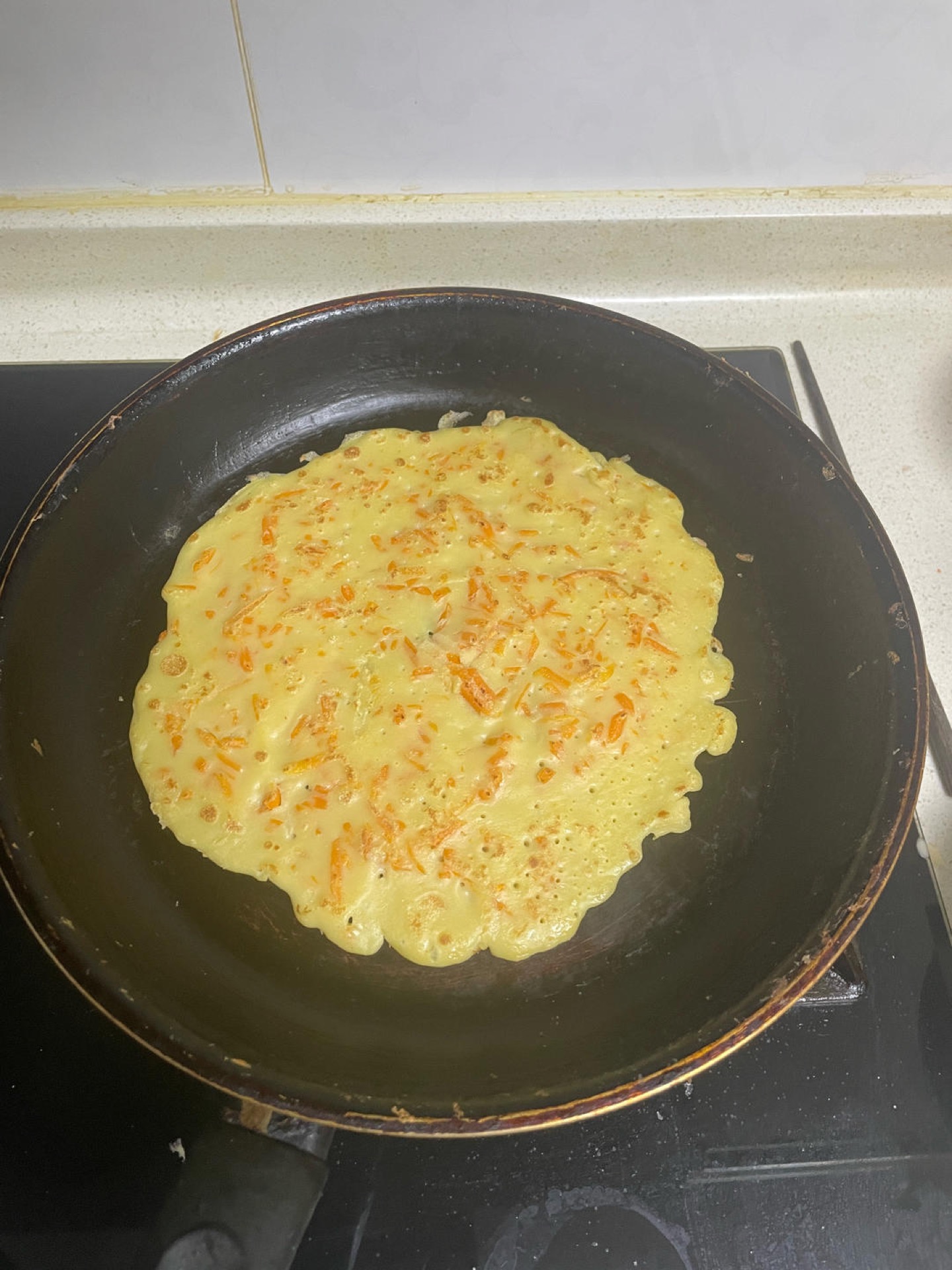
What makes it different from a Western pancake is the ratio. There is no leavening, no milk, no sugar, and very little flour — the egg does the structural work and the flour just gives it enough body to hold together. The batter is thin enough to spread into a near-translucent sheet, and it cooks in about a minute per side over low heat so the egg stays tender instead of turning rubbery.
Because it is so plain, it is endlessly adaptable. Grated carrot is the classic toddler version, but zucchini, spinach, or a spoonful of chopped scallion all work equally well. It is also the rare breakfast that a five-year-old can help make, since the whole thing is stirring and spreading rather than knife work.
If you have ever made broccoli carrot egg pancakes, you already know the basic rhythm here — this version is thinner, softer, and built for folding rather than stacking.
What Is Egg Pancake (鸡蛋薄饼)?
Jidan bobing is a thin Chinese egg pancake made from a loose batter of egg, a small amount of wheat flour, water, and a finely grated vegetable. It is cooked in a thin layer over low heat in a wok or skillet, then folded, rolled, or cut into pieces. The texture is closer to a crepe than an American pancake: pliable, slightly chewy at the edges, and soft enough to bend without cracking.
It belongs to a broad family of Chinese egg-and-flour flatbreads. Some versions, like the Shandong-style jianbing, are cooked on a large griddle and rolled around crispy fillings. Others, like this one, are the stripped-down home version — no filling, no sauce, just batter and a hot pan. In many households it is the first solid food a toddler learns to eat with their hands.
If you enjoy the deep, slow-cooked side of Chinese home cooking, Five-Finger Peach Pork Rib Soup is a gentle, kid-friendly soup that pairs beautifully with a light egg pancake breakfast.
1Five-Finger Peach Pork Rib Soup (五指毛桃排骨汤): Herbal, Sweet, DeeplyFive-Finger Peach Pork Rib Soup is a Cantonese herbal classic that simmers pork ribs with wuzhimaotao root until the broth turns sweet and fragrant. The result is a clean, comforting soup with tender meat and a gentle coconut-vanilla aroma.Check out this recipe
Why This Recipe Works
Three things make this pancake reliable. First, the batter is deliberately thin. A loose batter spreads into a thin, even layer the moment it hits the wok, so you never fight a stiff dough that sets before it flattens.
Second, the heat is low. Egg proteins coagulate fast — somewhere between 145°F and 160°F (63°C to 71°C) they go from liquid to solid. Over high heat that transition happens before the batter has finished spreading, which is why rushed egg pancakes come out thick in the middle and lacy at the edges. Low heat gives you thirty extra seconds of working time.
Third, the vegetable is grated fine and chopped. Long shreds of carrot create weak points where the pancake tears when you flip it. Chopped fine, the carrot becomes a filler that reinforces the structure rather than breaking it.
There is real food science behind the low-and-slow approach: egg proteins set into a tender, moist network when heated gradually, but squeeze out water and turn rubbery when heated hard. The food science explanations at Serious Eats walk through the same principle for scrambled eggs, and it applies exactly here.
Equipment Needed
You do not need much, and you almost certainly already own all of it.
- Wok or non-stick skillet — a 10- to 12-inch wok with sloped sides makes spreading easier, but a flat non-stick pan works just as well. If you are new to wok cooking and yours keeps sticking, this guide on why a stir fry turns out watery covers heat control and pan seasoning in detail.
- Box grater — the fine side, for the carrot.
- Mixing bowl — one medium bowl holds the entire batter.
- Whisk or chopsticks — chopsticks are traditional and work surprisingly well for beating egg.
- Ladle — for pouring an even amount of batter each time, and for spreading it.
- Thin spatula — a flexible silicone or fish spatula slides under the pancake without tearing it.
- Cutting board — for cutting the finished pancake into pieces.
Ingredients
Four ingredients, plus salt. That is the whole list.
- 1 large egg — about 50 g. This is the backbone of the pancake.
- 1/3 cup (45 g) all-purpose flour — just enough to bind. Bread flour makes it chewier; cake flour makes it more delicate.
- 1/4 cup finely grated carrot — about half a small carrot, peeled.
- 1/3 cup water — plus one or two extra tablespoons as needed.
- 1/4 teaspoon salt — or to taste.
- 1 teaspoon neutral oil — for the pan.
Ingredient Notes
The egg. One large egg is the right amount for a single batch of four small pancakes. If you want a richer, more custardy pancake, use two eggs and reduce the water by two tablespoons — the pancake will be softer and slightly more prone to tearing.
The flour. All-purpose is the default. If you are cooking gluten-free, a 1:1 gluten-free blend works, but add an extra teaspoon and let the batter rest a full 15 minutes, since gluten-free flours hydrate more slowly. Do not substitute rice flour alone — it will not bind.
The carrot. Grated fine and then chopped. This is not optional fussiness — it genuinely changes how the pancake holds together. Other good vegetables: zucchini (squeeze out the water first), spinach (wilted and chopped), or finely shredded cabbage.
The water. Add it gradually. The exact amount depends on the size of your egg and the humidity of your flour, which is why the recipe gives a range rather than a fixed number. The target consistency is thin pancake batter — it should ribbon off the whisk and disappear back into the bowl within a second.
The salt. A quarter teaspoon is mild, appropriate for a toddler. Adults eating the same pancake often want a little more, plus a pinch of white pepper. If you are cooking for older kids or adults, season the batter a touch more boldly.
Optional additions. Toasted sesame seeds add a nice nuttiness and a little crunch. Chopped scallion is classic. A few drops of toasted sesame oil in the batter deepens the flavor considerably. A pinch of black cardamom is not traditional here but adds a smoky note if you happen to have some on hand.
Prep & Mise en Place
Total hands-on time is about 15 minutes, of which most is grating and whisking. Get everything ready before the wok goes on — egg pancakes cook fast, and you will not have time to grate a carrot while one is in the pan.
- Peel and grate the carrot on the fine side of a box grater, then chop the shreds briefly with a knife.
- Crack the egg into a medium bowl.
- Measure the flour and set it aside.
- Measure the water into a small cup — you will add it gradually, not all at once.
- Set the salt, pepper, and any optional add-ins within reach.
- Have the spatula, ladle, and cutting board ready next to the stove.
Once the batter is mixed, let it rest for 10 minutes. This is not strictly necessary, but it makes a noticeable difference: the flour absorbs the water fully, the batter thickens slightly, and the finished pancake is more tender and less likely to tear.
Cooking Process
Step 1 — Grate and Chop the Carrot
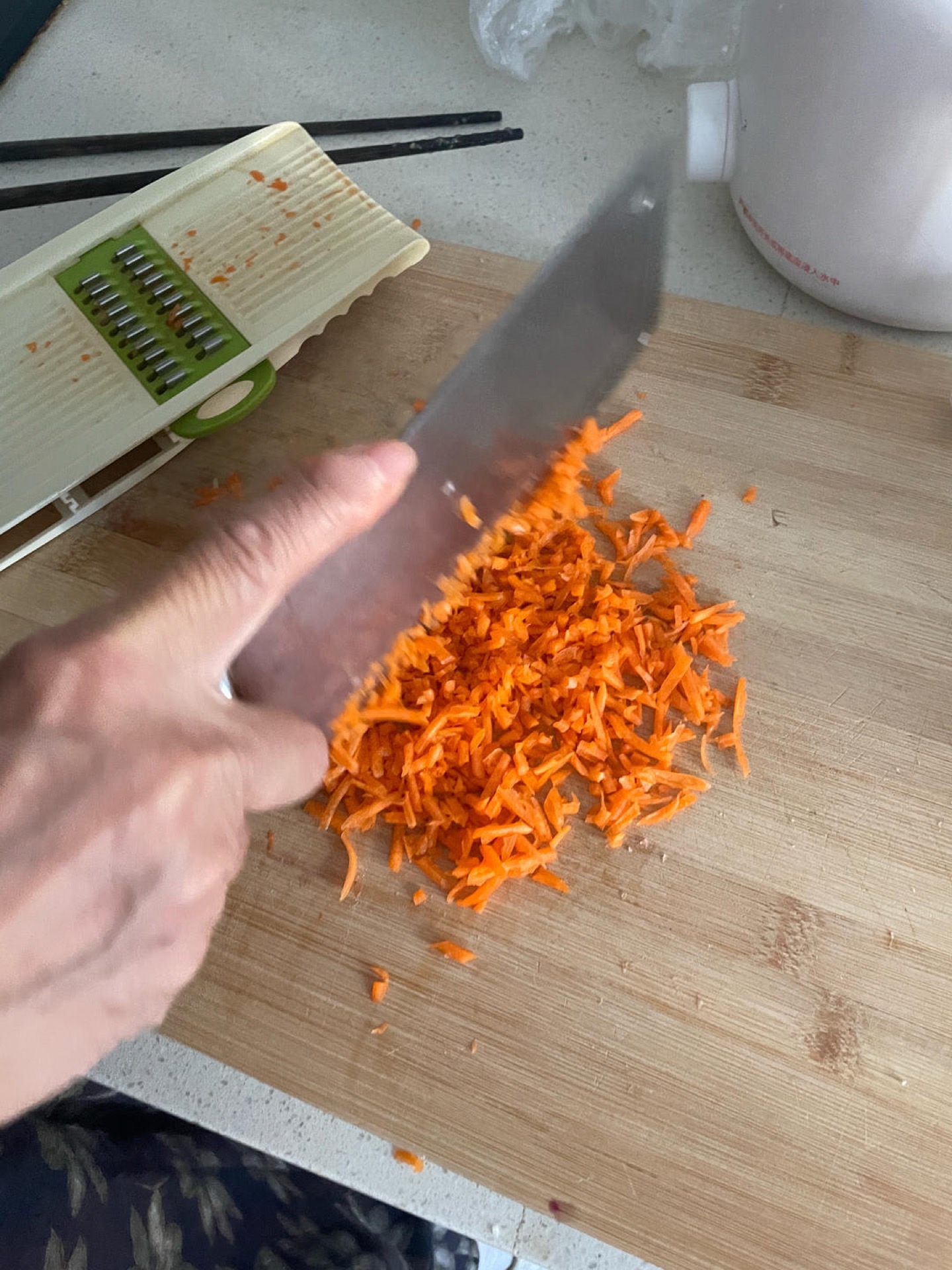
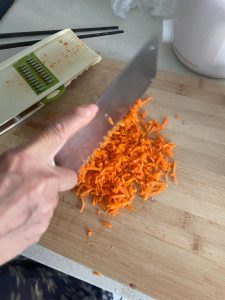
Peel the carrot and grate it on the fine side of a box grater, then run your knife through the shreds a few times so they are chopped fine and no long strands remain.
Step 2 — Add the Egg
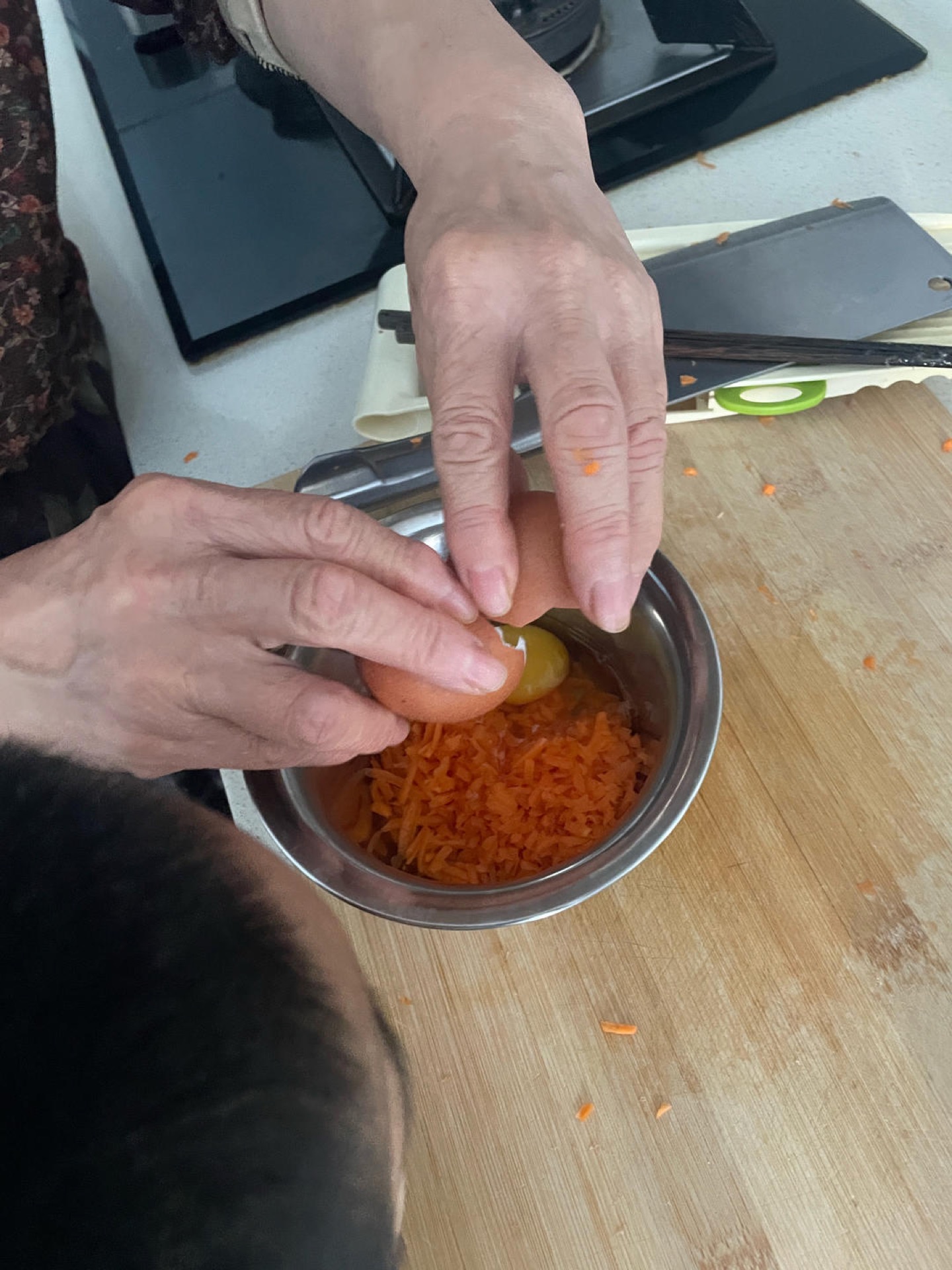
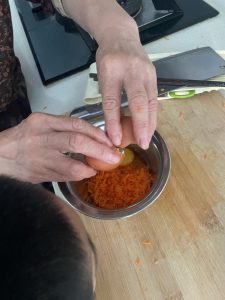
Crack one egg into the bowl with the carrot and beat it in with a whisk or chopsticks until the yolk and white are completely combined.
Step 3 — Add the Flour
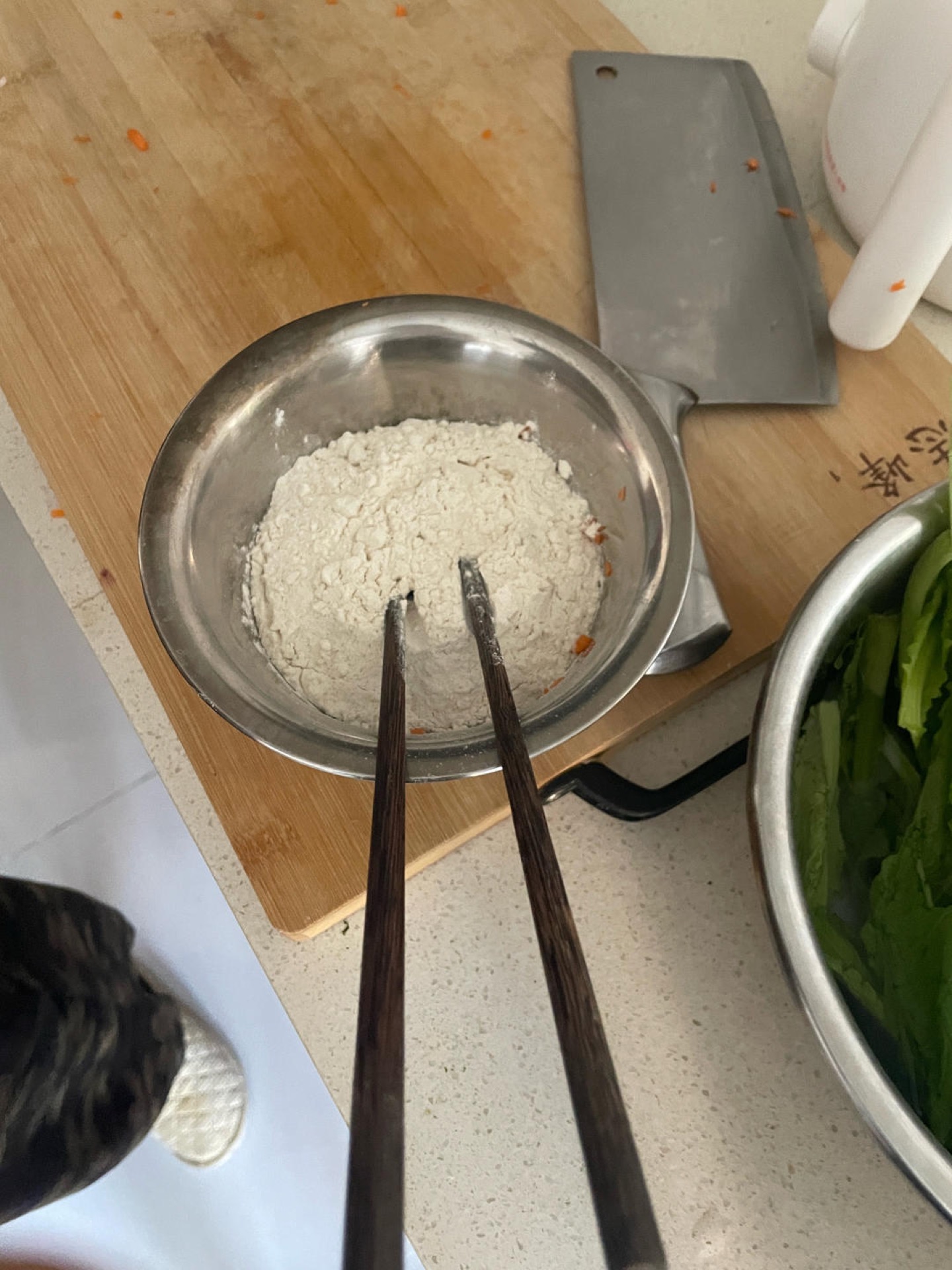
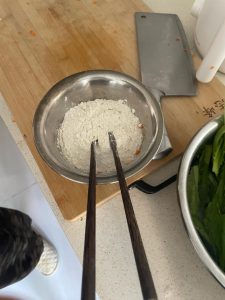
Add the flour and stir it into the egg mixture — it will look thick and pasty at this stage, which is exactly right.
Step 4 — Add the Water Gradually
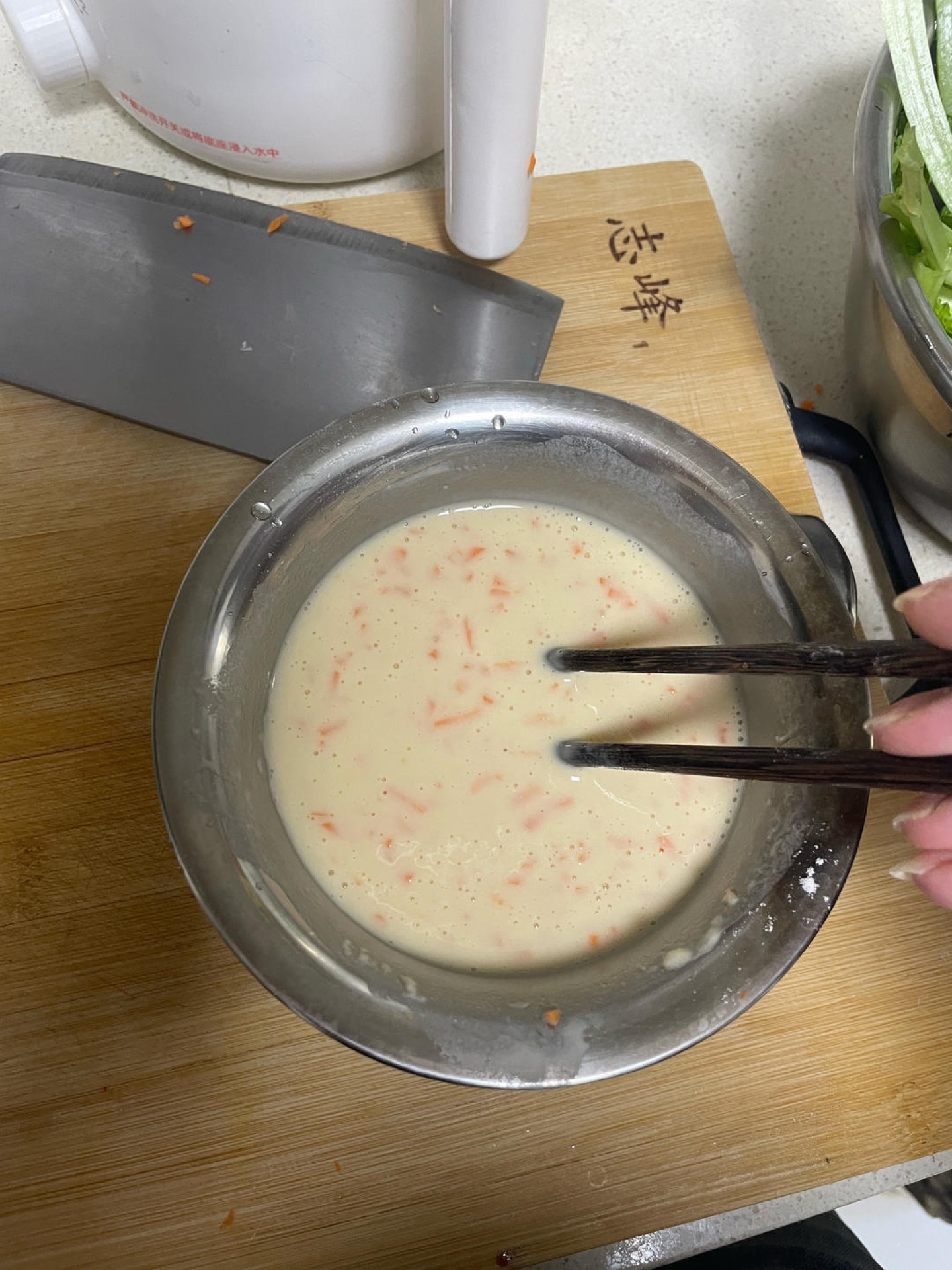
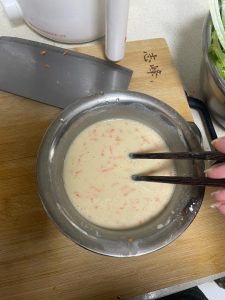
Pour in the water a little at a time, stirring as you go, until the batter falls off the whisk in a thin, smooth ribbon; if it gets too loose, add a spoonful more flour, and if it is too thick, add a splash more water.
Step 5 — Whisk Everything Together
Stir the batter until it is completely smooth and no dry flour pockets or lumps remain, then let it rest for 10 minutes so the flour hydrates.
Step 6 — Heat the Wok and Add the Batter
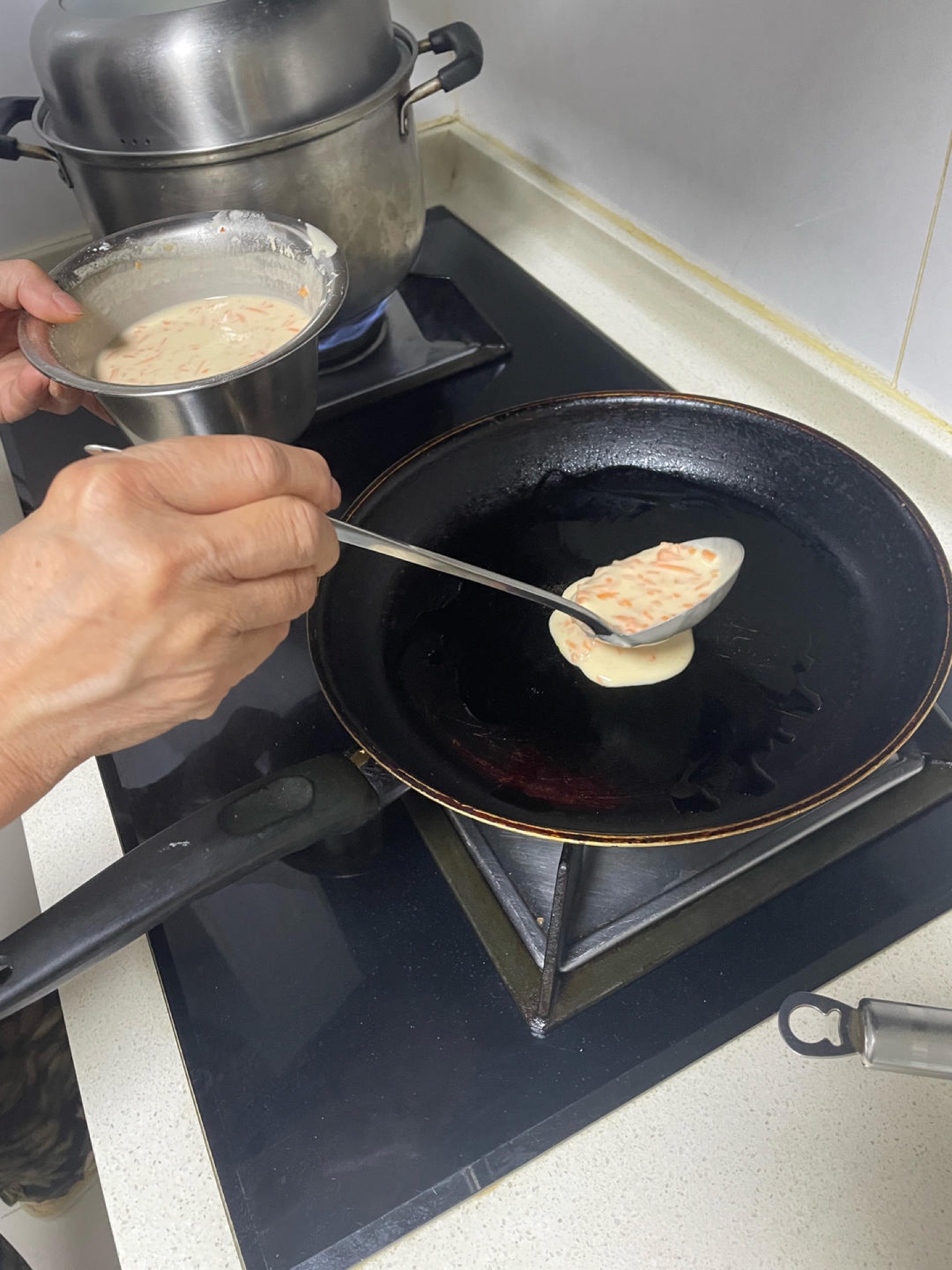
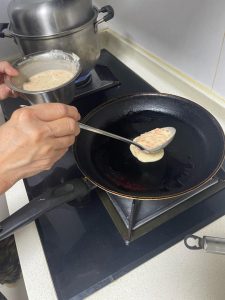
Heat a wok or non-stick skillet over low heat, spray or brush in a thin film of oil, and pour in a small ladle of batter — you should hear only a soft sizzle, never a loud hiss.
Step 7 — Spread It Flat
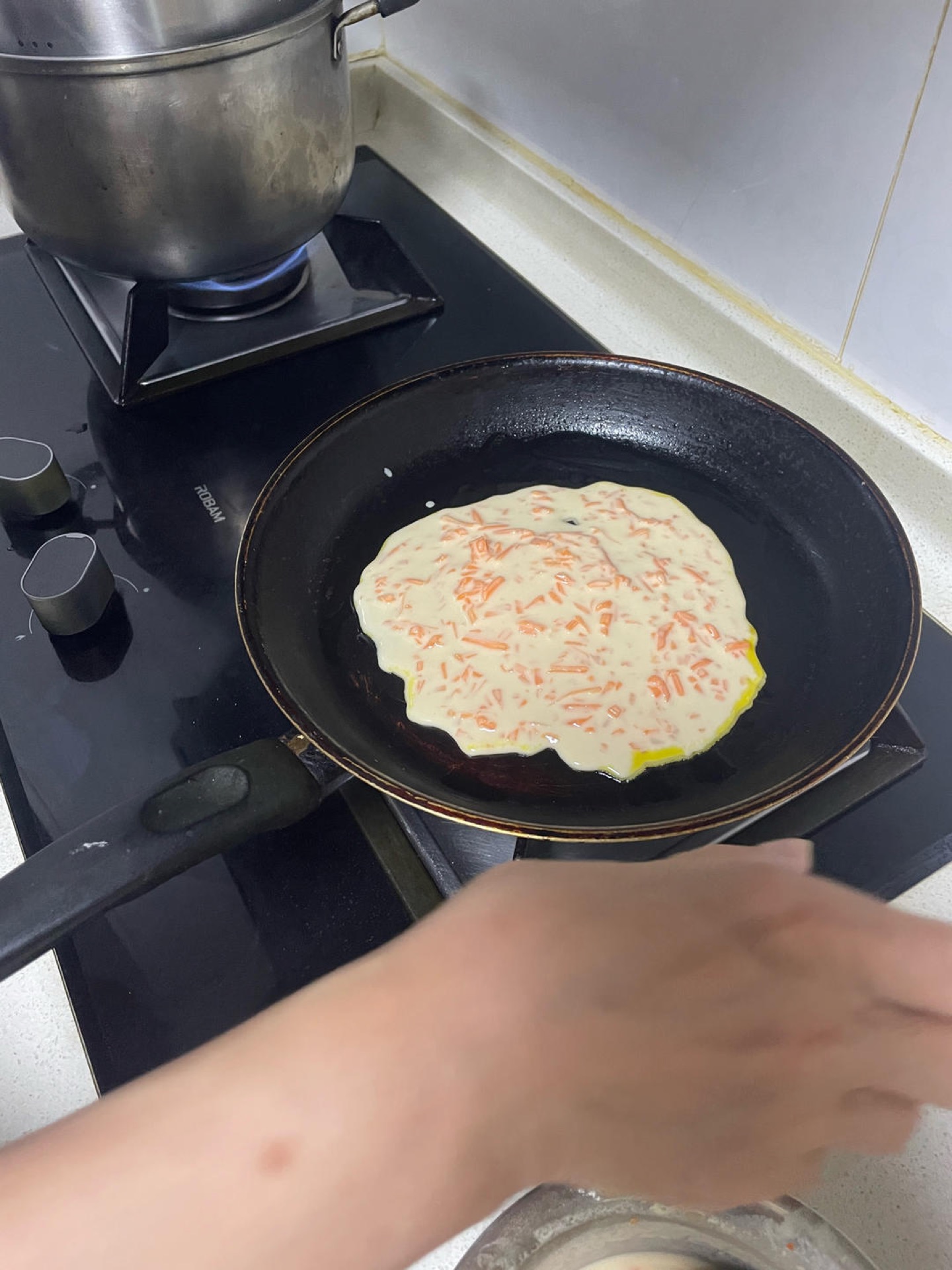
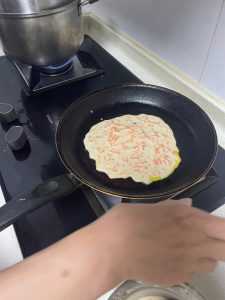
Immediately tilt the wok and use the back of the ladle to spread the batter outward into a thin, even round, working quickly before the egg sets.
Step 8 — Flip When Set
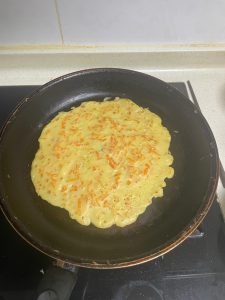
After about one minute the edges will lift and the surface will look dry and matte — slide a spatula under the pancake and flip it, then cook the second side for another 30 to 45 seconds.
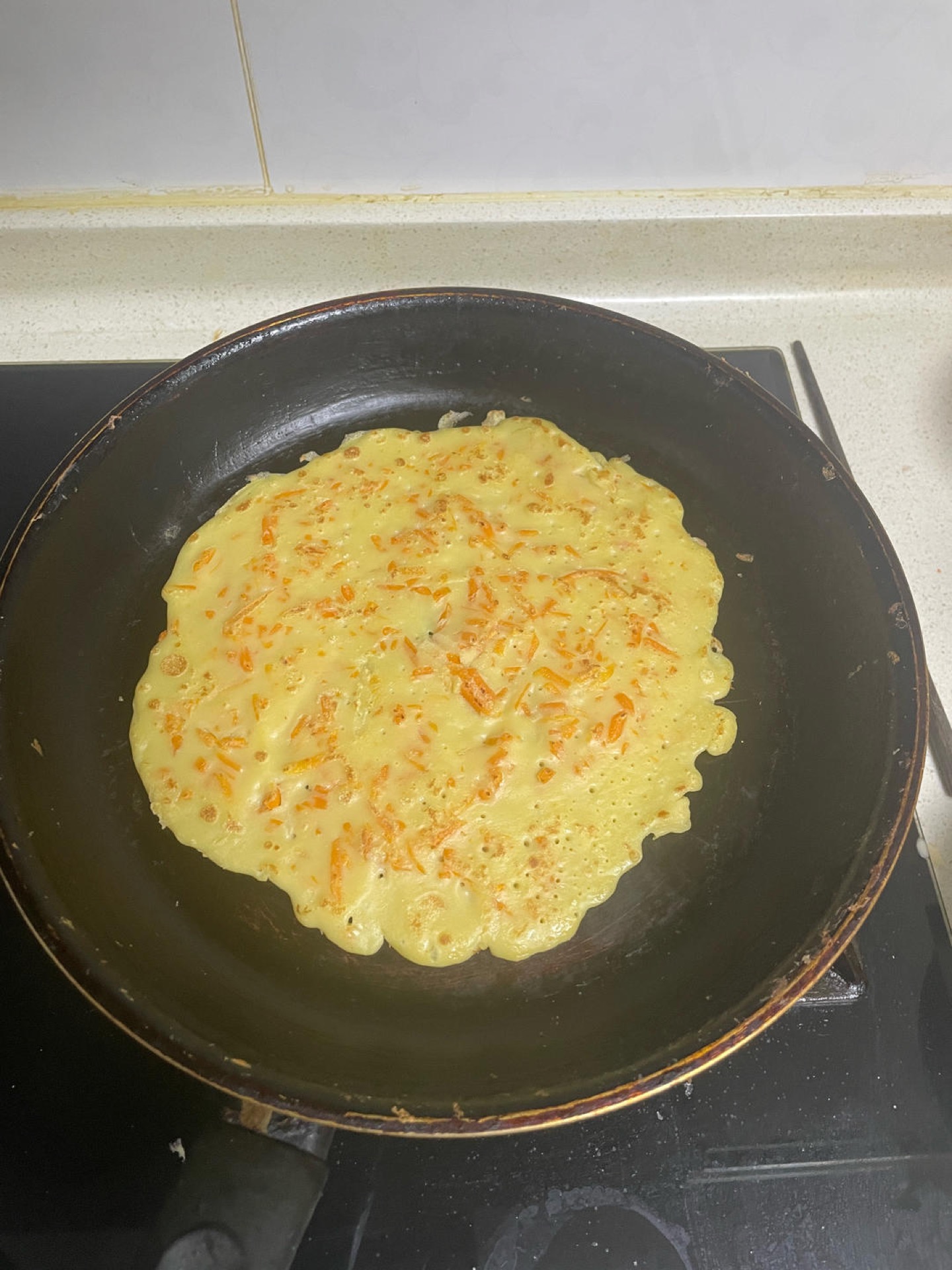
Step 9 — Cut and Serve
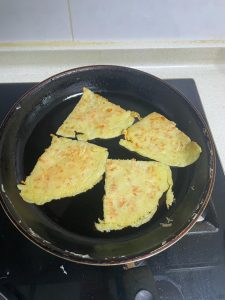
Slide the pancake onto a cutting board and cut it into small squares or strips that are easy for little hands to pick up, then repeat with the remaining batter — each pancake takes three to four minutes from start to finish.
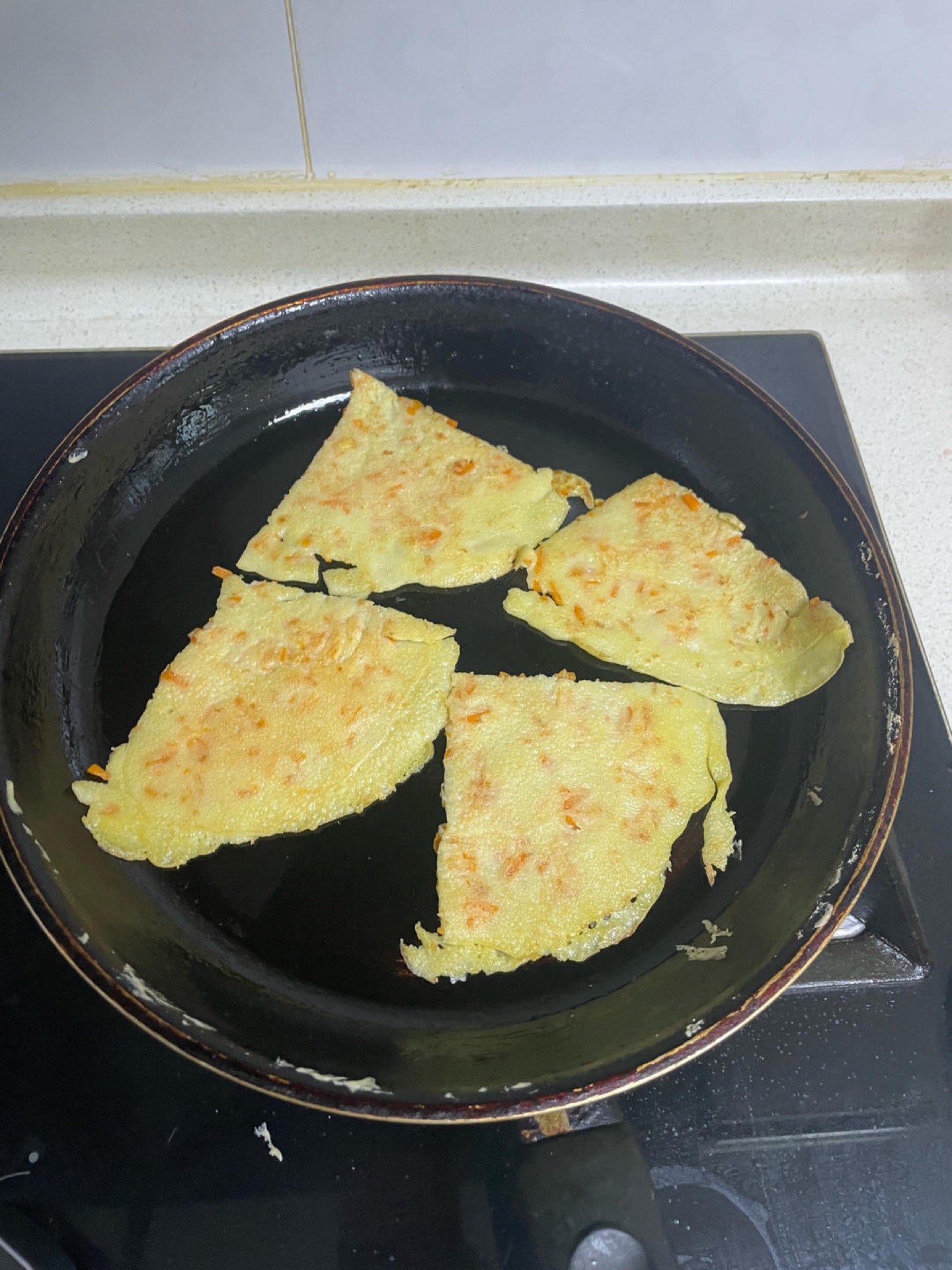
Common Mistakes When Making Egg Pancakes
1. The pan is too hot. This is the single most common problem. Over high heat the egg sets before the batter spreads, leaving you with a thick, uneven pancake with burnt edges and a raw center. Fix: preheat over low heat and wait a full two minutes. You should hear a soft sizzle when the batter hits the pan, not a loud hiss.
2. The batter is too thick. A thick batter does not spread, so you end up with something closer to a dense omelet than a thin pancake. Fix: add water one tablespoon at a time until the batter coats the back of a spoon thinly and drips off in a steady stream.
3. The carrot is grated too coarsely. Long strands create weak spots and the pancake tears when you flip it. Fix: grate on the fine side, then run a knife through the pile two or three times.
4. Too much flour. Extra flour seems like insurance, but it makes the pancake stiff, bready, and dry. Fix: trust the ratio. One-third cup for one egg is right; if the batter looks thin, it will still set.
5. Not enough oil, or too much. A dry pan makes the egg stick and tear. A pool of oil makes the pancake fry rather than set, giving it a greasy, bubbly surface. Fix: a thin film — about a teaspoon, wiped around the wok with a paper towel, or a two-second spray.
6. Flipping too early. If you slide the spatula under and the pancake resists, it is not ready. Fix: wait until the edges lift on their own and the surface looks matte and dry, about one minute. Then it will release cleanly.
7. Crowding the pan. Two pancakes in a small wok steam each other and never brown properly. Fix: cook one at a time. Each takes three to four minutes, so a full batch is done in under fifteen.
Variations
Scallion egg pancake. Skip the carrot and add two tablespoons of finely chopped scallion. This is the most common adult version and tastes like a softer, thinner scallion pancake.
Zucchini version. Grate half a small zucchini, salt it for ten minutes, then squeeze out as much water as you can in a clean towel. Use it in place of the carrot and reduce the added water by a tablespoon.
Extra-egg version. Use two eggs and cut the water to two tablespoons. The result is closer to a thin omelet — richer, more custardy, and excellent rolled around a filling.
Sesame version. Add a teaspoon of toasted sesame seeds and a few drops of toasted sesame oil to the batter. The flavor deepens considerably and the seeds add a pleasant texture.
Savory adult version. Add a quarter teaspoon of white pepper, a teaspoon of soy sauce, and a handful of chopped scallion. This is closer to the version served alongside congee in southern China. If you like the savory breakfast direction, these savory Chinese breakfast pancakes take the same idea in a milk-based direction.
Sweet version. Add a teaspoon of sugar to the batter and serve with a drizzle of condensed milk. Less traditional, but a reliable hit with kids who want something sweeter in the morning.
Frequently Asked Questions
Can I make the batter ahead of time? Yes — mix it up to 12 hours in advance, cover, and refrigerate. The flour will hydrate fully and the pancake will actually be slightly more tender. Stir well before cooking, since the flour settles.
Why did my pancake tear when I flipped it? Almost always one of three things: the carrot was grated too coarsely, the batter was too thick, or you flipped before the surface had set. Wait until the edges lift and the top looks matte.
Can I make this without a wok? Absolutely. A flat non-stick skillet works just as well and is actually easier to spread the batter in. The wok’s advantage is its sloped sides, which let you tilt and swirl the batter into a round.
Is this suitable for babies? Yes, with adjustments. Omit the salt entirely for babies under one year, and cut the pancake into narrow strips they can grip. Cook it fully — no soft, wet centers.
How do I keep the pancakes from sticking together on the plate? Stack them with a sheet of parchment or a light brush of oil between each one, or simply serve them as they come off the pan — they disappear fast enough that stacking rarely becomes a problem.
Can I double the recipe? Yes, and it scales cleanly. Use two eggs, two-thirds cup flour, and half a cup of water as a starting point, then adjust the water by texture.
How to Serve
Egg pancakes are a breakfast food first and foremost. Serve them alongside a bowl of warm soy milk, a bowl of rice congee, or just a cup of tea. They are also excellent rolled around a smear of hoisin or a scatter of pickled vegetables.
For a heartier meal, a plate of hot and sour shredded potatoes alongside makes a satisfying contrast — crisp and tangy against the soft, mild pancake. If you want to serve them as a side to a larger Chinese dinner, they work well next to a simple soup like fish bone tofu soup, or alongside spicy lamb spine stew for something much bolder.
For a protein-forward meal, roll the pancake around velveted chicken or a few slices of steamed pork egg rolls and eat it like a soft wrap.
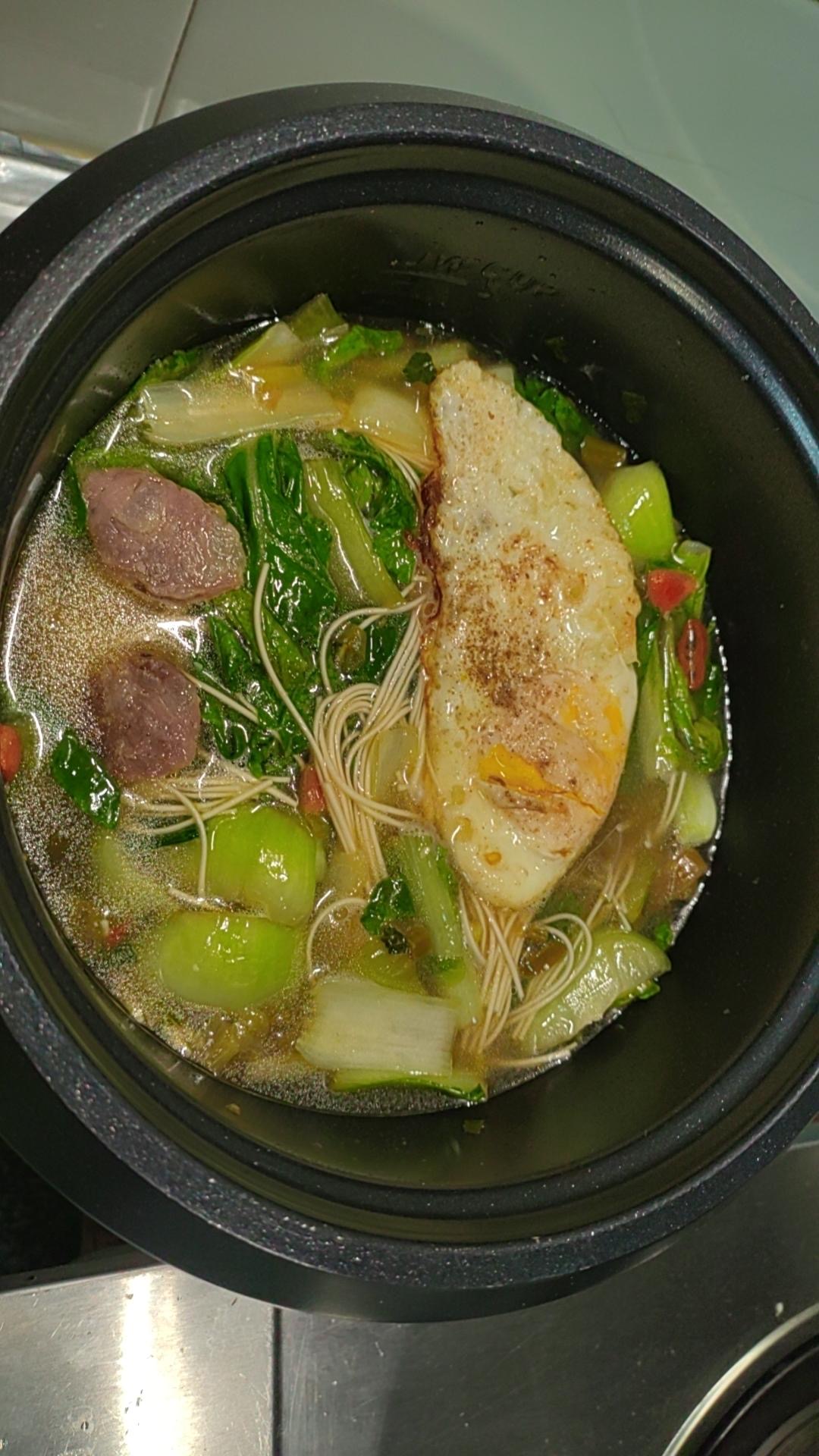
Serve it alongside Rice Cooker Sausage Veggie Noodles for a two-dish table.
Storage & Reheat
Cooked egg pancakes keep in the refrigerator for up to 3 days in an airtight container, with a sheet of parchment between each one to stop them sticking. They also freeze well: stack with parchment, wrap tightly, and freeze for up to 2 months.
To reheat, warm a dry skillet over low heat and heat each pancake for 30 to 45 seconds per side until pliable and steaming. The microwave works in a pinch — 20 seconds on a plate covered with a damp paper towel — but the texture comes out slightly rubbery. Do not reheat in a hot pan, or the egg will toughen.
Raw batter keeps in the refrigerator for up to 12 hours. Do not keep it longer than that, since the egg and flour mixture is a favorable environment for bacterial growth.
Allergen Notice
This recipe contains eggs and wheat (gluten). It is naturally free of dairy, nuts, soy, shellfish, and sesame unless you add the optional sesame seeds. If you are cooking for someone with a wheat allergy, a 1:1 gluten-free flour blend works, though the texture will be slightly more delicate. Always check the labels on any flour blend you use, as some contain milk powder or soy.
Nutrition Disclaimer
Nutrition information is calculated using an ingredient database and should be considered an estimate. In cases where multiple ingredient alternatives are given, the first listed is calculated for nutrition. Garnishes and optional ingredients are not included.
About the Author & Recipe Development
Lin is the cook and writer behind Woks of Love, where she has been documenting Chinese home cooking for over a decade — the everyday dishes, the regional specialties, and the small techniques that make the difference between a dish that works and one that does not. She grew up watching her mother and grandmother cook, and much of what she writes about comes from that kitchen rather than from a restaurant.
This recipe is the version she makes for her own children on weekday mornings. It has been tested repeatedly with different vegetables, different flours, and different pans, and the version here is the one that works most consistently — thin enough to fold, sturdy enough to flip, and mild enough that a picky four-year-old will eat it without negotiation.
If you liked this, steamed pork egg rolls is worth cooking next.
If you liked this, hot and sour shredded potatoes is worth cooking next.
Authoritative References
For safe internal temperatures when cooking egg dishes, see the USDA safe minimum internal temperature chart. For food storage and cooling guidance, the FDA Food Code is the standard reference. For the science of how egg proteins set and why gentle heat produces a more tender result, see The Food Lab.
Egg Pancake (鸡蛋薄饼): Soft Egg Pancakes with Veggies

Equipment
- Wok
- Cutting Board
- Box grater
- Slotted Spoon
- Whisk
- Non-stick skillet
Ingredients
For the Batter
- 1 large egg about 50 g, beaten
- 1/3 cup all-purpose flour 45 g, plus more as needed
- 1/4 cup carrot peeled and finely grated, about half a small carrot
- 1/3 cup water plus 1-2 tbsp as needed
- 1/4 tsp salt or to taste
- 1 pinch white pepper optional
For Cooking
- 1 tsp neutral oil for the wok, or use spray oil
Optional Add-Ins
- 2 tbsp scallion finely chopped
- 1 tbsp sesame seeds toasted
Instructions
- Peel the carrot and grate it on the fine side of a box grater, then run your knife through the shreds a few times so they are chopped fine and no long strands remain.

- Crack one egg into the bowl with the carrot and beat it in with a whisk or chopsticks until the yolk and white are completely combined.
- Add the flour and stir it into the egg mixture — it will look thick and pasty at this stage, which is exactly right.
- Pour in the water a little at a time, stirring as you go, until the batter falls off the whisk in a thin, smooth ribbon; if it gets too loose, add a spoonful more flour, and if it is too thick, add a splash more water.
- Stir the batter until it is completely smooth and no dry flour pockets or lumps remain, then let it rest for 10 minutes so the flour hydrates.
- Heat a wok or non-stick skillet over low heat, spray or brush in a thin film of oil, and pour in a small ladle of batter — you should hear only a soft sizzle, never a loud hiss.
- Immediately tilt the wok and use the back of the ladle to spread the batter outward into a thin, even round, working quickly before the egg sets.
- After about one minute the edges will lift and the surface will look dry and matte — slide a spatula under the pancake and flip it, then cook the second side for another 30 to 45 seconds.
- Slide the pancake onto a cutting board and cut it into small squares or strips that are easy for little hands to pick up, then repeat with the remaining batter — each pancake takes three to four minutes from start to finish.












Leave a Reply