Every Hunan grandmother I have ever watched cook owns the same secret: a jar of dark, salty, faintly sweet pickled vegetables that can rescue any meal in under ten minutes. The classic trick is the egg version, waipocai chao dan – pickled greens tumble-fried with softly scrambled eggs, chilies, and the green stalks of garlic scapes. My own first attempt failed because I treated the pickles like fresh vegetables: I added salt, and the whole plate turned into a salt lick. The dish needs almost nothing but the pickle itself.
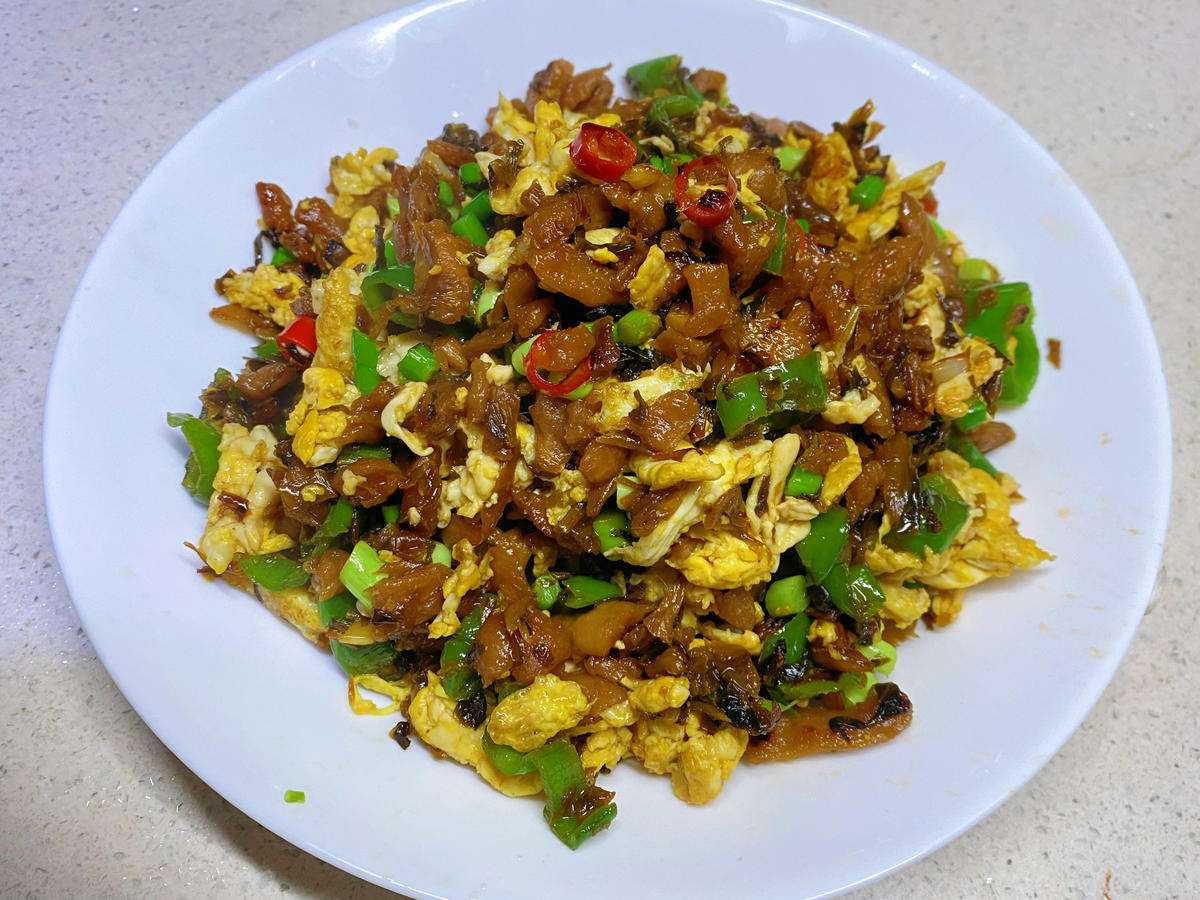
This is the version I now make whenever I need a meal that does not think too hard: four eggs, one bag of waipocai (grandma’s pickled greens), a handful of chilies, and about ten stalks of garlic scapes. The eggs are poured into hot oil whole and pushed into soft curds, then set aside. The same oil dry-fries the chilies until their skins blister, the pickles go in and release their fermented aroma, and everything comes back together over high heat with the garlic scapes folded in last, still crisp. It takes ten minutes from cold pan to table.
It is the kind of recipe that forgives almost everything – too much chili, too little garlic, a distracted minute at the stove – and it rewards every one of the three classic ways to eat it: over steamed rice, rolled into a pancake, or tangled into noodles.
What Is Waipocai Chao Dan (外婆菜炒蛋)?
Waipocai chao dan (外婆菜炒蛋) is a Hunan home staple: stir-fried pickled vegetables with eggs. The name waipocai literally means “grandma’s vegetables” – a rustic, homestyle pickle traditionally made by grandmothers from whatever the garden offered, most commonly mustard greens, radish, and sometimes long beans, salted, fermented, and often finished with dried chilies. It is sold everywhere in China as a ready-to-cook pouch, and its flavor is a punchy, savory-sweet-sour profile that acts as a built-in seasoning for anything it touches.
The technique is deliberately simple. Whole eggs are scrambled into soft curds and removed; the pickles and chilies are dry-fried in the leftover oil until fragrant; the eggs return for a final blast of high heat, with chopped garlic scapes added at the very end so they stay bright and crisp. It is a side dish, a topping, and a complete meal all at once. Unlike restaurant versions that might add meat or heavy sauce, the home version leans on the pickle itself for seasoning – which is why the cardinal rule is never to add salt.
If you enjoy cooking with jarred Chinese pickles, my olive vegetable fried rice uses the same pantry-shortcut philosophy with gan lan cai, the Cantonese pickled olive vegetable.
1Olive Vegetable Fried Rice with Green Beans & PorkA savory, umami-packed fried rice recipe featuring Chinese olive vegetable, crisp green beans, and pork belly. A masterclass in texture and flavor from Chef Lin’s kitchen.Check out this recipe

Why This Recipe Works
- The pickle is the seasoning. Waipocai arrives salted, fermented, and lightly sweetened, so it needs no salt, no sugar, and barely any sauce. One ingredient does the work of three.
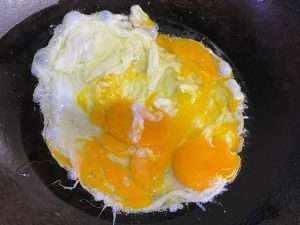
- Soft egg curds, not scrambled dust. Whole eggs go into hot oil, are pushed into large soft curds while still slightly runny, and are set aside before they dry out. They finish cooking in the final high-heat toss, staying tender.
- Two-stage oil. The eggs fry in the oil first, leaving behind egg-scented fat; the chilies and pickles then dry-fry in that same oil, layering aromas instead of starting over.
- Blistered chili skins. Dry-frying the chilies until their skins blister – the author’s instruction is explicit – releases a toasted, smoky depth that raw chili never gives.
- Garlic scapes last. Adding the green stalks at the end, off the heat, keeps their fresh crunch and mild garlic bite instead of wilting them into mush.
Equipment Needed
- A wok or large skillet (12-inch / 30 cm)
- A spatula or wok ladle for pushing the eggs
- A cutting board and knife
- A small bowl for the cooked eggs
Ingredients
- 4 large eggs (do not beat them)
- 1 bag (about 8.8 oz / 250 g) waipocai (grandma’s pickled greens)
- 5-6 dried or fresh bird’s eye chilies, chopped (use mild green chilies or baby bok choy if you avoid heat)
- About 10 stalks garlic scapes, cut into small pieces
- 2 tbsp (30 ml) cooking oil
- 1 tsp sugar (optional; only if your pickles are not already sweet)
- A splash of light soy sauce (optional; only if your pickles are mild)
Ingredient Notes
Waipocai (外婆菜). This is the whole point of the dish. Look for “waipocai” or “外婆菜” in the refrigerated or shelf-stable pickle section of an Asian market, usually in a sealed pouch or jar. It is a Hunan-style fermented mix – typically mustard greens and radish – that is salty, slightly sweet, and a little sour. If you cannot find it, the closest substitute is a finely chopped Chinese preserved mustard green (such as the kind used in zha cai), rinsed and squeezed dry, then seasoned with a pinch of sugar and a drop of sesame oil.
Eggs. Use large eggs and do not beat them in a bowl. The recipe’s quirk is deliberate: pouring whole eggs straight into the hot oil and breaking them up in the pan gives irregular, fluffy curds with tender whites – different from the uniform scramble you get from a pre-beaten bowl.
Chilies. The author’s rule: if you eat heat, use bird’s eye chilies (xiaomila). If you do not, swap in chopped green chilies, or even small pieces of baby bok choy, to keep the color and crunch without the fire. Dried chilies work too, and they blister beautifully in the oil.
Garlic scapes (蒜苔). These are the green flower stalks of garlic, sold in bundles at Asian markets. They have a milder, fresher garlic taste than the bulbs and a satisfying crunch – the same ingredient my pork and garlic scape stir fry showcases. If they are out of season, a handful of chopped scallion greens or snap peas makes an acceptable stand-in, added at the same last-minute stage.
No salt, no extra sauce. The pickle carries the seasoning. If your waipocai is on the mild side, a splash of light soy sauce (weidamei, in the original) can be added at the pickle stage – but taste first. Most commercial pouches need nothing.
Prep & Mise en Place
This dish comes together in minutes, so have everything diced before the wok heats. Chop the chilies into small rings or pieces, cut the garlic scapes into 1/2-inch (1 cm) lengths, and open the waipocai pouch. If your pickles look wet, give them a quick squeeze to remove excess brine – too much liquid will steam the dish instead of dry-frying it. Crack the four eggs into a bowl, but do not whisk them; you want them intact for the pan. Have the sugar and optional soy sauce measured and ready. Set the wok over high heat and add the oil, letting it shimmer before the first ingredient goes in.
Cooking Process
Step 1 – Dice Everything, Leave the Eggs Whole
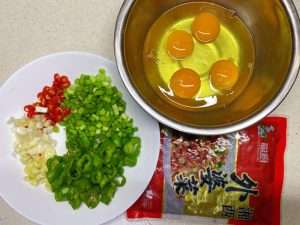
Chop the chilies (bird’s eye for heat, green chilies or baby bok choy for a mild version) and cut the garlic scapes into small pieces. Open the bag of waipocai and give the pickles a squeeze if they are wet. Do not beat the eggs – keep all four whole in a bowl, shells on until the pan is ready.
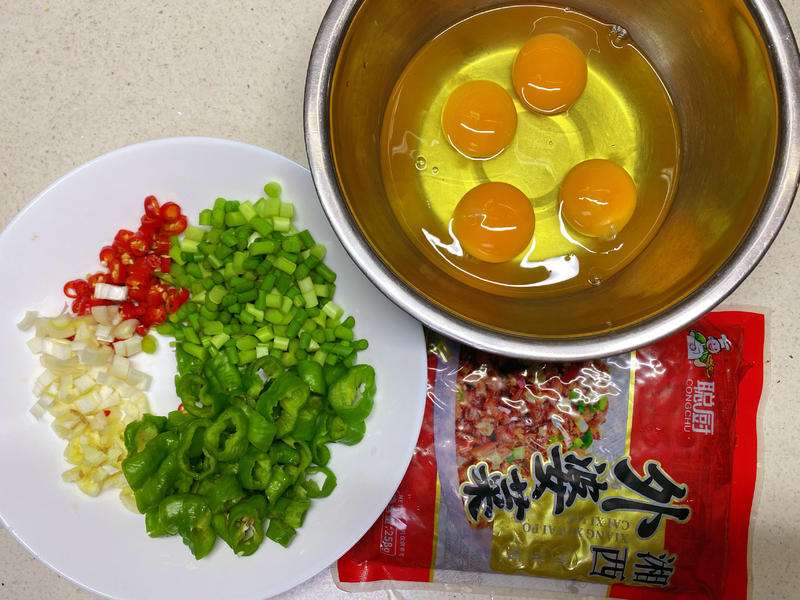
Step 2 – Fry the Whole Eggs Into Soft Curds
Heat the oil in a wok over high heat until it shimmers. Crack in all four eggs and let them set for a few seconds, then push them around with the spatula, breaking them into large, soft curds. When they are just set but still slightly glossy – about 30-40 seconds – scoop them out and set them aside. Do not let them brown or dry out here; they will finish cooking later.
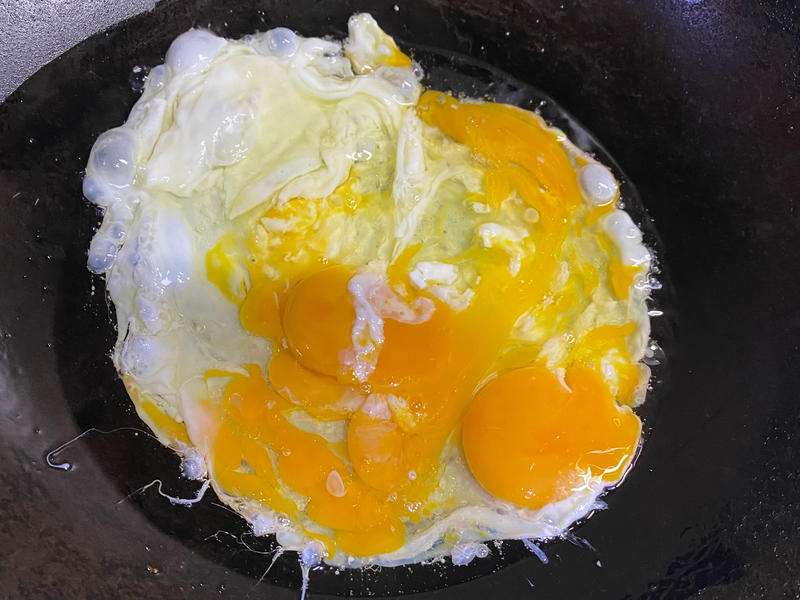
Removing the eggs while they are still slightly soft is a deliberate temperature play. The curds carry residual heat and will keep cooking off the stove, so taking them out “undercooked” means they arrive at the table perfectly set. Overcooking the eggs in this first pass – or beating them into a uniform scramble – is the most common way to end up with dry, rubbery patches in the final dish.
Step 3 – Dry-Fry the Chilies and Vegetables in the Egg Oil
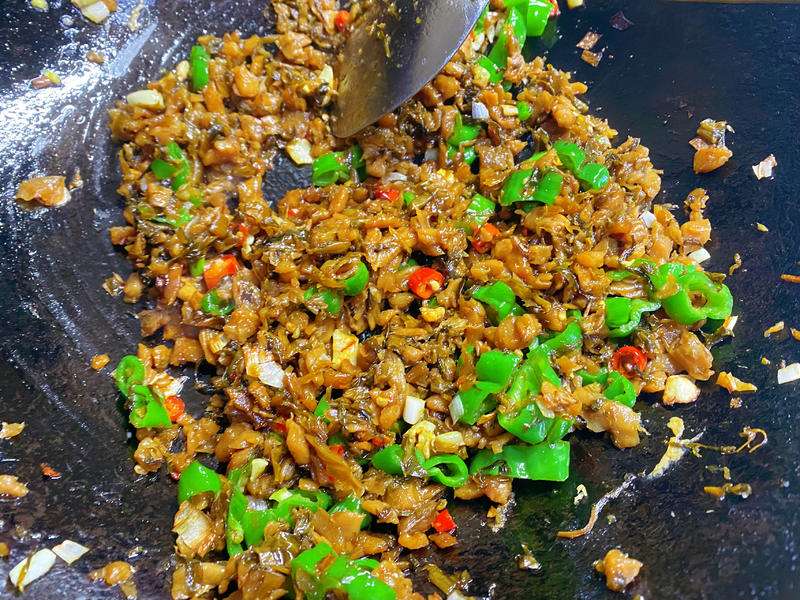
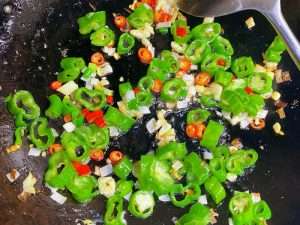
Using the same oil left in the wok, add the chopped chilies and any other diced vegetables (everything except the garlic scapes). Dry-fry over high heat, letting the chili skins blister and char at the edges – this takes 1-2 minutes. If your pickles are not already sweet, stir in about 1 teaspoon of sugar here; it rounds out the salt and helps the blistered edges caramelize.
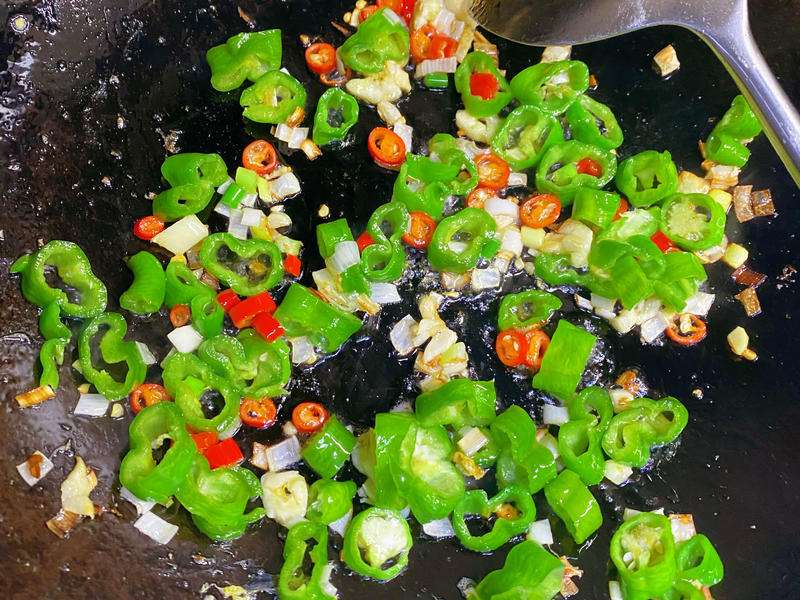
Dry-frying chilies until their skins blister is a form of controlled browning. The thin pepper skins dehydrate and darken, and their sugars and volatile compounds undergo Maillard reactions that produce a toasted, smoky depth. This is why the recipe insists on this step rather than just tossing the chilies in at the end – the blistering is where most of the flavor is born.
Step 4 – Add the Pickles, Then the Eggs, Then a Splash of Water
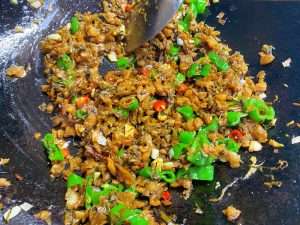
Add the waipocai and stir-fry until it releases its fermented aroma, about 1 minute. If your pickles are mild, add a small splash of light soy sauce (weidamei in the original recipe); if they are salty, skip it. Return the eggs to the wok and turn the heat to high, tossing everything together. If the pan looks dry, flick a few drops of water along the wok edge – the burst of steam lifts the flavors without making the dish soggy.
Step 5 – Garlic Scapes Last, Off the Heat, and Serve
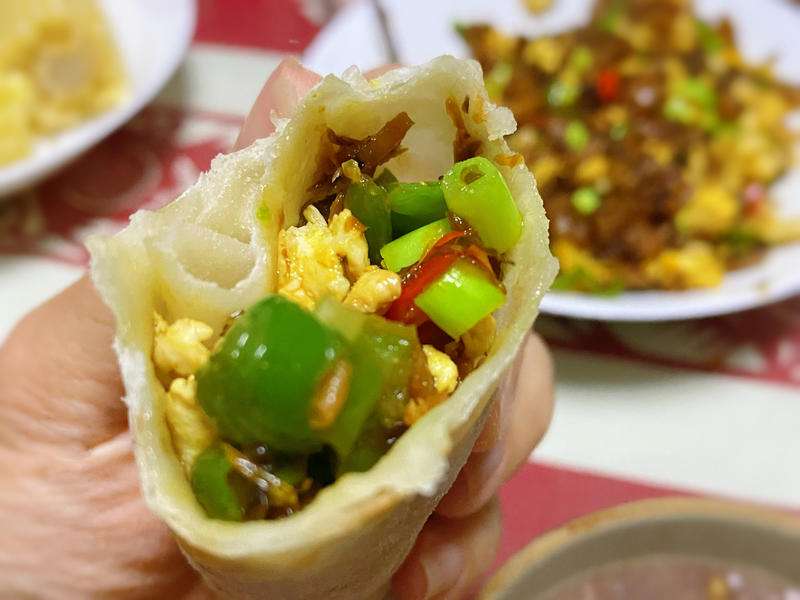
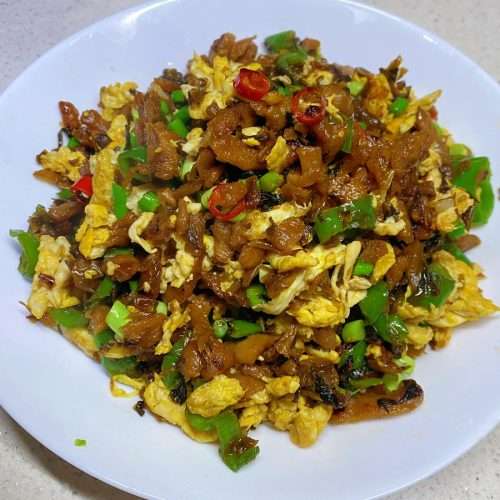
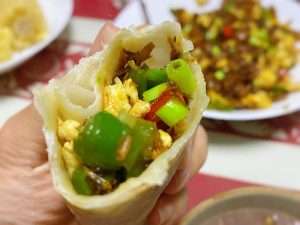
Add the chopped garlic scapes, turn off the heat, and toss until they are just coated and bright green – they should stay crisp. Pile the finished dish into a bowl and serve immediately. It is exceptional over steamed rice, rolled into a pancake, or stirred into noodles.
Common Mistakes When Making Waipocai Chao Dan
1. Adding salt. The pickle is already heavily salted, and any extra salt concentrates as the dish reduces, making the whole plate inedible. Fix: taste a piece of the pickle first. If it is salty – and it almost always is – season with nothing. If it is unusually mild, a splash of soy sauce is the ceiling.
2. Overcooking the eggs in the first pass. If the curds are fully cooked before they leave the pan, they turn rubbery in the final toss. Fix: pull them out while still slightly glossy and let them finish in the last 30 seconds over high heat.
3. Wok too crowded or too wet. Dumping in watery pickles drops the pan temperature and steams the chilies instead of blistering them. Fix: squeeze excess brine from the waipocai and keep the heat high, giving the pan room to recover between additions.
4. Wilted garlic scapes. Adding the scapes too early turns them soft and gray. Fix: add them in the final seconds, off the heat, and toss just until coated.
5. Skipping the blister. If the chilies are only warmed, you lose the smoky depth that makes the dish. Fix: let them sit in the oil without stirring for 10-15 seconds at a time until the skins visibly char at the edges.
6. A dry, sticky pan. The dish reduces quickly and can seize at the end. Fix: the original recipe’s trick – flick a little water along the wok edge when it looks dry. The flash of steam loosens the glaze without diluting the flavor.
Variations
Mild version. Swap the bird’s eye chilies for chopped green chilies or small pieces of baby bok choy, keeping the color and crunch without the heat. This is the author’s explicit fallback for non-spice-eaters.
With pork. For a heartier bowl, render a few slices of pork belly in the wok before the eggs, then follow the recipe – the pork fat replaces some of the oil. This echoes the theme of my stir fried pork with chili and eggs.
Pickle swaps. Any assertive Chinese pickle works: finely chopped zha cai (Sichuan mustard stem), preserved mustard greens, or even the pickled long beans from my pickled long bean fried rice. Rinse and squeeze each one before cooking, as salt levels vary wildly.
Scape substitutes. When garlic scapes are out of season, use scallion greens or thin strips of snap peas, added at the same last-minute stage for the same fresh crunch.
Noodle or pancake style. Spoon the finished dish over cold noodles or use it as a filling for thin pancakes – the author’s own serving suggestions, and both are excellent.
Frequently Asked Questions
Where do I buy waipocai? Most Asian grocery stores stock it in the pickle section, sold as “waipocai,” “外婆菜,” or “grandma’s pickled vegetables” in a pouch or jar. Online Asian grocers carry it too. If you cannot find it, use finely chopped preserved mustard greens or zha cai, rinsed and squeezed dry.
Can I use beaten eggs instead of whole? Yes, but the texture changes. Whole eggs poured into the pan give irregular, fluffy curds with some tender white pieces; pre-beaten eggs give a more uniform scramble that cooks faster and dries out more easily. Either works – just pull them early either way.
Is this dish spicy? Only as spicy as you make it. Bird’s eye chilies bring serious heat, but the recipe works beautifully with mild green chilies or bok choy, which the original author explicitly suggests for people who avoid spice.
Can I make it ahead? It is best fresh – the eggs soften and the scapes wilt as it sits. Leftovers keep refrigerated for a day and reheat fine in a hot pan, but expect a softer texture. If you plan to reheat, add the garlic scapes only to the portion you are eating.
Is this authentic Hunan waipocai chao dan? Yes – it follows a home-style Hunan recipe closely, including the two quirks that make it work: whole eggs in the pan, and garlic scapes added last off the heat. The only flexibility is the chili heat, which the original author explicitly leaves to the cook.
How to Serve
Waipocai chao dan is a topping first and a side dish second. Serve it over freshly steamed rice for the classic one-bowl dinner, or spoon it into thin pancakes with a smear of hoisin – my spring pancakes with spinach and eggs make a great wrapper. It also shines tangled into noodles, in the spirit of the pickled mustard green noodle soup that proves how well fermented greens and wheat noodles get along. For a breakfast spread, pair it with yangzhou fried rice and a pot of tea. If you are in the mood for more egg-forward classics, the silky technique in my silky scrambled eggs with shrimp is worth a look, and for another pickle-driven pork dish, my Sichuan pickled greens with pork ribs pairs beautifully with this egg version at the same table.
Storage & Reheat
Waipocai chao dan keeps refrigerated in an airtight container for up to 2 days. Reheat in a hot wok or skillet with a tiny splash of water, tossing for 1-2 minutes until steaming through. The eggs will firm up on reheating, which is normal. Reheated egg dishes should reach an internal temperature of at least 165°F (74°C) to be safe, per USDA food safety guidelines. Freezing is not recommended – both the eggs and the garlic scapes break down badly in the freezer.
Allergen Notice
This recipe contains eggs. It is naturally gluten-free if your waipocai and optional soy sauce are gluten-free; standard soy sauce contains wheat, so check the label or use a gluten-free tamari. Garlic scapes are a garlic product and may be a trigger for those with garlic sensitivity. Waipocai is a fermented product – if you are sodium-restricted, rinse the pickles before cooking to remove excess salt.
Nutrition Disclaimer
Nutrition information is calculated using an ingredient database and should be considered an estimate. In cases where multiple ingredient alternatives are given, the first listed is calculated for nutrition. Garnishes and optional ingredients are not included.
About the Author & Recipe Development
I am Lin, a Chinese chef and food writer who grew up around Hunan-style home cooking. The waipocai chao dan I make today is a slightly adapted version of a recipe a friend’s grandmother taught me over a kitchen counter in Changsha – she insisted the eggs go in whole and the scapes go in last, and she was right about both. I have tested this write-up with both bird’s eye chilies and the mild green-chili version, and with garlic scapes swapped for scallions, so the notes above reflect what actually happens on the stove, not what a recipe card hopes will happen.
Authoritative References
For egg-handling and reheating safety, see the USDA Safe Minimum Internal Temperature Chart. For the science behind dry-frying chilies and the Maillard reaction, this overview of the Maillard reaction is a useful primer.
Waipocai Chao Dan: Grandma’s Pickled Greens with Eggs in 10 Mins

Equipment
- Wok or large skillet
Ingredients
For the Waipocai Chao Dan
- 4 large eggs, whole (not beaten)
- 1 bag waipocai (grandma’s pickled greens), about 8.8 oz (250 g) squeeze out excess brine if wet
- 5-6 dried or fresh bird’s eye chilies, chopped or mild green chilies / baby bok choy for a no-heat version
- 10 stalks garlic scapes, cut into small pieces about 1 cup
- 2 tbsp cooking oil
- 1 tsp sugar optional; only if pickles are not already sweet
- 1 splash light soy sauce optional; only if pickles are mild
Instructions
- Chop the chilies and garlic scapes, and squeeze excess brine from the waipocai. Keep the eggs whole in a bowl – do not beat them.

- Heat the oil over high heat, crack in the eggs, and push them into large soft curds. Remove them while still slightly glossy and set aside.
- In the same oil, dry-fry the chilies and diced vegetables (not the garlic scapes) until the chili skins blister, 1-2 minutes. Add sugar only if needed.
- Add the waipocai and stir-fry until fragrant, about 1 minute. Add a splash of soy sauce only if the pickles are mild. Return the eggs, turn heat to high, and toss. Flick a little water along the wok edge if the pan looks dry.
- Add the garlic scapes, turn off the heat, and toss just until bright and crisp. Serve immediately over rice, in pancakes, or over noodles.












Leave a Reply