Every autumn when the air turns crisp, my father would pull out the widest wok we owned and announce that tonight we were having men mian. Not a soup, not a stir-fry, but a whole pot of noodles that had never touched boiling water, cooked entirely by steam and rendered pork fat. The first time I tried to copy it in my own kitchen, I layered the noodles straight onto a hot dry pan, slammed on the lid, and walked away. Twenty minutes later I was scraping a welded sheet of carbonized dough off the bottom. The dish is forgiving; the technique is not.
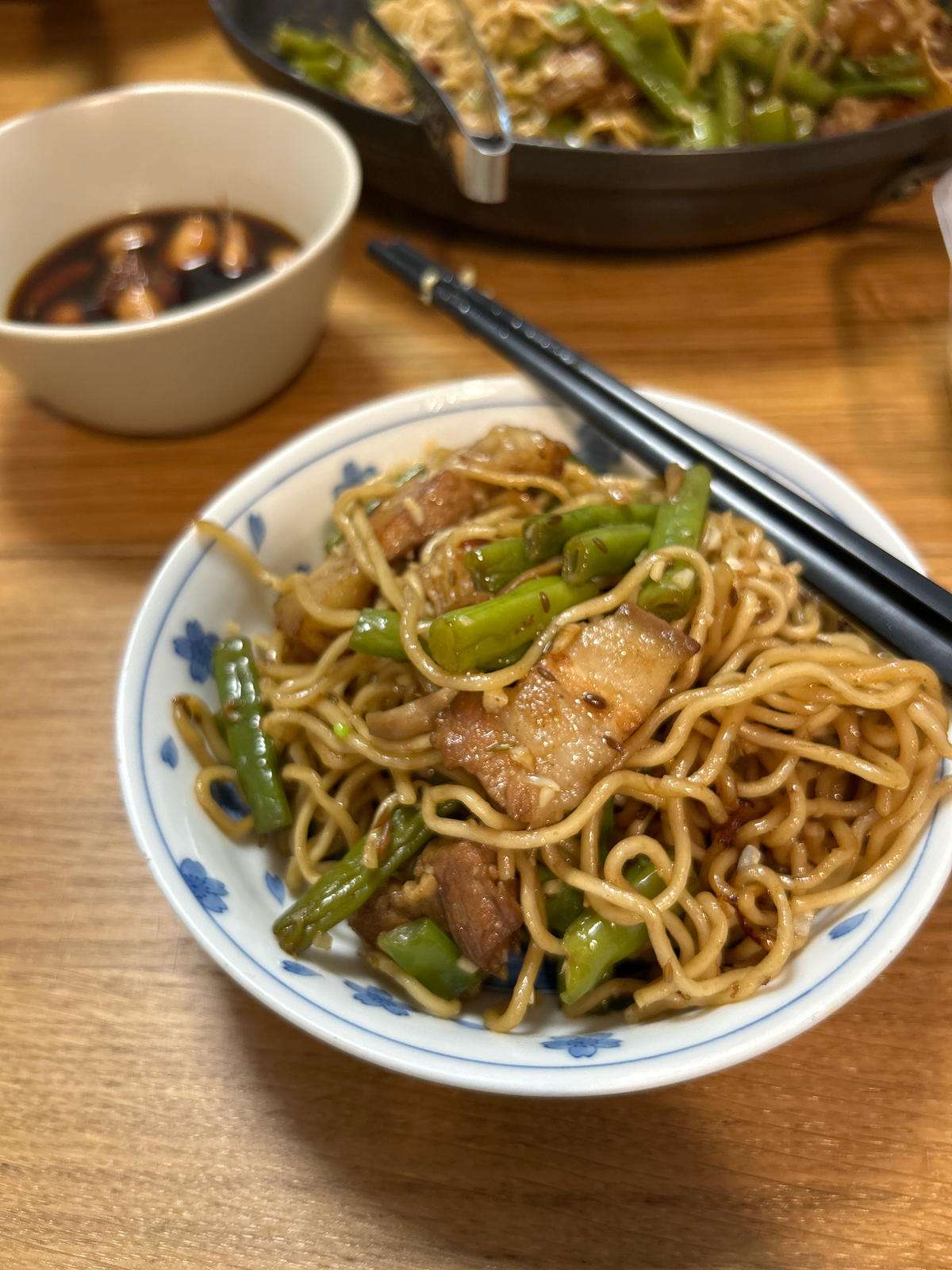
The trick that changed everything is hiding in plain sight in every Henan home kitchen: you never let the noodles touch the liquid, and you never add a drop of oil. The pork belly is laid in the cold wok and slowly dry-rendered until it releases its own fat, and that golden pork oil becomes the only cooking medium you will use all night. The vegetables – a full pound and a half of green beans – build a steamy raft that holds the fresh noodles above the sauce, so they cook soft and springy instead of boiling into paste. It sounds like algebra, but it works out to one wok, about twenty minutes, and zero added fat.
This is the version I now make weekly, and the exact one my father taught me: 500 grams of pork belly, 500 grams of fresh noodles, and 750 grams of green beans, seasoned with cumin, garlic, and a splash of soy sauce poured along the hot wok edge. If you can slice pork and snap beans, you can make this on a Tuesday night.
What Is Henan Men Mian (Braised Noodles)?
Henan men mian (河南焖面) is the Central Plains province’s answer to a one-dish family meal: raw fresh noodles are laid on top of partially cooked pork and vegetables, the pot is covered, and the noodles are cooked by the steam rising from the sauce below. The Chinese character men (焖) means to cook covered over gentle heat, and that single verb defines the whole method. It sits between two better-known noodle dishes – it is not the oil-bathed toss of chow mein, nor the broth-immersed slurp of noodle soup. The noodles absorb flavor from the steam and from a final toss through the sauce, which keeps them tender but never soggy.
In restaurants you will usually find men mian with the noodles boiled separately and stirred in at the end – it is faster for volume cooking and survives holding under a heat lamp. At home, the noodles are never boiled at all. The home method takes a little longer and demands a covered pot, but the texture difference is unmistakable: the noodles stay slightly chewy with a concentrated, almost sticky coating of pork fat and soy. The same logic powers my braised green beans and noodles with pork, and if you already cook the closely related braised green beans and noodles version, you will recognize the family resemblance immediately.
If you love this steam-cooked noodle technique, my Henan steamed noodles recipe shows the older sister version of the same dish, where the noodles are pre-steamed before the braise.
1Henan Steamed Noodles with Pork & Green Beans (河南蒸面条)A classic Northern Chinese dish where fresh noodles are steamed twice, first to cook, and a second time to infuse them with a rich, savory pork belly and green bean sauce.Check out this recipe
Why This Recipe Works
- Cold-wok dry rendering. Sliced pork belly is spread in a cold pan and heated slowly, so the fat melts out before the surface browns. You get deep pork flavor and enough fat to coat everything – with no oil added to the pan.
- Vegetables as a steam raft. A large pile of green beans and mushrooms raises the noodles clear of the liquid. The sauce simmers below, the noodles steam above, and nothing boils.
- Fresh noodles, no boiling. Uncooked wheat noodles absorb the concentrated pork-and-soy flavor directly, giving a tighter, springier bite than pre-boiled noodles ever do.
- Layered garlic. Half the garlic is fried to golden in the pork fat for a mellow backbone, and the second half is added in the last seconds for a sharp, raw finish. One head of garlic does the work of two.
- A measured pour of water. The water goes in along the wok wall and stays about 1 cm below the noodles. Just enough steam to cook, never enough to drown.
Equipment Needed
- A large wok or deep sauté pan with a tight-fitting lid (12-inch / 30 cm or wider)
- A long-handled spatula or wok ladle
- Long chopsticks or tongs for lifting and tossing the noodles
- A kitchen timer (the 8-minute mark matters)
- A cutting board and a sharp knife
Ingredients
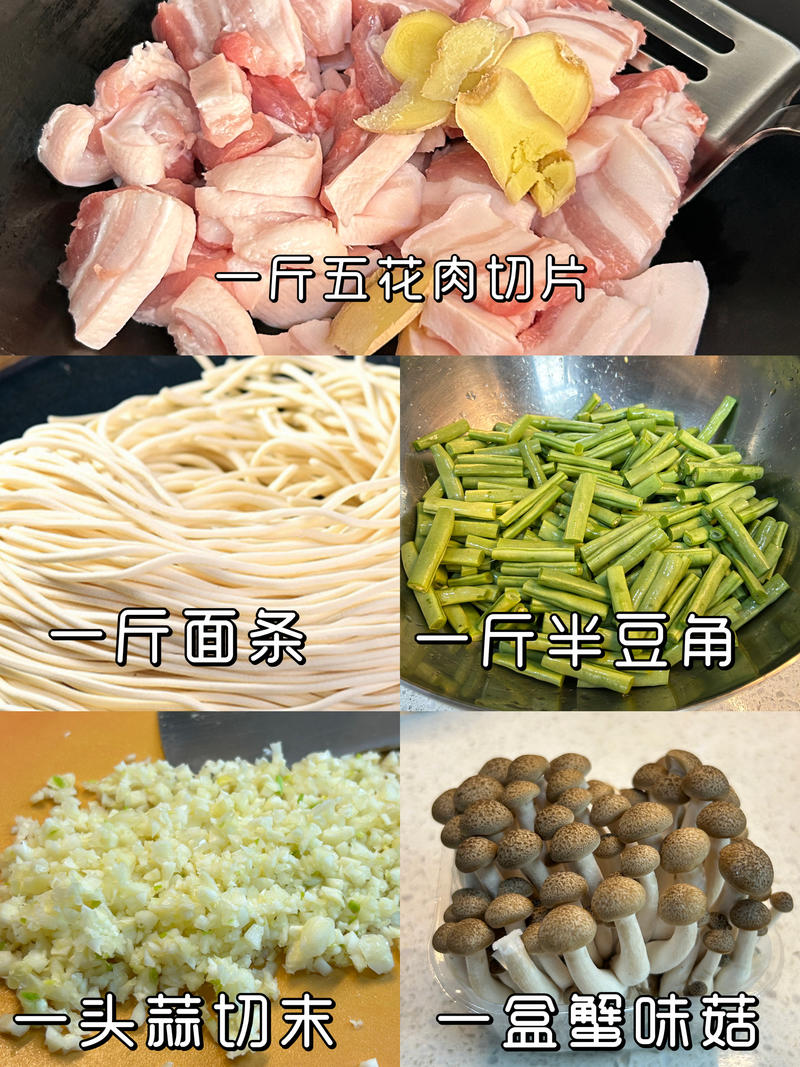
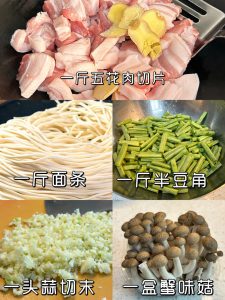
- 1.1 lb (500 g) pork belly, sliced about 1/4 inch (6 mm) thick
- 1.65 lb (750 g) green beans, trimmed and snapped into 2-inch (5 cm) lengths
- 1.1 lb (500 g) fresh wheat noodles (thick, thin, egg, or alkaline noodles all work)
- 1 tsp cumin seeds (optional; or 1 tsp five-spice powder)
- 1 whole head garlic, peeled and minced, divided in half
- 1 box (5 oz / 150 g) beech mushrooms (shimeji), or 2 cups bean sprouts
- 5 slices fresh ginger
- 2 tsp (10 g) sugar (optional; brightens the sauce without tasting sweet)
- 1/3 cup (70 ml) light soy sauce
- 1 tsp toasted sesame oil (optional, for the final burst of aroma)
Ingredient Notes
Pork belly. This recipe relies on the fat in the belly, so do not swap in lean loin. Slicing it 1/4-inch thick (rather than dicing) means the fat renders quickly and the slices stay tender. If you cannot find belly, a well-marbled shoulder works in a pinch but you may need to add a tablespoon of oil at the start.
Fresh noodles. The Chinese term shui mian tiao (水面条) means uncooked, fresh wheat noodles from the refrigerated section of an Asian market. The author’s rule is relaxed: thick, thin, wide, egg, or alkaline noodles are all fine. Dried noodles will not work as-is; if that is all you have, boil them to just under al dente, drain, and toss with a little oil before layering.
Green beans. Use the standard Chinese long beans or regular green beans. The large volume is not a mistake – they shrink dramatically as they steam and become the sweet, soft base of the whole dish. If you love this pairing, my braised green beans with pork belly shows the vegetable holding its own as the star.
Beech mushrooms vs. bean sprouts. The original recipe uses shimeji mushrooms for extra umami and texture, and notes that the traditional Central Plains version uses about 2 cups (250 g) of bean sprouts instead. Both give the dish a contrasting bite; use whichever your market has.
Light soy sauce. The 70 ml of light soy sauce carries the entire seasoning – the author is explicit that you do not add salt anywhere else. If you like a deeper color, a splash of dark soy sauce is welcome, but it is not required.
Prep & Mise en Place
Everything must be ready before the wok heats up, because once the pork starts rendering you will not have a free hand. Slice the pork belly into 1/4-inch (6 mm) pieces, snap the green beans into 2-inch (5 cm) lengths, peel and mince the whole head of garlic, and split the garlic into two equal piles. Slice five pieces of ginger and rinse the mushrooms, letting them drain well – wet mushrooms will lower the pan temperature. Measure the soy sauce into a small bowl so you can pour it all at once along the wok edge, and set out the cumin, sugar, and sesame oil. If you are using a gas burner, have the lid within reach; the moment the noodles go in, the pot gets covered.
Cooking Process
Step 1 – Prep the Ingredients
Lay out the sliced pork belly, 5-6 slices of ginger, the snapped green beans, the minced garlic (divided into two piles), and the rinsed mushrooms. Keep the sugar (about 10 g) and soy sauce (about 70 ml) within arm’s reach of the stove. If you prefer a darker finish, have a splash of dark soy sauce ready as well.
Step 2 – Cold Wok, Pork First
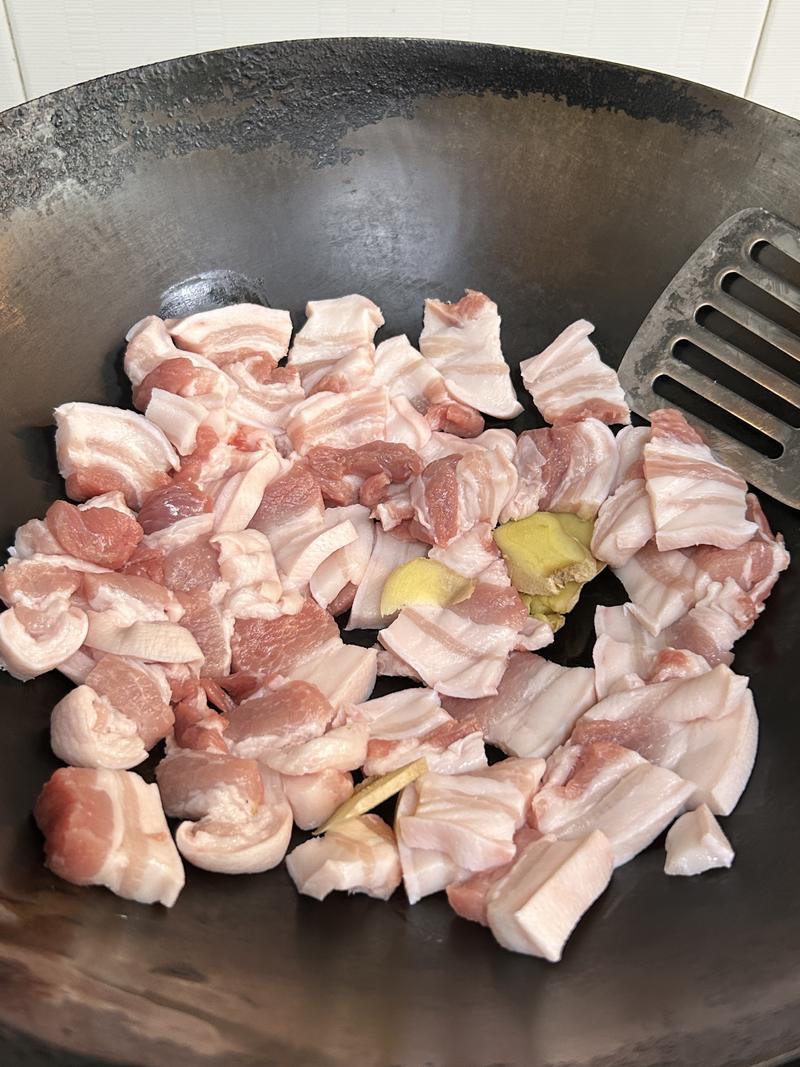
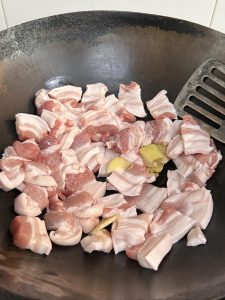
Do not preheat the pan. Lay the pork belly slices in a single even layer across the cold wok, then turn the burner to high. Starting cold lets the fat melt gradually instead of searing the surface shut.
Step 3 – Render Without Touching
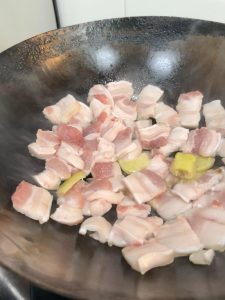
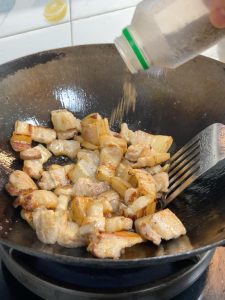
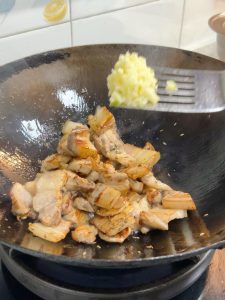
Leave the pork alone for the first 2 minutes. You will hear it start to pop and sizzle as the fat melts, and the slices will release from the pan on their own. Only then start stirring, keeping the heat high, and cook until both sides are browned and a good pool of clear pork oil sits in the wok. This dry-rendering step is what gives the whole dish its richness.
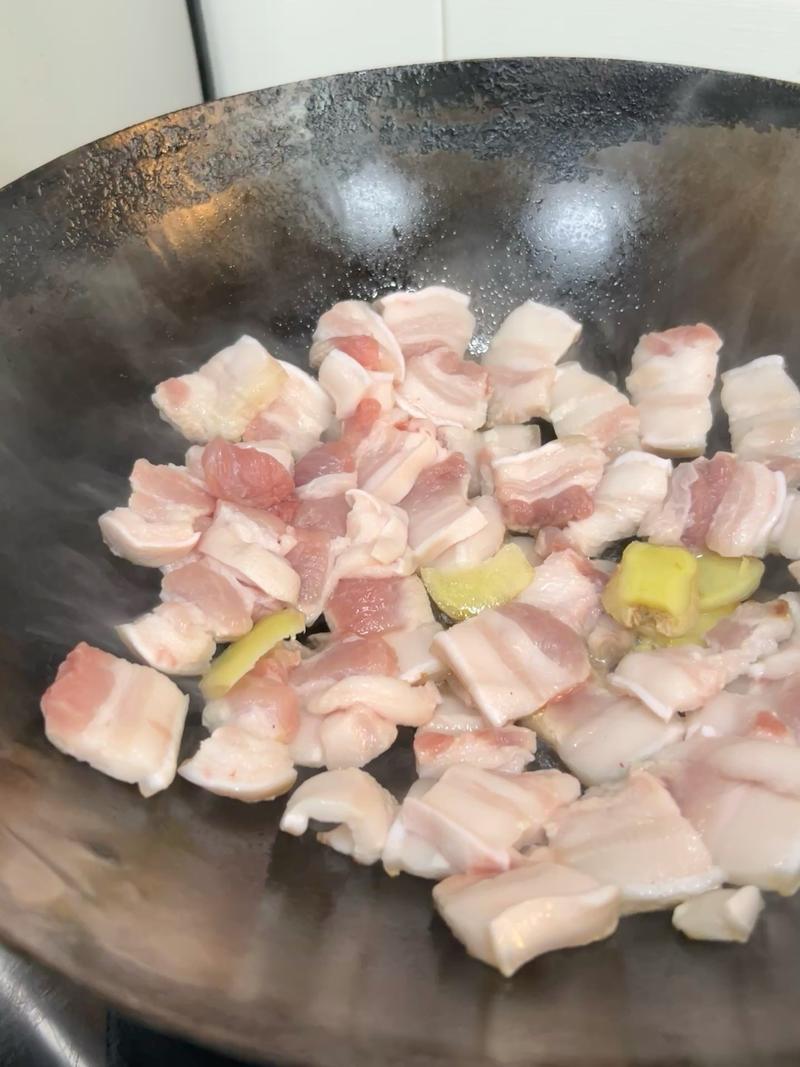
The patience in step 3 is the difference between silky noodles and a sticky mess. When the pan is cold, the fat cells in the belly melt slowly and the surface proteins brown gradually, building the complex toasted aroma of the Maillard reaction instead of a gray, steamed exterior. Stirring too early tears the raw slices and releases moisture that steams the meat instead of frying it.
Step 4 – Bloom the Cumin
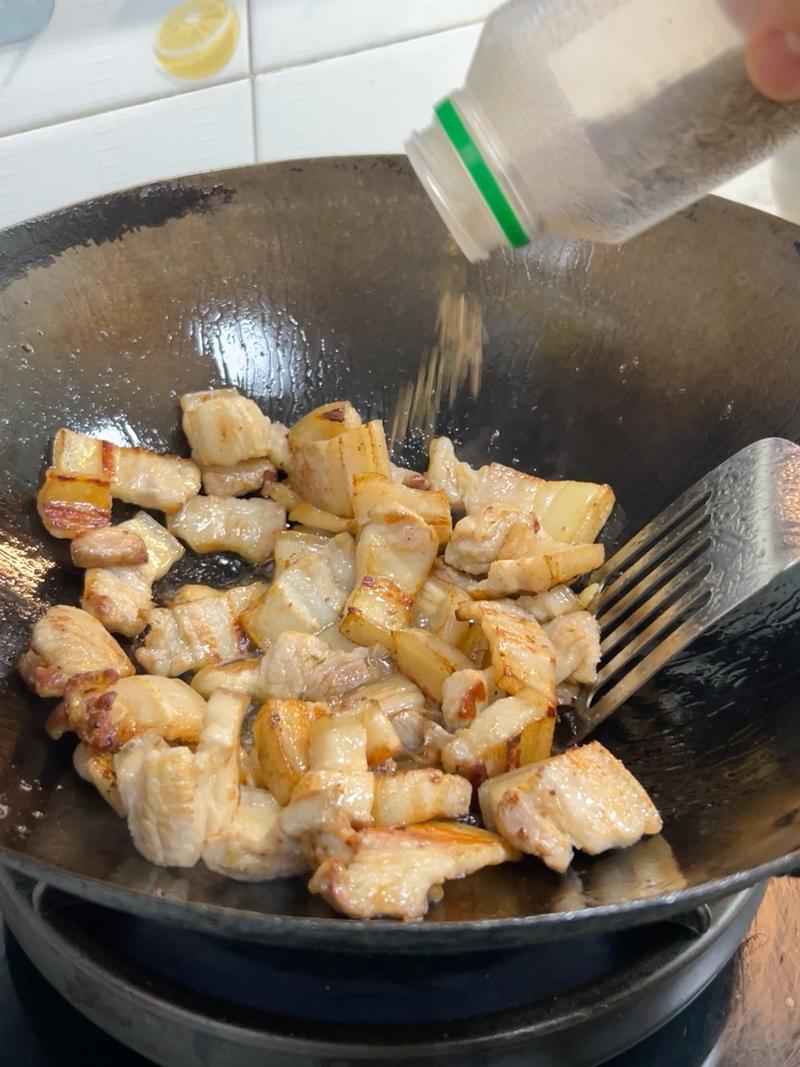
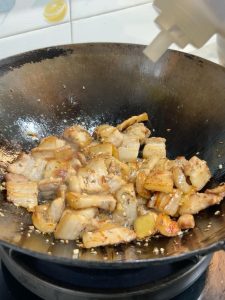
Add a small handful (about 1 tsp) of cumin seeds and stir them through the pork oil for about 30 seconds until they smell toasty. This step is optional – the author notes you can use a spoon of five-spice powder instead, or skip it entirely without hurting the dish. If you do use cumin, do not let it burn; dark cumin turns bitter.
Step 5 – Golden Half of the Garlic
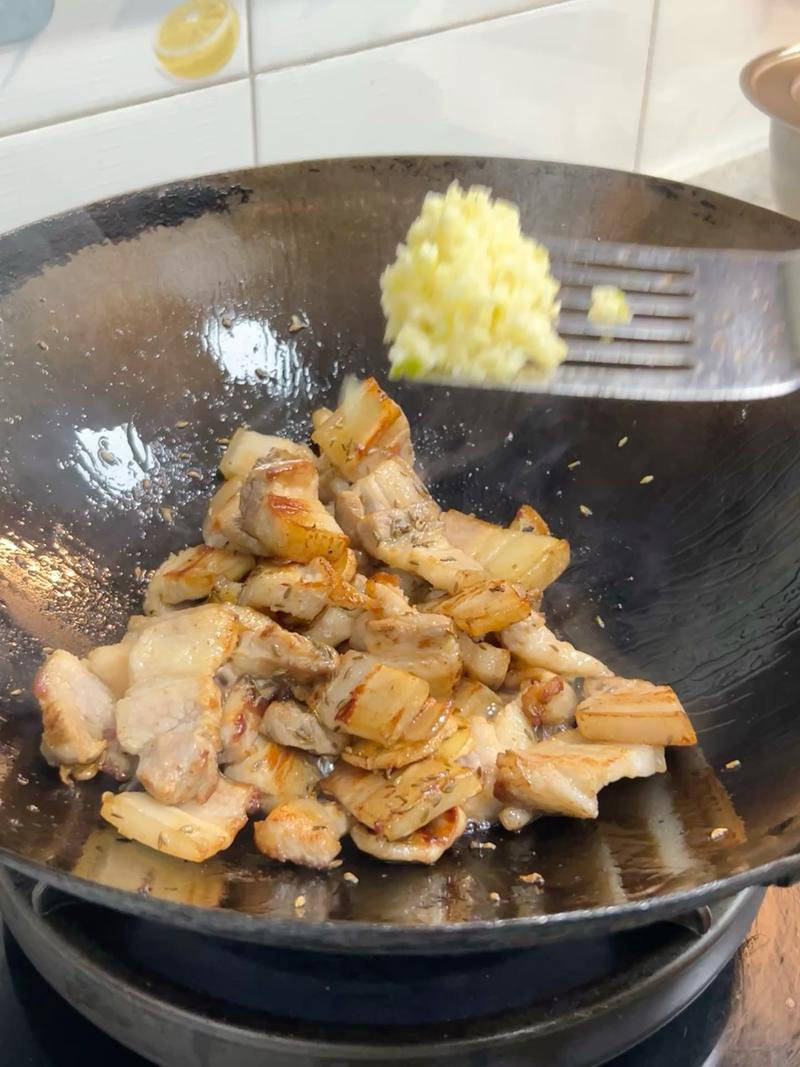
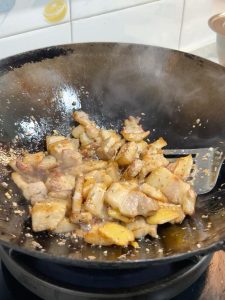
Add the first half of the minced garlic and stir until it turns pale gold, about 30-45 seconds. Cooked this way the garlic loses its sharp bite and melts into the pork oil, cutting the richness of the belly instead of competing with it.
Step 6 – A Pinch of Sugar
Add the sugar (about 10 g) and stir for 20-30 seconds. In the hot oil the sugar partially caramelizes, deepening the color of the sauce and rounding out the soy’s saltiness – the finished dish will not taste sweet.
Step 7 – Soy Sauce Along the Wok Edge
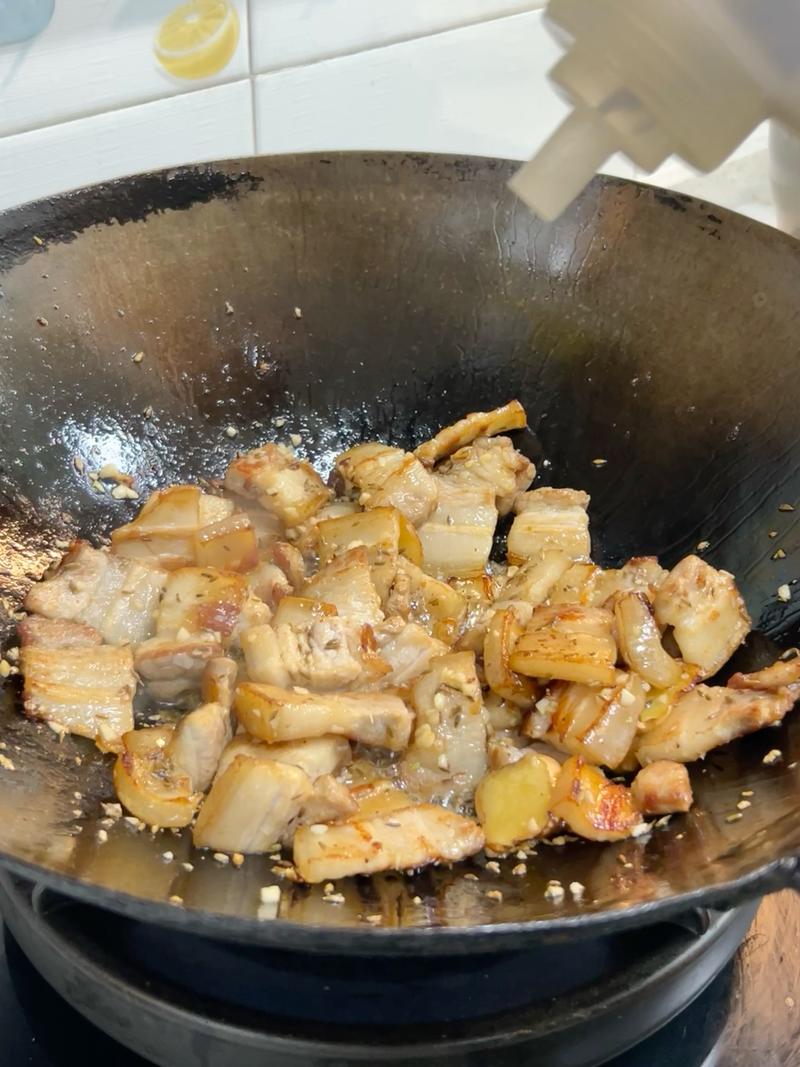
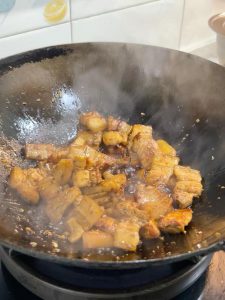
Pour the light soy sauce (about 70 ml) down the inside wall of the wok rather than into the center. The hot metal sizzles and releases the sauce’s aroma instantly. Stir to coat the pork, then stop – this is your base flavor, and the salt level is now set. Do not add salt at any point.
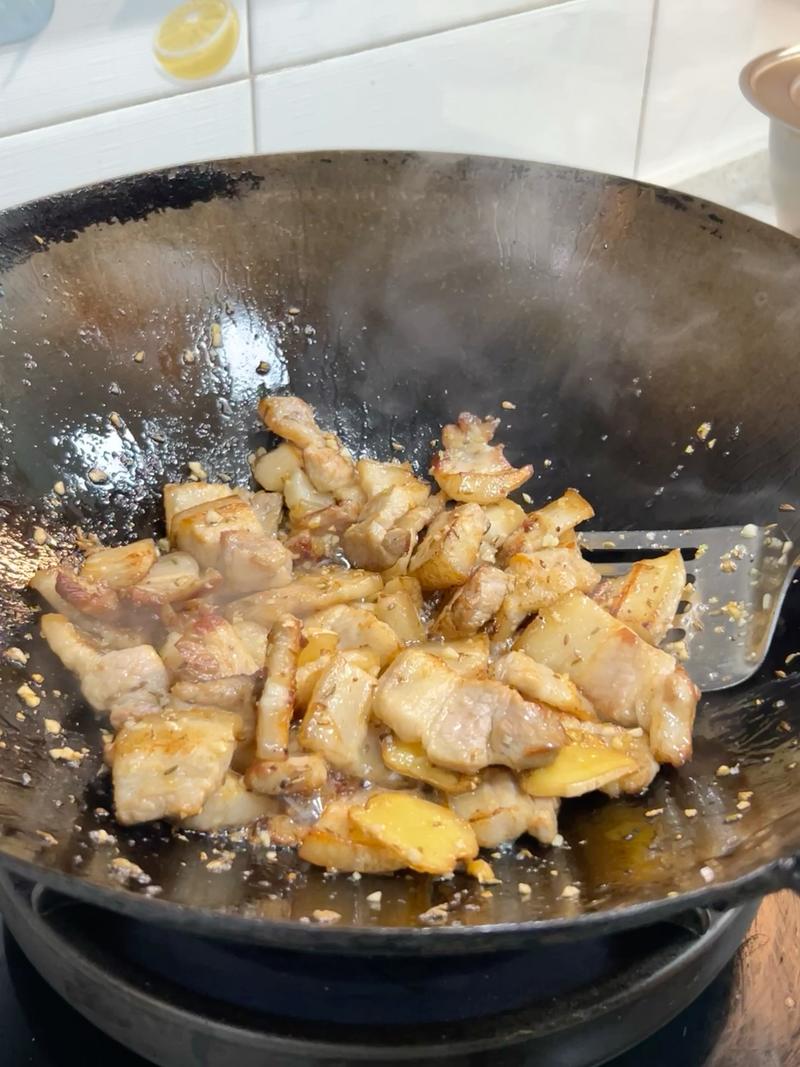
Pouring soy sauce along the hot wok wall does what restaurant cooks call “wok hei” in miniature: the sauce flashes against metal far hotter than the oil, volatilizing its aroma compounds before they ever hit the stew. It is the same reason a splash of Shaoxing wine or soy along the edge of a hot wok tastes brighter than the same splash dropped into the center.
Step 8 – The Wall of Green Beans
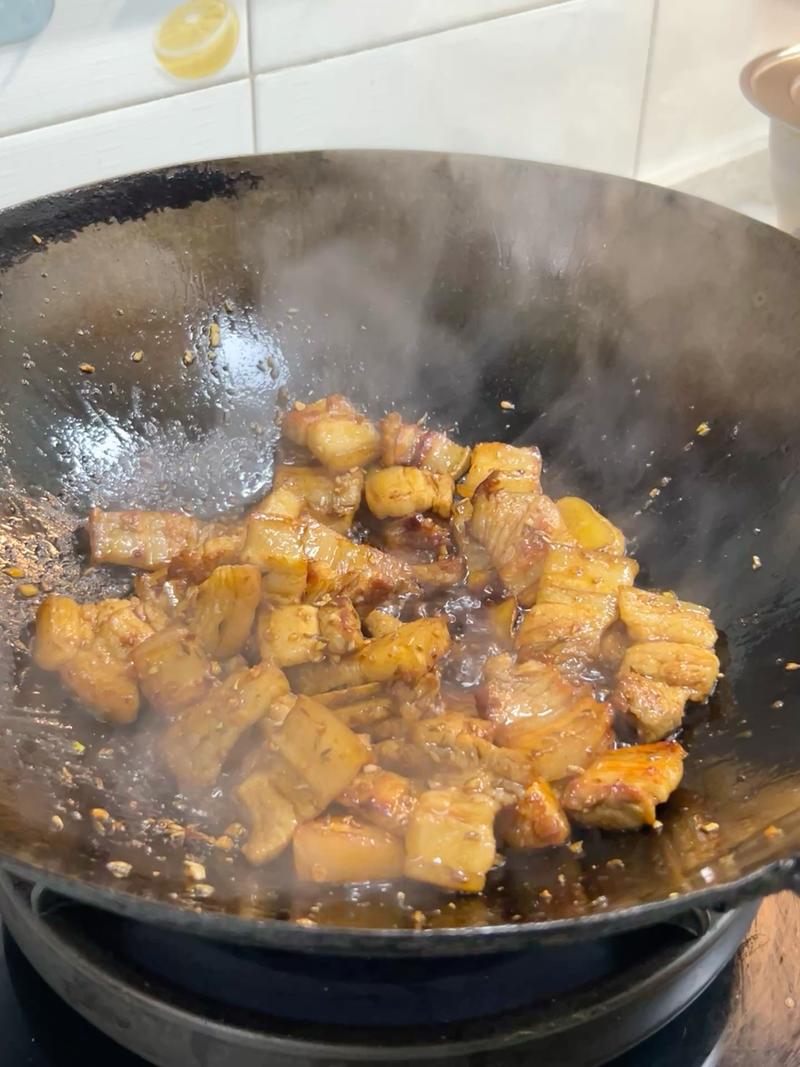
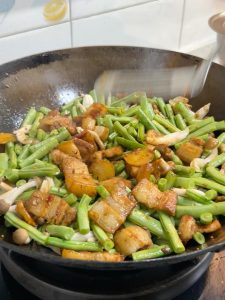
Add all the green beans and stir to coat them in the sauce. The pile will look enormous – that is correct. These beans will shrink by nearly half as they steam and become the cushion that holds the noodles above the liquid.
Step 9 – Mushrooms In
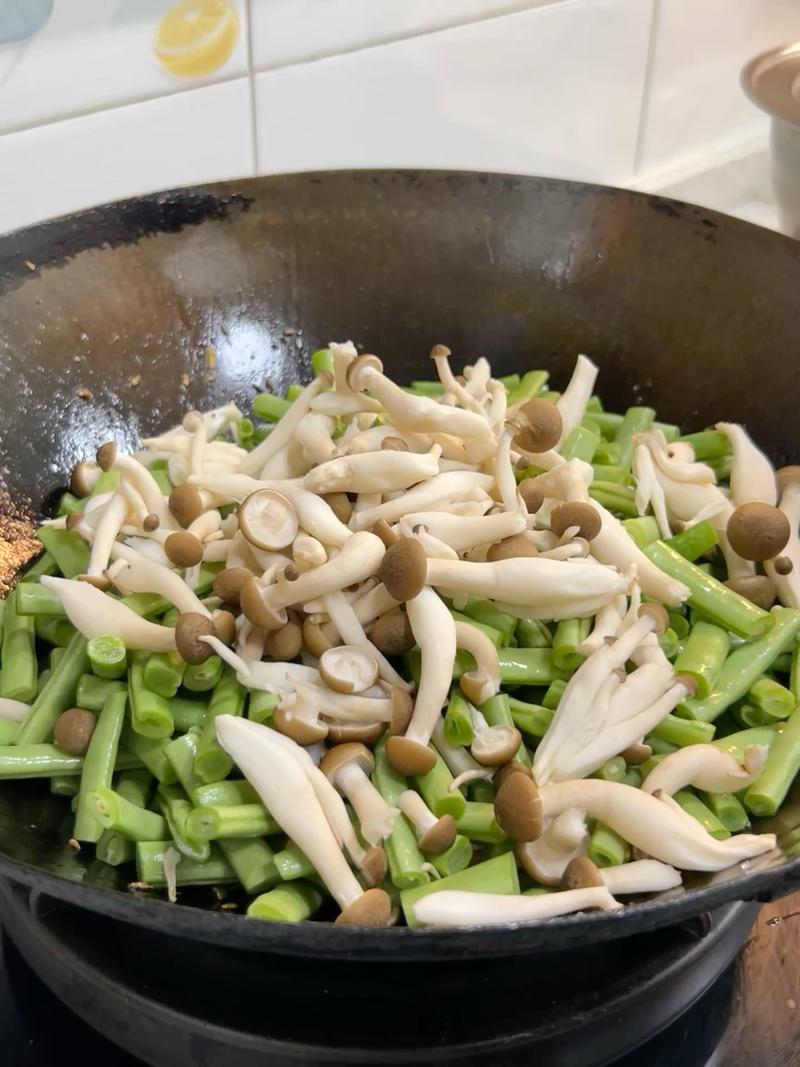
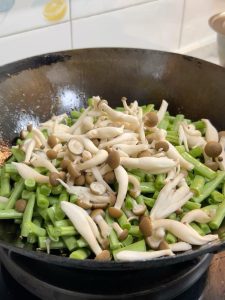
Add the beech mushrooms (or the bean sprouts, if substituting) and fold everything together. The mushrooms add a savory, slightly chewy layer; the author’s family swapped them in for bean sprouts because his elders found sprouts hard to chew. Any quick-cooking vegetable you like can stand in.
Step 10 – Level and Stop the Heat
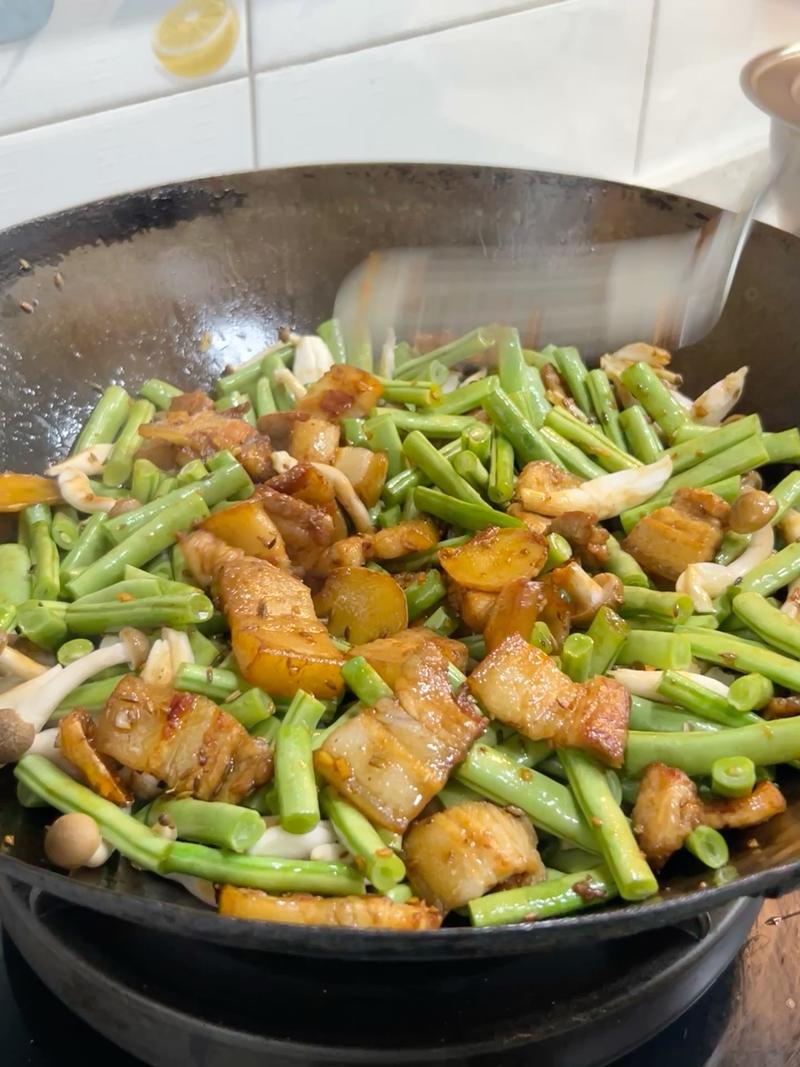
Stir the whole pot so everything is evenly coated, then smooth the surface flat with your spatula. Turn off the burner completely – you are about to build the steamer, and you want a calm, level bed of vegetables.
Step 11 – Lay On the Noodles
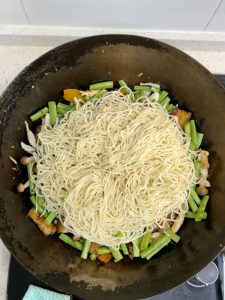
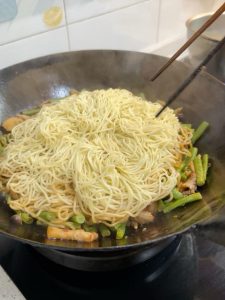
Spread the fresh noodles over the vegetables in a loose, even layer. Do not press them down. Keep the edges of the noodle mat away from the wok wall by about 1 cm – any noodle touching the hot metal will burn to the pan in the first minutes of steaming.
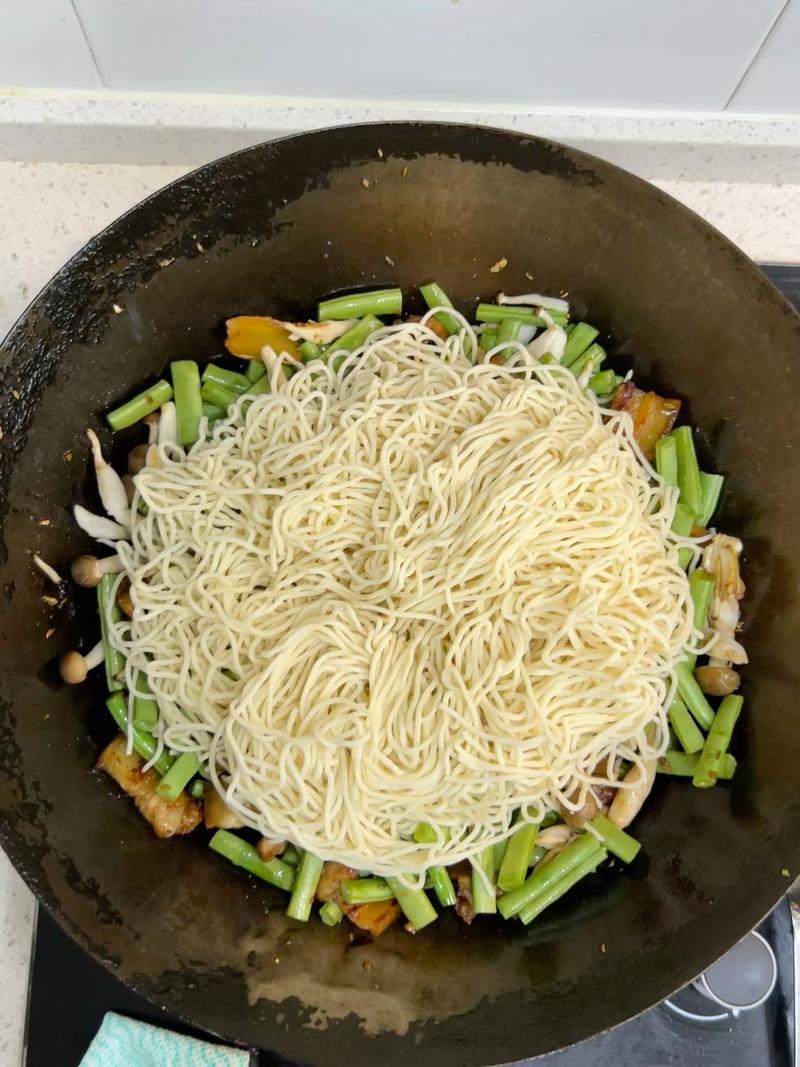
Step 12 – Water Along the Wall, Never Over the Noodles
Pour water down the inside of the wok, letting it settle beneath the vegetables. The water level must stay about 1 cm below the noodle mat – if it touches the noodles, they will boil and turn to paste. You want the liquid to simmer beneath, not submerge the top.
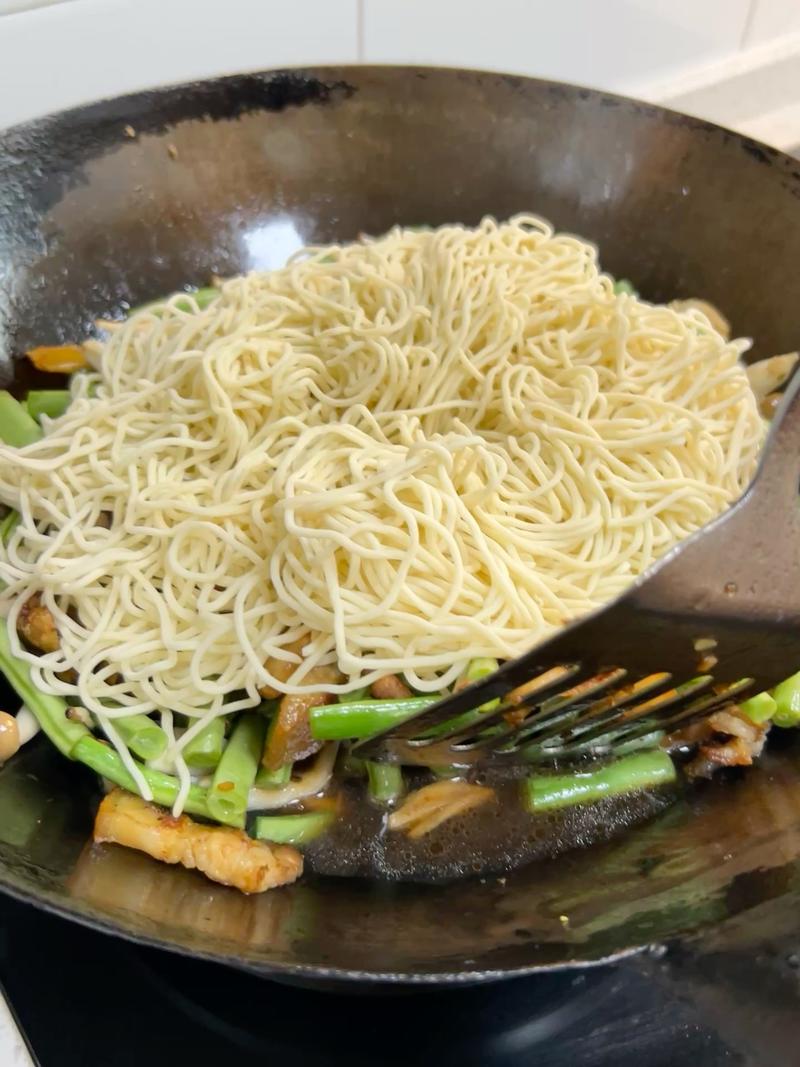
Step 13 – Cover and Braise 8-10 Minutes
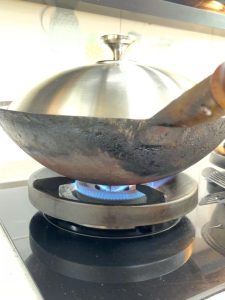
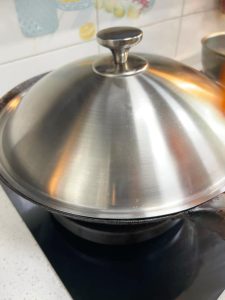
Put on the lid and set the heat to medium-high (a little hotter than medium). The sauce below will simmer and steam the noodles above the vegetables. Let it go undisturbed for 8-10 minutes – the steam does the cooking, so resist the urge to peek and lift the lid.
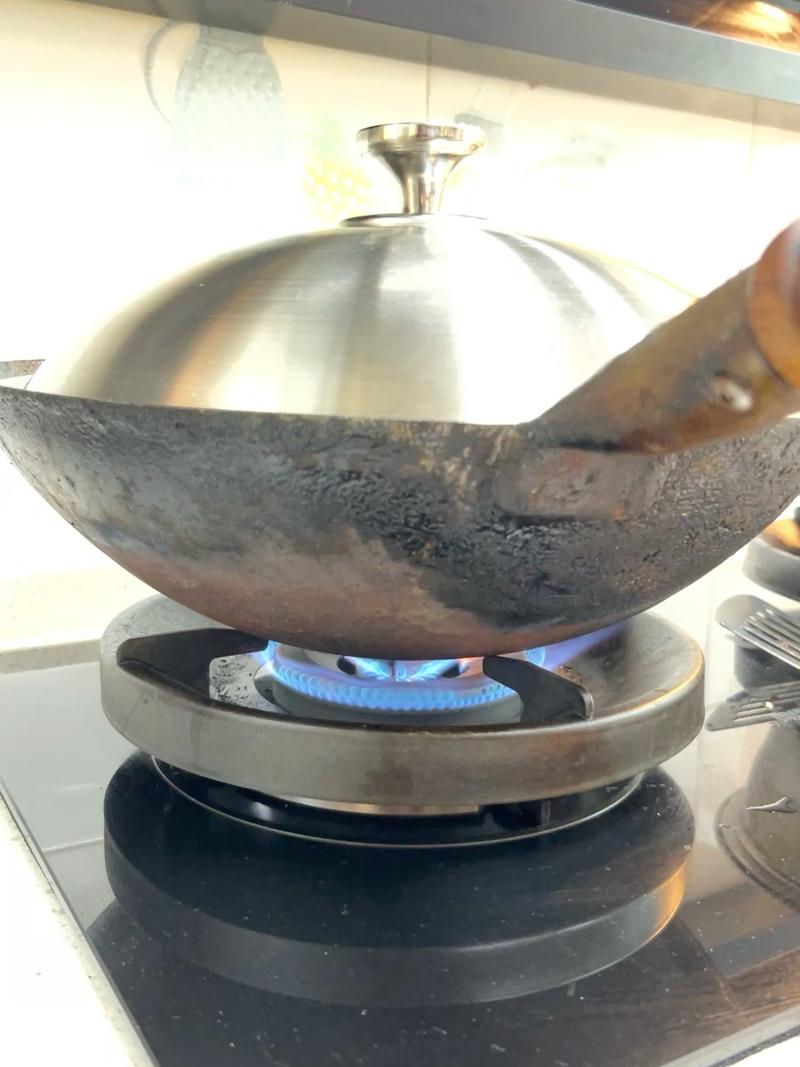
Steaming, not boiling, is the point of men mian. Water boils at 212°F (100°C) and aggressively leaches starch from noodles, making them soft and gluey. Steam carries the same heat but transfers it gently and slowly, so the noodles’ starch gelatinizes at their surface while the interior stays springy. The steam also carries the volatile aromas of the pork, garlic, and soy up into the noodle mat – flavor you can never get from boiling.
Step 14 – Listen for the Sizzle
Set a timer for 8 minutes. When you begin to hear a sharp, increasingly loud crackling – the sound of the oil-and-water mixture hitting the bottom of the pan – the liquid has nearly cooked off. That is your cue that the noodles are done. Lift the lid and check the bottom with a spatula if you are unsure.
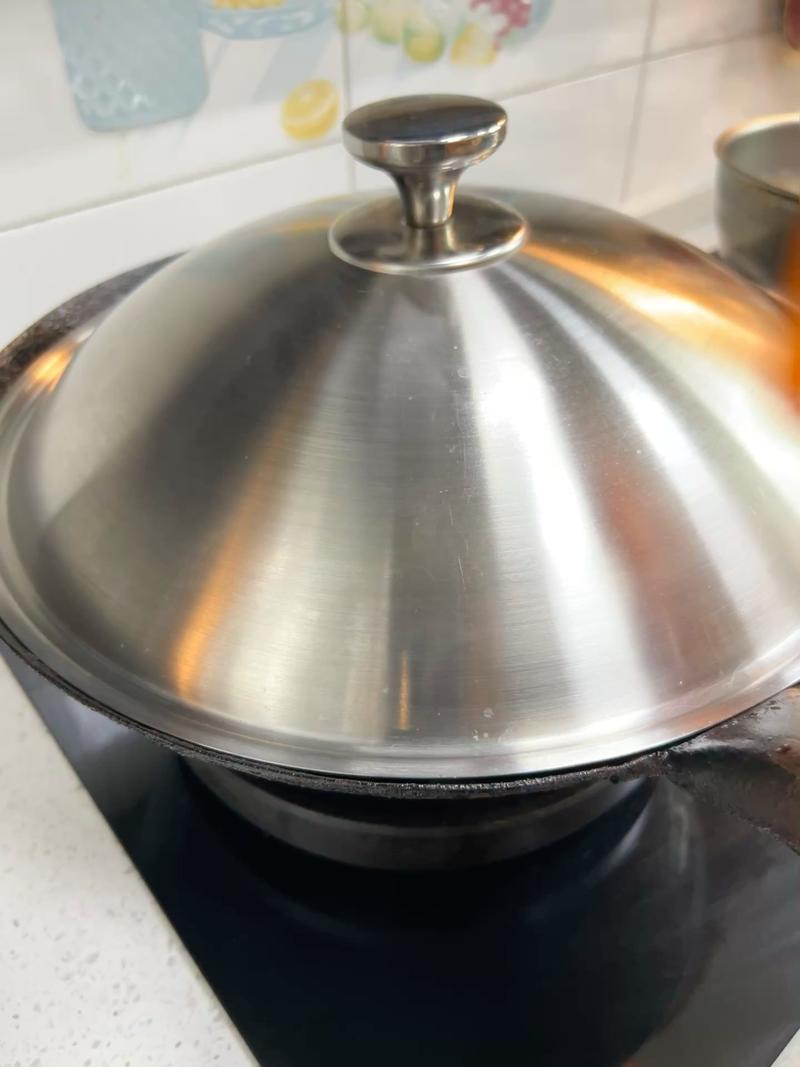
Step 15 – Flip the Noodle Mat
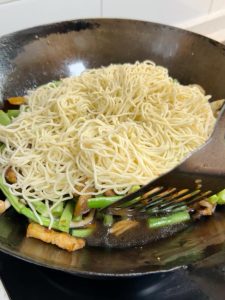
By now the noodles will have steamed into one soft, connected mat. Use chopsticks to flip the whole mat over so the underside gets a turn in the steam, then turn off the heat. Stopping the heat gives you time to toss without burning anything.
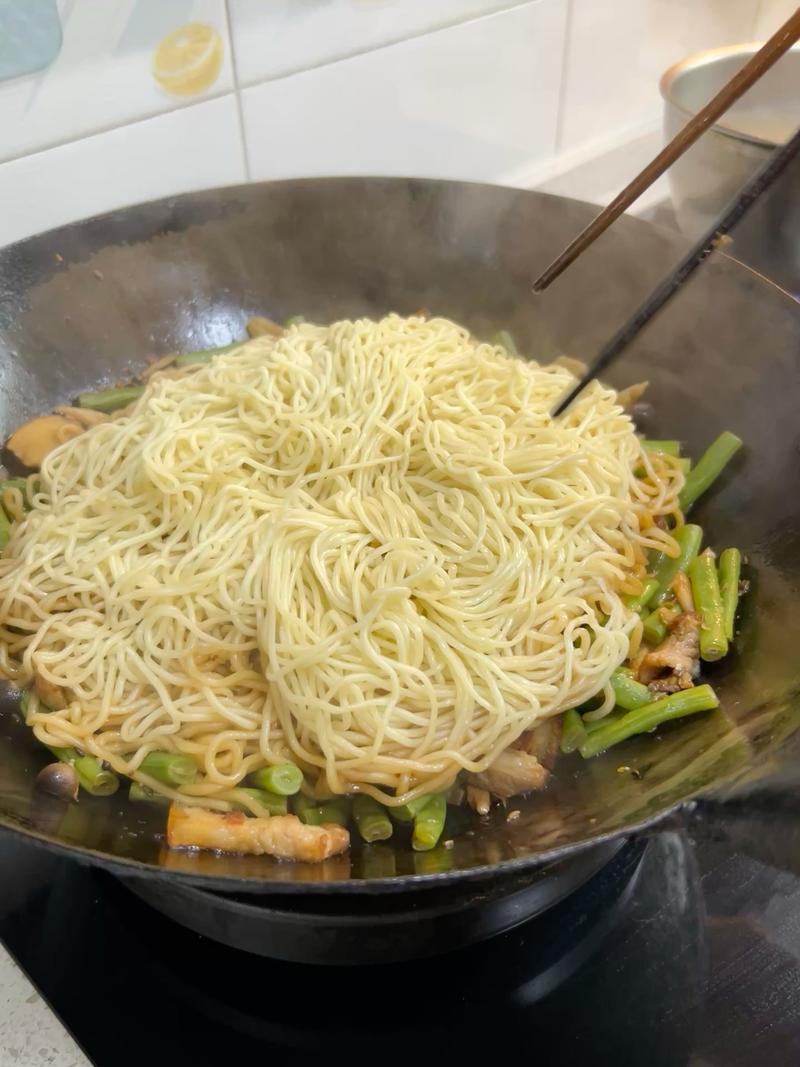
Step 16 – Lift and Toss From the Bottom
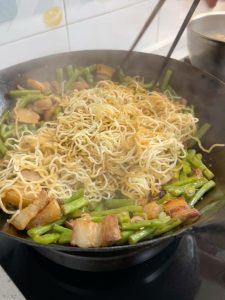
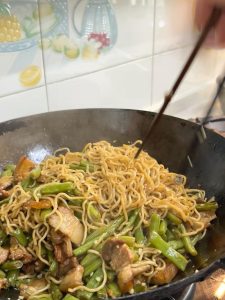
Holding chopsticks in both hands, lift the noodles and vegetables up from the bottom of the wok repeatedly, tossing and separating until everything is evenly mixed. Take your time – this is where the noodles absorb the remaining sauce, so a thorough toss pays off.
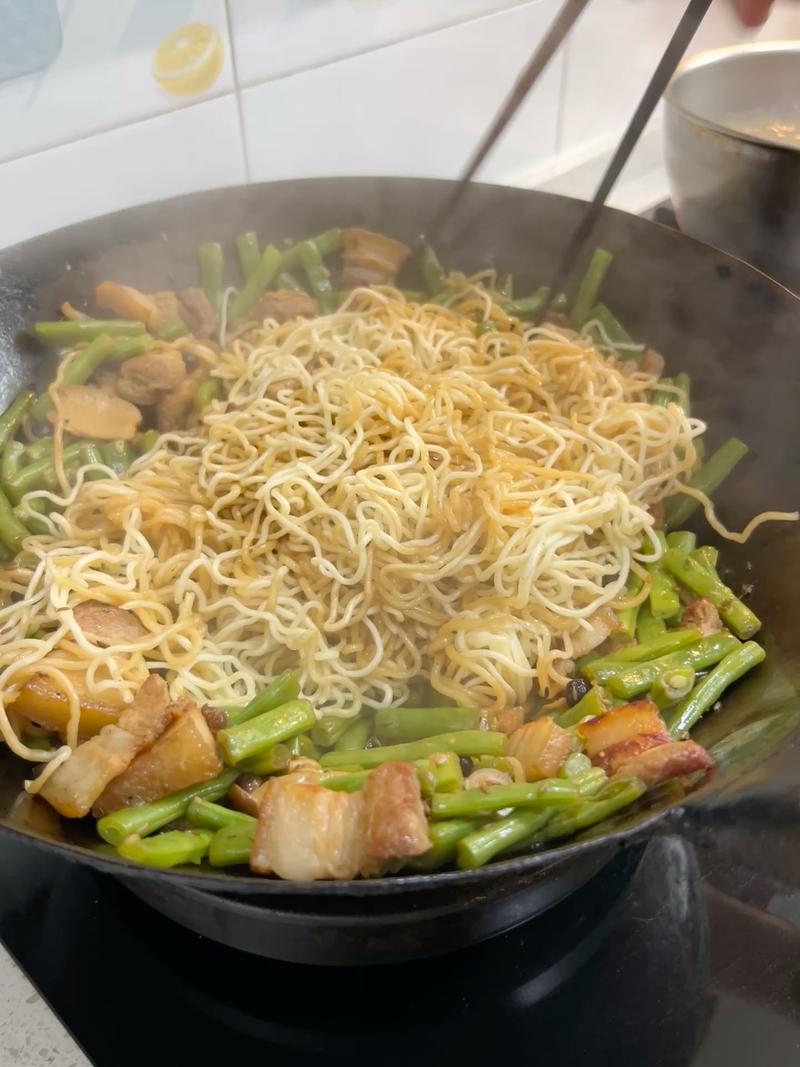
Step 17 – The Absorbed State
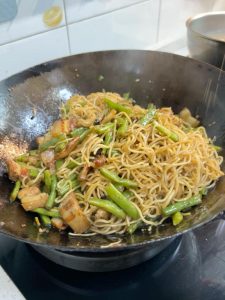
The noodles should now look glossy and fully coated, with the pork and beans distributed through every mouthful. The beans that once filled the wok will have collapsed into soft, sweet ribbons – this is exactly the texture you want, so do not worry if they look overcooked.
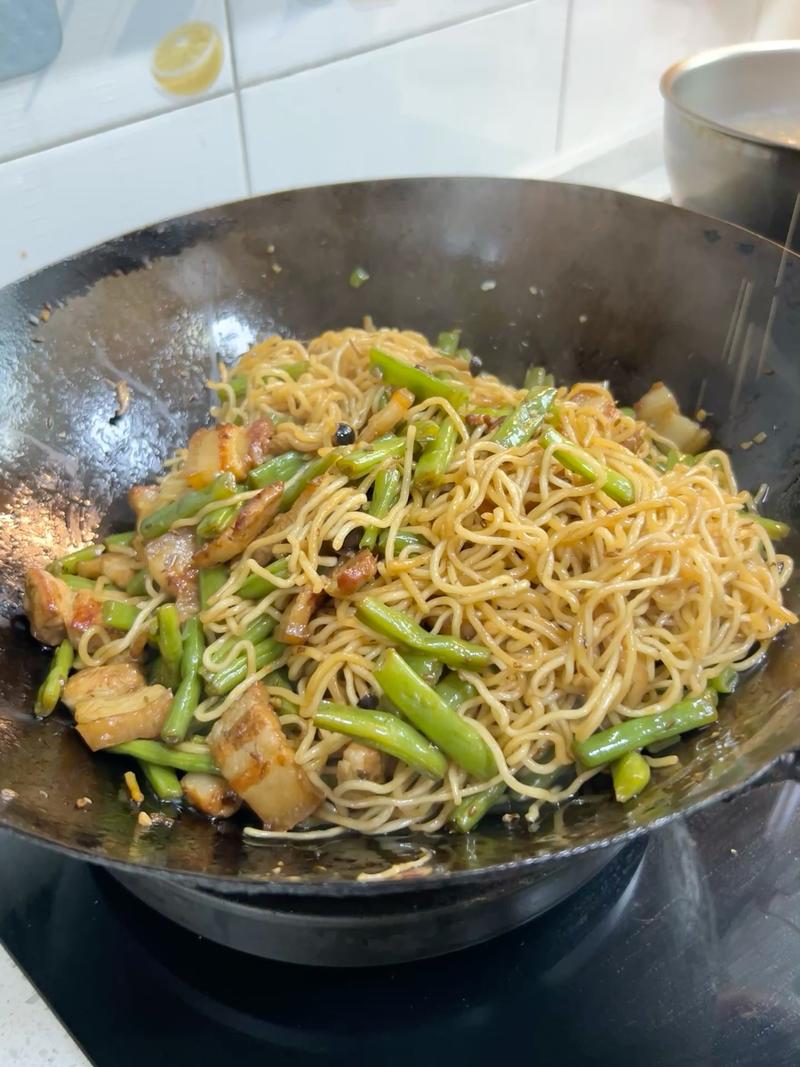
Step 18 – Second Garlic, Sesame Oil, 30 Seconds of High Heat
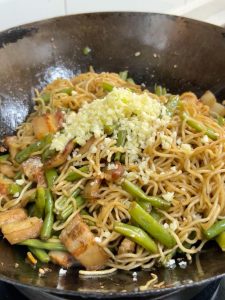
Add the remaining half of the garlic and drizzle over the toasted sesame oil. Cover the wok and blast it on high for 30-40 seconds. The brief burst of heat wakes up the raw garlic and the sesame oil without cooking the garlic’s sharpness away.
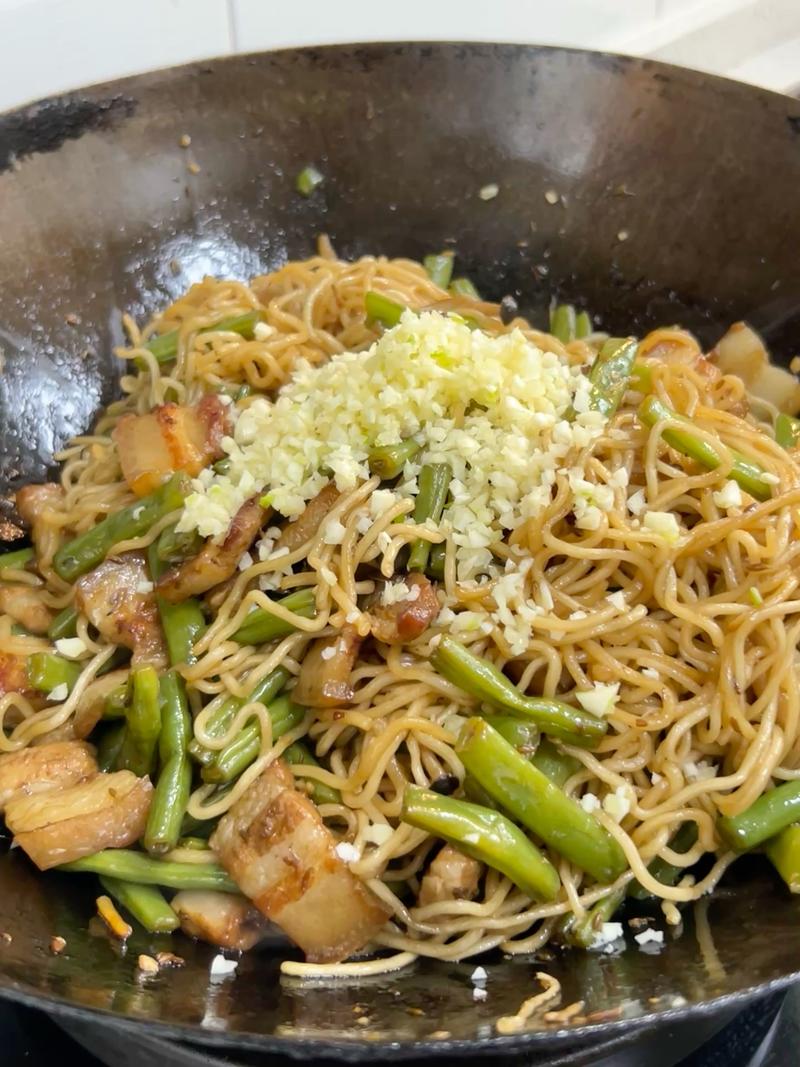
Step 19 – Rest 2 Minutes, Then Serve
Turn off the heat and leave the pot covered for 2 final minutes so the noodles fully absorb the last of the sauce. Uncover, and either plate the noodles or leave them in the wok and let everyone serve themselves – this dish is built for family-style eating.
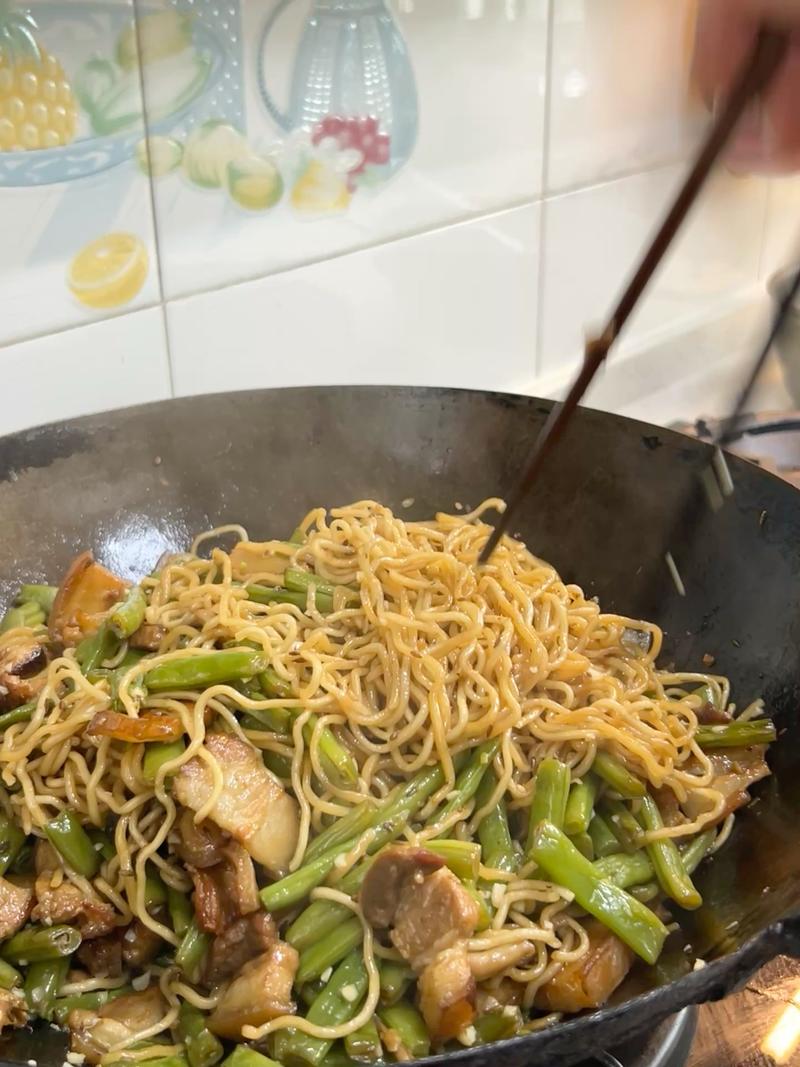
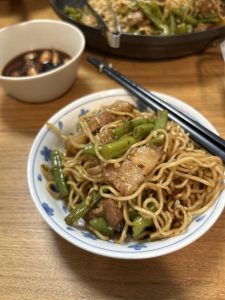
Step 20 – The Finished Bowl
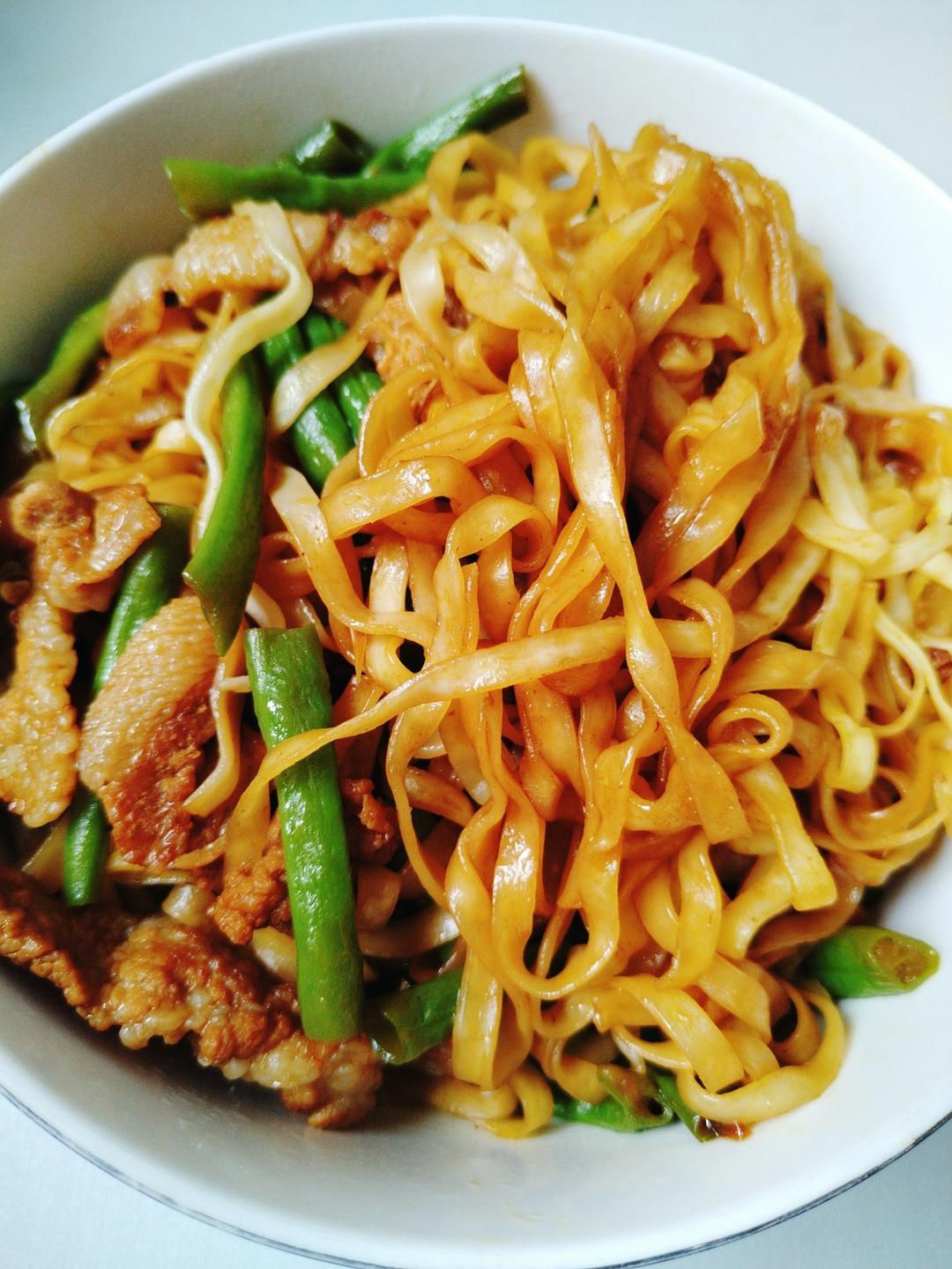
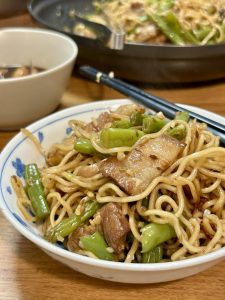
Done properly, each bowl is a tangle of glossy noodles, tender pork, and collapsed green beans with a faint whiff of cumin and toasted sesame. This is the bowl that disappears in about four minutes at my table.
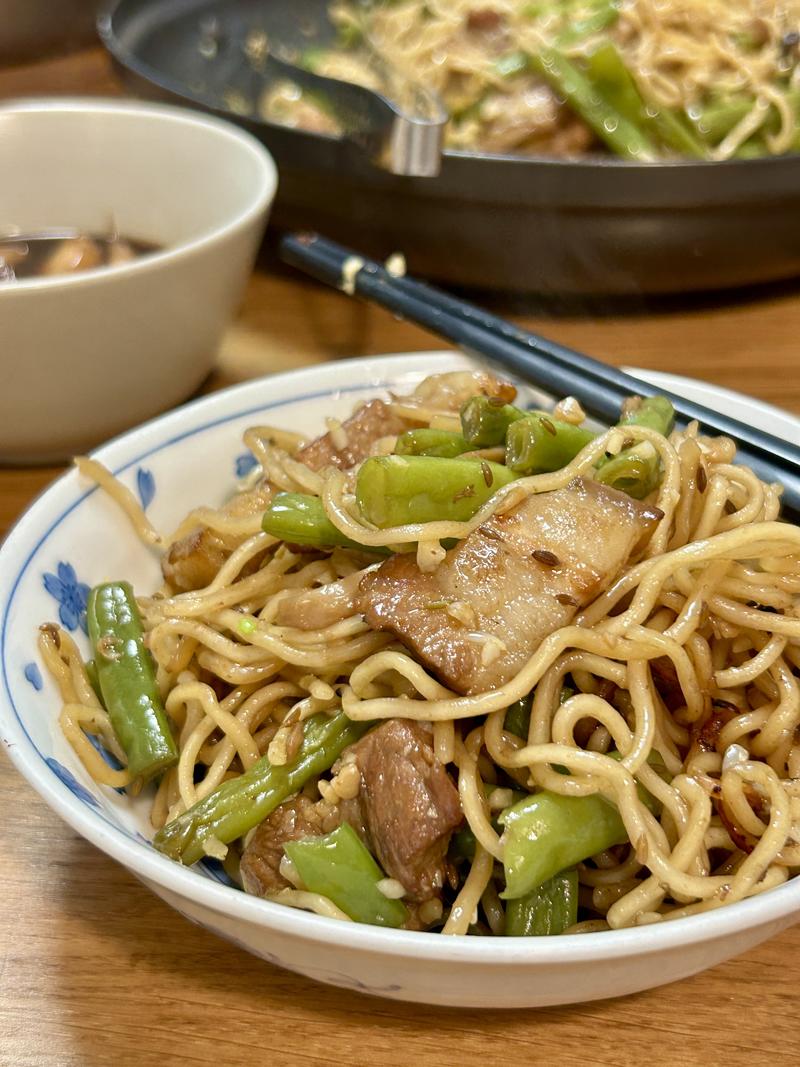
Step 21 – Serve With Sweet Garlic (Optional)
If you love garlic, the classic Central Plains accompaniment is two cloves of sweet pickled garlic (tang suan) on the side. Their mellow sweetness cuts the richness of the pork beautifully, and they disappear almost as fast as the noodles.
Common Mistakes When Making Henan Men Mian
1. Stirring the pork too early. If you touch the belly slices in the first 2 minutes, they stick and tear, releasing moisture that steams instead of browns the meat. Fix: lay them in a cold wok, turn on high, and do not touch them until you hear the fat popping – that sound means they have released.
2. Letting the water touch the noodles. If the liquid reaches the noodle mat, the bottoms boil into a gluey paste and the top stays dry. Fix: pour water slowly along the wok wall and stop about 1 cm below the noodles. When in doubt, use less water – you can always add a splash if the sizzle comes too early.
3. Noodles touching the wok wall. Any noodle against the hot metal burns black in the first minutes and tastes bitter through the whole dish. Fix: leave a 1 cm gap between the noodle mat and the wok edge.
4. Peeking during the braise. Every lid lift releases steam, and each recovery costs a minute of cooking time. If you keep checking, the noodles come out raw in the middle. Fix: trust the 8-minute timer and the sound cue – the crackling means it is done.
5. Boiling dried noodles as a shortcut. Dried noodles boil up waterlogged and fall apart in the final toss. Fix: if you must use dried noodles, boil them to just under al dente, drain well, and toss with a teaspoon of oil before layering, then cut the braise time to about 6 minutes.
6. Adding salt. The 70 ml of light soy sauce carries enough salt for the whole pot. Extra salt makes the finished dish inedibly salty once the sauce concentrates during steaming. Fix: taste a noodle after the final toss before adding anything.
Variations
Bean sprout version. The traditional Central Plains version swaps the mushrooms for 2 cups (250 g) of fresh bean sprouts, added at step 9. They add a lighter, crunchier texture than the mushrooms.
Five-spice instead of cumin. If cumin is not your thing, bloom 1 tsp of five-spice powder in the pork fat at step 4. The flavor profile shifts warmer and more aromatic – closer to the classic braised-noodle taste of northern Henan.
Darker finish. Add a teaspoon of dark soy sauce with the light soy at step 7 for a deeper mahogany color. The flavor barely changes; the bowl looks dramatically richer.
Spicier version. Tuck 2-3 dried chilies into the pork fat at step 4, or finish with a drizzle of chili oil at step 18. Heat is not traditional in Henan men mian, but it is a welcome addition for Sichuan-leaning eaters.
Other noodles. Wide hand-cut noodles, thin egg noodles, even alkaline Cantonese noodles all work, provided they are fresh and uncooked. Adjust the braise time by a minute or two for very thick or very thin strands.
Frequently Asked Questions
Can I use dried noodles instead of fresh? Yes, with one adjustment: boil them to just under al dente, drain, toss with a little oil, then layer and braise for only 5-6 minutes. Dried noodles absorb faster and turn mushy if given the full 8-10 minutes.
Why did my noodles come out hard in the middle? Either the pot was uncovered too often during the braise, or the heat was too low to generate real steam. Keep the lid on for the full 8 minutes and use medium-high heat, not medium.
Can I make this ahead or freeze it? Men mian is best the night it is made – the noodles keep absorbing sauce and soften as they sit. It keeps 2 days refrigerated and reheats well in a covered pan over low heat with a splash of water. Freezing is not recommended; thawed noodles turn pasty.
Is this authentic Henan men mian? Yes – this is the home version straight from a Henan kitchen, complete with the author’s own substitutions (mushrooms for bean sprouts, slices instead of strips of pork). Restaurants often boil the noodles separately, but the family method here is the traditional one.
Can I use a different protein? Pork belly is the point of the dish, but chicken thighs (skin on) or sliced beef chuck work if you render them in a little oil first. Lean proteins will need that tablespoon of oil, since they contribute none of their own.
How to Serve
Henan men mian is a complete meal in one wok, but it loves a couple of cold or light companions. A plate of my pork and green bean stir fry extends the theme if you are feeding a crowd, while the stir fried green beans with minced pork side echoes the same flavors in a lighter form. For a noodle-themed dinner, my scallion braised pork chop noodles and old Beijing zha jiang mian are both one-bowl classics worth the same weeknight slot. And if you want another no-fuss one-pot dinner for a cold night, the tomato beef stew with fatty beef follows the same build-it-in-one-wok philosophy. Serve the noodles straight from the wok with sweet pickled garlic on the side, and let everyone dig in.
Storage & Reheat
Leftover men mian keeps refrigerated in an airtight container for up to 2 days. Reheat in a covered skillet or wok over low heat with a tablespoon of water, stirring occasionally, until steaming through – about 5-6 minutes. If reheating a single portion, a microwave with a damp paper towel over the bowl works in 90 seconds, though the pan method restores more texture. Do not freeze: the noodles’ starch structure breaks down and they turn gluey. Reheated pork should reach an internal temperature of at least 165°F (74°C) to be safe, per USDA food safety guidelines.
Allergen Notice
This recipe contains gluten (wheat noodles and soy sauce) and soy (light soy sauce). If you use egg noodles, it also contains eggs. Beech mushrooms are a common allergen in a small percentage of people; swap in bean sprouts if concerned. Toasted sesame oil is a sesame product – omit it if sesame allergy is a concern.
Nutrition Disclaimer
Nutrition information is calculated using an ingredient database and should be considered an estimate. In cases where multiple ingredient alternatives are given, the first listed is calculated for nutrition. Garnishes and optional ingredients are not included.
About the Author & Recipe Development
I am Lin, a Chinese chef and food writer, and this recipe comes from my father’s kitchen in the Central Plains. He taught me the cold-wok rendering trick when I was old enough to reach the stove, and I have made this dish at least once a week ever since – through a decade of restaurant wok stations and now in my own home kitchen. I tested this write-up twice against his method, once with thick noodles and once with thin, and both came out glossy and springy. The only change I make to his original is the beech mushrooms, which he would grumble about but which my family genuinely prefers.
Authoritative References
For food-safety temperatures on reheating pork, see the USDA Safe Minimum Internal Temperature Chart. For the science of the Maillard reaction behind the dry-rendered pork, this overview of the Maillard reaction is a solid primer. For why steaming keeps starch-based foods tender, the Food Lab’s guide to steaming explains the mechanism well.
Foolproof Henan Braised Noodles (Men Mian): One Wok in 20 Mins

Equipment
- Large wok with lid
- Long chopsticks
Ingredients
For the Henan Men Mian
- 1.1 lb pork belly, sliced 1/4-inch thick
- 1.65 lb green beans, snapped into 2-inch lengths
- 1.1 lb fresh wheat noodles (thick, thin, egg, or alkaline)
- 1 tsp cumin seeds optional; or 1 tsp five-spice powder
- 1 head garlic, peeled and minced, divided
- 1 box beech mushrooms (shimeji), about 5 oz (150 g) or 2 cups (250 g) bean sprouts
- 5 slices fresh ginger
- 2 tsp sugar about 10 g; optional
- 1/3 cup light soy sauce about 70 ml; no extra salt
- 1 tsp toasted sesame oil optional
Instructions
- Prep everything: slice the pork belly 1/4-inch thick, snap the green beans, mince the garlic and divide it in half, slice the ginger, and rinse the mushrooms.

- Lay the pork belly slices in a single even layer in a cold wok, then turn the heat to high.
- Do not stir for the first 2 minutes. Once the fat pops and the slices release, stir and cook over high heat until both sides are browned and the fat has rendered.
- Add the cumin seeds and stir in the pork fat for about 30 seconds until fragrant (optional).
- Add half the minced garlic and stir until pale gold, about 30-45 seconds.
- Add the sugar and stir 20-30 seconds until it begins to caramelize.
- Pour the light soy sauce along the hot wok wall and stir to coat the pork. No additional salt is needed.
- Add all the green beans and stir to coat. The pile will be large – that is correct.
- Add the beech mushrooms (or bean sprouts) and fold everything together.
- Stir the whole pot, smooth the surface flat, and turn off the heat.
- Spread the fresh noodles loosely over the vegetables, keeping the edges about 1 cm away from the wok wall.
- Pour water along the wok wall until the level sits about 1 cm below the noodles – never touching them.
- Cover and braise over medium-high heat for 8-10 minutes, without lifting the lid.
- After about 8 minutes, a sharp crackling sound means the liquid has nearly cooked off. Check the bottom if unsure.
- Flip the steamed noodle mat over with chopsticks, then turn off the heat.
- Using chopsticks in both hands, lift and toss the noodles with the pork and vegetables until evenly mixed.
- The noodles should look glossy and fully coated, with the collapsed beans and pork distributed through.
- Add the remaining garlic and the sesame oil. Cover and cook on high for 30-40 seconds to wake up the aromas.
- Turn off the heat, rest covered for 2 minutes, then serve straight from the wok.
- Each bowl is a tangle of glossy noodles, tender pork, and collapsed green beans with a hint of cumin and sesame.
- For garlic lovers, serve with two cloves of sweet pickled garlic on the side.




Leave a Reply