If you have ever stared at a jar of “Olive Vegetable” (Gan Lan Cai) in an Asian grocery store and wondered what to do with it, this is the answer.
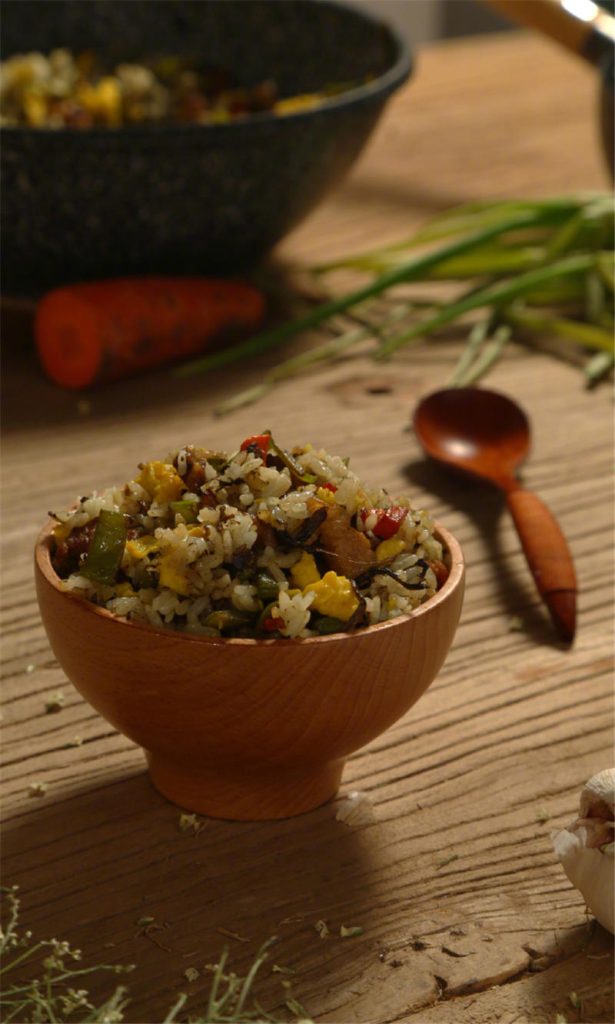
This fried rice isn’t just about using up leftovers; it is a complex interplay of textures and aromas. You have the savory richness of the olive vegetable, the crunch of the green beans, the tender fluffiness of the eggs, and the chew of the rice. As a chef who grew up in Sichuan and trained professionally in Chinese cuisine, I can tell you that this dish—known as Gan Lan Cai Si Ji Dou Rou Ding Dan Chao Fan—is one of the most appetizing, comfort-food meals you can make in under 20 minutes.
It’s savory, aromatic, and incredibly satisfying.
About the Author & Recipe Development
I’m Lin, and I’ve spent over a decade in professional kitchens, from my family’s restaurant in Sichuan to culinary school. When developing this recipe for Woks of Love, I tested it three times to ensure the ratios work for home burners. The key challenge with this dish is balancing the saltiness of the preserved olives with the fresh ingredients. I specifically tested this on a standard home gas range (approx. 12,000 BTU) to ensure you can achieve that signature wok hei without industrial equipment.
What Is Olive Vegetable (Gan Lan Cai)?
Olive Vegetable (橄榄菜) is a condiment from the Chaoshan region of Guangdong province. It isn’t just olives; it is a savory, oily, black paste made from mustard greens and olives cooked down until they are incredibly rich and umami-packed.

Unlike the Western Mediterranean olive profile, this ingredient is earthy, salty, and distinctly Chinese. It acts as the primary seasoning agent in this fried rice, meaning we need very little additional salt or Soy Sauce.
Why This Recipe Works
- Texture Contrast: We combine the crunch of diced green beans with the softness of eggs and the chew of rendered pork.
- Layered Umami: The pork belly fat renders out to flavor the oil, which then fries the olive vegetable, releasing a deep, savory aroma that coats every grain of rice.
- Safety First: We pay special attention to cooking the green beans thoroughly, a crucial food safety step often overlooked in quick stir-fries.
Key Ingredients & Substitutions
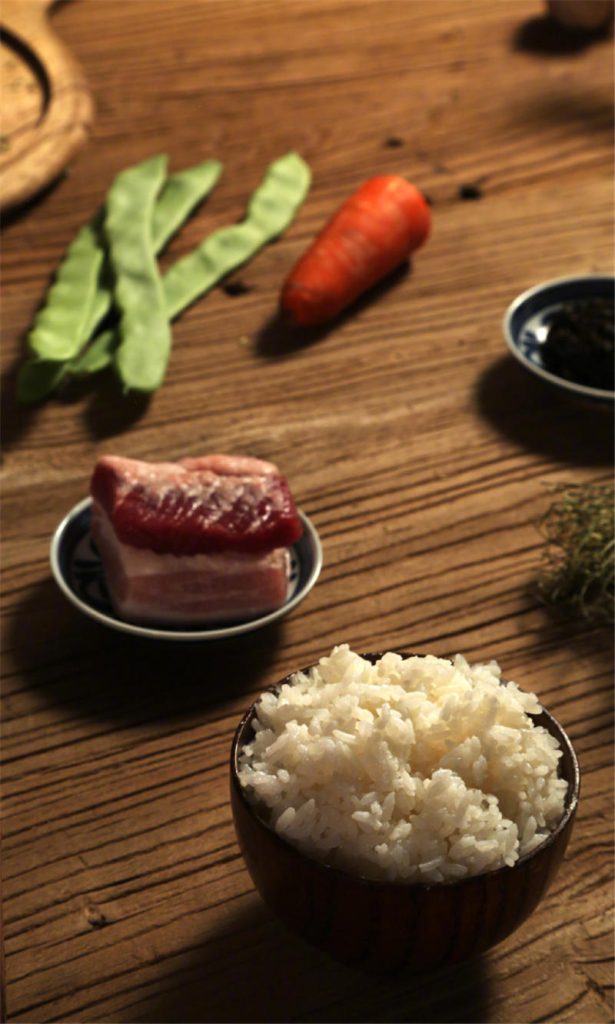
- Rice: Day-old Jasmine rice is best because it has dried out slightly, preventing mushy fried rice. If you need to make rice fresh, see our guide on how to cook perfect rice in a cast iron pot to ensure the grains are distinct and fluffy.
- Chinese Olive Vegetable (Gan Lan Cai): Sold in jars, usually labeled “Olive Vegetable.” Brands like Hong Kong Olive are popular.
- Pork Belly: I use Pork Belly cut into small dice. The fat renders out beautifully, adding richness to the dish. Substitution: You can use ground pork, diced chicken thigh, or even bacon.
- Green Beans: Fresh string beans or french beans. Substitution: Long beans work well too. If you enjoy this ingredient, you might also like our Stir-fried Green Beans with Minced Pork.
- Shaoxing Wine: Essential for deglazing and removing any “gamey” taste from the pork. It adds a subtle depth that water cannot replace. Learn more about selecting the best Shaoxing Wine.
- Light Soy Sauce: Just a touch for aroma. Light Soy Sauce adds salinity without darkening the rice too much.
Recipe Notes Before You Start
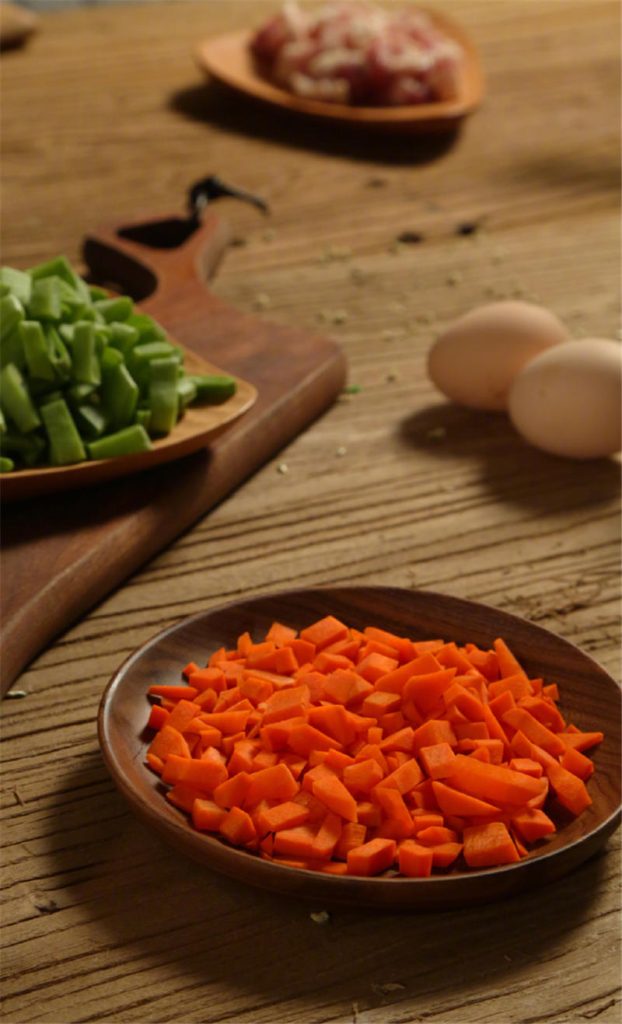
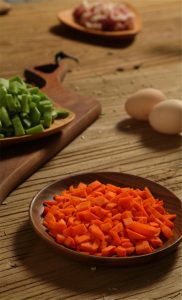
- The Dice Matters: Cut your green beans, carrots, and pork into uniform small cubes (about the size of a pea or corn kernel). This ensures everything cooks evenly and integrates perfectly with the rice grains.
- Wok Temperature: You need a hot wok to get that slightly charred edge on the meat and beans.
- Mise en Place: Fried rice moves fast. Have your sauce, eggs, and chopped veggies ready next to the stove before you turn on the heat.
How to Make Olive Vegetable Fried Rice
1. Prep the Ingredients
First, dice the green beans (四季豆) and carrots into small cubes. Dice the pork belly (五花肉) into similar-sized cubes. If you are using ground pork, it is ready to go. Crack the eggs into a bowl and beat them well.
Chef’s Tip: If you are worried about the green beans not cooking through in the wok (raw beans can cause stomach upset), you can blanch them in boiling water for 1-2 minutes, drain, and then dice them. This is a great safety hack for beginners.
2. Scramble the Eggs
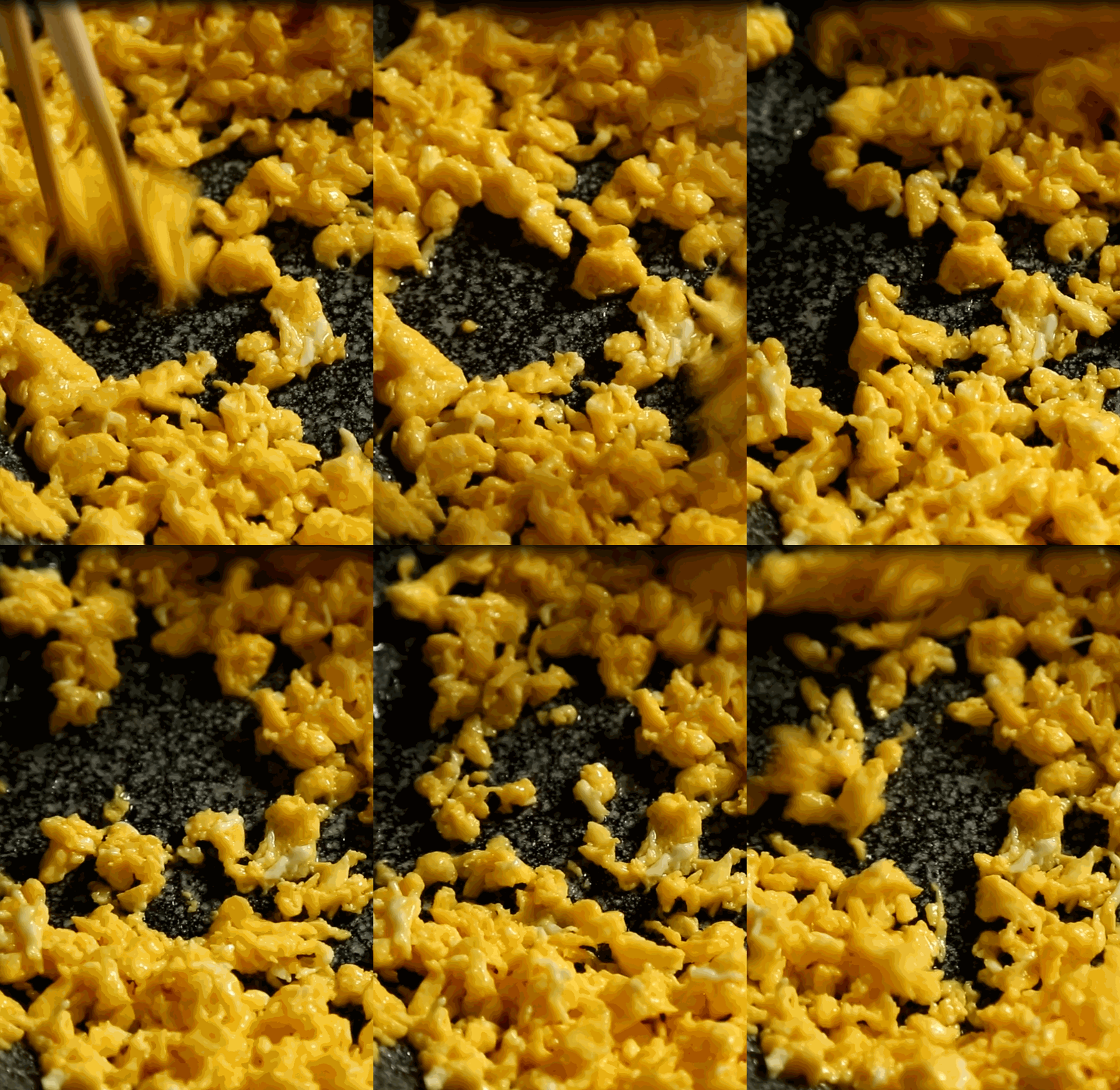
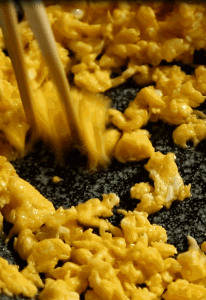
Heat your wok over medium-high heat and add about 1 tablespoon of oil. When the oil is warm, pour in the egg liquid. Stir constantly and briskly while heating. We want the eggs to be cooked into small, tender yellow bits—not large sheets. Remove the eggs from the wok and set them aside. This technique ensures the eggs stay tender and don’t become rubbery.
3. Crisp the Meat and Vegetables
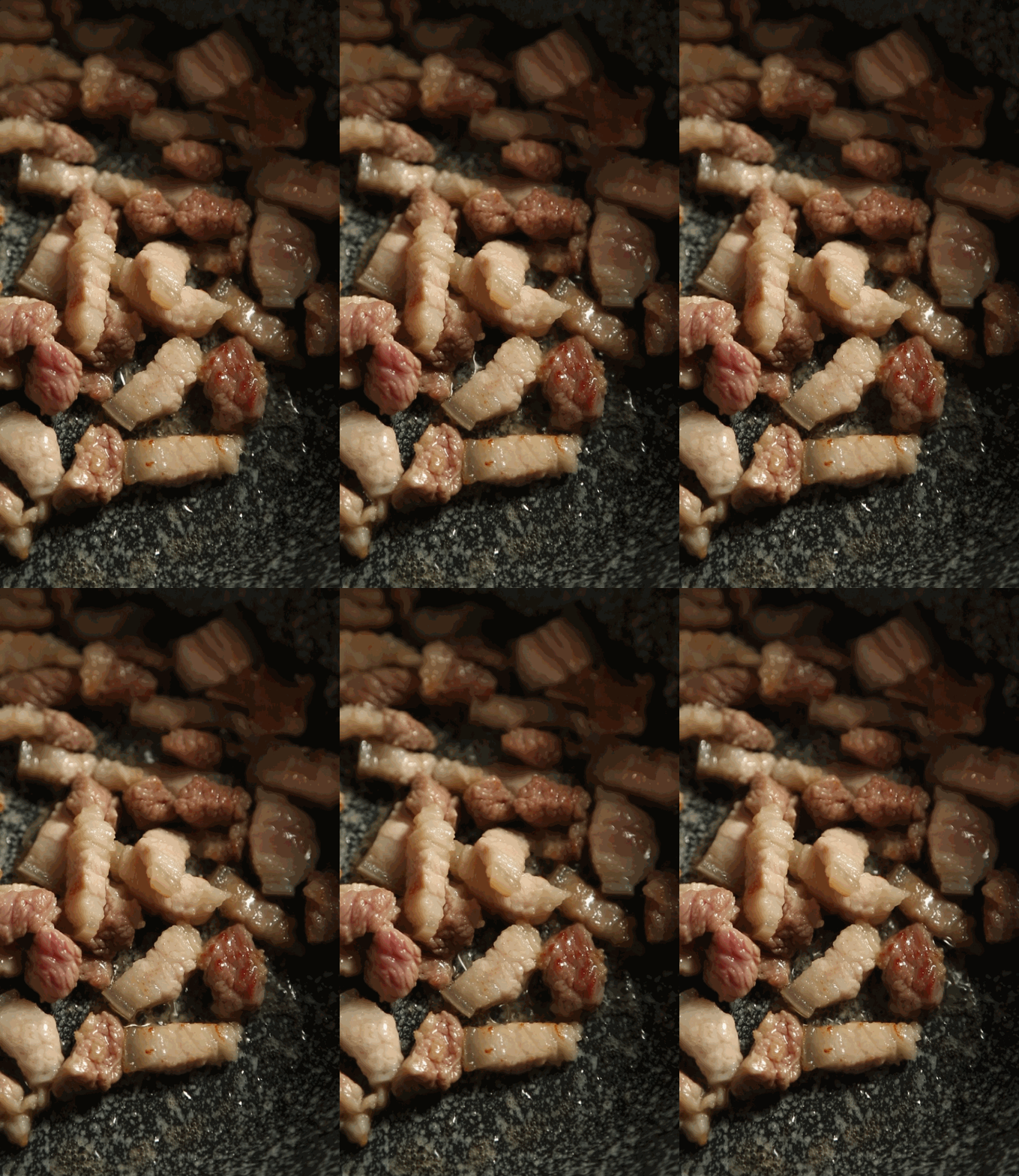
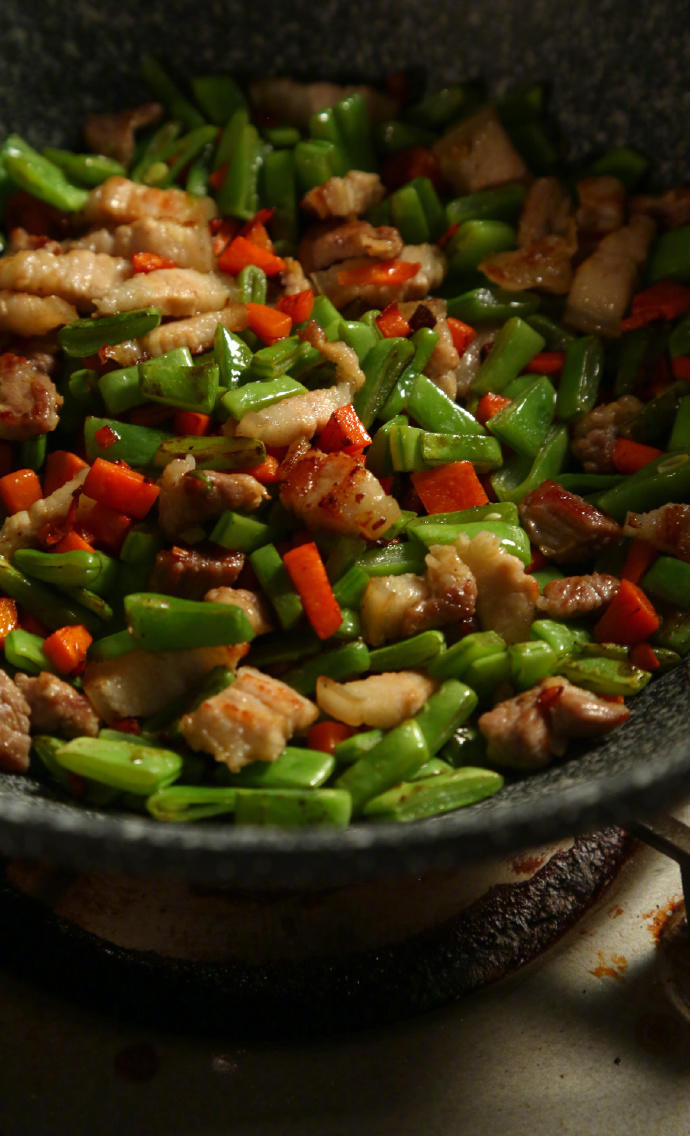
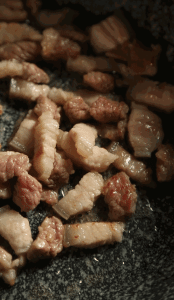
Add a little oil to the wok if it’s dry (or use the residual oil). Add the diced pork belly. Stir-fry over high heat until the meat turns white and the edges begin to brown and crisp (this is called “chū xiǎo jiāo biān” or getting small charred edges). Add the diced green beans and carrots. Stir-fry vigorously. Splash in the Shaoxing wine around the edges of the wok. This removes any raw meat smell and helps steam the vegetables slightly.Optional: Add a small teaspoon of Light Soy Sauce for aroma, but remember the olive vegetable is salty, so you can skip this if you prefer a lighter taste.
4. The Flavor Bomb
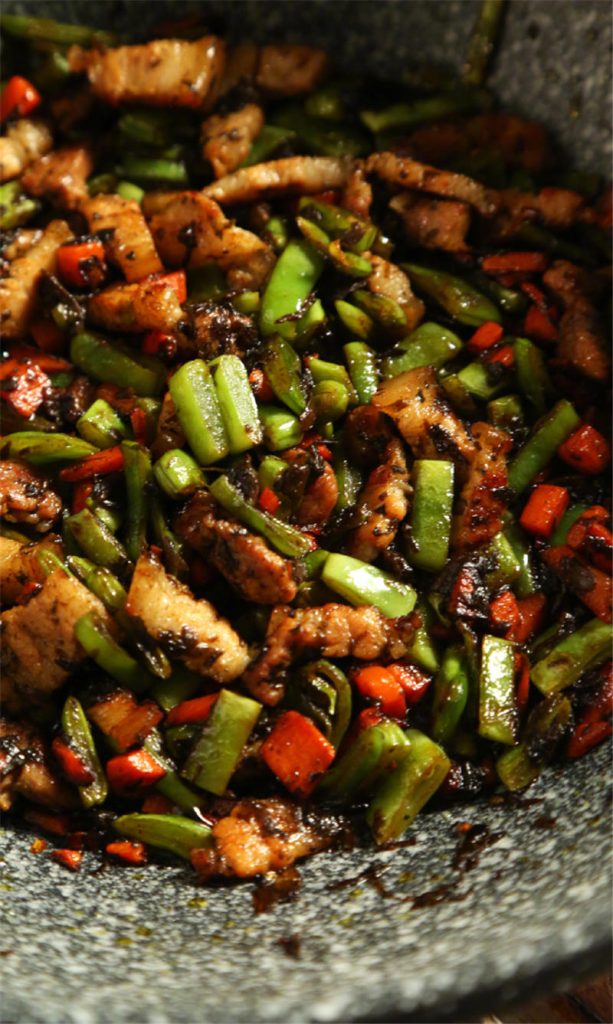
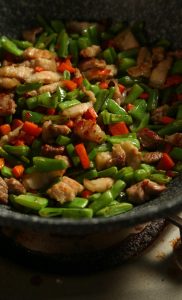
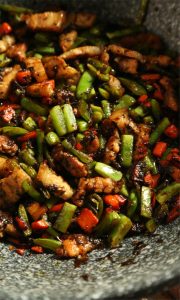
Continue stir-frying until the green beans are wrinkled and fully cooked. This is critical—undercooked beans are a no-go. Add a large heaping tablespoon of Olive Vegetable. Stir well so the black, savory paste coats the beans and meat. The aroma should be intense and fragrant now.
5. Rice and Finish
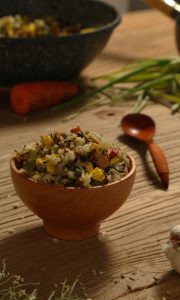
Add the rice to the wok. Use your spatula to break up any clumps, using a “press and flip” motion. Once the rice is hot, separated, and uniform in color, add the cooked eggs back in. Toss everything together until well combined. Taste a few grains. The olive vegetable is usually salty enough, but if needed, add a pinch of salt.
Serve immediately while piping hot!
Common Mistakes When Making This Dish
- Undercooking the Beans: Green beans contain lectins which can cause nausea if eaten raw. Unlike Green Bean and Potato Stir-Fry where we might braise them longer, here we are stir-frying fast. If you aren’t confident in your wok heat, blanch the beans first.
- Using Wet Rice: Fresh, hot rice will turn into a mushy paste. Always use cooled or day-old rice. If you only have fresh rice, spread it on a baking sheet and put it in the fridge for 30 minutes to dry out.
- Over-salting: Olive vegetable is very salty. Do not add salt until the very end, after you have tasted the final mix.
Variations & Serving Suggestions
- Vegetarian Version: Skip the pork. The olive vegetable is savory enough on its own.
- Protein Swap: This works great with beef, similar to our Beef Brisket Fried Rice, or even diced chicken.
- Comparison: This dish is earthier and more savory than the classic Yangzhou Fried Rice, which relies more on the freshness of shrimp and peas.
- Pairing: Since this is a dry dish, it pairs wonderfully with a simple soup like Tomato Egg Drop Soup.
Food Safety and Preparation
- Green Bean Safety: Raw green beans contain Phytohaemagglutinin (PHA). According to the U.S. Food and Drug Administration (FDA), beans must be cooked thoroughly to destroy this toxin. Ensure the beans are tender and not crunchy-raw. Reference: FDA Bad Bug Book
- Pork Cooking Temp: Ensure pork reaches an internal temperature of at least 145°F (63°C) followed by a 3-minute rest, as per USDA guidelines. Reference: USDA Pork Cooking
Authoritative References
For more information on the science of cooking and ingredient safety, we consult the following sources:
- USDA Food Safety and Inspection Service: Safe Minimum Internal Temperature Chart
- The Centre for Food Safety (Hong Kong): Natural Toxins in Food (Green Beans)
Nutrition Information (Estimate)
- Calories: ~480 kcal
- Carbohydrates: 55g
- Protein: 18g
- Fat: 22g
- Sodium: 850mg (High due to preserved vegetable)
- Fiber: 4g
(Disclaimer: Nutrition information is calculated using an ingredient database and should be considered an estimate. Garnishes and optional ingredients are not included. Actual values may vary depending on the specific brand of olive vegetable and the fat content of the pork used.)
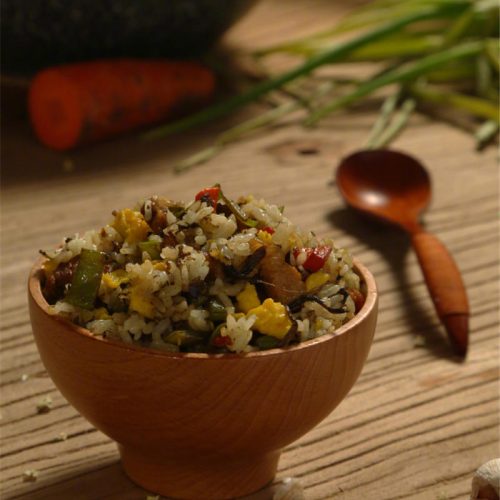
Olive Vegetable Fried Rice with Green Beans & Pork

Equipment
- Wok Carbon steel recommended for wok hei
- Spatula
Ingredients
Main Ingredients
- 2 cups cooked rice day-old Jasmine rice is best
- 1 cup green beans trimmed and diced into small cubes
- 1/2 cup carrot diced into small cubes
- 4 oz pork belly skin removed, diced (or use ground pork)
- 2 large eggs beaten
Seasonings
- 2 tbsp Olive Vegetable (Gan Lan Cai) store-bought jarred
- 1 tbsp cooking oil divided use
- 1 tsp Shaoxing wine
- 1/2 tsp light soy sauce optional, for aroma
Instructions
- Prep the ingredients: Dice the green beans, carrots, and pork belly into uniform small cubes (about the size of a corn kernel). Crack the eggs into a bowl and beat well.

- Cook the eggs: Heat about 1/2 tablespoon of oil in the wok over medium heat. Pour in the egg liquid. Stir constantly to create small, tender curds. Remove from the wok and set aside.

- Crisp the meat: Add the remaining oil (if needed) and the diced pork belly to the wok. Stir-fry over high heat until the meat turns white and the edges begin to brown and crisp (rendering the fat).

- Cook the vegetables: Add the diced green beans and carrots. Stir-fry vigorously for 3-4 minutes. Splash the Shaoxing wine around the edges of the wok to deglaze and remove gamey flavors. (Optional: Add light soy sauce here).
- Add flavor base: Once the beans are blistered and fully cooked (important for safety), add the Olive Vegetable. Stir well to coat the meat and vegetables.

- Fried Rice assembly: Add the rice to the wok. Use your spatula to break up any clumps and stir-fry until the rice is hot and uniform in color.
- Finish: Add the cooked eggs back into the wok. Toss everything together until well combined. Taste a few grains; add a pinch of salt only if necessary (the olive vegetable is salty). Serve hot.
Notes
Calories: ~480 kcal
Carbohydrates: 55g
Protein: 18g
Fat: 22g
Sodium: 850mg
(Disclaimer: Nutrition information is calculated using an ingredient database and should be considered an estimate. Garnishes and optional ingredients are not included.)





Leave a Reply