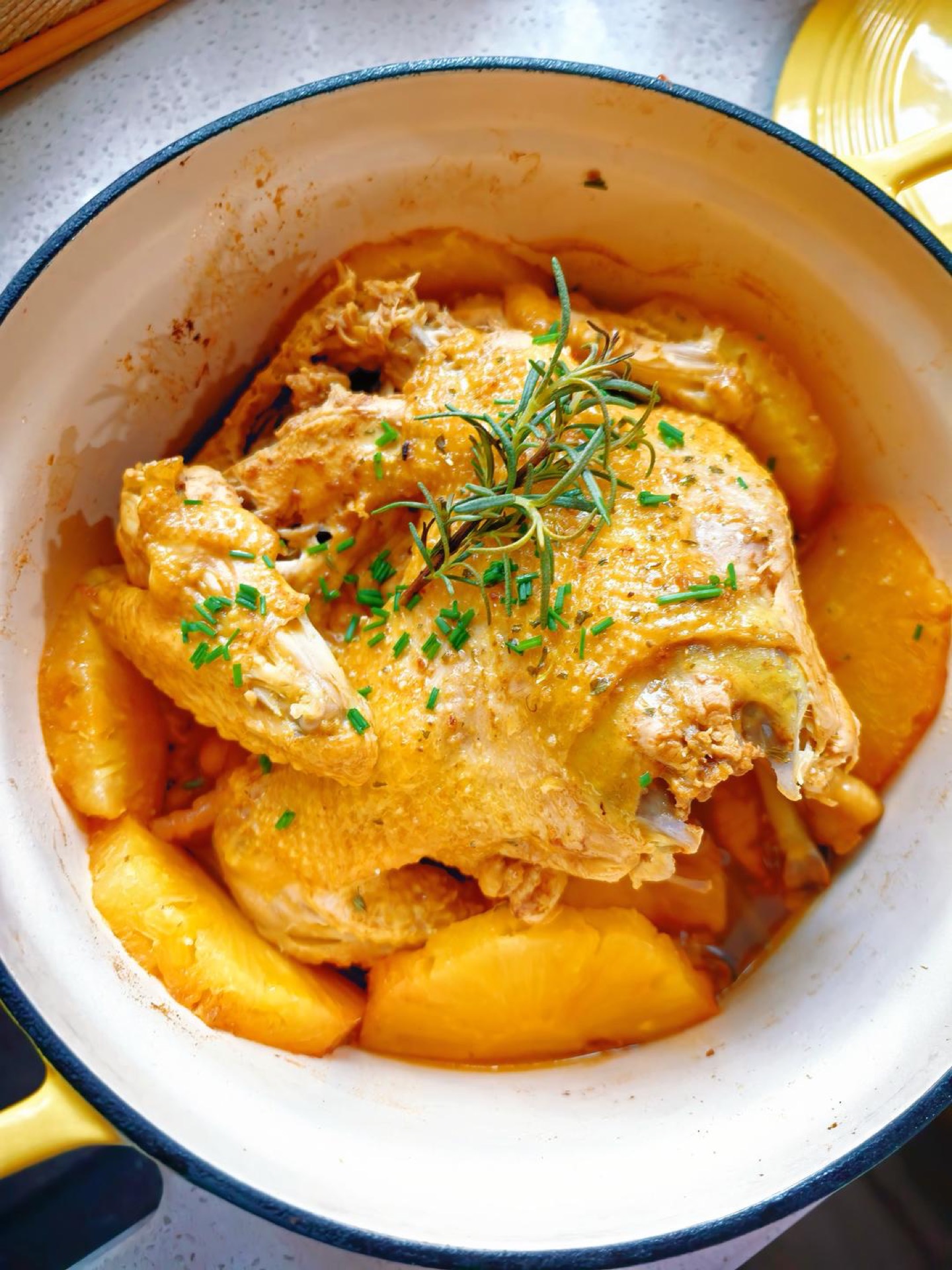
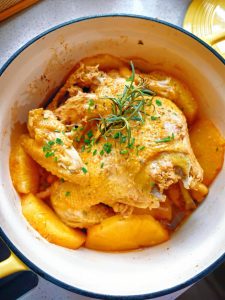
If you have ever walked past a Cantonese home kitchen at dinnertime and caught that sweet, caramelized pineapple-and-soy aroma drifting out the window, you already know the dish I am about to share. Pineapple roasted chicken, or 菠萝霸王鸡, is the kind of meal that makes a whole bird disappear in one sitting — the meat so tender it slips off the bone, the glaze sticky and glossy, and the pineapple rings around it turned jammy and golden from the braise. It looks like a weekend project, but the actual hands-on work is barely fifteen minutes; the rest is patience and a covered pot.
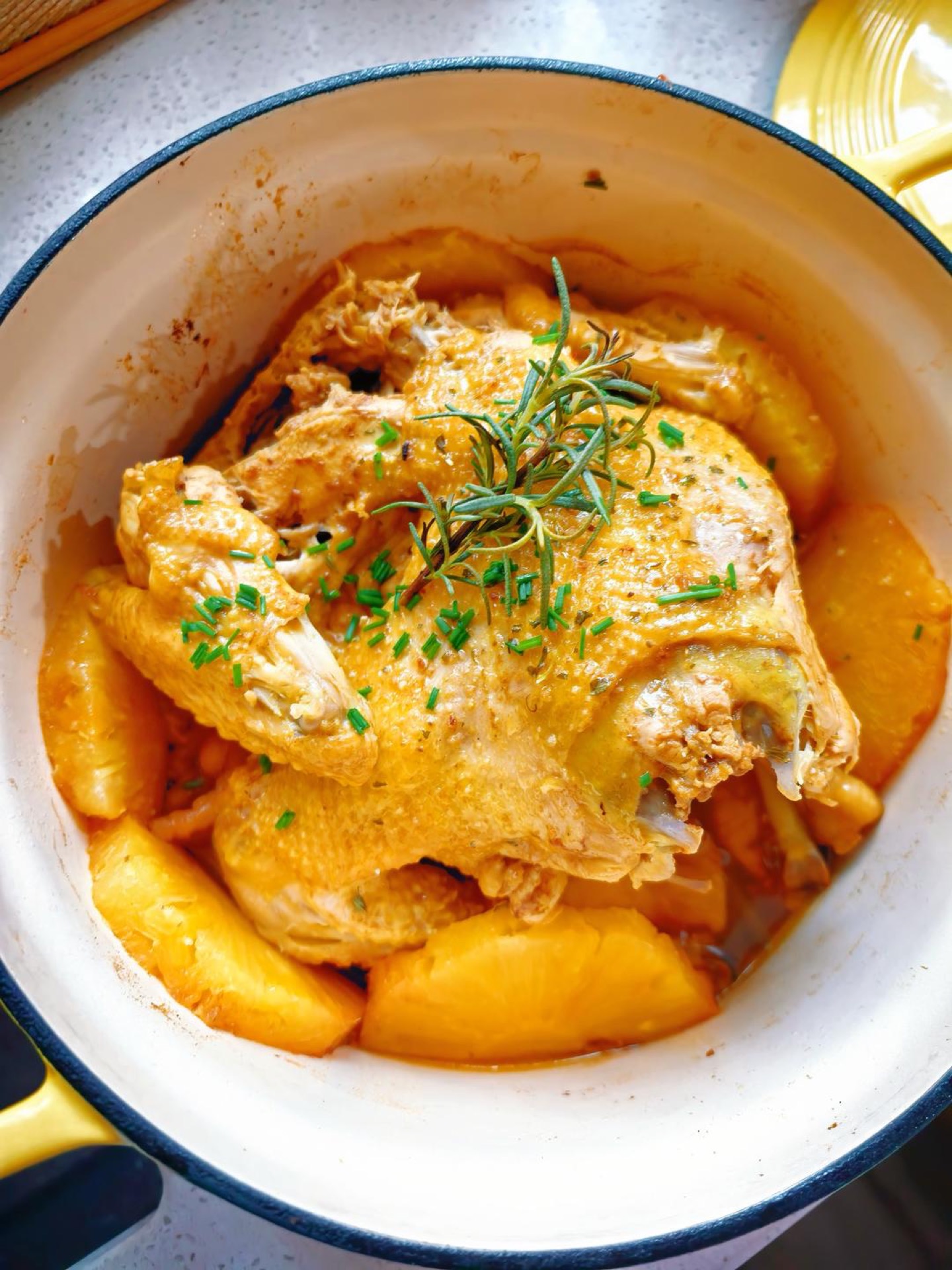
What makes this version special is the marinade. Fresh pineapple juice goes in with soy, honey, and a touch of oyster sauce, and the whole chicken sits in that bath overnight. By the time it hits the pot, the fruit’s natural enzymes have already started their quiet work, and the braise finishes the job. The name 霸王鸡 — “overlord chicken” — is a playful nod to how the pineapple takes charge of the entire bird. If you have made our rice cooker whole chicken before, you already understand the magic of a covered, low, gentle cook; this recipe uses the same principle with a tropical twist.
What Is Pineapple Roasted Chicken?
菠萝霸王鸡 is a Cantonese home-style dish in which a whole chicken is marinated in a pineapple-soy-honey sauce, then braised over a bed of ginger, scallions, and fresh pineapple until the meat is spoon-tender. Despite the word “roasted” in the English name, the traditional home method is a covered pot braise — the chicken steams and caramelizes at the same time, which is why the glaze clings so beautifully. The pineapple does double duty: its juice sweetens and tenderizes, while the fruit rings around the bird soak up the savory marinade and turn into a jammy, almost candy-like side.
Pineapple contains bromelain, a group of proteolytic enzymes that break down protein bonds. That is why a long pineapple marinade makes chicken noticeably more tender — and also why you should not marinate for days on end, since the same enzymes can eventually turn the surface of the meat mushy.
The dish belongs to the same family as other Cantonese fruit-and-meat braises, and it sits comfortably next to the roasted and glazed chicken recipes we cook most often at home. If you like the sweet-savory glaze here, you will almost certainly enjoy our honey roasted chicken wings, which use a similar honey-soy lacquer on smaller pieces.
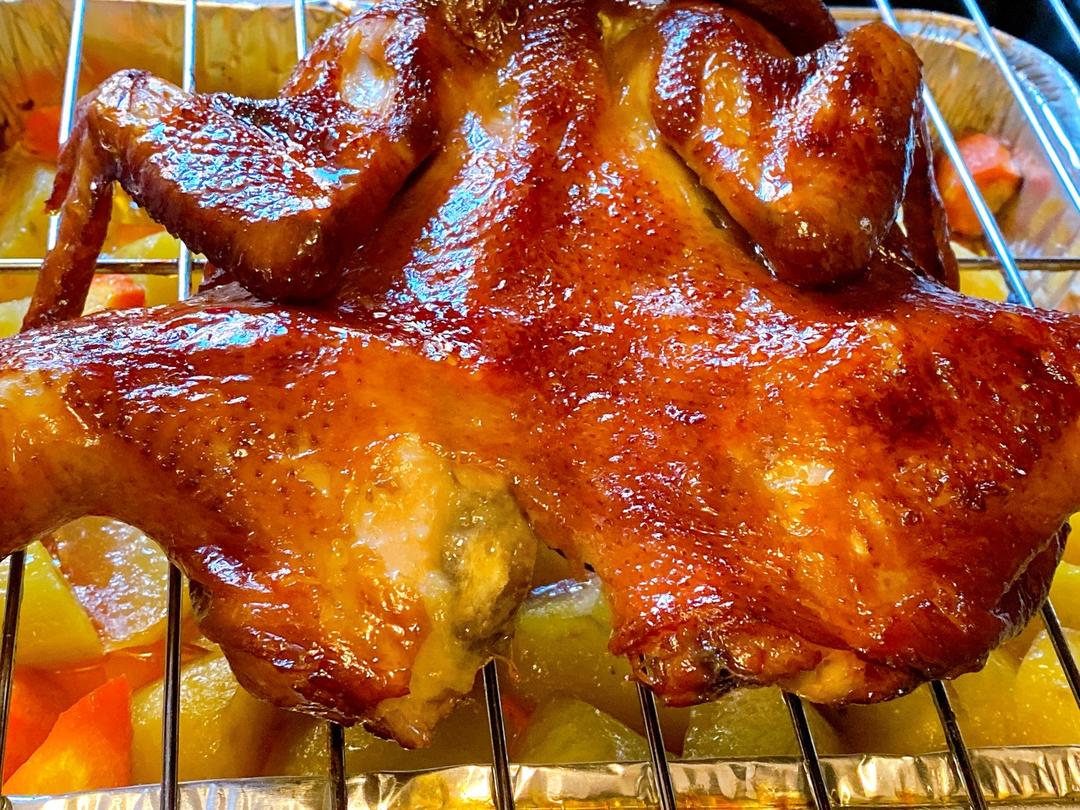
1Honey Roasted Chicken Wings (Mizhi Kao Jichi)These Honey Roasted Chicken Wings are marinated in a savory cumin-soy blend and roasted over a bed of potatoes. Sticky, sweet, and incredibly easy to make.Check out this recipe

For a more classic take on the same bird, our Chinese roast chicken walks through the oven method and the seasoning blend behind a crisp-skinned 烤鸡.
2Authentic Chinese Roast Chicken (Kao Ji in the Oven)A foolproof method for making incredibly flavorful and juicy Chinese roast chicken. Brined overnight in a spiced soy marinade and roasted over root vegetables for the ultimate homestyle feast.Check out this recipe
And if you love the idea of a hands-off chicken dinner but want something bite-sized and kid-friendly, our oven baked popcorn chicken delivers all the crunch with none of the deep-frying.
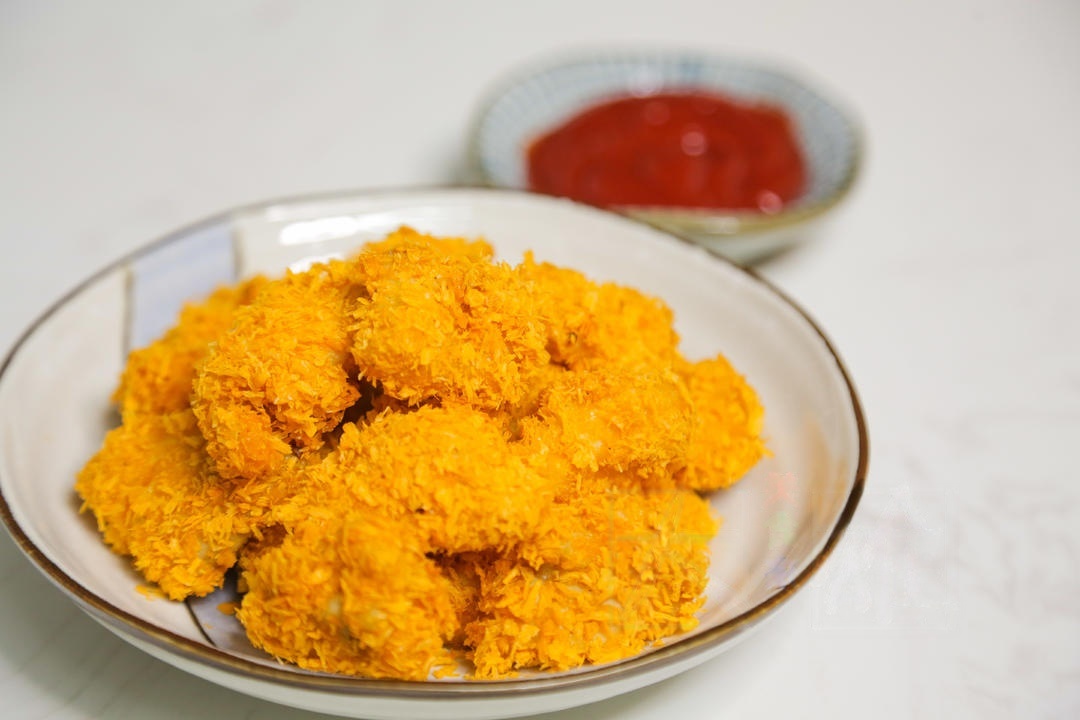
3Oven-Baked Popcorn Chicken (Ji Mi Hua)This Oven-Baked Popcorn Chicken (Ji Mi Hua) offers the satisfying crunch of the fast-food classic but uses lean chicken breast and baking instead of deep-frying to keep it light and healthy. It features a secret touch of Sichuan Tengjiao oil for a unique aroma.Check out this recipe
Why This Recipe Works
Three things make this dish dependable. First, the overnight marinade. Pineapple juice, soy, honey, and oyster sauce penetrate the bird while it rests in the fridge, so the seasoning reaches past the skin. Second, the cooking vessel. A heavy pot or a rice cooker traps steam, and trapped steam is what turns a whole chicken from “cooked” into “fall-apart.” Third, the fruit acid. The bromelain in fresh pineapple gently tenderizes the meat, which means you get that slow-braised texture without actually braising for hours.
It also helps that the recipe is forgiving. If your chicken is a little bigger than mine, add ten minutes. If your pot runs hot, keep the flame low and check at the twenty-five-minute mark. There is very little that can go wrong as long as you do not lift the lid too often. For a deeper look at how heat behaves on different stovetops, our stir fry temperature guide gas electric stove explains why a low, steady flame matters more than a high one for this kind of covered cooking.
Equipment Needed
You do not need much, but the pot matters. A heavy-bottomed wok with a lid, a Dutch oven, or a clay pot all work well — anything that holds the whole bird with a little room around it and seals in steam. I also use a cutting board for the pineapple and aromatics, a slotted spoon for lifting the chicken out without losing the sauce, and a meat thermometer to confirm the thigh hits 165°F (74°C).
One optional but genuinely useful item: a large resealable food bag. It lets you press the marinade against every surface of the chicken and squeeze out the air, which is far more effective than basting in a bowl. A rice cooker is a legitimate alternative cooking vessel here — many Cantonese home cooks simply press the cook-rice button and walk away. If you are still building out your kitchen, our guide to the best kitchen tools for Chinese cooking covers the essentials worth owning.
Ingredients
The full measured list is in the recipe card below, but here is the shape of it: one whole chicken around 2 lb (900 g), fresh pineapple (about a quarter of it blended for juice, the rest sliced for the pot), soy sauce, honey, oyster sauce, a splash of dark soy for color, optional Shaoxing wine, ginger, scallions, and a little oil. Scallions, parsley, and rosemary are for finishing.
Ingredient Notes
Pineapple. Fresh is strongly preferred. Canned pineapple is pasteurized, which deactivates most of the bromelain, so you lose the tenderizing effect — though the flavor will still be good. Ask the fruit shop to cut it for you; a half-moon slice is the easiest shape to work with and saves a lot of knife time.
Chicken. A 2 lb (900 g) bird fits most home pots. If yours is larger, either use a bigger pot or spatchcock it. Do not skip the boiling-water blanch — pouring 100°C (212°F) water over the skin tightens it and helps it hold the glaze.
Soy sauce. Light soy brings the salt and the savory backbone; dark soy is only there for color, so a teaspoon is plenty. If you are cooking gluten-free, use tamari and check your oyster sauce label.
Honey. Real honey gives the best shine and a floral note. If your honey has crystallized, warm the jar gently before measuring.
Oyster sauce. This is the umami layer. If you do not have it, Orleans-style roast seasoning is the substitute called for in many home versions, and it works surprisingly well. A spoonful of our spicy beef sauce would push the glaze in a completely different, spicier direction if you want to experiment.
Prep & Mise en Place
Do all your cutting before the chicken goes anywhere near the pot. Blend and strain the pineapple juice so you have about 50 g (1/4 cup) of clear liquid. Whisk the marinade together in a small bowl so the honey dissolves fully. Cut the remaining pineapple into rings or thick wedges. Slice the ginger, segment the scallions, and chop the garnish scallions. Then wash and blanch the chicken, pat it dry, and get it into the bag with the marinade.
Because the marinating step is long, this is a good recipe to set up in the morning before work or the night before. Once the bag is sealed and in the fridge, the rest of the dish is assembly. If you are serving rice, start it about thirty minutes before the chicken finishes.
Cooking Process
Step 1 — Pick the Right Pineapple and Chicken
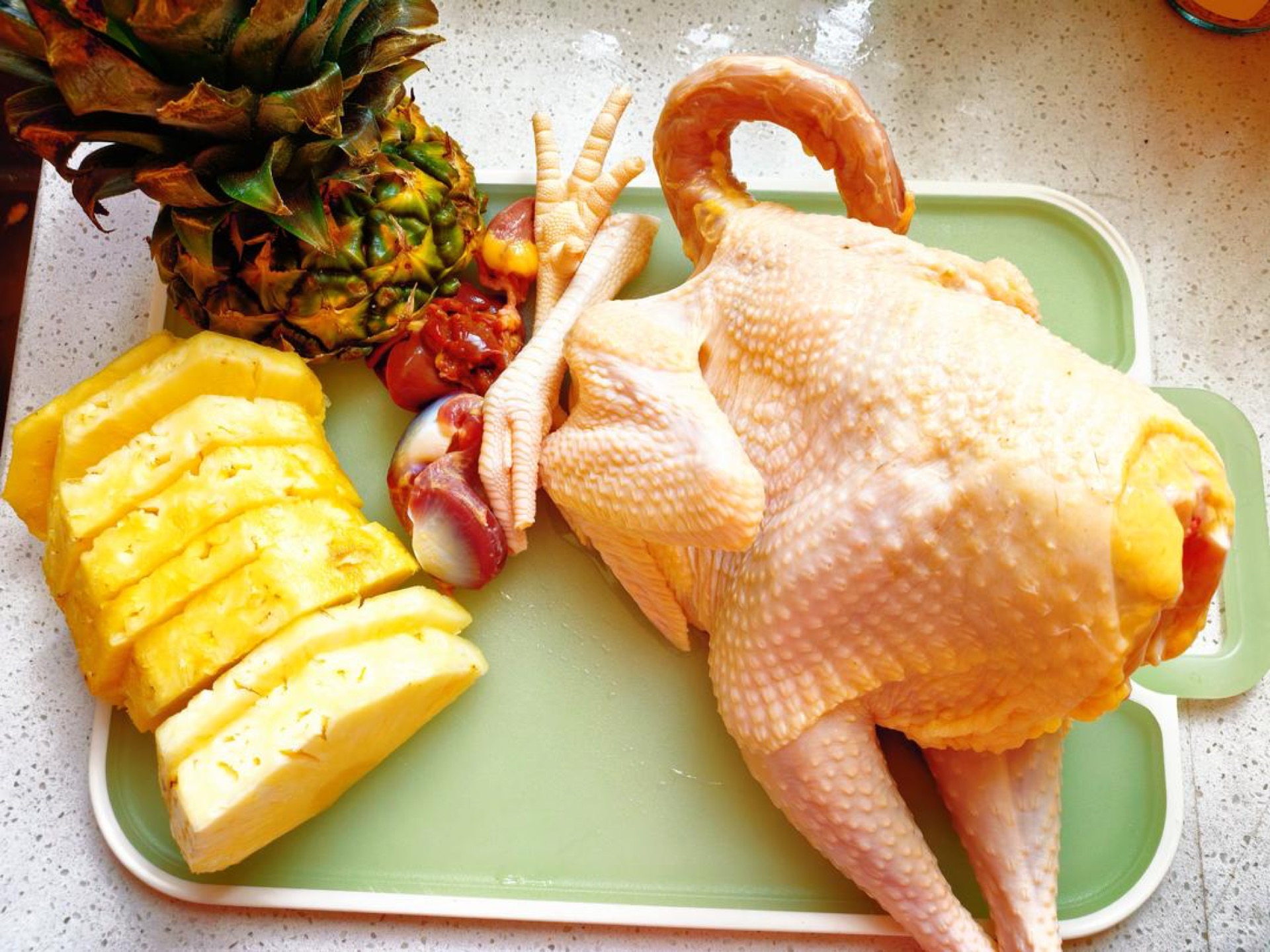
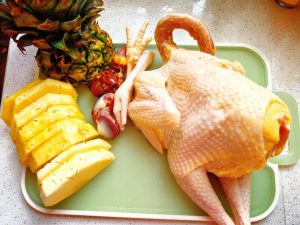
Ask the fruit shop to cut the pineapple for you — a half-moon slice works well. My chicken weighed about 2 lb (900 g) and the pineapple was just under 3 lb (1.4 kg); size the bird to fit your pot.
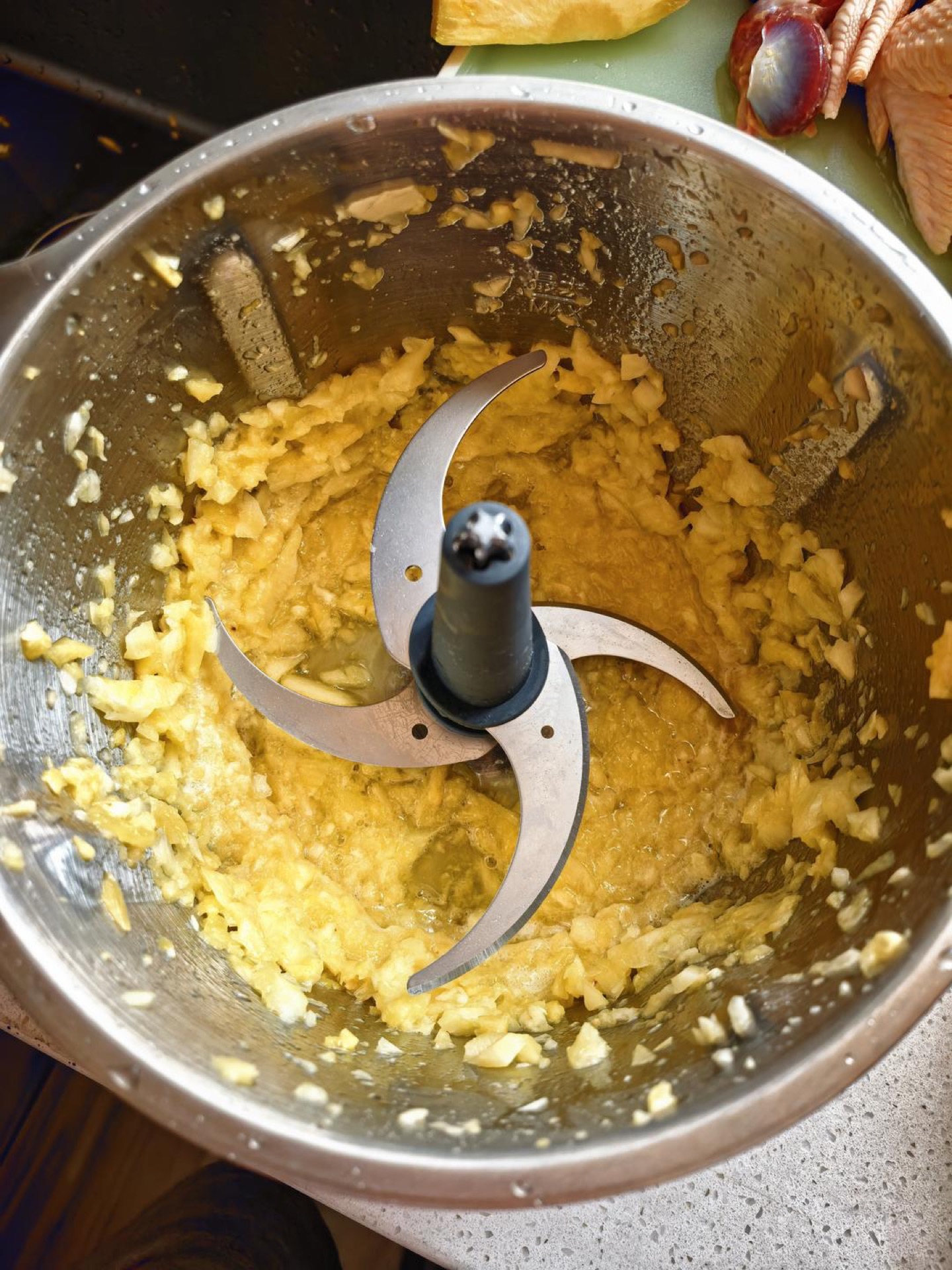
Step 2 — Blend a Quarter of the Pineapple
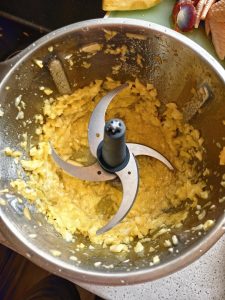
Blend one quarter of the pineapple into a fine purée so it can be juiced.
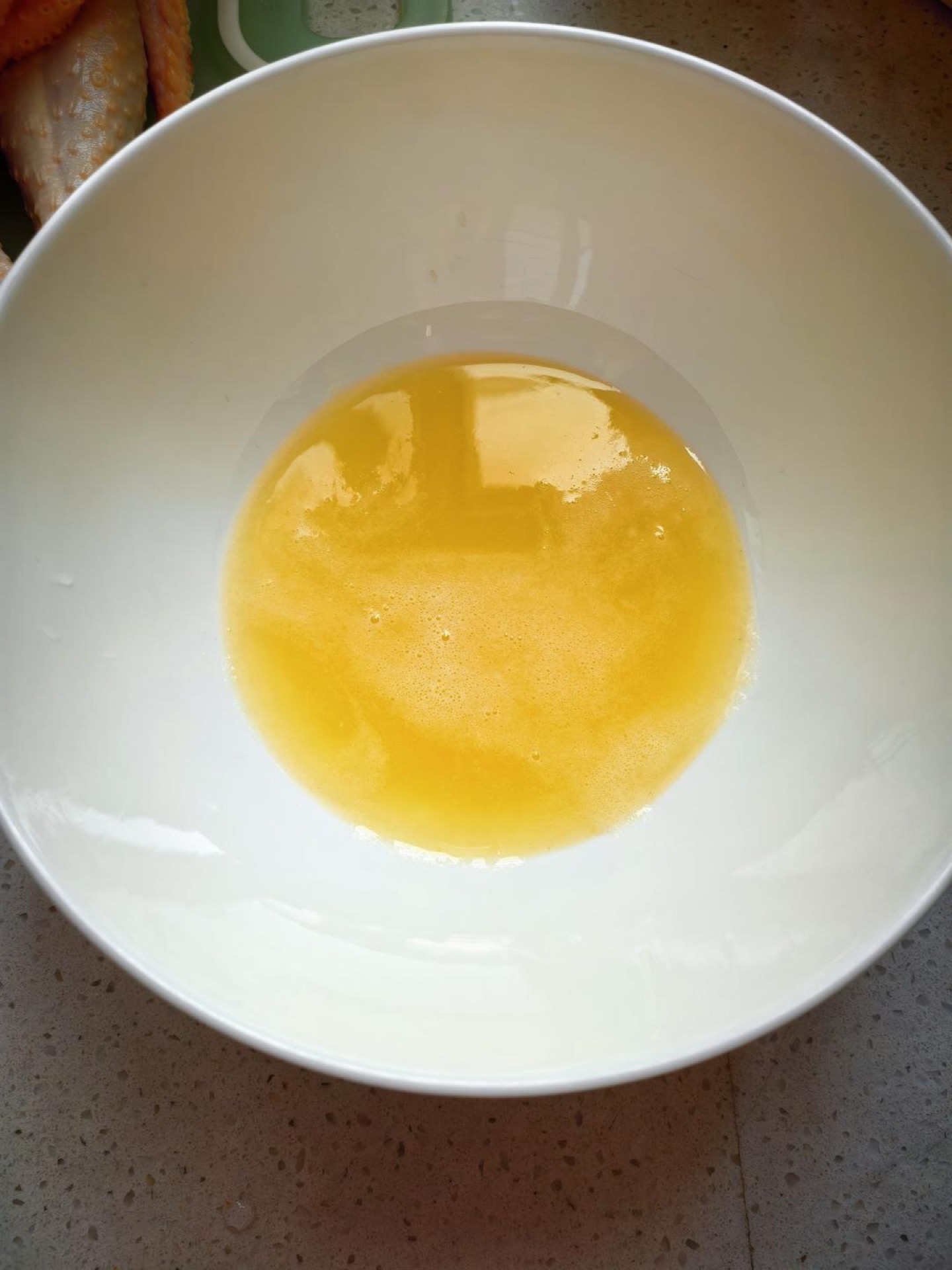
Step 3 — Strain the Pineapple Juice
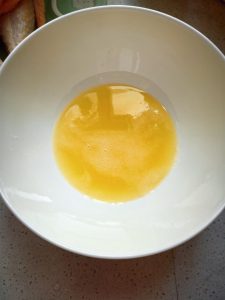
You need about 50 g (1/4 cup) of pineapple juice — strain out the pulp and discard it.
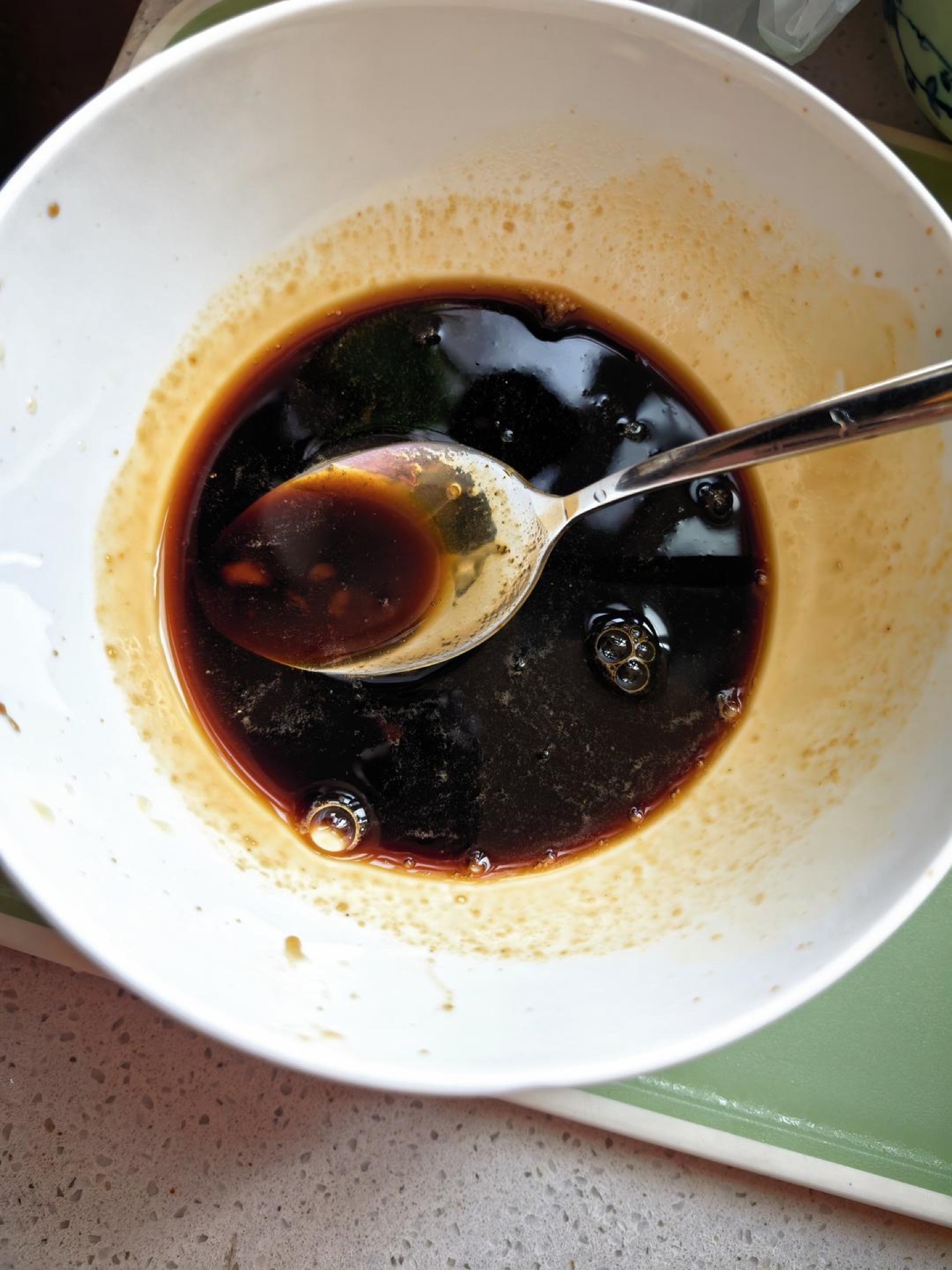
Step 4 — Build the Marinade
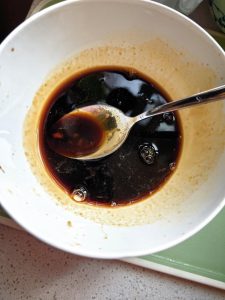
Combine the soy sauce, honey, oyster sauce (or Orleans roast seasoning), and a little dark soy sauce for color.
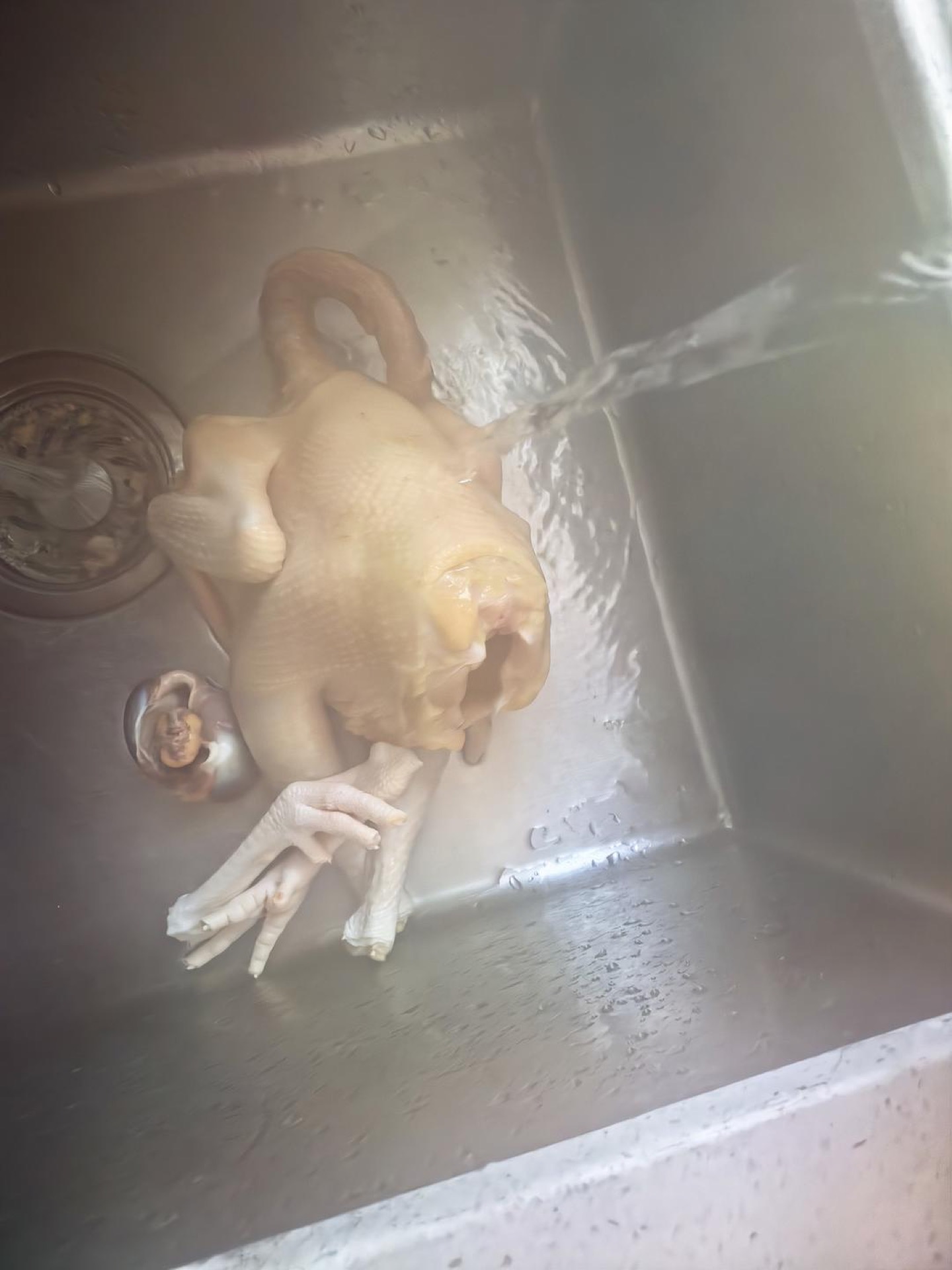
Step 5 — Blanch the Chicken
Wash the chicken clean, then pour 100°C (212°F) boiling water over it to lock in freshness.
Step 6 — Marinate Overnight
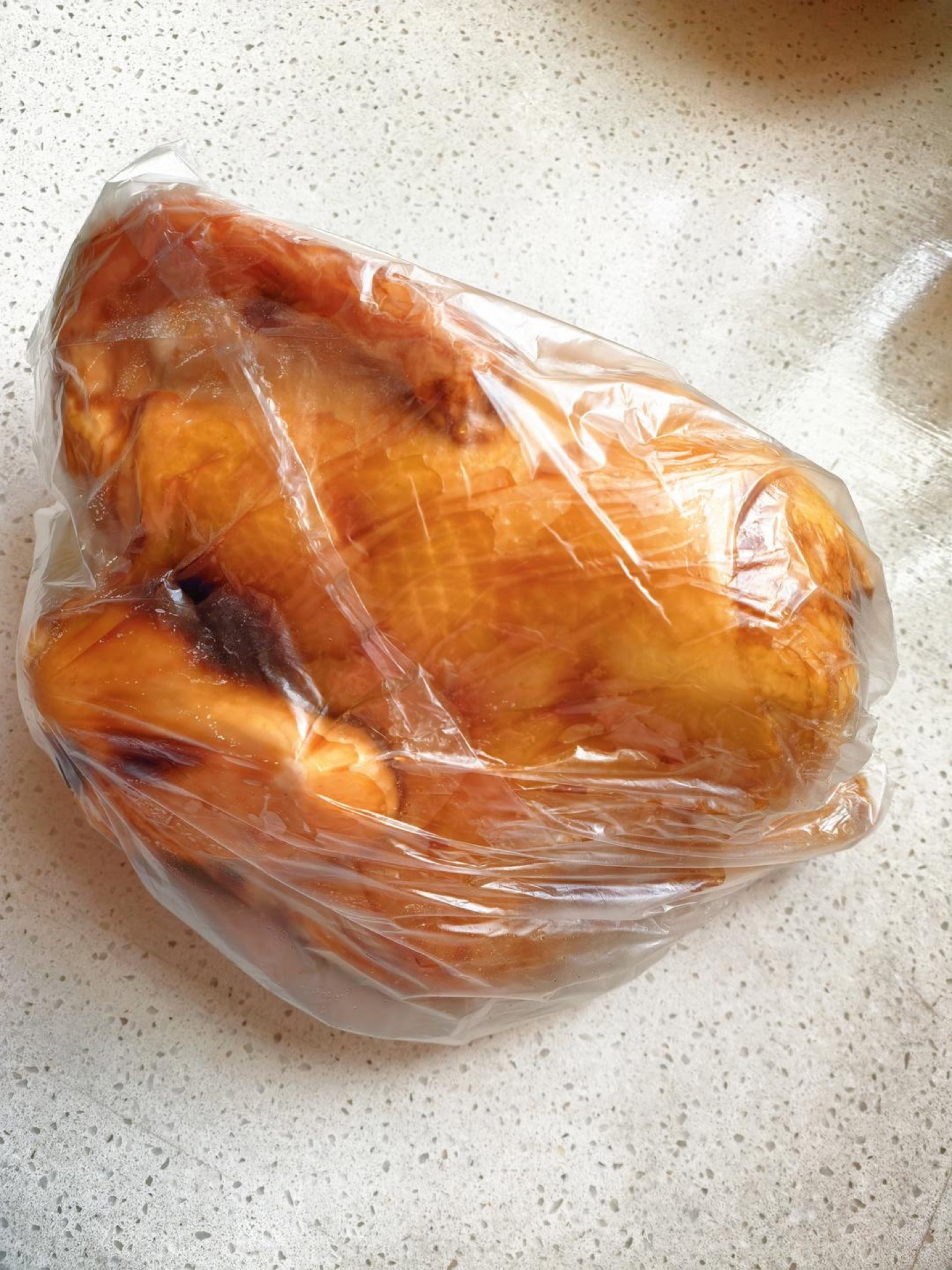
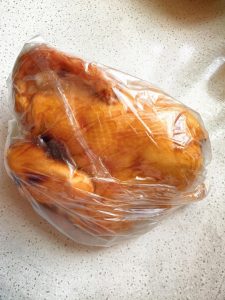
Coat the chicken in the sauce, place everything — chicken and all the sauce — into a sealed food bag, press out the air, and let the marinade cling to every part of the bird. Rest overnight, or at least 6 hours.
Step 7 — Lay the Pot Base
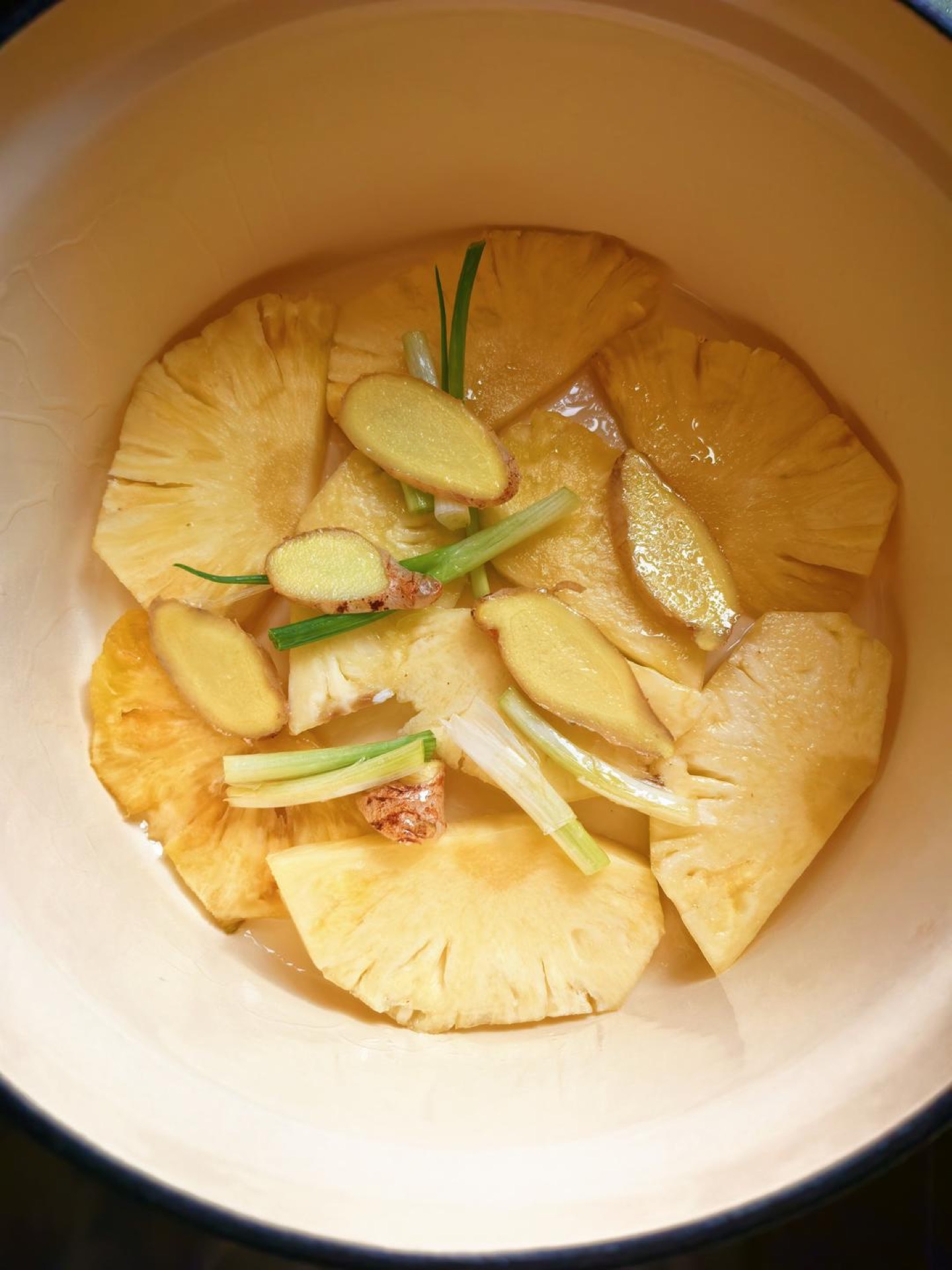
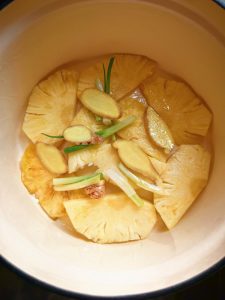
Add a thin layer of oil to the pot, then scatter in the ginger, scallion segments, and pineapple.
Step 8 — Add the Chicken and Pineapple Ring
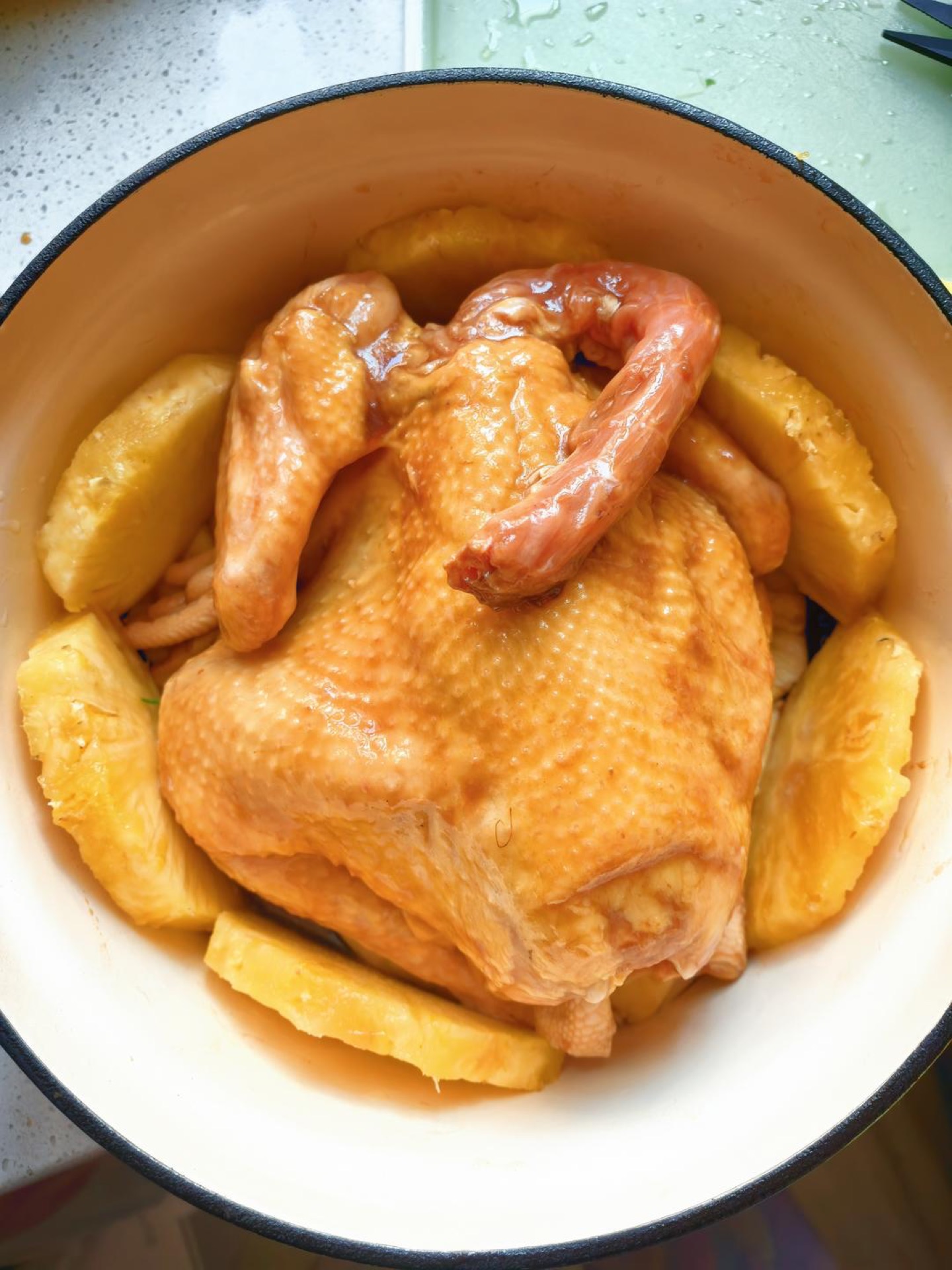
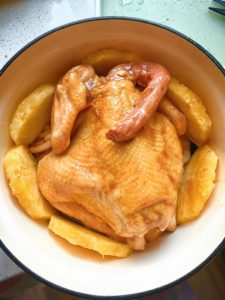
Place the chicken on top, arrange a ring of pineapple around it, and pour all the marinade over the chicken.
Step 9 — Braise for 30 Minutes
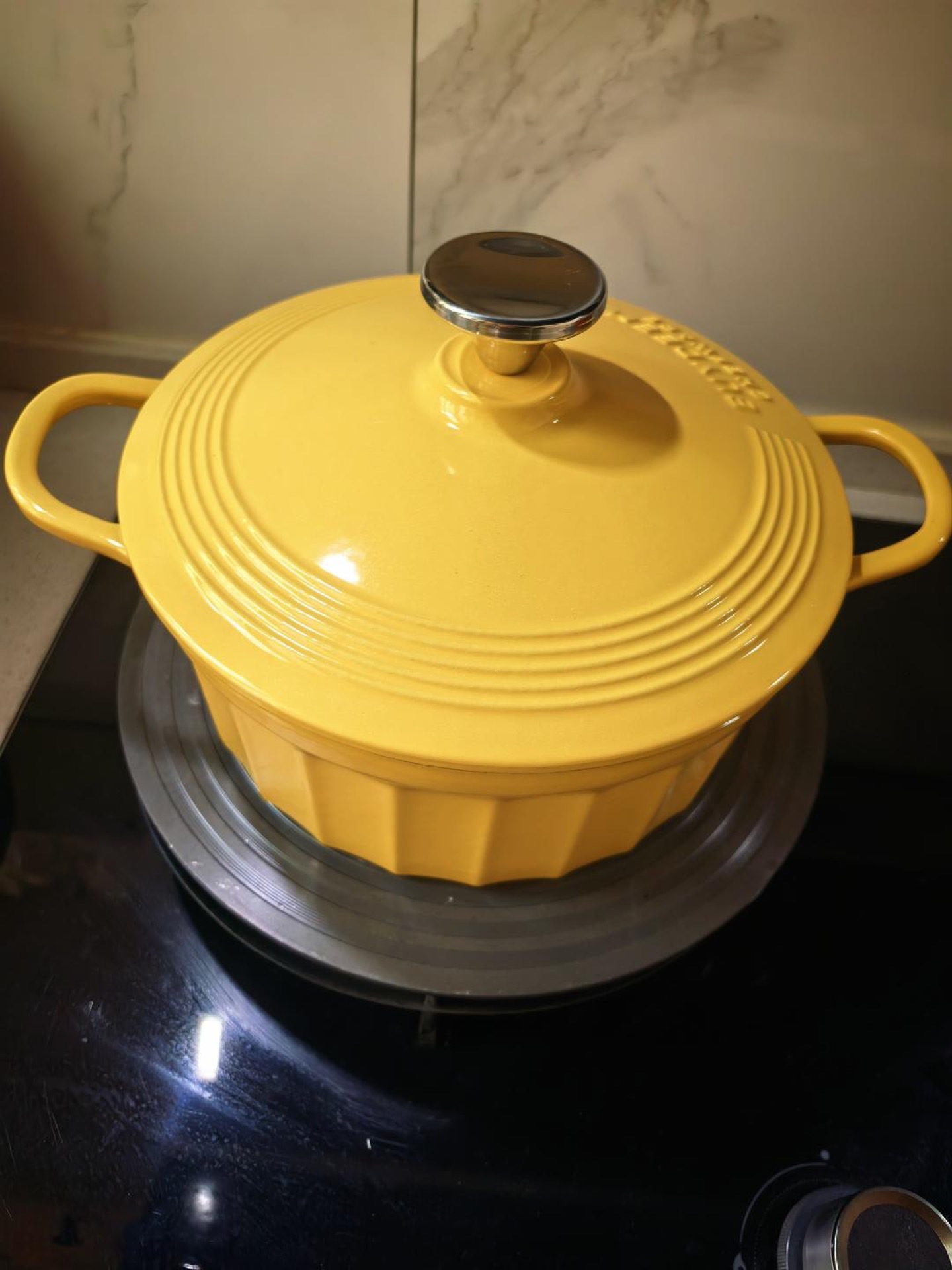
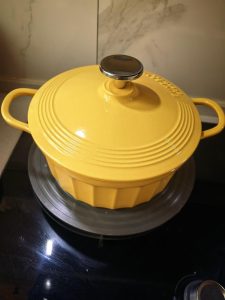
Cover and braise for 30 minutes, until the chicken is fall-apart tender. Alternatively, use a rice cooker on the cook-rice setting. While it cooks, you can stir-fry a vegetable or simmer a soup.
Step 10 — Garnish and Serve
Scatter chopped scallions on top — parsley and rosemary are purely personal preference. After adding the scallions and rosemary, cover the pot briefly; the aroma when you open it is wonderful. The fruit acid in pineapple makes meat more tender, so it doesn’t need long cooking.
Common Mistakes When Making Pineapple Roasted Chicken
1. Marinating for only an hour. The flavor needs time to reach the bone, and the pineapple enzymes need time to work. An hour gives you surface seasoning only. Fix: plan for at least 6 hours, ideally overnight.
2. Using pineapple with the pulp left in the juice. Pulp scorches on the pot bottom and makes the sauce grainy. Fix: strain the blended pineapple through a fine sieve and use only the clear juice.
3. Cooking on high heat. A hard boil toughens the meat and reduces the sauce to a sticky, salty film before the chicken is done. Fix: keep the flame low, cover, and let the steam do the work.
4. Lifting the lid every few minutes. Each peek releases the trapped steam that is cooking the bird. Fix: set a timer and leave it alone for the full thirty minutes.
5. Skipping the boiling-water blanch. Without it, the skin stays slack and the glaze slides off. Fix: pour 100°C (212°F) water evenly over the whole bird before marinating.
6. Crowding the pot. If the chicken touches the sides with no room for steam to circulate, it cooks unevenly. Fix: use a pot that fits the bird with an inch or two of clearance, or spatchcock the chicken.
7. Not checking the internal temperature. A beautiful glaze means nothing if the thigh is still pink near the bone. Fix: verify 165°F (74°C) with a thermometer before serving.
Variations
Rice cooker version. Follow the same layering — aromatics and pineapple on the bottom, chicken and marinade on top — then press the cook-rice setting. Many cookers will cycle twice; that is fine and produces an exceptionally tender bird.
Orleans-style glaze. Swap the oyster sauce for Orleans roast seasoning for a smokier, slightly sweeter, paprika-forward profile. It is the version many home cooks in Guangdong make.
Spatchcocked and roasted. If you prefer oven roasting, butterfly the chicken, roast at 400°F (200°C) on a rack over pineapple slices, and baste with the reduced marinade every fifteen minutes.
Add vegetables. Chunks of potato, carrot, or even tomato hold up beautifully in the braising liquid and turn the dish into a one-pot meal. A spoonful of the base from our hearty tomato and potato beef stew would actually work as a flavor guide if you want to go in that direction.
Extra heat. Add two dried chilies or a teaspoon of chili crisp to the marinade for a sweet-hot glaze.
Frequently Asked Questions
Can I use canned pineapple instead of fresh? Yes, but the meat will be less tender because canning deactivates bromelain. Use unsweetened juice and reduce the honey slightly, since canned juice is sweeter.
How long can I marinate the chicken? Six hours minimum, overnight is ideal. Do not go past 24 hours — the bromelain will start breaking down the surface of the meat into a mushy texture.
Can I make this in a rice cooker? Absolutely. Layer the aromatics and pineapple on the bottom, set the chicken on top, pour over the marinade, and use the standard cook-rice cycle. It is one of the easiest ways to make this dish.
Why is my sauce too salty? Soy sauce and oyster sauce both carry a lot of sodium, and the braise reduces the liquid. Use light soy rather than regular, and taste the marinade before it goes on the chicken.
Can I use chicken pieces instead of a whole bird? Yes. Bone-in thighs and drumsticks work beautifully and cook faster — check them at the twenty-minute mark.
How to Serve
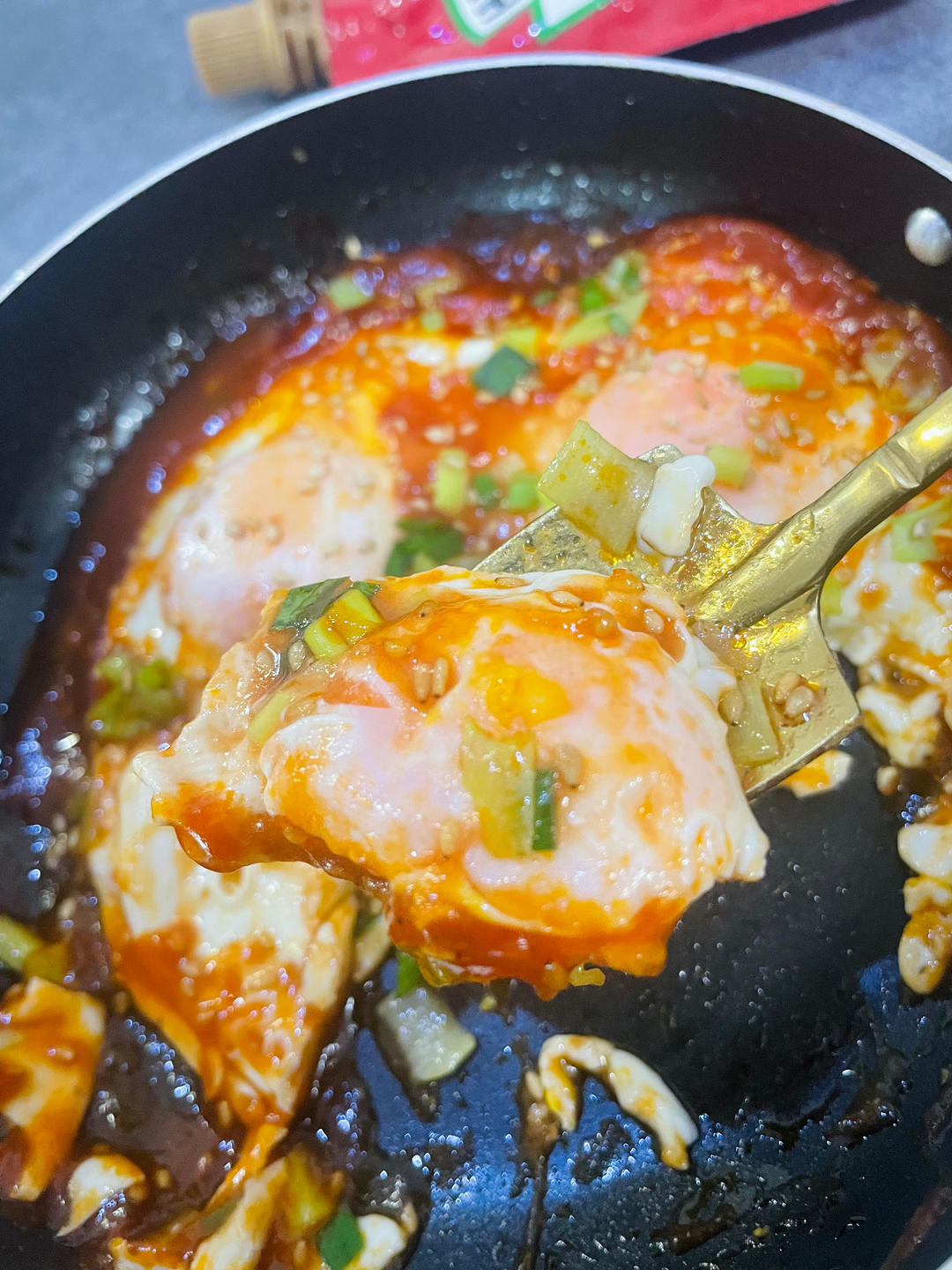
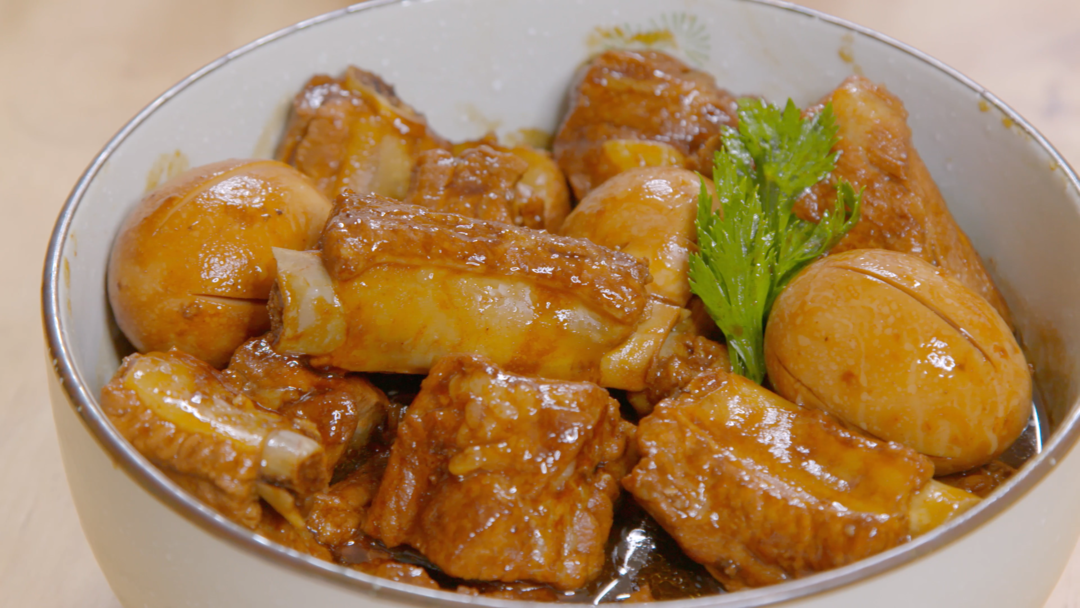
This chicken wants plain steamed jasmine rice to soak up the glaze, plus a simple green vegetable stir-fried with garlic. A crisp cucumber salad or quick-pickled radish cuts through the richness nicely. If you want a second protein on the table, our tomato ketchup fried eggs come together in five minutes and pair well with the sweet-savory sauce. For a heartier spread, serve the chicken alongside our braised pork ribs with eggs — the two braises share a deep, glossy sauce profile that makes for a very generous table.
One texture note: if you are serving something soft alongside, like a silken tofu dish, handle it gently — here is why tofu fall apart so easily and how to keep it intact.
Storage & Reheat
Cool the chicken completely, then refrigerate it in an airtight container with the sauce and pineapple for up to 3 days. The flavor actually deepens overnight. To reheat, place the chicken in a covered pot with a splash of water or pineapple juice over low heat until it reaches 165°F (74°C) throughout — the microwave works in a pinch but can toughen the meat. The sauce and pineapple freeze well for up to 2 months; thaw in the refrigerator overnight.
Allergen Notice
This recipe contains soy from the soy sauce and may contain wheat and shellfish derivatives depending on your oyster sauce brand. Always read labels if you are cooking for someone with allergies. Honey is not suitable for infants under one year.
Nutrition Disclaimer
Nutrition information is calculated using an ingredient database and should be considered an estimate. In cases where multiple ingredient alternatives are given, the first listed is calculated for nutrition. Garnishes and optional ingredients are not included.
About the Author & Recipe Development
Lin grew up watching her mother braise whole chickens in a covered clay pot, and 菠萝霸王鸡 was one of the first dishes she learned to make on her own. This version was developed over several rounds of testing — adjusting the pineapple-to-soy ratio, comparing a wok braise against a rice cooker, and confirming that a 6-hour minimum marinade gives noticeably better results than a quick soak. Every measurement in the card above reflects what actually worked in a home kitchen, not a restaurant line.
Authoritative References
For safe cooking temperatures and storage guidance, see the USDA safe minimum internal temperature chart and the FDA food safety guidance. The tenderizing effect of bromelain in pineapple is documented in food-science literature on proteolytic enzymes in fruit.
Pineapple Roasted Chicken (菠萝霸王鸡): Sweet Pineapple Glazed Roast

Equipment
- Wok
- Cutting Board
- Slotted Spoon
Ingredients
For the Pineapple Marinade
- 1 whole chicken about 2 lb (900 g), giblets removed
- 1 cup fresh pineapple juice about 250 g, from blended pineapple, no pulp
- 3 tbsp soy sauce light soy, or tamari
- 2 tbsp honey plus extra for glazing
- 1 tbsp oyster sauce or Orleans-style roast seasoning
- 1 tsp dark soy sauce for color
- 1 tbsp Shaoxing wine optional
For the Pot
- 1 tbsp neutral oil for the pot base
- 4 slices fresh ginger
- 2 stalks scallions cut into segments
- 2 cups fresh pineapple cut into rings or wedges
For Garnish
- 1 tbsp scallions finely chopped
- 1 tsp parsley optional
- 1 sprig rosemary optional
Instructions
- Ask the fruit shop to cut the pineapple for you — a half-moon slice works well. My chicken weighed about 2 lb (900 g) and the pineapple was just under 3 lb (1.4 kg); size the bird to fit your pot.

- Blend one quarter of the pineapple into a fine purée so it can be juiced.

- You need about 50 g (1/4 cup) of pineapple juice — strain out the pulp and discard it.
- Combine the soy sauce, honey, oyster sauce (or Orleans roast seasoning), and a little dark soy sauce for color.
- Wash the chicken clean, then pour 100°C (212°F) boiling water over it to lock in freshness.
- Coat the chicken in the sauce, place everything — chicken and all the sauce — into a sealed food bag, press out the air, and let the marinade cling to every part of the bird. Rest overnight, or at least 6 hours.
- Add a thin layer of oil to the pot, then scatter in the ginger, scallion segments, and pineapple.
- Place the chicken on top, arrange a ring of pineapple around it, and pour all the marinade over the chicken.
- Cover and braise for 30 minutes, until the chicken is fall-apart tender. Alternatively, use a rice cooker on the cook-rice setting. While it cooks, you can stir-fry a vegetable or simmer a soup.
- Scatter chopped scallions on top — parsley and rosemary are purely personal preference. After adding the scallions and rosemary, cover the pot briefly; the aroma when you open it is wonderful. The fruit acid in pineapple makes meat more tender, so it doesn’t need long cooking.













Leave a Reply