Growing up in Sichuan, the scent of chiles and aromatics frying in oil was the alarm clock that woke me up on weekends. My father, a chef who spent his life in professional kitchens, always said that a meal isn’t finished until there is a jar of “fan sao guang” (rice thief) on the table.

This Spicy Beef Sauce (Xiang La Niu Rou Jiang) is exactly that—a savory, spicy, slightly chewy condiment that is so delicious it “steals” the rice right out of your bowl. While you might be familiar with store-bought chili crisps, making this beef sauce at home is a revelation. It is meaty, deeply aromatic, and free from the preservatives found in commercial jars.
I have tested this recipe multiple times in my home kitchen to ensure the ratios of beef to oil are perfect for preservation. It is the perfect companion for a simple bowl of Simple Clear Beef Noodle Soup or spooned over plain white rice.
What is Spicy Beef Sauce?
Think of this as a “meaty chili crisp.” Unlike a standard ragù or bolognese which is wet and tomato-based, Xiang La Niu Rou Jiang is oil-based. The beef is deep-fried in aromatic oil until it is dehydrated and chewy, almost like jerky, then simmered with chili peppers, fermented bean pastes, and sesame seeds. The result is a long-lasting refrigerated condiment that adds a massive umami bomb to dumplings, noodles, or stir-fries.
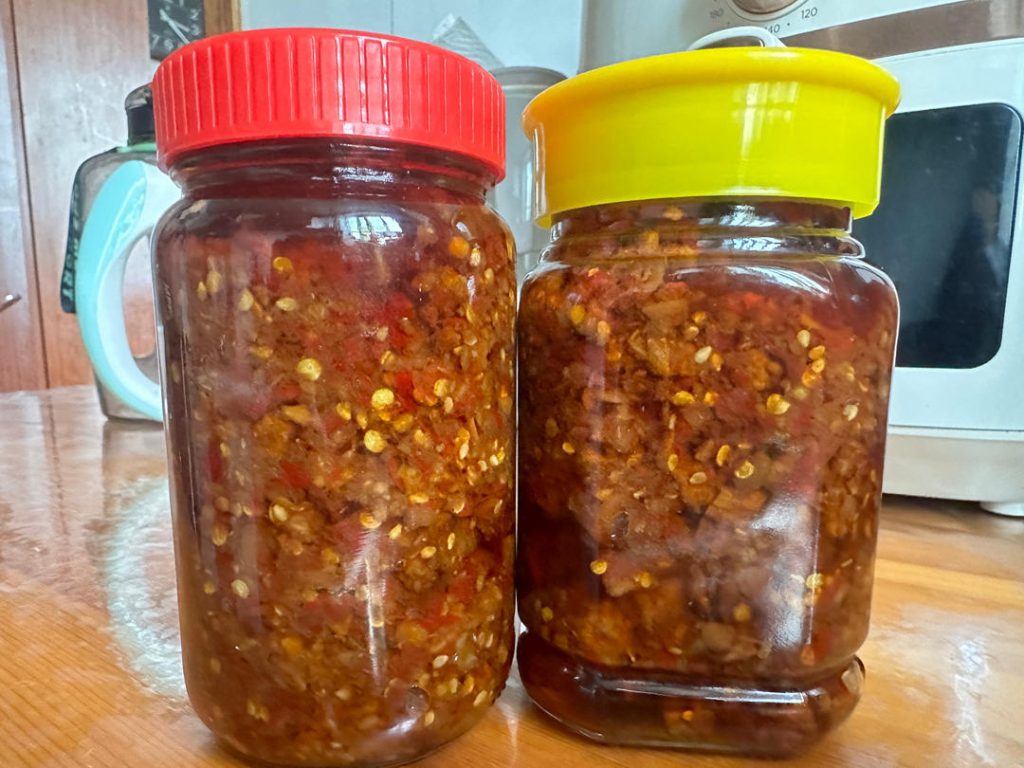
Why This Recipe Works
- Aromatic Oil Infusion: We don’t just use plain oil; we infuse it first with star anise, bay leaves, and Sichuan peppercorns. This layers flavor into the beef from the inside out.
- Scientific Moisture Removal (Reducing Water Activity): The technique of slowly frying the beef and peppers is not just for texture; it is a preservation method. By evaporating the water content, we significantly reduce the water activity of the ingredients. This concentrates the flavor and, crucially, inhibits the growth of spoilage bacteria, allowing the sauce to stay fresh longer when properly refrigerated.
- Balanced Heat: By using a mix of mild red peppers (for body and color) and spicy Thai chiles (for heat), we create a sauce that is flavorful without being painfully spicy.
Key Ingredients & Substitutions
- Beef (400g / 14 oz): I recommend using flank steak or brisket. You want a cut with a little fat but mostly lean.
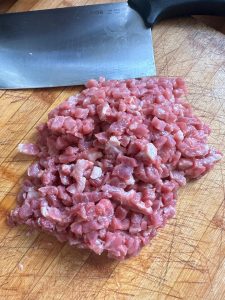
- Hand-cut vs. Ground: I highly recommend hand-cutting the beef into tiny cubes (0.5cm) rather than using machine-ground beef. Hand-cut beef retains a delightful chewy texture, whereas machine-ground beef can become mushy and disappear into the sauce.
- Fresh Peppers:
- Beauty Peppers (200g / 7 oz): These are long, mild red peppers found in Asian markets. A great substitute is Fresno peppers or red Jalapeños.
- Millet Peppers (100g / 3.5 oz): These are small, spicy chiles. Thai Bird’s Eye Chilies are the perfect substitute. If you prefer less heat, replace these with more Fresno peppers.
- Bean Pastes:
- Huang Dou Jiang (100g / 3.5 oz): Yellow Soybean Paste. You can substitute this with Sweet Bean Sauce (Tianmianjiang) or a Korean Doenjang if necessary.
- Doubanjiang (50g / 1.7 oz): Spicy Broad Bean Paste. This is the soul of Sichuan cooking. Look for the “Pixian” variety.
- Aromatics: Fresh ginger, plenty of garlic, and onions (or scallions) for the oil.
- Spices: Star anise, bay leaves, and Sichuan peppercorns.
Recipe Notes Before You Start
- Safety First: We are working with hot oil and water-heavy vegetables. There will be bubbling. Use a deep pot to prevent splatter.
- Equipment: A wok is traditional, but a heavy-bottomed Dutch oven works excellently for maintaining steady heat during the long simmering process.
- Jar Prep: Ensure your storage jars are completely sterilized and bone-dry. Any drop of water in the jar can cause the sauce to spoil.
Mise en Place
- Chop the Beef: Cut your beef into small, uniform cubes (about the size of a pea).
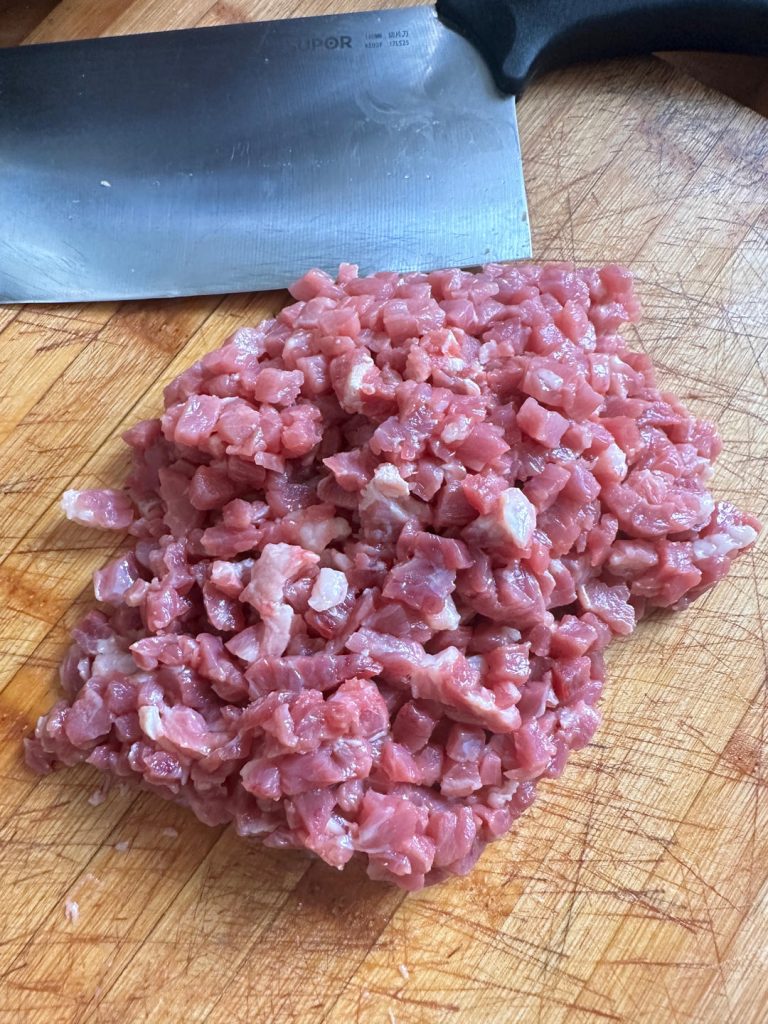
- Process the Veggies: Place the ginger, garlic, and both types of peppers into a food processor. Pulse until finely minced but not a puree. You want visible distinct pieces.
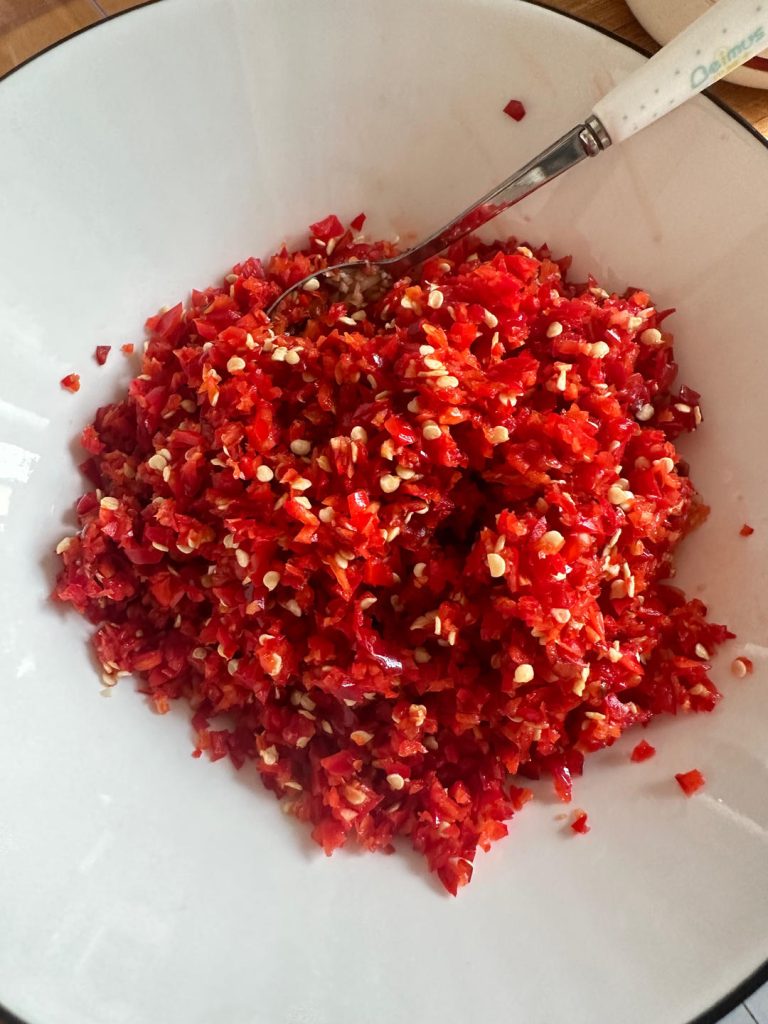
- Prepare the Aromatics: Have your onion, star anise, bay leaves, and Sichuan peppercorns ready in a small bowl.
How to Make Spicy Beef Sauce
Step 1: Infuse the Oil
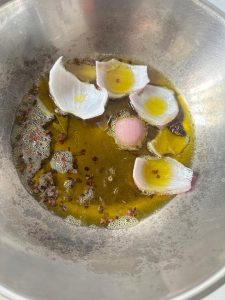
Pour the oil (250g / ~1 cup plus 2 tbsp) into a cold wok or pot. Add the onion (or scallion), star anise, bay leaves, and Sichuan peppercorns. Turn the heat to medium-low.
- Why cold oil? Starting cold allows the flavors to extract slowly before the spices burn. Fry until the onions are golden brown and dry. Use a slotted spoon to remove and discard all the solids. You now have fragrant, golden oil.
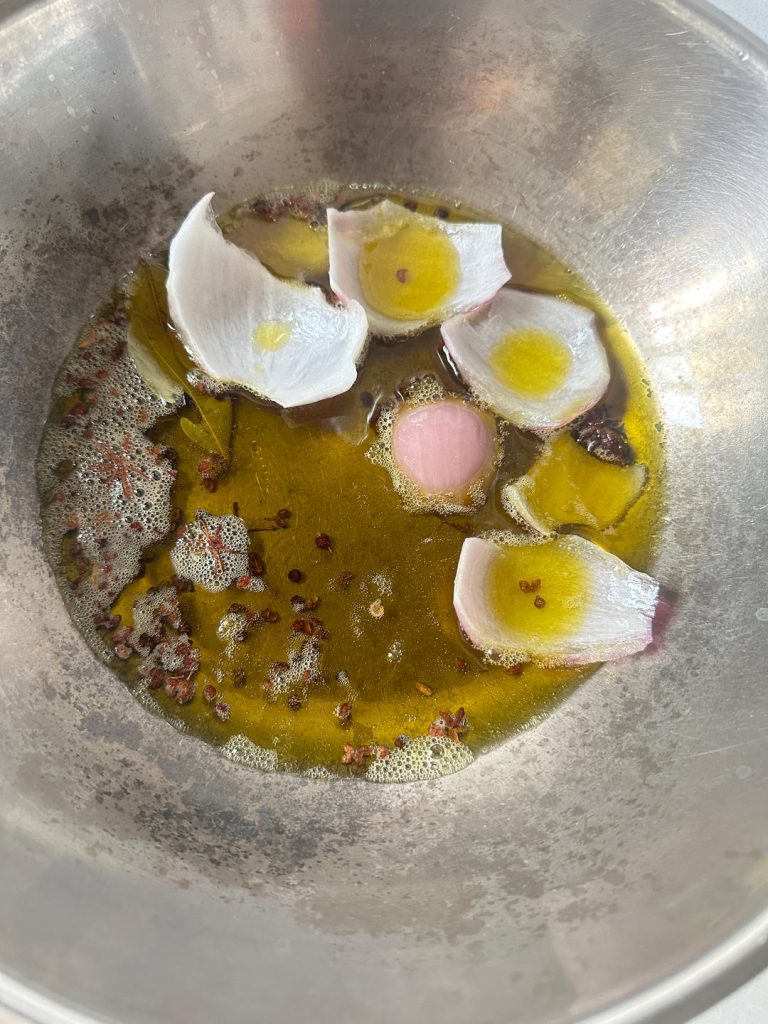
Step 2: Fry the Beef
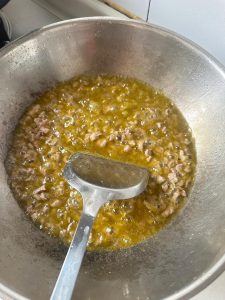
Keep the oil hot (medium heat). Carefully slide in the diced beef. Stir immediately to separate the pieces. Fry for about 2-3 minutes until the beef turns pale and releases its moisture.
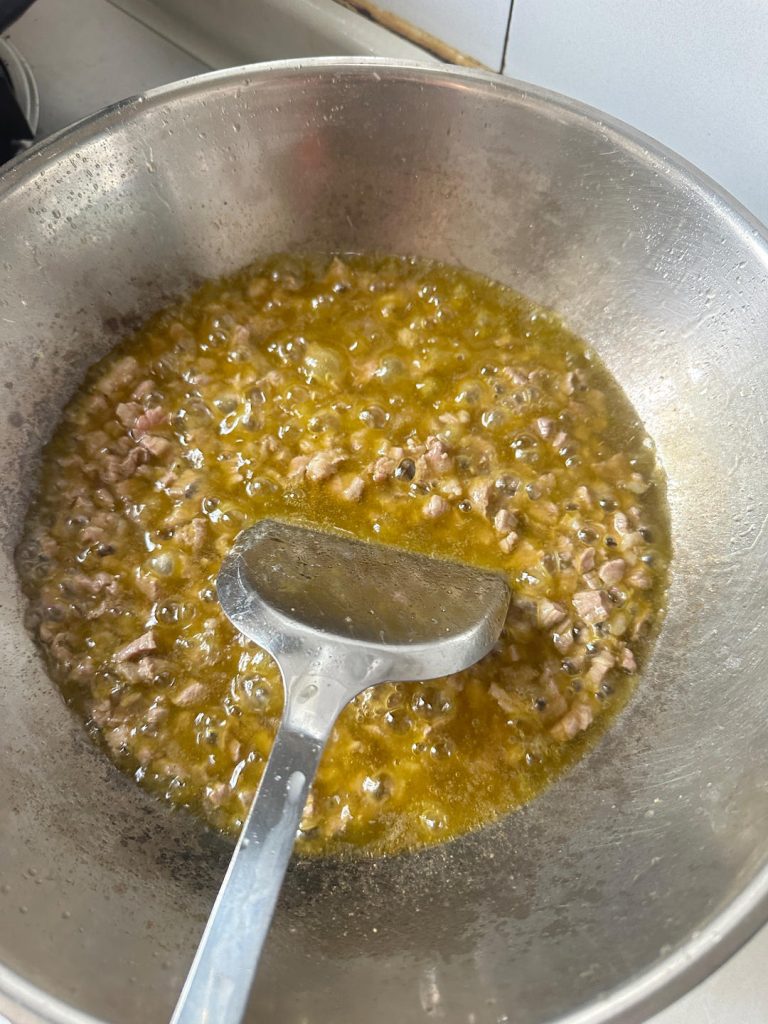
Step 3: Add the Peppers & Aromatics
Pour in the minced pepper, garlic, and ginger mixture. Stir well. Fry for about 5 minutes. You will see a lot of steam rising—this is the water evaporating from the vegetables.
Step 4: Season and Simmer
Add the Doubanjiang (chili bean paste), Huang Dou Jiang (soybean paste), soy sauce, sugar, and white pepper. Turn the heat down to low.
The “Push” Technique: Gently push the sauce from the bottom of the pot regularly to prevent sticking and burning.
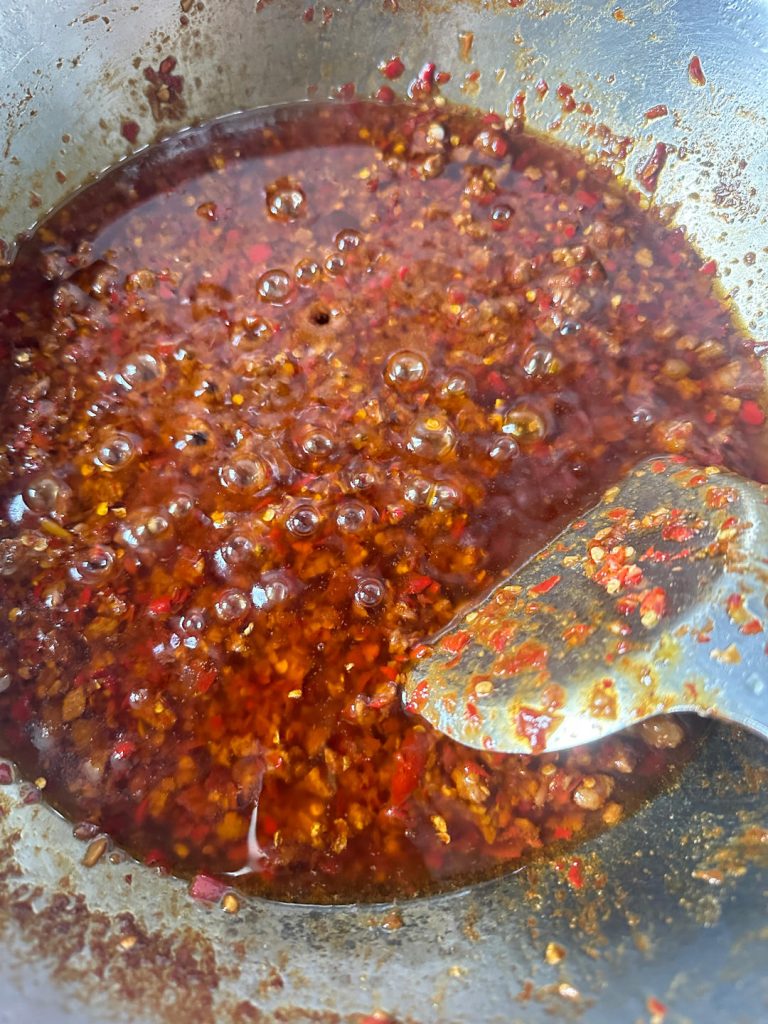
Step 5: The Long Dry-Fry (The Most Important Step)
Continue cooking on low heat for approximately 20 minutes.
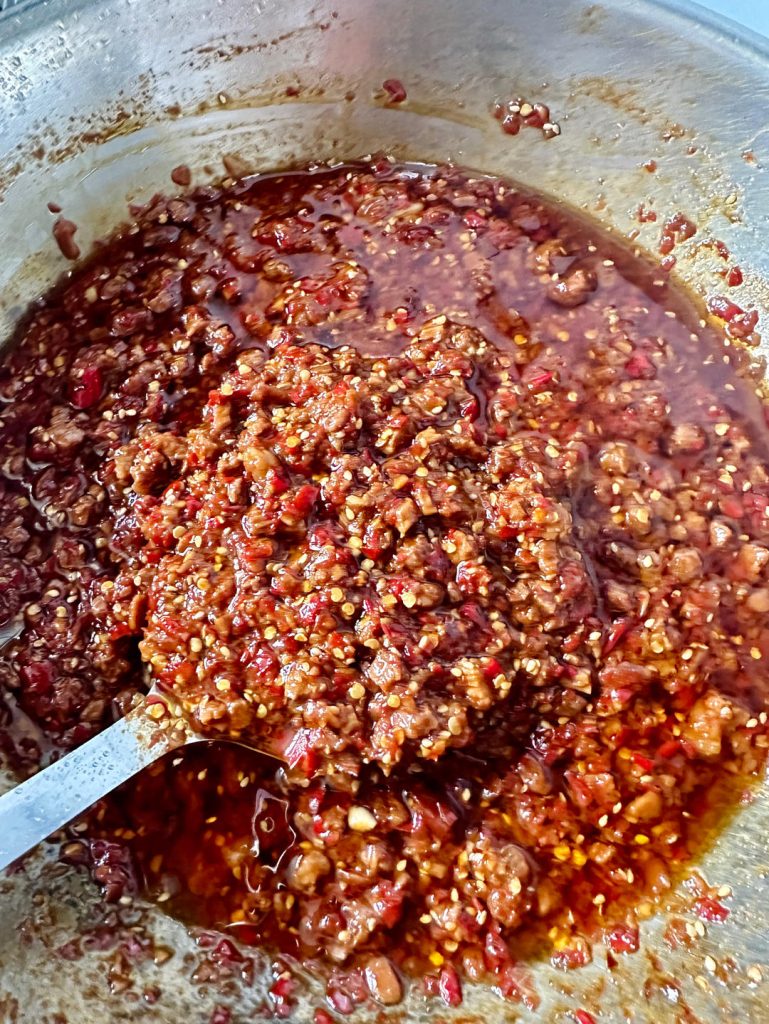
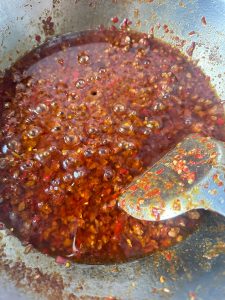
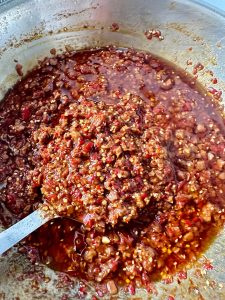
- Visual Cue: You cannot rush this. You know it is done when the oil turns clear and red, separating distinctly from the solids. The bubbling sound will change from a loud “wet” sizzle to a deeper, quieter frying sound. The beef should feel firm, and the peppers should look slightly curled and dark red.
Step 6: Final Seasoning
Stir in the MSG (optional but recommended for authenticity) and the cooked sesame seeds. Stir-fry for another 2 minutes to toast the sesame seeds. Turn off the heat.
Step 7: Cool and Store
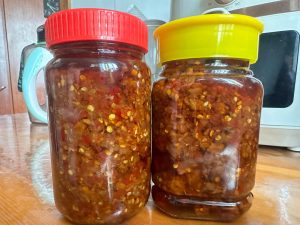
Let the sauce cool completely in the pot. Transfer it into clean, sterilized, and completely dry glass jars. Ensure the solids are submerged under a layer of oil to prevent oxidation and mold contact. Crucial: Unlike commercial versions laden with preservatives, this homemade sauce must be stored in the refrigerator immediately. Do not store at room temperature.
Troubleshooting & FAQ
- Why is my sauce moldy after a week?
- Cause: Usually, this happens because the moisture wasn’t cooked out completely in Step 5, or the storage jar wasn’t dry.
- Solution: Cook it longer next time. The oil must separate completely from the sauce.
- It tastes too salty!
- Cause: Bean pastes vary in salinity.
- Solution: Eat it with unseasoned rice or noodles. Do not add salt during the cooking process; the pastes are salty enough.
- Can I freeze this?
- Answer: Yes, but the texture of the oil may change. It keeps well in the fridge for up to 2 weeks (or longer if prepared perfectly).
Serving Suggestions
This sauce is incredibly versatile.
- Noodles: It transforms a simple bowl of Minced Pork Noodles into a spicy delight (you can swap the pork sauce for this beef sauce).
- Buns: Use it as a topping for Beijing-Style Steamed Buns .
- Vegetables: Spoon a tablespoon over boiled broccoli or bok choy for an instant dressing.
Nutrition Information (Per 2 tbsp Serving):
- Calories: 280 kcal
- Total Fat: 22g
- Saturated Fat: 3g
- Cholesterol: 15mg
- Sodium: 650mg
- Total Carbohydrates: 8g
- Dietary Fiber: 2g
- Sugar: 3g
- Protein: 12g
- Allergens: Soy, Wheat (Gluten), Sesame.
Disclaimer: Nutrition information is calculated using an ingredient database and should be considered an estimate. In cases where multiple ingredient alternatives are given, the first listed is calculated for nutrition. Garnishes and optional ingredients are not included. Actual values may vary depending on the specific brands of bean paste and oil used.
Safety Warning (Critical Food Safety): This recipe involves preserving low-acid foods (meat, garlic, peppers) in oil. To prevent foodborne illness, specifically the risk of botulism in anaerobic (oil) environments, please strictly follow these guidelines:
- Mandatory Refrigeration: This sauce is not shelf-stable at room temperature. It must be stored in the refrigerator (below 40°F/4°C) and is best consumed within 2 weeks.
- Complete Moisture Evaporation: You must cook the sauce until the oil turns clear and the bubbling sound changes from a loud sizzle (water evaporating) to a quiet fry. Residual moisture can support bacterial growth.
- Sterilization: Ensure your glass jars and lids are sterilized and bone-dry. Even a single drop of water can compromise the safety of the oil preserve.
- Cross-Contamination: Always use a clean, dry spoon to remove sauce.
Recipe Notes
Texture is Key: The beef in this recipe is intentionally deep-fried until it is slightly dehydrated and chewy, similar to jerky. This texture (known as gan xiang or “dry fragrance”) is the hallmark of authentic Sichuan beef sauce and helps prolong its shelf life. Do not expect soft, stewed beef; it should offer a pleasant bite.
Adjusting the Heat: The recipe calls for both Beauty Peppers (mild/sweet) and Millet Peppers (spicy). If you cannot tolerate high heat, you can replace the Millet Peppers entirely with red Jalapeños or Fresno peppers. However, do not reduce the total volume of peppers, as they provide the necessary body and bulk to the sauce.
The “Oil Seal”: When storing the sauce in jars, make sure there is always a layer of oil covering the solid ingredients. This oil acts as a barrier against air and bacteria. If you find you have eaten most of the oil but still have beef left, you can top it off with a little extra heated (and cooled) vegetable oil to maintain the seal.
Authoritative References
For further reading on food safety regarding oil infusions and traditional Chinese ingredients, please refer to the following resources:
- USDA Complete Guide to Home Canning and Preserving: For guidelines on preventing botulism and safe food preservation practices. https://nchfp.uga.edu/publications/publications_usda.html
- Centre for Food Safety: Guidelines on the Production of Chilli Oil and safety measures for oil-based condiments. https://www.cfs.gov.hk/english/multimedia/multimedia_pub/multimedia_pub_fsf_109_02.html
- The Woks of Life – Chinese Ingredients Glossary: A comprehensive guide to understanding Doubanjiang, Soybean Pastes, and Sichuan Peppercorns. https://thewoksoflife.com/chinese-ingredients-glossary/
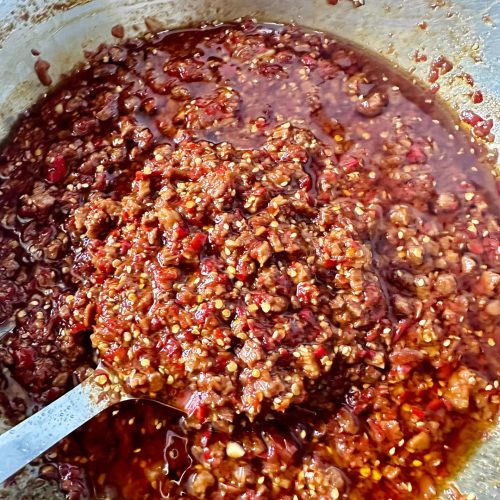
Spicy Beef Sauce (Xiang La Niu Rou Jiang)

Equipment
- Wok or Heavy Dutch Oven
- Food processor
- Sterilized Jars
Ingredients
The Beef & Aromatics
- 400 g beef (flank steak or brisket), diced into 0.5cm cubes
- 200 g fresh mild red peppers (Beauty/Fresno), minced
- 100 g fresh spicy chili peppers (Thai/Millet), minced
- 20 g fresh ginger, minced
- 40 g garlic, minced
The Seasonings
- 100 g yellow soybean paste (Huang Dou Jiang)
- 50 g Pixian Doubanjiang (Chili Bean Paste)
- 35 g light soy sauce
- 15 g sugar
- 4 g MSG optional but recommended
- 3 g white pepper powder
- toasted sesame seeds to taste
For the Aromatic Oil
- 250 g neutral oil (vegetable or canola)
- 0.5 onion or 2 scallions
- 3 star anise
- 2 bay leaves
- 10 g Sichuan peppercorns
Instructions
- Dice the beef into small pea-sized cubes (approx 0.5cm). If you are using a food processor for the vegetables, place the beauty peppers, millet peppers, ginger, and garlic into the processor and pulse until finely minced (do not puree).

- Pour the oil into a cold wok or pot. Add the onion, star anise, bay leaves, and Sichuan peppercorns. Turn heat to medium-low and fry slowly until the aromatics turn golden brown and dry. Remove and discard the aromatics with a slotted spoon, keeping the oil in the wok.
- Add the diced beef to the hot oil. Stir fry on medium heat for about 2-3 minutes until the beef turns pale and releases its liquid.
- Add the minced pepper, garlic, and ginger mixture to the beef. Stir fry for 5 minutes to begin evaporating the vegetable moisture.
- Add the Doubanjiang, soybean paste, soy sauce, sugar, and white pepper. Turn the heat down to low. Simmer and stir frequently to prevent sticking.
- Continue to cook on low heat for approximately 20 minutes. The goal is to evaporate all water. The sauce is done when the oil turns clear red and separates from the solids, and the beef becomes slightly crispy/chewy.
- Add the MSG and toasted sesame seeds. Stir fry for 2 more minutes. Turn off the heat.
- Let the sauce cool completely before transferring to sterilized, completely dry glass jars. Ensure the solids are covered by a layer of oil.

Notes
Calories: 280
Fat: 22g
Carbohydrates: 8g
Protein: 12g
Sodium: 650mg






Leave a Reply