Pickled pepper stir-fried beef is the kind of dish that makes a whole kitchen smell like a Hunan home kitchen: sour, hot, garlicky, and just a little sweet from the wok. It comes together in under 35 minutes once your beef is marinated, and the payoff is glossy slices of beef that stay tender because of a cornstarch-and-oil coat, not because of luck. This is the plate I make when I want dinner to feel like a restaurant order but I’m only cooking for two.
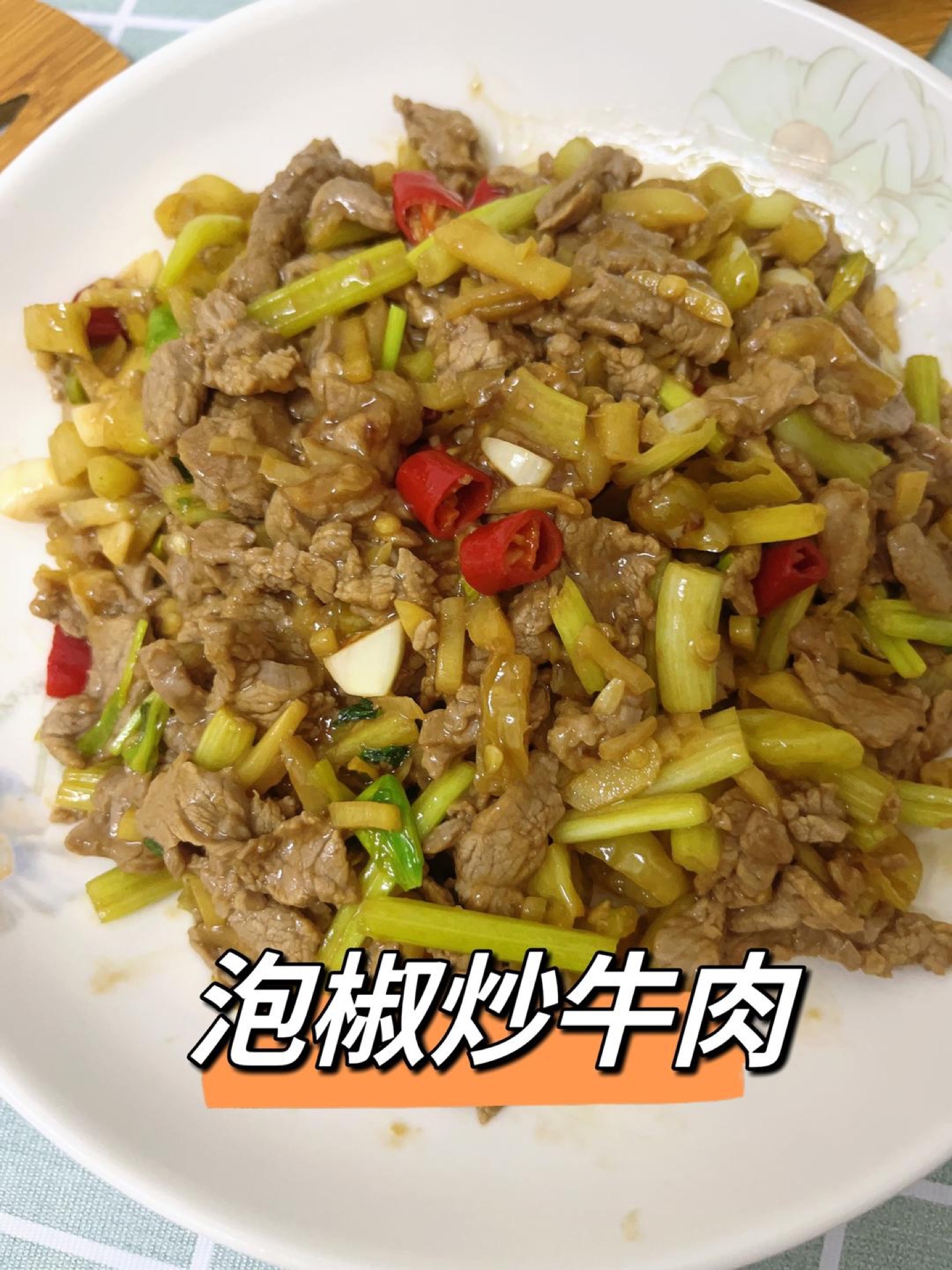
The first time I made this, I treated it like any other beef stir-fry: I dumped everything in the wok at once and hoped for the best. What I got was gray, watery beef and pale celery. The fix was simple — marinate the beef properly, bloom the pickled chilies first, and keep the wok screaming hot. That’s the whole technique, and once you internalize it you’ll never go back.
What makes this version different from a generic beef stir-fry is the paojiao — the small, brined chilies that are a cornerstone of Hunan cooking. They bring acidity, salt, and a fermented heat that fresh chilies simply can’t replicate. Paired with young ginger and the celery, the whole dish lands somewhere between sour, spicy, and savory, and it’s the kind of thing you’ll want to spoon over rice before it even cools.
What Is Pickled Pepper Stir-Fried Beef?
Pickled pepper stir-fried beef — 泡椒炒牛肉, or paojiao chaoniurou — is a Hunan-style stir-fry built around pickled chilies, thin-sliced marinated beef, and a quick pass through a very hot wok. The pickled chilies (泡椒) are the defining ingredient: small green or red chilies that have been brined in salt and vinegar, giving them a tangy, fermented bite that cuts through the richness of the beef.
Unlike Sichuan-style beef stir-fries that lean on doubanjiang and numbing peppercorns, this dish is squarely Hunanese. The heat is direct and clean, the sourness comes from the brine, and the aromatics are kept simple — garlic, ginger, and celery — so nothing competes with the beef. It’s a weeknight dish in Changsha and a staple on home tables across Hunan, usually served with plain white rice and a vegetable on the side.
If you’re new to cooking with pickled chilies, think of them less as a heat source and more as a seasoning: they bring salt, acid, and funk the same way capers or olives do in Mediterranean cooking. That’s why this dish tastes bright rather than just spicy.
Black pepper beef and king oyster mushroom stir fry is the same quick-sear technique with a deeply savory black pepper sauce and meaty mushrooms — a great next step once you’ve nailed the sear on this dish.
Hunan stir fried beef is the fierier sibling of this recipe, with fresh and dried chilies layered over the same tender beef technique — perfect if you want more heat without the sourness of pickled chilies.
Black pepper beef cubes takes a different cut and a different sauce — glossy, peppery, and rich — but the same principle of hot-wok searing applies.
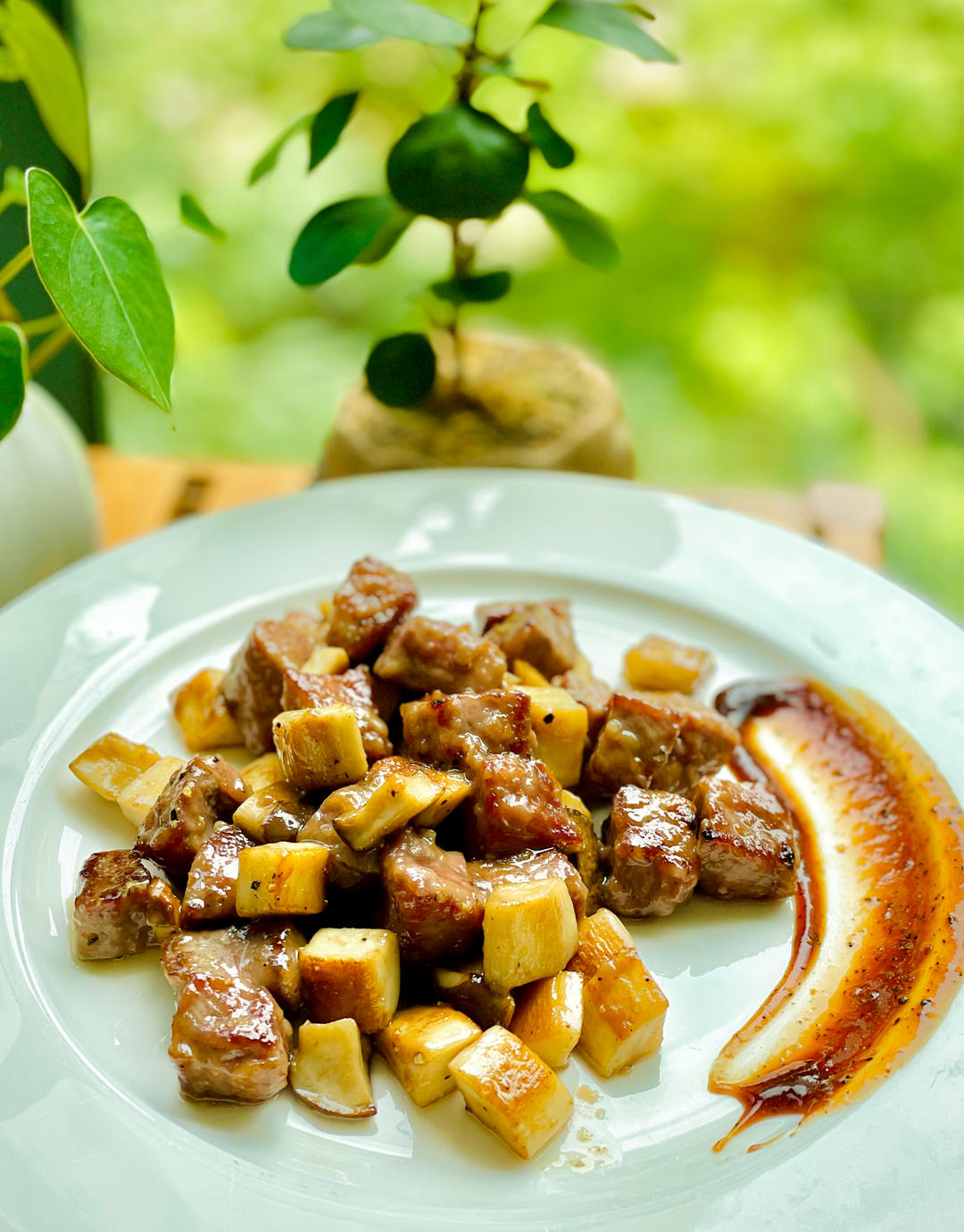
If you like this style of beef stir-fry, these three recipes on the site are the closest cousins: black pepper beef and king oyster mushroom stir fry is the same technique with a peppery, earthy sauce.
1Black Pepper Beef and King Oyster Mushroom Stir-FryA quick, healthy, and incredibly tender 20-minute Chinese stir-fry featuring cubed beef tenderloin and hearty king oyster mushrooms, seasoned with fresh black pepper.Check out this recipe
For a version that leans harder into chili heat, Hunan stir fried beef uses fresh and dried chilies in the same Hunan spirit.
2Authentic Hunan Stir-Fried Beef (Hunan Beef)A classic Hunan (Xiang) dish known for its bold heat and tender, velvety beef. Ready in just 15 minutes, this is a weeknight favorite for spice lovers.Check out this recipe

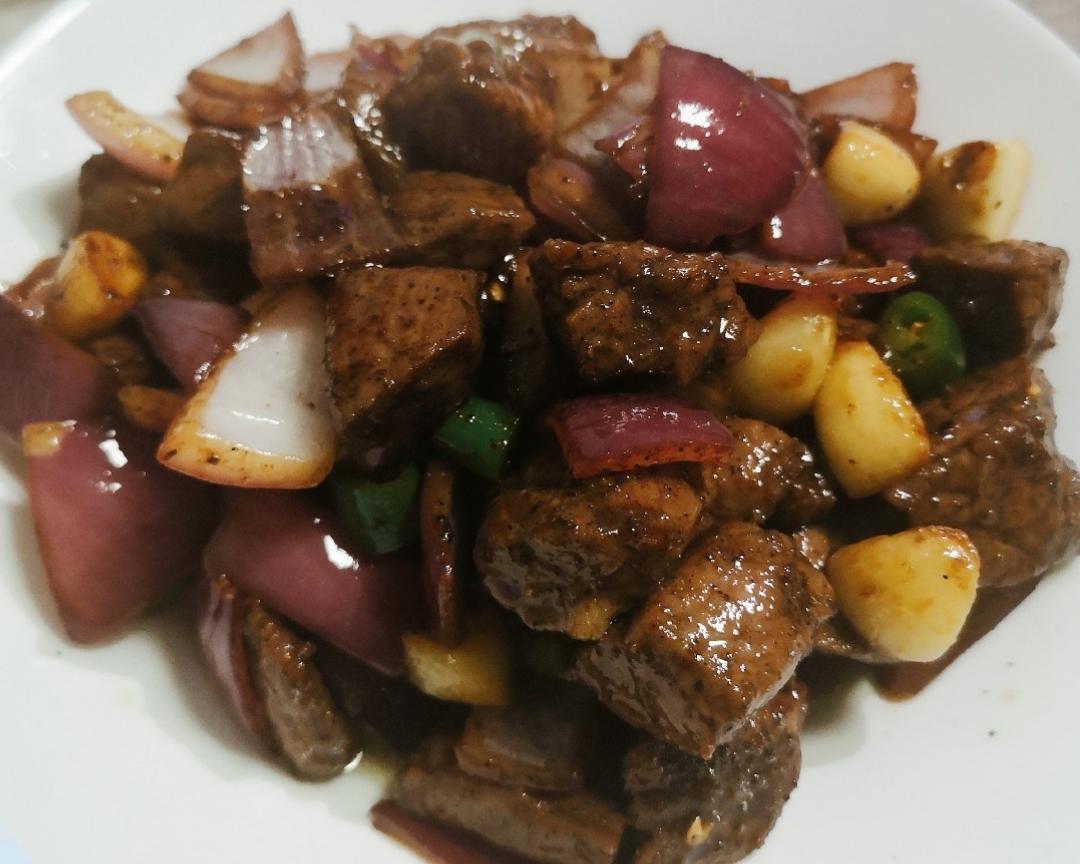
And if you want a beef dish that’s more about the sauce than the chilies, black pepper beef cubes is a restaurant-style plate worth trying.
3Black Pepper Beef Cubes (Hei Hu Jiao Niu Rou Li)Tender cubes of beef tenderloin seared in butter and coated in a savory, aromatic black pepper sauce. A restaurant-quality dish ready in 30 minutes.Check out this recipe
Why This Recipe Works
Three things make this dish work, and they’re all technique rather than ingredients. First, the beef is sliced thin against the grain — this shortens the muscle fibers so each piece is tender the moment it hits the wok. Second, the marinade includes cornstarch and oil, which form a protective coat around each slice and keep the juices in during the high-heat sear. Third, the aromatics bloom before the beef goes in, so the oil is already flavored by the time the meat touches it.
The order of operations matters too. Celery stems go in before the beef because they need a head start to soften, while the leaves go in at the very end so they stay bright and fragrant. If you flip that order, you’ll end up with mushy leaves and crunchy stems — the opposite of what you want.
Finally, the pickled chili brine is doing quiet work. A spoonful of that acidic liquid deglazes the wok, lifts the fond, and seasons the whole dish without making it taste flat. Skip it and the dish still works, but it loses the sour edge that makes it distinctly Hunanese. If you want to go deeper on wok fundamentals, our guide to Chinese cooking techniques for absolute beginners covers the basics of heat control and stir-frying order.
Equipment Needed
You don’t need much for this one, but what you do need matters. A carbon steel wok is ideal because it can take high heat and gives you the curved surface for tossing. If you don’t have one, a wide skillet or cast-iron pan works — see our guide to the best pan for stir fry without a wok for what to look for.
Beyond the pan, you’ll want a sharp chef’s knife and a stable cutting board for slicing the beef thinly. A couple of small mixing bowls keep the marinade and the aromatics separate, and a slotted spoon or spatula lets you move the beef around without steaming it. Have everything within arm’s reach before you turn on the heat — this dish moves fast, and there’s no time to chop garlic once the wok is smoking.
Ingredients
Here’s what you need for four servings. The full amounts are in the recipe card at the bottom of the page.
For the beef: flank steak or sirloin, sliced thin against the grain. Flank has great beefy flavor and stays tender when sliced properly; sirloin is a little more forgiving if you’re new to slicing.
For the marinade: Shaoxing wine, light soy sauce, oyster sauce, cornstarch, and a neutral oil like peanut. This combination seasons, tenderizes, and protects the beef all at once.
For the stir-fry: pickled chilies (paojiao) plus a little of their brine, garlic, bird’s eye chilies, young ginger, celery, and peanut oil. Young ginger is worth seeking out at an Asian grocery — it’s milder and more aromatic than mature ginger, but regular ginger works fine in a pinch.
Ingredient Notes
Pickled chilies (泡椒): These are usually sold in jars in the Asian aisle, packed in brine. Look for ones that are firm and bright rather than mushy. The brine is genuinely useful — a tablespoon or two added with the soy sauce brings the sourness that defines the dish. If you can only find pickled jalapeños, they’ll work, but the flavor will be more Mexican than Hunanese.
Beef cut: Flank, sirloin, and skirt all work. Avoid stewing cuts like chuck unless you plan to velvet and cook them longer — they’ll be tough in a 90-second stir-fry. If you’re unsure, ask your butcher for something you’d grill hot and fast.
Young ginger (仔姜): This is the pink-tipped, thin-skinned ginger that shows up in late summer. It’s less fibrous and has a brighter, almost floral bite. Mature ginger is a fine substitute; just julienne it finely so it doesn’t dominate.
Celery: Chinese celery is thinner and more intensely flavored than Western celery, but either works. Keep the stems and leaves separate — they go into the wok at different times, and that’s what keeps the texture right. If you enjoy building a pantry around this kind of cooking, our notes on chili oil vs chili crisp are a good next read for the chili-based condiments you’ll want on hand.
Cornstarch: This is what gives the beef its velvety texture. Don’t skip it, and don’t substitute flour — flour won’t create the same protective coating and will taste raw in a fast stir-fry.
Prep & Mise en Place
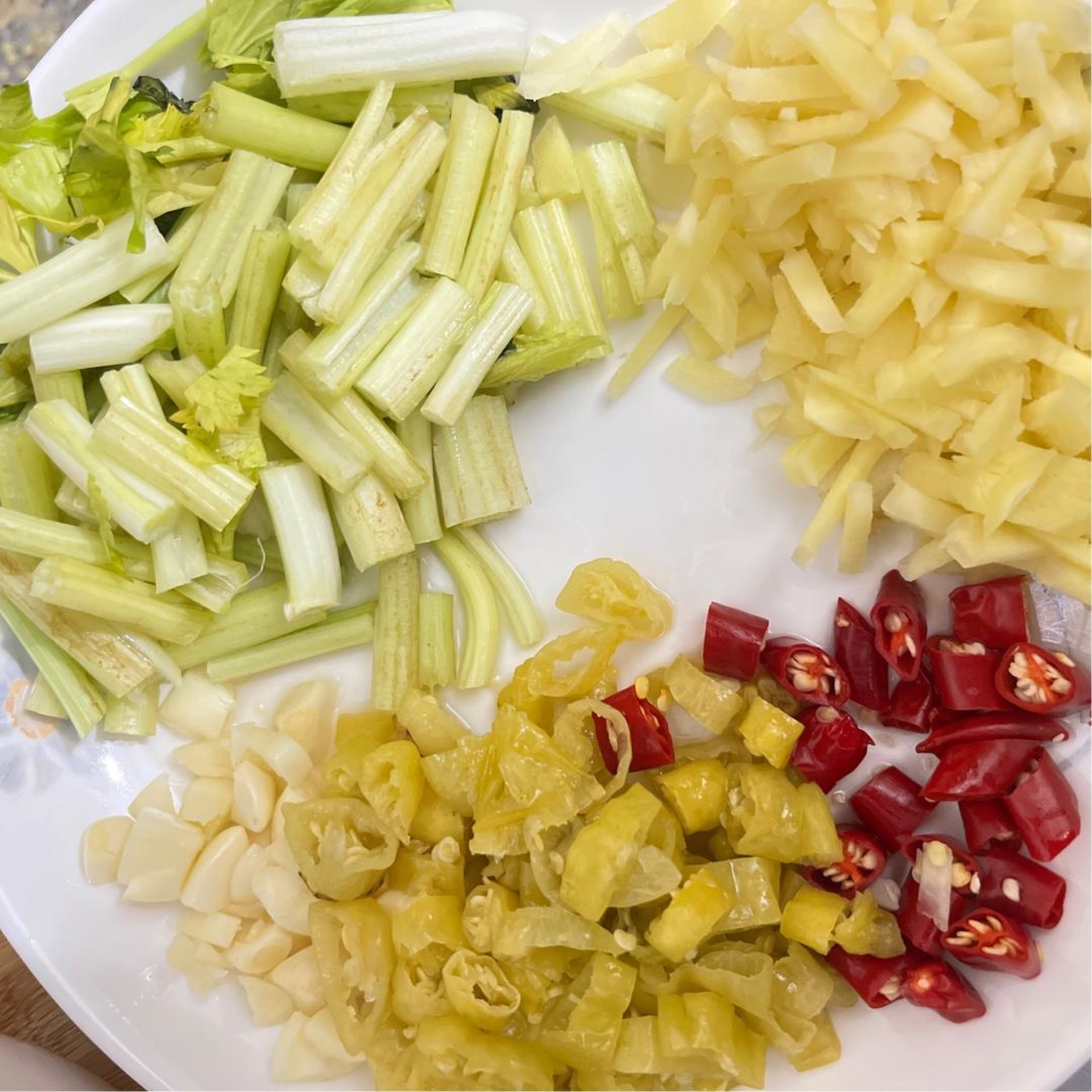
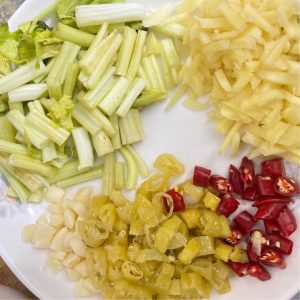
This dish cooks in under five minutes once the wok is hot, so prep is where the real work happens. Start by slicing the aromatics: mince the garlic, julienne the young ginger, slice the pickled chilies and bird’s eye chilies, and cut the celery into short batons, keeping the leaves separate from the stems. Put each in its own small bowl.
Next, slice the beef. If you have time, pop it in the freezer for 20 minutes first — firm beef is much easier to cut thinly and evenly. Slice against the grain into pieces about ⅛ inch thick, then add the marinade ingredients and mix with your hands until the beef feels sticky and every slice is coated. Let it sit for 10 minutes while you finish setting up.
Finally, measure out your soy sauce and pickled chili brine into a small bowl so you can add them without fumbling. Once the wok is hot, you’ll be moving constantly, and having everything prepped means you won’t burn the garlic while hunting for the soy sauce.
Cooking Process
Step 1 — Prep the Aromatics
Slice the bird’s eye chilies, pickled chilies, young ginger, and garlic, and cut the celery into short batons, keeping the leaves separate.
Step 2 — Marinate the Beef
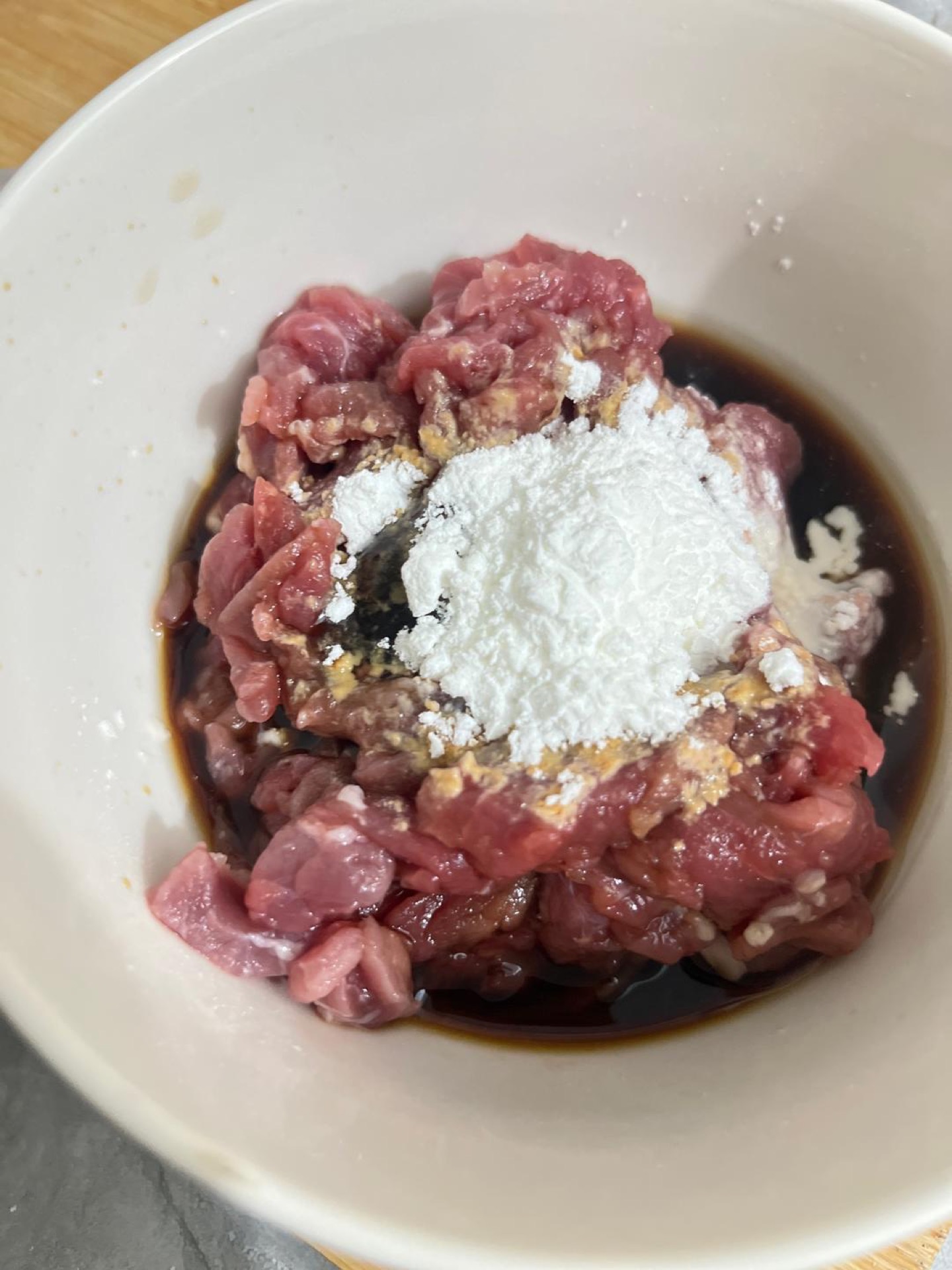
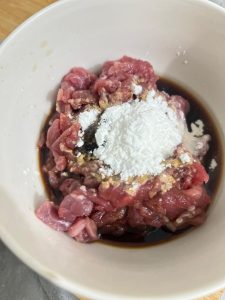
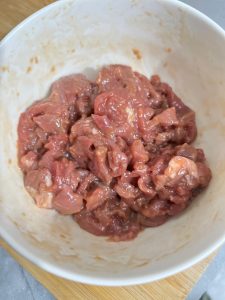
Slice the fresh beef thinly against the grain and add 2 tablespoons Shaoxing wine, 3 tablespoons light soy sauce, 1 tablespoon oyster sauce, 2 tablespoons cornstarch, and 1 tablespoon peanut oil.
Step 3 — Rest the Beef
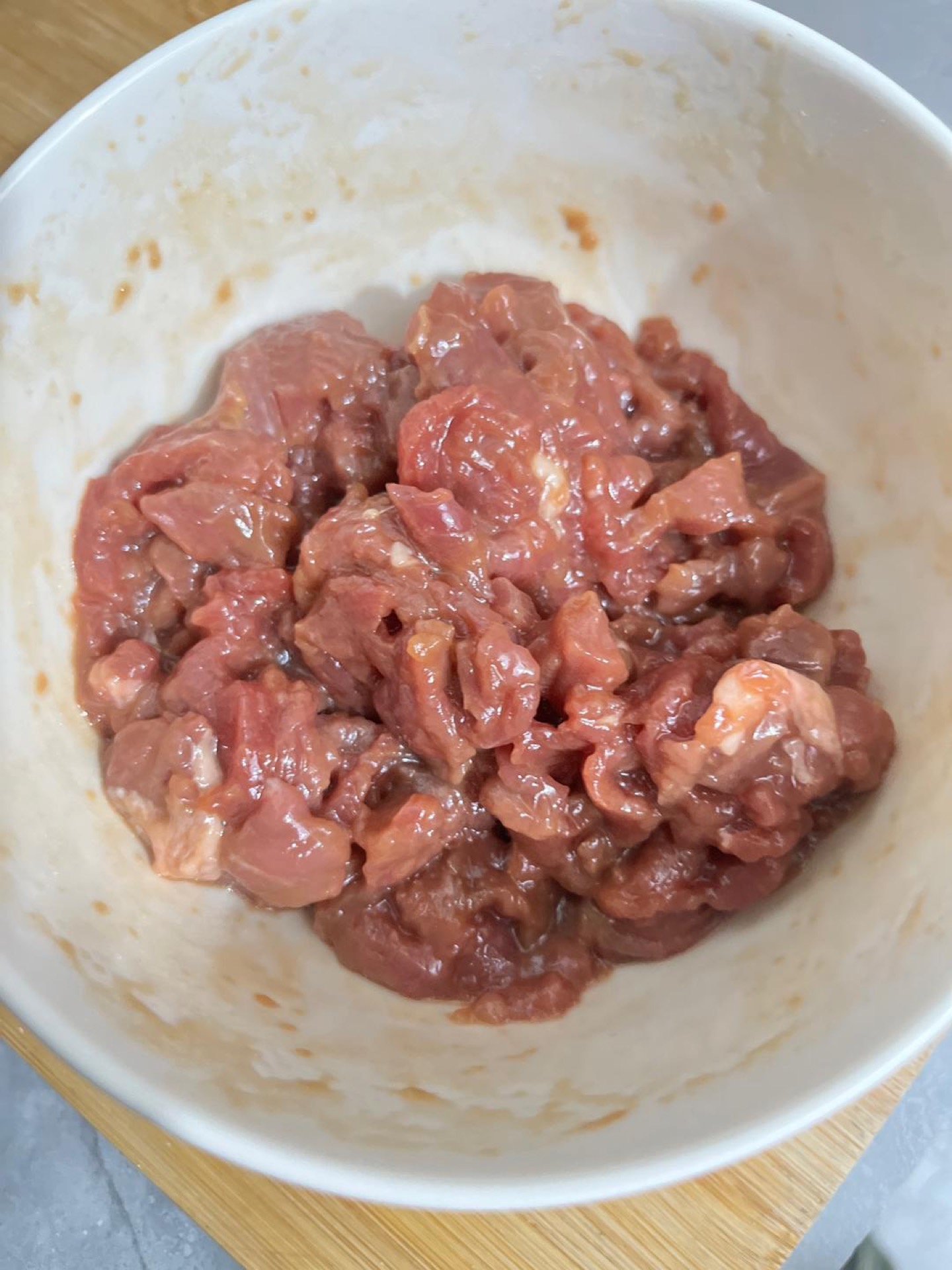
Mix everything with your hands until the beef is evenly coated and sticky, then let it marinate for 10 minutes.
Step 4 — Bloom the Aromatics
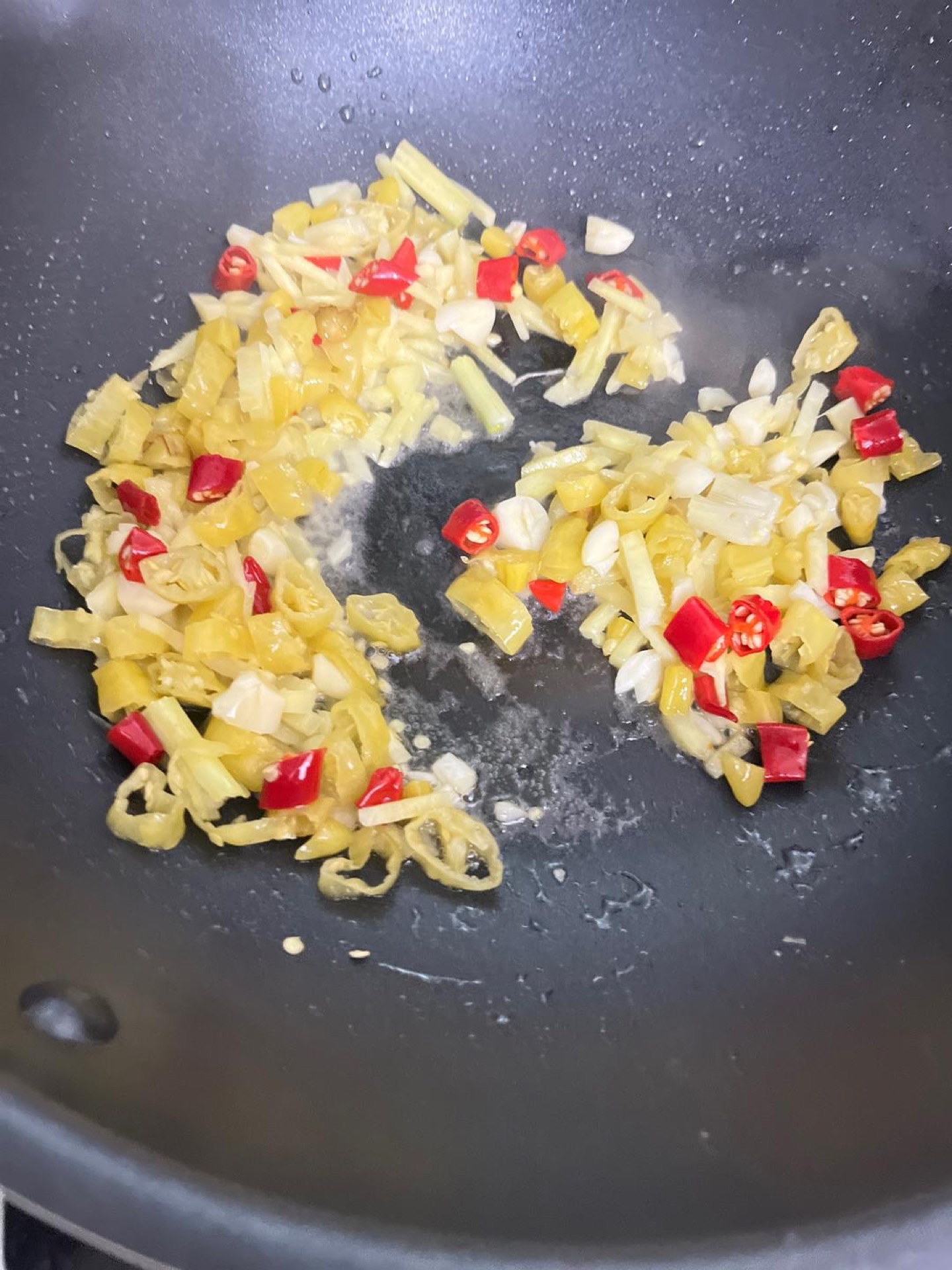
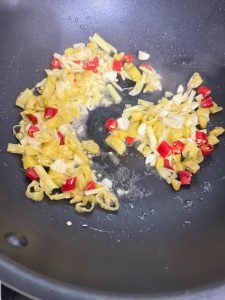
Heat oil in the wok until shimmering, then add the ginger, garlic, pickled chilies, and bird’s eye chilies in order, stir-frying until the aroma is sharp and pungent.
Step 5 — Season the Base
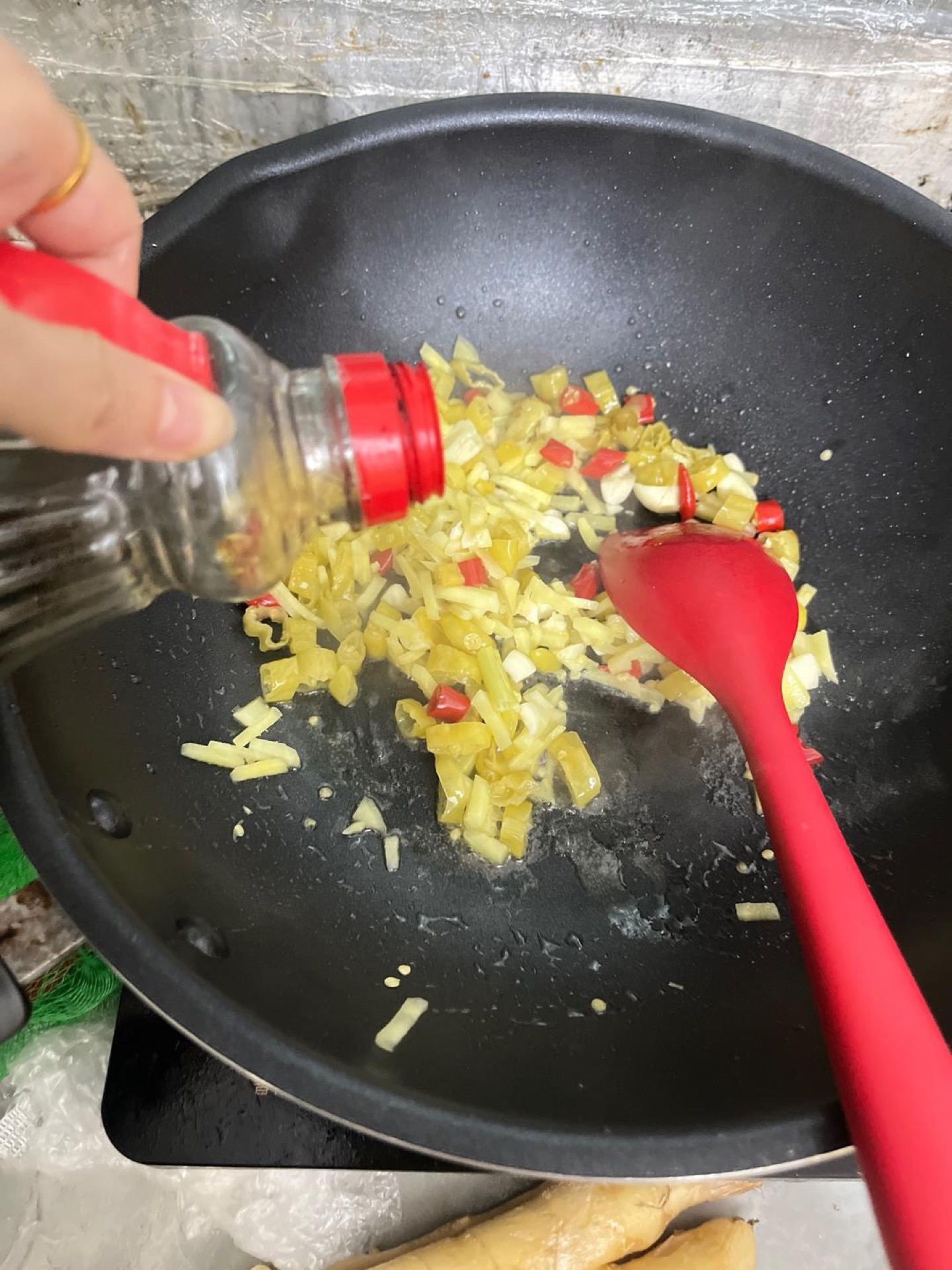
Splash in a little light soy sauce and stir to combine so the aromatics pick up color and salt.
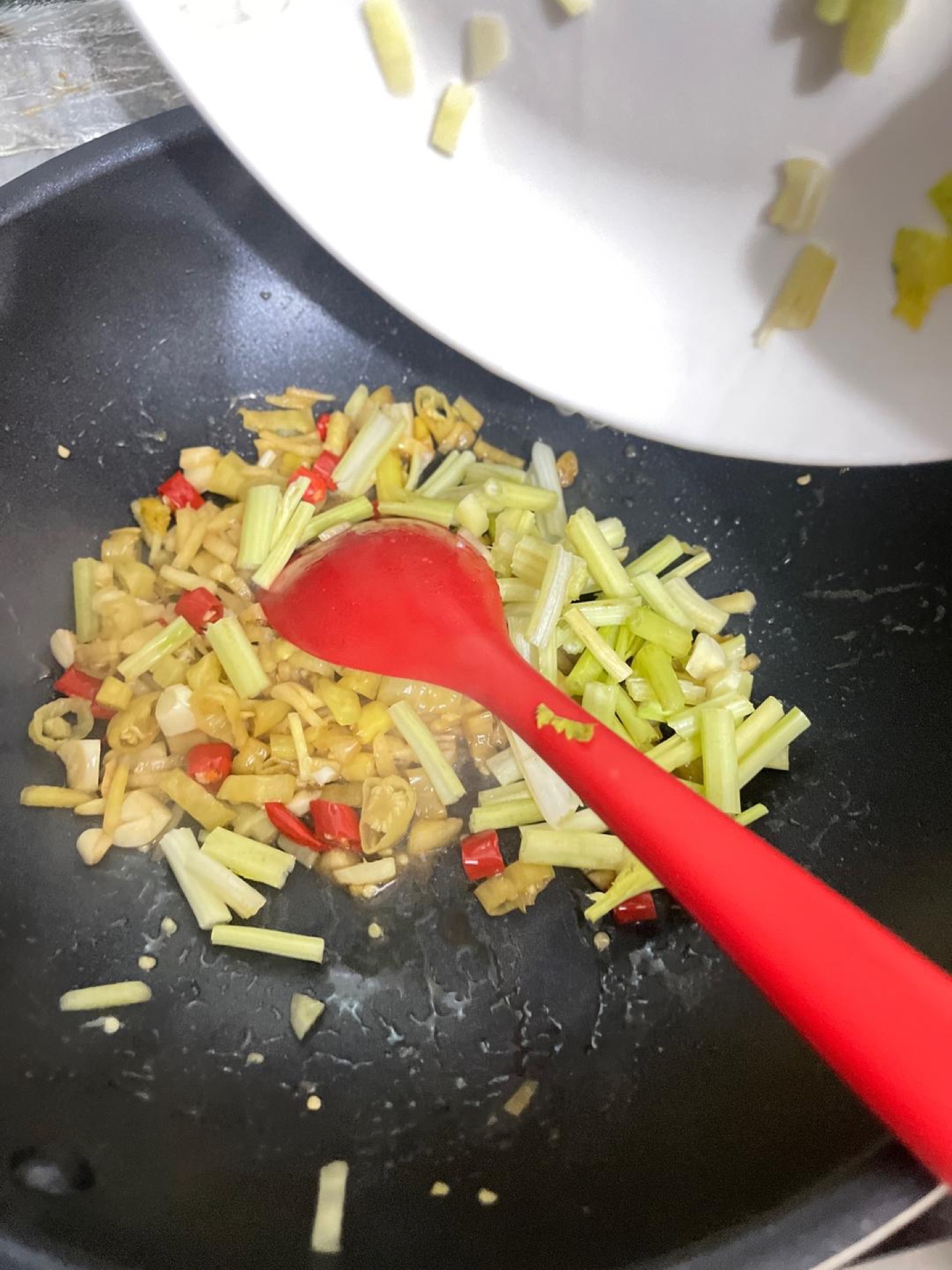
Step 6 — Add the Celery Stems
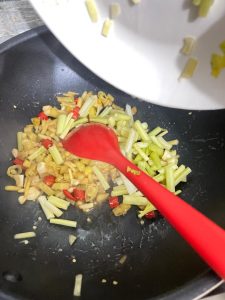
Add the celery stems and stir-fry for about 1 minute, just until they turn bright green and slightly tender.
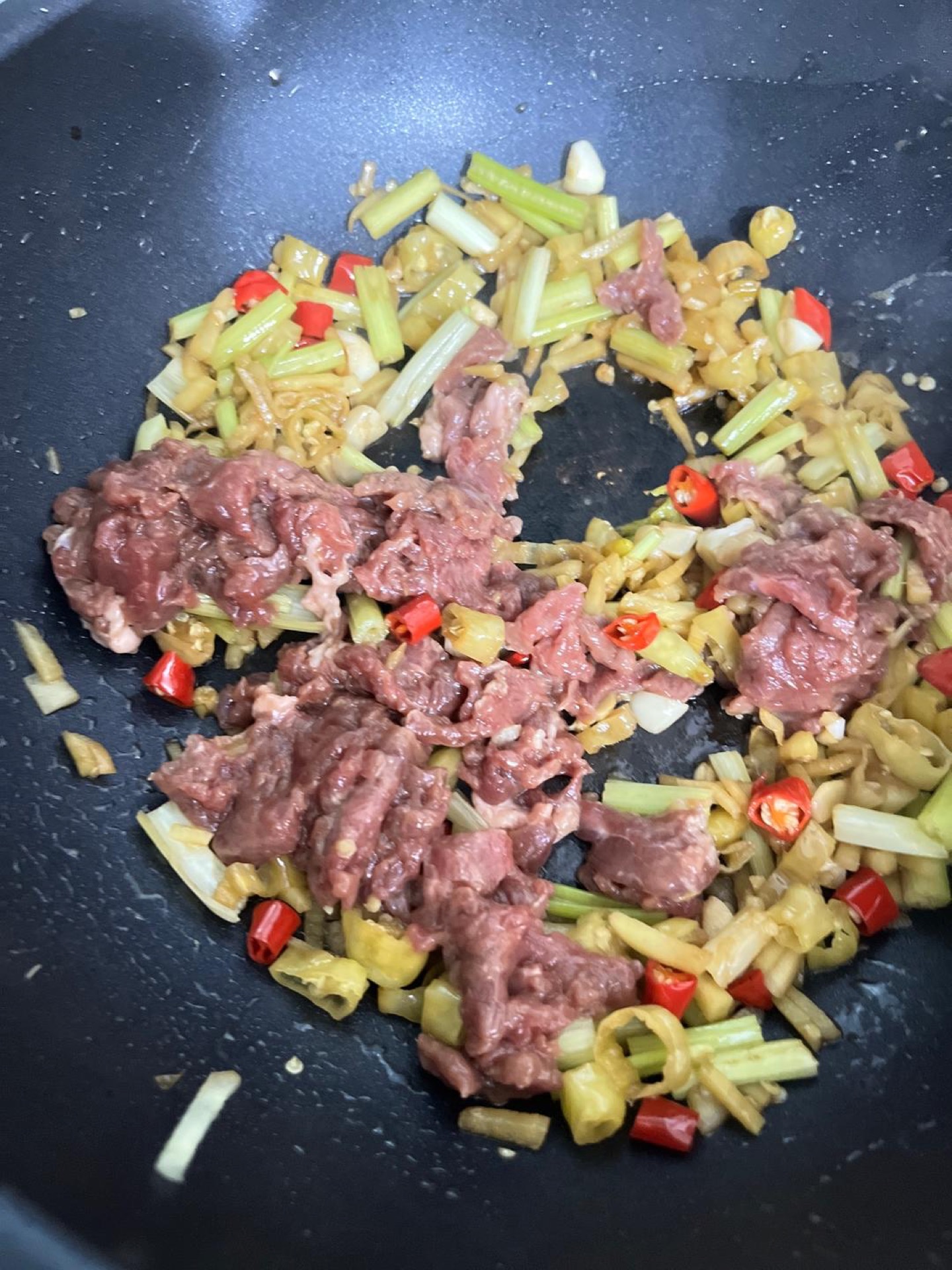
Step 7 — Add the Beef
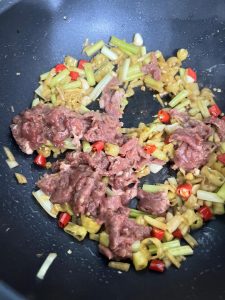
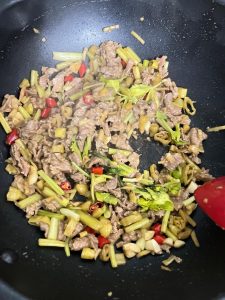
Add the marinated beef and stir-fry over high heat, spreading it out so every slice makes contact with the hot wok.
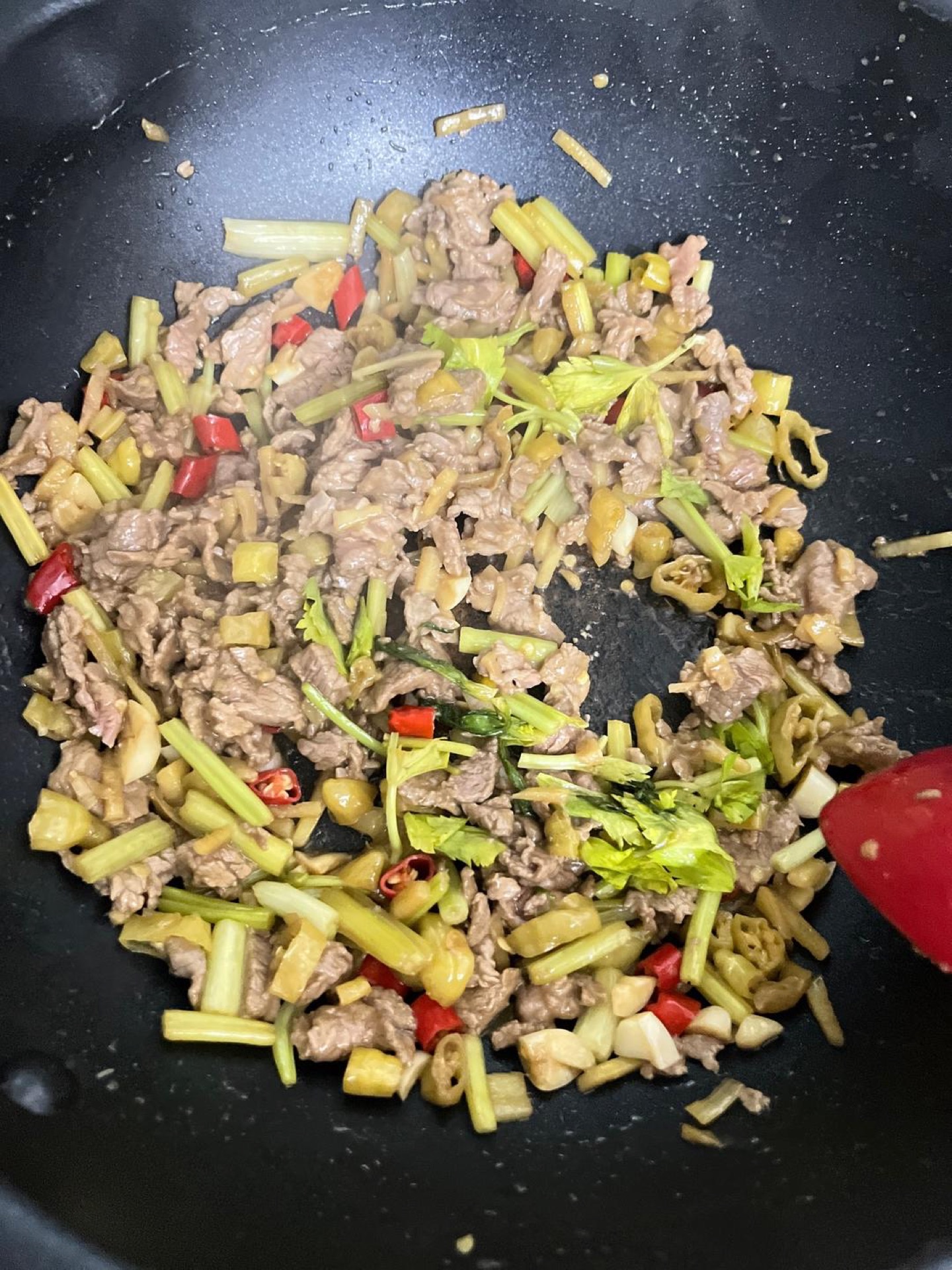
Step 8 — Finish with Celery Leaves
Stir-fry until the beef just turns color, then add the remaining celery leaves and cook for another 30 seconds.
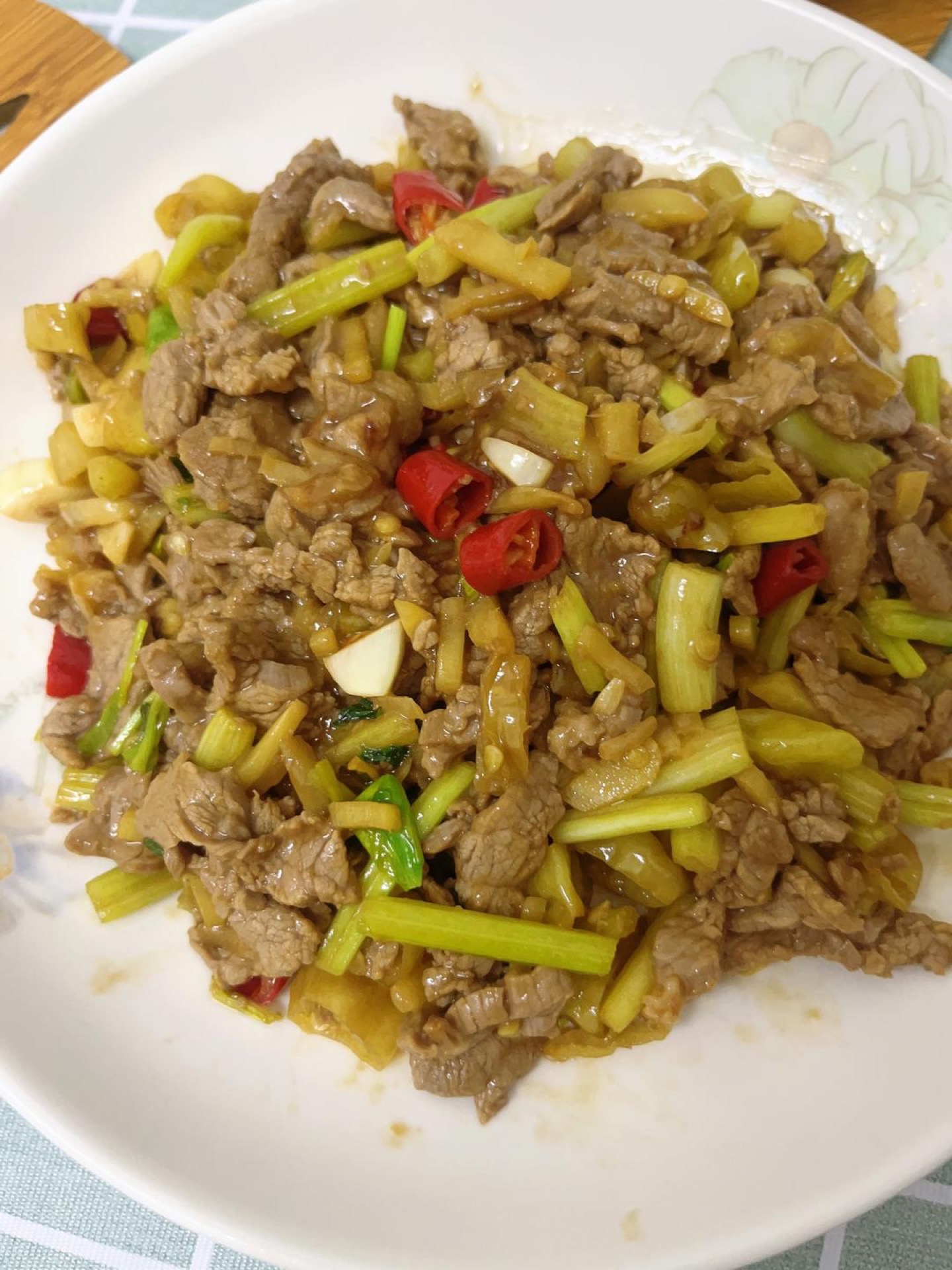
Step 9 — Plate and Serve
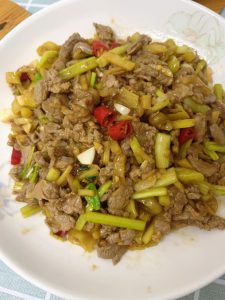
Slide everything onto a plate and serve immediately — spicy, fragrant, and perfect over rice.
Common Mistakes When Making Pickled Pepper Stir-Fried Beef
1. Slicing the beef with the grain. If you cut along the muscle fibers instead of across them, each piece will be chewy no matter how well you cook it. Fix: look at the surface of the steak, find the direction the fibers run, and cut perpendicular to them.
2. Skipping the cornstarch. Without it, the beef releases its juices into the wok and steams instead of searing, leaving you with gray, tough meat. Fix: mix the cornstarch into the marinade until it’s fully dissolved, then coat every slice.
3. Marinating for hours. A long marinade with soy sauce and wine will cure the beef and make it rubbery. Fix: 10 to 20 minutes is plenty — the cornstarch and oil do the work, not time.
4. A wok that isn’t hot enough. If the beef doesn’t sizzle loudly the second it hits the pan, the pan is too cold and the meat will stew. Fix: heat the wok until a drop of water evaporates instantly, then add the oil and let it shimmer before adding anything.
5. Crowding the wok. Piling all the beef in at once drops the temperature and steams the meat. Fix: cook the beef in a single layer, in two batches if your wok is small, and remove the first batch before adding the second.
6. Adding the celery leaves too early. The leaves are delicate and will turn dark and bitter if they cook for more than a minute. Fix: add them in the last 30 seconds, right before the beef finishes.
7. Forgetting the pickled chili brine. The brine is where the sourness lives, and without it the dish tastes flat and one-dimensionally spicy. Fix: add 1 to 2 tablespoons with the soy sauce and taste before serving.
Variations
With mushrooms: Add sliced king oyster or shiitake mushrooms with the celery stems for a meatier, earthier version. If you like that combination, our chicken and king oyster mushroom stir fry uses the same mushroom-forward approach.
Extra fiery: Double the bird’s eye chilies and add a teaspoon of chili flakes with the aromatics. This pushes the dish closer to the heat level of a classic Hunan beef.
With Sichuan peppercorns: Add a teaspoon of toasted, ground Sichuan peppercorns at the end for a numbing edge. It’s not traditional for this dish, but it’s delicious.
Beef-free: Swap the beef for thinly sliced pork shoulder or chicken thigh, keeping the marinade the same. Adjust the cooking time slightly — chicken needs an extra minute to cook through.
Extra vegetables: Thinly sliced onion, bell pepper, or bamboo shoots can be added with the celery stems. Keep the total vegetable volume modest so the wok stays hot.
Frequently Asked Questions
Can I use regular chilies instead of pickled ones? You can, but the dish will lose its signature sourness. If you only have fresh chilies, add a tablespoon of rice vinegar or lime juice at the end to approximate the tang.
How do I keep the beef from getting tough? Slice against the grain, marinate with cornstarch and oil, and cook over the highest heat you can manage for the shortest time possible. Overcooking is the most common cause of tough beef in a stir-fry.
Is this dish very spicy? It’s moderately spicy. The pickled chilies are tangy more than searing, and the bird’s eye chilies bring the real heat. You can halve the bird’s eye chilies without losing the character of the dish.
Can I make it ahead? You can marinate the beef and prep the aromatics up to a day ahead and keep them refrigerated. The stir-fry itself should be cooked fresh — it doesn’t hold well once cooked.
What if I can’t find young ginger? Use regular ginger, julienned as finely as you can. The flavor will be sharper but still correct.
How to Serve
Pickled pepper stir-fried beef is at its best over plain steamed white rice, which soaks up the sour-spicy juices. A simple smashed cucumber salad on the side is the cooling counterpoint this dish wants — crisp, garlicky, and ready in ten minutes.
If you’re feeding a crowd and want a second protein on the table, honey roasted chicken wings are an easy make-ahead addition that balances the heat with sweetness.
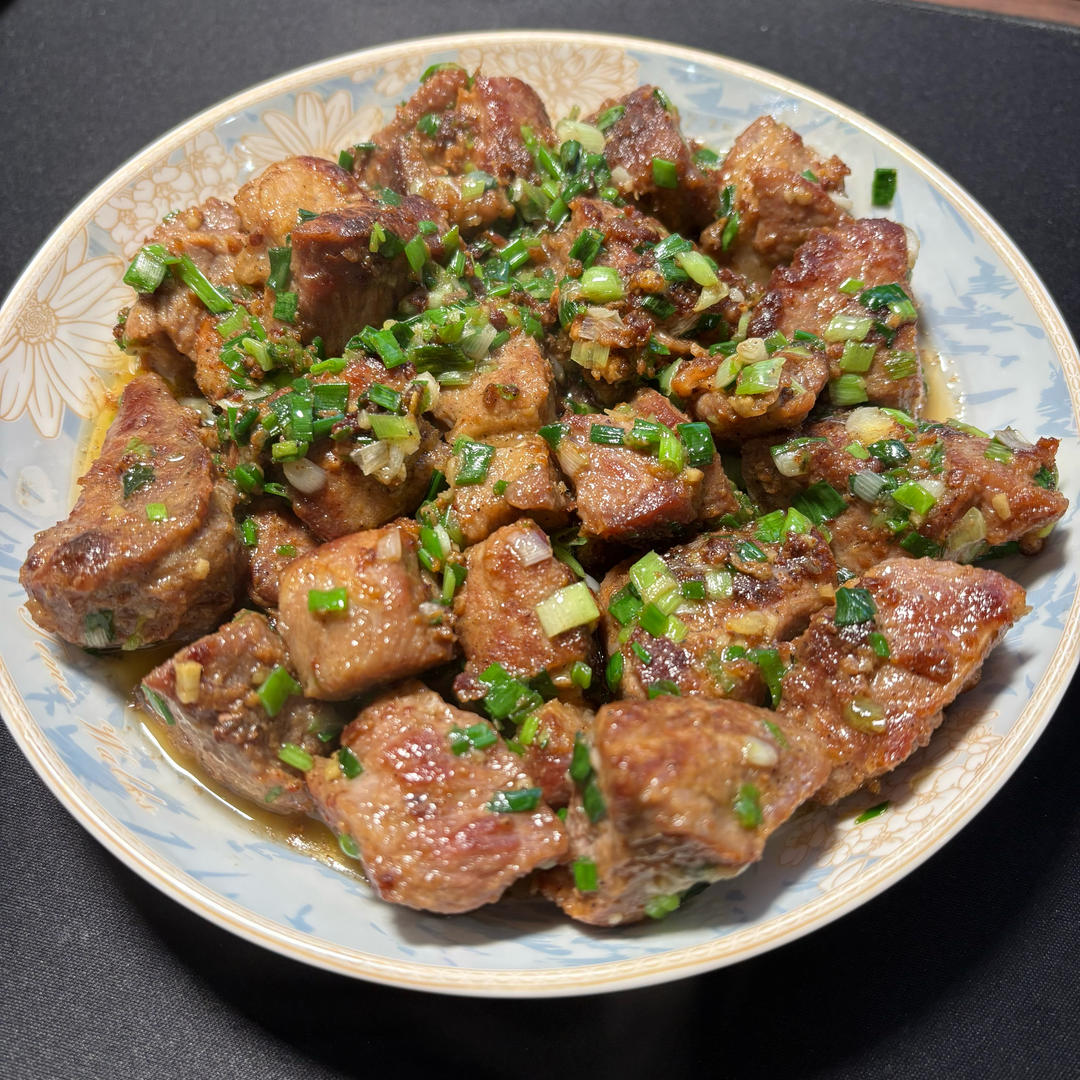
For a heartier spread, salt and scallion pork steaks bring a savory, scallion-forward note that pairs well with the pickled chilies.


Storage & Reheat
Store leftovers in an airtight container in the refrigerator for up to 3 days. The celery will soften and the beef will lose a little of its snap, but the flavor holds up well. Reheat gently in a wok or skillet over medium heat with a splash of water to loosen the sauce — don’t microwave it on high, or the beef will toughen.
This dish does not freeze well. The cornstarch coating breaks down when frozen and thawed, and the celery turns mushy. If you want to plan ahead, prep and marinate the raw beef and the aromatics separately, then stir-fry fresh the day you want to eat.
Allergen Notice
This recipe contains soy (light soy sauce, oyster sauce), wheat (soy sauce), and shellfish (oyster sauce). Cornstarch is naturally gluten-free, but check the label for shared production lines if you’re cooking for someone with celiac disease. To make it soy-free, substitute coconut aminos for the soy sauce and use a vegan oyster sauce or mushroom stir-fry sauce. Always check the labels of your pickled chilies — some brands add preservatives or sweeteners.
Nutrition Disclaimer
Nutrition information is calculated using an ingredient database and should be considered an estimate. In cases where multiple ingredient alternatives are given, the first listed is calculated for nutrition. Garnishes and optional ingredients are not included.
About the Author & Recipe Development
Hi, I’m Lin — I grew up cooking Hunan and Cantonese food in a home kitchen where the wok was always on the stove and nothing was ever measured. I started Woks of Love to write down the dishes I grew up with, tested properly and explained clearly, so that anyone can cook them without a grandmother standing over their shoulder.
This recipe came from a friend’s family kitchen in Changsha, where pickled chilies are kept in a giant jar by the stove and beef is always sliced paper-thin. I’ve tested it with flank, sirloin, and skirt steak, and with both young ginger and mature ginger, and the version here is the one that consistently tastes closest to what I ate there. Every recipe on this site is cooked at least three times before it’s published, and I update the notes whenever readers tell me something didn’t work in their kitchen.
Authoritative References
For safe handling and cooking temperatures for beef, see the USDA safe minimum internal temperature chart. For general food safety guidance on storing and reheating cooked meat, see the FDA food safety guidance on refrigerators and cold storage. For more on the role of acid and salt in marinades, see this explainer on how marinades affect meat texture.
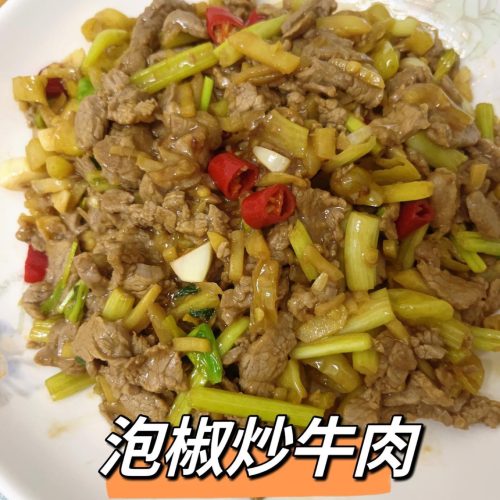
Pickled Pepper Stir-Fried Beef (泡椒炒牛肉): Tender Beef, Fiery

Equipment
- Wok
- Cutting Board
- Chef’s knife
- Mixing bowls
- Slotted Spoon
Ingredients
For the Beef Marinade
- 300 g beef flank steak or sirloin, sliced thin against the grain
- 2 tbsp Shaoxing wine or dry sherry
- 3 tbsp light soy sauce plus more for the wok
- 1 tbsp oyster sauce
- 2 tbsp cornstarch
- 1 tbsp peanut oil or any neutral oil
For the Stir-Fry
- 1 small bunch celery about 3 stalks, stems and leaves separated
- 12 whole pickled chilies paojiao, sliced, plus 2 tbsp of the brine
- 6 cloves garlic minced
- 3 whole bird’s eye chilies sliced (adjust to taste)
- 1 thumb young ginger zǐjiāng, julienned (or 1 tbsp regular ginger)
- 3 tbsp peanut oil for the wok
- 1 tbsp light soy sauce added at the end
Instructions
- Slice the bird’s eye chilies, pickled chilies, young ginger, and garlic, and cut the celery into short batons, keeping the leaves separate.

- Slice the fresh beef thinly against the grain and add 2 tablespoons Shaoxing wine, 3 tablespoons light soy sauce, 1 tablespoon oyster sauce, 2 tablespoons cornstarch, and 1 tablespoon peanut oil.

- Mix everything with your hands until the beef is evenly coated and sticky, then let it marinate for 10 minutes.
- Heat oil in the wok until shimmering, then add the ginger, garlic, pickled chilies, and bird’s eye chilies in order, stir-frying until the aroma is sharp and pungent.
- Splash in a little light soy sauce and stir to combine so the aromatics pick up color and salt.
- Add the celery stems and stir-fry for about 1 minute, just until they turn bright green and slightly tender.
- Add the marinated beef and stir-fry over high heat, spreading it out so every slice makes contact with the hot wok.
- Stir-fry until the beef just turns color, then add the remaining celery leaves and cook for another 30 seconds.
- Slide everything onto a plate and serve immediately — spicy, fragrant, and perfect over rice.













Leave a Reply